Hi-Fi Audio
Best Hi-Fi Systems Around 1,500 Euros: WiiM Amp Ultra vs Arcam A5 Plus
Two very different routes to a complete hi-fi system at around 1,500 euros, compared through the demanding Dali KUBIK loudspeaker.
Introduction
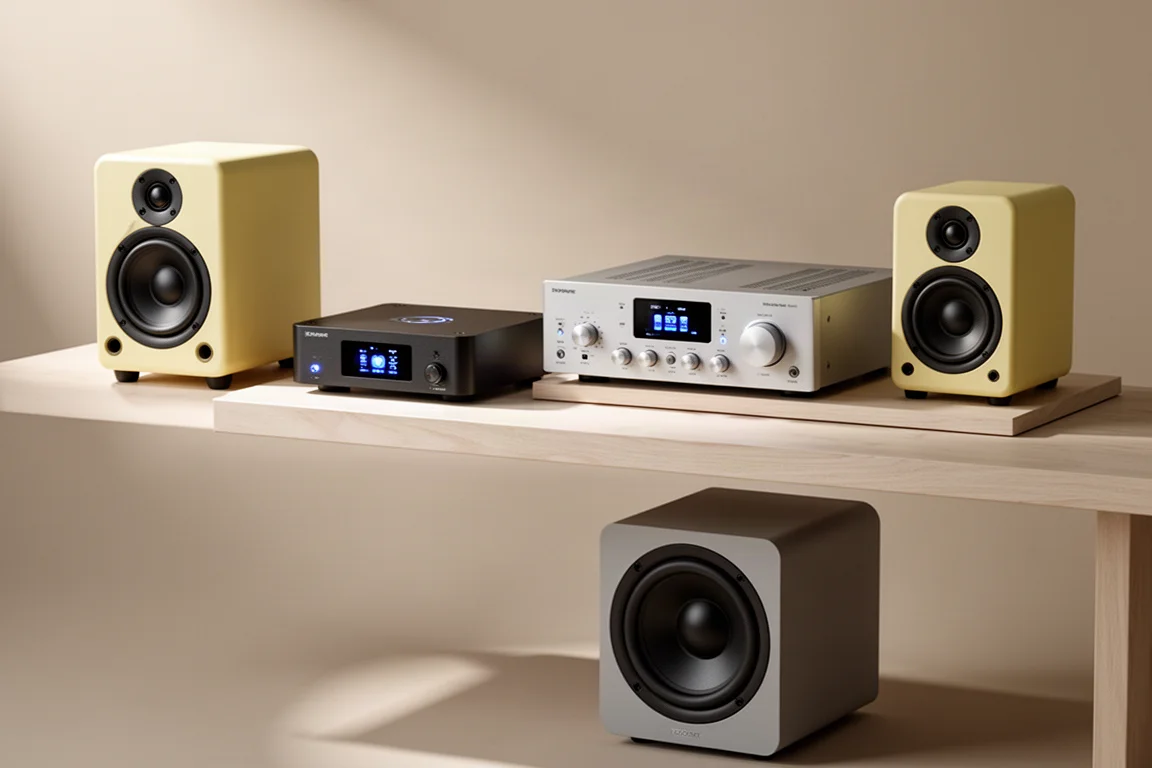
At the entry level, hi-fi has become a study in contradictions. Small standmount speakers are more popular than ever, yet they are often the components that ask the most from the amplifiers driving them. Meanwhile, the budget that once bought a complete and genuinely satisfying system has drifted upward, and around 1,500 euros the market splits into two clear philosophies.
On one side sit software amplifiers: compact, connected, and built around digital signal processing. On the other sit traditional amplifiers: full-width, analogue, and centred on linear power supplies and Class AB output stages. Both approaches can anchor a serious system, but they make very different promises, and the difference is easiest to hear when the speakers are difficult to drive.
This guide covers five components at the centre of that choice, from a streaming amplifier with a touchscreen to a full-width analogue integrated, along with the speaker and subwoofer that reveal what separates them.
What to Look For at This Price
Speaker load is the first thing to understand, because it dictates how much amplifier you actually need. A standmount rated at 83 dB sensitivity with a 4 ohm nominal impedance is a far heavier load than its size suggests, and it will expose a tepid-sounding amplifier quickly.
From there, priorities diverge. A software-first system offers streaming built in, room correction, digital crossover management, and automated subwoofer integration. A traditional system offers current delivery, an all-analogue path for line-level sources, and the kind of drive that makes difficult speakers sound complete on their own.
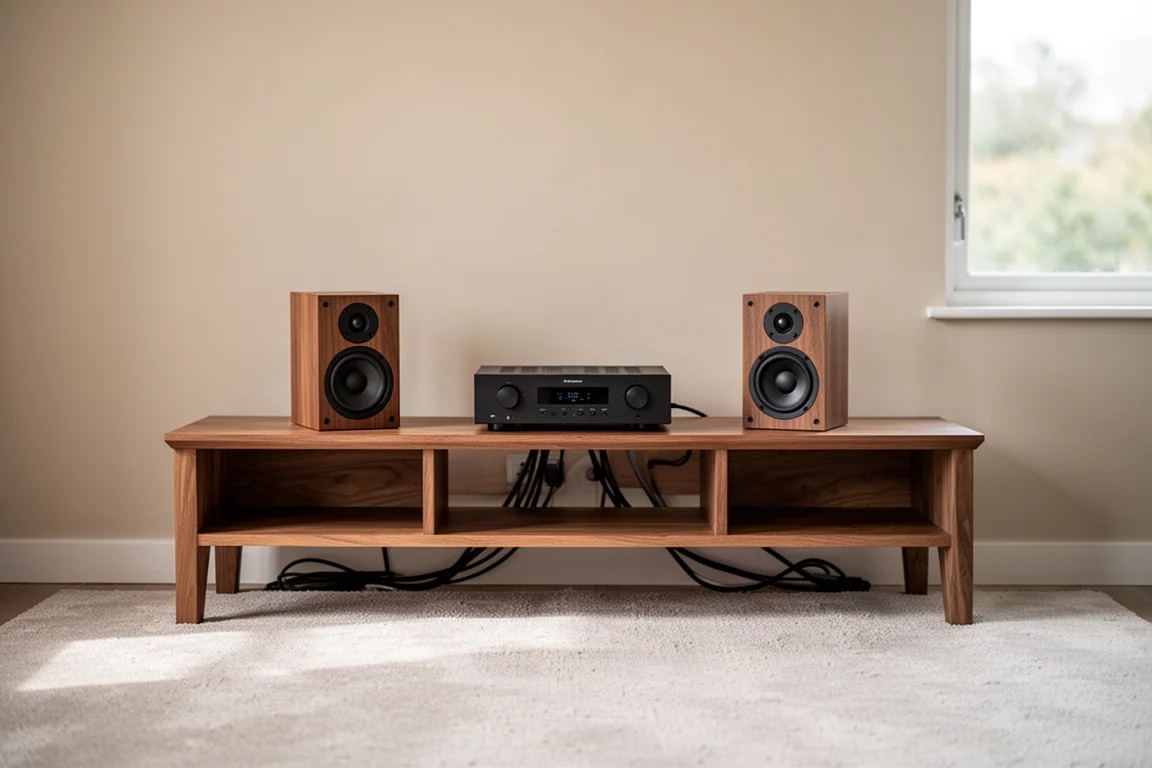
Practical details matter just as much. Input count, whether analogue inputs stay analogue, headphone output quality, subwoofer outputs, physical footprint, and whether the amplifier is small enough to live on a desk. Weighing those against the sound you actually want is the real decision at this price.
WiiM Amp Ultra: Streaming Convenience First
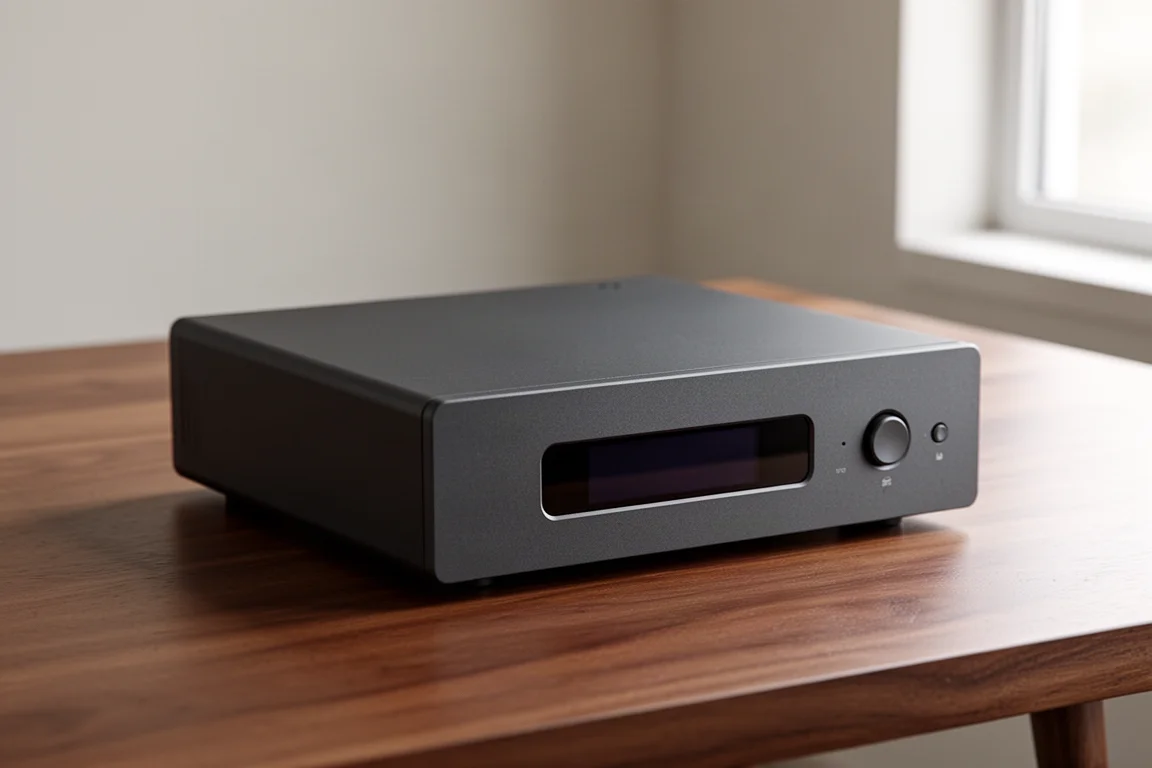
The WiiM Amp Ultra is a streaming amplifier with touchscreen control, priced at 599 euros. It promises 200 watts per channel into a 4 ohm load from a Texas Instruments Class D chip that uses post-filter feedback, a technique intended to keep current delivery more independent of a speaker’s impedance swings. It is also small enough to sit on a desktop beside a pair of compact speakers.
Its appeal goes well beyond wattage. A DSP engine handles crossover duties, time-aligns a subwoofer with the main speakers, high-passes the mid-bass driver, and applies room correction below roughly 300 Hz. HDMI ARC is on board, and the amplifier is Roon Ready, meaning it has been certified to receive streams from a Roon server without issue. The trade-off is that everything passing through it is digitised.
In use, the WiiM is lighter and crisper than its analogue rival, and that clarity gives voices noticeably better intelligibility. Driven hard with demanding material, however, the top end takes on a threadbare, ragged quality, and the presentation can feel diluted rather than punchy. Beside a capable Class AB amplifier, a slightly grey, clinical character becomes audible, particularly on cymbals and acoustic guitars. Equaliser tweaks soften it but do not change its fundamental nature.
Dali KUBIK: The Speaker Both Systems Share
The Dali KUBIK is the reference point for this comparison: a 330 euro Danish-designed standmount built in a Chinese factory, with US pricing around $600. It is technically a standmount, but it works perfectly well placed directly on a low board, which is how most people will actually use it.
It is a two-way design with a 1-inch soft dome tweeter that balances politeness with incisiveness, and a 4.5-inch mid-bass driver that is excellent with vocals. Bass is 3 dB down at 63 Hz, so low-frequency output is limited in the way the cabinet size suggests. What makes the KUBIK interesting is its appetite: 83 dB sensitivity and a 4 ohm nominal impedance make it a genuinely heavy load.

That load is the point. The KUBIK will reveal the character of whatever drives it, and it rewards an amplifier with real current delivery far more than its price suggests. Pair it with something thin-sounding and the result is thin; pair it with something substantial and it becomes far more engaging than a 330 euro speaker has any right to be.

KEF KUBIK 8: Filling In the Low End
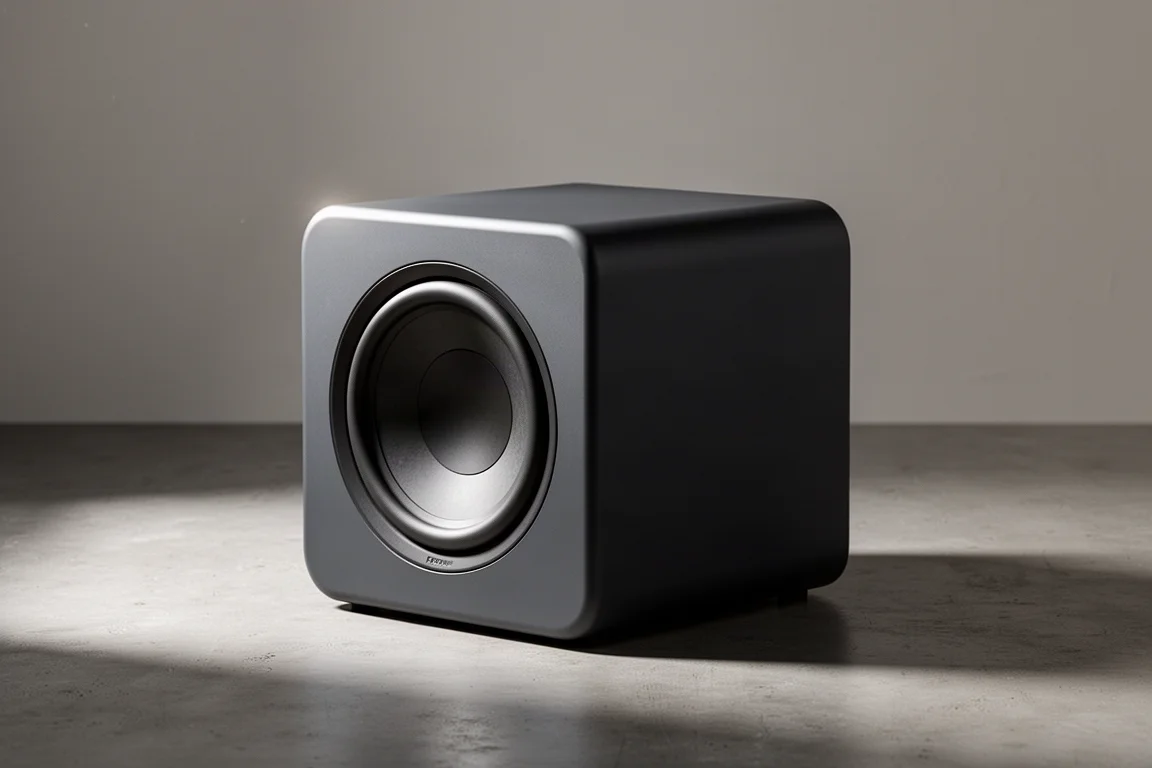
The KEF KUBIK 8 is a compact subwoofer priced at 649 euros, and it reaches down to roughly 22 Hz. In the streaming system it integrates through the WiiM Amp Ultra’s DSP, which handles crossover duties and time-aligns the subwoofer with the Dali speakers, then applies room correction to smooth out bass peaks and dips below about 300 Hz.
The effect is not subtle. Bass-heavy material gains proper weight and authority, with low notes rolling through a room rather than disappearing. It is worth being clear about the limits, though: room correction can address bass behaviour below roughly 300 Hz, but it cannot fix reverb problems above that range. Adding the subwoofer also pushes the three-unit streaming system just past the 1,500 euro mark.
Arcam A5 Plus: Traditional Class AB Authority
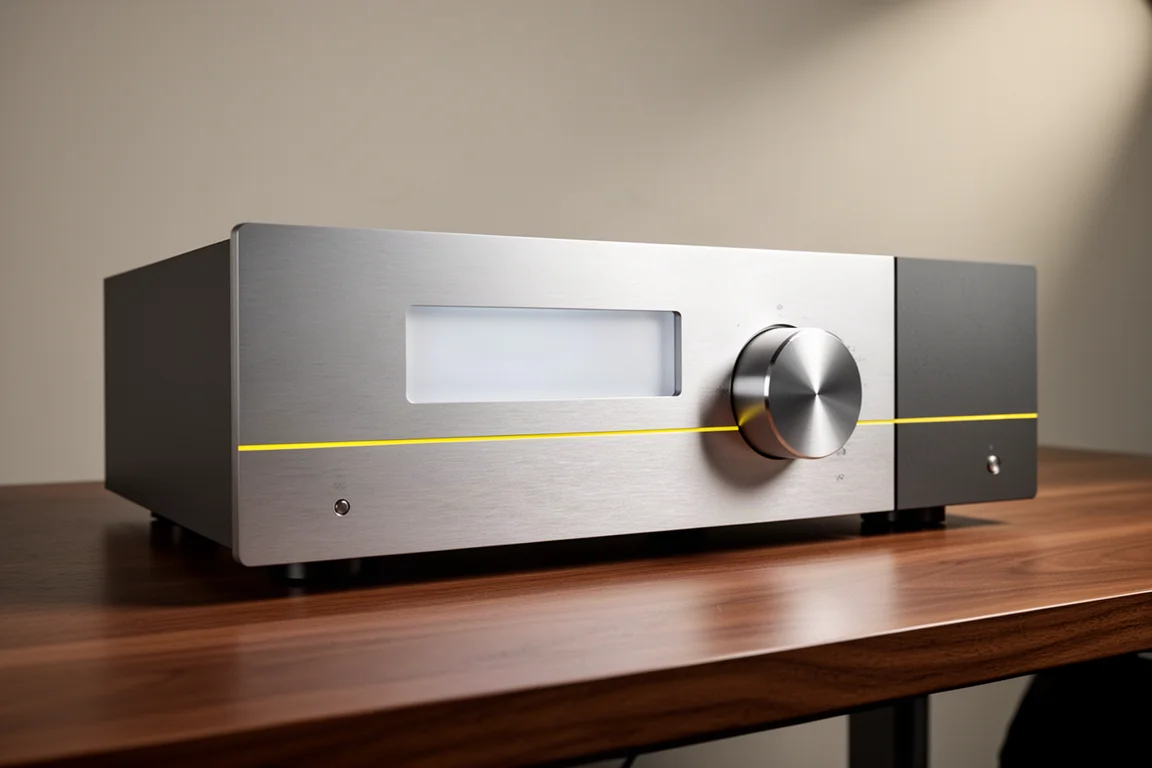
The Arcam A5 Plus takes the opposite stance. At 799 euros it is a full-width integrated amplifier with subtle yellow accents that echo the Dali finish, and it promises a modest 75 watts per channel into a 4 ohm load. Inside is a large toroidal transformer feeding a Class AB output stage, and at just over 8 kg it weighs more than three times what the streaming amplifier does.
There is no touchscreen and no streaming. Its OLED display sits behind a frosted front panel showing input, volume, incoming sample rate, and menu settings, though it is blurry enough that you will squint from across the room. Connectivity covers a single TOSLINK input, two coaxial inputs, three line-level inputs that stay analogue, and an MM phono stage. There is also a headphone socket that drives demanding headphones well, Bluetooth that supports aptX Lossless for CD-quality lossless streaming, and preamplifier outputs for a subwoofer, though subwoofer integration here means manual calibration.
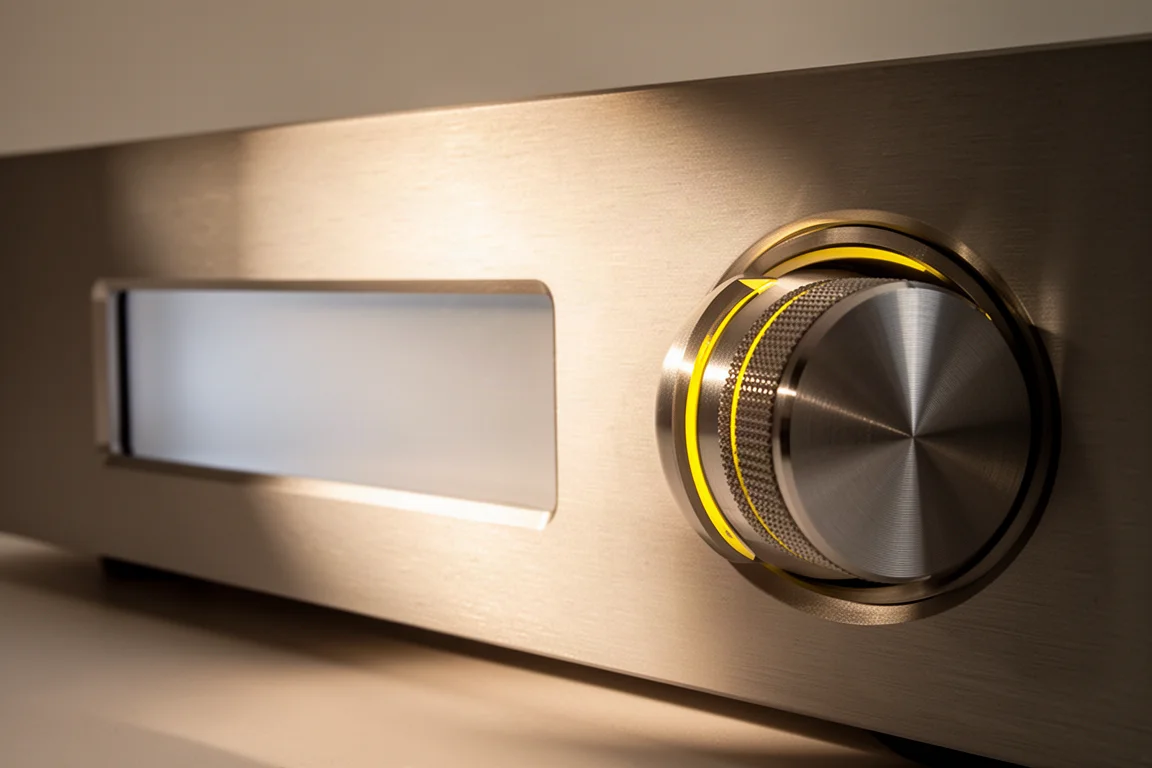
The numbers do not tell the story. Those 75 watts completely outclass the streaming amplifier’s 200 watts into the same 4 ohm load, adding body and weight where the other sounds threadbare. Piano edges are rounded just enough to avoid harshness without losing detail, and dynamic material explodes with a scale the Class D design cannot match. The KUBIK’s early bass roll-off becomes far easier to ignore, not because the Arcam invents low frequencies, but because it fills in everything that is present with such conviction that what is missing stops mattering. With this amplifier, there is no real pull toward adding a subwoofer.
FiiO SR11: Adding Streaming to the Arcam
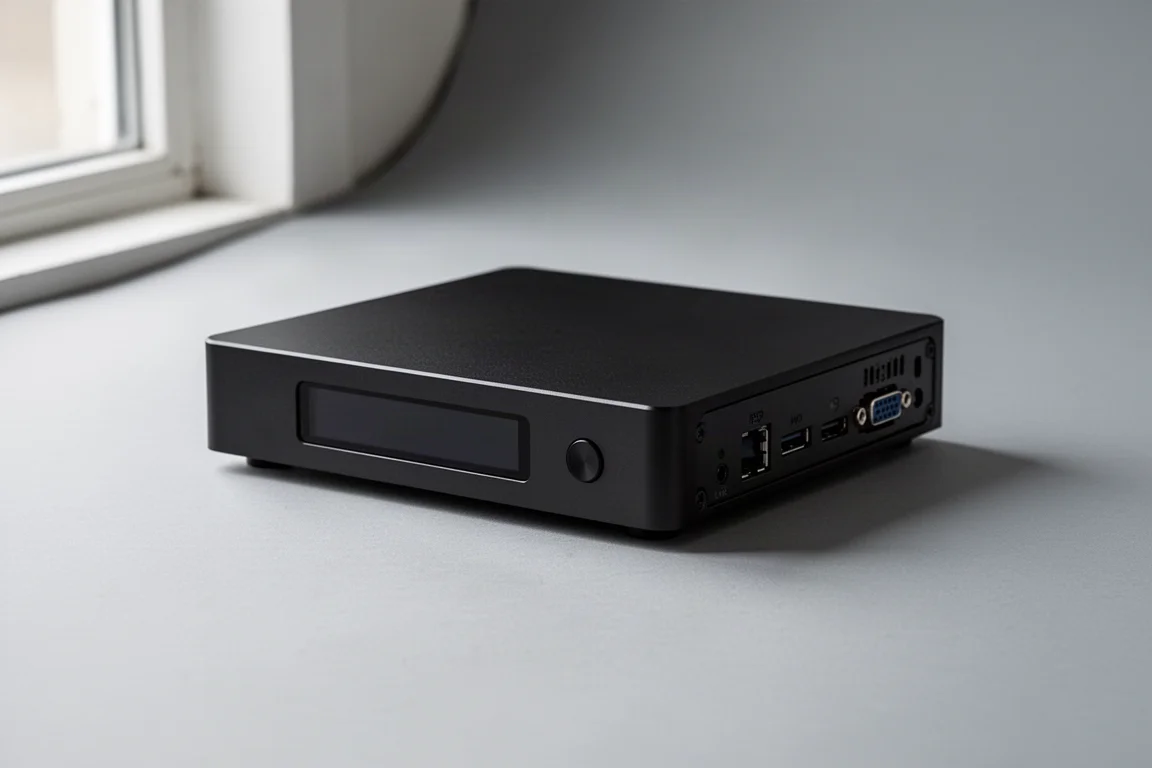
The FiiO SR11 solves the Arcam’s one obvious gap. It is a compact network streamer that connects to the amplifier’s single TOSLINK input, and it is Roon Ready, so it has been certified to receive streams from a Roon server without issue. Together the Arcam and the SR11 come to 928 euros.
Roon itself is straightforward to run: the server software, Roon Core, is available for Windows and macOS, and once a local library or a TIDAL or Qobuz account is connected, music streams to certified endpoints such as the SR11 and the WiiM Amp Ultra. The result is a traditional analogue amplifier with modern streaming bolted on, rather than baked in.
Which System Should You Choose?
For the convenience-first buyer, the streaming system makes the most sense. It is modern and approachable, the touchscreen is genuinely useful, and the automated room correction alone could justify the choice for anyone listening in a smaller room with bass problems, which describes most small rooms. The three-unit configuration of amplifier, speakers, and subwoofer lands just over 1,500 euros and covers streaming, correction, and subwoofer management in a single app-driven package.
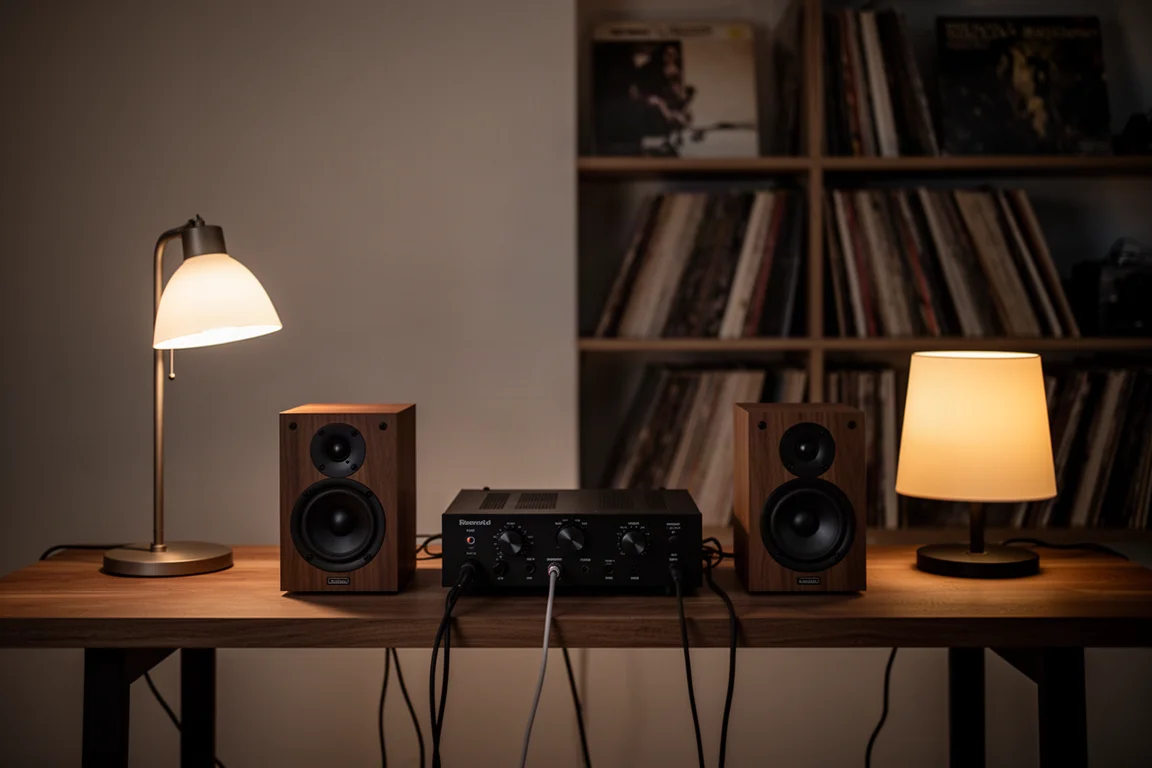
For the performance-first buyer, the traditional route is more compelling. The Arcam makes a 330 euro standmount sound like it deserves a considerably more expensive amplifier partner, and that fleshier, more robust presentation turns an interesting budget speaker into a genuinely engaging one. A Dirac-equipped Bluesound Node can be added for around 500 euros if room correction is essential, which narrows the feature gap. Elsewhere in the market, the Marantz Stereo 70S splits the difference with Class AB amplification, internal streaming, and an HDMI-driven now-playing screen, while the KEF LSX II LT active speakers offer another route entirely, with a coaxial driver that images better in the near field than the Dali’s non-coaxial design.
The question is not features versus performance in the abstract. It is which one keeps you listening to whole albums rather than analysing individual tracks.
Conclusion
At around 1,500 euros, the choice between a software amplifier and a traditional one is really a choice about priorities. The WiiM Amp Ultra system delivers streaming, touchscreen control, room correction, and automated subwoofer integration in a package small enough for a desktop. The Arcam A5 Plus delivers drive, body, and refinement that make difficult speakers sound complete, at the cost of adding a separate streamer and doing subwoofer setup by hand.
If convenience and modern features come first, the streaming route is the sensible one. If musical satisfaction with demanding speakers comes first, the traditional route earns its place. Both are legitimate answers at this price; they simply answer different questions.
Further reading
Related Reviews
Hi-Fi Audio
Accuphase C-57 vs Allnic H-7000V: Two High-End Phono Stages Compared
A fully balanced solid-state phono stage with a pitch-black noise floor meets a tube design built for well-loved records. Here is how to choose between them.
Hi-Fi Audio
Active vs Passive Hi-Fi: Five Components for a Modern System
Five components that define modern active and passive hi-fi systems, with the strengths, trade-offs and setup details worth weighing before you buy.
Hi-Fi Audio
Advance Paris A10 Apex Review: A Hybrid Integrated Amplifier That Covers a Lot of Ground
A French hybrid integrated amplifier with a class A tube preamp stage, analogue power meters, and an internal DAC and phono stage good enough to make extra boxes unnecessary.