Hi-Fi Speakers
Best Hi-Fi Speakers 2026: Floorstanders and Bookshelves Worth Considering
A practical look at seven speaker options, from neutral towers and bookshelves to dynamic high-energy designs, with notes on amplification, rooms, and listening habits.
Introduction
Choosing speakers has become harder in a good way. Technology that once lived at the top of a brand’s range now reaches more affordable models, and the result is that the gap between a value-focused tower and a flagship tower is narrower than it used to be. That is excellent news for buyers, but it also means the decision is less about which speaker is objectively better and more about which one suits your room, your amplifier, and the way you actually listen.
This roundup covers seven speaker options that keep coming up in the same conversation. Some are neutral, measurement-first designs. Others lean towards dynamic contrast and a little more energy. All of them are capable, and the differences between them are the kind you notice when you compare directly rather than the kind that make one of them a mistake.
How to Think About This Roundup
A few criteria separate these speakers more than any marketing claim does. Bass extension in a real room, off-axis behaviour, how much amplifier headroom the design demands, build and finish quality, and how gracefully the speaker accepts tuning through parametric EQ or room correction.
Listening level matters more than most buyers expect. At low in-room levels, roughly 40 to 60 dB, speakers with a gently V-shaped curve or a small lift in the bass and upper midrange tend to sound fuller and more engaging. Very neutral speakers often come into their own at higher, cinema-style levels. Neither approach is wrong; it simply tells you what kind of listener you are.
Tuning philosophy matters too. It is easier to cut than to boost. Room correction systems typically reduce peaks rather than inject energy, because adding energy stresses the driver and the amplifier and can introduce clipping that was not there before. A speaker with a little extra energy in reserve gives you more to work with.
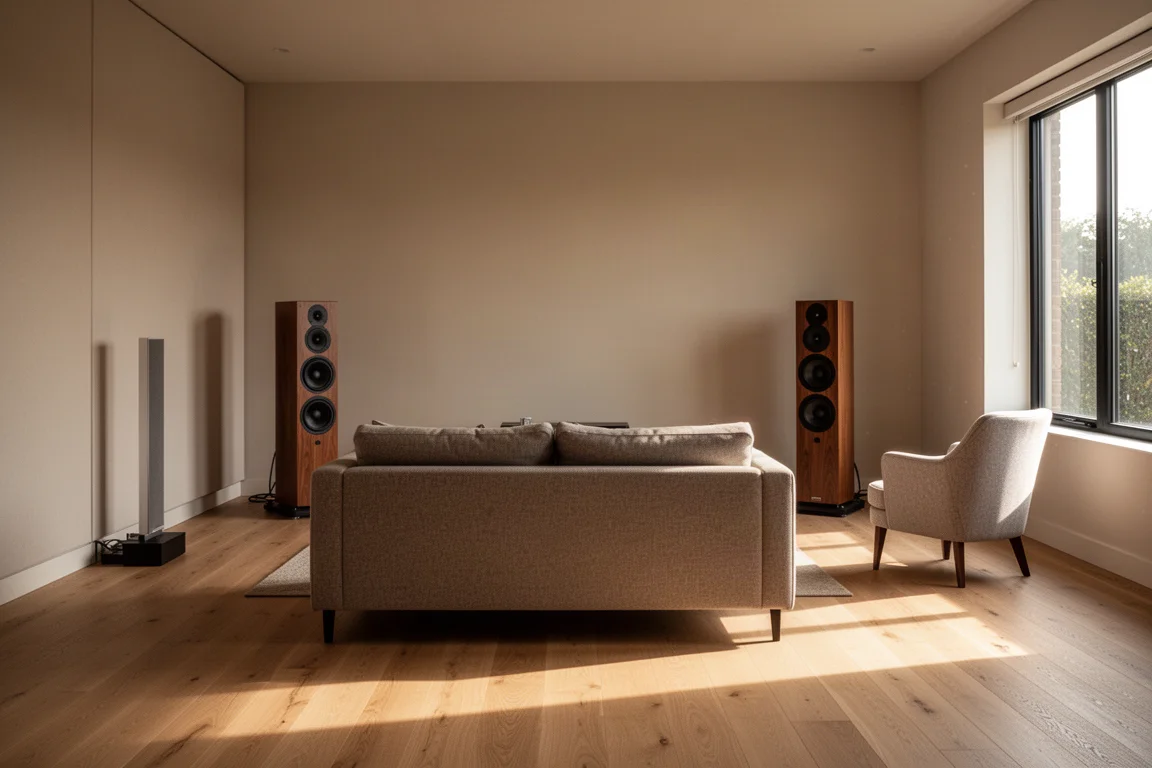
Each section below notes where a speaker sits on that spectrum, along with the practical considerations that come with it: stands, subwoofers, amplification, and room size. Read them as a set rather than as a ranking.
SVS Titans: A Reference Point for the Money
The SVS Titans are a tower pair with a matching centre channel, and they sit in the roughly $4,000 region that has quietly become the most competitive part of the market. What makes them notable is not one standout trait but the way they combine several: bass depth, dynamic contrast, and a lively presentation that stays easy to live with.
They also respond well to tuning. If you enjoy experimenting with parametric EQ or room correction, the Titans take adjustments gracefully. Listeners who value sonic contrast tend to gravitate towards them, and in direct comparisons more neutral speakers can sound flat beside them. Build a complete system around the matching centre and a $10,000 budget still leaves room for electronics.
KEF Q11 Meta: Trickle-Down Tech in a Room-Friendly Tower
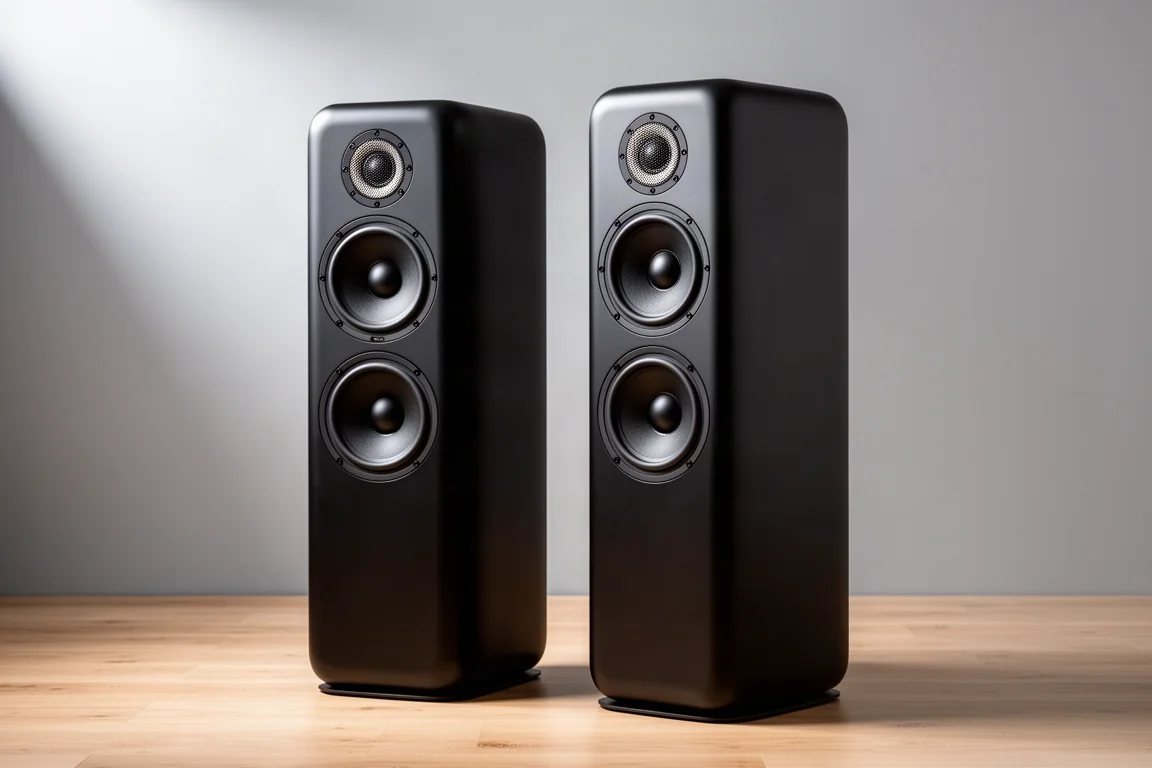
The Q11 Meta brings technology from KEF’s higher R line down into a tower that costs around $2,000 per pair. The cabinet is slimmer and more living-room friendly than the R11 Meta, and in-room bass with boundary compensation reaches below 30 Hz, which is a genuinely useful amount of low end for a tower at this price.
Off-axis performance is very serviceable. The matching centre channel is not sloped, and it still works well when you are seated above it, which matters in rooms where the centre sits below a television. Grilles are included now, a change from a time when they were sold separately.
The voicing is neutral and follows a gently downward-sloping curve in room, which is what most listeners prefer in a real space. Dynamics are present, though the Q11 punches and then pulls back rather than snapping hard. If you want a neutral tower that settles into a living space without dominating it, this is a strong candidate.
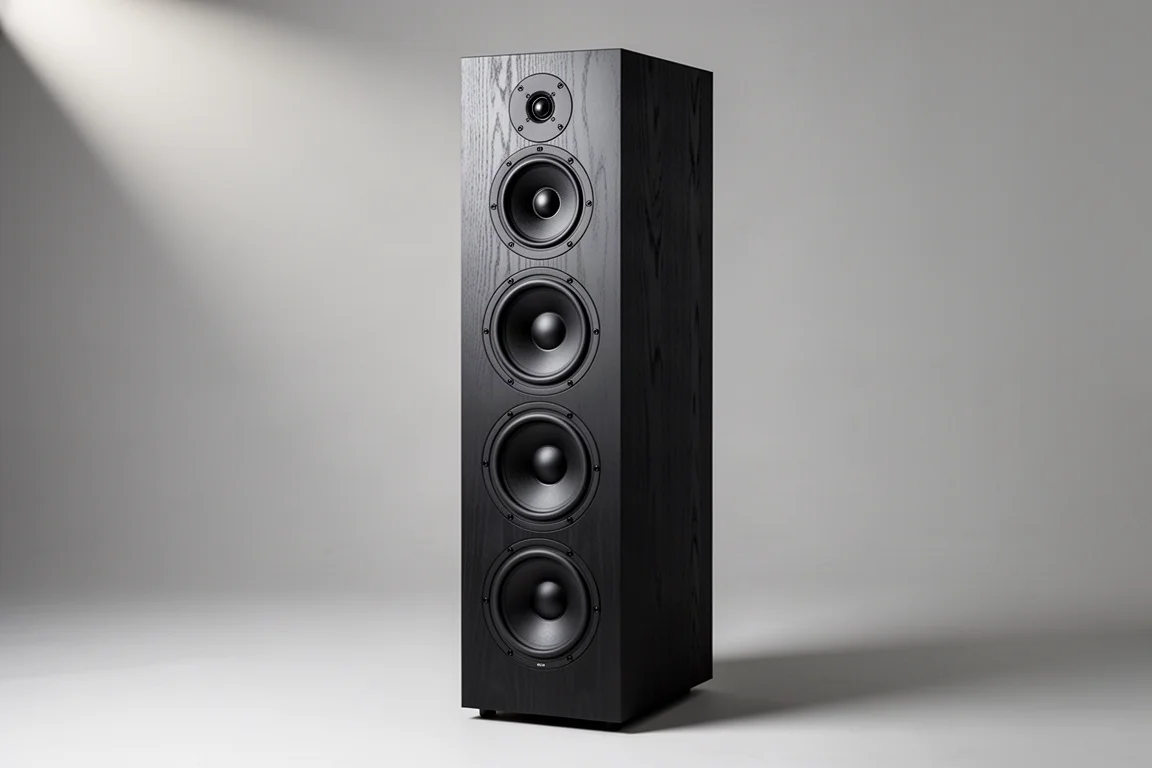
KEF R3 Meta: The Neutral Bookshelf Benchmark
The R3 Meta is a three-way bookshelf at around $2,000 per pair, and it is one of the most complete bookshelf speakers at that price. It is hard to fault on measurements, it stays composed across a wide range of material, and it is genuinely neutral.
The catch is bass. To match what the Q11 Meta delivers out of the box, the R3 Meta needs a subwoofer. It is also a hefty speaker, so it needs proper stands rather than a lightweight pair. Add those two costs and you are spending a little more than the tower route, in exchange for placement flexibility and tighter control over low frequencies.
That trade-off is worth thinking through carefully. If your room is small or your seating position is awkward, a bookshelf plus subwoofer can be easier to integrate than a tall tower. The R11 Meta is an outstanding tower, but its height can complicate television and film listening in smaller rooms.
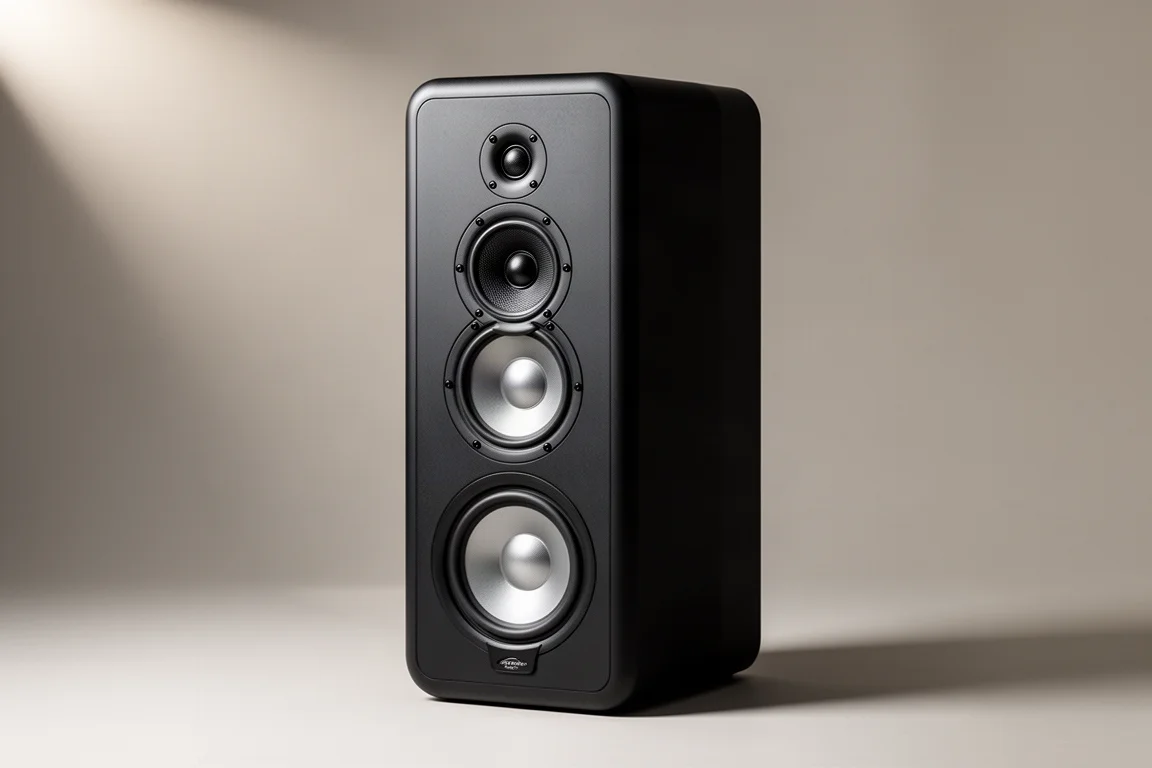
Polk Reserve R700: Dual Eight-Inch Drivers Need Real Power
The Reserve R700 carries over much of the engineering from Polk’s Legend series into a simpler, more flexible visual package with more finish choices. Largely the same drivers and components, arranged in a way that fits more rooms.
Its two 8-inch woofers are the headline, and they are also the reason to think about amplification. Controlling dual eight-inch drivers properly can call for a slightly larger investment in an AVR or a separate power amplifier. In practice that is a modest consideration rather than a dramatic one, but it is real, and it is worth budgeting for.
Choosing between the R700 and a neutral tower like the Q11 Meta comes down to preference in looks and sound rather than a clear winner. If the Polk approach appeals to you, the value on offer is strong.
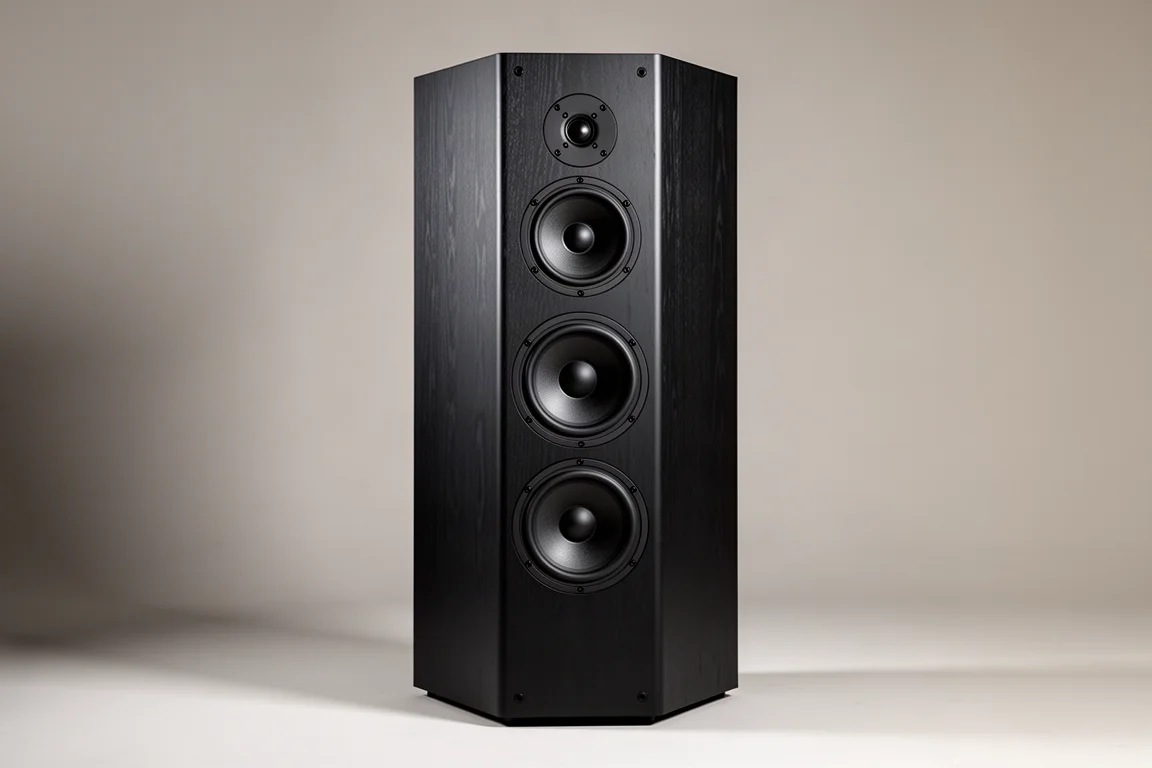
MartinLogan XT F100: Built Like a Bigger Speaker
The XT F100 is a stout, solidly built tower with better materials, finishes, and general structure than its price might suggest. It has more bass on tap, and that bass is more controlled and better damped, which makes it easier to shape with EQ if you want a different balance.
There is more treble energy too, which can help intelligibility for some listeners, and the cabinet holds together when you push it hard, well past the point where lesser designs start to rattle. Think of it as a grown-up, refined take on a dynamic, high-energy speaker.
It is not the most neutral option here. If your priority is measurement accuracy, the KEF models will likely measure better. If your priority is dynamic contrast and a punch with fast recoil, the XT F100 is the more satisfying listen.
Listeners who want that snap often compare it with the Polk Reserve R700 and the Klipsch RP-8000F Mark I, both of which lean towards a similarly energetic presentation. The XT F100 sits at the more refined end of that group.
Q Acoustics Concept 50: Soundstage and Sculpture
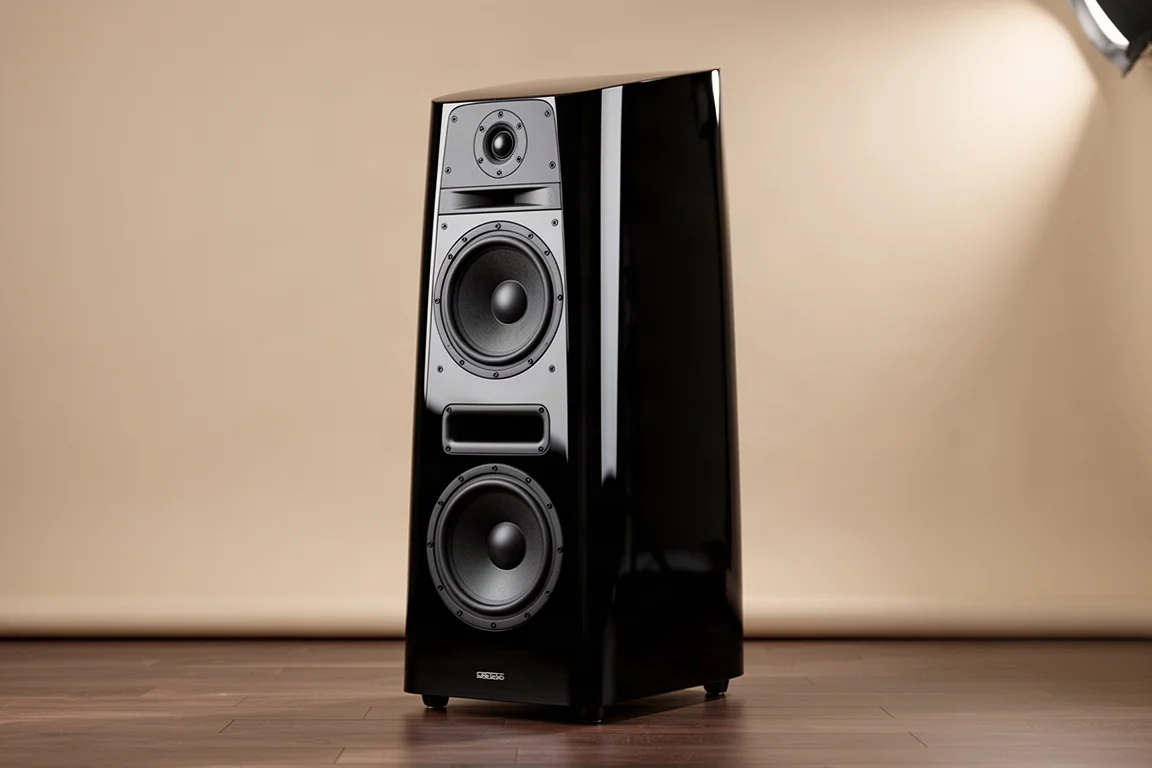
Q Acoustics speakers share a signature strength that runs up and down the range: a large soundstage. They disappear into the three-dimensional space with unusual ease, and separation between the left and right channels, and between individual elements inside a recording, is excellent.
The trade-off is a slightly lighter sense of density between and around the speakers compared to a tower like the Q11 Meta. Some listeners read that as openness, others as a little less weight. The tweeter also carries a touch of energy in the brilliance region, which adds airiness; some listeners notice it and some do not.
The Concept 50’s compact, sculptural form factor is a genuine advantage in a living space, and it is endlessly tunable. As with most compact floorstanders, a subwoofer is still worth considering for deep bass.
Monitor Audio Silver Series: Composed at Low Volume, Fun When Pushed
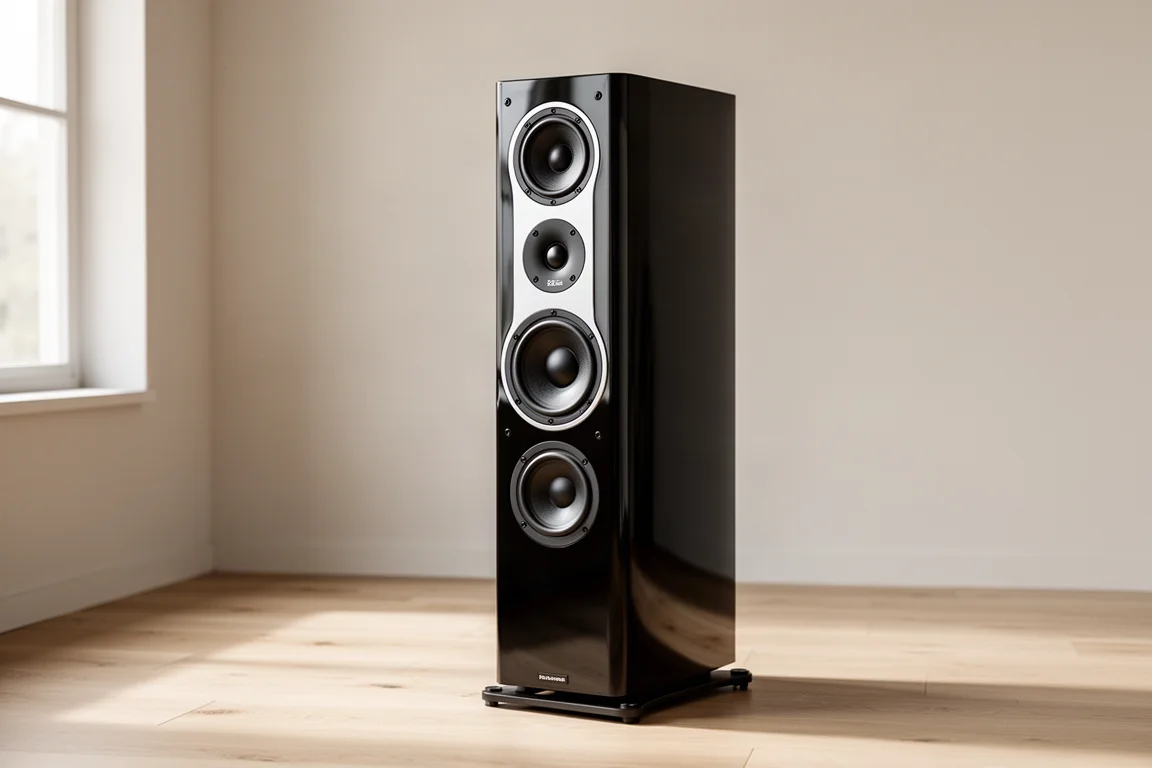
Monitor Audio’s Silver series blends a neutral, linear balance with a touch of dynamic snap in the low end. At low volumes it stays very even-keeled, and as you turn it up it picks up energy, which makes it enjoyable across a wide range of source material.
Finish quality is a real strength, particularly in the wood veneer options, and the cabinets feel a step above what the price suggests. If you want something that is not quite as true to source as a fully neutral design, but is more neutral than a V-shaped speaker while keeping some of that snap, this is a sensible place to land.
Buying Advice: Matching Speakers to Rooms, Amps, and Listening Habits
Demoing is the part most buyers find hardest, especially with fewer places to hear gear in one room. The most useful approach is to listen without a purchase decision attached. Visit a local dealer on a quiet day, be upfront that you are browsing, and simply take in as many systems as you can. Trade shows work the same way: go room to room, and note which rooms elicited a reaction. That reaction is the only signal you really need.
Comparing notes with other listeners helps too. If someone whose taste you trust says a speaker is similar to one you already liked, that is a useful shortcut. If they say it is the opposite, you can cross it off your list.
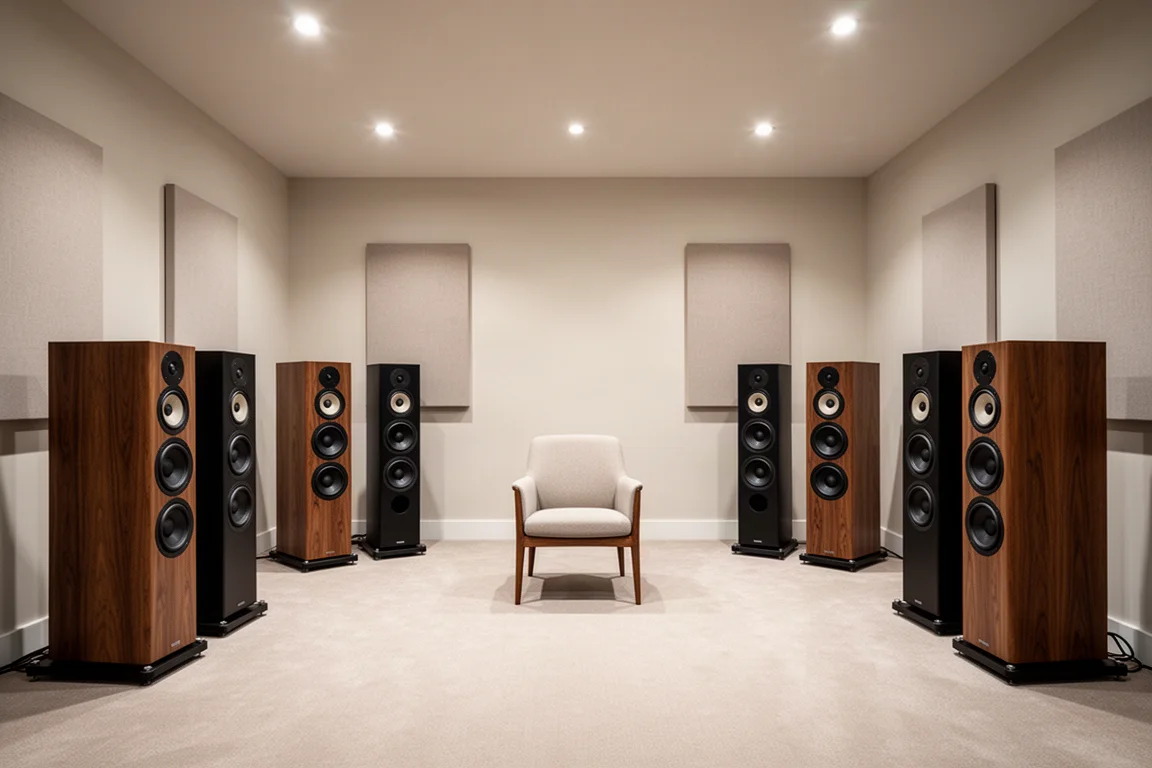
It is also worth pausing before you upgrade. If you bought a serious pair of speakers in the last few years, there is a good chance they are still very good. Placement, room orientation, and subwoofer setup are often the real bottlenecks, and a change in position can do more for your system than a change in model.
Conclusion
These seven speakers cover a wide spread of priorities rather than a single ranking. The SVS Titans reward listeners who want dynamic contrast and tuning flexibility. The KEF Q11 Meta and R3 Meta serve buyers who value neutrality, with the tower offering more bass out of the box and the bookshelf offering more placement freedom. The Polk Reserve R700 brings big woofers and a value-focused visual package. The MartinLogan XT F100 leans into punch and build quality. The Q Acoustics Concept 50 delivers soundstage in a compact sculptural shape. The Monitor Audio Silver series sits between neutrality and snap.
Match the speaker to your room, your amplifier, and the volume you actually listen at, and any of these will serve you well for years.
Further reading
Related Reviews
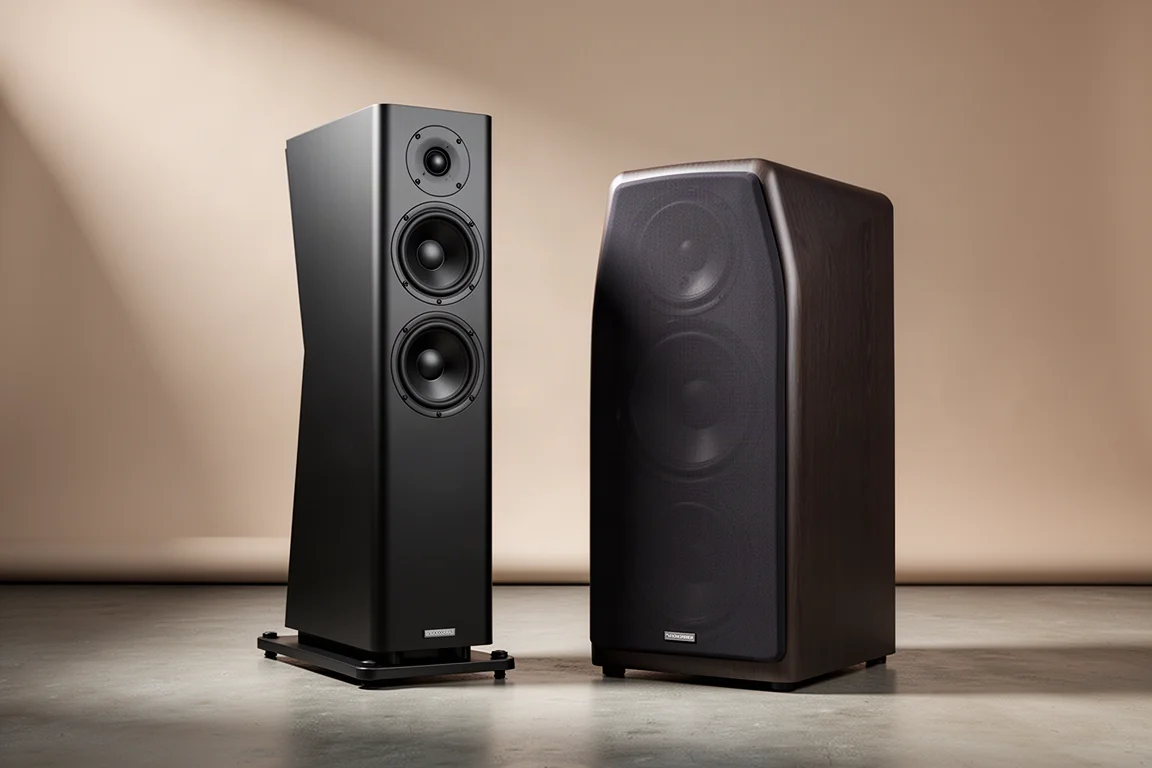
Hi-Fi Speakers
1723 THX Tower vs 1528 Bookshelf: Which Speaker Fits Your Room?
Two speakers at roughly the same price, built very differently. How the 1723 THX tower and the 1528 bookshelf compare on construction, bass, power needs, and sound.
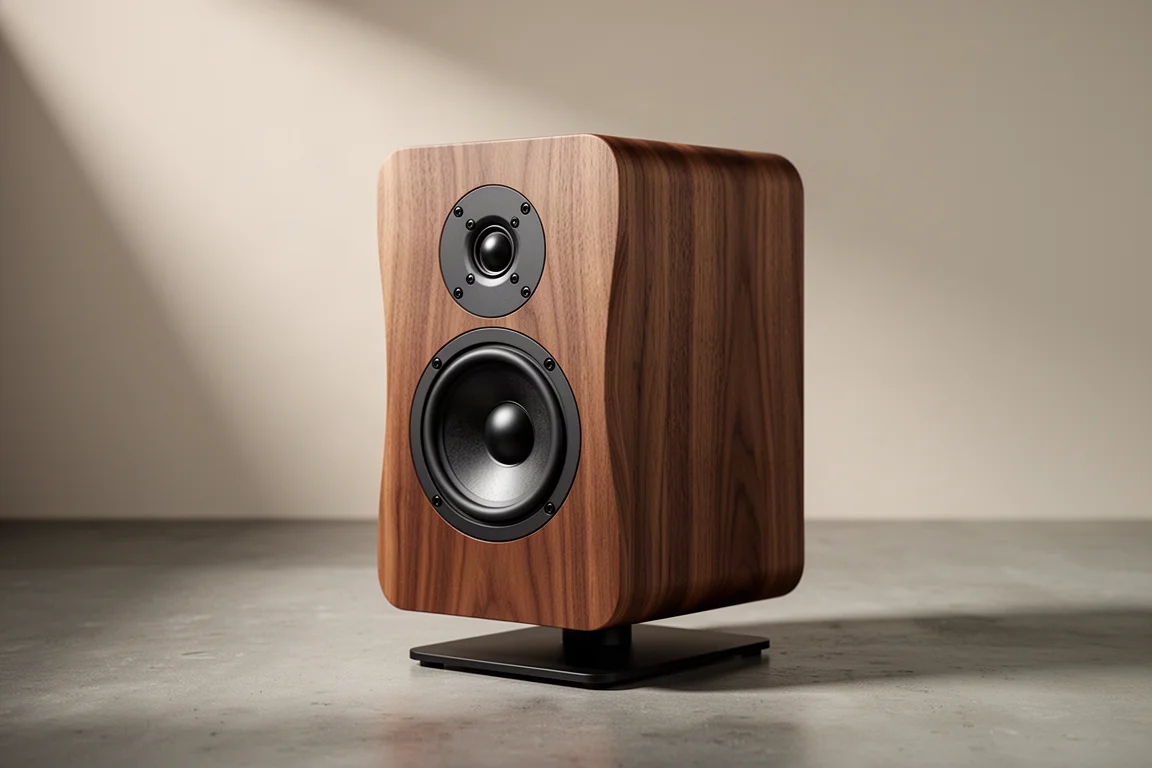
Hi-Fi Speakers
Acoustic Energy AE 300 Review: Deep Bass From a Compact Standmount
A two-way standmount with real wood veneer, surprising low-end weight, and a warm, easygoing character. Here is what to know before buying.
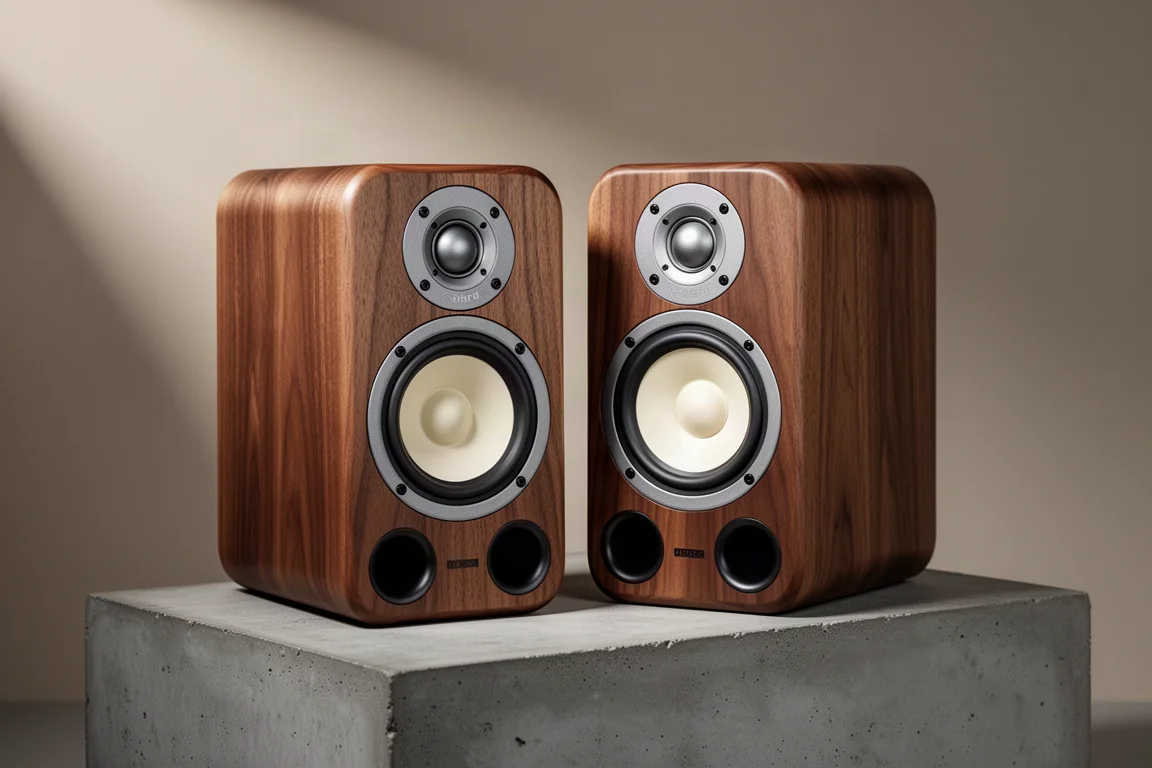
Hi-Fi Speakers
Acoustic Energy AE1 40th Anniversary Review: A Modern Take on a British Classic
A compact standmount that revives a 1980s favorite with all-new parts, a warm mid-centric balance, and a price of £1,499 per pair.