Hi-Fi Speakers
Best Hi-Fi Speakers Between $1,000 and $3,000: Six Standout Bookshelf Picks
Six hi-fi bookshelf speakers between $1,000 and $3,000, compared on build, bass, refinement, imaging, and amplifier friendliness.
Introduction
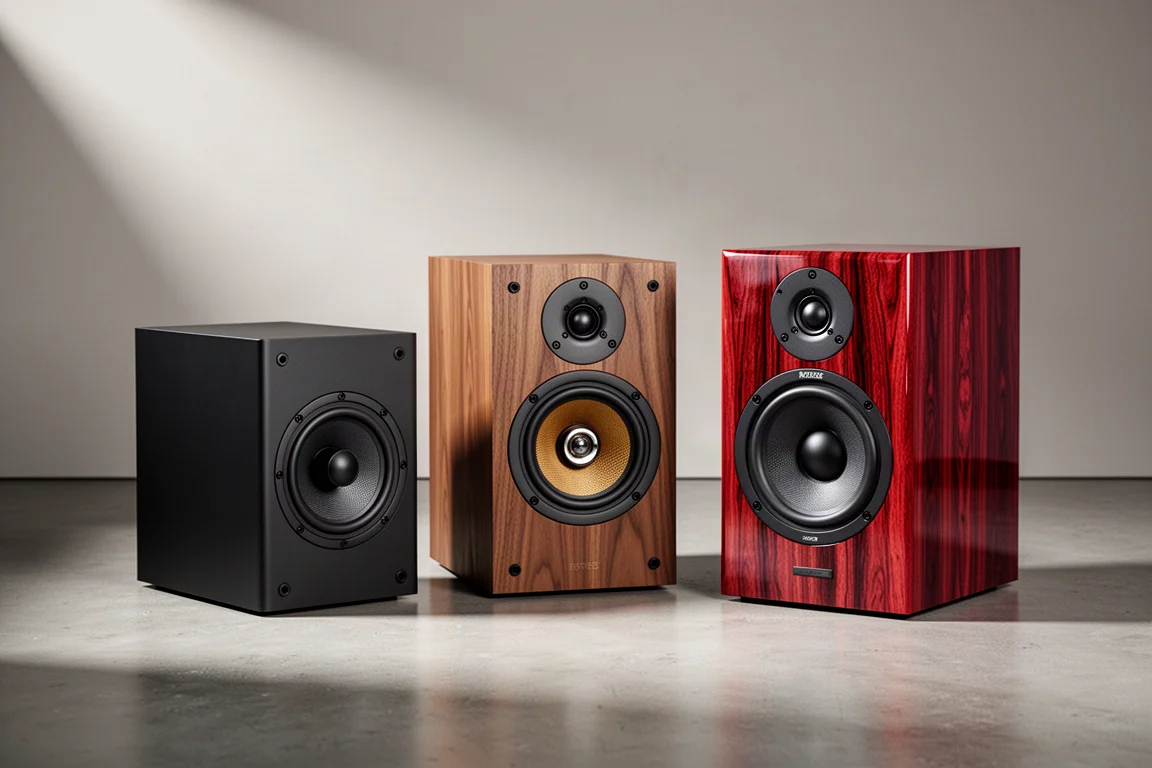
Between roughly $1,000 and $3,000, bookshelf speakers stop being a compromise and start behaving like serious hi-fi. This is the band where cabinet bracing, driver engineering, and crossover quality all matter, and where a well-chosen pair can carry a small or medium room without a subwoofer.
Six speakers make this shortlist: the KEF R3 Meta and its more affordable sibling, the KEF Q Concerto Meta; the Buchardt S400 MKII; the CSS 1TD-X kit; the Arendal 1723 THX S Monitor; and the compact KEF LS50 Meta. Each has a distinct character, and the right pick depends less on the price tag than on how you listen, how much space you can give the speakers, and what you plan to drive them with.
How These Speakers Were Evaluated
Every speaker here was judged across the same set of practical criteria: cabinet build and finish, bass texture and extension, midrange fullness and refinement, treble smoothness, soundstage width and depth, separation between instruments, imaging focus, behaviour at low and high volume, amplifier friendliness, and overall value for the money.
That last point matters more than it usually gets credit for. A speaker that demands an expensive amplifier to sound its best is not really a budget speaker, and a speaker that sounds excellent on modest electronics is worth more than its sticker price suggests. Placement is the other half of the equation: rear-ported designs need breathing room, and dual concentric drivers need their acoustic centre aligned with your ears.
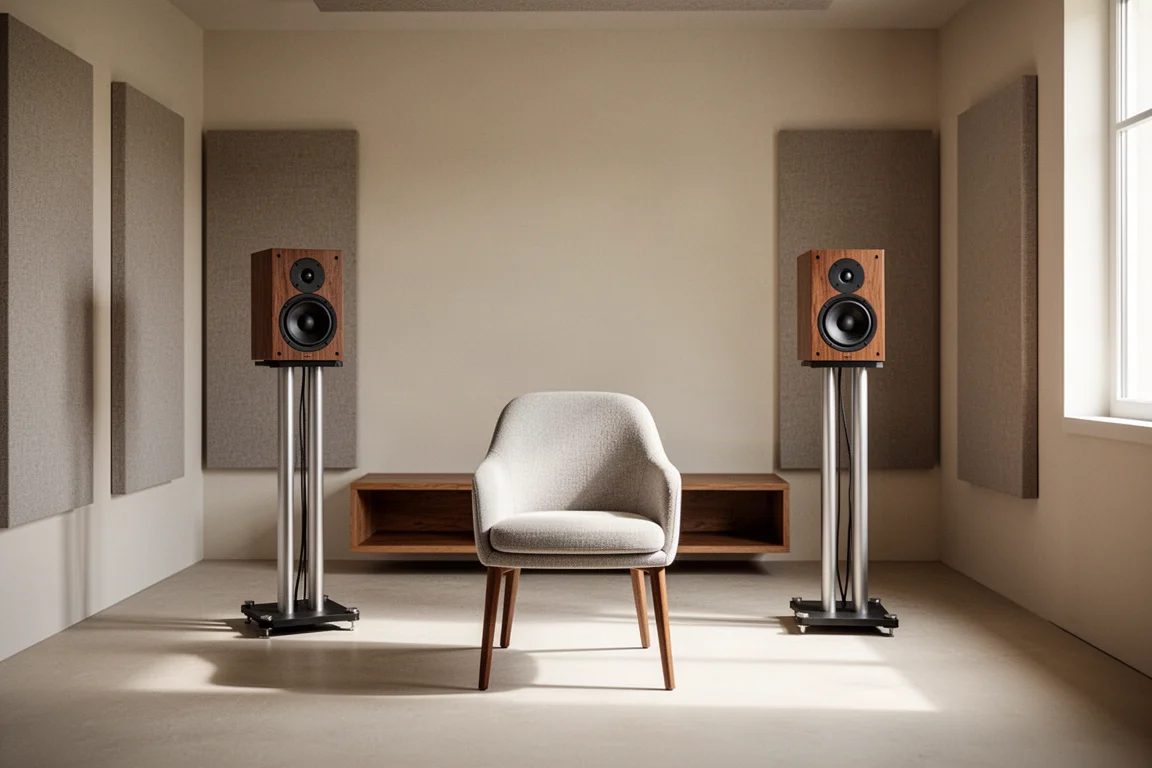
Room size, listening distance, and the amount of space behind the speakers shape the result as much as the drivers do. A speaker that is spectacular two feet off the front wall can turn muddy when pushed into a corner, and the reverse is just as common.
KEF R3 Meta
The KEF R3 Meta is the most complete all-rounder in this group. It runs about $2,500 and is a three-way design built around KEF’s Uni-Q driver array, in which the tweeter sits at the centre of the midrange driver so both frequencies radiate from a single point. The result is a locked-in phantom centre and notably coherent imaging.
In specification terms, the tweeter measures 25 mm, the midrange driver 5 inches, and the woofer 6.5 inches with a hybrid aluminium cone that coats a paper cone for added stiffness. KEF’s Meta material sits behind the tweeter and absorbs the vast majority of unwanted rear energy inside the cabinet, which cleans up standing waves and reflections. The cabinet is rear-ported, bi-wirable and bi-ampable, and finished to a high standard, with the heaviest and most substantial construction of the two KEF models here. Sensitivity is rated at 87 dB, and it is the easier of the two KEF speakers to drive, sounding good on a wide range of amplifiers, including budget models.
Sonically, the R3 Meta leans full and substantial rather than overtly warm. The midrange has real body, the treble is exceptionally refined for the money, and the bass digs lower than its cabinet size suggests. It also performs unusually well at low volume, staying balanced and detailed at 70 dB or below. It does need space: a foot or two from the rear wall at minimum, plus some experimentation with toe-in to trade soundstage width against image focus.
KEF Q Concerto Meta
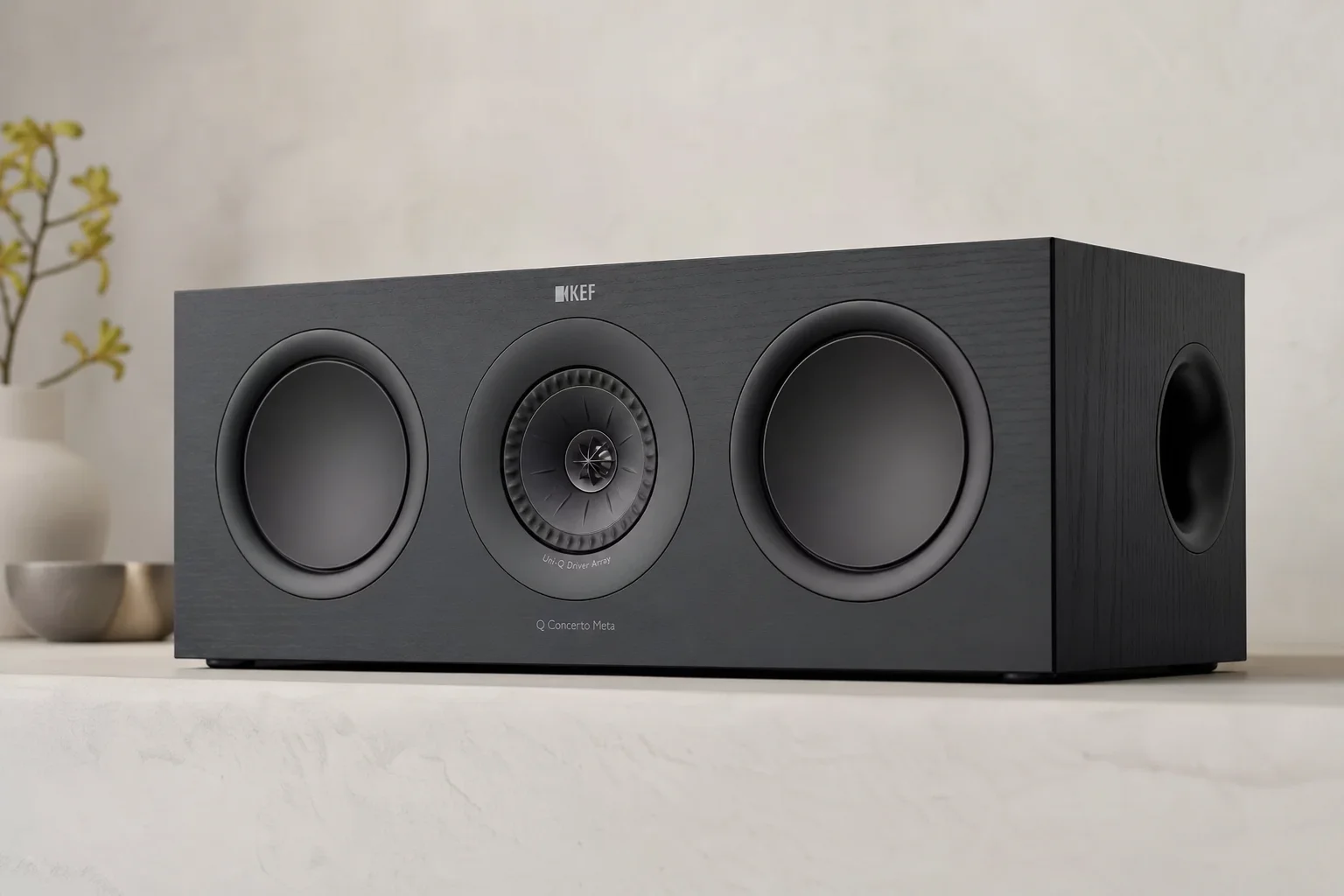
At about $1,299, the Q Concerto Meta is roughly half the price of the R3 Meta, and it shares the same core thinking: a three-way Uni-Q array with Meta material behind the tweeter, and a 6.5-inch hybrid aluminium woofer. The concentric drivers are smaller, with a 19 mm tweeter and a 4-inch midrange, and sensitivity is rated at 85 dB. In practice it asks for more power than the R3 Meta and rewards being turned up.
Build quality is a step below its more expensive sibling. The binding posts are single rather than bi-wirable, and the cabinet bracing is less elaborate, though the walnut finish looks convincingly like veneer and holds up well at this price.
The Q Concerto Meta has a mildly V-shaped balance: a little more bass weight and a little more treble presence, with the midrange sitting slightly back as a result. That tilt makes instrumental music genuinely thrilling, with an expansive sense of space, but vocal-led tracks need more volume before the midrange fills in. It is a speaker that comes alive at medium to higher levels, and it pairs well with integrated amplifiers that grip the low end.
Buchardt S400 MKII
The Buchardt S400 MKII has been a reference point in this price bracket for a while, and it remains one. It sells for around $2,500, and despite being physically smaller than the R3 Meta it produces bass that extends and moves with the weight of a much larger floorstanding speaker.
Its character is the opposite of clinical. The S400 MKII is warm, rich, and inviting, with a smooth treble and a forgiving nature that flatters a wide range of recordings and genres. If you want a sound that relaxes rather than analyses, this is the one.
Two practical advantages stand out. It copes better when it has to sit closer to a wall, and it stays composed when you push the volume. The trade-off is that it gives up a little separation and nuance compared with the R3 Meta, and its cabinet, while handsome in rosewood, is less substantial. On balance it holds its place on the shortlist rather than being displaced.
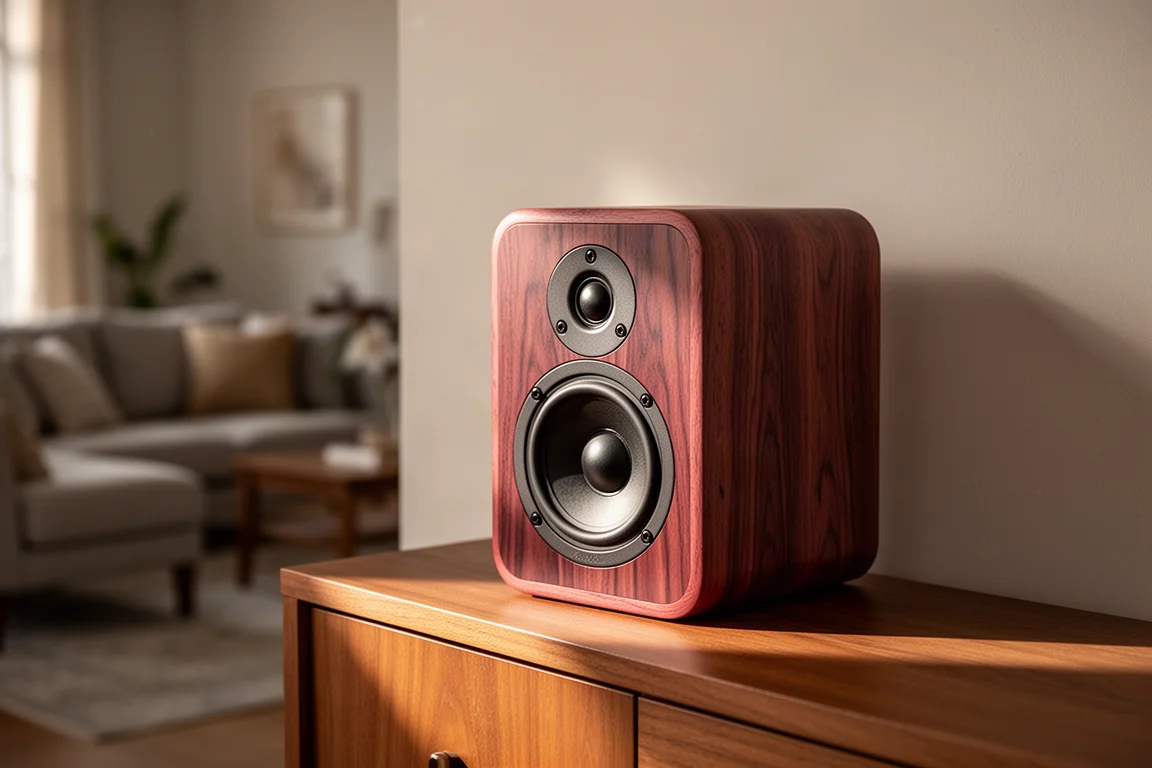
That combination of a small cabinet and floorstanding-scale bass is the S400 MKII’s signature, and it makes the speaker unusually easy to live with in rooms where a tower is not an option.
CSS 1TD-X
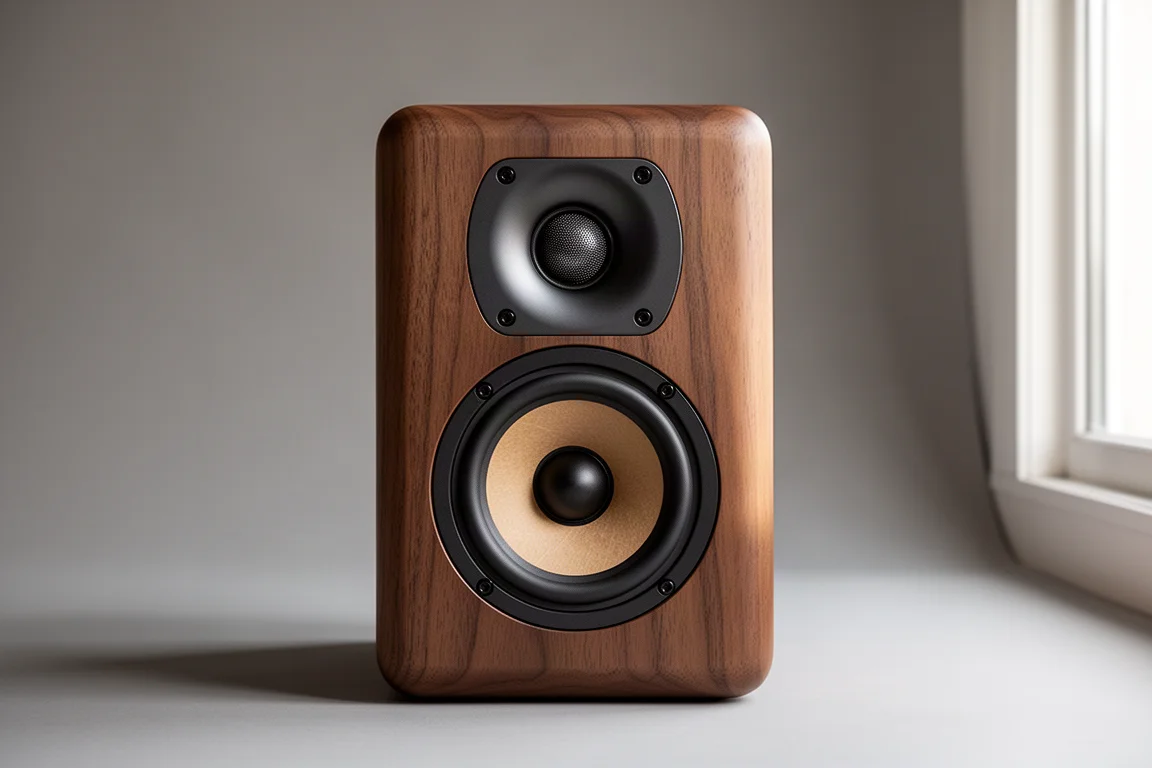
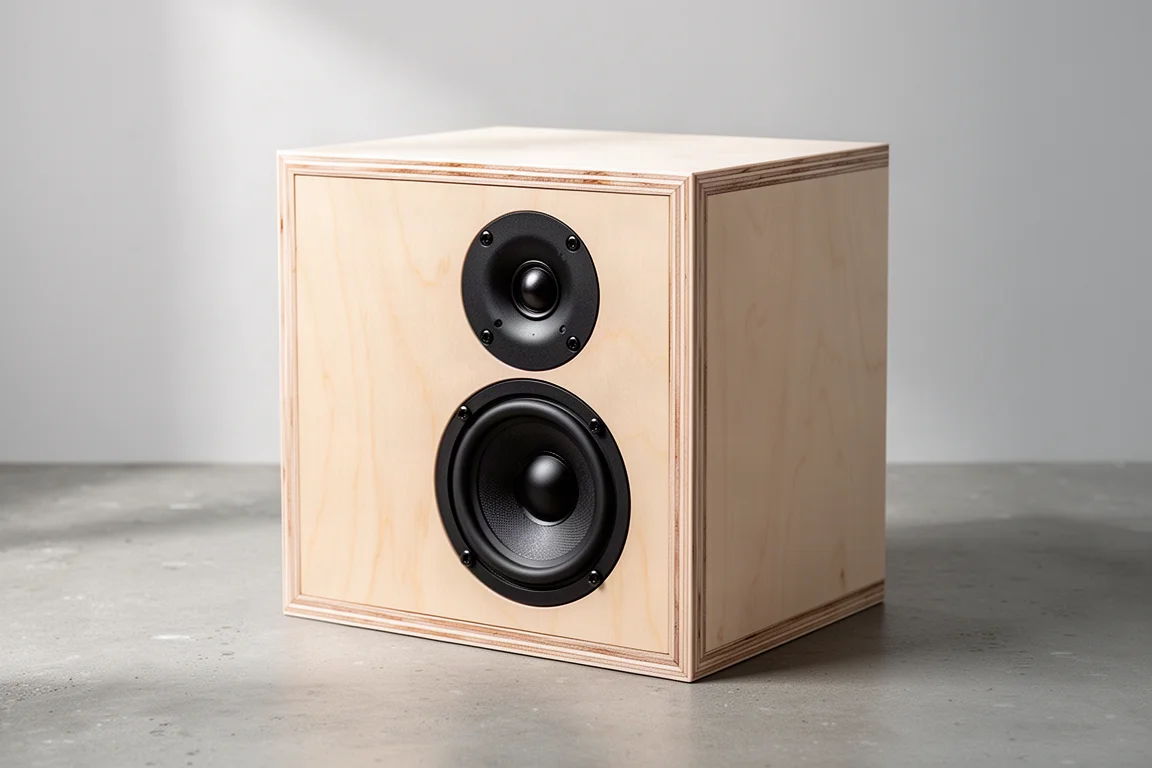
The CSS 1TD-X is the outlier here: a kit speaker you assemble yourself. Building it keeps the cost down, and it also lets you choose upgrades such as a superior crossover and a Baltic birch flat pack while staying inside the same price bracket. What you save in money you spend in time, since finishing and assembly are entirely down to you.
The payoff is a speaker that is slightly smaller than the Q Concerto Meta yet still delivers bass extension and dynamics comparable to the R3 Meta and the S400 MKII. Its midrange and treble are cleaner and more transparent, and it handles poor recordings more gracefully. Across tonality, refinement, and instrumental character, it is the more satisfying listen of the two, with the Q Concerto Meta’s wider sense of space the one area where the KEF pulls ahead.
For anyone comfortable with a soldering iron and a weekend of work, that combination of performance and value is hard to argue with.
Arendal 1723 THX S Monitor
The Arendal 1723 THX S Monitor is the measurement-led choice. It offers impeccable measured performance, an easier sensitivity rating, and a friendlier impedance load, so it is undemanding for an amplifier to drive. Its cabinet is built from HDF rather than MDF, a denser material usually reserved for more expensive designs, and it is backed by a notably generous returns policy and strong customer support.
Tonally it aims for neutrality above all. It is clean, transparent, and evenly balanced, and listeners chasing absolute linearity will find it the more neutral speaker next to the R3 Meta. It also tolerates being placed closer to wall boundaries.
Two caveats matter. First, it benefits enormously from a subwoofer, and adding a pair of matching subwoofers lifts the system well beyond its base performance while adding significant cost. Second, its unusually shaped cabinet makes stands hard to find, and the manufacturer no longer offers a dedicated stand for this lineup.
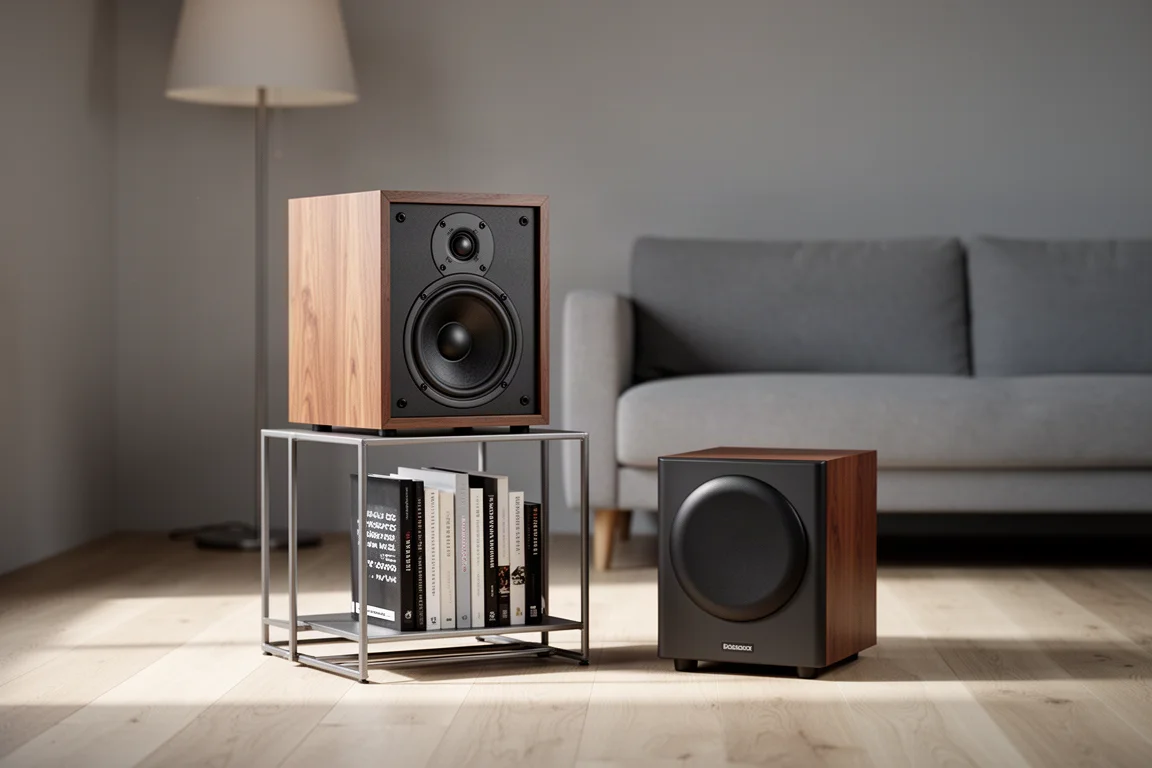
Because the cabinet geometry is unconventional, a stable, correctly sized stand becomes a real part of the buying decision rather than an afterthought, especially since the drivers need to sit at ear height.
KEF LS50 Meta
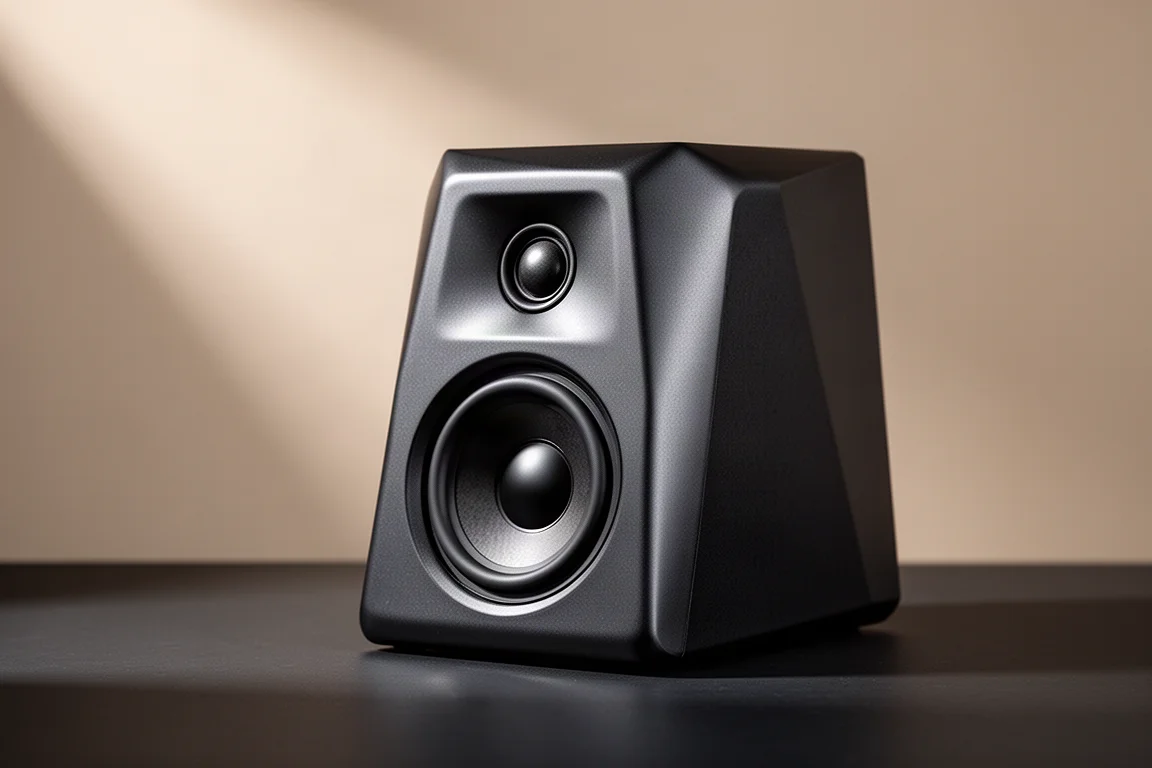
The KEF LS50 Meta is the compact option, and it now sits about $100 above the Q Concerto Meta, which makes the comparison unusually direct. Both use Uni-Q drivers with Meta material, and the two are closely matched on sensitivity and impedance. The LS50 Meta is the smaller speaker by a wide margin, with no dedicated woofer to support the concentric array.
That difference shapes everything. The Q Concerto Meta’s 6.5-inch woofer gives it noticeably more dynamic headroom, and it is far easier to pair with an amplifier and get a good result straight away. The LS50 Meta is notoriously sensitive to amplifier matching, and it can sound superb on one amplifier and underwhelming on another. Refinement is broadly comparable between the two, though the Q Concerto Meta sounds fuller and less dry through the upper midrange, and more fun overall.
Where the LS50 Meta still wins is nearfield and desktop use. On a desk, where you cannot pull the speakers out into the room, its compact size and controlled behaviour make it the smarter pick. Add a pair of compact subwoofers and the system scales impressively, though the cost rises sharply.
Buying Advice: Matching a Speaker to Your Room
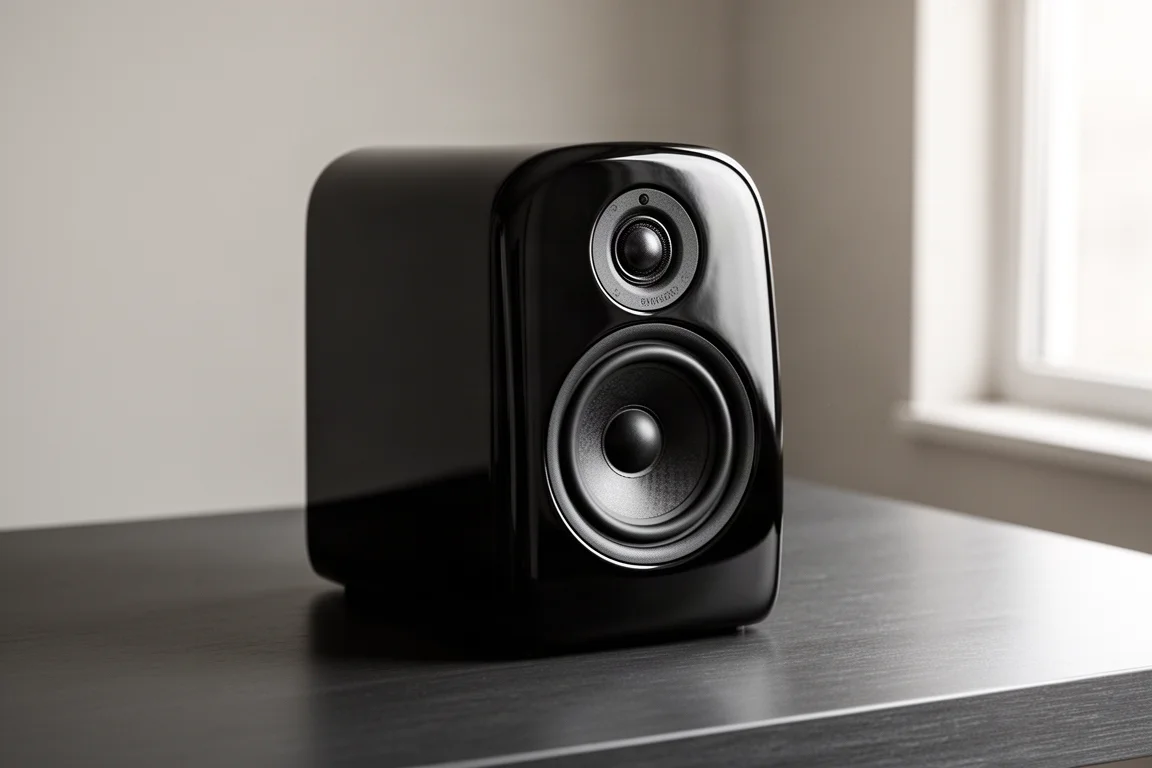
Start with placement, because it eliminates options faster than any specification. Rear-ported designs like the KEF R3 Meta and Q Concerto Meta want a foot or two behind them, and they sound best with a bit of toe-in dialled in by ear. If your speakers must live close to a wall, the Buchardt S400 MKII and the Arendal 1723 THX S Monitor are more accommodating.
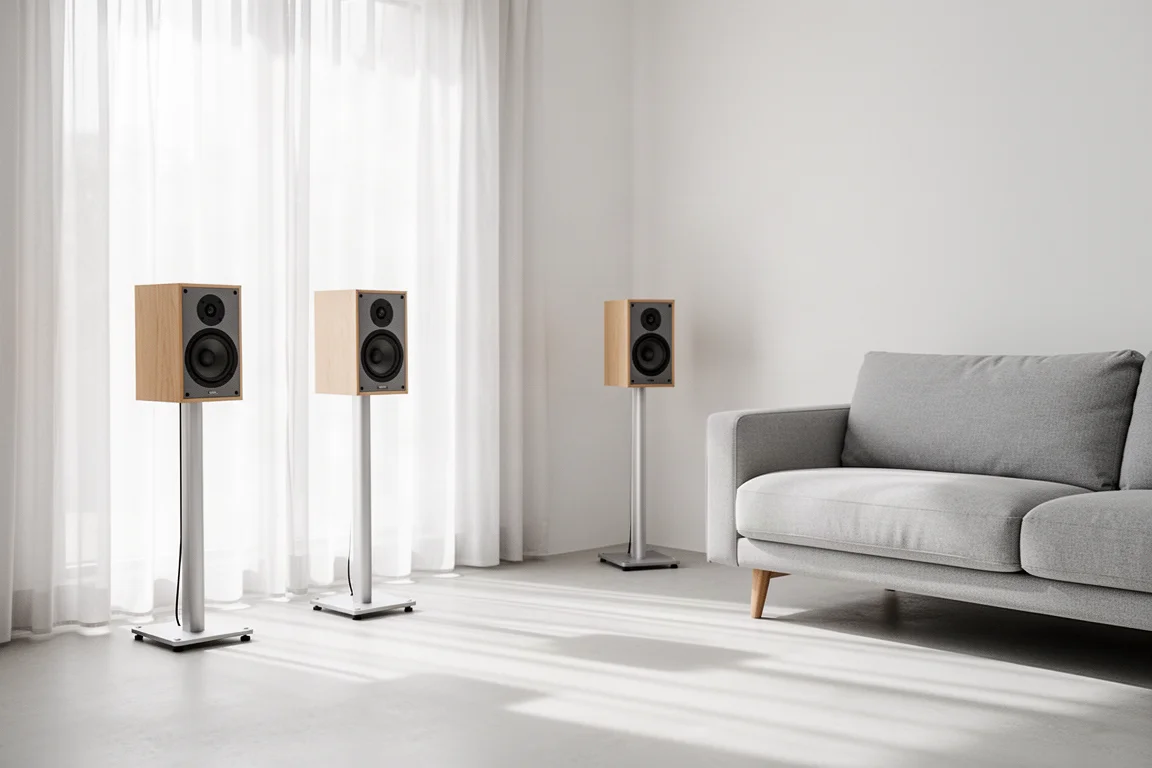
Then think about how loudly you actually listen. The Q Concerto Meta needs medium to higher levels before its midrange fills in, while the R3 Meta holds its balance at 70 dB and below, which matters for apartments, late-night sessions, and nearfield setups.
Amplifier matching deserves equal attention. The R3 Meta and the Q Concerto Meta are both relatively easy to drive, and the Q Concerto Meta in particular benefits from an integrated amplifier with good current delivery to keep its bass controlled. The LS50 Meta is the pickiest of the group. If you are building a desktop or nearfield system, its compact footprint is worth the extra care; for a room-based system, the larger three-way designs offer more for the money.
Finally, weigh the kit option honestly. The CSS 1TD-X delivers performance comparable to speakers costing considerably more, but only if you are willing to invest the assembly and finishing time.
Conclusion
Each of these six speakers is a legitimate endpoint for a serious two-channel system, and the differences between them come down to priorities rather than quality. The KEF R3 Meta is the most complete performer overall, pairing substantial build, refined treble, and strong low-volume behaviour. The KEF Q Concerto Meta delivers much of that character for roughly half the price, with a more spacious, mildly V-shaped presentation that shines on instrumental material.
The Buchardt S400 MKII remains the warmest and most forgiving option, the CSS 1TD-X is the value champion for anyone willing to build, the Arendal 1723 THX S Monitor is the neutrality-first choice that rewards a subwoofer, and the KEF LS50 Meta is the compact specialist for desks and nearfield listening. Match the speaker to your room and your amplifier, and any of them will serve you well for years.
Further reading
Related Reviews
Hi-Fi Speakers
1723 THX Tower vs 1528 Bookshelf: Which Speaker Fits Your Room?
Two speakers at roughly the same price, built very differently. How the 1723 THX tower and the 1528 bookshelf compare on construction, bass, power needs, and sound.
Hi-Fi Speakers
Acoustic Energy AE 300 Review: Deep Bass From a Compact Standmount
A two-way standmount with real wood veneer, surprising low-end weight, and a warm, easygoing character. Here is what to know before buying.
Hi-Fi Speakers
Acoustic Energy AE1 40th Anniversary Review: A Modern Take on a British Classic
A compact standmount that revives a 1980s favorite with all-new parts, a warm mid-centric balance, and a price of £1,499 per pair.