Hi-Fi Audio
Best Hi-Fi Components of 2025: 12 Award-Winning Speakers, Amps, and DACs
A practical roundup of the speakers, amplifiers, DACs, and accessories that stood out in 2025, with the strengths and trade-offs worth knowing before you buy.
Introduction
Affordable hi-fi had a strong year. A few long-standing budget favourites have drifted well past the point where they make sense for a first system, but that gap has been filled by new arrivals and by a handful of older designs that quietly keep delivering.
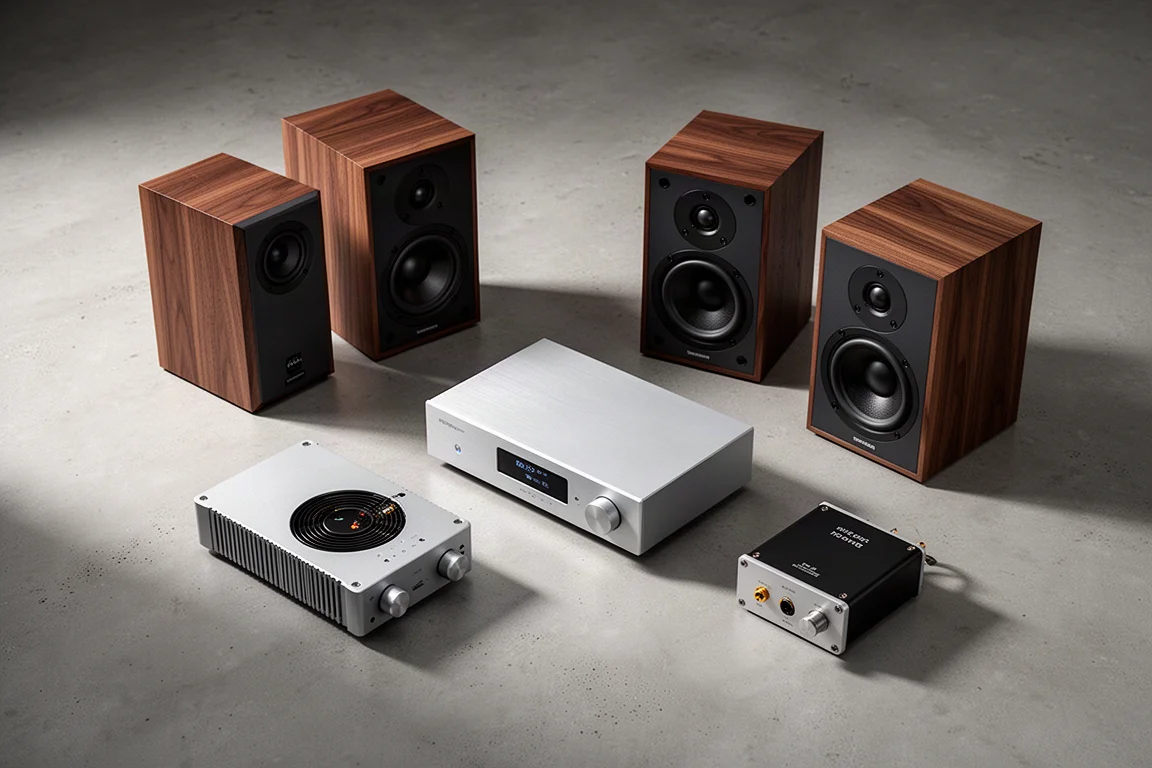
This roundup covers the components that earned a lasting place in a real system during 2025: compact bookshelf speakers, two affordable amplifiers, an integrated amplifier that does almost everything, a premium dual-mono integrated, a desktop DAC, a budget phono stage, and a couple of accessories that solve small everyday problems. Each pick comes with the reasoning behind it and the trade-offs worth knowing before you spend.
How These Picks Were Chosen
Three things mattered most. First, value at the asking price: a component has to justify its cost against what else is available in the same bracket, not against an imaginary ideal. Second, how it sounds over time rather than in a five-minute listen, which is where punchy little speakers and clean Class D amplifiers tend to separate themselves from the pack.
Third, longevity. Some of the products below come from companies with decades of history behind them, and a few have been in continuous production for years. That matters when you are buying something you intend to keep.
Build quality and everyday usability carried weight too. A great-sounding amplifier that is awkward to live with, or a speaker that only works in one specific room, is a harder recommendation than the spec sheet suggests.
The Best Affordable Speaker: Vanguard Scout
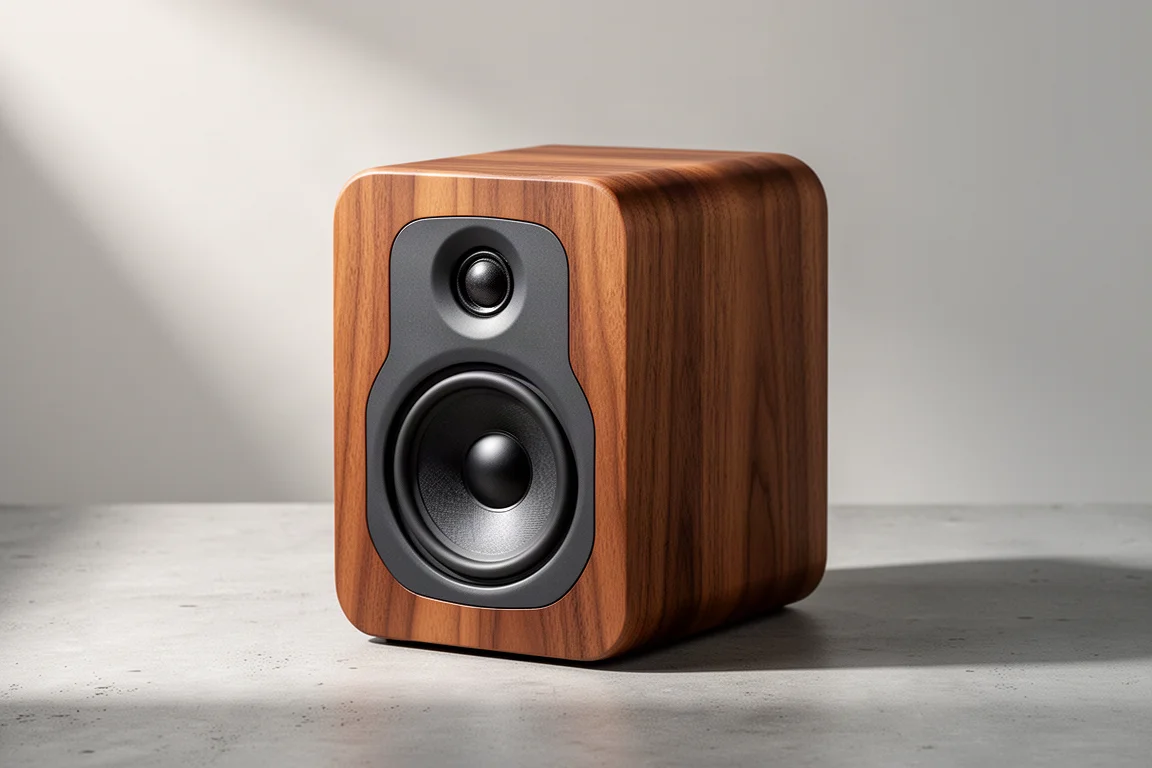
The Vanguard Scout, from Vereri Audio LLC, takes over as the go-to affordable standmount at $299 per pair. It uses a real wood veneer rather than a vinyl wrap, and it is genuinely compact, which makes it easy to place on a desk or a small shelf.
Sonically it is punchy for its size without tipping into imbalance. It is not pushed forward, not bright, and not sibilant, which is a difficult balance to strike at this price. Availability has been tight, with pre-orders open while stock catches up.
The Long-Running Alternative: Cambridge Audio SX50
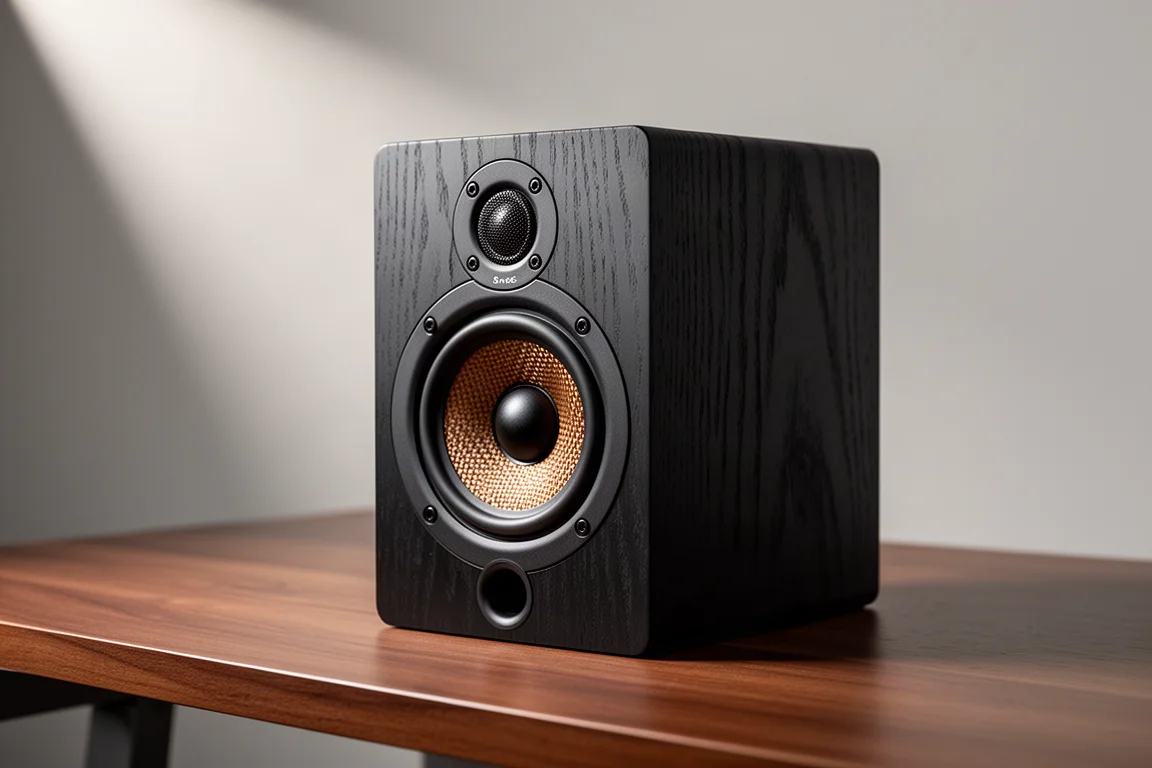
If you would rather not wait on a new design, the Cambridge Audio SX50 has been around for years and still retails at $229. It is sonically very close to the Vanguard Scout, and it remains one of the most reliable entry points into proper two-channel sound.
The trade-off is cosmetic: the SX50 uses a vinyl wrap and does not look as refined as its newer rival. In a small room or desktop setup it needs no help at all, and in a larger room it responds well to a high-pass filter paired with a subwoofer. Set against far more expensive bookshelf speakers, it holds up better than its price suggests.
Heritage Sound Without the Heritage Price: Emotiva LB12
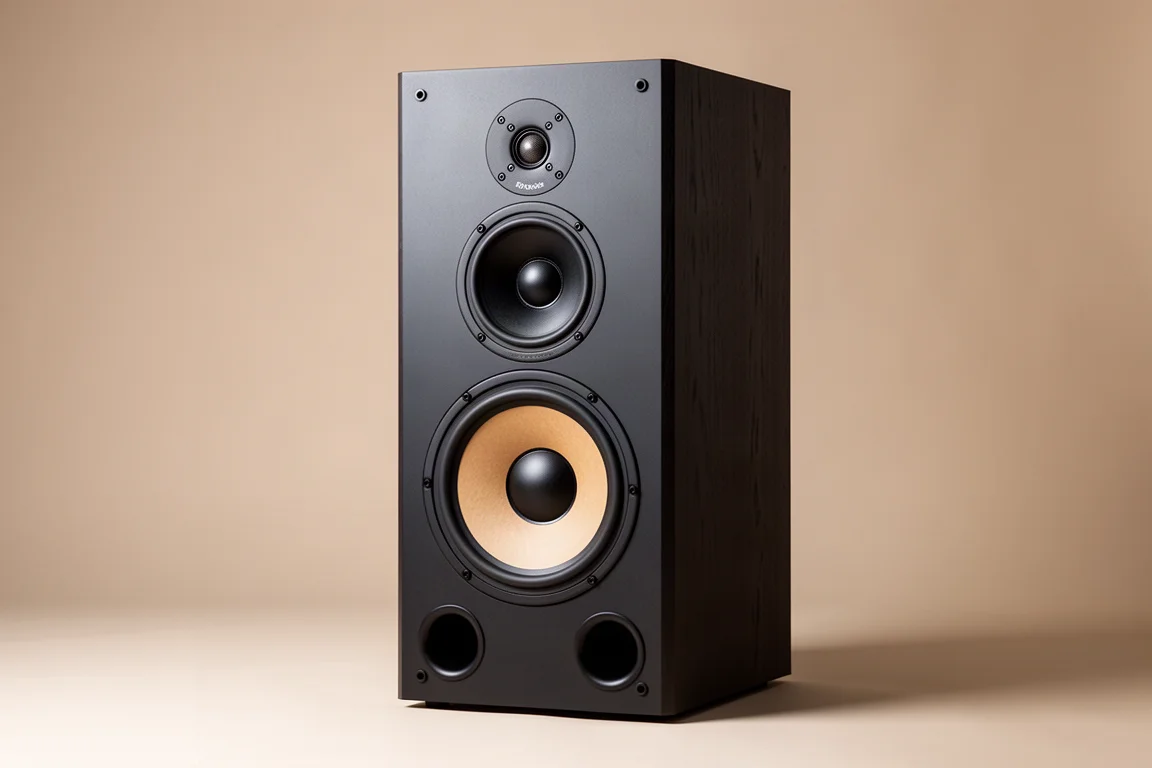
The Emotiva LB12 arrived late in the year and immediately stood out. It pairs a 12-inch woofer and two front ports with a large 5-inch dome midrange driver, wrapped in real wood veneer. Each cabinet weighs 71 lbs, so placement is a two-person job.
The sound is dynamic and genuinely fun, and the treble and midrange attenuation switches let you run flat, cut, or boost to suit the room. At $3,000 it is not cheap, but for a heritage-inspired design with modern engineering it sits at the more accessible end of that category.
A Horn Speaker With Real Warmth: Klipsch Forte IV
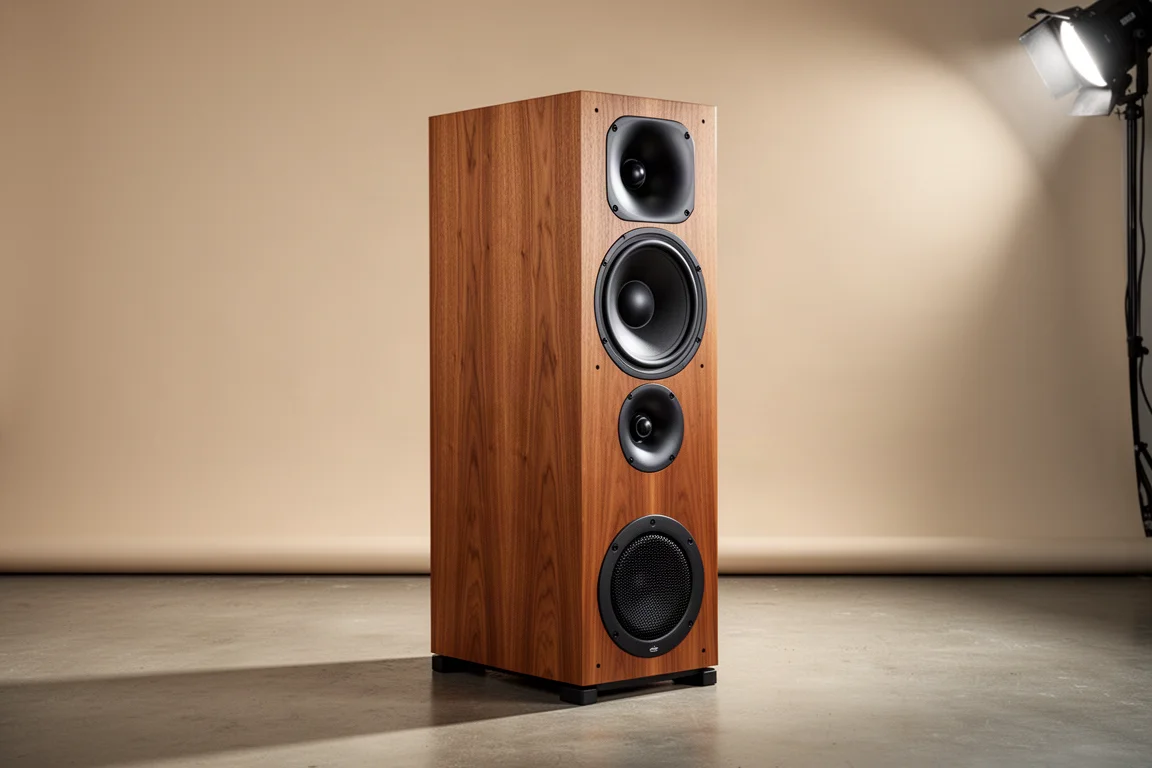
Horn-loaded speakers are not for everyone, but the Klipsch Forte IV is the exception for listeners who usually avoid them. The midrange carries more warmth than the horn layout typically delivers, the soundstage is large, and the presentation is addictive with percussion and vocals in particular.
There is history here as well. The Forte line dates back to 1985, and the company behind it will have been building speakers for 80 years next year. Products with that much of a story behind them tend to stay in systems for a long time.
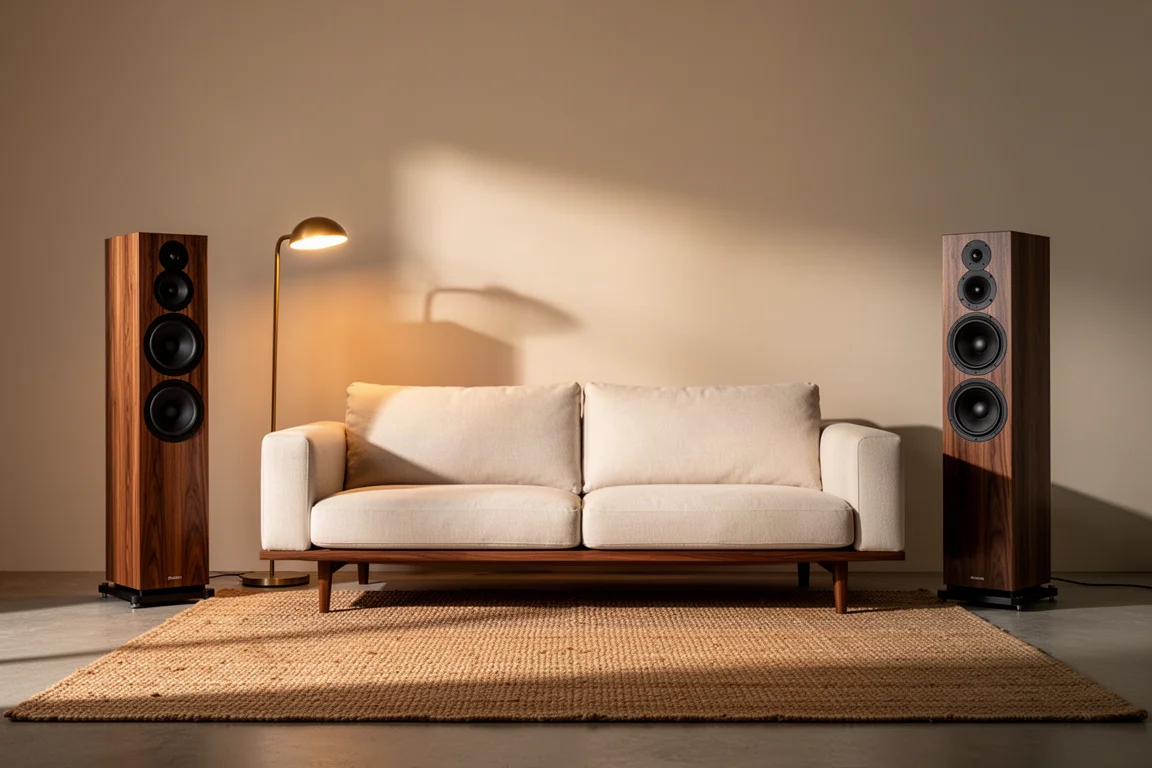
That combination of a distinctive sound and a long manufacturing lineage is what earns the Forte IV a place on this list, even for listeners who would not normally consider a horn design.
Affordable Amplifier Pick: 3E Audio A5
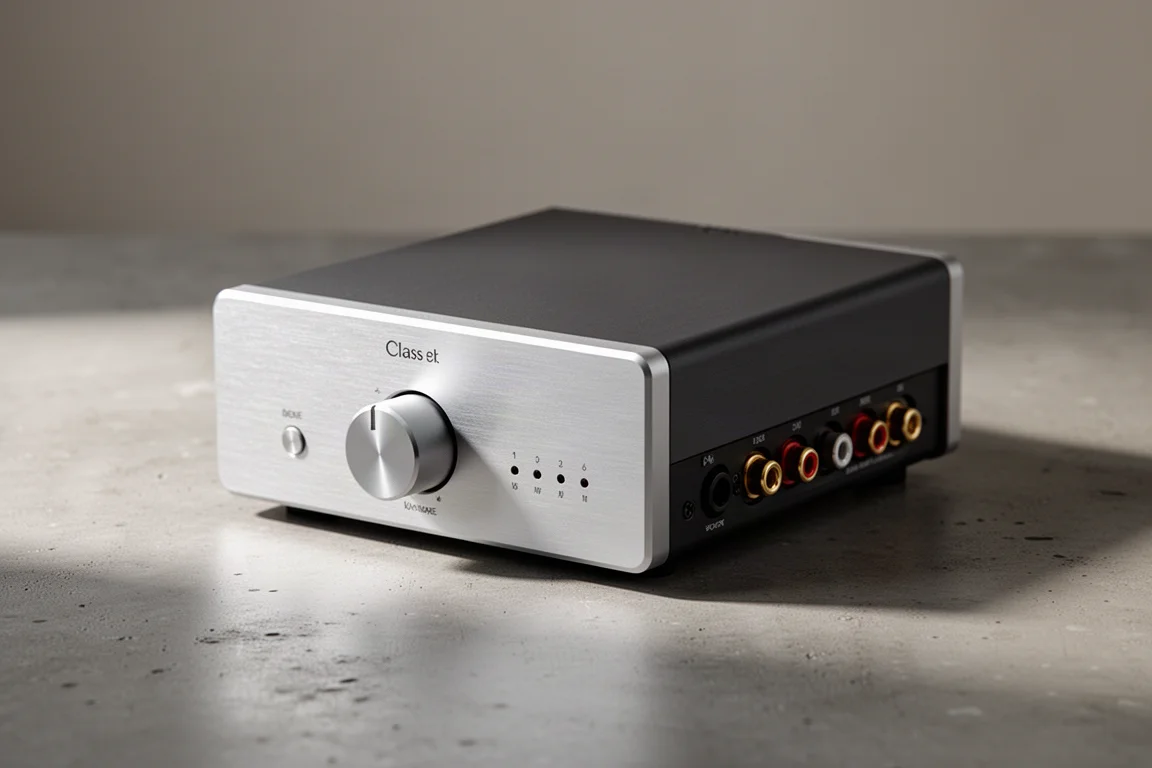
The 3E Audio A5 is a Class D amplifier built around the Texas Instruments 3255 chipset, priced at roughly $250 to $270 at launch. What separates it from the flood of budget Class D designs is the execution: larger capacitors, better components, and more internal space than the price would suggest.
The result is a dynamic, clean presentation that feels a step beyond the usual entry-level template. At launch it was mainly available direct from the manufacturer rather than through broader retail channels, so it is worth checking availability before you plan a build around it.
The Rack-Ready Alternative: Emotiva A2L Plus
The Emotiva A2L Plus is the more conventional option, and it replaces the earlier A2 Mini. Where the Mini used a switching power supply, the A2L Plus returns to a linear toroidal supply, and it is built to full rack width.
Output is rated at 50 watts into 8 ohms and around 90 watts into 4 ohms, but the current delivery is the more useful figure: harder-to-drive speakers are handled without complaint. It comes in around $300 and goes on sale regularly.
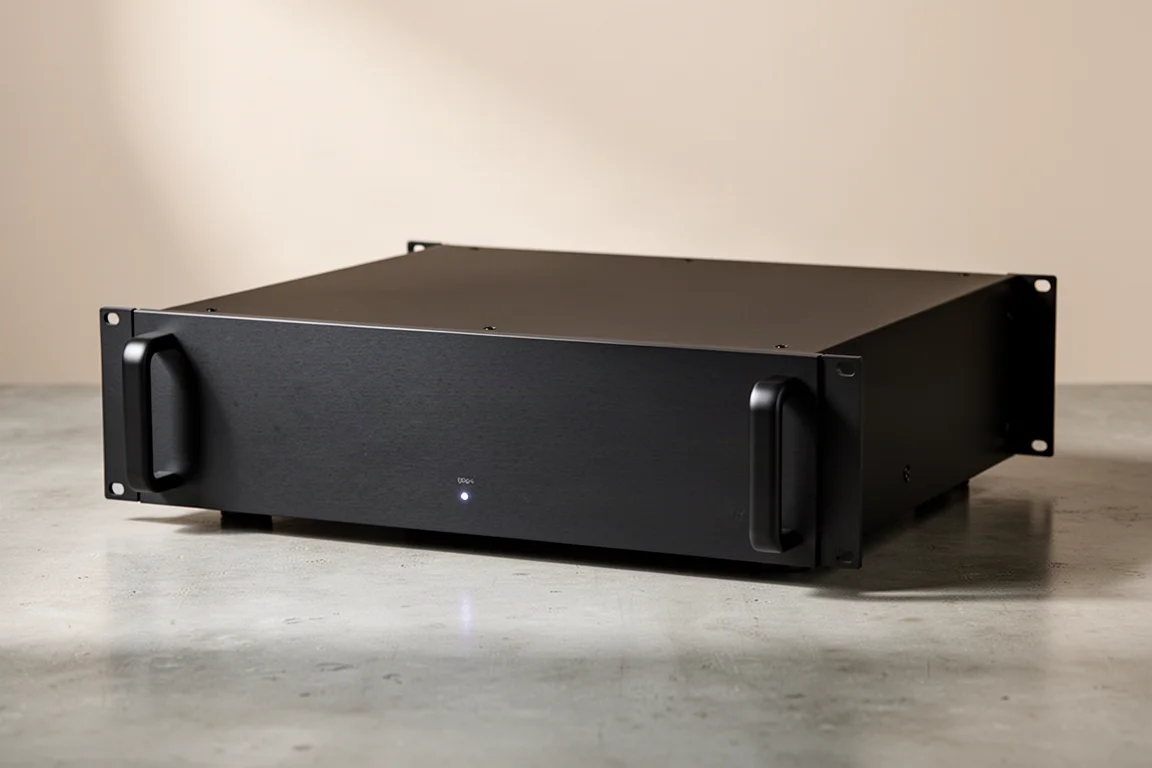
Best Integrated Amplifier: WiiM Amp Ultra
The WiiM Amp Ultra takes the integrated amplifier award for 2025. It uses an internal power supply and combines streaming with DSP, room correction, EQ, loudness control, and distributed whole-home audio, all controlled through a front-panel screen.
For a system built around one box, that feature set is difficult to match anywhere near the price, which sits under $1,000. It is the sort of component that removes several separate purchases from a shopping list at once.
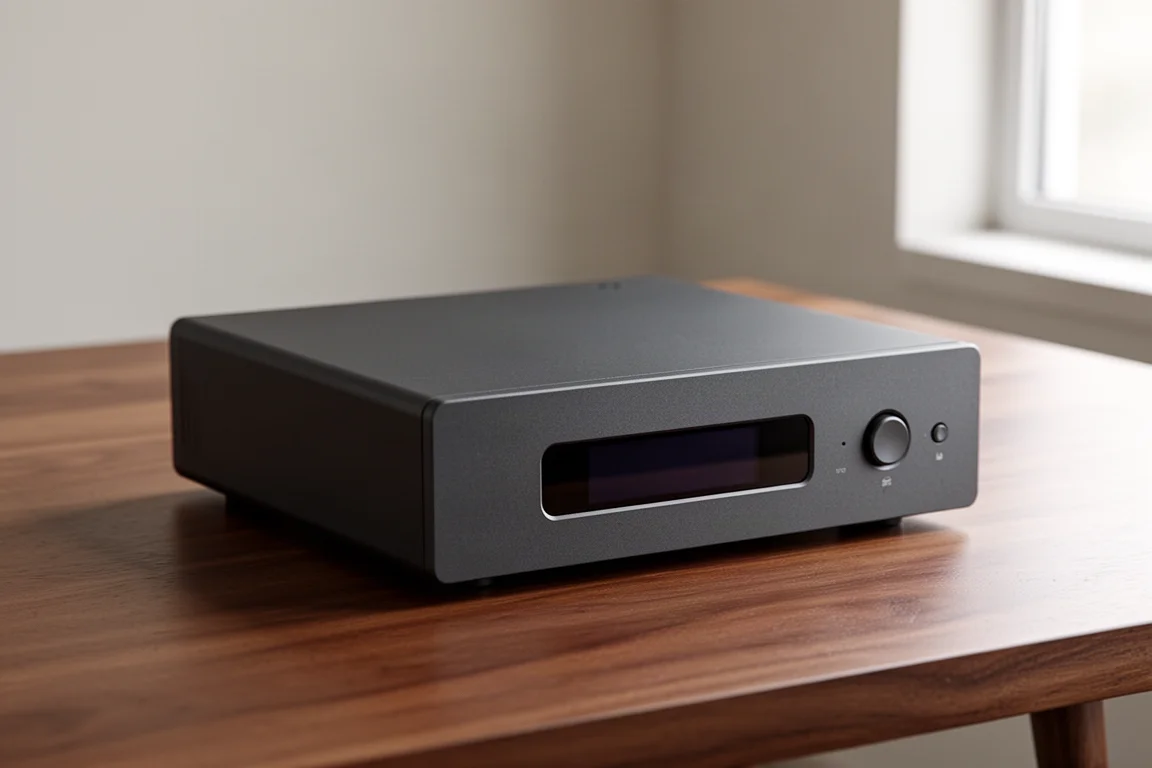
Premium Integrated: Advance Paris A12 Apex
At the other end of the market, the Advance Paris A12 Apex is a dual-mono design, with separate power supplies for each channel inside a single chassis. It offers an extensive set of inputs and outputs, and the front panel pairs VU meters with tubes.
It is a component that makes listening feel like an occasion, and at $5,000 it is priced accordingly. For anyone who spends a lot of time listening to music or watching television, it is the kind of purchase that tends to outlast several other things in the house.
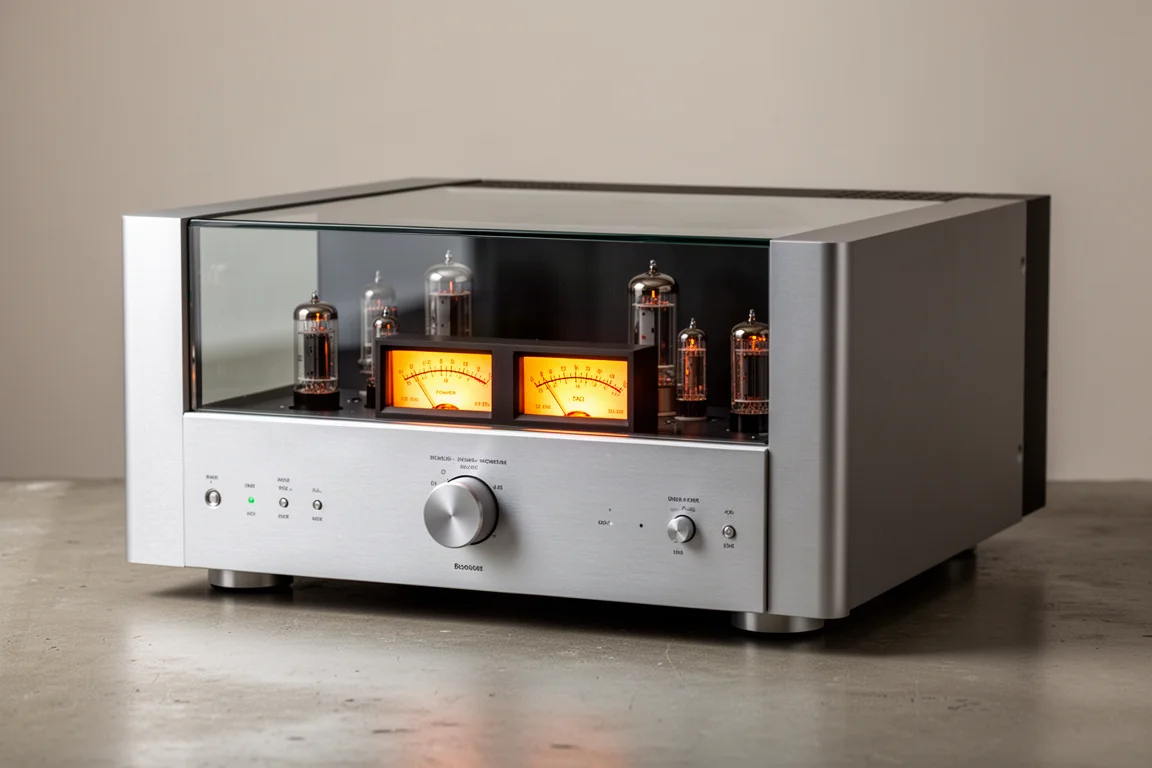
DAC of the Year: Geshelli Labs J3
The Geshelli Labs J3 is a desktop DAC built around AKM converter chips, with one chip handling digital conversion and a second handling the analog output stage. It is assembled in Florida, and it is available in a range of finishes including wood.
Around $500 buys the stock version, and the input selectors are clearly labelled, which is a welcome change from the earlier J2 and its less obvious controls. The styling is divisive, but the sound quality is not a matter of debate. The J2 remains available at a lower price for anyone who wants the same family of sound for less.
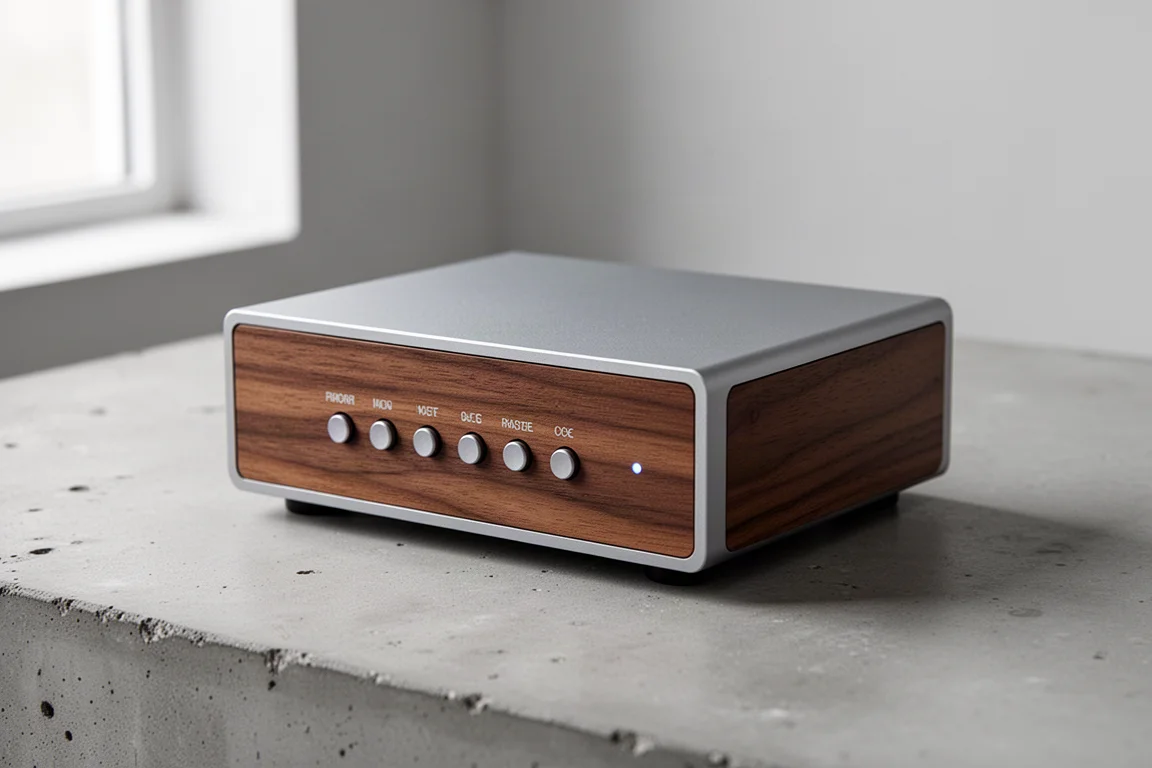
Phono Stage Pick: iFi Zen Phono 2
The iFi Zen Phono 2 is the current iteration of the Zen phono stage, and it remains one of the strongest values in budget analog. Pricing sits around $200 to $250 depending on current rates, which is modest for a phono preamp that does not ask for compromises elsewhere in the chain.
If you are building a turntable system and need a phono stage that will not be the weak link, this is the straightforward answer at the price.
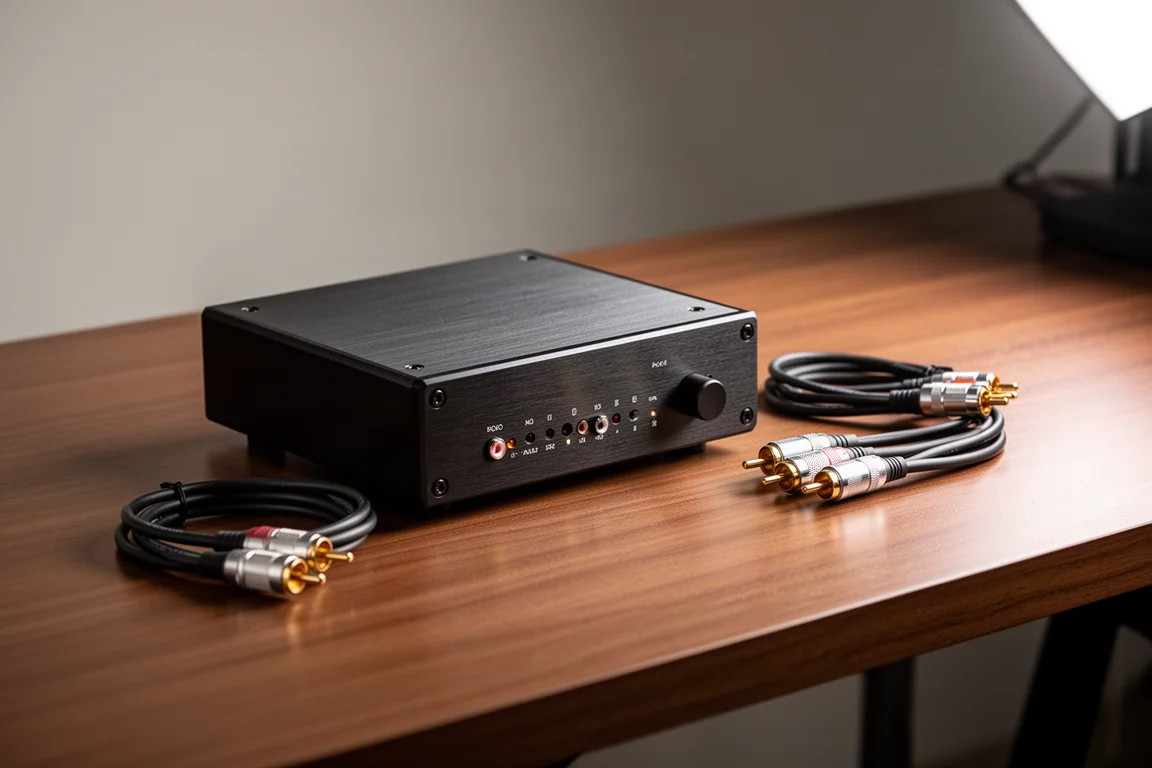
Accessory Pick: Ion Forge Headphone Stand
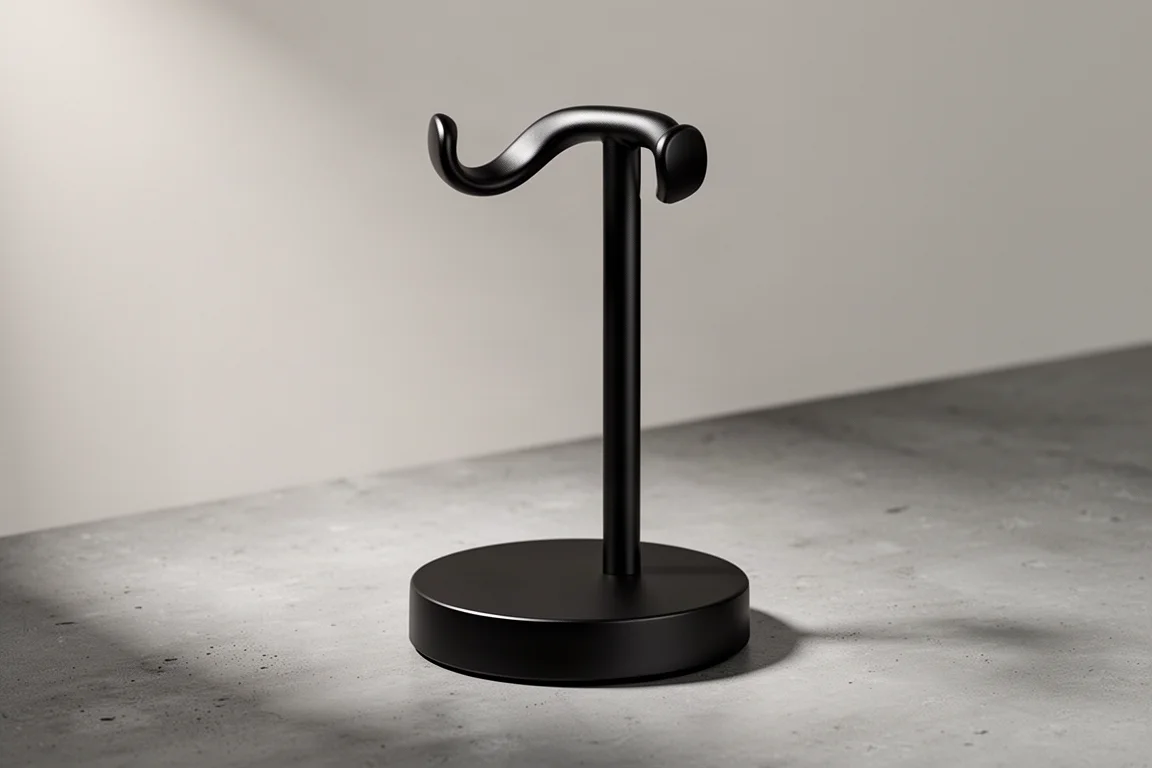
The Ion Forge headphone stand is a simple idea executed properly: a solid metal stand that holds its shape and its finish. It is not an inexpensive accessory at $50, but it is built to be the last headphone stand you buy rather than the next one you replace.
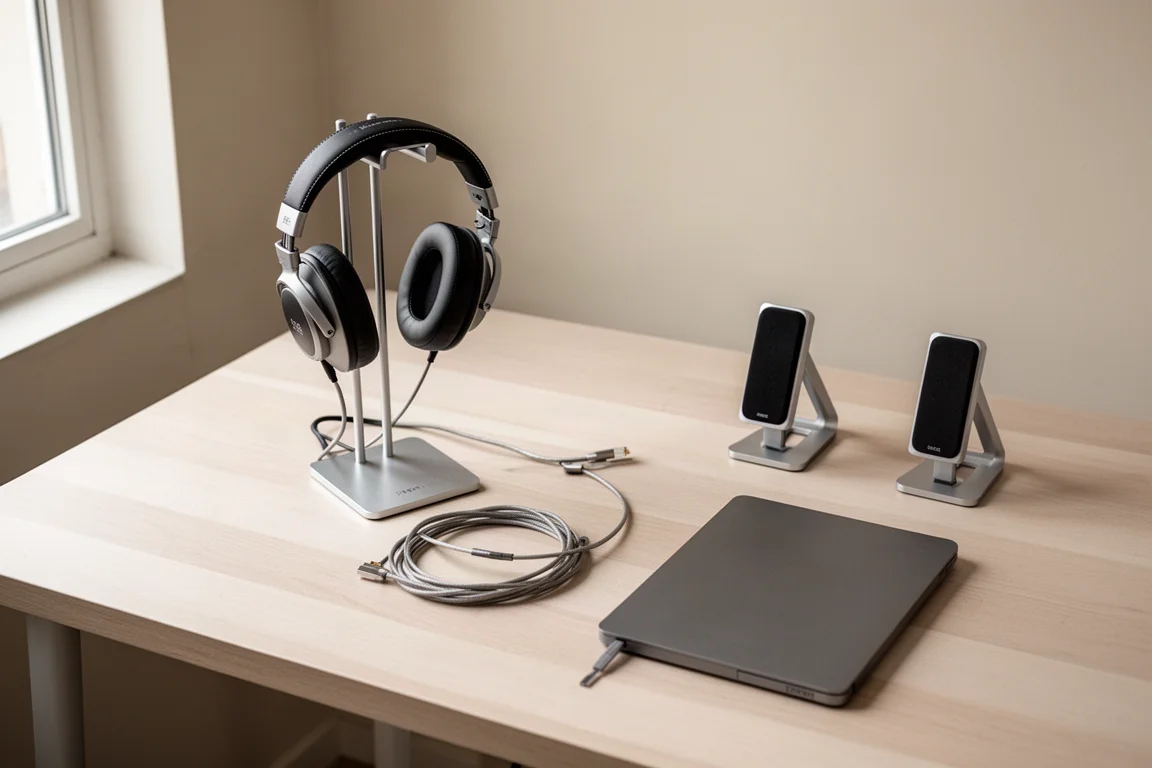
The same company also makes desktop speaker stands that angle speakers upward so they fire toward the listener rather than at chest height, which is a useful fix in a desk setup.
Honorable Mention: Aiyima A20 10th Anniversary Edition
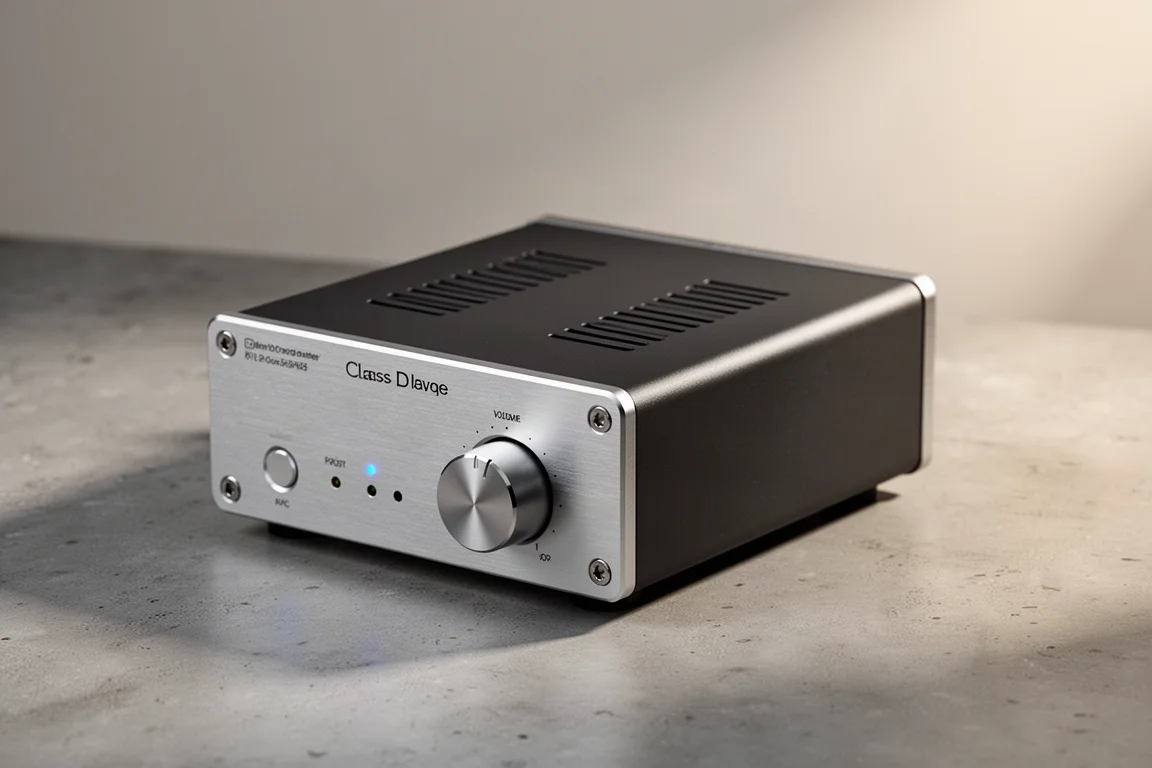
The Aiyima A20 10th Anniversary Edition deserves a mention for what it represents: a step up in construction quality over the company’s earlier amplifiers, built around the same 3255 amplifier chipset and priced at around $200.
It is a sensible option for a second system or a desktop build where the budget is firm and the priorities are simple.
Overall Buying Advice
Spend the largest share of the budget on speakers. They set the character of a system more than any other component, and the two affordable standmounts above prove that a modest outlay can still deliver a balanced, engaging sound. From there, match the amplifier to the speakers rather than to a specification sheet: the Emotiva A2L Plus and the 3E Audio A5 both punch above their price, and the WiiM Amp Ultra collapses several boxes into one.
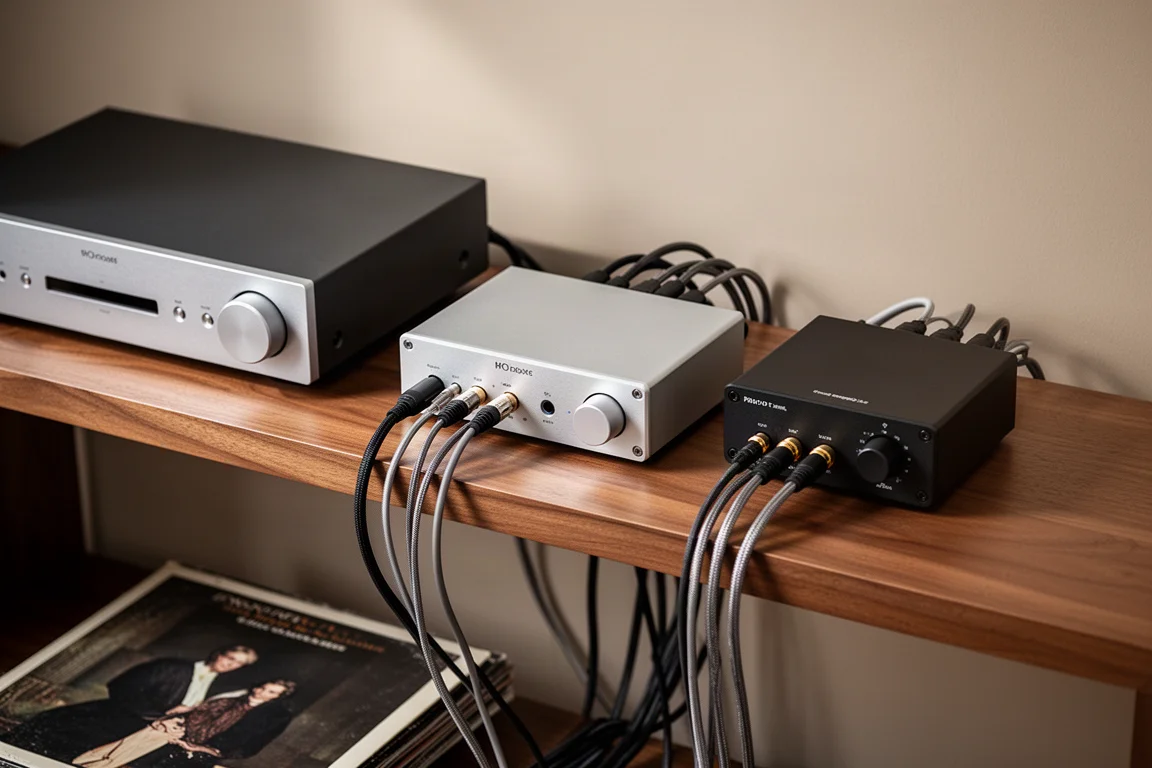
Sources and accessories come last. A DAC like the Geshelli Labs J3 or a phono stage like the iFi Zen Phono 2 will not transform a system with poor speakers, but they will remove a bottleneck once the fundamentals are in place. It also pays to check current pricing before buying, since several of these products see regular discounts and availability shifts.
Conclusion
2025 was a good year for anyone building a system on a realistic budget. The Vanguard Scout and Cambridge Audio SX50 cover the entry point, the Emotiva LB12 and Klipsch Forte IV show how far heritage design has come, and the amplifier and DAC options above make it easier than ever to put together a clean, capable two-channel setup without overspending.
Further reading
Related Reviews
Hi-Fi Audio
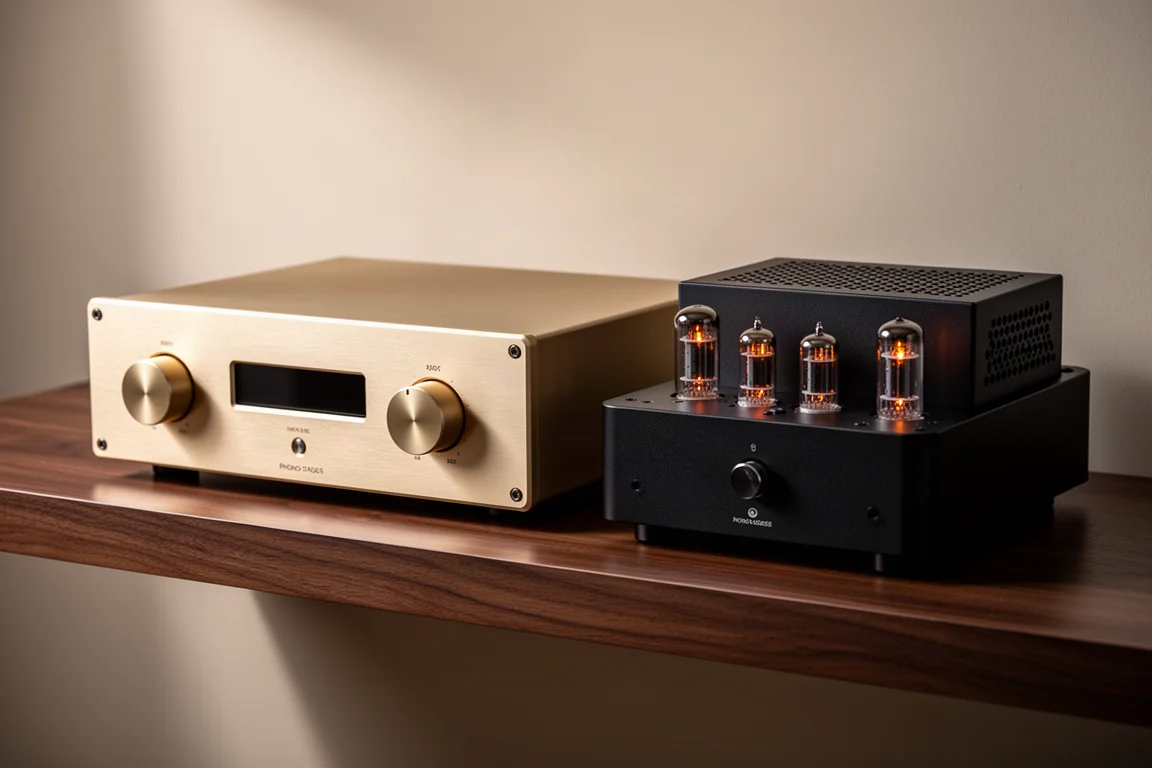
Accuphase C-57 vs Allnic H-7000V: Two High-End Phono Stages Compared
A fully balanced solid-state phono stage with a pitch-black noise floor meets a tube design built for well-loved records. Here is how to choose between them.
Hi-Fi Audio
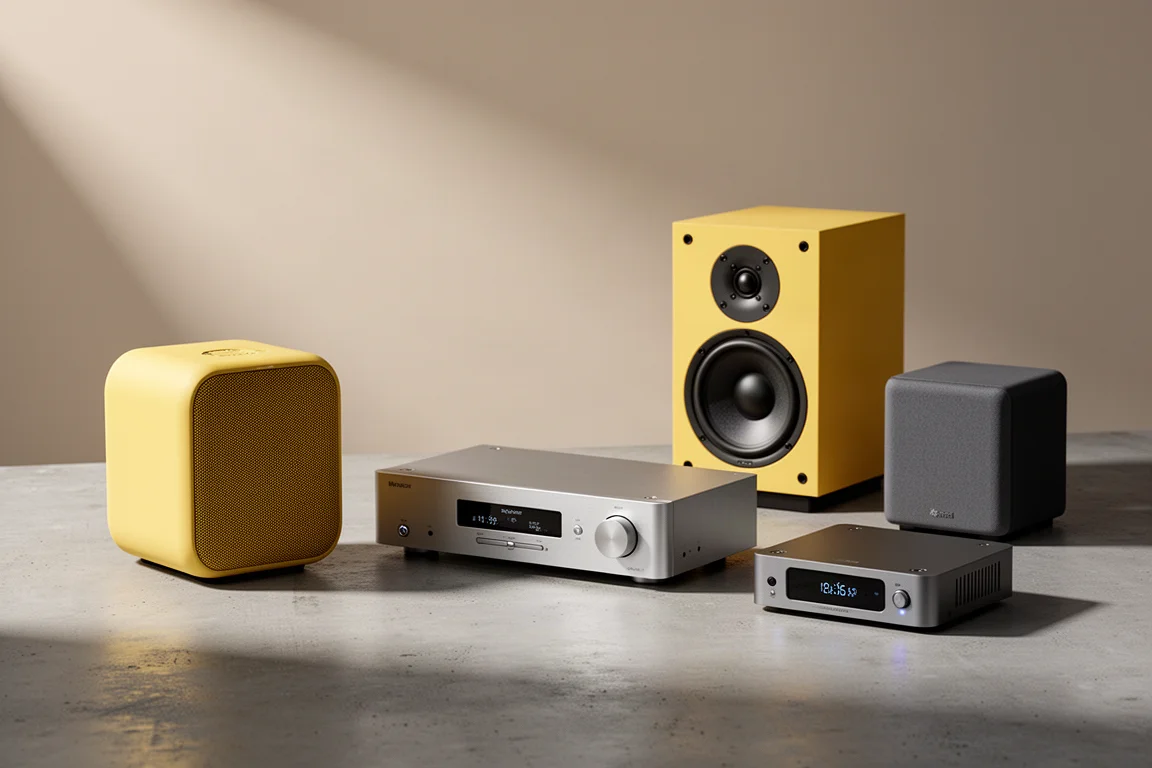
Active vs Passive Hi-Fi: Five Components for a Modern System
Five components that define modern active and passive hi-fi systems, with the strengths, trade-offs and setup details worth weighing before you buy.
Hi-Fi Audio
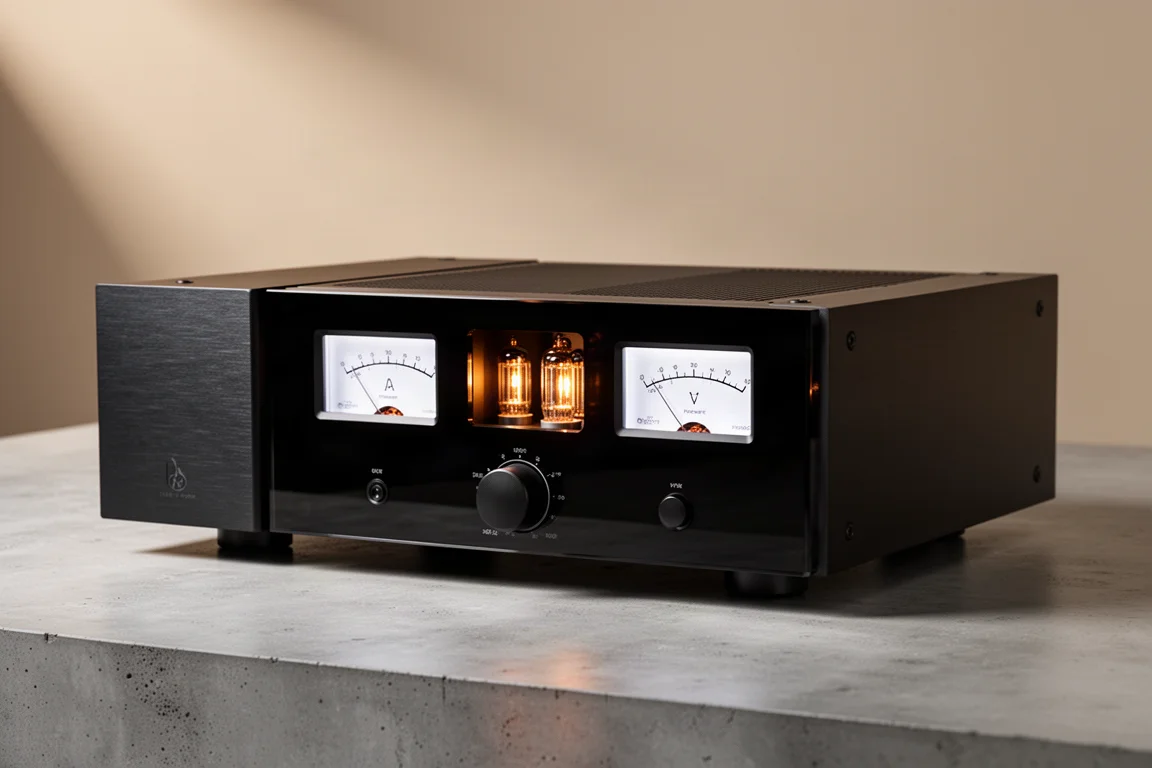
Advance Paris A10 Apex Review: A Hybrid Integrated Amplifier That Covers a Lot of Ground
A French hybrid integrated amplifier with a class A tube preamp stage, analogue power meters, and an internal DAC and phono stage good enough to make extra boxes unnecessary.