Hi-Fi Audio
Best Hi-Fi Amplifiers: Seven Standout Models for Every Budget
A practical roundup of seven amplifiers, from affordable all-in-ones with built-in DACs to integrated amps with serious phono stages and a streaming amplifier with HDMI ARC.
Introduction
Amplifiers do not all look alike, and that is a good thing. A compact all-in-one with a built-in DAC, a full-size integrated amp with a dedicated phono stage, and a palm-sized desktop box that can be bridged into mono all solve the same problem in different ways: they take a signal and drive a pair of speakers.
This roundup covers seven models that stand out for value, flexibility or sound quality. Each one has a clear reason to exist, and each one suits a slightly different listener. The notes below focus on what you actually get, what it costs, and where the trade-offs sit.
What to Look For in an Amplifier
The first question is inputs. If you play vinyl, a phono stage matters, and the quality of that stage varies enormously between amplifiers. If your sources are digital, look at how many optical, coaxial and USB inputs are on the back, and whether the built-in DAC supports the formats you use.
Power ratings deserve some scepticism. Some manufacturers quote generous headline figures, while others rate their amplifiers conservatively and deliver more in practice than the number suggests. Impedance matters too: a rating at 8 ohms and a rating at 4 ohms are not the same claim.
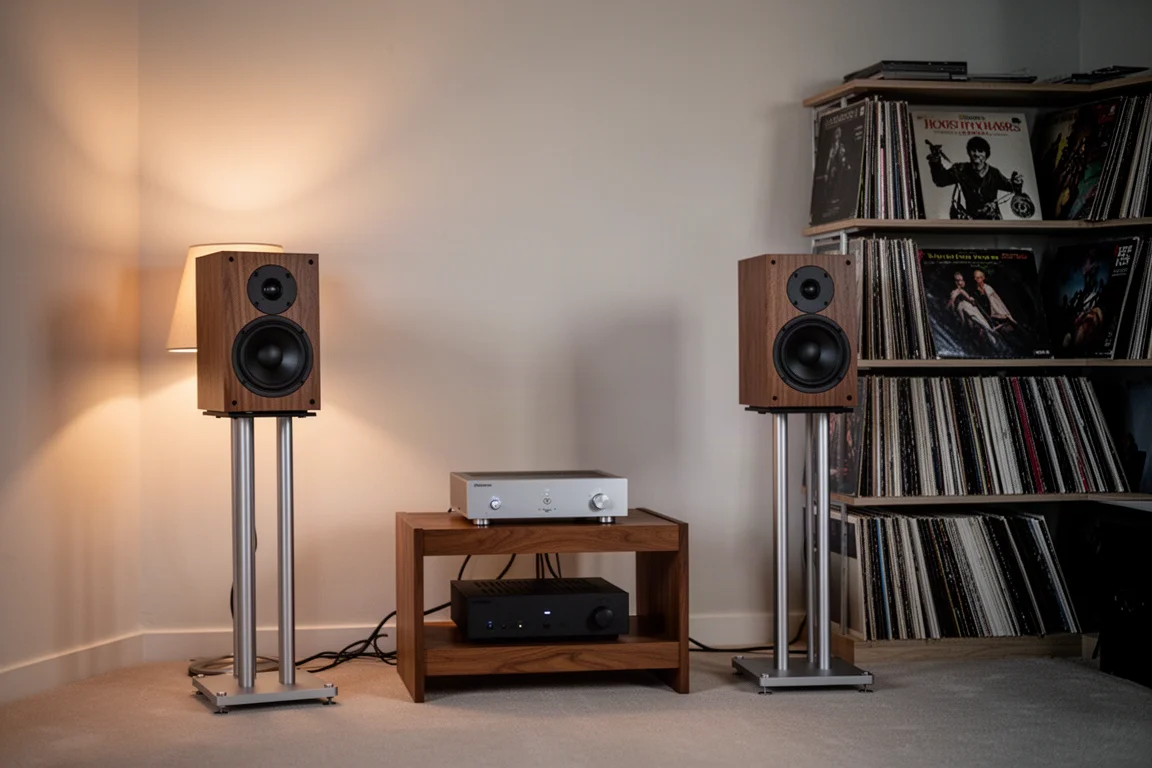
Then there is the question of form factor. A full-size integrated amplifier with a headphone output and Bluetooth makes a flexible centrepiece for a living room system. A small desktop amplifier is easier to live with next to a computer, and some of them can be run in mono so you can add power later. If the amplifier will sit near a television, HDMI ARC and proper bass management are worth paying for.
Finally, consider upgrade paths. Swappable op-amps, an external power supply upgrade, or the option to add a second unit for mono operation all change how a budget amplifier grows with you.
AIYIMA T9 Pro: Best Affordable All-in-One
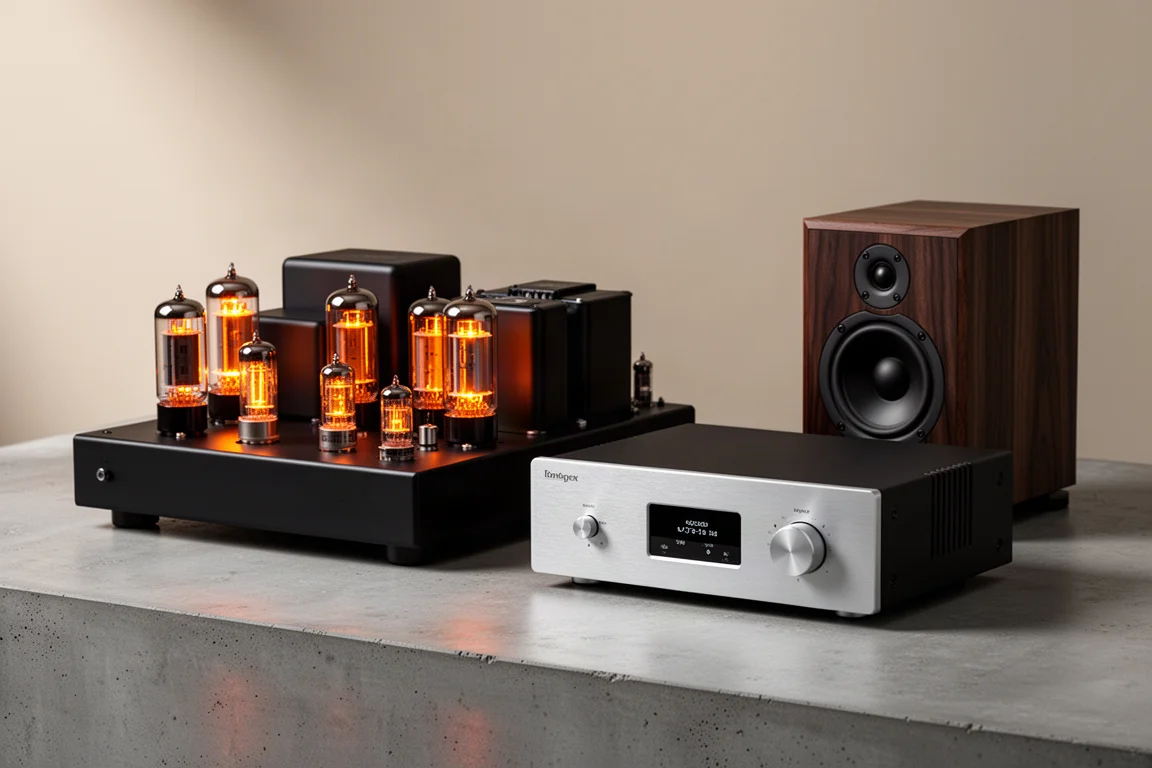
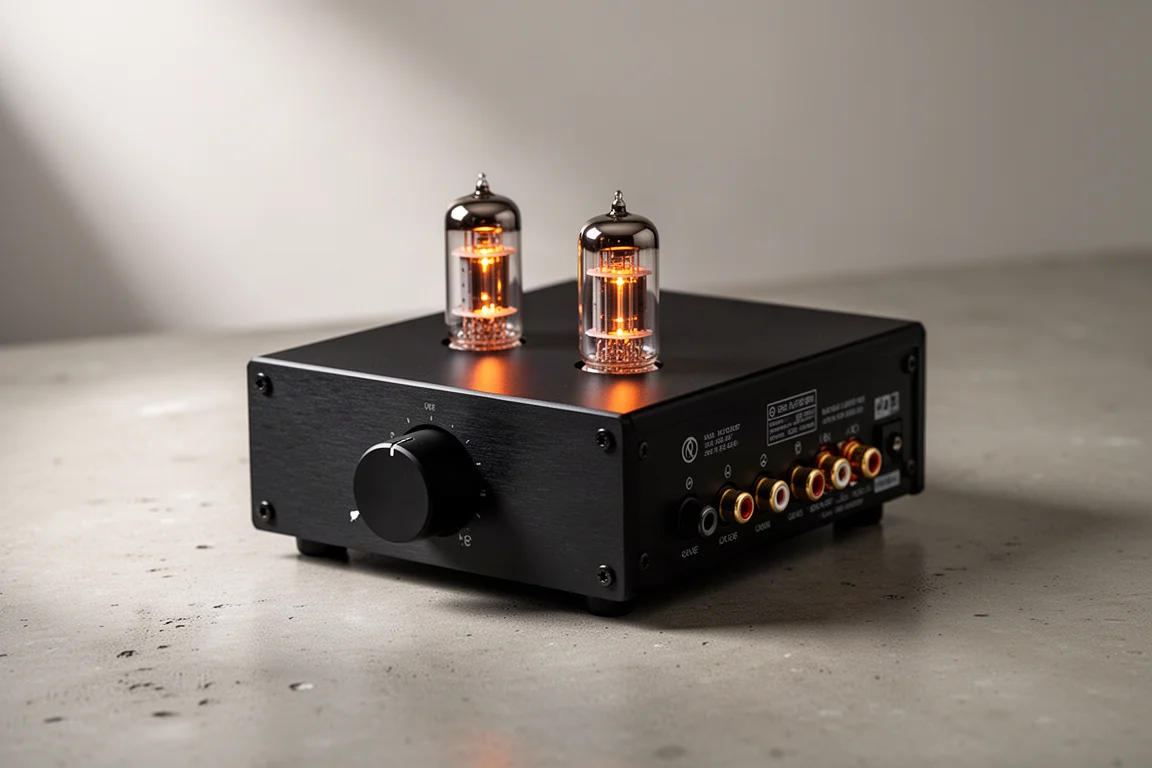
The AIYIMA T9 Pro is the least expensive route into a complete system here. It is a compact all-in-one with a fully functioning DAC inside and enough power to drive most speakers. It ships with tubes, and while they are not to everyone’s taste, they can be rolled if you enjoy experimenting with the character of the sound.
Connectivity covers Bluetooth, USB, coaxial, optical and RCA, so a CD player, a television, a phone and a turntable with its own phono stage can all share the same box. A remote control is included.
It sells for around $150, and a 10% coupon on the product listing brings that closer to $135. One detail worth knowing before you buy: the listing carries a frequently returned item flag, which is worth weighing against the very low asking price.
SMSL AL200: A More Refined All-in-One
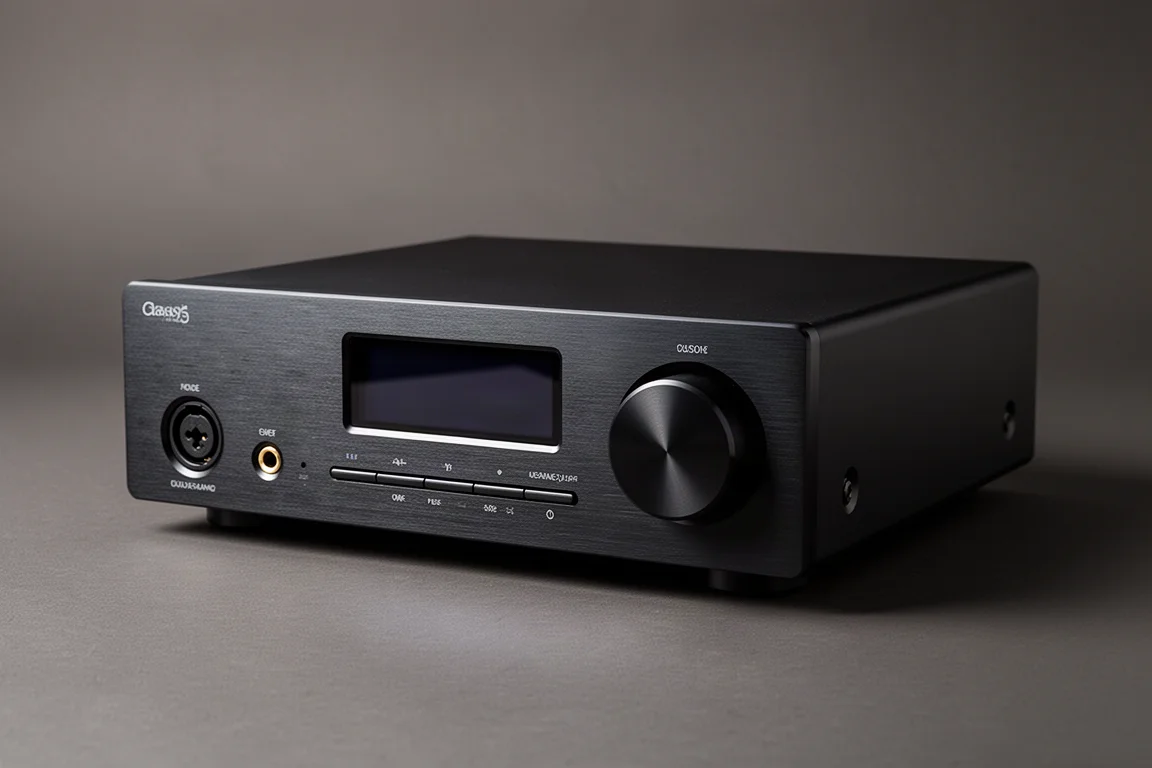
The SMSL AL200 is a clear step up in construction. The chassis is aluminium, the layout is sleek, and there are no tubes on top. Inside, an Infineon amplifier chip does the work, and the DAC adds MQA decoding.
The feature set is generous at the price: optical, USB, coaxial and RCA inputs, baked-in EQ presets, a remote control and a headphone amplifier. SMSL quotes 165 watts of output, which is best read as a headline figure rather than a guarantee. Real-world output is likely to be far more modest, and still plenty for typical bookshelf and floorstanding speakers.
At around $233 it costs noticeably more than the AIYIMA T9 Pro, and the build quality justifies the difference.
Rotel A11 Mark II: Integrated Amp with a Serious Phono Stage
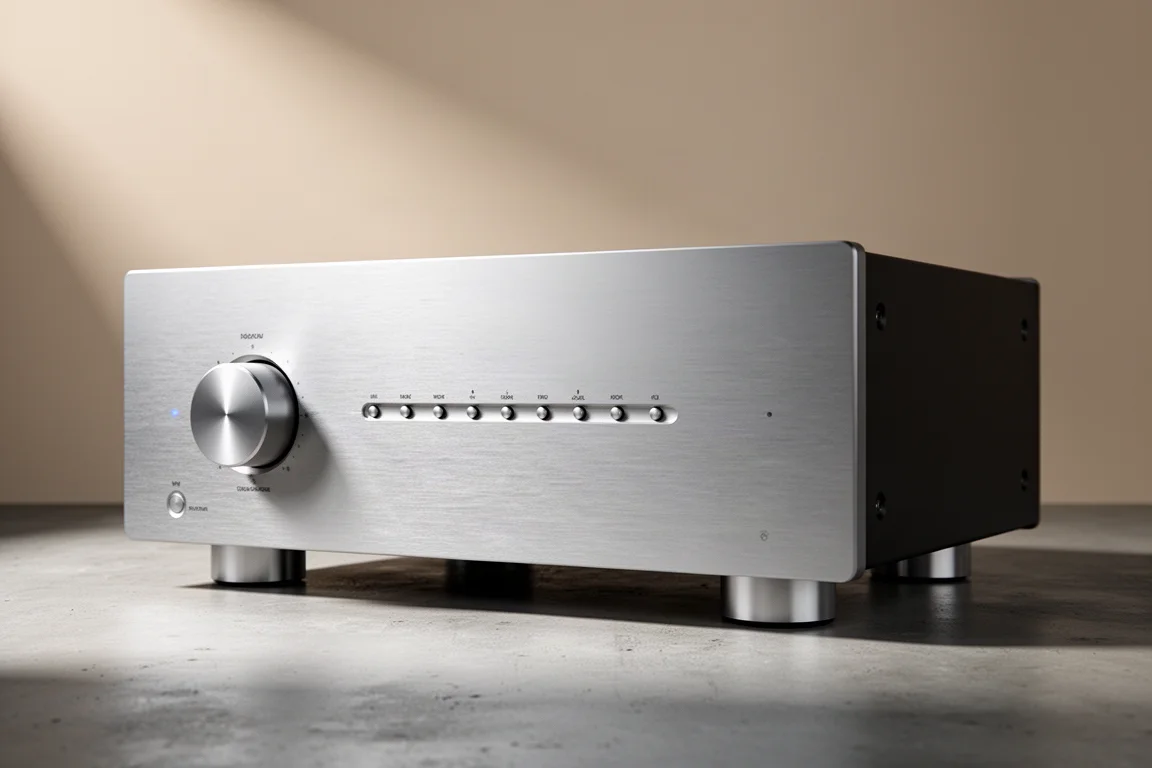
The Rotel A11 Mark II is a full-size integrated amplifier with a DAC built in and a phono stage that is genuinely unusual at this price. Its phono section is described as being on the level of a standalone $500 phono stage, which makes it a strong candidate for anyone with a turntable and a record collection.
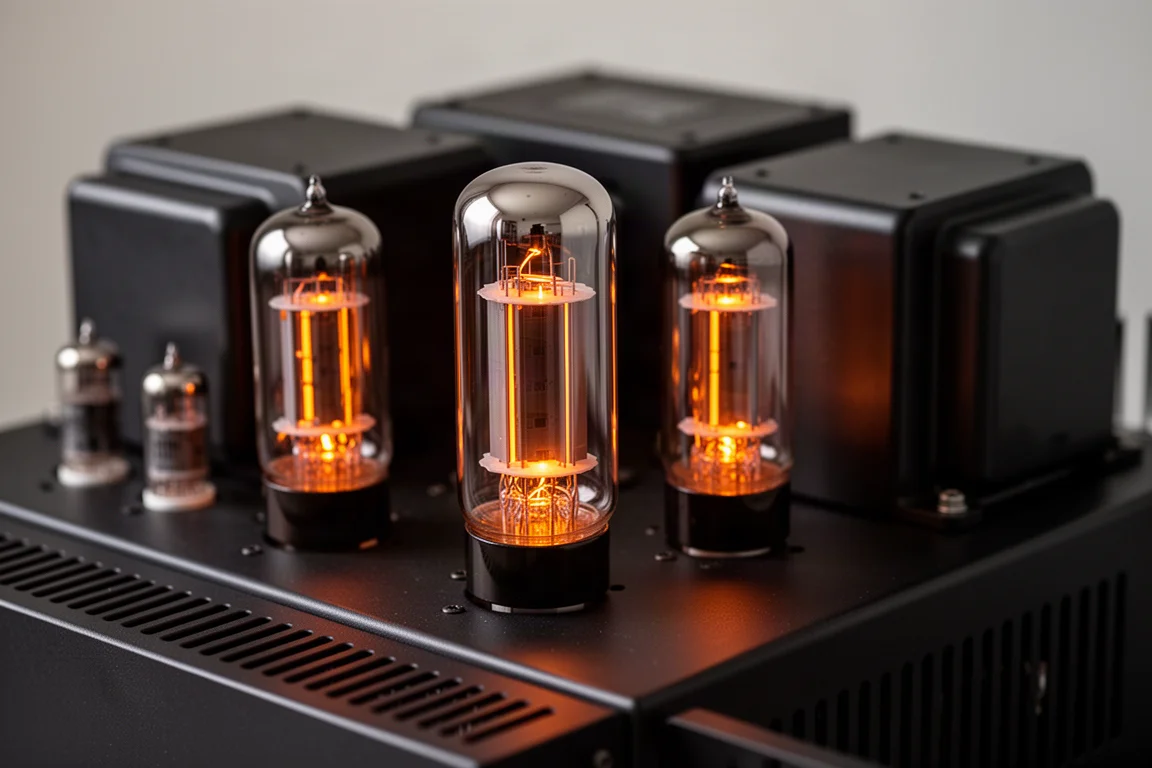
Power is conservatively rated at 50 watts per channel into 8 ohms, with Class AB amplification, and in practice it will drive most speakers as loudly as you would ever want. The back panel offers four RCA line inputs, one optical input and one coaxial input, plus Bluetooth and a headphone output. Connecting a WiiM Pro streamer to one of those inputs turns it into a complete streaming system. It sits around $700 to $800.
Rotel A10 Mark II: The Same Recipe Without the DAC
The Rotel A10 Mark II is essentially the same amplifier without the DAC, and it costs about $200 less. If you already own a digital-to-analog converter you are happy with, this is the more sensible purchase: you get the same clean presentation and wide soundstage while leaving conversion to a component you already trust.
Fosi Audio ZA3: Versatile Desktop Amplifier
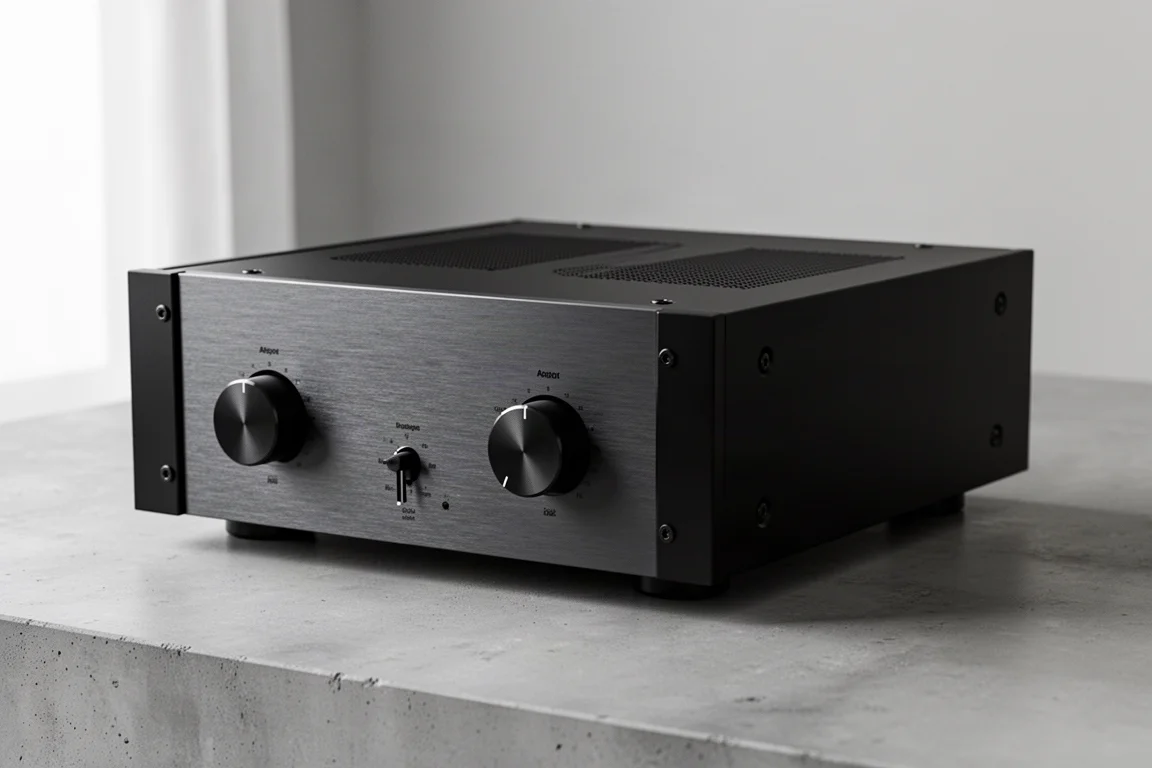
The Fosi Audio ZA3 is the most flexible small amplifier in this roundup. It has balanced inputs as well as RCA inputs on the back, and it can be run in mono, which means you can buy one now and add a second later to create a pair of mono blocks with substantially more power. Even in stereo mode it has plenty of output.
It also accepts a higher-voltage power supply, 32V or 48V, to raise the available power, and the op-amps are swappable so the sound can be tuned to taste. Inside it uses the Texas Instruments 3255 amplifier chip and components sourced from American, Japanese and German suppliers. Expect to pay around $150.
AIYIMA A07 Max: Compact Alternative with the Same Amp Chip
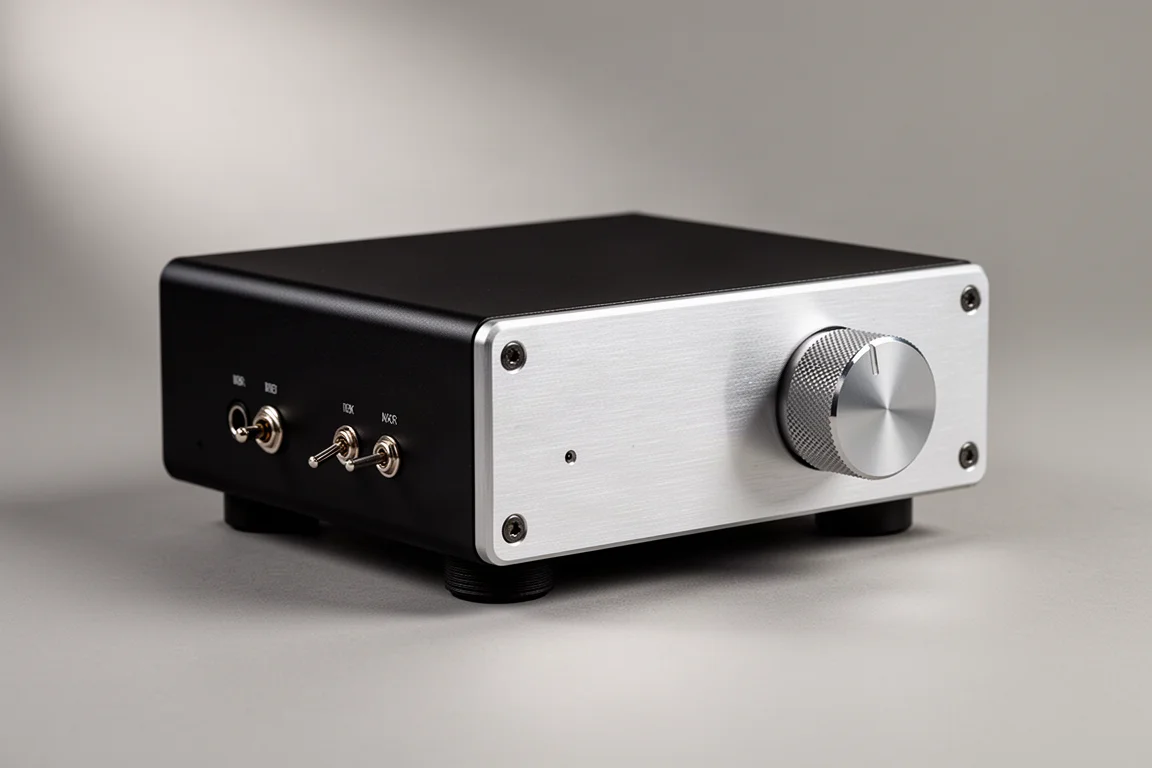
The AIYIMA A07 Max does much the same job in a smaller chassis. It uses the same Texas Instruments 3255 chip, supports swappable op-amps, and can also be run in mono with a second unit when you want more power. If space on the desk is tight, this is the more compact route.
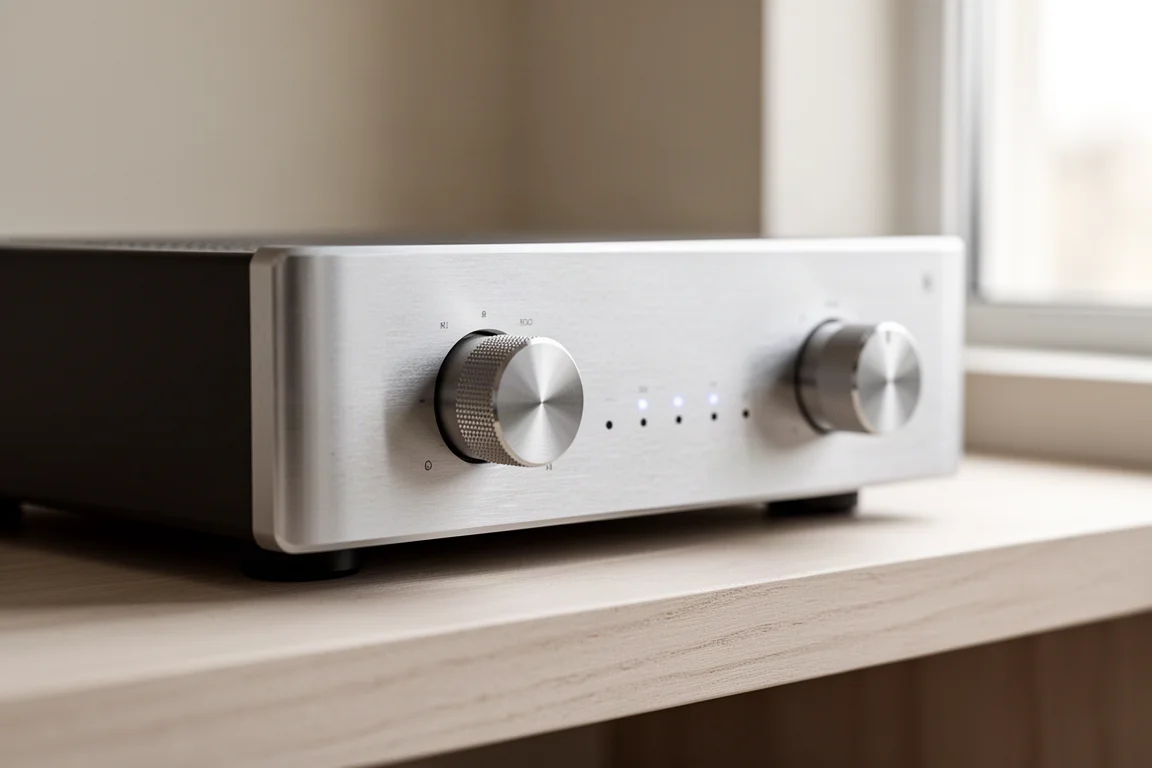
At $91.99, with a 10% coupon bringing it to roughly $80, it is the least expensive amplifier here. Whether the Fosi Audio ZA3 sounds better in stereo is a fair question, and two A07 Max units running in mono are a different proposition again.
WiiM Amp: Streaming, Bass Management and HDMI ARC
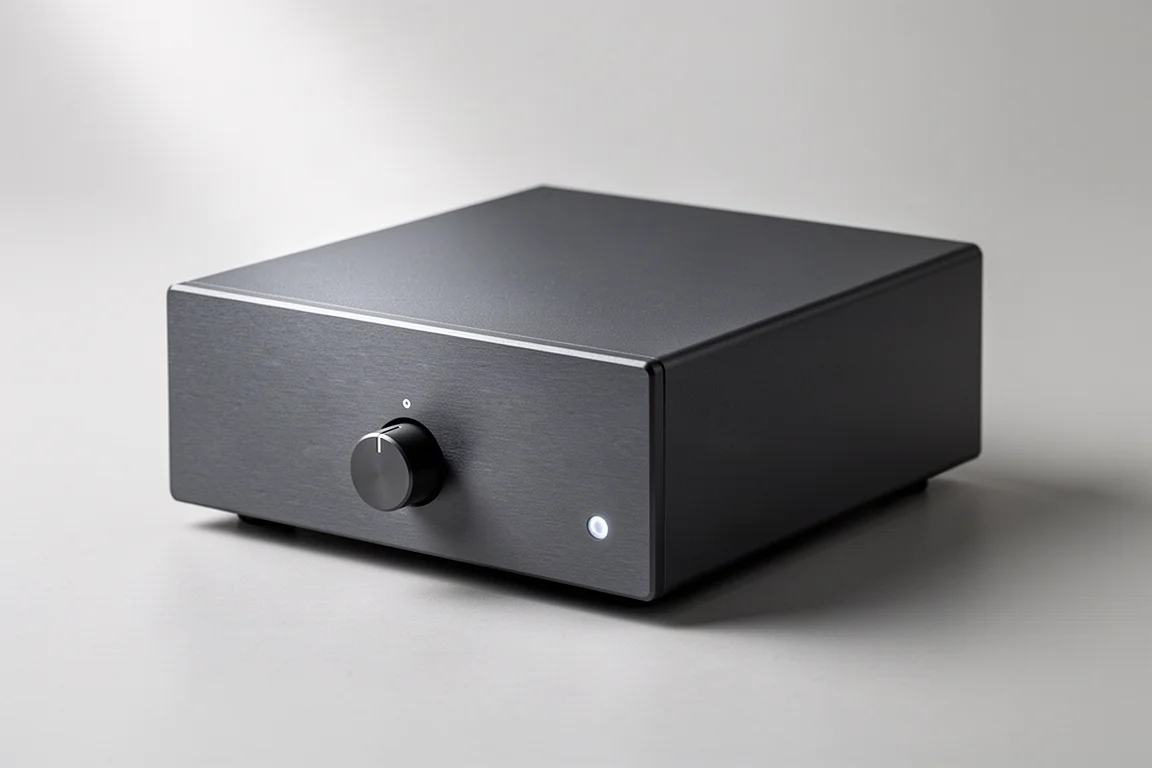
The WiiM Amp is the most complete single-box option in this roundup. It uses the Texas Instruments 3255 chipset and an internal power supply, so there is no external brick to hide behind the furniture.
On the back you get optical and coaxial inputs, a subwoofer output with high-pass and low-pass filtering, and HDMI ARC. That combination lets it sit next to a television with two speakers and a subwoofer as a 2.1 channel system, with bass management handled inside the app.
The WiiM streaming platform is the other half of the story, and it is what separates this amplifier from almost everything else at the price. At $299, competitors costing twice as much struggle to match what it does.
Buying Advice
Start with your sources, not the amplifier. A vinyl listener should prioritise the phono stage, and the Rotel A11 Mark II is the obvious choice here. A digital listener who already owns a good DAC can save money with the Rotel A10 Mark II, or step down to a desktop model such as the Fosi Audio ZA3 or the AIYIMA A07 Max.
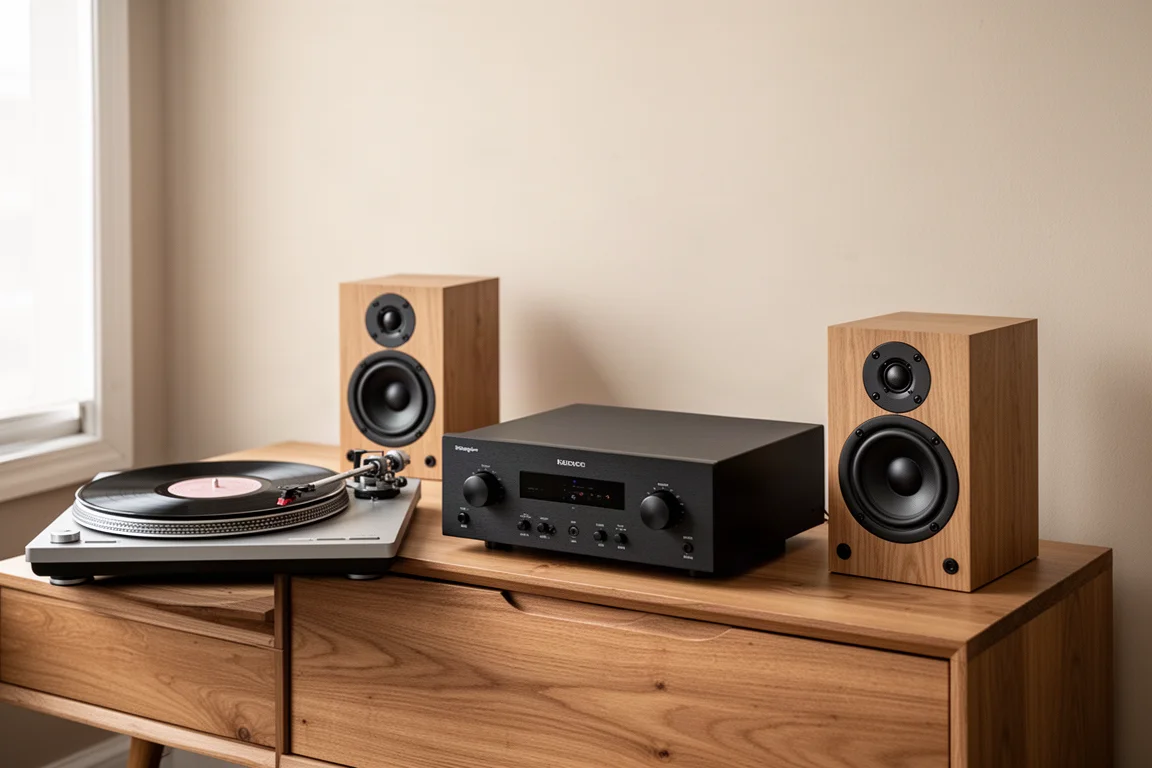
If you want one box that does everything, the WiiM Amp covers streaming, television duties and bass management without extra components, while the AIYIMA T9 Pro and SMSL AL200 offer simpler all-in-one setups for less. Think about where the amplifier will live: a full-size integrated unit suits a living room shelf, while the compact models are easier to place next to a computer.
If you are unsure, buy for the feature you cannot add later. Phono stages, HDMI ARC and bass management are difficult to bolt on afterwards, while a better DAC or a second mono amplifier can be added when budget allows.
Conclusion
These seven amplifiers cover a wide range of budgets with very little overlap. The AIYIMA T9 Pro and AIYIMA A07 Max are the lowest-cost entry points, the SMSL AL200 adds better construction and a headphone amp, and the Fosi Audio ZA3 is the pick for anyone who wants a small amplifier that can grow into a pair of mono blocks. The Rotel A10 Mark II and A11 Mark II serve listeners who value a proper integrated chassis and, in the case of the A11, a phono stage that would cost a significant amount on its own. For a single box that handles streaming, television audio and a subwoofer, the WiiM Amp is the most complete answer.
Further reading
Related Reviews
Hi-Fi Audio
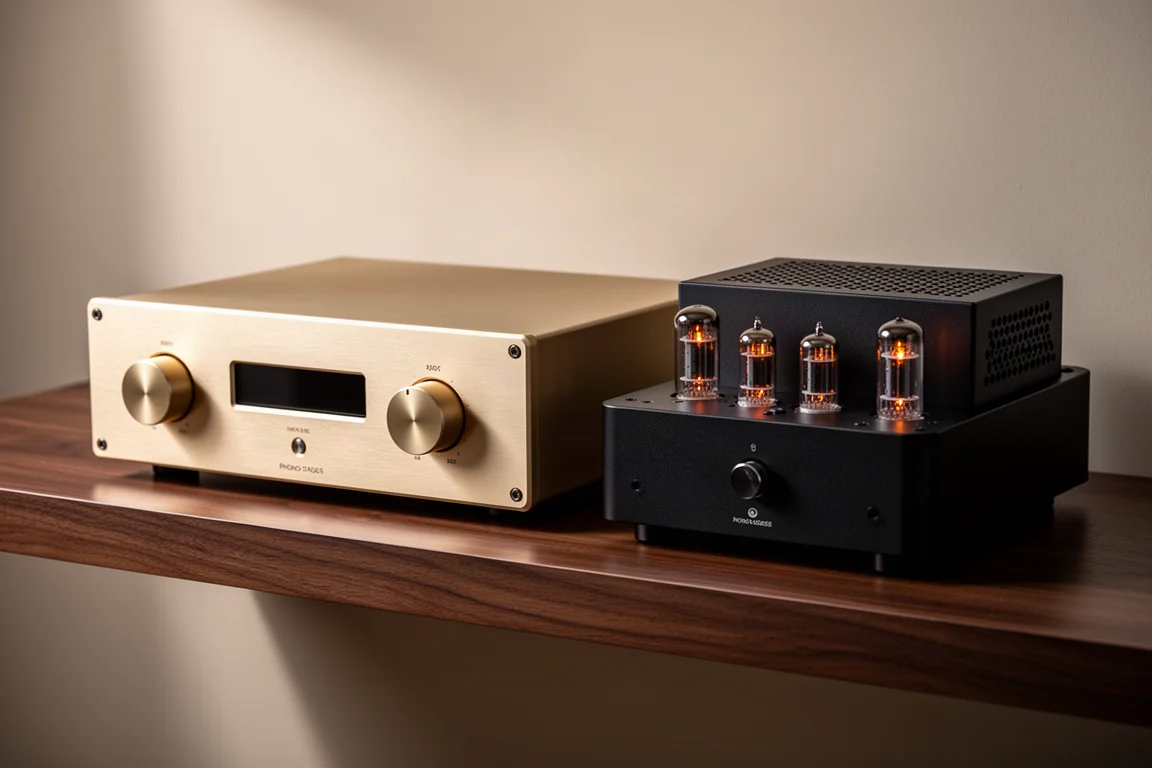
Accuphase C-57 vs Allnic H-7000V: Two High-End Phono Stages Compared
A fully balanced solid-state phono stage with a pitch-black noise floor meets a tube design built for well-loved records. Here is how to choose between them.
Hi-Fi Audio
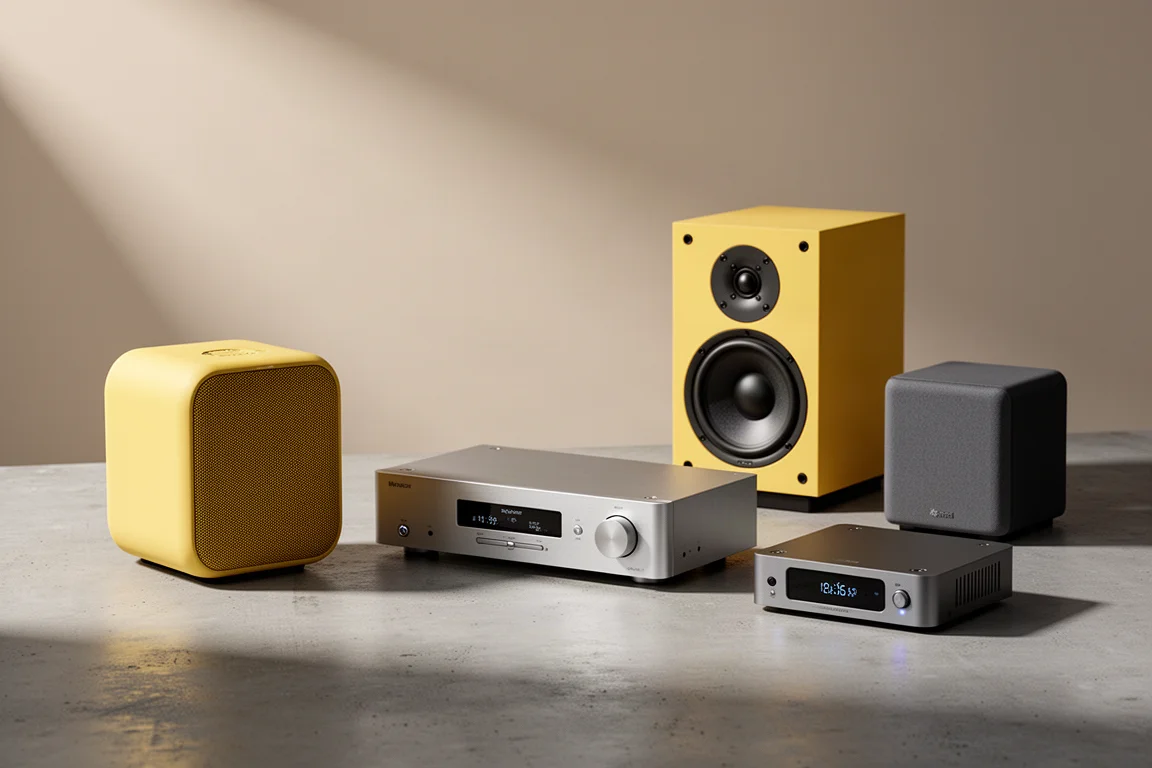
Active vs Passive Hi-Fi: Five Components for a Modern System
Five components that define modern active and passive hi-fi systems, with the strengths, trade-offs and setup details worth weighing before you buy.
Hi-Fi Audio
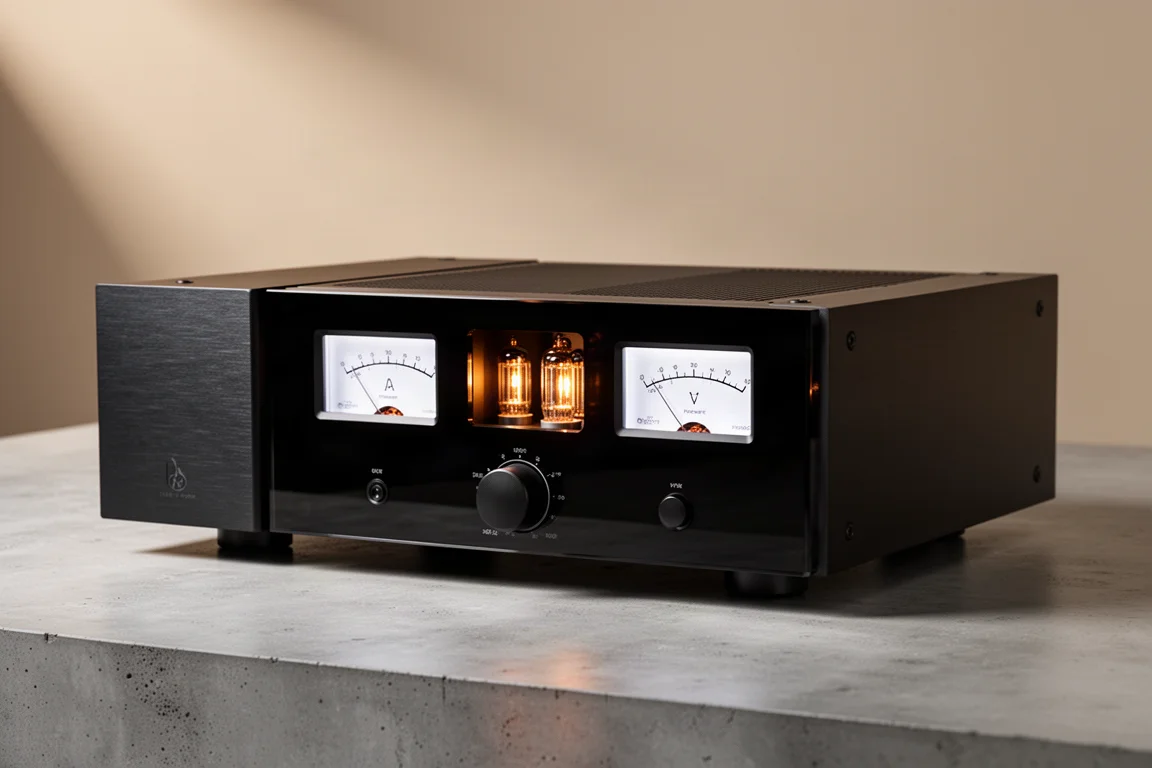
Advance Paris A10 Apex Review: A Hybrid Integrated Amplifier That Covers a Lot of Ground
A French hybrid integrated amplifier with a class A tube preamp stage, analogue power meters, and an internal DAC and phono stage good enough to make extra boxes unnecessary.