Hi-Fi Audio
Building a Coherent Hi-Fi System: Four Standout Components
Four components that work together as a system: a high-efficiency floorstander, a compact force-cancelling subwoofer, a streaming amplifier with real bass management, and advanced room correction.
Introduction
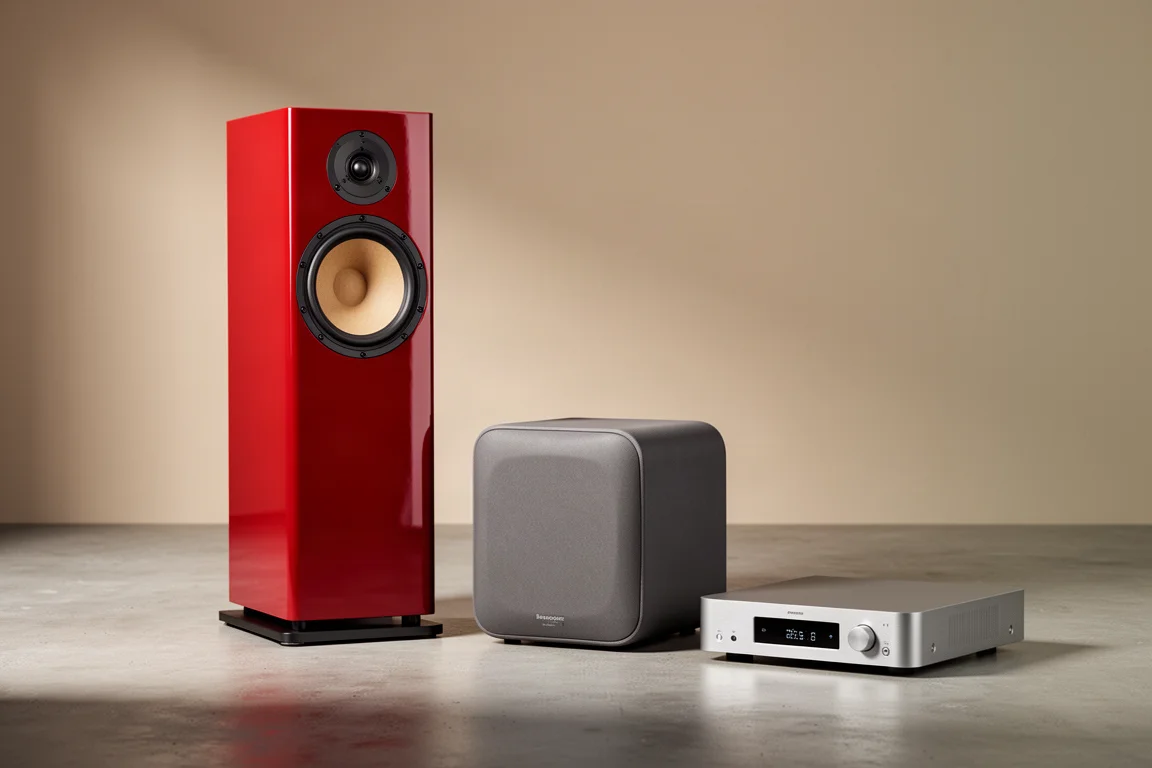
Most component roundups treat each product as an isolated purchase. A stereo system does not work that way. A speaker’s bass behaviour depends on the amplifier driving it and the subwoofer sitting beside it, and the room decides how much of that bass survives. The four components below were chosen because they solve different parts of the same problem, from a pair of high-efficiency floorstanding speakers through to the software that aligns a subwoofer with the main speakers in time.
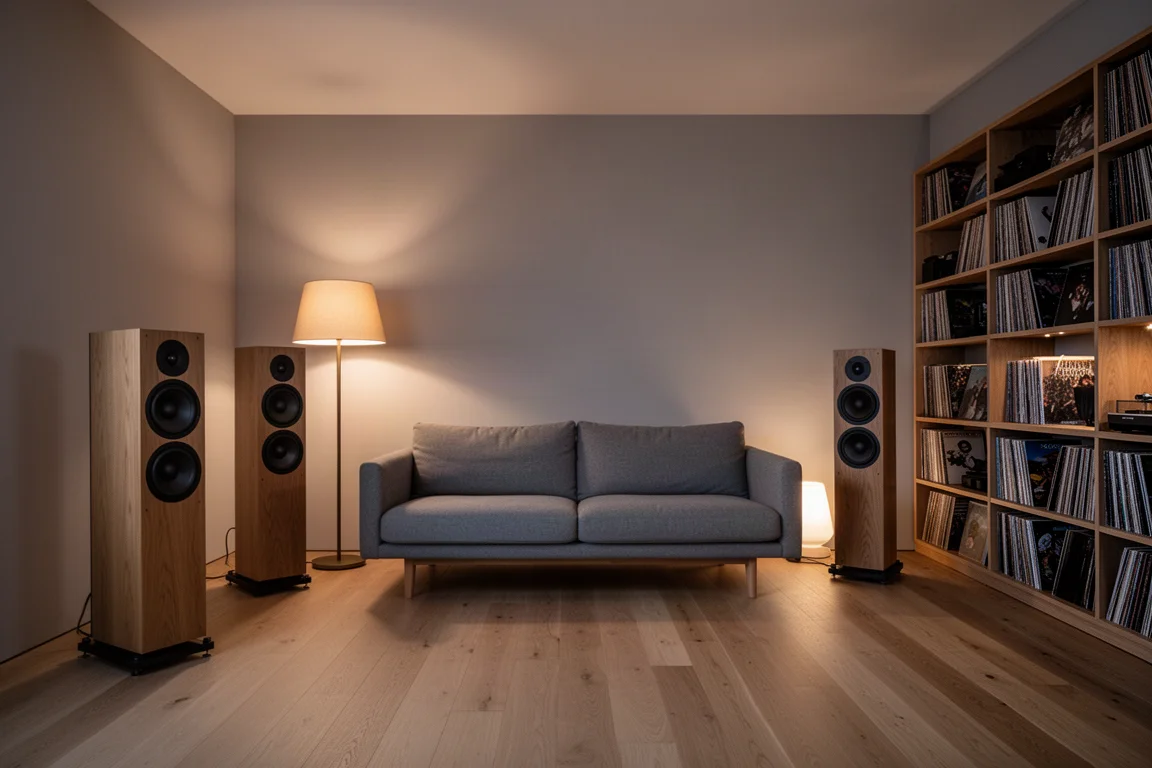
Two of the picks are physical products a listener can plug in and enjoy straight away. The other two address integration: one is a streaming amplifier that filters the signal properly between mains and subwoofer, and one is a room correction platform that goes further with crossover choice and delay. Taken together they describe a practical path from a simple two-channel setup to a system that handles low frequencies with real control.
What Matters When Building a System
When a subwoofer is added to a pair of passive speakers through a standard integrated amplifier, the subwoofer receives a low-passed signal but the speakers keep running full range. They still receive the low bass, so the mid-bass driver works harder than it needs to and distortion rises. High-pass filtering the main speakers removes that burden. Some amplifiers and active speakers now do this internally, and it is one of the most useful features a modern amplifier can offer.
A second issue is time alignment. If the subwoofer’s output arrives slightly late, bass can sound slow or detached from the rest of the music. The usual workaround is to move the subwoofer closer to the listening position, which becomes impractical once the required distance runs to a couple of metres. Delaying the main speakers instead achieves the same result without rearranging the room.
Speaker efficiency also shapes amplifier choice. A speaker rated at 99 dB sensitivity needs very little power to reach high output, while a low-sensitivity design asks far more of the amplifier. Finally there is the room itself. Even well-chosen components benefit from correction that measures the space and compensates for it.
Zu Audio Soul 6: High-Efficiency Floorstanding Speakers
The Soul 6 is a floorstander built around a 10-inch Eminence driver made to the manufacturer’s own specification. That driver runs full range up to 10 kHz, at which point a coaxially mounted super tweeter takes over. Only the tweeter is high-passed, and the large driver appears to run without a filter, which is unusual and goes a long way toward explaining the speaker’s character. The cone material is paper.
The cabinet is not an MDF structure. It is built from plywood with a highly structured internal construction intended to reduce the energy lost into the cabinet, and it is ported at the bottom through four slots rather than a single round port. Nominal impedance is 8 ohms and efficiency is rated at 99 dB, so low-powered amplifiers and integrateds can drive it comfortably. The speaker stands 82 cm high, and it is rated at minus 3 dB at 45 Hz, which means the octave below that, roughly 20 Hz to 40 Hz, is best served by a subwoofer. In everyday listening the Soul 6 does not feel as though it needs one, but adding a subwoofer brings clear benefits, particularly with live recordings where micro detail and stark low-end contrast both matter.
Sonically the Soul 6 is defined by dynamics, imaging and presence. Voices are given a wider throat, the speakers disappear into a soundstage that sits between them rather than at them, and detail retrieval stands alongside considerably more expensive designs. The base configuration is priced at $6,000, roughly half the cost of a comparable premium standmount, and it plays much larger in every direction.
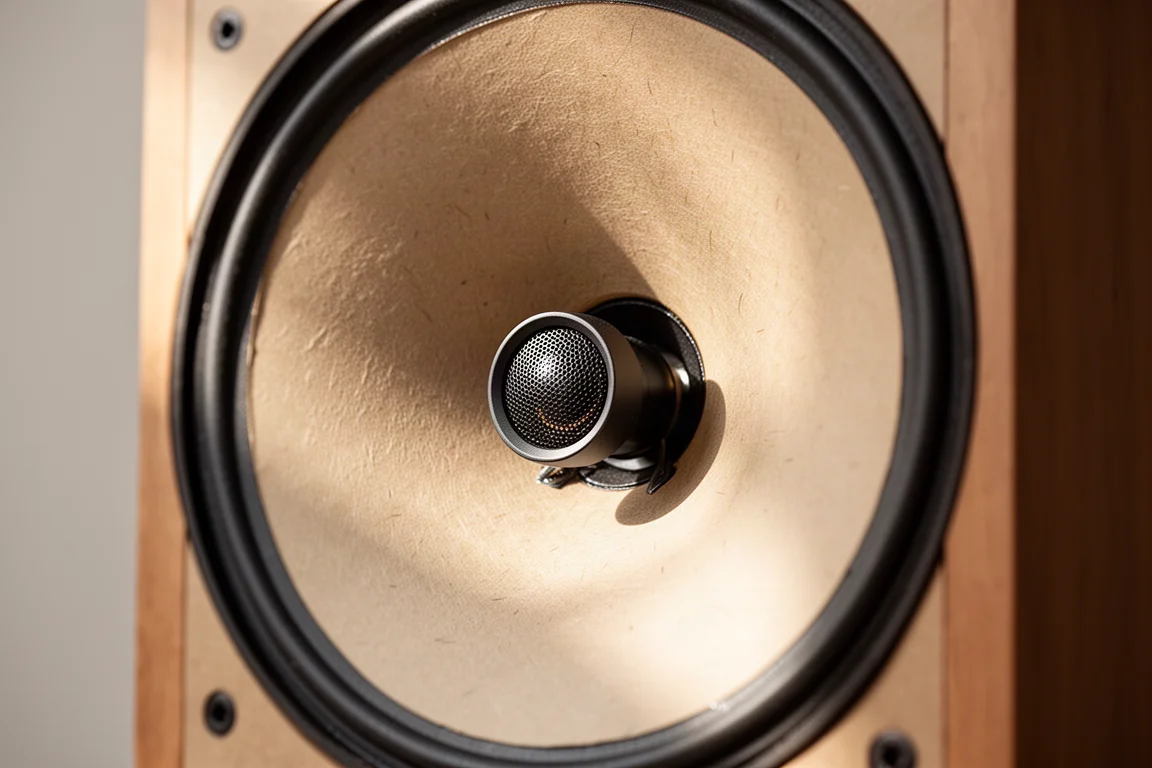
The trade-off is refinement. The last degree of polish is where the more expensive alternative still leads, and that is the honest limit of this design. The Soul 6 is for listeners who want to revel in the feeling of a performance rather than analyse it from a distance.
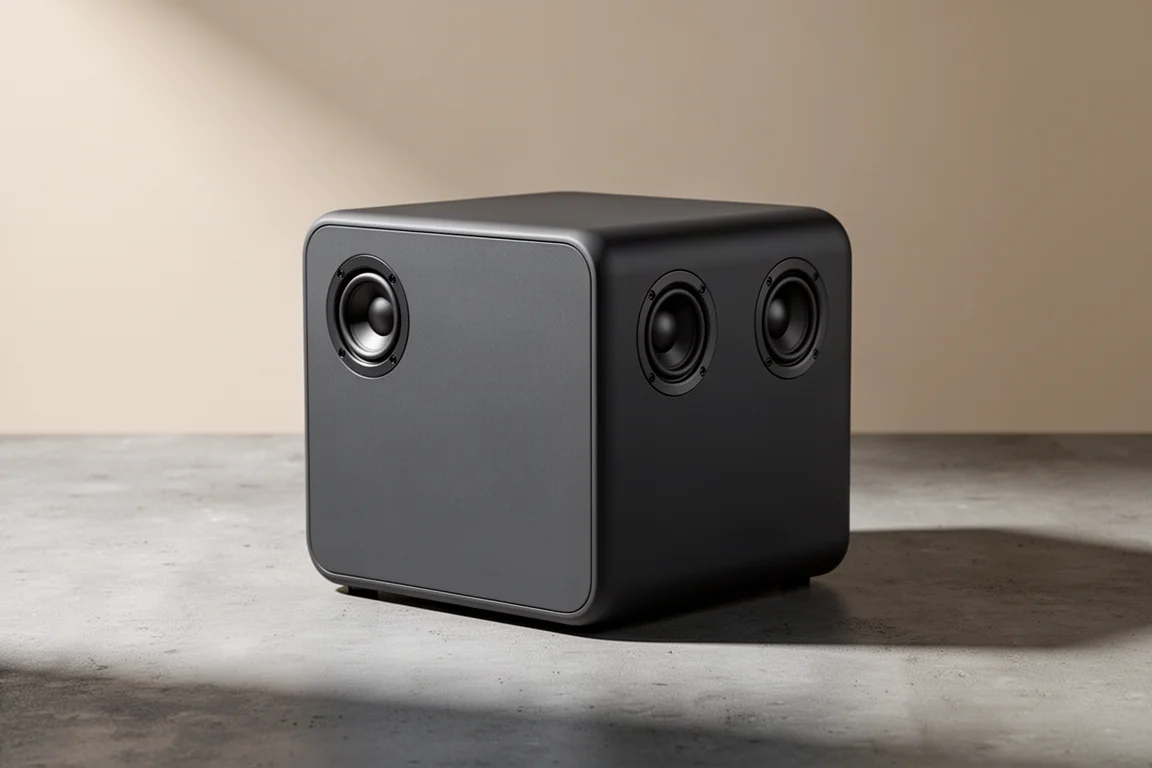
KEF KC62: A Compact Force-Cancelling Subwoofer
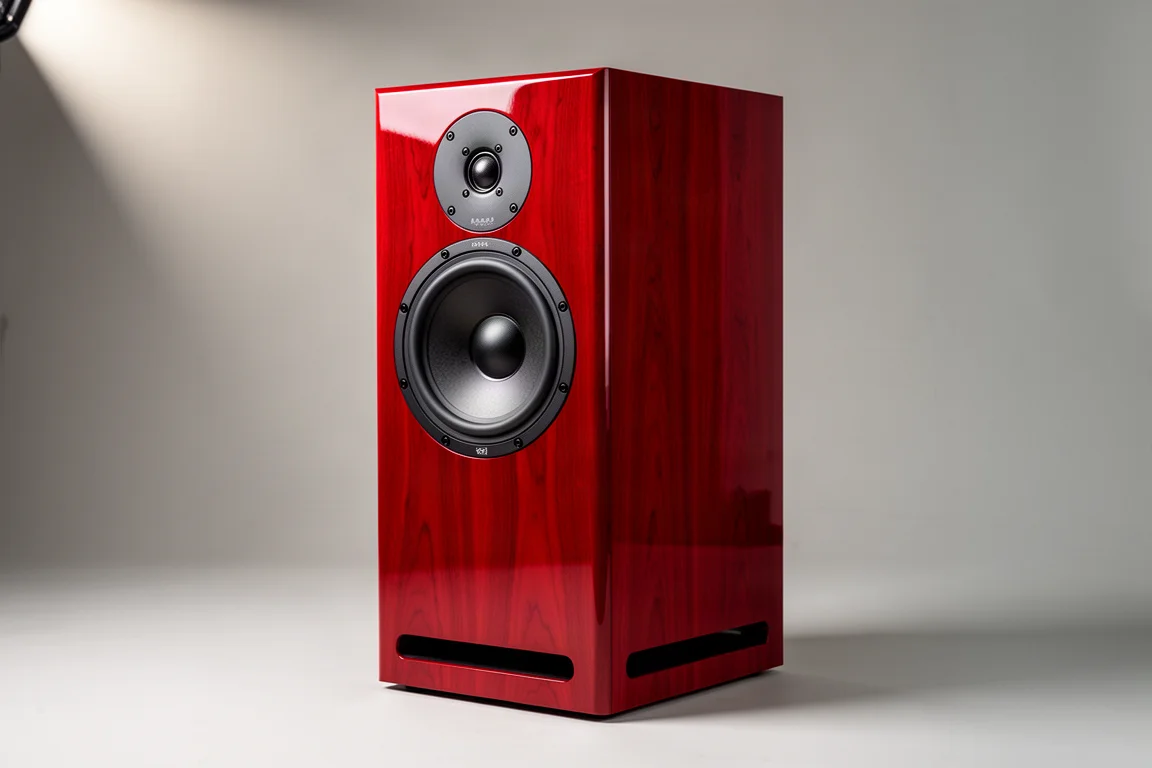
Micro subwoofers have changed what is practical in a small room, and the KC62 is one of the most ambitious examples. Inside the compact cabinet are two 500 W Class D amplifiers driving a pair of 6.5-inch force-cancelling woofers arranged to cancel vibration. The voice coils are sleeved, a technique that helps fit the drivers into a very small enclosure, and the surround is concertinaed to limit flexing under high pressure loads. Smart Distortion Control uses DSP to correct the spring-back distortion the drivers might otherwise introduce.
The published figures deserve care. The manufacturer states minus 3 dB at 11 Hz and a 105 dB output capability, but those two numbers do not apply at the same time, so very high output at 11 Hz is not on the menu. What the KC62 does deliver is tight, muscular bass with none of the looseness small subwoofers often show.
Its strongest argument is integration with the KEF LS50 Wireless II. Activating the subwoofer in the app produces a low-passed subwoofer output on the back of the speaker, and the speaker’s internal processing high-passes its own Uni-Q driver. That reduces the low-bass workload, which lowers voice coil temperature, input impedance and distortion, and puts less stress on the amplifiers inside the speaker. With the optional KW1 wireless transmitter and receiver kit, the subwoofer can be positioned without a cable run back to the speakers. Very few compact subwoofers can join a compatible pair of speakers wirelessly while also having those speakers high-pass their main driver. A head-to-head result against the nearest rival in this size class is not available, so the case rests on that integration, the build approach and the character of the bass.
Bluesound Powernode: Streaming Amplifier With Proper Bass Management
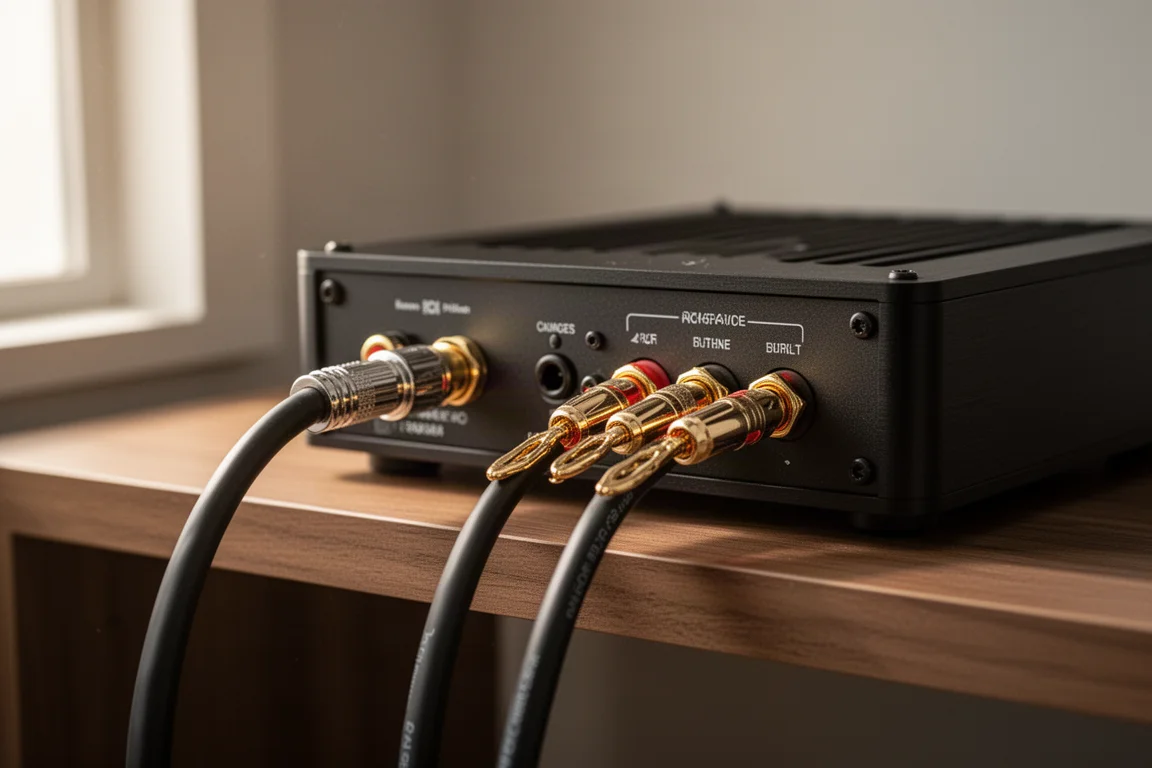
For anyone running passive speakers, the practical obstacle to adding a subwoofer is that a standard integrated amplifier has no way to filter the main speakers. The Powernode solves that. It is a compact all-in-one streaming integrated amplifier rated at 80 watts per channel of hybrid digital amplification with an ESS DAC circuit inside. BluOS handles streaming, and the unit is Roon Ready with Spotify Connect, Tidal Connect, AirPlay and two-way Bluetooth, so audio can be sent to it or pulled from it. A redesigned top touch panel covers basic control.
The feature that matters here is the internal bass management. Using the LFE output to the subwoofer, the amplifier low-passes the subwoofer signal and high-passes the loudspeaker outputs, with a default crossover of 80 Hz and adjustment from 40 Hz up to 200 Hz. Passive speakers keep the low-frequency workload off their shoulders, exactly as they would with an active speaker offering the same treatment. The price is around $1,000, which is remarkable for an all-in-one streaming amplifier with this functionality.
The honest caveat is that no single listener can hear every integrated amplifier at this price, so an absolute claim about sound quality is not possible. The case for the Powernode is the integration itself: it makes a passive speaker and a subwoofer behave like a properly filtered system rather than two separate purchases sharing a room.
Lyngdorf RoomPerfect: Advanced Subwoofer Integration
RoomPerfect earns an honorable mention as software rather than as a component. It appears in the Lyngdorf TDAI-1120 amplifier, but the value on offer is the room correction and bass management platform itself rather than the amplifier around it.
Where a streaming amplifier stops at a fixed crossover, RoomPerfect lets the user specify the crossover type, Linkwitz-Riley or Butterworth, the crossover order, and separate time delays for the subwoofer and the main speakers. That delay control addresses the time alignment problem directly. Instead of moving the subwoofer two metres into the room, the main speakers can be delayed to match it, which keeps the layout practical. The software also crosses the mains over to the subwoofer and then compensates the whole result for the room.
For listeners who want to go beyond what an amplifier’s built-in bass management can do, and who are comfortable working through more settings, this is the more advanced route.
Buying Advice: Matching Components to Your Room and Priorities
Start with the room, then the speakers, then the low-frequency solution. Subwoofer integration and room correction sit high on the list of priorities because they change what a system can do in a normal living space, often more than a component swap does.
If you already own passive speakers, an amplifier with high-pass filtered speaker outputs is the single most useful upgrade for subwoofer integration, and the Powernode provides that for around $1,000. If your speakers are KEF’s wireless active models, the KC62 is the natural partner and can connect wirelessly with the optional kit. If you want control over crossover type, slope and delay, a room correction platform such as RoomPerfect goes further.
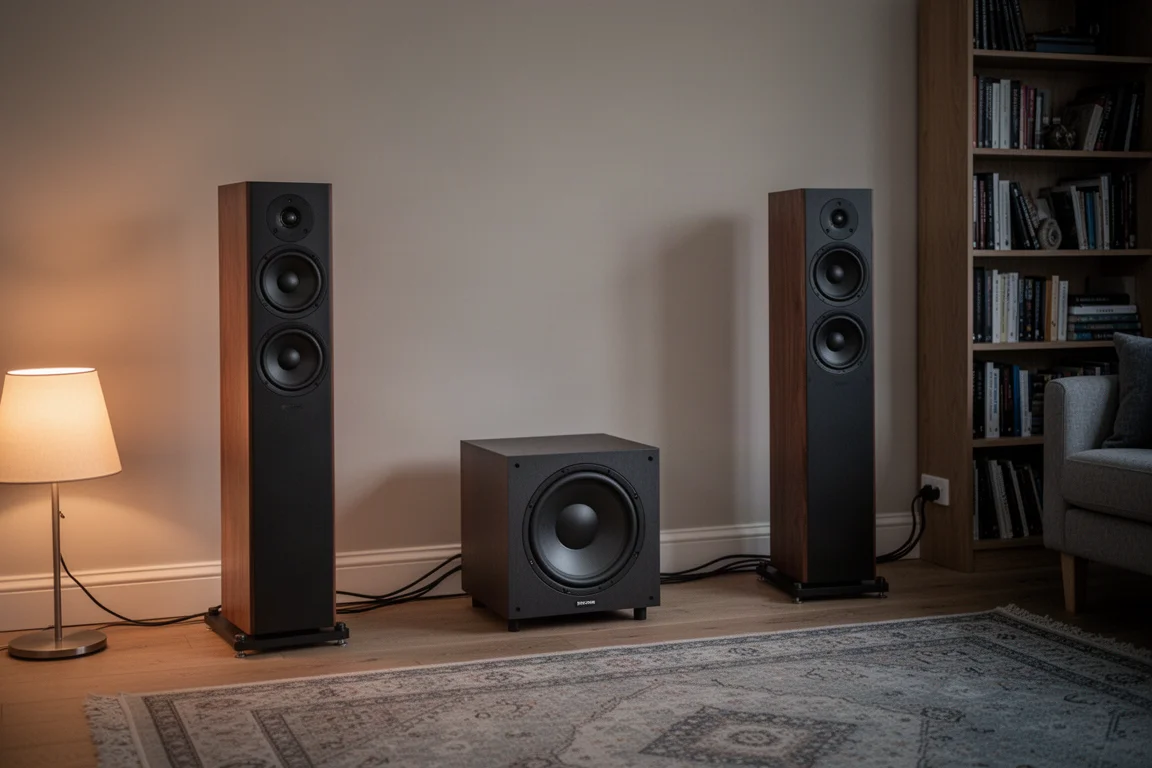
Speaker choice still drives everything else. A 99 dB efficient floorstander like the Soul 6, at $6,000 in its base configuration, will run happily from modest amplification, which frees budget for the subwoofer and the streaming front end. A less efficient speaker will demand more from the amplifier and change the balance of the whole system.
Pricing is not published for every component in this group. The KC62 and the RoomPerfect platform are judged here by specification, integration features and behaviour rather than by price. Whatever order you buy in, the goal is the same: main speakers that are not asked to do work the subwoofer can do better, and a subwoofer that arrives in time with the rest of the music.
Conclusion
These four components describe a complete approach rather than four isolated purchases. The Soul 6 brings efficiency, dynamics and presence to the main channels. The KC62 adds compact, tightly controlled low frequencies with genuinely useful integration for compatible speakers. The Powernode makes high-pass filtering practical for passive setups at a modest price. RoomPerfect extends that control to crossover shape and time alignment. Bought together or one at a time, they address the parts of a system where the biggest gains usually hide.
Further reading
Related Reviews
Hi-Fi Audio
Accuphase C-57 vs Allnic H-7000V: Two High-End Phono Stages Compared
A fully balanced solid-state phono stage with a pitch-black noise floor meets a tube design built for well-loved records. Here is how to choose between them.
Hi-Fi Audio
Active vs Passive Hi-Fi: Five Components for a Modern System
Five components that define modern active and passive hi-fi systems, with the strengths, trade-offs and setup details worth weighing before you buy.
Hi-Fi Audio
Advance Paris A10 Apex Review: A Hybrid Integrated Amplifier That Covers a Lot of Ground
A French hybrid integrated amplifier with a class A tube preamp stage, analogue power meters, and an internal DAC and phono stage good enough to make extra boxes unnecessary.