Hi-Fi Speakers
Best Hi-Fi Speakers: Five Standout Designs Worth Considering
Five speakers that take very different routes to high performance, with clear strengths, trade-offs, and price points to weigh before buying.
Introduction
Choosing a single favourite speaker is harder than it sounds. The five models in this roundup take genuinely different routes to high performance, and the gaps between them are wide enough that two listeners with similar budgets can end up with completely different shortlists. Prices here span roughly $1,500 to $16,000 per pair, and each speaker earns its place for a specific reason: cardioid bass control, balanced linearity, horn-loaded dynamics, coaxial imaging, and exceptional value.
What These Five Speakers Have in Common
Every speaker on this list delivers linear on-axis response, or something close to it, along with well-behaved off-axis performance. That combination is the foundation of accurate sound. It means the direct sound reaching your ears and the reflected sound filling the room stay closely related rather than working against each other.
Where they diverge is directivity. Horizontal radiation across the five ranges from roughly plus or minus 40 degrees to roughly plus or minus 70 degrees. That single figure shapes the listening experience more than most specifications do. A narrower pattern keeps the room out of the equation, which sharpens imaging and reduces side-wall reflections. A wider pattern lets the room contribute more, producing a larger and more enveloping stage while giving up some image precision.
The designs also split along amplification lines. The Dutch & Dutch 8C is an active, powered design with analog and digital inputs built in, while the Revel F226Be, JBL 4367, KEF Reference 1 Meta, and Wharfedale Linton 85 are passive and need an external amplifier. Budget for that accordingly, because passive models only reveal their full character with electronics that match their quality.
Dutch & Dutch 8C: Cardioid Active Design
At about $14,000 per pair, the Dutch & Dutch 8C is the most technically unusual speaker here. It is a powered active design that accepts either an XLR analog input or a digital input, so amplification and input handling live inside the cabinet rather than in separate components.
The defining feature is its cardioid radiation pattern. A conventional speaker sends a large amount of energy around its sides and to its rear below roughly 400 to 500 Hz, depending on baffle width. The 8C cancels much of that wrap-around energy in the midrange, keeping output focused toward the front. In practice this produces unusually even bass across the room, with far less seat-to-seat variation than a typical room shows below the transition frequency.
Because so little energy heads rearward, the 8C can sit close to the front wall without the boom that placement usually causes. That wall reinforcement helps it reach down to roughly 30 Hz with substantial output in-room, and the design is described as full range from 20 Hz to 20 kHz using only two 8-inch woofers mounted on the rear panel. Measured performance shows smooth on-axis response, neutral off-axis behaviour, and consistent directivity through the midrange and treble, with horizontal coverage of roughly plus or minus 50 to 60 degrees. Onboard EQ and the ability to load room measurements directly into the speaker make it straightforward to address room modes and tailor the response to taste.
Revel F226Be: Floorstanding Linearity
The Revel F226Be is a floorstanding three-way priced at about $7,500 per pair. It combines two 6.5-inch mid-woofers, a 5-inch midrange, and a 1-inch beryllium dome tweeter, and its measured response backs up its reputation for linearity both on and off axis.
Horizontal radiation sits at roughly plus or minus 60 degrees, which lands squarely in the range many listeners find ideal. It is wide enough to create a convincing stage and narrow enough to keep the room from smearing the image. That balance is why this speaker works well in rooms that are not heavily treated, and why it remains an easy recommendation for anyone who wants a predictable result without extensive setup work.
What stands out is consistency. The F226Be does not need to be coaxed into sounding right, and it does not impose a strong character of its own. For listeners who want a neutral, well-engineered floorstander at a mid-premium price, that predictability is the whole appeal.
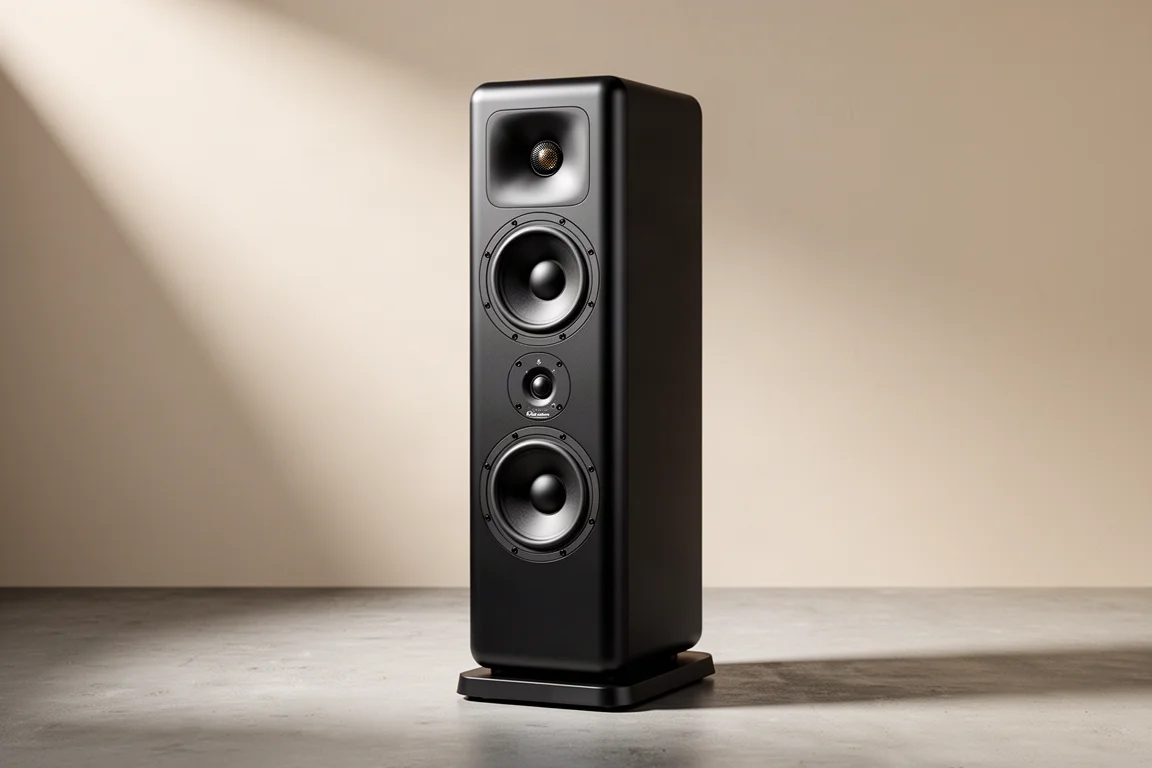
JBL 4367: Horn-Loaded Dynamics
The JBL 4367 sits at the top of this list on price at about $16,000 per pair, and it takes the most traditional route of the five. It is a passive three-way with a 15-inch woofer and a horn assembly at the top that houses a 3-inch midrange and a 1-inch compression driver. Sensitivity is rated at about 93 dB, which means it needs far less amplifier power than the other passive designs here.
The payoff is dynamic capability. This speaker pairs superb linearity with very high output and remarkably low compression, so it stays composed when the music gets loud instead of flattening transients and squeezing the sense of scale. In-room extension reaches roughly 30 Hz to 20 kHz, which makes a subwoofer largely unnecessary unless you specifically want output below 30 Hz.
The trade-off is directivity. Horizontal radiation is narrower here at roughly plus or minus 40 degrees, compared with the wider patterns of the other four. That produces sharper, more tightly focused imaging and less room interaction, but a smaller listening window. For listeners who value scale, punch, and effortless headroom, the trade is an easy one to accept.
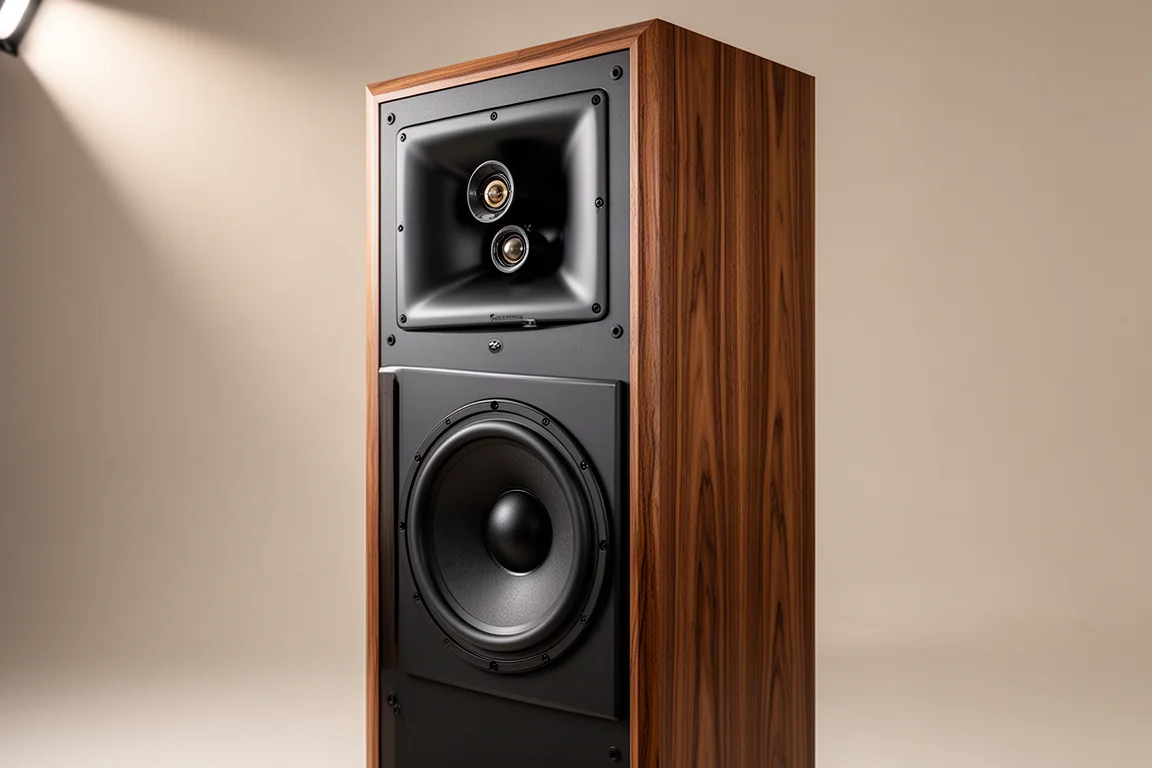
KEF Reference 1 Meta: Coincident Driver Precision
At $9,000 per pair, the KEF Reference 1 Meta is a passive three-way stand-mount that pairs a 6.5-inch mid-woofer with a 5-inch coincident midrange. A 1-inch tweeter sits inside that midrange in a coaxial arrangement, so both drivers effectively radiate from the same point in space.
That geometry produces one of the speaker’s most practical advantages: a wide vertical sweet spot. You do not have to keep your head locked at one exact height, and moving around, sitting up, or turning slightly does not collapse the imaging or shift the timbre. Combined with linearity that stays within roughly plus or minus 1.5 dB on and off axis, the result is an exceptionally three-dimensional stage where both depth and width stand out.
Horizontal radiation measures around plus or minus 45 to 50 degrees, slightly narrower than the widest designs here. The upside is a focused image and a speaker that is easy to place in a normal room without heavy treatment. For a passive design, its measured consistency is the headline.
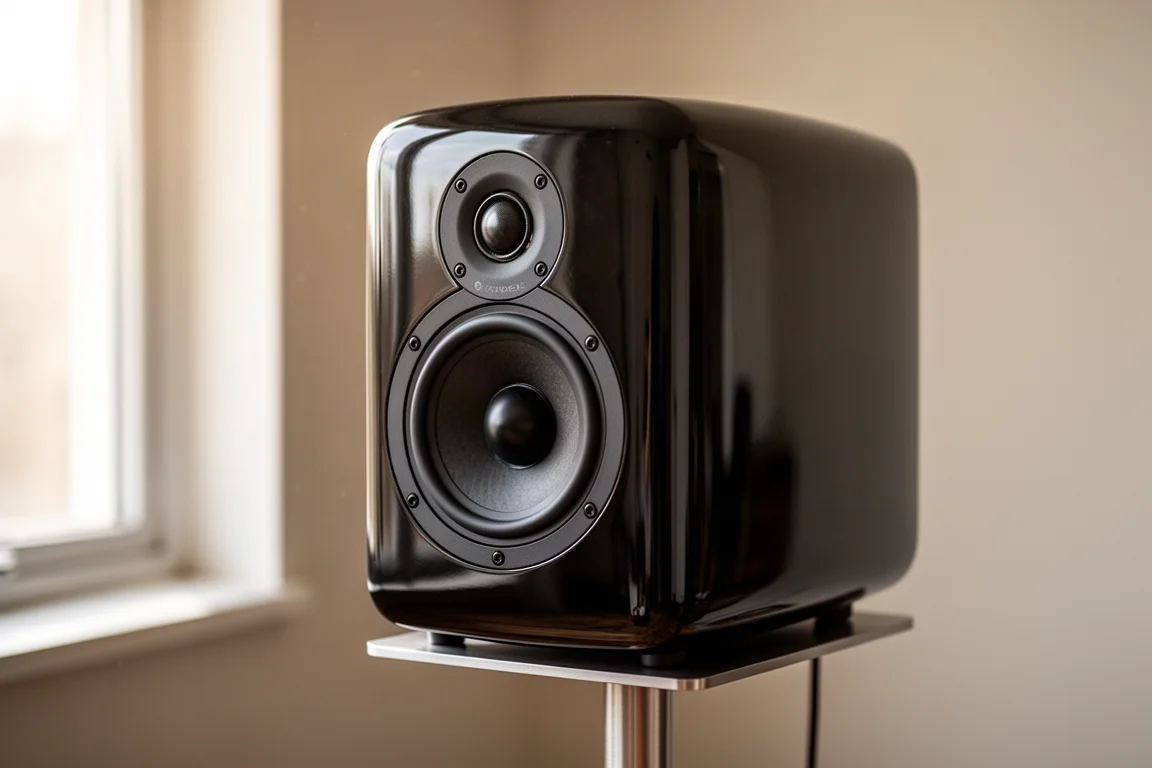
Wharfedale Linton 85: Value That Stands Out
The Wharfedale Linton 85 closes the list at about $1,500 per pair without stands, or around $2,000 with them. Promotional pricing has pushed the stand bundle as low as roughly $1,600 per pair. It is a passive three-way with an 8-inch mid-woofer, a 5-inch midrange, and a 1-inch dome tweeter, and it is designed to be used with the grille in place.
Tonally, it holds up well against speakers costing several times more, with one honest caveat. There is a slight dip in the upper midrange around 2 to 3 kHz, where a small amount of attack is missing. Outside that narrow region the performance is strong across the board, and the value proposition is difficult to argue with.
The radiation pattern is the widest on this list at roughly plus or minus 70 degrees, wider than the Dutch & Dutch 8C and the Revel F226Be. That creates a large, immersive stage, though it approaches the point where a small or reflective room can become over-involved. Imaging is not as precise as a narrower design, which is a deliberate trade for stage width.
How to Choose Between These Speakers
The right pick depends on which trade-offs you are willing to make. Start with directivity, because it determines how much your room shapes the result. A narrow pattern of roughly plus or minus 40 degrees suits dedicated rooms and listeners who prioritise precision. A wide pattern of roughly plus or minus 70 degrees suits open spaces and listeners who want the room to contribute to a bigger stage. Most people land somewhere in the middle, around plus or minus 50 to 60 degrees.
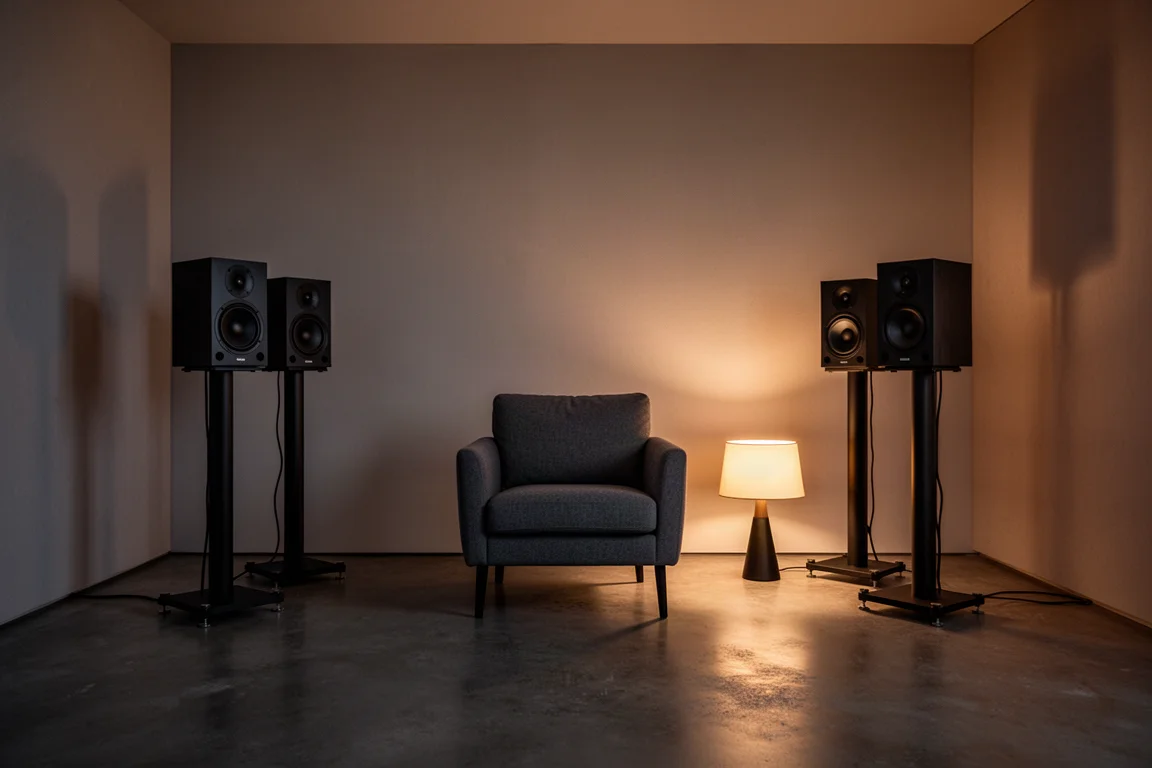
Then consider amplification. Four of these speakers are passive and need an amplifier, and the JBL 4367’s roughly 93 dB sensitivity makes it the easiest of them to drive. The Dutch & Dutch 8C is the exception, with amplification and inputs built in, so it needs only a source.
Finally, weigh price against priorities. The Revel F226Be delivers balanced, predictable performance at about $7,500 per pair. The KEF Reference 1 Meta adds coaxial imaging and a forgiving sweet spot for $9,000. The JBL 4367 brings unmatched dynamics at about $16,000. The Dutch & Dutch 8C solves room bass problems and wall placement at about $14,000. The Wharfedale Linton 85 gets you much of the way there for around $1,500 to $2,000.
Conclusion
There is no single best speaker, only the most suitable speaker for a given room, budget, and set of preferences. These five earn their places for distinct reasons: cardioid bass control and active convenience from the Dutch & Dutch 8C, dependable linearity from the Revel F226Be, horn-loaded dynamics from the JBL 4367, coaxial precision from the KEF Reference 1 Meta, and remarkable value from the Wharfedale Linton 85.
Any of them can anchor a serious system. Matching directivity to your room and choosing an amplification approach you are comfortable living with will matter more to long-term satisfaction than any single measurement.
Further reading
Related Reviews
Hi-Fi Speakers
1723 THX Tower vs 1528 Bookshelf: Which Speaker Fits Your Room?
Two speakers at roughly the same price, built very differently. How the 1723 THX tower and the 1528 bookshelf compare on construction, bass, power needs, and sound.
Hi-Fi Speakers
Acoustic Energy AE 300 Review: Deep Bass From a Compact Standmount
A two-way standmount with real wood veneer, surprising low-end weight, and a warm, easygoing character. Here is what to know before buying.
Hi-Fi Speakers
Acoustic Energy AE1 40th Anniversary Review: A Modern Take on a British Classic
A compact standmount that revives a 1980s favorite with all-new parts, a warm mid-centric balance, and a price of £1,499 per pair.