Hi-Fi Speakers
Best Hi-Fi Speakers 2026: Two Standout Floorstanding Loudspeakers
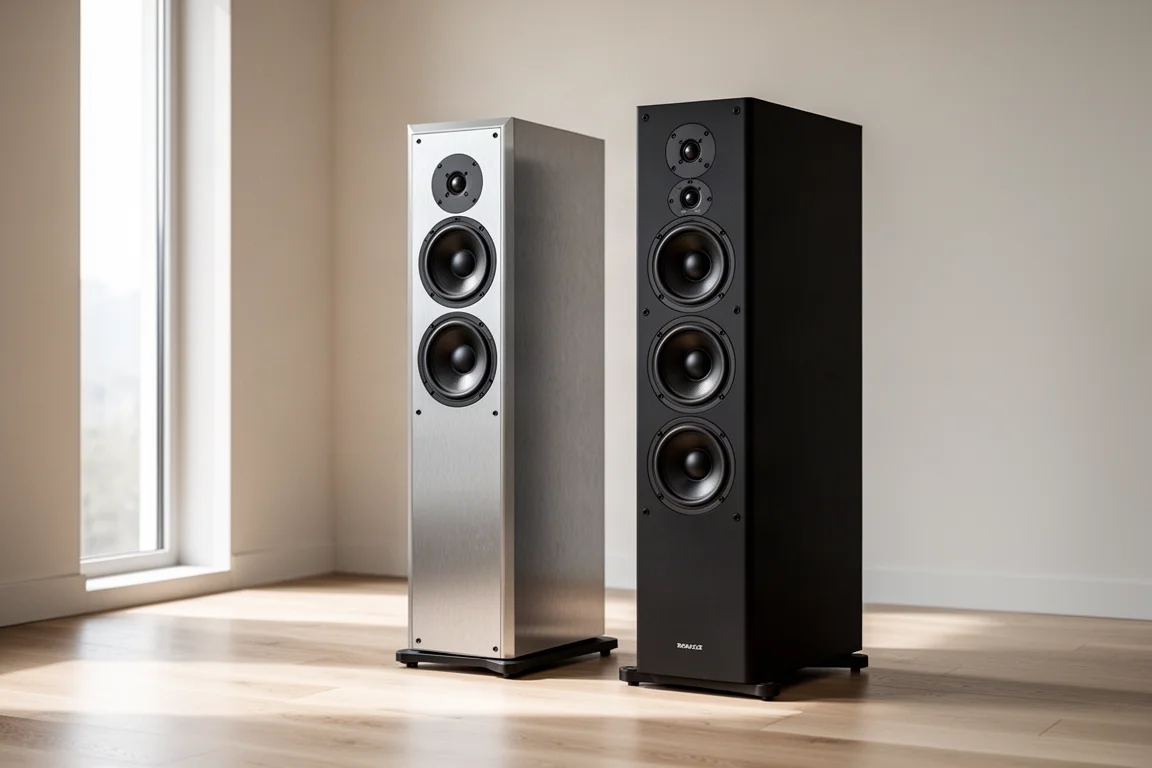
Two floorstanding loudspeakers that defined the year: a $6,000 transparency specialist and a large THX-certified tower that delivers remarkable value.
Introduction
Some years make it easy to name a favourite loudspeaker. This was not one of them. A steady flow of strong designs arrived over the past twelve months, and narrowing the field down to two took far longer than expected. In the end the decision came down to two very different propositions: one speaker that pushes cabinet engineering and transparency about as far as the category allows, and one large tower that hands back an unusual amount of loudspeaker for the money.
One of them took the top honour as the best loudspeaker of the year, an award given to a single design only. The other took a separate value award, reserved for the speaker that gave the most back relative to what it costs. Together they answer the same question from opposite ends: how much do you actually need to spend before a floorstanding speaker becomes genuinely satisfying?
How These Two Speakers Earned Their Place
Two criteria carried the most weight. The first was cabinet construction and resonance control, because the enclosure shapes so much of what you hear long before the drivers ever move. The second was tonal balance across the whole range, since a speaker with impressive bass but a ragged midrange or a sharp top end rarely survives a long listening session.
Dynamics, transparency, and the ability to disappear behind the music mattered too, as did flexibility. A speaker that works with a wide range of amplifiers and can be adapted to the room it lives in is simply easier to live with over several years.
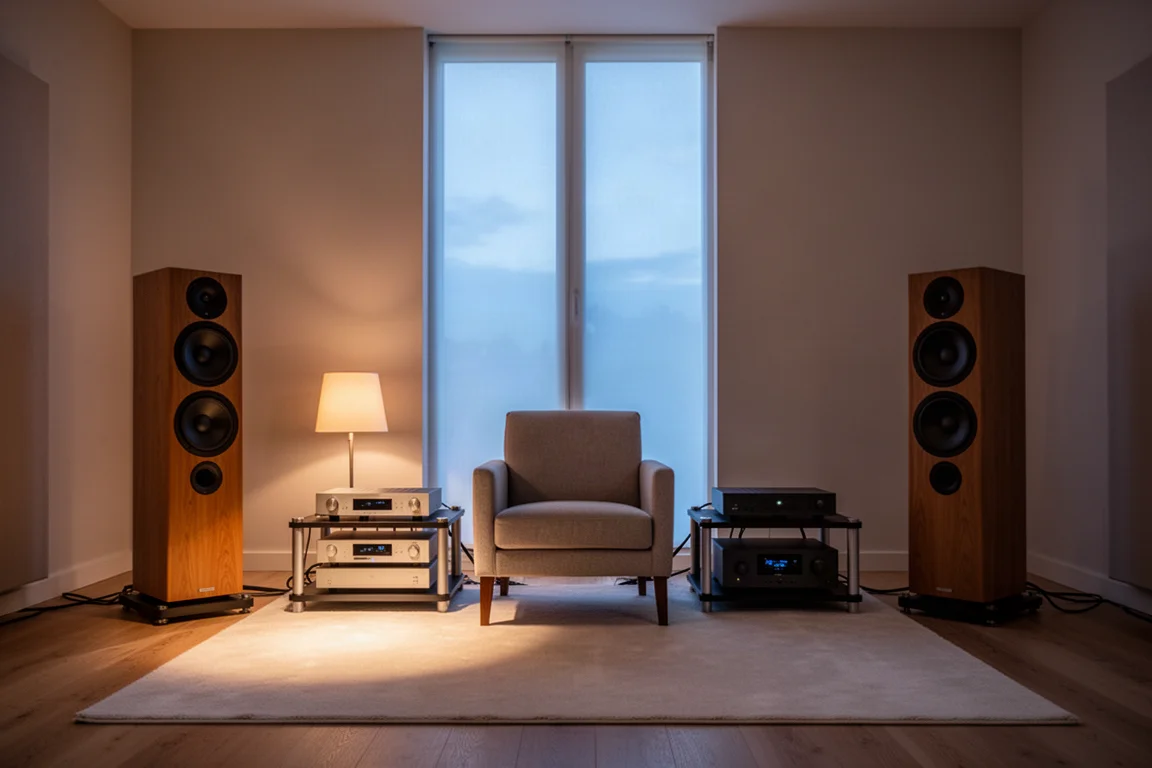
Value was the tiebreaker. Price alone says very little about a loudspeaker, but what you get for that price says a great deal. Materials, cabinet volume, driver count, the quality of the crossover implementation, and how much setup freedom the design offers all feed into that judgment. Judged on those terms, these two designs separated themselves from everything else heard this year.
Best Overall: Mon Acoustic Platon
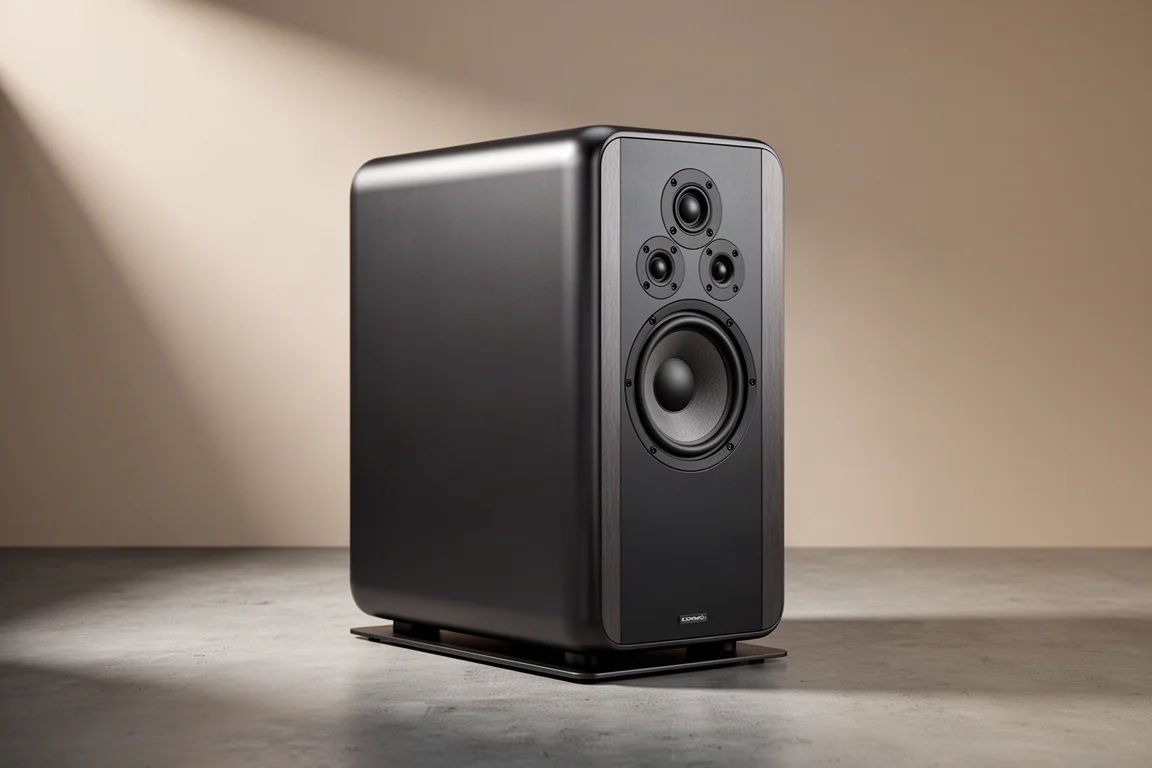
The Platon received the best loudspeaker of the year award, and no other speaker received the same recognition. That decision rested on more than sound quality alone, because the design has an unusual backstory that genuinely shows up in the listening.
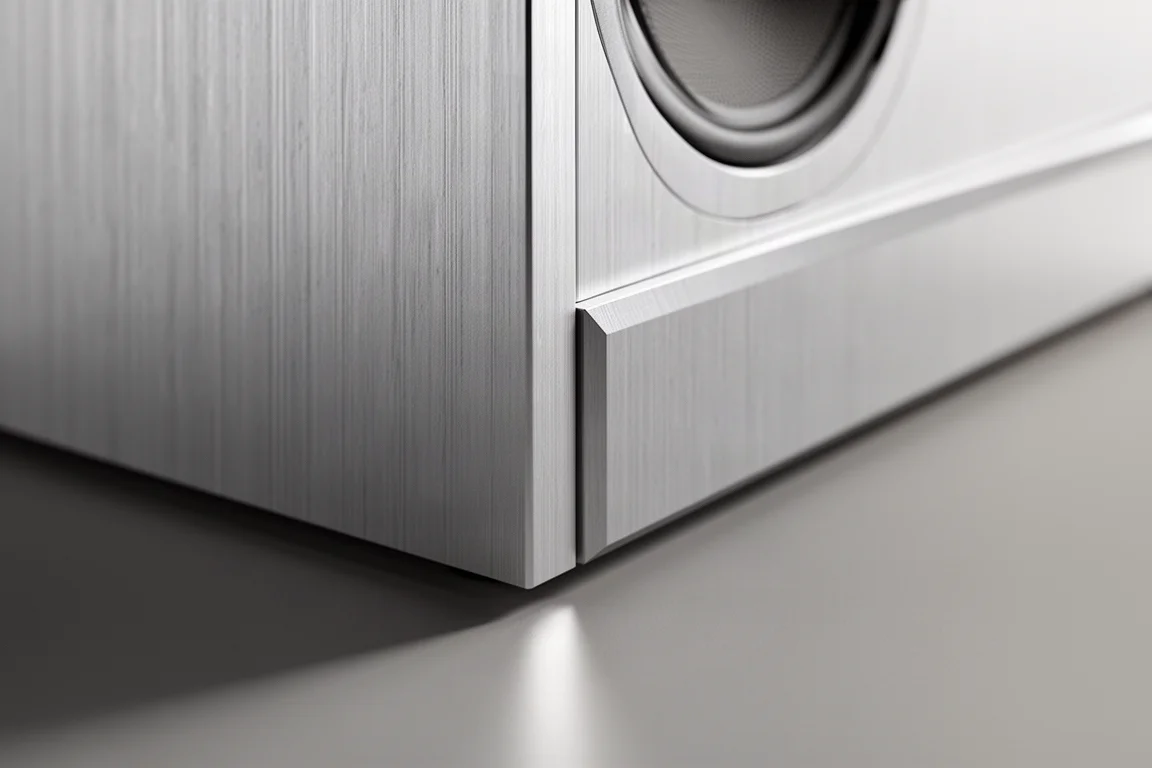
The designer behind the Platon once built a speaker from a rare African tonewood prized for its acoustic properties, sometimes described as a singing or musical wood. The material is exotic, difficult to source, and expensive, so it was never going to work as a production cabinet. Instead, the design moved to aluminium combined with several different materials inside the enclosure, with the goal of getting as close as possible to the character of that original wood.
That approach runs against the usual experience with metal cabinets. Aluminium enclosures often sound metallic, slightly lean, and a little lifeless, and you can usually sense the material behind the music. The Platon does not do that. Its cabinet resonance is very well controlled, and it never tips into sounding overtly metallic or overtly woody. The industrial, clean-cut exterior suggests a hard, clinical presentation, but the sound that comes out does not match that expectation at all.
Purity is the other headline. Despite using a crossover, the Platon comes across as pure and transparent, even next to a crossover-less single-driver design. That clarity carries through to the way it handles detail: delicacy and nuance surface naturally, and the transparency never turns into the brightness that tends to haunt designs built around this kind of resolution.
What makes it the pick of the year is the combination. Dynamics, transparency, and purity sit alongside real depth and width, and with the right equipment the soundstage takes on a holographic quality that few speakers at any price manage. It reads as nuanced rather than bright, airy and spacious and sparkly rather than forward. At $6,000 it is clearly not for everyone, and it will reward careful system matching, but the Platon is the speaker that left the deepest impression this year.
Cabinet Design and the Aluminum Question
Aluminium has a difficult reputation in loudspeaker design for good reason. The material is stiff and easy to work with, but poorly executed metal cabinets add a hardness and a thinness that listeners notice immediately, and no amount of driver quality fully hides it.
The Platon sidesteps that problem by treating the enclosure as a system rather than a single material. Aluminium forms the visible structure, while multiple internal materials work together to manage energy inside the cabinet. The result is an enclosure that stays quiet and does not editorialise. It adds almost nothing of its own to the music, which is exactly the goal, and it is the main reason the speaker can sound this transparent without sounding clinical.
That engineering also explains the speaker’s character. This is not a design chasing warmth or romance. It aims at clarity, speed, and a sense of space, and buyers who prefer a softer, more forgiving presentation should look elsewhere.
Best Value: Arendal 1723 THX Floorstanding Loudspeakers
The second award went to the Arendal 1723 THX towers, named the best value loudspeaker of the year. It is worth being precise about what that means: this is a value award rather than a low-price award, and the value here is genuinely hard to argue with.
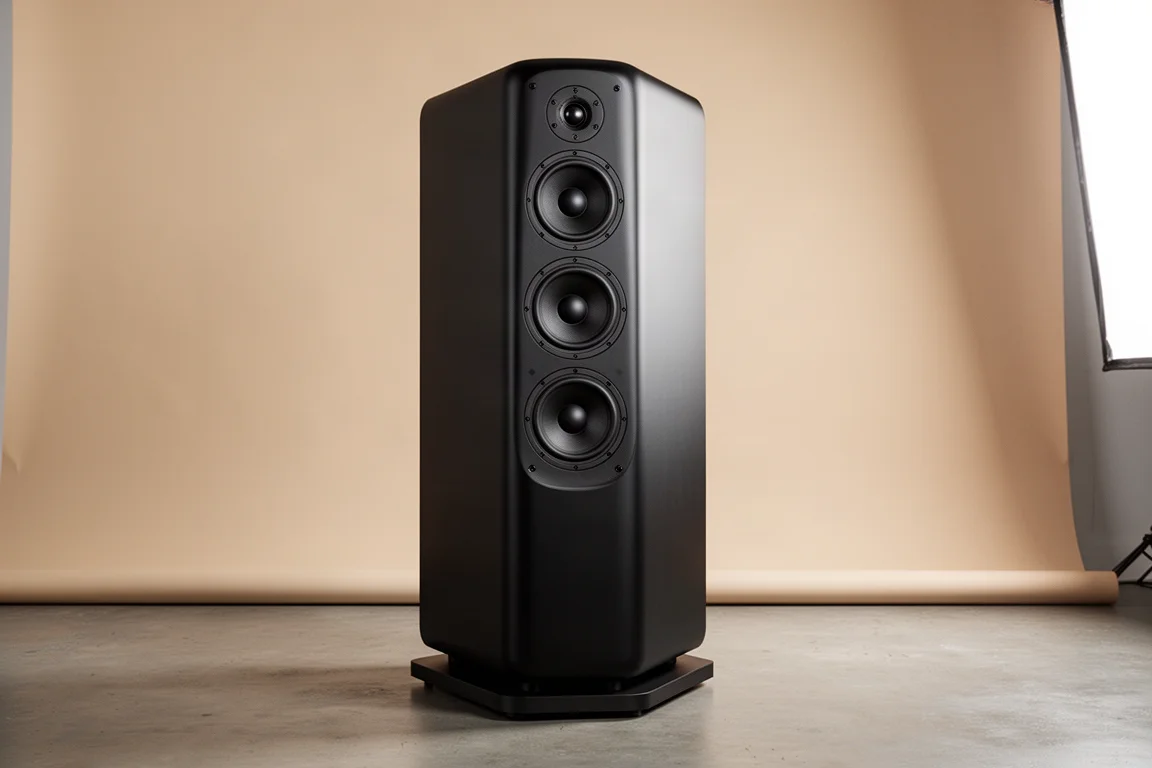
For a start, you get an enormous amount of cabinet and driver hardware for the money. Many manufacturers use MDF for enclosures, which is perfectly reasonable, but Arendal chose HDF instead. It costs more and performs better, and it is a material you rarely see in a cabinet this large at this price. The driver count is generous as well, and while more drivers do not automatically mean better sound, the crossover here blends them coherently. Frequencies do not arrive from everywhere with a mind of their own, which is the usual failure mode of complex multi-driver towers.
The 1723 THX name reflects THX certification, and that carries real weight. The design went through extensive measurement and testing, and the company publishes its own measurement data. What you hear as a result is a balanced presentation from top to bottom. The bass is impressive without steamrolling the midrange or the treble, and there are no obvious peaks or dips colouring the response. Because these are big towers, they move a lot of air and deliver the dynamic, chest-pounding low end that many listeners actively want, while the midrange and high frequencies stay refined and even.
A direct comparison made the value case even clearer. A tower selling for roughly $20,000 Canadian was heard immediately before the Arendal system was set up, and the differences turned out to be small. The far more expensive speaker had a touch more dynamic grunt and a little more control at the very bottom, but the Arendal’s high-frequency presentation was actually preferred in some respects.
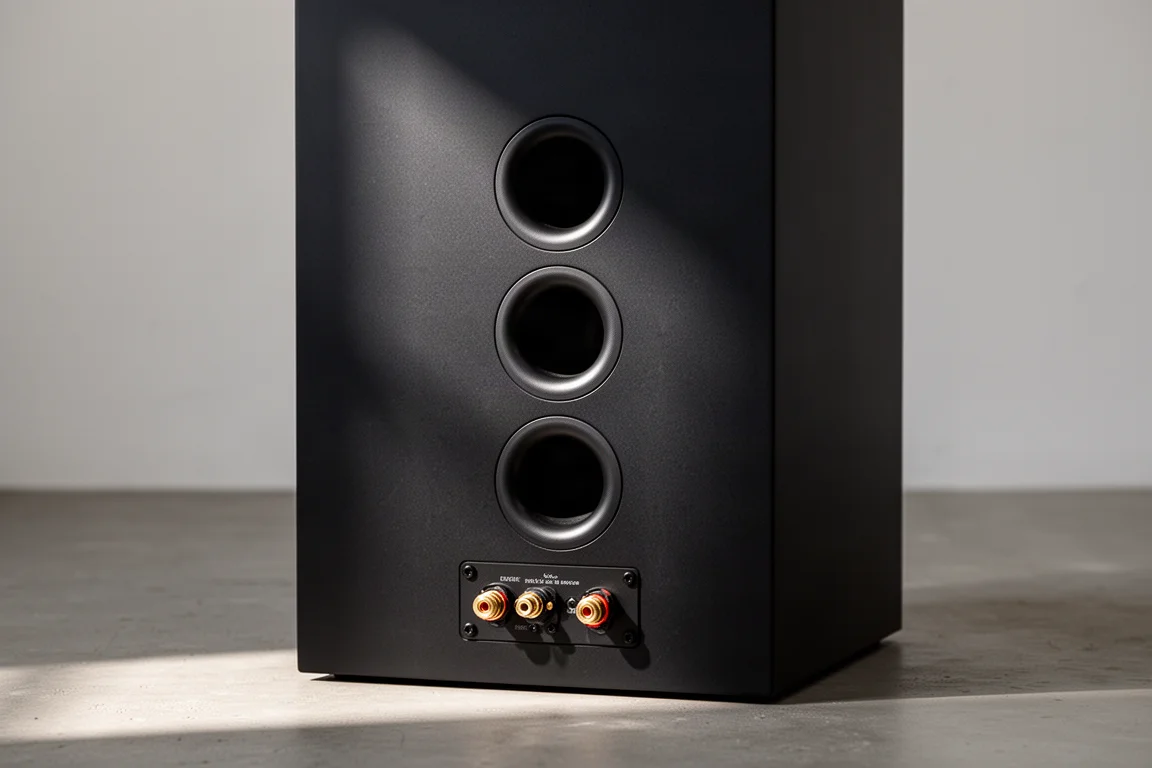
Flexibility rounds out the package. The speakers are sensitive enough to run happily with tube amplifiers, so you are free to choose your own amplifier, DSP, or room correction rather than being locked into one approach. The three-port system lets you plug all three ports for a fully sealed alignment or leave some open to tune the low-frequency roll-off to your room. Soundstaging is the one area with room to improve, and a tube integrated amplifier helps there, but nothing else at this price comes close on overall value.
Port Tuning and Amplifier Flexibility
The three-port arrangement on the 1723 THX is more useful than it first appears. Plugging all three ports converts the speaker to a fully sealed design, which tightens and rolls off the bass in a predictable way. Leaving one or two open restores varying degrees of low-frequency reinforcement. In a real room, where bass behaviour changes dramatically with placement and furnishings, that kind of adjustment is worth a great deal.
Amplifier freedom matters just as much. Because the speakers are sensitive enough for tube designs, owners can chase a warmer, more dimensional presentation with a tube integrated amplifier, or stay with a high-current solid-state amp for grip and control. Adding DSP or room correction on top is straightforward. Few large towers in this bracket offer this much room to experiment.
The trade-off is size. This is a near full-range tower, and it needs a room that can accommodate it properly. Buyers in smaller spaces should think carefully before committing.
Trade-Offs to Weigh Before You Buy
Neither speaker is flawless, and being honest about that makes the choice easier.
The Platon sits at $6,000, which places it well beyond casual spending, and it asks for well-matched equipment to give its best. Its transparency-first character also means it will not flatter poor recordings or soft, warm-leaning systems.
The Arendal is far more attainable, but it is a physically large speaker that needs space to breathe. Its soundstaging, while good, is the weakest part of an otherwise exceptional package, and closing all three ports to run sealed means giving up some of the low-end output that makes the design so entertaining in the first place.
Both speakers reward a thoughtful setup. Placement, amplifier matching, and a little patience with positioning will do more for either of them than any accessory purchase.
Buying Advice: Matching a Speaker to Your Room and System
Start with the room, not the speaker. A near full-range tower like the 1723 THX needs enough space to avoid booming, while a transparency-focused design like the Platon benefits from a quiet, well-treated environment where its clarity and staging can be heard properly.
If your priority is purity, transparency, and a holographic soundstage, and your budget can stretch to $6,000, the Mon Acoustic Platon is the more rewarding speaker of the two. It asks more of the rest of your system, but it gives back detail and nuance that are hard to find anywhere near the price.
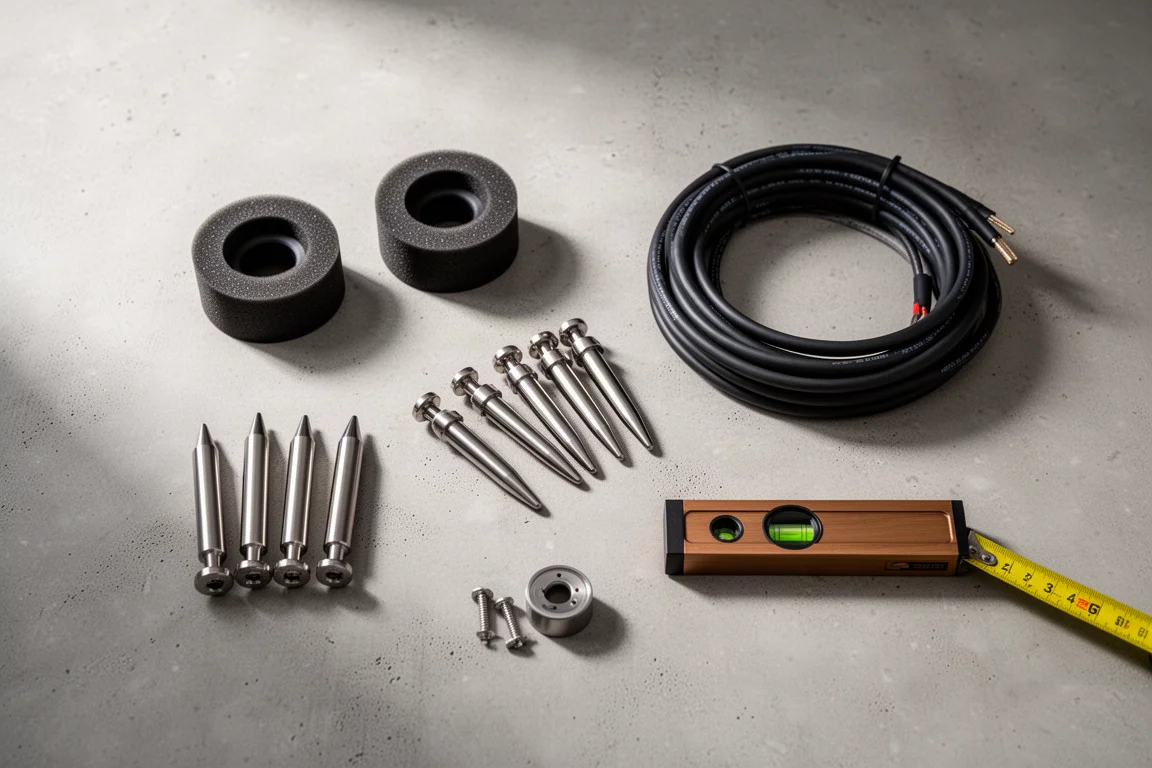
If you want a large, dynamic, balanced tower that delivers far more than its price suggests, the Arendal 1723 THX is the straightforward recommendation. Its HDF cabinet, coherent multi-driver array, THX certification, published measurements, three-port tuning, and tube-amplifier friendliness add up to a package that is difficult to beat on value. Plan for the footprint, budget for a capable amplifier, and it will serve as the foundation of a system for years.
Conclusion
Two awards, two very different speakers. The Mon Acoustic Platon earned the best loudspeaker of the year title on the strength of its cabinet engineering, its purity, and a soundstage that opens up beautifully with the right gear, at a price that reflects how specialised it is. The Arendal 1723 THX earned the value award by delivering a huge, well-built, balanced tower with genuine setup flexibility for a fraction of what that combination usually costs.
Buy either one with confidence, provided it matches your room and your system. The Platon is the choice for listeners chasing the last word in transparency. The 1723 THX is the choice for listeners who want a big, dynamic, honest loudspeaker without paying a premium for the badge.
Further reading
Related Reviews
Hi-Fi Speakers
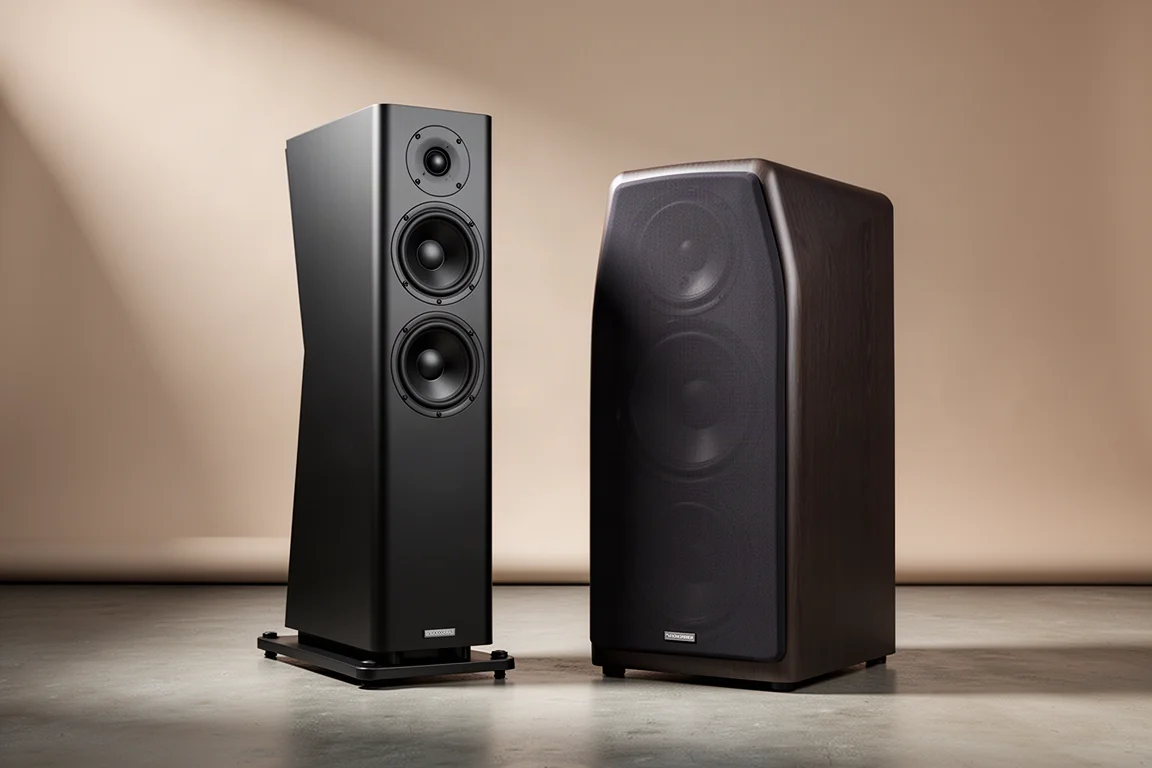
1723 THX Tower vs 1528 Bookshelf: Which Speaker Fits Your Room?
Two speakers at roughly the same price, built very differently. How the 1723 THX tower and the 1528 bookshelf compare on construction, bass, power needs, and sound.
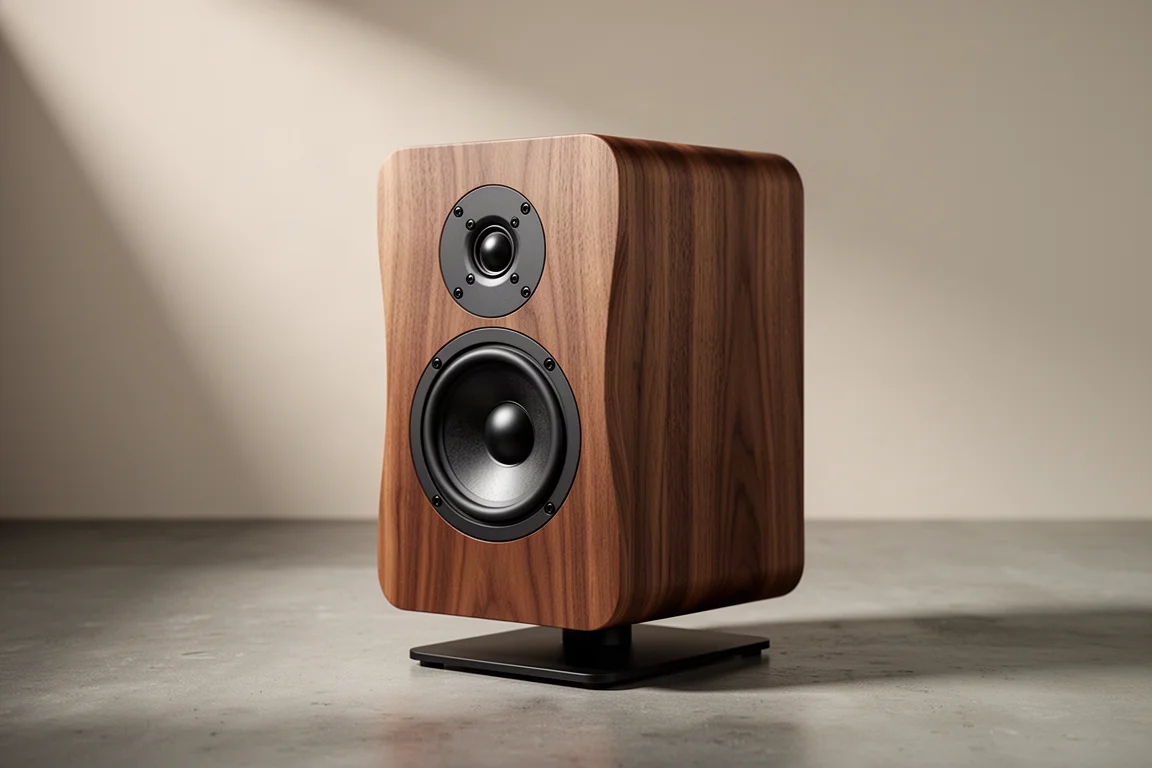
Hi-Fi Speakers
Acoustic Energy AE 300 Review: Deep Bass From a Compact Standmount
A two-way standmount with real wood veneer, surprising low-end weight, and a warm, easygoing character. Here is what to know before buying.
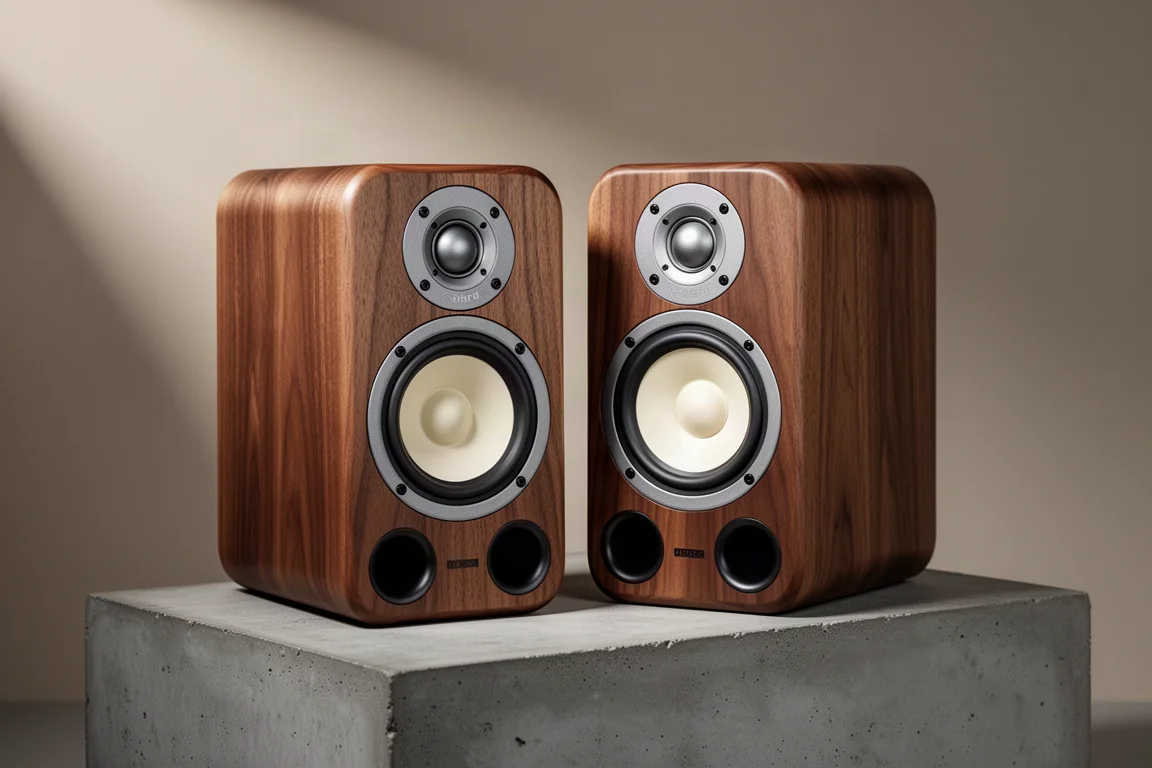
Hi-Fi Speakers
Acoustic Energy AE1 40th Anniversary Review: A Modern Take on a British Classic
A compact standmount that revives a 1980s favorite with all-new parts, a warm mid-centric balance, and a price of £1,499 per pair.