Hi-Fi Audio
Hi-Fi Gear Worth Knowing in 2026: Streaming Amplifiers, Compact Speakers, and Room Correction
A practical look at a streaming amplifier, a pair of compact standmount speakers, ear-based room correction software, and a higher-end integrated alternative.
Introduction
Choosing hi-fi separates in 2026 is less about chasing specifications and more about how a system fits into a real room. The most interesting products in this group follow a similar idea: fewer boxes, more built-in capability, and controls that work where you actually sit.
The four products below cover that ground from different angles. One is an integrated streaming amplifier, one is a compact pair of standmount speakers, one is room correction software that measures at your ears rather than at the speaker, and one is a higher-priced integrated alternative in the same category.
What These Products Have in Common
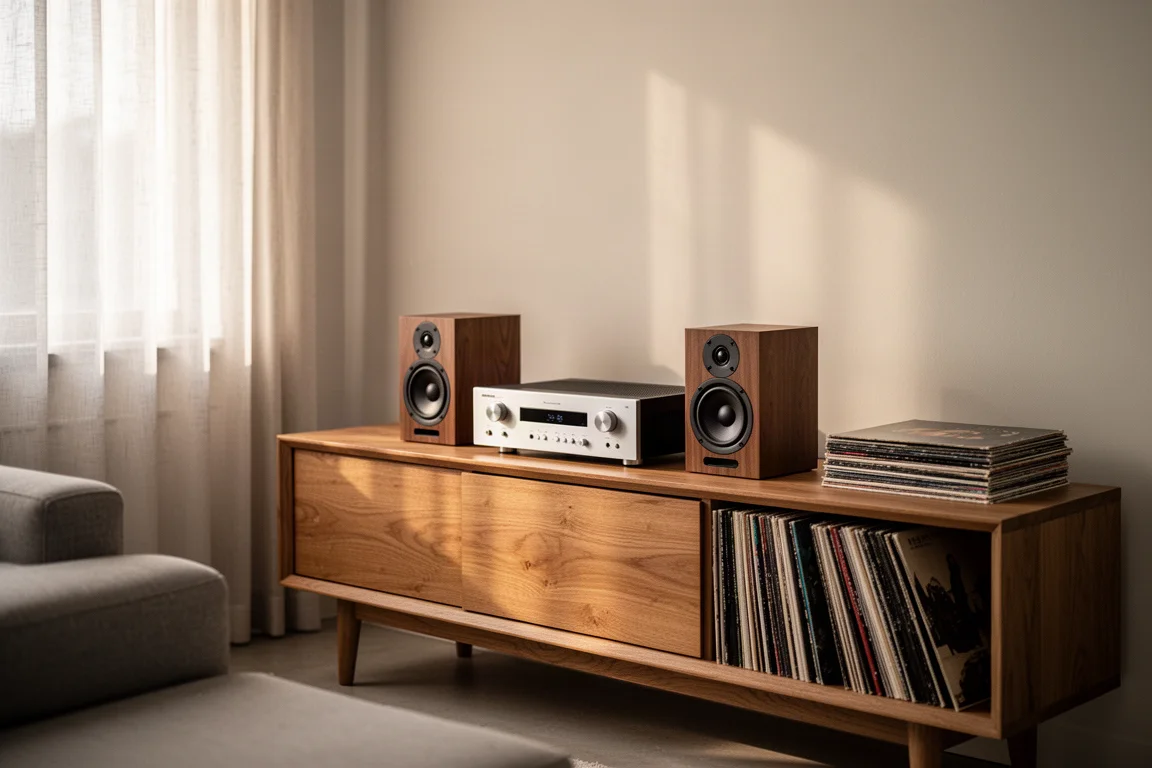
Each of these products is built around convenience without abandoning sound quality. Streaming is included rather than added on, a DAC is part of the package, and the control interface is treated as part of the design instead of an afterthought. Physical design matters too: wood veneer, beveled edges, rounded corners, and compact chassis that do not take over a living space.
The software side is just as influential now. Room correction, streaming platforms, and firmware updates shape the ownership experience as much as power output does, and buyers increasingly pick components based on how cleanly they slot into the rest of a system. That shift is visible across all four products here, from the way the amplifier is controlled to the way the speakers are tuned to a room.
Ruar R610: A Streaming Amplifier With a Puck Remote
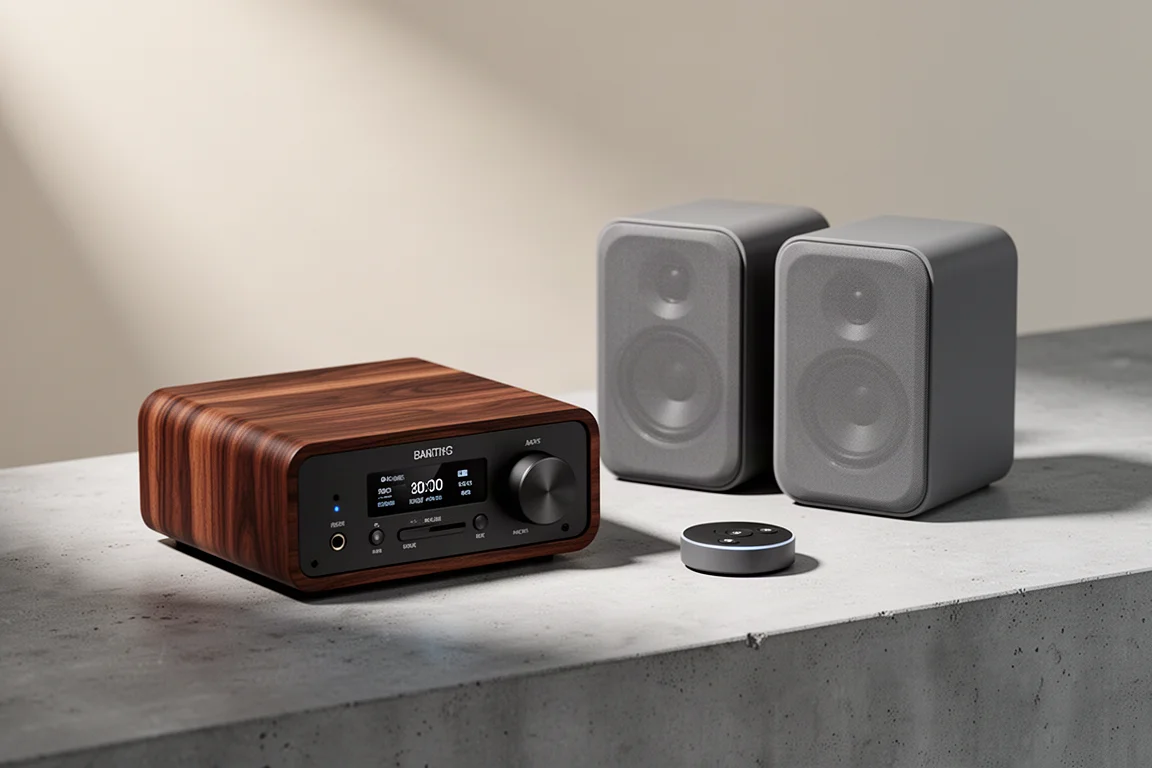
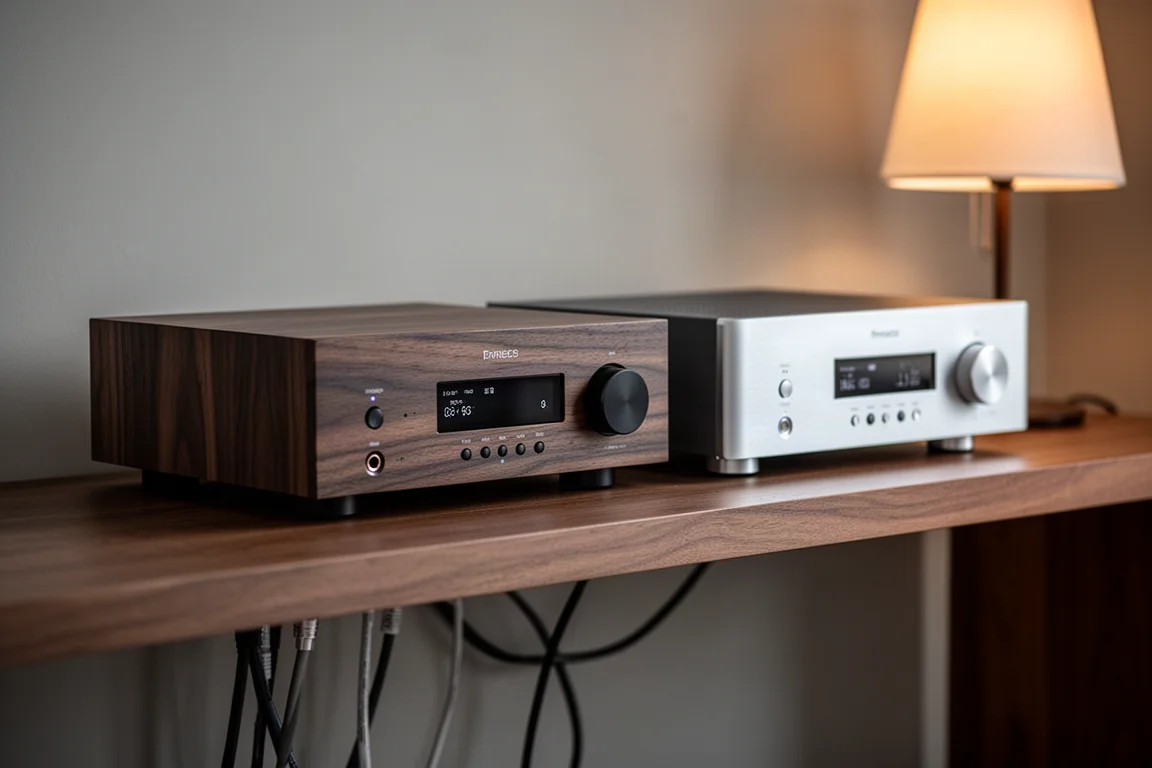
The Ruar R610 is marketed as a music console, but its job is closer to that of an integrated streaming amplifier. It delivers 75 watts into 8 ohms, which is a sensible amount of power for typical standmount speakers in a normal room.
The feature list is broad for a single chassis. There is a streamer inside, an HDMI connection, a phono stage for a turntable, and a DAC. That combination means a listener can run a television, a record player, and streaming services through one component without adding separate boxes.
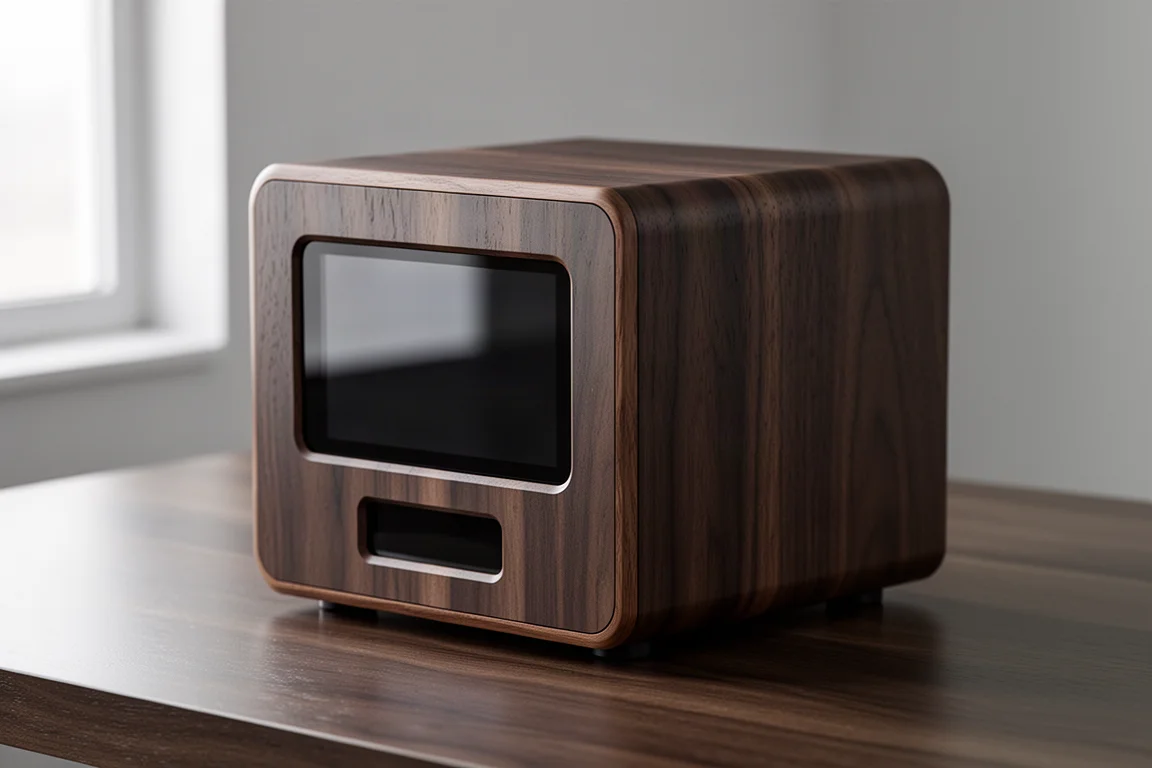
The most distinctive detail is the remote. It is a small puck that can rest on top of the unit, and it can also be placed at the listening position so volume and track changes do not require getting up or reaching for a phone. The amplifier uses class D output stages, and the cabinet is finished with real wood veneer, beveled edges, and rounded corners, with a display on the front.
Luca Chesi LC On: Compact Speakers With a Passive Radiator
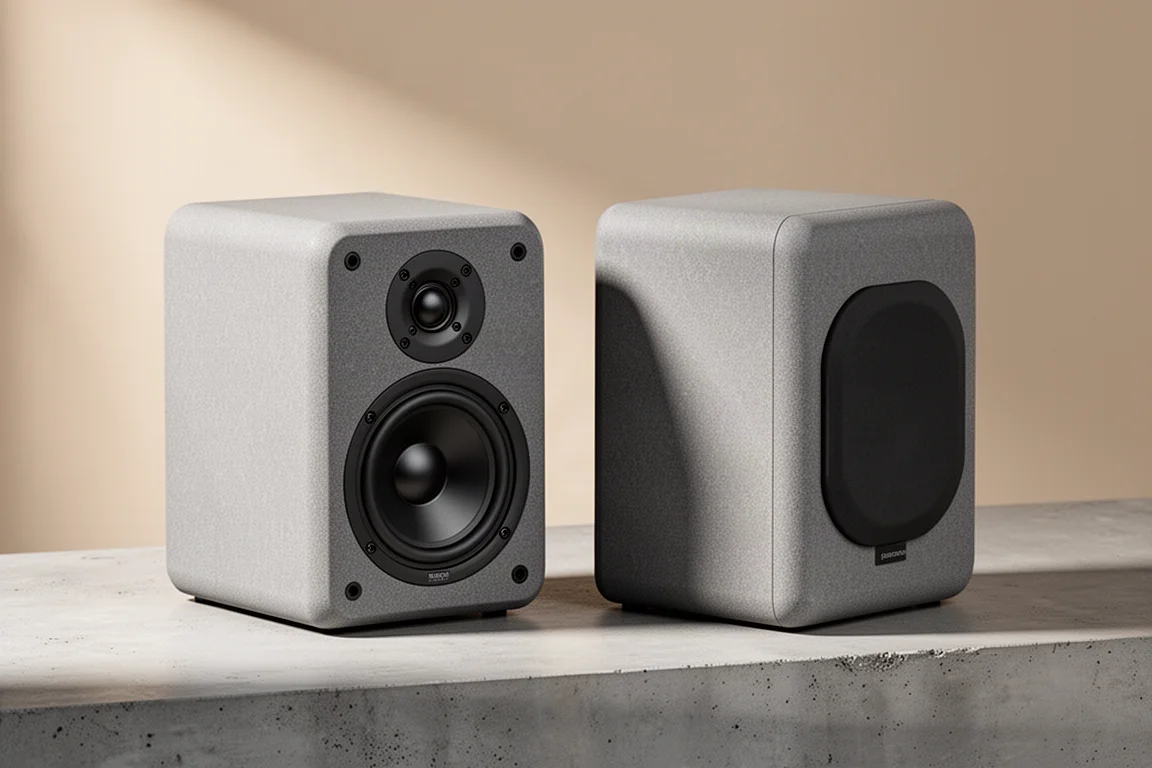
The LC On is a compact speaker from Luca Chesi, priced at $1,000 per pair. The construction uses 3D printing technology, and a passive radiator on the side helps a small cabinet reach lower in the bass than its size suggests.
Paired with Cambridge Audio amplification, the LC On handled guitar-driven rock tracks convincingly. That is a useful test for a small speaker, because dense distorted guitars sit right in the midrange, where compact cabinets often sound thin or forward.
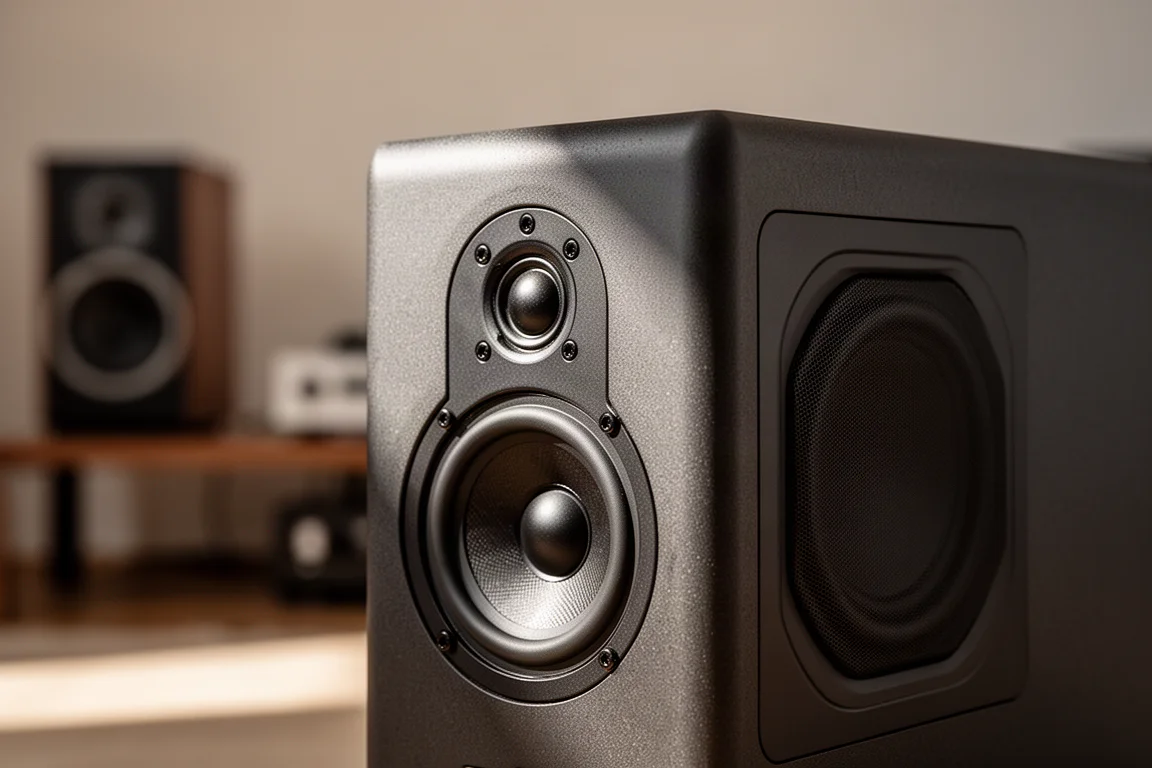
For anyone assembling a compact two-channel system, a passive radiator design is appealing because it adds low-frequency weight without a large port or a bulky cabinet. It is a layout that suits shelves, sideboards, and smaller rooms where a floorstanding speaker would be too much.
DRC2: Room Correction Measured at Your Ears
DRC2 is room correction software with an unusual measurement method. Rather than placing a microphone in front of each speaker, the microphones go in the listener’s ears. The listener sits in the normal listening position, the software runs its sweeps, and the result is a profile of how that specific person hears the system in that specific room.
The reasoning behind it is straightforward. Ear canals, head shape, and torso differ from person to person, so two listeners in the same chair do not hear the same frequency response. Measurements taken from different visitors produced clearly different profiles, which helps explain why listeners so often disagree about which speakers sound neutral and which sound coloured.
DRC2 is not a hearing test. It is a correction tool, and it can be purchased as software and used with speakers from other manufacturers, so it is not tied to one brand of hardware. The software has been used with a range of speaker systems over several years, and the profiles it produces describe how an individual ear interacts with the sound arriving at the listening position.

Cambridge Audio Evo 150: A Higher-End Alternative
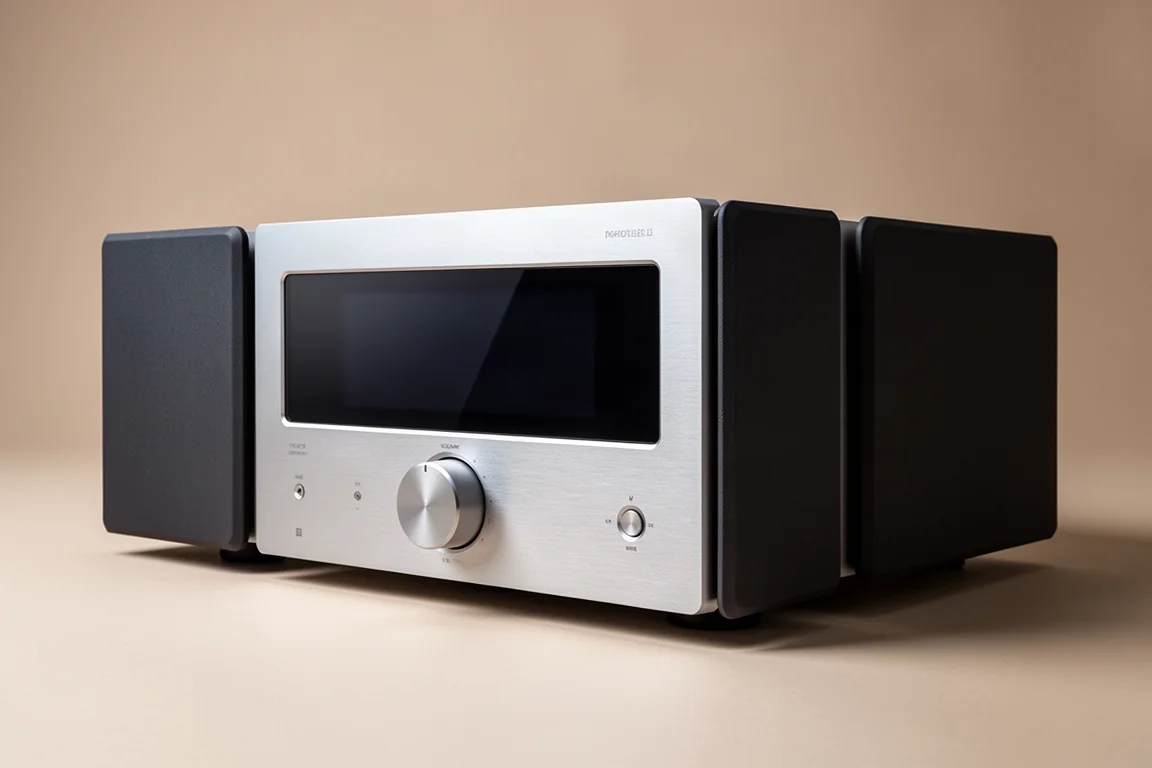
The Cambridge Audio Evo 150 occupies the same category as the Ruar R610 but at a noticeably higher price. For listeners who want a more established streaming platform and are willing to pay for it, it is the natural comparison point.
Cambridge Audio also offers the Evo 75 lower in the range. The EXA 81 Mark I and the EXA 100 were used to drive the LC On speakers during listening, and all of these models point to a family of components built around the same streaming-first approach to two-channel audio.
If the budget stretches, comparing the Evo 150 directly against the R610 is the sensible move, because both are chasing the same outcome: one box that covers streaming, amplification, and the everyday inputs a household actually uses.
Buying Advice: Matching Gear to Your Room
Start with the room and the speakers, then choose the electronics. A 75 watt integrated amplifier such as the R610 is a reasonable match for standmount speakers in a small or medium space, while a more expensive integrated like the Evo 150 makes more sense when the rest of the system is capable enough to reveal the difference.
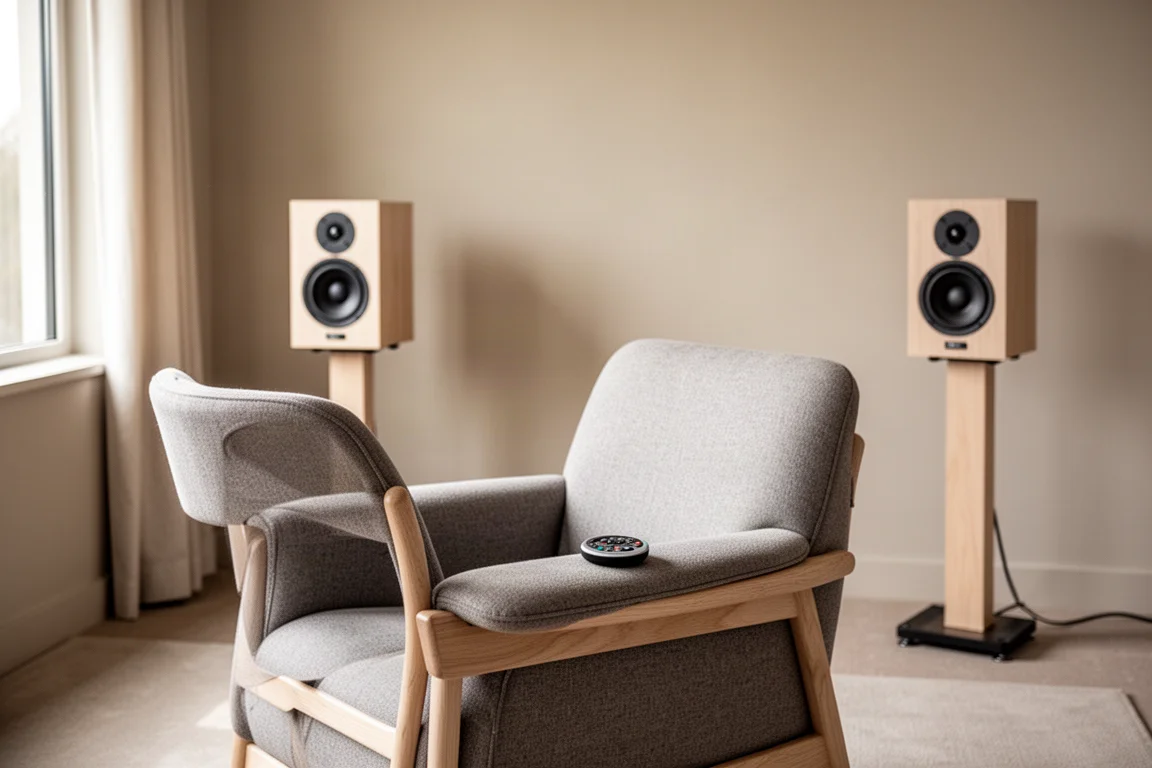
Room correction is worth considering before replacing hardware. If the same speakers sound uneven in your room, software that measures at the listening position can address problems that a new amplifier will not fix. Owners who already like their speakers can add DRC2 without changing any hardware at all.
Finally, think about how the system will be controlled day to day. A remote that lives at the listening position, an interface that is pleasant to use, and inputs that cover both a turntable and a television will matter far more across a year of ownership than a small difference in published specifications.
Conclusion
These four products show where two-channel audio is heading: streaming built in, fewer boxes, and software that adapts a system to the person listening to it. The Ruar R610 and the Cambridge Audio Evo 150 cover the integrated amplifier route at two different price points, the Luca Chesi LC On offers a compact speaker option at $1,000 per pair, and DRC2 addresses the room itself rather than the hardware. Matching the choice to your space and your sources remains the most reliable way to end up satisfied with the result.
Further reading
Related Reviews
Hi-Fi Audio
Accuphase C-57 vs Allnic H-7000V: Two High-End Phono Stages Compared
A fully balanced solid-state phono stage with a pitch-black noise floor meets a tube design built for well-loved records. Here is how to choose between them.
Hi-Fi Audio
Active vs Passive Hi-Fi: Five Components for a Modern System
Five components that define modern active and passive hi-fi systems, with the strengths, trade-offs and setup details worth weighing before you buy.
Hi-Fi Audio
Advance Paris A10 Apex Review: A Hybrid Integrated Amplifier That Covers a Lot of Ground
A French hybrid integrated amplifier with a class A tube preamp stage, analogue power meters, and an internal DAC and phono stage good enough to make extra boxes unnecessary.