Headphone Amps and DACs
Best Headphone Amps Under $500: Five Picks Worth Considering
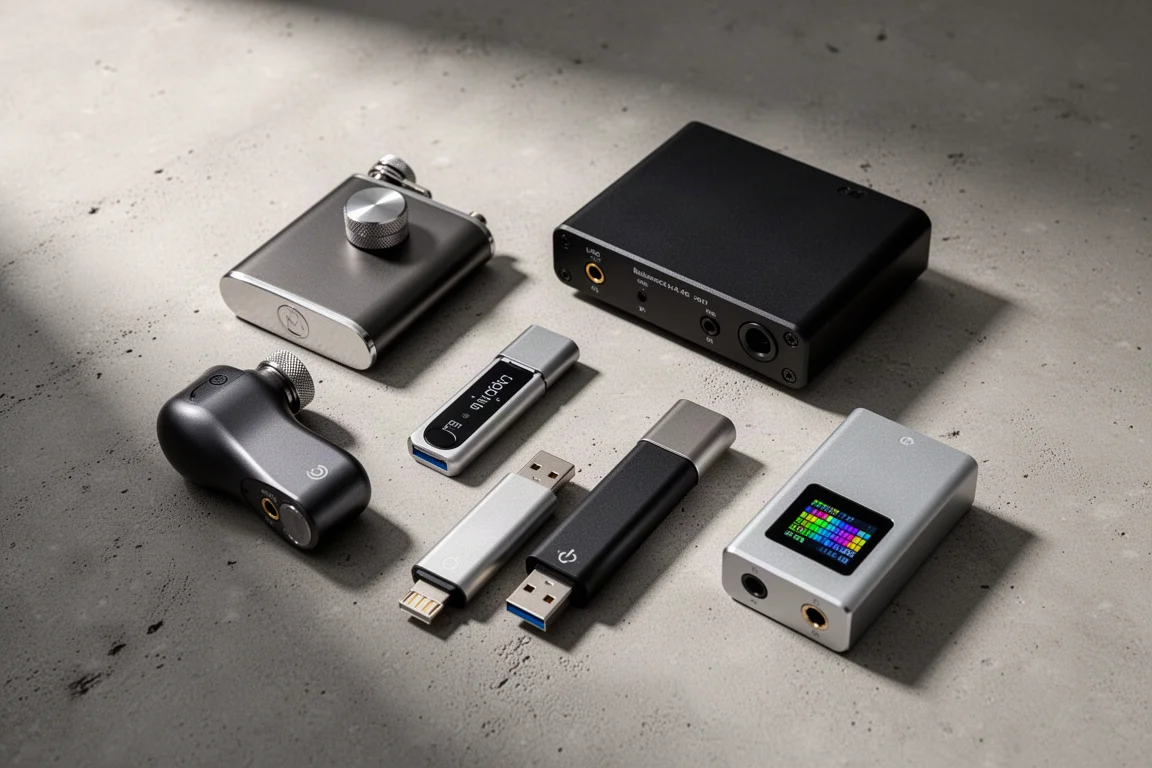
Five headphone amps and DAC/amp combinations under $500, from pocket-sized USB models to a desktop Class A amplifier and a compact DAC with a built-in preamp.
Introduction
A dedicated headphone amplifier is one of the simplest ways to get more from the headphones you already own. Most listeners shop for one for a handful of reasons: their headphones need more power to get going, their laptop or phone has a weak or missing headphone jack, or they want to hear more of what their headphones are actually capable of.
Adding a more powerful amplifier to the signal chain increases the power behind your source. In practice that shows up as greater dynamics, clearer rhythm and pacing, and bass with more impact. Impedance is the number that explains why. Everyday wireless earbuds typically sit between 20 and 40 ohms, which is easy work for a laptop or smartphone. Audiophile headphones can climb into the hundreds of ohms, and planar magnetic designs such as a 110-ohm reference model often will not play loudly enough from a phone jack at all. Most good headphone amps deliver roughly ten times the power of a standard smartphone or laptop output, and many pair that with a high-performance DAC in the same chassis.
The five options below all sit under $500. They were chosen for their ability to drive a wide range of headphones, their usefulness with a home audio system, and, where it counts, their portability.
What to Look For in a Headphone Amp Under $500
Power output is the first thing to check. Output voltage into high impedance loads tells you far more than a wattage figure, because high-impedance headphones are the ones that expose a weak amplifier. If you own planar magnetic or 300-ohm-plus headphones, look for generous voltage output and, ideally, a balanced headphone connection. A balanced design keeps the left and right channels separate, which reduces noise, interference and crosstalk compared with the single-ended circuits common at this price.
The DAC stage deserves just as much attention. Many units at this level use Burr-Brown or ESS Sabre converter chips, and the differences between them show up in tonal character rather than in raw numbers: some lean warm and musical, others lean clean and detailed.
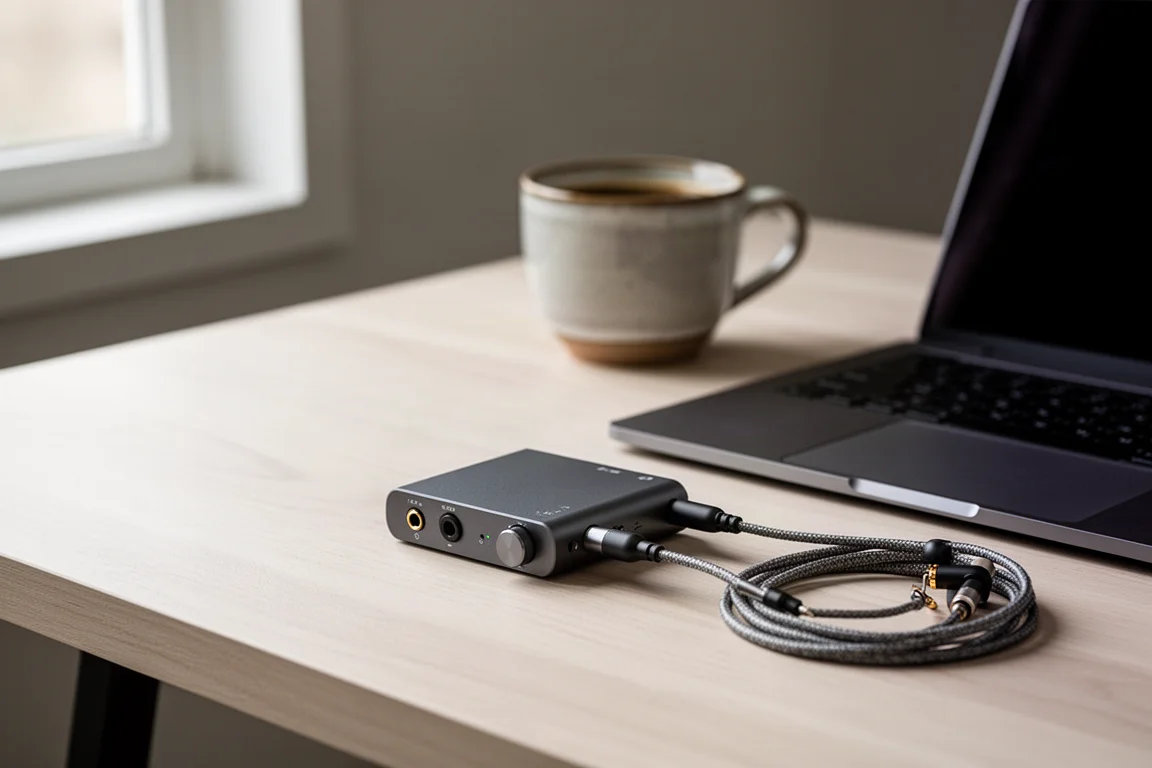
Connections decide how flexible the unit will be in your setup. Check for the inputs your sources actually offer, whether that is USB, a 3.5mm mini plug, RCA sockets, optical or coaxial. Then check the outputs. A set of line outputs lets you feed powered desktop speakers or a power amplifier, and as a rough guide an output rated above 2 volts can drive a power amp in a wide range of situations.
Finally, decide where you will listen. If most of your listening happens away from a desk, size, connector durability and a dedicated charging port matter more than the last degree of output power.
iFi hip-dac 2: Best for Portable Listening
The hip-dac 2 looks a little like a small flask, and it is sized to disappear into a bag, a tray table or a jacket pocket. It connects over USB, takes hi-res music from a smartphone, tablet, PC or Mac, and drives your headphones from there.
Inside is a 16-core XMOS chip that processes digital audio over USB 3.0, which brings lower latency. For MQA listeners it is a full decoder rather than a renderer only, completing all three unfolds to deliver the studio quality of the original master recording. iFi chose a male USB Type-A connector instead of micro-USB, which gives the port noticeably better mechanical integrity when the unit is carried in a pocket, and a second USB-C port is dedicated to charging.
The analog stage is balanced throughout, which is rare at this price. Because the left and right channels are handled separately, there is less noise, interference and crosstalk than in the single-ended designs typically found in this class. The amplifier section uses a custom iFi OV op amp and can drive high-impedance open-back headphones up to 600 ohms through the balanced output, along with sensitive in-ear monitors. Next to the volume knob there is a 3.5mm stereo output that uses iFi’s S-Balance circuitry to halve crosstalk and other noise interference. The digital section uses the same high-performance Burr-Brown converter family found across iFi’s more expensive headphone amps, with a natural, musical character.
At under $200, this is an easy recommendation for anyone with an on-the-go lifestyle.
iFi Zen CAN: Best Analog Desktop Amplifier
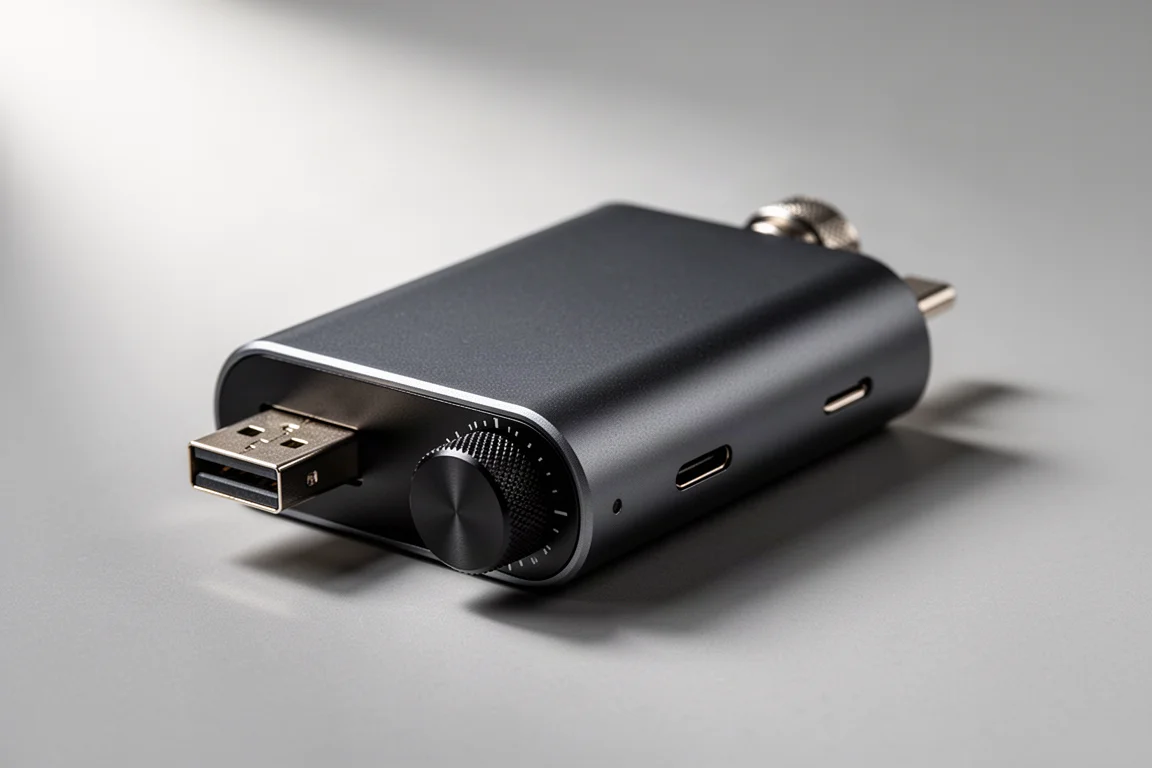
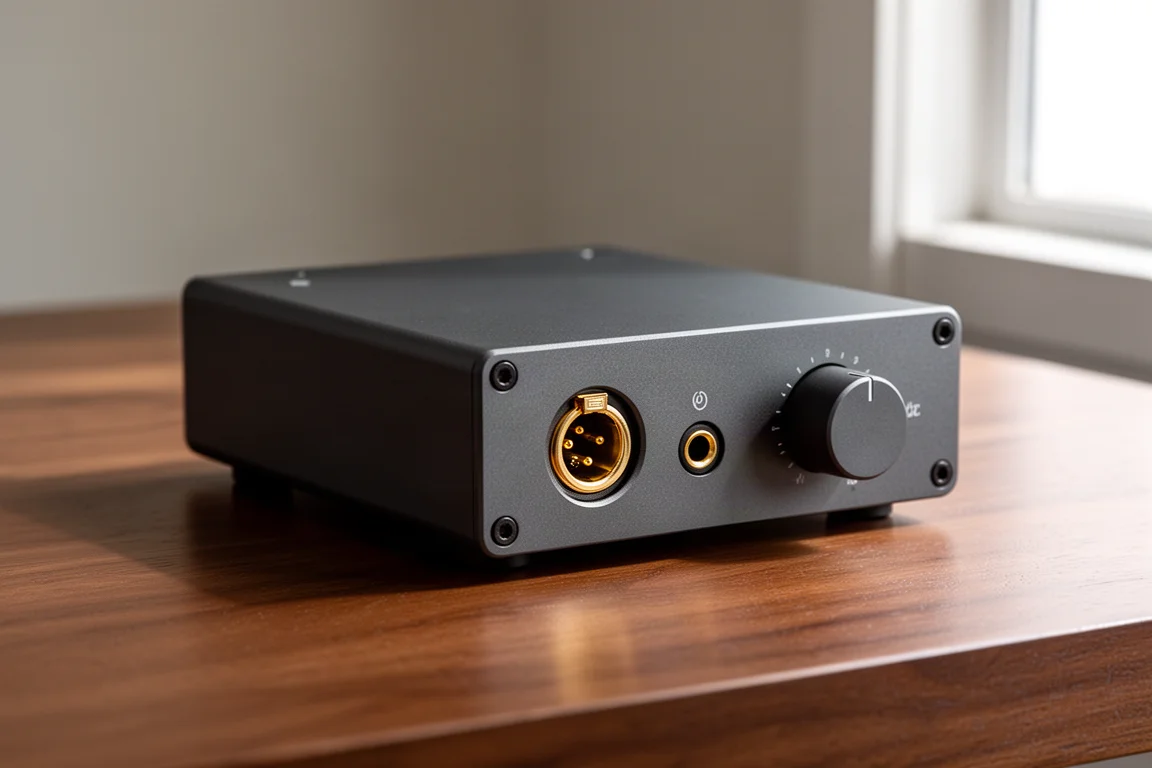
Zen CAN is a compact desktop amplifier built around fully discrete, balanced Class A circuitry that trickles down from iFi’s flagship headphone amp. It is an analog-only component: you feed it from a good external DAC or the analog output of a laptop, then connect your headphones.
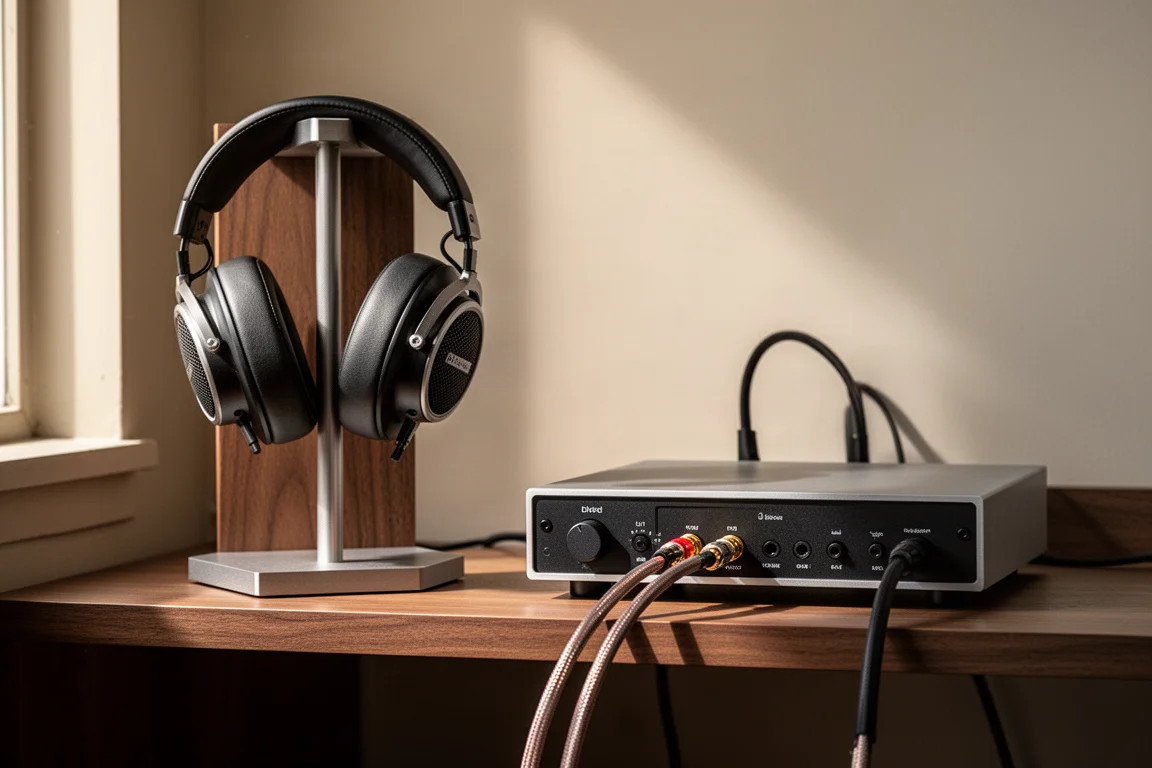
Power is the headline here. Zen CAN has a maximum output of 15.1 volts at 600 ohms, which is serious power and enough to make difficult high-impedance open-back headphones come alive. The front panel offers a gold-plated balanced 4.4mm headphone output for the cleanest signal possible, alongside a quarter-inch jack for single-ended connections. Inputs include a 3.5mm mini plug, a pair of RCA sockets and a balanced 4.4mm input on the rear for the cleanest feed from your source.
There is also XBass, a circuit that corrects for the bass that open-back headphones and in-ear monitors often lose. Because the backs of open-back headphones are open, sound waves are ventilated rather than trapped inside the ear cup, and some lower frequencies leak away instead of reaching your ears. XBass adjusts for that shortfall.
AudioQuest DragonFly Red: Best Compact USB DAC/Amp
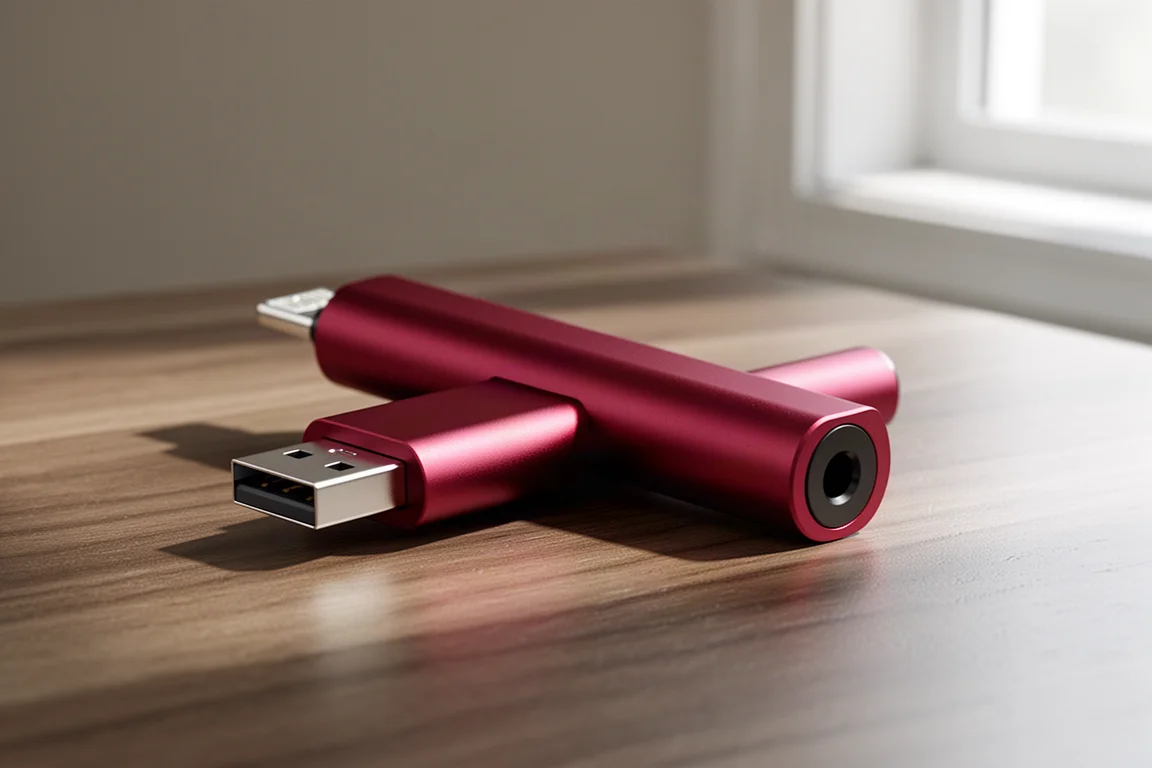
The DragonFly Red was developed by AudioQuest together with Gordon Rankin, the founder of Wavelength Audio, whose work is closely associated with early computer audio USB DACs and asynchronous USB. The result is a DAC and headphone amp only slightly larger than a USB stick, designed to plug directly into a computer’s USB port. With the right adapter cables it can also connect to a phone or tablet.
Its ESS Sabre 9601 headphone amp section provides 2.1 volts of output, roughly what a CD player delivers, so the Red can drive a very wide range of headphones without strain. That same output is enough to feed a power amplifier, which means the Red can double as a preamp for a power amp or a pair of powered speakers. The converter uses the ES9016 chip with a minimum phase, fast roll-off filter, a combination that favors natural dynamics, enhanced stereo imaging and clear detail retrieval.
All of this travels anywhere with you, which is why it works as well on a desk as it does in a pocket.
AudioQuest DragonFly Cobalt: Best Step-Up USB DAC/Amp
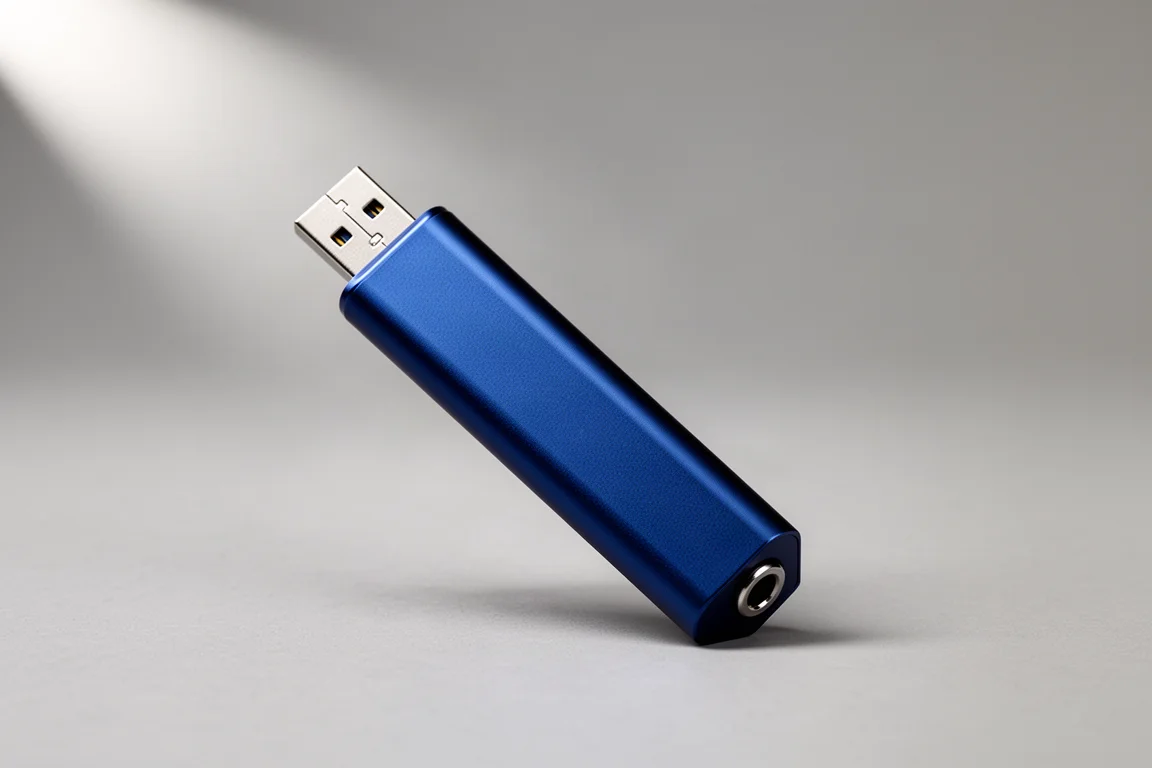
Cobalt is the flagship of the DragonFly line, and it packs close to 200 components into a case barely larger than the Red. It keeps the same powerful headphone amp section, so hard-to-drive headphones stay well within reach, and steps up the digital side with an ES9038 Q2M converter running a minimum phase, slow roll-off filter for a smoother, more natural and more resolute presentation.
The processor is also improved. It is 33 percent faster than the one in the Red while drawing less current from the USB connection. AudioQuest looked closely at the noise generated by Wi-Fi, Bluetooth and mobile phones sitting nearby, and added more power supply filtering to keep that noise out of the audio path. Rather than using multiple clocks, Cobalt relies on a single ultra-low-jitter clock generated from the DAC chip, which runs both the chip functions and the microcontroller functions. What you hear is a clear improvement in clarity and resolution of low-level information, and a presentation that feels unusually immersive and almost holographic for something this small. It is also a full MQA renderer.
At less than $400, Cobalt is a special portable or at-home DAC and headphone amp.
Pro-Ject Pre Box S2 Digital: Best Desktop DAC/Amp With a Preamp
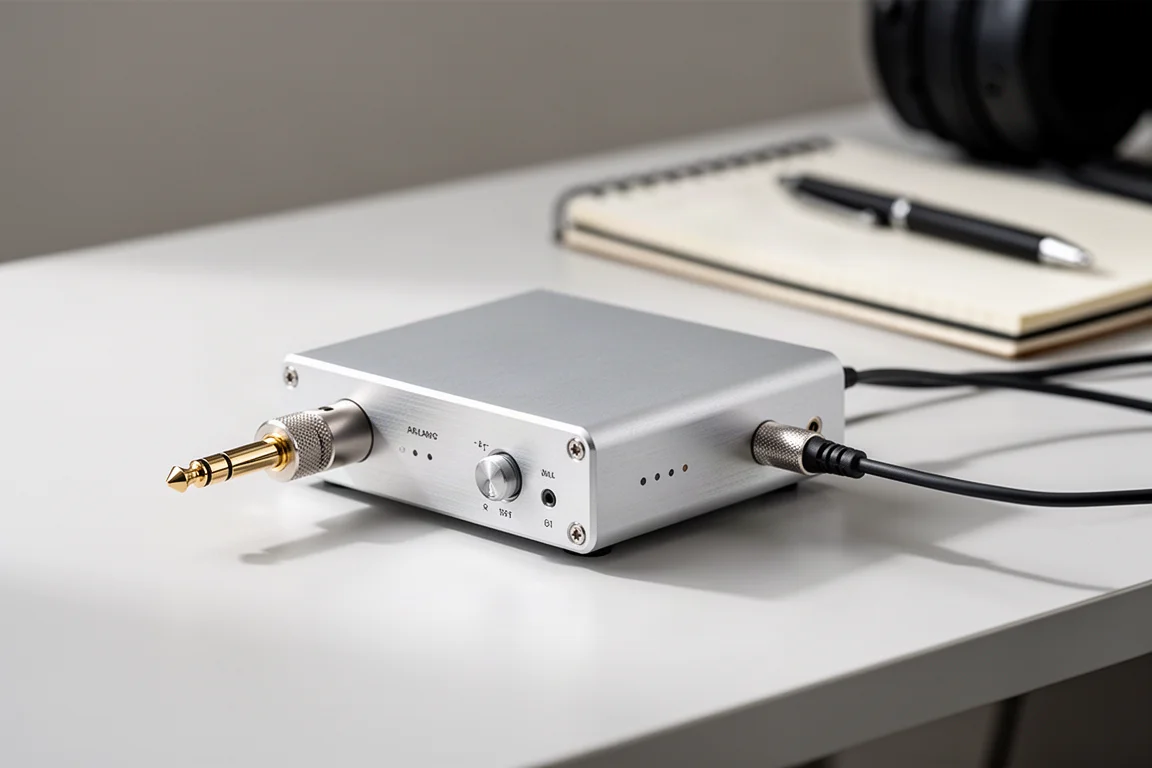
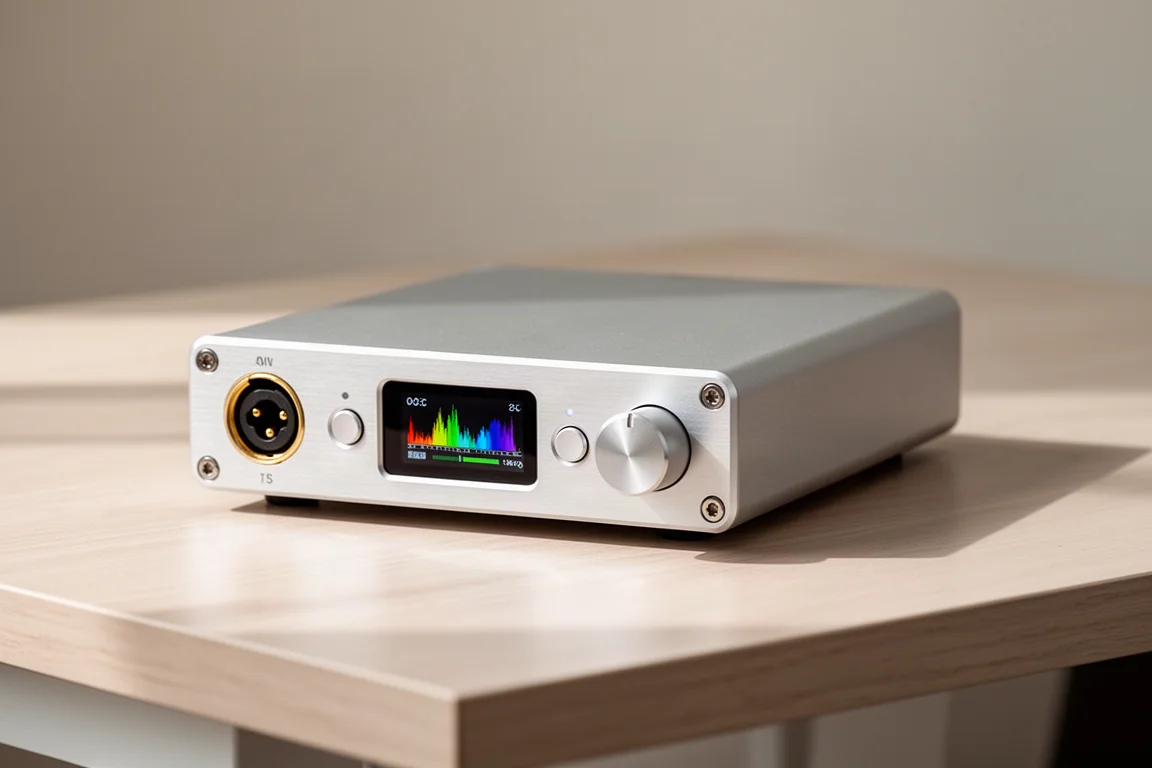
The Pre Box S2 Digital is an ultra compact component that gives a headphone setup a serious boost without taking over a desktop. Its sleek aluminium chassis is barely over four inches wide, so it is compact enough to slip into a bag for travel, though most listeners will keep it at home or on a work desk.
The front panel has a full-size headphone jack at one end and a small but good-feeling volume knob at the other, with a tiny colour display in the middle flanked by two buttons for input selection, menu settings and filter changes. Seven built-in digital filters let you tailor the sound. The circuit is completely dual mono, with each channel of the signal path mirrored.
For conversion, Pro-Ject uses the ESS Sabre ES9038 in a dual DAC configuration, the highest level converter the company has used, capable of up to 32-bit PCM at 768 kHz and DSD 512. MQA unfolding and the highest resolution rates are available on the USB input only; the optical and coaxial inputs stop at a still respectable 24-bit/192 kHz and do not handle MQA, a decision made to keep the price down. The unit is also Roon capable, and its stereo RCA outputs can feed a pair of powered desktop speakers or a power amplifier.
Buying Advice
Start with your headphones rather than the amplifier. If you own high-impedance or planar magnetic models, prioritize output voltage and a balanced headphone connection, since that combination is what keeps difficult loads sounding controlled and dynamic. If your headphones are easy to drive, most of these units will have power to spare and you can choose on features instead.
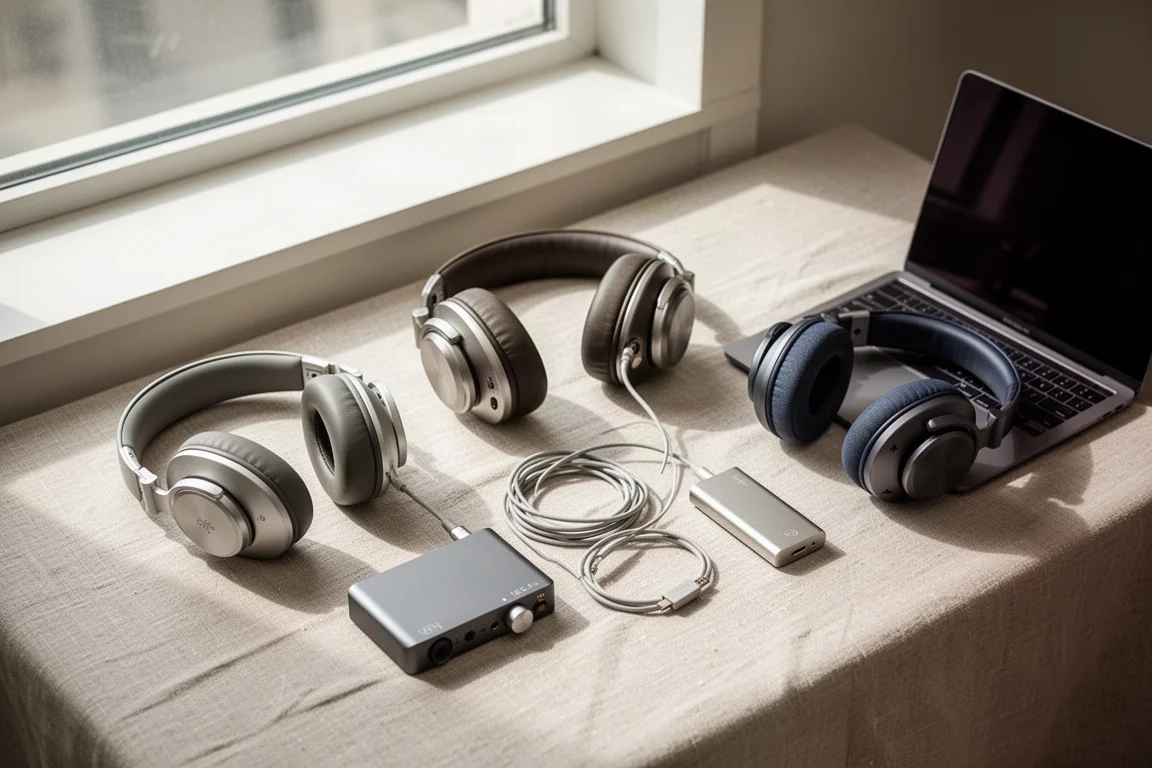
Think honestly about where you listen. Someone who moves between a coffee shop, a flight and a hotel room will get far more use from a pocket-sized DAC/amp than from a desktop component. Someone who listens at a desk with open-back headphones and already owns a good DAC will get more from a dedicated analog amplifier, particularly one with a bass correction circuit for open-back designs.
Then check the connections against your system. A unit with line outputs can feed powered speakers or a power amp, which extends its usefulness well beyond headphones. Note that the highest digital rates and MQA support are not always available on every input, so if those formats matter to you, confirm that the input you plan to use handles them.
On price, the hip-dac 2 sits under $200, Cobalt comes in at less than $400, and the Zen CAN and Pre Box S2 Digital both land under $500. That spread means you can choose by use case first and budget second.
Conclusion
All five of these headphone amps and DAC/amp combinations are capable of driving just about any pair of headphones on the market, and each one makes sense in a different setting. The hip-dac 2 is the one to grab on the way out the door. Zen CAN is the analog powerhouse for a desk with open-back headphones. The DragonFly Red is the compact all-rounder, Cobalt is the step up for listeners who want more resolution and refinement, and the Pre Box S2 Digital is the most versatile single box of the group, with a preamp output, seven filters and Roon support.
Match the amplifier to your headphones and to where you actually listen, and any of these five will make the music you already own sound more alive.
Further reading
Related Reviews

Backpacking Gear
Building a 10 lb Base Weight: An Ultralight Backpacking Gear List
A practical walkthrough of the ultralight pieces behind a 10 lb base weight, from a 765 g pack and a roomy one-person tent to a full camp chair and a dependable water filter.

Road Bikes
10 New Road Bikes Worth Watching: Aero, Titanium, Steel and Endurance Standouts
A practical roundup of 10 new road bikes, from aero flagships chasing single-watt gains to titanium, steel and endurance platforms built for real roads.

Bikepacking Gear
11 Bikepacking Essentials for Long-Distance Cycling
Eleven bikepacking essentials for long-distance cycling, from a steel gravel frame and a two-person tent to helmet lights, packable gloves, and a frame bag that puts weight in the right place.