Laser Pointers
Five Handheld Laser Pointers Compared: What Your Money Actually Buys
We compare five handheld laser pointers, from a 13 dollar purple pen to a 150 dollar blue module, and look at what each one really delivers.
Introduction
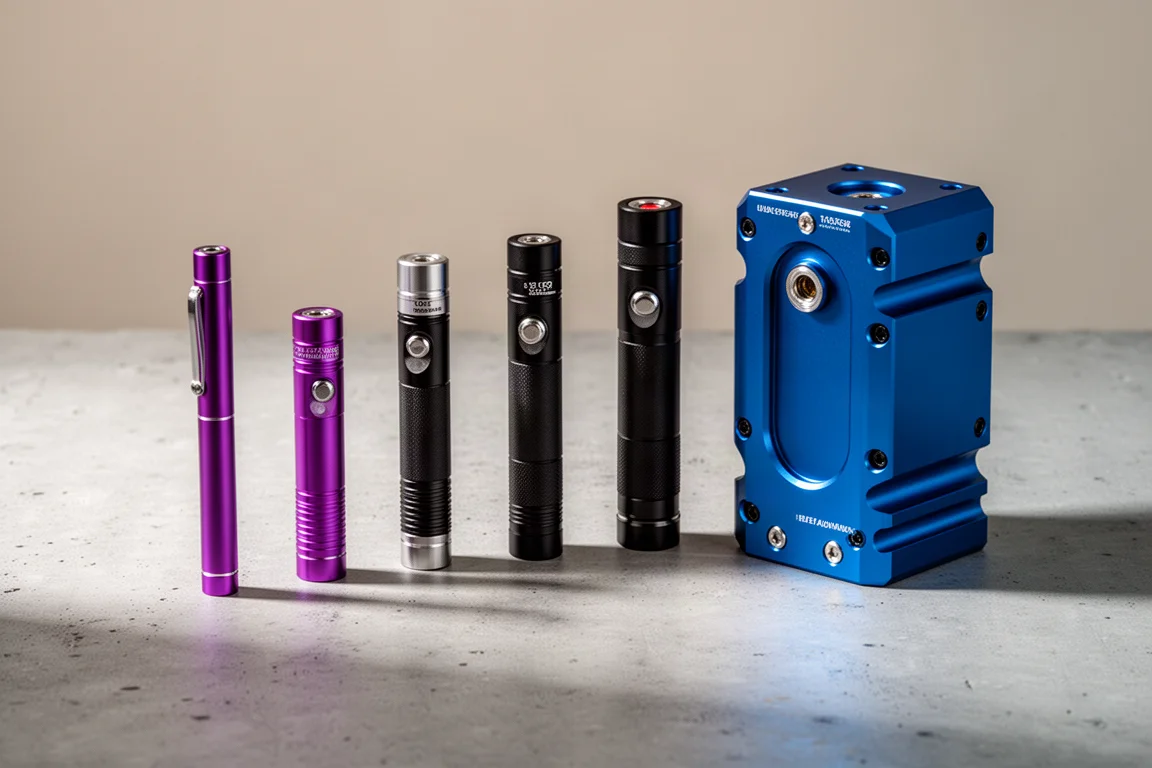
Handheld lasers sold online live in a strange legal gray zone. Listings are routinely marked as Class 1, one milliwatt laser pointers, yet what arrives often measures dozens, hundreds, or even thousands of times that rating. We picked up five differently sized and priced handheld lasers, ranging from about 15 to 150 dollars, and put them through the same testing to see what your money actually buys.
Before anything else: adequate eye protection for the wavelength you are using is non-negotiable. Surface reflections alone can cause permanent eye damage, and these are not cat toys no matter what the listing says.
Some Good 405nm Purple Laser Pointer Pen: A Letdown
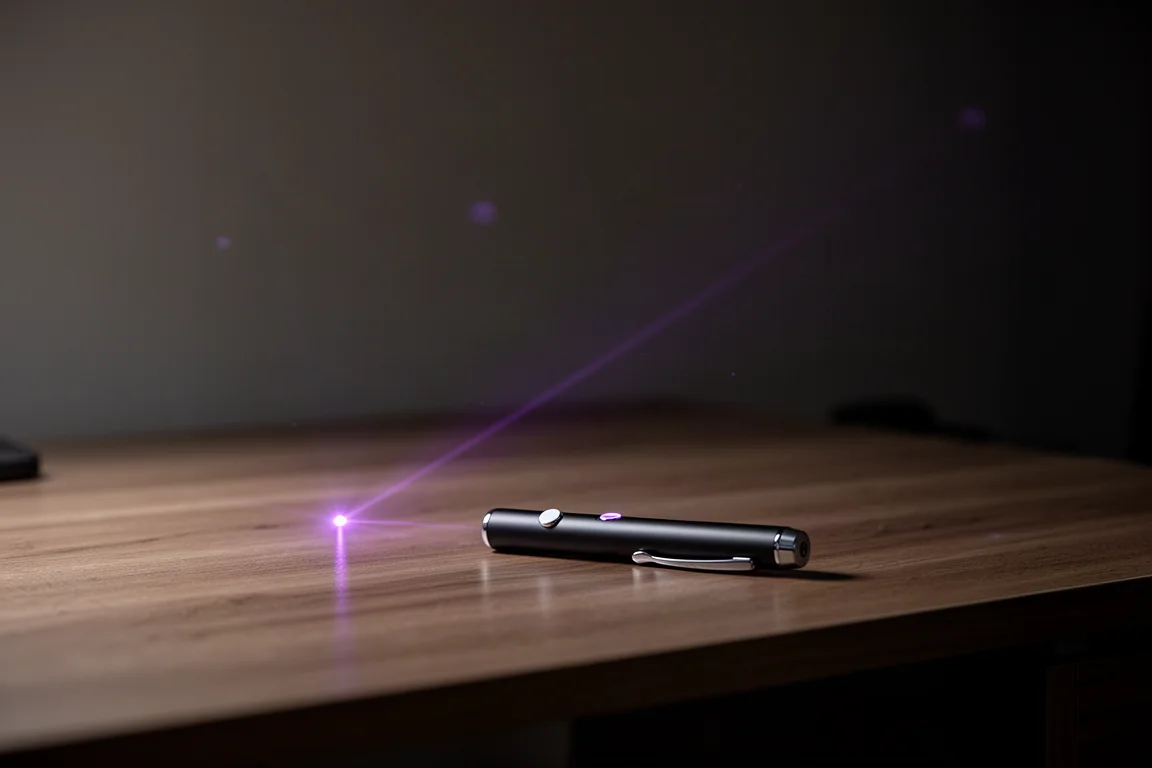
The cheapest entry, at 13 dollars, is the Some Good 405nm purple laser pointer pen. Instead of real power ratings, some brands describe their lasers by how many miles away they can supposedly be seen, and this one claims 900 miles. In practice, a 405nm purple beam is at the bottom of the visibility spectrum for human eyes, and this unit was a disappointment from the start.
The beam is so weak it is almost invisible in any real light. Worse, the unit did not even survive long enough for proper photos: after an initial reading of 65 milliwatts out of the box, it later registered zero milliwatts and stopped working entirely. Even at its best, 65 milliwatts is 65 times its advertised level, and its practical visibility works out to roughly 1.8 miles, not 900. It is a hazard out to 187 feet and a danger out to 52 feet, but the quality control makes it hard to recommend.
Hole Fire 532nm Green Laser Pointer Pen: The Value Pick
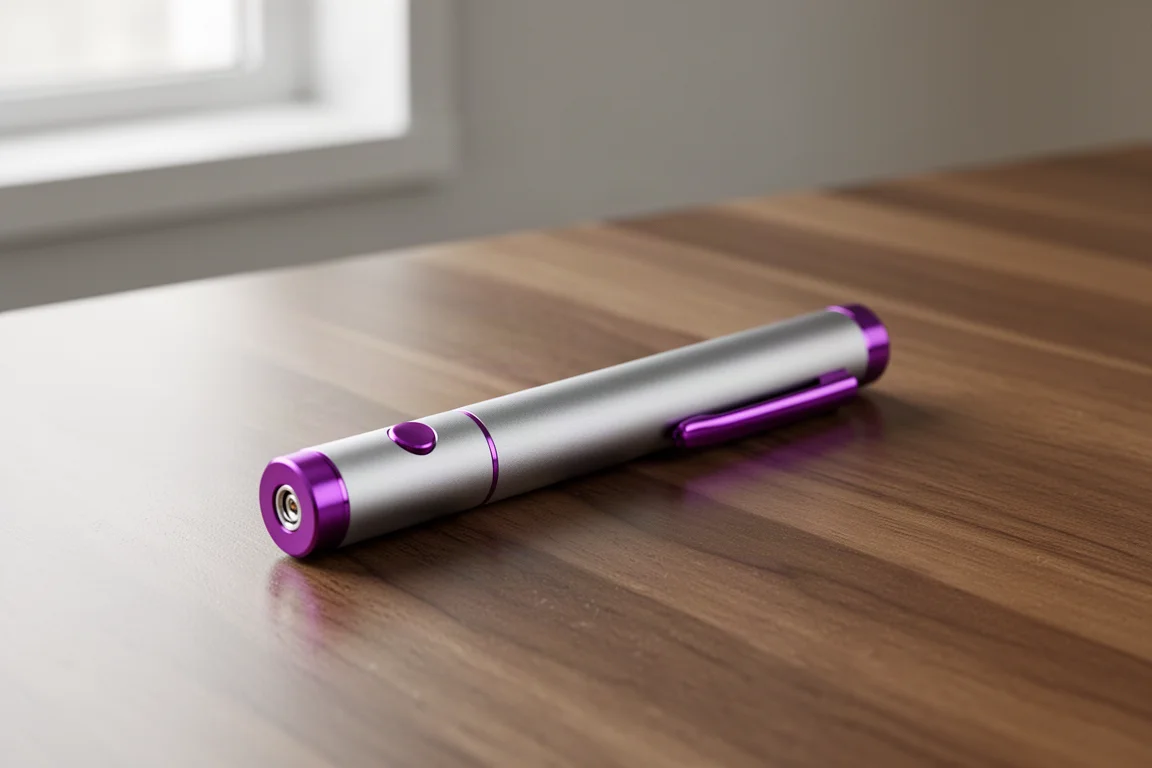
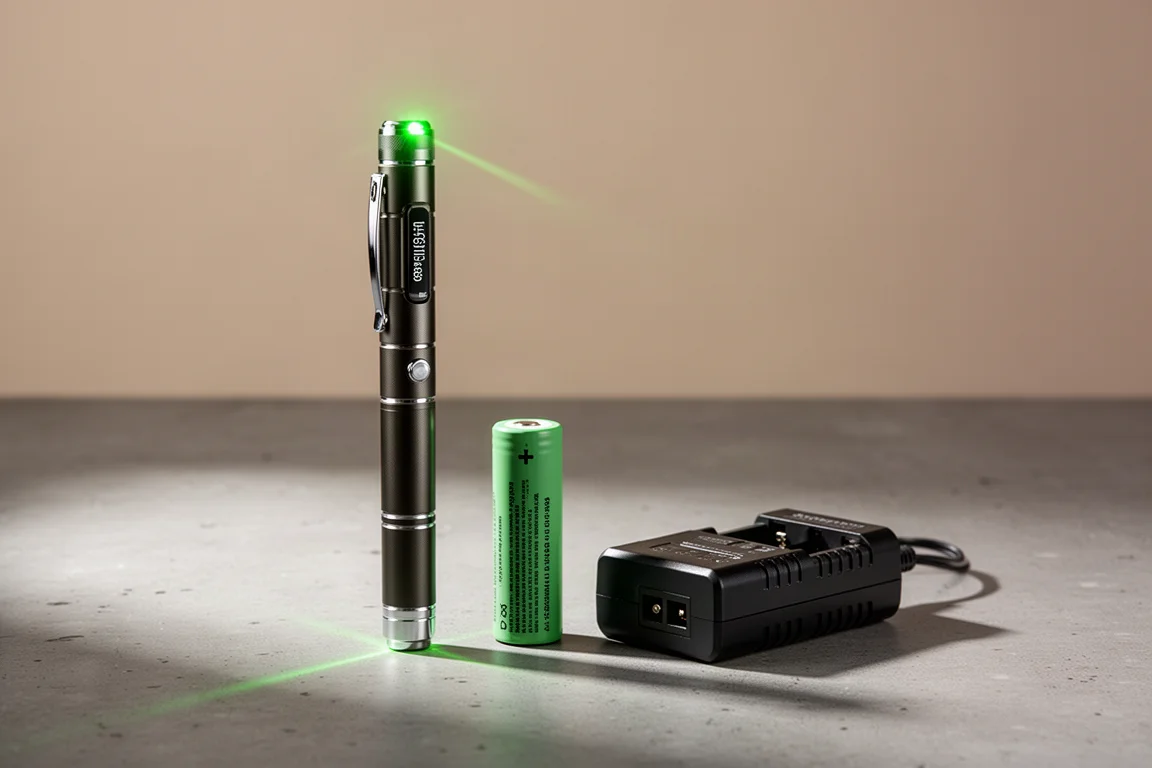
At 15 dollars, the Hole Fire 532nm green laser pointer pen is a noticeably better experience. It runs on a standard 18650 battery like all the models we tested, and it comes with what looks like the most legitimate charger of the bunch, charging at an amp. The included battery claims 3,100 milliamp hours and measures close to that, which is respectable for the price.
While it does not burn surfaces despite its fiery name, the beam looks bright, partly because green is the wavelength human eyes pick up most sharply. It builds over time to about 107 milliwatts, well beyond the legal limit for a laser pointer, with a hazard range of 240 feet, a danger range of 76 feet, and clear visibility at 10.2 miles thanks to that green wavelength. Not 1,600 miles as claimed, but for 15 dollars it seems like a genuinely good one.
SkyLasers 650nm Red Laser Pointer Pen: The Lightsaber Feel
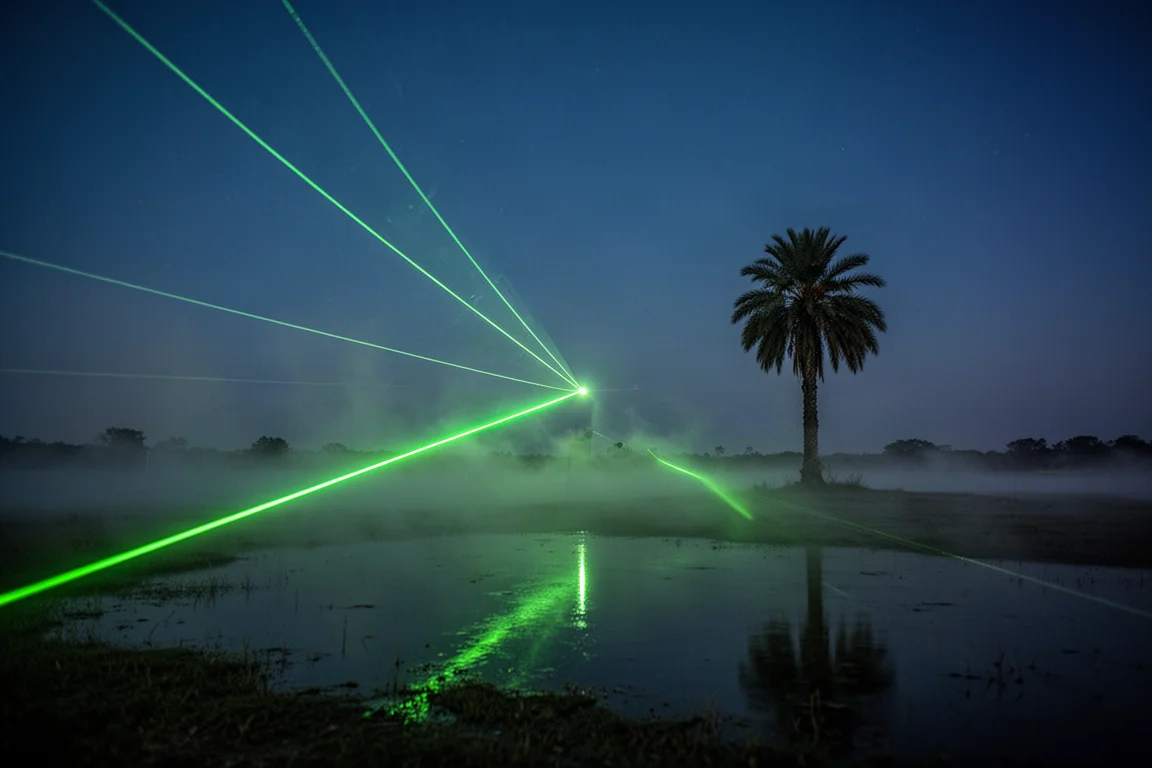
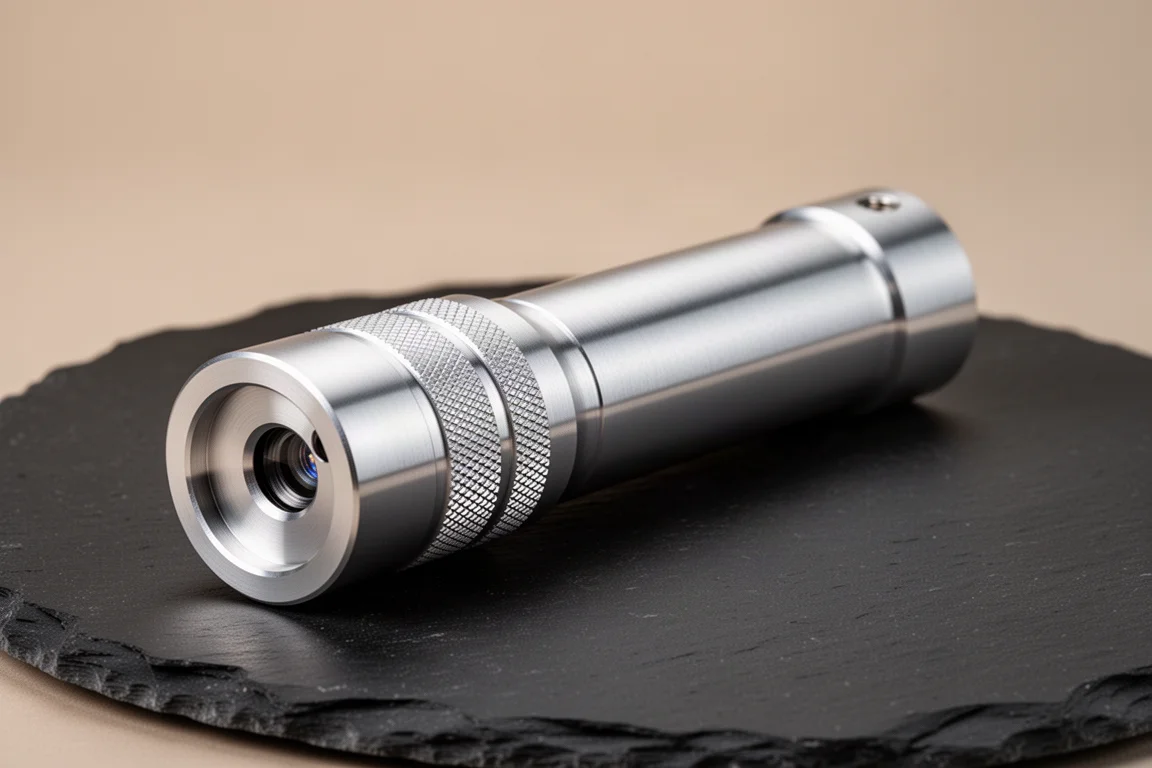
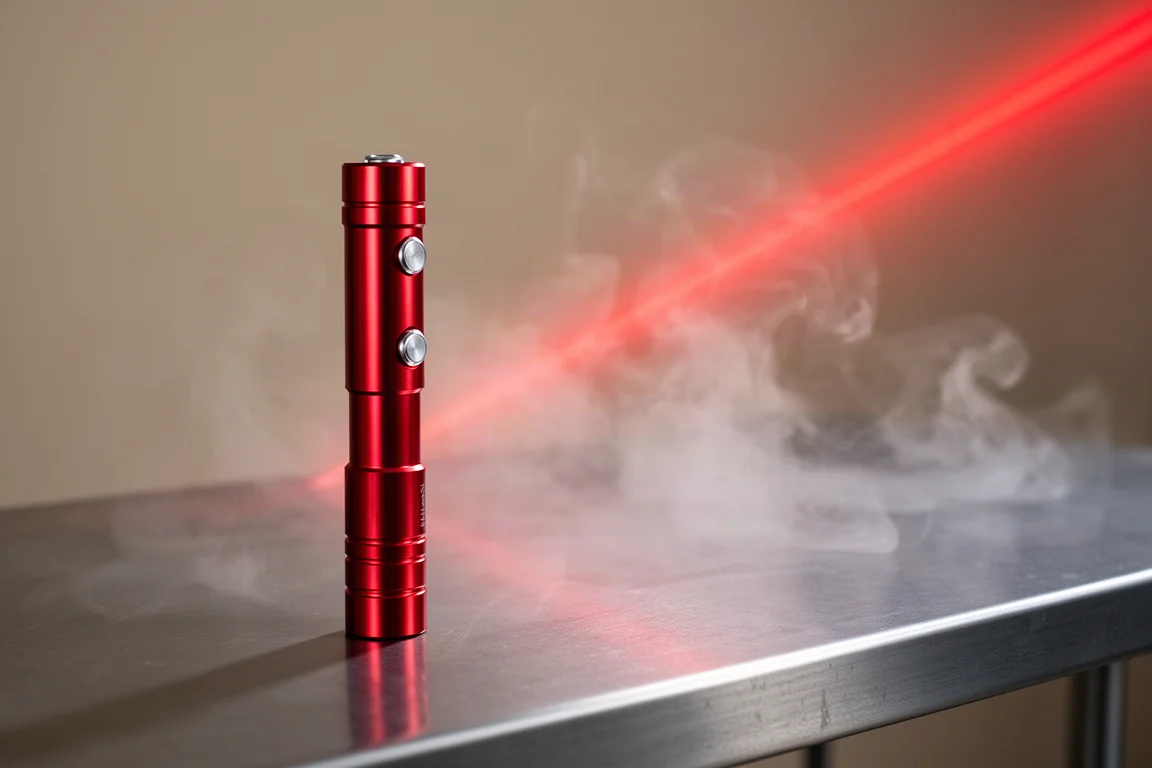
The SkyLasers adjustable focus 650nm red laser pointer pen costs 46 dollars and took about a month to arrive from overseas. It is a different class of object entirely: it weighs roughly as much as ten of the cheapest units and is machined from very thick billet aluminum. In person, especially with some fog in the air, it produces the most lightsaber-like beam display we have seen from a handheld laser.
Red lasers face an uphill battle for brightness, but this one still reaches 278 milliwatts, surpassing both cheaper units easily. That translates to a hazard out to 387 feet, a danger out to 122 feet, and a visible distraction at 5.4 miles, or 8.7 kilometers, exceeding its own more realistic 5 kilometer claim. You can clearly see where the dollars went, and it feels worth the purchase even if our sample was already developing focus trouble.
Toady Blue Visible Beam Laser: Getting Serious
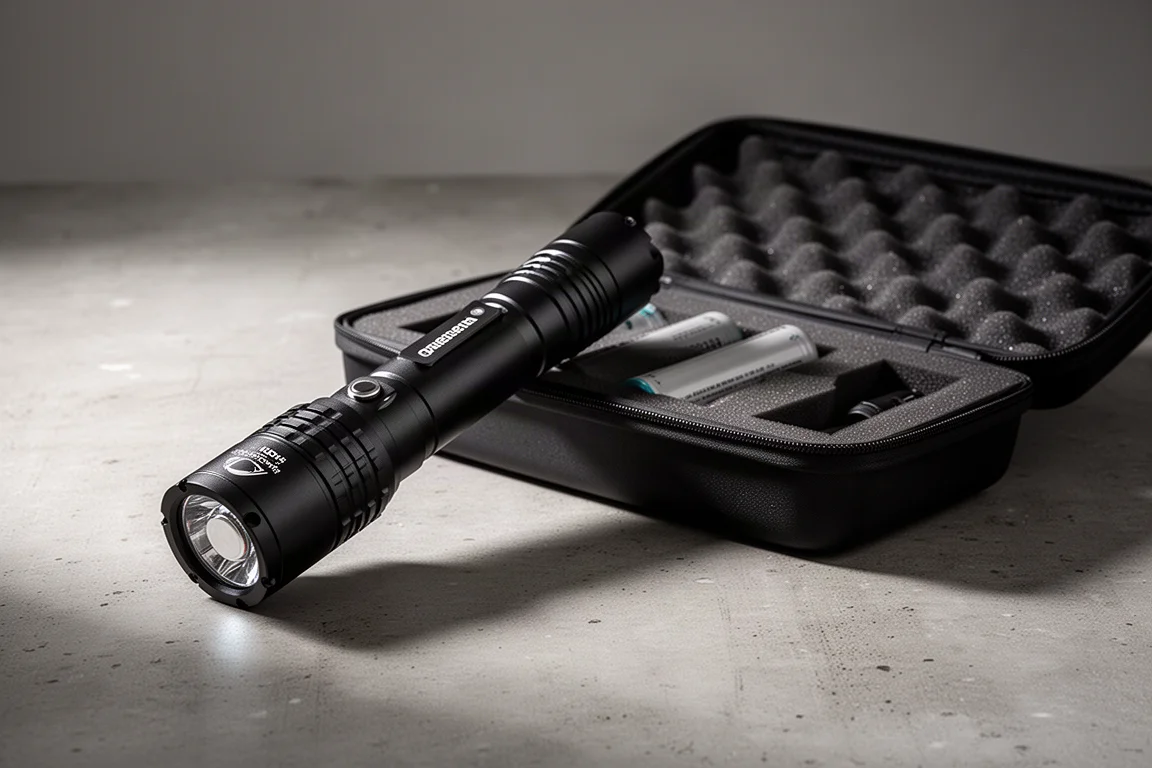
At 67 dollars, the Toady blue visible beam laser pointer marks the jump into properly powerful territory. It takes two 18650 batteries at a time and ships with four cells, a fancy case, and a 10 kilometer rating. A caveat: the included Ultrafire-branded cells feel essentially hollow and are undersized to the point where real 18650s barely fit, so trust the laser, not the batteries.
This is a larger, heavier version of the most powerful type we had previously tested, and it has genuine burning potential, as the included eye protection suggests. It builds to about 1,457 milliwatts, or 1.457 watts, well beyond everything before it, and interestingly the included cells managed nearly the same output at 1.442 watts. That means a hazard out to 885 feet, a danger out to 280 feet, and visibility at 8.9 miles, beating its 10 kilometer claim at 14.3 kilometers. This is the kind of laser you think about before switching on.
Top Lasers 450T-5000 Blue Laser Module: The Burning Beast
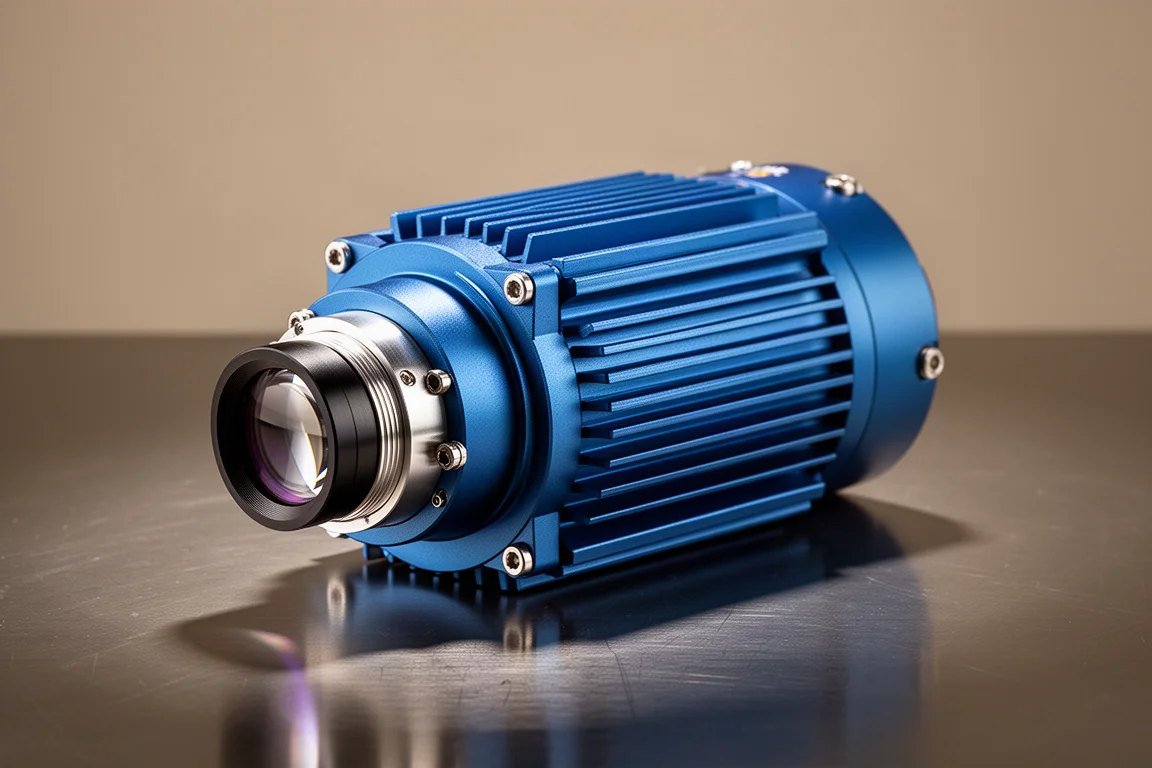
The most expensive and most extreme option is the Top Lasers waterproof focusable 450nm blue laser module at 150 dollars, which also took about a month to arrive and comes with no battery or range claim, just the same fictitious Class 1 one milliwatt label. It feels solid and substantial even without a cell, and it means business: this thing burns stuff almost instantly, and even a reflection bounced off a surface can do damage, so goggles go on before you pick it up.
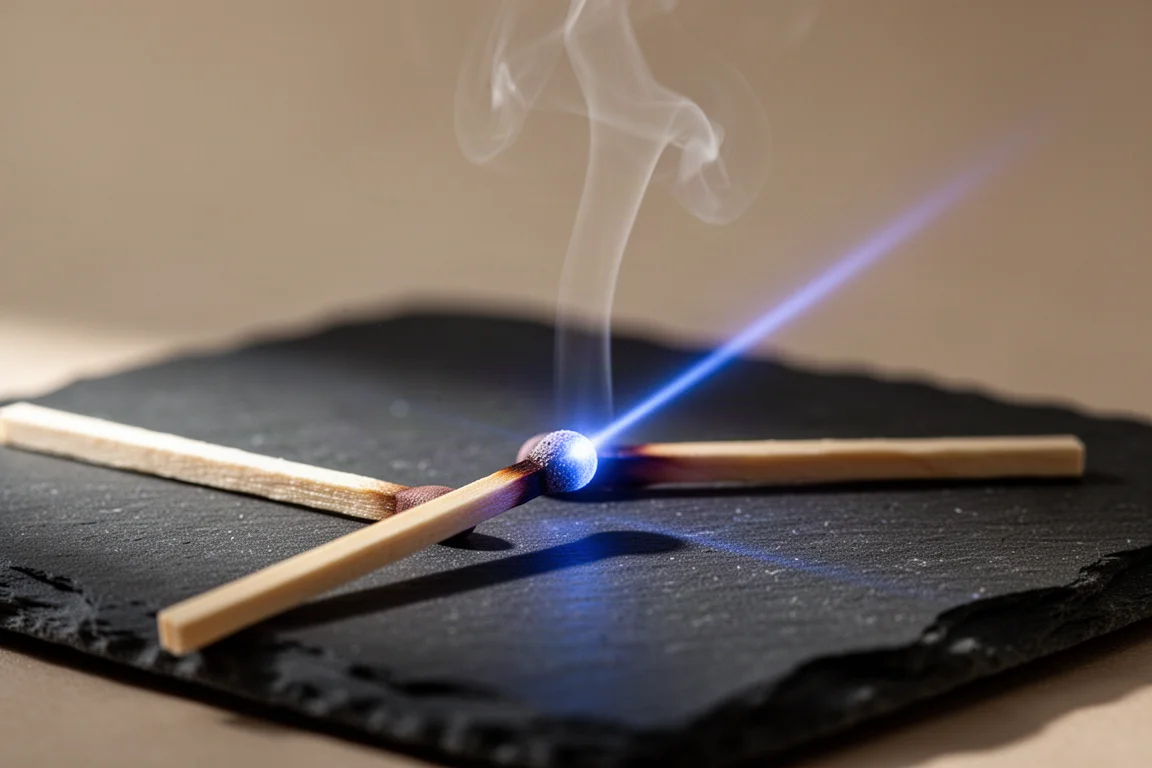
It is essentially a balloon assassin, and the beam is visible in anything but direct overhead light. Around the house it is surprisingly practical, from striking matches anywhere on the stick to lighting entire matchbooks, and it even works as a tape cutter, provided you keep goggles on. Testing maxed out a 3.1 watt meter well before equilibrium, but an independent 20 watt measurement landed at 4,820 milliwatts, or 4.82 watts, which is 4,820 times its rating. That works out to a hazard at 1,610 feet, danger at 510 feet, and visibility up to 16.1 miles. Search by the model number 450T-5000 to find it, since it does not appear on mainstream marketplaces.
Overall Buying Advice
Dollar for dollar, the results were surprisingly consistent across price tiers. The 15 dollar green Hole Fire is the best pure value for a visible, bright beam, the SkyLasers red unit is the pick if build quality and beam drama matter most, and the Toady blue is where burning power starts. The Top Lasers module is in a league of its own, but it demands respect: eye protection for the specific wavelength, awareness of bystanders, and careful thought before every switch-on. Treat every one of these as far more powerful than their listings admit, because they are.
Conclusion
Five lasers, five very different experiences. The purple pen fails on quality and brightness, the green and red pens deliver honest value and craftsmanship, and the blue units escalate from genuinely powerful to borderline industrial. Match the laser to your real needs and budget, and never skip the safety gear.
Further reading
Related Reviews

Backpacking Gear
Building a 10 lb Base Weight: An Ultralight Backpacking Gear List
A practical walkthrough of the ultralight pieces behind a 10 lb base weight, from a 765 g pack and a roomy one-person tent to a full camp chair and a dependable water filter.

Road Bikes
10 New Road Bikes Worth Watching: Aero, Titanium, Steel and Endurance Standouts
A practical roundup of 10 new road bikes, from aero flagships chasing single-watt gains to titanium, steel and endurance platforms built for real roads.

Bikepacking Gear
11 Bikepacking Essentials for Long-Distance Cycling
Eleven bikepacking essentials for long-distance cycling, from a steel gravel frame and a two-person tent to helmet lights, packable gloves, and a frame bag that puts weight in the right place.