Hi-Fi Furniture
Best Furniture for Hi-Fi Gear: Three Practical Options for Housing Components
Three ordinary pieces of furniture that fit full-width hi-fi components, with real measurements, prices, and the compromises worth knowing before ordering.
Introduction
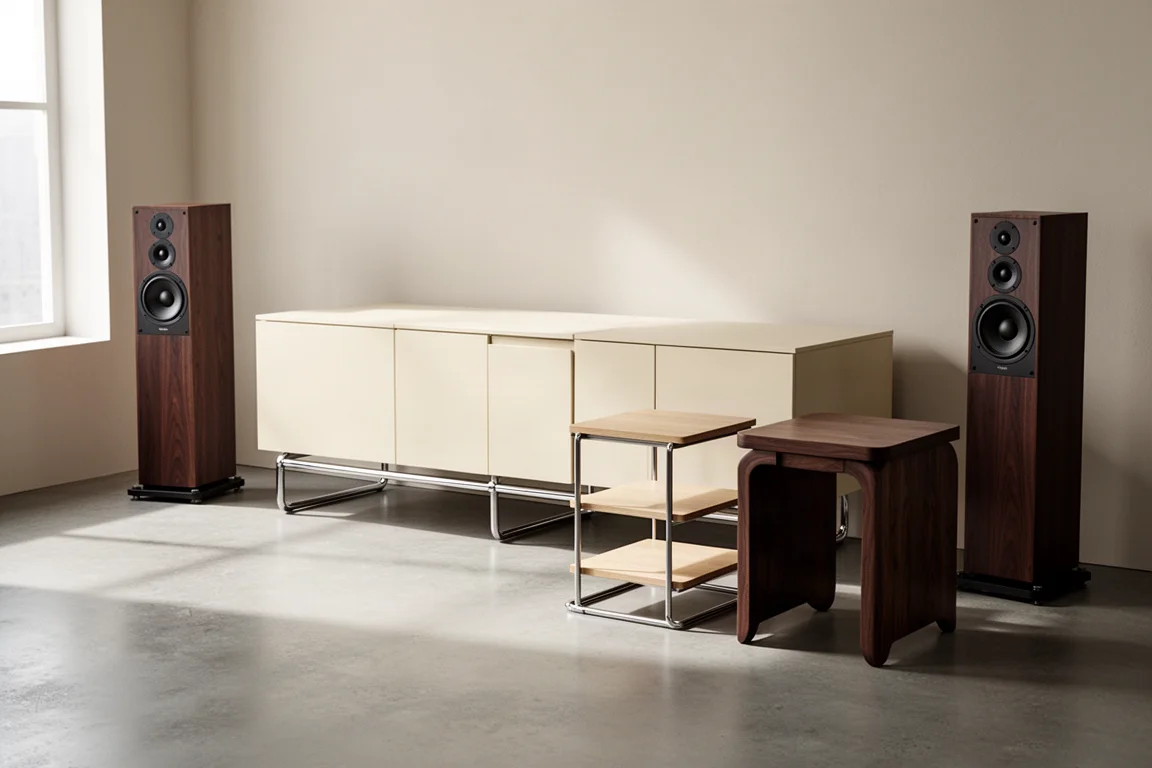
Housing a hi-fi system in furniture that looks like it belongs in a living room is harder than it sounds. Dedicated audio racks are built for the job, but they cost several hundred euros or more, they rarely do anything to hide the cables hanging down the back, and they often read as specialist equipment rather than furniture. The alternative is to use ordinary pieces and check the measurements carefully.
Three options stand out for that approach: a modular Swiss sideboard, a low-cost two-shelf unit, and a compact side table with curved corners. None was designed with audio in mind, which is part of the appeal. Each one offers generous shelf space, a stable surface for components, and a price that leaves more of the budget for the system itself.
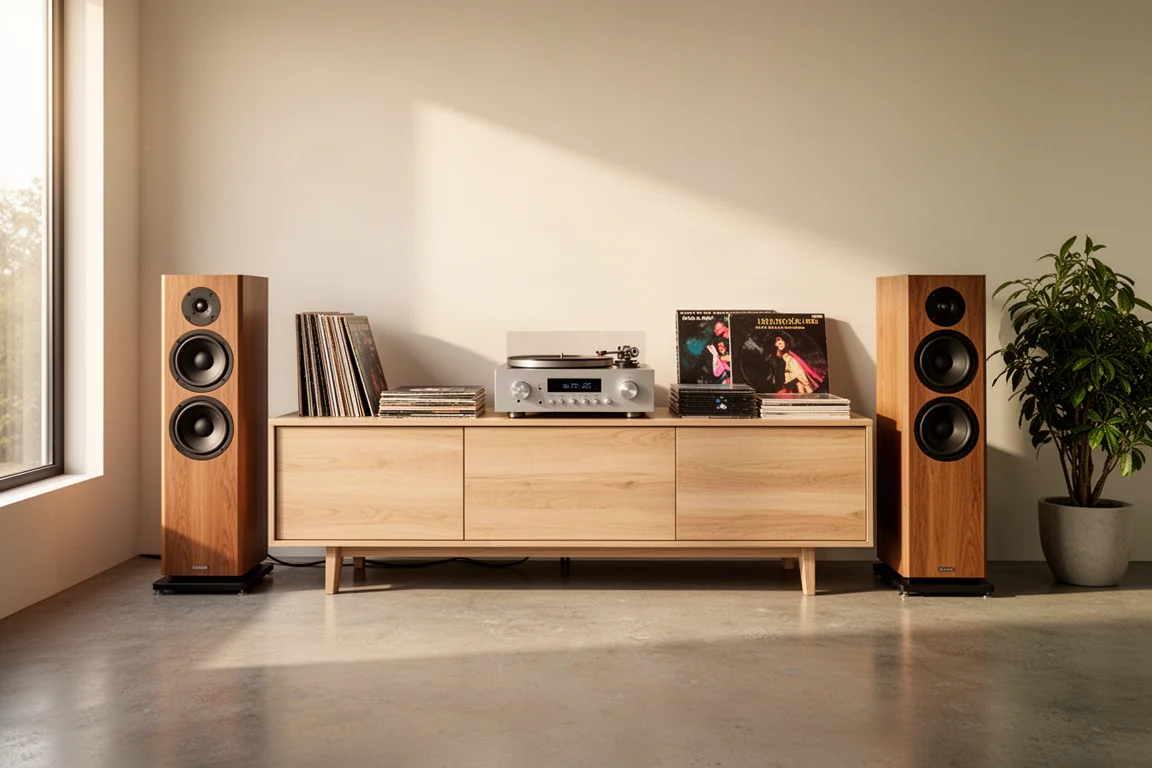
The three pieces below differ mainly in price, depth, and how much they conceal. The notes on each cover what fits, what does not, and the compromises worth knowing before ordering.
What to Look For in Hi-Fi Friendly Furniture
Before comparing specific pieces, it helps to know which measurements actually matter. A full-width hi-fi component is roughly 43 cm across the front, so any shelf or top plate needs to be at least that wide. Depth matters just as much, and it is the specification most often overlooked: an amplifier or DAC that overhangs the back edge of a sideboard is both unstable and awkward to cable.
Internal shelf height determines what can be stacked or slid into place. Around 25 cm suits a single full-width component, while roughly 29 cm gives enough clearance for a pre/power amplifier stack with space to spare. Vinyl needs a different kind of space altogether: a compartment tall and deep enough for a full row of records.
Cable management deserves equal attention. Open-backed furniture makes routing easier, but a low open area at the base can leave power adapters and cables visible on the floor, which is exactly the problem a dedicated rack is supposed to solve.
USM Haller Sideboard: Modular Swiss Storage
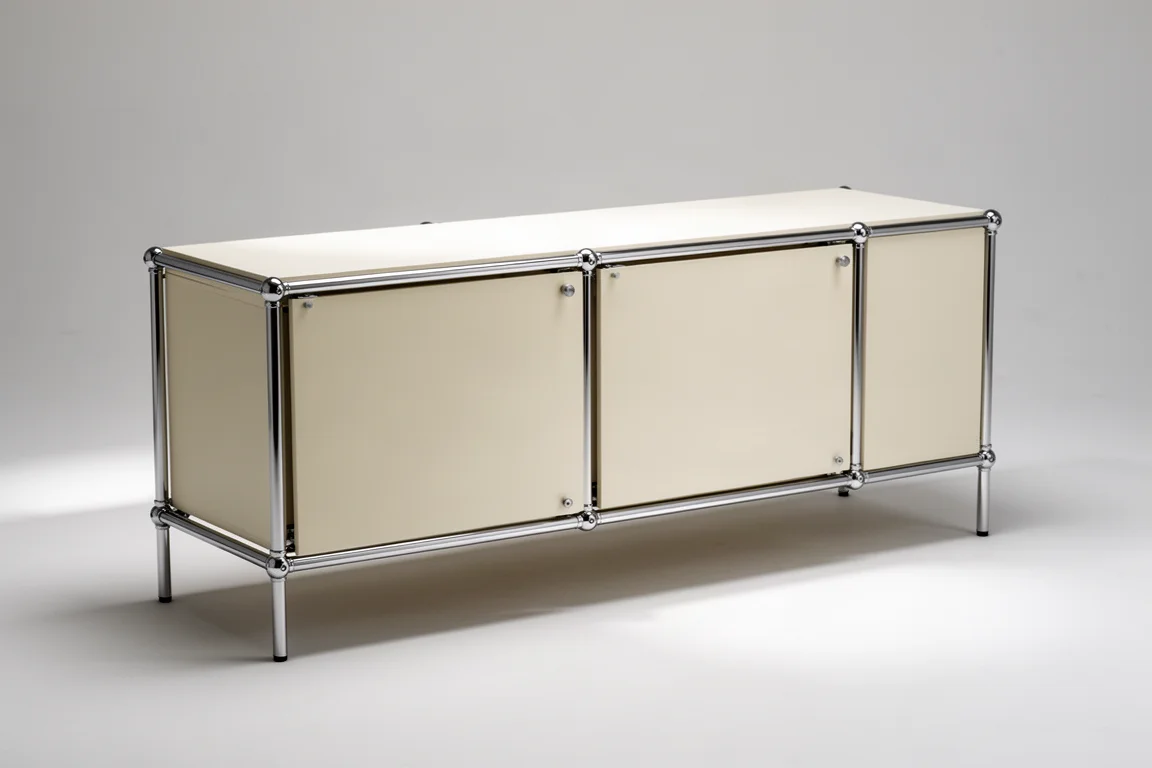
The USM Haller Sideboard is a modular European design piece made in Switzerland, and its construction is metal rather than wood. At 1.5 m wide it comfortably holds two full-width components on top, with two more fitting in the slots beneath the top plate, where usable height measures about 17.5 cm. Drop-down doors on the front conceal storage spaces that are tall and deep enough for a row of vinyl records, and the modular build means individual panels and top plates can be replaced over time.
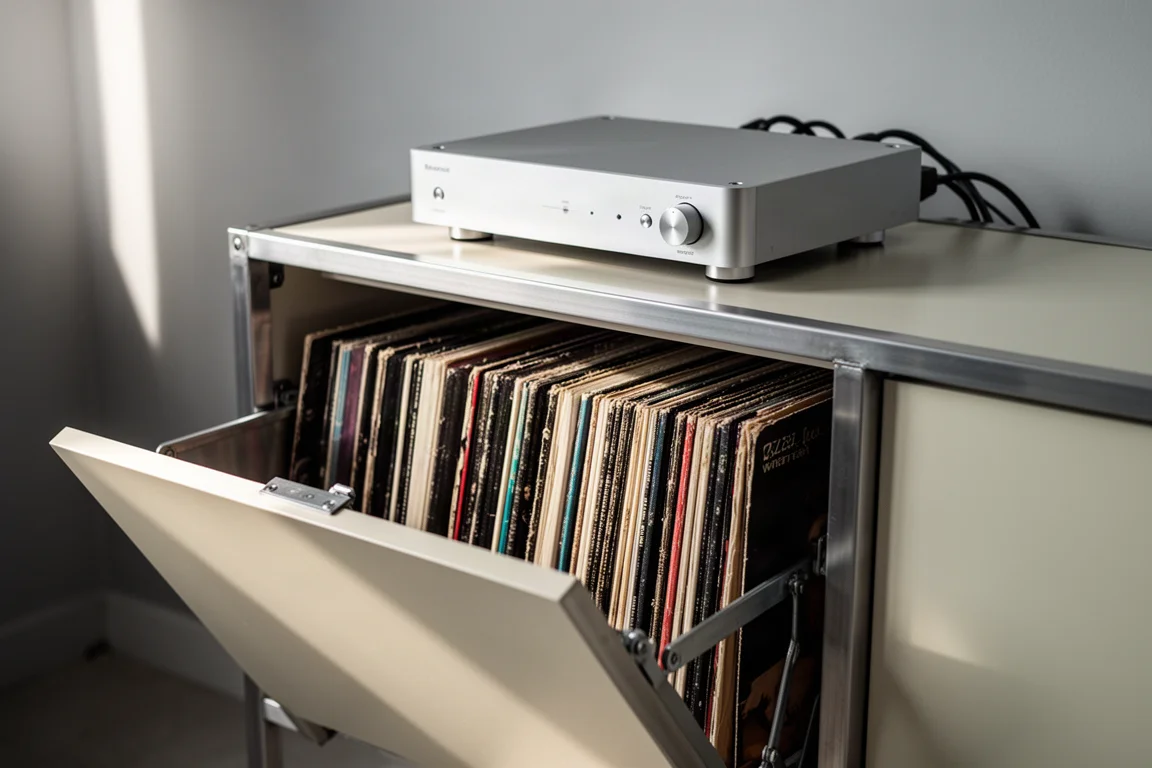
The main compromise is depth. At 38 cm the unit is shallower than some larger amplifiers and DACs require, so an isolation platform with offset feet can extend the usable depth by a couple of centimetres. That matters most when a turntable sits on top, since the metal construction makes vibration isolation worth thinking about.
Price is the other consideration. In its drop-down door configuration the sideboard sells for roughly €1,700, which puts it well above the other two options here. Availability also varies by country: delivery can arrive within about three days in Germany, while the lead time in Portugal runs closer to six weeks.
IKEA BAGGEBO: Affordable Two-Shelf Storage
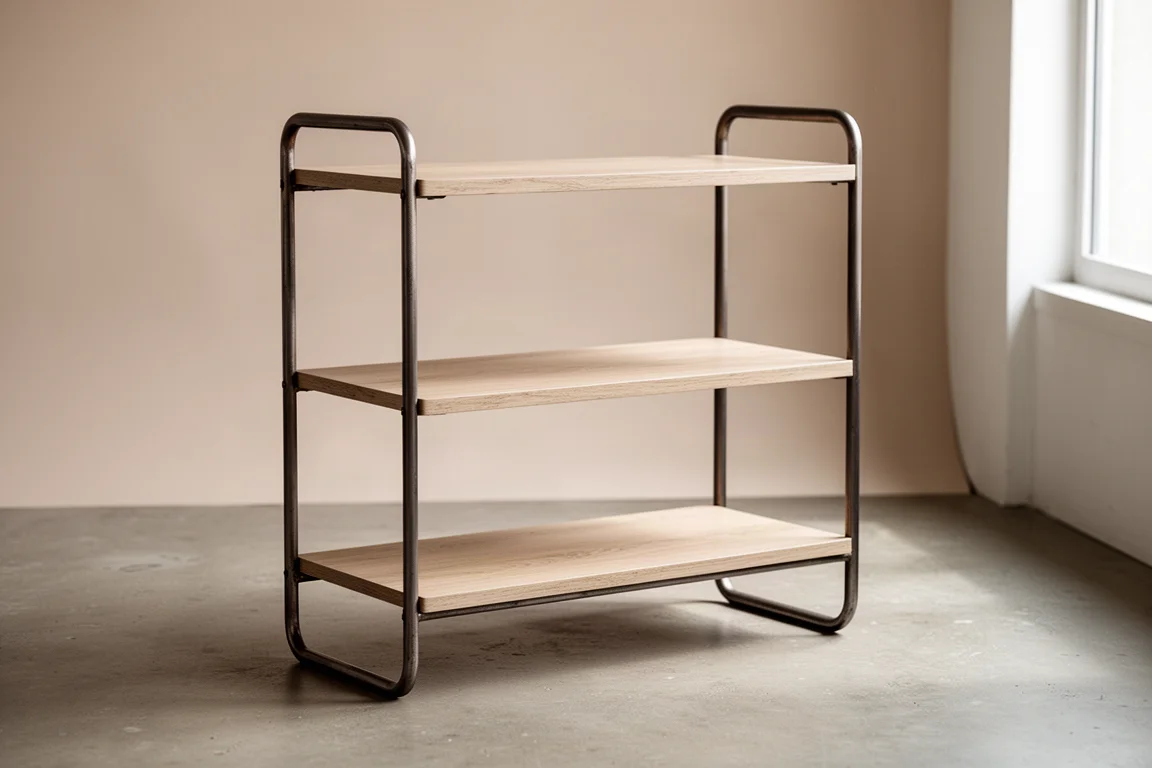
The IKEA BAGGEBO takes the opposite approach. It is a vintage-styled piece with a tubular metal frame supporting two very wide and very deep storage shelves, so component width and depth are rarely an issue. At €69 it is by far the most affordable of the three, although availability fluctuates: it has been sold out in some markets while remaining easy to find in others.
The lower shelf measures 29 cm internally, which is enough for a pre/power amplifier combination with a little clearance above and plenty of room at the sides. There is also space beneath the lower shelf for a power conditioner, and the top surface can hold a streamer, a CD player, and a lamp without feeling crowded.
Zara Home Dark Wood Side Table: Compact and Curved
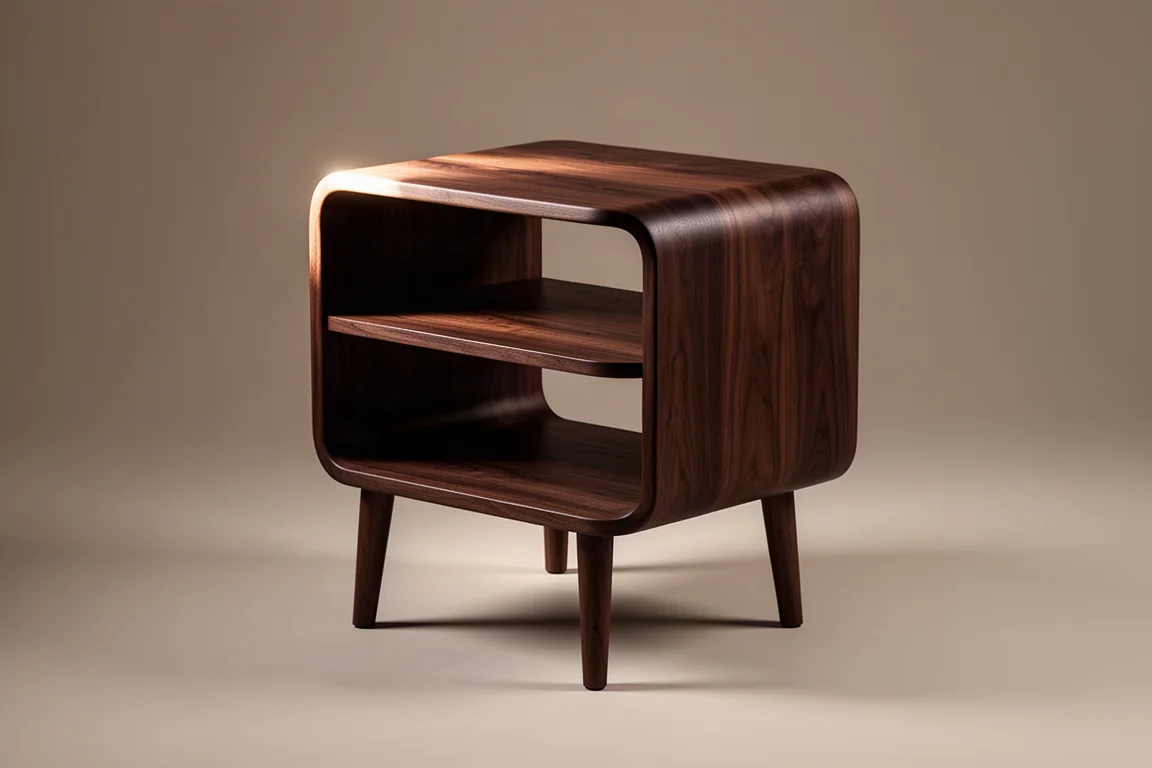
The dark wood side table from Zara Home is the most compact option here, and its curved corners give it a noticeably softer look than a typical equipment rack. Both internal shelf spaces are wide enough for a full-width component, and in some cases tall enough to stack two. The internal shelf height measures 25 cm, while the top surface carries a depth limitation of about 35 cm, so a turntable fits best with an isolation platform adding a couple of extra centimetres.
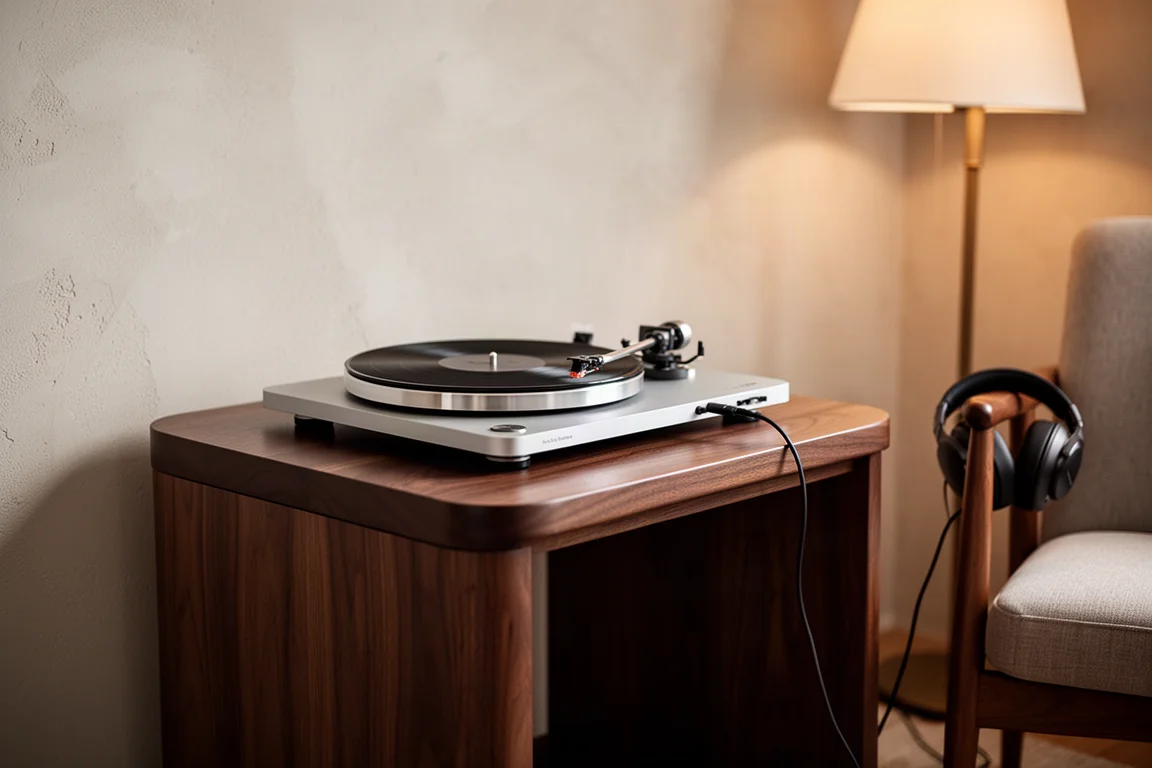
At €250 in Germany and around €200 in Portugal, the table costs a fraction of a dedicated audio rack, and it arrives quickly once ordered. The trade-off is the open area at the bottom, which leaves cables and a power adapter visible on the floor until they are tidied or concealed with a power board.
How the Three Options Compare
On width alone, all three clear the 43 cm needed for full-width components. The USM Haller offers the most structure: a fixed top plate, two slots beneath it, and enclosed storage behind drop-down doors, at a price that reflects its modular metal construction. The IKEA BAGGEBO gives up enclosure in exchange for two open shelves that are wider and deeper than most components will ever need, for a fraction of the cost. The Zara Home table sits between them: small enough for a tight corner, with curved corners and a wood finish, but with a shallower top than the other two.
Depth is where the differences bite. The BAGGEBO has no meaningful depth constraint, the USM Haller sits at 38 cm, and the Zara Home table limits the top surface to about 35 cm. If a large amplifier, a deep DAC, or a turntable is part of the plan, depth should drive the decision more than width.
Buying Advice Before You Order
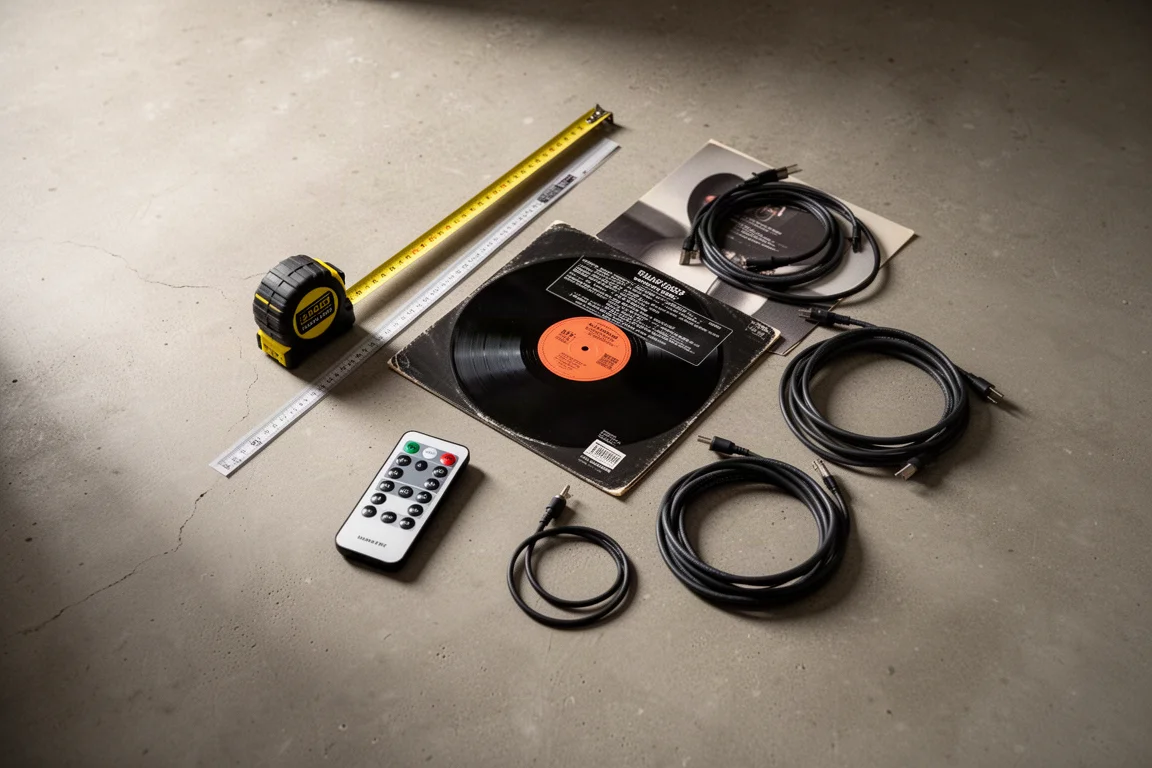
Start with measurements rather than looks. Note the width of the widest component, its depth plus a few centimetres of clearance for cables at the back, and the internal shelf height required for anything that will sit on a lower shelf. Then decide how much you care about hiding what is inside: enclosed storage solves cable visibility, while open shelves make access easier.
It also helps to think about vibration and surface stability. A turntable benefits from a solid, level top and, on a metal or shallow-topped unit, from an isolation platform that adds usable depth and keeps the deck away from structural resonance. For amplifiers and DACs, the priority is usually simpler: enough depth that nothing overhangs, and enough ventilation that a warm-running component is not boxed in.
Finally, weigh availability. Prices and lead times vary considerably by market, and one of these pieces has a reputation for selling out, so it is worth confirming stock before planning a setup around it.
Conclusion
None of these three pieces was designed for hi-fi, and that is precisely why they are worth considering. They hide cables imperfectly, they impose their own depth and height limits, and they cost a fraction of what dedicated audio furniture asks for. The USM Haller Sideboard suits anyone who wants modular, enclosed storage and can accept the price and the 38 cm depth. The IKEA BAGGEBO is the pragmatic budget choice with the most generous shelf space. The Zara Home dark wood side table is the compact, good-looking option for a smaller system. Measure the gear first, match it to the depth and shelf height that fit, and any of the three will do the job well.
Further reading
Related Reviews

Backpacking Gear
Building a 10 lb Base Weight: An Ultralight Backpacking Gear List
A practical walkthrough of the ultralight pieces behind a 10 lb base weight, from a 765 g pack and a roomy one-person tent to a full camp chair and a dependable water filter.

Road Bikes
10 New Road Bikes Worth Watching: Aero, Titanium, Steel and Endurance Standouts
A practical roundup of 10 new road bikes, from aero flagships chasing single-watt gains to titanium, steel and endurance platforms built for real roads.
Bikepacking Gear
11 Bikepacking Essentials for Long-Distance Cycling
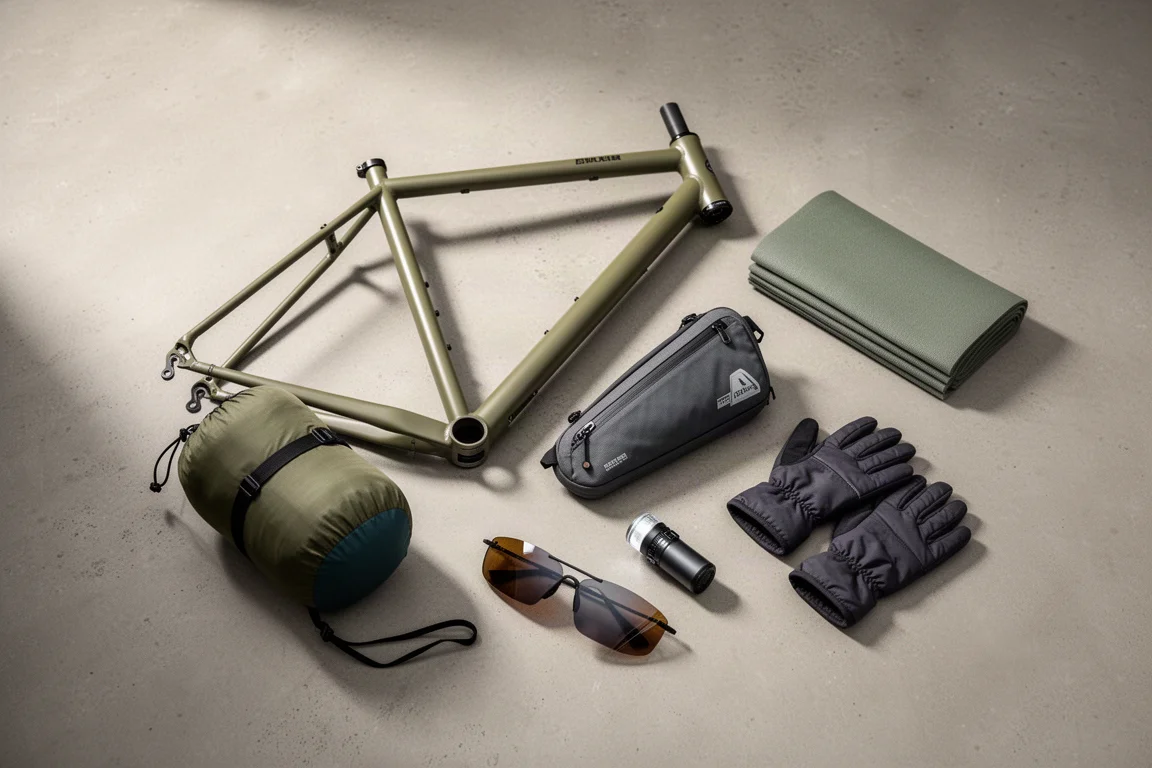
Eleven bikepacking essentials for long-distance cycling, from a steel gravel frame and a two-person tent to helmet lights, packable gloves, and a frame bag that puts weight in the right place.