Automotive
Best Engine Oil Additives: Five Popular Treatments Put to the Test
Liqui Moly, Lucas, Bestline, Prolube, and Archoil go through flow, heat, cold, lubricity, and fuel economy testing to see which oil additives actually deliver.
Introduction
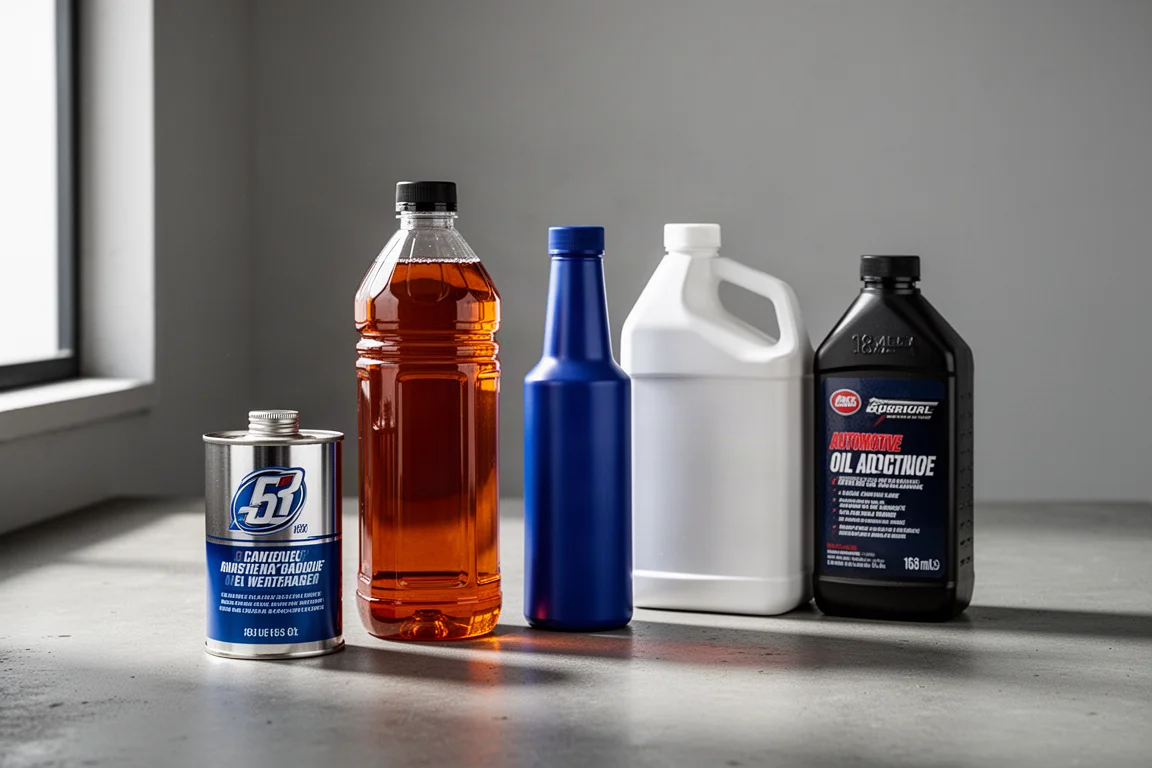
Oil additives are one of the most requested product categories in automotive care, and the shelf appeal is hard to ignore: thousands of near-perfect customer ratings, bold claims about friction reduction, and promises of better fuel economy and longer engine life. To separate marketing from reality, five of the most popular engine oil treatments were blended into a high-quality 5W-30 synthetic motor oil and evaluated across cold flow, heat exposure, lubricity, cranking effort, and real-world fuel economy.
The short version: results vary a lot, and not always in the direction the bottle suggests.
How We Evaluated Each Additive
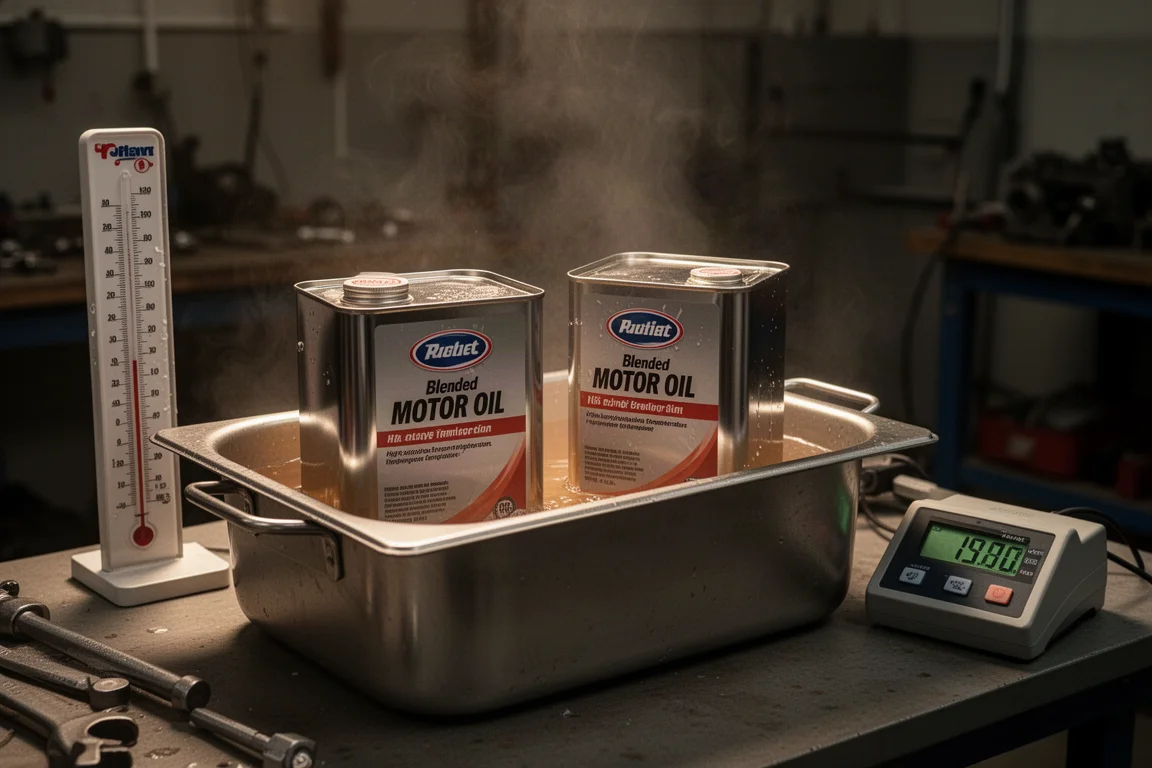
Each additive was mixed into Pensoil Ultra Platinum 5W-30 at the manufacturer’s recommended ratio, then put through a consistent series of tests: an ambient oil flow comparison, a deep-freeze flow test at -40 degrees, a two-hour heat exposure to measure evaporative loss, a controlled metal-to-metal lubricity test, and third-party oil analysis. Real-world fuel economy and acceleration were measured on test vehicles over identical 81-mile highway routes with the same refueling procedure.

One important caveat carried through the whole process: bench tests are not a perfect simulation of an engine. They are still useful because they provide a controlled, repeatable data point for comparing products under identical conditions.
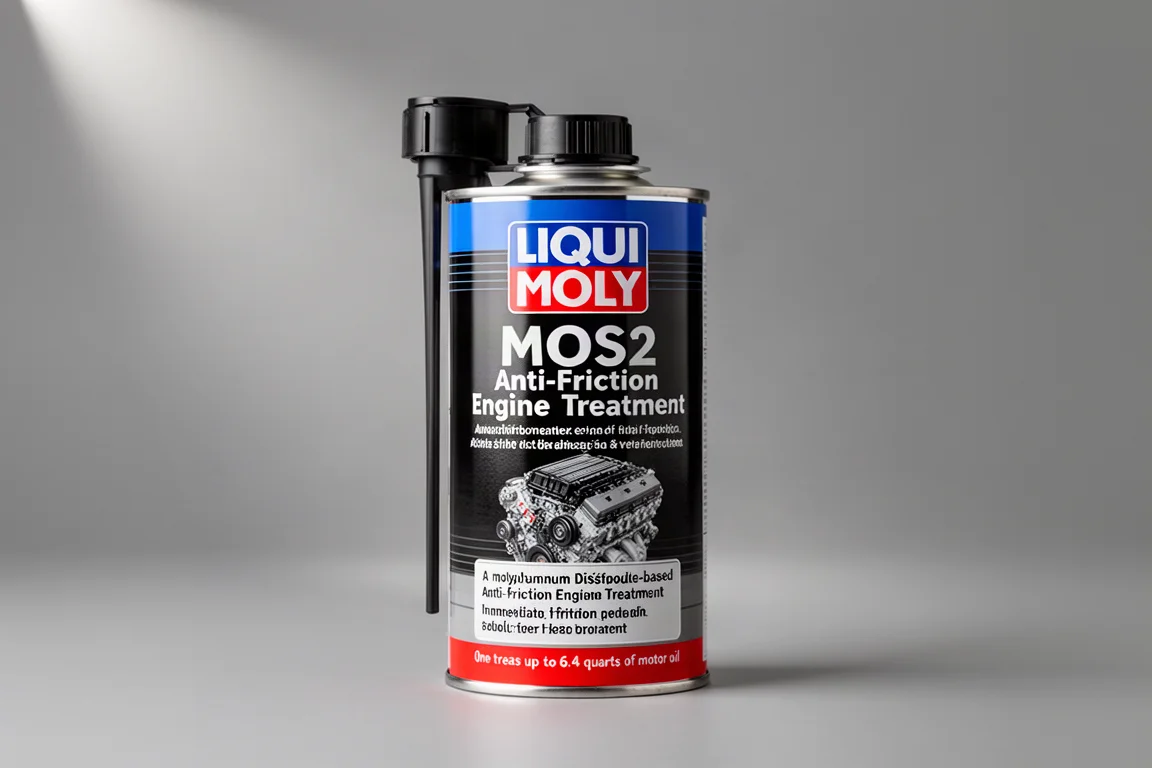
Liqui Moly MoS2 Anti-Friction Engine Treatment
At around $11 per can, Liqui Moly’s MoS2 Anti-Friction Engine Treatment is one of the most affordable options tested, and customers clearly like it: nearly 7,000 ratings averaging 4.7 stars. The German-made treatment claims immediate friction and wear reduction with no break-in mileage required, and it is marketed as safe for turbochargers and catalytic converters. One can treats 6.4 quarts of motor oil.
In testing, it behaved sensibly. It added only a small amount of viscosity, resisted evaporation better than straight motor oil after two hours of heat exposure (2.83 grams of loss versus 3.13), and improved cold cranking in a high-mileage 5.3L V8 by roughly 124 watts, meaning the engine turned over easier with it in the oil. Fuel economy and 0-60 times showed no detectable improvement, but no measurable harm either. Of all five additives, this is the only one that tied the baseline motor oil across the heat-exposed testing, which makes it the most conservative choice if you do decide to add something.

Lucas Heavy Duty Oil Stabilizer
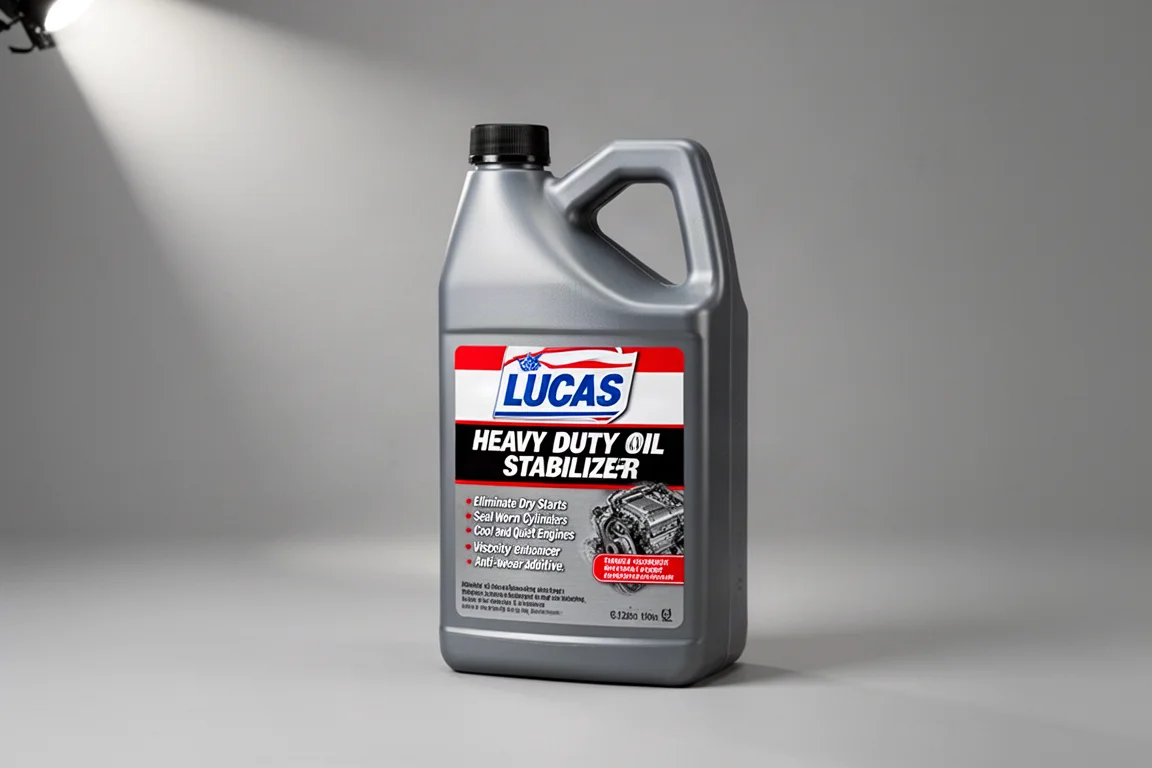
Lucas Heavy Duty Oil Stabilizer is arguably the best-known product in the category, sometimes nicknamed “motor honey.” It costs around $12, carries over 6,600 ratings at 4.8 stars, and claims to eliminate dry starts, seal worn cylinders to reduce oil consumption, and cool and quiet engines and gearboxes.
The oil analysis tells you what it really is: mostly a viscosity enhancer with limited anti-wear additive content. That showed in the results. It added quite a bit of thickness to the oil and flowed poorly in cold-temperature testing, taking nearly twice as long as straight motor oil to pass through the flow tester at -40 degrees. In the lubricity test, the blended oil tied the baseline motor oil rather than beating it, and after heat exposure it was among the slowest to flow. Its claims of easier starting at any temperature did not hold up in the cold flow testing.
Bestline Engine Treatment with Nano Diamond Technology
Bestline positions itself at the premium end of the shelf at around $25, promising lubrication via diamond nanoparticles, cleaning of internal components, and improved fuel economy and performance. It has over 1,000 ratings at 4.6 stars and is made in the USA.
Here is where the testing gets interesting. In the lubricity tester, fresh 100% Bestline produced a remarkably small wear scar of 1.62 mm, one of the best results recorded. However, that is not how the product would actually be used. Blended with motor oil at the proper ratio and after heat exposure, it still outperformed straight motor oil with a wear scar of 4.70 mm, making it the only additive that beat the baseline oil under realistic conditions. The trade-offs are real, though: it thinned the oil slightly, it had the worst smell of the group, it suffered the highest evaporative loss after heat (about 41% more than motor oil alone), and in the real-world fuel economy test it lost 2.2 mpg compared with the baseline run.

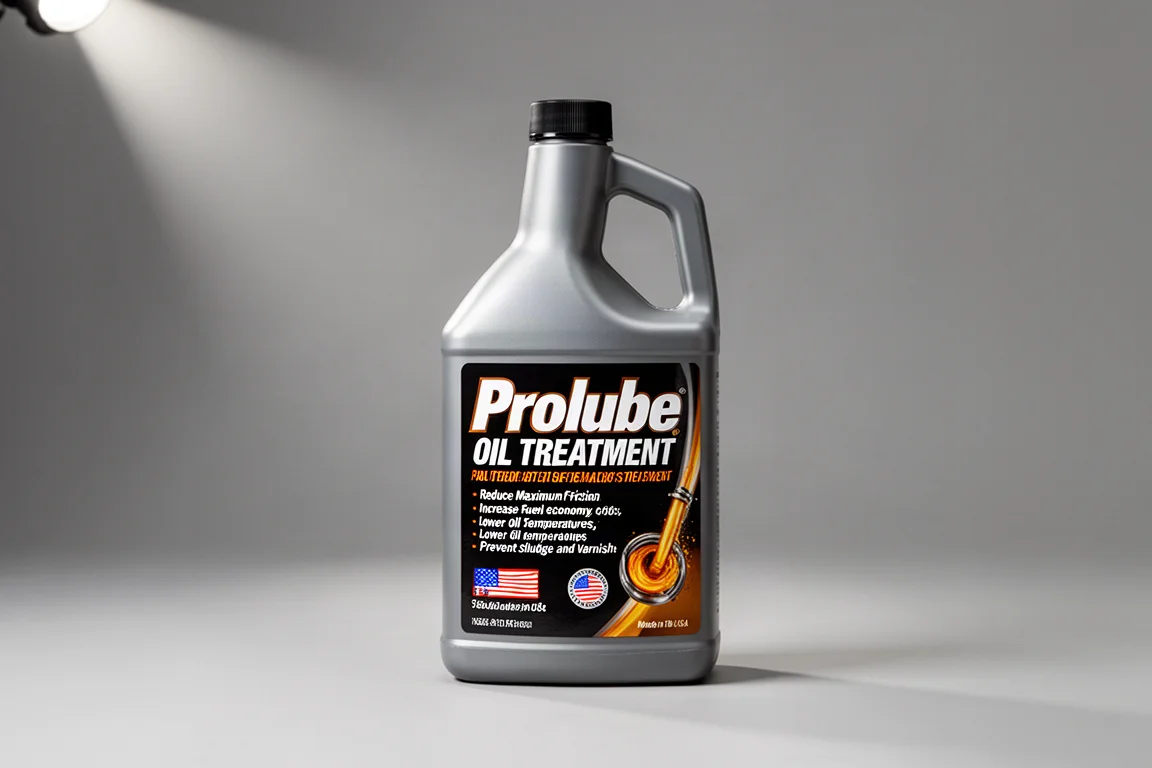
Prolube Oil Treatment
Prolube generated the most reader requests of any product covered, and at around $39 for a quart it is a serious investment. It claims maximum friction reduction, better fuel economy, lower oil temperatures, sludge and varnish prevention, and extended engine and oil life. Dosage is 1 ounce per quart of oil, with up to 2 ounces per quart recommended for high-mileage engines, and it is made in the USA.
On paper, Prolube delivered the most impressive real-world numbers: about 1.5 mpg better on the fuel economy route and a 0-60 time improvement from 7.7 to 7.55 seconds, with better fuel flow readings at all three highway checkpoints. But two findings temper that enthusiasm. First, its main active ingredient, 10-20% oleic acid, has poor thermal stability. After two hours of heat exposure, Prolube flowed slower than any other product in the cold test, and in lubricity testing the heat-exposed blend produced a wear scar of 5.84 mm, worse than straight motor oil. Second, the oil analysis showed Prolube lowered the motor oil’s reserve alkalinity (TBN) the most, from 7.4 down to 5.8, suggesting the oil sacrificed alkalinity to neutralize incoming acid. The early gains may not last.
Archoil AR9100 Nanoborate Lubrication Technology
Archoil AR9100 is the most expensive product tested at around $40. It uses a synthetic carrier fluid with nano-particle potassium borate, designed to bond to metal surfaces and create a solid boundary lubricating layer. Claims include extreme pressure protection, reduced friction, heat, engine noise, and vibration, plus cold-start protection. It has a 4.7 star rating and treats just over 13 quarts of oil per 16-ounce bottle at 1.2 ounces per quart.
Out of the bottle, it is genuinely impressive: it produced the smallest wear scar of any product at 1.08 mm. The oil analysis also showed it was the only additive that did not reduce the motor oil’s total detergent and dispersant content, and it raised the TBN to 12.2, giving the blend more reserve alkalinity against combustion acids. In practice, though, the realistic test told a different story: blended at the correct ratio after heat exposure, its wear scar measured 5.54 mm, worse than pure motor oil, and its fuel economy result on a small generator test came up 15 seconds short of the baseline runtime. The exceptional bench numbers rely on concentrations you will never achieve in a crankcase.
Heat and Cold: Which Additives Survive?
Temperature testing separated the field more sharply than any other metric. After two hours of sustained heat, only Liqui Moly and Prolube resisted evaporation better than motor oil alone, Lucas essentially tied it, Archoil lost slightly more, and Bestline lost roughly 41% more than the baseline oil.
In the -40 degree cold flow test, Archoil and Bestline flowed faster than motor oil, which sounds good until you remember most additive use cases do not call for thinning the oil. Liqui Moly trailed the baseline slightly, Prolube fell further behind, and Lucas was dramatically slow at nearly two minutes versus just over a minute for plain oil. Notably, after heat exposure Prolube’s cold flow collapsed completely, by far the slowest of all products at over two minutes.

Overall Verdict: Should You Use an Oil Additive?
The customer reviews are genuine: these products have a lot of happy buyers. But the controlled testing suggests a more restrained conclusion. In the realistic, heat-exposed lubricity comparisons, only Liqui Moly tied the motor oil, and none of the additive blends beat the baseline oil across the board. Bestline was the only product to beat pure motor oil on wear after heat exposure, but it came with fuel economy and evaporation penalties.
The most sensible takeaway: additives work best as a targeted fix for a specific problem, such as noise, consumption, or a known mechanical issue, rather than as routine insurance for a healthy engine. For a healthy engine, a high-quality motor oil changed at roughly 5,000-mile intervals remains the better investment. If your engine does have a specific issue you are trying to address, an additive is certainly worth experimenting with, and the products above rank as follows for that purpose: Liqui Moly for the safest all-around behavior, Bestline for anti-wear performance despite its trade-offs, Archoil for its additive package and TBN boost, and Prolube or Lucas only when a very specific use case justifies their weaknesses.
Conclusion
Five popular oil additives, five very different test profiles. Liqui Moly MoS2 proved the most consistent and least disruptive to a good motor oil. Bestline showed real anti-wear capability under realistic conditions but hurt fuel economy in testing. Archoil impressed in pure form but not when diluted as directed. Prolube posted the best short-term fuel and acceleration numbers, yet heat exposure raised legitimate durability concerns. Lucas, despite its popularity, behaved mostly as a thickener and struggled in cold flow. Match the product to a real problem, and keep the healthy engine on quality oil and regular changes.
Further reading
Related Reviews
Automotive
Best Brake Parts Cleaner 2026: 14 Brands Tested for Speed, Cleaning Power, and Residue
We tested 14 brake parts cleaners for evaporation speed, grease removal, sludge breakdown, and residue to find the best value for your garage.

Automotive
Escort ZR6 Laser Jammers: A Hands-On Look at Features and Performance
The Escort ZR6 laser jammers offer compact heads and flexible integration, but the interface leaves room for improvement.
Automotive
LiPower Solid-State Car Battery Review: A Lighter, Longer-Lasting Upgrade
A practical look at the LiPower solid-state car battery, covering its specs, real-world performance, and how it compares to a traditional AGM battery.