Home Audio
Best Dolby Atmos Soundbars 2026: Six High-Performance Systems Compared
Six premium Dolby Atmos soundbars from Sonos, JBL, Sony, Samsung, Klipsch and Sennheiser, compared on drivers, included speakers, expansion paths and price.
Introduction
Dolby Atmos has moved well beyond the cinema. Streaming platforms now deliver a steady flow of original Atmos content, and spatial audio music is arriving on the same services, which makes the soundbar you choose more consequential than it used to be. The six systems below come from six of the biggest names in home audio: Sonos, JBL, Sony, Samsung, Klipsch and Sennheiser. Each one targets a slightly different buyer, and not all of them include a subwoofer in the box, so the total cost of a complete setup varies considerably. This guide walks through what each bar does well, what it includes, and where it makes the most sense.
What to Look For in a Dolby Atmos Soundbar
All six bars share a common foundation: HDMI ARC connectivity, multi-room support, voice assistant features, and Dolby Atmos surround processing. The Atmos effect itself comes from drivers that fire upward, bouncing sound off the ceiling and back down to the listener. That is what creates the sense of a helicopter passing overhead: the rotor noise arrives from above the screen, and as the aircraft lands, the sound travels back down to ear level. The more upward-firing drivers a bar has, the more holographic the effect becomes, and adding a subwoofer restores the physical impact of low-frequency effects.
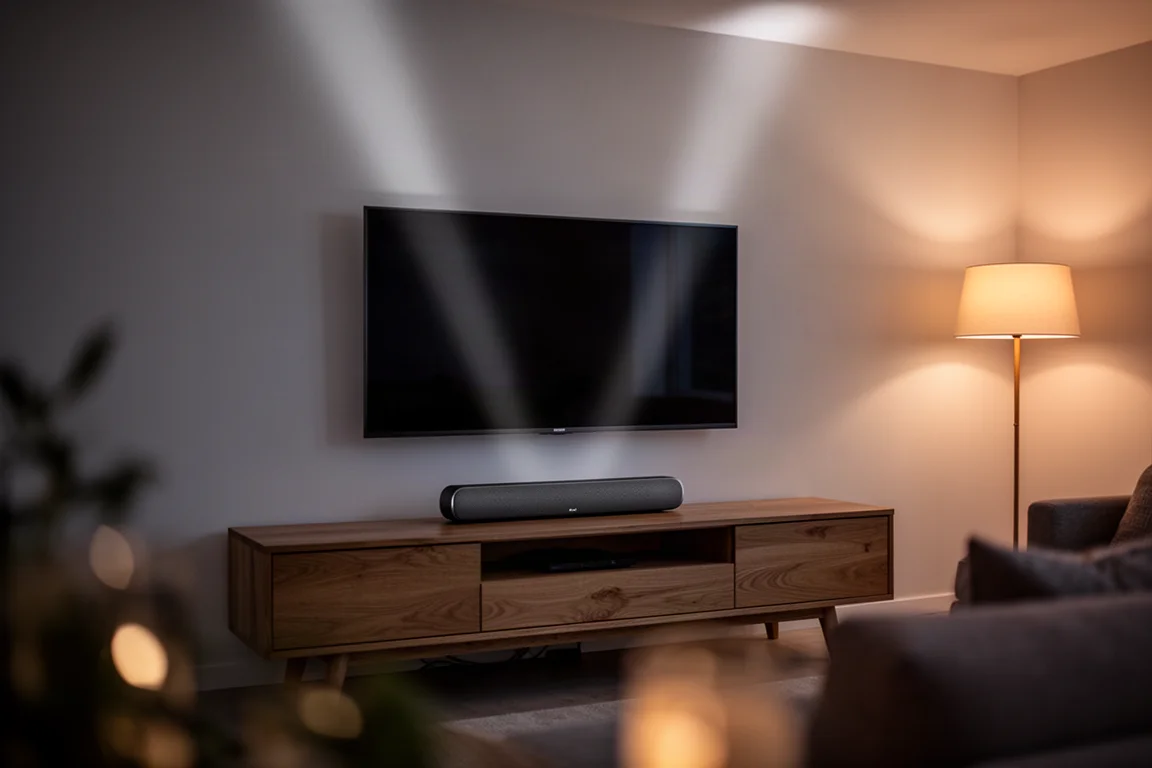
Connectivity matters just as much as driver count. HDMI eARC, the enhanced version of Audio Return Channel, carries full uncompressed Atmos, so a newer television is required to hear Atmos at its best. Even without eARC, every bar here still uses its upward-firing speakers to good effect. Control is flexible too: voice assistants such as Amazon Alexa allow hands-free operation, and older televisions that cannot take advantage of ARC or eARC can still be managed from a phone or tablet.
Detachable speakers are another feature worth checking. The JBL Bar 9.1, the Samsung HW-Q950A and the Klipsch Cinema 1200 all include speakers that can be placed anywhere in the room for the left, right or rear surround channels, which is the simplest route to a genuine all-around Atmos experience.
Sonos Arc
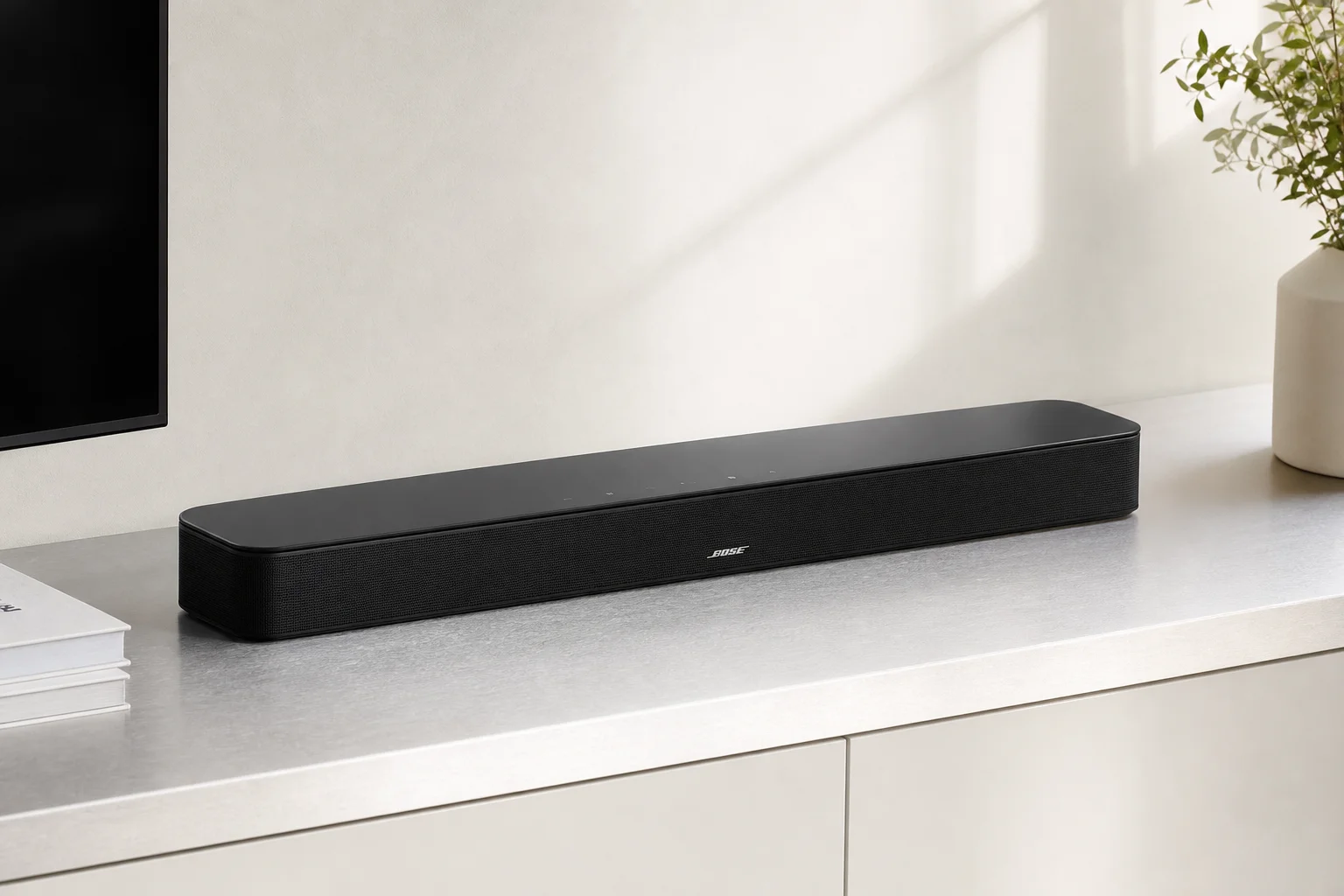
The Sonos Arc set a high standard for the smart soundbar concept at launch, and it still sits just under the $1,000 mark. Eleven speakers are housed inside the single enclosure. Custom elliptical woofers handle the left, center, right and surround channels through a five-channel phase array, while two height channels fire upward to add the vertical dimension that Atmos depends on. Speech enhancement technology, tuned with input from Oscar-winning sound engineers, pushes dialogue forward so voices stay intelligible.
The Arc is also one of the easiest Atmos bars to expand. Adding a Sonos Sub, which costs less than $800, or a pair of rear speakers such as the Sonos One SL, lets the surround channel drivers automatically adjust to extend the bass output. Sonos Trueplay room calibration then fine-tunes the sound field to the acoustics of the specific room. Bundled with the Sonos Sub, the package lands in the $1,600 category and covers whole-home music as well as movies.
JBL Bar 9.1
As the least expensive complete system here, the JBL Bar 9.1 delivers a lot of value. It arrives as a full all-in-one Atmos package with two detachable battery-powered surround speakers and a wireless subwoofer included, all for just under $1,000. Four up-firing speakers bounce sound off the ceiling, and the system provides nine channels of Atmos plus a dedicated channel for sub-bass frequencies.
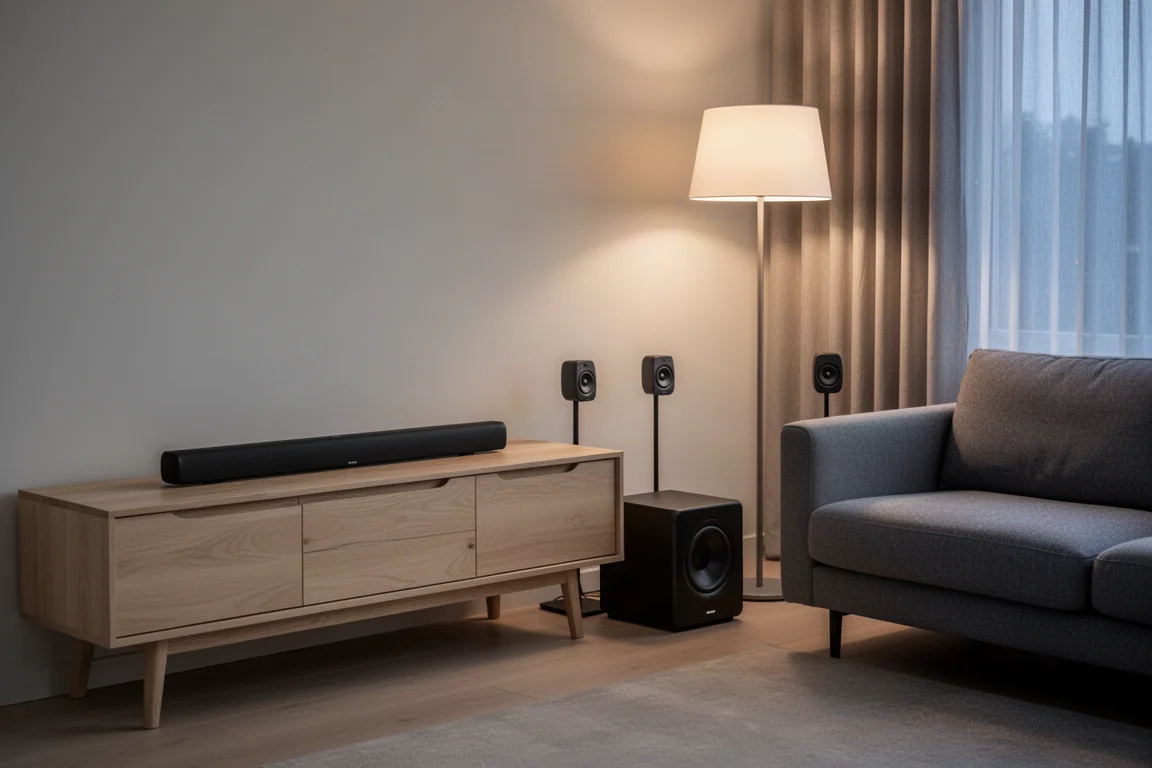
The detachable rear surrounds are wireless and rechargeable, offering roughly ten hours of playtime before they dock magnetically into the bar for a recharge that takes about three hours. They do a convincing job of recreating elevation in the soundstage, but the subwoofer is the standout: the low-end weight exceeds what the price point suggests. Because rear surrounds are optional add-ons on most competing systems, including the Sonos and Sony options, this package stands out for upfront value. There are no extra wires or power connections to plan around, which makes it one of the most convenient routes to a complete Atmos setup.
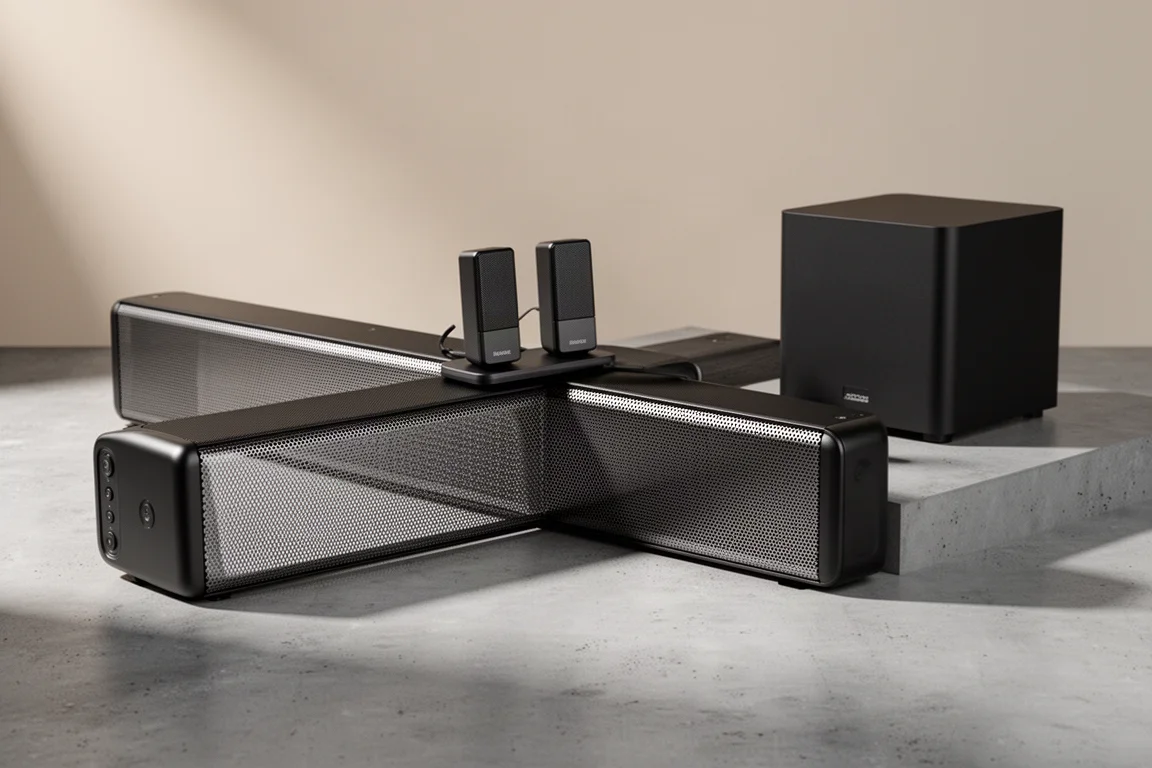
Sony HT-A7000
Sony’s flagship HT-A7000 delivers a true 7.1.2 surround experience from the bar alone. Priced a little above the JBL and still under $1,500, it supports both Dolby Atmos and DTS:X and includes a built-in subwoofer that produces respectable bass. X-Balance speaker technology maximizes the diaphragm area of the woofer to reproduce punchier, clearer low frequencies with minimal distortion, so neither a subwoofer nor rear speakers are strictly necessary if living space is a concern.
For buyers who want more, the system expands to 9.1.2 with the optional SA-SW5 wireless subwoofer and SA-RS3S wireless rear speakers, which together add around $1,000 to the total. That combination performs noticeably better in a medium to large room, with deeper bass extension and a wider soundstage that makes directional effects such as footsteps behind the viewer far more convincing. Music playback benefits from DSEE Extreme, a digital enhancement engine that analyzes compressed files for lost harmonics and restores them toward near high-resolution quality in real time. USB, Wi-Fi, LDAC over Bluetooth, Spotify Connect, Apple AirPlay 2 and Chromecast are all supported, along with wireless multi-room streaming through Google Assistant or Amazon Alexa.
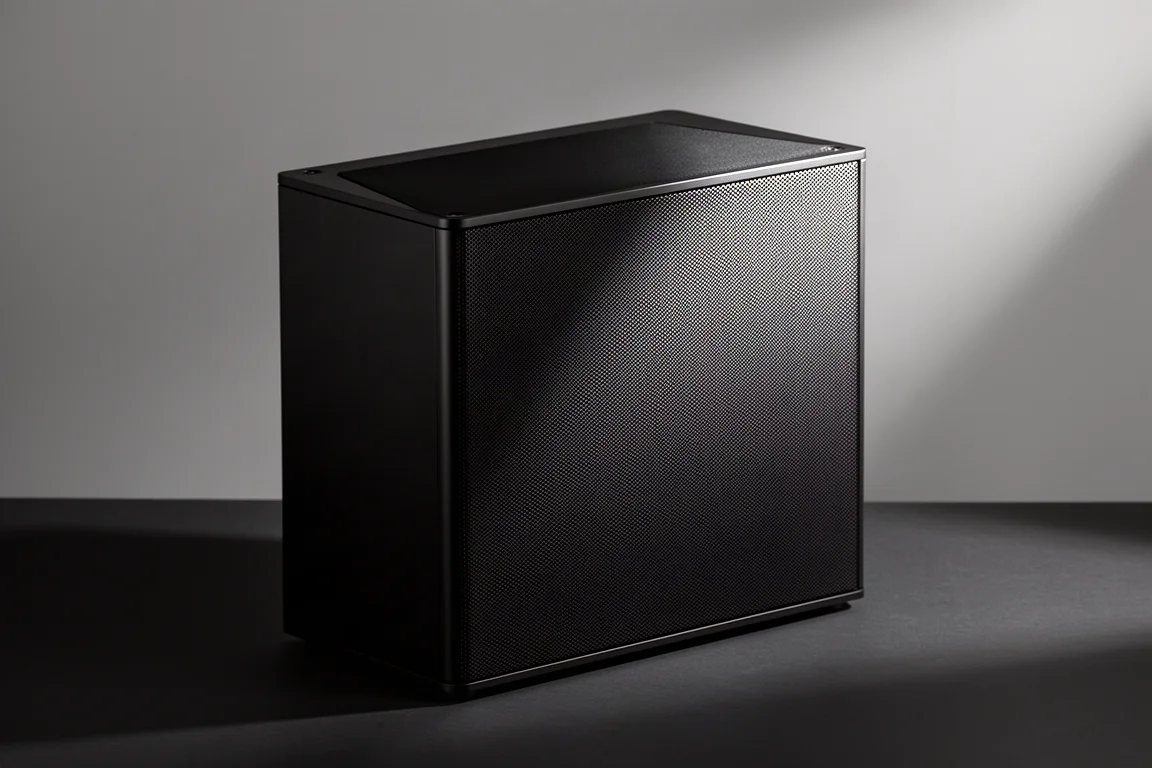
Samsung HW-Q950A
The Samsung HW-Q950A is a true 11.1.4-channel Dolby Atmos and DTS:X system, and it bundles a matching wireless subwoofer and a wireless rear speaker kit in the box. That places it in the same $1,600 category as a Sonos Arc paired with a Sonos Sub, but Samsung includes the rear surrounds as well. A total of 22 speakers work together, 15 of them inside the bar itself. Nine front-facing drivers, each channel using a tweeter and two mid-range drivers for the left, center and right, create a clear ear-level soundstage.
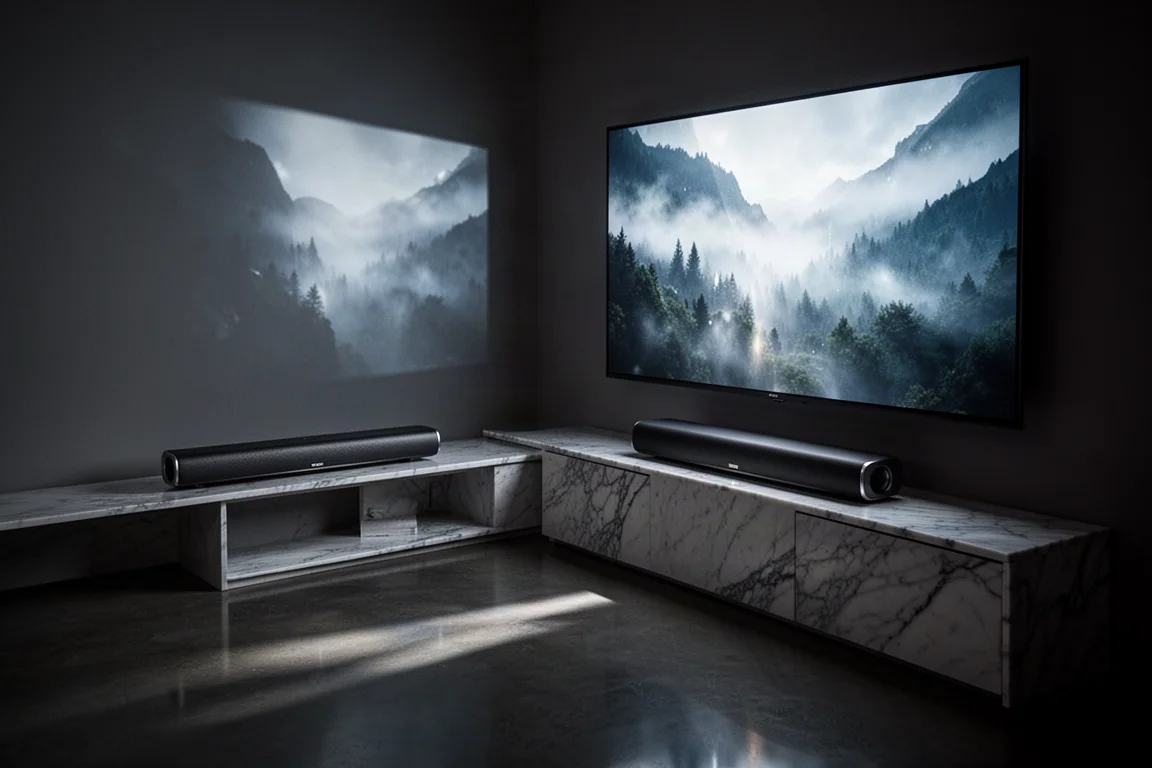
Additional full-range side-firing drivers throw sound at the angles of the room, four full-range up-firing speakers reproduce elevation, and four more side-firing drivers sit in the rear speakers to cover ear level from behind. The included subwoofer delivers solid weight on movie effects with enough impact for a family room or bonus room, though it is less accomplished with music than the JBL Bar 9.1 or a Sony HT-A7000 paired with the SA-SW5. Adaptive Active Voice Amplifier analyzes each scene and automatically emphasizes dialogue, and Game Mode Pro sharpens positional cues such as footsteps approaching from behind. The SmartThings app connects the bar to a network for control alongside other compatible devices.
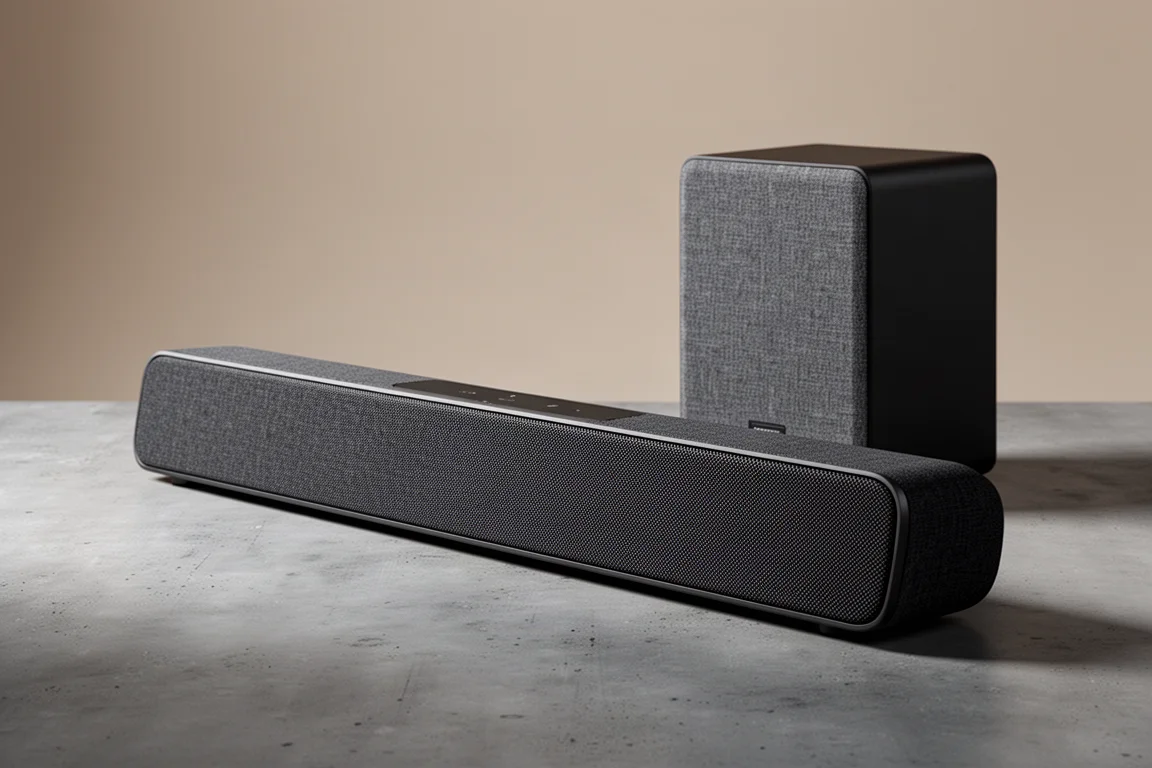
Klipsch Cinema 1200
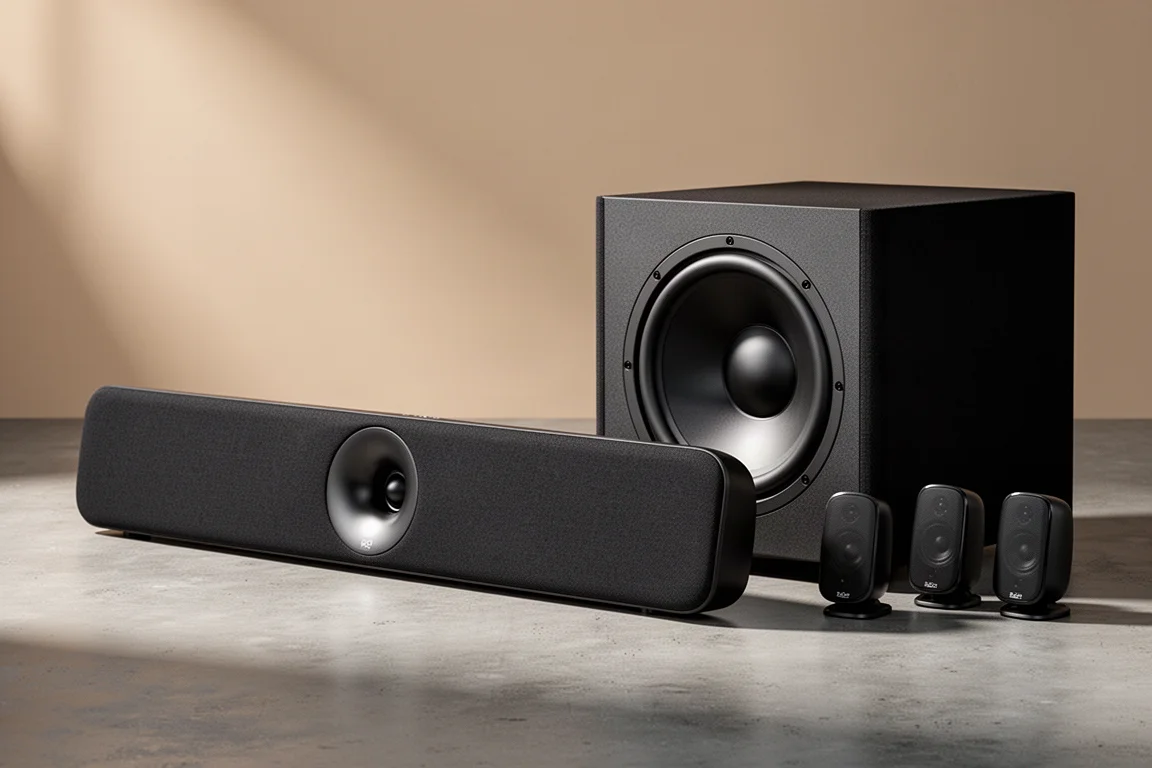
The Klipsch Cinema 1200 packs 16 speaker drivers across the complete system, and its driver design draws on principles from the Reference Premiere series. A one-inch titanium horn-loaded tweeter, using the Tractrix horn geometry found in some of Klipsch’s most expensive speakers, gives the dedicated center channel exceptionally clear dialogue for movies and television without relying on digital processing tricks.
For less than $2,000, the package includes the horn-loaded soundbar, a subwoofer with a 12-inch down-firing driver, and side speakers built exclusively for the Cinema 1200 with Atmos drivers on top, producing 5.1.4 channels of three-dimensional sound. Klipsch’s virtualization technology allows the system to decode Atmos content up to 7.1.4 channels, which adds headroom for future formats. As a complete premium surround package for the money, it is a strong single-purchase answer for buyers who want the full array of speakers without assembling a component system.
Sennheiser Ambeo Soundbar
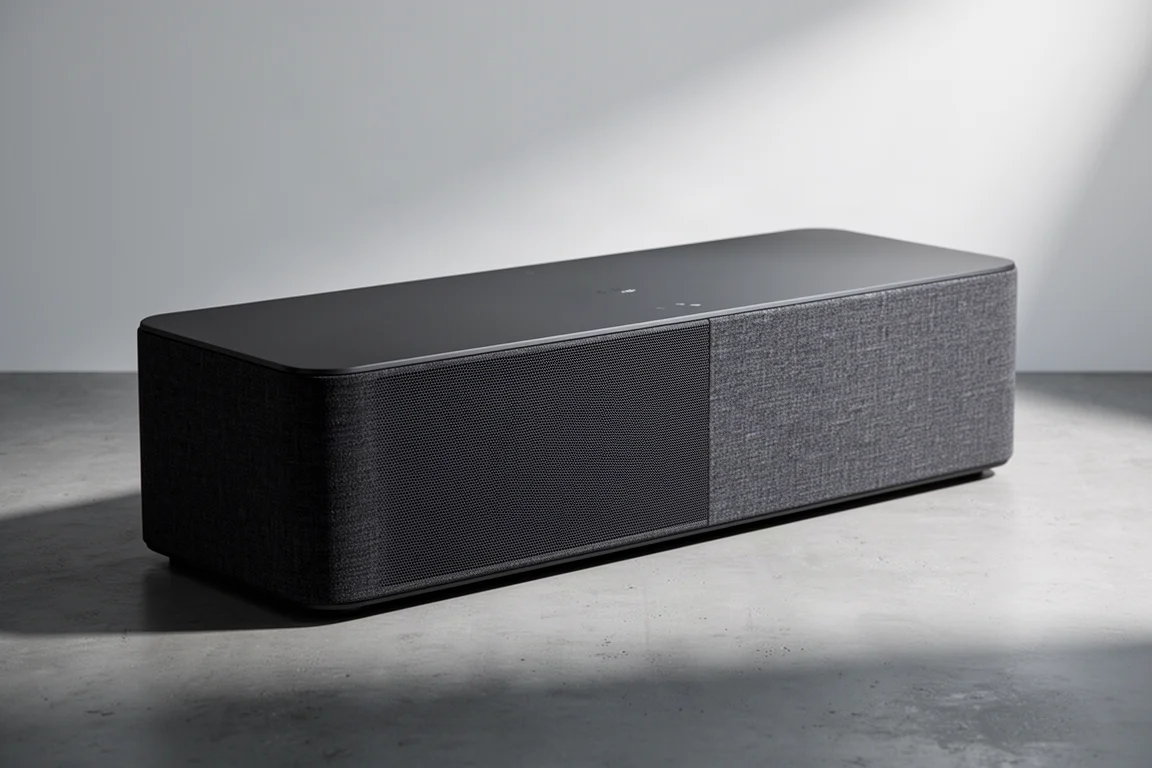
The Sennheiser Ambeo Soundbar sits at the top of this list at just under $2,500. It is not inexpensive, but it delivers a complete end-to-end 5.1.4 Dolby Atmos experience from a single unit, reproducing deep low frequencies without a subwoofer at all. There is an output for connecting one, but the bar itself reaches down to 30 Hz and extends up to 20 kHz.
Thirteen high-end drivers handle that range: six long-throw woofers produce the 30 Hz bass, five high-end tweeters cover the room with high-fidelity sound, and two top-firing drivers create the sense of vertical elevation. The result is one of the most convincing three-dimensional home audio experiences available from a single soundbar. Advanced room calibration in the Sennheiser Smart Control app allows a studio-grade experience to be personalized, and microphones built into the bar capture the unique acoustic properties of the room to shape a spacious, tailor-made soundstage. For buyers who want the best available performance for both cinema and music in an all-in-one system, the Ambeo is hard to beat.
Buying Advice
Choosing between these six comes down to how much space and budget you want to commit. If a clean, minimal setup matters most, the Sony HT-A7000 and the Sennheiser Ambeo Soundbar both deliver immersive sound from a single unit, with the Ambeo going furthest on bass and musicality. If you would rather have every speaker included from day one, the JBL Bar 9.1 offers the strongest upfront value, the Samsung HW-Q950A adds channel count and gaming features at a higher price, and the Klipsch Cinema 1200 brings horn-loaded clarity and a 12-inch subwoofer to a complete premium package.
The Sonos Arc is the pick for buyers who want a system they can grow over time. Adding the Sonos Sub, or rear speakers, or both, extends the system gradually, and Trueplay keeps the sound tuned to the room as it changes. Whatever the choice, every bar on this list will transform movies, gaming and music compared with the thin sound that comes from a flat-screen television alone, and each will perform a little differently depending on the room it lives in.
Conclusion
There is no single best Dolby Atmos soundbar here, only the one that fits your room, your budget and your appetite for expansion. The JBL Bar 9.1 covers the complete package at the lowest cost, the Samsung HW-Q950A maximizes channel count and features, the Klipsch Cinema 1200 prioritizes dialogue clarity and low-end output, the Sony HT-A7000 and Sennheiser Ambeo Soundbar keep the footprint minimal, and the Sonos Arc offers the clearest upgrade path. Any of them will deliver the immersion that Atmos content deserves.
Further reading
Related Reviews
Home Audio
Aperion Novus Tower and Center Review: Punchy Home Theater Sound With Real Refinement
A close look at the Aperion Novus tower and center speakers, from their layered paint finish and punchy bass to the 4-ohm load and what the price actually buys.
Home Audio
Arendal 1610 Tower Review: Flagship Dynamics in a Room-Friendly Tower
A compact floorstanding tower with three 8-inch aluminium woofers, a 5-inch carbon midrange, and the kind of bass heft usually reserved for much larger speakers.
Home Audio
Arendal 1723 S THX Review: A Reference Speaker Built Like a Tank
A practical look at the Arendal 1723 S THX, a sealed, THX-certified speaker with exceptional build quality, a very flat top end, and a midrange that responds beautifully to EQ.