Hi-Fi Audio
Best DACs and Streamers of 2024: Eight Digital Components Worth Buying
Eight digital components, from a $30 desktop DAC to a reference converter near $1,200, with the strengths and trade-offs to weigh before buying.
Introduction
A DAC or a streamer is often the component that decides how good the rest of a digital system can sound, and it is also the category with the widest spread of prices. A small desktop box can cost less than a family dinner, while a reference-grade converter can cost as much as a respectable pair of speakers.
This guide covers eight digital components that stood out in 2024, ordered from the most affordable to the most expensive. Some are pure DACs, some are streamers, and one is a music server that sits in a category of its own. Each entry explains what the product does well and which listener it suits.
How These Picks Were Chosen
Every product here earned its place by solving a specific problem rather than by chasing a specification sheet. Four things mattered most.
First, input flexibility. A DAC that accepts HDMI ARC, optical, coaxial and USB can slot into a television setup, a disc player and a computer without extra hardware. Second, output options. Balanced outputs, single-ended outputs and headphone jacks determine how easily a unit integrates with an existing amplifier or a headphone collection. Third, power supply headroom. Several of these components run from an external 5V or 12V supply, which means an owner can later add a linear power supply without replacing the device. Fourth, day-to-day usability: a remote control, a readable display or a well-built control app makes far more difference across a year of ownership than a small change in measured noise.
Price was considered last, and deliberately. The point of this list is not to argue that the most expensive option wins, but to identify the price band where a buyer gets the most useful capability for the money.
Best Budget DAC: SMSL PS100
At roughly $30, the SMSL PS100 is the least expensive component in this guide and one of the most flexible for the money. It uses a Sabre 9023 DAC chip, accepts optical and coaxial digital inputs, and outputs through standard RCA connections. What sets it apart from other budget converters is an HDMI ARC input, which is unusual at this price.
That combination creates three practical use cases. The first is simply a very tight budget: a listener who needs a working, clean-sounding DAC for a desktop or starter system. The second is television audio, where a TV can send sound over ARC to an older amplifier or a set of powered speakers that has no ARC connection of its own. The third is disc playback: an inexpensive DVD player with a coaxial digital output can be paired with the PS100 to build a capable CD transport for a small total outlay, since the analog output built into budget players is usually the weakest part of the chain.
The PS100 also runs on 5V power, so an owner can upgrade it later with a linear power supply. It is not a flagship converter, but at this price the feature set is difficult to argue with.
Best Dual-DAC Value: Douk Audio DAC-Q1
The Douk Audio DAC-Q1 takes a different approach to value: it contains two separate DAC sections in one chassis. One side runs an AKM 4493 converter, the other a Sabre 9038, and the two genuinely sound different. Listeners who enjoy comparing converter character can do it without buying two devices.
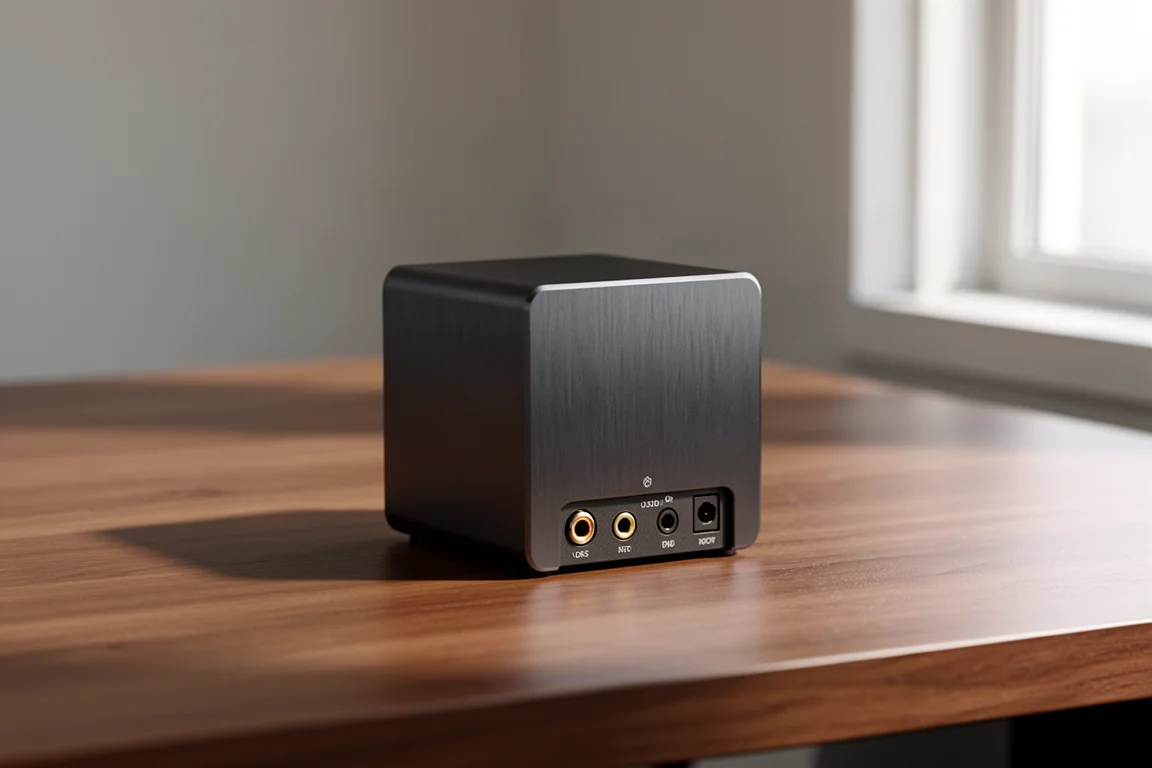
Around the back, the Q1 covers the essentials with coaxial, optical and full-size USB inputs. It ships with a remote control and a clear display. Power comes from an external 12V supply, which again leaves the door open to a linear power supply upgrade later. There are also two swappable op-amps, so the analog stage can be tuned rather than accepted as delivered.
The front panel lighting gives the unit some personality, particularly in a low-lit room. For a component that sits under $200, the combination of dual converter sections, remote control and user-replaceable op-amps is unusual.
Best DAC and Headphone Amp Combo: SMSL DL100
The SMSL DL100 answers a common question: what if a single small box could handle both conversion and headphone listening? It combines a DAC with a headphone amplifier and keeps the price under $200.
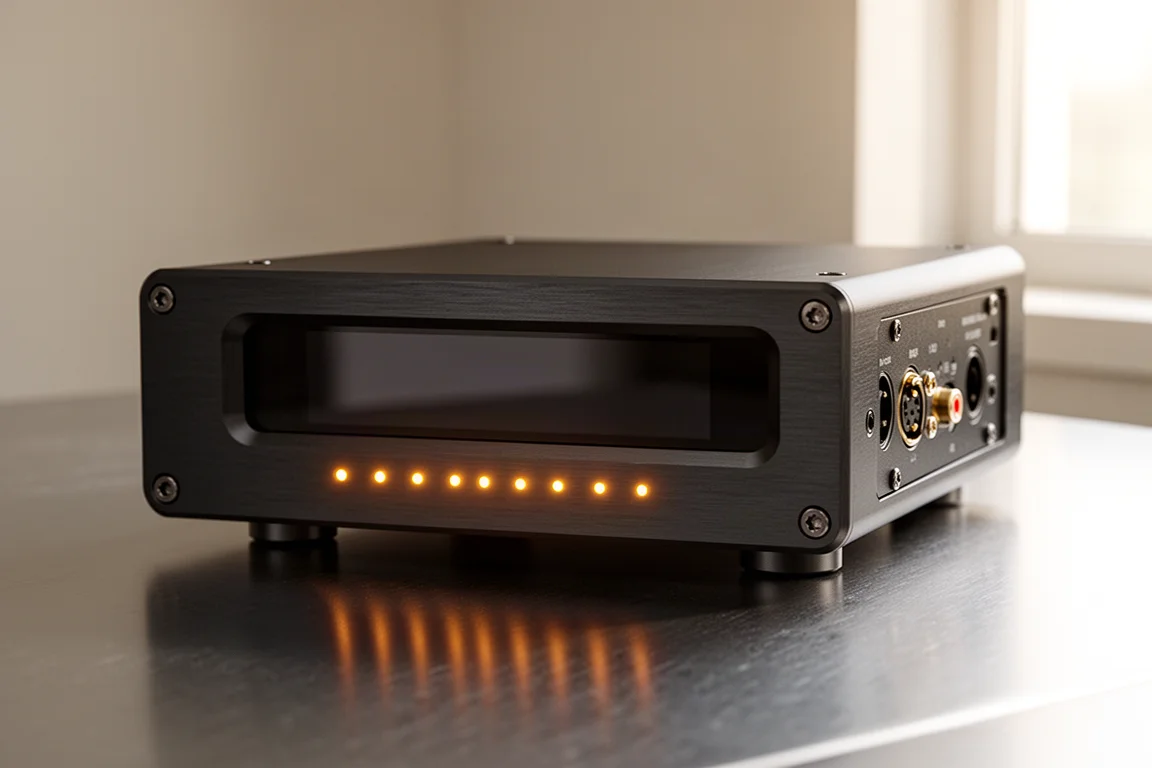
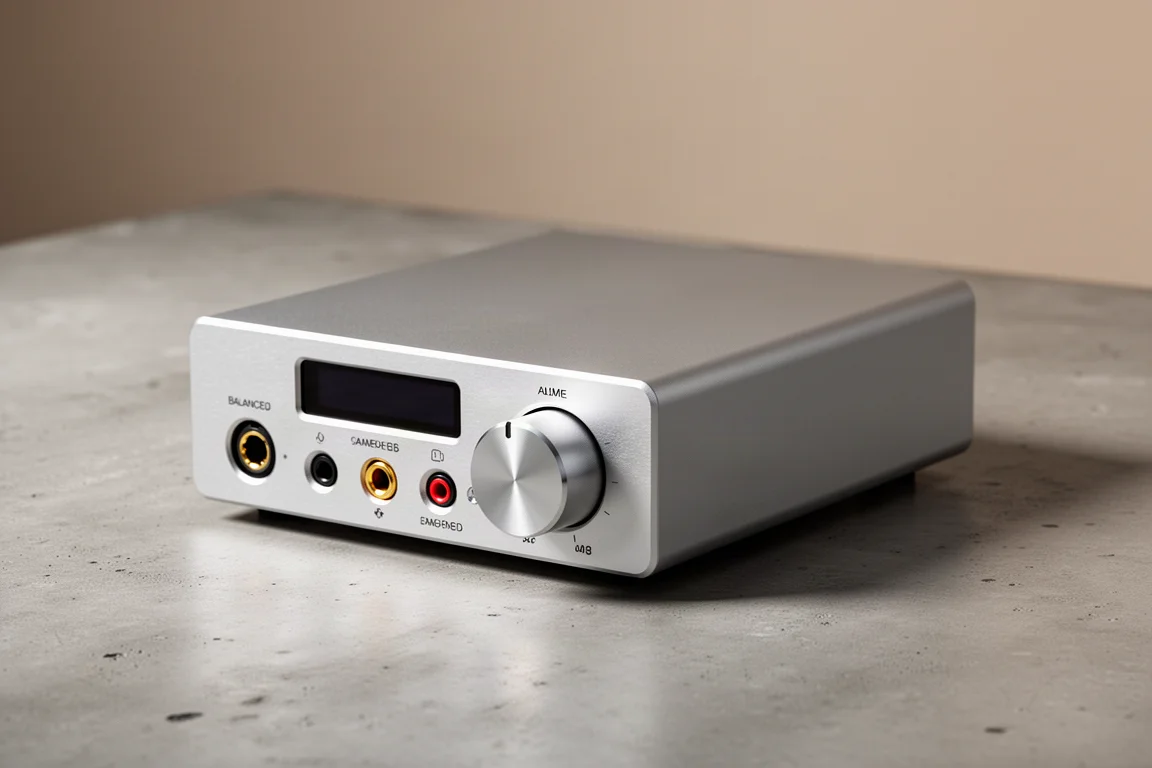
The DAC section uses a Cirrus Logic CS43131 chip, a design that handles conversion and headphone amplification together. That approach keeps costs down while still offering useful power, with rated output of 3W into 16 ohms and 1.5W into 32 ohms, which is enough for most headphones. Around the back you get HDMI input, coaxial, USB and optical connections, along with a remote control. On the front there are balanced and single-ended line outputs plus both balanced and single-ended headphone outputs. Filter roll-off options and built-in EQ settings add some room for tuning.
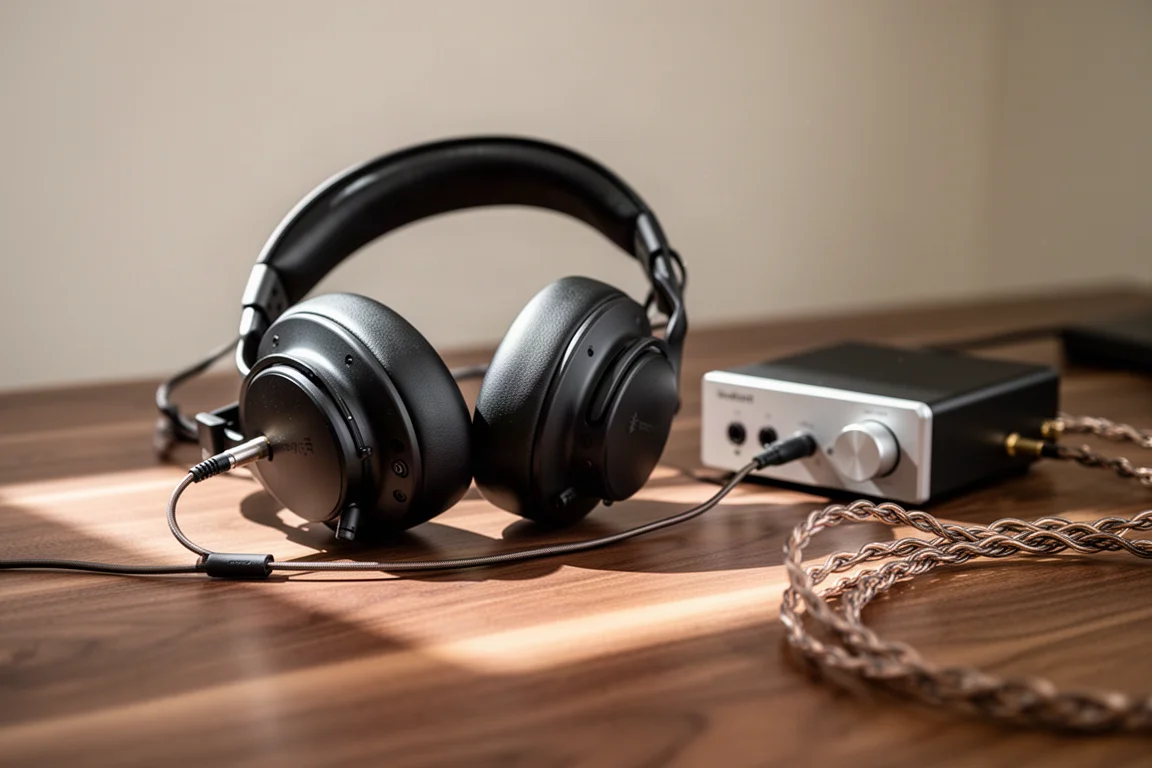
For a desk setup where one box needs to drive headphones and feed powered speakers or an amplifier, the DL100 covers both jobs without a second purchase.
Best Compact Desktop DAC: Topping D50 III
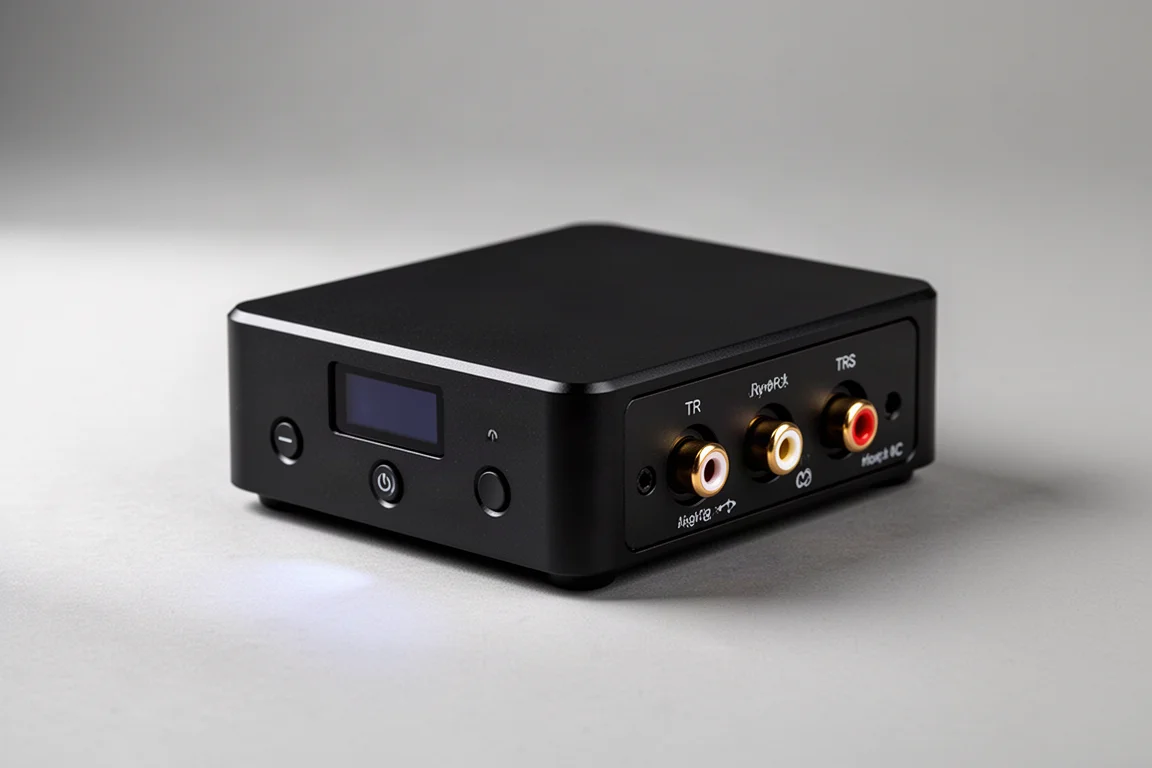
The Topping D50 III is the smallest component in this guide and is priced just over $200. The footprint is minimal, but the connectivity is not: USB-C, optical and Bluetooth with LDAC support are all included, alongside a fully functional remote control and a display.
The converter inside is a Sabre 9039 Q2M, and the output section provides balanced TRS connections right next to single-ended RCA outputs, which is rare in a chassis this size. Power comes from a 5V supply, so a linear power supply or a battery bank can be used instead of the stock adapter. A battery supply in particular can bring the noise floor down, depending on the battery used.
The main caveat is the display. It is small and best viewed from close range, so buyers who want to read track information from across a room should look at a larger unit.
Best Music Server: Roon Nucleus One
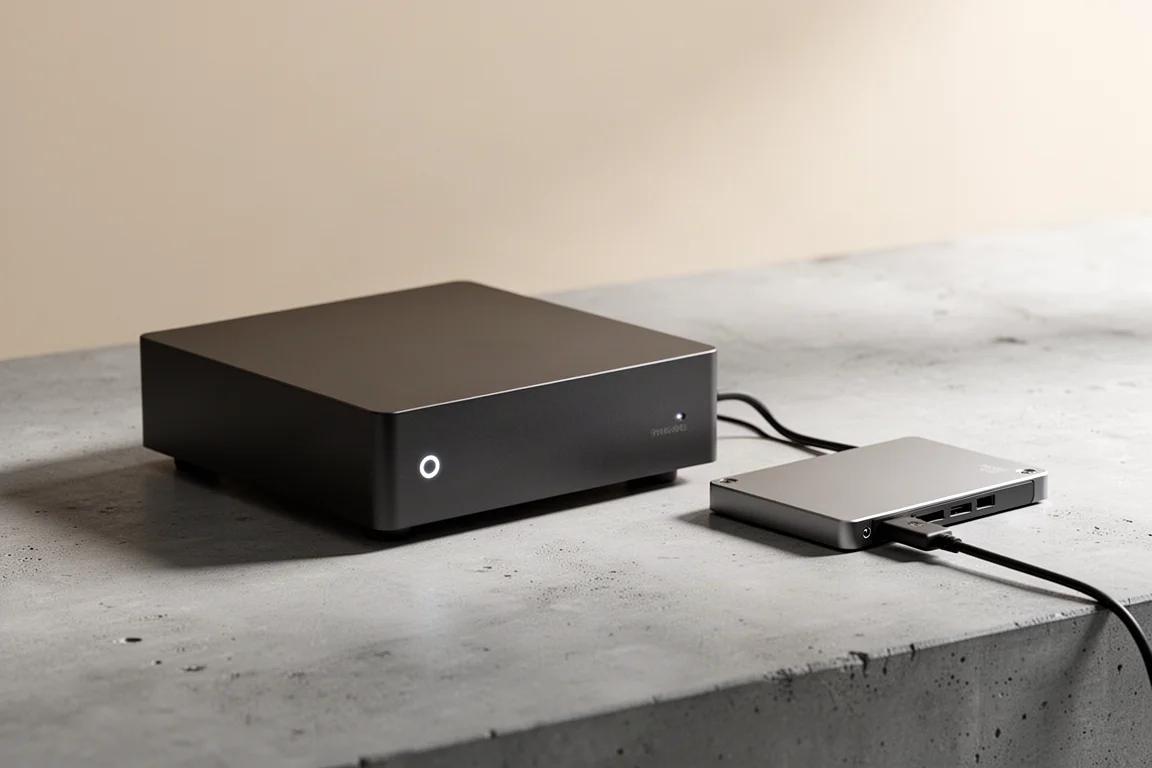
The Roon Nucleus One is not a DAC and not a streamer in the conventional sense, but it deserves a place here because of what it replaces. It is a dedicated server for Roon, the music management and playback platform, and it can host a personal library stored on hard drives or SSDs attached to the unit.
Previously, running Roon meant installing the software on a computer or a small mini PC and keeping that machine running as a server. The Nucleus One removes that project for about $500. If you already use Roon, it is a straightforward way to give the platform a dedicated, always-on home. If you do not use Roon, this product will hold little interest, and that is worth being honest about before buying.
Best All-Round Streamer: WiiM Ultra
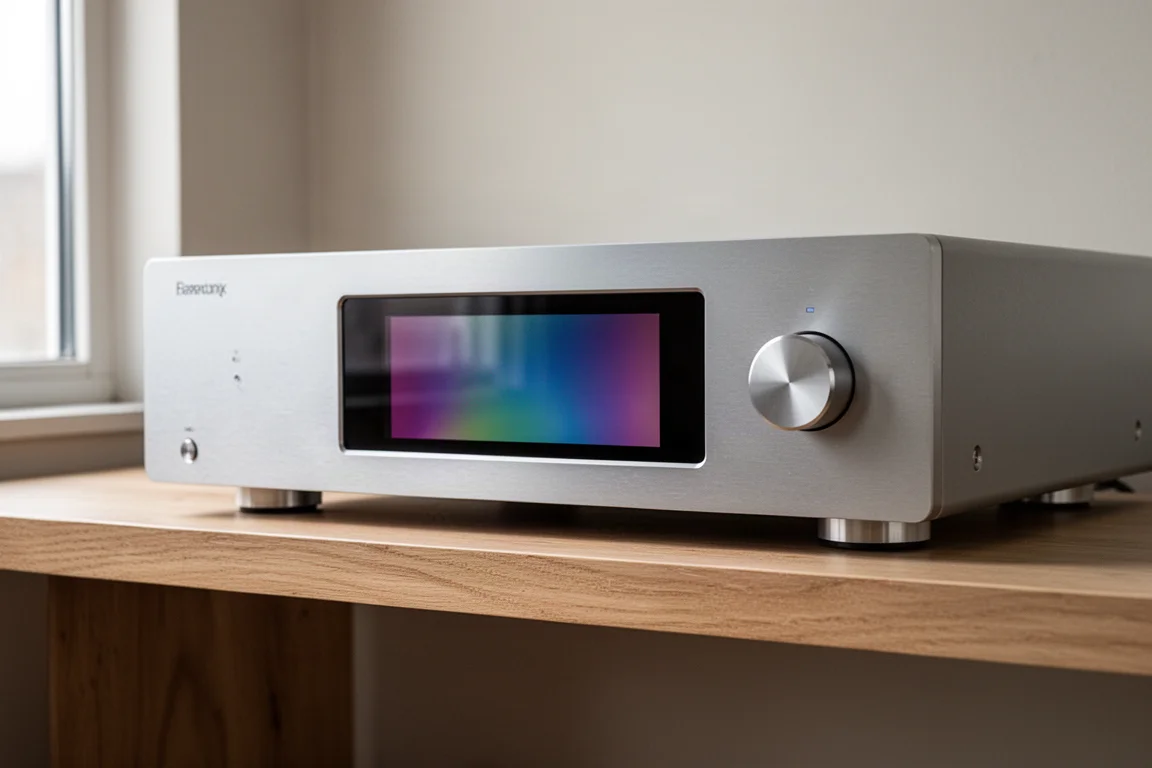
The WiiM Ultra is the most disruptive product in this roundup. It combines a streamer, a preamplifier and a digital hub in one chassis, with HDMI input, a subwoofer output and active bass management built in.
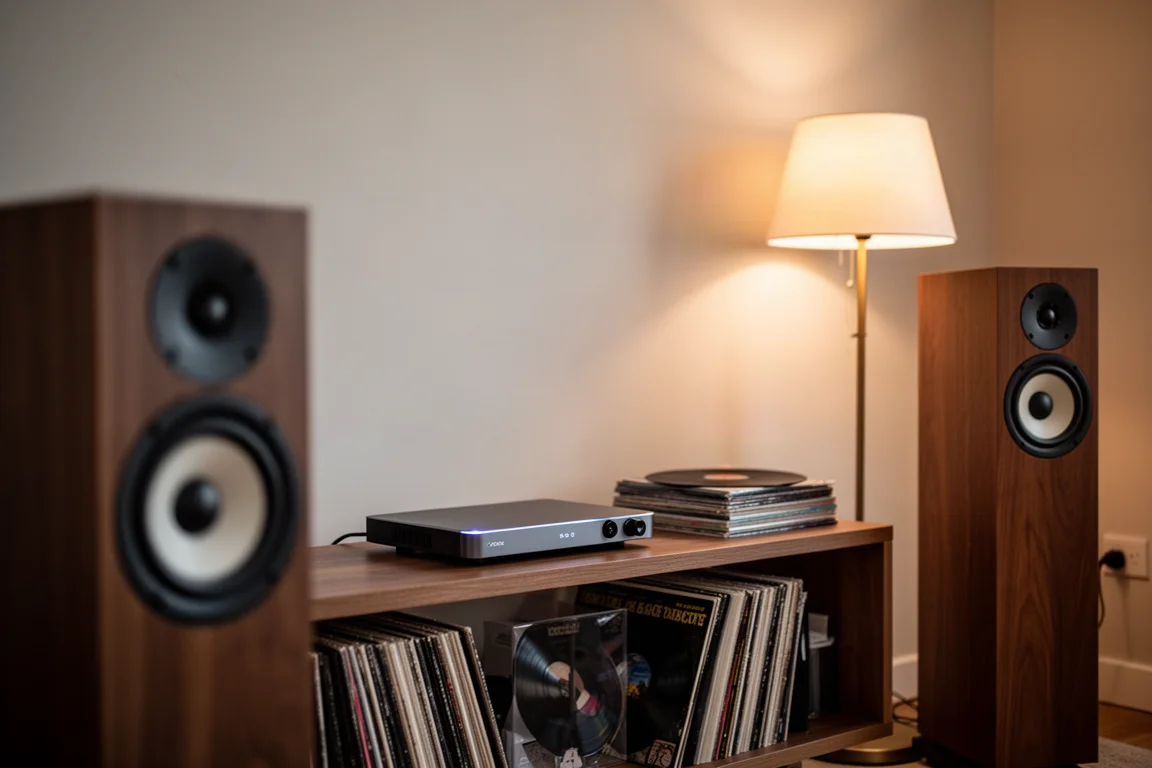
The control platform is one of the easiest to live with in the category, and it supports Amazon Music, Tidal, Qobuz and a long list of other streaming services. Room correction, parametric EQ and graphic EQ are all included, and a front screen displays album artwork. In practice it works as the centre of a digital system rather than a single-purpose box.
Two trade-offs are worth knowing. Its internal clocking and jitter handling are not as strong as those of more expensive streamers, although a USB output lets an owner clean that up with an external converter. Using the USB output also disables bass management, and a firmware update is expected to address that limitation. Even with those caveats, the WiiM Ultra has pushed other manufacturers toward more affordable streaming options, which benefits every buyer in this category.
Best Premium Streamer: Cambridge Audio CXN100
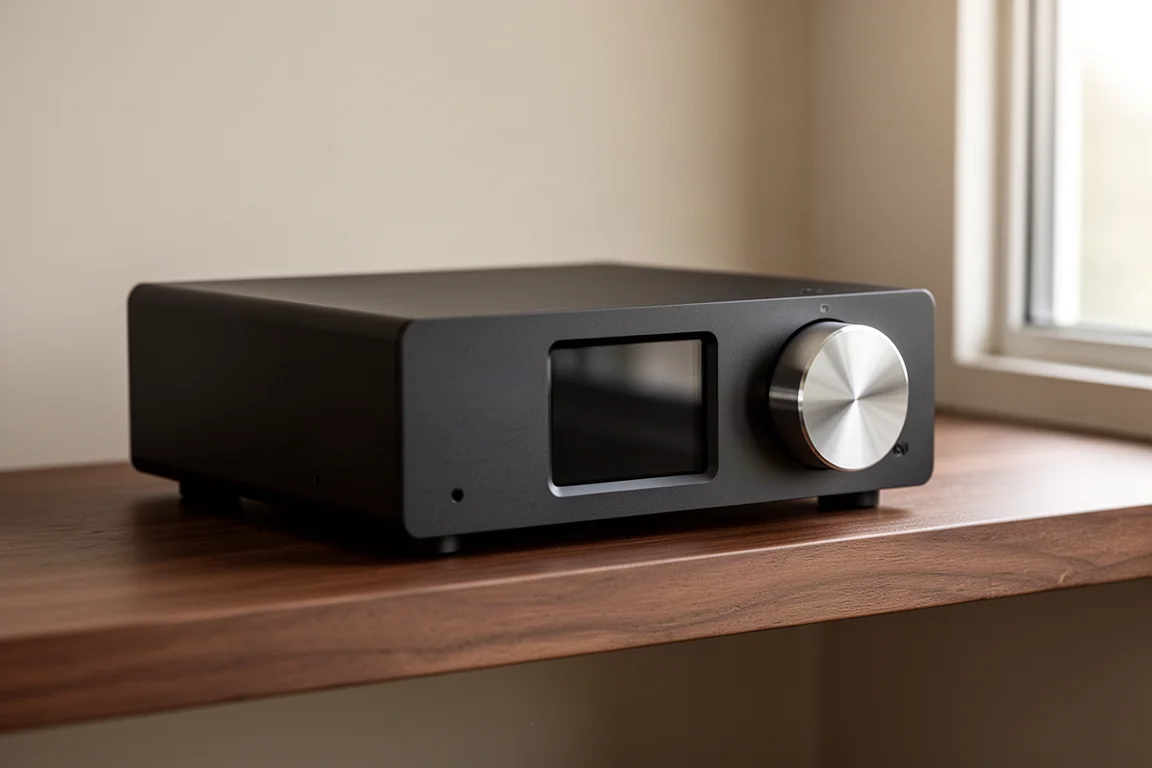
The Cambridge Audio CXN100 is the more expensive streamer in this guide at $1,100, and much of that price is visible in the design. The front panel combines a display with tactile buttons, which makes the unit feel closer to a classic CD player than to a network device, and that physical interaction is a genuine part of its appeal.
Connectivity is extensive: balanced outputs, single-ended RCA outputs, optical and coaxial inputs and outputs, a USB input, and a ground lift switch for troubleshooting hum. Bluetooth is included, and a hard drive can be attached to stream a personal library. Control runs through the StreamMagic app, and conversion is handled by a Sabre 9028 DAC chip.
The internal design explains the price gap compared with budget streamers. Clocking and jitter control are notably stronger, the chassis is larger, and the power supply uses traditional through-hole construction rather than cost-cutting shortcuts. Buyers who value build quality alongside streaming performance will find the CXN100 easy to justify.
Best DAC at Any Price: Geshelli Labs Daisy
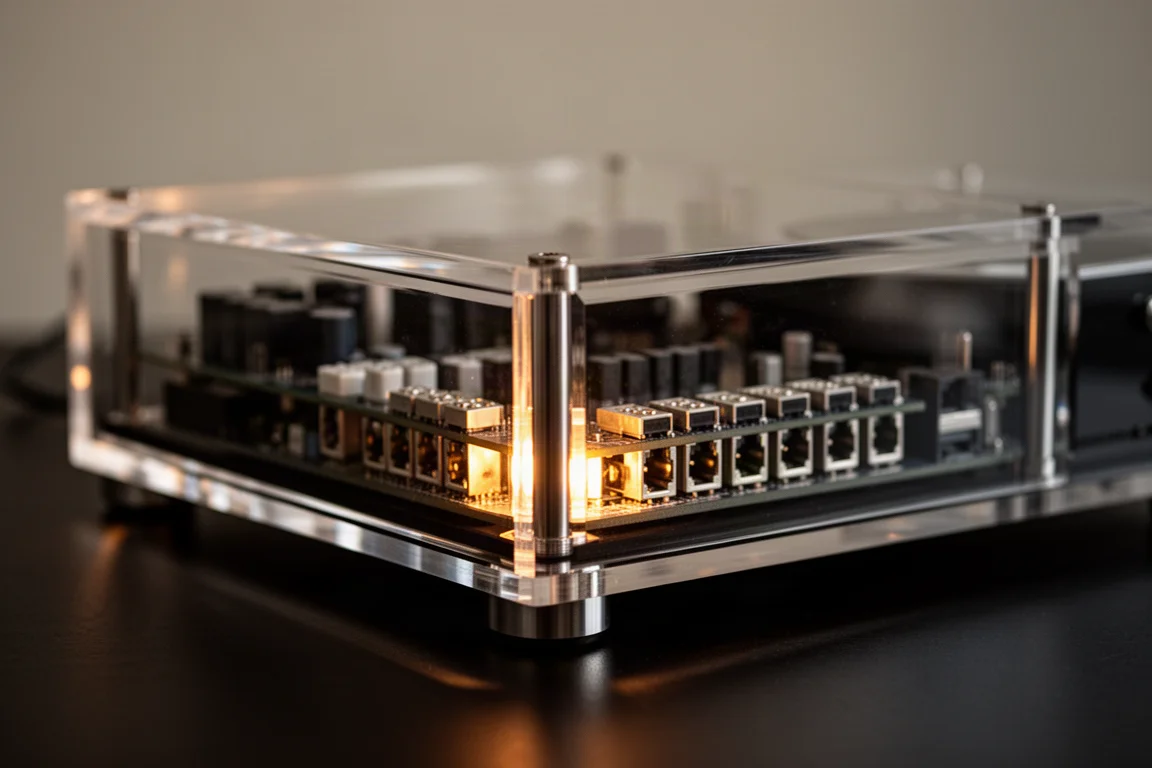
The Geshelli Labs Daisy is the best-sounding DAC in this guide and the most expensive, at roughly $1,100 to $1,200 depending on configuration and enclosure. The acrylic enclosure is a popular choice because the internals remain visible, and the industrial design is unmistakably its own.
The Daisy offers a wide range of inputs and outputs and can distribute digital signals to multiple destinations, a feature that matters to listeners running more than one converter or zone. Eight op-amps are socketed and swappable. Stock, the unit ships with Texas Instruments op-amps that perform well; owners who want to push further can install Sparkos op-amps, though all eight must be changed and the upgrade is not inexpensive. Power comes from an external 12V supply, so a linear power supply can be added.
The sound is analog and full-bodied, and the design is unapologetically individual. Each unit is made to order in the United States by a family-run operation in Florida, and the Daisy is worth seeking out for a listen if the opportunity appears.
Buying Advice Before You Choose
Start with the problem you are solving. If a television needs to feed an older amplifier, an ARC-equipped budget DAC such as the SMSL PS100 handles it for very little. If you want one box for headphones and speakers at a desk, the SMSL DL100 does both. If you are building a streaming system and want the widest feature set for the money, the WiiM Ultra is the natural starting point.
Then decide how much you care about clocking and build quality. The Cambridge Audio CXN100 and the Geshelli Labs Daisy cost several times more than the budget options, and the difference shows up in jitter control, power supply design, output flexibility and, in the Daisy’s case, a distinctly analog presentation. Those are real advantages, but they only pay off in a system that can reveal them.
Finally, look at power. Several units here run on external 5V or 12V supplies, which makes a linear power supply an upgrade path rather than a replacement purchase. If you like to refine a system over time, that headroom is worth factoring into the decision.
Conclusion
The digital front end has never offered more choice at the entry level. A capable DAC now costs less than a modest accessory, and streamers like the WiiM Ultra deliver features that were once reserved for far more expensive components. At the top of the range, the Cambridge Audio CXN100 and the Geshelli Labs Daisy show what careful clocking, generous power supplies and hand-built construction still buy. Match the product to the problem you actually have, and any of these eight will serve a digital system well.
Further reading
Related Reviews
Hi-Fi Audio
Accuphase C-57 vs Allnic H-7000V: Two High-End Phono Stages Compared
A fully balanced solid-state phono stage with a pitch-black noise floor meets a tube design built for well-loved records. Here is how to choose between them.
Hi-Fi Audio
Active vs Passive Hi-Fi: Five Components for a Modern System
Five components that define modern active and passive hi-fi systems, with the strengths, trade-offs and setup details worth weighing before you buy.
Hi-Fi Audio
Advance Paris A10 Apex Review: A Hybrid Integrated Amplifier That Covers a Lot of Ground
A French hybrid integrated amplifier with a class A tube preamp stage, analogue power meters, and an internal DAC and phono stage good enough to make extra boxes unnecessary.