Automotive
Best Engine Coolant Additives: 9 Products Tested for Cooling, Corrosion, and Boiling Points
Nine coolant additives and ready-to-use coolants go head to head in heat exchange, corrosion resistance, boiling point, freezing point, and water pump lubrication tests.
Introduction
Standard antifreeze does a decent job, but sometimes it simply is not enough to keep an engine cool, especially in hot climates, heavy towing, or track use. Coolant additives promise lower engine temperatures, often by 20 to 30 degrees Fahrenheit, and many also claim corrosion protection and water pump lubrication. To find out which ones actually deliver, nine products were put through a consistent set of tests: heat exchange performance, reserve alkalinity for corrosion resistance, boiling and freezing points, and water pump lubrication.
How the Testing Worked
Every product was tested under the same conditions. Corrosion resistance was measured by checking the initial pH of each mixture, then adding a single drop of sulfuric acid to see how well each coolant neutralized the acid. A higher reserve alkalinity means the coolant can better fend off acid buildup and protect metal surfaces from corrosion. Plain water started at a pH of 6.49, which is too low for a cooling system and will cause corrosion over time. Peak antifreeze, used as the control for products designed to blend with it, started at 8.47 and dropped to 6.26 after one drop of acid.
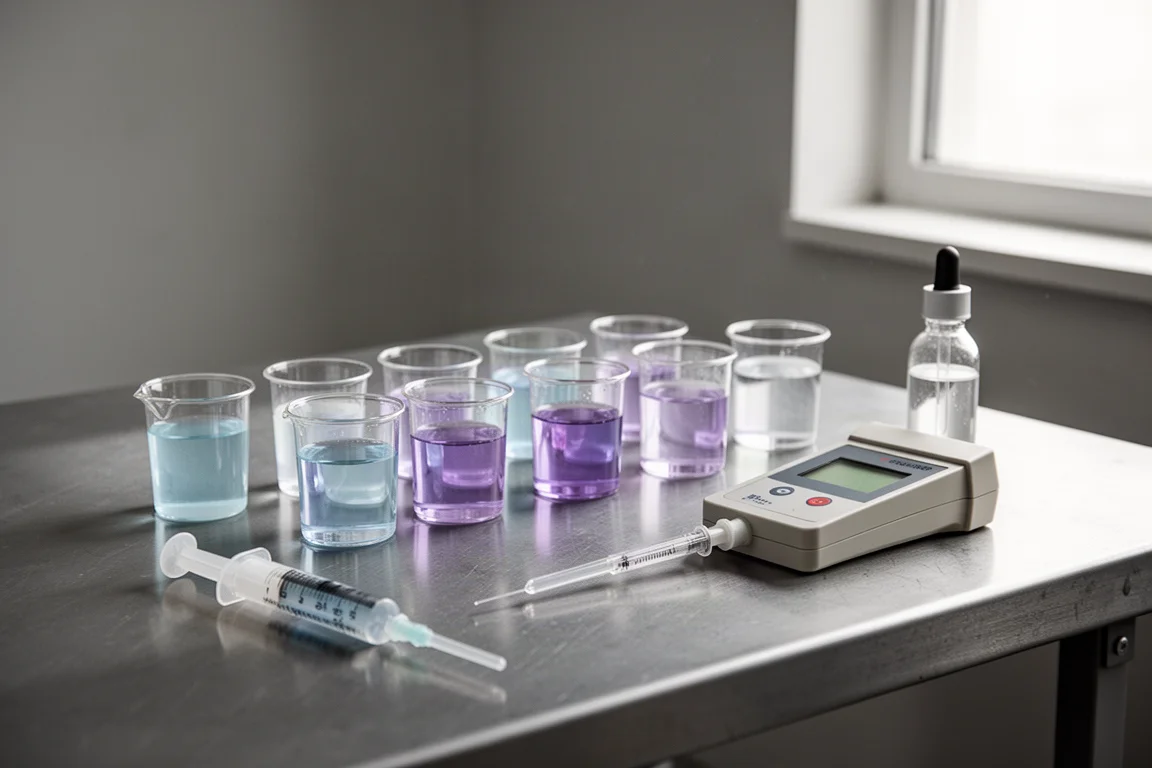
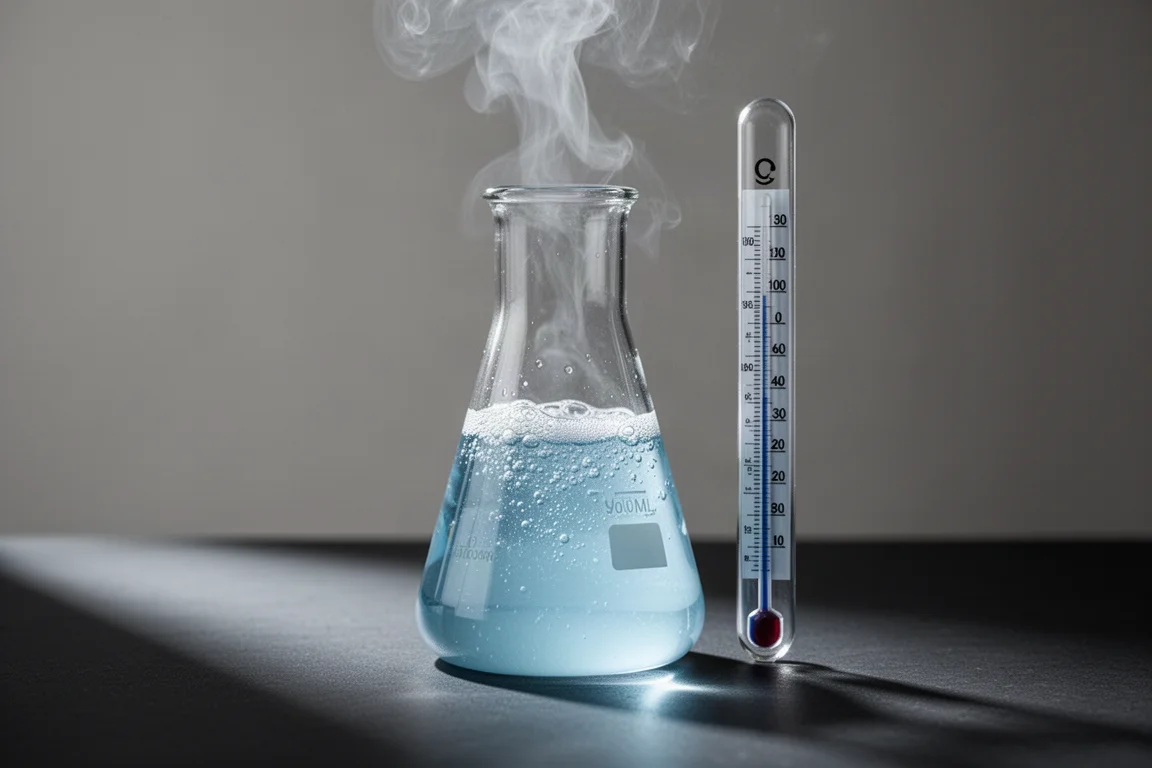
Boiling points were measured with a calibrated thermometer in separate flasks, freezing points were tested in a freezer taken down to as low as -47 degrees Fahrenheit, and water pump lubrication was measured using a friction tester with wear scar measurements under a microscope. Heat transfer was tested with a custom rig circulating coolant through a heater core with a fan, summing the temperature drops at three measurement points.
Rislone HyperCool
At around $8, Rislone HyperCool claims to reduce engine temperature by up to 25 degrees Fahrenheit, cool cylinder head temperature by up to 75 degrees, lubricate water pump seals, and prevent corrosion of all metals commonly found in cooling systems, including aluminum. It is made in the USA.
In testing, it mixed well with antifreeze and kept the same starting pH of 8.47, finishing at 6.39 after the acid test, slightly stronger than the unboosted antifreeze. Its boiling point of 233.4 degrees Fahrenheit was second best among the antifreeze-based products, and its heat exchange score of 14.4 degrees beat the antifreeze control’s 10.7. Wear scar of 6.42 mm was only marginally larger than plain antifreeze, so lubrication was not hurt.
DEI Radiator Relief
Priced near $10, DEI Radiator Relief claims engines can run up to 30 degrees cooler, and it combats both electrolytic and chemical corrosion, reduces existing scale buildup, and protects against radiator core damage. The dosing is one ounce per quart of capacity, and it is made in the USA.
It started with a slightly higher pH than antifreeze at 8.57 and held a 6.42 after the acid drop, moving into an early lead in reserve alkalinity. Boiling point measured 230.1 degrees Fahrenheit, and the heat exchange score of 14.3 was about the same as Rislone. The wear scar of 6.48 mm trailed Rislone only slightly, confirming it does not harm the antifreeze’s lubrication.
VP Racing Cool Down
At around $16, VP Racing Cool Down claims up to 30 degrees of cooling, cylinder head temperature reductions up to 75 degrees, lubrication of vital components, and safety for all radiator systems. It targets racing, street, RV, and tow vehicles, and is made in the USA.
It lowered the antifreeze pH slightly to 8.32 but delivered the best acid resistance yet at 6.44 at that point in testing. The boiling point matched DEI at 230.1 degrees, the heat exchange score came in at 15.5, and the 6.4 mm wear scar was better than both Rislone and DEI. It also stood out as one of the most affordable strong performers overall, with a consistent fourth-place average across all events.
Royal Purple Ice
Royal Purple Ice costs around $17 and claims up to 25 degrees Fahrenheit of cooling, fights corrosion, electrolysis, and erosion, and contains lubricant to protect the water pump. The instructions call for 1 to 2 ounces per quart, and it is made in the USA.
It blended nicely with antifreeze, dropped the pH only slightly to 8.42, and then took the lead at 6.51 after the acid drop. Boiling point of 228.5 degrees was about the same as unboosted antifreeze, the heat exchange score of 15.2 put it in second place at that stage, and its wear scar of 6.4 mm matched VP Racing Cool Down.
Engine Ice
Engine Ice is a ready-to-use coolant rather than an additive, priced around $26. The label is sparse, but it lists boilover protection up to 26 degrees Fahrenheit and freeze protection to minus 28 degrees Fahrenheit.
It posted the highest baseline alkalinity of any product at 9.04, which is perfectly fine for a cooling system, and held 6.44 after the acid drop, tying VP Racing Cool Down. Its heat exchange score of 16.2 took the lead among the antifreeze-blend products, but the boiling point of 225.4 degrees was lower than plain antifreeze, and the 6.49 mm wear scar was among the larger ones. In freezing tests it froze solid first, at around -32 degrees Fahrenheit.
VP Racing Stay Frosty
Priced around $34, VP Racing Stay Frosty is a 100 percent water-based formula that claims up to 30 degrees of temperature reduction, meets ASTM corrosion standards, and contains water pump lubricant. Importantly, it does not protect against freeze-ups.
This is where the results got interesting. Stay Frosty delivered the single best heat exchange score of the entire test at 19 degrees cumulative temperature difference, well ahead of everything else. But its reserve alkalinity was the weakest, starting at pH 8.0 and falling to 5.84 after one drop of acid, the most acidic result recorded. Its boiling point sat near water’s at around 212.4 degrees, it was completely frozen before the other products in the freezer, and its low viscosity did not translate into better wear scar results, landing at 6.45 mm.
Mishimoto Liquid Chill
At around $48, Mishimoto Liquid Chill is a 50/50 premixed, ready-to-use coolant. It claims reduced engine wear, corrosion inhibition, and the ability to seal pinhole leaks, works in all radiator types and all gasoline and diesel engines year round, and lists boilover protection up to 265 degrees Fahrenheit and freeze protection to minus 26 degrees Fahrenheit. It is made in the USA.
Its baseline pH of 8.14 was lower than most competitors, but its reserve alkalinity was by far the best among the water-based products, holding 6.9 after the acid drop. It delivered the smallest wear scar of the entire test at 6.09 mm, just edging out Red Line, and took second place in heat exchange at 17.5 degrees. Its boiling point of 223.5 degrees was about 5 degrees below antifreeze, though, and it still had crystals at the top after extended freezer exposure.
Red Line Super Cool
Red Line Super Cool costs around $50 and is a 50/50 pre-diluted antifreeze ready to use, with no water to add. It claims up to 20 degrees of temperature reduction, is fortified with water wetter, and is supposed to last 5 years or 150,000 miles. It is made in the USA.
The starting pH was 8.25, slightly more alkaline than Liquid Chill, and it neutralized acids excellently at 6.87, just behind Liquid Chill. Its boiling point of 229 degrees Fahrenheit outperformed plain antifreeze, heat exchange came in third at 17.1 degrees, and its wear scar of 6.10 mm was effectively tied with Liquid Chill. Across every category, Red Line posted the best average finish of 3.2, making it the strongest all-around performer of the group.
Evans Waterless Engine Coolant
At around $52, Evans is a high-performance waterless engine coolant that boils at 375 degrees Fahrenheit, protects to minus 40 degrees, eliminates engine hot spots, fights corrosion, and lowers system pressure. It is made in the USA. Unlike the others, it does not claim to lower operating temperatures by 20 to 30 degrees, but it was included because of strong reader interest.
The results were dramatic where it counted for it. Evans posted by far the best reserve alkalinity, holding 7.9 after the acid drop, the highest boiling point in the test at close to 388 degrees Fahrenheit at atmospheric pressure, and it stayed liquid in the freezer down to -47 degrees Fahrenheit while everything else froze. The trade-offs: without water present, its heat exchange performance of 10.4 degrees was close to regular antifreeze, and Red Line clearly outperformed it in the lubrication test.
Overall Buying Advice
Every product except plain water posted a safe initial pH of 8 or higher and should not cause corrosion. Nearly all of them also beat the antifreeze control in the heat exchange test, so most of these additives genuinely improve heat transfer through surfactants that lower surface tension and help the coolant wet metal surfaces better.
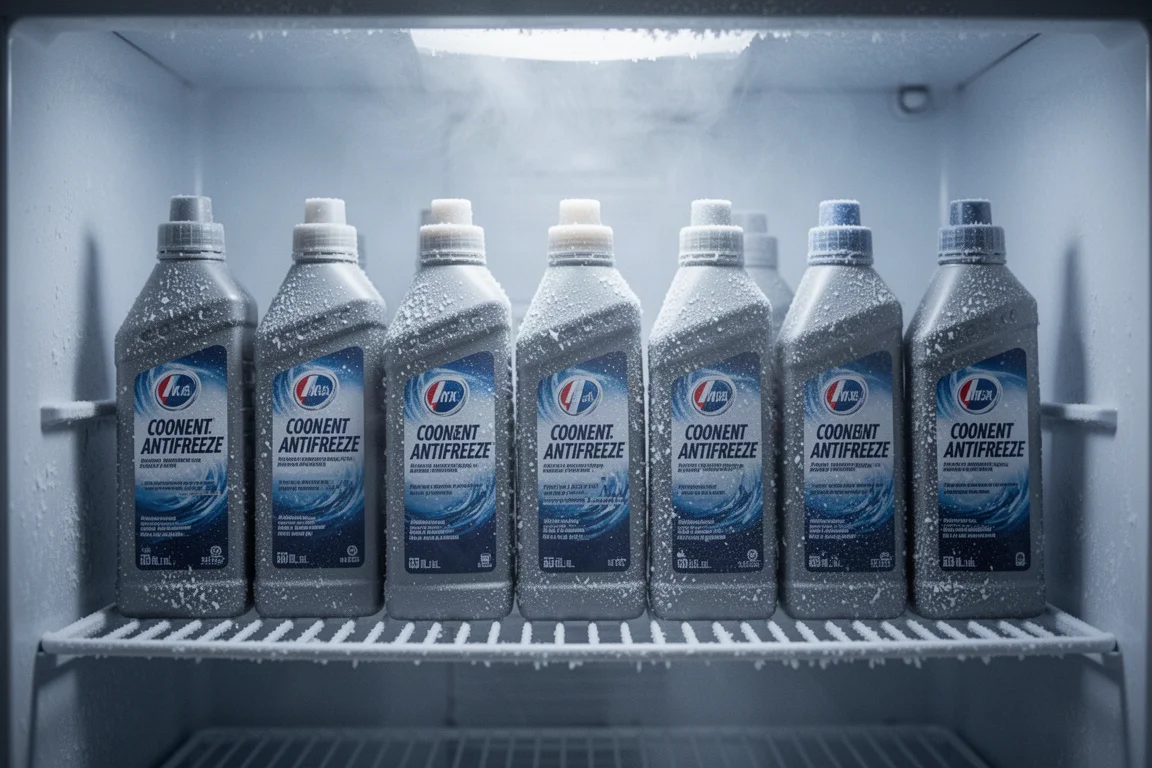
If you want one clear winner, Red Line Super Cool delivered the best average finish across all categories, with Mishimoto Liquid Chill a very close second thanks to the best reserve alkalinity and water pump lubrication among water-based options. VP Racing Cool Down stands out as the affordable pick with a consistent fourth-place average in every event. If your priority is pure cooling performance and you run straight water or never see freezing temperatures, VP Racing Stay Frosty had the best heat exchange score, but its weaker acid resistance and lack of freeze protection limit it. And if your concern is extreme heat and extreme cold rather than lowering operating temperature, Evans Waterless is in a class of its own.
Conclusion
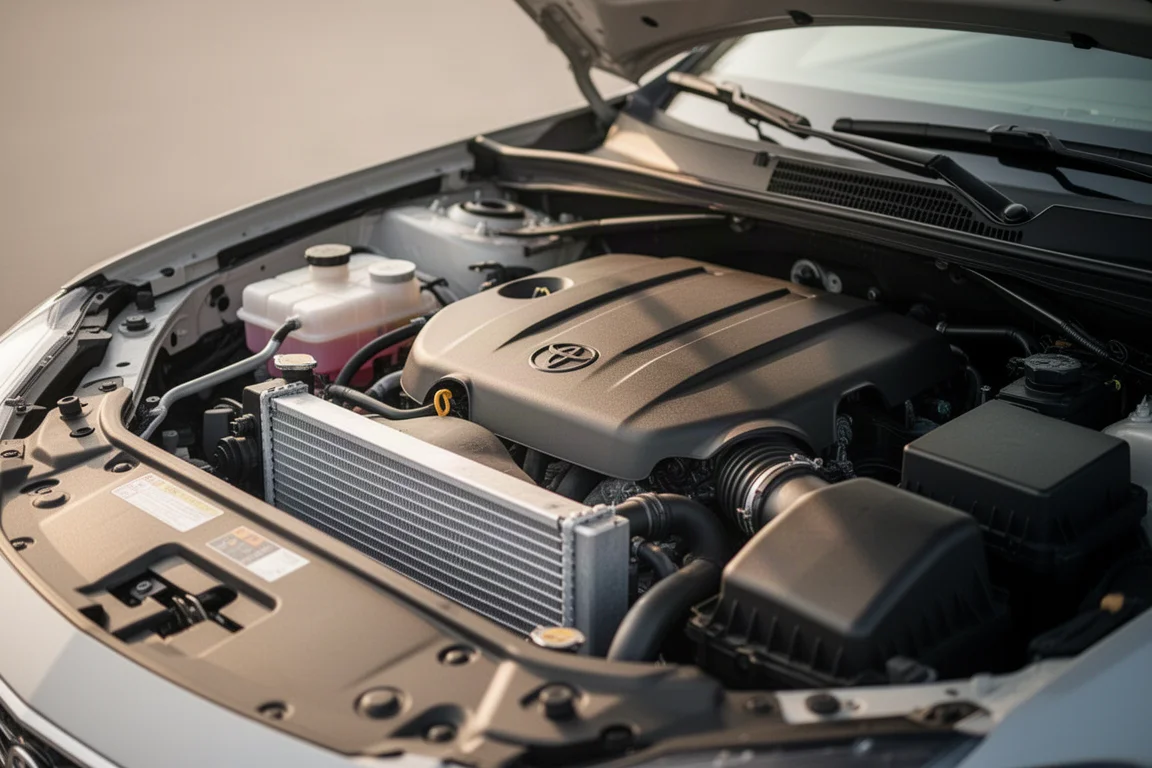
These additives do work. Almost all of them outperformed plain antifreeze at moving heat, and every one of them maintained a corrosion-safe pH. Match the product to your priority: Red Line for the best all-around balance, Mishimoto for corrosion protection and lubricity, VP Racing Cool Down for value, Stay Frosty for maximum cooling in warm climates, and Evans for extreme-temperature protection that nothing else in the test could match.
Further reading
Related Reviews
Automotive
Best Brake Parts Cleaner 2026: 14 Brands Tested for Speed, Cleaning Power, and Residue
We tested 14 brake parts cleaners for evaporation speed, grease removal, sludge breakdown, and residue to find the best value for your garage.
Automotive
Escort ZR6 Laser Jammers: A Hands-On Look at Features and Performance
The Escort ZR6 laser jammers offer compact heads and flexible integration, but the interface leaves room for improvement.
Automotive
LiPower Solid-State Car Battery Review: A Lighter, Longer-Lasting Upgrade
A practical look at the LiPower solid-state car battery, covering its specs, real-world performance, and how it compares to a traditional AGM battery.