Fasteners & Hardware
Best Concrete Anchors: Wedge Anchors vs. Concrete Screw Anchors
Two proven ways to fasten to concrete, with practical guidance on installation, holding strength, and which anchor fits which job.
Introduction
Fastening something to concrete is one of those jobs that looks simple until you are standing in the fastener aisle facing a wall of options. The stakes are real, too. Concrete is hard to fix once you have made a mistake in it, so the anchor you choose matters.
Two anchors cover the majority of everyday jobs: wedge anchors and threaded concrete screw anchors. Both hold seriously well, both are affordable, and both are understandable. The difference comes down to removability, convenience, and how forgiving they are during installation.
How They Compare
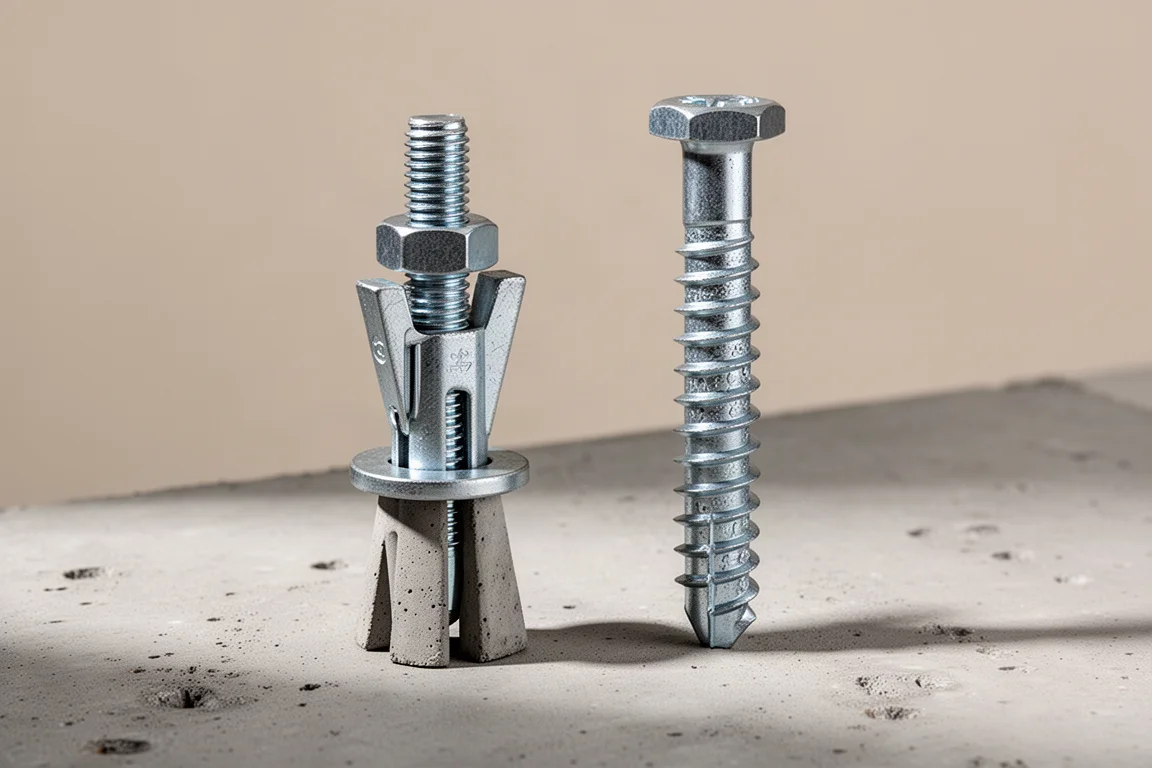
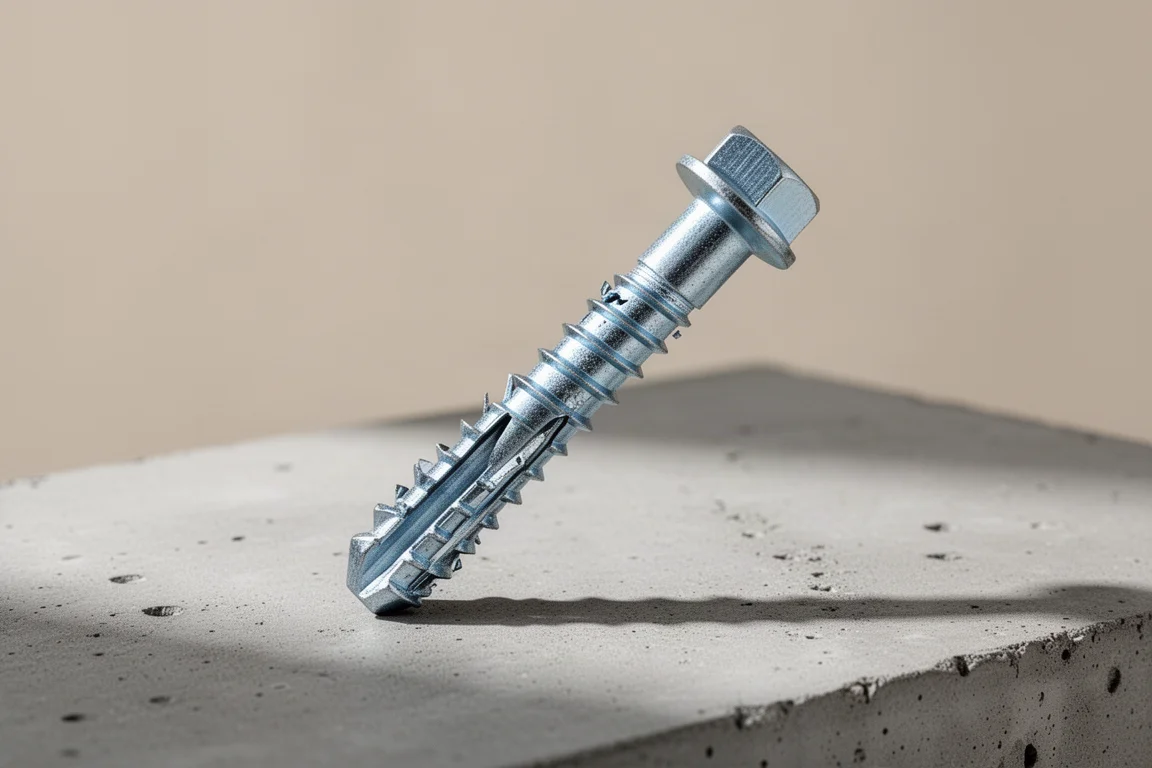
Wedge anchors have been around the longest. Red Head is the brand many people associate with them, so much so that the brand name has become shorthand for the category. Threaded screw anchors, popularized by Tapcon, take a different approach: hard steel that literally cuts its own threads into the hole you drill.
On pure holding power, both wedge anchors and screw anchors deliver seriously high pull-out resistance. The real difference shows up when you want the anchor gone. A wedge anchor essentially never comes out. A screw anchor can be backed out with a drill in reverse, leaving nothing but a clean round hole. That removability is the overwhelming advantage of screw anchors.
Why Hole Preparation Matters
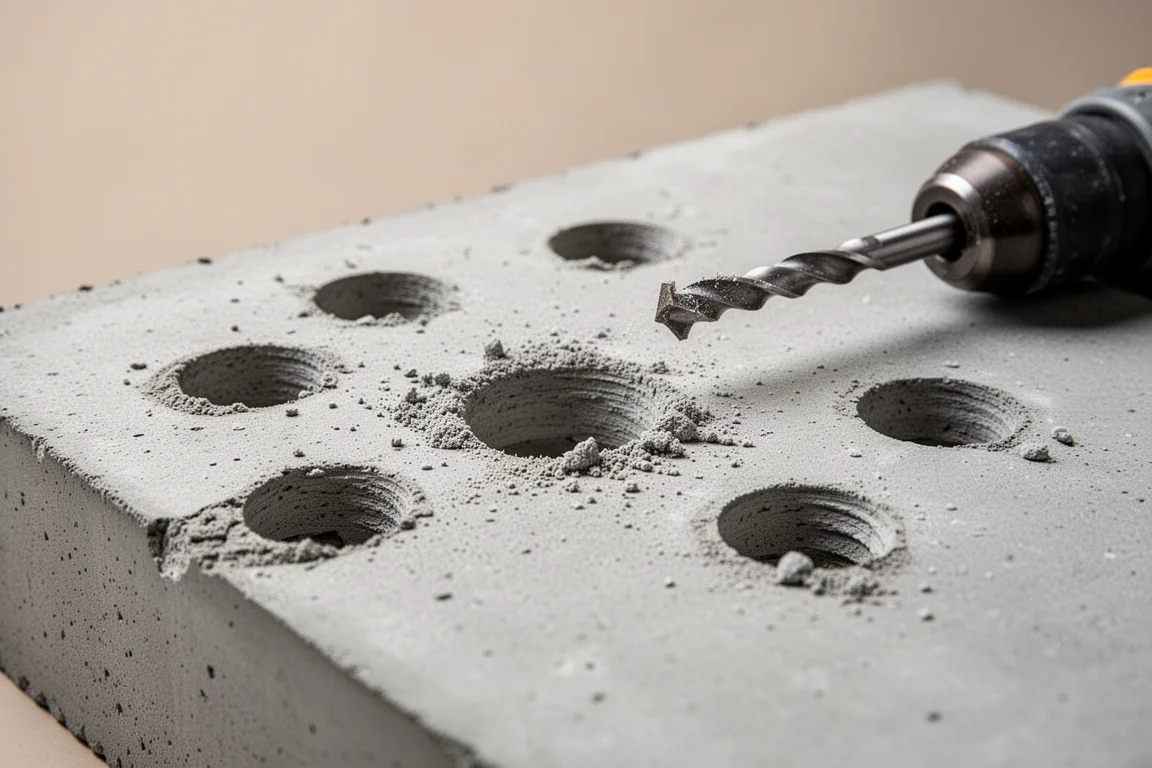
Whichever system you choose, the hole makes or breaks the job.
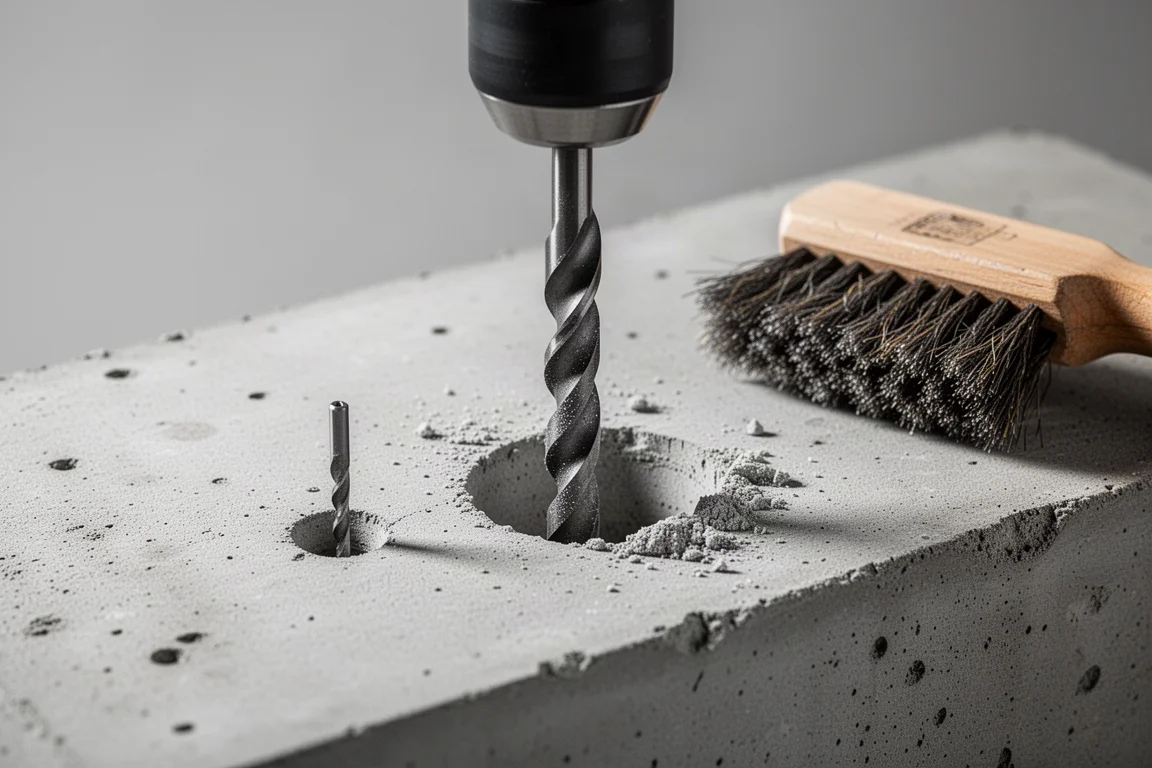
The biggest mistake is not drilling deep enough. Drill a lot deeper than you think you need to, deep enough that the entire bolt could be hammered down flush if necessary. Things get tight down in the hole, and shallow holes lead to anchors that never seat properly.
Cleanliness matters as well. Dust left in the hole compromises holding in both systems, and with epoxy it can make the bond fail entirely. Protect your eyes and your lungs, and ideally use a stiff brush to clean out the inside of the hole.
Red Head Wedge Anchors
Wedge anchors are the workhorse. They are convenient, they do not cost much, and they go in quickly. They are also permanent: once set, they do not come out, so be certain about placement before you commit.
The mechanics are straightforward. A loose sleeve sits around the tapered end of the anchor. As you tighten the nut, the tapered end is drawn up through the sleeve, expanding it so it catches firmly on the sides of the hole. That expansion is what gives wedge anchors their high draw-out strength.
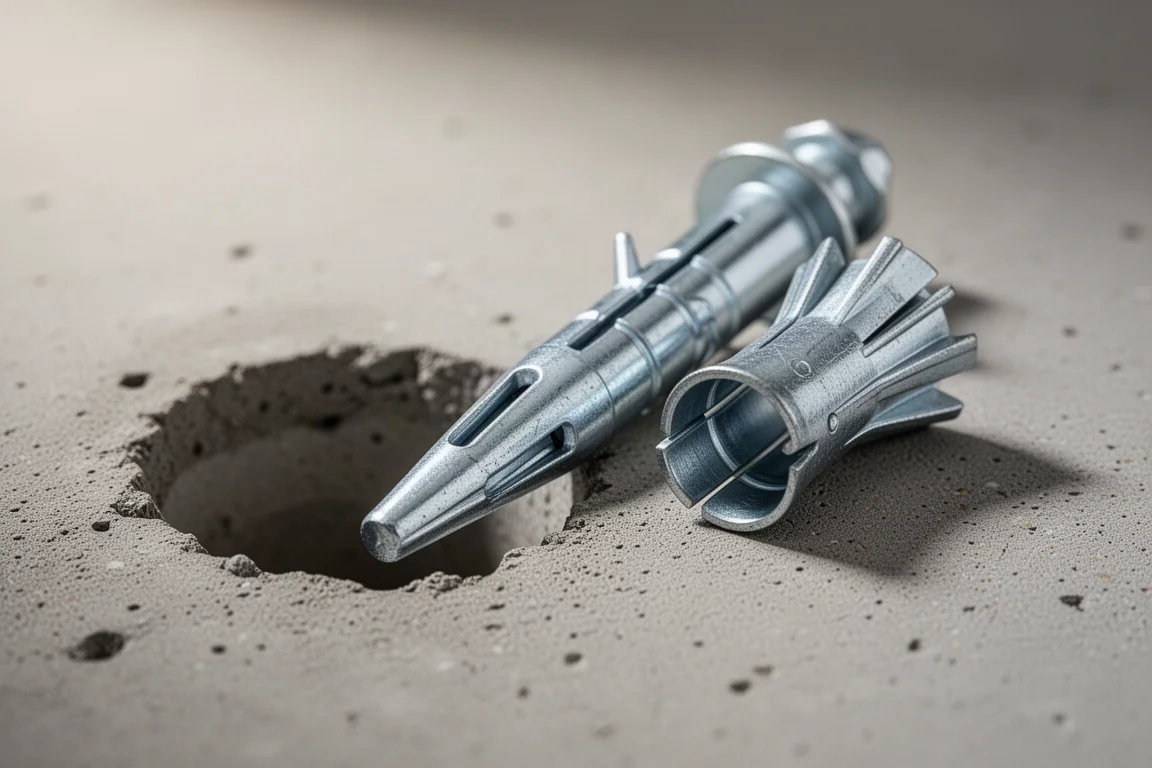
Wedge anchors make the most sense for permanent fixtures: equipment mounts, structural attachments, and anything where the anchor should never budge and you will never need to remove it.
Tapcon Concrete Screw Anchors
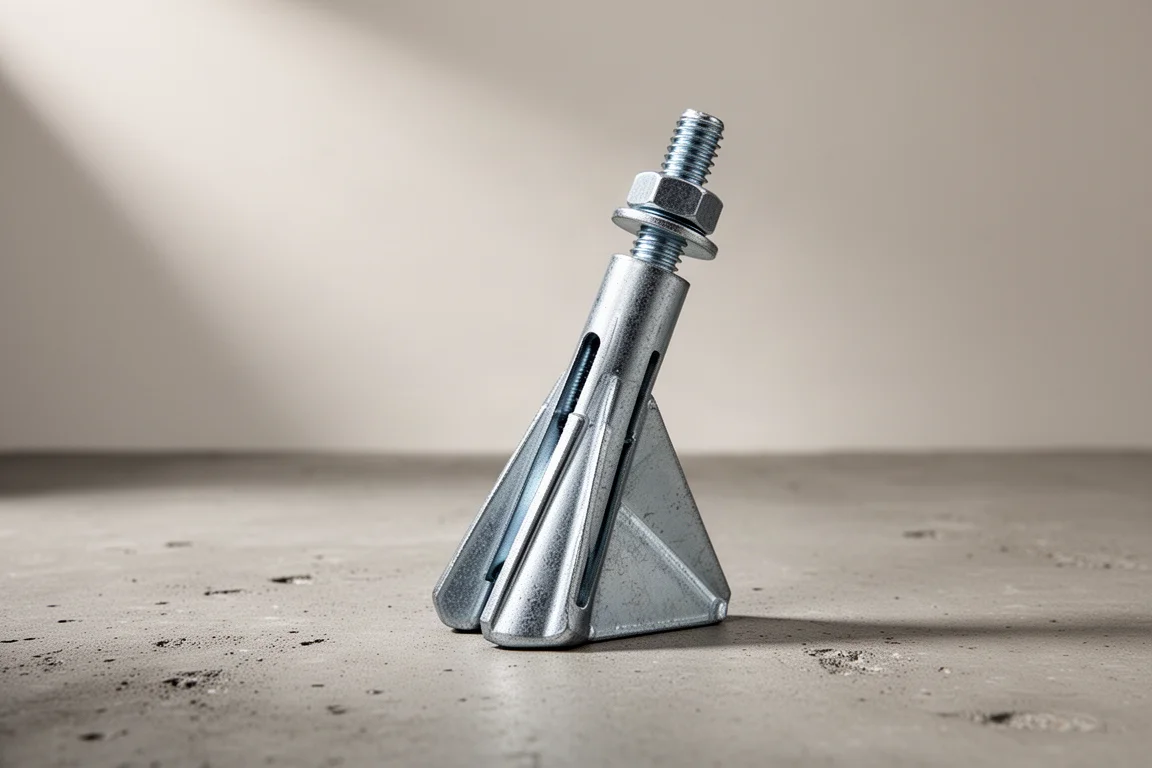
Threaded screw anchors are hard steel, hard enough to cut threads into the hole you drill. They come in all diameters and all lengths and will hold a serious amount of weight.
Hole size is critical with these, so follow the specified drill diameter carefully, and keep the hole clean or extra deep, just as with a wedge anchor. Once set, the holding strength is seriously high. But when you want it gone, simply put your drill in reverse and pull it out. The anchor backs out completely, leaving a nice clean round hole in the slab.
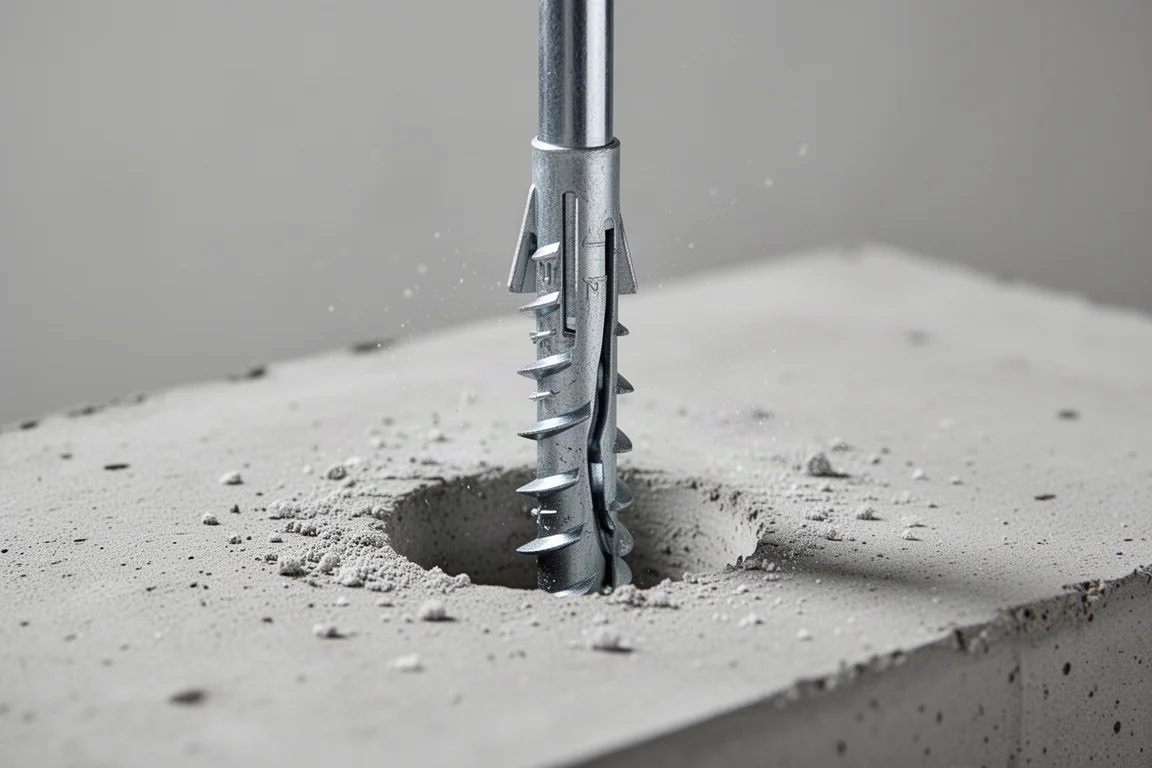
That removability makes screw anchors the better choice for temporary setups, jigging, and anything you might want to reposition later.
When Epoxy Threaded Rods Make Sense
There is a third category worth knowing about, even if most people will not need it. Epoxying a threaded rod into a hole is the most expensive, messiest, riskiest, and strongest option. You can epoxy in any size rod, from 5/8-inch up to a full inch, and engineers who specify these will dictate the exact diameter, material, and embedment depth.
The hole should be completely dust-free so the bond is bulletproof. A dispenser used with an ordinary caulking gun mixes the epoxy perfectly as it is squirted into the hole. A hole about an eighth of an inch larger than the rod is about right, and you should manipulate the rod to ensure complete embedment.
Unless you are holding down an expensive, powerful, high-torque machine, or part of a structure that absolutely must never move, you probably do not need to epoxy in a threaded rod.
Drilling Tips for Concrete
A few habits make every concrete anchor job go better:
- Do not force the bit. Let the drill work freely.
- Do not breathe the dust.
- If you need an accurately placed hole, start with a quarter-inch pilot hole about an inch deep, then step up to the final size.
- Always drill deeper than you think necessary, deep enough that the whole anchor could be seated flush.
Conclusion
Both wedge anchors and concrete screw anchors are dependable, affordable choices for fastening to concrete. Choose wedge anchors when the attachment is permanent and the anchor should never move. Choose concrete screw anchors when you want serious holding strength plus the ability to remove the anchor cleanly later. And whichever you pick, drill deep, keep the hole clean, and protect your eyes and lungs while you work.
Further reading
Related Reviews

Backpacking Gear
Building a 10 lb Base Weight: An Ultralight Backpacking Gear List
A practical walkthrough of the ultralight pieces behind a 10 lb base weight, from a 765 g pack and a roomy one-person tent to a full camp chair and a dependable water filter.

Road Bikes
10 New Road Bikes Worth Watching: Aero, Titanium, Steel and Endurance Standouts
A practical roundup of 10 new road bikes, from aero flagships chasing single-watt gains to titanium, steel and endurance platforms built for real roads.

Bikepacking Gear
11 Bikepacking Essentials for Long-Distance Cycling
Eleven bikepacking essentials for long-distance cycling, from a steel gravel frame and a two-person tent to helmet lights, packable gloves, and a frame bag that puts weight in the right place.