Computer Speakers
Best Computer Speakers for Your Desktop: Seven Options Worth Considering
Seven desktop speaker options, from compact value picks to reference-grade systems, with the inputs, controls, and expansion options that matter before you buy.
Introduction
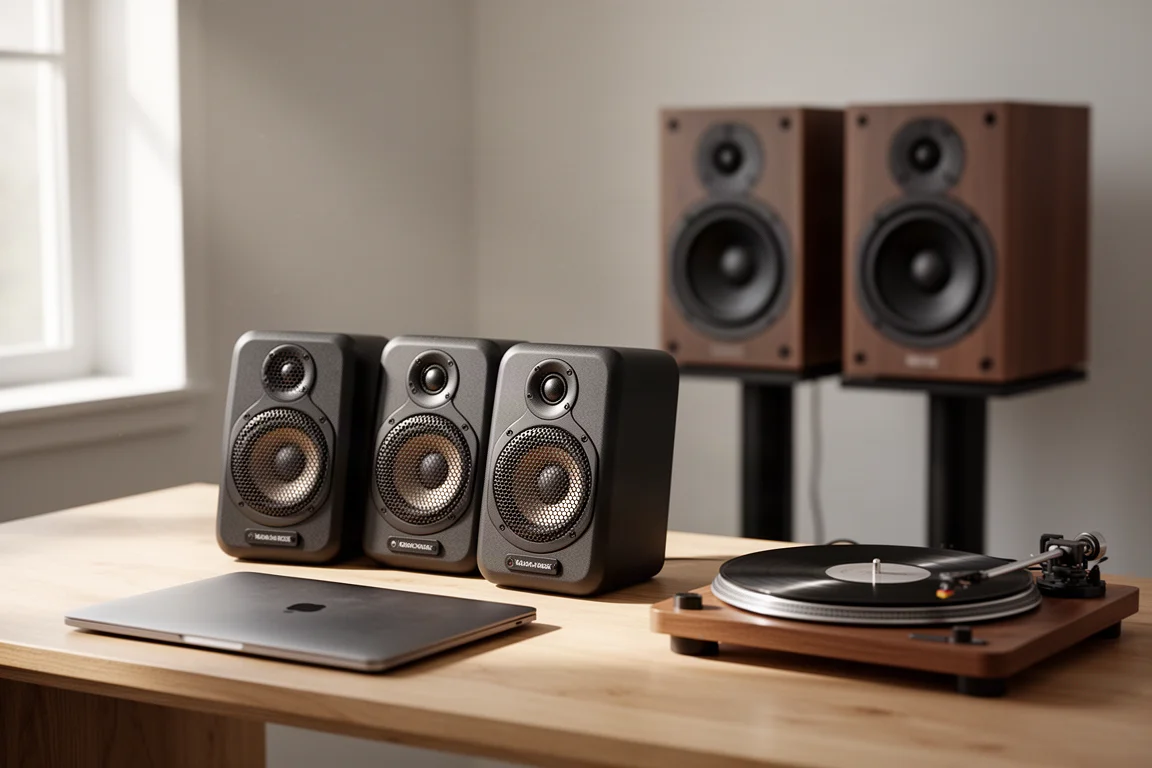
Built in laptop speakers and inexpensive desktop companions rarely deliver the kind of sound that makes long working sessions enjoyable. Drivers barely bigger than a coin cannot produce a rich, immersive result, and most people now spend more hours in front of a computer than anywhere else. Upgrading the speakers on a desk improves the working environment, lifts the mood, and often makes the day more productive.
With well over a thousand computer speaker models on the market, the useful question is not which one plays loudest, but which one suits a specific desk, source, and budget. The seven options below cover compact value picks through to serious reference-grade systems, and each one pairs strong sound quality with straightforward connectivity and controls.
How These Picks Were Chosen
A few practical factors separate a speaker that works well on a desk from one that merely looks good in a photograph.
Sound quality relative to size and price comes first. A small cabinet can only do so much, so the interesting question is how much bass, clarity, and composure each model extracts from its footprint. Connectivity comes next: USB, optical, Bluetooth, analogue inputs, and a phono stage all change what a speaker can be connected to without extra boxes. Controls matter too, whether that means a remote, front mounted dials, or a headphone output within easy reach.
Build quality and expandability round out the list. A subwoofer output lets a compact speaker grow into a fuller system later, and a built in crossover when a subwoofer is connected takes deep bass duty away from the main woofer, which opens up the midrange considerably.
Each option here was assessed for how it behaves in a real desktop setup rather than in a treated listening room, because a desk places speakers close to a wall, close to a listener, and often close to a screen. Placement and stands also shape the final result more than most people expect.
Kanto YU2: Compact Style With Real Punch
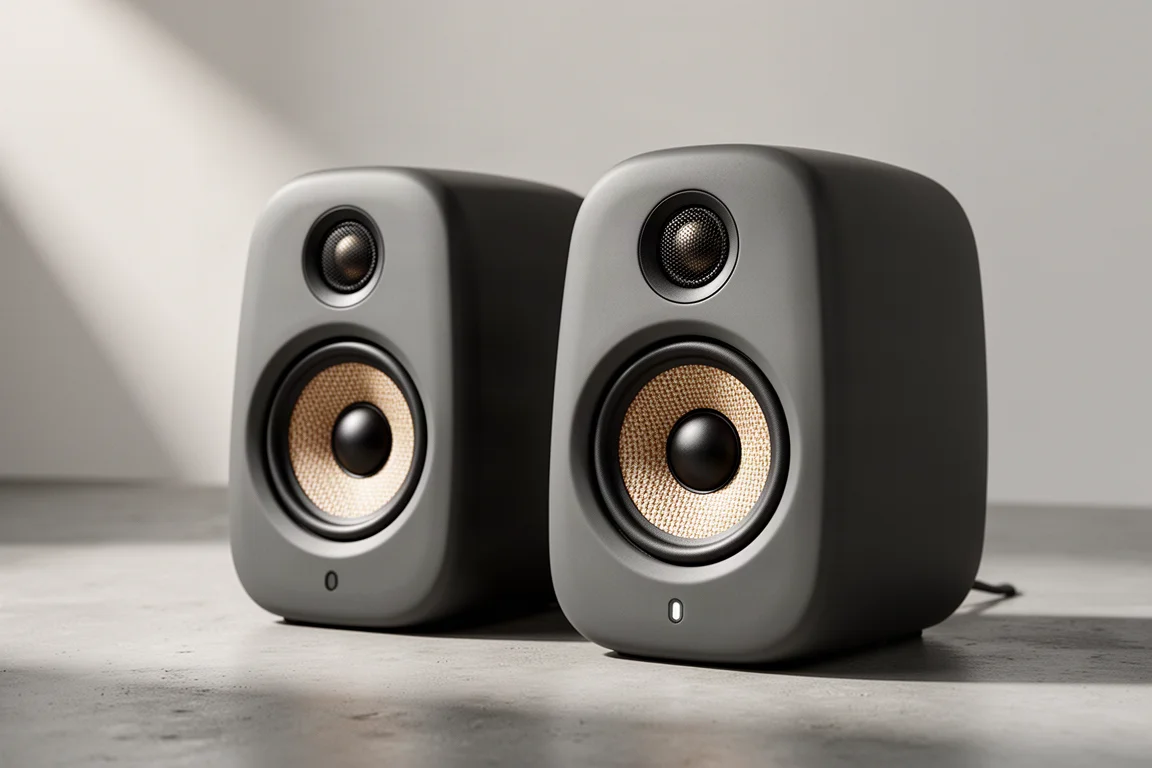
Kanto’s smallest desktop model leads with design, and its distinctive shape and colour choices let it either blend into a workspace or stand out as a deliberate piece. The YU2 pairs a silk dome tweeter with a three inch composite woofer, and its bass output is genuinely impressive for a pair of speakers at around $230. Against laptop or basic desktop audio, the improvement is immediate.
The YU2 can also play surprisingly loud, though the three inch woofer will begin to break up if it is pushed hard, which is a fair limitation at this size. Under $250 a pair, it remains a fantastic option, and like other Kanto models it keeps a musical character.
Controls are simple and physical. A small light on the front indicates power, the switch gives a small click, and volume is adjusted on the back of the cabinet. Included in the box are the speaker wire that links the two cabinets, a USB connection, and an auxiliary cable. There is also a subwoofer output, so anyone who wants deeper low end can add a subwoofer under the desk.
Peachtree M24: Audiophile Components at a Friendly Price
Peachtree is made up of veteran audiophiles who also design the DACs and amplifiers that sit inside powered speakers, and that background shows in the result. Very few competitors build both the amplification and the conversion stage in house, and the M24 uses larger and better components than much of the field along with a notably generous set of inputs.
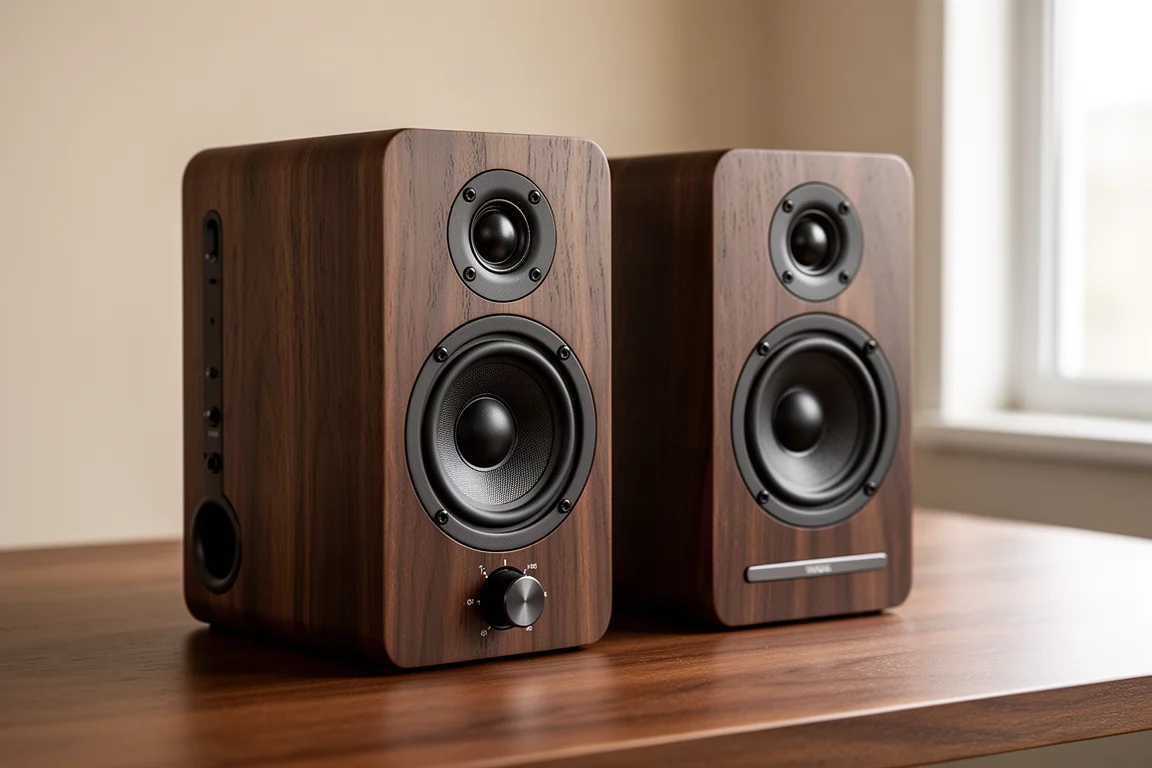
The M24 pairs a one inch soft dome tweeter with a four inch woofer and a rear firing tuned port. For the money, it is difficult to find a better sounding desktop speaker, and nothing at this price comes especially close.
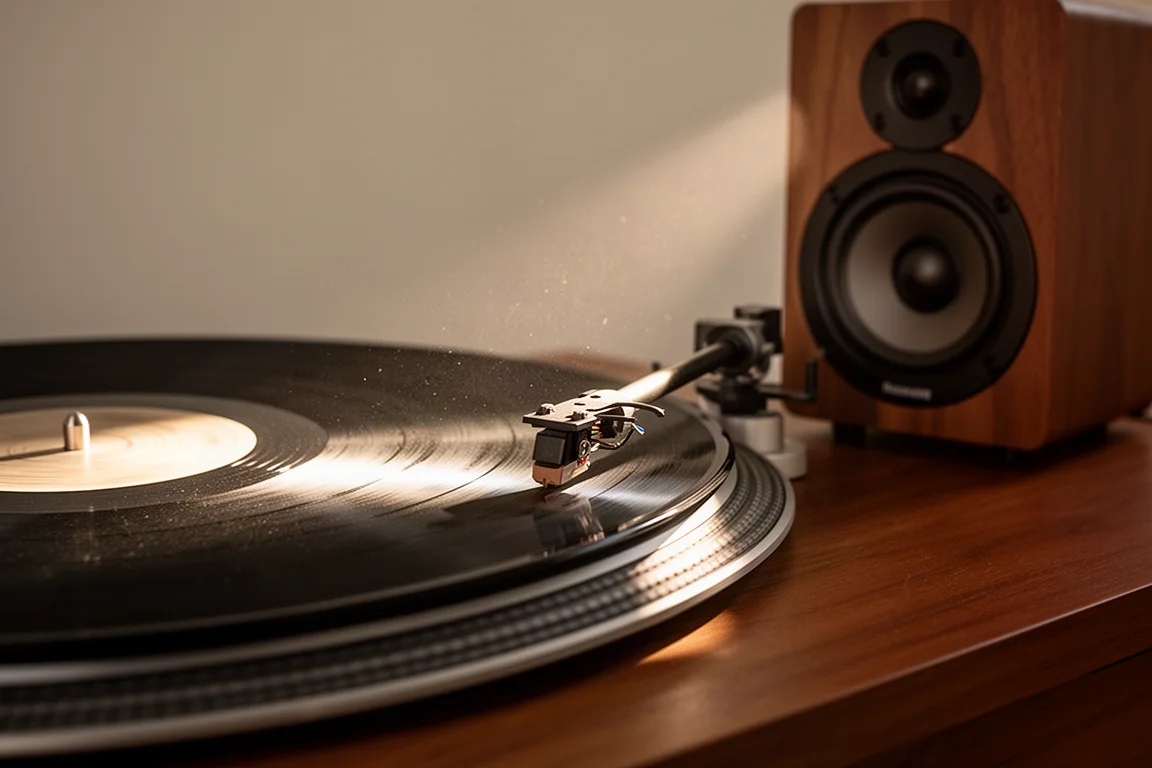
Practical details are strong as well. A remote is included, and volume dials sit on the front of the cabinet. Bluetooth is built in for wireless sources, and the rear panel carries a phono stage with a switch, so a turntable can be plugged in directly beside a desktop setup and play vinyl without extra equipment. There is also a subwoofer output for adding a subwoofer under the desk, a USB connection, the speaker cable for the second cabinet, and the main power switch.
Peachtree M25: Room-Filling Sound for a Bigger Desk
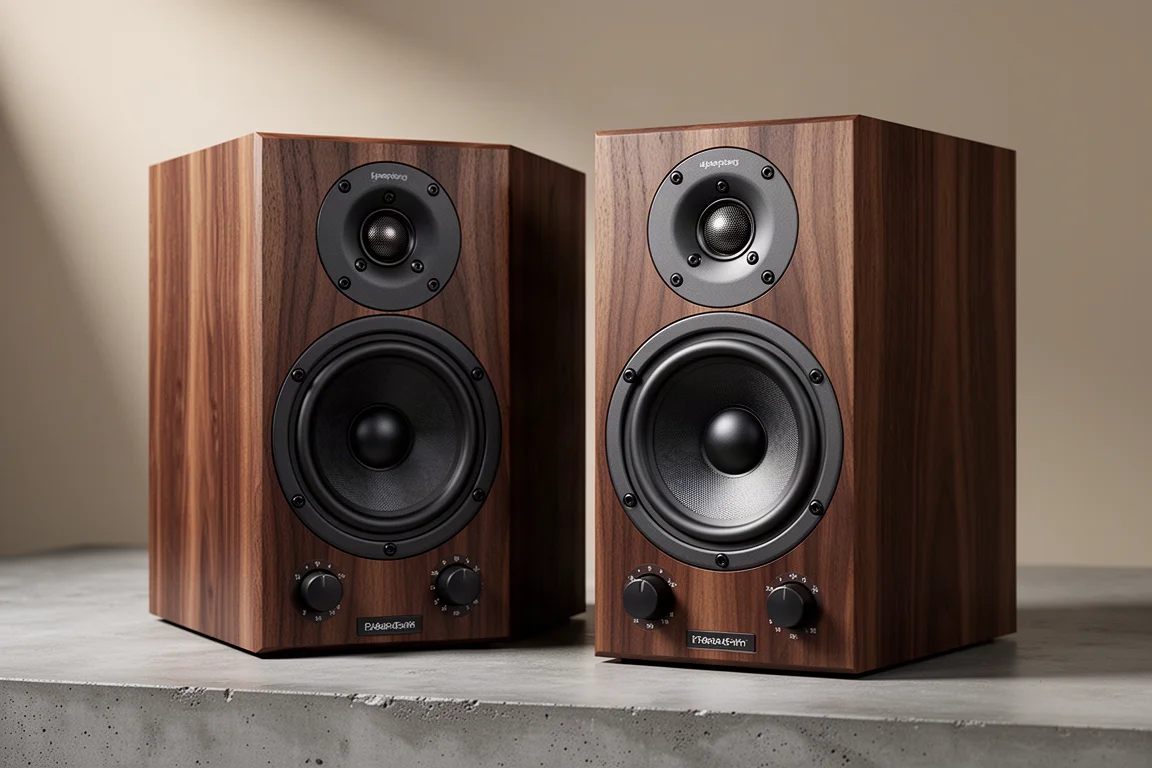
The M25 takes the same audiophile approach and scales it up. A soft dome tweeter is joined by a five and a half inch woofer, and that woofer on its own is wider than the entire driver array of the Kanto YU2. The cabinet grows accordingly, and the payoff is far more room filling bass and impact than anything near its price.
That combination makes the M25 a speaker that can serve as a main audio system rather than a desktop accessory. Anyone looking for a single set of speakers to handle both computer listening and serious music sessions will find it near the top of the list.
The input set matches the M24: a built in phono stage for a turntable, a subwoofer output, USB, Bluetooth, a remote, and front mounted volume dials. Turning the M25 on is enough to hear the audiophile tuning behind it.
Kanto TUK: Cutting-Edge Drivers Below a Thousand
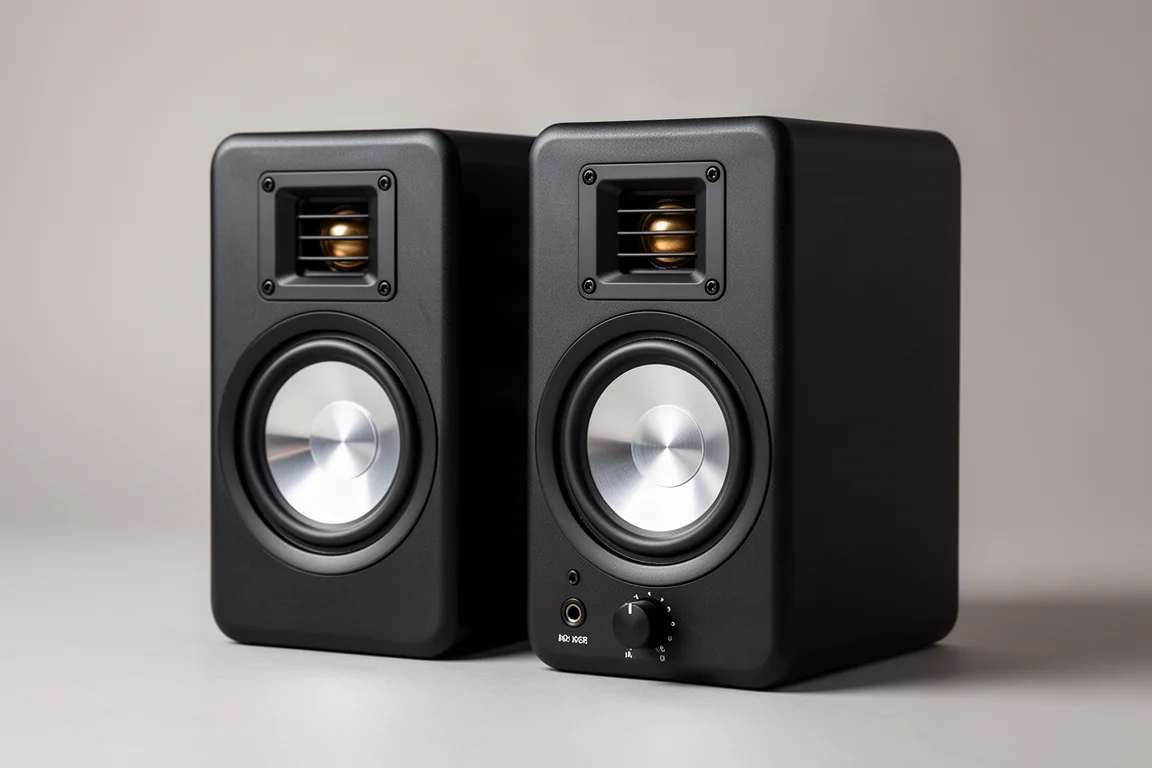
The TUK is a compact powerhouse. An air motion tweeter handles the high frequencies while a five and a quarter inch aluminium woofer covers the rest, and together they redefine what is possible in the sub $1,000 price range. Connectivity is broad, with Bluetooth, USB, and optical inputs, and a built in DAC keeps digital sources sounding clean.
One upgrade detail stands out. When a subwoofer is added, the TUK engages a built in crossover so the woofer is relieved of deep bass duty. Many powered speakers with a subwoofer output only provide a mono feed, but handing the low end to a dedicated subwoofer opens up the TUK noticeably.
The front panel includes a headphone output for quick private listening, an LED indicator that shows which input is active across phono, USB, Bluetooth, and RCA, and a volume knob. Around the back sit the power switch, the cable that links the two cabinets, a phono stage with a ground connection, RCA left and right inputs, a subwoofer output, optical, and USB. Cabinets are available in matte black or white and feel solidly built. Positioned properly, a TUK system can rival a separate amplifier paired with high end speakers.
KEF LSX II: British Engineering in a Small Package
KEF has been building speakers in Britain since 1961 and is known for the Uni-Q driver used across its range, including its largest models. In the LSX II, the tweeter sits at the centre of the woofer in a time aligned arrangement that delivers accuracy and an image that fills the room no matter where the speakers are placed. It is the first model here to use separate discrete amplifiers for each of the four drivers, which means each cabinet needs its own power cord.
A high resolution audio DAC is built in, so almost any high resolution music file can be played directly. The cabinets come in a wide variety of colours with a fabric finish. Adding a subwoofer is handled with a crossover, and the companion app allows fine tuning of several parameters, including the exact crossover frequency.
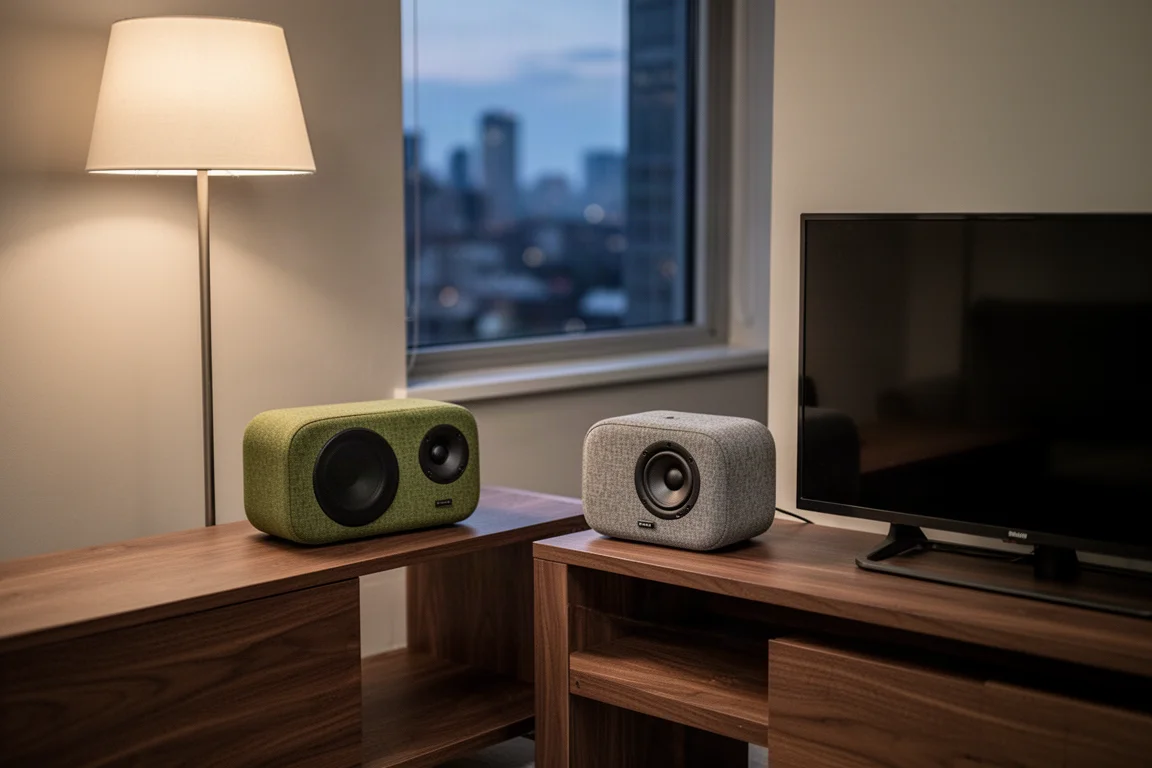
The feature list is unusually deep. Chromecast, AirPlay, and Roon readiness are included from the start, along with HDMI for a television, a reset button, and a pairing button for wireless operation. Wired Ethernet is available and recommended for slightly higher quality. A USB-C input connects a computer, auxiliary and optical inputs are present, and a subwoofer output adds low end to music or movie playback. The LSX II is a serious music speaker that keeps a listener engaged through a full working day.
JBL 4305P: The Reference Pick for Serious Listening
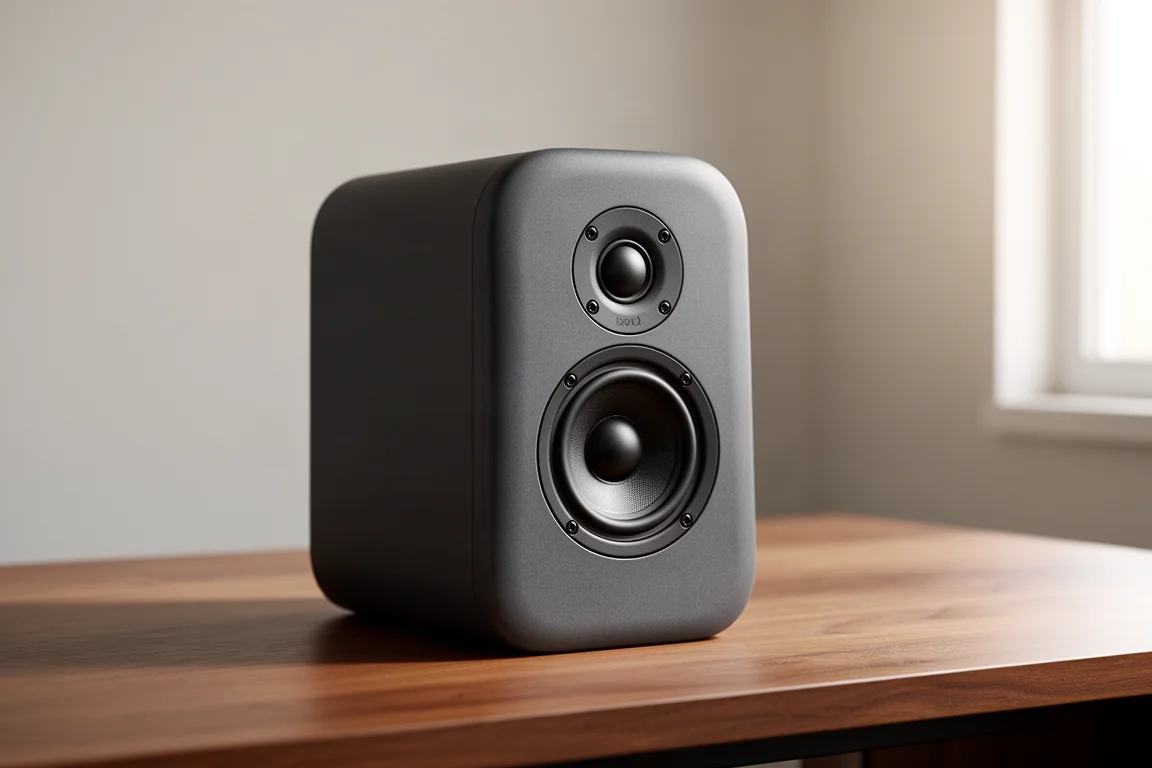
The 4305P is the largest and most expensive speaker here, and it earns its place on the list. Each cabinet contains two power amplifiers and therefore needs its own power cord. The driver complement is a JBL 2410H compression driver mated to an HDI horn, paired with a five and a quarter inch cast basket woofer, and the company’s in house engineering capability is evident throughout.
Sound quality is the reason to choose it. The 4305P delivers the dynamics of live music in a way that speakers anywhere near its size struggle to match, and its flat frequency response produces a natural, effortless character that stays comfortable over hours of listening.
The rear panel covers USB for a computer, an auxiliary input, a subwoofer output, and balanced XLR left and right inputs, with Chromecast, AirPlay, and Bluetooth built in. A built in crossover handles subwoofer integration, although the 4305P reaches deep enough that many rooms will not need one for full range sound. Dedicated stands are recommended with this speaker, and the isoAcoustics model below is a strong match.
isoAcoustics ISO-130: The Stand That Makes a Difference
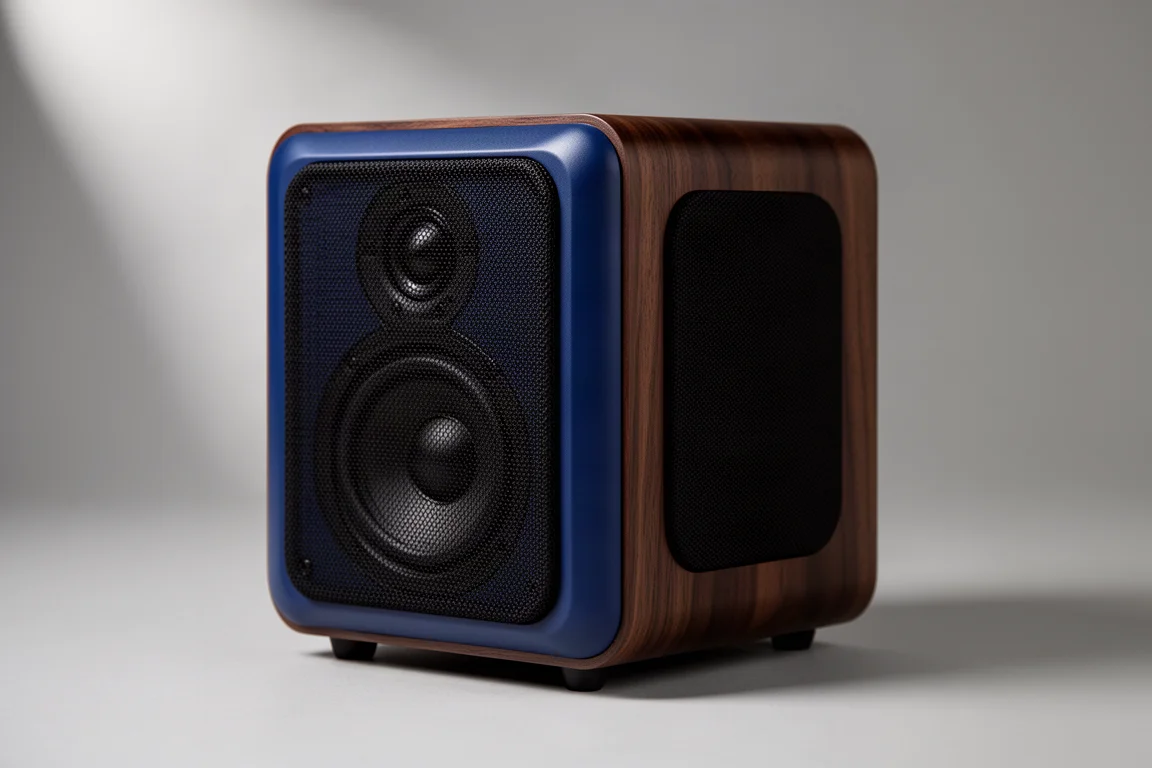
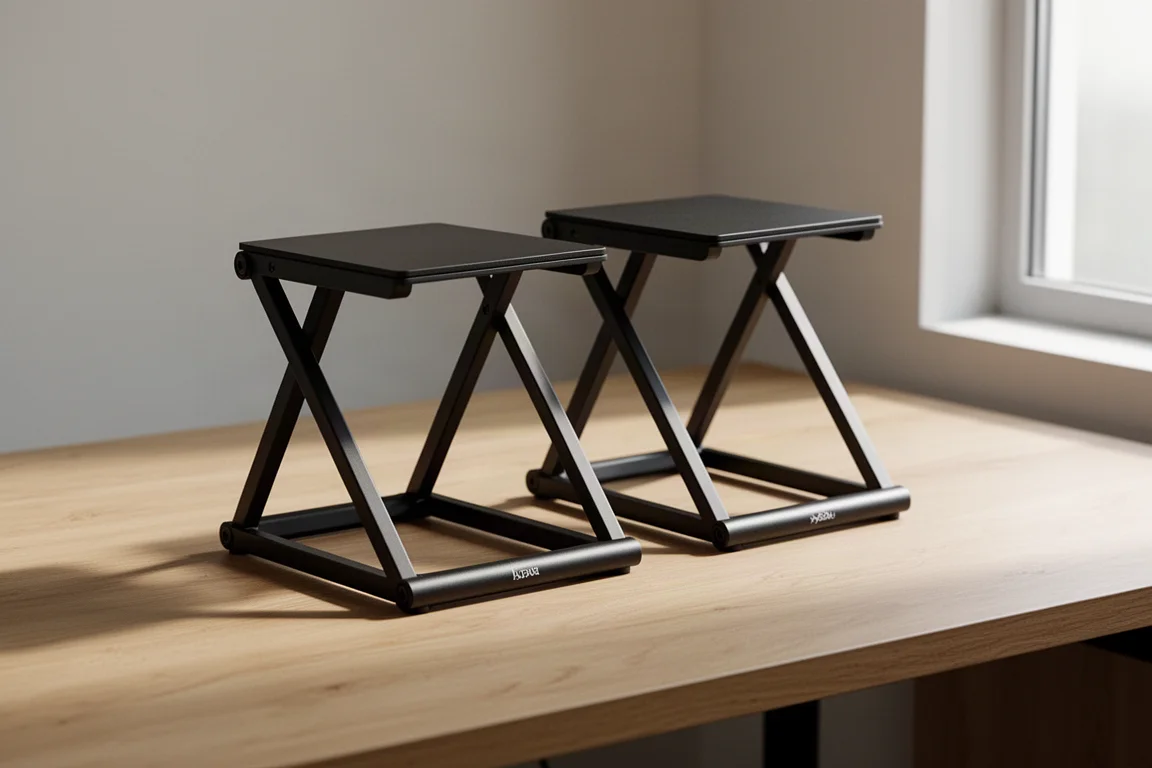
Many of the speakers here have dedicated stands available, and pairing a speaker with the right stand is one of the simplest improvements to make in a desktop setup. The isoAcoustics ISO-130 is one of the strongest options and does a phenomenal job under a speaker.
It is a small addition that supports the larger models in particular, where a bigger cabinet on a bare desk surface has the most to gain.
Buying Advice: Matching a Speaker to Your Setup
Start with the source. If a turntable is part of the desk, the Peachtree M24 and M25 both include a phono stage, so no separate preamp is required. If the desk is mostly computer and television, the KEF LSX II and JBL 4305P add HDMI, Chromecast, AirPlay, and Bluetooth, while the Kanto TUK covers USB, optical, and Bluetooth with a built in DAC.
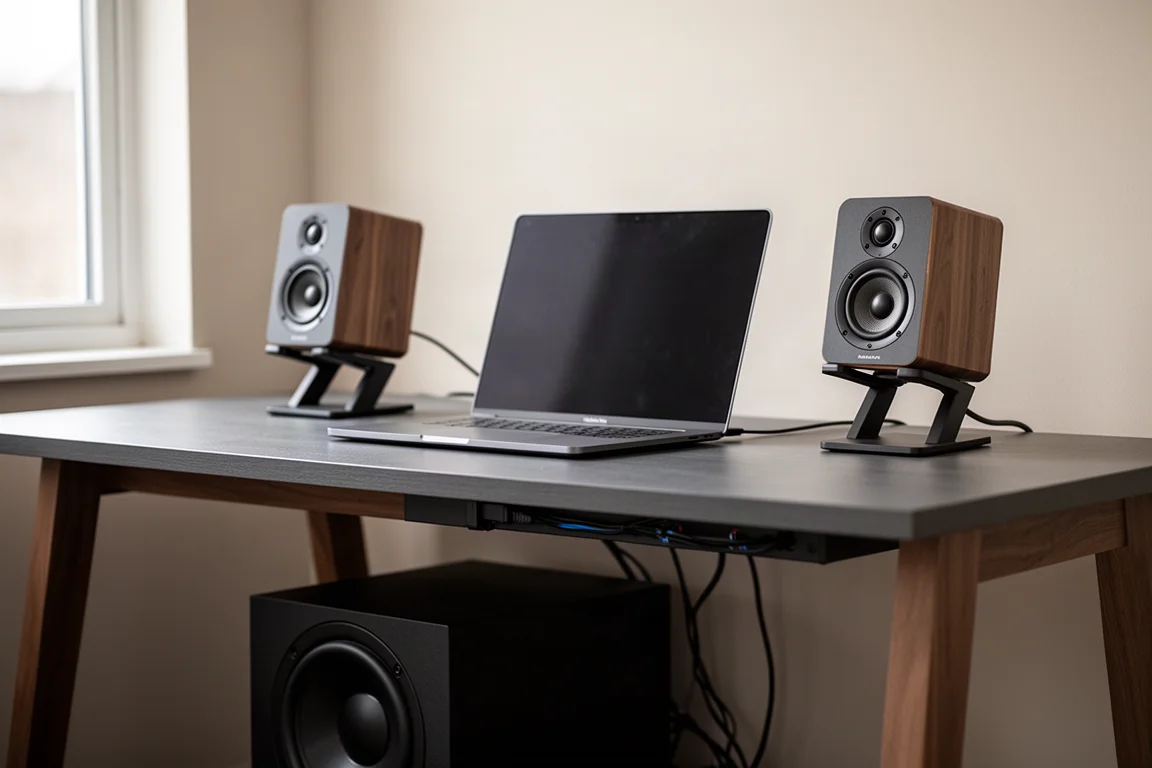
Then consider size and room. The Kanto YU2 is the compact, budget friendly choice for a small desk and a clear step up from laptop audio. The Peachtree M25 suits a larger desk where room filling bass matters. The Kanto TUK sits in the middle with modern connectivity and a headphone output on the front. The KEF LSX II is the pick for high resolution streaming and app based control in a small space, and the JBL 4305P is the choice when dynamics and long, fatigue free listening sessions matter most.
Anyone who wants deeper bass can add a subwoofer, since every main speaker here provides a subwoofer output, and several also apply a proper crossover when one is connected. Finally, budget for stands. A well matched pair such as the isoAcoustics ISO-130 is a modest addition that makes a noticeable difference to how a desktop system performs.
Conclusion
Upgrading computer speakers is one of the more rewarding changes to a workspace, and the range here covers most needs without compromise. The Kanto YU2 is the value entry point, the Peachtree M24 and M25 bring audiophile components and a turntable ready input set, the Kanto TUK balances modern connectivity with cutting edge drivers below a thousand, the KEF LSX II adds streaming features and app control in a compact fabric wrapped cabinet, and the JBL 4305P is the reference option for listeners who want live music dynamics.
Whichever route makes sense, the same three questions decide the outcome: what the speakers will be connected to, how much space the desk can spare, and whether deeper bass might be added later. Answer those, add a subwoofer if the room allows, and finish the setup with a good pair of stands.
Further reading
Related Reviews

Backpacking Gear
Building a 10 lb Base Weight: An Ultralight Backpacking Gear List
A practical walkthrough of the ultralight pieces behind a 10 lb base weight, from a 765 g pack and a roomy one-person tent to a full camp chair and a dependable water filter.

Road Bikes
10 New Road Bikes Worth Watching: Aero, Titanium, Steel and Endurance Standouts
A practical roundup of 10 new road bikes, from aero flagships chasing single-watt gains to titanium, steel and endurance platforms built for real roads.

Bikepacking Gear
11 Bikepacking Essentials for Long-Distance Cycling
Eleven bikepacking essentials for long-distance cycling, from a steel gravel frame and a two-person tent to helmet lights, packable gloves, and a frame bag that puts weight in the right place.