Subwoofers
Best Compact Subwoofers Compared: Arendal 1961 1S, 1961 1V, and RSL Speedwoofer 12S
A data-focused comparison of three subwoofers: how low each one plays, how loud it gets, how much floor space it needs, and what you can adjust once it is in your room.
Introduction
Subwoofers are the hardest part of a system to judge from a description. The same cabinet can sound lean in one room and heavy in another, and shifting it a foot along a wall often changes the low end more than changing models does. What travels reliably between rooms is the measurable part: how low a subwoofer plays, how loud it can play, how much floor space it takes, and how much adjustment it gives you once it is installed.
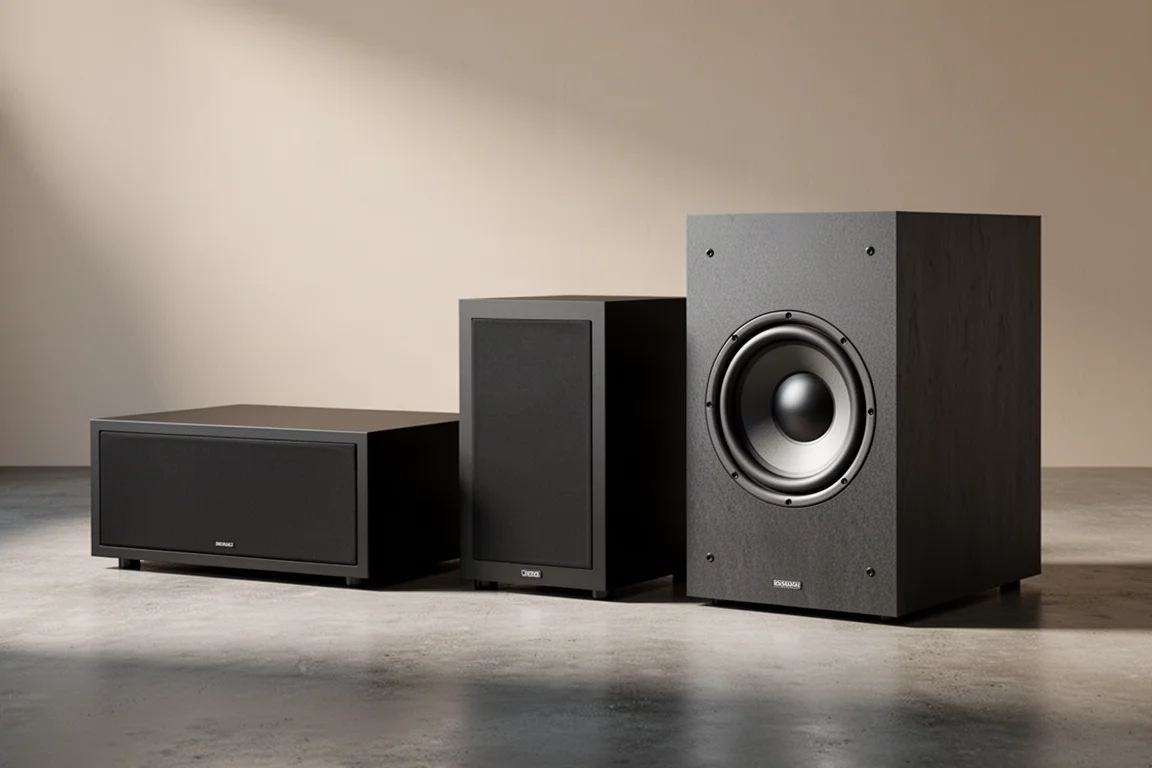
This comparison covers three subwoofers measured on the same day under the same conditions: the Arendal 1961 1S, the Arendal 1961 1V, and the RSL Speedwoofer 12S. That shared test setup matters, because it means the output figures below can be read against each other directly.
What Actually Matters in Subwoofer Performance
Four questions decide whether a subwoofer will work in a given room. How low does it go? How loud can it play before it runs out of headroom? How big is the cabinet, and will it fit where you need it? And what does it let you adjust after it is in place?
Extension is usually described with an F3 figure, the point where output has fallen about 3 dB below the level through the upper bass. Maximum output is measured as SPL, either in free space at one meter or with a standard tone-burst method that stops at a defined distortion threshold. Cabinet size is not a detail, because a larger box is usually what buys deeper bass at a given output level.
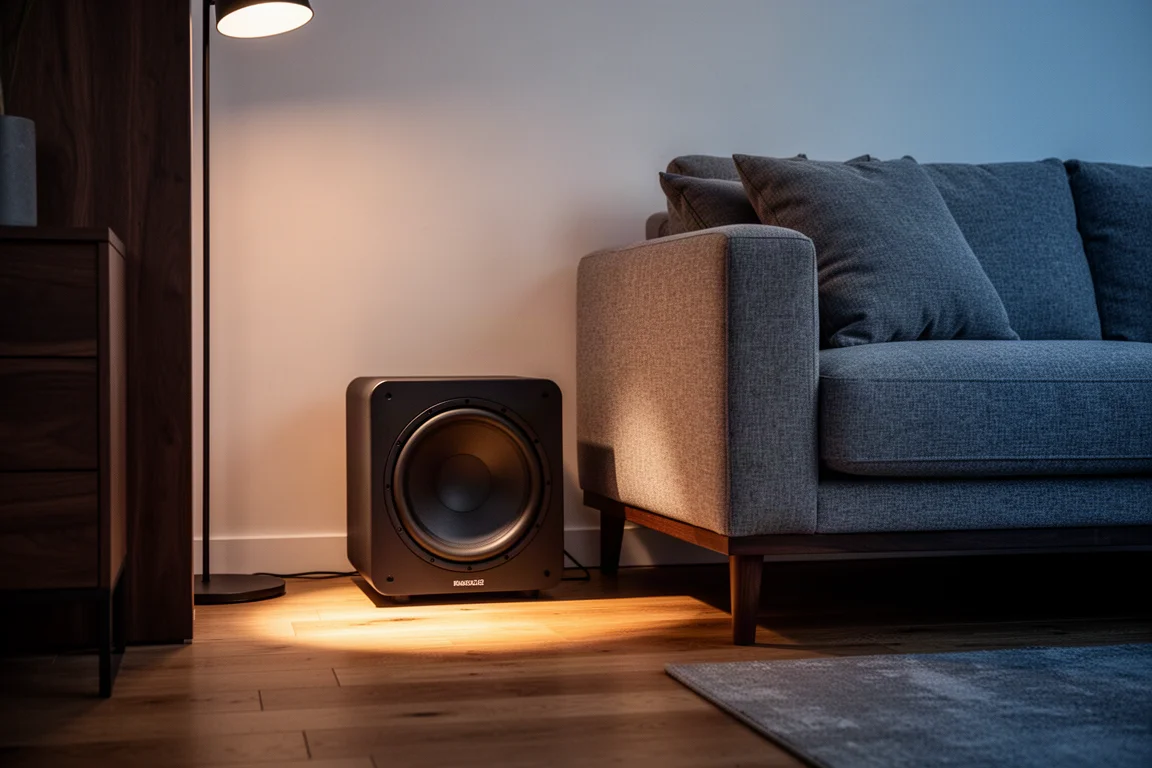
Features matter as much as raw numbers. Both Arendal models in this comparison include onboard parametric equalization reached through a small menu on the cabinet itself, so a peak that shows up in your room can be pulled down without adding external processing. The 1961 1S ships as a sealed design with two EQ modes, while the 1961 1V adds ported operation and four modes in total. A sealed cabinet trades some deep-bass extension for a smaller box and a gentler rolloff, and a ported cabinet does the opposite.
Arendal 1961 1S: Compact, Sealed, and Room-Friendly
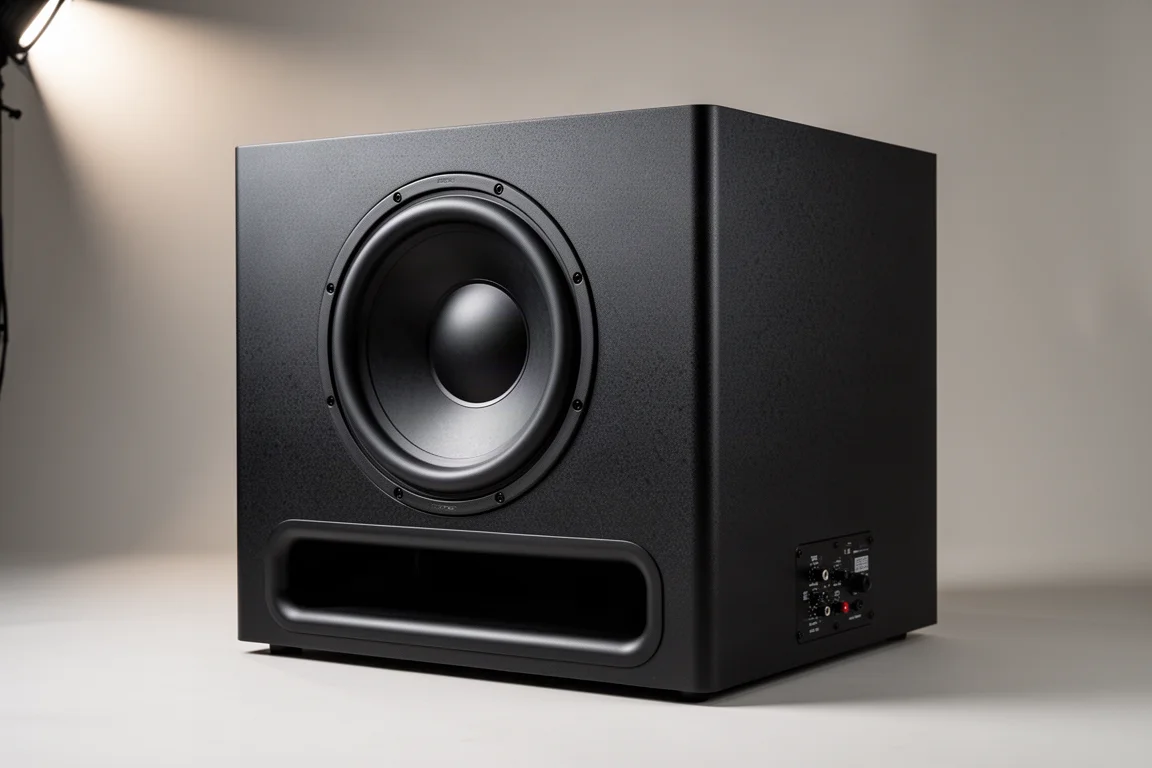
The 1961 1S is the smallest of the three at $999, and its shape is the first thing to notice: a low, wide sealed cabinet that sits close to a wall without dominating the room. That geometry is deliberate. The 1S is built to work near a boundary, and its second EQ mode exists for exactly that situation.
Boundary loading is what happens when any low-frequency driver sits close to a wall or floor. The reinforcement adds output, and in some rooms it adds too much, which is when a system starts to sound heavy or boomy. Switching the 1S to its sealed EQ2 mode attenuates that region and brings the balance back toward neutral.
The onboard parametric EQ handles the rest. If a room produces a strong peak around 60 Hz, the kind that makes every kick drum hit harder than the rest of the mix, you can dial that band down from the cabinet menu and flatten the response.
Measured behavior follows that design intent. The 1S is tailored downward below roughly 60 Hz, with a fairly slow rolloff and an F3 in the region of 55 to 60 Hz when referenced to its level around 100 Hz. Maximum output is about 106 to 107 dB anechoic at one meter through the 80 to 100 Hz region. On the standard tone-burst test at 16 Hz it reaches roughly 93 dB, and it gives up about 4 dB of output at 30 Hz when pushed from a normal listening level to its maximum.
Arendal 1961 1V: More Headroom, Sealed or Ported
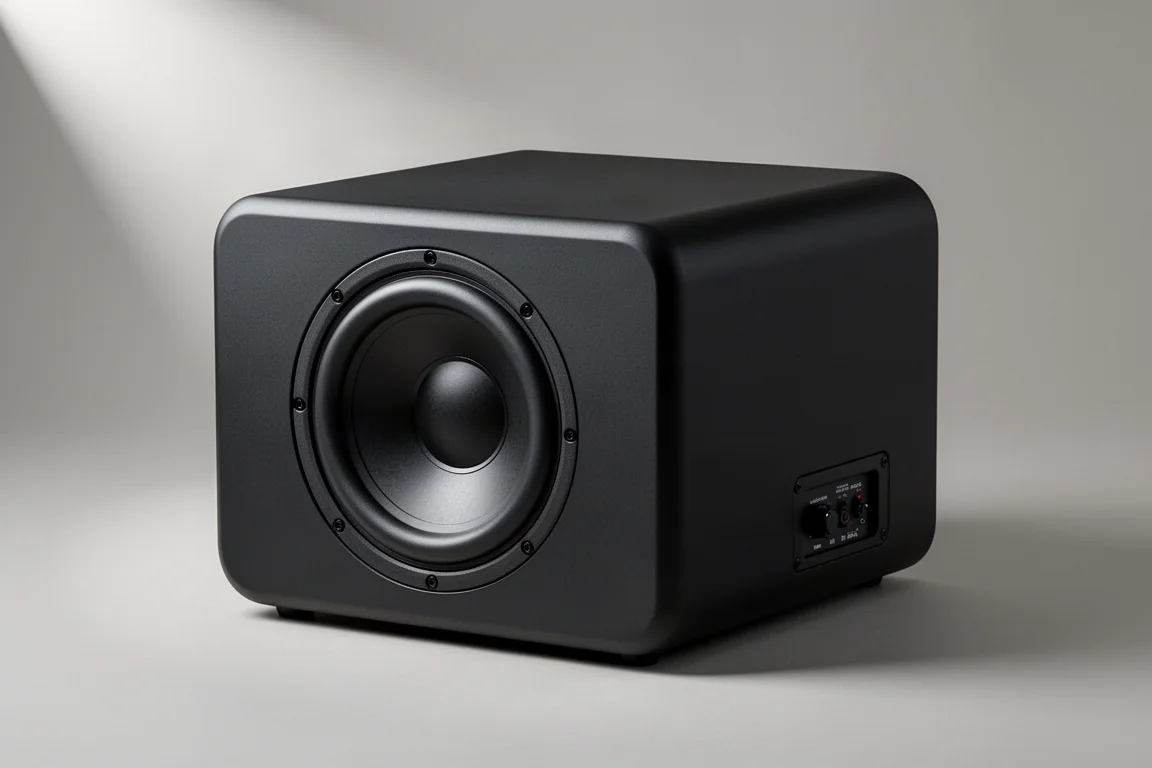
The 1961 1V is the step-up model at $1,199 shipped directly from Arendal, about $200 more than the 1S. What that money buys is flexibility and headroom: the 1V can run sealed or ported, and it carries four EQ modes instead of two, split across those two configurations.
The sealed and ported curves are close enough to be treated as nearly the same, with the vented version showing only around 1 dB more output. The larger difference is between the EQ modes themselves. EQ1 adds roughly 5 dB of output below about 30 Hz compared with EQ2, and that holds whether the cabinet is sealed or ported.
Maximum output lands around 107 dB, and the dynamic range picture is similar to the smaller model, just shifted upward. Compression is about 5 dB at 30 Hz, 2 to 3 dB at 40 Hz, and about 9 dB at 20 Hz when the subwoofer is driven from a moderate level to its limit. On the tone-burst test at 16 Hz the 1V reaches roughly 102 dB, about 9 dB above the 1S. That gap is the clearest single number separating the two Arendal models.
RSL Speedwoofer 12S: Deeper Extension in a Larger Cabinet
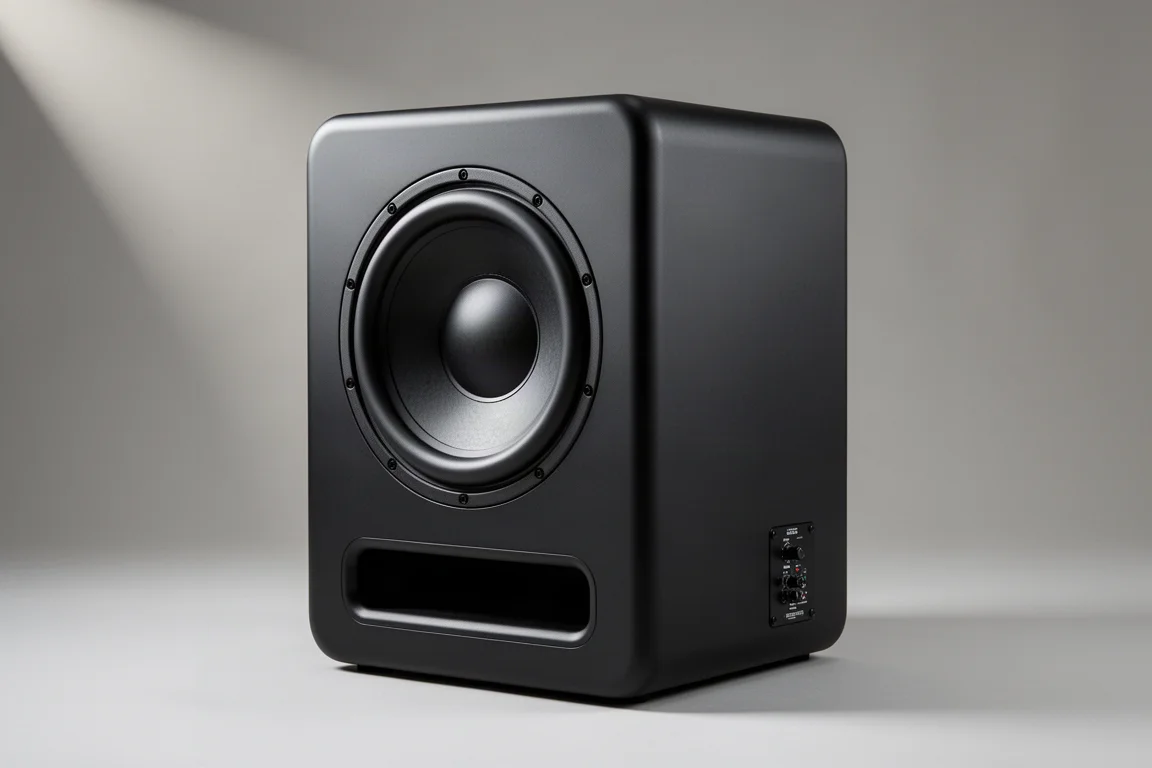
The RSL Speedwoofer 12S takes a different approach. It is bigger than either Arendal model, it costs less, and it plays lower. Through the region below about 40 Hz it shows more output capability than both Arendal subwoofers, which is exactly where the extra cabinet volume pays off.
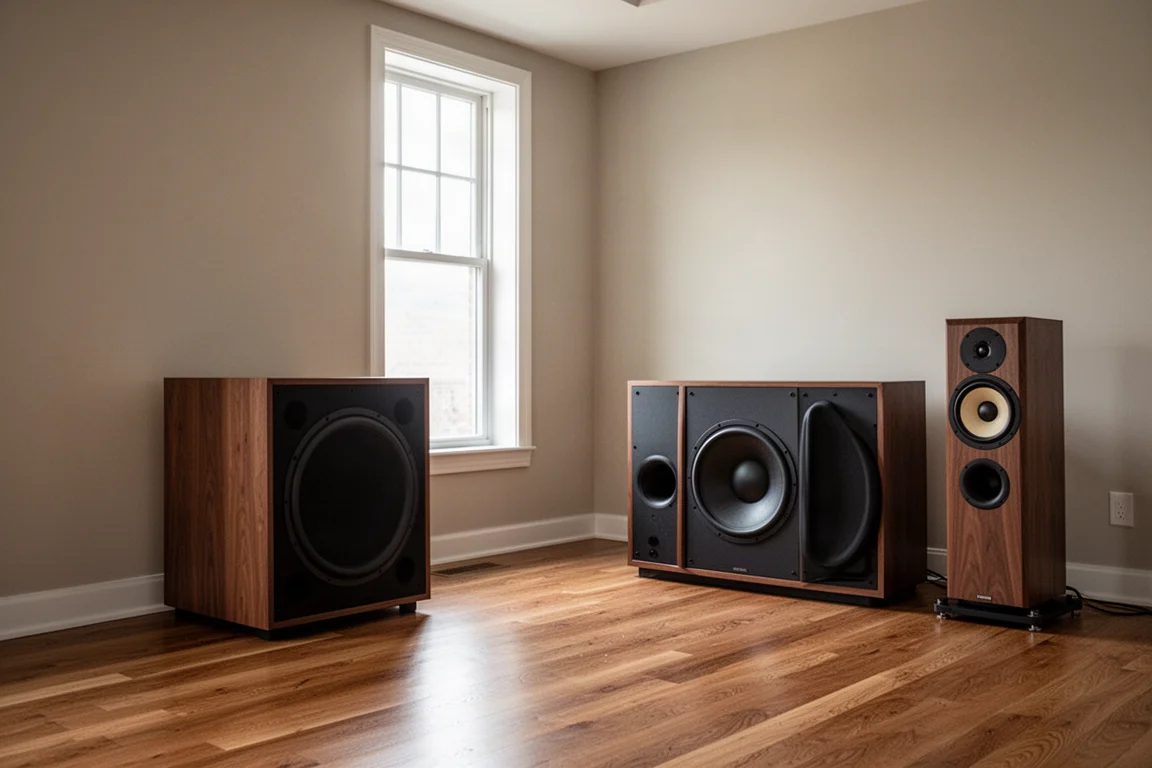
Above 40 Hz the picture reverses. The two Arendal subwoofers hold higher output in the upper bass, the range that carries midbass punch and the weight behind kick drums and lower string instruments. The Speedwoofer 12S gives up some of that in exchange for reach.
That is the trade every subwoofer purchase makes. Output capability has to come from somewhere: money, cabinet volume, or both. The Speedwoofer 12S buys its low-end extension with footprint rather than price, which makes it the right answer only if you have the floor space to give it.
Room Size, Placement, and Boundary Gain
Every figure above was measured in free space, and almost nobody listens in free space. A subwoofer placed against a wall, or simply resting on a floor, receives extra gain from boundary loading, and that reinforcement is strongest at the lowest frequencies.
This is why the Arendal EQ modes exist and why placement belongs in the buying decision. If a compact subwoofer is going against a wall in a smaller room, or in an apartment or condo where deep output would travel into neighboring spaces anyway, its lower free-space output matters less than the spec sheet suggests. The wall supplies part of what the cabinet does not.
The opposite is also true. In a large open room, or in a space where the subwoofer has to sit away from boundaries, the differences between these three models will be more audible, and the extra reach of the larger cabinet becomes more valuable.
Output Capability and Dynamic Range Compared
The tone-burst standard used here plays a short burst at each frequency and raises the level until harmonic distortion crosses a defined threshold. That point becomes the maximum output figure for that frequency. The numbers quoted in this comparison are peak SPL, which reads about 3 dB higher than figures taken as RMS. Keep that in mind if you compare them against other published measurements.
At 16 Hz the split is clear: roughly 102 dB for the 1961 1V against roughly 93 dB for the 1961 1S. Below about 40 Hz the RSL Speedwoofer 12S sits above both. Above 40 Hz the two Arendal models lead.
Dynamic range describes something slightly different. It is the amount of output a subwoofer loses at low frequencies when you move from a normal listening level, around 80 dB, up to its maximum. The 1961 1S gives up about 4 dB at 30 Hz. The 1961 1V gives up about 5 dB at 30 Hz and about 9 dB at 20 Hz. In practice that means the deepest notes compress first when you turn the system up, which is normal behavior for subwoofers in this class.
Which Subwoofer Makes Sense for Your Room
If floor space is the limiting factor, the 1961 1S is the easiest of the three to place. Its low sealed cabinet fits against a wall, its second EQ mode counteracts the extra gain that wall placement creates, and its parametric EQ can smooth out a room peak without extra gear.
If you want the option to run ported, want more low-frequency headroom, or want the deeper output the extra $200 buys, the 1961 1V is the more capable Arendal. The roughly 9 dB advantage at 16 Hz is meaningful for anyone who listens to material with genuine output below 30 Hz.
If you have the room and want the most low-end reach for the least money, the Speedwoofer 12S is the one that goes lowest. You pay for it in footprint and give up some output above 40 Hz, but for a large room with space in the corner it is the straightforward choice.
Overall Buying Advice
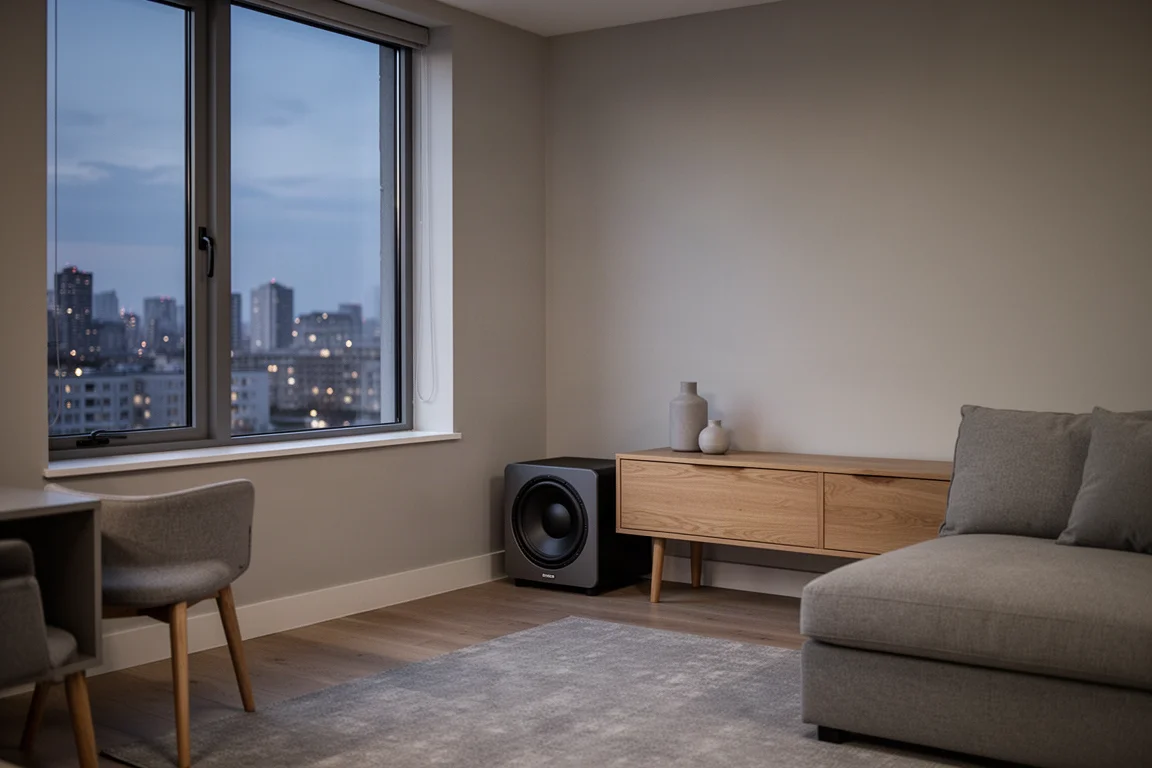
Start with the room, not the spec sheet. Measure the space where the subwoofer will actually sit, decide whether it can go against a wall, and then match the cabinet to that spot. A subwoofer that fits properly and gets dialed in with its own EQ will outperform a larger one squeezed into the wrong position.
From there, the decision comes down to how deep you need to go and how much space you can spare. The 1961 1S covers small rooms and tight placements at $999. The 1961 1V adds ported operation, four EQ modes, and about 9 dB more output at 16 Hz for $1,199. The Speedwoofer 12S trades size for the deepest extension of the three at a lower cost.
Arendal offers a 60-day return window, which makes it practical to try one of the 1961 models in your own room and send it back if the balance does not work. Given how much placement changes the result, a trial period of that kind is worth more than any written description of how a subwoofer sounds.
Conclusion
All three of these subwoofers are competent, and the choice between them is mostly about space and depth. The 1961 1S is the compact option that works with a wall rather than against it. The 1961 1V takes the same idea and adds more output plus a ported mode. The Speedwoofer 12S is the largest of the three and the one that reaches lowest. Pick the one that fits your room, use the equalization it provides, and the measured numbers will translate into a system that behaves predictably at home.
Further reading
Related Reviews
Subwoofers
Arendal 1961 Subwoofer 1S Review: Beautiful Build, Modest Punch at $1,000
A sealed $1,000 subwoofer with a gorgeous cabinet, plus three lower-priced alternatives that deliver more impact for movie nights.
Subwoofers
Arendal Sound 1723 2V Subwoofer Review: Dual 13.8-Inch Drivers Under $3,000
A flagship ported subwoofer with dual opposing 13.8-inch drivers, a 1,200W RMS amplifier, app-based DSP, and a 10-year warranty.
Subwoofers
Ascendo 16 Sub Active Sealed Review: Sealed Bass Built on Real Engineering
A close look at the Ascendo 16 Sub Active Sealed, a 16-inch sealed home theater subwoofer with independently verified measurements, a purpose-built driver, and genuinely controlled output.