Hi-Fi Audio
Best Compact Hi-Fi Components: Five Small-System Picks for 2026
Five compact hi-fi components that can build a full system on a single shelf, from a small mono power amplifier to a half-rack integrated amp and a dedicated CD player.
Introduction
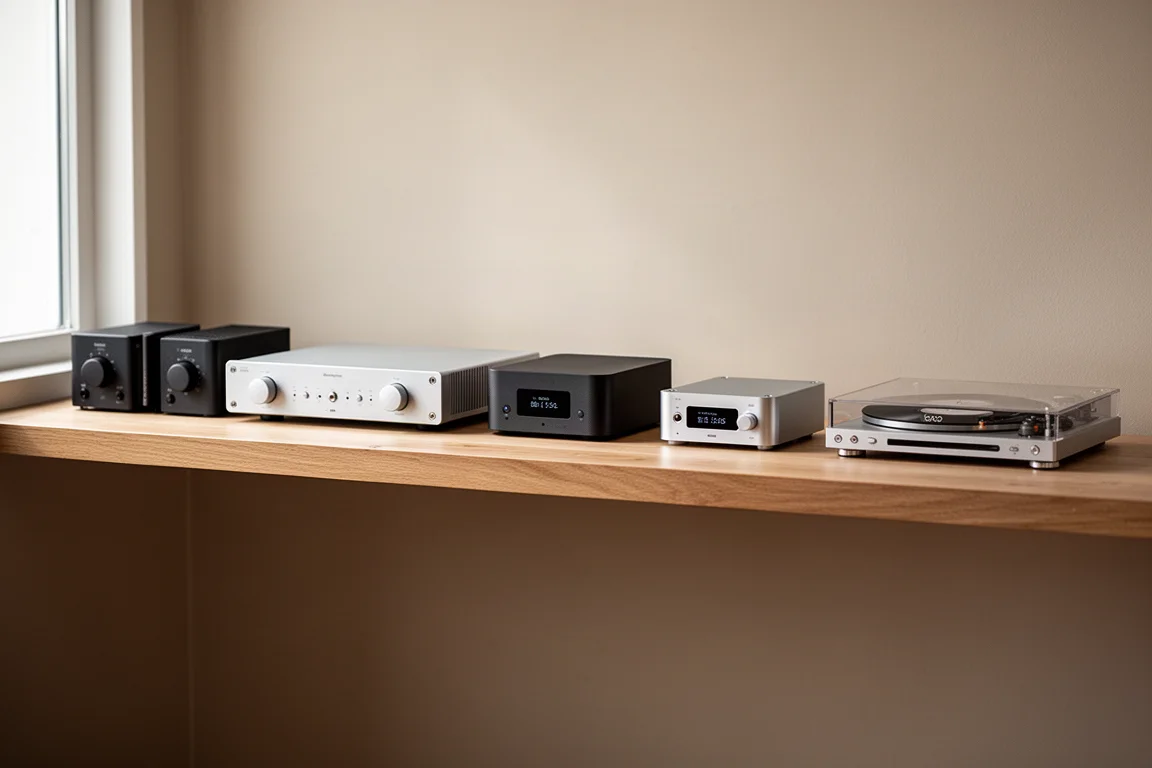
Most stereo gear is built around a familiar 17-inch chassis, and that width has a way of dictating the furniture in a room: a rack, a wide shelf, a dedicated wall of equipment. Compact components take the opposite approach, doing the same job in a fraction of the footprint so a complete system can live on a single shelf.
The five components below cover amplification, streaming, conversion and physical media. Two of them are the high-end picks, and they are optional. The rest come together as a system for around $580 that still drives real speakers with plenty of power.
Size is no longer the compromise it once was. Class D amplification has improved to the point where a half-rack amplifier can hold its own at moderate listening levels, and the same is true of compact streamers and converters.
How to Judge a Compact Hi-Fi System
A few practical questions separate a genuinely good small system from a shelf full of mismatched parts.
Power and headroom come first. A compact class D amplifier can deliver well over 100 watts of output while staying cool and efficient, which is more than enough for most rooms at normal listening levels.
Input flexibility matters just as much. Look for a component that can accept a turntable, an analog source and both optical and coaxial digital sources without extra boxes, and that offers its own volume control so you are not dependent on a separate preamp.
Upgrade paths are the third consideration. A streamer with a digital output lets you add an outboard converter later. A DAC with socketed op-amps lets you tune the sound as budget allows. A CD player that runs on 12V DC can be fed by a linear power supply.
Best Compact Power Amplifier: Fosi Audio V3 Mono
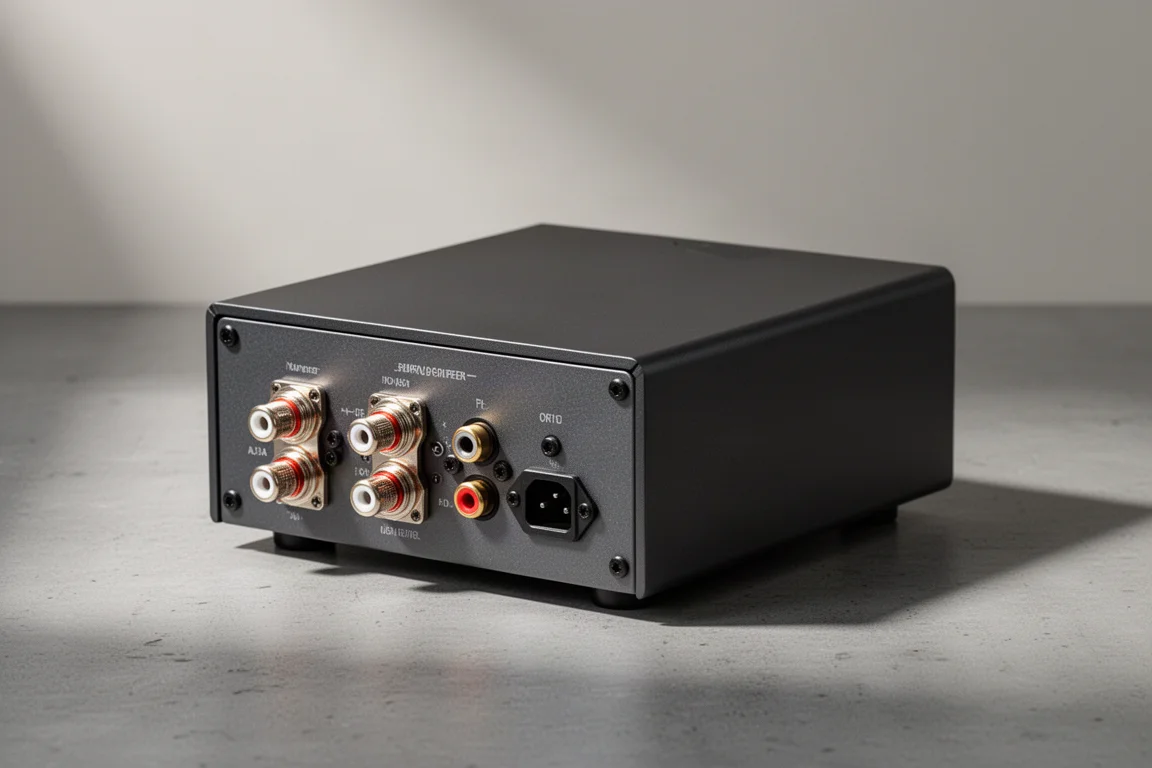
The V3 Mono is a pure power amplifier built around the Texas Instruments 3255 chipset. There is no volume knob and no volume control on the back, which is the entire point: it is designed to sit behind a streamer or preamp that handles level.
Each unit takes a single-ended RCA input for one channel, so a stereo setup needs two of them. A balanced XLR input sits on the front panel, and a switch lets you choose between RCA and XLR. Power can be switched on, switched off, or left in Auto so the amplifier wakes when it senses a signal.
Pricing sits around $130 per unit, and a 10 to 15 percent coupon often brings a pair in under $250. The 48V power supply adds to the cost, and a beefier supply unlocks more output from the amplifier. The result is clean, quick, articulate and dynamic sound with well over 100 watts on tap.
Best Integrated Amplifier: TEAC AI-303
The AI-303 is a half-rack integrated amplifier that handles preamp and power duties in a single chassis. It is the option to consider when you would rather not run two separate boxes, and its finish matches the rest of the compact TEAC range.
At $1,000 and roughly 25 watts per channel, it is both the most expensive and the least powerful component in this group. Its appeal is integration and refinement rather than raw output. Listeners with efficient speakers or a small room will find that trade-off reasonable, while anyone who wants headroom to spare is better served by the V3 Mono pair.
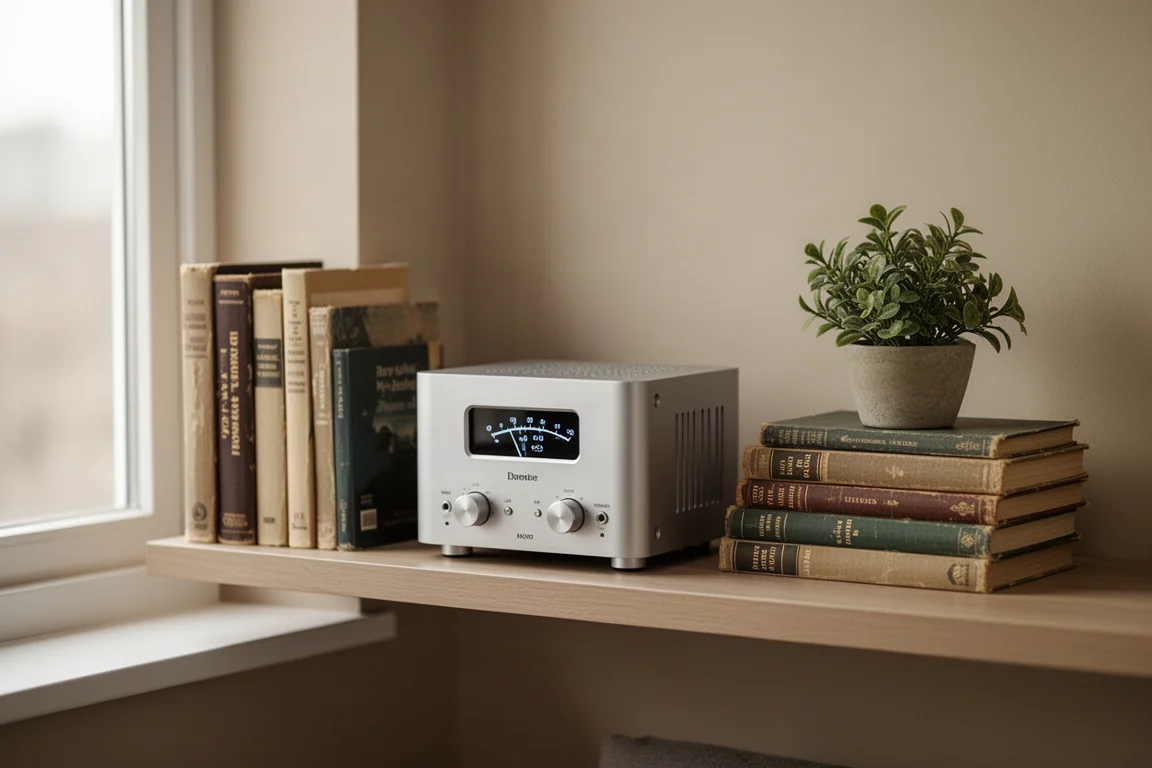
A compact integrated amplifier makes the most sense when one box needs to do the work of two and maximum output is not the priority.
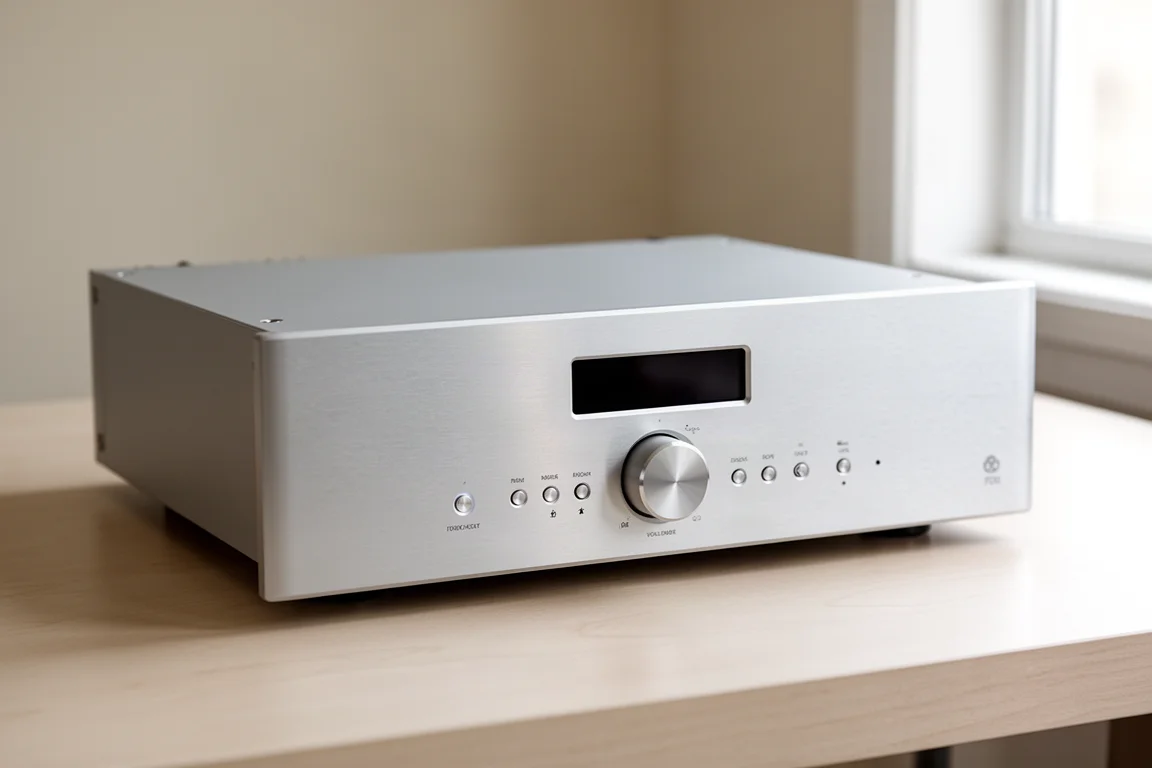
Best Streaming Hub: WiiM Ultra
The WiiM Ultra is the component that ties a small system together. It combines a streamer with a phono preamp, analog, optical and coaxial inputs, an optical output for an outboard DAC, volume control, room correction, a 10-band EQ and a parametric EQ, plus a headphone connection.
Bass management is included as well, with a subwoofer output and high-pass and low-pass filters. HDMI input and variable volume control mean the Ultra can feed a power amplifier directly, so the Ultra and a pair of V3 Mono amplifiers make a complete system for around $580.
The internal DAC already sounds very good, and the optical output means a dedicated converter can be added later without changing anything else in the chain. A remote control is included.
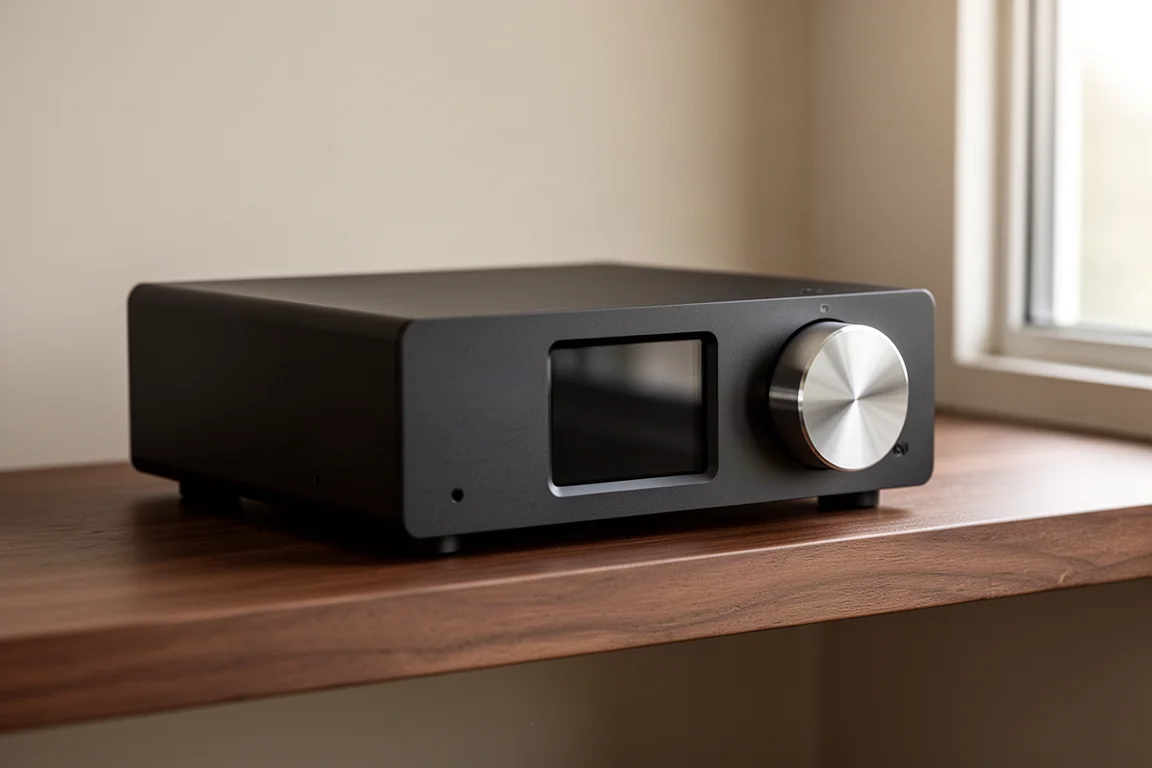
Best Outboard DAC: Geshelli Labs J2
The J2 is a socketed DAC offered with either an AKM 4493 or an AKM 4499 converter chip. The 4493 version is excellent and saves money, while the 4499 is the one to choose if the budget stretches that far.
Output is fixed voltage with no volume control, which is exactly why it pairs so naturally with the WiiM Ultra: the Ultra handles level, and the J2 handles conversion. Optical output from the Ultra feeds the J2, and balanced outputs from the J2 feed the balanced inputs on the Fosi amplifiers.
Socketed op-amps are the other draw. The stock Texas Instruments op-amps are already very good, and swapping in Sparkos or Burson parts is a straightforward upgrade that widens the soundstage and adds detail and air.
The J2 costs $430 in the aluminum case. A significant performance increase elsewhere starts around the $1,300 mark, which is what makes this converter such a strong value.
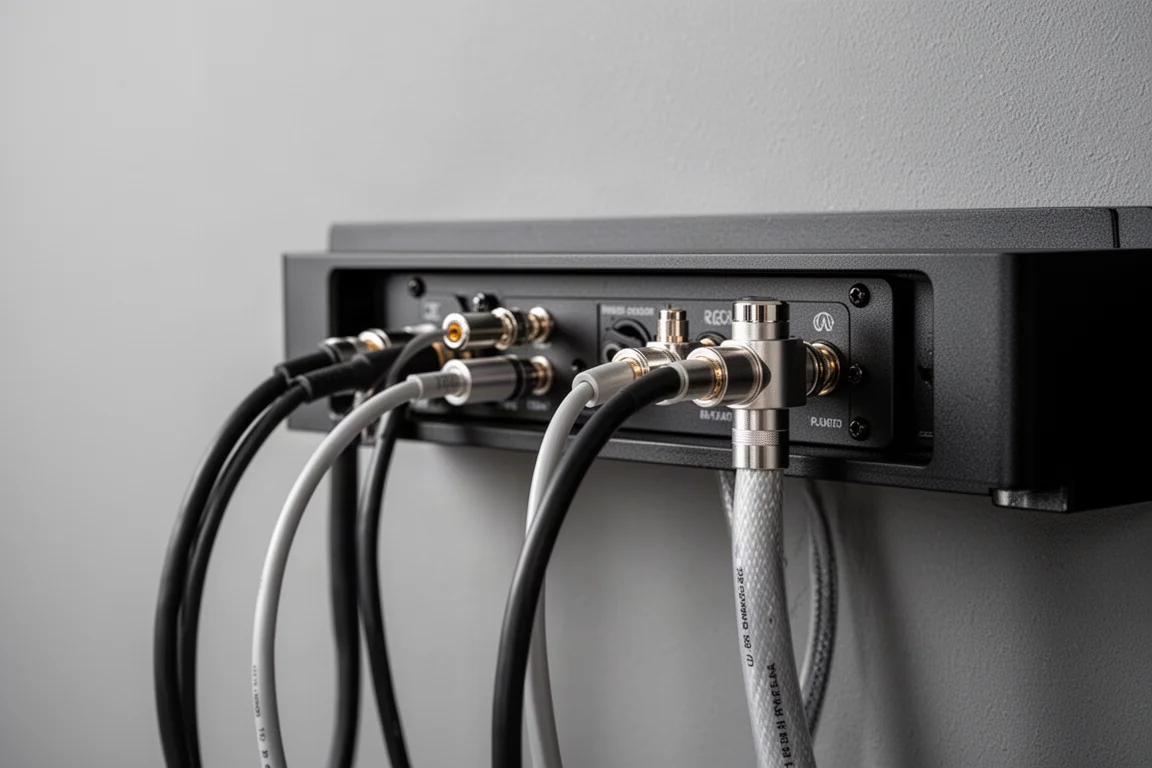
Pairing a fixed-output DAC with a variable-output streamer is what keeps a system this small flexible, since individual pieces can be upgraded without rebuilding the whole chain.
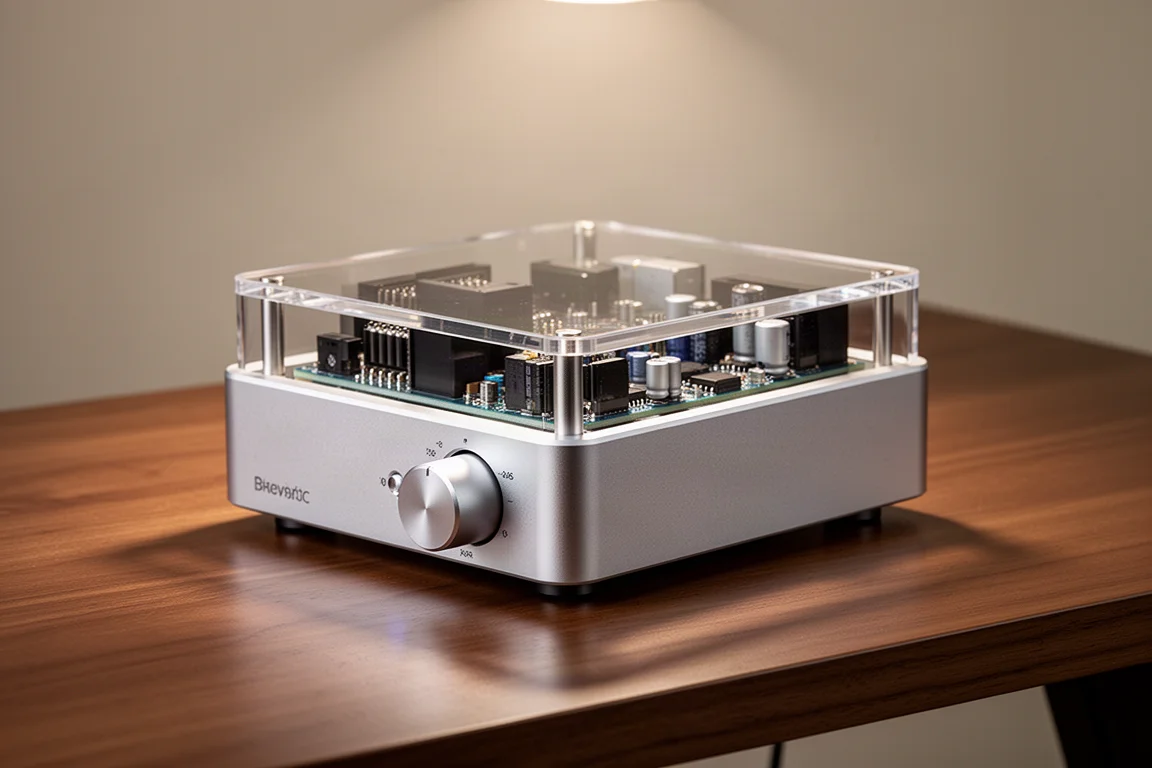
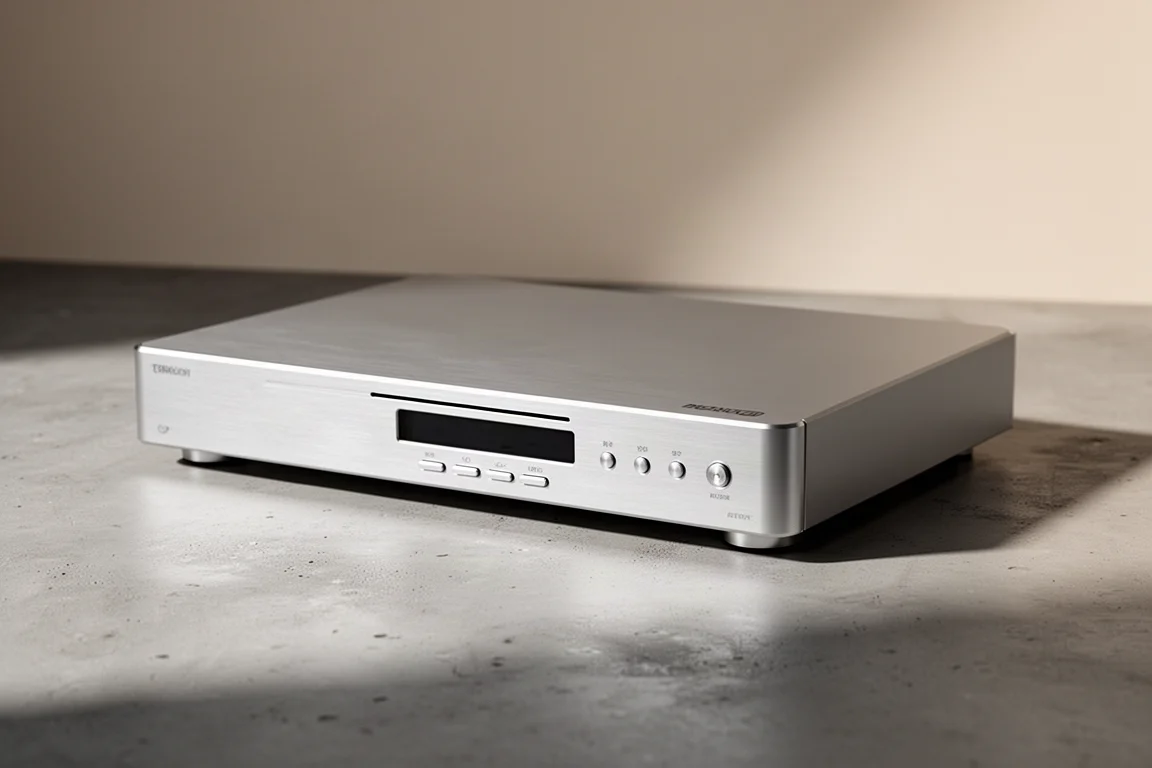
Best Compact CD Player: TEAC PD-301-X
The PD-301-X is for listeners who still buy discs. It plays CDs gaplessly, includes an FM tuner, and adds a front USB input for MP3 playback. Support for FLAC or WAV files would be a welcome update, since MP3 is the current limit.
The design leans traditional, and it matches the TEAC integrated amplifier visually. Build quality is metal throughout, and the player runs from a 12V DC barrel connector, which means a linear power supply can be added later for a performance gain.
At $550 it is not inexpensive, and compact CD players are a thin category. The RCA outputs use the player’s internal DAC, while a coaxial output lets you route the transport through the WiiM Ultra and on to the J2 so the better converter does the work.
Overall Buying Advice
A system like this can be assembled in stages. Start with the WiiM Ultra and a pair of V3 Mono amplifiers: roughly $580 for a streamer and preamp with room correction and EQ, plus well over 100 watts of class D power, all on a single shelf.
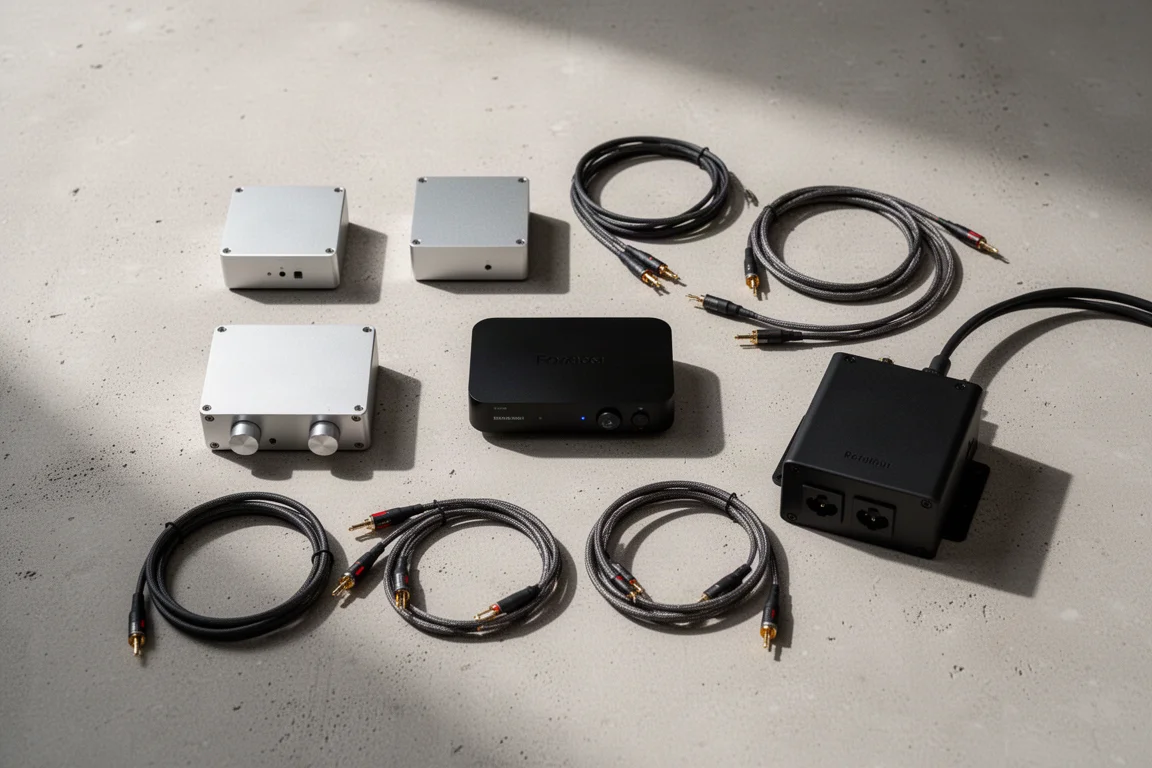
From there, the Geshelli Labs J2 is the upgrade that changes the most for the least money. Adding it brings the total to about $1,010 and moves conversion out of the streamer into a dedicated, socketed converter. The TEAC PD-301-X is the last piece to add, and only if physical media is part of how you listen. With it, the full system lands at $1,560.
The TEAC AI-303 sits slightly apart from the rest of the group. It is a $1,000 integrated amplifier with around 25 watts per channel, and it makes sense for listeners who want fewer boxes rather than maximum output.
Conclusion
You do not need every component here. The WiiM Ultra and a pair of Fosi Audio V3 Mono amplifiers already form a capable, genuinely compact system with volume control, room correction, streaming and plenty of power, and everything else is an upgrade rather than a requirement.
The Geshelli Labs J2 is the one to add first if conversion quality matters to you, since it is the piece that lifts the system furthest above its price. The TEAC PD-301-X is the specialist pick for disc collections, and the TEAC AI-303 is the simpler one-box alternative for anyone who values integration over output.
Further reading
Related Reviews
Hi-Fi Audio
Accuphase C-57 vs Allnic H-7000V: Two High-End Phono Stages Compared
A fully balanced solid-state phono stage with a pitch-black noise floor meets a tube design built for well-loved records. Here is how to choose between them.
Hi-Fi Audio
Active vs Passive Hi-Fi: Five Components for a Modern System
Five components that define modern active and passive hi-fi systems, with the strengths, trade-offs and setup details worth weighing before you buy.
Hi-Fi Audio
Advance Paris A10 Apex Review: A Hybrid Integrated Amplifier That Covers a Lot of Ground
A French hybrid integrated amplifier with a class A tube preamp stage, analogue power meters, and an internal DAC and phono stage good enough to make extra boxes unnecessary.