Gun Care
Best CLP for Firearms: 9 Products Tested for Wear, Corrosion, and Cleaning
Nine CLP and gun care products put through lubricity, cold-weather, heat, dust, and corrosion testing to see which ones actually protect your firearm.
Introduction
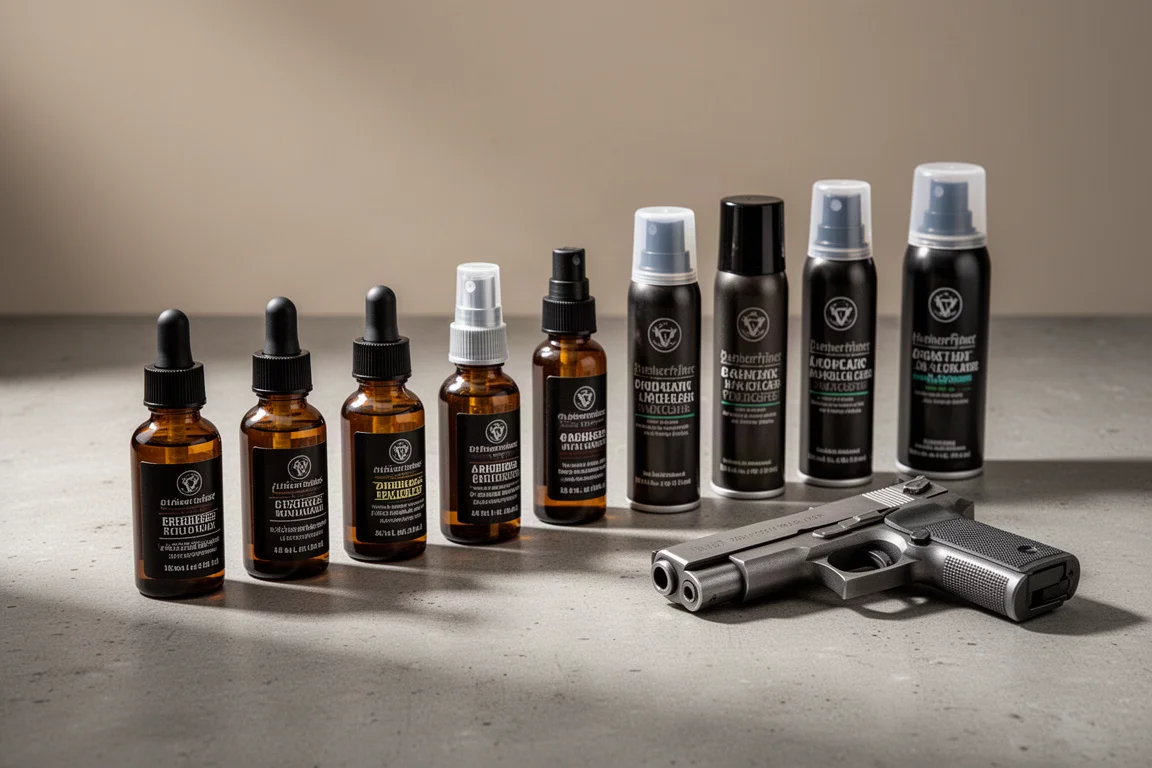
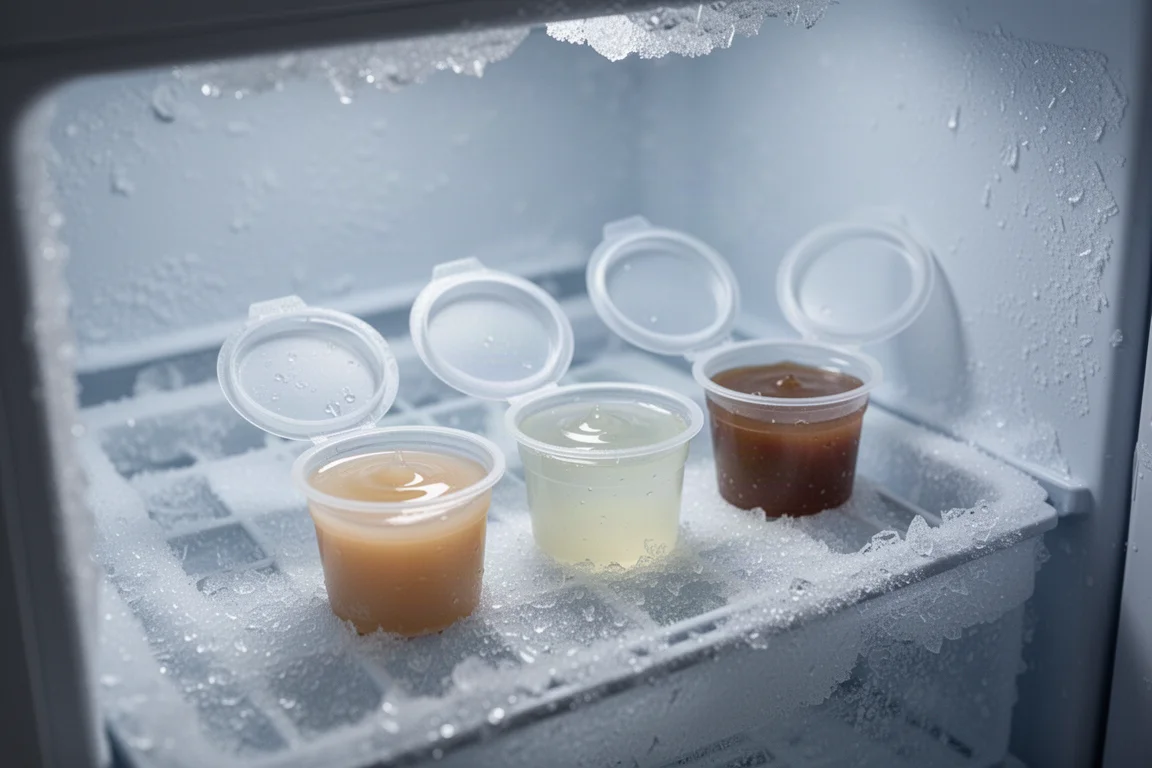
If you own a firearm, you want it to be dependable, and the lubricant you choose plays a bigger role in that than most people realize. We gathered nine CLP and gun care products, ranging from under a dollar per ounce to over four dollars per ounce, and ran them through a series of practical tests: wear protection, cold-weather flow, carbon removal, dust attraction, and corrosion resistance after heat exposure. The results were revealing, and none of the brands was perfect at everything.
How the Testing Worked
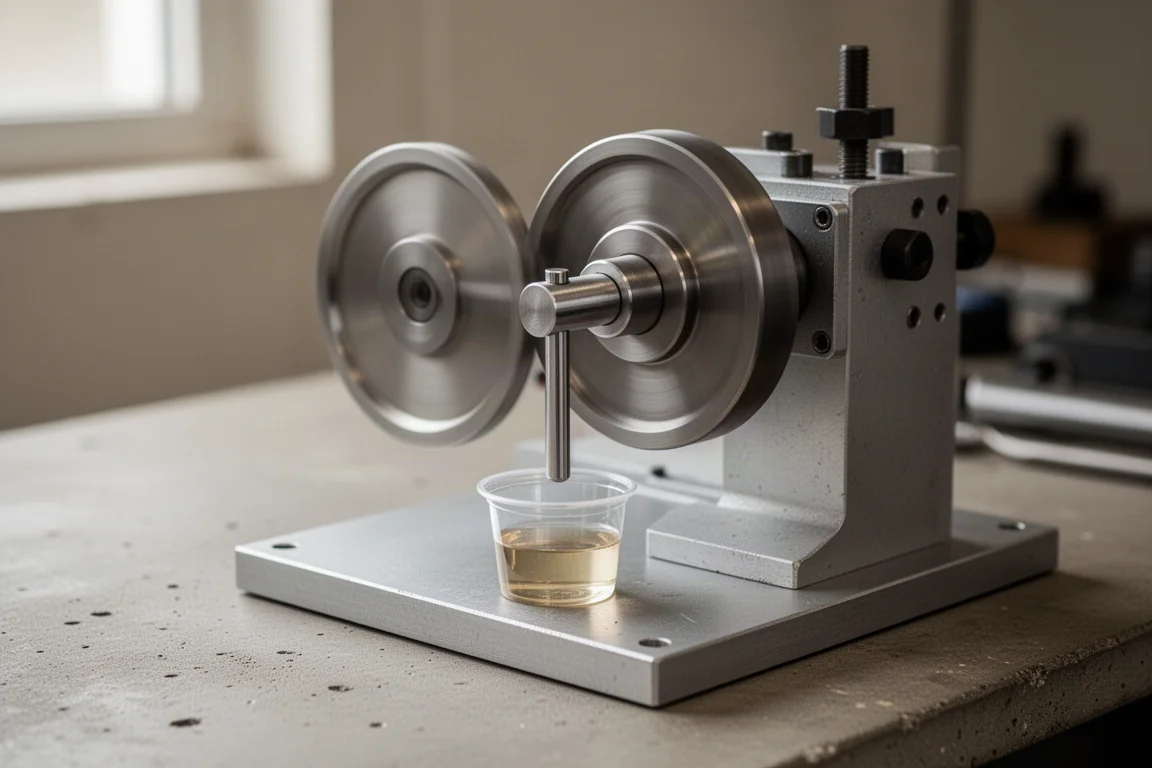
The headline test measured film strength using a lubricity tester. Half an ounce of each product coated a rotating steel wheel, and a test pin rested on top under identical downward force for every brand. After one minute, the wear scar on each test pin was measured with calipers and a microscope. Smaller wear scars mean less metal damage, and less wear means longer life for the moving parts in your firearm.
The MIL-PRF-63460F specification, which the US military requires for CLPs, also calls for a pour point of -74°F, so we froze every product at -40°F for 12 hours to see which ones still flowed. Beyond that, we tested how well each product dissolved heavy carbon buildup, how much dust each attracted on gravel-road test panels, and how well each resisted corrosion both with and without oven exposure at 400°F.
Wear Protection Results: The Lubricity Test
This is where the biggest gaps showed up. Ballistol posted the largest wear scar of the dedicated CLPs at 7.26 mm, with visible metal in its test cup. Clenzoil was in a different league entirely, posting just 1.81 mm with a nearly clean container and far less friction heat. Break-Free CLP came in second at 4.15 mm.
Slip 2000, despite claiming a 95 to 98 percent friction reduction, measured 7.41 mm. FrogLube landed at 5.67 mm, Hoppe’s No. 9 Bore Snake CLP at 7.72 mm, and Extreme Force at 5.02 mm. The Hoppe’s No. 9 kit lubricant fared worst at 8.52 mm, while Fluid Film, the budget wildcard, managed 6.59 mm despite a very thick consistency.
The Best Overall Wear Protection: Clenzoil CLP
At $17 for 8 oz, Clenzoil comes with a sprayer and is made in the USA. Its viscosity sits in a sweet spot: easy to apply without running or dripping. It easily won the lubricity test, and it also cleaned carbon very effectively, dissolving buildup nearly down to bare metal in two minutes.
Strong Runner-Up: Break-Free CLP
At $10 for 4 oz, Break-Free CLP is made in the USA, claims performance from -65°F to 475°F, and includes friction-reducing anti-wear additives. It delivered on wear protection with the second-best scar at 4.15 mm, handled cold weather flawlessly, and attracted the least dust of any product tested. Its weak spot was corrosion resistance, where it finished near the bottom both with and without heat exposure.
Budget Multi-Purpose Option: Ballistol
At $15 for 16 oz, Ballistol is by far the best value per ounce here, and it markets itself for everything from firearms and knives to leather, wood, and rubber. It performed well as a cleaner, cutting through carbon almost down to the metal, and collected relatively little dust. Its film strength was poor in the lubricity test, and it froze solid at -40°F and burned off under heat, leaving corrosion similar to untreated steel.
Synthetic Specialist: Slip 2000 Extreme Weapons Lubricant
At $17 for 6 oz, Slip 2000 is a pure synthetic metal treatment made in the USA that claims not to attract dust, dirt, or sand. It flowed acceptably at -40°F and performed well on dust collection. The lubricity result, however, fell well short of the marketing claim, with more friction than every other brand up to that point and a 7.41 mm wear scar.
Natural and Bio-Based: FrogLube CLP
At $13 for 4 oz, FrogLube markets itself as all natural, non-toxic, and USDA certified bio-based, made in the USA. It is a thick paste, which makes application more deliberate. Where it shone was corrosion: after heat exposure it performed the best of all nine products, and without heat it finished a close second behind Fluid Film. It passed neither the cold test nor delivered standout wear numbers, but its corrosion performance is genuinely impressive.
Classic All-in-One: Hoppe’s No. 9 Bore Snake CLP
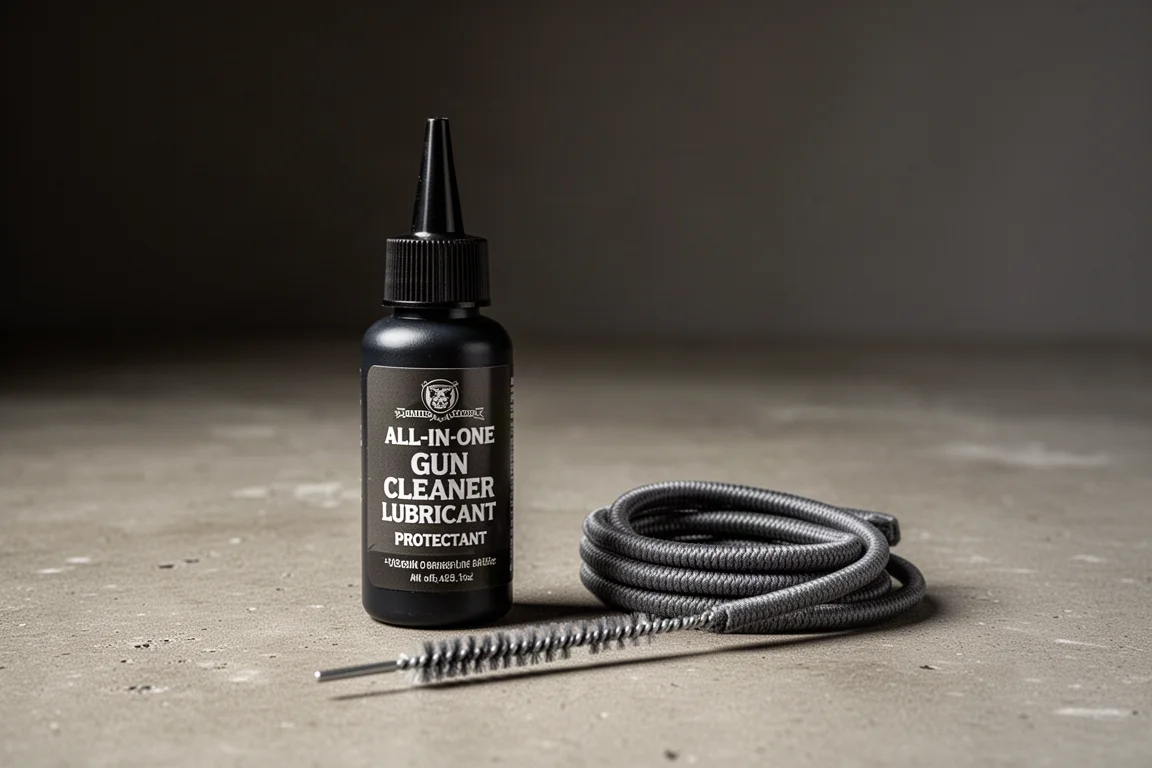
At $8 for 2 oz, Hoppe’s No. 9 Bore Snake CLP is made in the USA and designed to break down carbon, lead, and powder fouling while protecting against rust. It was the standout cleaner in the carbon test, cutting through buildup to bare metal better than any other CLP, and it flowed perfectly at -40°F. Wear protection was weak at 7.72 mm, and dust and corrosion results were middling.
Full-Auto Rated Contender: Extreme Force CLP
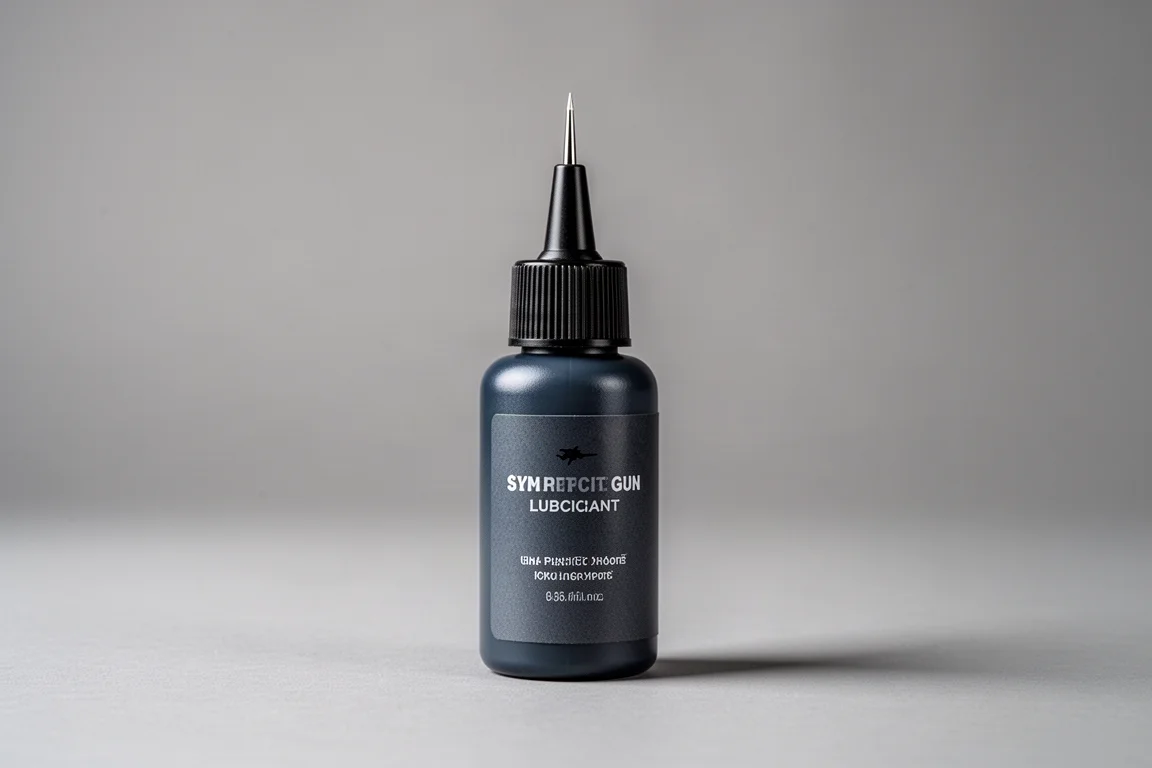
At $15 for 3.4 oz, Extreme Force is a 100% synthetic, full-auto rated lubricant with bonding agents for surface adhesion. It performed respectably in the middle of the pack on wear at 5.02 mm, and its corrosion resistance after heat exposure was third best overall. Cold weather was its undoing: it was extremely solid after 12 hours at -40°F, and its packaging gives no country of origin.
The Traditional Approach: Hoppe’s No. 9 Cleaning Kit
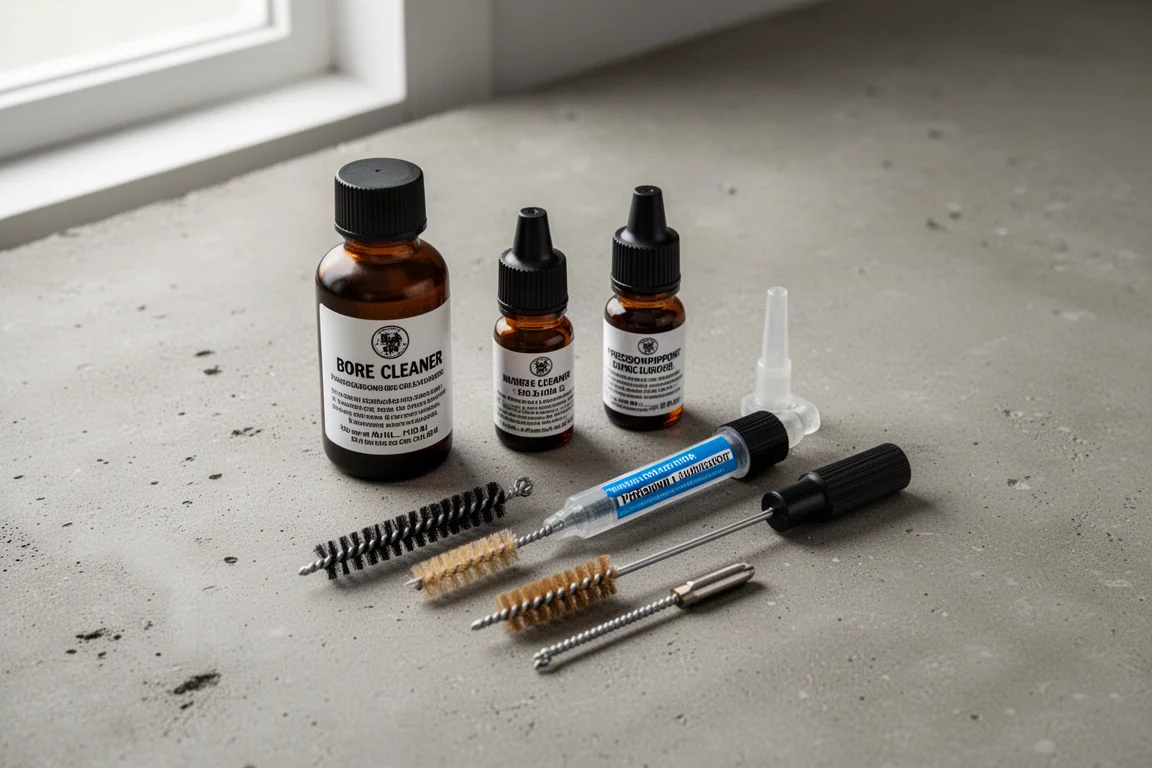
At $19, the Hoppe’s No. 9 kit takes the separate-products approach: a 2 oz gun bore cleaner plus two lubricating oil containers, including a precision pinpoint lubricator. It cleaned carbon very well, but the kit lubricant produced the largest wear scar of the entire test at 8.52 mm and froze solid in the cold. Its corrosion resistance, however, was excellent, finishing second after heat exposure and third without.
The Budget Wildcard: Fluid Film
Costing less than a dollar per ounce and made in the USA, Fluid Film is marketed as a penetrant that even works on guns. Its very high viscosity makes it messy to work with, and it froze solid at -40°F. But it blocked corrosion better than anything else when not heat-exposed, cleaned carbon as well as any dedicated CLP, and collected relatively little dust. For pure rust prevention on a budget, nothing here touched it.
Heat and Corrosion Resistance
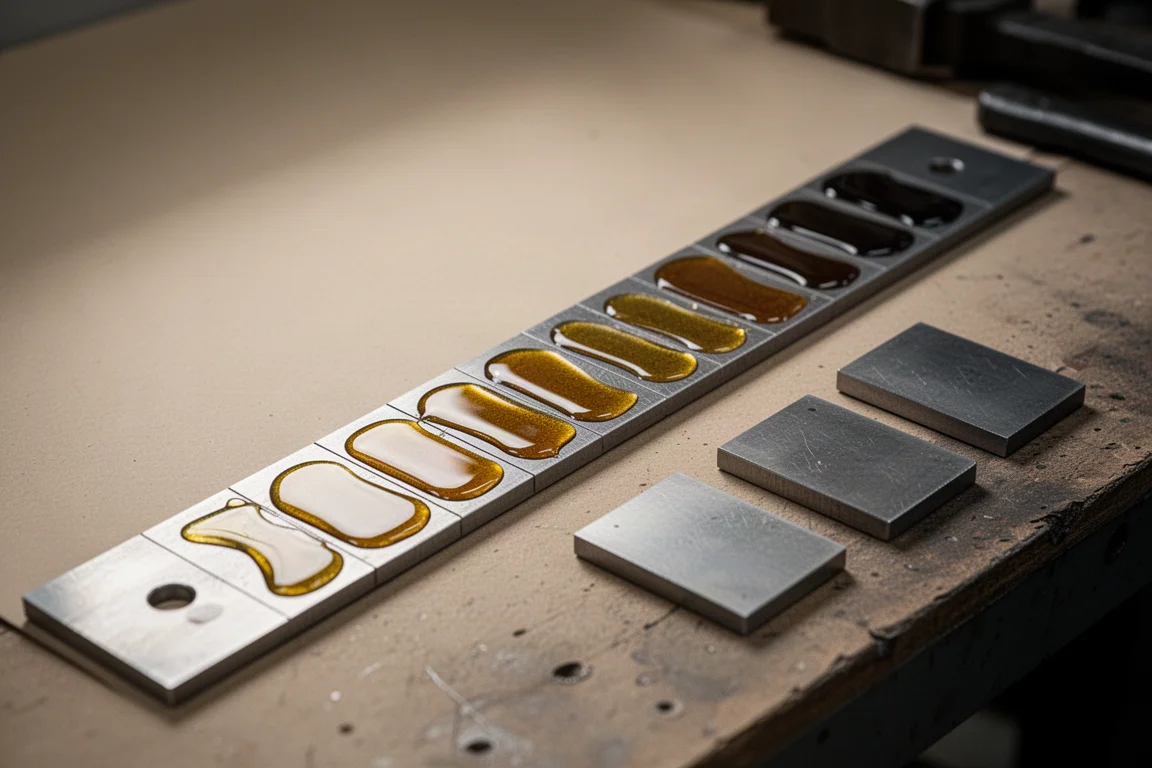
Moving parts on a firearm generate real heat, so lubrication that burns off leaves metal exposed. After an hour in a 400°F oven followed by a corrosive mist of hydrogen peroxide, vinegar, and salt, FrogLube came out on top with very little corrosion, followed by the Hoppe’s kit lubricant, Extreme Force, and Clenzoil. Ballistol and Break-Free CLP fared worst here.
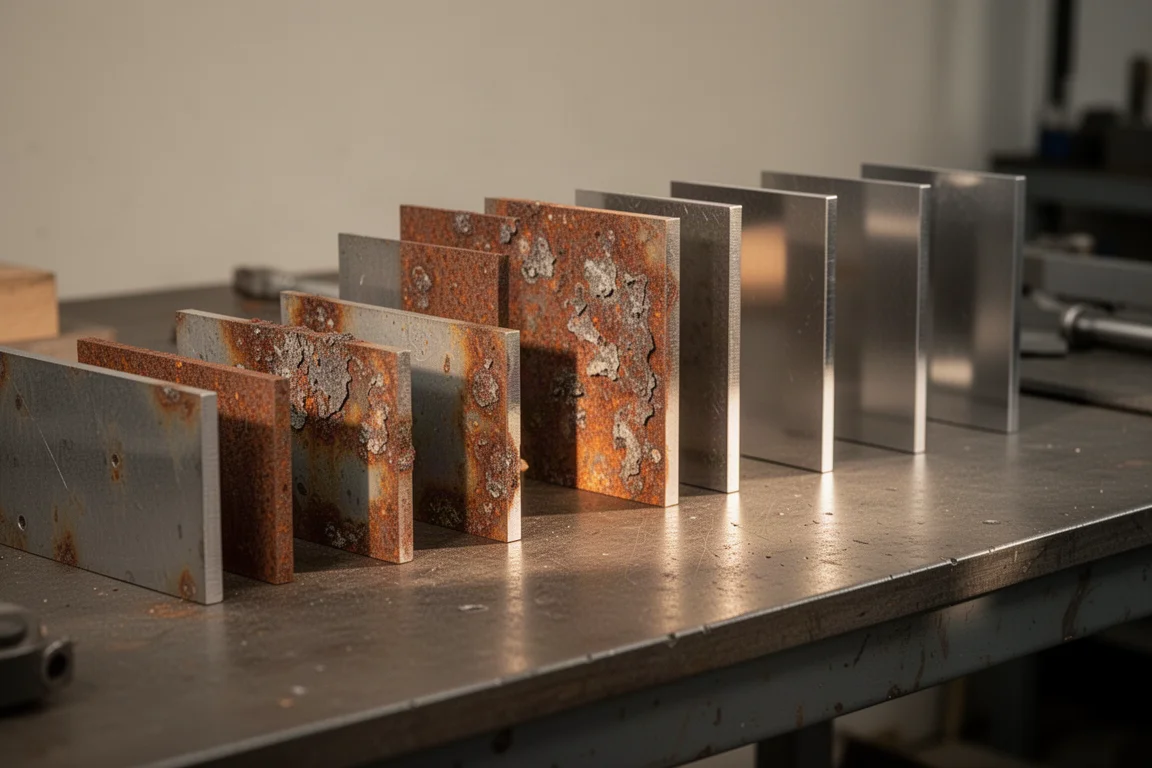
On the unheated panels, Fluid Film won, FrogLube was a close second, and the Hoppe’s kit oil took third. The pattern is clear: the best corrosion blockers are not necessarily the best wear protectors, which is why matching the product to your priorities matters more than chasing a single winner.
Dust Attraction
All coated panels attracted more dust than bare metal, but the differences were measurable. Break-Free CLP collected the least, earning the top mark, with Clenzoil, Slip 2000, FrogLube, the Hoppe’s kit oil, and Fluid Film all close behind. Extreme Force and Ballistol attracted the most.
Which CLP Should You Buy?
None of these products was perfect at everything, and some of the cheaper options outperformed pricier ones. If wear protection is your priority, Clenzoil and Break-Free CLP clearly stood out, and both will do a great job preventing wear on your firearm’s moving parts. If corrosion is your biggest concern, look at FrogLube or Fluid Film. If cold weather matters, Break-Free CLP, Slip 2000, and Hoppe’s No. 9 Bore Snake CLP were the only three that flowed at -40°F.
Conclusion
The best CLP really depends on what you need it to do. Clenzoil offers the strongest overall wear protection with solid cleaning, Break-Free CLP pairs excellent lubricity with the best cold and dust performance, FrogLube dominates corrosion resistance, and Fluid Film delivers remarkable rust prevention for under a dollar an ounce. Match the product’s strengths to your climate, your shooting conditions, and your budget, and you will end up with a dependable firearm.
Further reading
Related Reviews

Backpacking Gear
Building a 10 lb Base Weight: An Ultralight Backpacking Gear List
A practical walkthrough of the ultralight pieces behind a 10 lb base weight, from a 765 g pack and a roomy one-person tent to a full camp chair and a dependable water filter.

Road Bikes
10 New Road Bikes Worth Watching: Aero, Titanium, Steel and Endurance Standouts
A practical roundup of 10 new road bikes, from aero flagships chasing single-watt gains to titanium, steel and endurance platforms built for real roads.
Bikepacking Gear
11 Bikepacking Essentials for Long-Distance Cycling
Eleven bikepacking essentials for long-distance cycling, from a steel gravel frame and a two-person tent to helmet lights, packable gloves, and a frame bag that puts weight in the right place.