Camping Tents
Best Camping Tents 2026: Eight Tents Tested Side by Side
Eight camping tents from Mountain Hardwear, Marmot, Gazelle, Big Agnes, Nemo Equipment, Snow Peak, REI Co-op and The North Face compared across setup, space, features, ventilation, rain protection, quality and portability.
Introduction
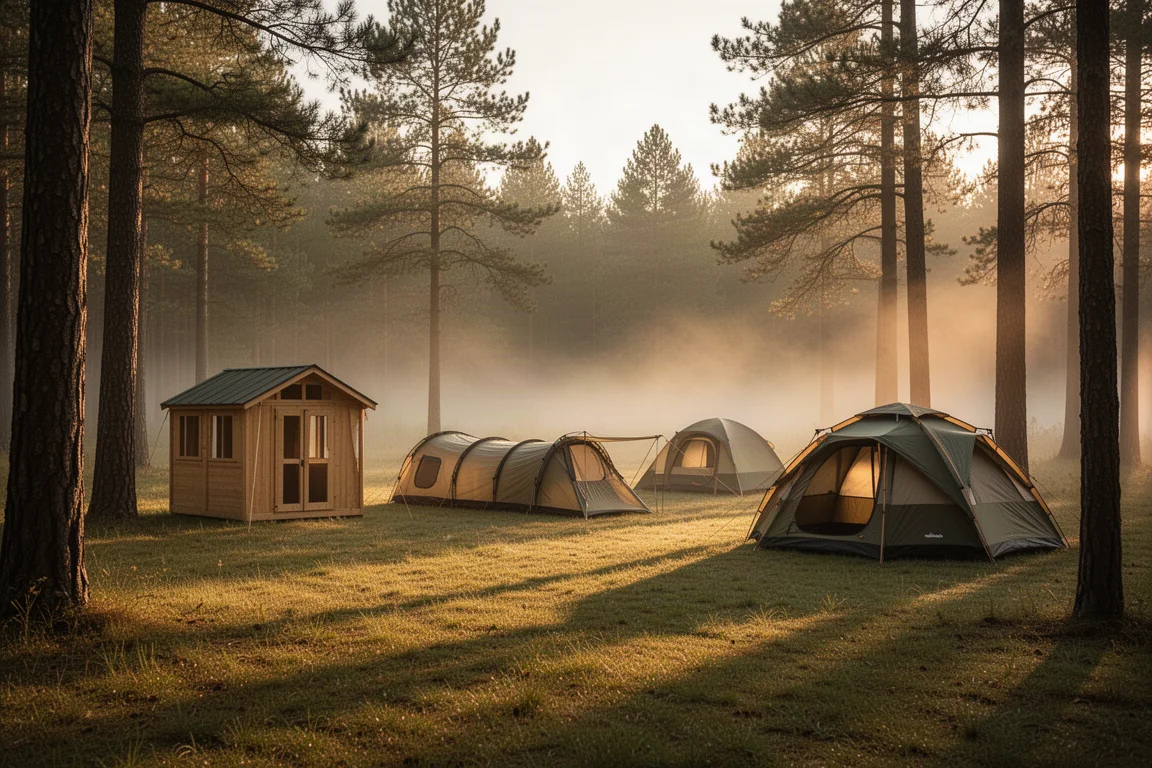
Buying a group camping tent is really a series of trade-offs. An instant tent goes up in seconds but weighs a lot. A cabin tent gives you standing room almost everywhere but offers more surface for wind to push against. A full rainfly keeps multi-day rain out but adds poles and setup time. To turn those trade-offs into something usable, eight tents from eight established brands were bought and tested over roughly two months, in a test set that cost more than $3,500. The group covers three-person, four-person, five-person and six-person models from Mountain Hardwear, Marmot, Gazelle, Big Agnes, Nemo Equipment, Snow Peak, REI Co-op and The North Face.
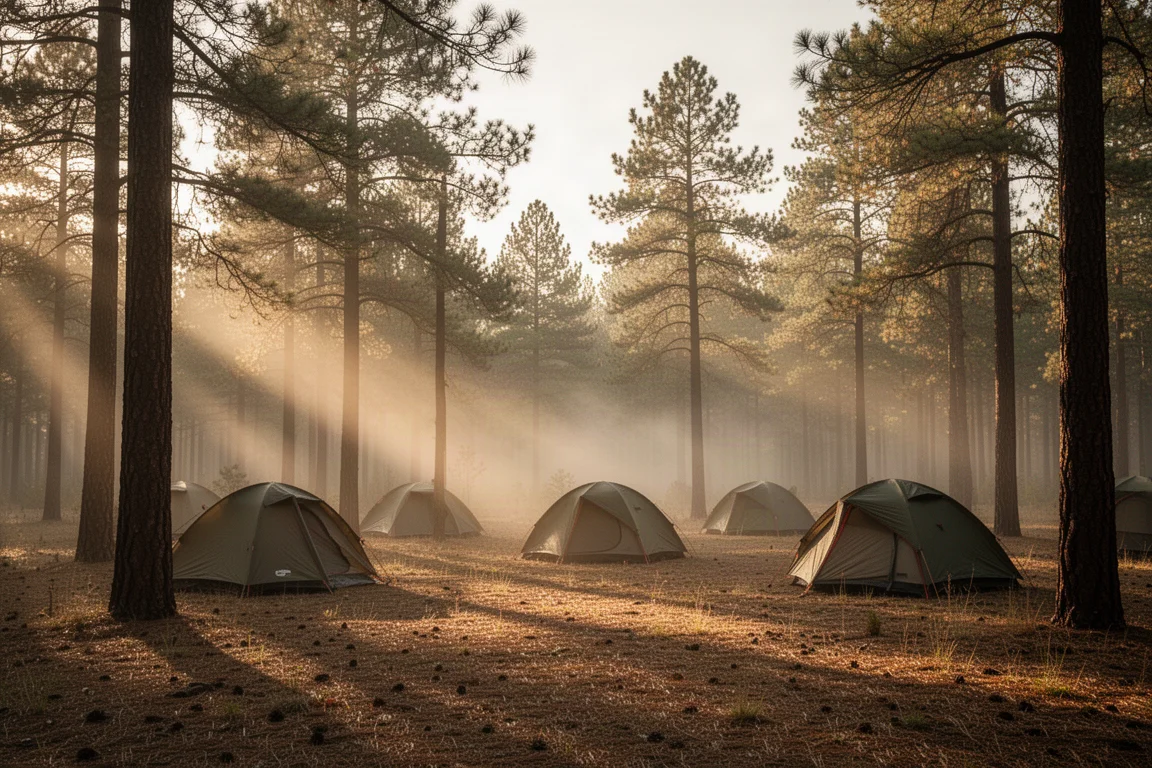
Almost every tent here comes from a brand with a strong reputation, and most of them scored well in most categories. That is exactly why the differences matter. The right pick depends on how many people you sleep, how long you stay out, what weather you expect, and how much weight you are willing to carry. Setup and pack-away times were also divided by each tent’s rated capacity, because comparing a three-person tent against a six-person tent on raw stopwatch time alone would not be fair.
How These Tents Were Evaluated
Seven categories shaped the results. The first was ease of setup and pack-away, timed with a stopwatch for the full process, including every stake and guy line, but excluding footprints where one was provided. Setup and pack-away times were then expressed per person to keep tents of different sizes comparable.
The second was spaciousness, which covered peak height, livable space measured at several points inside the tent rather than only at the centre, inner floor area, and vestibule area. The third was features: the number and size of doors, how easily door fabric could be stowed, windows, pockets, gear loops and other storage.
Ventilation came next, looking at how much mesh each tent body has, whether that mesh can be zipped closed, and how many vents each tent offers for wet weather. Rain protection covered waterproofing design such as tub floors, seam taping and rainfly length, followed by timed heavy rain tests of at least one hour, with some tents pushed to five hours or more.
Quality looked at floor, canopy and rainfly materials, pole type and thickness, zippers, mesh rating and warranty length. Portability covered total packed weight and measured pack volume. Finally, the manufacturer’s suggested price per person was plotted against each tent’s overall score to show which tents deliver more than you pay for.
Mountain Hardwear Mineral King: Best Lightweight Three-Person Tent
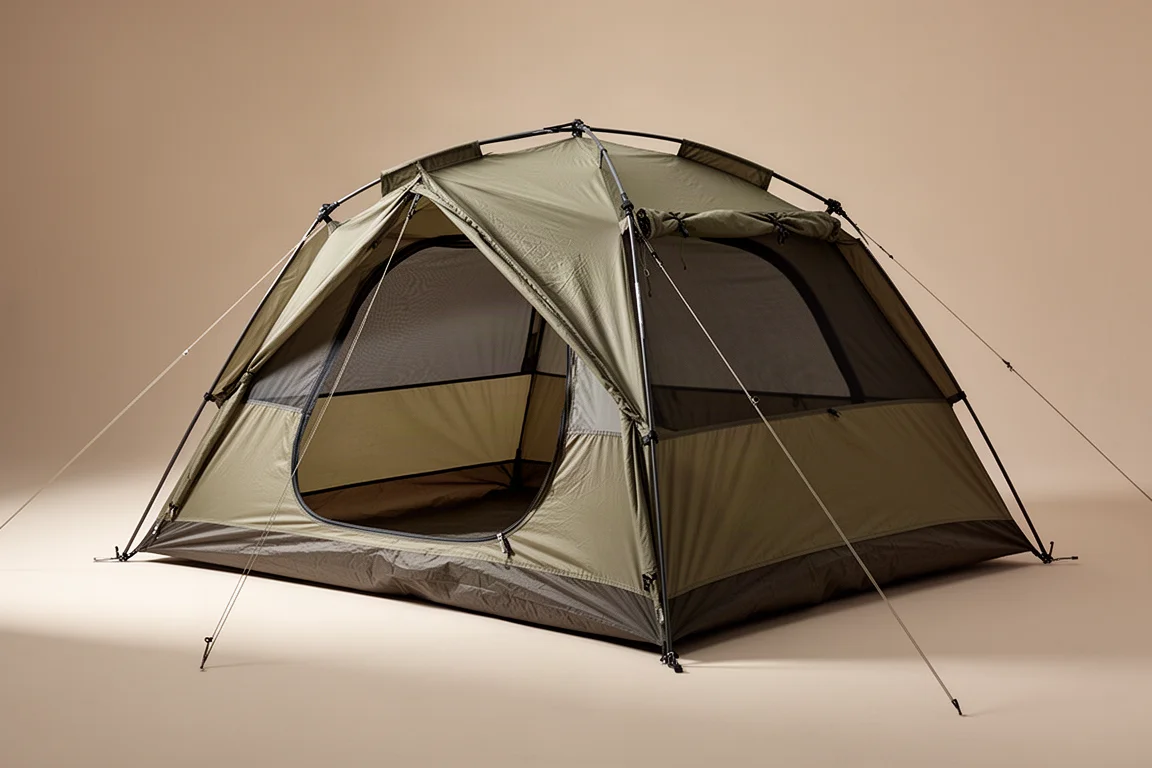
The Mineral King is the standout for anyone who needs a smaller tent that still packs easily. It weighed under 10 lb in testing and came with a footprint included. The floor is thinner 68 denier nylon, so that included footprint is worth using, but the rest of the build is reassuring: polyester ripstop fabric, YKK zippers, and DAC Pressfit poles that measured slightly thicker than the poles on the larger four-person Marmot Tungsten.
Ventilation is a strong point. The Mineral King has a lot more mesh than the bigger tents here, which makes it a natural fit for warm-weather camping. It also has a full rainfly, and in testing the fly became damp around the five hour mark while the interior stayed perfectly dry. That is the behaviour you want from a full fly: the wet outer layer stays away from the sleeping area.
Storage is unusually generous for a three-person tent. A long clothesline runs across the entire interior and is long enough to be used as several separate hanging sections, and the pocket count is high for this size class. The door is also bigger than the door on the four-person Marmot, and door fabric stows into a pocket in about three seconds instead of being wrapped with a toggle. The carry bag includes an adjustable shoulder sling.
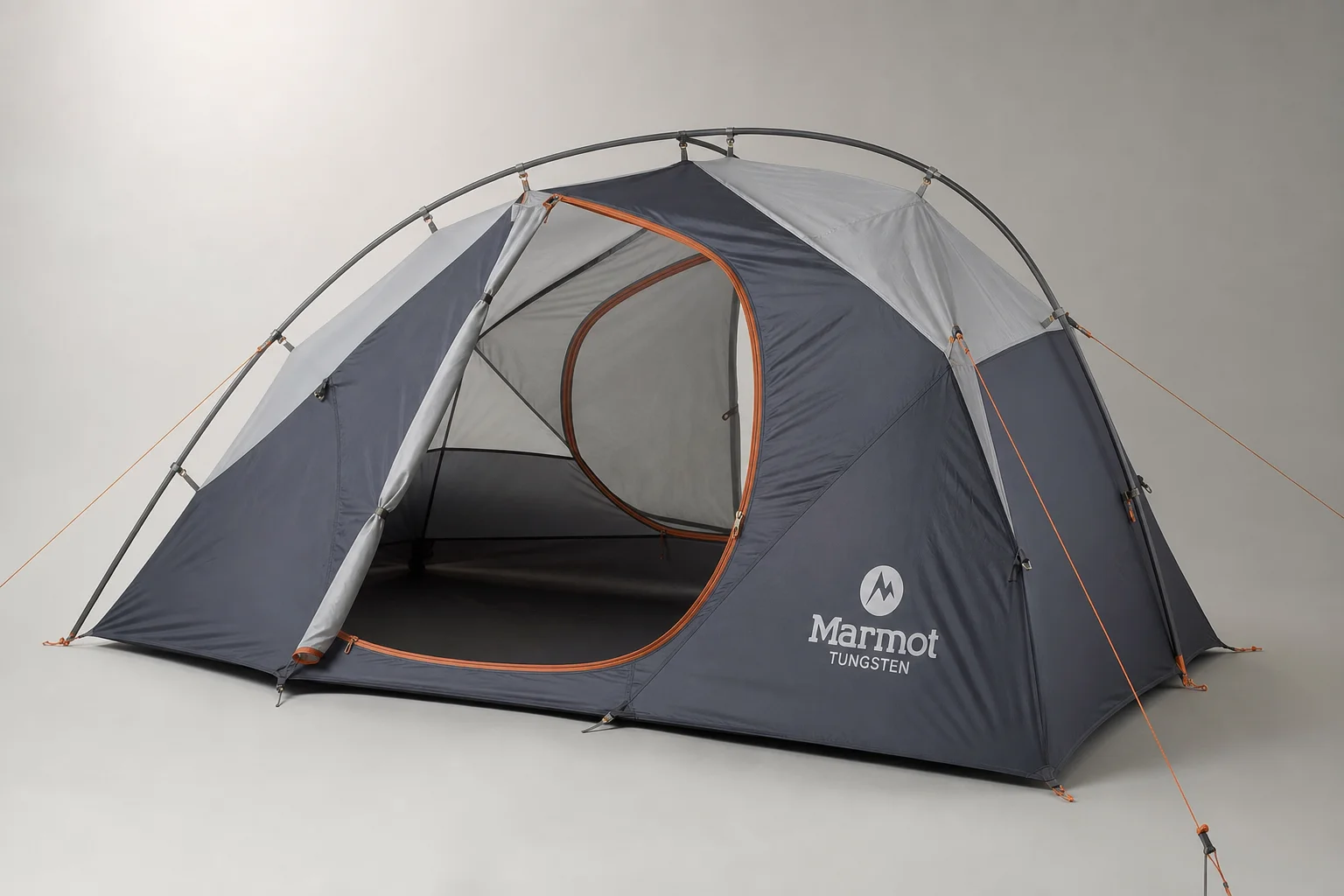
Marmot Tungsten: A Cheaper Four-Person Option
The Tungsten is the other lightweight tent under 10 lb, and it comes with a footprint as well. It offers slightly more floor area per person than the Mineral King and costs about 15% less, which makes it tempting on paper. In practice, the savings show up in the hardware and materials.
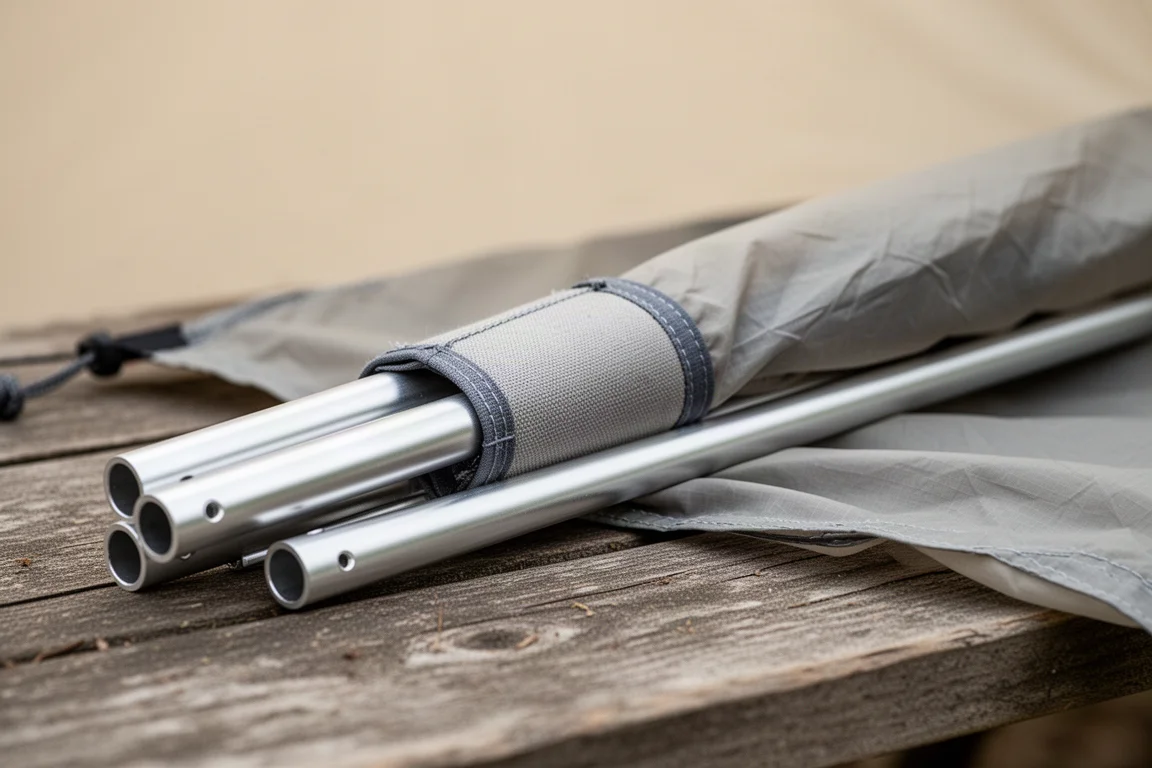
The poles are regular aluminium rather than DAC, and they are thinner than the Mineral King’s despite the Tungsten being the larger tent. During testing one pole was not fully seated when the structure went up, and it split at that point, which is a reminder that regular aluminium is less forgiving. A small hole also appeared in the 68 denier nylon floor. It was easily repairable, but it underlines why the included footprint matters here.
The full rainfly did its job in moderate rain, becoming damp at the two to three hour mark while the interior stayed dry. A longer flooding test was less convincing: after a couple of hours the seams let in a large puddle of water. Door fabric uses toggles rather than pockets, which takes around 10 to 15 seconds to stow, and the carry bag has no handles or hand grips at all. For a lightweight tent that will mostly see fair weather, it is a reasonable budget-minded choice. For anything wetter or longer, the Mineral King is the safer buy.
Gazelle T4: Best Instant Tent
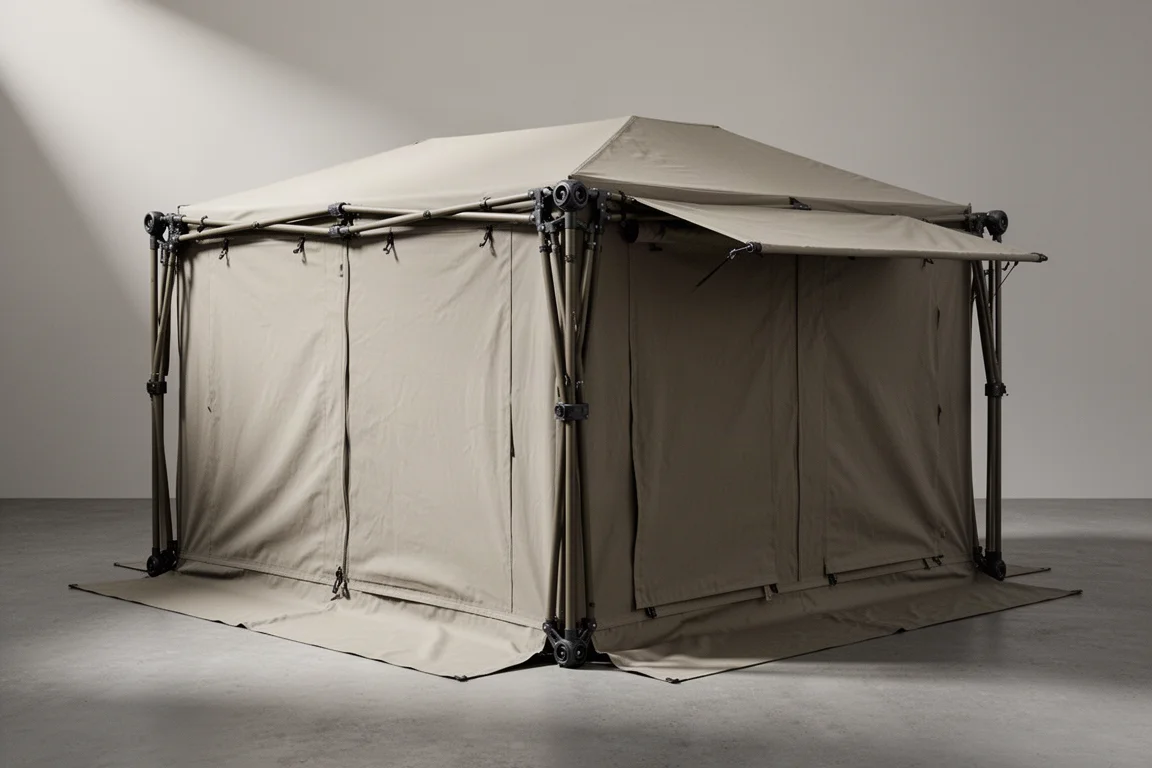
The T4 is an instant tent with pre-attached poles. Pull on the wall hubs and the whole thing pops open on its own. In timed testing it set up and packed away anywhere between two and three times faster per person than every other tent here, which is a genuine advantage at the end of a long day.
The shape is what makes it so livable. With four vertical walls, the T4 behaves like a cabin tent. Peak height is just under 78 in and the lowest point inside the tent still measured about 67 in, so standing height covers practically the entire floor. The T4 itself has no vestibule, and if you want one you have to step up to the T4 Tandem Hub version. Materials across the tent are notably thick and durable, and fiberglass poles are the correct choice for a mechanism that needs to flex.
The trade-offs are real. The T4 weighs more than 30 lb and packs very long, so it is worth checking the packed dimensions against your vehicle before ordering. The rainfly is short, and wet seams appeared after a few hours of rain, so this is not the tent for multi-day storms. The doors are small and easy to trip over, and stowing door fabric with the tie-downs took more than 20 seconds. Because it has less mesh than most tents here, it leans toward shoulder-season use rather than hot summer nights.
Big Agnes Bunk House: A Spacious Tunnel Tent Built for Weather
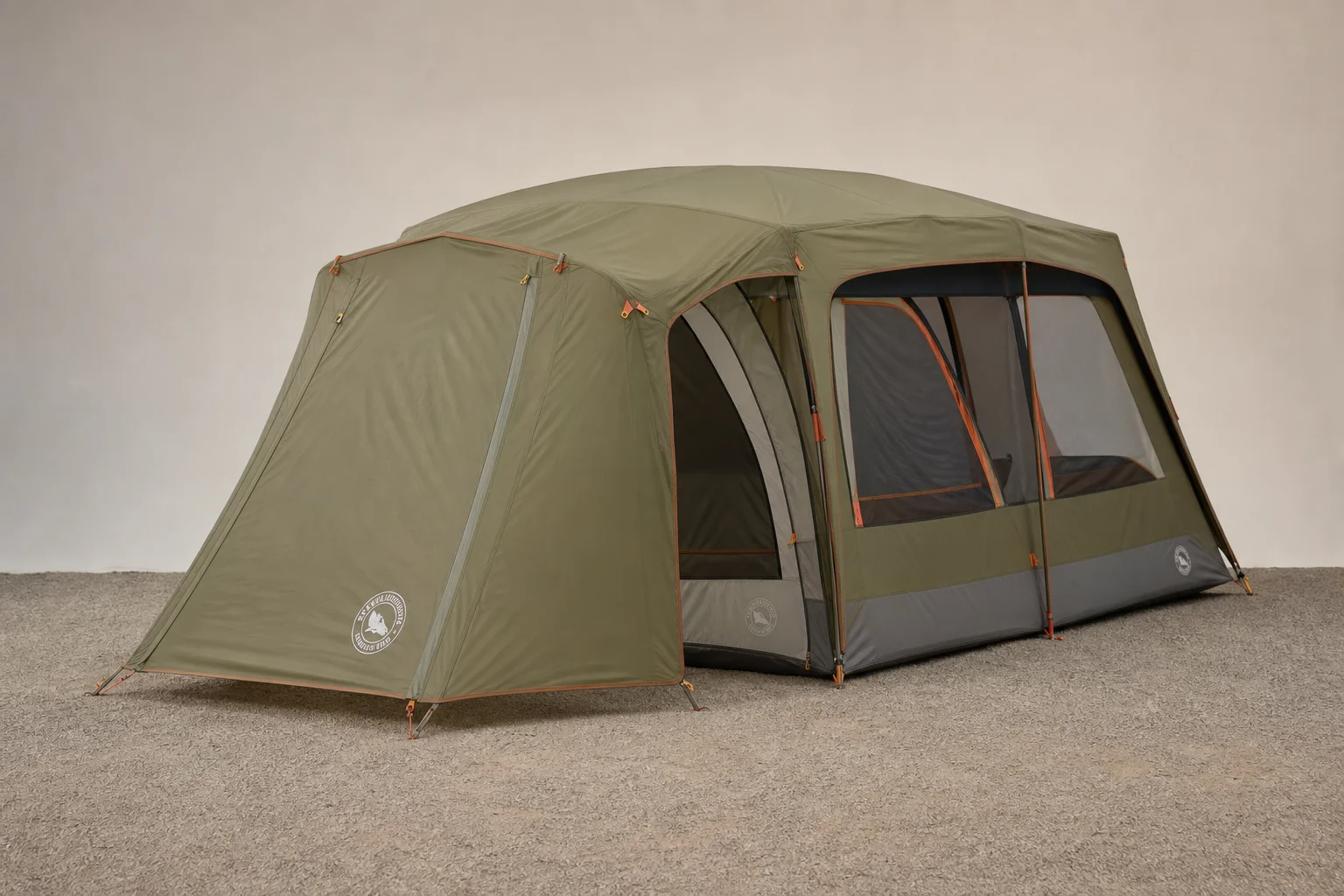
The Bunk House gets its tunnel shape from a ridge pole that runs the entire length of the tent. That single design decision is why standing height carries down the whole length of the interior, and why walkability came in around 80% of the floor. Tents with ridge poles running across the width instead, like the Nemo and the REI Base Camp, feel noticeably tighter to move around in.
The front vestibule is tall enough near the door for a shorter person to stand, with a peak of about 67.5 in at the back of the vestibule, dropping to 58 in at the front. It also brings DAC aluminium poles, a full rainfly, eight guy lines, and pocket door keepers that stow the door in roughly three seconds. Along with the Wawona, it has the most tie-downs here, which is what you want when the wind picks up. In rain testing it held up better than the Nemo over a two hour period.
Two things to weigh. The floor is 75 denier poly taffeta, which is a slightly stronger fabric than the 150 denier polyester typical of camping tents but thinner than most of the field. And this tent sits above the price range of the rest of the group, which is why it has to earn its place on walkability, weather protection and hardware rather than value.
Nemo Aurora Highrise 6: Quick to Pitch
The Aurora Highrise 6 is not an instant tent, yet it was one of the quickest to set up among the non-instant options. The reason is simple: it has the smallest rainfly of any non-instant tent in this group, along with modest vestibules, and fewer fabric surfaces mean less time spent clipping and tensioning.
Two ridge poles run across the width of the tent, which pulls the front and back walls close to vertical and adds livable space over a plain dome. Walkability came in around 70%, lower than the Big Agnes because the ridge poles run across the width rather than along the length.
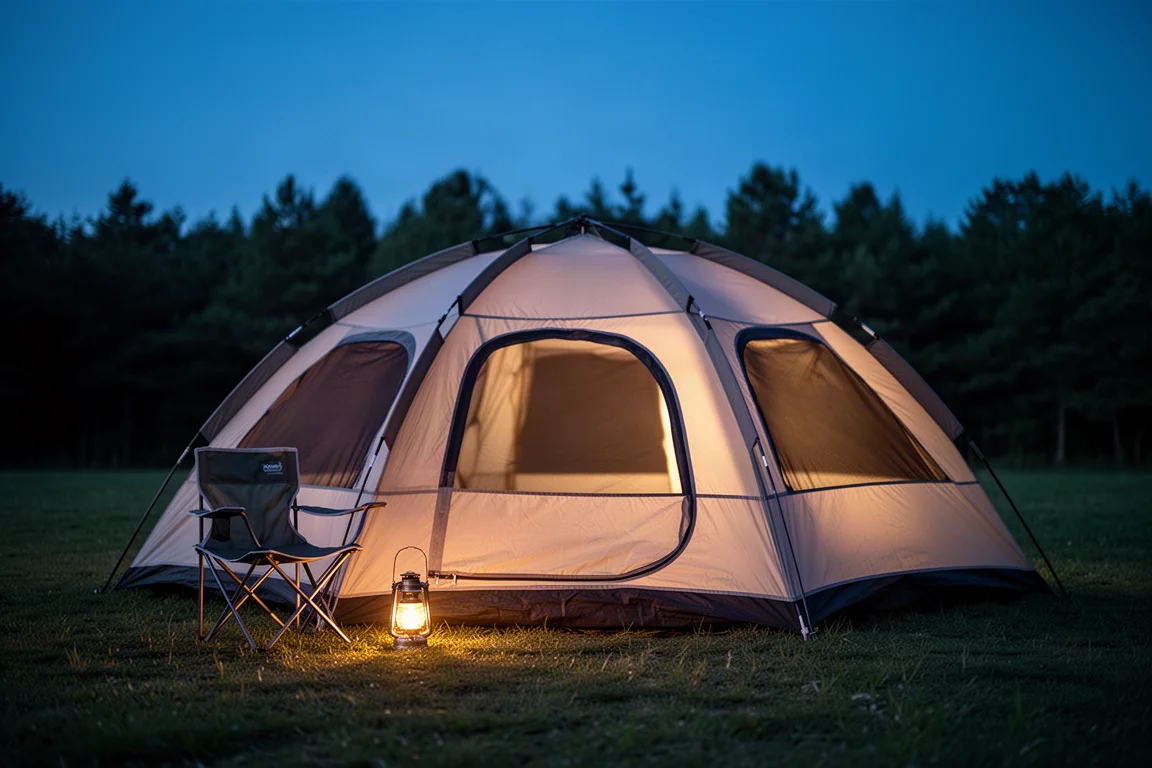
Weather protection is where it gives ground. Close to two hours into a heavy rain test the rainfly was starting to look damp, and the waterproofing did not inspire as much confidence as the best tents here. A realistic estimate is around four to five hours of heavy rain before things get uncomfortable. For short trips in mild conditions, the fast pitch and the roomy interior make it an easy tent to live with.
Snow Peak Alpha Breeze: Best All-Season Pick
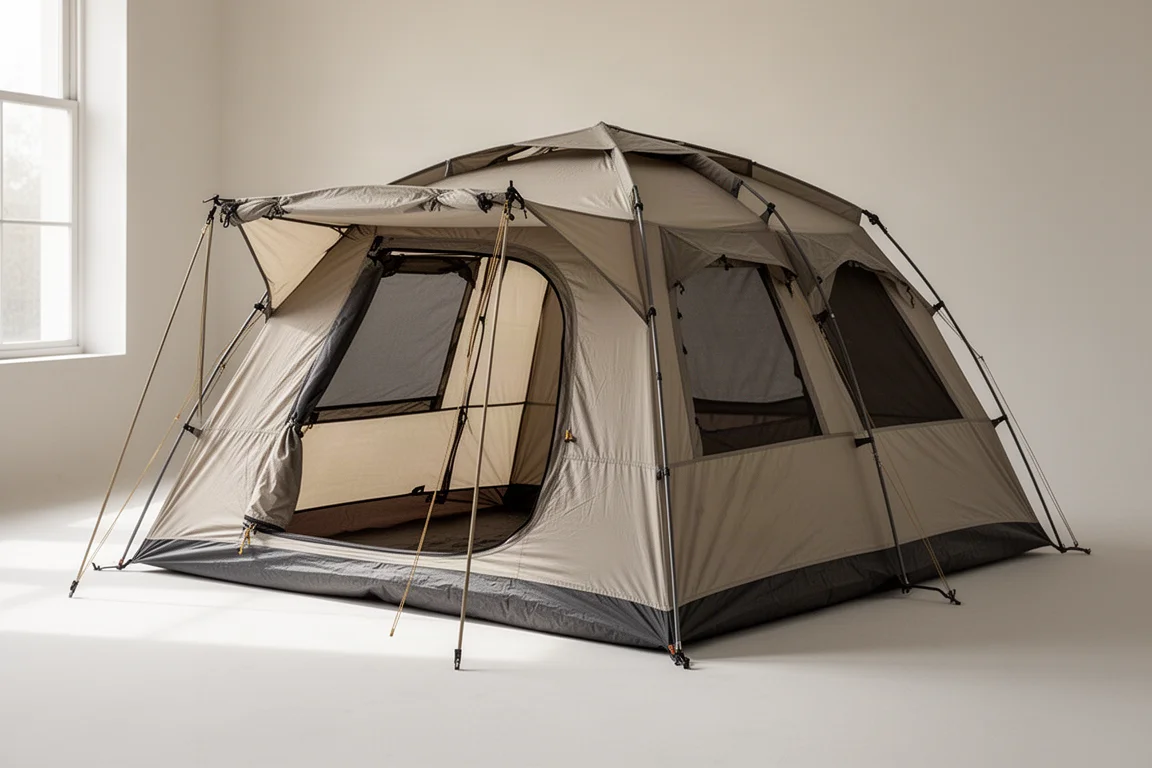
The Alpha Breeze is the most versatile tent in this comparison, and the reason is a single feature that no other tent here offers. Its mesh panels can be zipped fully closed around the entire tent, so it can run at effectively zero percent mesh in cold weather and open up completely in summer. Even tents with limited mesh, like the Gazelle and the REI Base Camp, still have ceiling mesh that cannot be zipped shut.
That flexibility is backed up by real weather performance. The Alpha Breeze has a full rainfly and came through five hours of heavy rain with no leaks at all, which was the best result alongside the Wawona. With the fly removed and all the mesh panels open, including four doors and two vents, there is enough airflow for warm-weather camping.
It is a five-person tent with four doors: a large front door, a slightly smaller back door, and two small side doors that are convenient even if they are not huge. The poles are 6061 aircraft grade aluminium, which is stronger than regular aluminium. The compromises are a more tedious setup with more poles, an A-frame back half that removes all standing room there, and a heavier packed weight. Accept those and it is an excellent all-rounder.
REI Co-op Base Camp 6: Best for Cold and Shoulder-Season Camping
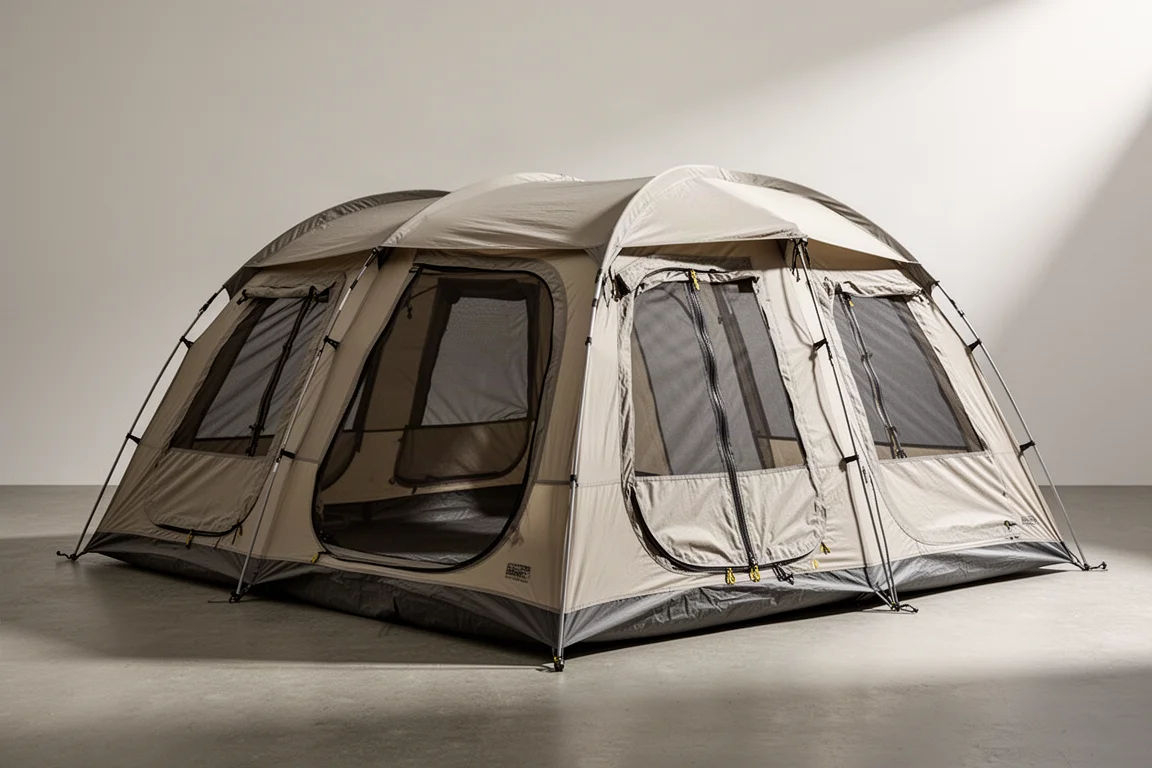
The Base Camp 6 uses two ridge poles running across the width, which brings walkability to roughly 70% and puts it level with the Nemo on interior movement. Its floor is square, which meant only one queen bed would fit during testing. The vestibule is slightly larger than the Wawona’s, but it realistically holds about two chairs and not much more.
Where it pulls ahead is cold-weather behaviour. Mesh is limited, and the tent has a full rainfly, so it ends up nicely double-walled with warmth held inside. That same combination makes it hot and stuffy in summer, so treat it as a shoulder-season and cold-weather tent rather than a summer one. In a two hour rain test it held up better than the Nemo.
Feature count is a strong suit: double the storage options and windows of the Wawona, pocket door keepers, and slightly better canopy, rainfly and zipper materials. It sits at roughly the same price as the Wawona, which makes the choice between them a question of season rather than budget. Note that the warranty is shorter than most of the group.
The North Face Wawona 6: Best for Summer Family Camping
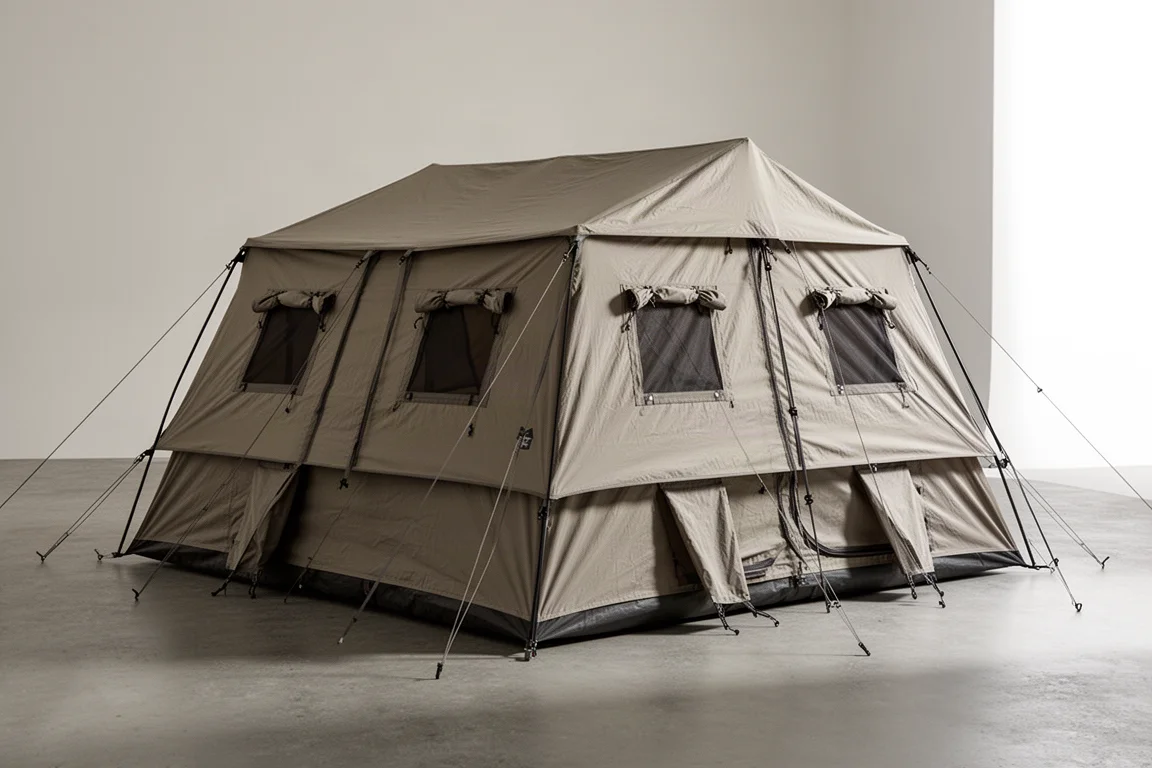
The Wawona 6 has one ridge pole over the front door, so standing room covers the front half of the tent, about 60% of the floor. In the back half, two small steps away from the peak puts your head into the wall. The payoff is at the entrance: the front door is the tallest tested, tall enough that no ducking is needed, though the back door is small at roughly 30% of its wall.
The vestibule is the real highlight. It runs from 65 in to 75 in in height, so you can stand up everywhere inside it, and it fits two chairs with enough leftover space for a large table. Peak height is about 4 in more than the Base Camp, and the rectangular floor fits close to two queen beds. Setup took longer than the Base Camp because of the larger rainfly, but the top-loading carry bag made packing away easier.
Weather performance splits along the same lines. The Wawona breezed through five hours of heavy rain without leaks, and it stayed perfectly dry through many hours of flooding. Over two to three days of continuous heavy rain, though, water eventually soaked through the tent walls because the fly is partial rather than full. It also has more mesh than the Base Camp, which is exactly what makes it the better summer tent, along with nearly double the guy lines and DAC poles.
Overall Buying Advice
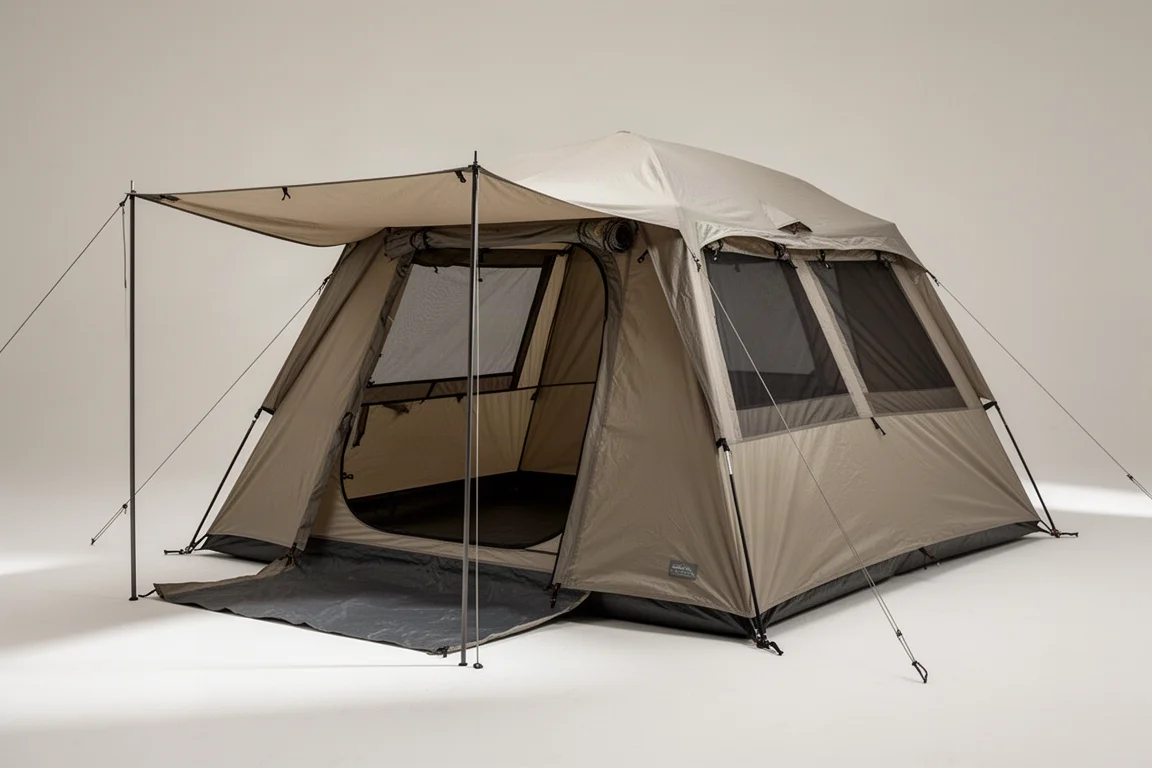
The price per person was plotted against each tent’s overall score to see which options deliver more than you pay for. The Gazelle sat far off the pattern, which skewed an initial trend line downward, so a revised line was drawn from the seven remaining tents. Anything above that line represents more value than the price suggests, and anything below it represents less.
For a smaller group that wants a lighter tent, the Mineral King is the clear pick. It sits well above the value line, while the cheaper Marmot sits below it. The Marmot wins slightly on floor area per person and on price, but the Mineral King is better on door size, door stowing, storage, mesh, rain performance, fabric strength, pole quality and even the carry bag. If you camp with two or three people and want one tent that does everything well, that is the one.
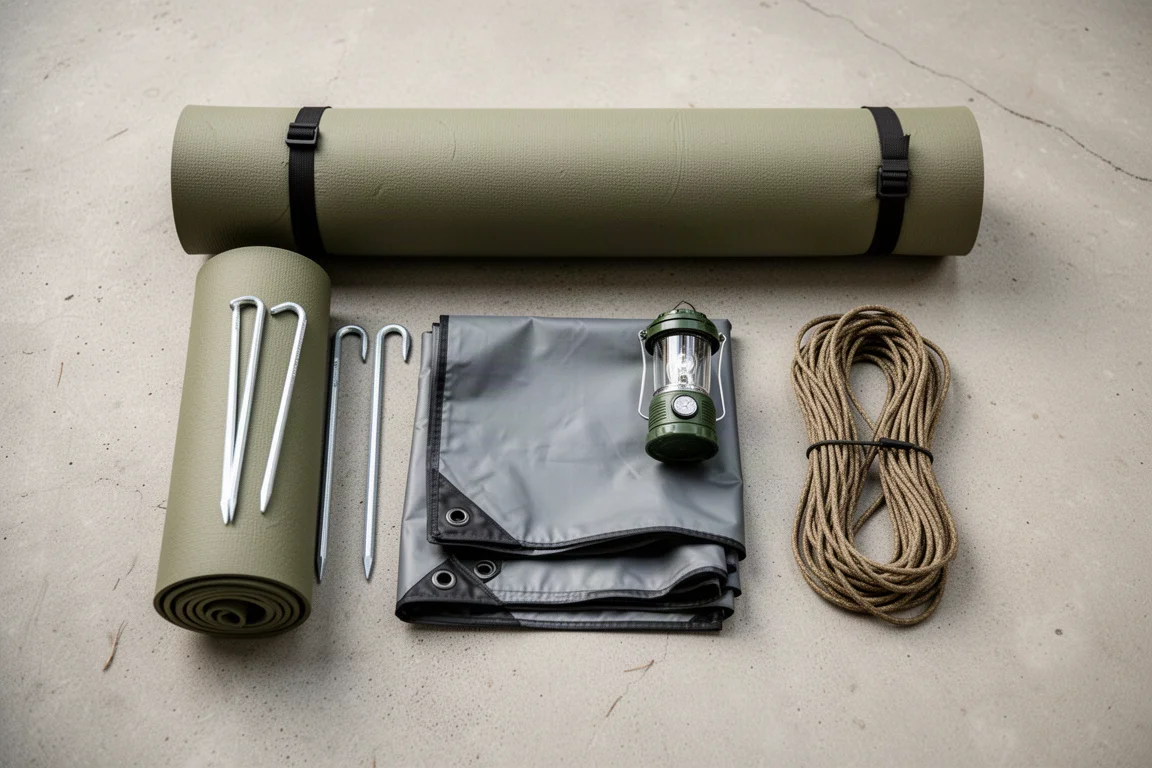
For a family-sized six-person tent, the Base Camp 6 and the Wawona 6 scored identically and cost almost the same, so the decision comes down to season. Choose the Base Camp 6 if you camp in cold or shoulder-season conditions and want a double-walled tent that holds heat. Choose the Wawona 6 if you camp mainly in summer and want more mesh, more airflow and a partial fly, plus the stand-up vestibule that makes the front of the tent genuinely comfortable to sit in.
If you want one tent that handles both summer and cold weather, the Snow Peak Alpha Breeze is the best tested option, thanks to fully zippable mesh and a full rainfly with excellent rain protection. If maximum interior space matters most, look at cabin and tunnel shapes: the Gazelle T4 offers standing height across nearly the whole floor, while the Big Agnes Bunk House gives up a little walkability in exchange for a full rainfly, DAC poles and much better behaviour in rain and wind. And if setup speed is the priority, the Gazelle T4 remains the fastest tent here by a wide margin, as long as you can live with the weight, the packed length and the modest storm protection.
Conclusion
All eight tents are capable, and most of them scored well across the board, which is what you would expect from this class of gear. The differences come down to fit: a lightweight three-person tent for two campers who carry their own gear, a roomy six-person tent for a family that camps in one season, an all-season tent for people who go out year round, and an instant tent for anyone who would rather spend the evening relaxing than pitching. Match the tent to the way you actually camp, and any of these will serve you well for years.
Further reading
Related Reviews
Camping Tents
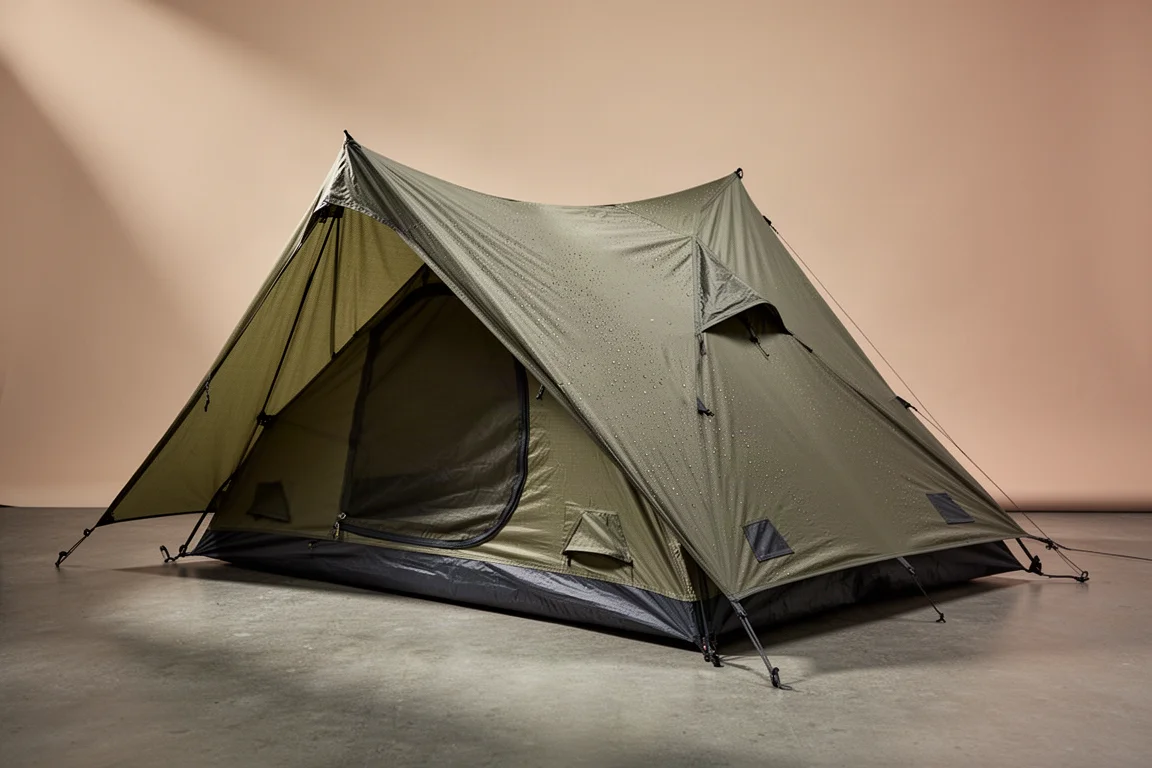
3F UL Gear Taiji Two-Person Tent Review: Field Waterproofing Results and Buying Advice
The Taiji pairs an attached fly with a removable inner, but sustained rain exposed untaped vent seams that need sealing before this shelter can be trusted.
Camping Tents
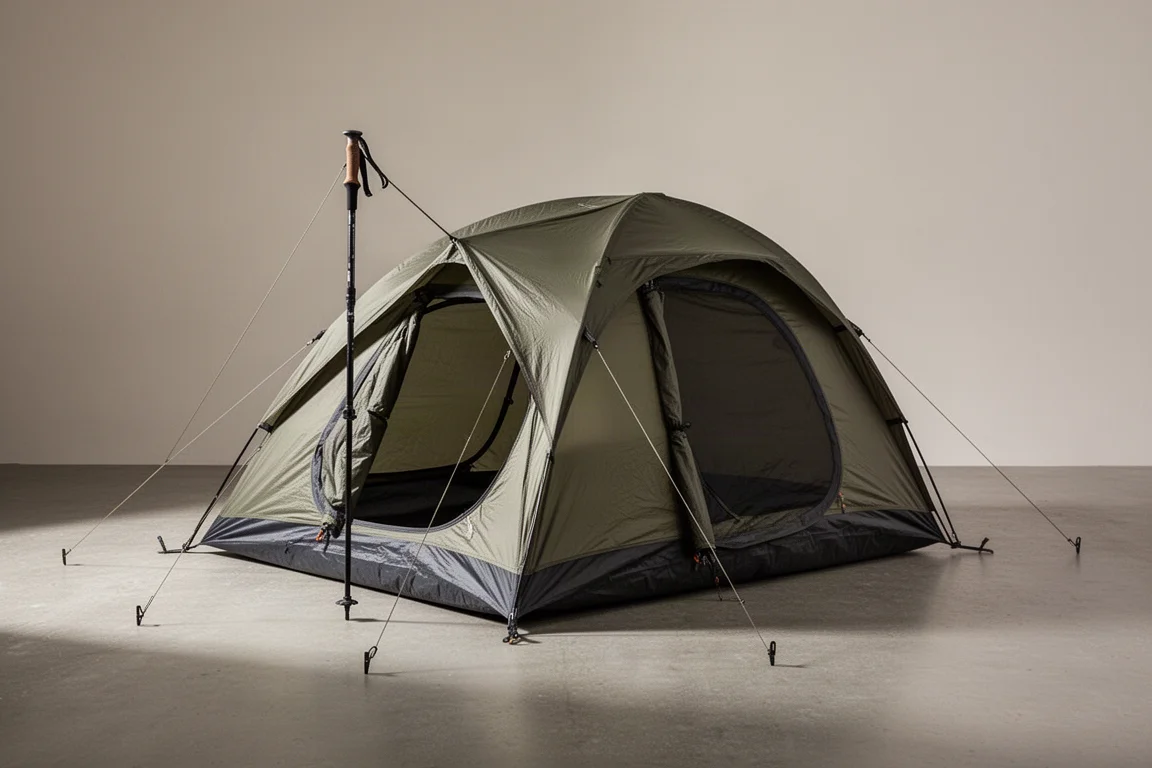
3FUL Gear Lanshan 2 Pro 4-Season Review: A Sub-$200 Single-Wall Trekking Pole Tent
An early look at the 3FUL Gear Lanshan 2 Pro 4-Season, covering its straightforward pitch, generous interior space, and the condensation and seam-sealing questions that come with any single-wall shelter.
Camping Tents
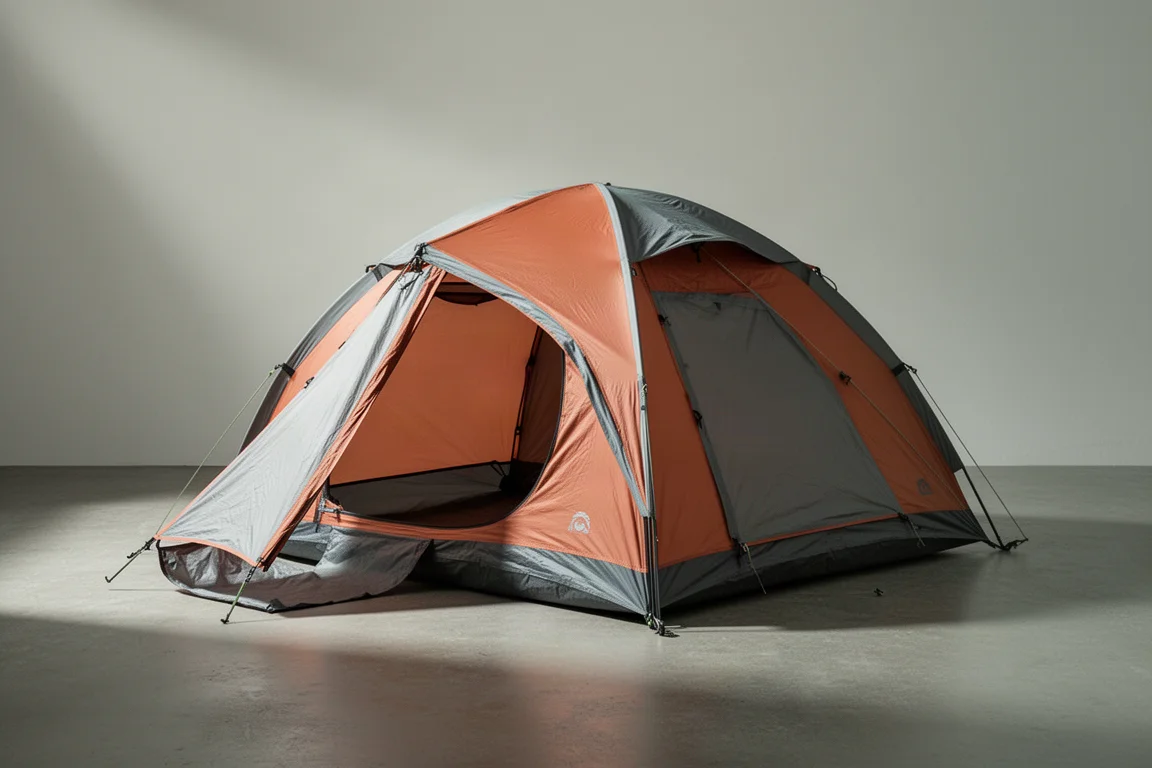
Alps Mountaineering Lynx 1-Person Tent Review: Big Value in a Small Budget Tent
A close look at the Alps Mountaineering Lynx 1-Person Tent, covering real interior dimensions, materials, setup time, ventilation limits, and who should buy it.