Camping Coffee Gear
Best Camping Percolators: 9 Stovetop Models Compared
Nine stovetop percolators compared on brew time, capacity accuracy, ease of use, cleanup and build quality, with clear picks for value, portability and simplicity.
Introduction
Stovetop percolators are refreshingly simple. No pods, no pumps, no power. You add water, add coarse grounds, set the pot over a flame, and wait for the first perk.
The differences between models show up in the details: how quickly the water comes to a boil, whether the marketed capacity is honest, how comfortable the handle feels when the pot is hot, and how the metal holds up after a season of use.
Nine stovetop percolators were compared side by side on a home stove and on a portable butane camp stove, using whole bean medium roast coffee ground coarse, with one cup measured as six ounces of water. Brew time, capacity, ease of use, cleanup, quality and taste all fed into the ranking. The stainless steel models finished at the top, while the enamel and aluminum models finished at the bottom.
What to Look For in a Camping Percolator
Brew time has two parts: the time to first perk, and the total time to a complete brew. Most models needed four to six minutes to start percolating at a three-cup (18 ounce) capacity, and eight to ten minutes at a six-cup (36 ounce) capacity. Stainless steel ran slightly slower than enamel and aluminum. Add roughly seven minutes of percolation on medium-low heat for a full brew, which puts a typical six-cup batch at 14 to 17 minutes.
Capacity claims deserve scrutiny. Only the Stanley Camp and Farberware models matched their marketed numbers in testing. Some were slightly overstated and some were far off. Expect to lose a cup or two after brewing as steam escapes, and remember that too little water in the pot produces weak, diluted coffee.
Material matters more than most buyers expect. Stainless steel pots felt higher quality than aluminum and enamel, and two of the three aluminum inner percolators bent during months of use.
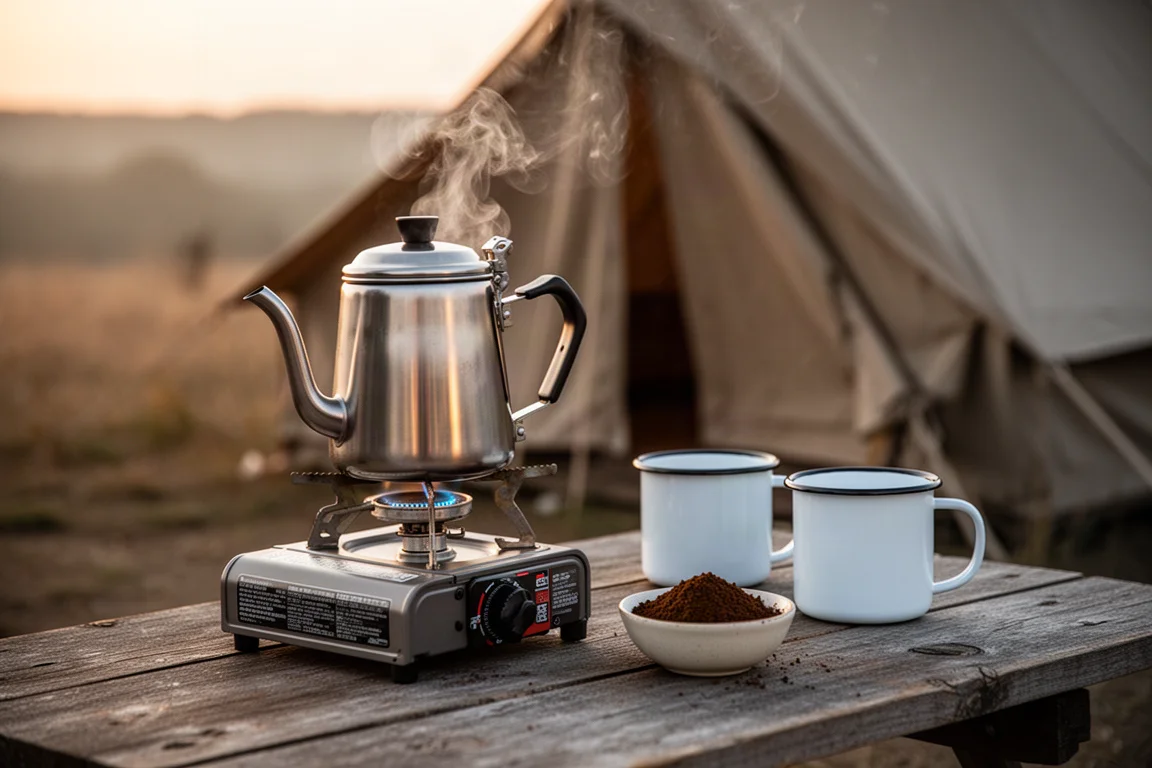
A few small features separate a pleasant pot from a frustrating one. Raised water level markings are easier to read than inked ones, a perk knob lets you watch the coffee colour, a heat resistant handle matters on a hot flame, and a lid that stays put while pouring saves a burned hand. Base diameter also affects stability, since a narrow base under a wide lid makes a pot top heavy.
Coletti Bozeman 9-Cup Stainless Steel Percolator: Best Overall
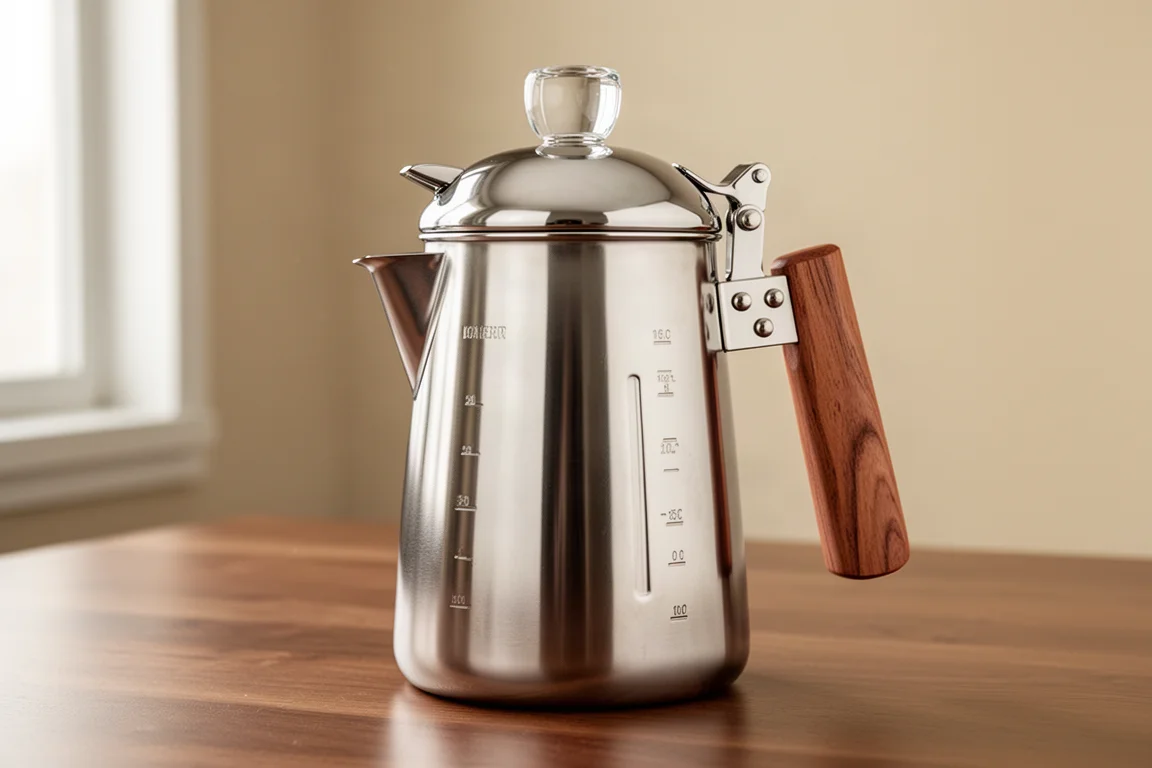
The Coletti Bozeman scored higher than every other percolator in the group. The pot and inner percolator are made from heavy gauge 18/8 food grade stainless steel, and Coletti is the only brand here that states the gauge of its steel, at 18 gauge. The rosewood handle is mounted on a steel plate with rivets and stayed cool on a medium flame. The perk knob is thick glass, and replacement glass knobs are available from the brand.
Water level markings are inked on the inside and outside, and a cover hinge keeps the lid closed while pouring. The hinge gets warm but cools within a few minutes. Coletti also ships a complete package, with sturdy packaging, clear instructions and coffee filter paper included.
Two things are worth weighing. The 9-cup claim is optimistic, since testing produced a maximum of 5 cups at 6 ounces each. The inked markings are also harder to read than the raised markings on some rivals, and the rosewood handle finish dulls slightly over time if it is washed too often. Warranty coverage runs for one year.
GSI Outdoors Glacier 3-Cup Stainless Steel Percolator: Runner-Up and Most Portable
The GSI Outdoors Glacier scored almost as high as the Coletti, and the two share a very similar design. The pot is 18/8 heavy gauge marine grade stainless steel with marine grade welds, and the filter basket spreader rests on the lip of the pot in the same way. Where they differ, the GSI knob is BPA free resin rather than glass, the handle is silicone rather than rosewood, the filter basket holes are about half the size, and GSI Outdoors backs the pot with a lifetime warranty instead of one year.
This is also the most portable option in the group. It is the only three-cup model here and weighs just 14.8 ounces, which suits solo campers, light coffee drinkers and anyone packing tight.
The trade-offs are small but real. The handle is not especially large at about 2.5 inches, and it got hot when the pot was used on high heat, likely because the smaller body puts the handle closer to the flame. Measuring the steel plates of the handles suggested the GSI is very slightly lighter gauge than the Coletti, though both are sturdy, heavy gauge pots.
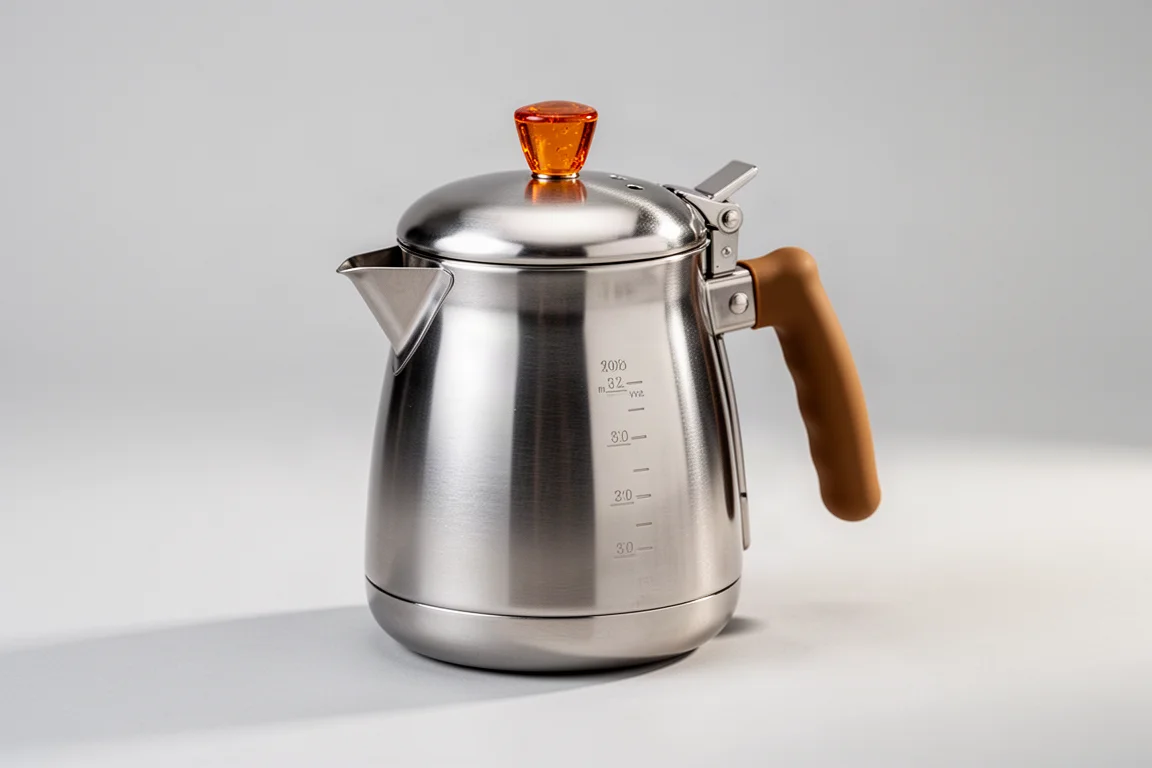
Farberware 8-Cup Classic Yosemite Stainless Steel Percolator: Best Value
At around $18, the Farberware Classic Yosemite is the value pick of the group. You get a stainless steel pot, a stainless steel inner percolator, a glass perk knob, water level markings, a tight fitting lid, a basket that keeps grounds out of the cup, solid packaging and a lifetime warranty. Its tested capacity matched the marketed eight cups, one of only two models to do so.
The compromises are mostly about heat and access. The handle can get quite hot on high heat, and the glass knob is not the thickest. The inked water markings sit behind the handle, which is an awkward spot to read, and the rolled lip traps a little water when drying, while the small spout hole makes the last few drops slow to drain.
Value is the whole point here. At $18 this is an easy recommendation, and it still holds up near $20. At $25 it remains a reasonable buy, but beyond that the appeal fades quickly.
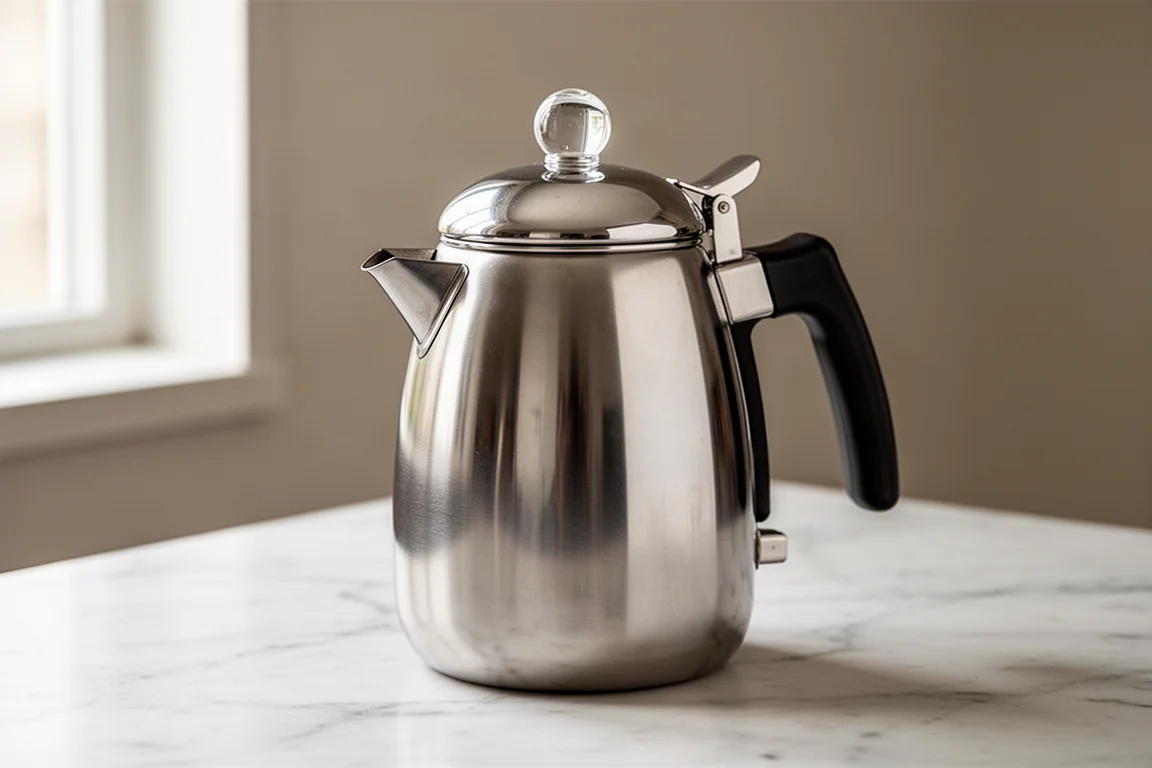
Bialetti 6-Cup Moka Express: The Easiest to Use
The Bialetti Moka Express is not a percolator in the traditional sense, but it earned the easiest to use title. Fill the boiler to the marked line below the safety valve, fill the filter with medium-fine coffee, and set it on the heat. There is no perk knob to watch and no coffee colour to monitor, and the entire brew finished in about 8 minutes 15 seconds, roughly half the time of the traditional percolators.
Cleanup is just as simple. Warm water is enough, and unlike the percolators, the aluminum body leaves no oily residue behind. There is also nothing fragile to break, with no glass or plastic perk knob and no moving parts. The only part that needed replacing after a few years was the gasket, which costs a dollar or two.
The limits are built in. The body is aluminum, the capacity cannot be adjusted, and a 6-cup model means 6 cups of concentrated coffee in 2-ounce measures, no more and no less. The aluminum showed a fair amount of staining, and the boiler looked worn after years of use, though it still felt sturdier than the other aluminum option here. In a blind tasting with four people, stainless steel percolated coffee edged out enamel, which edged out aluminum, though taste is subjective and was not part of the scoring.
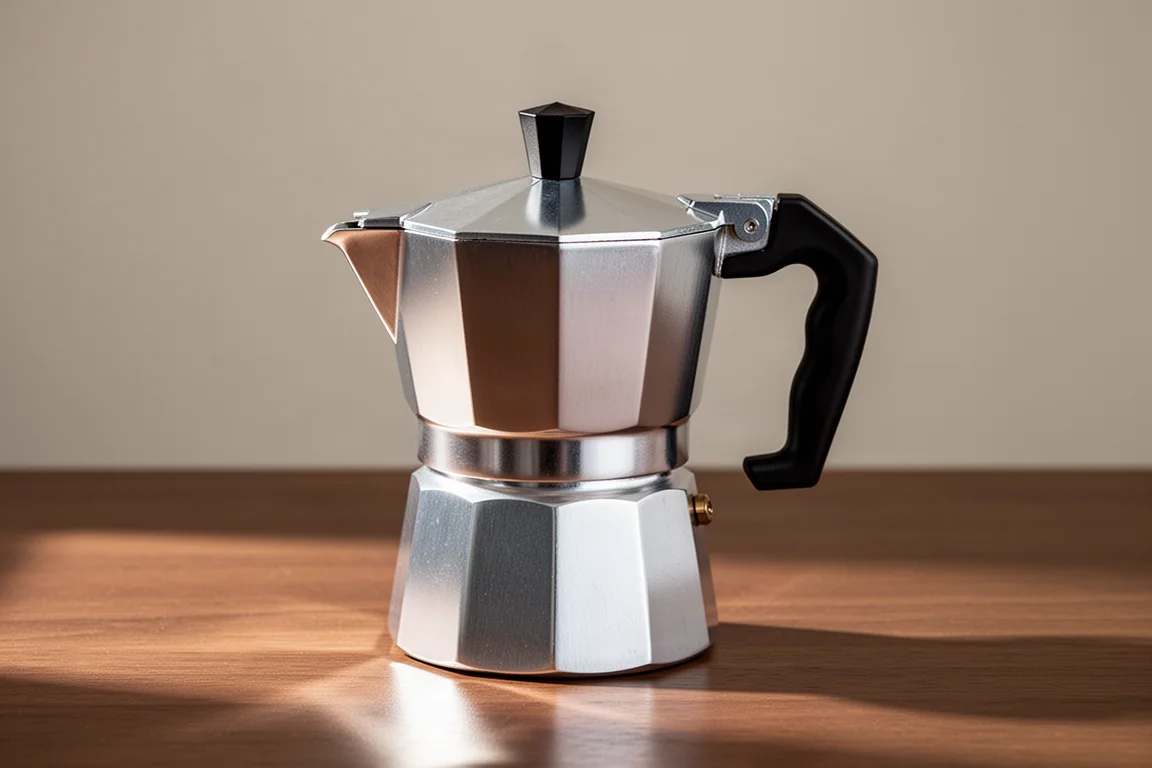
Stanley Camp 6-Cup Stainless Steel Percolator
The Stanley Camp Percolator finished fourth overall and gets several things right. The stainless steel is 18/8 with a good finish, the cup markings are raised protrusions inside and outside the pot that are very easy to see, the removable silicone grip is generously sized and works over an open flame, and the pot is covered by a lifetime warranty. It is also easy to clean, since the grip comes off.
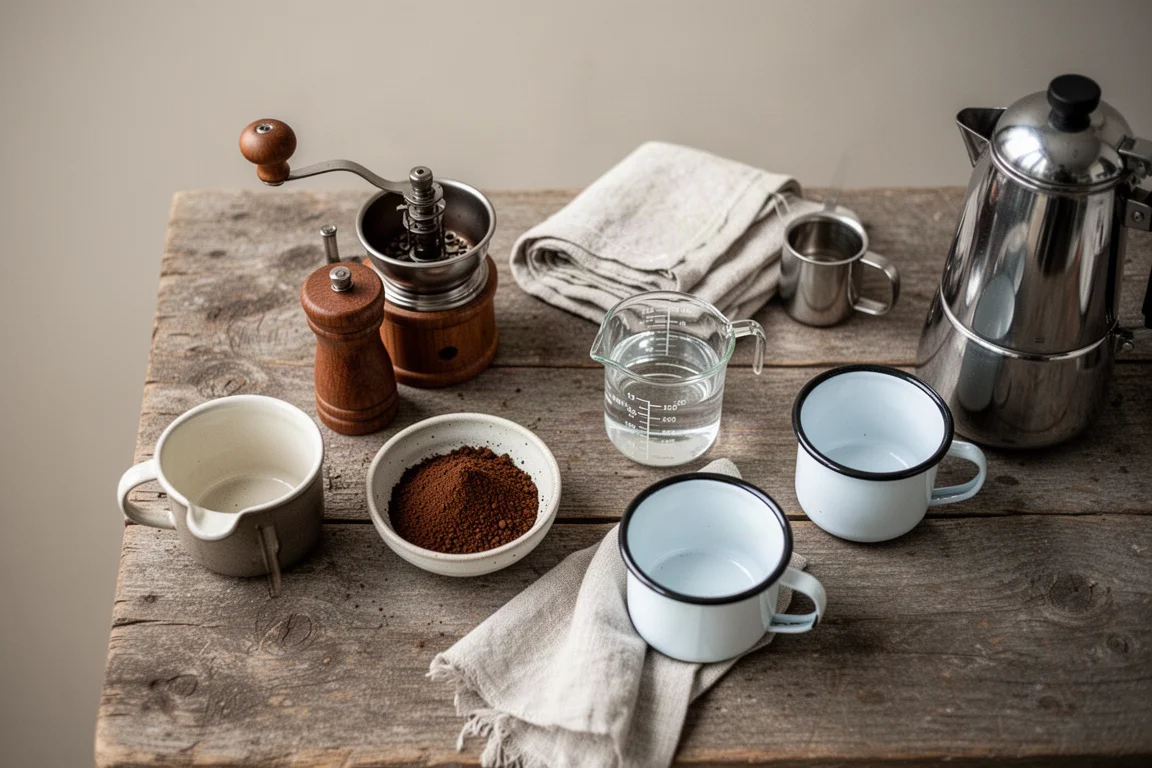
The weaknesses are structural. The stainless steel is lighter gauge than the other stainless pots here, and a small dent appeared in the base within a few weeks even though the pot was never dropped or tossed around. The base is narrow at four inches while the lid measures four and a half inches, which makes it top heavy, the least stable pot in the group, and the slowest to reach first perk. Potholders were needed when pouring. It is also priced high for what the materials deliver.
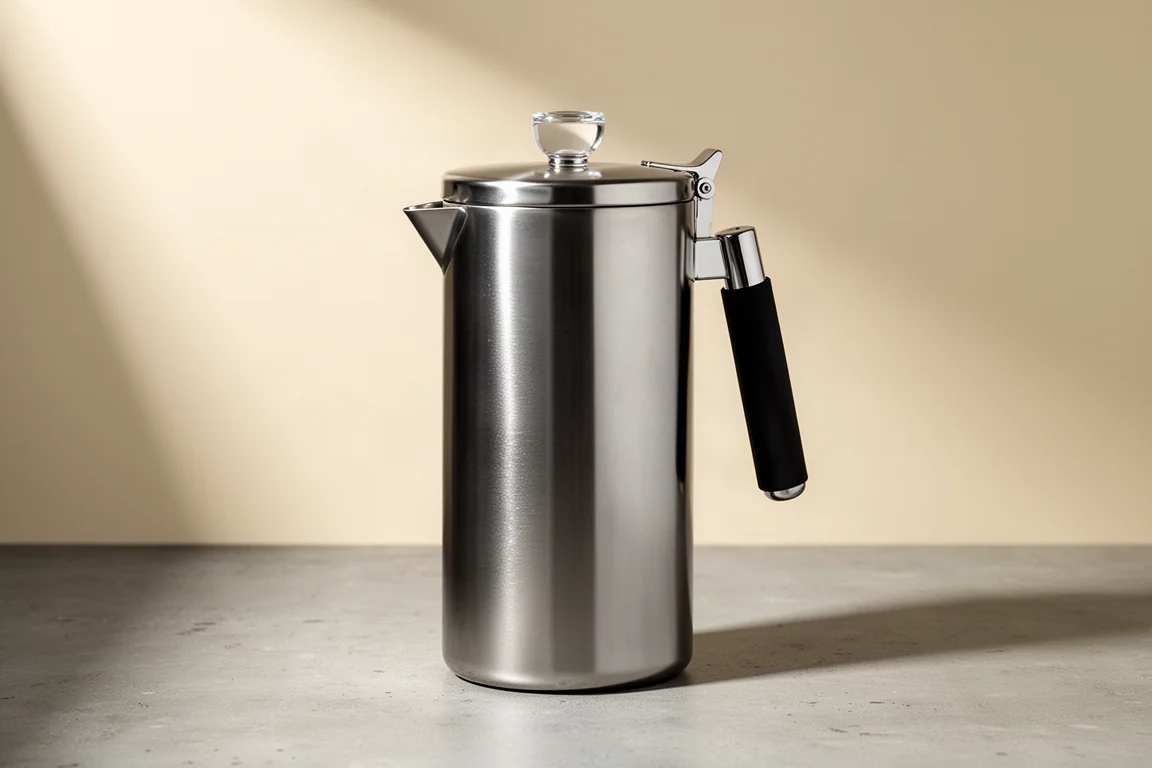
Coleman 12-Cup Stainless Steel Percolator
Coleman’s pot uses heavy gauge steel for both the coffee pot and the inner percolator, and the perk knob is thick glass. The lid fits tightly, and every part detaches, including the lid, which makes cleanup straightforward.
The problems stack up for the price. The 12-cup label is generous, with testing landing closer to 9 or 10 cups. There are no water level markings at all. The handle has a sunken middle that is uncomfortable to hold, and of the three pots sharing that handle shape, the Coleman is the worst because it is the heaviest. The handle also gets hot. There is no lifetime warranty and no replacement glass knobs available, and at $47 it costs more than several better performing percolators.
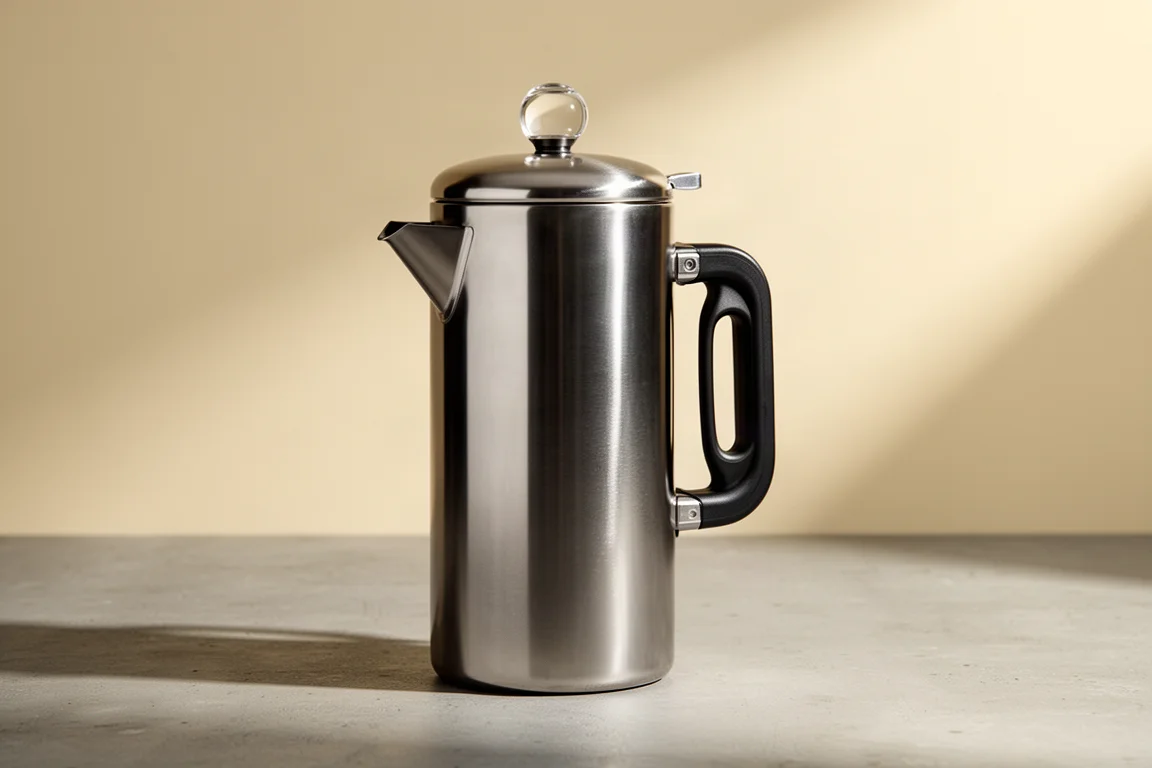
Primula Today 9-Cup Aluminum Percolator
The Primula is the lightest and one of the cheapest pots in the group, and it feels like it. After light use the aluminum showed heavy staining, the stem was bent, and the whole percolator felt flimsy. The plastic knob is thin, the handle is not very heat resistant and ran hotter than the Farberware handle, and there are no cup markings to help with filling. Its aluminum inner percolator is also the type that bent during testing on other models. Buyers who want to spend as little as possible will find that it works, but it is not built to last.
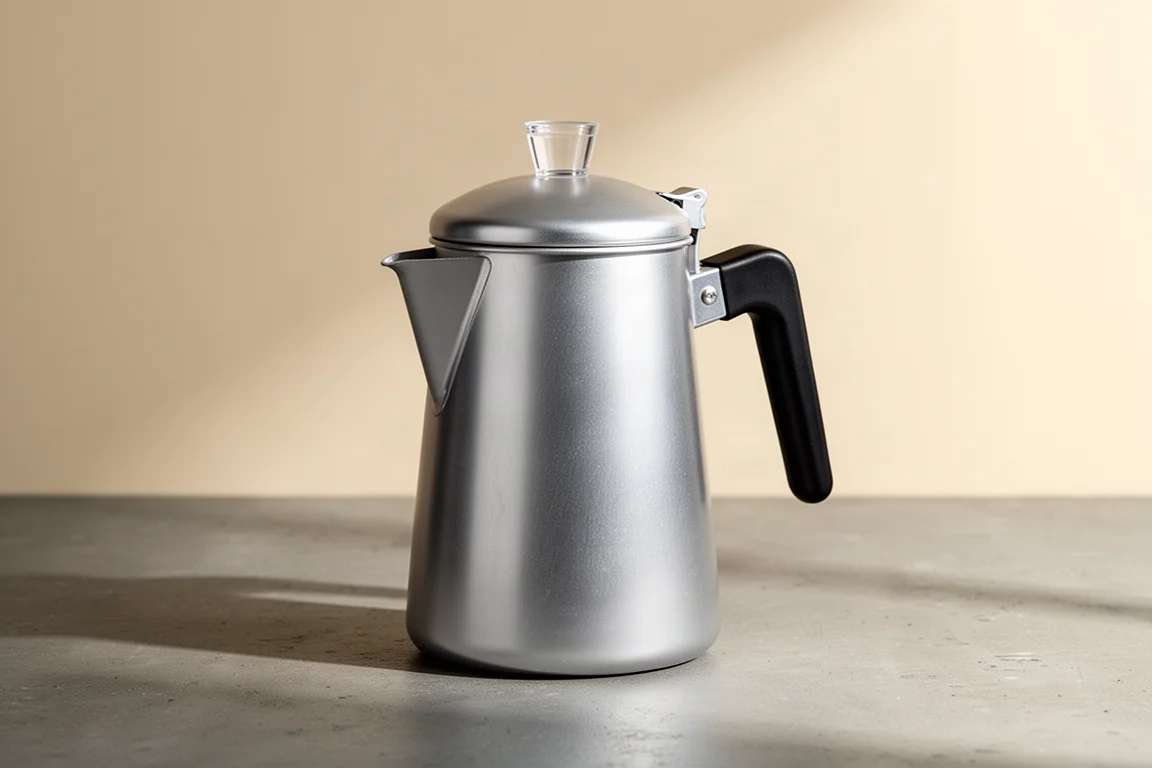
Stansport 8-Cup Enamel Percolator
The two enamel percolators in this group share a lot: similar dimensions and weight, wide bases, aluminum inner percolators, enamel handles, flimsy hinges that can be bent by hand, and a tendency to boil over even when filled well below the spout holes. That last point removes the usual fallback of using the spout holes as a rough water gauge.
The Stansport is the more durable of the two. It has a smaller filter basket, arrived with coffee stains and a touch of rust, and offers no perk knob at all, just a small rounded lid handle. Its working range is narrow, since 5 cups of water is the limit before it boils over, and anything less tastes diluted.
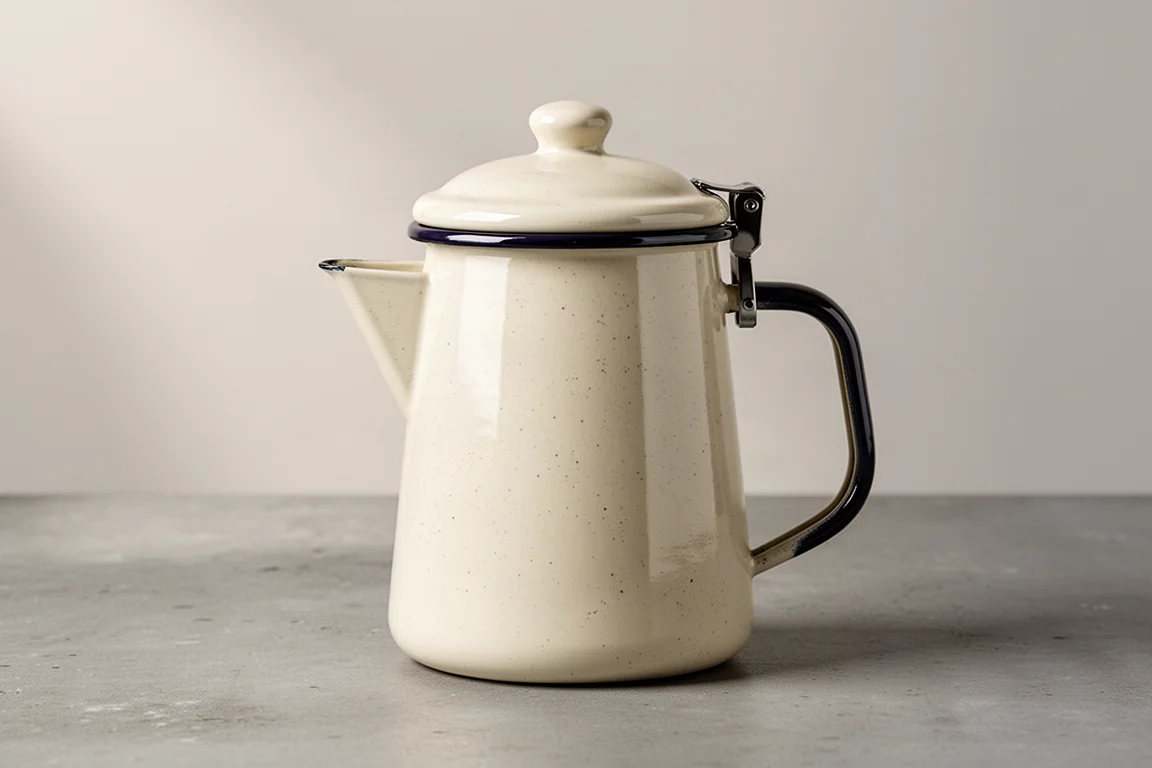
GSI Outdoors 8-Cup Enamelware Percolator
The GSI Outdoors Enamelware version shares the same enamel construction and the same boil-over behaviour, and it showed heavier rusting and chipping on the pot than the Stansport. Neither enamel model is recommended for regular camp use. If an enamel finish is a firm requirement, the Stansport is the better bet of the two.
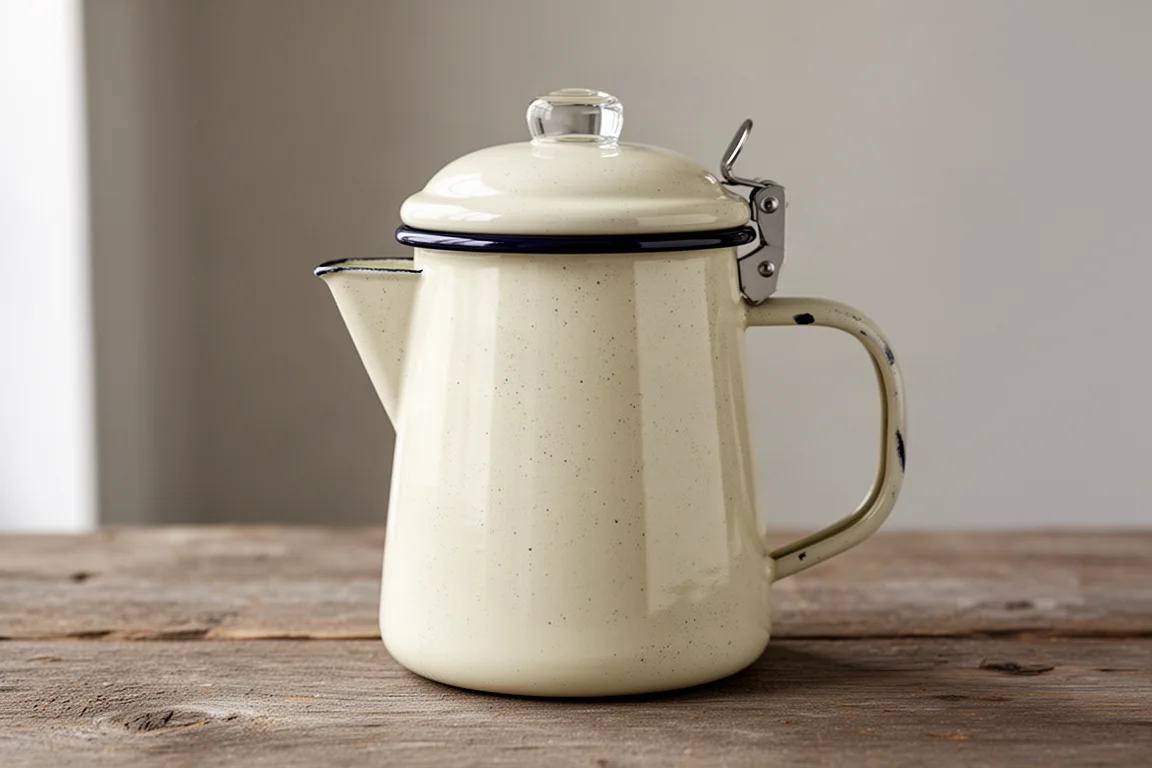
Buying Advice: Matching Capacity and Material to Your Camping Style
Start with capacity, then work backwards. Marketed cup counts are often optimistic, so plan for a pot that brews a little less than its label suggests, and allow for losing a cup or two to steam. If you usually brew for one or two people, a compact three-cup pot is easier to pack and quicker to heat, while a larger pot makes sense for families and group trips.
Material is the second decision. Stainless steel pots were the highest quality in this group, enamel brought rust, chipping and boil-over problems, and aluminum needs more care and stained more readily. Two details are worth checking before you buy: whether replacement perk knobs are sold, which only Coletti and GSI Outdoors offer here, and how long the warranty runs, since GSI Outdoors, Farberware and Stanley cover their pots for life while Coletti offers one year.
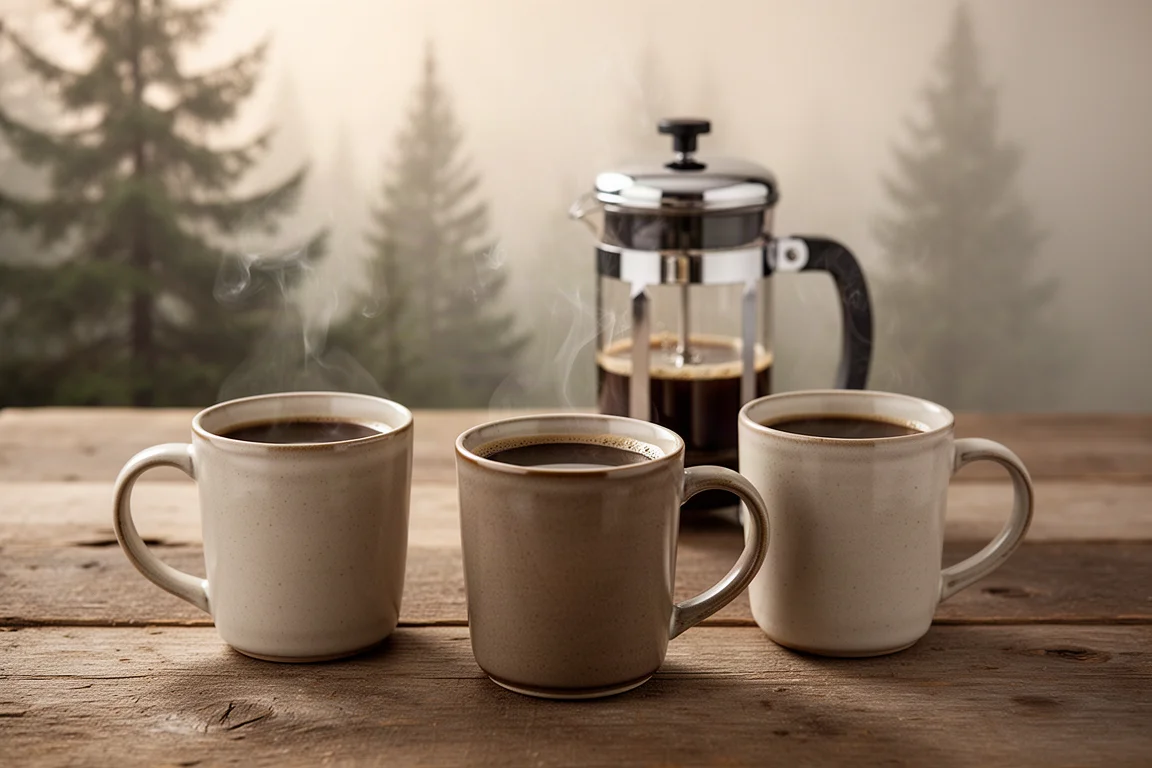
For most campers, the choice narrows quickly. The Coletti Bozeman is the best built percolator overall, the GSI Outdoors Glacier is the closest alternative and the easiest to carry, the Farberware Classic Yosemite delivers stainless steel at a budget price, and the Bialetti Moka Express is the simplest routine if you do not mind aluminum and a fixed capacity.
Conclusion
Stainless steel earned the top five places here, and the reasons were consistent: better materials, more readable water markings, sturdier inner percolators and fewer boil-over surprises. If you want the best percolator in this group, the Coletti Bozeman is the pick. If you want the same experience in a smaller, more packable pot with a lifetime warranty, the GSI Outdoors Glacier is the one to choose.
For value, the Farberware Classic Yosemite is hard to beat near $18. For pure simplicity and speed, the Bialetti Moka Express asks the least of you. The enamel and aluminum percolators at the bottom of the ranking are best left on the shelf unless budget or finish preference leaves no other option.
Further reading
Related Reviews

Backpacking Gear
Building a 10 lb Base Weight: An Ultralight Backpacking Gear List
A practical walkthrough of the ultralight pieces behind a 10 lb base weight, from a 765 g pack and a roomy one-person tent to a full camp chair and a dependable water filter.

Road Bikes
10 New Road Bikes Worth Watching: Aero, Titanium, Steel and Endurance Standouts
A practical roundup of 10 new road bikes, from aero flagships chasing single-watt gains to titanium, steel and endurance platforms built for real roads.
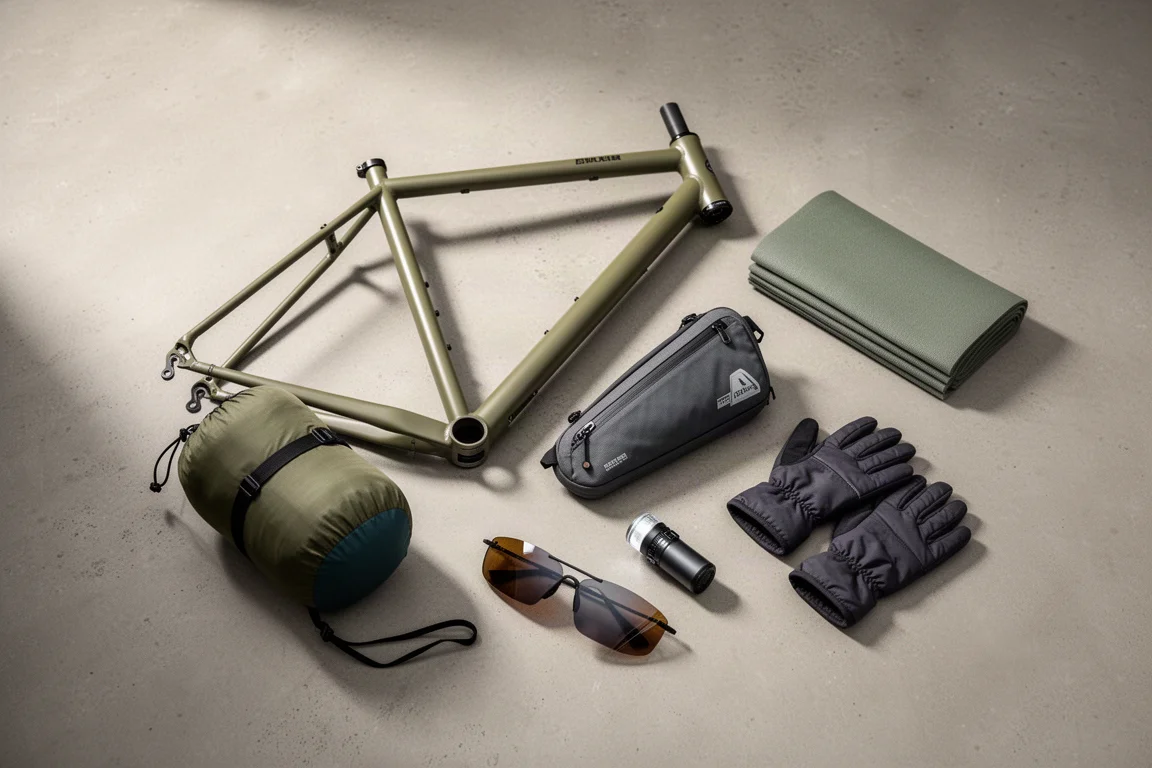
Bikepacking Gear
11 Bikepacking Essentials for Long-Distance Cycling
Eleven bikepacking essentials for long-distance cycling, from a steel gravel frame and a two-person tent to helmet lights, packable gloves, and a frame bag that puts weight in the right place.