Campfire Gear
Best Campfire Marshmallow Roasting Sticks: 9 Options Tested and Compared
Nine roasting sticks compared for sturdiness, ease of use, cleanup and build quality, with clear picks for heavy duty roasting, marshmallows, kids and easy cleanup.
Introduction
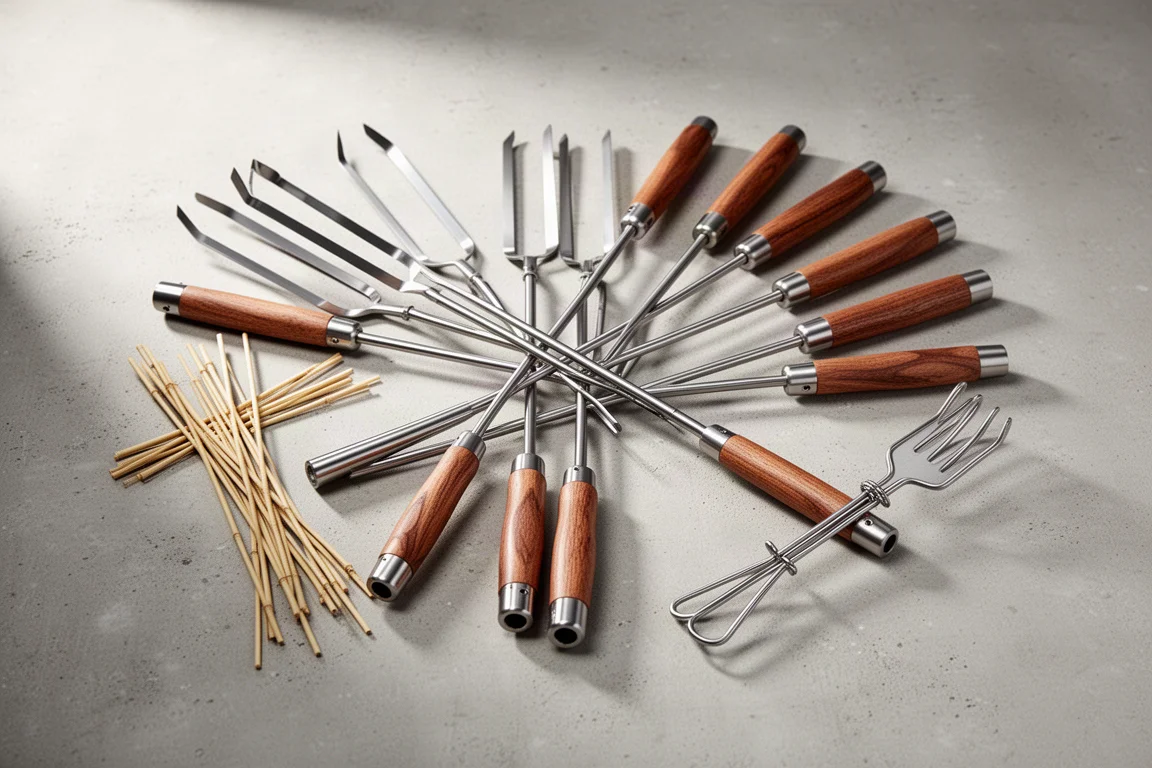
A roasting stick looks like a trivial purchase until you are standing next to a fire with a marshmallow sliding off a thin tine or a hot dog bending the rod toward the coals. The differences between these nine options are mostly about rod thickness, tine spacing, maximum length and how much work the cleanup involves.
This comparison covers nine roasting sticks tested side by side with marshmallows and hot dogs. Every stick reached at least 32 inches when extended, so all of them keep you a reasonable distance from a fire or barbecue pit. Beyond that, they split into distinct groups: heavy duty stainless steel sticks with wide, sharp tines, thinner marshmallow-focused sticks, a long kid-friendly set, disposable bamboo skewers, and one traditional fork that uses a stick you find yourself.
How We Compared These Roasting Sticks
Each stick was judged on four practical criteria. Sturdiness was measured by how much the rod bent with food loaded on it, first with marshmallows and then with hot dogs. Ease of use covered maximum length, the telescoping mechanism, color coding and how easily the stick could be rotated for an even roast. Cleanup covered how the stick behaved after a marshmallow session and whether a storage pouch was included. Quality looked at the handle, the rod and tines, and the pouch.
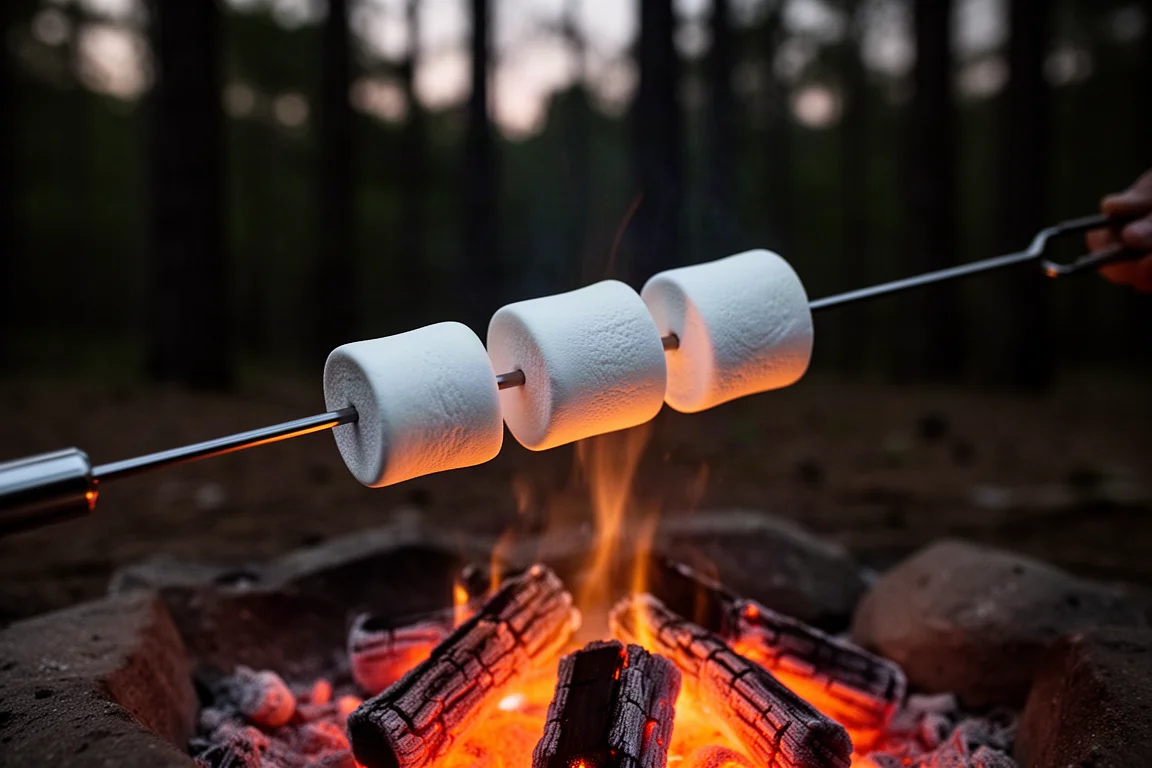
All of the telescoping sticks stayed firmly extended during use rather than sliding back, so the mechanism itself was not a differentiator. The real variation came from rod thickness and material, which drove both flex and heat transfer.
Sturdiness: How Much Each Stick Flexes
With marshmallows, all nine sticks held four marshmallows without flexing too much. Hot dogs separated them quickly. With a single hot dog, most sticks showed hardly any flex, with the exception of the Jungle Stix Bamboo Sticks, which flexed noticeably.
With four hot dogs loaded, the Sumpri, Jolly Green, Carpathen and the Briout Roasting Sticks at 32 inches showed only a minimal amount of flex. The Briout at its full 45 inches showed a moderate amount of flex. The Ajmyonsp, MalloMe and Ezire Roasting Sticks also flexed a moderate amount. The bamboo Jungle Stix came last with a considerable amount of flex.
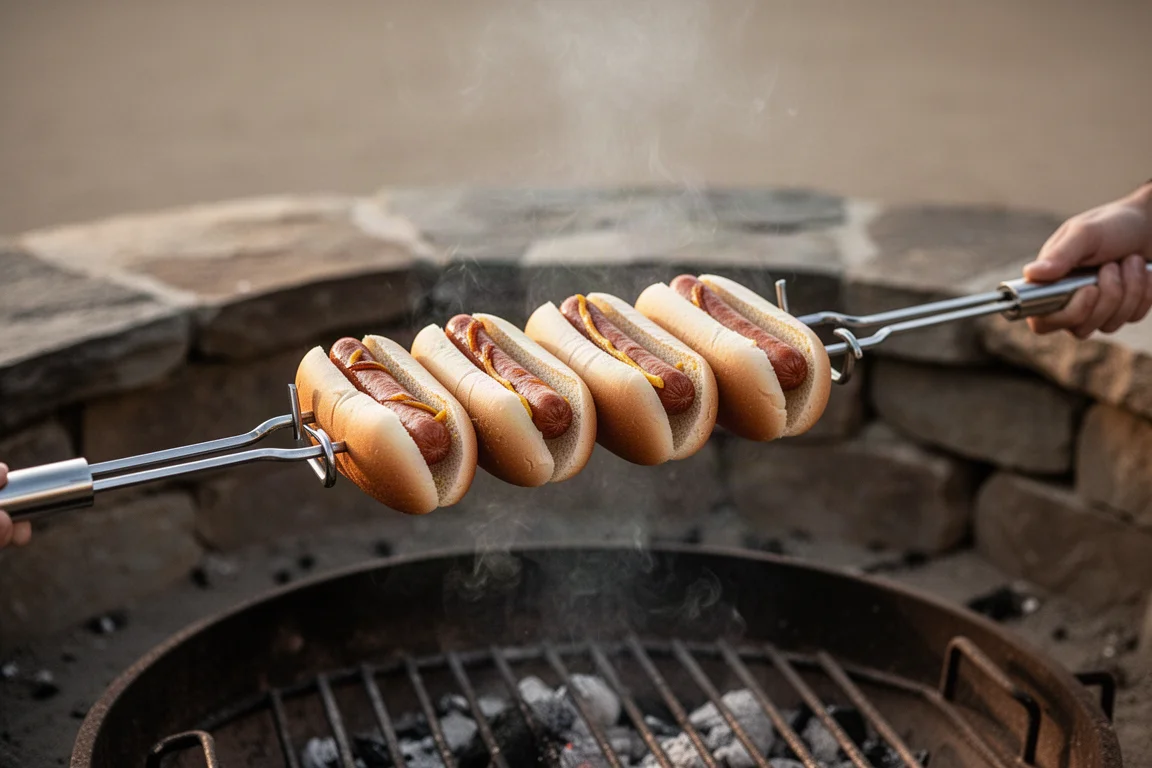
The pattern is consistent: sturdier sticks with minimal flex tend to have thicker rods, while the more flexible sticks have thinner rods. The Jungle Stix are thin and made of bamboo, which explains the pronounced bend under load.
Ease of Use: Length, Rotation and Color Coding
Length matters if you expect a larger fire. The Briout Roasting Sticks reach a maximum of 45 inches, making them by far the longest set here. The rest extend to at least 32 inches, and the Sumpri, Carpathen and Jolly Green Roasting Sticks share a maximum length of 33.5 inches. The MalloMe, Ajmyonsp and Ezire Roasting Sticks all top out at 32 inches.
Collapsing deserves a little care on the thinner sticks. The MalloMe, Ezire and Ajmyonsp flex more when collapsing because they are thinner and less sturdy, and the Briout flexes a bit as well because of its 45-inch length. Otherwise every stick extended and collapsed easily, with only slight differences in stiffness.
Rotation is where design shows. The Sumpri, Carpathen and Jolly Green Roasting Sticks have rotating axles, which makes turning food very easy. The MalloMe, Ezire, Ajmyonsp and Briout Roasting Sticks have no rotating axle, so you turn the whole stick, which is not difficult. The Light My Fire Grandpa’s FireFork rotates easily enough provided the stick you fit is fairly straight and not too thin. The Jungle Stix were the most difficult to rotate because they are the thinnest and offer less grip.
Color coding is a small convenience that some sets skip. The Jungle Stix, Briout, Jolly Green and Light My Fire Grandpa’s FireFork have no color coding. Note also that once you remove the tips from the FireFork, there is nothing color coded to identify whose stick is whose.
Cleanup: What It Takes After a Roast
The bamboo Jungle Stix were the easiest to deal with by a wide margin. Breaking them and tossing them into the fire leaves essentially no cleanup at all.
For the stainless steel sticks, all of them went into soapy water for a couple of hours after roasting marshmallows and came out basically clean without scrubbing. Only the Light My Fire Grandpa’s FireFork did not come with a storage pouch, while the rest included one.

The pouches themselves vary. The Sumpri and Jolly Green pouches were the most liked, soft with smooth zippers, and zippered pouches were preferred over drawstring ones, though the drawstring Briout and Carpathen pouches were still good quality. The Ajmyonsp pouch had a slight chemical smell and felt plasticky. The Ezire pouch was the least favorite because it is a tight fit, the sticks protrude, and the Velcro opening does not close perfectly.
Quality: Handles, Rods, Tines and Pouches
Handles were the clearest quality differentiator. The Sumpri, Carpathen and Jolly Green Roasting Sticks have thicker, more grippy handles that are very comfortable to hold. The MalloMe and Ajmyonsp handles are thinner but still decent quality. The Ezire Roasting Sticks have wooden handles without the smooth lacquered finish the others share, and after a few washes the wood began to peel. The Briout handles are made of rubber with a slight rubbery smell, and the finger grooves did not feel comfortable. The Jungle Stix handles are thin and less comfortable to hold. Encouragingly, every handle stayed cool throughout barbecue roasting and did not heat up.
On rods and tines, all the stainless steel sticks felt good quality, although the type of stainless steel could not be confirmed for the Sumpri, Light My Fire Grandpa’s FireFork and Ajmyonsp Roasting Sticks. A tiny bit of rust appeared on the connecting parts of the MalloMe, Ajmyonsp and Ezire Roasting Sticks after soaking in water and not drying them, but it scratched off easily, so it is not a serious rust concern. The Jungle Stix are bamboo, which is naturally less durable than stainless steel because it can splinter and split when hit hard. During roasting they stayed splinter-free with no issues, though one stick split after an accidental knock against a wall.
Best for Heavy Duty Roasting: Sumpri, Carpathen and Jolly Green
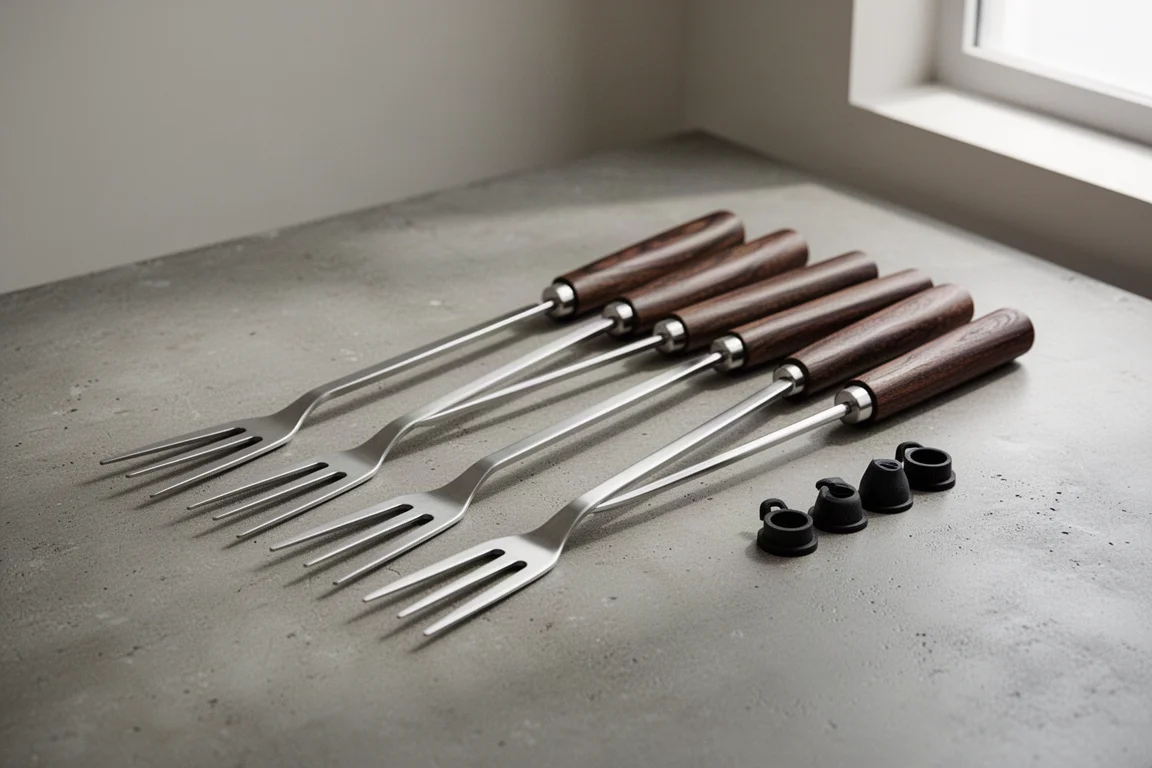
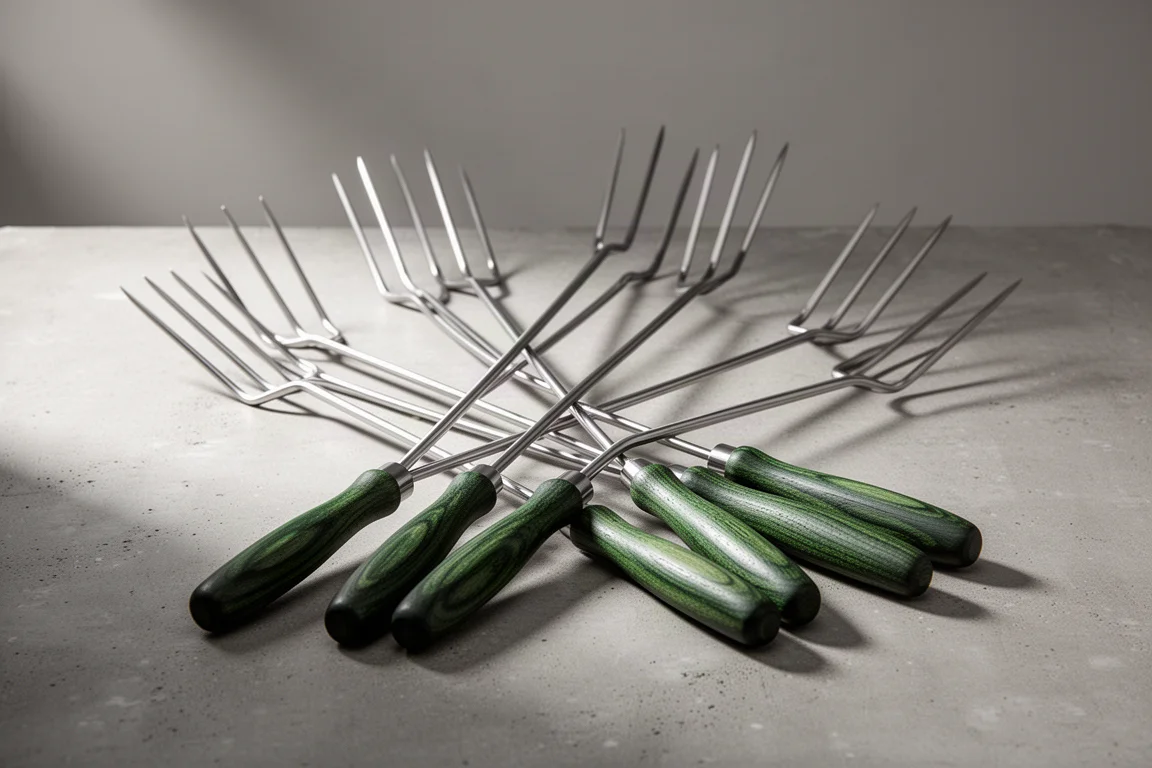
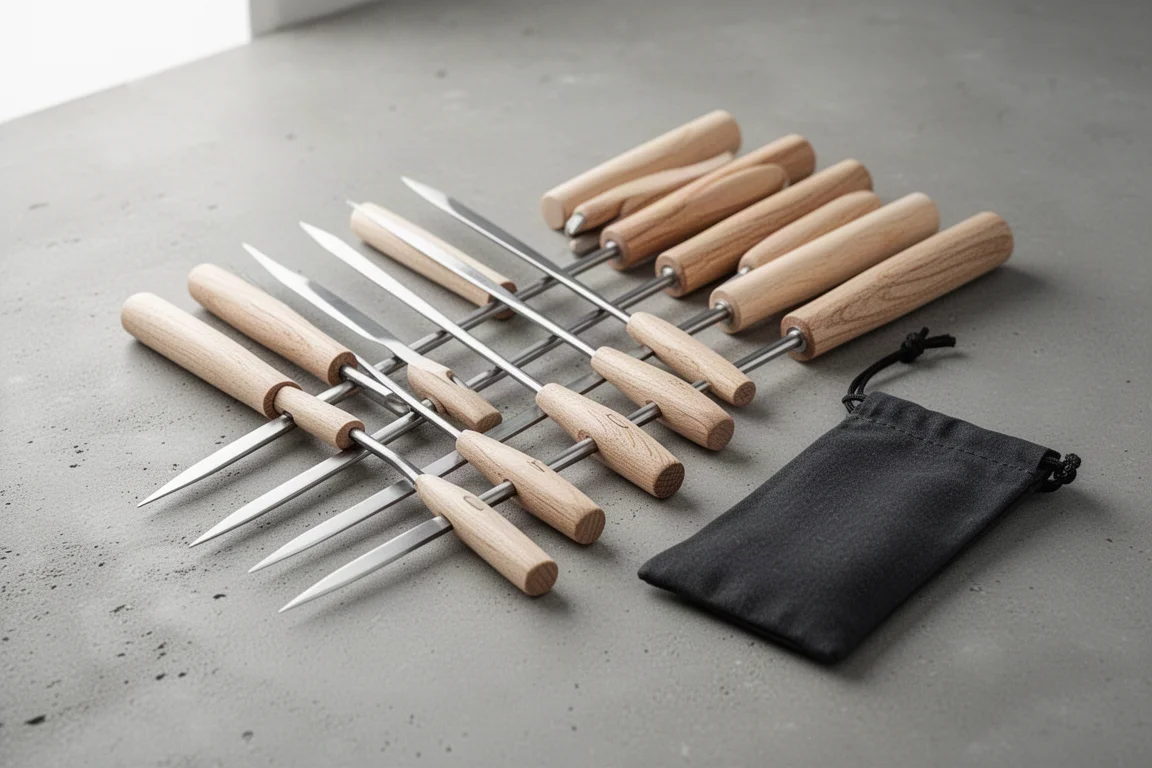
If you plan to roast hot dogs and meats rather than just marshmallows, the Carpathen, Sumpri and Jolly Green Roasting Sticks are the ones to consider. All three have tines spaced further apart, which suits larger foods and lets you fit much more on the stick at once. The tines are very sharp, which helps when skewering meat, and thicker than regular marshmallow sticks, giving more support under load. All three include rubber tips for safety when not in use.
These three are very similar in design, from the tines to the rod to the handle, and equally sturdy with the same 33.5-inch maximum length. The Jolly Green Roasting Sticks were the least favorite of the trio: they scored slightly lower than the Sumpri and Carpathen sticks, mainly because they do not come in different colors. They also cost 50 percent more than the Sumpri and Carpathen sticks, and they come in a set of five rather than six. Out of the box, one of the five Jolly Green sticks had a cracked handle.
That leaves the Sumpri and Carpathen sticks, which differ mainly in presentation. The Sumpri handles are more vibrant and nicer looking, while the Carpathen is made of Type 201 food-safe stainless steel. Either is a sound choice. One caution: these tines are very sharp, so they may not be the safest option for children.
Best for Marshmallows: MalloMe, Ajmyonsp and Ezire
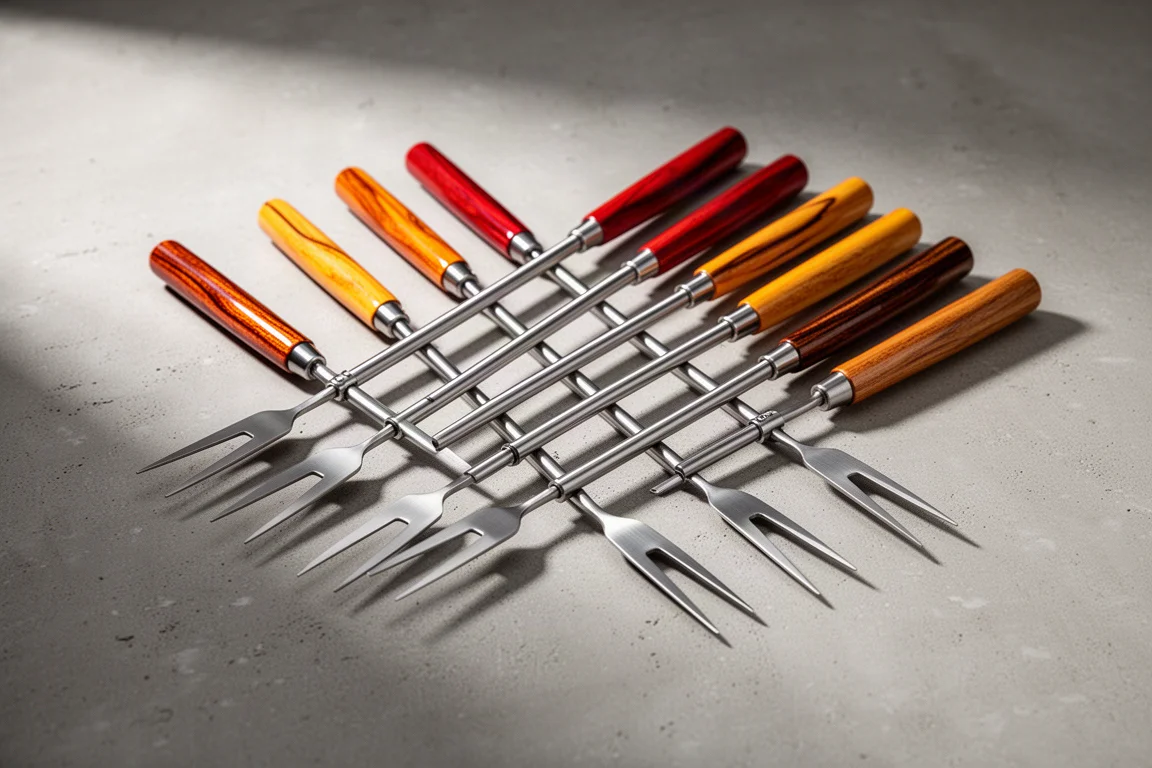
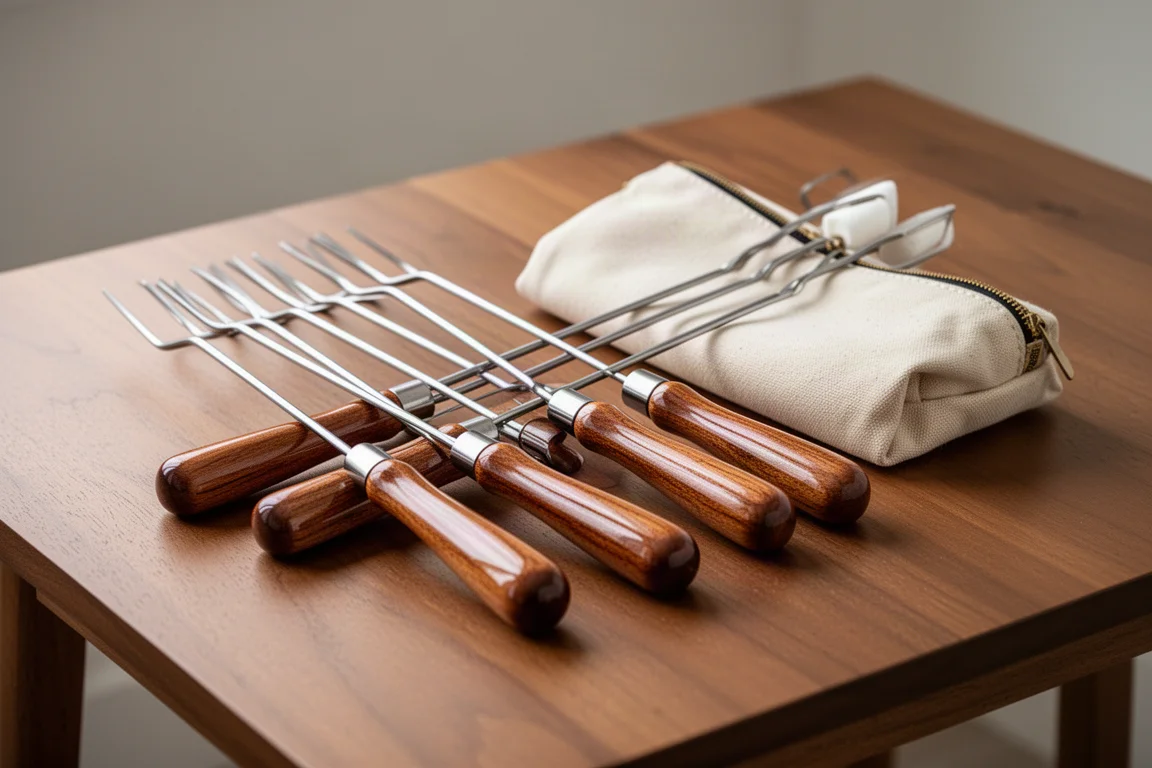
If marshmallows are the whole point, the MalloMe, Ajmyonsp and Ezire Marshmallow Roasting Sticks make more sense. Their tines sit closer together, so both tines pass through the marshmallow, which holds it more securely and stops it spinning over the fire. The thinner tines also poke smaller holes and conduct less heat, which reduces slipping.
That heat transfer point was tested by holding each stick vertically, pointing down toward the fire. The MalloMe, Ezire and Ajmyonsp sticks had minimal slipping thanks to the thinner tines, while the Sumpri, Carpathen and Jolly Green sticks slipped more, likely because their thicker tines conducted more heat.
All three of these marshmallow sticks are similar in design, with comparable tine and rod thickness and material and a 32-inch maximum length. The MalloMe Roasting Sticks edge ahead on quality and scored slightly higher than the Ajmyonsp and Ezire sticks. They are made of Type 304 food-grade stainless steel, with a lacquered wood handle and a zippered canvas pouch that makes packing up easy. The Ajmyonsp sticks are slightly flimsier with more flex, their stainless steel type is unconfirmed, and the pouch has a slight chemical smell. The Ezire sticks have unpainted, unlacquered wooden handles that peel after a few washes, and the tight-fitting pouch does not pack down easily.
None of these three matches the heavy duty sticks for sturdiness or overall quality, but they cost noticeably less and perform well for marshmallow-only roasting.
Kids and Safety: Long Reach Matters
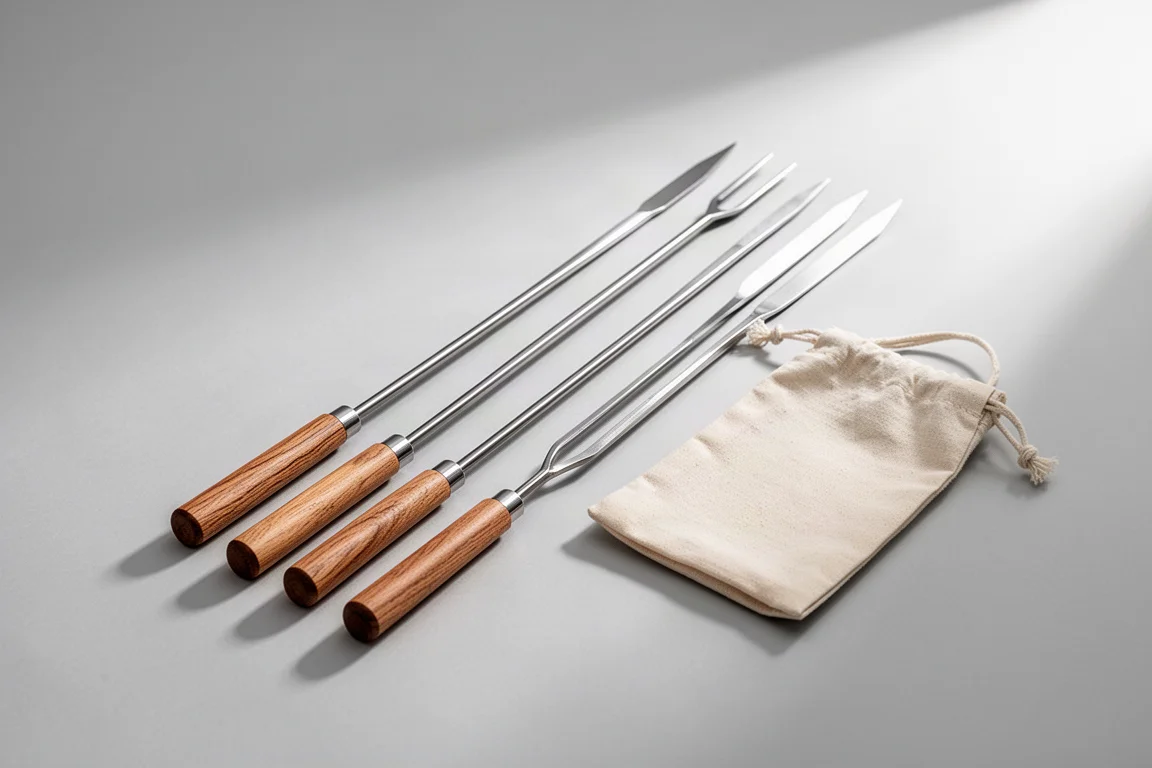
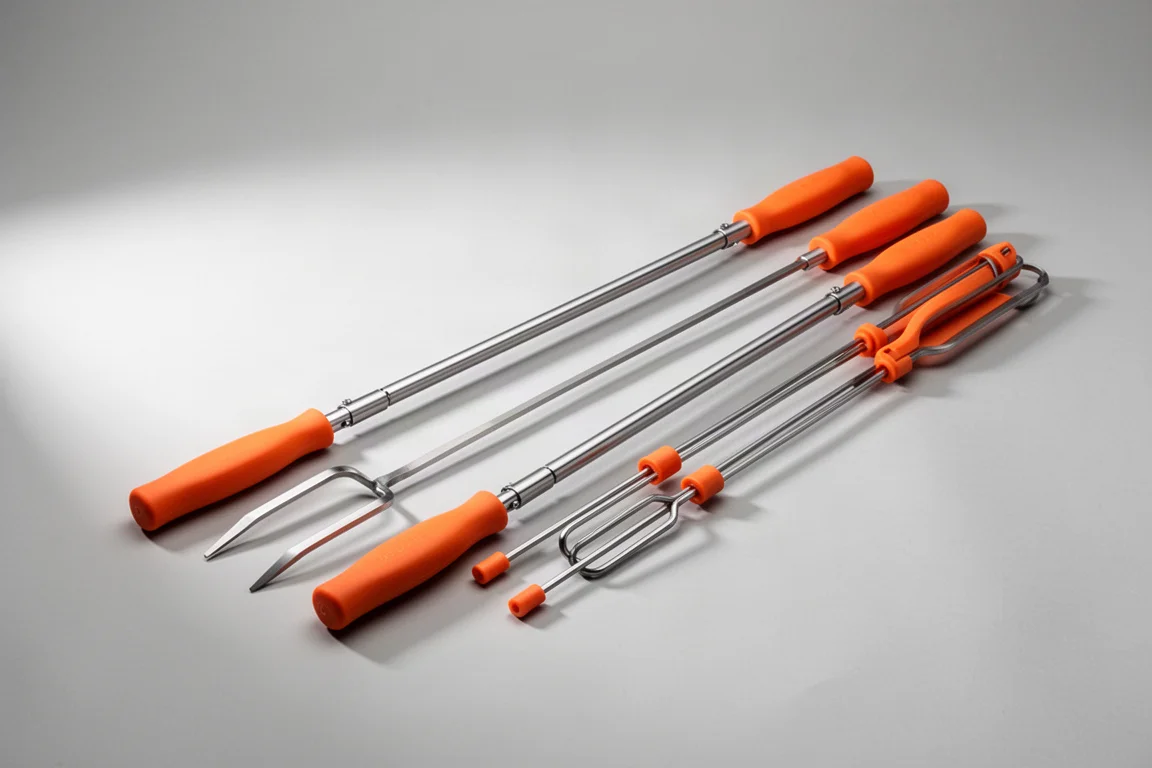
For a child-friendly option, the Briout Roasting Sticks stand out. They are made of Type 304 food-safe stainless steel, the tines are not especially sharp, and they include rubber tips for safety. Most importantly, they extend to a maximum of 45 inches, so a child stays well back from the fire pit. They are by far the longest sticks in this group.
The rod and tines are thick enough to handle marshmallows as well as hot dogs and meats, and the Briout set was also among the least expensive tested. There are two drawbacks: the handles have a slight rubbery smell and the finger grooves are not comfortable, and all the sticks come in orange only. At its full 45 inches the stick also flexes moderately with four hot dogs loaded, and it flexes a bit when collapsing.
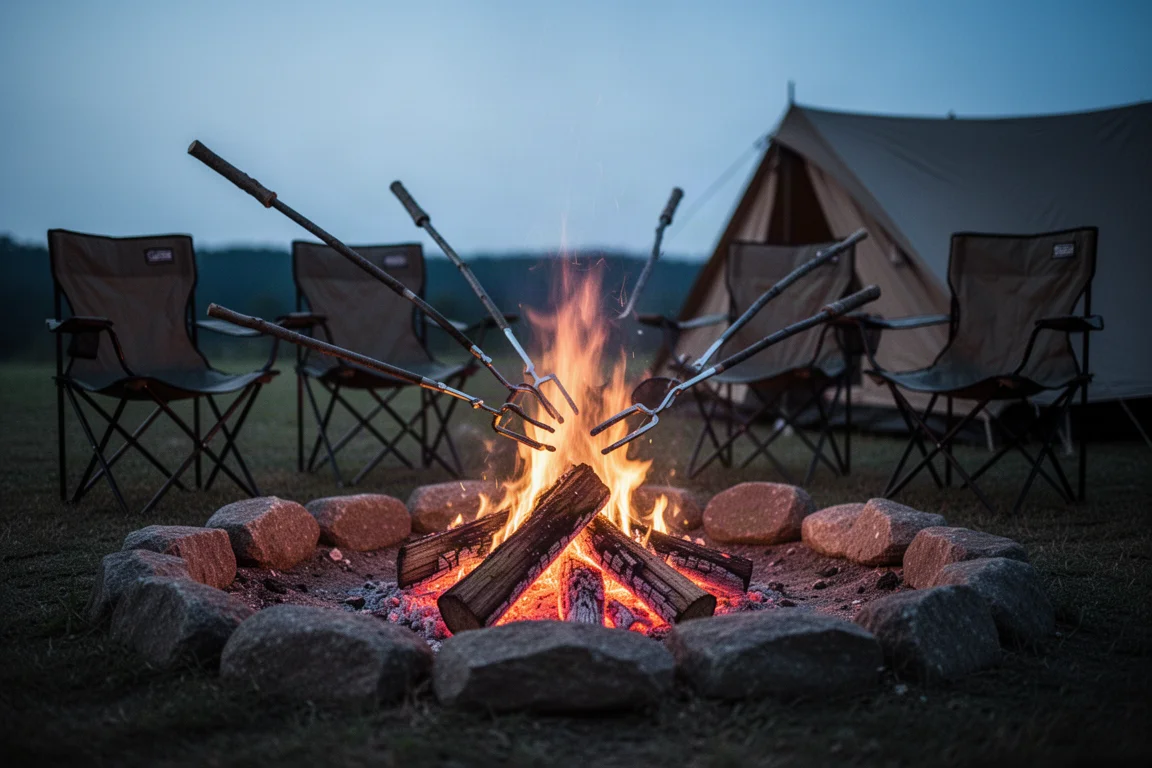
On balance, the Briout set offers plenty of value, particularly for families who want distance from the fire without spending much.
Easiest Cleanup: Jungle Stix Bamboo Sticks
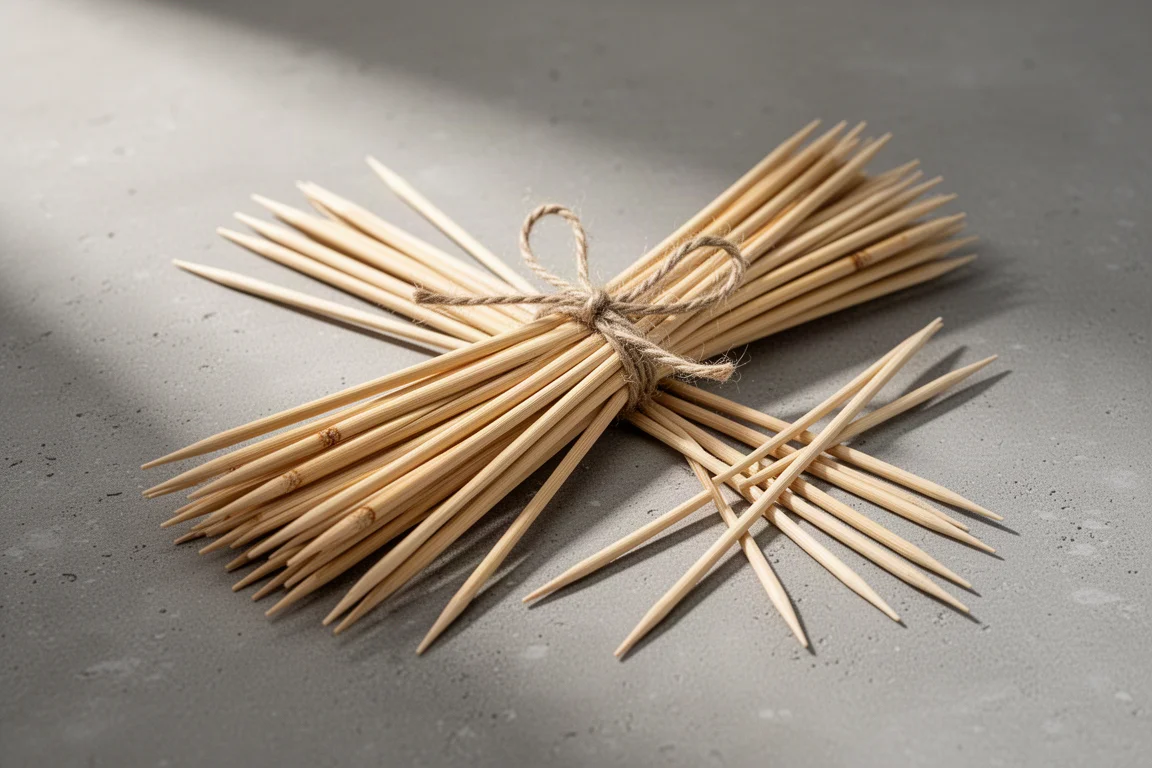
If minimal cleanup is the priority, the bamboo roasting sticks from Jungle Stix are the answer. They are 36 inches long, 5 mm in diameter, environmentally safe and 100 percent biodegradable. They hold up well to cooking and will not catch on fire while roasting food, though they are flammable when placed directly in the fire, which is exactly what makes disposal easy.
The trade-off is sturdiness. These are not as sturdy as stainless steel sticks, and a maximum of one hot dog at a time is sensible because the bamboo flexes quite a bit. Skewering a hot dog vertically rather than horizontally keeps it more secure. For marshmallows they work well, holding three and possibly four at a time. They are also the thinnest option here, which makes them the hardest to rotate and the least comfortable to grip.
Traditional and Portable: Light My Fire Grandpa’s FireFork
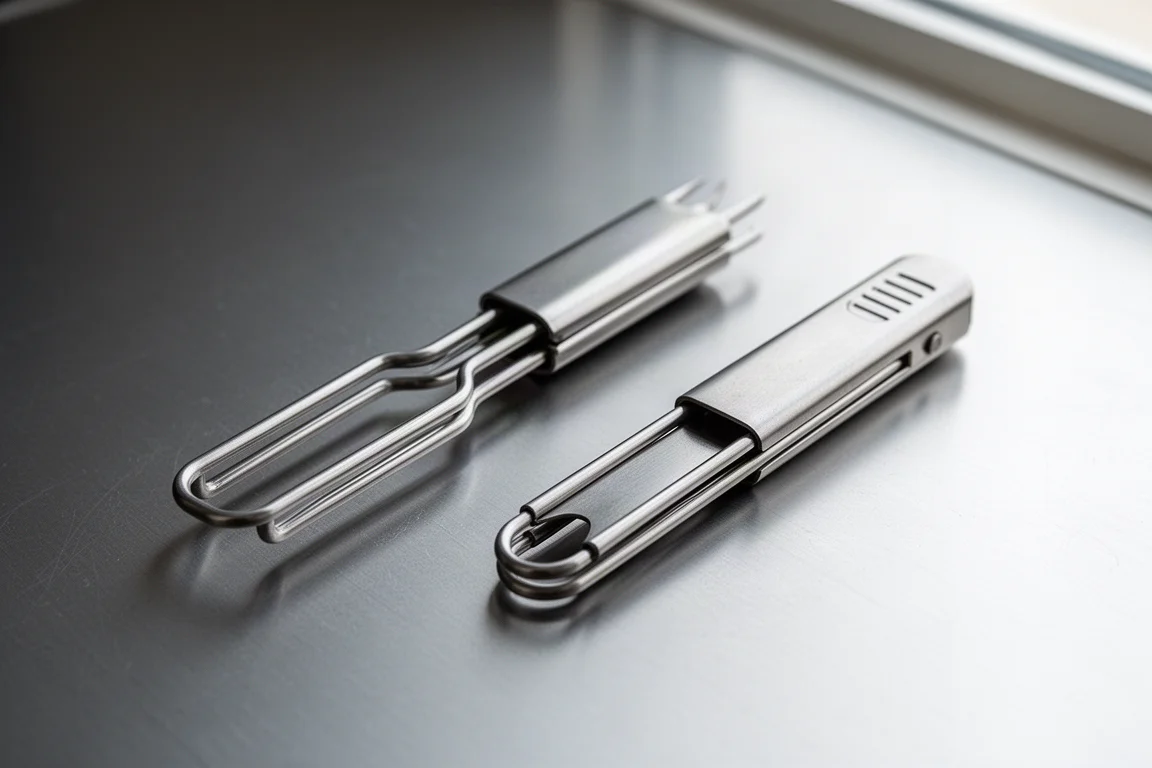
For anyone who enjoys the traditional approach of finding a stick in the woods, the Light My Fire Grandpa’s FireFork is a clever pick. Once you find a suitable stick under 1.5 cm or 0.6 inches wide, you remove the safety cap, squeeze the two ends of the fork together, pass the stick through the middle, and you have a roasting stick.
Portability is its strongest card. Each FireFork packs down to just 4 inches and weighs half an ounce, far lighter than stainless steel roasting sticks, which weigh anywhere from 1.2 ounces up to 2.6 ounces.
The trade-offs are real. The FireFork is not as easy to use as the rest because finding the right stick takes time: too thick and it will not fit, too thin and it will not be sturdy, and it needs to be straight for easy rotation. There is no color coding once the tips are removed, and it is the only stick here without a storage pouch. It is also by far the most expensive option tested and comes only in a pack of two. Even so, the quality is good for the price, and for traditional or highly portable use there is no better option in this group.
Buying Advice
The right choice depends entirely on what you plan to roast.
For hot dogs and meats, the Carpathen and Sumpri Roasting Sticks are the strongest all-round picks, with the Jolly Green set as a similar but pricier alternative that comes in a five-pack without color coding. For marshmallows only, the MalloMe Roasting Sticks are the best of the thinner-tine group, with the Ajmyonsp and Ezire sets as less expensive alternatives that accept some compromises in pouch quality and handle finish.
For children, the Briout Roasting Sticks combine a 45-inch reach, blunt-ish tines, rubber safety tips and a low price. For the least possible cleanup, the Jungle Stix bamboo skewers are disposable and effective, provided you accept the flex and keep loads light. And for a traditional, ultra-portable option, the Light My Fire Grandpa’s FireFork is the only choice of its kind here, at the highest price and in a two-pack.
A practical middle path is to own two sets: a sturdy stainless steel set with wide tines for meats and a thinner-tine set for marshmallows. That covers both jobs without overloading a single stick.
Conclusion
None of these nine roasting sticks is a bad buy, but they are built for different jobs. Thicker rods and wider tines favor heavy foods, thinner tines favor marshmallows, a 45-inch reach favors families with children, bamboo favors people who hate cleanup, and a compact fork favors traditionalists and travelers. Match the stick to the food and the setting, and the whole experience next to the fire gets noticeably simpler.
Further reading
Related Reviews

Backpacking Gear
Building a 10 lb Base Weight: An Ultralight Backpacking Gear List
A practical walkthrough of the ultralight pieces behind a 10 lb base weight, from a 765 g pack and a roomy one-person tent to a full camp chair and a dependable water filter.

Road Bikes
10 New Road Bikes Worth Watching: Aero, Titanium, Steel and Endurance Standouts
A practical roundup of 10 new road bikes, from aero flagships chasing single-watt gains to titanium, steel and endurance platforms built for real roads.
Bikepacking Gear
11 Bikepacking Essentials for Long-Distance Cycling
Eleven bikepacking essentials for long-distance cycling, from a steel gravel frame and a two-person tent to helmet lights, packable gloves, and a frame bag that puts weight in the right place.