Outdoor Camera Gear
Best Camera Gear for Hiking and Backpacking: A Field-Tested Kit Breakdown
A practical breakdown of the camera, lens, audio, power, and support gear that earns its place in a backpacking kit, plus what each piece trades away.
Introduction
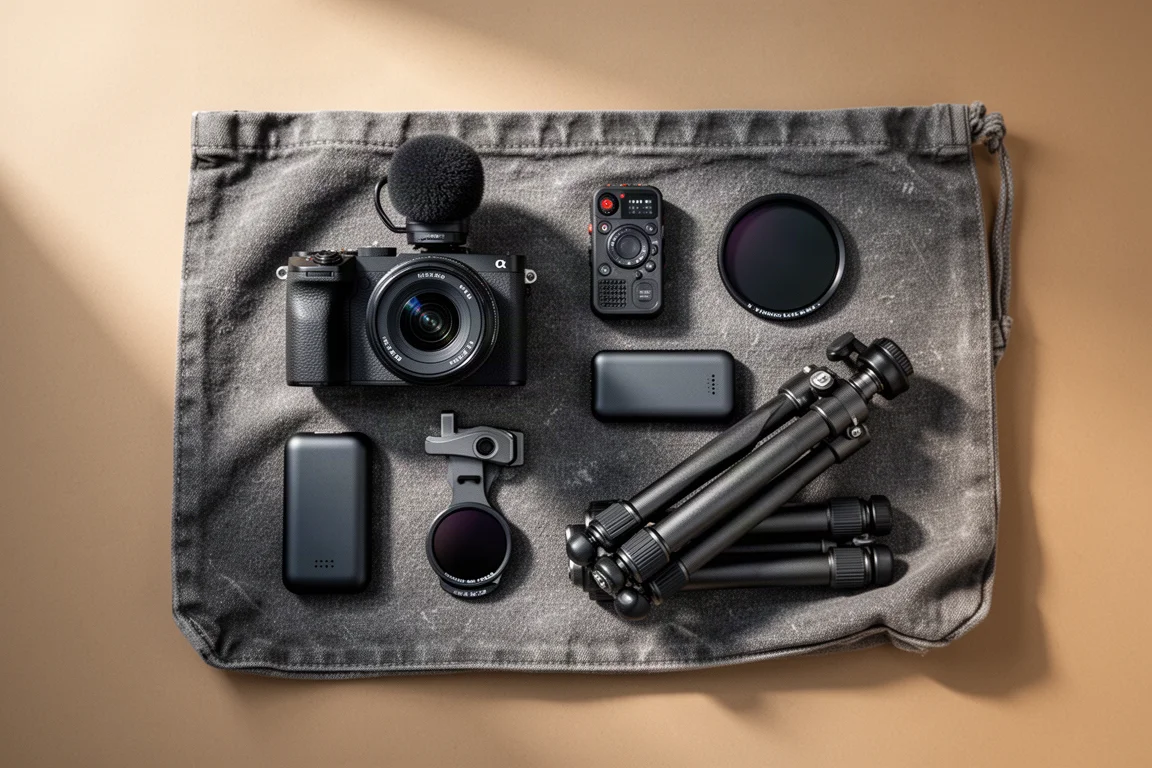
A camera is the one luxury item worth carrying on a long trail. It is heavy, it is fragile, and it needs power, but it is also the only piece of gear that brings a place home. The equipment below has been carried across long-distance thru-hikes, high-altitude filming projects, and international travel, and it spans the full arc from a phone in a hip pocket to a full-frame system with separate audio.
The kit breaks down into seven jobs: the camera, the lens, the way it hangs on your body, the sound, the power, the exposure control, and the support. Each one has a compact answer and a heavier answer, and the right choice depends entirely on how much you care about the footage you bring back.
What Matters Most in a Backpacking Camera Kit
Weight is the first filter, not image quality. Every gram competes with food, water, and insulation, so the useful question is never “what is the best camera” but “what is the best camera I will still be happy to carry on day nine”. A lighter kit that actually gets used beats a better kit that stays buried in the pack.
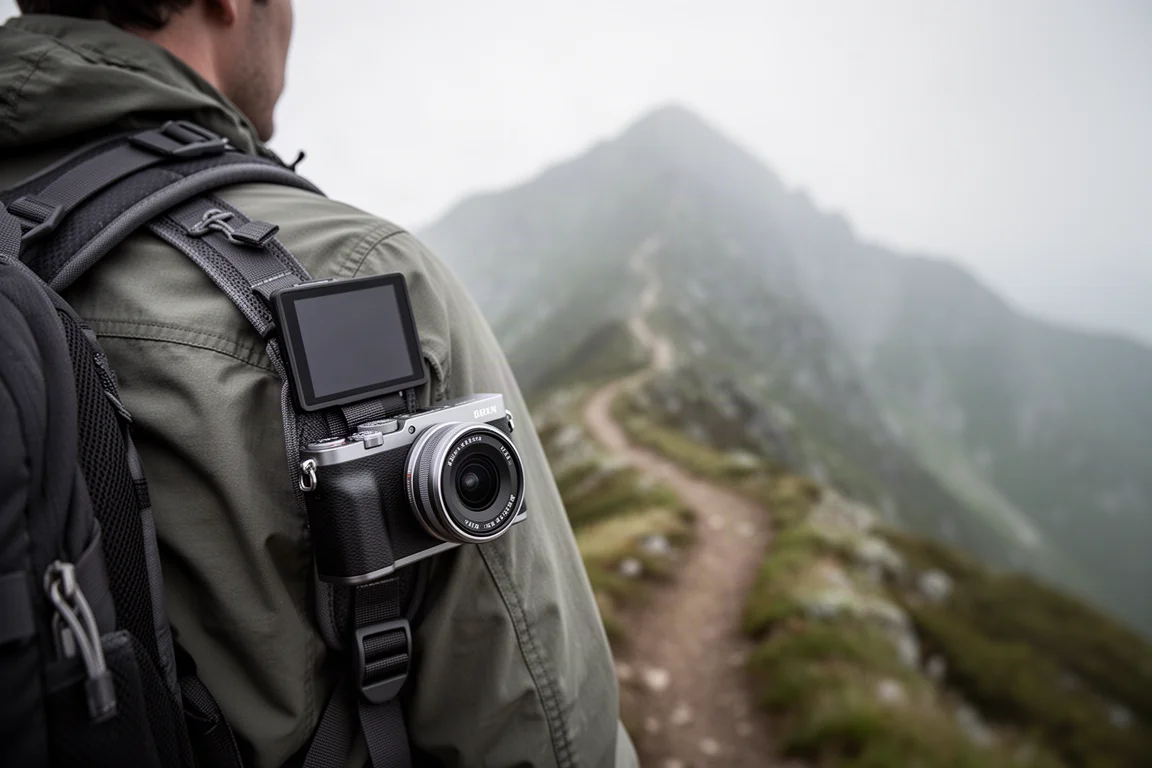
The second filter is reliability. Batteries have to hold charge in cold weather, ports have to survive dust and rain, and the whole system should be chargeable from a single power bank through one cable. The third is sound, which is the part most people underestimate and the part that most separates footage that feels professional from footage that does not. Weather resistance matters too: a little light rain is survivable, but sustained rain means the camera goes into a pack liner and an action camera takes over.
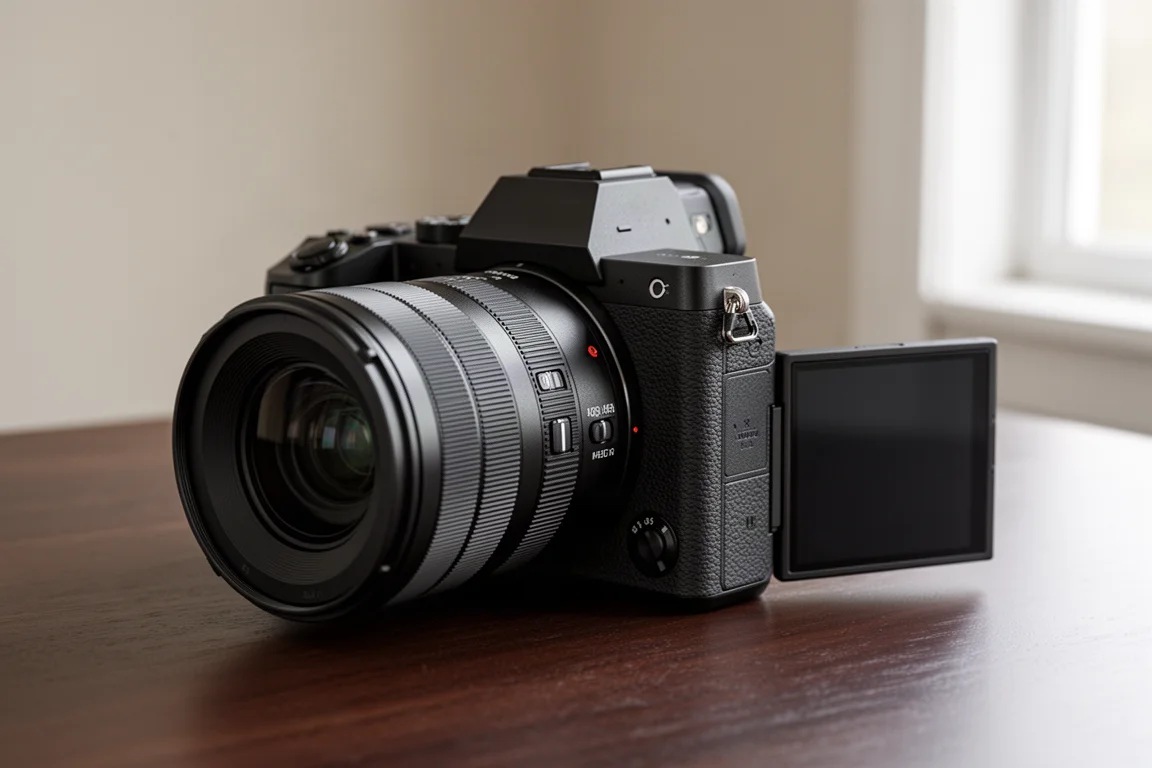
Fujifilm X-H2S: The Core Camera
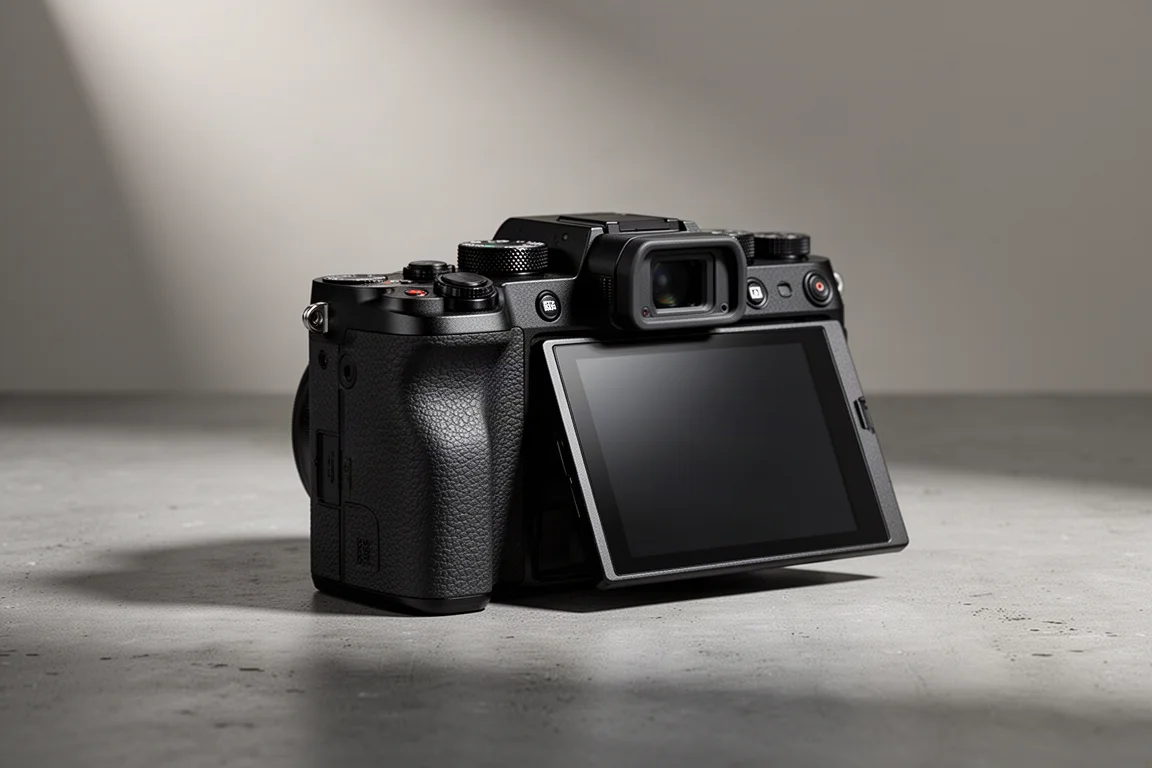
The X-H2S is the center of a serious lightweight kit. Its APS-C, or Super 35, sensor feels familiar to anyone who has spent time with cinema cameras, and it produces a warm, film-like color rendition straight out of the camera rather than the flatter, more clinical look of a typical stills-first body. Autofocus and stabilization are the main reasons to choose it over the earlier X-T4.
It has served as the primary camera on a high-altitude climbing project in Nepal as well as on long-distance trails, which says as much about its handling as about its image quality. It also charges in body over USB-C, which removes a dedicated battery charger from the packing list entirely.
Fujifilm 16-55mm f/2.8: The Everyday Zoom
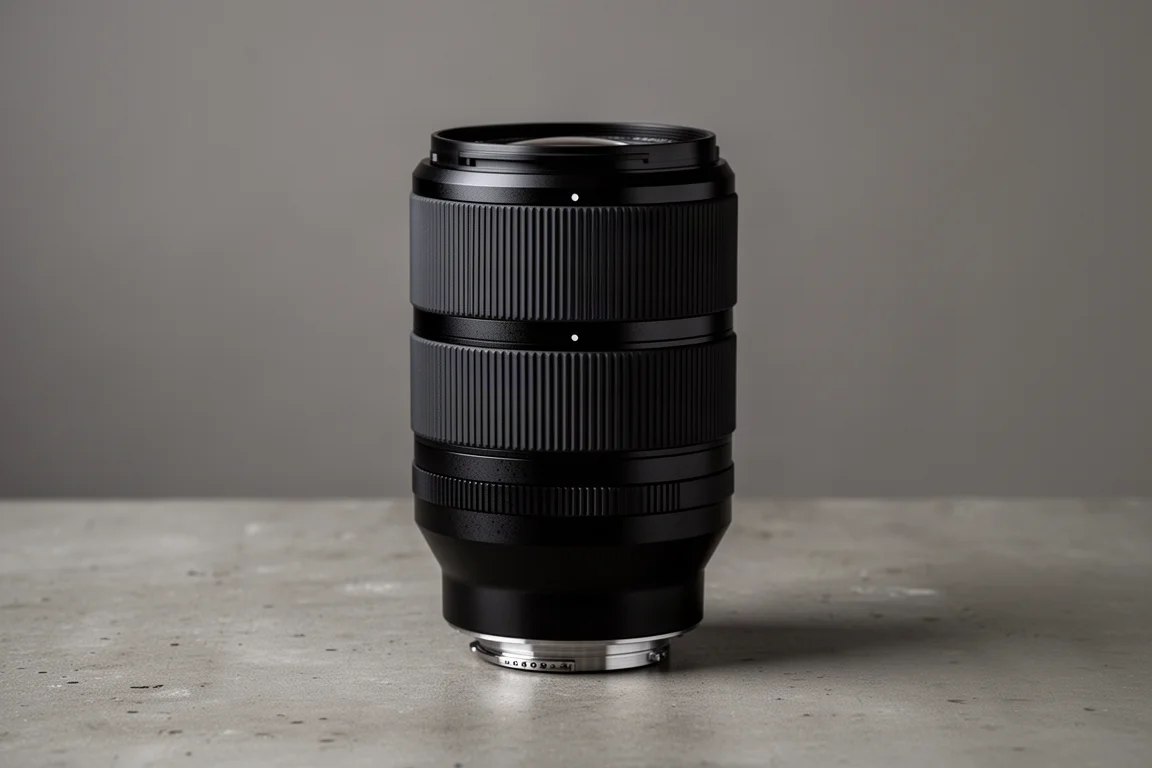
A 16-55mm on APS-C covers the same angle of view as a 24-70mm on full frame, and that range turns out to be the most useful single lens for trail work. The long end compresses distant ridgelines and isolates detail, while the wide end handles landscapes and walking shots with a mountain in the background.
The constant f/2.8 aperture keeps the door open in low light, at dawn, in forest, or inside a tent, while stopping down as far as f/22 lets a large landscape stay sharp from front to back. It is a heavier lens than a small prime, and that is the trade-off for not having to change lenses in bad weather.
Peak Design Capture Clip: The One Piece You Cannot Skip
If one accessory deserves to be called essential, it is the Capture Clip. It mounts on a backpack shoulder strap and holds the camera like a holster, so the weight sits on the strap instead of swinging from a neck strap or bouncing against the chest. Grab, shoot, clip it back, and the camera is secure again in a second.
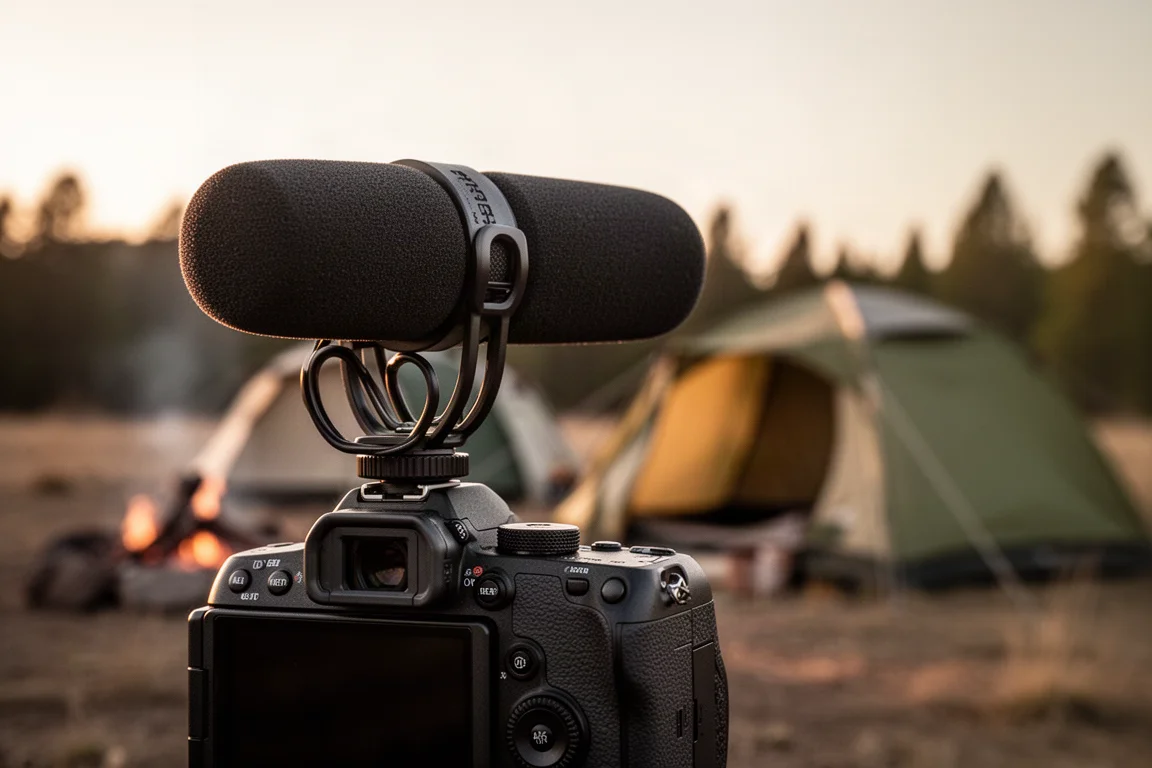
The plate that stays on the bottom of the camera is Arca-Swiss compatible, which means the same camera moves straight onto a compatible tripod head with no tools and no second plate. It is worth checking that your pack has enough webbing at the shoulder strap for a stable mount; some packs add a dedicated strip so the clip does not dig in.
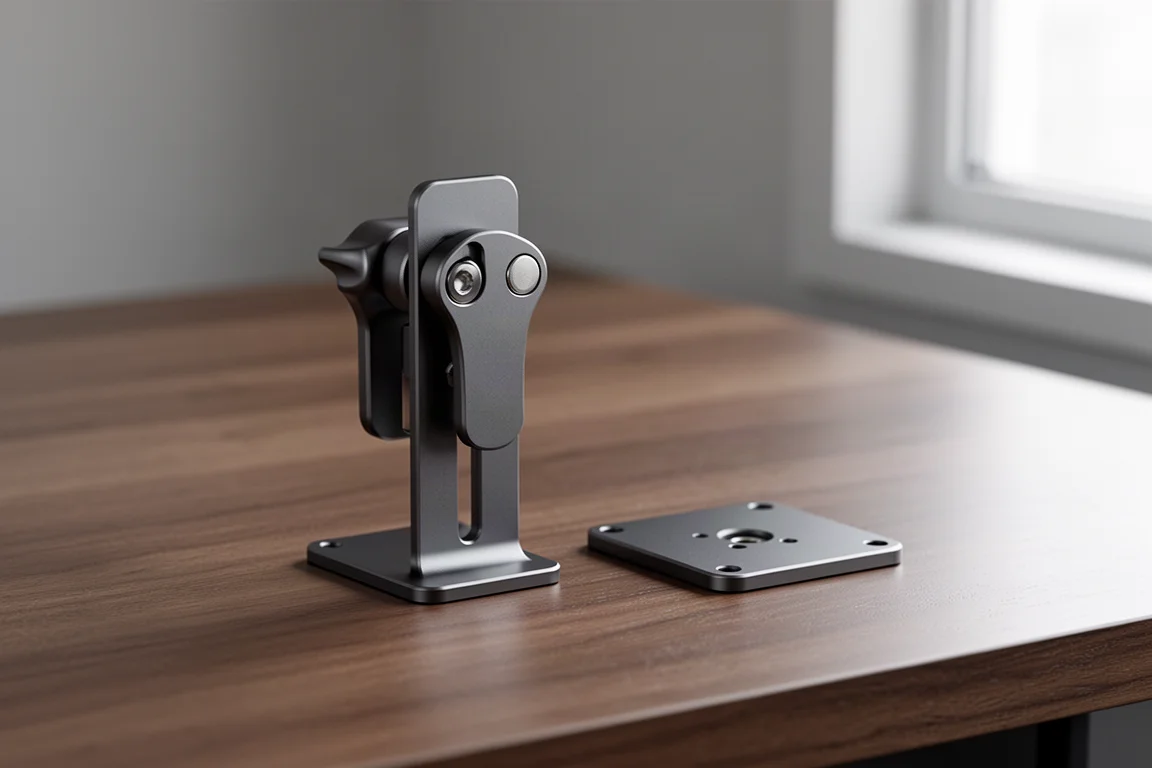
Rode VideoMicro II: Compact On-Camera Audio
On-camera audio is a size compromise, and the VideoMicro II sits at the compact end of that compromise. Larger microphones will always capture a richer signal, but this one stays low profile on top of a camera and still delivers strong onboard sound, which matters when the alternative is the camera’s built-in microphone.
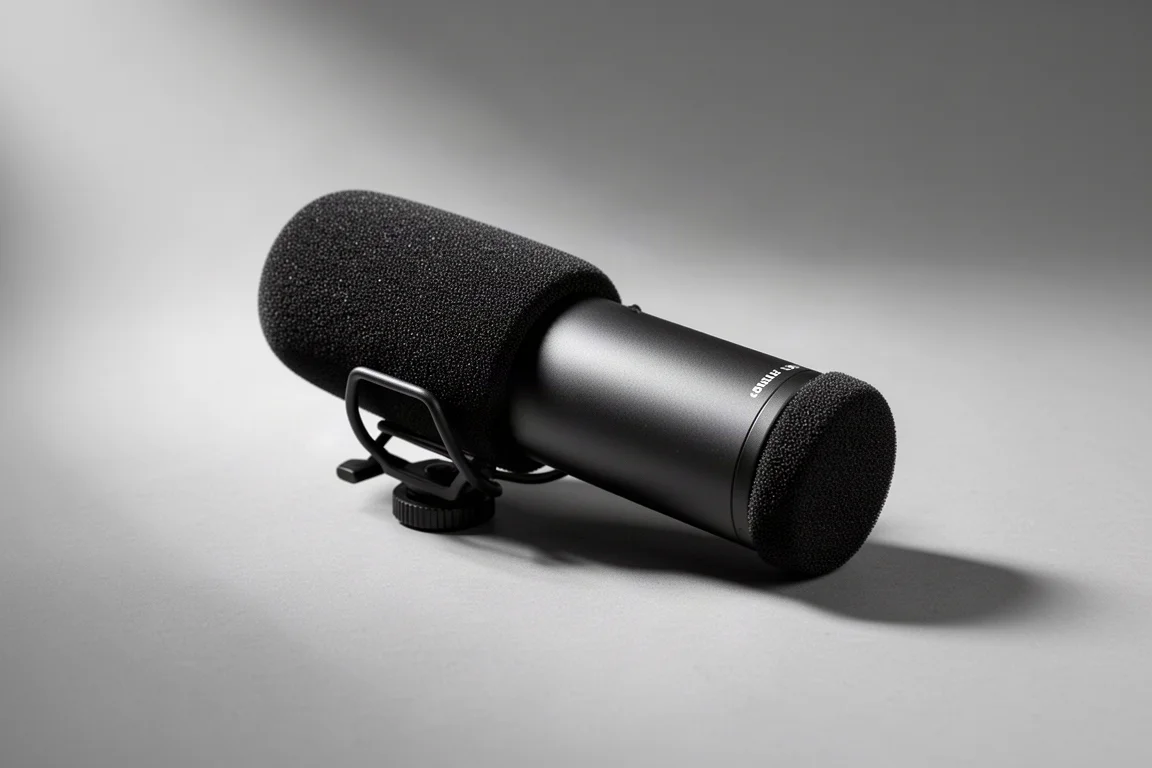
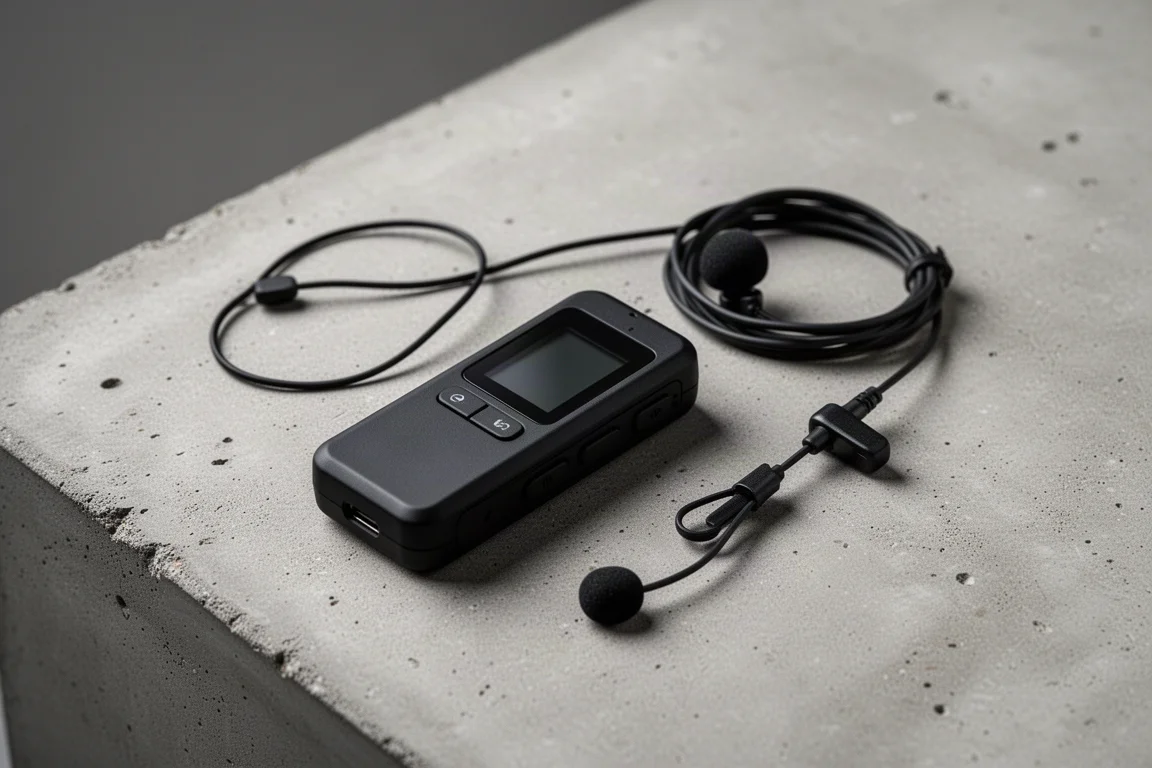
Tascam DR-10L: Separate Audio When It Counts
The DR-10L records to its own micro SD card rather than feeding the camera, and that separation is the entire point. Ambient sound stays with the footage while a voice is captured cleanly on a second track, so an interview can be isolated later even when wind, water, or other people are in the mix. It is the tool for windy ridgelines, tent interviews, and any moment where clean dialogue is worth carrying one extra device.
The cost is one more item to charge and pack, plus a pair of wired headphones for monitoring. Monitoring is not optional if you care about sound: it is the only way to catch wind noise, clipping, or a dying battery before the take is ruined.
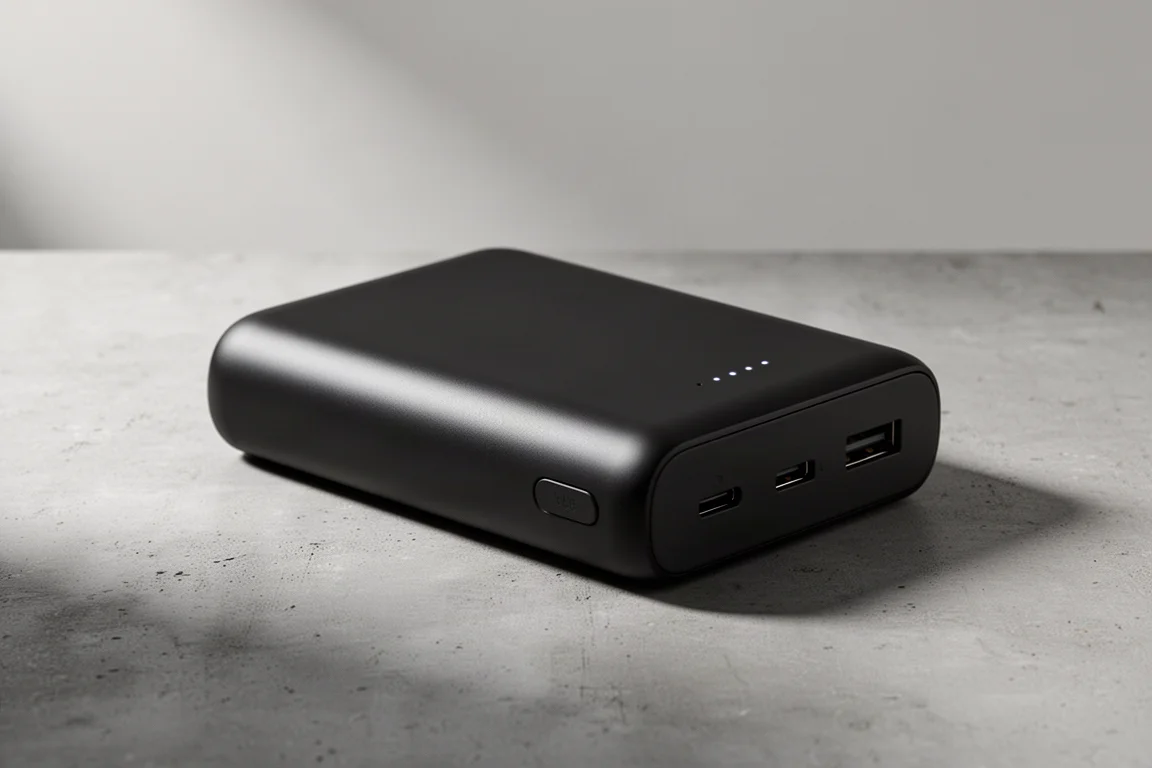
Anker PowerCore 20,000 mAh: Power for Long Days
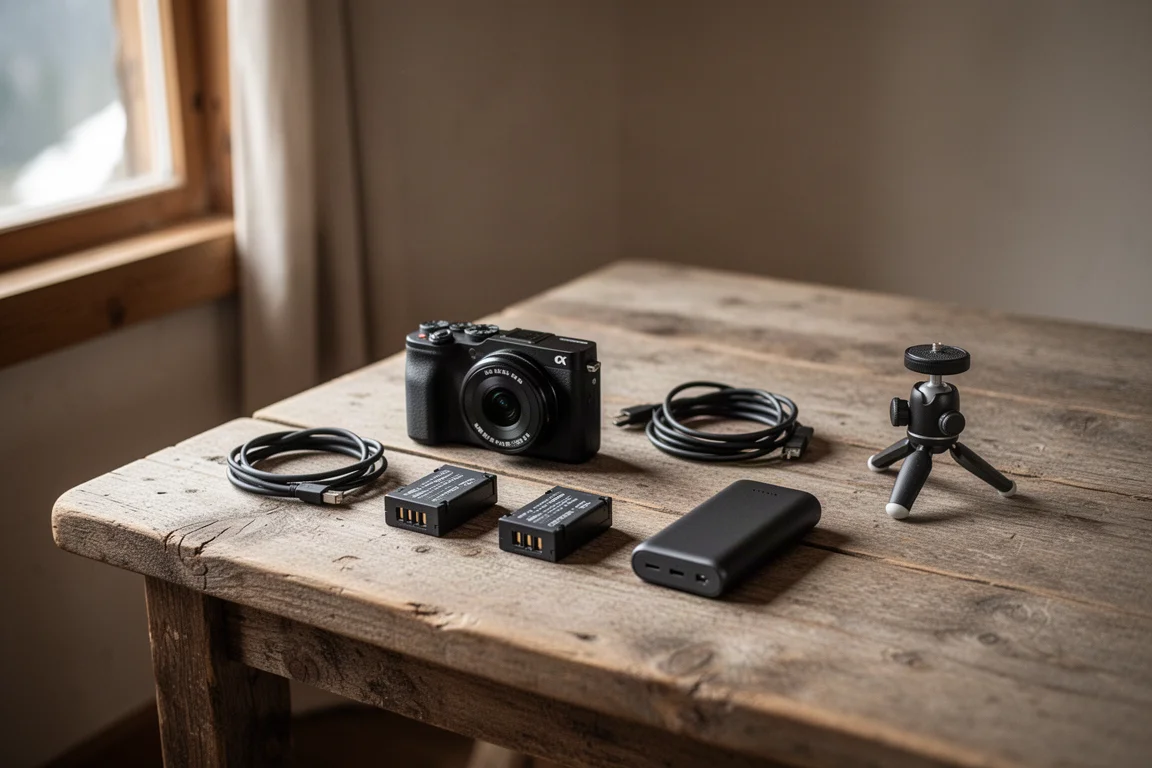
A 20,000 mAh power bank is the difference between charging whenever you find an outlet and charging whenever you want to. The PowerCore line earns its place here on durability rather than minimum weight: it holds charge for a long time, performs well in cold weather, and charges reasonably quickly, which matters when a town stop is only a few hours long.
Pair it with a USB-C power delivery cable and the camera charges in body, so no separate battery charger is needed. A 10,000 mAh version covers shorter trips or lighter packs, and a compact two-port wall charger handles the camera and a phone at once whenever power is available.
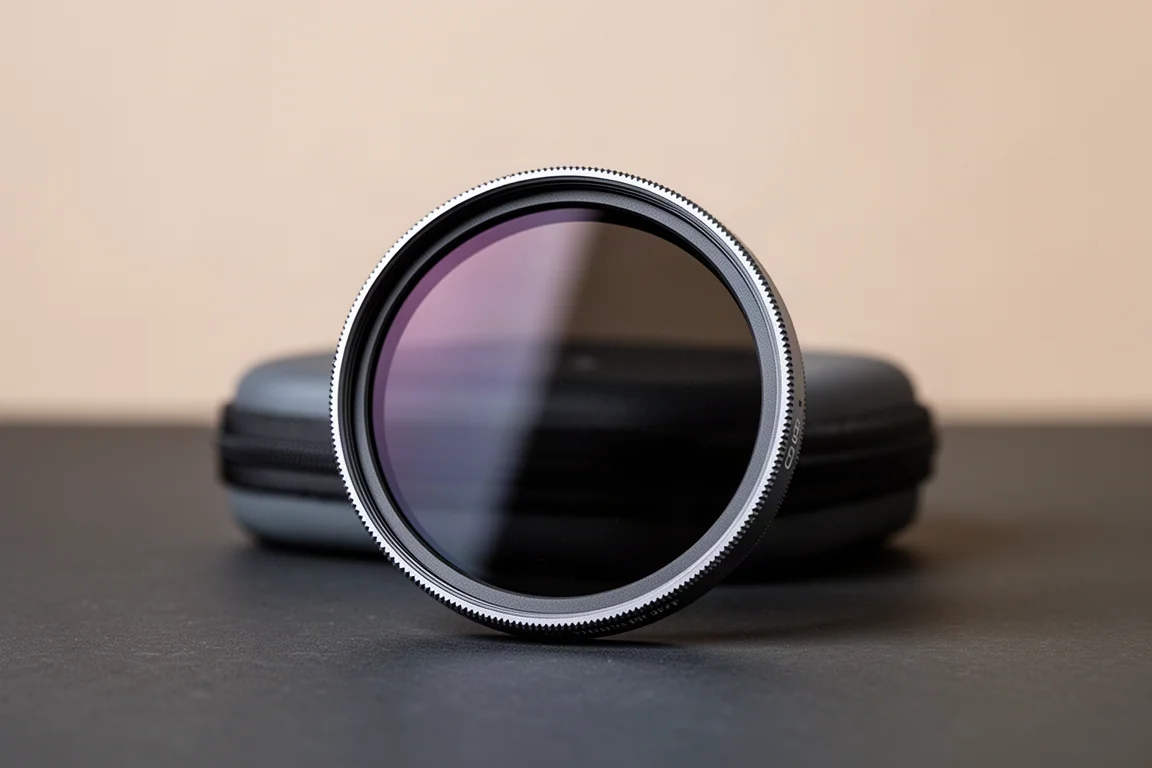
Polar Pro Signature Series PMVND 2-5 Stop: Exposure Control Outdoors
A variable neutral density filter is a pair of sunglasses for the lens. In bright, blown-out conditions, which is exactly when most outdoor footage gets shot, it is the difference between a controlled exposure and a washed-out frame. This one covers two to five stops in a single filter.
The details that make it pleasant to use are the haptic feedback and the hard, clicked stop at each end of the range, which prevents the usual variable ND problem of overshooting into an uneven, cross-polarized look. It is an expensive accessory, and it is still the one that stays in the kit.
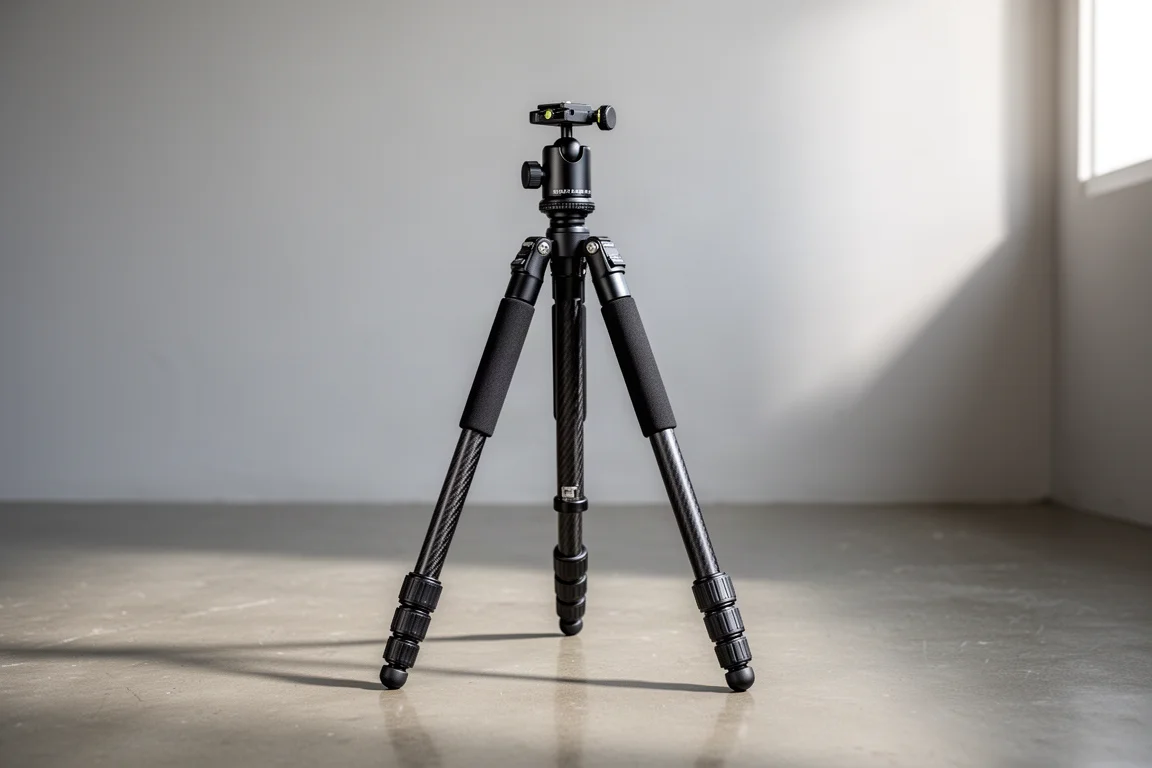
Aoka Carbon Tripod: Light Support, With a Caveat
A carbon travel tripod that weighs just over a pound changes how often you actually use a tripod. This one has a ball head and an Arca-Swiss style plate that accepts the camera’s mounting plate directly, so the same clip that holds the camera on a shoulder strap also locks it onto the tripod.
The limitation is height. It is short enough that ground-level and low-angle shots are easy, but a standing talking-head frame usually means hunting for a rock or a slope to raise it. That is the honest trade-off for the weight, and a taller tripod solves it at the cost of roughly another pound.
Sony A7S III: The Alternative Worth Testing
The A7S III is the full-frame alternative many outdoor shooters reach for, and it earns that reputation with excellent autofocus and stabilization. Mounted with a 24-70mm, it covers the same working range as the 16-55mm on APS-C, just with a larger sensor behind it.
The difference is character. Its footage reads sharper and more digital, while the Fujifilm body produces a cinematic, film-like look without grading. That preference is personal, and it is the main reason a full-frame switch is a considered decision rather than an obvious upgrade.
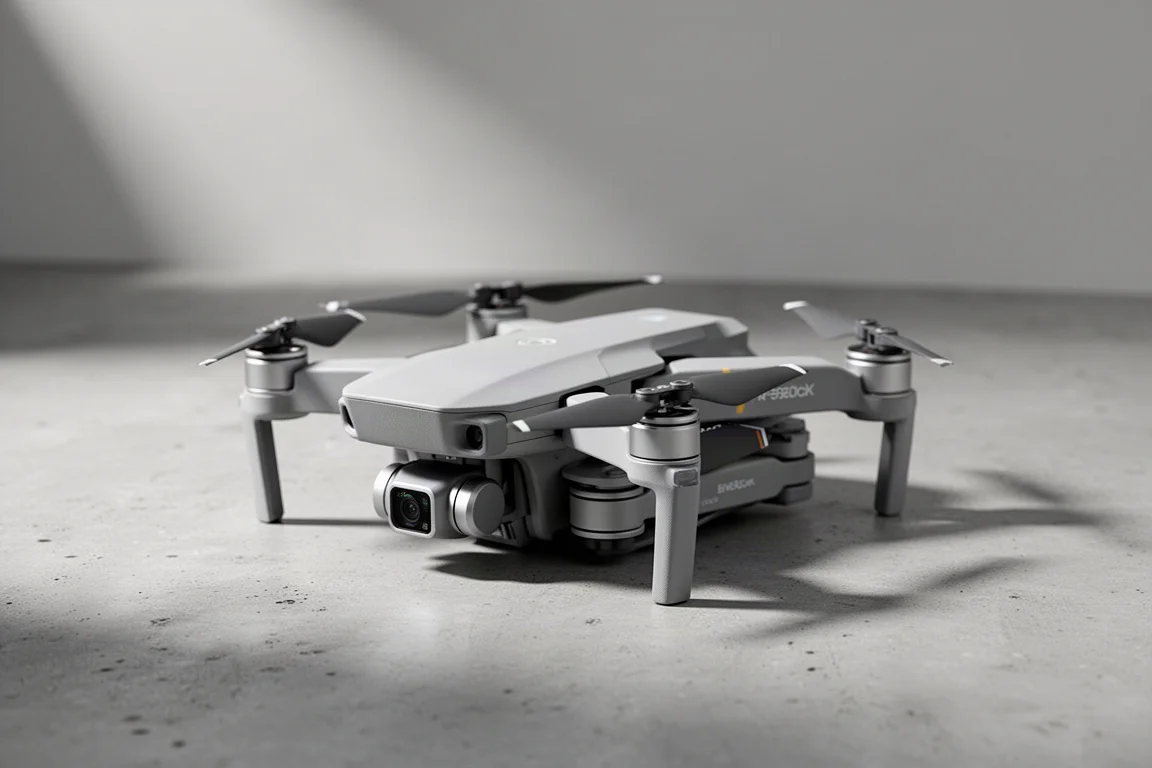
DJI Mavic Mini Pro: A Rare, Deliberate Addition
At 249 g, this drone sits under the weight threshold that would otherwise require certification in many places, but that does not make it legal everywhere. National parks and large areas of national forest prohibit launches, so the first step is always checking local rules before packing it.
The real cost is bulk, not weight: the controller is large and actually heavier than the aircraft, and a spare battery adds a little more. For that reason it is a special-occasion item rather than a permanent part of the kit, brought along when an establishing shot is worth the space.
Overall Buying Advice
Start with the job, not the spec sheet. If the goal is a few clips to share with friends, a modern phone handles it, and an action camera covers anything wet, fast, or moving. A compact point-and-shoot is a genuine step up from a phone for video and is the lightest way to get a real zoom range.
If the goal is footage that tells a story, the priority order is camera body, then a standard zoom, then sound, then power, and only then support. A shoulder-strap clip and a power bank deliver more practical value per gram than almost anything else on this list, because they change how often the camera actually leaves the pack. Buy the tripod last, and buy the tallest one you are genuinely willing to carry.
Conclusion
There is no single best camera for hiking, only the setup you are comfortable enough with to keep shooting when you are tired, cold, and hungry. A phone, an action camera, and a small point-and-shoot can document a trip perfectly well. The heavier kit earns its place when the goal is footage that brings a landscape to life, and in that case the sequence above keeps the weight honest and the results consistent.
Further reading
Related Reviews

Backpacking Gear
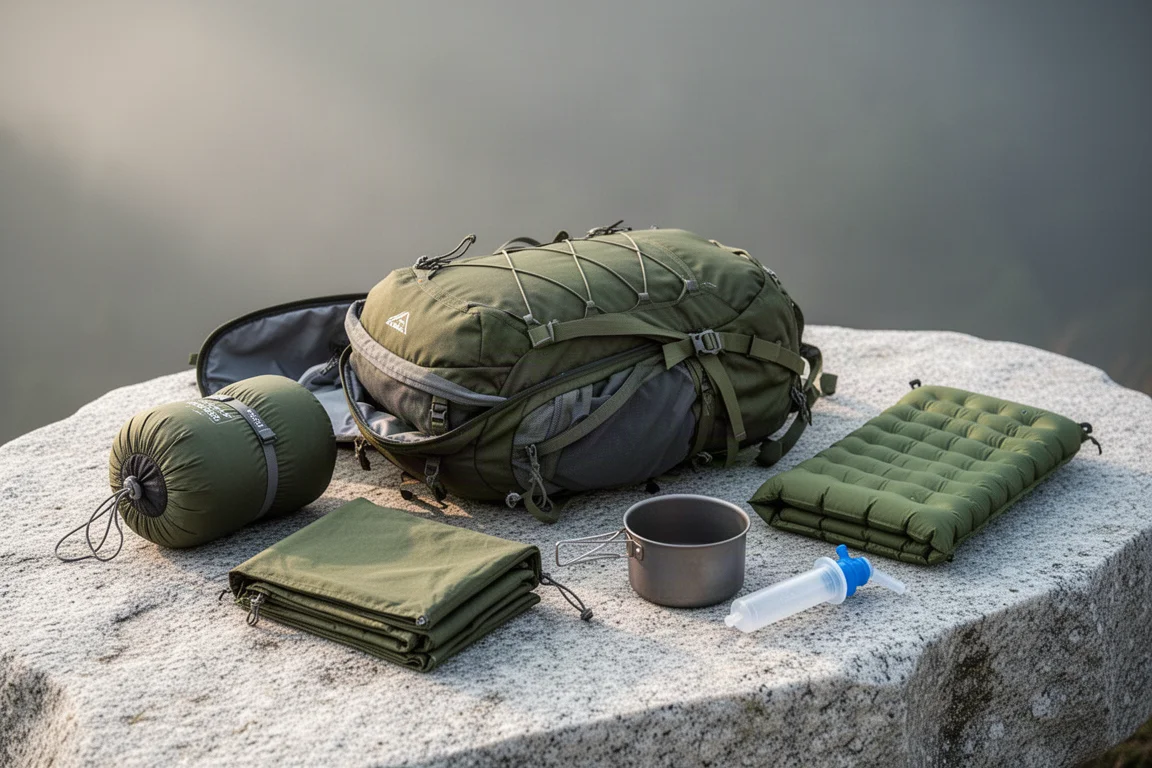
Building a 10 lb Base Weight: An Ultralight Backpacking Gear List
A practical walkthrough of the ultralight pieces behind a 10 lb base weight, from a 765 g pack and a roomy one-person tent to a full camp chair and a dependable water filter.
Backpacking Gear
A 15-Pound Lightweight Backpacking Gear List for Solo Trips
A beginner-friendly 15-pound backpacking setup built from easy-to-find gear, with notes on what each piece does, how it packs, and where to spend your attention.
Trail Running Gear
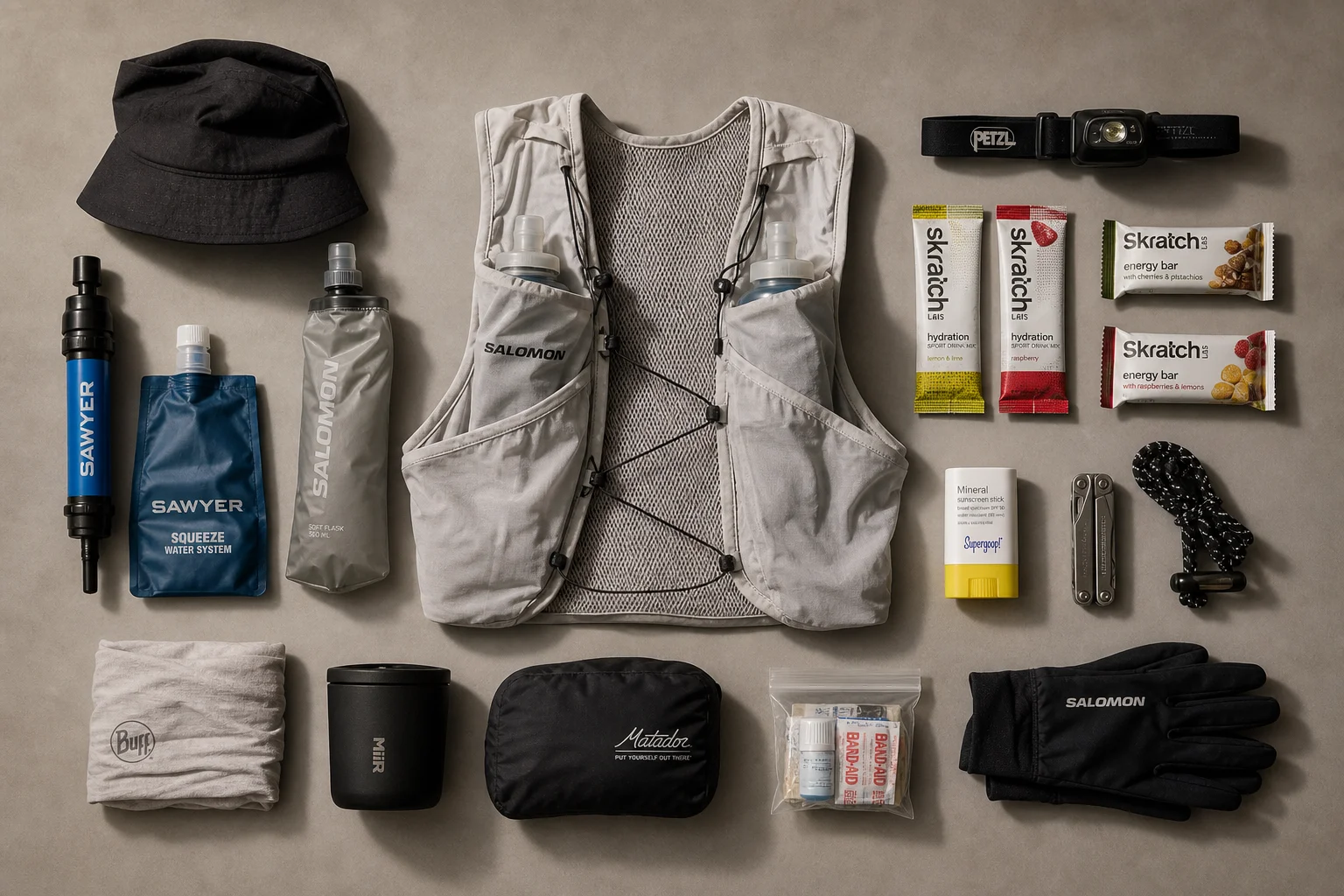
28-Mile Trail Run Pack Loadout: Ultralight Gear for High Alpine Self-Supported Running
A complete breakdown of gear, clothing, hydration, nutrition, and safety equipment for a 28-mile high alpine trail run with 7,800 feet of elevation gain.