Camping Tents
Best Cabin Tents 2026: Ten Cabin Tents Compared for Space, Setup, and Rain Protection
A practical comparison of ten cabin tents covering peak height, wall slant, setup times, ventilation, and rain performance, with clear picks for budget, instant setup, and maximum interior space.
Introduction
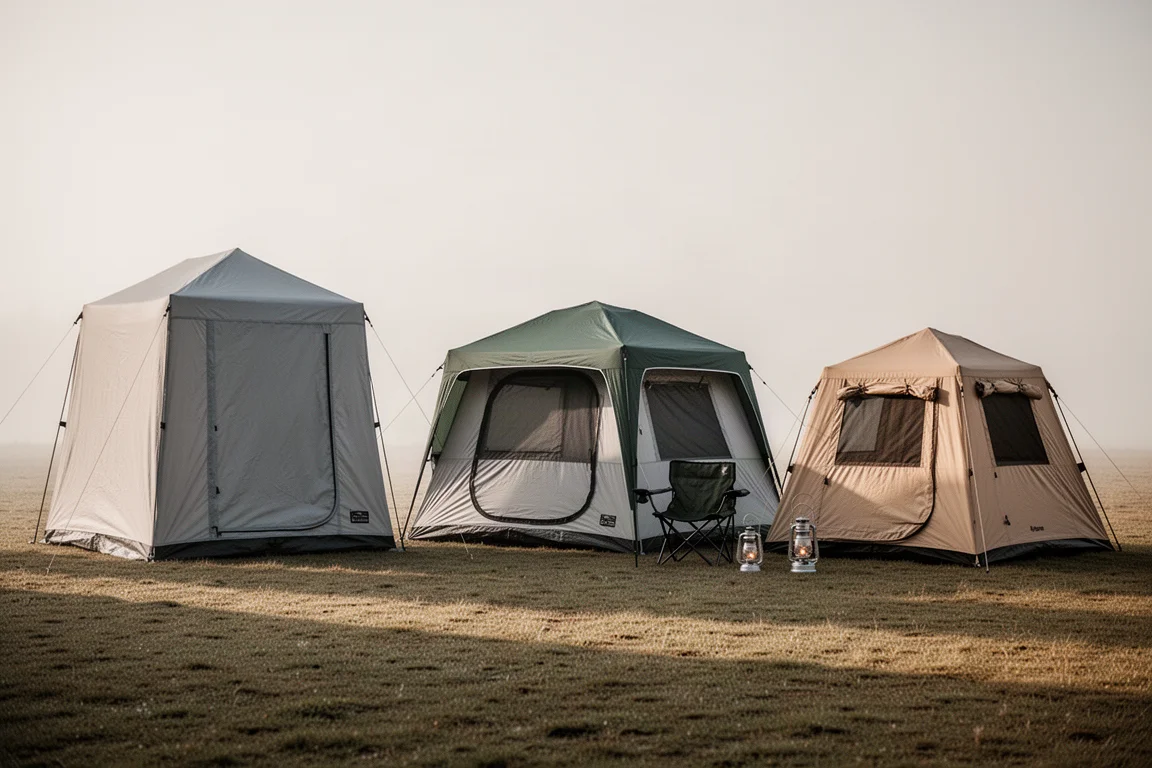
Cabin tents promise what dome tents rarely deliver: room to stand up, walk around, and actually live in. The category is wide, though, and the differences between a comfortable cabin tent and a frustrating one rarely show up in marketing photos. Peak height, wall angle, setup time, mesh coverage, and rainfly length matter far more than the capacity number printed on the box.
This guide covers ten cabin tents, from budget instant models to premium full-featured designs. Each entry sticks to what structured testing revealed: how quickly the tent goes up and comes down, how much usable floor space the walls leave behind, how it handles rain and wind, and which campers each design suits best.
How These Cabin Tents Were Evaluated
Testing focused on measurable details. Peak height was recorded at the center of each tent, and wall slant was measured in degrees, because a steeply angled wall quietly eats into usable floor area near the edges. Setup and pack-away timings were recorded for a single person working alone, which is the realistic scenario for most campers.
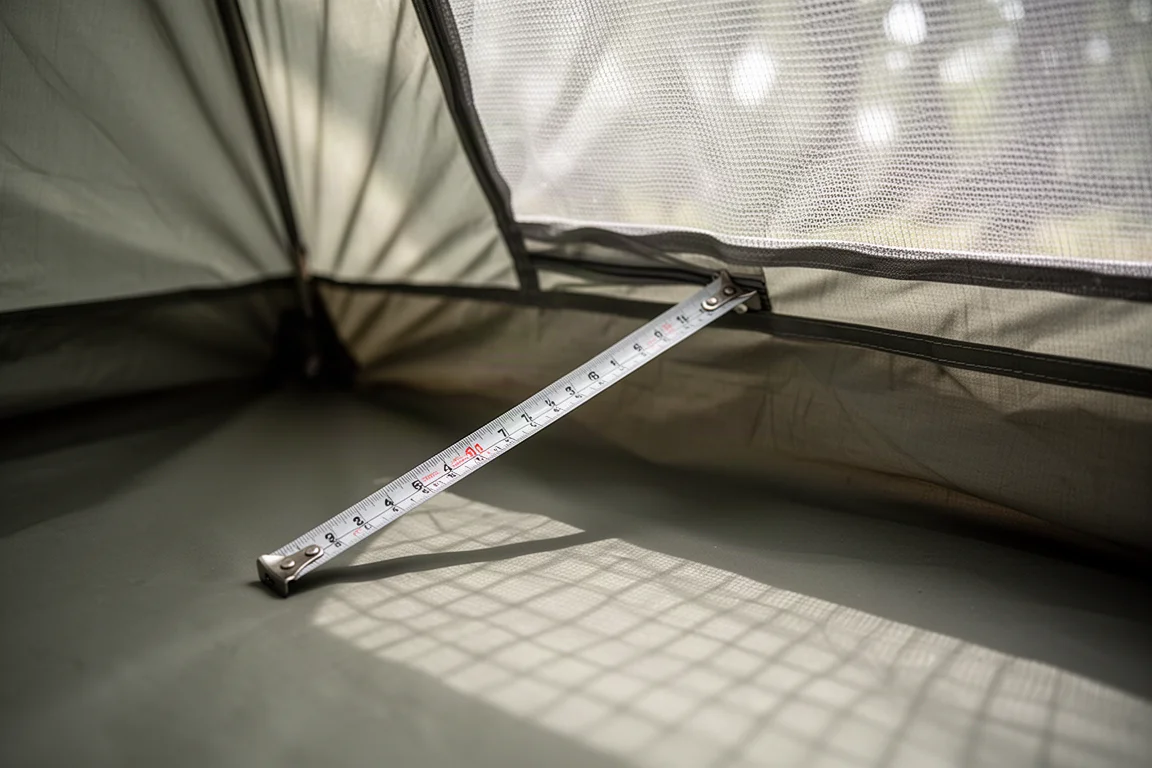
Rain performance was assessed with timed exposure to heavy and moderate rain, and ventilation was estimated by measuring windows, vents, and ceiling mesh relative to the fabric around them. Storage options, door design, dividers, power ports, and guy line counts were catalogued separately. It is worth stating the category limit up front: cabin tents are not the best choice in sustained rain or strong wind, because their rainflies are typically short and their tall sidewalls catch wind. The ratings below reflect relative performance within the category, not storm-proofing.
Best Budget Cabin Tents
Budget cabin tents are where the biggest differences hide, and three models show exactly what to look for and what to avoid.
Coleman 10 Person Instant Tent
Coleman’s 10 person instant tent pitches quickly, but its structure works against it. Peak height comes in about 2 inches lower than a comparable Core model, and the side walls slant at roughly 35 degrees, which is a lot. A single hub at the top of the frame leaves the walls noticeably droopy, soft enough to push outward by hand from inside the tent. That droop reduces usable space along the edges and makes the interior feel smaller than its footprint suggests.
Core 9 Person Instant Tent
Core’s 9 person instant tent gives up a little maximum capacity to the Coleman but wins on structure. Peak height is about 2 inches taller, the walls slant at just 15 degrees, and the frame uses three hubs at the top instead of one, which keeps the walls taut and the interior feeling open.
Weather testing was encouraging too. The tent stayed dry through 55 minutes of very heavy rain, and its steel poles showed no rust after a single use, an issue that appeared on a rival budget model. Materials are budget grade, with polyethylene and 68D polyester, and not every seam is taped, so a seam-sealing session is a sensible first step. The divider is see-through and offers very little privacy.
Ozark Trail 6 Person Instant Tent
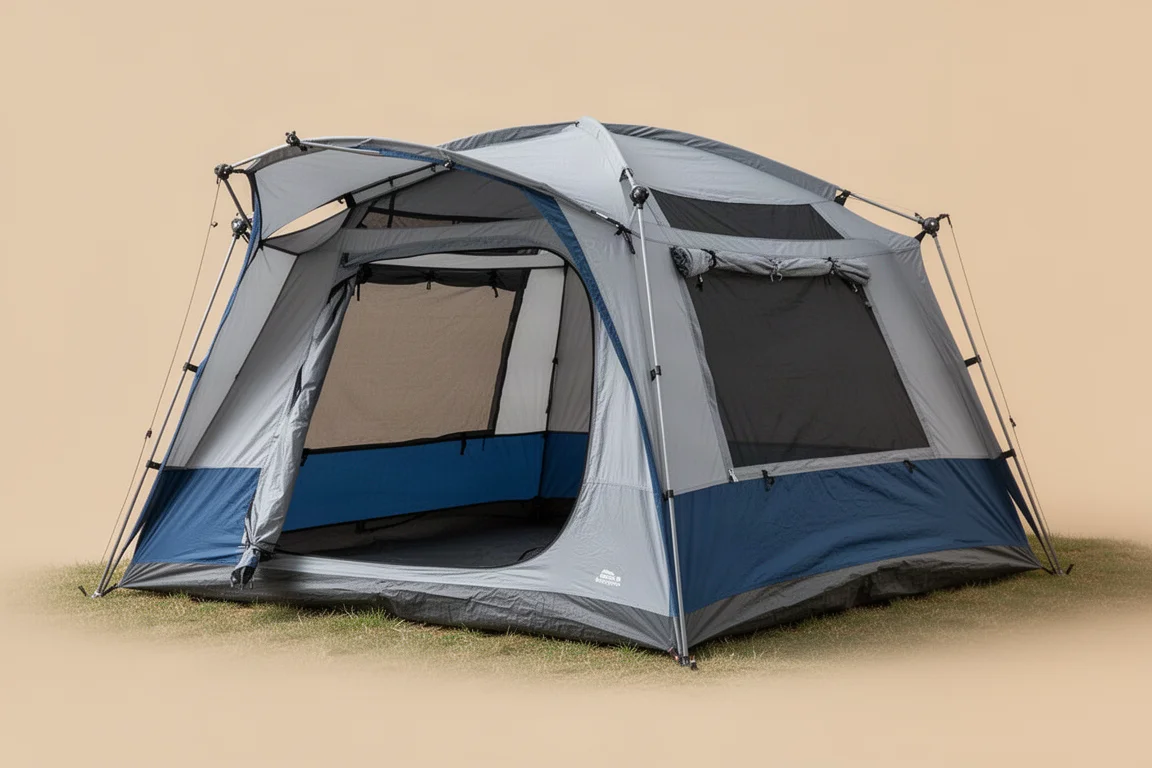
The Ozark Trail 6 person instant tent repeats the wall-slant problem with none of the compensations. Walls angle at about 30 degrees, and peak height of roughly 65.2 inches is the lowest recorded in a six person tent, only a few inches above average adult height. Step away from the exact center and headroom disappears quickly, leaving very little floor area where a person can stand upright.
For campers who want a cabin tent specifically for stand-up space, this is one to pass on.
Ozark Trail 10 Person Cabin Tent
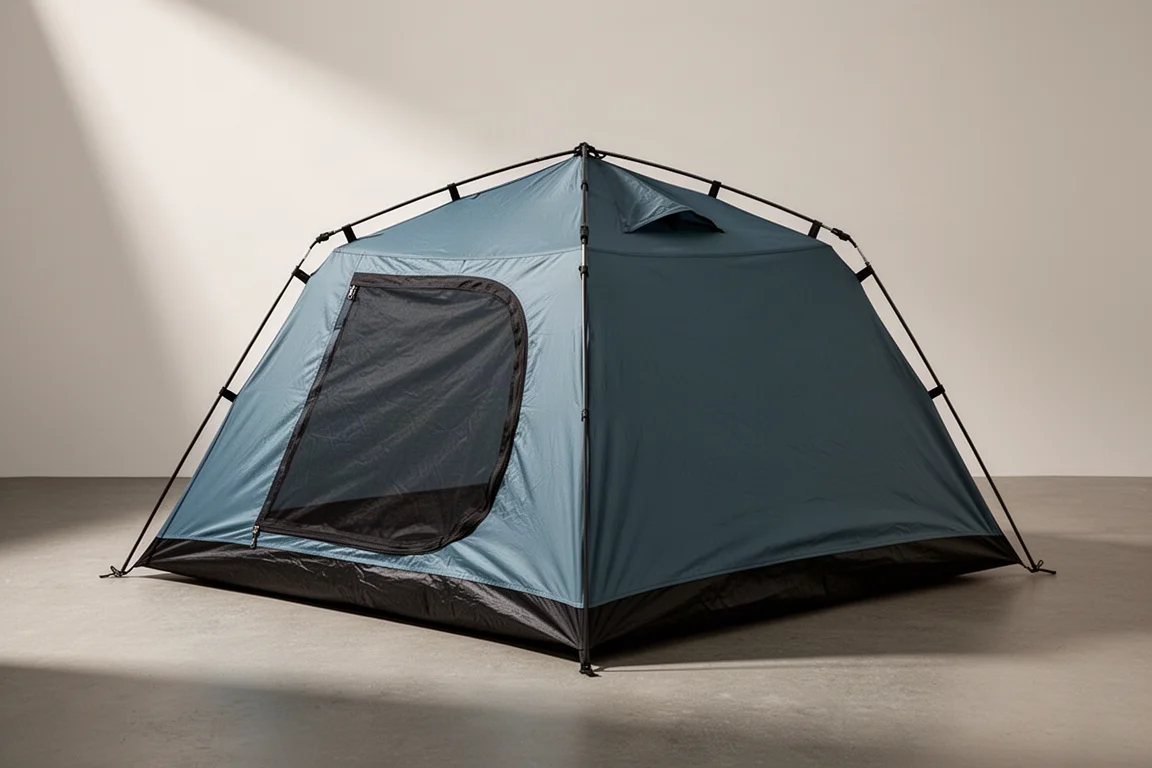
Ozark Trail’s 10 person cabin tent is a regular setup model, so the roof poles and leg poles are assembled manually before the tent goes up. The cabin shape is reasonable, but weather performance was the weakest part of the test. Seams and fabric began leaking after about 15 minutes of moderate rain, and the steel poles started showing rust after a single use.
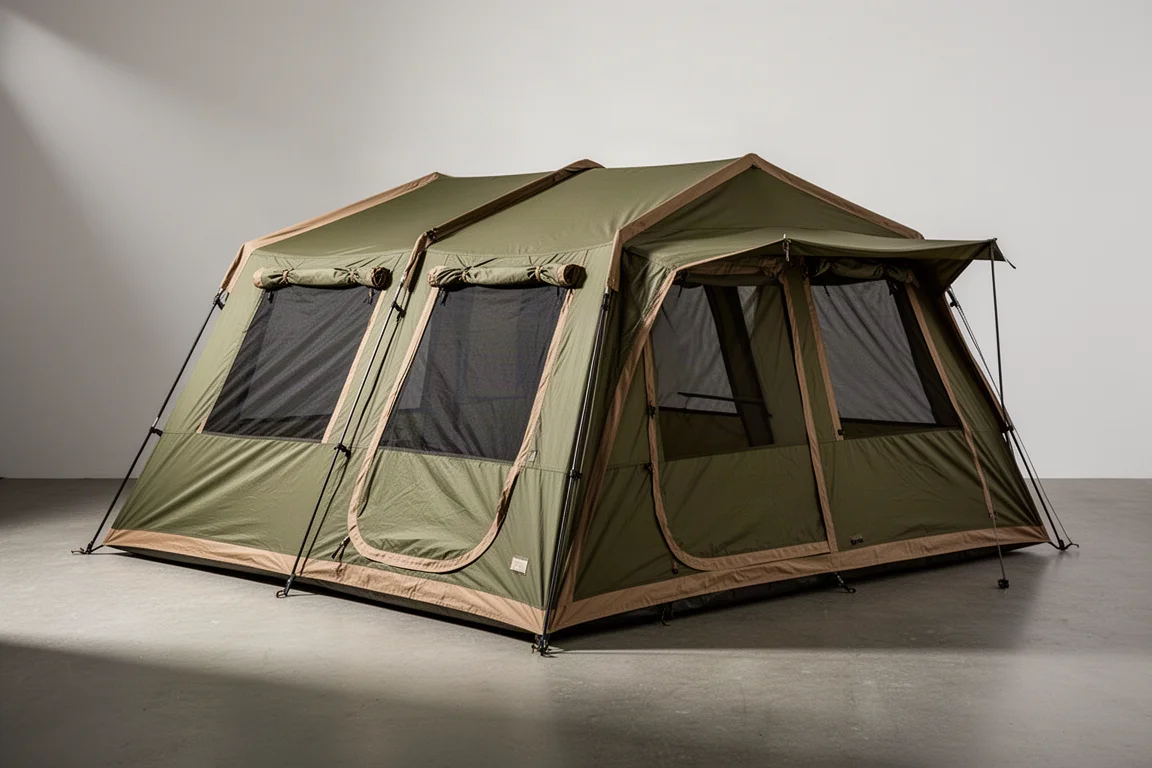
Best Instant Cabin Tent: Gazelle T4
The Gazelle T4 was the fastest tent in the group in both directions. Setup took about 5 minutes for one person, and pack-away took about 6 minutes, well ahead of the other instant tents and roughly twice as fast as a comparable non-instant four person cabin tent.
Speed is only part of the story. The T4 has completely vertical side walls, two doors, and large pockets around the interior. Build quality is a genuine surprise for the class: a 300D polyester floor, roughly double the thickness of the 150D floors on the REI and Columbia models, and a 210D polyester body that is more than twice as thick as most other cabin tents here. The doors are on the small side and the tie-downs are the least user-friendly in the group, but rain leakage stayed minimal.
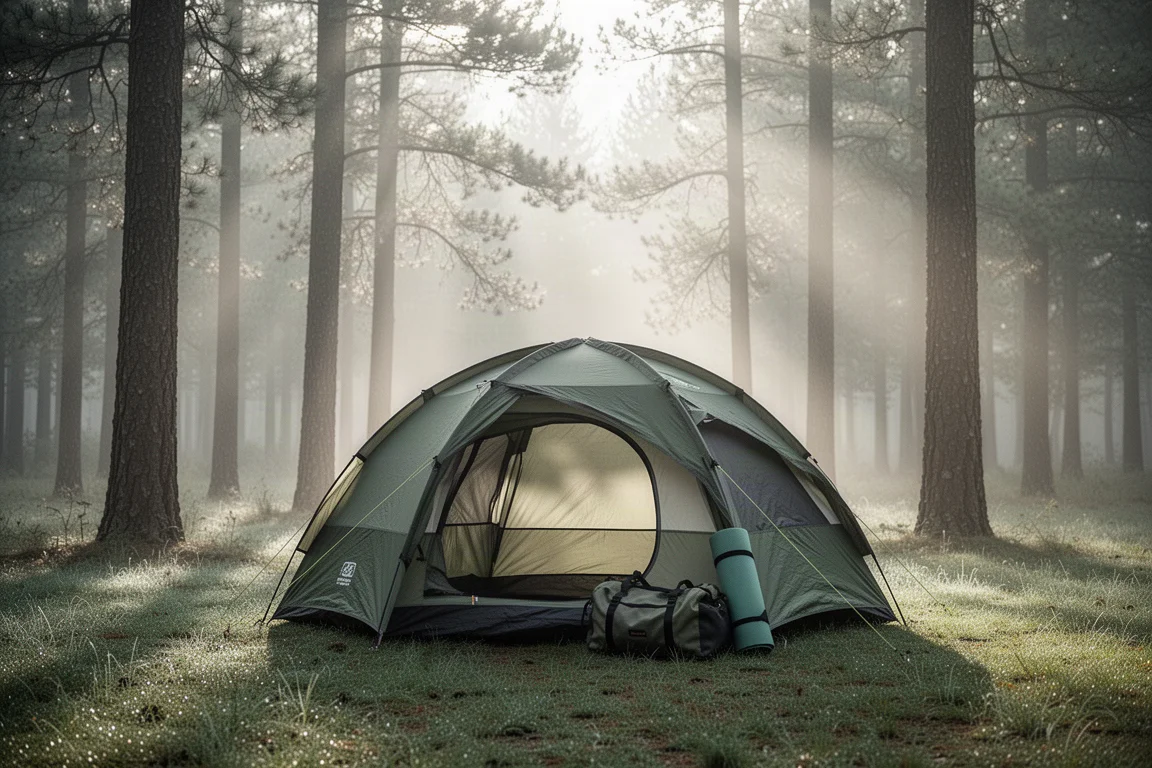
For a four person tent, the T4 combines quick setup with the most durable fabric and floor in this comparison.
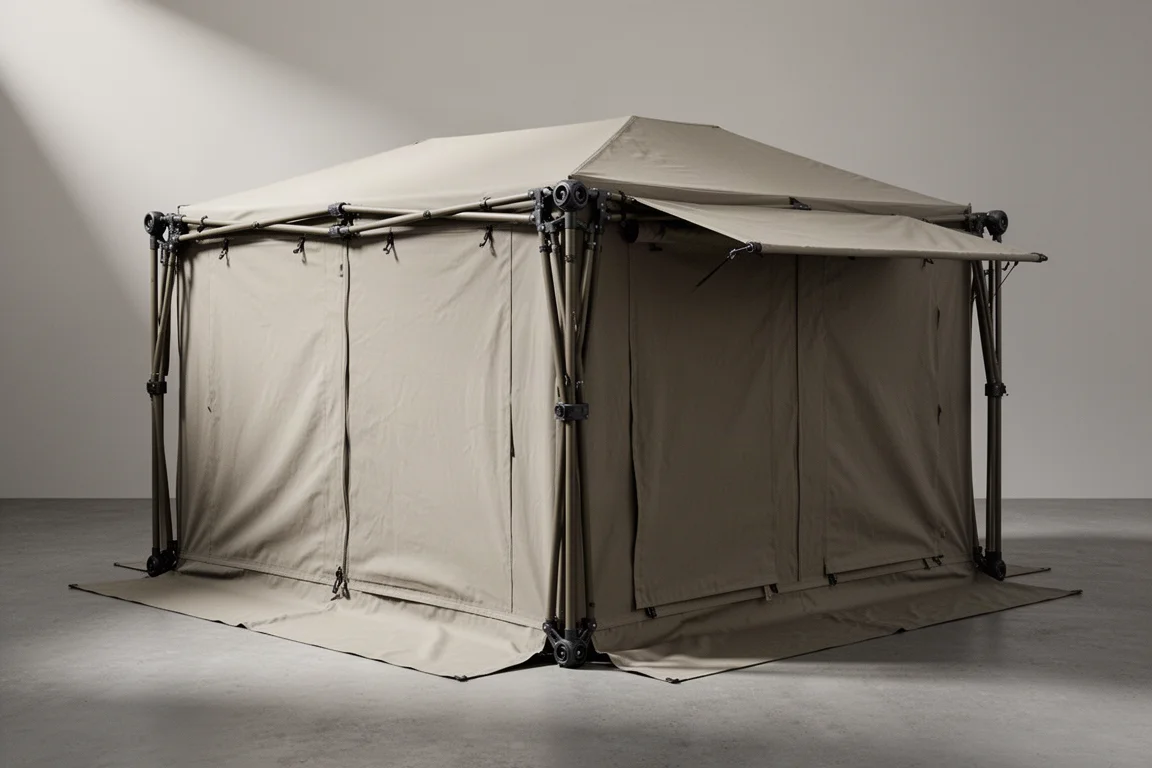
Best Feature-Rich Cabin Tent: Columbia Mammoth Creek
The Columbia Mammoth Creek carries more usable features than any other tent in this group. Its standout detail is a pair of pull-out windows that can stay open in heavy rain without letting water in. That is rare, because cabin tent rainflies are short, so rain usually drips off the fly and soaks window mesh. Elsewhere in this group, windows can at best be cracked slightly open during rain.
The room divider is the best here as well: full length, gap-free, and opaque, so it genuinely splits the tent into two private spaces. Smaller tents often skip dividers entirely, and the Core dividers are see-through. The main door is the largest T-door in the comparison, though it requires a slight duck, and the tie-downs are less convenient than the door pockets found on the REI Wonderland. There is one power port with a velcro closure, and storage is average. Rain leakage was minimal.
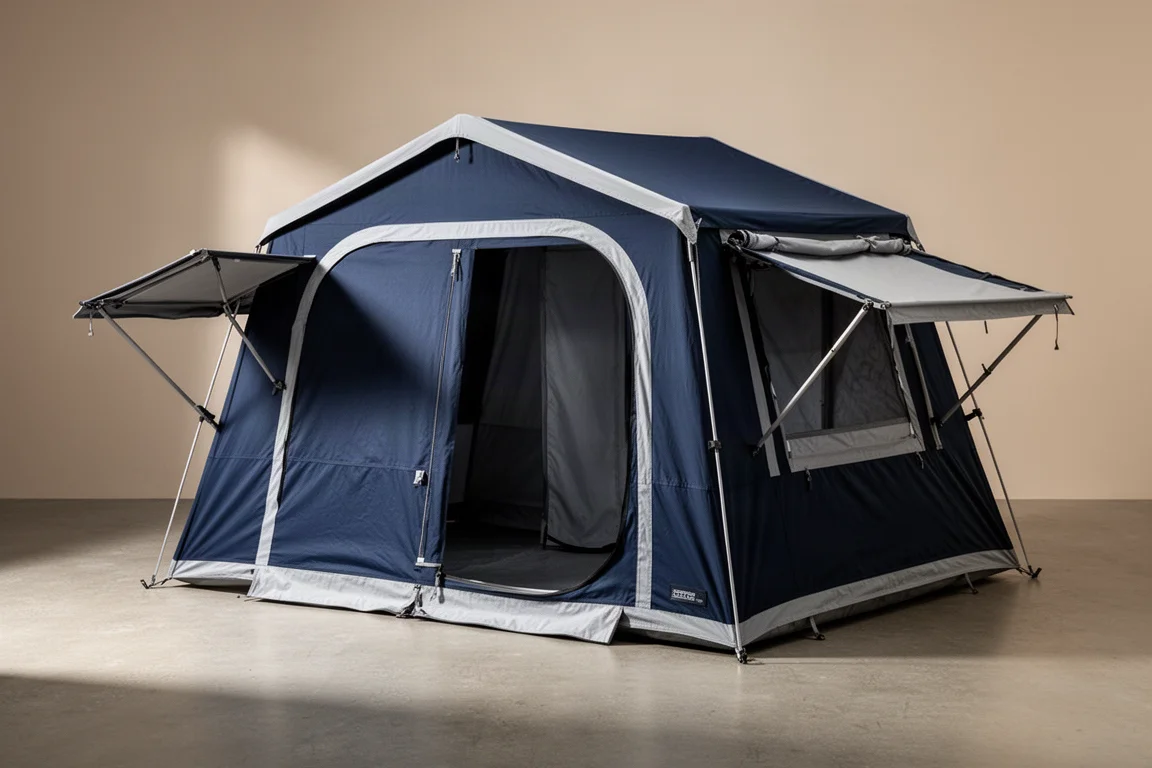
Tallest and Most Spacious Cabin Tents
If standing height and floor area are the priority, this is the pair to study. Both are regular setup designs rather than instant tents, and instant frames consistently produce shorter peak heights and more slanted walls than manual frames of similar capacity.
Core 10 Person Straight Wall Cabin Tent
The Core 10 person straight wall cabin tent has the highest peak height recorded in this comparison. Across more than 30 tents measured here, none has recorded a taller peak. Straight walls help too, since vertical sides preserve floor space all the way to the edge instead of tapering inward.
That height has a practical catch. Reaching the ceiling to hang a lantern or grab something from the gear loft means standing on a chair for anyone around 5 feet 3 inches tall. A person around 5 feet 6 or 5 feet 7 inches can reach comfortably. Campers who do not need the tallest tent available can step down to a slightly lower peak height without losing much.
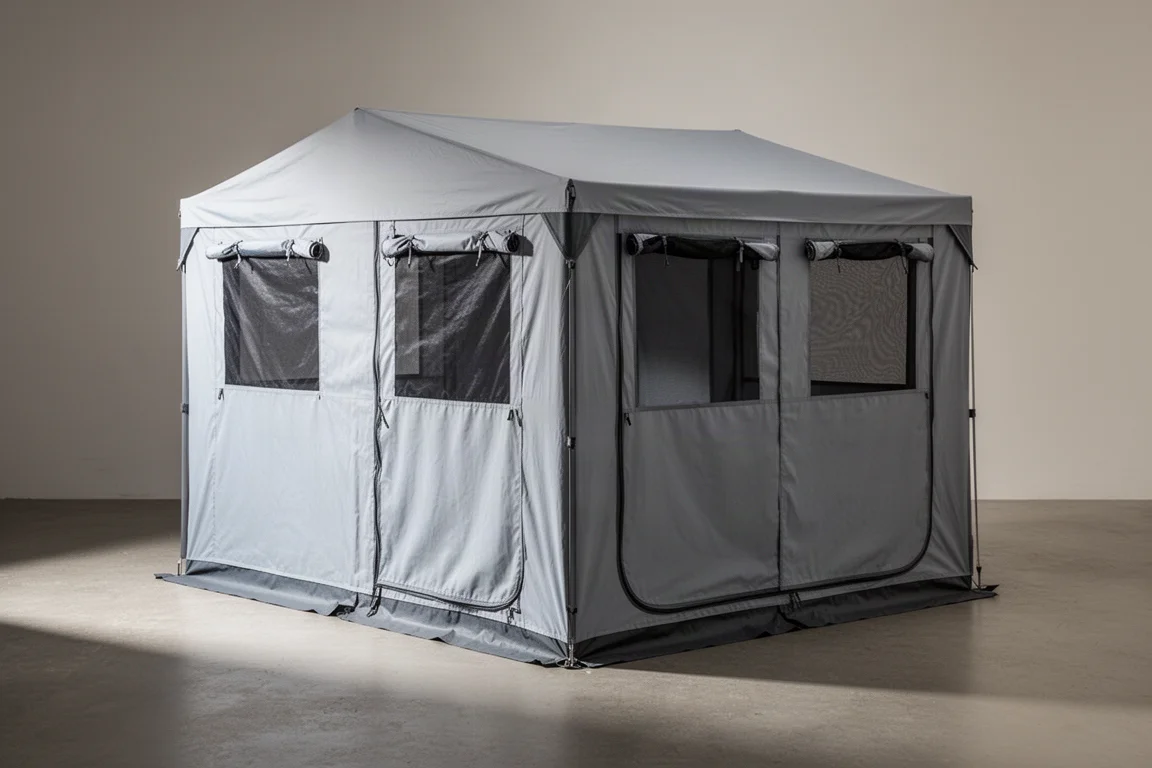
Eureka Copper Canyon
The Eureka Copper Canyon is the most spacious option overall, thanks to a 12 person capacity that is larger than most cabin tents on the market. Only the Core models come close on capacity, and instant tents give up interior room by design, so the Eureka keeps its advantage. Peak height is around 84 inches, roughly 6 inches lower than the Core 10 person straight wall model, which is still plenty for most campers.
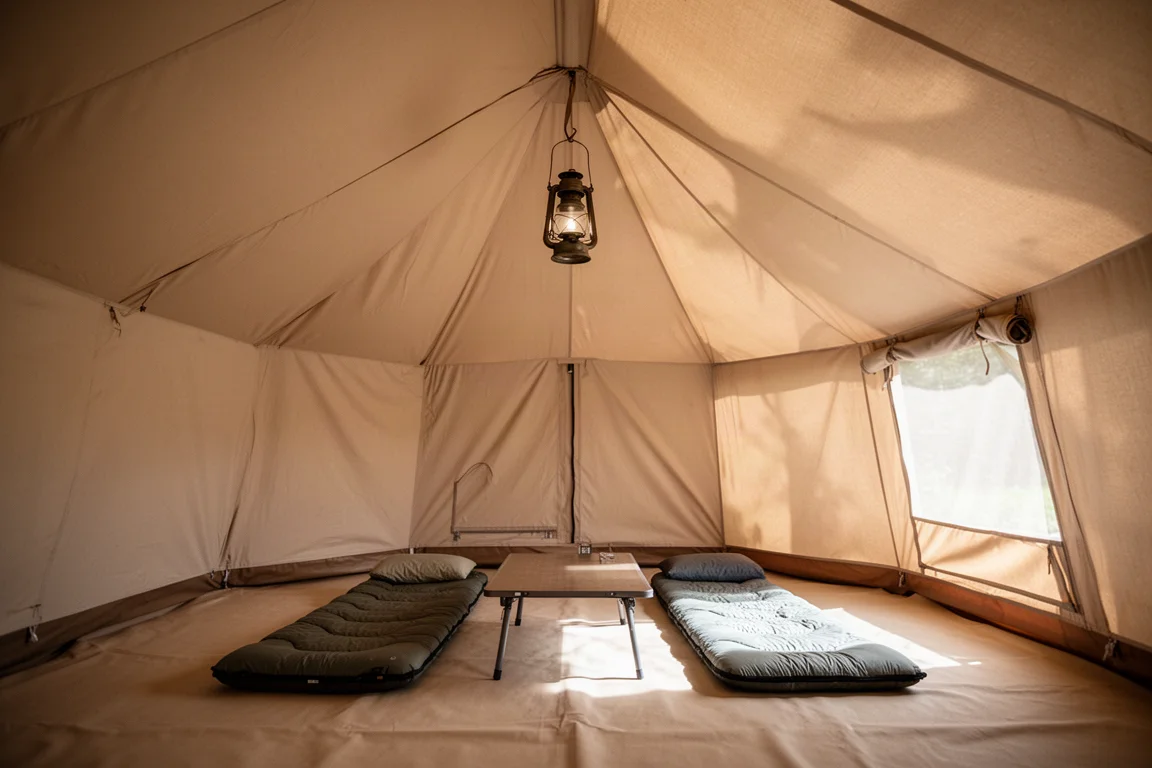
Headroom holds up at the edges too. The Copper Canyon is one of the few tents here where a person can stand upright at the lowest point in the corners, which matters more in daily use than a headline peak number. It is a regular setup tent rather than an instant design, so budget a little more time at the pitch.
Most Versatile Cabin Tent: REI Skyward
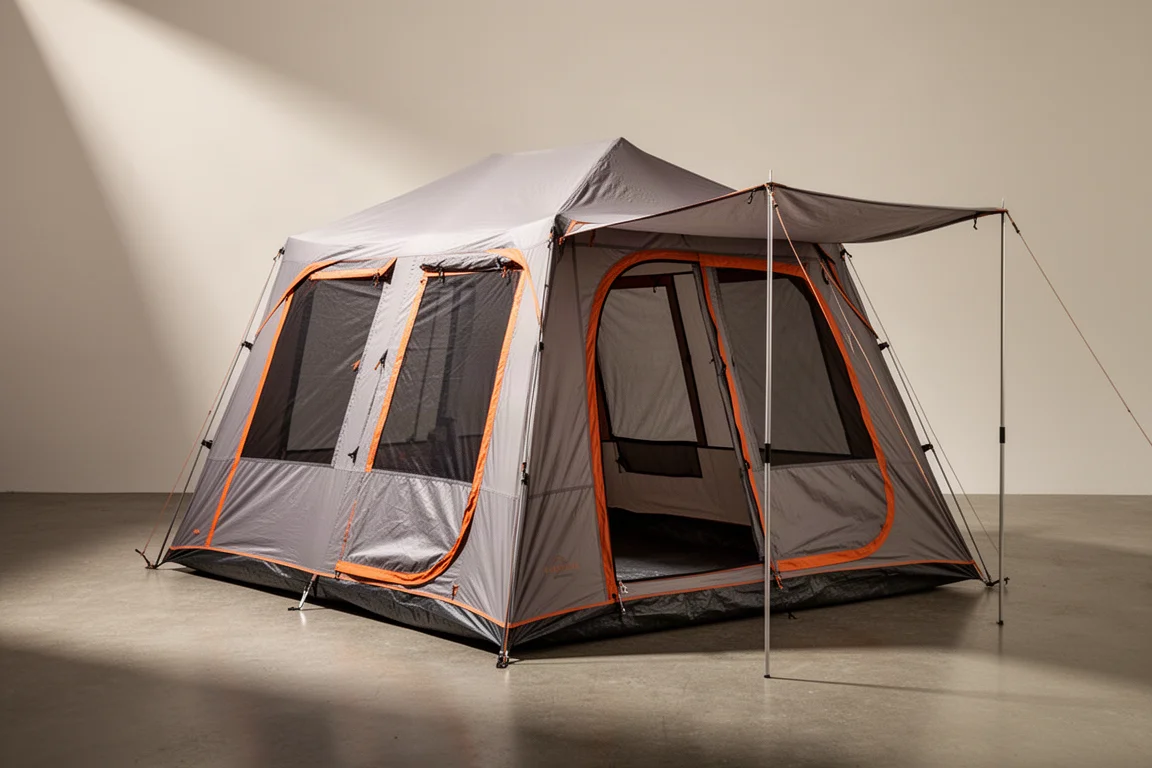
The REI Skyward is the only tent in this group with a vestibule, and that single feature changes how the tent can be used. The vestibule adds about 23.5 square feet of covered space, enough for a couple of camp chairs, and it converts into an awning on hot days for shade over the tent. Awning in summer, vestibule in rain.
As a higher-end REI design, the Skyward also uses above-average floor and body fabric and higher quality aluminum poles, where most tents here rely on steel, fiberglass, or a mix. Every seam is taped, which budget tents like the Core models do not manage.
Ventilation is the weak point. The Skyward has only two small windows and large uninterrupted fabric walls, the least mesh coverage in this comparison. In rain without wind there was no leaking at all, but once wind picks up, rain blows under the short rainfly and gets inside within minutes.
Best Overall Cabin Tent: REI Wonderland
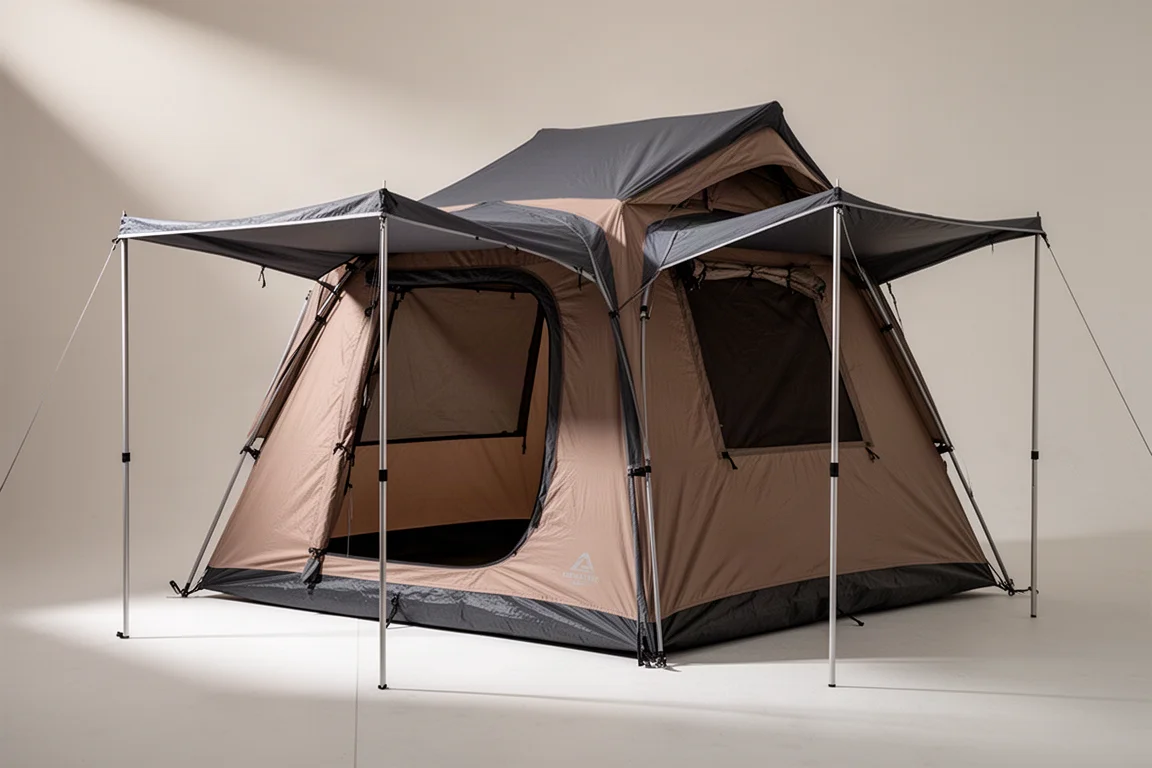
The REI Wonderland is the best cabin tent in this comparison, and it wins on ventilation first. With the rainfly removed, mesh covers not just the ceiling but extends down the walls, so roughly half the tent is mesh. No other tent here comes close.
Rain protection follows from a longer rainfly that extends almost to the ground, far beyond the short flies on the rest of the group. After an hour of heavy rain followed by several hours of moderate rain, only two drops of water appeared inside, traced to divider loops near the bottom that are not waterproof. Leakage on the Columbia and Gazelle was slightly higher but still minimal.
The Wonderland also has the best doors: two huge, tall doors that each take up nearly an entire wall, with no ducking required, snag-free zipping that works one-handed, and door pockets instead of tie-downs. It carries 14 guy lines, the most here, which helps in light to moderate wind. The divider is opaque but has small gaps and does not reach the floor. Headroom is remarkably consistent, with about 81 inches at the center and 77 to 76 inches at the far edges, so the peak height carries across almost the whole tent.
The trade-off is price. The Wonderland sits above the $400 mark and is the most expensive tent in this group.
Buying Advice: Matching a Cabin Tent to Your Budget and Camping Style
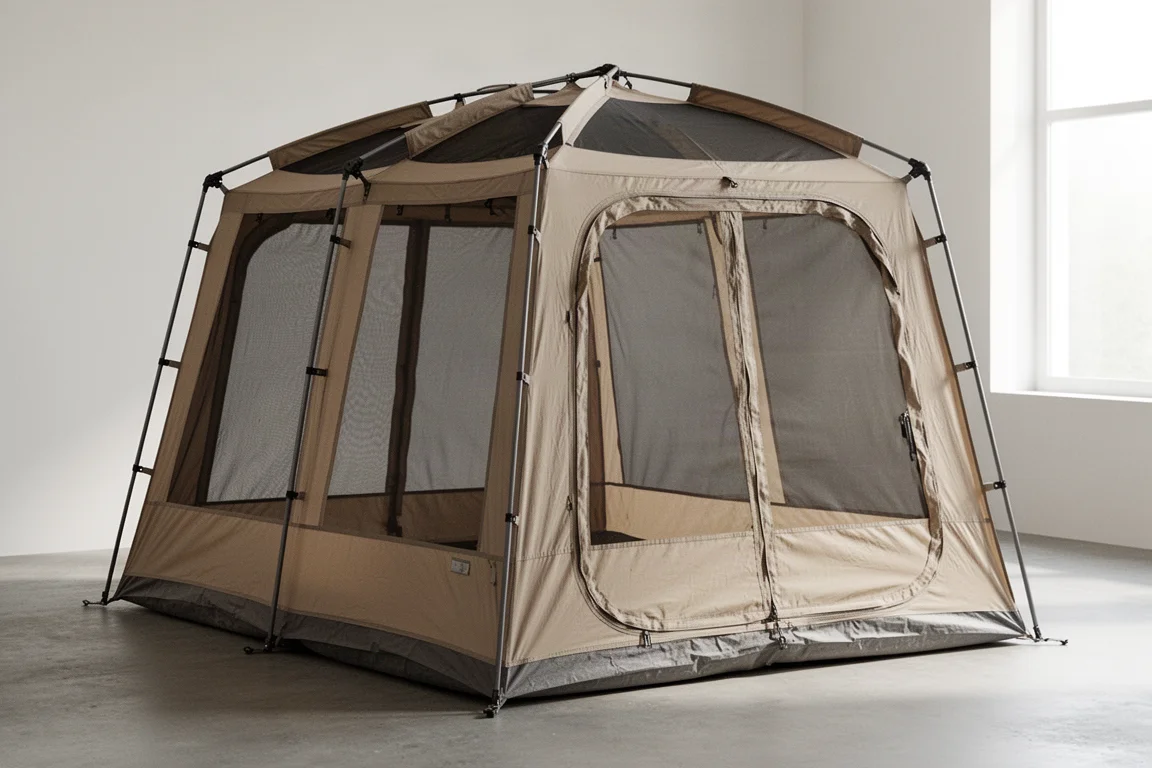
Two patterns are worth remembering before choosing. First, instant setup frames tend to produce shorter peak heights and more slanted walls than regular setup tents of similar capacity, so campers who want maximum stand-up space should lean toward a manual setup design.
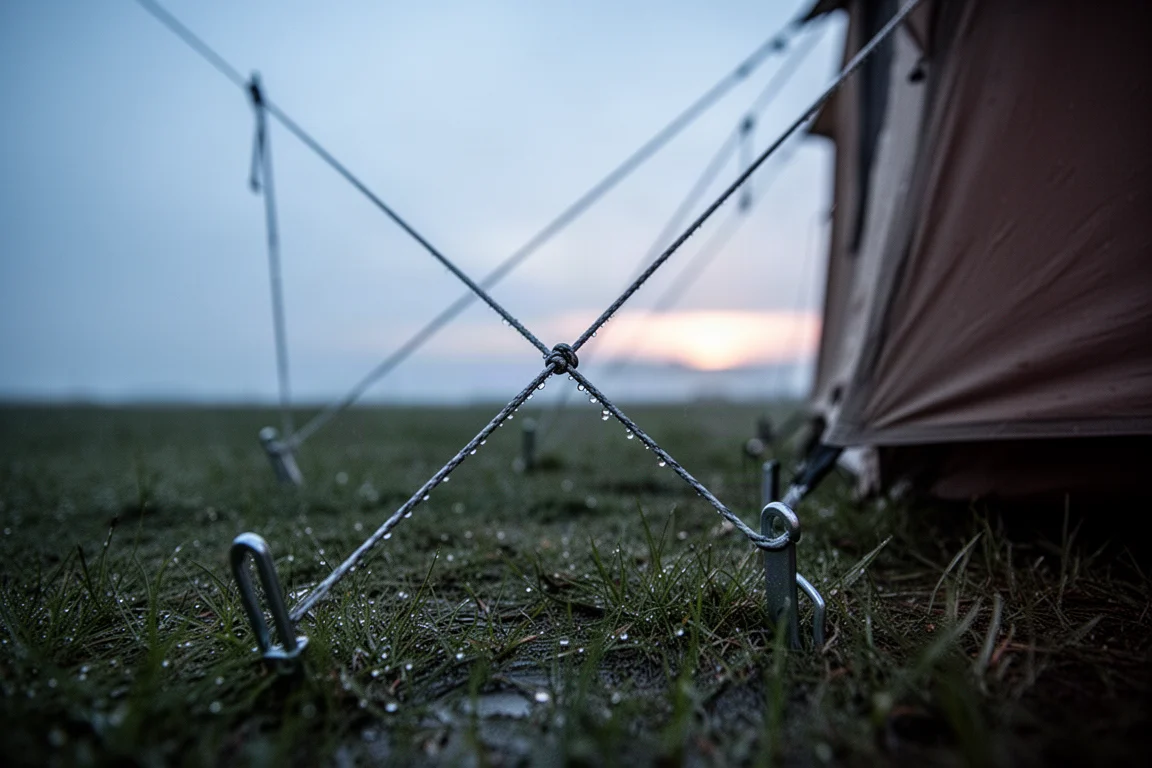
Second, cabin tents as a category are not strong performers in sustained rain or strong wind, because rainflies are short and tall sidewalls catch wind. Staking and guying out every tent is essential, and none of these tents should be expected to shrug off a storm. For value, the sweet spot sits under about $400 with strong scores: the Eureka Copper Canyon for a spacious regular setup tent, and the Gazelle T4 for an instant tent.
Conclusion
The right cabin tent depends on which compromise you can live with. For the most interior space at a sensible price, the Eureka Copper Canyon and its 12 person capacity is the strongest value, while the Gazelle T4 is the instant tent to choose if fast setup and durable fabric matter most. The Core 10 person straight wall model wins on pure height, and the REI Wonderland remains the best all-round cabin tent if the budget stretches that far. Whatever the choice, stake it down, guy it out, and treat any cabin tent as a fair-weather shelter rather than a storm shelter.
Further reading
Related Reviews
Camping Tents
3F UL Gear Taiji Two-Person Tent Review: Field Waterproofing Results and Buying Advice
The Taiji pairs an attached fly with a removable inner, but sustained rain exposed untaped vent seams that need sealing before this shelter can be trusted.
Camping Tents
3FUL Gear Lanshan 2 Pro 4-Season Review: A Sub-$200 Single-Wall Trekking Pole Tent
An early look at the 3FUL Gear Lanshan 2 Pro 4-Season, covering its straightforward pitch, generous interior space, and the condensation and seam-sealing questions that come with any single-wall shelter.
Camping Tents
Alps Mountaineering Lynx 1-Person Tent Review: Big Value in a Small Budget Tent
A close look at the Alps Mountaineering Lynx 1-Person Tent, covering real interior dimensions, materials, setup time, ventilation limits, and who should buy it.