Hi-Fi Audio
Best Budget Two-Channel System: A Soundbar Replacement for Around 500 Dollars
A complete two-channel build with speakers, amplifier, DAC, streamer, and subwoofer, plus clear notes on where to save and where to spend more.
Introduction
A complete two-channel system for around 500 dollars sounds like a compromise, but the parts available today make it genuinely practical. With careful choices, a pair of speakers, an amplifier, a DAC or preamp, a streamer, and even a compact subwoofer can all fit inside that budget.
This build is aimed at anyone replacing a soundbar, setting up a desktop or secondary system, or getting into hi-fi without a large outlay. Every component also leaves room to grow, so the system can be improved over time rather than replaced.
What a 500 Dollar System Can Realistically Do
At this price the one real concession lands on the speakers. The electronics in this build are flexible enough to suit almost any situation, and most of them have a clear upgrade path, so the speaker is the component most likely to be swapped first.
A full build with a subwoofer, a streamer, and a remote control comes in around 500 dollars. Skip the subwoofer and the total drops under 400 dollars. Skip the streamer as well and the price falls further still. If nothing is discounted, a comparable build tends to land closer to 550 or 600 dollars, which is still modest for a complete system.
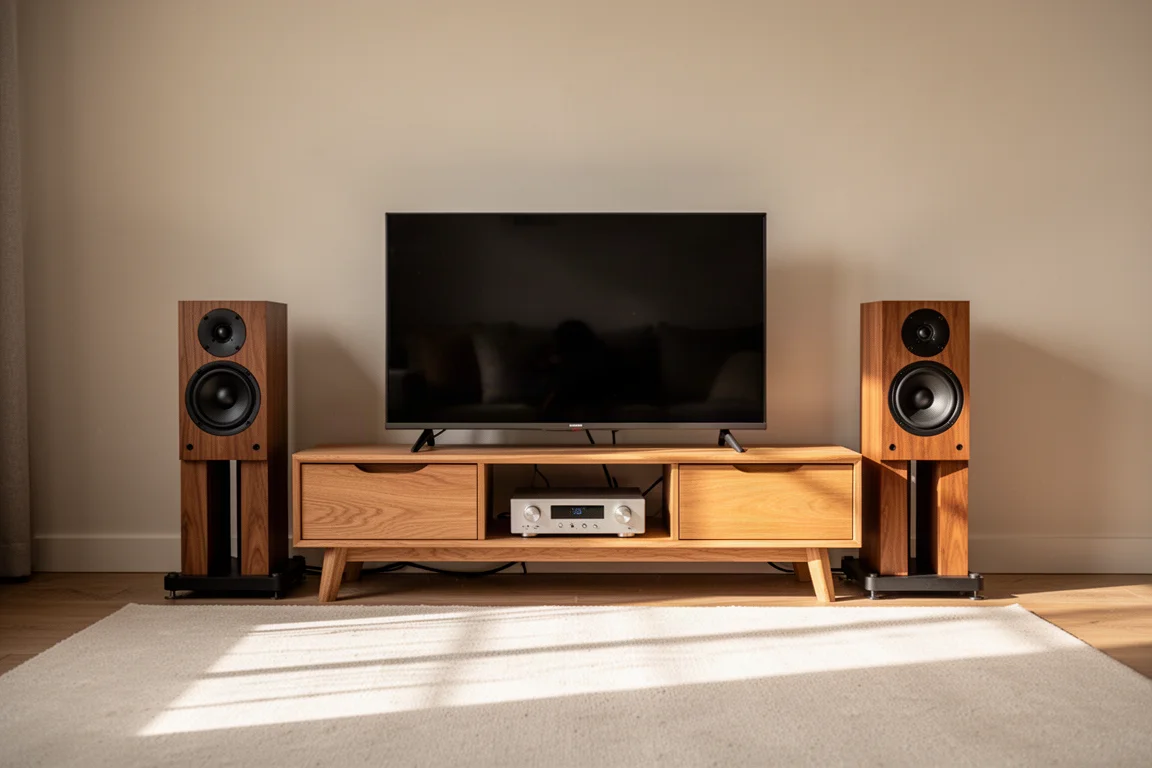
What that money buys is a system with multiple digital and analog inputs, Bluetooth and AirPlay streaming, tone controls, and enough power for a small to medium room. It will not match a high-end separates stack, but for stereo music it is a clear step up from most soundbars.
Speaker Pick: ELAC BS41
The ELAC BS41 is a two-way bookshelf speaker with a 4 inch woofer and a soft dome tweeter. The small woofer invites skepticism, but the design reaches lower than its size suggests. The retail listing does not publish a frequency range, yet the supplied documentation points to output in the 40 Hz region.
The cabinet uses a vinyl wood-grain wrap, a rear port, and solid binding posts. The finish is typical for the price and better than expected at roughly 107 dollars. The Sony SSCS5 used to fill this value slot, but pricing near 200 dollars has pushed it out of the bracket, which leaves the BS41 as the more sensible pick.
Tonally the speaker leans warm, and that works in its favor. It stays comfortable at 85 to 90 dB without becoming fatiguing, and the smaller enclosure vibrates less than many rivals at the same price. The tone controls on the amplifiers below can add treble lift if a brighter balance is preferred.
There is also a real modification path. The stock crossover places two inductors flat and close together, and rotating one to a vertical orientation helps. Replacing an inductor and a few crossover parts, roughly 50 to 70 dollars in components, can bring the speaker close to models in the 400 to 500 dollar range.
Budget Amplifier Pick: Fosi Audio TB10D
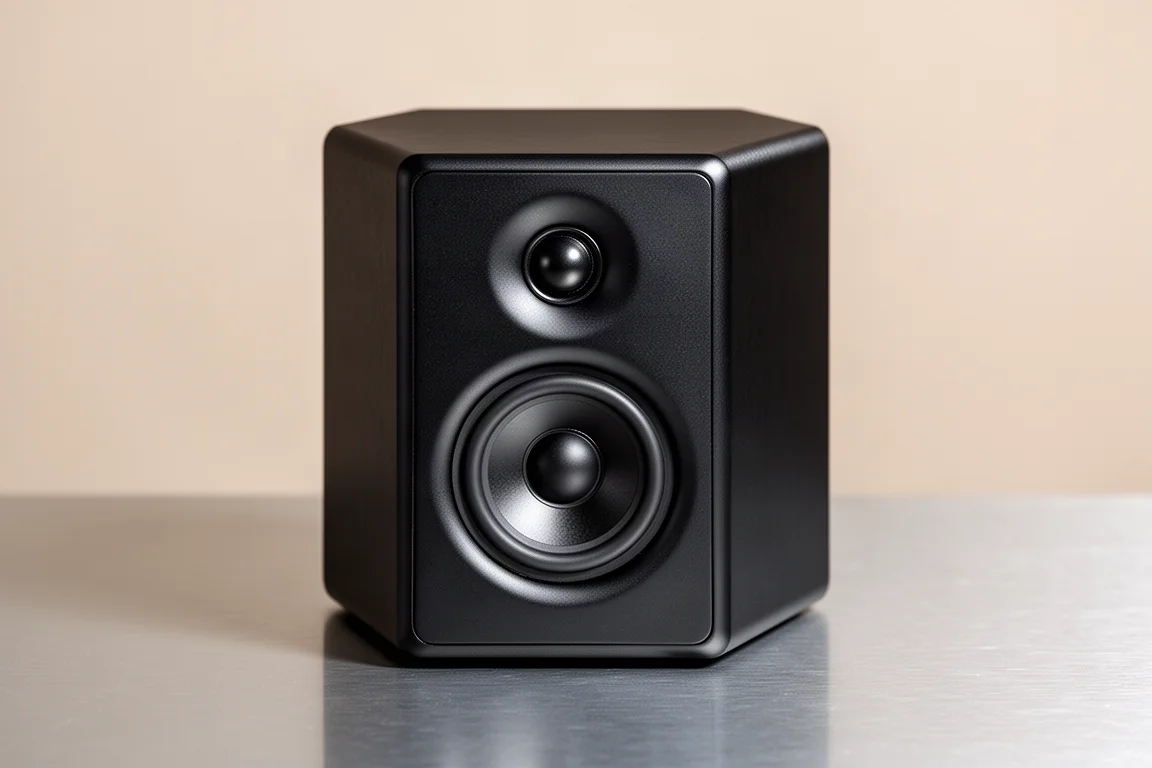
The Fosi Audio TB10D is the amplifier recommendation for most buyers. It is a Class D design built around a Texas Instruments TPA3255 chip and sells for around 60 dollars.
Power output can be increased by changing the supplied power supply. The stock unit is a 32V 5A supply, and stepping up to a 32V or 36V 10A unit adds usable headroom. A 48V 10A supply offers the most, though those are harder to find.
Tone controls are included, which matters with a warm-leaning speaker like the ELAC BS41. An earlier revision of this amplifier had audible noise and heavy-handed tone controls. The current version resolves those issues and is difficult to match at its price, let alone at two or three times the cost.
All-in-One Amplifier Alternative: AIYIMA T9
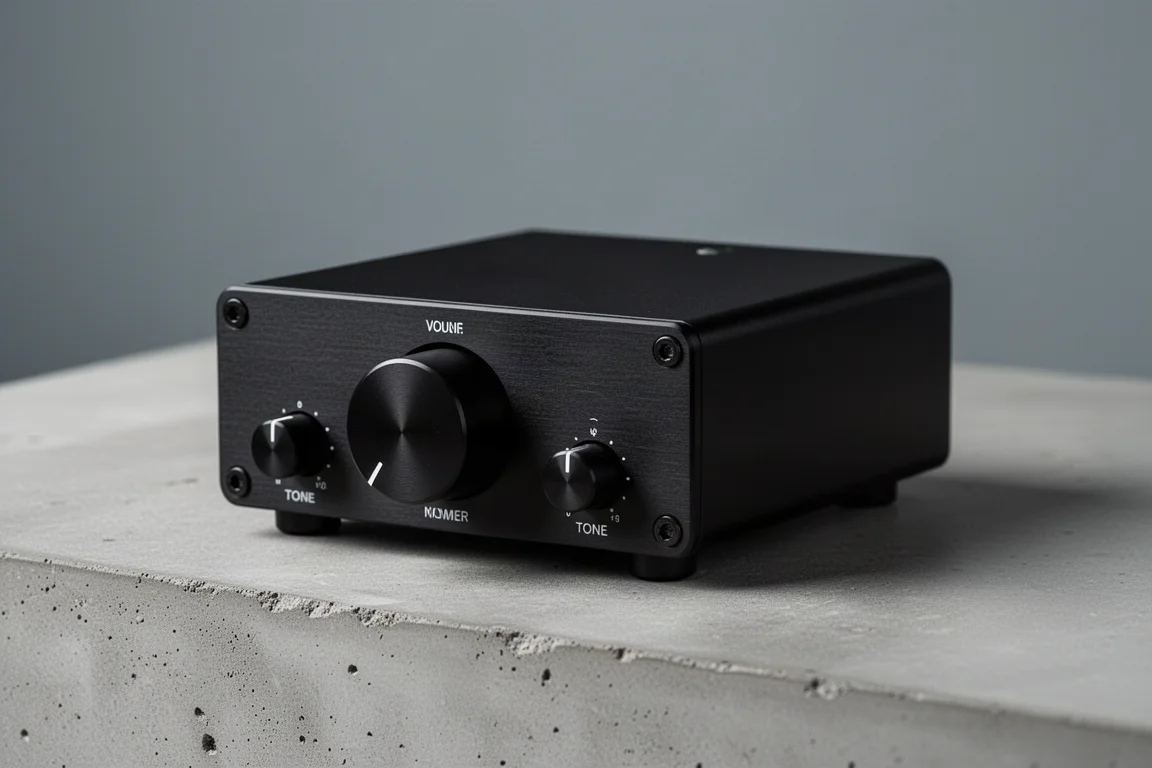
The AIYIMA T9 is the alternative if you would rather not buy a separate DAC. It includes an internal DAC, a tube buffer, and full-size RCA, coaxial, optical, and USB inputs. The auxiliary output is variable, so a subwoofer can be connected with a 3.5 mm to RCA cable.
The trade-off is power. The T9 is limited to a 30V power supply, so there is no meaningful way to increase output. It will drive the large majority of speakers, but the Fosi Audio TB10D keeps more headroom for difficult loads.
The remote control is a credit-card style unit and is the weakest part of the package. It works, and the money saved on an external DAC partly offsets the shortfall.
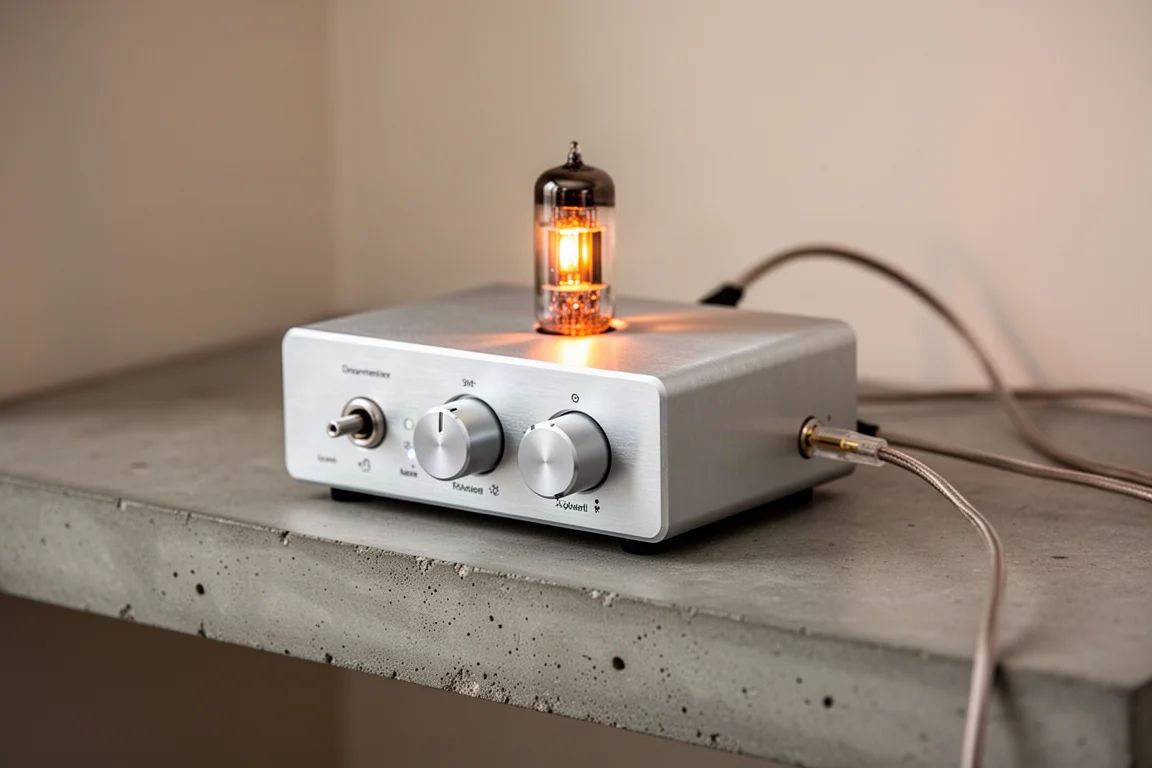
For a soundbar replacement in a small or medium room, the T9 covers source switching, volume, and subwoofer output in a single box. Buyers who expect to move to larger or less efficient speakers later are better served by a separate DAC and the TB10D.
DAC and Preamp Pick: AIYIMA T8
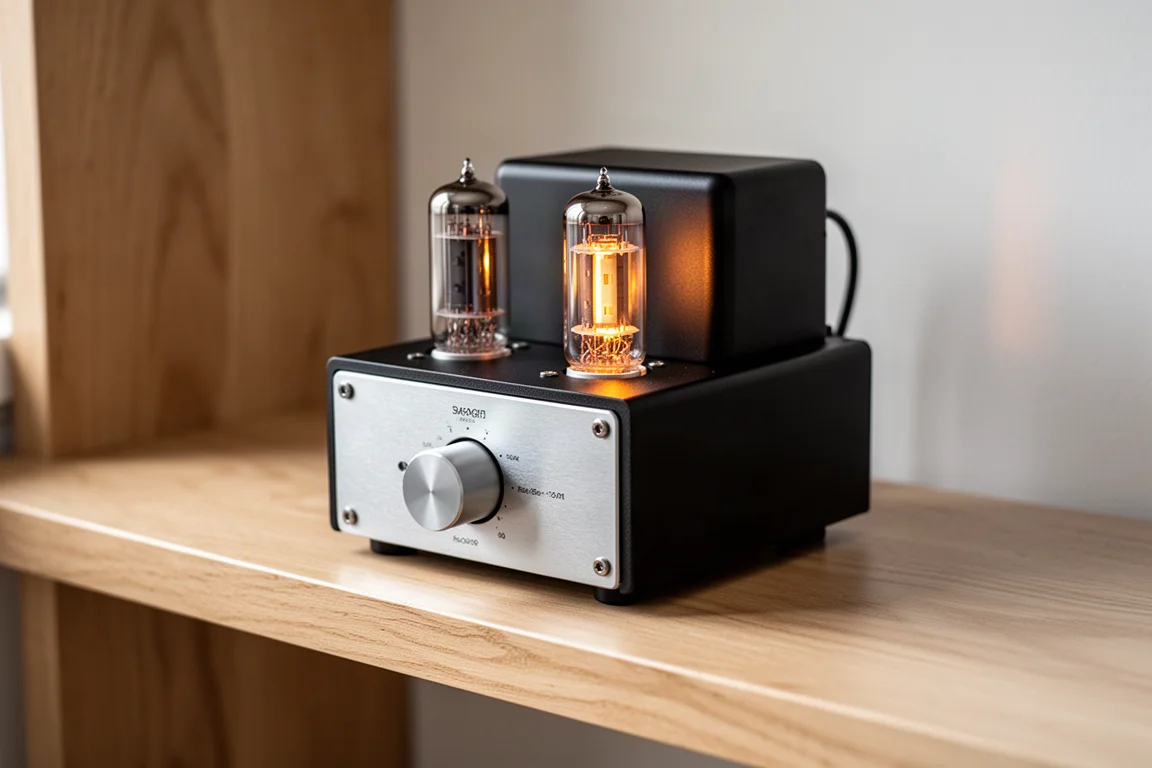
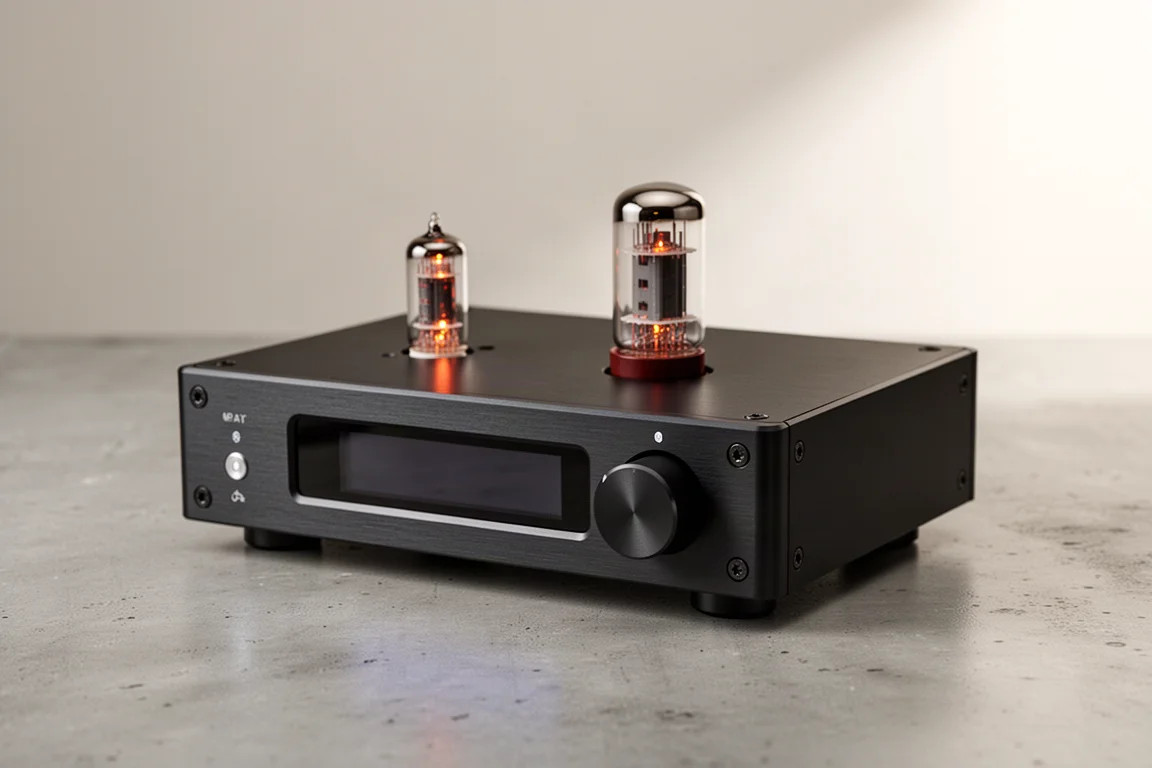
The AIYIMA T8 is the DAC and preamp to pair with the TB10D. It sells for around 130 dollars and includes a tube on top, Bluetooth, a headphone amplifier, and a display.
Inputs cover full-size optical, USB, and coaxial, plus an analog input, and there is an analog output that lets it act as a preamp. A remote control is included, and it is more usable than the one supplied with the T9, with input and volume control from the listening position.
Sound quality is clear without being harsh. The tube buffer can be swapped for different tubes if you want to experiment with the character of the output.
A typical television setup runs optical from the TV into the T8, then RCA out to the amplifier. That gives the system its source, its volume control, and its remote, which is the core requirement for a soundbar replacement.
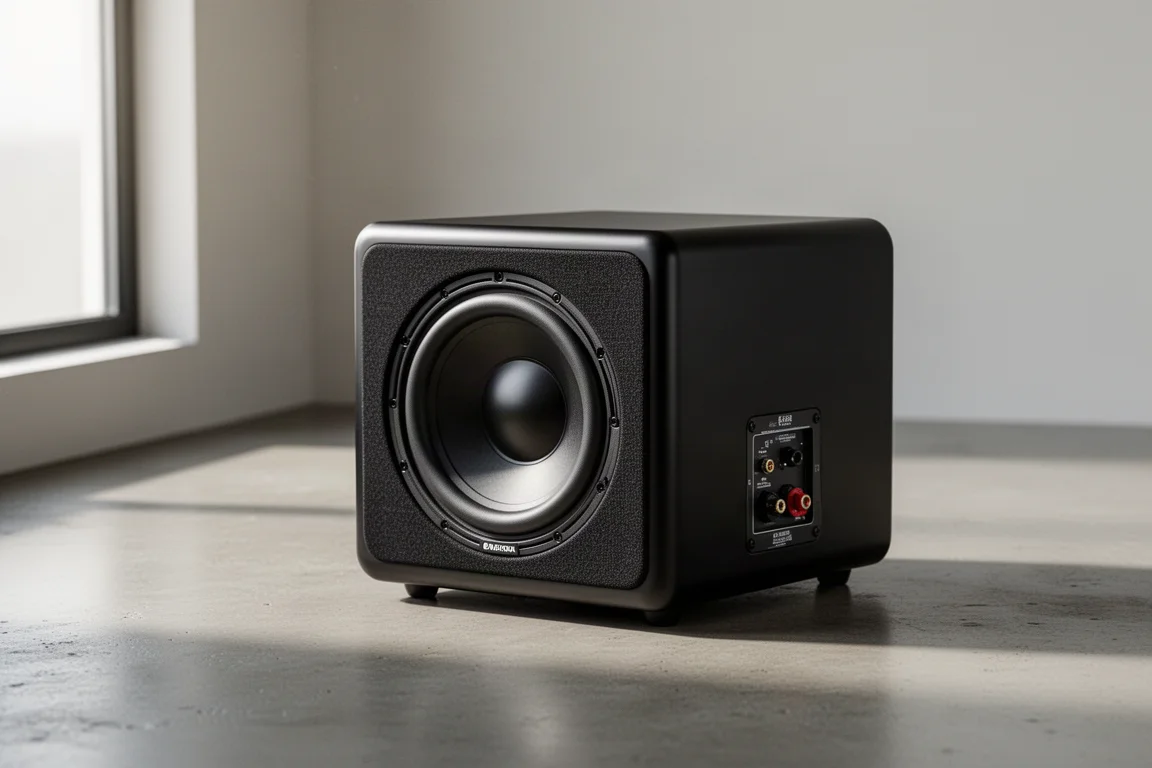
Compact Subwoofer Pick: Yamo S810
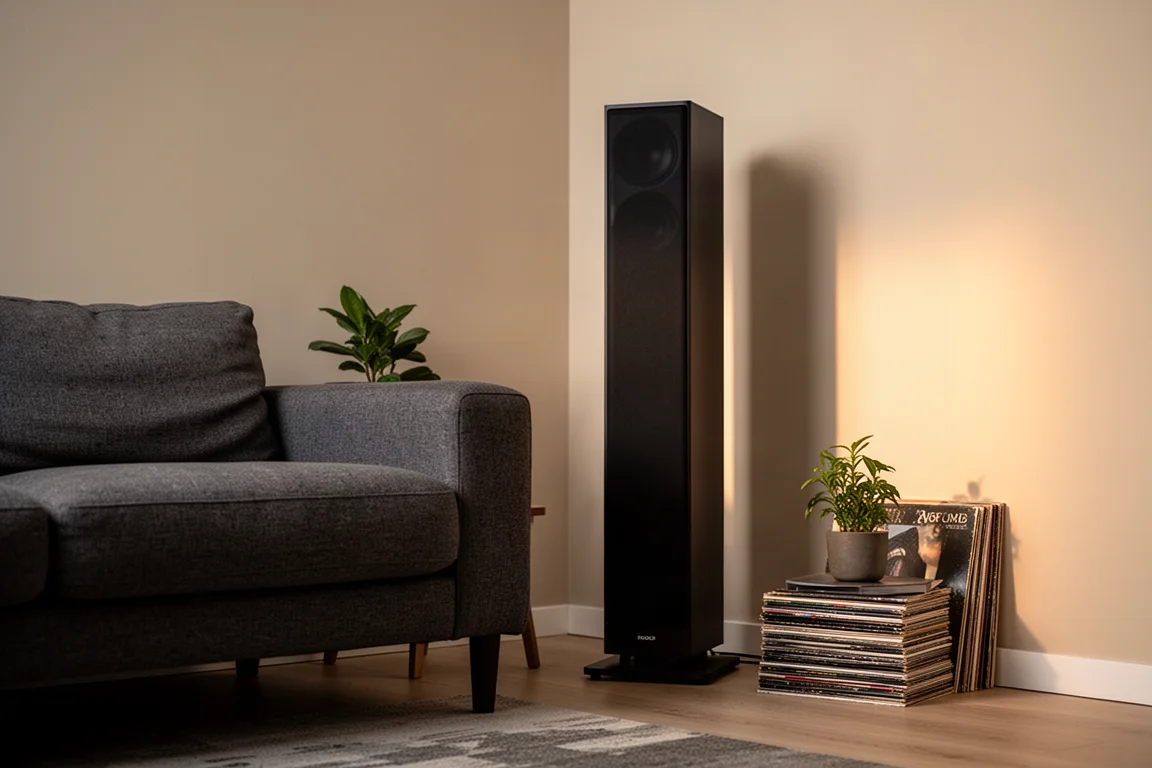
Adding a subwoofer takes the build to around 500 dollars, and the Yamo S810 is the value option at roughly 135 dollars. The S808 is a closely related model at a similar price.
Both are vertical designs, which keeps the footprint small and makes them easy to place where a soundbar used to sit. In a medium-sized room one of these is generally enough, and in a larger room corner placement can help.
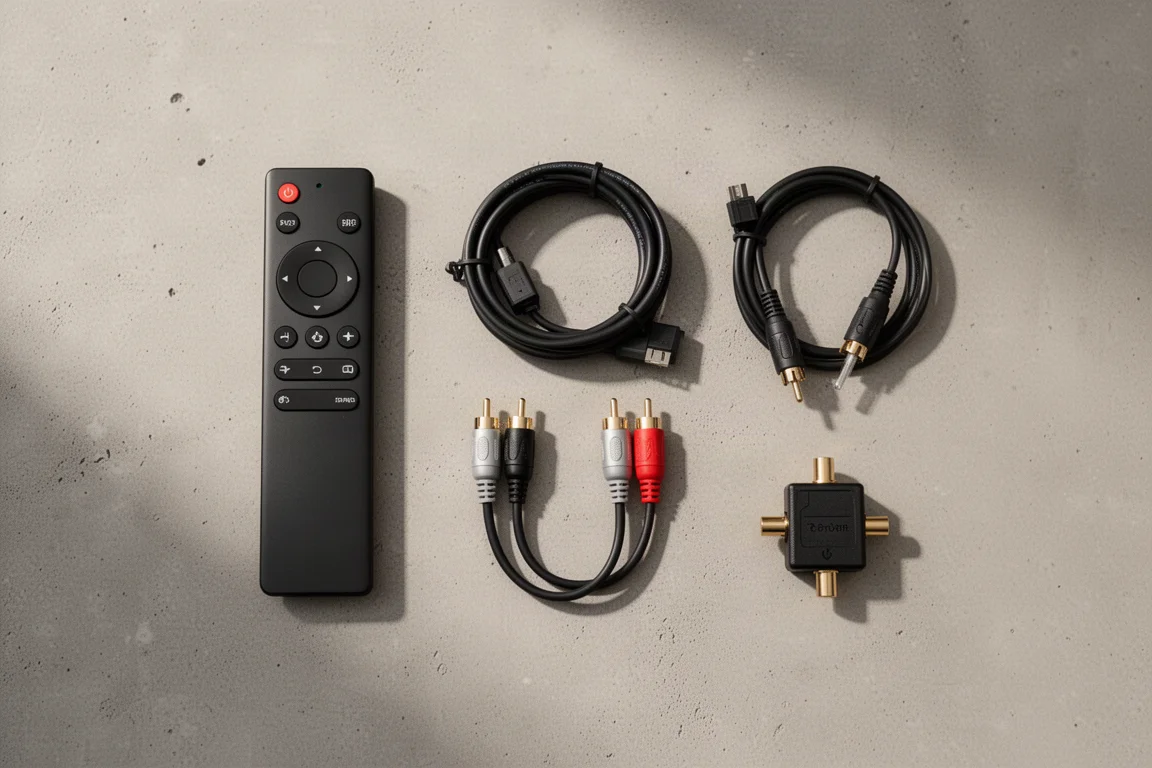
The input arrangement is the catch. There are no speaker-level inputs, only an LFE input, so the connection takes some creativity. With the AIYIMA T8 as the preamp, a single RCA output is split to left and right, one leg runs to the amplifier, and the other is recombined through a Y-adapter into the subwoofer. With the T9, a 3.5 mm to dual RCA cable and a two-to-one adapter achieve the same result.
The adapters add a little setup complexity, but they cost very little and the result is a fuller system rather than a pair of small speakers working alone.
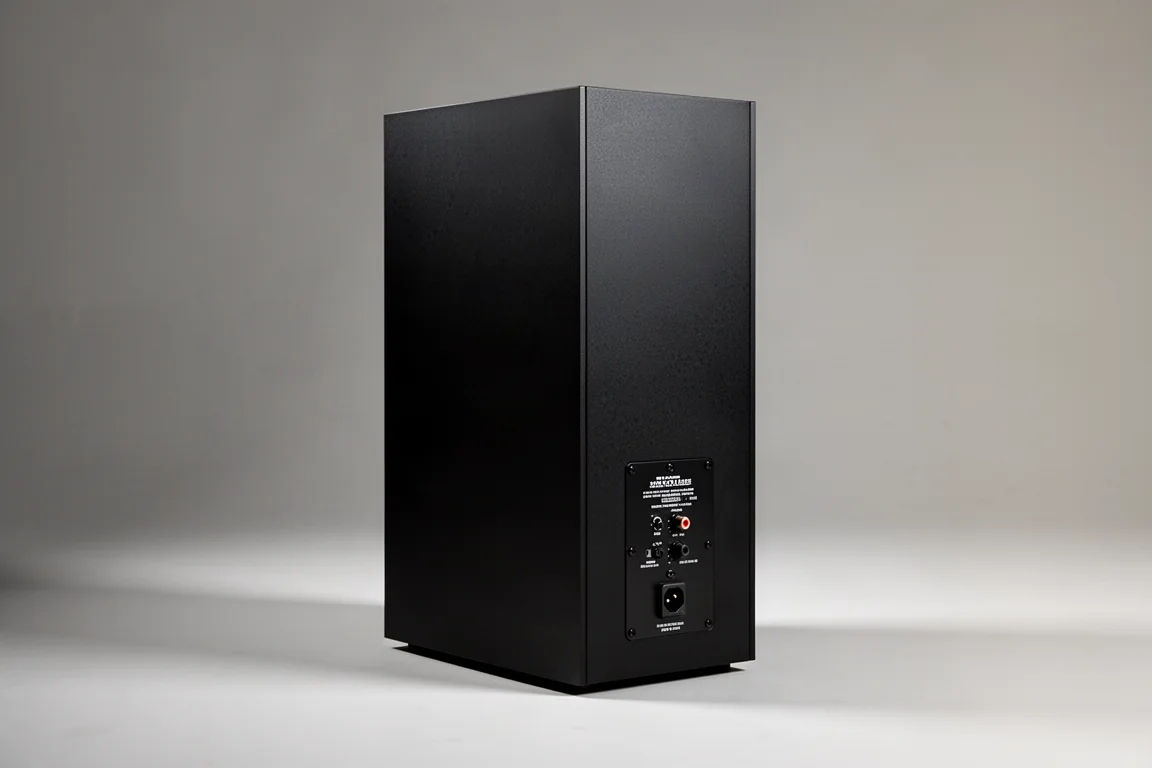
Subwoofer Alternative With Standard Inputs: Canton Sub 6.2
The Canton Sub 6.2 is the alternative for buyers who would rather not deal with adapters. It is a smaller subwoofer with a 6 inch driver and conventional left and right RCA inputs, so it connects without splitters. It comes in around 160 dollars, a modest increase over the Yamo models, and the trade-off is driver size and the amount of low-frequency output available. The Polk PSW10 is another familiar name in this bracket, but its current price sits near 250 dollars, so it is worth watching rather than buying at the current figure.
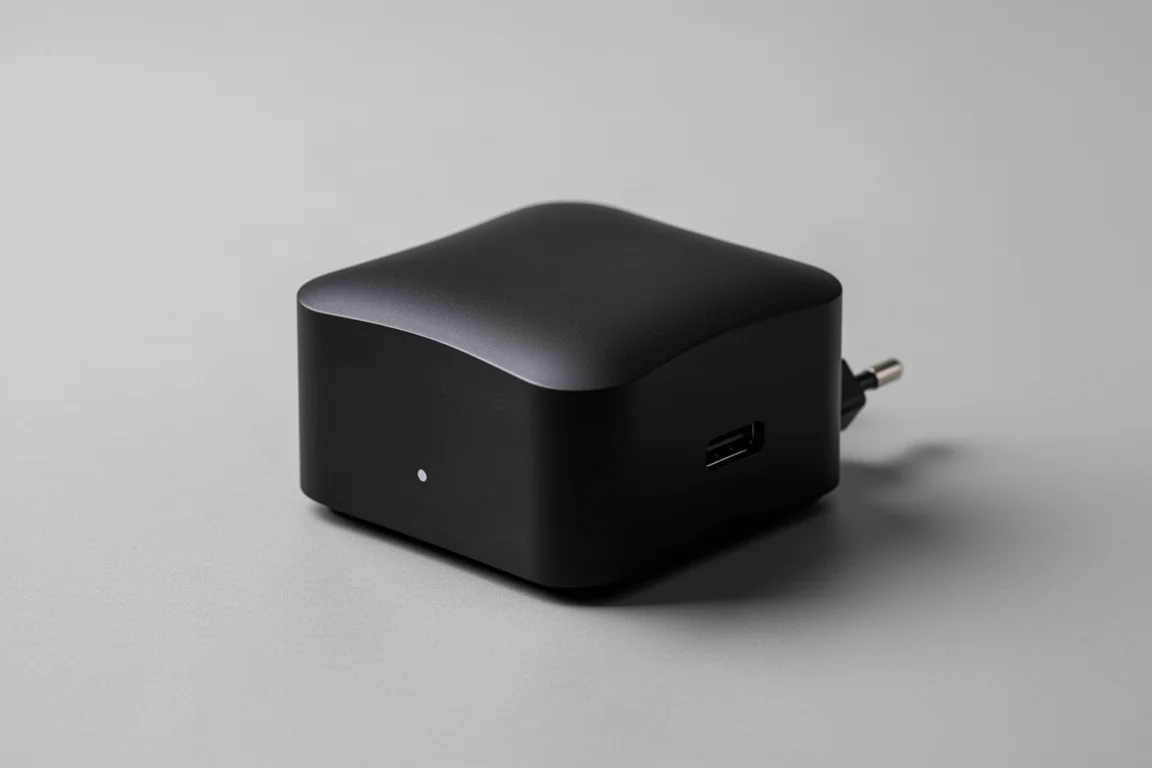
Streamer Pick: WiiM Mini
The WiiM Mini handles streaming at around 90 dollars, and it regularly drops to 80 dollars or less. It runs a complete streaming platform with gapless playback and support for services including Amazon Music, Qobuz, and Tidal.
An optical output feeds the T8 or the T9, so the streamer benefits from the same DAC as the television. It also includes a 10-band EQ, AirPlay 2, Bluetooth, and digital volume control. AirPlay is particularly useful for iPhone and iPad owners who would rather not rely on Bluetooth.
Standalone Bluetooth adapters often cost more, and AirPlay adapters cost considerably more, which is what makes the WiiM Mini an easy recommendation in this build.
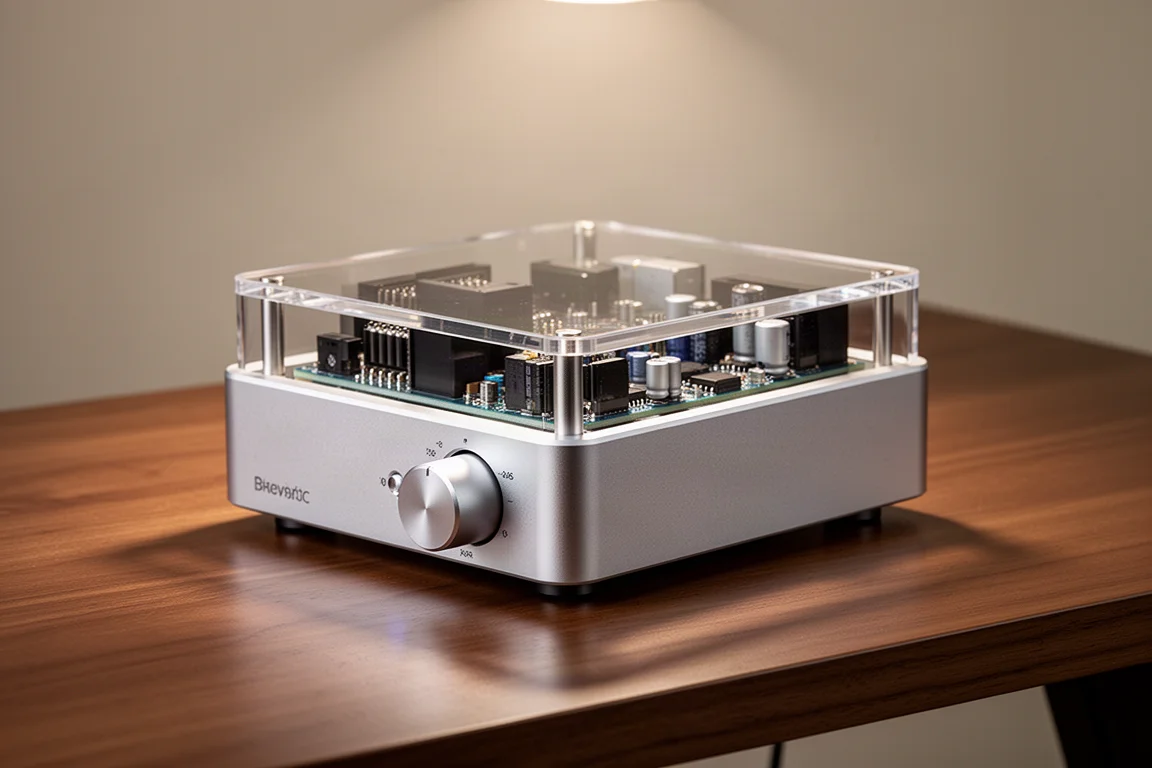
Alternative DAC Option: Geshelli Labs J2
Listeners who would prefer not to build around budget amplifiers and DACs from Chinese brands have alternatives. The Geshelli Labs J2 is an affordable DAC at around 250 dollars and a credible substitute for the AIYIMA T8.
The practical issue is cost balance. Pairing a 250 dollar DAC with the rest of this build usually means a budget amplifier is still needed to stay near 500 dollars, which reduces the saving that the T8 provides.
For a system where the DAC is the priority and the budget can flex, the J2 is worth considering.
Alternative Integrated Amplifier: Yamaha A-S301
The Yamaha A-S301 is a different route to the same destination. It is an integrated amplifier from a well-established brand at around 350 dollars, with a remote control and an internal DAC.
On specification it is a compelling component for a two-channel system, and it removes the need for a separate DAC in the chain. It is included here on the strength of its specification and its long-standing reputation rather than measured results, so treat it as an option to research.
For buyers who value brand support and a single box handling both DAC and amplification, it is the most straightforward alternative in this roundup.
How the Pieces Connect
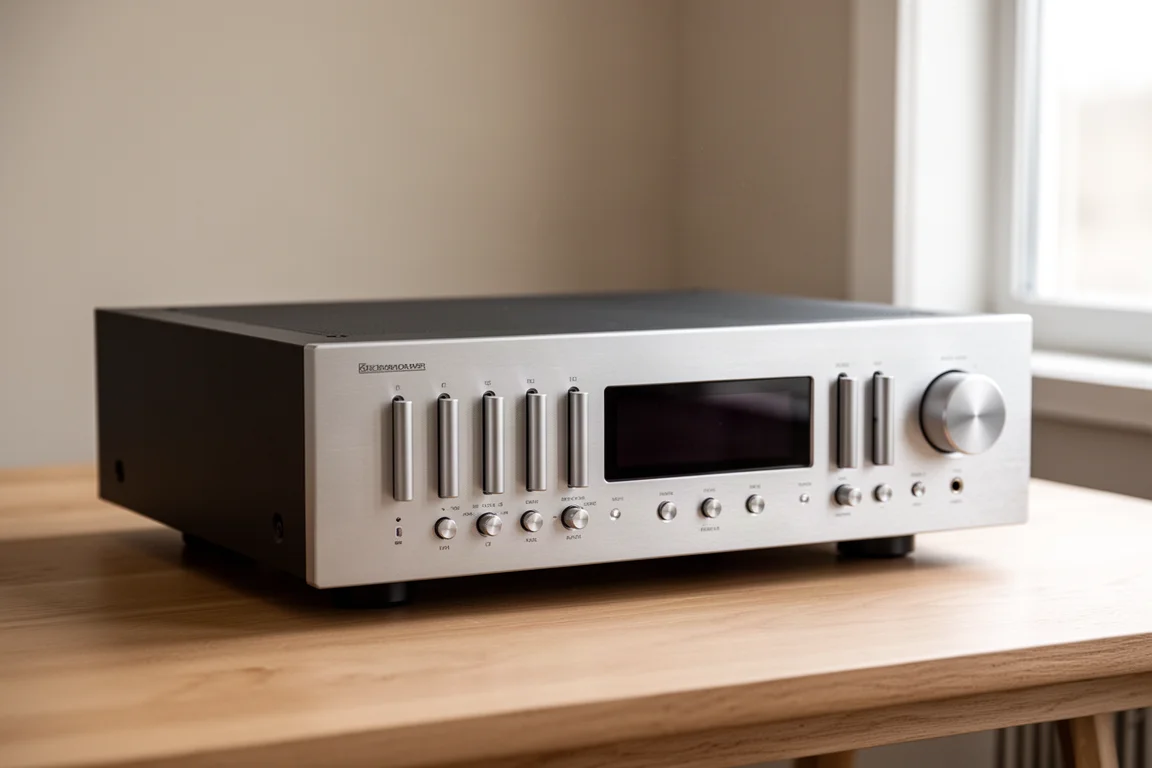
A typical television build runs optical from the TV into the AIYIMA T8, then RCA from the T8 into the Fosi Audio TB10D, with the amplifier driving the ELAC BS41 pair. The WiiM Mini connects by optical to the T8, and the subwoofer takes its signal from the T8 output through the splitter arrangement described above.
With the AIYIMA T9 instead, the T9 handles both DAC duties and amplification, the WiiM Mini connects optically, and the subwoofer connects to the variable auxiliary output with a 3.5 mm to RCA cable and a Y-adapter.
The result is a system with multiple sources, a remote control, tone controls, and a subwoofer output, which is what makes it a credible soundbar replacement rather than just a pair of small powered speakers.
Where to Spend More and Where to Save
The budget decisions here are straightforward. If you already own a streamer, dropping the WiiM Mini takes the build below 400 dollars with the subwoofer and below 300 dollars without it. If you already own a subwoofer, the same logic applies.
The other place to save is the amplifier. The AIYIMA T9 removes the need for a separate DAC, which lowers the total, at the cost of power headroom and a better remote control.
Where to spend more is the speaker. It is the component that limits the system, and it is also the one with a low-cost upgrade path through the crossover. Buyers who can stretch should also weigh whether a larger speaker is a better long-term fit, since the electronics here can drive a wide range of models.
There is no need to buy everything at once. Starting with the amplifier, the DAC, and the speakers, then adding the subwoofer and streamer later, keeps the initial outlay low and lets each purchase be judged on its own merits.
Conclusion
Building a complete two-channel system for around 500 dollars is realistic, and the combination above covers multiple sources, a subwoofer, and a remote control without cutting the wrong corners. Skip any component you already own and the price falls further.
For anyone moving away from a soundbar, setting up a desktop system, or building a second system, this is a practical starting point with a clear path to improve the speaker later.
Further reading
Related Reviews
Hi-Fi Audio
Accuphase C-57 vs Allnic H-7000V: Two High-End Phono Stages Compared
A fully balanced solid-state phono stage with a pitch-black noise floor meets a tube design built for well-loved records. Here is how to choose between them.
Hi-Fi Audio
Active vs Passive Hi-Fi: Five Components for a Modern System
Five components that define modern active and passive hi-fi systems, with the strengths, trade-offs and setup details worth weighing before you buy.
Hi-Fi Audio
Advance Paris A10 Apex Review: A Hybrid Integrated Amplifier That Covers a Lot of Ground
A French hybrid integrated amplifier with a class A tube preamp stage, analogue power meters, and an internal DAC and phono stage good enough to make extra boxes unnecessary.