Bookshelf Speakers
Best Budget Passive Bookshelf Speakers: Seven Measured Contenders Under $500
Seven budget passive bookshelf speakers compared on measured on-axis response, early reflections, and equalization potential, plus the two models actually worth buying under $500.
Introduction
Ask an AI assistant to name the best budget passive bookshelf speakers and you will get a confident, tidy list within seconds. It is worth remembering where that list comes from. AI summarises what is already published online: owner impressions, forum threads, and measurement databases. That makes it a reasonable starting point, not a substitute for data.
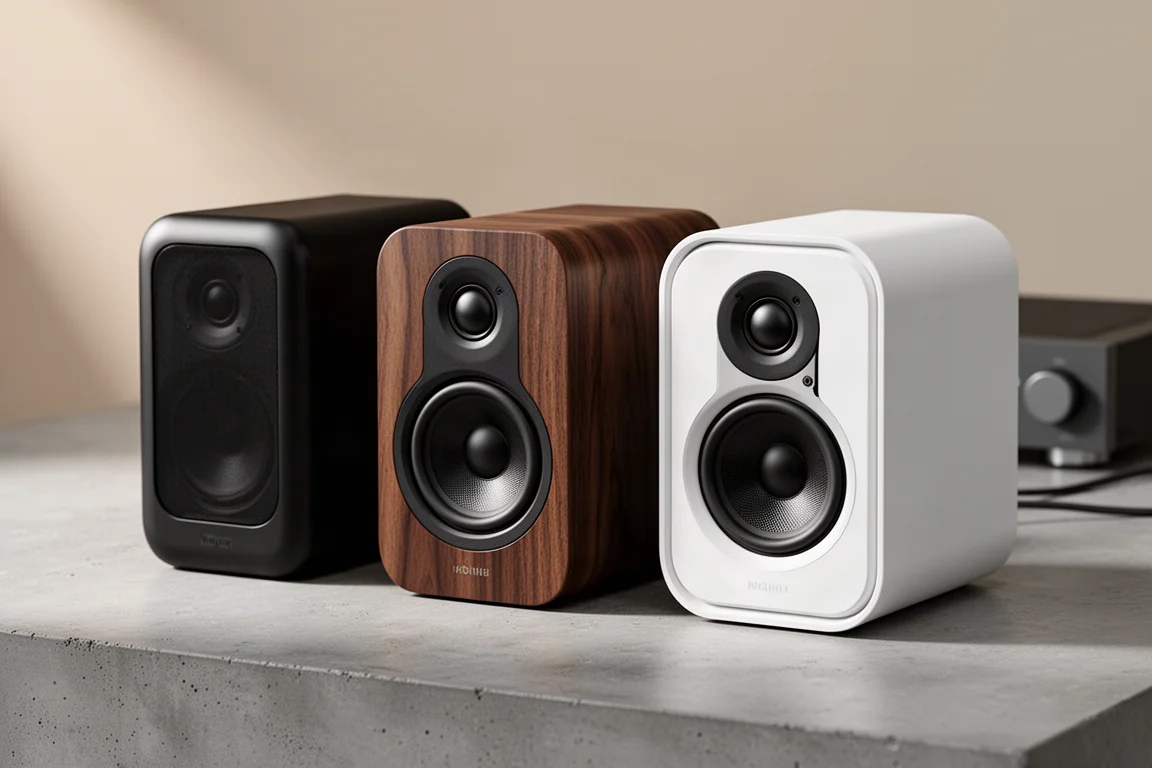
So we took a typical AI shortlist, the Q Acoustics 3020i, Wharfedale Diamond 220, Polk Audio S15, Klipsch R-41M, and ELAC Debut B5.2, and placed each one next to published spinorama measurements. We then added two speakers we would genuinely recommend at this price: the Emotiva B1+ and the Polk XT20.
If you are shopping under roughly $500 for a pair, the useful question is not which speaker is most popular. It is which speaker is neutral out of the box, which one can be corrected with equalization, and which one will fight you no matter what you do.
How This Comparison Was Evaluated
Three parts of a spinorama measurement matter most for a buying decision. The on-axis response, shown as the blue line, tells you how neutral the speaker is when you sit directly in front of it. The early reflections, the red line, approximate the tonality you hear once the speaker is placed in a real room, because much of what reaches your ears has bounced off walls and furniture. The lower curve, the green line, describes how the speaker’s directivity behaves, and it is the best guide to how successfully you can equalize the speaker later.
A speaker does not need a perfectly flat on-axis response to be enjoyable, but it does need a smooth and predictable one. When the lower curve is linear rather than flat, a modest amount of equalization can smooth the trouble spots. When that curve wanders, no filter will fully repair the mismatch between what the woofer and the tweeter send into the room.
That distinction matters most in the budget category. A flat response usually costs more money. What you can buy at this price is a speaker that is honest enough to be corrected.
Q Acoustics 3020i
The 3020i retails for about $450 a pair, which puts it at the top of this group on price. On the measurements, the on-axis response shows resonances in the 1 to 2 kHz region, which tends to read as a thin, tinny quality through the presence range. There is also a dip across the crossover area that costs some of the detail and immediacy you would expect at this price.
The early reflections show a sizeable gap between the midrange and the upper midrange and treble, which points to a speaker that will sound bright in a normal room. The lower curve is neither flat nor consistently sloped, so the top end will be difficult to equalize away completely. It is far from the worst speaker here, but a bright in-room balance combined with a stubborn high-frequency region is not an easy thing to live with.
ELAC Debut B5.2
The Debut B5.2 is one of two speakers here we have heard first hand, so the measurements can be checked against listening. The on-axis response looks good at a glance, but there is a swing of roughly 2 dB between the midrange and upper midrange around 1 to 2 kHz. That is the kind of step that makes a speaker sound forward, and it matches what we heard.
The early reflections peak near 2 kHz and taper off above it, which reinforces that forward character, because the treble sits at a higher level than the midrange and bass. The good news is the region above 2 kHz, where the response tilts up. That area responds well to a simple cut, and in listening that is exactly what happened. As a budget speaker to use with equalization, it is a solid proposition.
Without equalization, though, the forward balance stays with you, and for that reason it is not a speaker we would hand to someone who wants to plug in and forget about it.
Wharfedale Diamond 220
At around $250 a pair depending on when and where you buy, the Diamond 220 looks appealing on paper, but the measurements are difficult to like. The bass simply is not there. You could accept that and add a subwoofer, except the crossover would need to be set at 120 Hz or higher, which rather defeats the purpose of a compact two-way in the first place.
There is also a resonance around 1 kHz, the familiar port or enclosure resonance of a cabinet this size. Any recording that lands on that frequency will excite the box and add a bloom to that note that was never in the recording. The crossover region shows a dip of roughly 2 to 3 dB between 1 and 3 kHz. Some manufacturers deliberately voice a dip there and some listeners like it, but it is a colouration rather than a neutral presentation.
The harder problem is dispersion. The woofer is beaming as it approaches 2 kHz, while the tweeter takes over near 3 kHz and radiates much more widely. That mismatch means the sound heading toward your side walls is not the same as the sound arriving directly, and you hear it as a difference in timbre rather than as a measurement. Equalization can pull down the peak, but it cannot fix the dip, so this is not a speaker we would recommend.
Polk Audio S15
The S15 sells for about $250 a pair and looks fairly reasonable on axis, with a resonance around 900 Hz and a dip across the 2 to 4 kHz region, followed by peaking on axis around 10 to 11 kHz. That high-frequency lift is the giveaway.
The early reflections show the same pattern found in several speakers here: the midrange radiates more narrowly through roughly 1 to 3 kHz than the tweeter does above it. The result in a real room is a bright balance, because the in-room sound is a blend of the direct signal and everything reflecting back at you. As with the others in this group, equalization helps, but the speaker is working against you from the start.
Klipsch R-41M
At about $130 a pair, the R-41M is the least expensive speaker on this list and also the least linear. Ringing around 1 kHz, from a port or enclosure resonance, measures roughly 3.5 dB above the trend line that runs through the rest of the response. That is noticeably worse than the other speakers here.
On top of that there is a peak near 2.5 kHz, a dip around 3 kHz, and a boosted high-frequency region. The combination is contradictory rather than merely coloured: the resonance makes the speaker sound edgy, the dip makes it sound dull through the lower treble, and the boost makes it sound bright overall. It is not a neutral speaker, and no single adjustment resolves all three behaviours at once.
Emotiva B1+
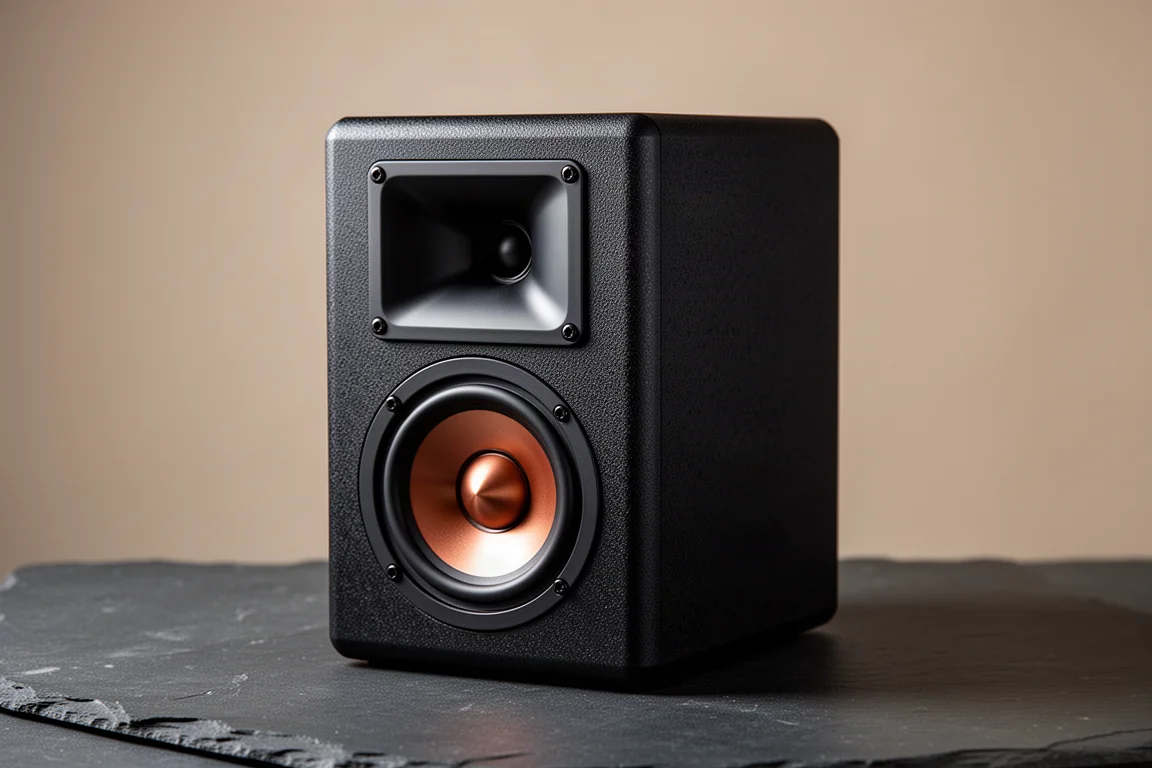
This is the easiest recommendation in this article. The B1+ is the most neutral passive bookshelf speaker we have tested to date, and it remains our default suggestion for anyone building a system on a budget. It sells for around $380 a pair at the moment, and the price moves with sales, with earlier pricing closer to the $250 to $300 range. It also goes out of stock from time to time, so it is worth watching availability.
The measurements explain the recommendation. The on-axis response is mostly neutral, with only a small discrepancy of around 1 dB between the midrange and upper midrange. More importantly, the lower curve is smooth enough that a single shelving filter will flatten it, which means a modest amount of equalization gets you very close to a neutral result. The early reflections are well behaved, which is why the speaker sounds balanced in a room rather than only on axis. The one thing to plan for is the top end, which runs about 2 to 3 dB hot and benefits from a gentle cut. Even at its current price, it is the best value in this group.
Polk XT20
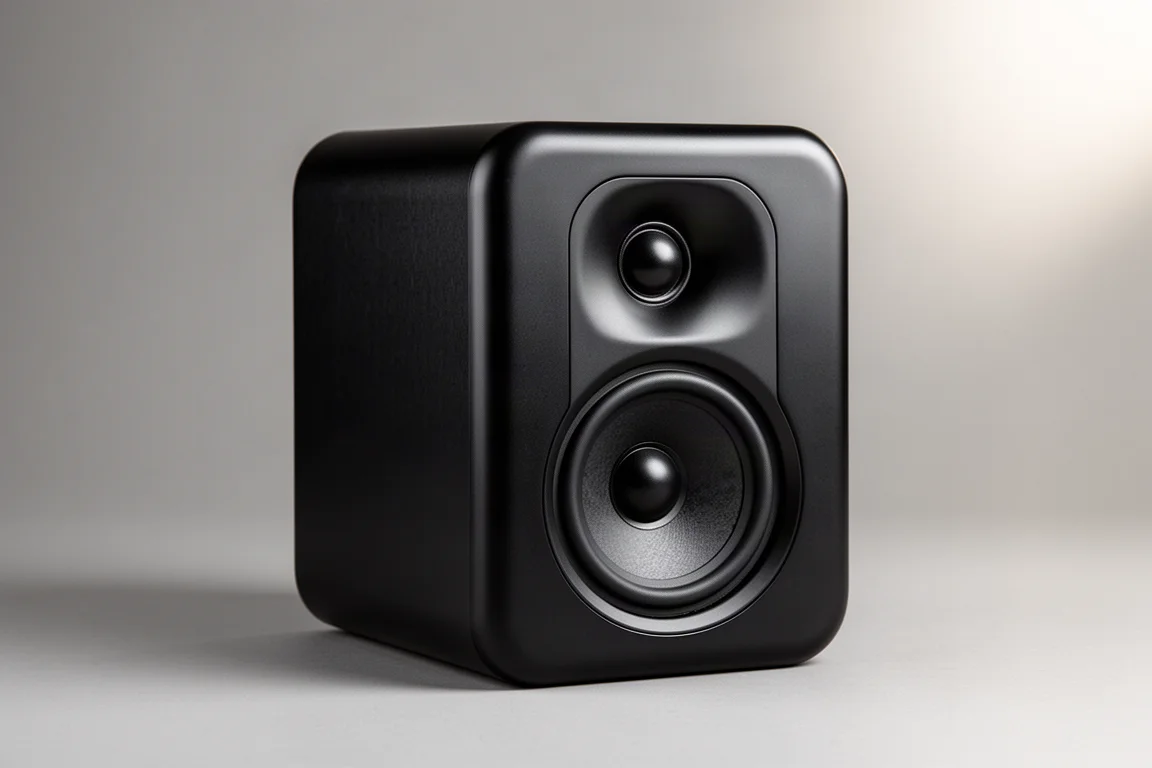
The XT20 is a smaller bookshelf speaker at about $300 a pair, and it is another model we have lived with. It is not the finest speaker in the world, but it represents solid value. The on-axis response looks good, with a discrepancy around 700 Hz of roughly 0.8 to 2 dB depending on how you read it, and that step equalizes out without much effort.
The early reflections are reasonably well controlled, but there is peaking in the high frequencies in both the on-axis and early-reflection responses. That brightness was the main criticism of every Polk XT series speaker we have heard, and the data agrees. Two fixes are worth trying. Toe the speakers out so they point 10 to 20 or even 30 degrees away from the listening position, which reduces the energy arriving on axis. Alternatively, a thin absorbent panel of half an inch to an inch on the side walls will catch some of the excess treble that bounces back at you. Simple equalization works too. Even with that caveat, it is a better value than most of the AI shortlist.
Buying Advice
If you are working with a budget of $500 or less for a pair of passive bookshelf speakers, the ranking from the measurements is fairly clear. Of the five models an AI assistant is likely to suggest, only the ELAC Debut B5.2 is worth considering, and only if you have equalization available. Without EQ, none of the five makes a strong case, because each one either sounds bright in room, carries a resonance through the presence region, or has a dispersion mismatch that no filter can repair.
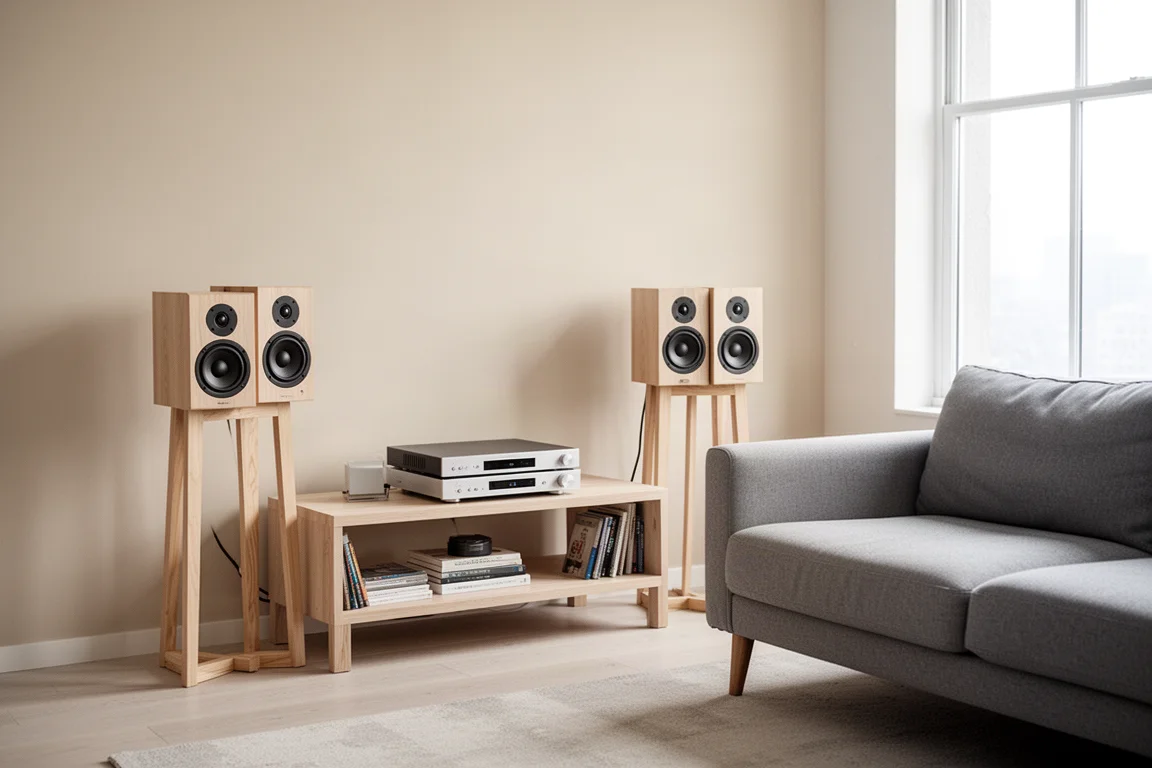
The Emotiva B1+ and the Polk XT20 are the two we would spend our own money on. The B1+ is the more neutral of the pair and the easier long-term choice, particularly if you can apply a shelving filter to trim the treble. The XT20 costs a little less, fits into smaller spaces, and responds well to careful placement. If your budget is tighter still, the ELAC Debut B5.2 is the only one of the AI-recommended models we would take home, with the understanding that it needs correction above 2 kHz to sound its best.
One last consideration applies to all of them. Every speaker in this price bracket benefits from equalization, and a receiver or processor with room correction will do more for your sound than moving up one price tier within this list.
Conclusion
AI can hand you a shortlist in seconds, and that shortlist is a fair reflection of what is popular. It is not a reflection of what measures well. In this group, the models that keep appearing in recommendations are the ones with resonances through the presence region, dips in the crossover, and a bright in-room balance.
The speakers worth buying are the ones that stay neutral on axis, behave predictably in a room, and can be corrected when they do not. On that basis, the Emotiva B1+ and the Polk XT20 are the two we would recommend, with the ELAC Debut B5.2 as a reasonable option for listeners who are happy to equalize.
Further reading
Related Reviews
Bookshelf Speakers
Acoustic Energy A100 Mark II Review: A Compact Standmount With an Expansive Soundstage
The Acoustic Energy A100 Mark II brings clarity, natural tonality and a wide soundstage to an entry-level standmount, with a few setup details worth knowing first.
Bookshelf Speakers
Acoustic Energy AE-100 Mark II Review: Compact Bookshelf Speakers With Standout Imaging
A compact British two-way bookshelf speaker with deep, layered imaging, fast bass, and a slight treble lift to weigh against a crowded $500 field.
Bookshelf Speakers
Acoustic Energy AE100 MK2 Review: Measured Performance and Four Alternatives
A close look at the Acoustic Energy AE100 MK2 bookshelf speaker, what its measured performance reveals, and four alternatives with different trade-offs.