Mountain Bikes
Best Budget Mountain Bikes Under £1,000: Five Hardtails and an E-MTB Worth Riding
Five budget mountain bikes under £1,000, from an entry-level electric hardtail to aggressive trail machines, with the specs that actually matter.
Introduction
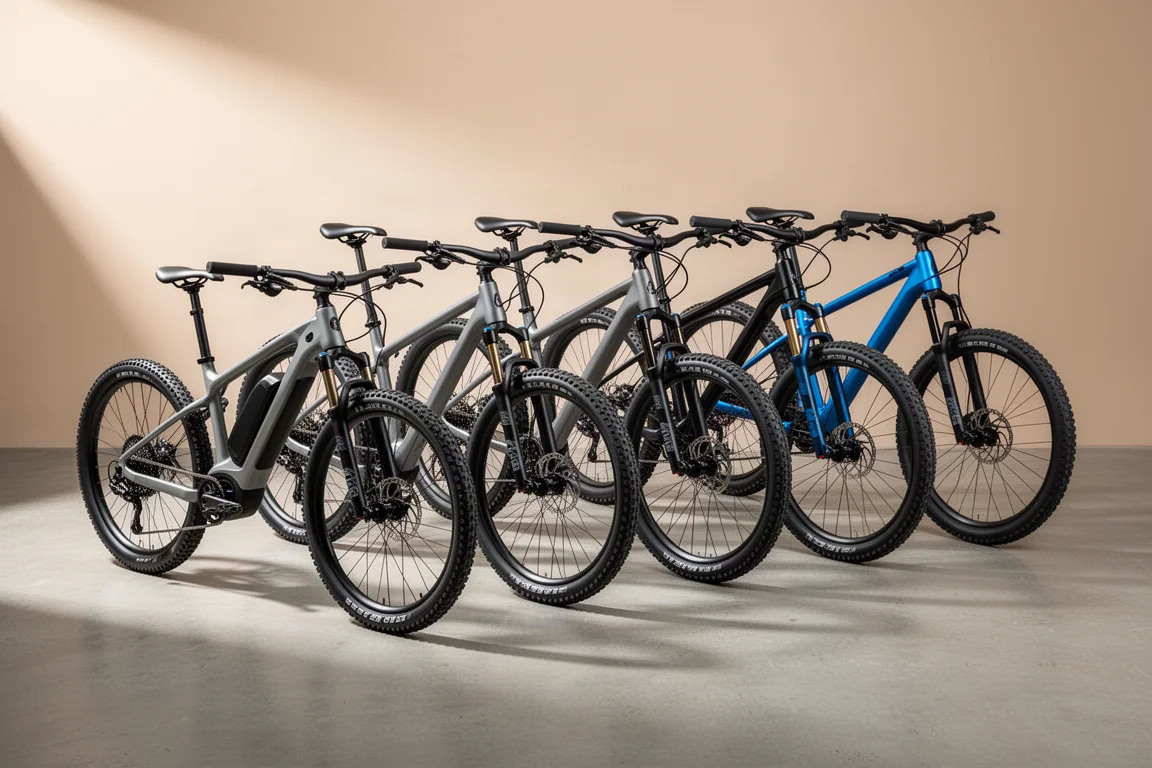
Mountain biking does not have to start at premium prices. A well-chosen budget hardtail can handle real trail riding, and the current crop of machines under £1,000 gives beginners and value-focused riders a genuinely appealing set of options.
The five bikes here take different approaches. One is an entry-level electric mountain bike aimed at riders who want assistance at the lowest possible cost. The rest are aluminium hardtails built around modern geometry, air-sprung forks and drivetrains that would have looked premium not long ago. Each one makes a different trade-off, and the right pick depends on the terrain you ride and how much you want to upgrade later.
What to Look For in a Budget Mountain Bike
The frame is the part you cannot easily change, so it deserves the most attention. Look for current geometry numbers, a tapered head tube, Boost axle spacing and routing for a dropper post, since those details determine how far the bike can grow with you. A threaded bottom bracket and generous tyre clearance are practical bonuses for riders who do their own maintenance and ride in mixed weather.
Suspension and drivetrain are where budgets are usually trimmed. An air-sprung fork offers far more adjustment than a coil-sprung unit, and a wide-range cassette with a clutch-equipped derailleur makes steep climbs and rough descents noticeably easier. Brakes deserve a hard look too, especially on heavier bikes, where stopping power and consistency matter more than light weight.
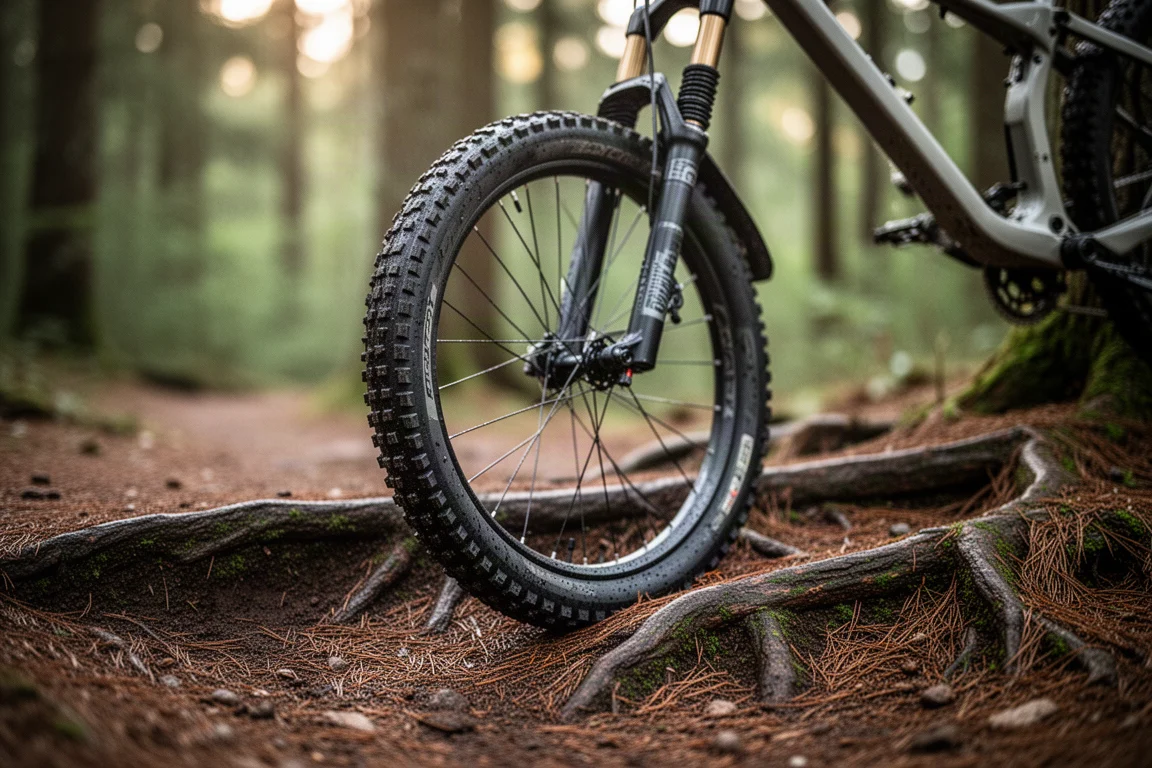
Wheels and tyres round out the picture. Tubeless-ready rims save you money on the first upgrade, and tyres with a softer, grippier compound transform how confident a budget bike feels on loose or wet ground. It is also worth checking weight against the terrain you actually ride, because a heavier bike asks more of its brakes and its rider.
Best Electric Option: Decathlon EST-100
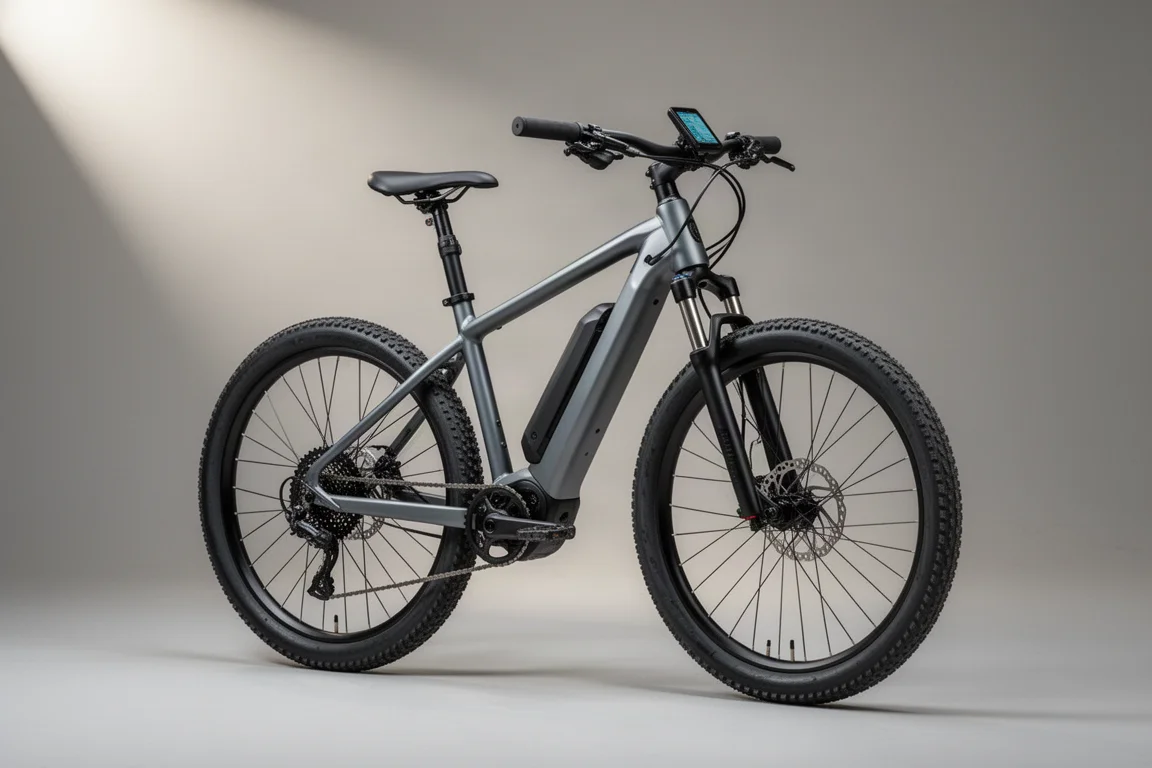
Electric mountain bikes usually carry a significant price barrier, and the Decathlon EST-100 is designed to lower it. Priced at £999, it is a genuinely accessible first step into assisted mountain biking.
To hit that figure, the EST-100 uses a rear hub motor rather than the crank-based systems found on more expensive machines. It produces 42 newton metres of torque and a maximum assistance of 250 watts. The torque figure sits below the 85 newton metres of Bosch’s Gen 4 Performance CX-based motors, but it exceeds the brand’s Active Line, and the 250 watts of assistance matches what Bosch produces at the top of its range.
The system is controlled through an LCD screen with three assistance modes: Eco, Standard and Boost. A 380 watt hour battery mounts neatly to the frame. The drivetrain is an almost entirely Microshift affair, with an 8-speed shifter and derailleur moving a KMC chain across an 11 to 34 tooth cassette, paired with a 32-tooth chainring. That gearing is comfortable on flatter rides, though riders facing long, steep climbs may want a wider-range cassette. Mechanical disc brakes are the area that raises the most questions, particularly given a claimed weight of 22.4 kilograms in a size large.
Best Trail Hardtail: Voodoo Bizango Pro
The Voodoo Bizango has served as a gateway into mountain biking for a large number of riders, and the Bizango Pro takes that formula up a level. It is built on an up-to-date aluminium frame with progressive numbers: a 66.5 degree head angle and a 459 millimetre reach on the large size, which adds stability when the trail points downhill.
The frame also gets Boost 148 millimetre axle spacing for straightforward upgrade potential, a 31.6 millimetre seat tube and routing for a dropper post. It is the specification that makes the strongest case, though. A stout RockShox 35 Gold Air fork with 130 millimetres of travel and a Boost through axle handles the front end, offering a level of control that is unusual at this price. Shimano’s Deore 1x12 groupset with a 10 to 51 tooth cassette and a 30 tooth chainring drives it forward, and the HollowTech 2 crankset with an external bearing bottom bracket makes home servicing simpler.
The wheels and the standard-fit Maxxis High Roller 2 and Recon tyres are tubeless ready, so beyond adding a dropper post of your own, the Bizango Pro is ready to ride out of the box. It is priced at £950, or $1,258.
For riders who want a hardtail that is capable from day one and still worth upgrading in a year or two, this is one of the strongest packages in the category.
Best Big-Wheel Value: Vitus Sentier 29
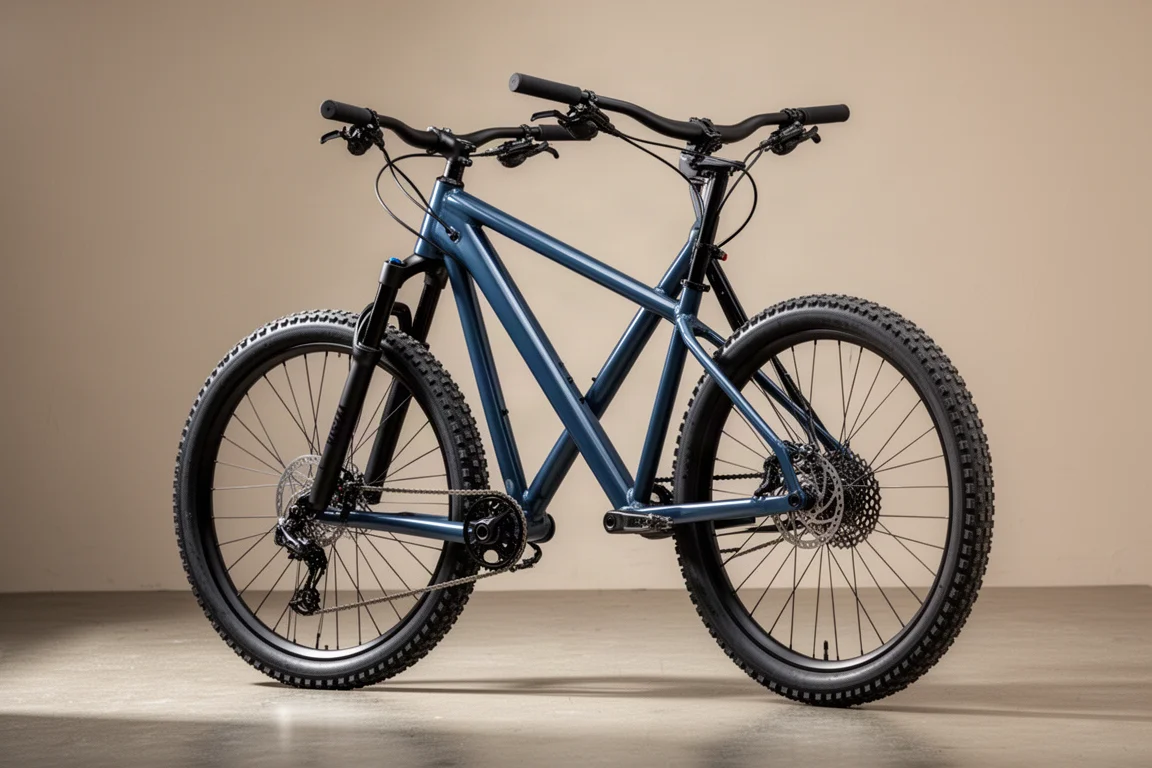
The Vitus Sentier is another long-standing entry-level hardtail. The platform is a few years old, but it can still keep pace on the trail. Every Sentier model shares the same aluminium frame with a tapered head tube, Boost axle spacing and routing for a dropper post, available with either 27.5 inch or 29 inch wheels. Both work well, though the Sentier 29 gets a slight nod for the rollover ability of its larger wheels.
The range tops out with the VRX, followed by the VRS, VR and base models, and the higher-end builds tend to get the attention. The base Sentier 29 is still a compelling proposition for under £1,000. At £949.99, or $1,199, it comes with a smooth RockShox Recon RL fork offering 130 millimetres of travel, Shimano’s wide-range Deore 1x10 drivetrain with an 11 to 46 tooth Sunrace cassette, and a sorted cockpit finished with a wide Nukeproof handlebar. Two-piston hydraulic brakes from either Tektro or Clarks with 180 millimetre rotors provide plenty of stopping power when you need to shed speed quickly.
Best Budget All-Rounder: Trek Marlin 6
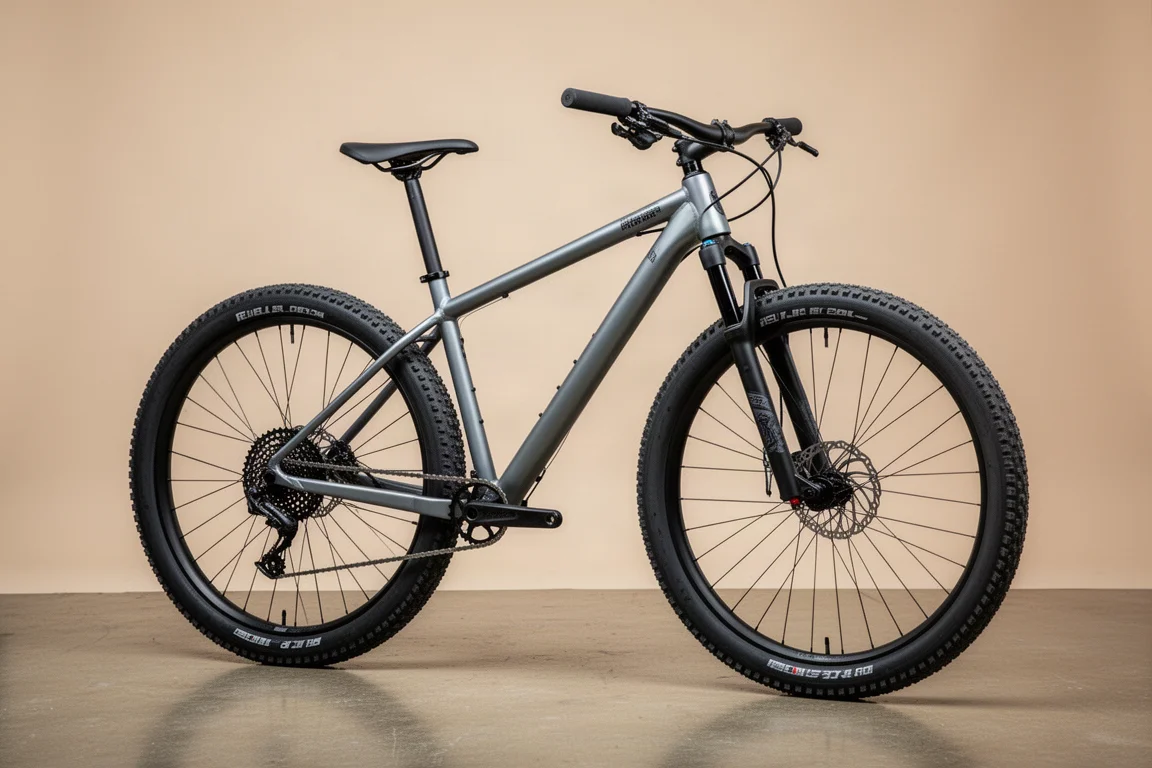
The third generation of the Trek Marlin is an impressive package, and the range-topping Marlin 8 has proven popular with testers. The base Marlin 6 is the value pick of the line at £760. It uses the same versatile Alpha aluminium frame, complete with internal routing for fork and dropper cables, plus kickstand and pannier rack mounts so it can double as a commuter.
The cockpit, saddle and tubeless-ready wheels are identical to those on the Marlin 8, and the Marlin 6 benefits from Shimano’s excellent 10-speed Deore drivetrain, which addresses one of the main criticisms of the Marlin 8 and its 12-speed SRAM SX gearing.
The compromises are a coil-sprung Suntour fork and wide-bead Bontrager XT3 tyres. Neither is a dealbreaker, and the savings over the other bikes here leave plenty of room to fit grippier rubber and a more sophisticated fork later on.
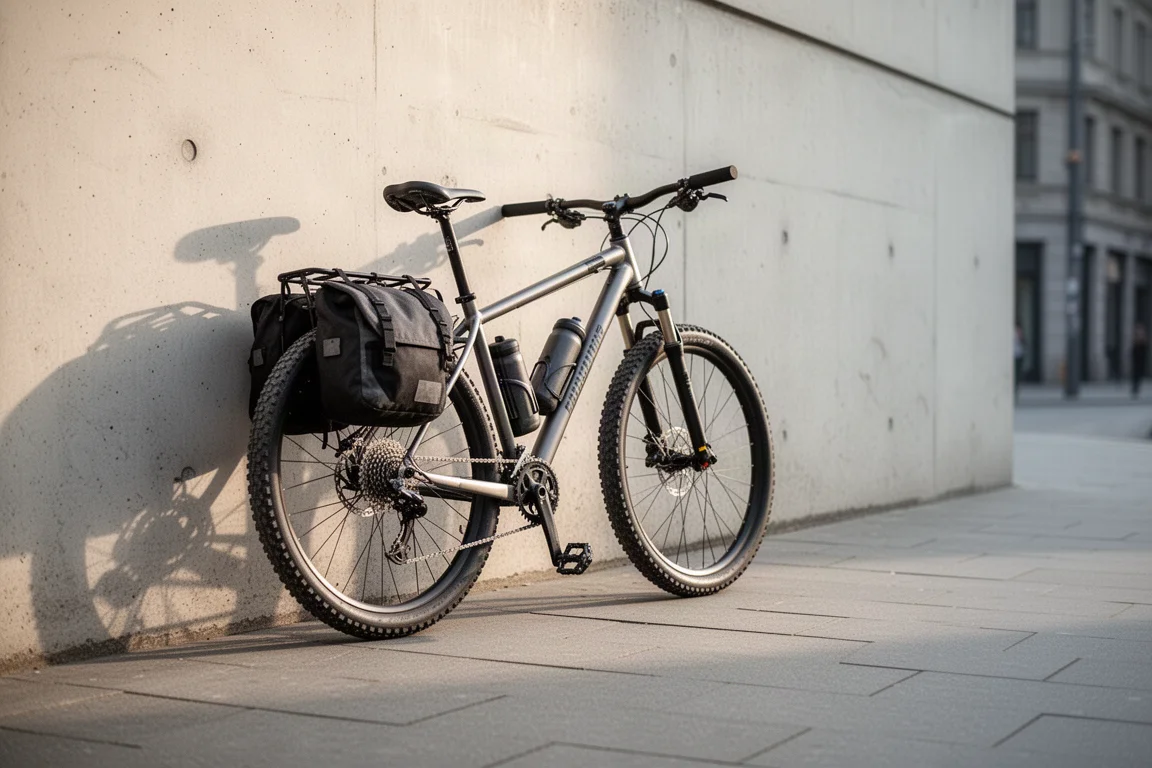
That upgrade path is what makes the Marlin 6 appealing for riders who want one bike for trails and the daily commute, with the option to sharpen it over time.
Most Aggressive Hardtail: Canyon Stoic 2
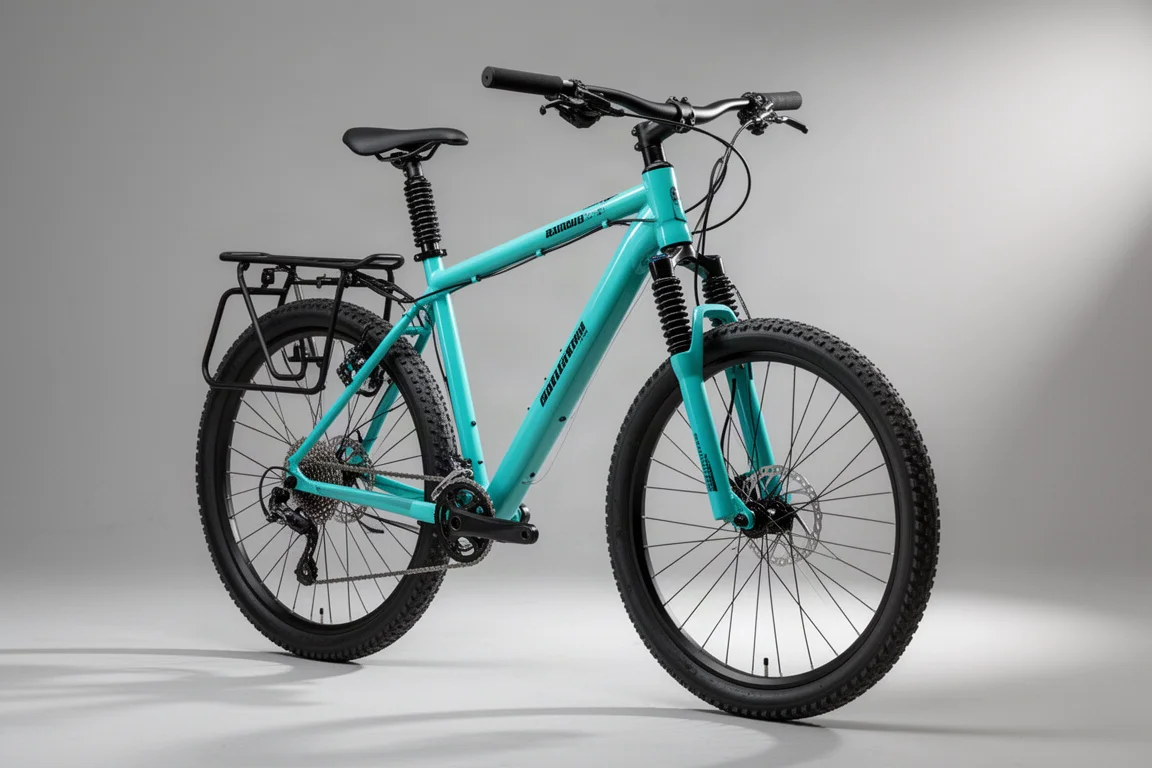
Canyon may not be the first name that comes to mind for hardcore hardtails, but on paper the Stoic is the most aggressive bike in this group. It pairs 140 millimetres of travel with a low, long, almost dirt-jump-style frame that looks ready to push your riding forward. The geometry is the most progressive here, with a 65 degree head angle set against a relatively steep 75 degree seat angle, and those numbers remain consistent across the entire size range.
The smallest three sizes, from extra extra small through small, come with 27.5 inch wheels rather than the 29 inch hoops used on medium through extra large. Even on the 29 inch models the chainstays are very short at 428 millimetres, which suits slashing turns and popping through jump-filled lines. Practical touches include a threaded bottom bracket and generous tyre clearance for all-weather versatility.
The range tops out with the Stoic 4, but the Stoic 2 looks like outstanding value at £899, or $1,199. It uses the same frame with a 10-speed Shimano Deore M6000 drivetrain, a Suntour XCR 34 Air fork, tubeless-ready wheels and Schwalbe tyres.
Buying Advice
Start with the trails you actually ride. If your local terrain is steep and technical, the Canyon Stoic 2 and Voodoo Bizango Pro reward an aggressive riding style with their geometry and air-sprung forks. If you want a single bike that handles trails, commuting and light touring duties, the Trek Marlin 6 covers more ground for less money and leaves budget for upgrades.
The Vitus Sentier 29 sits neatly in the middle, with a proven frame and a specification that covers most trail riding without fuss. Riders who want assistance on the climbs should look at the Decathlon EST-100, keeping in mind that its hub motor, mechanical disc brakes and 22.4 kilogram claimed weight in a large are the trade-offs that keep the price at £999.
Whichever you choose, budget for the small upgrades that make the biggest difference: a dropper post where routing allows, grippier tyres, and a tubeless conversion. Those changes cost relatively little and transform how a budget hardtail rides.
Conclusion
Under £1,000, the options are far better than the price tags suggest. Each of these five bikes makes a clear, defensible trade-off, and none of them needs to be replaced the moment your riding improves. Match the bike to your terrain, plan for a dropper post and better tyres, and a budget hardtail can stay with you for years.
Further reading
Related Reviews
Mountain Bikes
Atherton AM.130 Review: 3D-Printed Titanium Lugs and a 130mm Trail Bike That Descends Like a Bigger Machine
The Atherton AM.130 pairs 3D-printed titanium lugs with carbon tubes and a DW6 suspension platform. Here is how it rides, what the build delivers, and who it suits.
Mountain Bikes
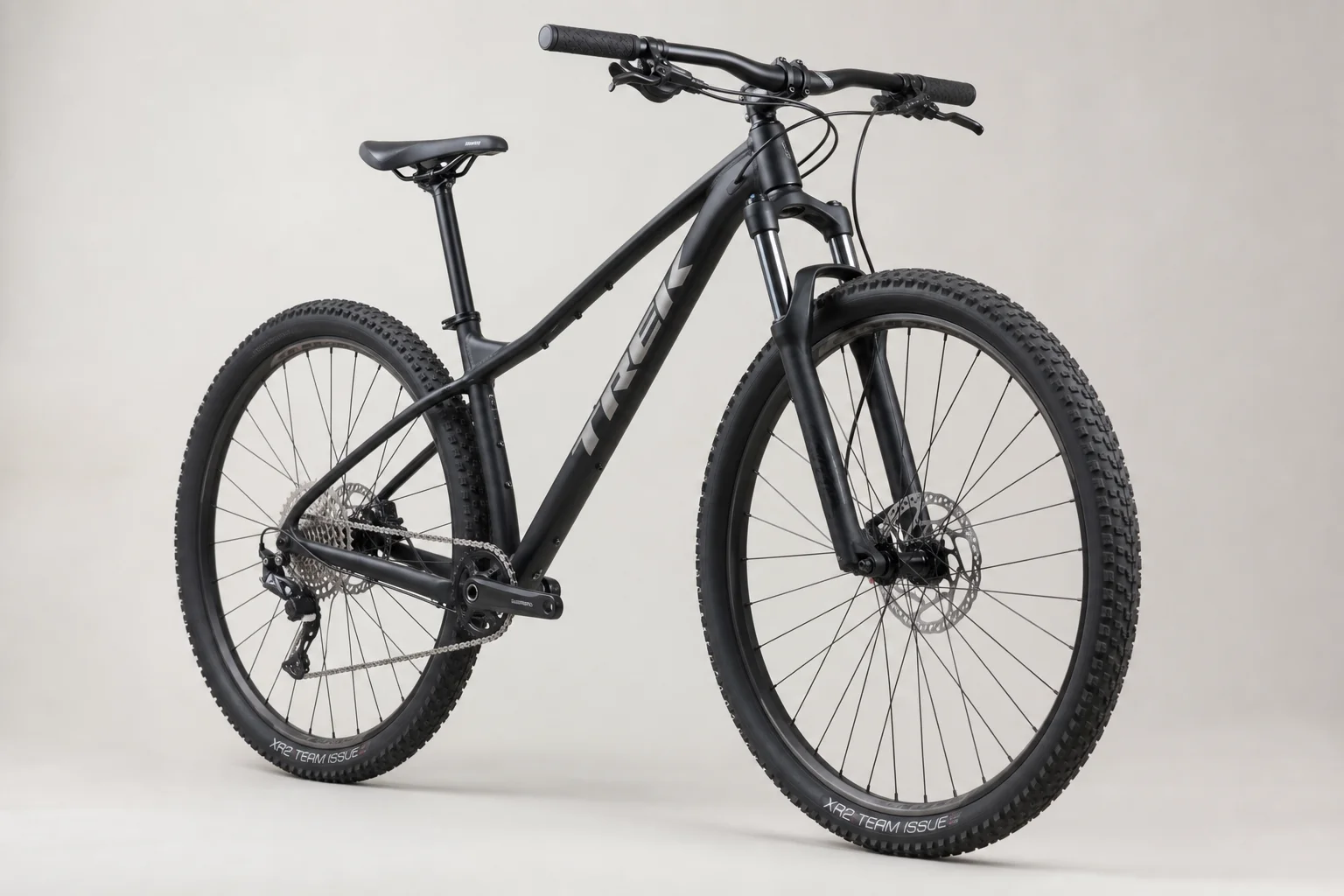
Beginner Mountain Bike Buying Guide: What to Look For in a Trailworthy Hardtail
A practical framework for evaluating beginner mountain bikes, whether new or used, by examining key components that indicate real trail capability.
Mountain Bikes
Best Aluminum Mountain Bikes 2026: Five Alloy Bikes Worth Your Attention
Five aluminum mountain bikes that show how far alloy has come, from a 120mm trail bike and a versatile machined frame to a 180mm freeride machine.