DIY & Metalwork
Budget Metalwork Tools That Actually Work: Cutting, Drilling and Joining Steel Without Spending a Fortune
Six affordable tools for cutting, drilling and joining steel at home, learned the hard way during a full steel bike store build.
Introduction
Metalwork has a reputation for being intimidating, expensive, and the kind of thing you need a proper workshop for. The reality, after building an entire steel bike store from box section and sheet, is quite different: it comes down to technique and having the right tool for each job. Almost none of the tools involved were expensive, and several cost less than a decent lunch.
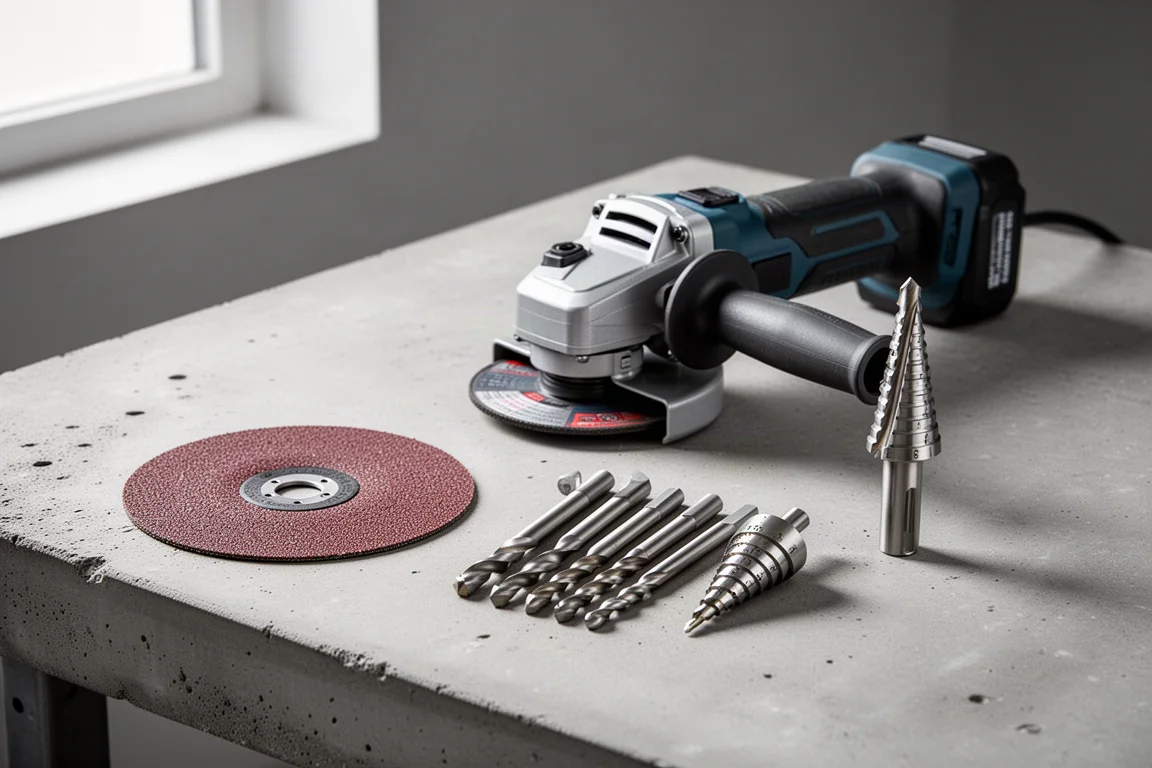
This guide covers the tools that worked well across a real project: cutting steel with discs, a mitre saw, and a circular saw blade; shaping cuts with a nibbler; drilling holes that stay sharp; and joining everything with welding and rivets. If you have been putting off your first metal project, this should help you start small and cheap.
Cutting Discs: Not All Are Equal
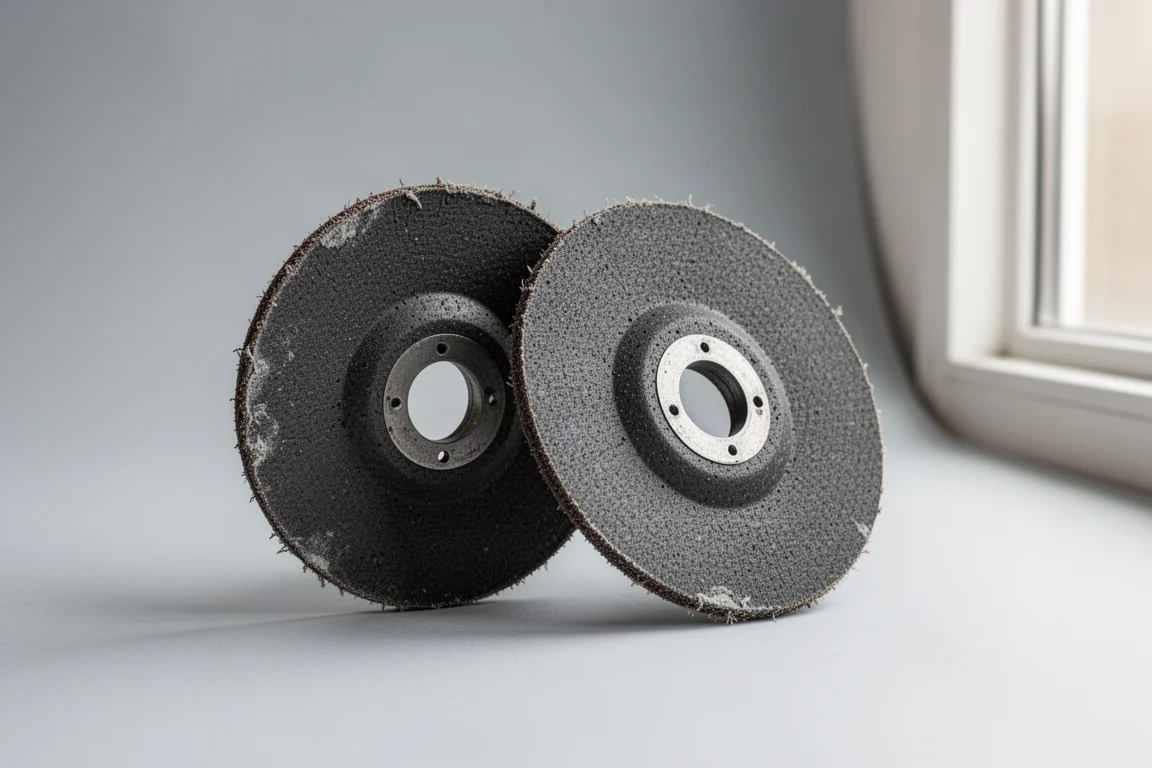
The first lesson learned on this project is that cutting discs vary enormously. Cheaper generic discs, such as the Parkside ones bought a couple of years ago, wear noticeably faster and cut less aggressively when used regularly. They are fine as an occasional backup, but heavy use exposes their limits.
DeWalt cutting discs, by comparison, cut through steel with very little resistance. They are extremely thin, which speeds up every cut and drains less battery on a cordless angle grinder. This is not a claim that DeWalt makes the best disc on the market; Bosch, Makita, or Milwaukee discs may perform just as well. It is simply that these have proven reliable over a year of regular use, and they are worth the small premium over unbranded options.
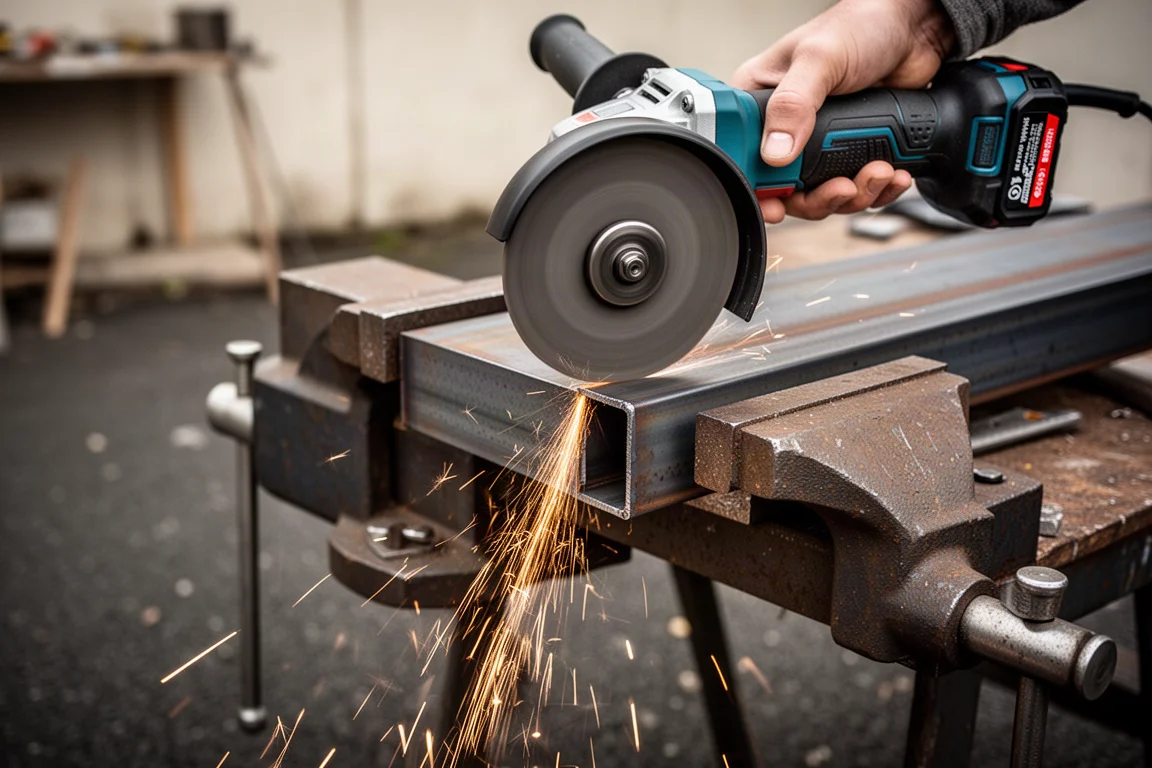
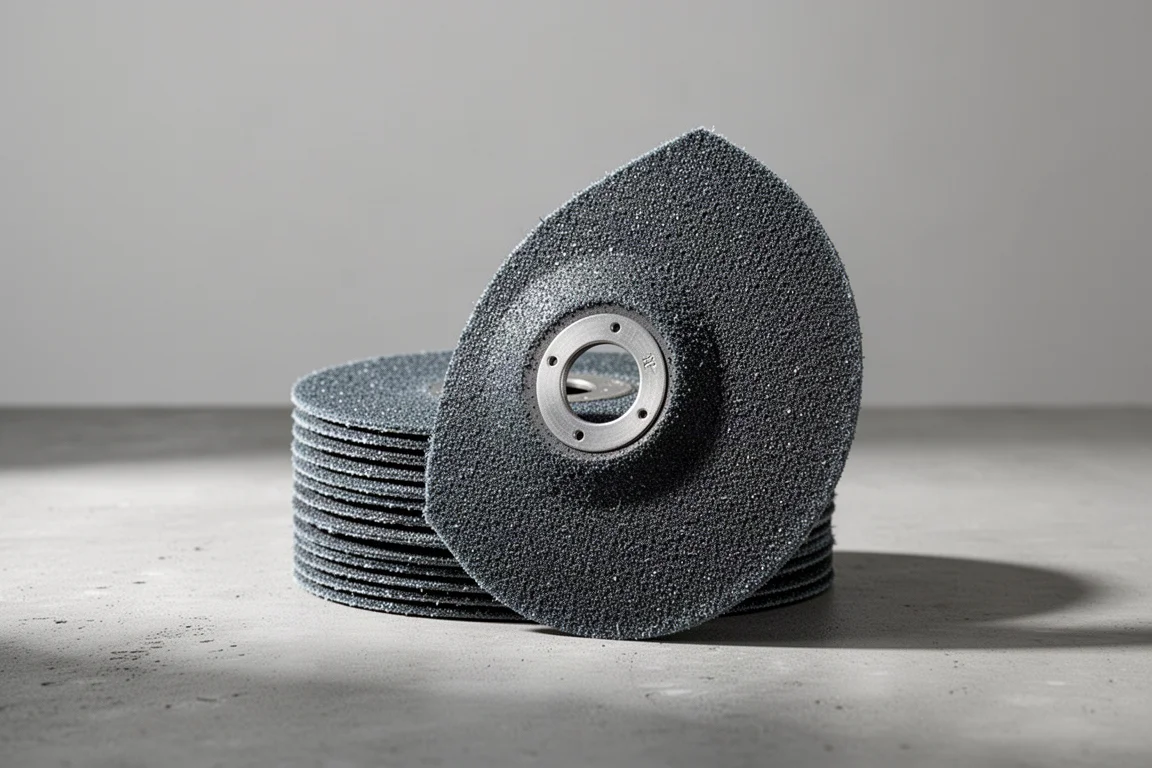
For occasional use, the budget option is still worth a look. If you only cut steel a few times a year, the price gap matters more than the wear rate, and the Parkside discs will get the job done.
Making Straight Cuts: A Big Steel-Cutting Mitre Saw
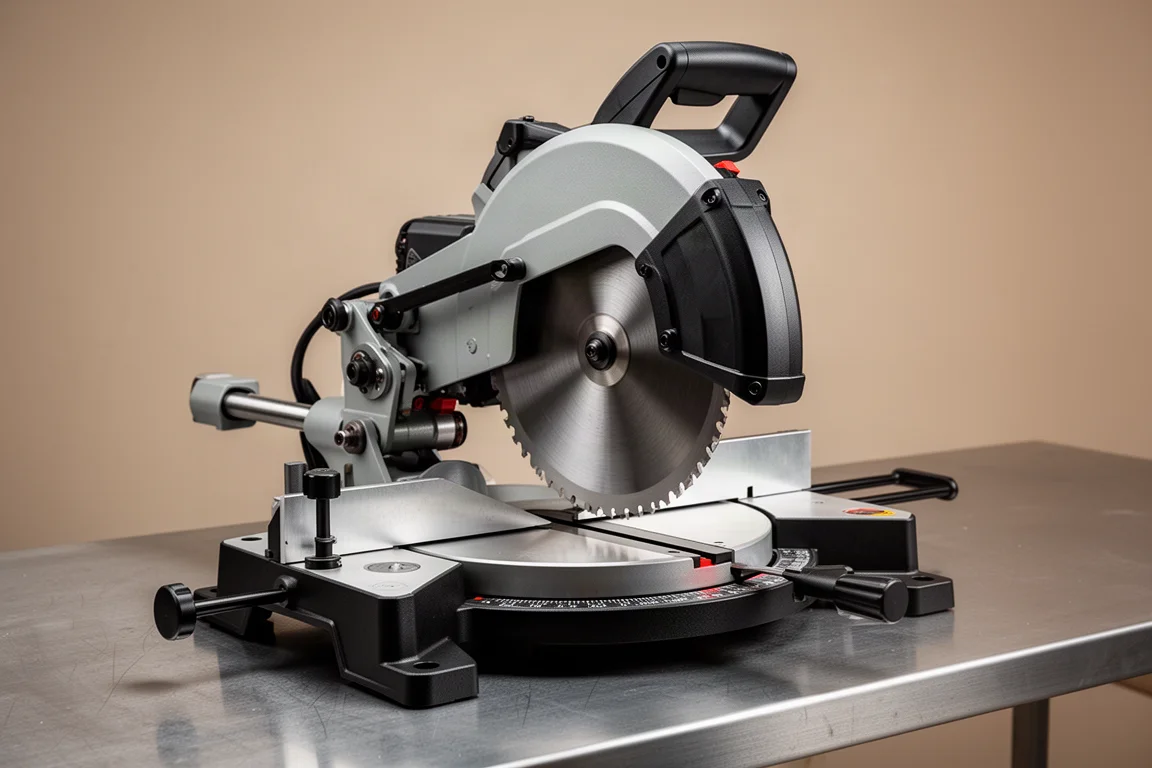
For the major box-section cuts, a dedicated steel-cutting mitre saw earns its place. The Evolution 355mm steel-cutting mitre saw handles any angle a traditional mitre saw can, but in steel, and it cuts cold. Because the blade is not abrasive, it produces almost no heat, which makes the cut edge immediately safe to handle and far more pleasant to work with.
The obvious drawback is cost. At around £700, it sits out of reach for the average DIYer who only occasionally works with metal. Evolution also sells a smaller sibling that skips mitre cuts but works as a very capable chop saw with the same blade, at roughly £330 in the UK. Even that is a serious investment, which is why the next option matters more for most people.
The Cheaper Alternative: A Steel-Cutting Blade for Your Circular Saw
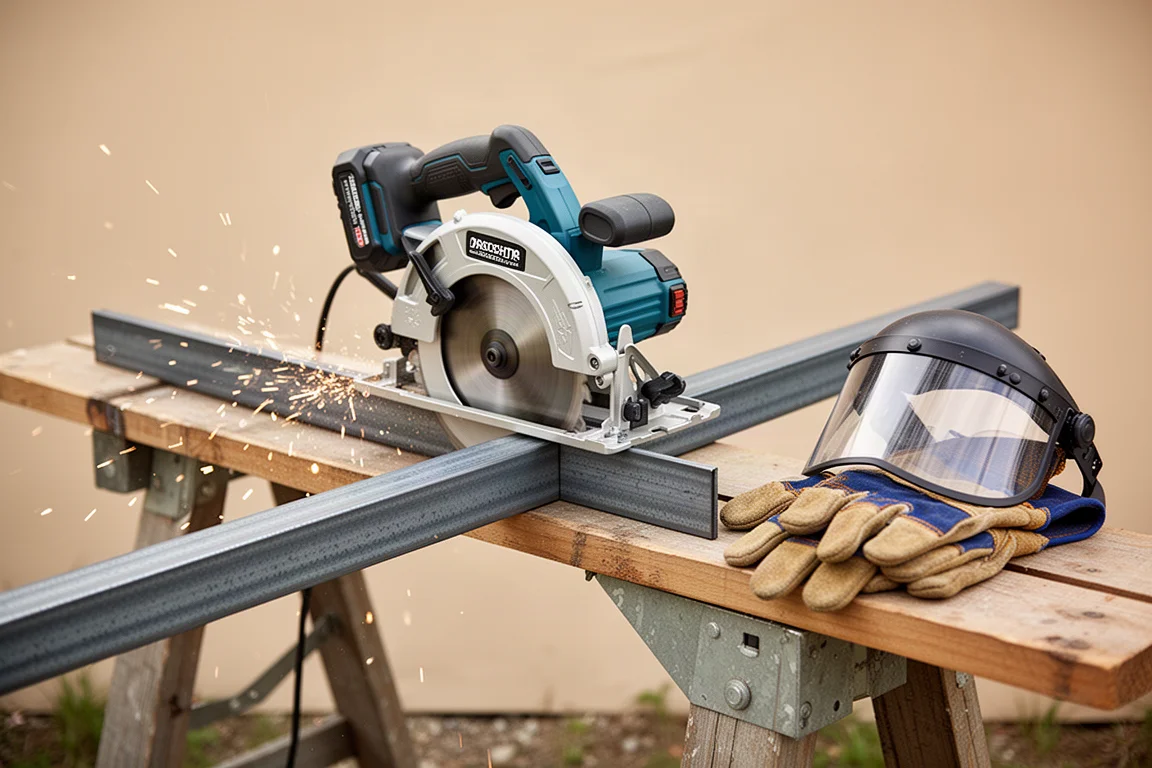
If you only cut steel now and then, you do not need a dedicated machine. A steel-cutting blade for your existing circular saw, around £22 for a 165mm blade, does a surprisingly good job on straight cuts in angle and box section. Even a professional steel supplier was found using exactly the same setup for cutting stock to length, largely because a cordless saw is simply the most convenient tool for the job.
The critical caveat is safety. Cutting steel with a circular saw sends chips flying in every direction, so a full face mask, gloves, and covered arms are non-negotiable. With that covered, a £22 blade turns a saw you already own into a capable steel cutter.
Curved and Irregular Cuts: A Metal Nibbler
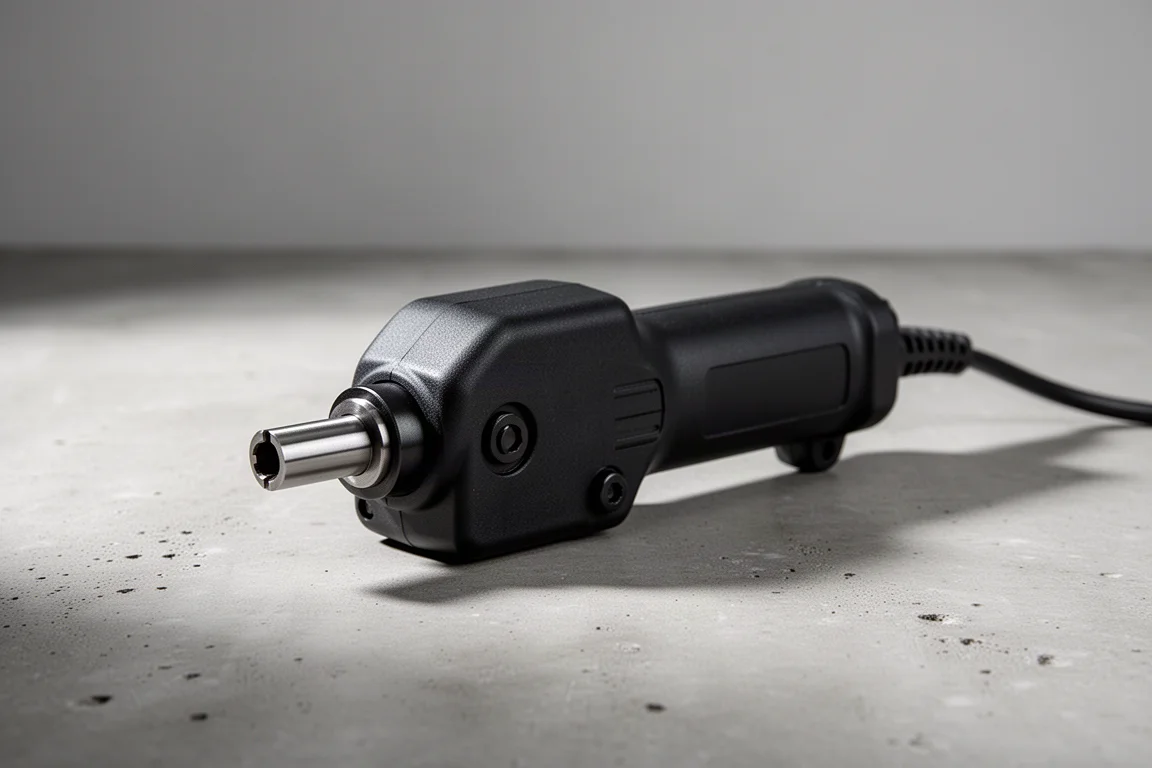
For cuts that are not straight lines, a nibbler is the tool of choice. The Parkside metal nibbler, picked up for around £20 to £25, is essentially a motor driving a cylinder with a small cutting head, about 5mm wide. As it advances, it punches out overlapping cylinders of metal one after another, effectively nibbling its way through the sheet.
It was used on this project for straight lines, but its real talent is wiggly, curved cuts in sheet metal. It is a cheap, single-purpose tool, and for the price it is an easy addition to the kit if your projects involve sheet steel.
Drilling Steel: The Right Bits Make All the Difference
Drilling steel was the biggest part of this project, with hundreds of holes for rivets and fixings. For standard holes up to around 10mm, Bosch PointTeQ drill bits have proven reliable over a couple of years of metalwork. The key is avoiding overspeed: as long as you keep the revs sensible, they stay sharp far longer than cheaper bits.
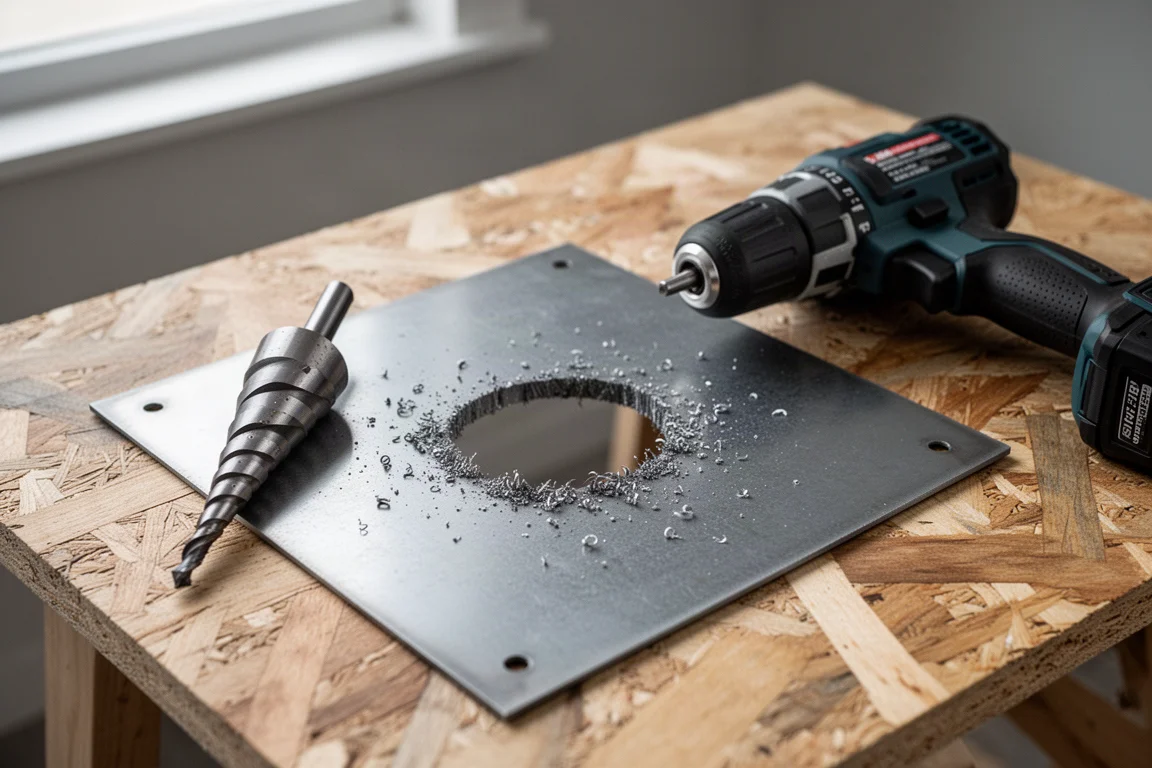
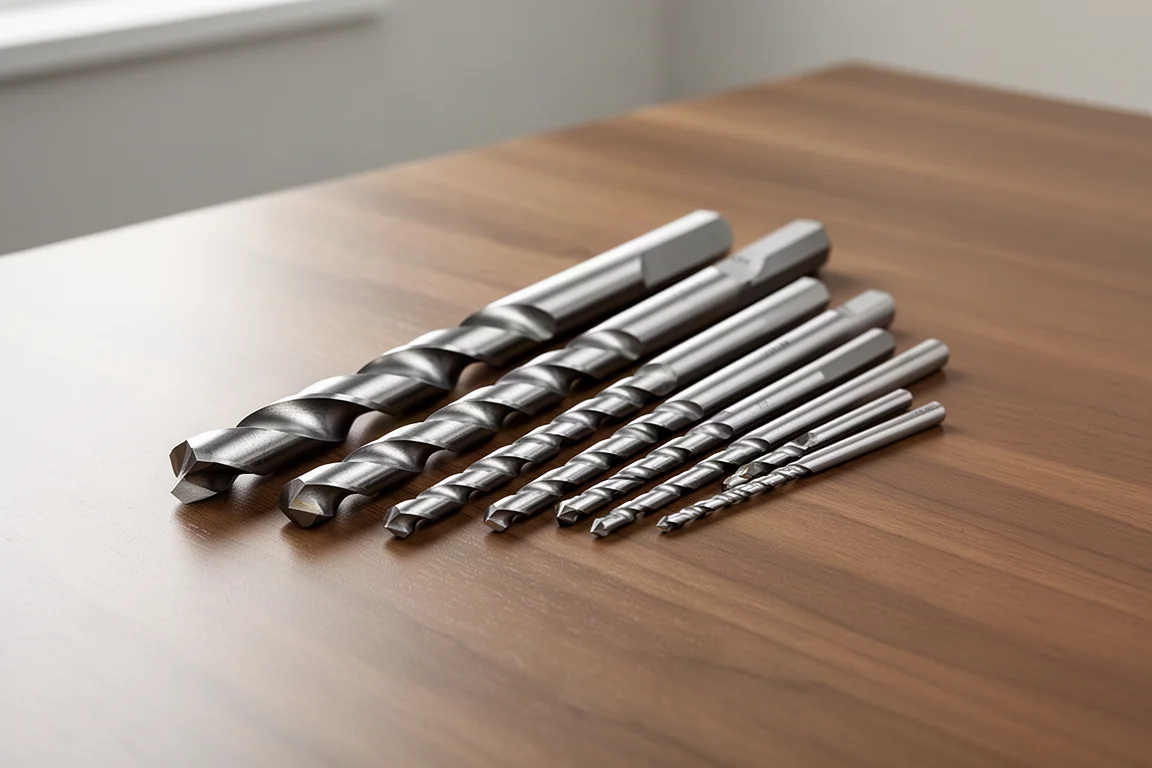
For larger holes, a step bit is the answer. Going up to 32mm, one of these costs only about £5 or £6, and it works well as long as you let the drill do the work. Pushing too hard in thin metal deforms the edge of the hole. One useful trick: sandwich the steel between two pieces of plywood and drill straight through the stack. That supports the metal and keeps the hole clean.
Joining Steel: A Flux Core Welder
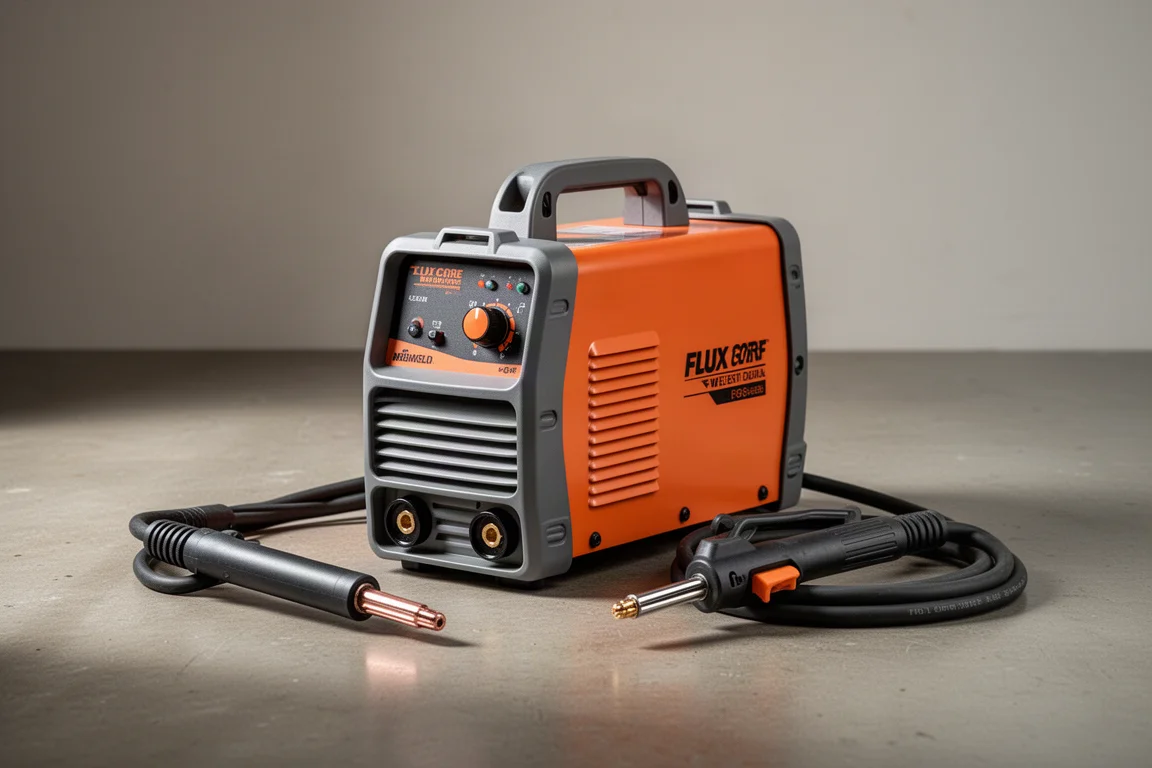
A welder changes what you can build. The Parkside flux core welder accepts flux core wire up to 1mm in diameter, which is a small wire size but covers the vast majority of home and garden projects. It cost around £100, and similar machines are available elsewhere, such as at Machine Mart, though those have not been tried personally.
The appeal is simple: joining two pieces of steel creates strength far beyond what timber construction can offer, which opens up completely different ways of designing a project. For around £100, it is a genuinely accessible entry point into welding.
Pop Riveting Without Killing Your Hands
Pop rivets are old, basic technology for joining sheet metal to structural steel or sheet to sheet, and most DIYers already own a hand rivet gun. The problem is volume. On a project with hundreds of rivets, a hand gun taking twenty pulls per rivet is a recipe for sore hands and lost evenings.
Electric rivet guns exist, but many cost several hundred pounds. The solution found here is a drill-mounted rivet attachment that cost £12.99. It fits on the end of any drill, comes with interchangeable heads, and pops a rivet in about a second once the drill runs forward. Reverse the drill and the spent spindle ejects, ready for the next one.
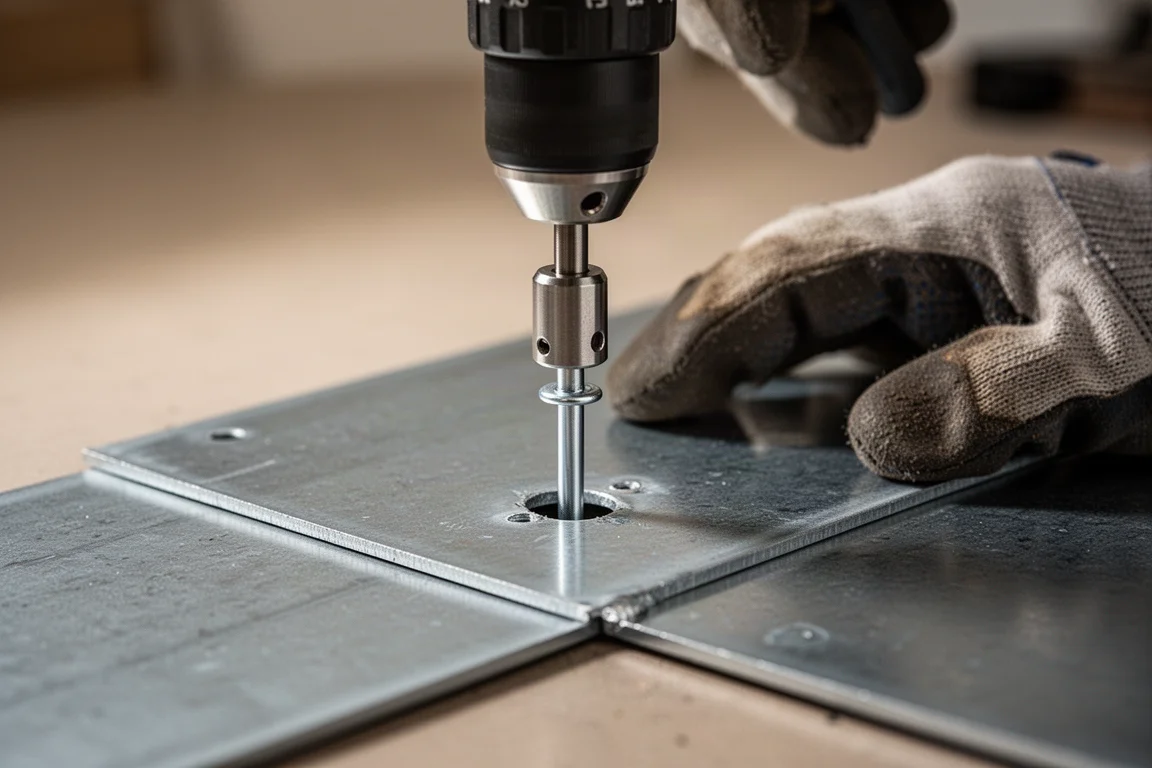
Out of everything used on the steel build, this cheap attachment impressed most. It has pulled every one of hundreds of rivets without missing a beat, with the motor doing all the work. If you plan to do any riveting at all, this is the one upgrade worth making before you start.
Buying Advice
If you are starting your first metal project, the sensible order is: a thin quality cutting disc for your grinder, a steel-cutting circular saw blade for straight cuts, PointTeQ-style drill bits plus a cheap step bit, and a drill-mounted rivet tool. That is a complete starter kit for well under £50, and it covers most small fabrications.
Add the nibbler if you need curved cuts in sheet metal, and consider the flux core welder when you want permanent, high-strength joints. The big Evolution mitre saw is excellent, but only justified once metalwork becomes a regular habit rather than an occasional project.
Conclusion
Metalwork is far more approachable than it looks. The lesson from building an entire steel structure is that technique and the right, often cheap, tool matter far more than a big budget. A handful of affordable accessories turned a nervous first-timer’s material into something straightforward to cut, drill, and join, and the same can apply to your first project.
Further reading
Related Reviews

Backpacking Gear
Building a 10 lb Base Weight: An Ultralight Backpacking Gear List
A practical walkthrough of the ultralight pieces behind a 10 lb base weight, from a 765 g pack and a roomy one-person tent to a full camp chair and a dependable water filter.

Road Bikes
10 New Road Bikes Worth Watching: Aero, Titanium, Steel and Endurance Standouts
A practical roundup of 10 new road bikes, from aero flagships chasing single-watt gains to titanium, steel and endurance platforms built for real roads.
Bikepacking Gear
11 Bikepacking Essentials for Long-Distance Cycling
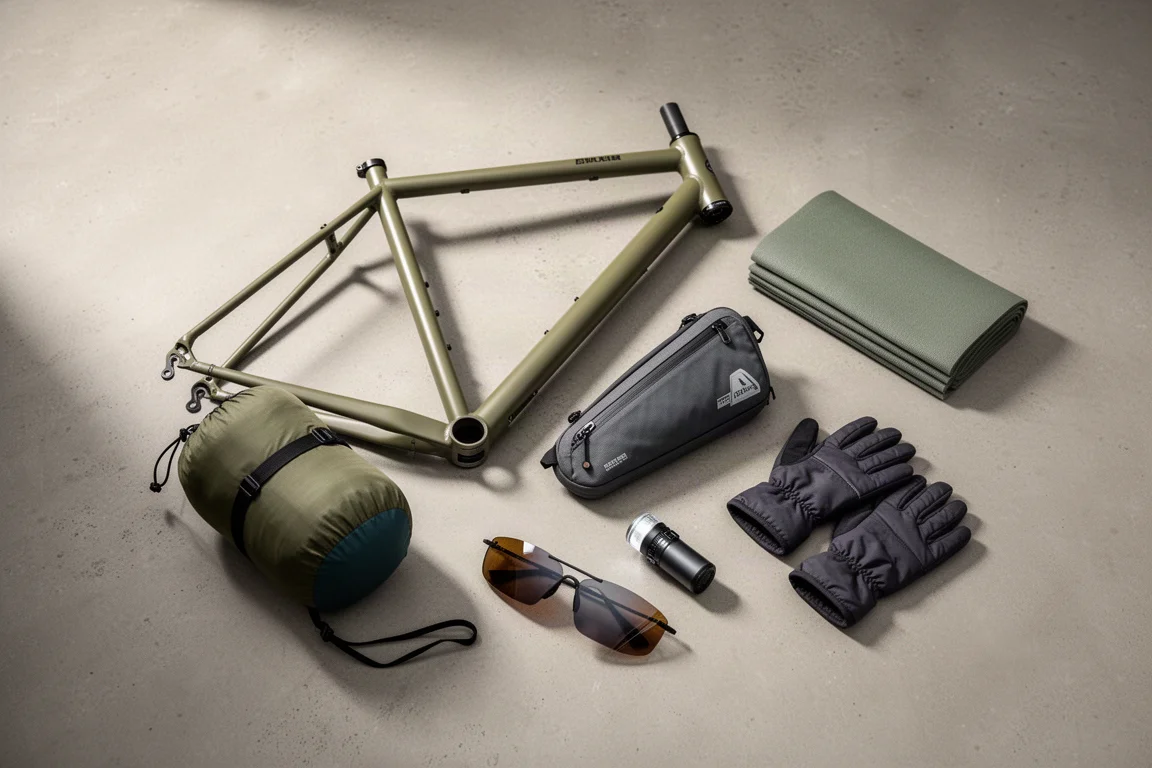
Eleven bikepacking essentials for long-distance cycling, from a steel gravel frame and a two-person tent to helmet lights, packable gloves, and a frame bag that puts weight in the right place.