Hi-Fi Speakers
Best Budget Hi-Fi Speakers 2026: Wharfedale Diamond 12.2i and Fyne Audio F500
Two compact standmount speakers under £500 a pair that show how much sound quality is available at the accessible end of hi-fi.
Introduction
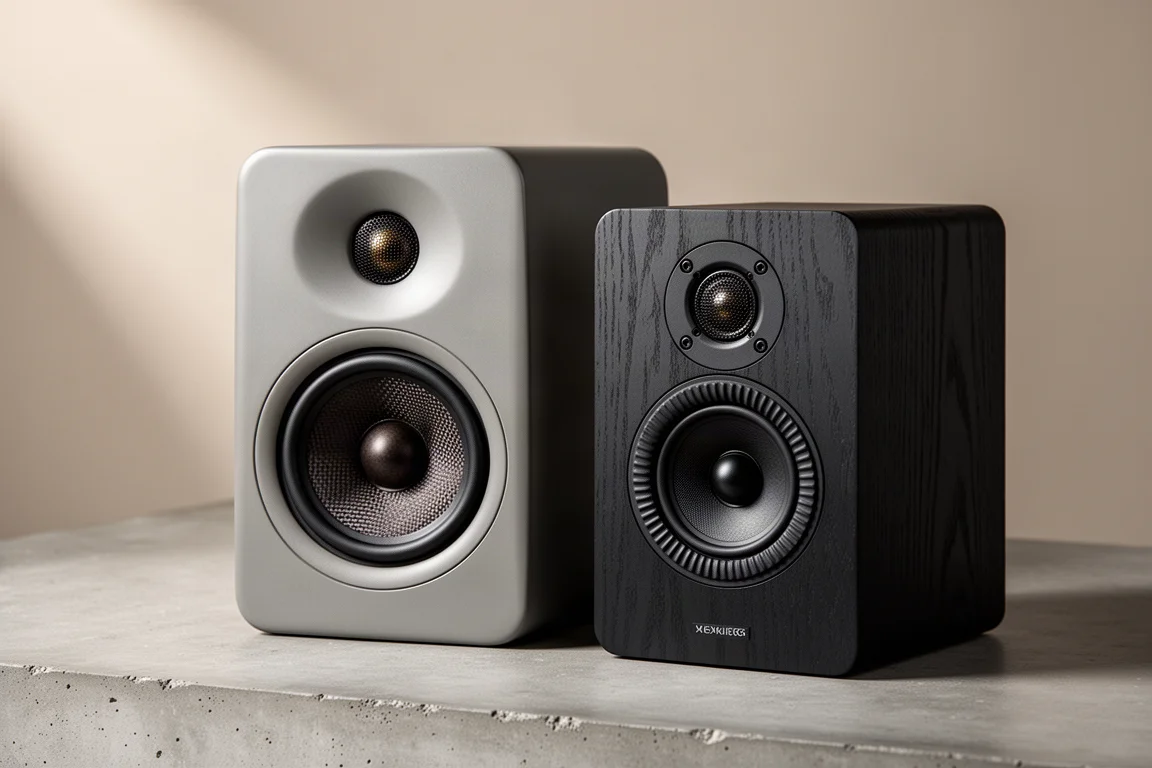
Great sound at home does not have to start with a four-figure outlay. Two compact standmount speakers make that point convincingly: the Wharfedale Diamond 12.2i at £299 per pair and the Fyne Audio F500 at £399 per pair. Both are small, both are easy to drive, and both are aimed at listeners building a first serious system, a desktop setup, or a second system in a smaller room.
They take very different routes to the same destination. One leans on a warm, punchy balance and a slightly larger cabinet. The other squeezes coaxial driver technology into an enclosure small enough to sit on a desk. This guide looks at what each one does well, where each one makes its compromises, and which type of listener each is likely to suit.
How These Two Standmounts Differ
The Diamond 12.2i is a conventional two-way design. Its 150 mm mid-woofer and 25 mm tweeter sit in a cabinet measuring 335 x 200 x 285 mm and weighing 8.2 kg. Wharfedale quotes 88 dB sensitivity into an 8 ohm load with a minimum of 4 ohms, and bass that rolls off at 50 Hz at the minus 3 dB point.
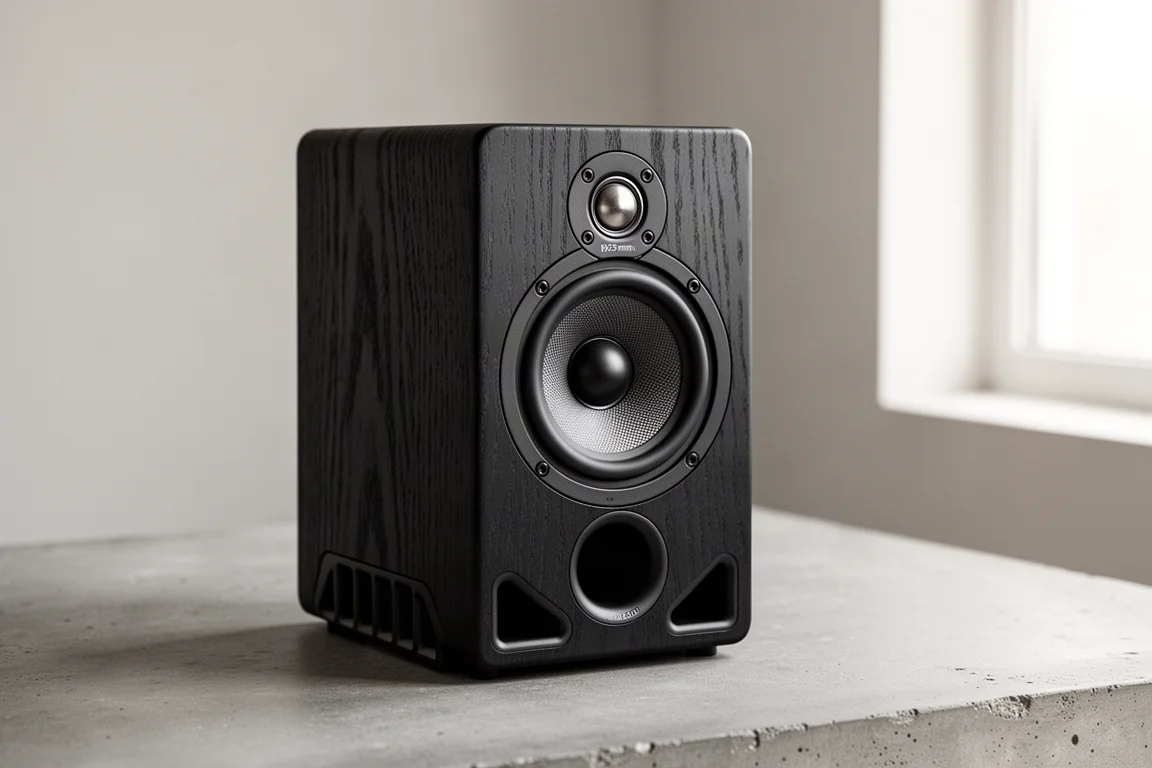
The F500 takes the opposite approach on almost every count. It is a coaxial design built around the IsoFlare driver, pairing a 125 mm multi-fibre bass and midrange cone with a 19 mm titanium dome compression tweeter mounted concentrically at its centre, with the crossover set at 1800 Hz. The cabinet measures just 270 x 174 x 228 mm and weighs 3.6 kg. Sensitivity is quoted at 88 dB into 8 ohms, and bass response is stated as reaching 55 Hz in room at the minus 6 dB point. It is also the plainer of the two: the finish is black ash vinyl only, with the budget directed at the driver and the cabinet loading rather than the veneer.
Because the two manufacturers quote their low-frequency figures differently, the numbers alone do not settle anything. What they do show is how much cabinet volume separates these two speakers, and how much that difference is likely to matter in a small room.
Wharfedale Diamond 12.2i: Warm Tonality, Dynamic Punch
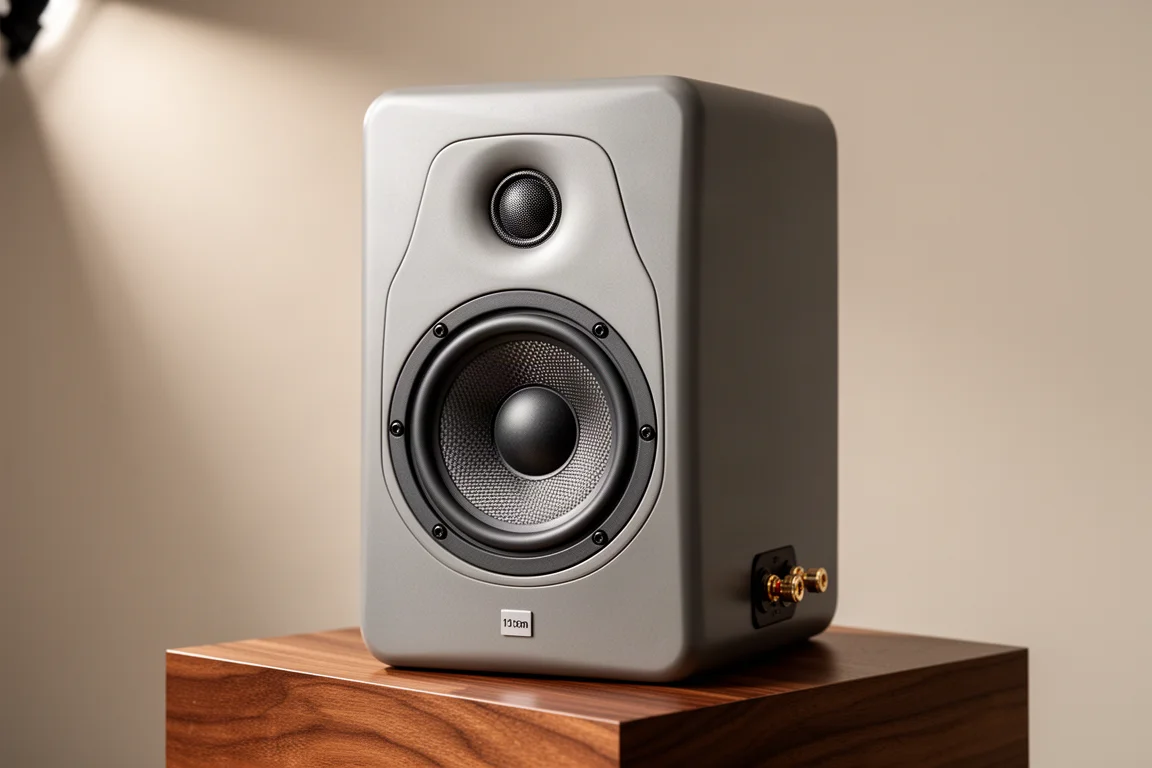
The Diamond series has recently had a light revision. Cabinets, drivers and crossovers carry over unchanged, while the finish options have been refreshed with an all-black version, a black front with a walnut wrap, and a satin stone grey that gives the speaker a more contemporary look.
The driver package is more sophisticated than the price suggests. The mid-woofer uses Wharfedale’s clarity cone, a blend of polypropylene and mica that stays light while adding stiffness and damping. Its motor system includes an aluminium compensation ring to flatten voice coil inductance, and the voice coil is wound on an epoxy glass fibre bobbin for better power handling. The tweeter is a 25 mm woven polyester dome with a high loss damping coating, set into a flat front plate with a minimal waveguide for wide dispersion. The Linkwitz-Riley crossover splits the signal at 2000 Hz and includes a pair of air core inductors and three polypropylene capacitors. There is a single set of binding posts on the rear, and the port design is new. Wharfedale’s design team used laser interferometry together with anechoic and in-room testing to improve airflow, which is said to tighten the bass response and midrange transients.
In use, the character sits unmistakably on the warm side of neutral, with extra emphasis in the bass and lower midrange. That gives a solid mid-bass punch and a dynamic delivery, and vocals and lead instruments come across faithfully. Treble is remarkably open and refined for the money. The trade-offs are the familiar ones at this price: midrange transient attack and fine detail retrieval fall a little short of the best in class, and while the soundstage extends slightly beyond the speakers, depth is limited and instrument placement can be a touch vague.
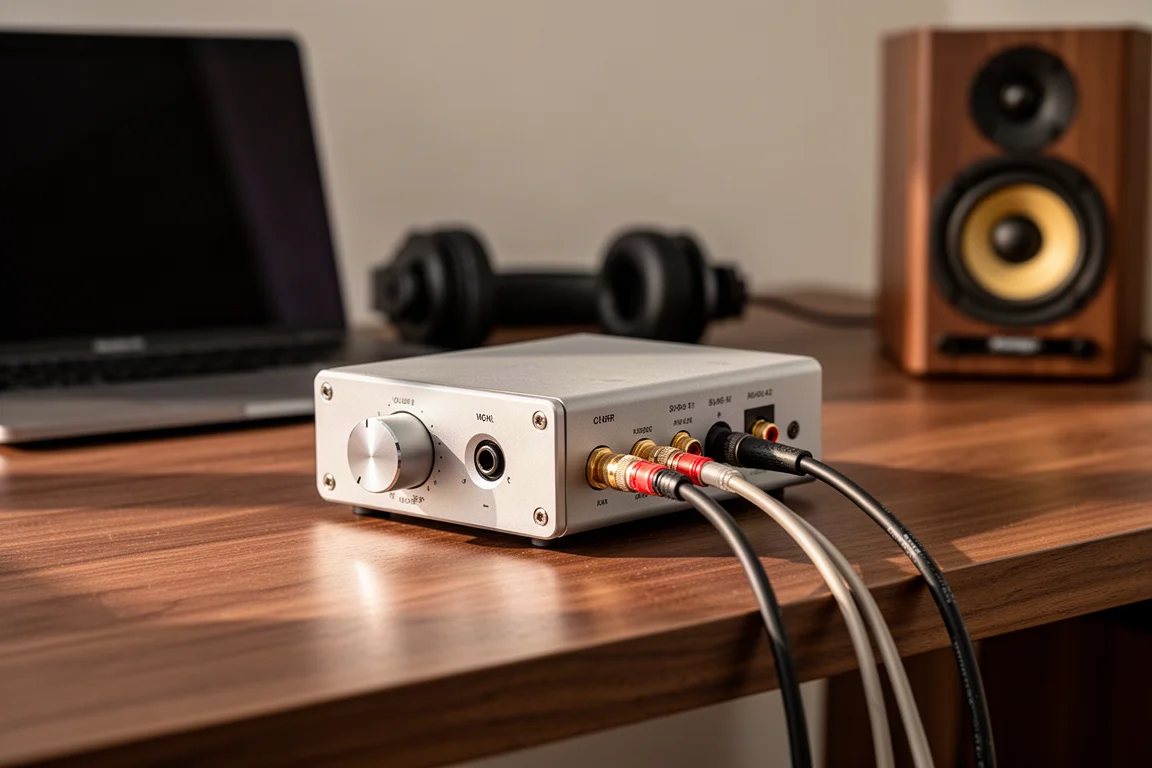
The upside is that the Diamond 12.2i is very easy to drive. In a small room at modest levels, a compact desktop amplifier is enough. A price-appropriate integrated amplifier such as the Cambridge Audio AXA35 at £350 adds expansiveness and ease, and a step up to something like the Audiolab 6000A Mk II at £699 extracts extra grip and clarity. These speakers also scale well with better electronics, although an amplifier costing several times the price of the speakers is clearly out of proportion.
Fyne Audio F500: Coaxial Precision in a Tiny Cabinet
Fyne Audio introduced the F500 in 2025 as the entry point to the brand, bringing its coaxial IsoFlare driver technology to a much lower price than before. At £399 per pair, something had to give, and that something is the finish: the F500 comes only in a black ash vinyl wrap. The cabinet itself is barely there, which is precisely the point.
The single driver carries a 125 mm multi-fibre cone with a fluted surround, and the 19 mm titanium dome compression tweeter sits at its centre so the two units behave as a point source. Placing a tweeter at the centre of a mid-woofer is more costly and more complex to get right, but done properly the cone acts as a waveguide for the tweeter and produces exceptional off-axis behaviour. The bass loading is equally deliberate: the port fires downwards and is vented on all four sides, which spreads energy evenly through 360 degrees and makes the speaker easier to place in a room. A BassTrax diffuser with a tractrix profile broadens the tuning frequency to reduce cone excursion, working like a muffler to cut the standing waves generated by the main internal port. There is a single set of binding posts on the rear.
Listening reveals a surprising amount of bass extension for a cabinet this size, particularly in small rooms and nearfield setups. The F500 is satisfying without a subwoofer, which is not something every speaker of this size can claim. Its mid-bass punch is clean and agile rather than weighty, and the midrange has the energy that efficient compression drivers are known for, making instruments sound immediate and lifelike. The trade-off is that the heart of the midrange sits further forward than on many speakers, as though vocals and lead instruments have moved closer to the listener. Bass output and dynamics remain limited by physics, and the midrange is lighter than the Diamond 12.2i’s. Brightness, though, is not an issue.
Where the F500 pulls clearly ahead is off-axis performance. The coaxial driver creates a very large central sweet spot, so several people sitting on a sofa all get good stereo imaging, which makes these speakers unusually well suited to film duty. The F500 also works happily with amplifiers that have modest current delivery: a compact desktop amplifier is ideal at low levels, while an integrated amplifier gives the soundstage and imaging room to show themselves.
Partnering Amplifiers and Placement for Both Speakers
Both speakers share the same headline electrical figures: 88 dB sensitivity into 8 ohms. Neither presents a difficult load, and neither needs a large amplifier to make music. In a small room or at a desk, a compact amplifier is enough as long as listening levels stay sensible. A price-appropriate integrated amplifier such as the Cambridge Audio AXA35 at £350 is a natural starting point for the Diamond 12.2i and gives the F500 room to demonstrate its staging and imaging, while the Audiolab 6000A Mk II at £699 adds clarity and control to both. The Diamond 12.2i responds particularly well to better amplification, and it can be partnered with far more expensive electronics without embarrassment, though the overall balance of a system is worth keeping in mind.
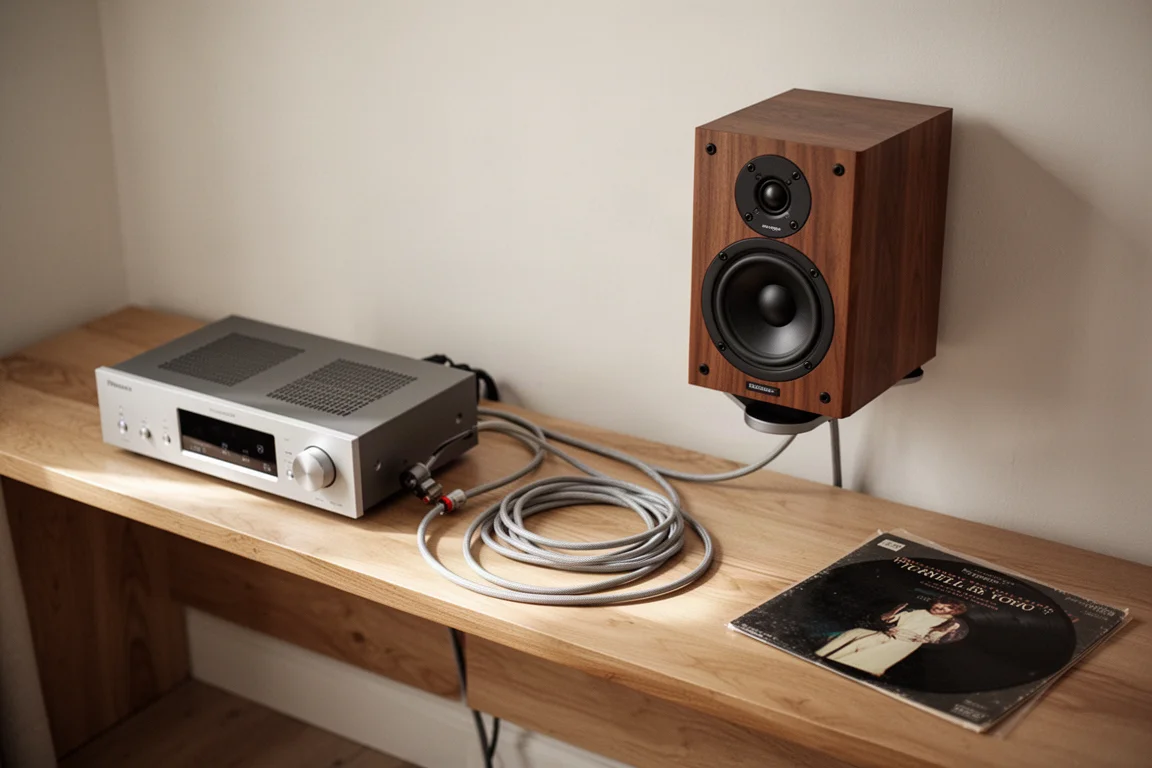
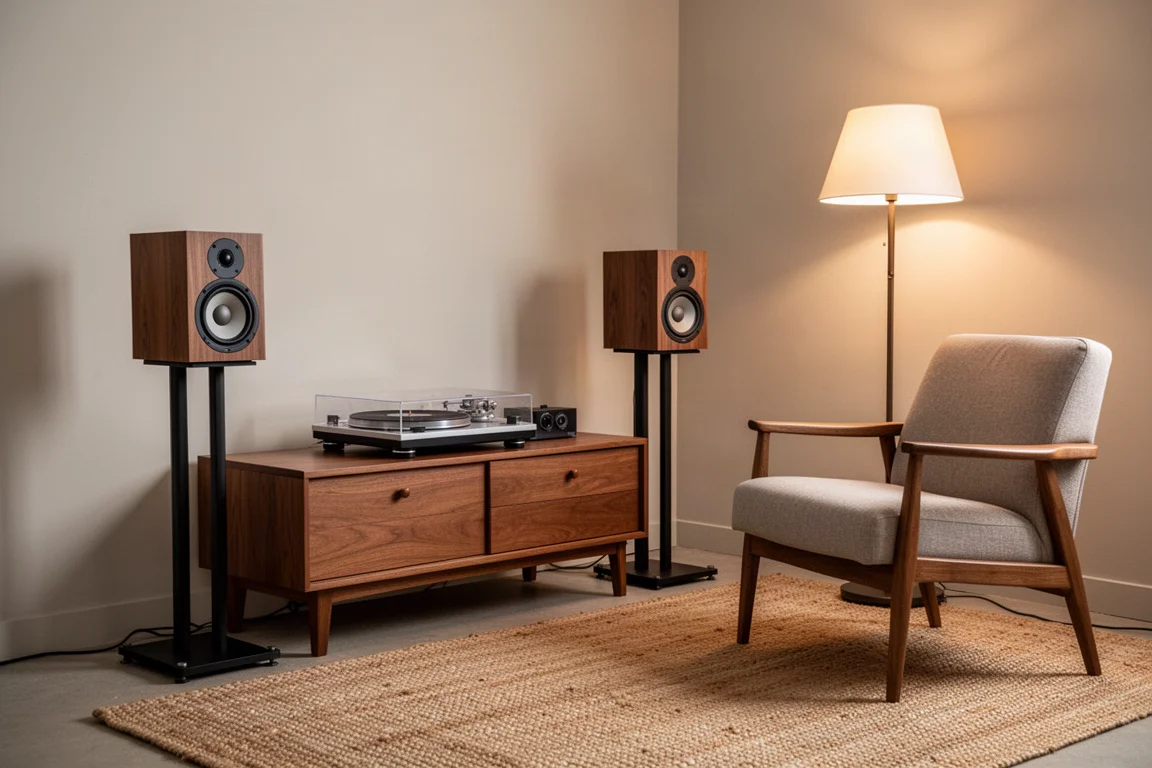
Placement is where the two designs diverge. The F500’s downward-firing port, vented on all four sides, makes it noticeably more flexible about sitting close to a wall or on a desk. The Diamond 12.2i, with its larger cabinet, benefits from a little more space and a pair of sturdy stands. Both are at their best in small rooms and nearfield positions, which is exactly what their designers had in mind.
Buying Advice
Choosing between them comes down to the room and the sound you prefer rather than to outright quality. The Wharfedale Diamond 12.2i suits a small to medium room where a warmer, fuller balance and a solid mid-bass punch are welcome, and where the system may eventually grow with a better amplifier. The Fyne Audio F500 suits a desk, a compact room, or a film and music setup where a wide sweet spot matters more than bass weight, and where the speakers need to sit close to a wall without fuss.
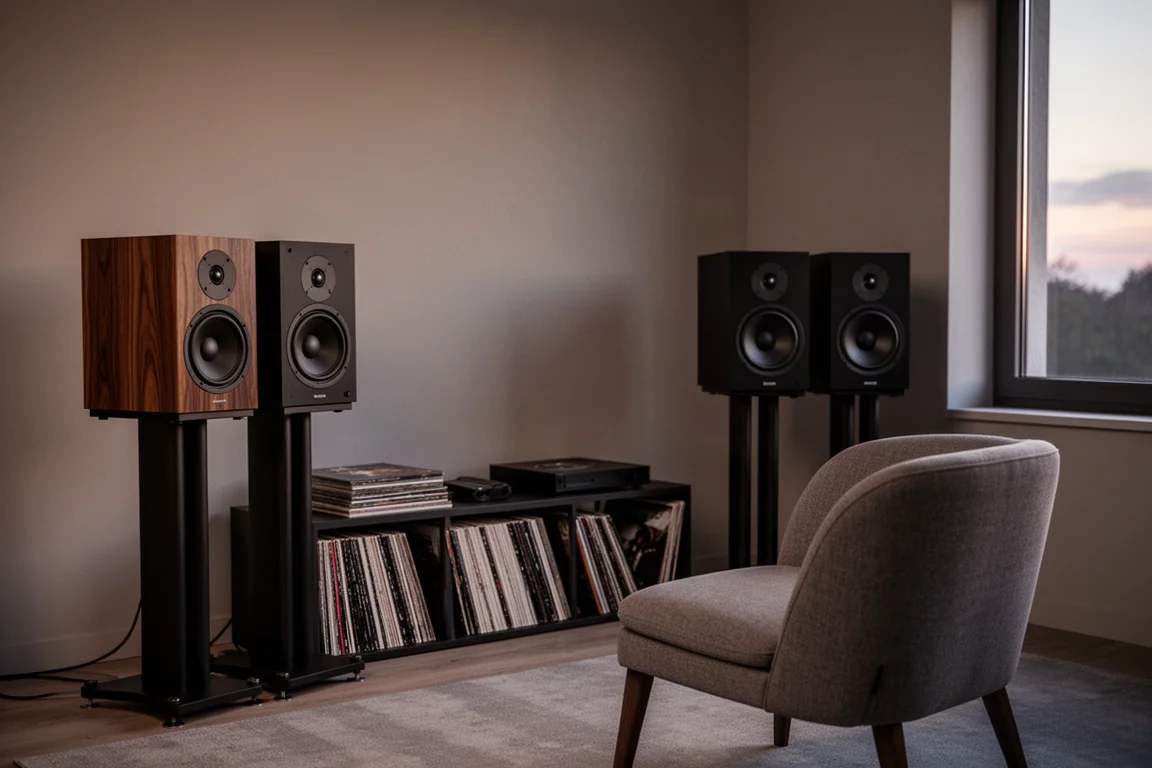
Two practical points are worth keeping in mind. First, quoted bass figures are measured differently by each brand, so neither the 50 Hz nor the 55 Hz figure should be treated as a direct comparison; a demonstration in your own room is the only reliable test. Second, both speakers are genuinely affordable by hi-fi standards, which means the money saved can go towards stands, cables, or a better amplifier. Neither needs exotic partnering equipment to sound good.
Conclusion
Both of these speakers show how much performance is available at the accessible end of the hi-fi market. The Wharfedale Diamond 12.2i delivers a warm, dynamic and easy-going sound with a level of driver engineering that belies its £299 price, while the Fyne Audio F500 brings coaxial point-source technology, a huge sweet spot and genuinely surprising bass for its size at £399. Neither is the last word in absolute resolution, and each has clear limits set by its cabinet and its price. Buy either with realistic expectations and a sensible amplifier, and both will reward the outlay for years.
Further reading
Related Reviews
Hi-Fi Speakers
1723 THX Tower vs 1528 Bookshelf: Which Speaker Fits Your Room?
Two speakers at roughly the same price, built very differently. How the 1723 THX tower and the 1528 bookshelf compare on construction, bass, power needs, and sound.
Hi-Fi Speakers
Acoustic Energy AE 300 Review: Deep Bass From a Compact Standmount
A two-way standmount with real wood veneer, surprising low-end weight, and a warm, easygoing character. Here is what to know before buying.
Hi-Fi Speakers
Acoustic Energy AE1 40th Anniversary Review: A Modern Take on a British Classic
A compact standmount that revives a 1980s favorite with all-new parts, a warm mid-centric balance, and a price of £1,499 per pair.