Sleeping Bags
Best Budget Down Sleeping Bags Under $300: Four Backpacking Options Compared
Four down sleeping bags under $300 compared on warmth, baffle design, hood comfort, packed size, and overall value for backpacking.
Introduction
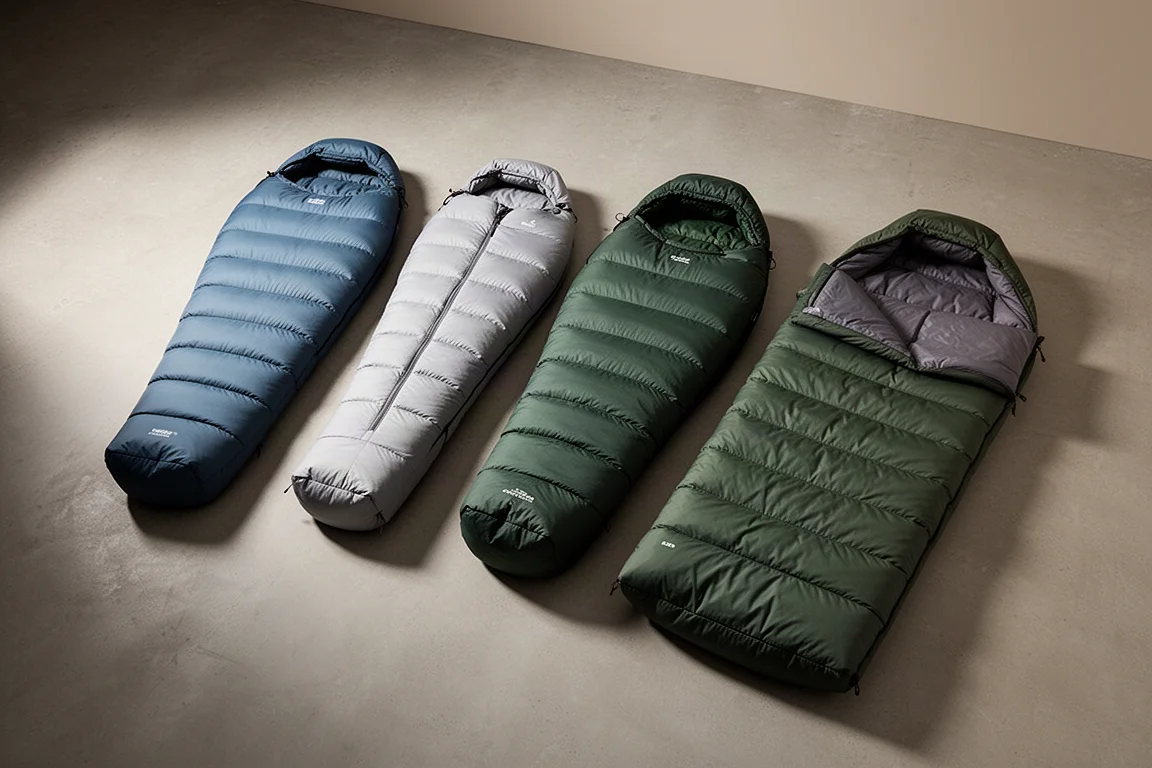
Down sleeping bags have a reputation for being expensive, but there are genuinely capable options well under $300. The four bags below all use down insulation, all come in below that threshold, and each takes a slightly different approach to warmth, comfort, and packed size. Two are traditional mummy bags with zippers, one is a customizable mummy built to order, and one is a quilt-based bed system that replaces the zipped shell with a sheet and attachment design. That spread matters, because the right answer depends less on specifications and more on how you sleep and where you camp.
How These Down Bags Were Evaluated
Fill power gets most of the attention, and it is easy to assume a higher number automatically means a better bag. In practice, fill power describes how much loft a given weight of down provides, not how well the finished bag is designed. A 650 fill bag with a well-shaped hood, a full draft collar, and a sensible baffle layout can sleep warmer and more comfortably than an 800 fill bag with generic construction.
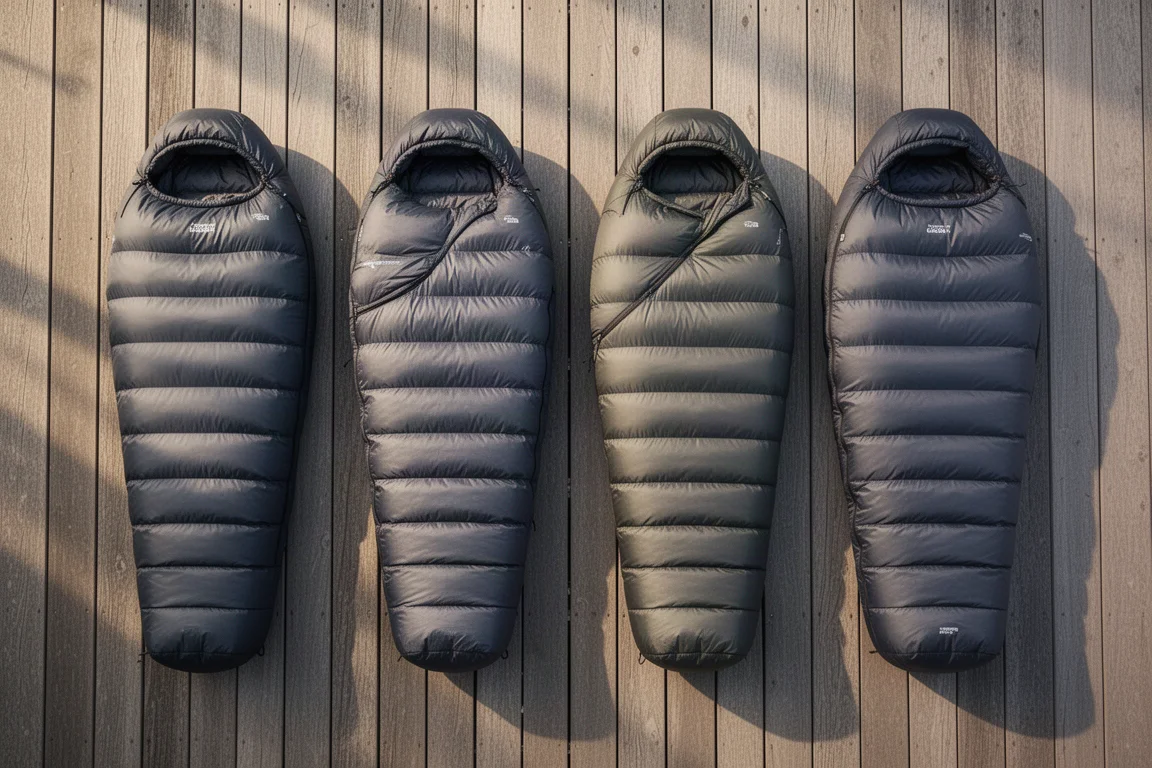
The bags here were judged on the things that actually affect a night of sleep: how the baffles control down movement, how the hood and neckline seal out drafts, how the zipper behaves, how much room the footbox offers, how small the bag compresses, and how the price compares to what you get. A bag that feels tight will sleep worse than a roomier one with the same rating, so interior space carries real weight in these assessments.
Best Overall Value: Cumulus Lightline 400
The Lightline 400 takes its name from the 400 g of down insulation inside it, and the bag can be customized with additional fill to suit your own temperature needs. Configured with 460 g of insulation, it carries a 20 degree limit rating, which places its sweet spot around freezing. The shell is Pertex Quantum, a fabric that helps move condensation away from the bag and feels soft and light against the skin. Fill power is 850, and the bag packs down smaller than anything else in this group.
The hood is a clear step up from a basic design, with dual adjustment so the opening around the face can stay loose while the neckline seals tight, and a draft collar backs it up. The zipper runs on the left side and works smoothly, though the draft tube sits close enough to the track that it can occasionally catch despite the anti-snag plow. A small mesh pocket inside keeps a phone, headlamp, or lip balm within easy reach. Baffles run horizontally across the whole bag, but they are staggered in width, which slows the down from sliding to the sides. The cut is roomy for a mummy and does not feel confining, and the footbox is shaped so the down does not press against your toes and create cold spots. As a three-season backpacking bag, it is a strong package for the money.
Best Low-Cost Pick: Kelty Cosmic Ultra Down 20
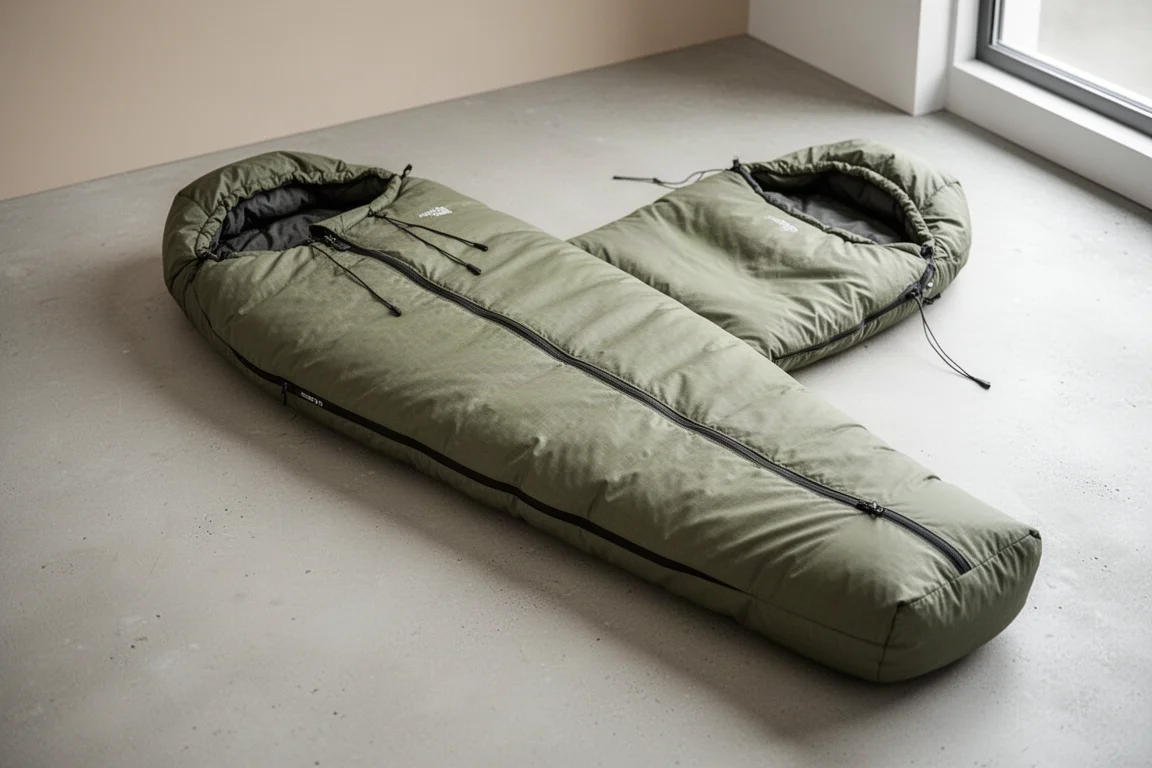
The Cosmic Ultra Down 20 is the least expensive bag here at $225 for the regular size, and it carries 800 fill power dry down. That combination can look like an easy win on paper, but fill power alone does not tell you how a bag will sleep. The design is straightforward: horizontal baffles run the full length of the bag, which means the down shifts more than it does in bags that mix horizontal and vertical baffle zones. The 20 denier nylon shell and lining feel smooth and comfortable against the skin, and the price is hard to argue with.
Two details hold it back. The hood has an awkward shape, and the cinch cord tends to sit right in front of the face once it is tightened. The bottom of the footbox uses synthetic insulation rather than down, which can feel lumpy and uneven compared with the rest of the bag. For a first backpacking bag, a spare for guests, or a bag you expect to use a few times a season, that trade-off is easy to accept. For anyone chasing warmth per gram, it is not the bag to pick.
Best for Cold Sleepers: Mountain Hardwear Bishop Pass 15
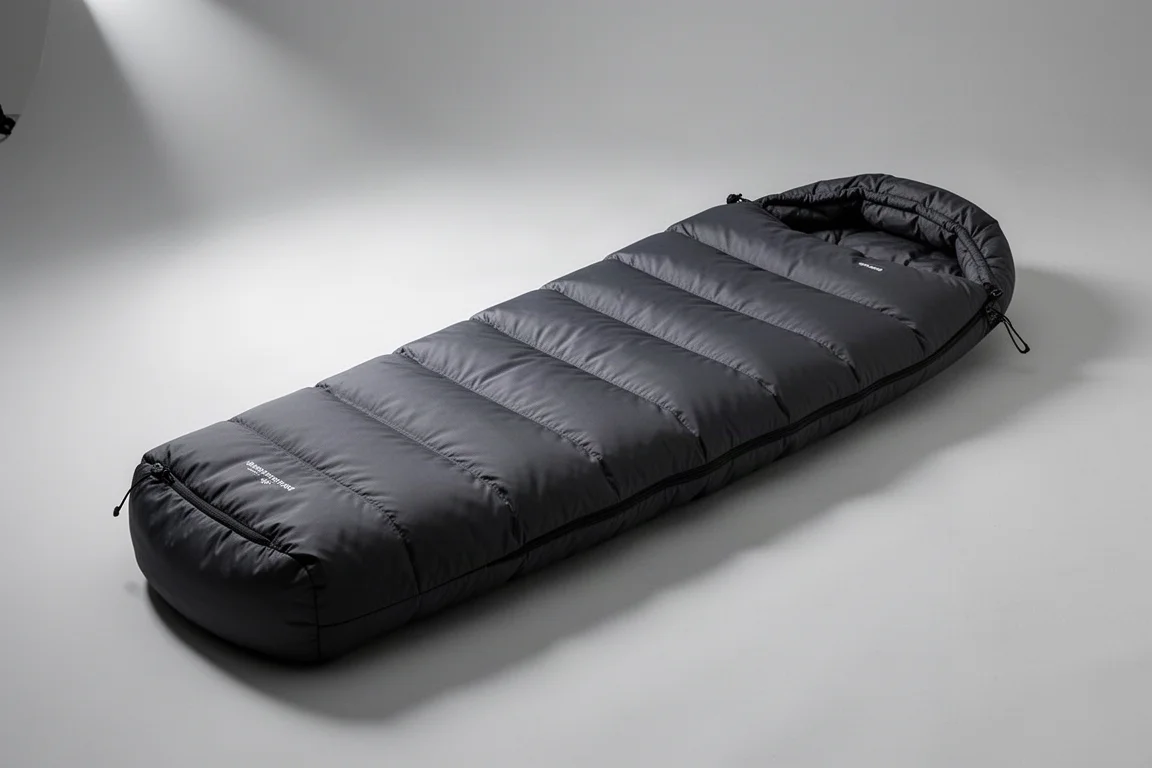
At $285, the Bishop Pass 15 delivers detail work that usually shows up on more expensive bags. Fill power is 650, which means more down is required to reach the temperature rating, and the payoff shows in the loft. The bag looks narrow in photographs and reads as potentially claustrophobic, but that impression does not survive actually getting inside it. The cut is close to a Western Mountaineering Ultralight in shape, at a significantly lower price.
The left-side zipper is backed by a large draft tube, bigger than the one on the Lightline, plus a ribbon along the zipper track that keeps the fabric from catching, and the same style of anti-snag plow. The hood is well shaped and its draft tube wraps the entire opening rather than stopping at the neckline, with a separate neckline draft collar underneath. Together they close the bag down and keep drafts out. Warmth holds up to freezing and into the high 20s, and the footbox is angled out and up to leave room for your feet to move.
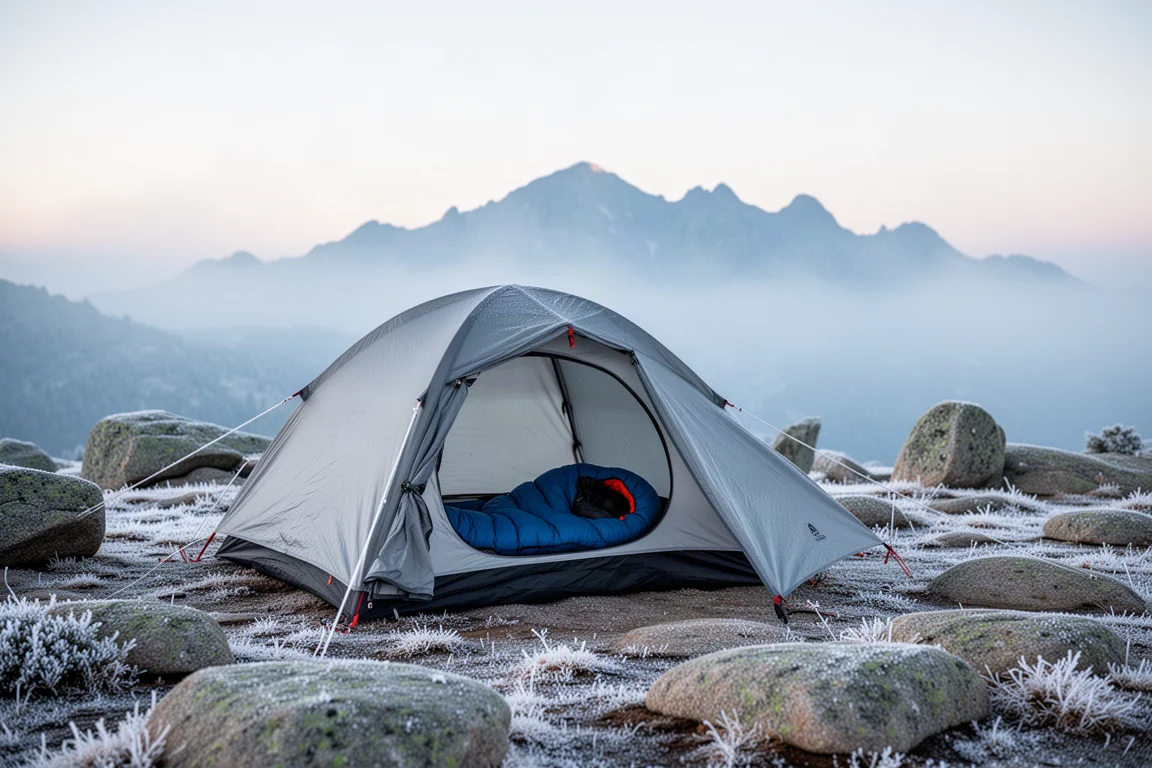
The compromise is weight and packed volume. At 650 fill power the bag carries more down, so it is heavier and does not compress as small as a higher fill power alternative. That extra bulk is the price of the loft and the warmth, and for cold sleepers it is usually a trade worth making.
Most Comfortable Design: ZenBivy Core Bed 25
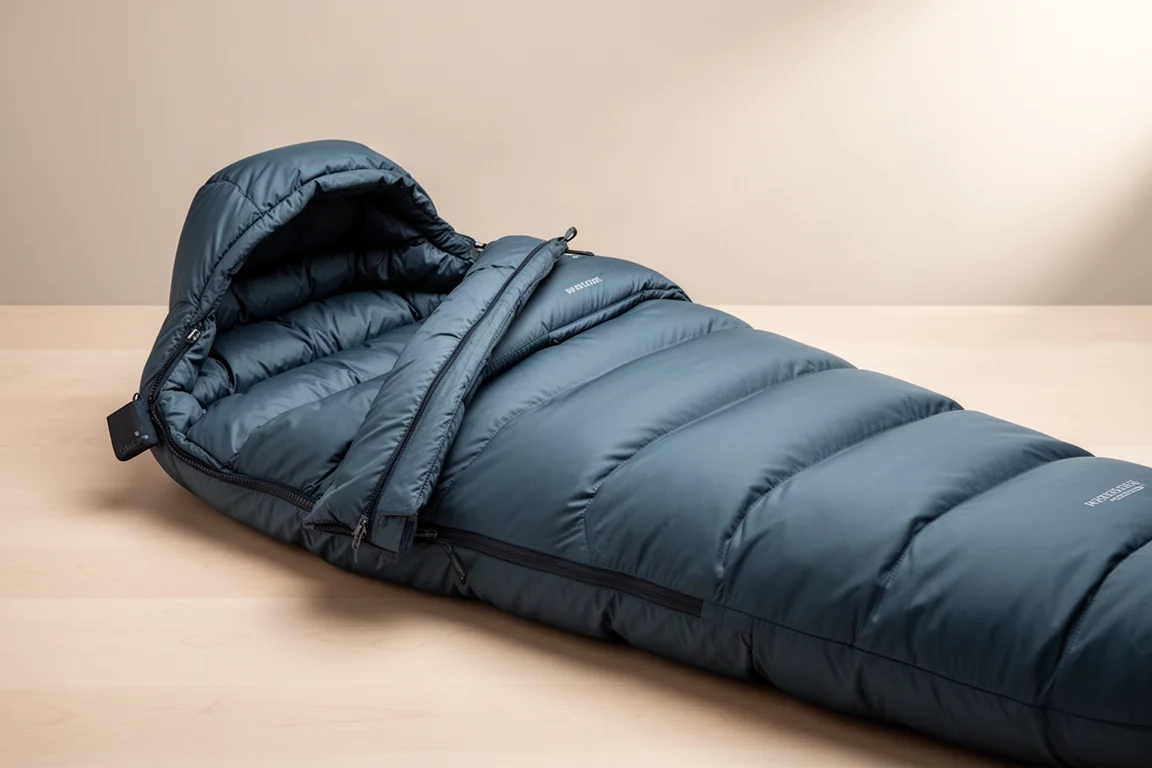
The Core Bed 25 is the newest design in this group, priced at $289, and it feels the least like a sleeping bag. It is technically a top quilt rather than a zipped bag, rated to 25 degrees with 650 fill power down. The quilt attaches to a sheet with a hook and loop closure system, which keeps the setup anchored to your sleeping pad and stops the quilt from sliding off you or opening up when you roll over. The result is closer to sleeping in a bed than in a bag.
The footbox uses overlapping panels, and a single hook around the knees lets you open the quilt wide like a blanket on warm nights or close it down for more warmth. Baffling is zoned: vertical through the torso, where a quilt is widest and down would otherwise slide, and horizontal through the footbox. The hood opening is large enough for a pillow, and because there is no hood wrapped around your face, it is far less confining than a mummy. Back, stomach, and side sleepers all have room, including space to wrap an arm around a pillow. A curved neckline system with a draft collar handles drafts. The hood uses synthetic insulation, and a sheet without insulation is available if you want to trim weight. The sheet is worth having, since it is what makes the attachment system work and what makes the bedlike feel possible.
Fill Power, Weight, and Packed Size
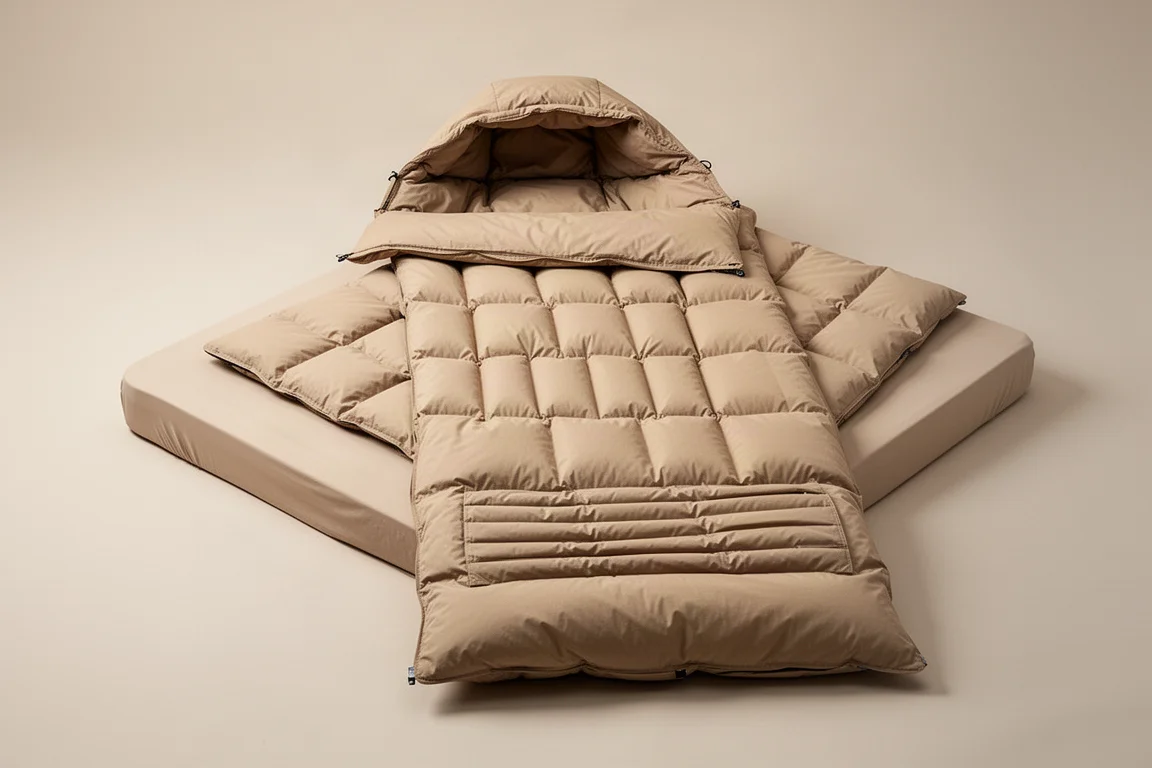
Fill power measures loft per unit of down weight, so an 850 fill bag needs less down to reach a given warmth than a 650 fill bag does. That is why the two 650 fill bags here, the Bishop Pass and the Core Bed, are heavier and bulkier than the 850 fill Lightline. It is not a quality ranking. The Bishop Pass shows what a 650 fill bag can do when the loft, hood, and draft protection are all well executed, and it sleeps warm near freezing despite the lower number. The Lightline shows the opposite benefit: less down by weight, a smaller stuff size, and an easier carry.
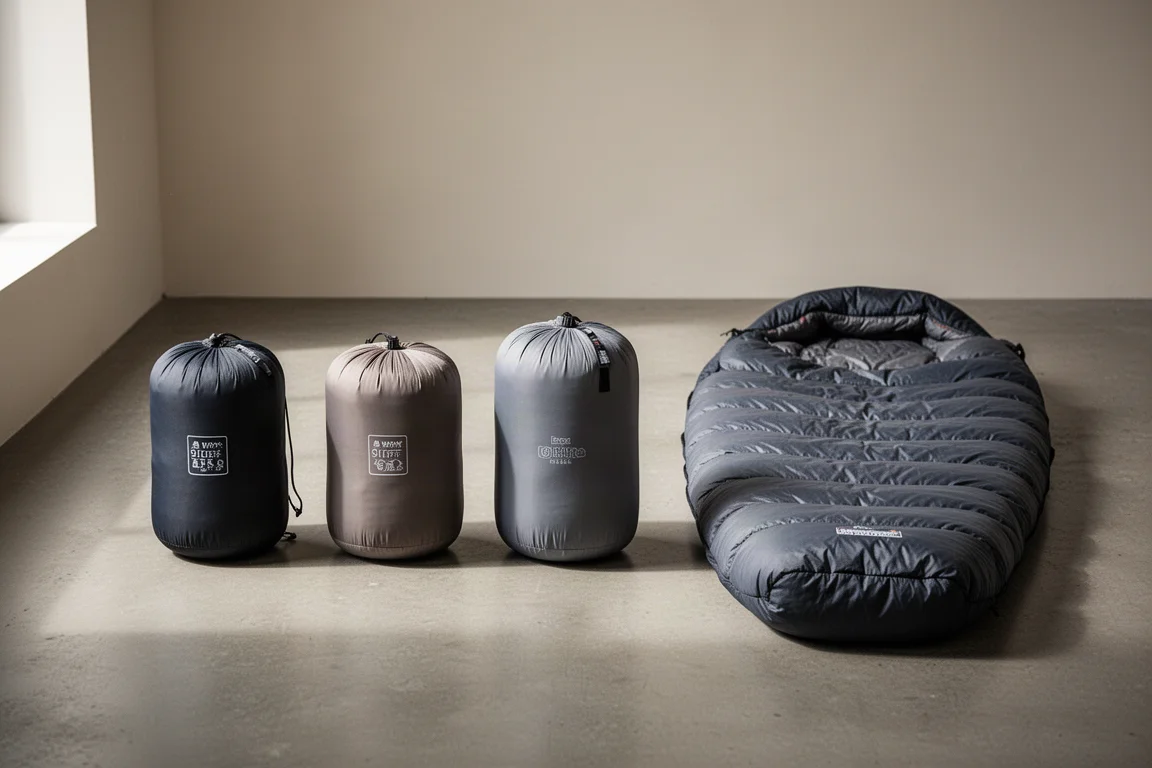
One practical note: the Lightline compresses smallest of the four, which matters on multi-day trips with a compact pack. The Kelty is the cheapest but also the simplest in construction. Neither fact changes how warm a bag sleeps, but both change how the bag fits into your kit and how much room it leaves for everything else.
Draft Management: Hoods, Collars, and Zippers
Warmth leaks out of a sleeping bag through the openings, not through the insulation. That makes the hood, neckline, and zipper the parts worth examining before you buy. The Bishop Pass handles this best, with a draft tube running the full circumference of the hood, a separate neckline collar, a large draft tube behind the zipper, and a ribbon along the zipper track that prevents the fabric from catching. The Lightline takes a similar approach with a dual-adjust hood and a neckline draft collar, and its staggered baffles help keep the down where you put it, though its draft tube occasionally catches on the zipper.
The Core Bed solves the same problem differently, using the sheet attachment and a curved neckline with a draft collar to hold the quilt in place rather than sealing a hood around the face. The Kelty is the least refined of the four here: the hood shape is awkward, the cinch cord sits in front of the face, and the horizontal baffles let down migrate more freely than the zoned or staggered layouts on the other bags.
Matching a Bag to Your Trip
Start with the temperatures you actually camp in. If most of your trips sit above freezing, the Lightline 400 configured for a 20 degree limit rating is the lightest and smallest option here, and the customization means you can tune the fill to your own comfort level. If you sleep cold and want margin at freezing, the Bishop Pass 15 delivers warmth and draft protection, and you accept a heavier, bulkier package in return. If you want the lowest possible entry price for occasional trips, the Cosmic Ultra Down 20 covers the basics with 800 fill down at $225. If comfort matters more than packed size, the Core Bed 25 lets you sleep in any position without a hood around your face, and it comes in at $289.
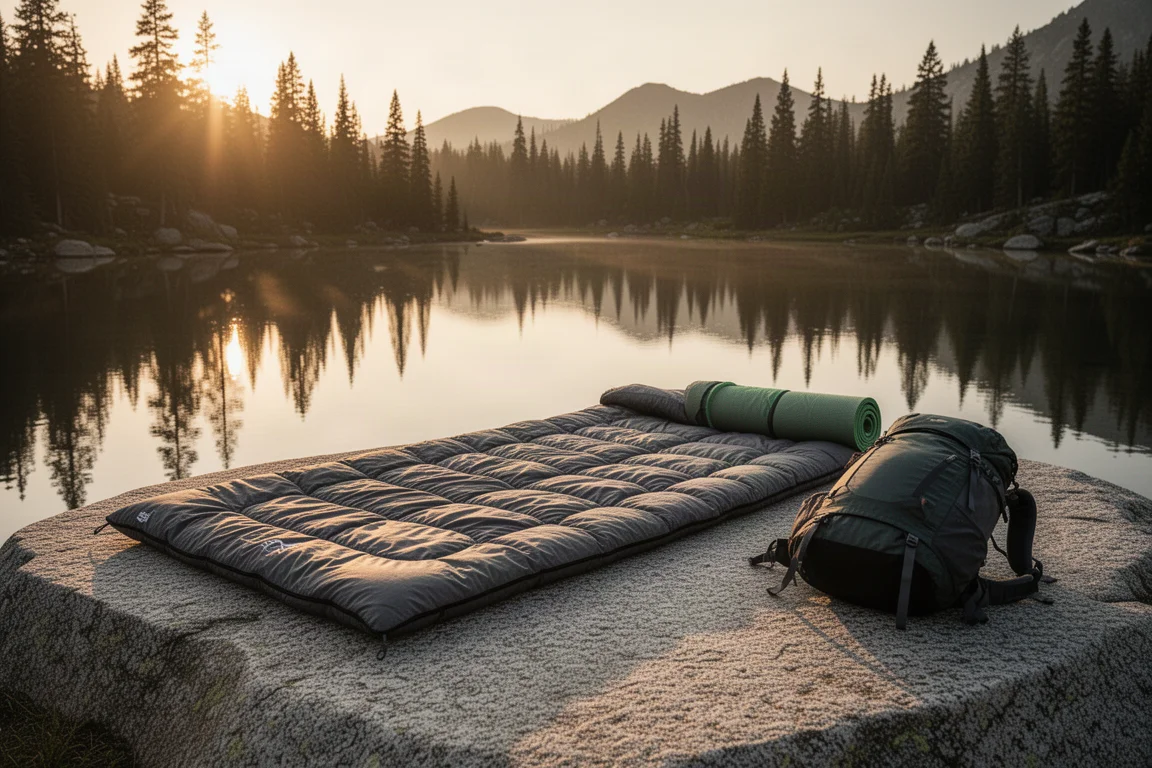
Two more things are worth weighing. A bag’s rating is a limit figure rather than a promise, so personal sleep temperature matters more than the number on the label. Fit is not a small detail either: a bag that feels tight will sleep worse than a roomier one rated the same, which is exactly why the Bishop Pass and the Core Bed are worth trying before ruling them out on paper.
Conclusion
All four of these bags come in under $300 and all four use down insulation, but they solve the same problem in different ways. The Cumulus Lightline 400 is the best value if you want low weight, a small packed size, and the option to customize insulation for your own temperature needs. The Mountain Hardwear Bishop Pass 15 is the pick for cold sleepers who want real warmth at freezing and well-executed draft protection. The ZenBivy Core Bed 25 is the most comfortable of the group for anyone who dislikes mummy hoods and wants to sleep in any position. The Kelty Cosmic Ultra Down 20 is the cheapest way into a down bag with 800 fill power, with the simplest construction of the four. Match the bag to the trips you actually take, and any of them will serve you well.
Further reading
Related Reviews
Sleeping Bags
Best Down Sleeping Bags Under $300: Four Backpacking Options Worth a Look
Four down sleeping bags that stay under $300, compared on fill power, baffle design, hood comfort, and packed size.
Sleeping Bags
Best Sleeping Bags and Sleep Systems: Five Premium Down Picks Compared
Five premium down sleeping bags and sleep systems compared on warmth, weight, construction, and value.
Sleeping Bags
Big Agnes Lost Ranger UL 3-in-1 Sleeping Bag System Review: One Bag, Three Setups
A practical look at the Big Agnes Lost Ranger UL 3-in-1 Sleeping Bag System, covering how the three configurations work, where it shines, and the details worth weighing before buying.