Hi-Fi Amplifiers
Best Budget British Integrated Amplifiers: Rega io, Cambridge Audio AXA35 and Audiolab 7000A
Three integrated amplifiers at the accessible end of British hi-fi, compared on sound, speaker matching and the features that actually matter.
Introduction
British hi-fi carries a distinct reputation, and when the conversation turns to the brands most closely associated with it, Rega is one of the first names to come up. That reputation was built on turntables, tonearms and phono stages, but Rega also builds amplifiers, and those have earned a solid following among listeners and industry professionals alike.
Three integrated amplifiers sit at the accessible end of that market: the Rega io, the Cambridge Audio AXA35 and the Audiolab 7000A. They occupy different points on the price ladder, they ask for different speakers, and each makes a different set of compromises.
Each is worth a serious look, but the right choice depends on your speakers, your room and whether you need anything beyond pure sound quality.
What to Look For in a Budget British Amplifier
At this end of the market, power output shapes almost everything else. The Rega io delivers 30 watts per channel into an 8 ohm load, which is plenty in a small room with easy-to-drive speakers and not much at all when you ask a speaker with a large impedance swing to produce deep bass at high volume. Speaker matching is therefore the single most important decision you will make.
Connectivity is the second consideration. The Rega io offers three inputs: one dedicated to a built-in moving magnet phono stage, and two conventional RCA line-level inputs. That covers a streamer, a DAC and a turntable. The Audiolab 7000A adds a DAC of its own plus HDMI eARC, which makes it far easier to integrate with a television.
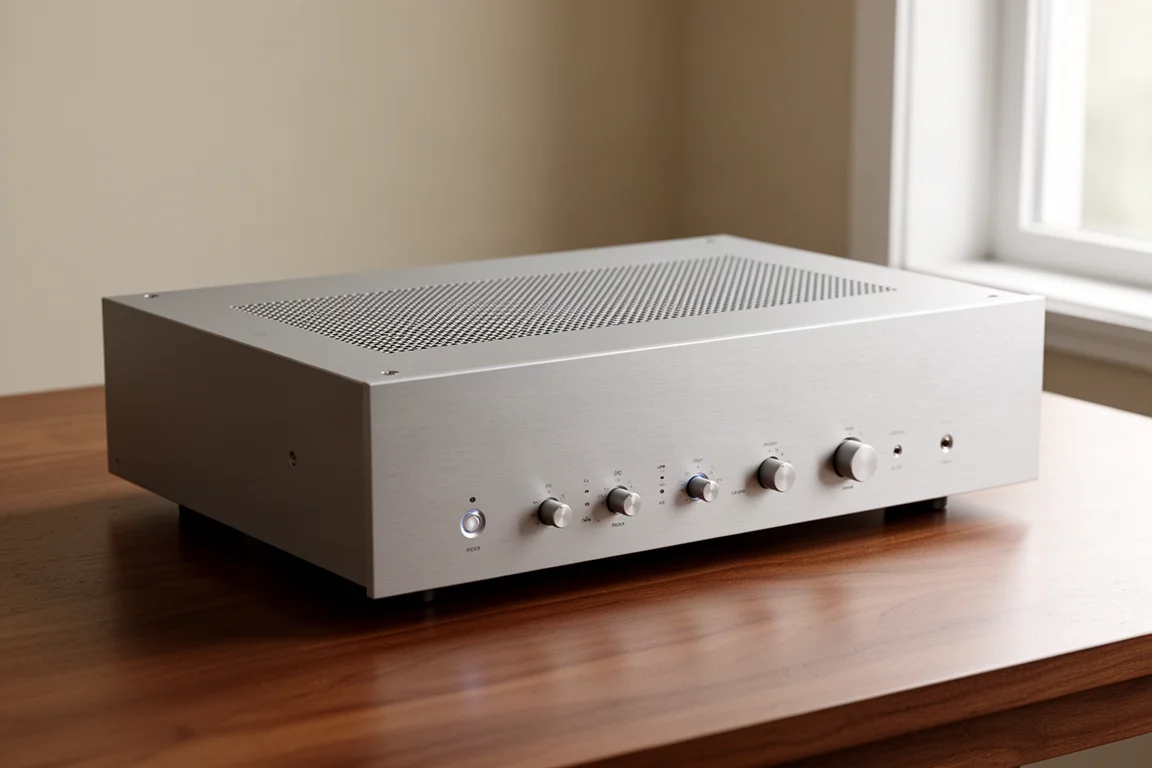
Physical size matters as well. The io measures 180 x 68 x 290 mm and weighs 2.9 kg, so it works as a genuine desktop solution as well as a shelf or rack component.
Best Overall Value: Rega io
The io is designed and built at Rega’s facility in Essex, England, and at £420 it may well be the least expensive amplifier you can buy that can make that claim.
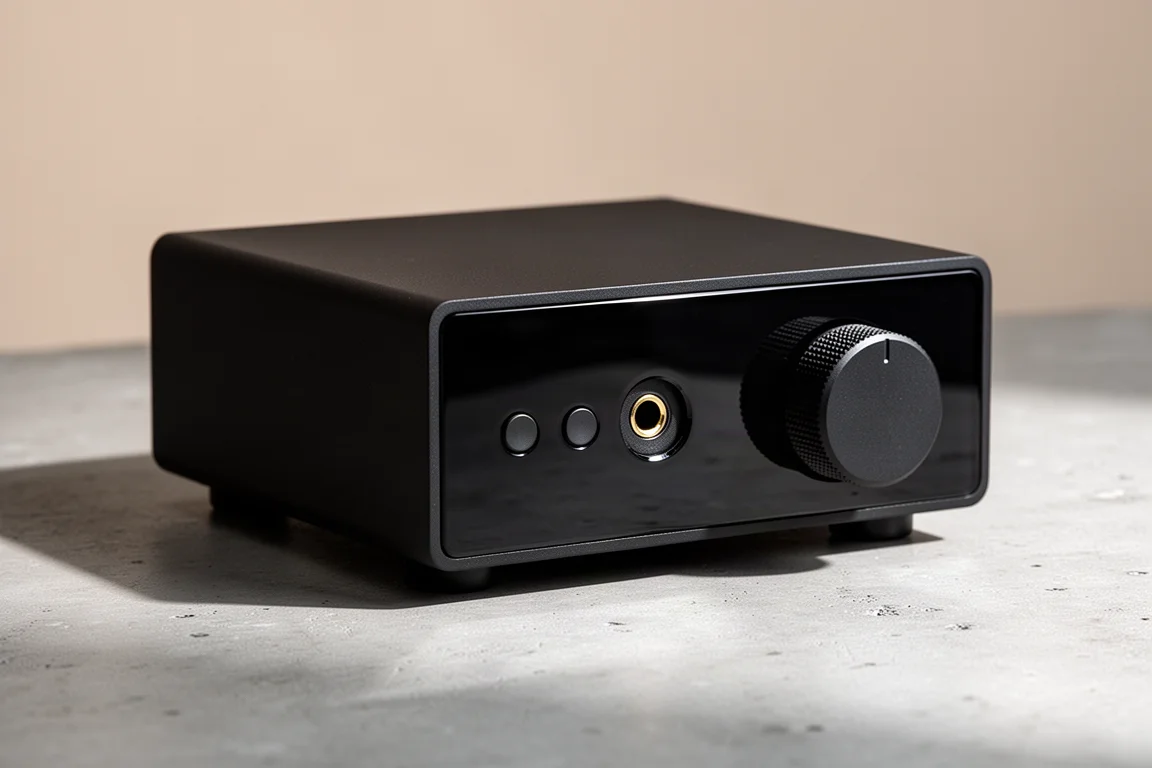
There is no fancy casework here. The chassis is matte black, the front fascia is gloss black plastic, and the controls are minimal: one button to power the unit and, on the other side of the headphone jack, a second to toggle between the three inputs. The volume control is a nicely weighted Alps unit, and the supplied remote can also be used with other Rega devices.
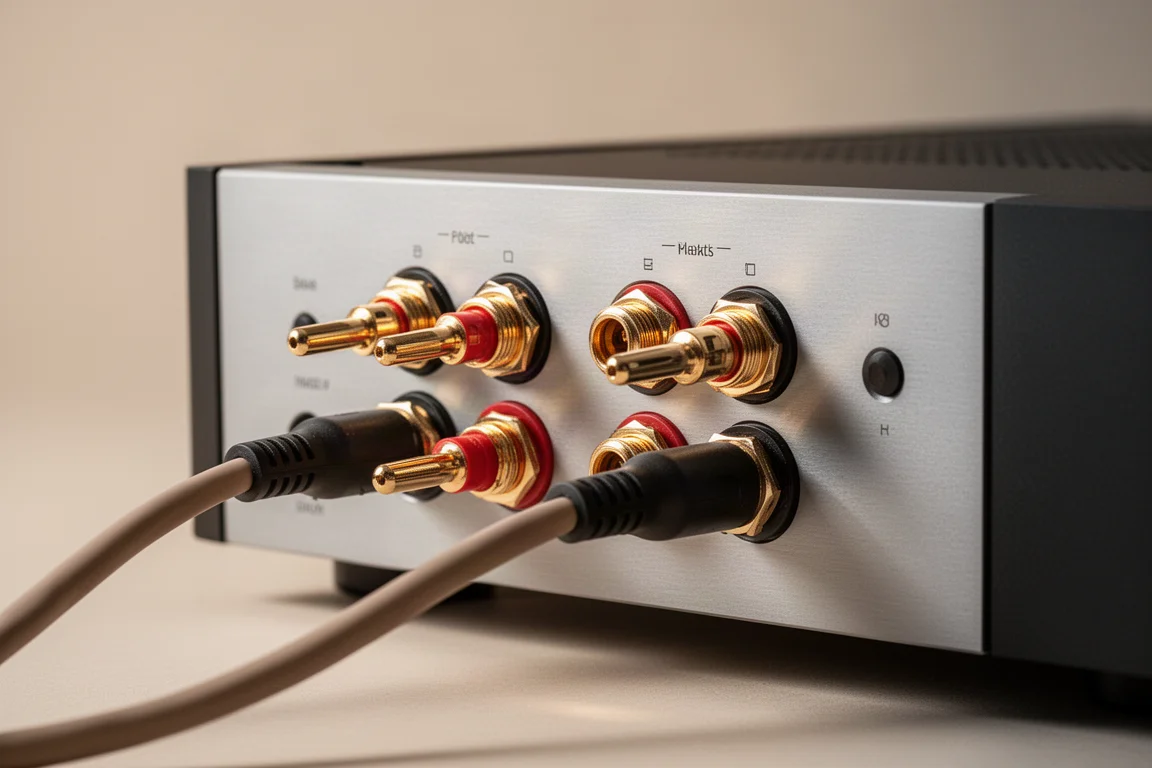
Inside, the io shares its phono stage and power amplifier circuits with the more expensive Brio-R, now discontinued. The output devices are Sanken SD03 Darlington transistors rather than the chip-based amplifier modules found in many class AB designs at this price. The power supply is scaled down from the Brio, with a smaller toroidal transformer and less filter capacitance. The speaker binding posts are of unusually good quality for the money, not the cheap plastic type.
In use, the io does not strip the body out of the mid-range and harmonics the way so many amplifiers do, at any price. If warmth is present in a recording, this amplifier will reveal it. It also places a little extra emphasis in the upper mid-range, which pulls lead instruments and vocals forward and gives the presentation a slightly forward, mid-centric character. Bass is tight, with only a little bleed into the mid-range, and treble is reproduced faithfully. With the right speakers there is genuine bass punch, and cymbal hits and harmonic structures arrive with class-leading air and decay. The background from which notes emerge and fall away is darker than an amplifier at this price has any right to achieve.
Timing and resolution are where the io separates itself from the rest of the field. It is the most engaging amplifier at this price, and the combination of body with pace, rhythm and timing is very likely the Rega house sound that listeners have long struggled to describe.
Speaker choice will decide how much of that you hear. The Q Acoustics 5020 at £599 is an excellent partner if you want a very well balanced delivery, since its full-sounding bass offsets the amplifier’s focus on the mid-range. The Monitor Audio Silver 100 at £799 shifts the tonal balance to the cooler side of the spectrum but delivers the most detail and the most accurate spatial presentation available anywhere near this price. Far more revealing mini monitors will expose the limits of the io’s resolution and refinement, yet a £420 amplifier does not disgrace itself in that company.
Best Budget Alternative: Cambridge Audio AXA35
The AXA35 retails at £349 and is regularly on sale for around £300, which makes it one of the great bargains in hi-fi.
Its character is very different from the Rega io. The AXA35 is a richer, much more laid-back sounding amplifier, with a wider and deeper soundstage and a fuller bass and mid-range. The io is narrower and more forward by comparison, with more detail and focus in the stereo image and a superior sense of timing.
Which one suits you comes down to what you value. If you want the most relaxed, room-filling presentation for the least money, the AXA35 is the obvious place to start. If you want the sharper, more incisive view of a recording, the io is the more engaging of the two. Both represent excellent performance in their market segment.
Best for Power and Features: Audiolab 7000A
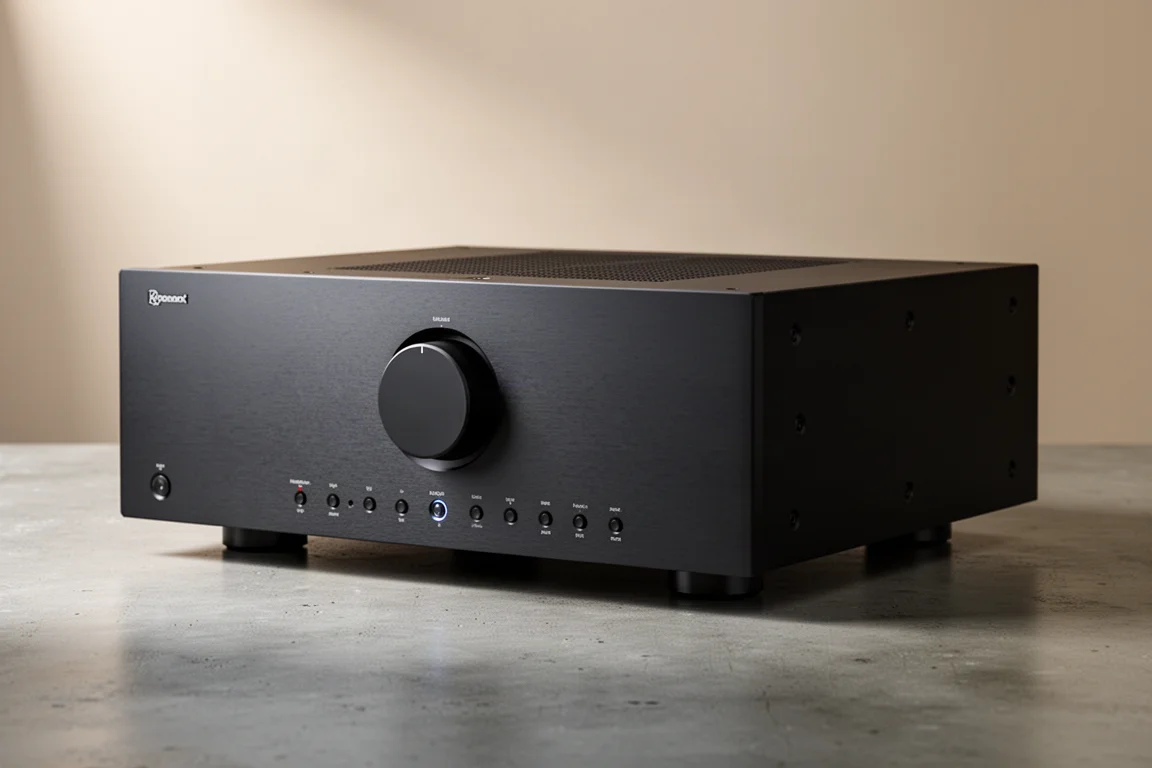
The Audiolab 7000A sits above the other two. It will drive more difficult speakers and it certainly has greater bass impact, but you are primarily paying for extra power and features rather than a fundamentally different level of sound quality.
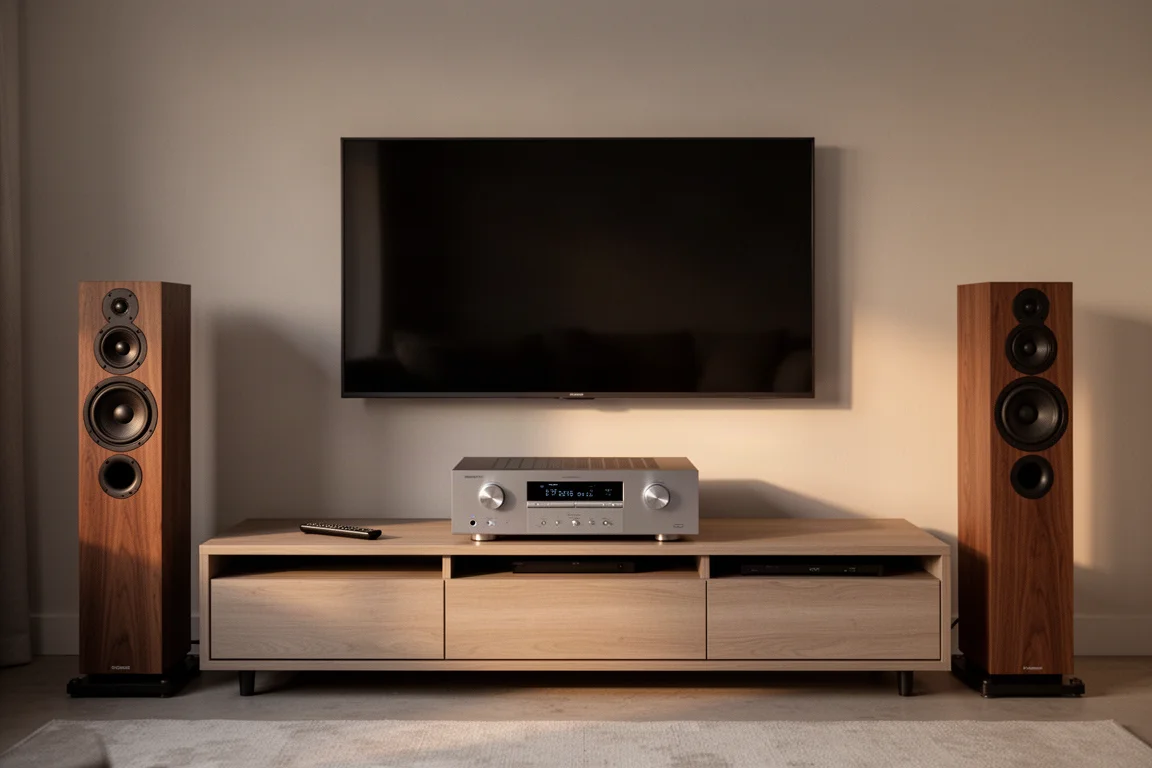
Those features are genuinely useful. The 7000A has a very good DAC built in and HDMI eARC, which allows seamless integration with a television.
In a direct A/B comparison the 7000A would likely show itself to be a little more resolving than the Rega io, but the gap is not big enough to feel like you are missing out by staying with the smaller amplifier. If you already own an amplifier like the io and you do not need extra grunt or connectivity, trading up to something like the 7000A is hard to justify. Saving until you can afford a genuinely larger step is the more sensible path.
Matching Speakers and Rooms to a Small Amplifier
Room size should drive the decision more than anything else.
In a small room, stick with mini monitors. Their limited bass extension means power is rarely an issue. If you want more bass extension, add a subwoofer rather than asking a small amplifier to deliver it.
In a medium-sized room, compact stand-mount speakers in the sub-£1,000 category are a good fit, because they tend not to be too demanding on amplification.
In a larger room, or if you listen at high levels, look for a class AB amplifier with more than 30 watts per channel. There are plenty of options, and it is worth being honest about how loud you actually listen before committing to a small amplifier.
High-sensitivity speakers with a rating in the mid-90s dB range would be an interesting match for an amplifier that favours sound quality over brute force, though that is a pairing to audition rather than assume.
Buying Advice Before You Choose
Judge each amplifier by what it is actually for.
If sound quality per pound is the priority and your speakers are easy to drive, the Rega io is the standout at £420. Its resolution, timing and tonal body are unusual at the price, and it is one of the strongest amplifiers available below £500.
If budget is the deciding factor, the AXA35 is the better value at £349, and often around £300 on sale. It gives you a richer, more relaxed sound and a wider soundstage for less money.
If you need to drive more demanding speakers, or you want a built-in DAC and HDMI eARC for television use, the Audiolab 7000A is the more capable amplifier. Be clear that the extra spend buys power and connectivity first, and a modest step in resolution second.
Whatever you choose, the pairing matters more than the badge. Any of these three amplifiers will sound ordinary with speakers it cannot control, and considerably better with speakers it can.
Conclusion
Three amplifiers, three sets of priorities. The Rega io is the most engaging of the three at its price, provided your speakers cooperate. The Cambridge Audio AXA35 is the bargain, with a warmer and more spacious presentation for less money. The Audiolab 7000A is the one to choose when you need power, a built-in DAC and television integration in a single box.
None of them is a compromise you will regret if you match it to the right room and the right speakers.
Further reading
Related Reviews
Hi-Fi Amplifiers
Accuphase E-280 Review: Entry-Level Accuphase With Flagship Attention to Detail
A close look at the Accuphase E-280 integrated amplifier, covering its champagne build, AAVA volume control, sound quality, and the speakers and sources that suit it best.
Hi-Fi Amplifiers
Advance Paris A10 Classic vs Yamaha A-S301: Two Integrated Amplifiers Compared
A practical comparison of a $350 integrated amplifier and a $2,500 reference model, covering the differences that matter and the ones that do not.
Hi-Fi Amplifiers
Affordable Chinese Amplifiers Worth Buying: Five Budget Hi-Fi Amps Compared
A practical look at five affordable amplifiers, what each one does well, and the trade-offs to weigh before you buy.