Bookshelf Speakers
Best Budget Bookshelf Speakers Under $600: Nine Passive Picks for Every Room
Nine passive bookshelf speakers under $600 MSRP, sorted by sound character, amplifier needs, and the room each one suits best.
Introduction
A genuinely good sounding system does not have to cost four figures. Every speaker in this roundup is passive, and every one carries a manufacturer MSRP under $600, with several of them discounted regularly through the year. That keeps the entry point low without steering you toward powered desktop boxes with built-in amplifiers and wireless radios.
The nine models below cover a wide range of characters. Some are warm and forgiving, some are bright and energetic, and some aim for strict neutrality. Each one is also better suited to certain rooms than others, and that match matters far more than any single figure on a specification sheet.
How to Choose a Passive Bookshelf Speaker Under $600
The most useful way to sort speakers at this price is by sound character rather than by driver size or published frequency response. Three broad flavors show up again and again. Warm speakers round off harsh edges and make long listening sessions easy. Exciting, V-shaped speakers push bass and treble forward for a livelier, more dramatic presentation. Neutral speakers aim for balance across the range and tend to reveal more about the recording itself.
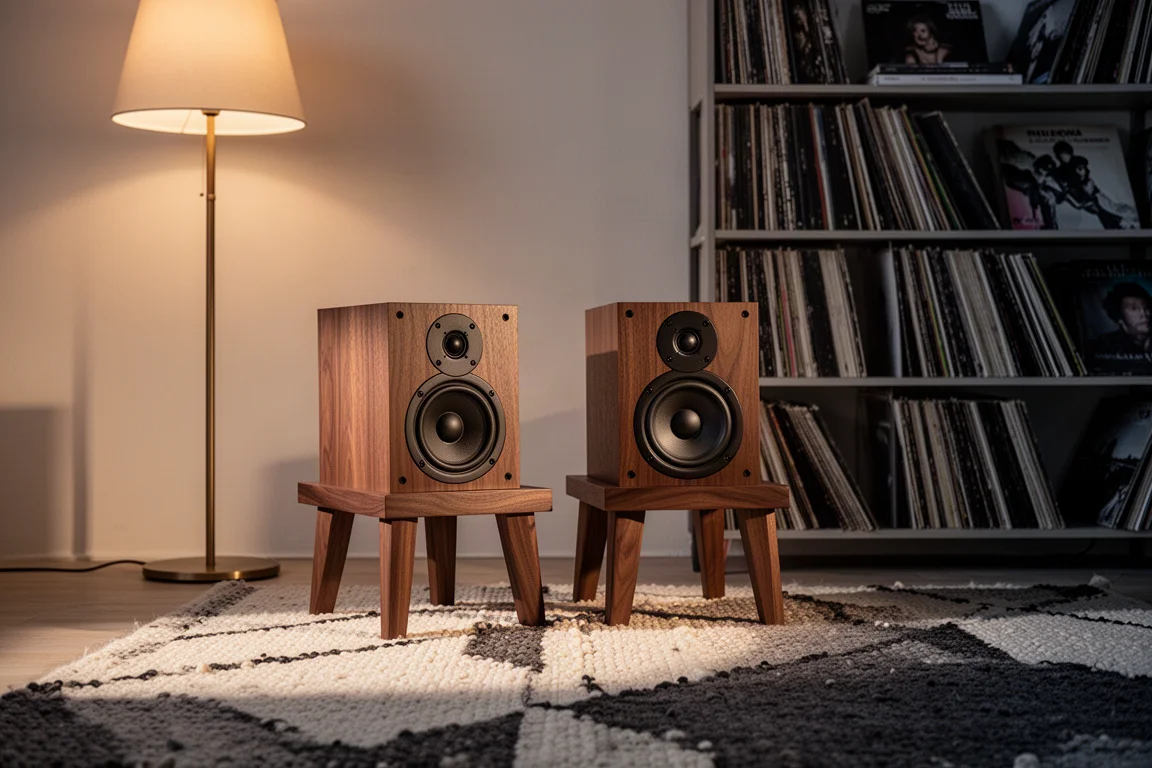
Room size and amplifier power matter just as much. Small cabinets with modest woofers will not fill a large open space, and low-sensitivity designs ask more of an amplifier. Placement is the other half of the equation. Many compact speakers benefit from sitting closer to a wall to reinforce their low end, and front-ported cabinets are easier to place on a desk or shelf because they do not need clearance behind them. A high-pass filter paired with a subwoofer can also let a small speaker play louder in a bigger room without straining.
Because all nine speakers here are passive, you will need a stereo amplifier or receiver to drive them. Budget for that alongside the speakers, and match the amplifier to the speaker’s sensitivity and to the size of the room.
Polk XT20: A Fun, Bass-Forward Garage Speaker
The XT20 sits at a $250 MSRP and goes on sale often. It pairs a 6.5-inch woofer with a 1-inch soft dome tweeter and claims a frequency response of 38 Hz to 40,000 Hz. Polk also offers the smaller XT15, but the XT20 is the better sounding of the two and the one worth choosing.
Its character is unmistakably V-shaped. The bass is boosted, the highs are sparkly, and the midrange sits back in the mix. Low frequencies are generous but loose, and the top end reads more as an impression of a cymbal than a clean reproduction of one. None of that stops it from being genuinely entertaining, especially with louder, bass-heavy material.
Build quality is basic, and the vinyl wrap on the cabinet can start to lift if the speaker is moved around frequently, so it is worth choosing a spot and leaving it there. In practice that makes the XT20 a natural fit for a garage, a workshop, or a second system where fun matters more than refinement.
Polk R100: The Refined Sibling
The R100 shares Polk’s family DNA but takes a very different approach. It uses a 1-inch ring radiator tweeter carried down from the brand’s higher-end models, and the result is a far more neutral and refined presentation than the XT20 offers. Midrange detail is genuinely audible here, which lets vocals and acoustic instruments sit properly in the mix.
The trade-off sits at the bottom of the range. There is noticeably less low-end output than the XT20 delivers, but what is there is accurate rather than exaggerated. The top end can lean slightly icy on brighter recordings, so it rewards a warmer amplifier or a softer room.
This is a living-room speaker. It is not the right choice for a workbench soundtrack, but it is a strong option for anyone who wants a balanced, unfatiguing presentation in a main listening space.
ELAC Debut 3.0: Warmth That Forgives Rough Recordings
The Debut 3.0 line combines a 1-inch aluminum dome tweeter with a 6.5-inch or 5-inch woofer depending on the model, at an MSRP of $500 or $400. Published frequency response starts at 42 Hz and runs up to 38,000 Hz, and sensitivity is rated at 87 dB, which makes these speakers noticeably easier to drive than earlier generations of the same line.
The sound is warm, full, and bassy without turning sloppy. Poorly recorded material loses its harsh edges, which makes this a forgiving speaker for anyone with a large collection of live recordings or rough mixes. It stays easy to listen to for hours at a time.
The flip side is top-end detail. Listeners who want crisp treble extension, or who already have high-frequency hearing loss, will find the Debut 3.0 a little soft. For everyone else it works beautifully in a living room or a library.
Emotiva XB2: The Speaker That Does Everything
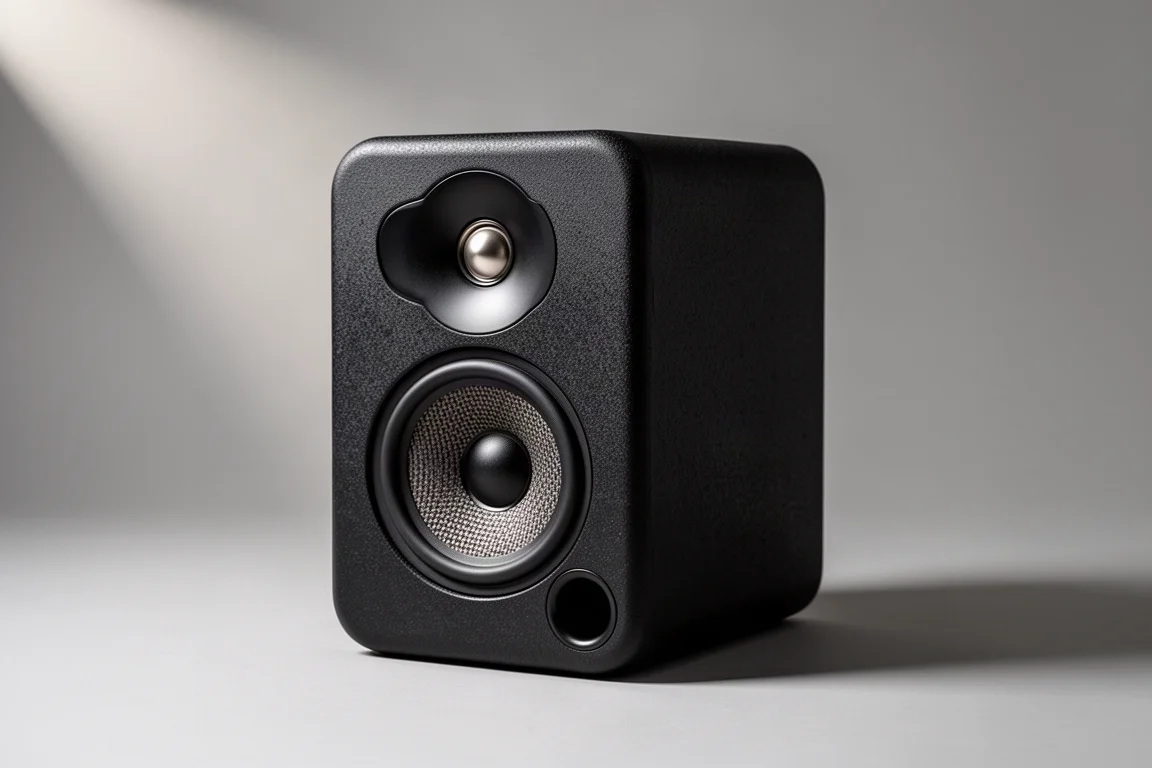
At a $550 MSRP, the XB2 is the most expensive model here, though Emotiva runs 20 percent off sales regularly and offers a military discount. It uses a 6.5-inch woven fiber cone woofer and a 1-inch AMT folded ribbon tweeter, and the combination is dynamic, well balanced, and remarkably revealing.
That transparency is the main appeal and also the main warning. Hearing extra detail in familiar recordings is exactly what makes this speaker addictive, but poor recordings will not be flattered. Anyone who prefers a forgiving sound should look at the ELAC option instead.
Versatility is the other strength. The XB2 is compact enough to sit on or beside a desk, yet it also works well in a living room, an office, or a garage. A smaller XB1 exists, but the XB2 is not oversized for a desktop. The cabinet comes in black.
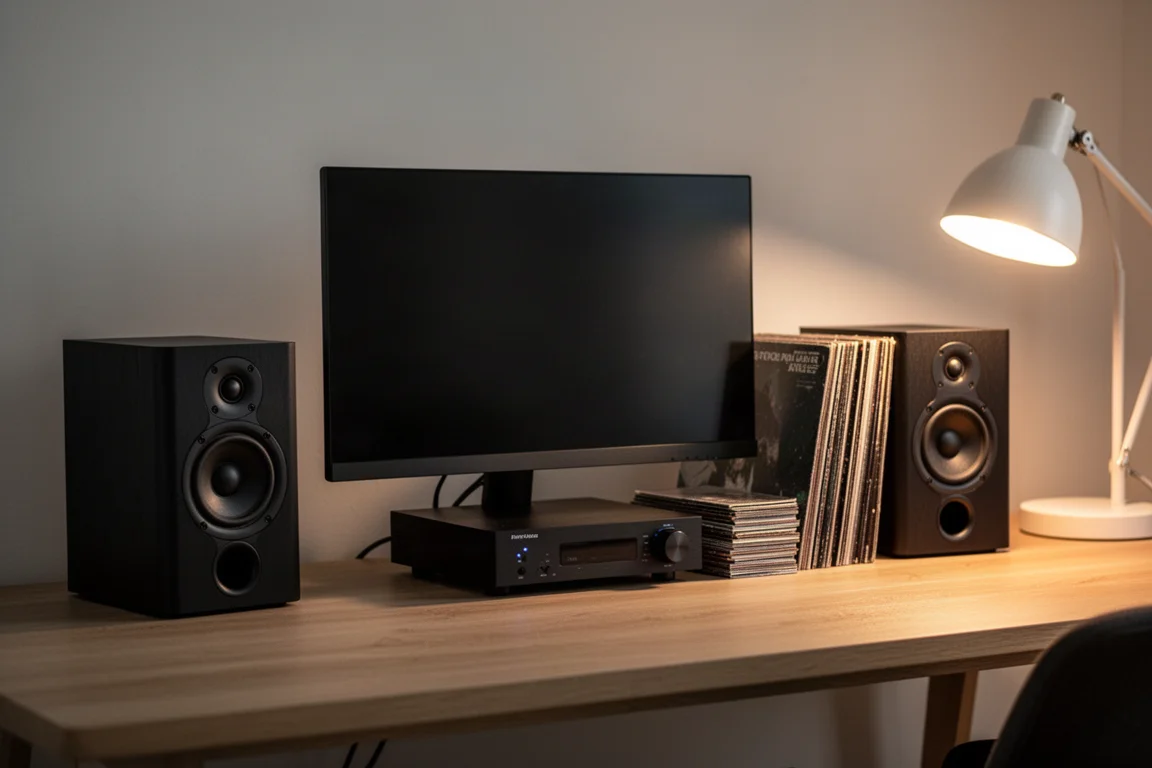
Placement is straightforward, and the speaker responds well to a little breathing room behind it. Pair it with a clean amplifier and it will scale up or down with the room rather than dictating where it can live.
Vanguard Scouts: Real Wood Veneer and a Serious Power Appetite
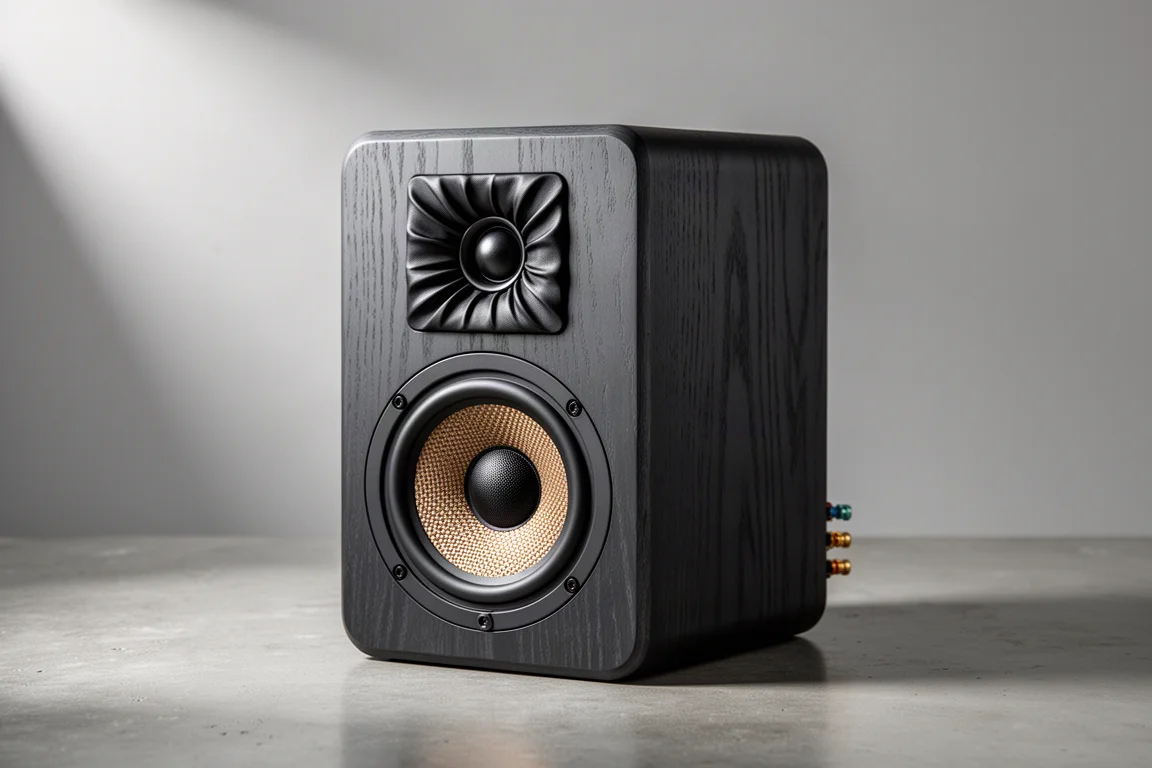
The Scouts cost $299 per pair and use a real wood veneer that sets them apart from almost everything else at this price. They are small, neutral, balanced, and more dynamic than their dimensions suggest, but they need a substantial amplifier to come alive.
Because the cabinet is compact and the tuning is even rather than boosted, they will not deliver the loose, room-filling bass that a garage speaker provides. They belong beside a desk, or in a den next to a leather chair and a vintage turntable, where the finish is part of the appeal.
Think of them as furniture-grade speakers first and party speakers second. Given a capable amplifier and a modest room, they reward the investment.
Q Acoustics 3020C: Neutral With a European Accent
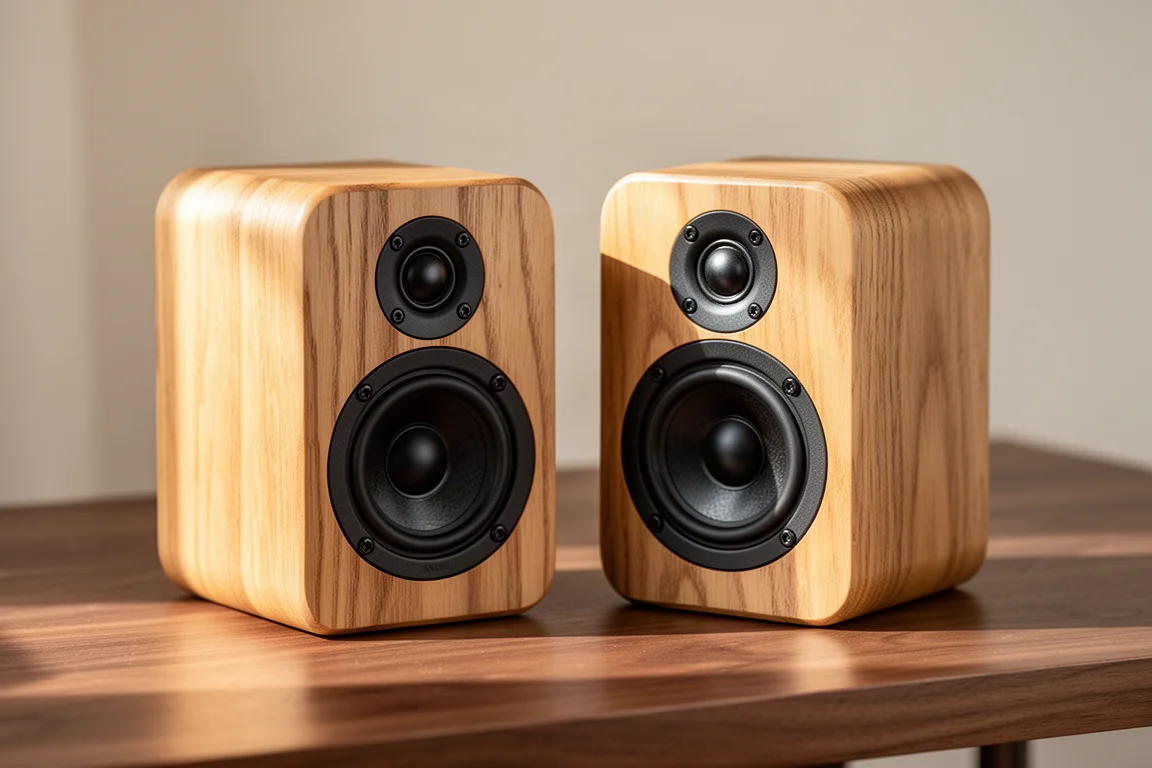
The 3020C carries a $549 MSRP and borrows heavily from Q Acoustics’ higher-end designs, including continuously curved drivers and a cabinet with extensive internal bracing. The result is a very neutral speaker that still manages to sound dynamic rather than polite.
It is also one of the better-looking options in this group, with a clean, understated cabinet that suits a modern room. A high-pass filter and a subwoofer let it hold its own in a living room, but it is at its best in a smaller space such as a study or a library.
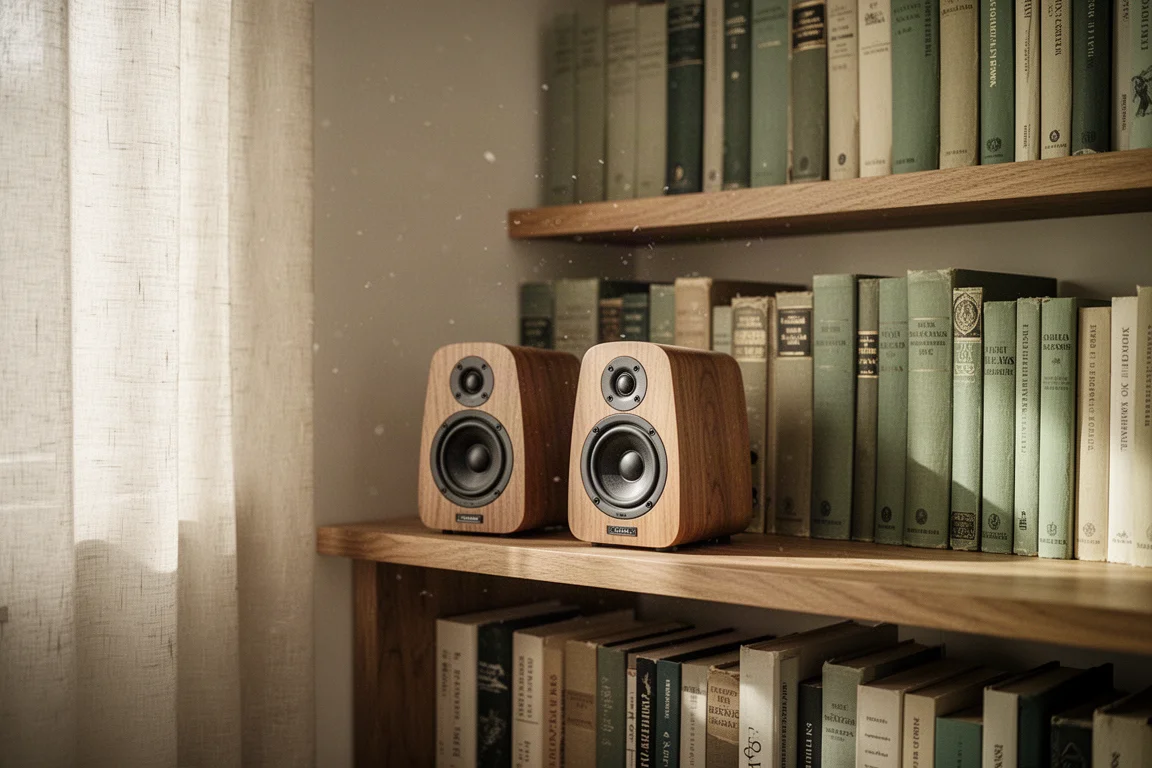
If you want a speaker that looks as considered as it sounds, and you mostly listen at moderate levels in a compact room, this is an easy recommendation.
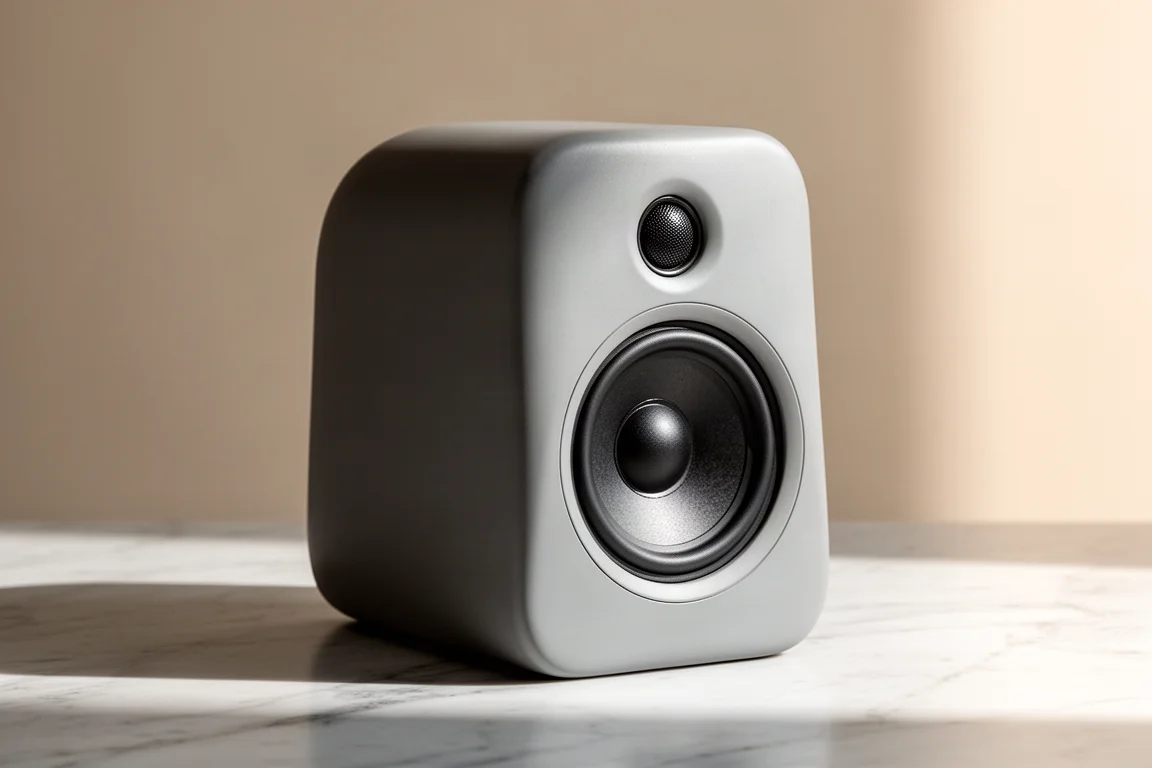
Cambridge Audio SX50: A Compact Desktop Favorite
The SX50 costs $230 and is specified from 50 Hz to 22,000 Hz with 87 dB sensitivity, a 1-inch silk dome tweeter, and a 5.25-inch treated paper cone woofer. Despite the small cabinet it is surprisingly V-shaped, and in normal use it does not feel like it is crying out for a subwoofer. Anyone with a lot of pipe organ in their library will still want one.
It needs either a high-pass filter or a small room to give its best. Pushed hard in a large space it runs out of headroom quickly. On a desk it is completely at home, which makes it an excellent first passive speaker for an apartment or a dorm room.
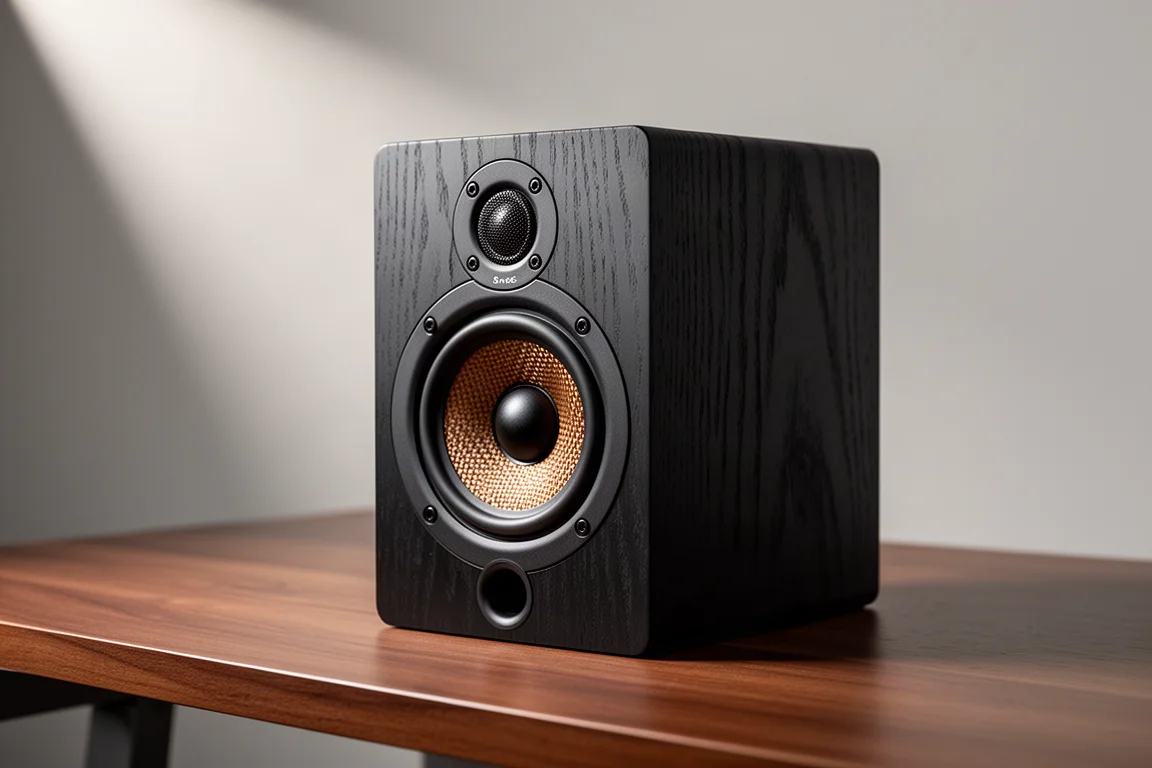
Sony SSCS5 Mark 2: Strong Value When Discounted
The SSCS5 Mark 2 lists at $250, but it is a much better proposition at the roughly $150 it is often discounted to. The tuning is slightly V-shaped with a small lift on top, which makes a wide range of music sound lively and natural.
Compared with the first generation, the Mark 2 is less punchy at the bottom but more balanced through the midrange. With a high-pass filter and a subwoofer it can hold its own in a larger room, though a medium-sized room suits it best. It is small enough to work as a desktop speaker as well.
At full price it is a reasonable option. At a discount it is one of the strongest values in this roundup.
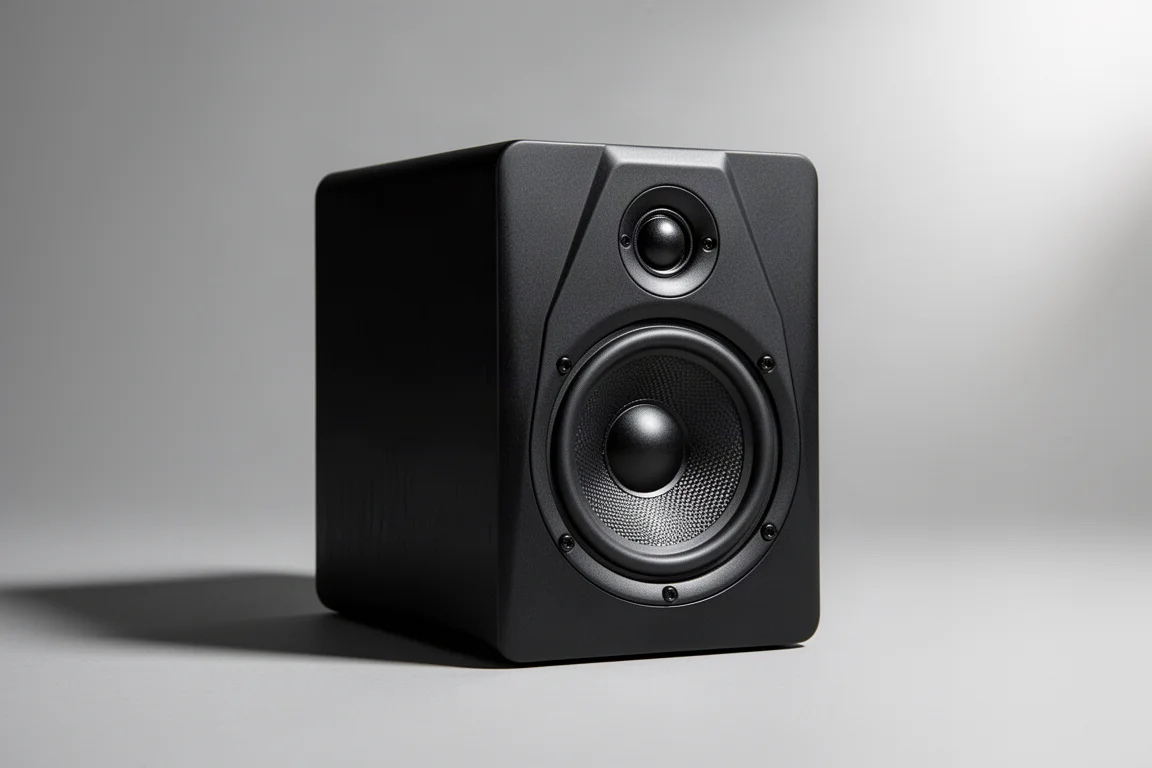
Numei BS5: The Lowest-Cost Entry Point
The BS5 costs around $120 and is a small, very neutral speaker. Its ports face forward, which means it can sit on a desk close to a wall without the boominess that rear-ported designs sometimes produce in that position. It will not fill a large room, but it sounds good within its limits.
The step-up Silk 4, at about $200, is more dynamic and would be the choice for anyone with a little more budget. Both are sold direct from the brand rather than through traditional retail channels, which is part of how the pricing stays this low. For a first passive setup or a secondary desk system, the BS5 is a solid, no-drama option.
Buying Advice: Matching a Speaker to a Room
If one speaker has to cover everything, the Emotiva XB2 is the safest pick. It is dynamic, balanced, and revealing, and it works in a garage, a living room, an office, or a small study without complaint. Buyers who listen to a lot of poorly recorded music should choose the ELAC Debut 3.0 instead, which is affordable, plays big, and stays easy on the ears for hours.
For a desktop system, the Cambridge Audio SX50 is the standout at $230 and is simply a lot of fun. Anyone who wants a more refined, audiophile-leaning desktop sound should move up to the Q Acoustics 3020C, which trades a little output for a more polished presentation.
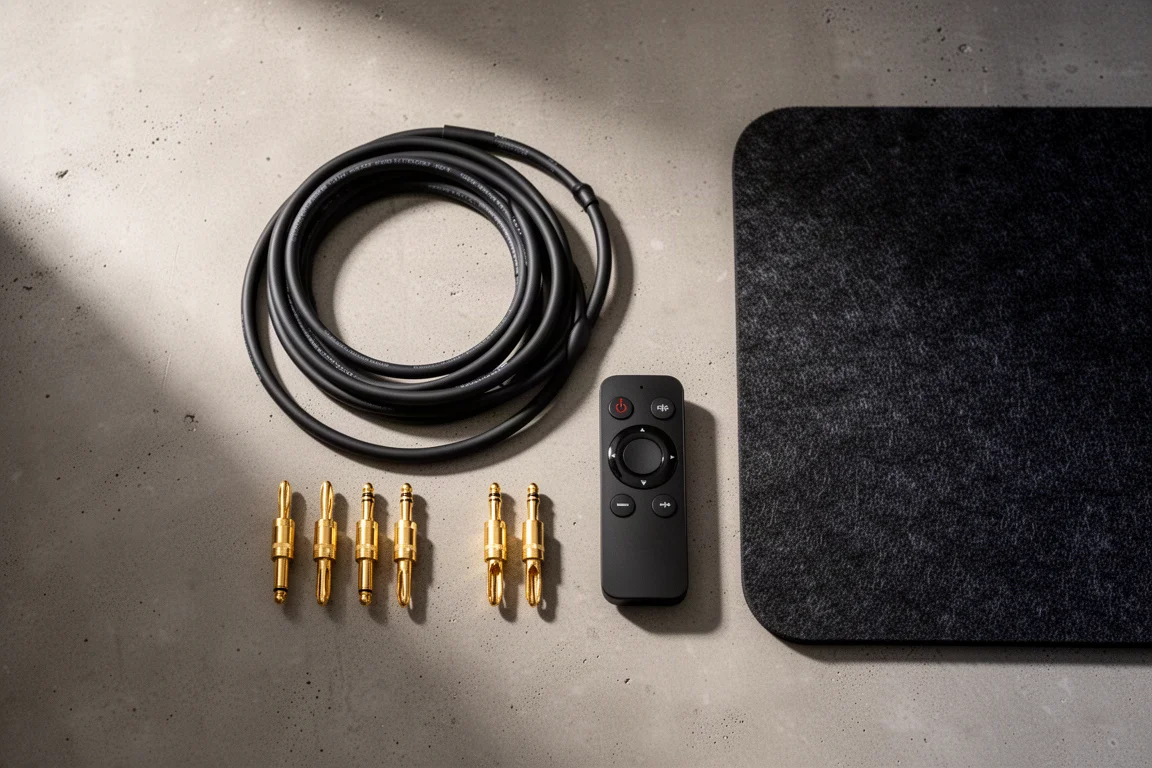
A few practical points apply to all nine speakers. Smaller cabinets usually benefit from being placed closer to a wall to reinforce their bass, even when the port faces rearward. Adding a high-pass filter and a subwoofer transforms what the compact models can do in a larger room. And because every speaker here is passive, the amplifier you choose will shape the final result as much as the speaker does.
Conclusion
Good speakers do not require a large budget, but they do require a match between character, room, and amplifier. The Emotiva XB2 covers the widest range of situations, the ELAC Debut 3.0 is the forgiving choice for uneven recordings, the Cambridge Audio SX50 is the desktop favorite, and the Q Acoustics 3020C is the refined compact option. The Polk XT20, Polk R100, Vanguard Scouts, Sony SSCS5 Mark 2, and Numei BS5 each solve a more specific problem well, whether that is a garage system, a living room, or a tight budget. Choose the one that fits the room you actually have, and any of these nine will keep you listening.
Further reading
Related Reviews
Bookshelf Speakers
Acoustic Energy A100 Mark II Review: A Compact Standmount With an Expansive Soundstage
The Acoustic Energy A100 Mark II brings clarity, natural tonality and a wide soundstage to an entry-level standmount, with a few setup details worth knowing first.
Bookshelf Speakers
Acoustic Energy AE-100 Mark II Review: Compact Bookshelf Speakers With Standout Imaging
A compact British two-way bookshelf speaker with deep, layered imaging, fast bass, and a slight treble lift to weigh against a crowded $500 field.
Bookshelf Speakers
Acoustic Energy AE100 MK2 Review: Measured Performance and Four Alternatives
A close look at the Acoustic Energy AE100 MK2 bookshelf speaker, what its measured performance reveals, and four alternatives with different trade-offs.