Bookshelf Speakers
Best Budget Bookshelf Speakers 2026: Five Pairs Compared
Five passive bookshelf speakers around the $200 mark, compared on bass, imaging, mid-range character, treble refinement and build quality.
Introduction
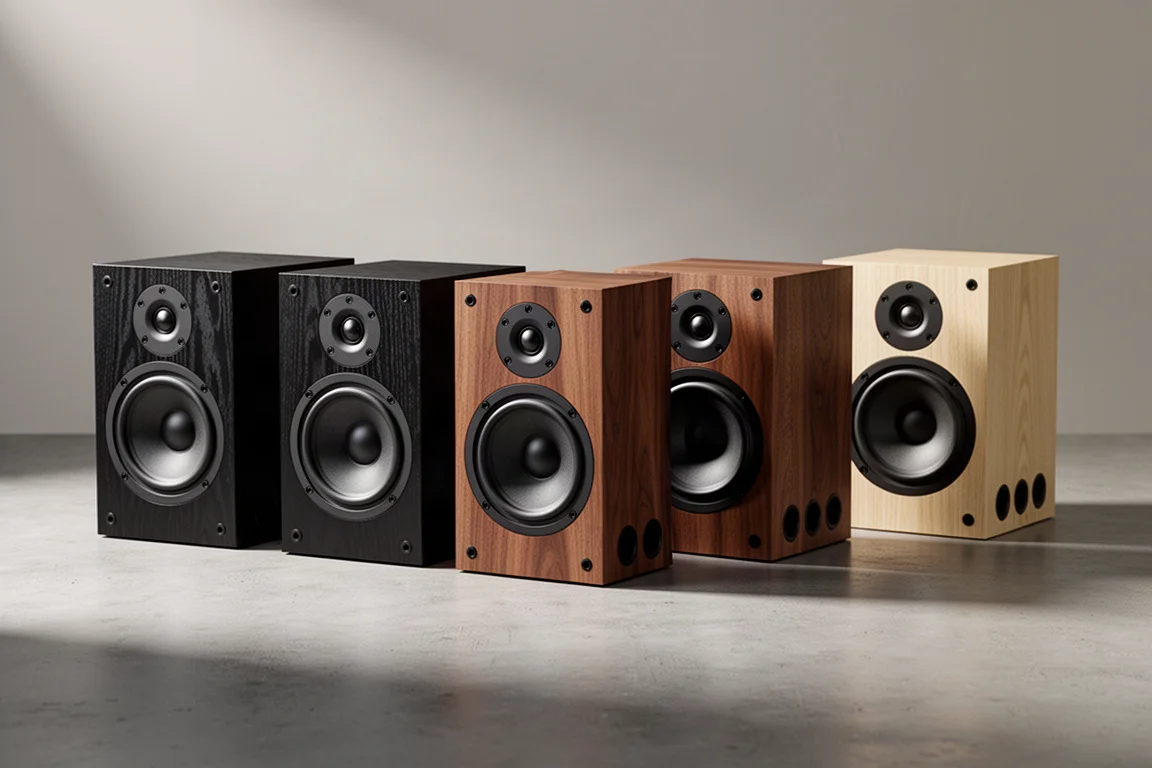
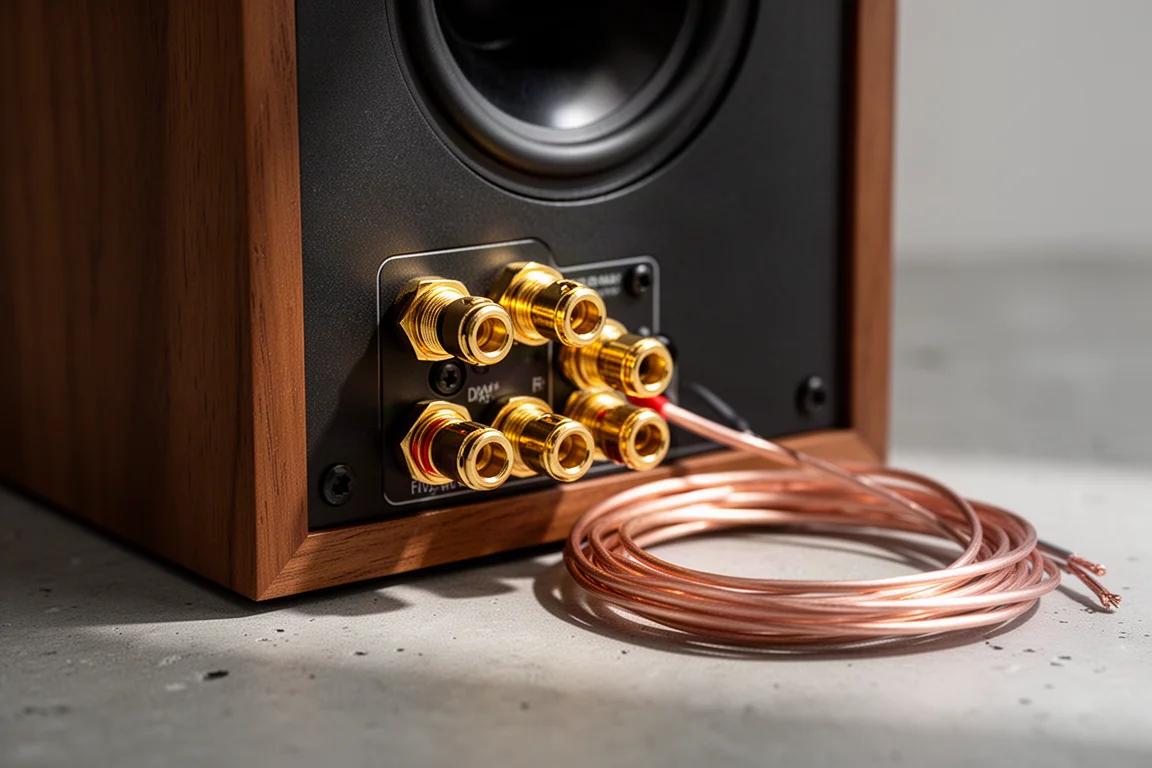
Five pairs of passive bookshelf speakers, all clustered around the $200 mark, all rear-ported, and all fitted with five-way binding posts. That is where the similarities end. Some of these speakers lean warm and relaxed, others push detail and air, and one is clearly built for fun rather than accuracy.
Prices in this category move constantly. Several of these models carry a $300 list price but sell for far less, and one of them has a habit of dropping well below its retail figure during promotions. What follows focuses on what each speaker genuinely does well, where it compromises, and which listeners it suits.
How We Evaluated These Speakers
Each pair was assessed on bass quantity and bass quality, soundstage and imaging, mid-range character, treble refinement, and build quality. Street prices were weighed just as heavily, because a speaker that is merely good at $300 can be excellent at $200.
Bass is the usual weak point in this price bracket, so the differences are easy to hear. Quantity and quality do not always arrive together: one pair here produces the most low-frequency output while another delivers the better tone and texture. Placement close to a rear wall will add bass weight to any of them, which is worth remembering before judging a pair in a shop.
Soundstage and imaging separated the group more than expected. The strongest performer throws a wide image that extends well behind and beyond the cabinets, while the rest range from good to merely acceptable. Treble character splits the field as well, with soft dome tweeters producing a smoother top end and the single aluminium dome offering more sparkle with a faint metallic edge.
Sony SSCS5: The Detail and Treble Pick
The Sony SSCS5 carries a $170 list price but regularly sells for $130, and it has been known to drop to around $80. It uses a 5.25-inch paper-based woofer, a 1-inch soft dome tweeter, and a small 0.75-inch soft dome super tweeter.
Treble is where this speaker makes its case. It sounds open, airy and genuinely detailed, and the top end stays natural rather than harsh. The mid-range is clear, though the upper mids sit forward, and at higher volumes that forwardness can tip into brightness. Toe-in matters here: angling the speakers directly at the listening position emphasises the treble, while toeing them out softens it.
Bass quality and texture are good, but quantity is lean, and many listeners will want a subwoofer. Imaging is strong, second in this group, and the cabinet is braced better than its price suggests. At $130 it is an easy recommendation. At $170 it is a harder call given how often the price falls.
JBL Stage A130: The Soundstage Specialist
The JBL Stage A130 lists at $300 but sells for around $200 on a near-permanent basis. It pairs a 5.25-inch paper-based woofer with a 1-inch aluminium dome tweeter, the only metal dome in this comparison.
Imaging is the headline. These speakers disappear almost immediately and need very little placement fiddling. Pulled slightly out from the wall, the soundstage opens up behind and above them, which is unusual at this price. The mid-range is balanced and clear, sitting a touch further back than the Sony, and that step back makes it easier to live with over long sessions.
Bass quality is solid without being plentiful. The treble carries a slight aluminium character, audible as a faint metallic sheen, though it rarely distracts and can be tamed with toe-in. The enclosure is the heaviest of the group alongside the Polk ES15 and feels considerably more substantial than the cheaper options.
Comfort over long listening sessions is a genuine strength, and the balance between detail and smoothness is well judged for the money. At $200 it is one of the strongest values here.
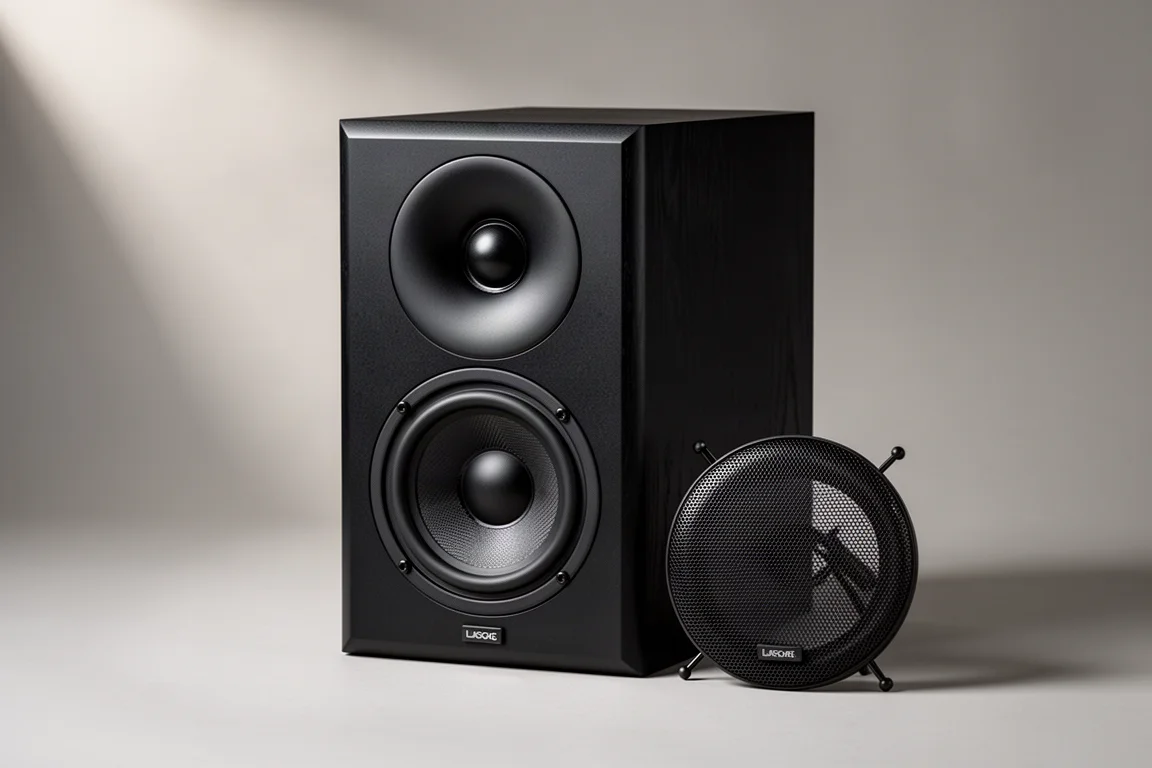
Polk ES15: The Long-Session Favourite
The Polk ES15 retails for $300 and typically sells for $240 to $250. It uses a 5.25-inch woofer and a 1-inch soft dome tweeter, with an engineered rear port.
This is the warmest and most relaxed speaker on the list. Bass quantity and quality both lead the group, the mid-range is smooth and rich, and the treble is the most laid-back of the five, rolled off just enough to stay comfortable for hours. Detail is the trade-off: the ES15 gives up some of the crispness found in the Sony and the JBL in exchange for that smoothness. There is also a slight blur where the bass hands over to the mid-range, though it reads as richness rather than congestion.
Build quality is the best here. The cabinet is heavy and solid, and it feels a class above the lighter enclosures in this group. If the goal is a speaker that can play all evening without fatigue, this is the one.
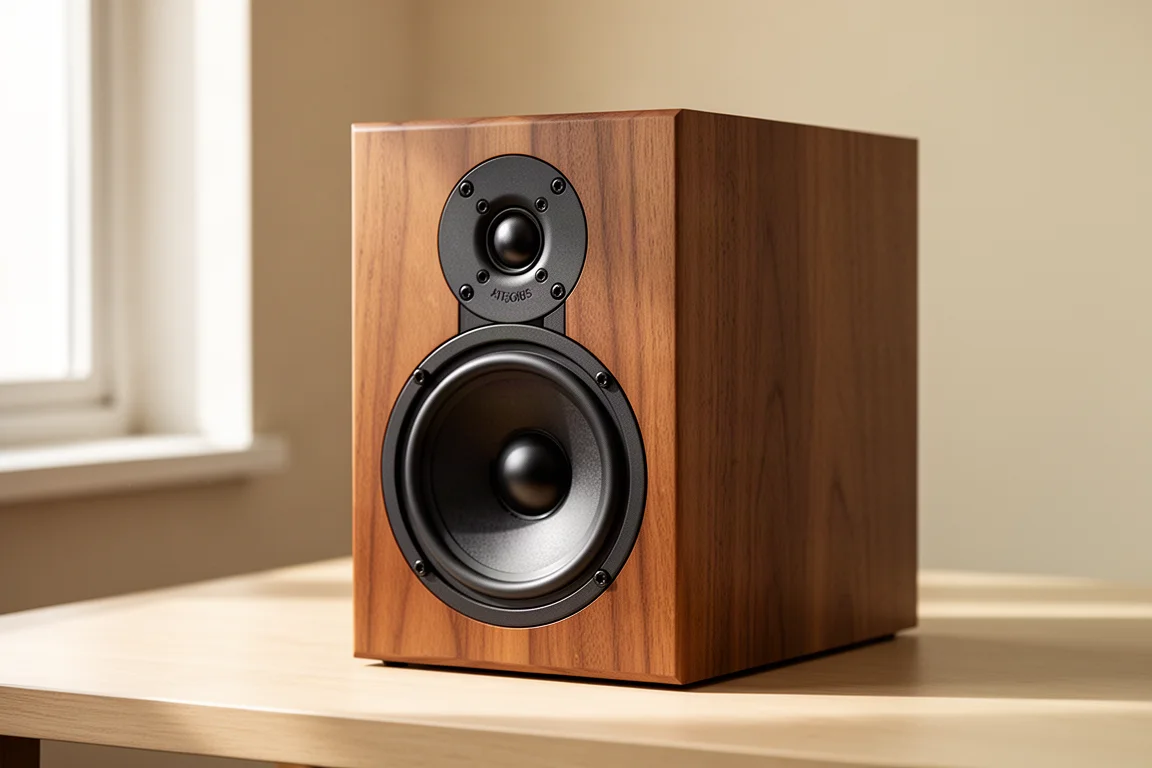
Polk XT20: The Party Speaker
The Polk XT20 lists at $300 and usually sells for around $225. It steps up to a 6.5-inch woofer and a 1-inch soft dome tweeter, though not the same tweeter used in the ES15.
The tuning is U-shaped. The mid-range is scooped and set back, the bass is the most plentiful in the group, and the treble is sparkly and energetic. Bass quantity beats bass quality here, and the decay of the top end is less natural than the leaders, but as a fun, bass-forward speaker it works well. Voices sit further back in the mix, which is the clearest compromise.
The cabinet is lighter and hollower than the JBL and the ES15, so it does not feel as premium in the hand. At $225 it remains an entertaining choice for casual listening, parties and bass-heavy playlists.
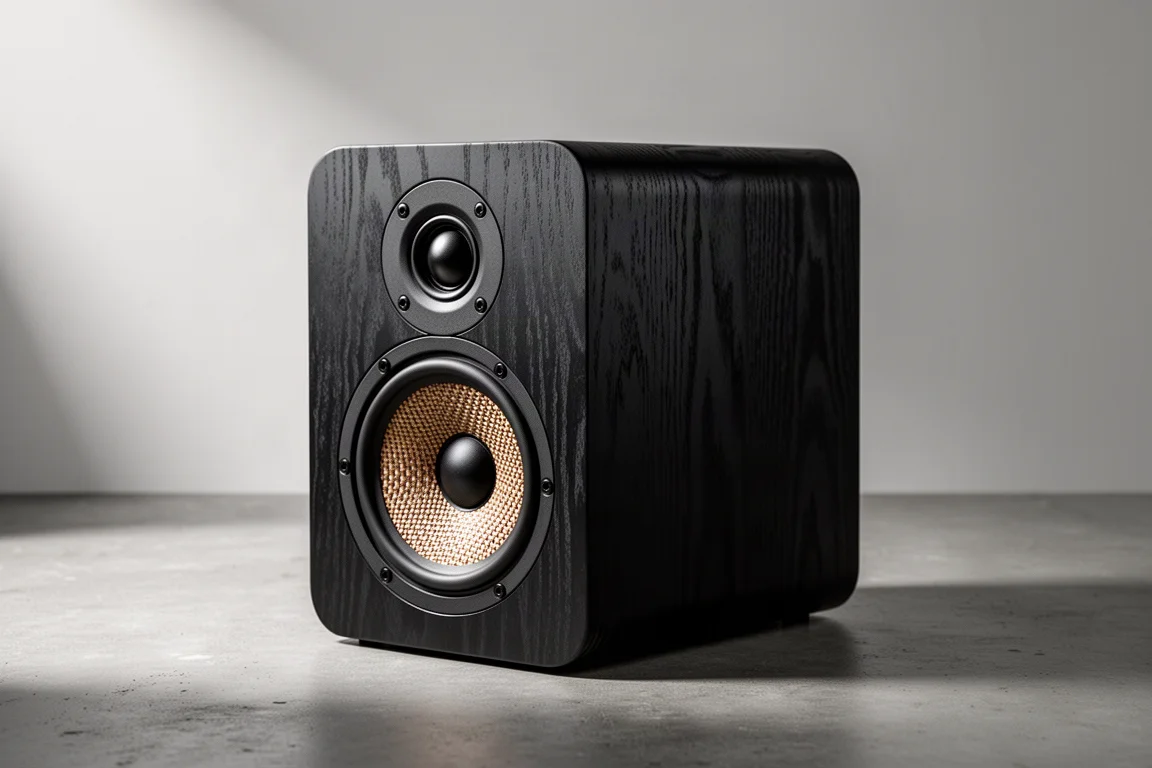
Dayton Audio MK6000: The Nearfield Surprise
The Dayton Audio MK6000 sells for $150 and effectively never drops below that. It has a 6-inch woofer and a 1-inch soft dome tweeter.
Its mid-range is the flattest in this comparison: detailed, neither forward nor recessed. Treble is clean and well balanced with no obvious peaks or valleys, and it lands second only to the Sony for clarity and tone. Bass is the weak point. There is noticeably less low-frequency output than the rest, and tone controls did not help much, so a subwoofer is close to mandatory.
Imaging is acceptable rather than impressive, and the cabinet is the lightest and most hollow-feeling here. Used nearfield on a desk, with a subwoofer blended in, it delivers far more than its price suggests.
Buying Advice: Which Pair Should You Choose?
If long, fatigue-free listening matters most, the Polk ES15 is the pick. Its warm balance and strong bass make it easy to enjoy for hours, and it is the best-built speaker in this group.
If detail and a wide soundstage matter more, the Sony SSCS5 and the JBL Stage A130 are the two standouts. The Sony offers the most natural treble and the most detail, with the caveat that its forward upper mids can wear thin at high volumes. The JBL is the better all-rounder for longer sessions and images better than anything else here, particularly at its $200 street price.
The Polk XT20 is the choice for casual, bass-heavy listening, provided the scooped mid-range suits the material. The Dayton Audio MK6000 makes sense in a desktop nearfield setup where a subwoofer is already planned.
One practical note applies to all five: they are rear-ported, so distance from the wall changes bass output. Closer to the wall adds weight, further away tightens it. Every speaker here benefits from a subwoofer, though the ES15, the Stage A130 and the SSCS5 can manage a satisfying low end with careful placement alone.
Conclusion
None of these speakers is a bad buy at the right price. The Sony SSCS5 is the detail and treble leader when it drops to $130 or below. The Polk ES15 is the most refined and the most comfortable over long sessions. The JBL Stage A130 offers the best imaging and the best all-round balance at $200. The Polk XT20 is the party option, and the Dayton Audio MK6000 is a nearfield bargain that needs a subwoofer to complete it.
Further reading
Related Reviews
Bookshelf Speakers
Acoustic Energy A100 Mark II Review: A Compact Standmount With an Expansive Soundstage
The Acoustic Energy A100 Mark II brings clarity, natural tonality and a wide soundstage to an entry-level standmount, with a few setup details worth knowing first.
Bookshelf Speakers
Acoustic Energy AE-100 Mark II Review: Compact Bookshelf Speakers With Standout Imaging
A compact British two-way bookshelf speaker with deep, layered imaging, fast bass, and a slight treble lift to weigh against a crowded $500 field.
Bookshelf Speakers
Acoustic Energy AE100 MK2 Review: Measured Performance and Four Alternatives
A close look at the Acoustic Energy AE100 MK2 bookshelf speaker, what its measured performance reveals, and four alternatives with different trade-offs.