Bookshelf Speakers
Best Bookshelf Speakers Under $150: Four Compact Pairs Compared
Four compact passive bookshelf speakers compared on bass quality, treble character, power needs and room fit, with clear guidance on which one suits your setup.
Introduction
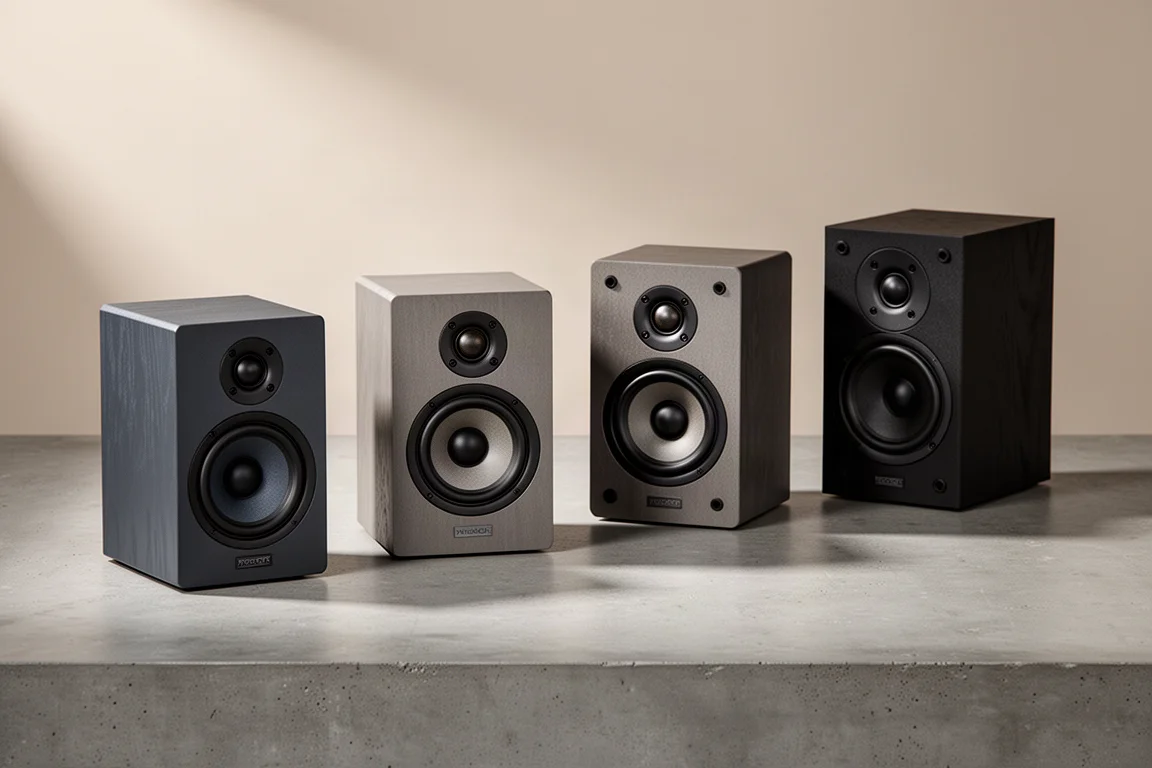
Compact passive bookshelf speakers around the $150 mark have quietly become one of the best value plays in entry-level hi-fi. The Micca RB42 is the model that tends to attract the most attention, and a second, longer listen in a large living room makes the case for it stronger rather than weaker. Sitting alongside it are the Sony SSCS5, the ELAC BS41 and the RSL CG3M, each with a distinct personality and its own set of trade-offs.
This guide covers what each speaker does well, where each one asks for a compromise, and which room and amplifier pairing brings out the best in it.
How These Four Speakers Compare
All four are small, affordable and passive, which means they need an amplifier and they need some thought about placement. Beyond that, the differences matter more than the similarities.
The criteria that matter most at this price are bass extension and bass quality, treble character, sensitivity and power demands, behavior at higher volume, and how well each speaker integrates with a subwoofer. Room size also plays an outsized role: a speaker that sounds lean on a desk can sound full and confident in a larger space, and the reverse is just as true.
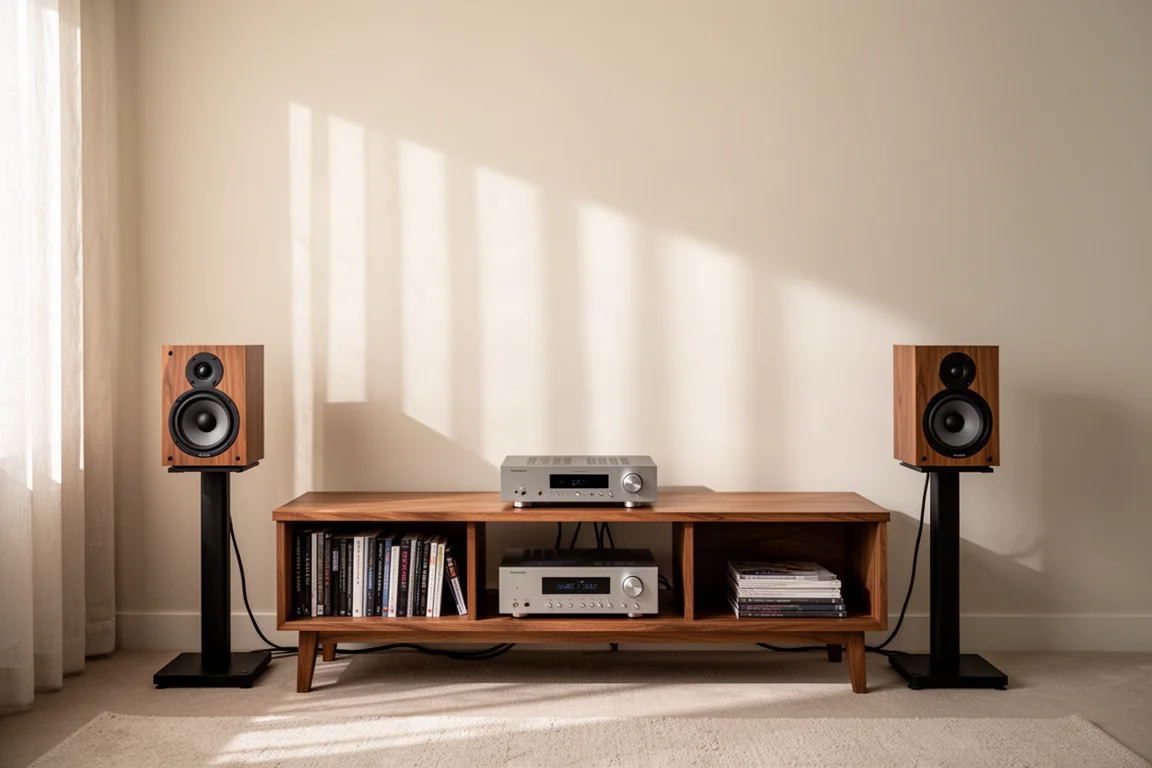
One pattern is worth noting early. The RB42 and the ELAC BS41 share a similar voicing, while the Sony takes a brighter path and the RSL aims for neutrality above all else. None of these approaches is inherently better. They simply suit different rooms and different listeners.
Micca RB42: Big Output From a Tiny Cabinet
The RB42 is remarkably small, closer in footprint to a games console than to a conventional bookshelf speaker, and the woofer measures just four inches across. What stands out immediately is that woofer’s substantial surround, which hints at how much excursion the design allows.
That excursion is real. At roughly 80 dB, the rear port pushes enough air to visibly move lightweight curtains and to extinguish a candle placed nearby. Played in a large living room, the RB42 can fill the space convincingly.
Tonally it leans warm. The lower midrange carries a little extra body, male vocals gain a touch of baritone richness, and the top end is not as extended as some rivals. A small treble boost adds air and sparkle, which suggests the speaker responds well to tone controls. Sensitivity is rated at 83 dB and the impedance range spans roughly 4 to 8 ohms, so it rewards a capable amplifier. Driven by an integrated amplifier rated at 150 watts into 8 ohms, it stays composed at high levels. A compact desktop amplifier can drive it as well, but with less dynamic headroom, and in that setup it helps to run the amplifier near full output and control volume from a preamp or DAC.
Imaging is a genuine strength. The center image locks in tightly and vocals appear to come from the middle of the room rather than from the cabinets. In a very large room at high volume the woofer can begin to bottom out, though that is an extreme case rather than a normal one. Paired with a subwoofer crossed over at around 80 Hz, and with a high-pass filter applied to the RB42, the soundstage opens up considerably and the little speaker stops working so hard in the low end.
Sony SSCS5: Brighter and More Forward
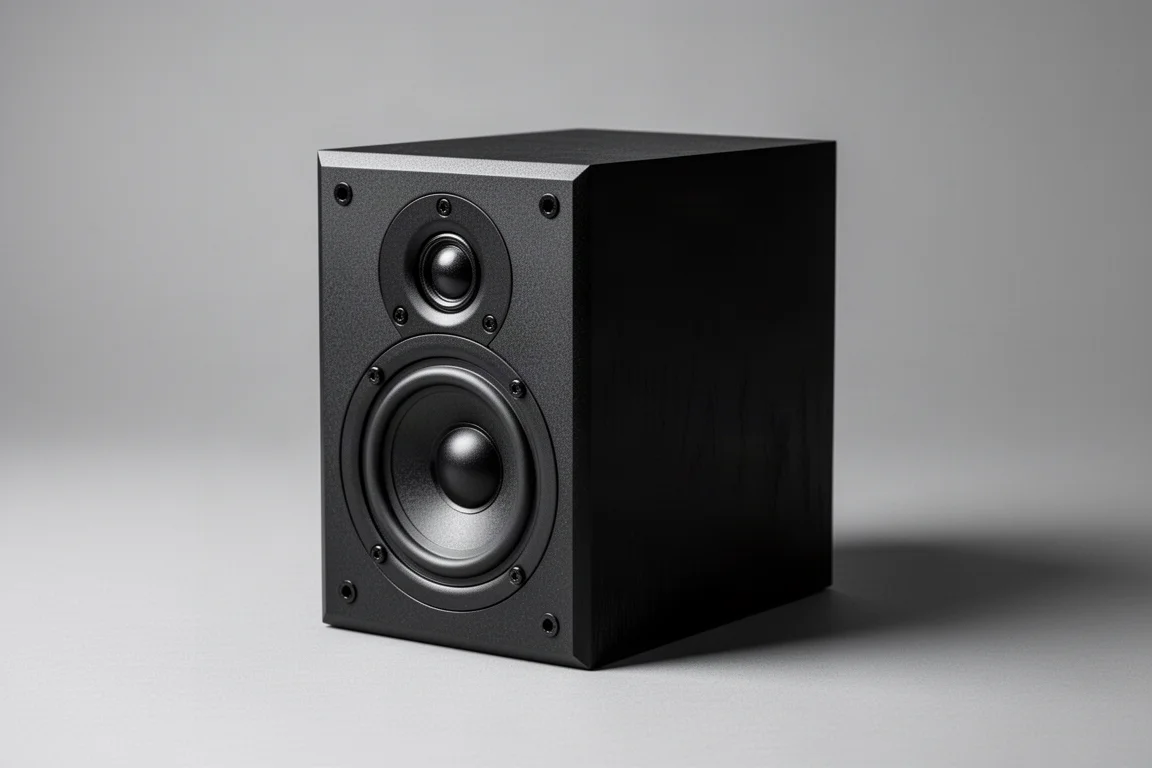
The Sony SSCS5 is a different animal. Where the RB42 is warm and easygoing, the Sony pushes more energy into the treble, giving it a more open and forward character that many listeners will find immediately engaging.
It also takes more power before the woofer runs out of travel, which makes it a willing partner for louder listening. The trade-off sits in the lower registers and in the cabinet: bass is not as clean as the RB42’s, and some cabinet resonance becomes audible when the speaker is pushed hard. Listeners who value a crisp, lively top end over warmth will likely prefer it anyway.
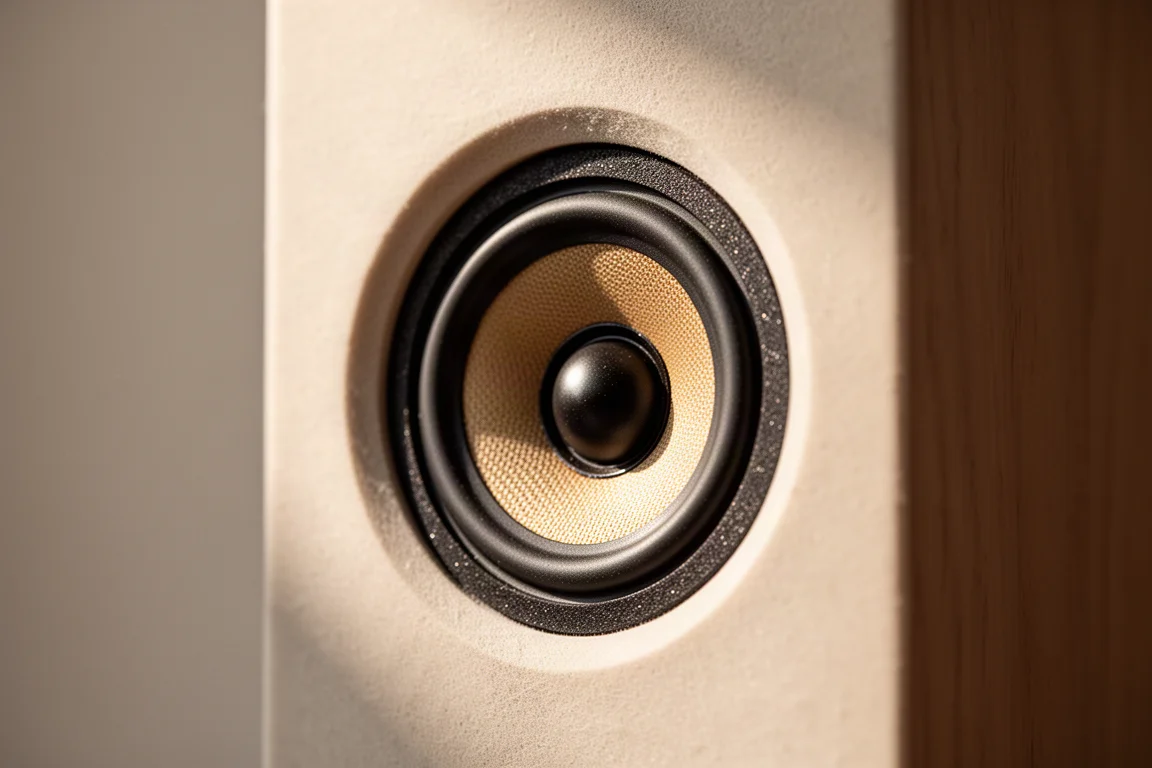
Placement helps here. The Sony benefits from a little breathing room and from an amplifier that stays composed as the volume climbs, and a small amount of bass cut can keep the cabinet from drawing attention to itself on dense, bass-heavy tracks.
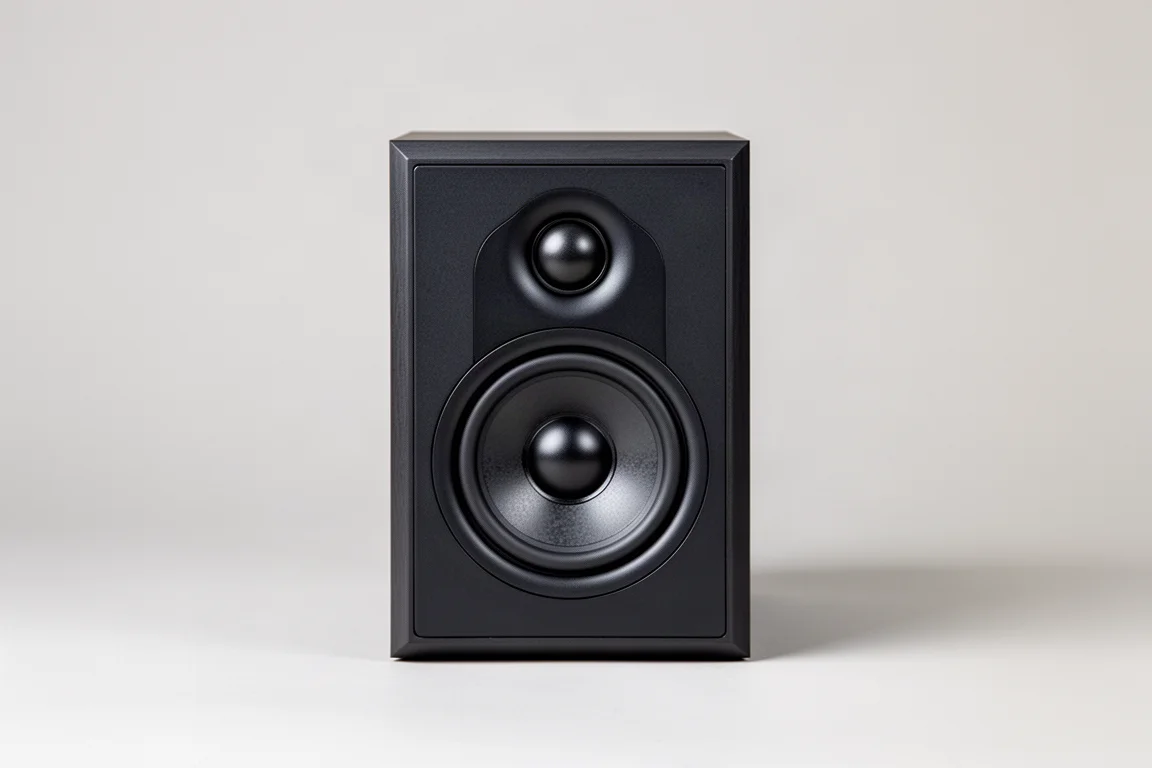
ELAC BS41: The Closest Match to the RB42
Of the four, the ELAC BS41 is the one that sounds most like the RB42. The overall balance and the general voicing are close enough that a listener moving between them would notice more similarities than differences.
Where it pulls ahead is composure. The BS41 holds together at higher sound pressure levels, which means it can be played louder before it starts to sound strained. In return, the RB42 has the edge in the low end, with bass that is slightly tighter and cleaner. Choosing between them comes down to whether volume headroom or bass quality matters more in your room.
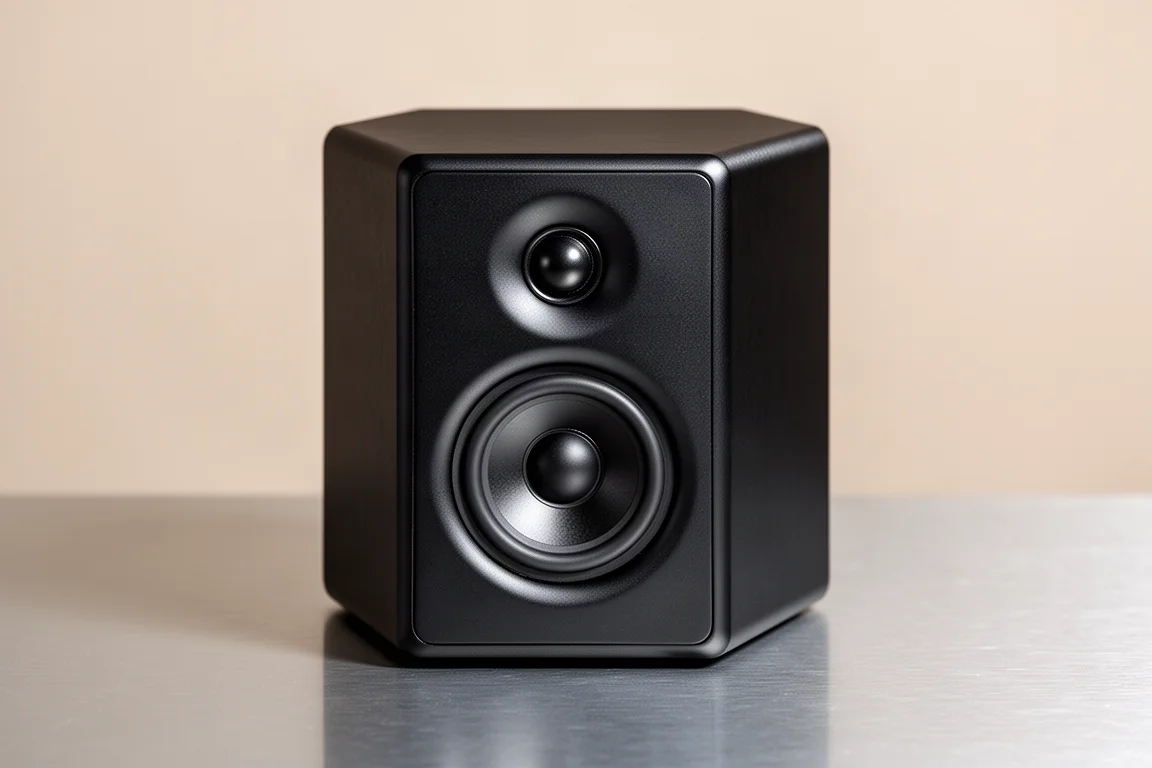
RSL CG3M: Clean, Flat and Subwoofer-Dependent
The RSL CG3M is the outlier of the group, both in size and in price positioning, and its design brief is clearly different from the other three.
Its low-frequency roll-off sits around 90 Hz, so a subwoofer is not optional for anyone who wants full-range sound. What the speaker delivers instead is an extremely clean, flat and clinical presentation with very little added color. That makes it a natural fit for home theater, where it works beautifully as a height channel. It also makes an excellent center channel in a room where space is tight, a role it has handled well.
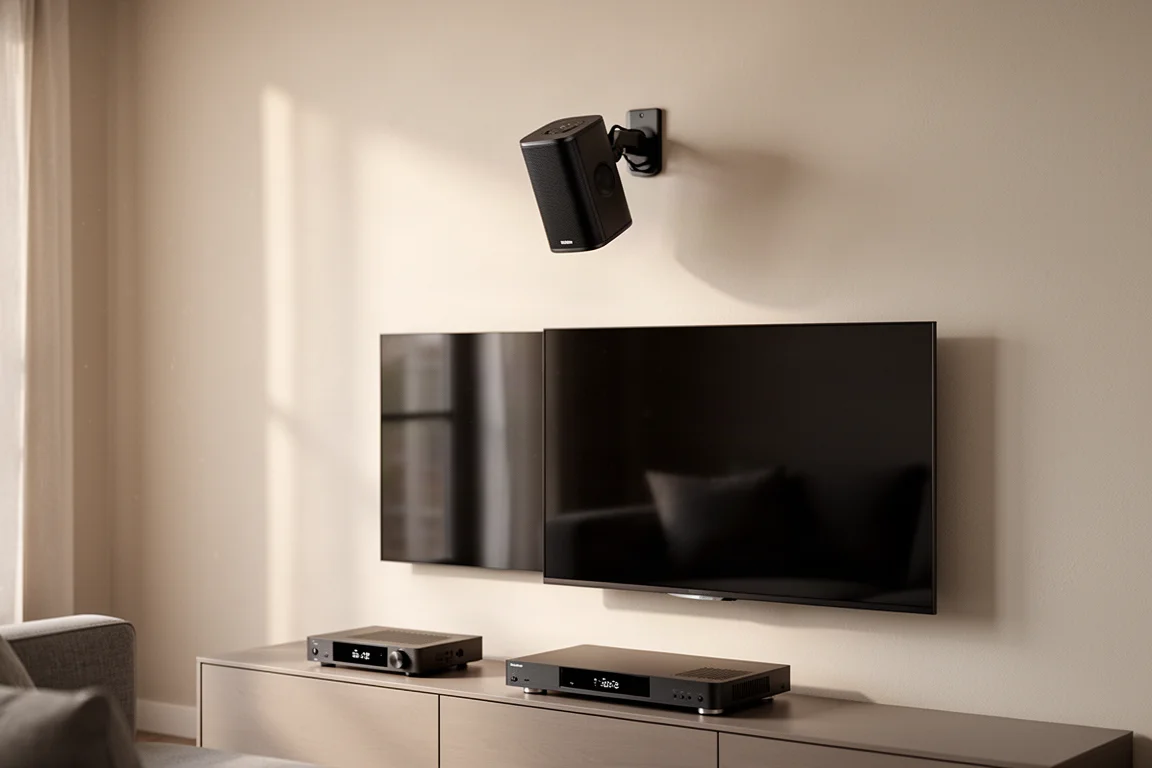
For stereo music, the CG3M is best understood as a specialist. Paired with a competent subwoofer and crossed over sensibly, its neutrality becomes an asset rather than a limitation.
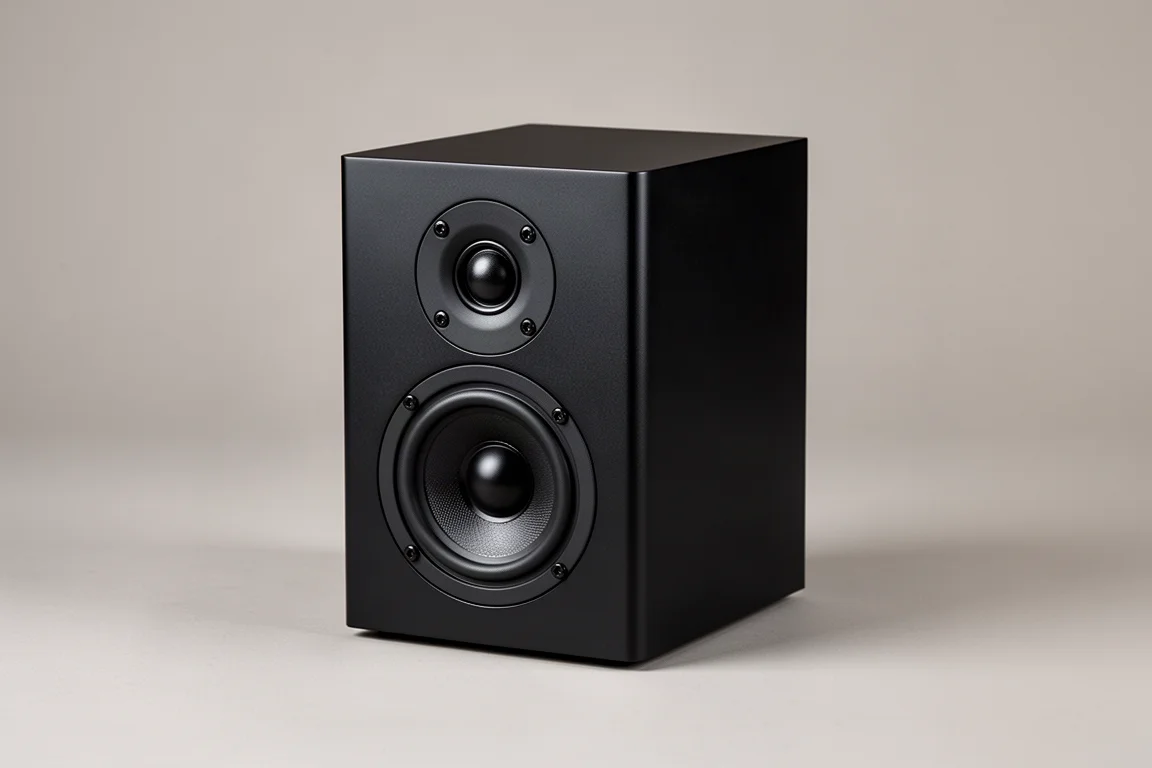
Buying Advice: Matching a Speaker to the Room and the Amp
The most useful question at this price is not which speaker is best in absolute terms, but which one fits the room and the electronics you already own.
If you want warmth and you have a larger room plus an amplifier with real power on tap, the RB42 is the most rewarding of the group, particularly with a subwoofer handling everything below 80 Hz. If you prefer a brighter, more forward sound and you listen at higher volumes, the Sony SSCS5 makes more sense. If you want the RB42 character with more headroom, the ELAC BS41 is the closest alternative. And if your priority is a neutral, uncolored speaker for a home theater height or center channel position, the RSL CG3M is the specialist choice.
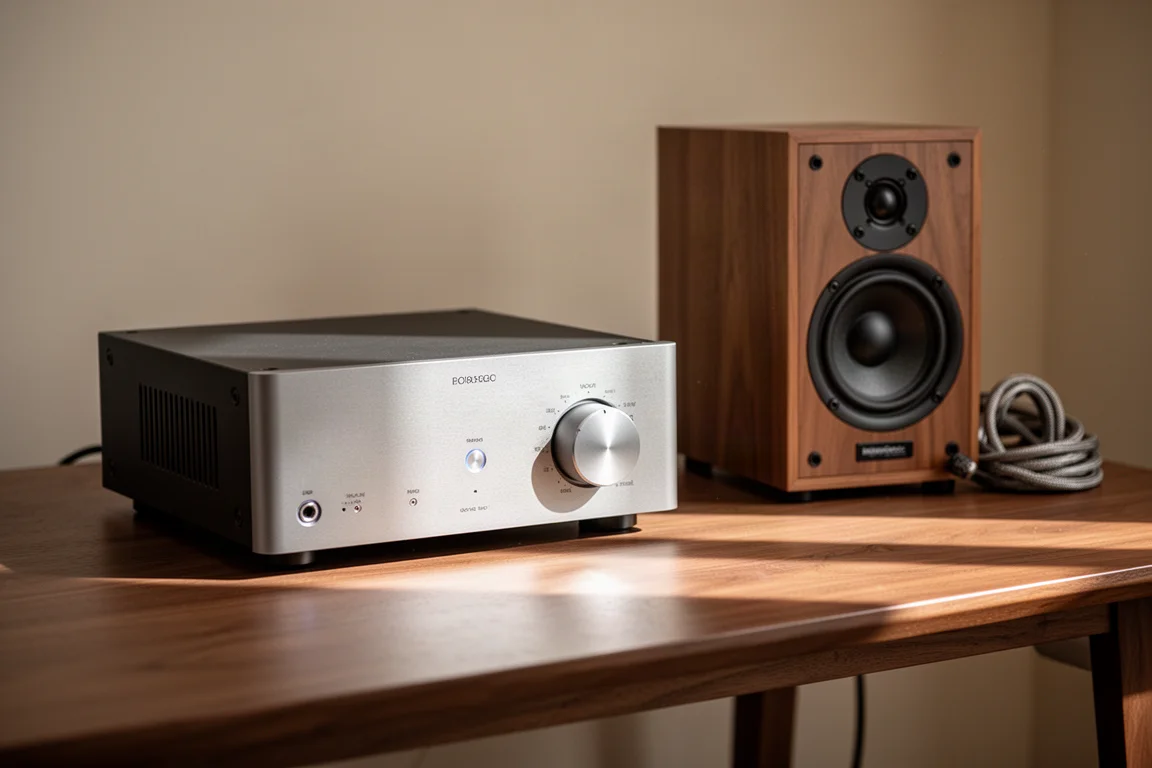
Two practical notes apply across the board. First, sensitivity matters: the RB42 in particular needs an amplifier that can deliver current, and adding a high-pass filter plus a subwoofer transforms what a small speaker like this can do. Second, tone controls are not cheating. A single decibel of treble adjustment can change how a compact speaker feels in a room, and most of these designs respond well to it.
Conclusion
The Micca RB42 earns its reputation. Its weaknesses are the ones you would expect from a speaker this size at this price, and its strengths, namely output, warmth and imaging, are the ones that matter most in a real living room. The Sony SSCS5, ELAC BS41 and RSL CG3M each answer a slightly different question, and any of the four can be the right choice once the room, the amplifier and the subwoofer plan are settled.
Further reading
Related Reviews
Bookshelf Speakers
Acoustic Energy A100 Mark II Review: A Compact Standmount With an Expansive Soundstage
The Acoustic Energy A100 Mark II brings clarity, natural tonality and a wide soundstage to an entry-level standmount, with a few setup details worth knowing first.
Bookshelf Speakers
Acoustic Energy AE-100 Mark II Review: Compact Bookshelf Speakers With Standout Imaging
A compact British two-way bookshelf speaker with deep, layered imaging, fast bass, and a slight treble lift to weigh against a crowded $500 field.
Bookshelf Speakers
Acoustic Energy AE100 MK2 Review: Measured Performance and Four Alternatives
A close look at the Acoustic Energy AE100 MK2 bookshelf speaker, what its measured performance reveals, and four alternatives with different trade-offs.