Bookshelf Speakers
Best Bookshelf Speakers Under $1,000: Six Picks Ranked by Measured Performance
Six bookshelf speakers under $1,000, ranked by measured performance and listening character, with placement and amplification guidance for each.
Introduction
A good pair of bookshelf speakers under $1,000 can anchor a two-channel system for years, and the category now offers more genuine engineering than the price suggests. This list ranks six models that combine strong measured behavior with a coherent, listenable character in a normal room.
Prices run from roughly $350 for a discounted pair at the entry point up to about $800 for a pair of powered monitors that need no separate amplifier. The top two entries were close enough that the order between them could reasonably be flipped.
How These Speakers Were Evaluated
Two terms come up constantly in speaker discussion, and they are worth defining before the list. On-axis means the speaker is pointed directly at the listening position. Off-axis means any angle away from that position. Distance from the wall refers to the space between the back of the speaker cabinet and the wall behind it.
Radiation width matters as much as raw frequency response. A speaker with wide horizontal radiation, roughly plus or minus 50 degrees or more, sends more energy into the room and suits larger spaces with multiple listening seats. A narrower pattern puts less energy into the side walls, which tends to work better in smaller or more reflective rooms. Vertical dispersion governs how consistent the sound stays when you stand up or walk around, and coaxial designs are typically wider here than conventional two-way cabinets.
The estimated in-room response is the most useful single predictor of what a speaker will sound like in a domestic room, because it accounts for the reflections that dominate at the listening seat. Bass extension, sensitivity, and the behavior of the treble region all feed into the ranking below. Where a placement change or a small amount of equalization clearly improves the result, that is noted in the entry.
6. KEF Q150
The Q150 retails at about $600 per pair but is frequently discounted to around $350, which makes it the most affordable entry here. Its concentric driver arrangement delivers very good on-axis linearity, wide vertical dispersion of roughly plus or minus 50 degrees, and a horizontal radiation pattern that stays consistent across the frequency range rather than flaring wide at some frequencies and narrowing at others. That consistency helps instruments hold a stable position in the soundstage, which matters for anything with complex harmonics such as a piano.
The trade-off sits in the treble. Above roughly 8 kHz the Q150 can sound shouty, grainy, or sharp, depending on how you describe it. Aiming the speaker about 20 degrees off axis reduces that region. Sensitivity lands around 85 dB, which is typical for the category, and bass extension reaches about 50 Hz before rolling off quickly, so deep low-frequency output is not its strength. The horizontal pattern is consistent but a little narrower than some listeners prefer, which makes it a natural fit for a smaller or livelier room.
5. Polk R200
The R200 sits at about $750 per pair. It offers very good linearity and neutrality, with wide horizontal radiation of roughly plus or minus 70 degrees up to about 5 kHz before narrowing quickly through the tweeter region. There is a measured breakup near 1 kHz, and bass output is on the lean side, with estimated in-room extension around 60 Hz.
Vertical dispersion is limited to about plus or minus 20 degrees, which is common for a conventional two-way design. The practical recommendations are to aim the speaker directly at the listening position rather than toeing it out, and to start with the cabinet about a foot from the back wall to lift the low end. If that placement sounds boomy or muffled through the lower midrange, move the speaker back out and work from there.
Placement is not the only lever here. The R200 rewards a little patience with positioning, and the payoff is a neutral midrange with a clean, uncolored presentation for the money.
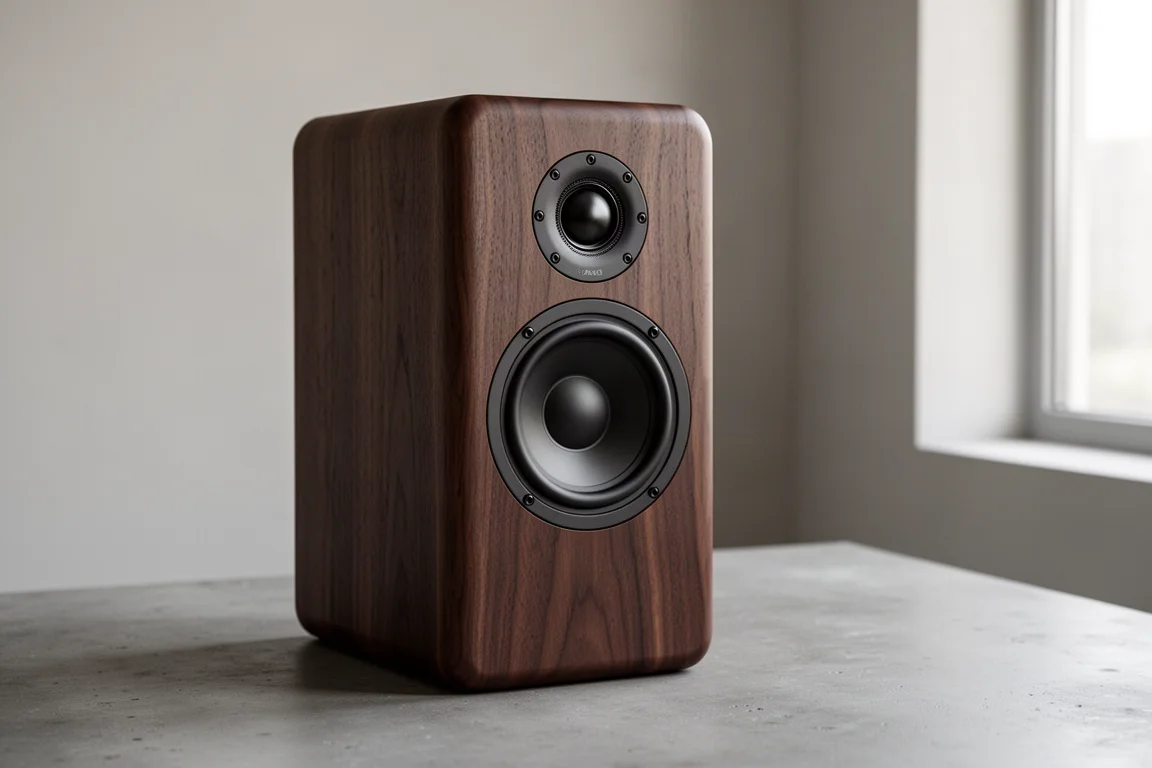
4. Klipsch RP-600M II
The RP-600M II retails at about $650 per pair and is often found near $500 on sale. Linearity is good, particularly when the speaker is toed out by about 20 degrees, and bass extension is a genuine strength for the size. There is a breakup visible around 13 kHz.
The main caveat is a hollow quality in the lower midrange, which strips some weight from male and female vocals. Moving the speaker closer to a wall does not resolve it. A single parametric equalization band around 300 Hz with about 2 dB of boost and a Q of 1, or even 0.5, fills that region in nicely. The treble lift visible on axis also eases once the speaker is turned 20 degrees off axis.
Horizontal radiation measures about plus or minus 50 degrees, narrowing above 5 kHz, and vertical dispersion is about plus or minus 20 degrees. That narrower pattern makes this a strong candidate for a smaller or more lively room, where less energy reaches the side walls.
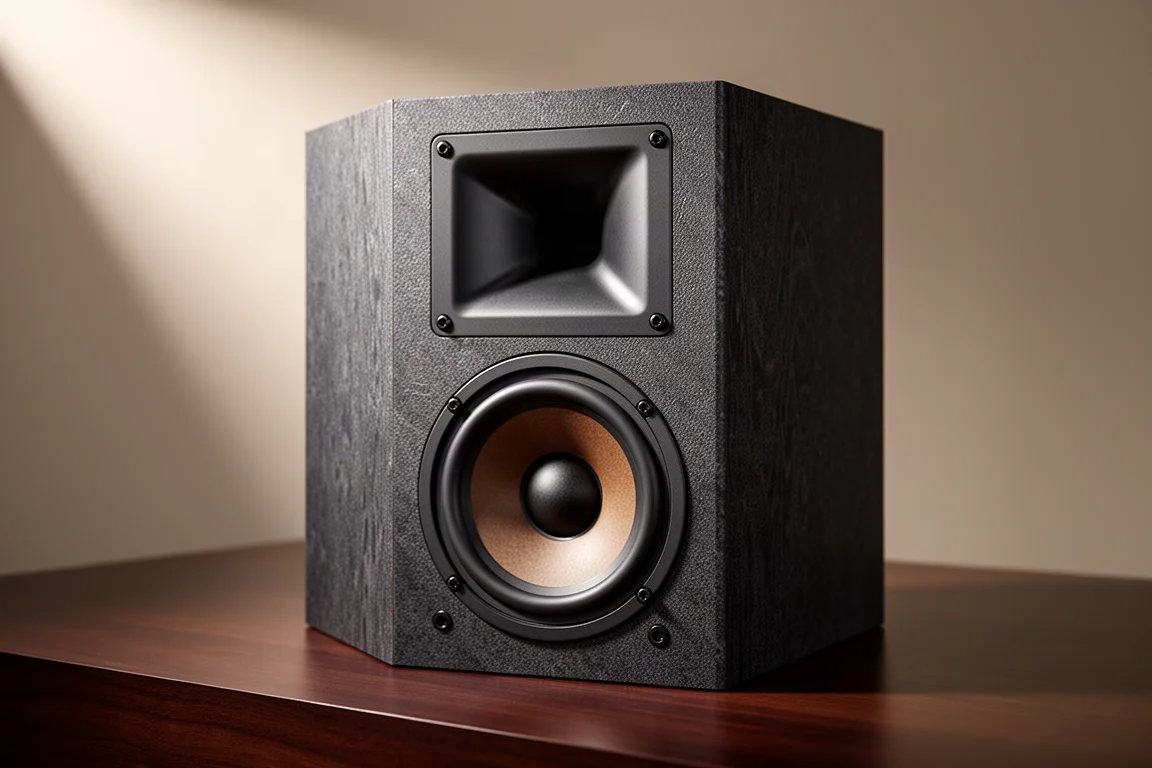
3. ELAC DBR62
The DBR62 sells for about $700 per pair and represents solid value. A bass bump centered near 100 Hz gives it more thump than a strictly neutral tuning would, and it extends low enough that a subwoofer may not be necessary. Listeners who prefer a flatter low end should take note of that character before buying.
Vertical positioning is unusually tight. Listeners need to stay within roughly 10 degrees of the tweeter axis to hear the speaker at its best, and the cabinets benefit from being pulled about 2 feet out from the walls. There is a diffraction-related dip around 4 kHz that shows up on axis, though it smooths out in the estimated in-room response once room reflections are factored in.
Horizontal radiation is wide at roughly plus or minus 70 degrees, and this is one of the models that responds well to sidewall absorption. Treating the side walls in the 2 to 4 kHz range at roughly 50 to 60 degrees captures some of that extra upper-midrange energy for a more neutral result in the room. A toe-in of about 10 degrees is a good starting point, with 20 to 30 degrees available if the treble feels too bright.
2. Ascend Acoustics Sierra-1 V2
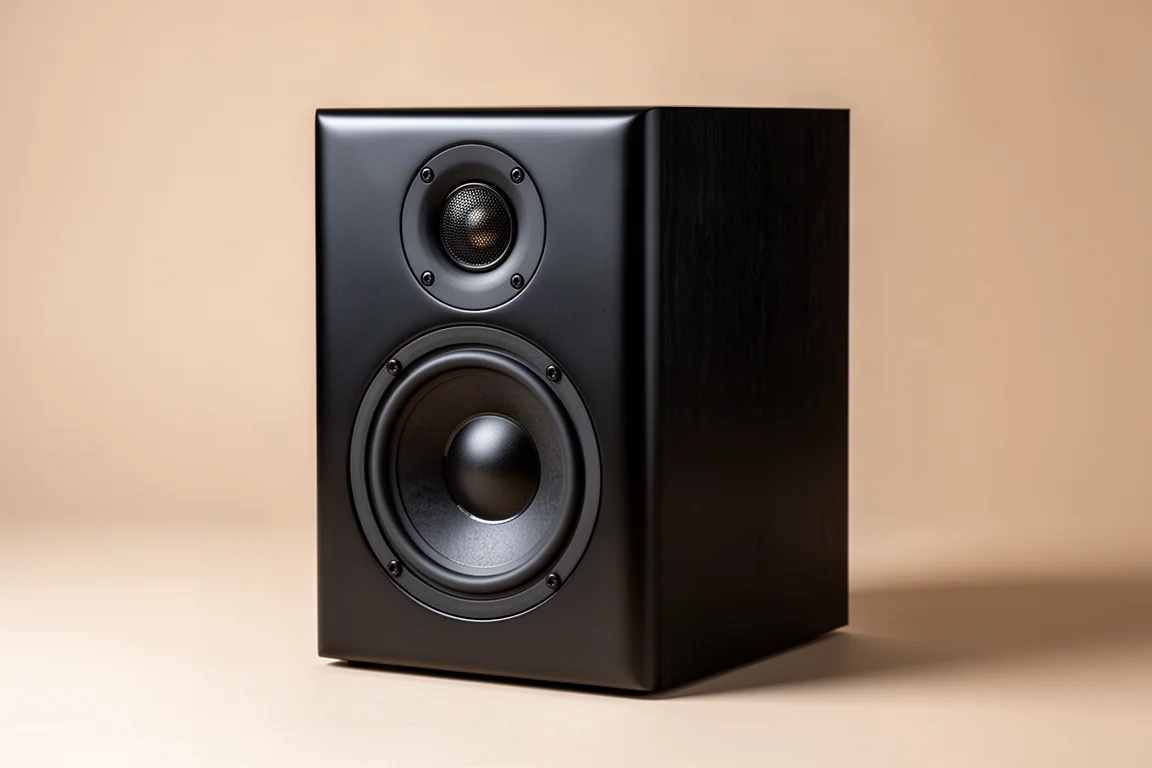
The Sierra-1 V2 takes second place. Its on-axis response is not the flattest here, but its estimated in-room response is close to textbook, which produces a very neutral sound in a typical room. In a large space with few sidewall reflections, where direct sound dominates, the lower treble may stand out more than it does at a normal listening distance.
Two factors keep it out of first place. Sensitivity is low at around 81.5 dB, so it needs real amplification. Roughly 100 watts covers an 80 dB average at 10 feet with 12 dB of headroom, and louder listening or a longer distance demands more. Vertical response is also limited to about plus or minus 15 degrees, and there is a diffraction dip near 3 kHz.
Placement guidance is straightforward: give it about 2 feet of space from the back wall and toe it out around 20 degrees, then adjust to taste. Bass extension reaches about 50 Hz in room. Horizontal radiation measures about plus or minus 50 degrees, and this model can also benefit from sidewall absorption.
1. Kali Audio IN-8 V2
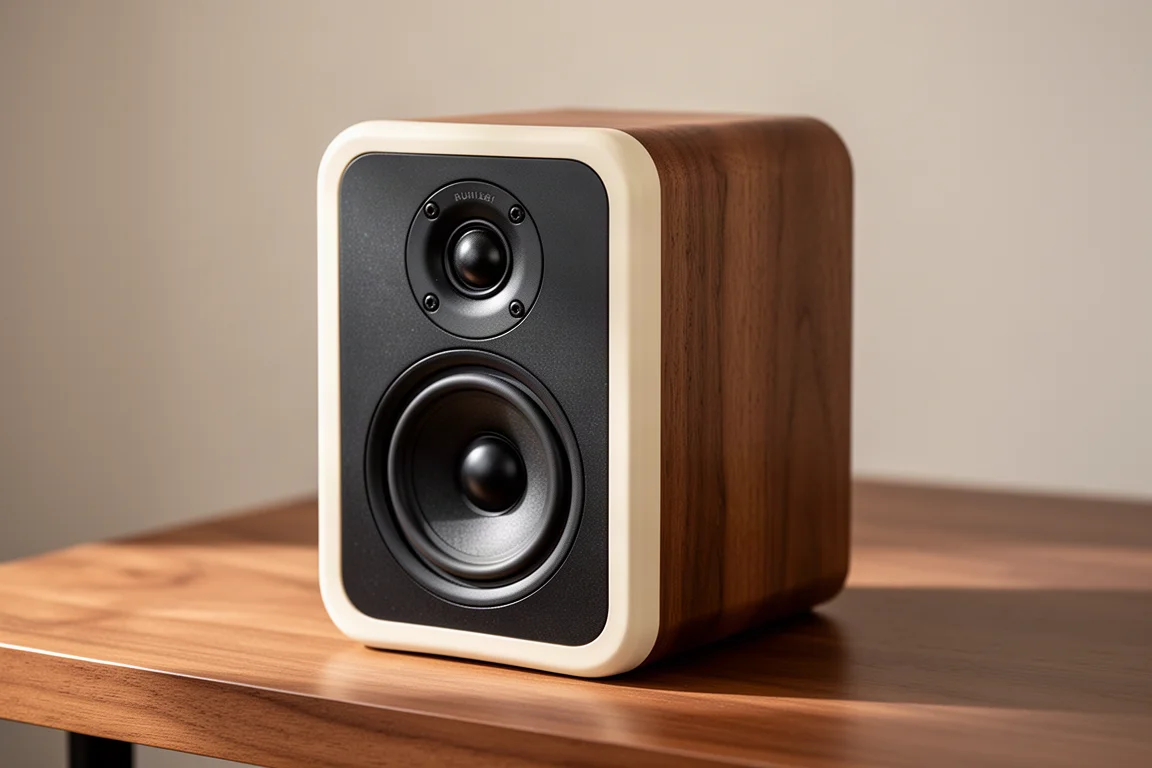
The IN-8 V2 takes the top spot at about $800 per pair, and it is a powered speaker, so no separate amplifier is required. That combination of performance and completeness is what earns it first place. Response is excellent and bass extension is the best on this list.
It is a coaxial design, with the midrange cone acting as a waveguide for the tweeter. The tweeter former sits slightly proud of the midrange, which introduces a diffraction-related dip in the measured response, but the rest of the data is very strong. There is a dip in the 8 to 10 kHz region that can take a little air out of the presentation, though it is not high enough to cause real offense. A breakup appears around 14 kHz.
Toeing the speaker out shifts the response toward the listening window average, which looks excellent and blends the presentation more evenly. A toe-out of 10 to 15 degrees is recommended, which applies to coaxial designs generally. Low frequencies roll off sharply below about 40 to 50 Hz, and horizontal and vertical radiation both measure about plus or minus 50 degrees.
Buying Advice: Matching a Speaker to Your Room
Room size and reflectivity should drive the decision more than any single measurement. If the room is large or you regularly listen from more than one seat, prioritize wide horizontal radiation, which means looking for roughly plus or minus 50 degrees or more. If the room is small or lively, a narrower pattern such as the Klipsch or the KEF will put less energy into the walls and often sound cleaner.
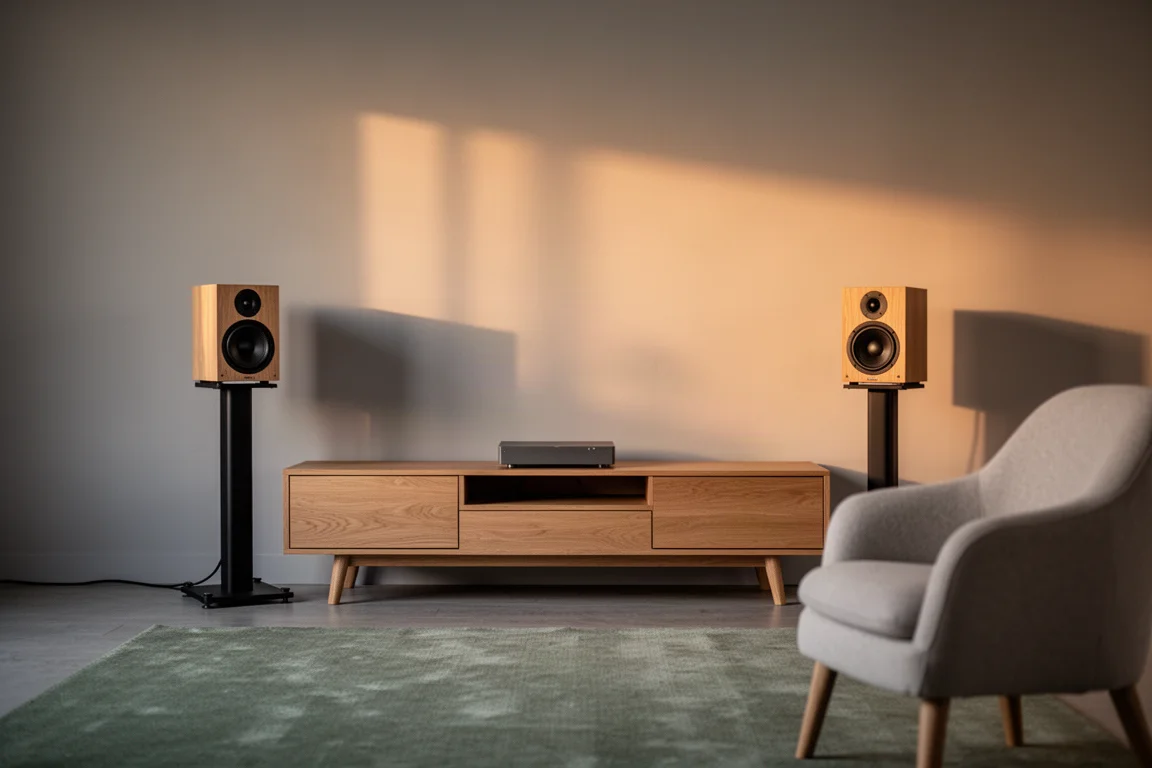
Placement decisions follow the same logic. Distance from the back wall controls how much low-frequency energy the room reinforces, which matters most for the Polk, and toe-in controls how much treble reaches the listening seat. Vertical alignment is critical for the ELAC and the Sierra-1 V2, both of which want the listener close to the tweeter axis. Sidewall absorption is worth considering for the ELAC and the Sierra-1 V2 in particular.
On the amplification side, the Kali Audio IN-8 V2 is self-powered and needs nothing else. The Sierra-1 V2 is the most demanding of the group and deserves a capable amplifier. Everything else here is a passive design that will run from a wide range of integrated amplifiers.
Budget-wise, a discounted KEF Q150 pair is the lowest-cost route into the list, the Polk, Klipsch, and ELAC sit in the middle, and the Sierra-1 V2 and Kali Audio IN-8 V2 are the most expensive options, with the Kali including its own amplification.
Conclusion
Each of these six speakers earns its place for a different reason. The KEF Q150 delivers a coaxial design at a sale price, the Polk R200 offers neutrality for listeners who will position it carefully, and the Klipsch RP-600M II brings bass extension and a narrow pattern that suits smaller rooms. The ELAC DBR62 adds a touch of low-end warmth and responds well to simple room treatment, while the Ascend Acoustics Sierra-1 V2 delivers near-textbook in-room neutrality if you can supply clean power. The Kali Audio IN-8 V2 tops the list by combining the best bass extension here with built-in amplification.
Match the speaker to the room and the amplifier, and any of these six will serve as the foundation of a system that stays satisfying for years.
Further reading
Related Reviews
Bookshelf Speakers
Acoustic Energy A100 Mark II Review: A Compact Standmount With an Expansive Soundstage
The Acoustic Energy A100 Mark II brings clarity, natural tonality and a wide soundstage to an entry-level standmount, with a few setup details worth knowing first.
Bookshelf Speakers
Acoustic Energy AE-100 Mark II Review: Compact Bookshelf Speakers With Standout Imaging
A compact British two-way bookshelf speaker with deep, layered imaging, fast bass, and a slight treble lift to weigh against a crowded $500 field.
Bookshelf Speakers
Acoustic Energy AE100 MK2 Review: Measured Performance and Four Alternatives
A close look at the Acoustic Energy AE100 MK2 bookshelf speaker, what its measured performance reveals, and four alternatives with different trade-offs.