Hi-Fi Speakers
Best Bookshelf Speakers Between 1,000 and 3,000 Pounds: Three Standmounts Worth Hearing
Three standmount speakers spanning roughly 1,000 to 3,000 pounds, with the strengths, room demands, and amplifier matching each one rewards.
Introduction
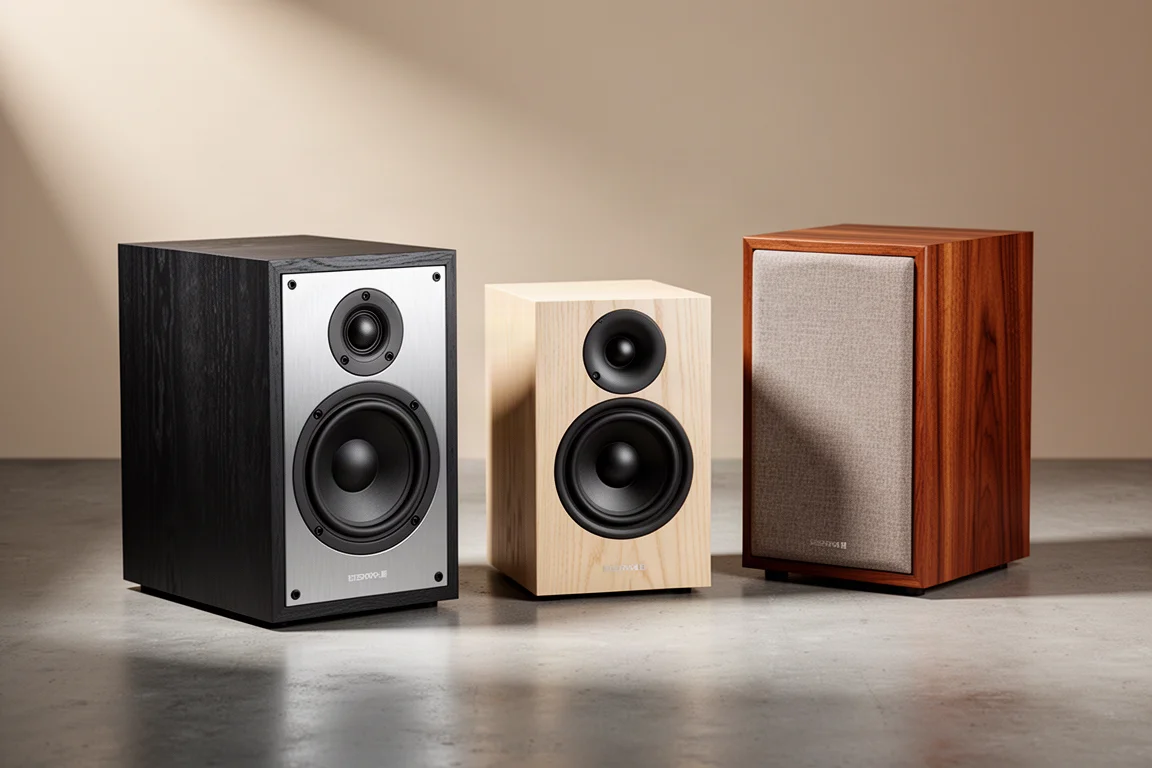
Standmount speakers between roughly 1,000 and 3,000 pounds occupy one of the most interesting parts of the hi-fi market. In the UK especially, smaller rooms make bookshelf designs the practical choice, and this is the price band where genuinely serious engineering starts to appear without tipping into cost-no-object territory.
Prices have moved around a lot. Inflation has pushed several of these models up by a few hundred pounds or dollars since launch, and pricing varies considerably between regions, so treat any figure here as a rough guide rather than a fixed number. What has not changed is the character of each speaker. The three below solve different problems, and each one rewards a particular kind of room and amplifier.
How We Judged These Three Standmounts
Three things mattered most. First, bass behaviour in a normal room, because a speaker that overwhelms a small space is difficult to live with no matter how good it sounds elsewhere. Second, amplifier friendliness, since a standmount that only comes alive with expensive electronics is a harder purchase to justify. Third, tonal balance and how clean the midrange stays when the volume rises.
Build quality and cabinet construction also carry weight at this level. Real wood veneer, sealed versus ported loading, and driver materials all shape how a speaker behaves over years of ownership, and how easy it is to place near a wall or inside a shelf.
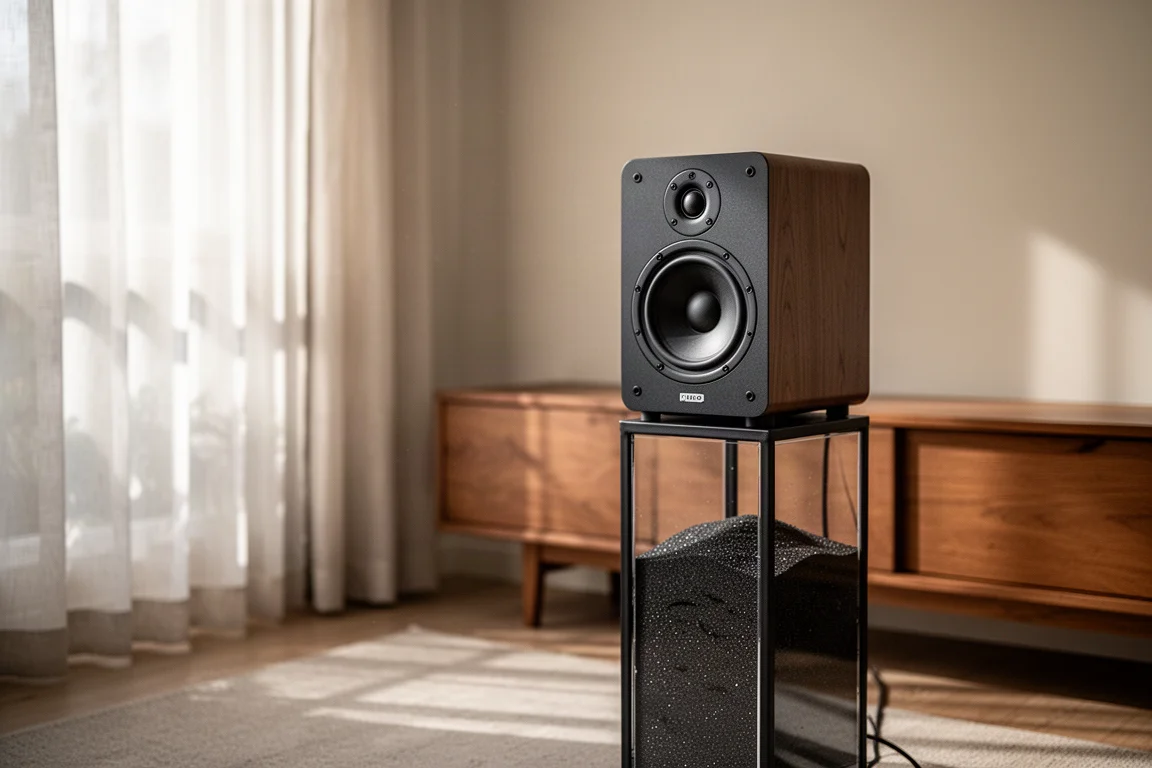
Weight and finish matter more than they sound on paper. A heavy cabinet with a rigid baffle tends to stay composed when the music gets demanding, while a lighter sealed box gives you more freedom about where it sits.
PSB Synchrony B600: Weight, Output, and Serious Bass
PSB turned 50 this year, and the Synchrony B600 is effectively a 50th anniversary gift to the high-end market. It is part of the Lenbrook group alongside NAD and Bluesound, and it sits under the design direction of Paul Barton, one of the most respected Canadian audio engineers, whose approach traces back to the objectivist school of speaker design: flat frequency response, good off-axis behaviour, controlled directivity, and freedom from obvious resonances.
The B600 is a two-way bass reflex design, and it is remarkably heavy. Lifting it out of the box genuinely requires both hands, and the protective packaging is elaborate. The front baffle is aluminium finished with a further material, which is unusually flashy for a PSB. A one-inch titanium tweeter handles the top end, and it is not a soft or laid-back presentation.
Bass is the headline. In a 16 by 13 foot room the B600 needed to sit four to five feet out from the wall because the low end was overloading the space. Imaging is first rate, with everything carved neatly into place and a soundstage that extends well beyond the room boundaries. Tonally it leans neutral, though many listeners find it a touch warmer than typical PSB models, partly because warmer amplifiers tend to be paired with it.
Amplifier matching is decisive here. A modest NAD integrated lacked the grunt to drive it, and a well-regarded 6000A integrated produced a dull, uninvolving result. A Cambridge Audio Edge A was superb, with the grip and low-end control to do the speaker justice. A high-powered hybrid integrated using tubes in the line stage also worked well. Paul Barton has agreed that the B600 sounds completely different with more powerful amplification, becoming more open and dynamic as power increases. It would take enormous power to damage it.
For a two-channel system without a subwoofer, where the speakers must handle both music and the dynamics of film soundtracks, this is a compelling choice. At 2,799 US dollars it has risen by around 300 since launch, and even at that price it stands out as exceptional value.
Amphion Argon1: Small Box, Big Dynamic Swing
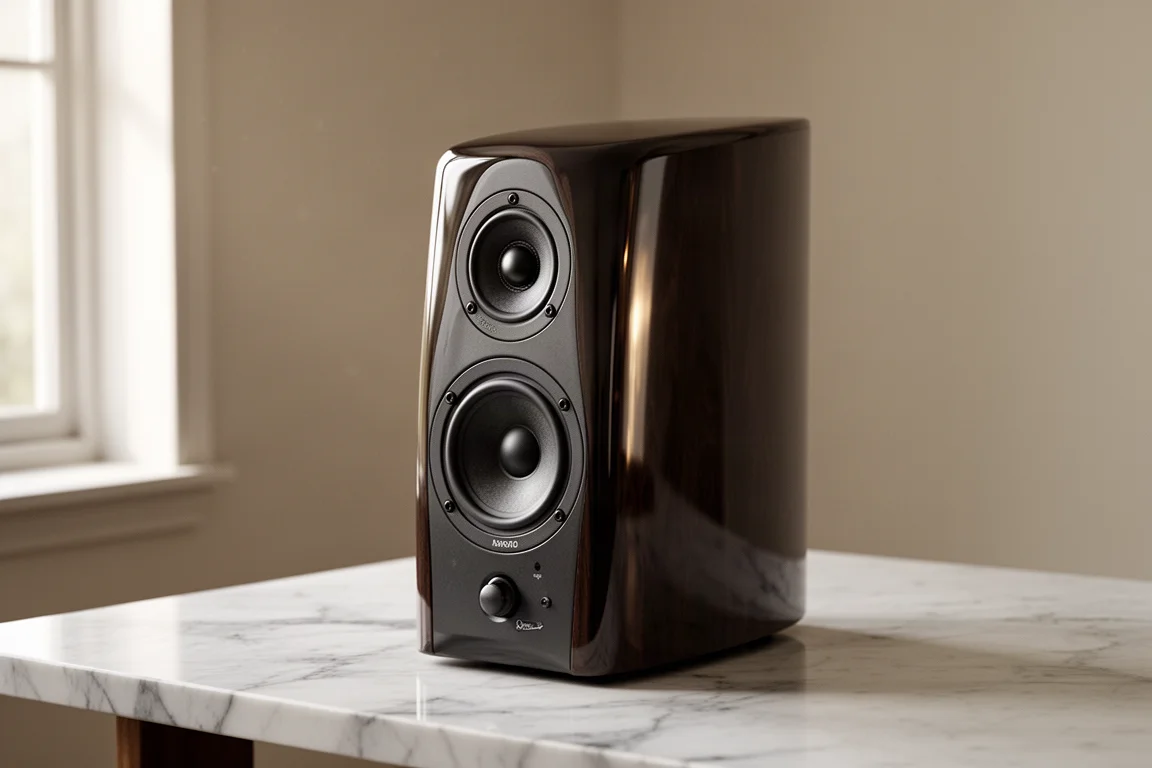
The Argon1 comes from a Finnish brand with one foot in the pro audio world, which shows in its clarity and lack of sentimentality. It pairs a roughly five-inch mid-woofer with a tweeter set into a deep waveguide, a layout that predates the current fashion for similar designs by a long way.
Heard at a show alongside a Hegel amplifier, in a room surrounded by systems costing twenty, thirty, or fifty thousand pounds, the combination sounded far better than a 2,500 to 3,000 pound system has any right to. That impression held up over long-term use as a benchmark standmount in this price band.
For a compact speaker it is unusually dynamic and clean, with a good amount of bass for its size and very consistent behaviour. It is not difficult to drive. A 500 pound amplifier will not disgrace it, and as you step up to 1,500 or 2,000 pounds the speaker stops being the limiting factor. That makes it a smart choice for someone building a system gradually, since the speaker keeps revealing more as the electronics improve rather than embarrassing a modest amp in the meantime.
The trade-off is midrange nuance. It will not deliver the kind of tonality and refinement that the classic BBC-derived monitors are known for, and reaching that level means moving up in budget. At around 1,200 pounds at launch and roughly 1,300 pounds now, it remains fair value.
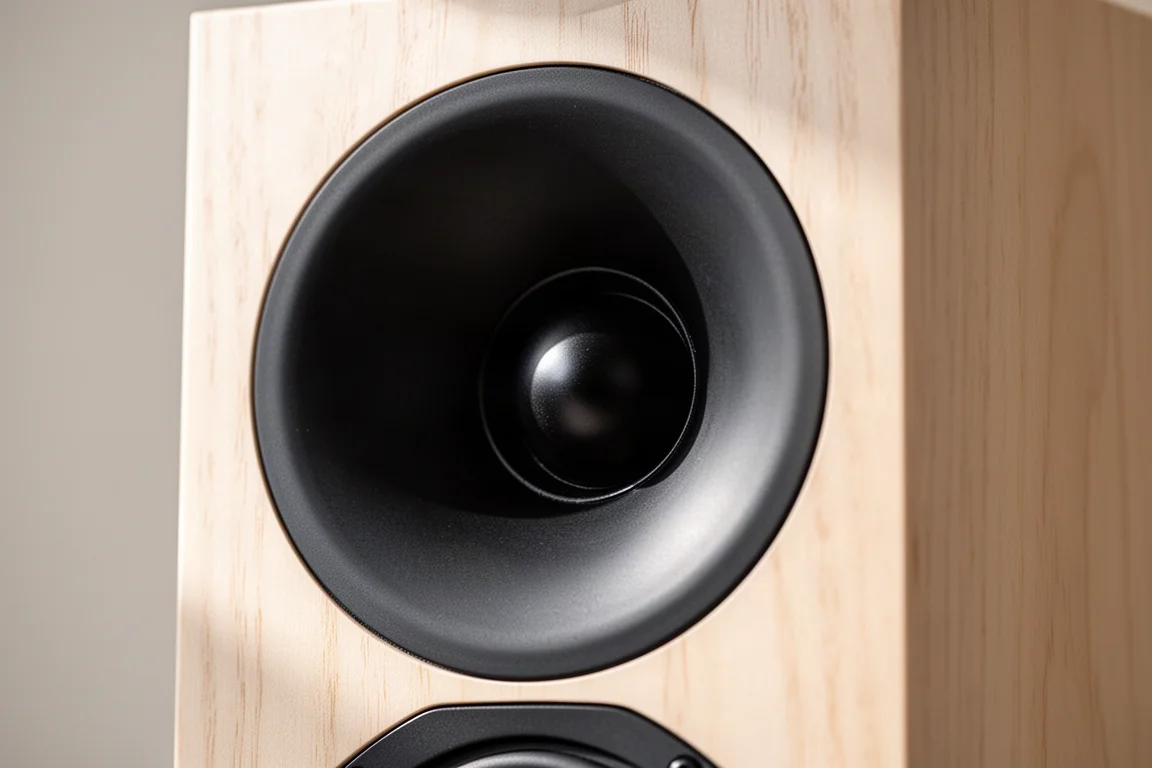
The waveguide-loaded tweeter is the visual signature of this design, and it is also what gives the speaker its precise, uncoloured top end. The inverted driver arrangement found on some similar monitors is not used here, but the principle is the same.
Spendor Classic 4/5: The Sealed-Cabinet Traditionalist
Spendor takes its name from Spencer and Dorothy Hughes, and the company began with a contract from the BBC, which is why its output sits alongside brands like ProAc and Harbeth in the classic British school of speaker design. The Classic 4/5 is the smallest model in the Classic line, and it is the only one that fits inside this price band.
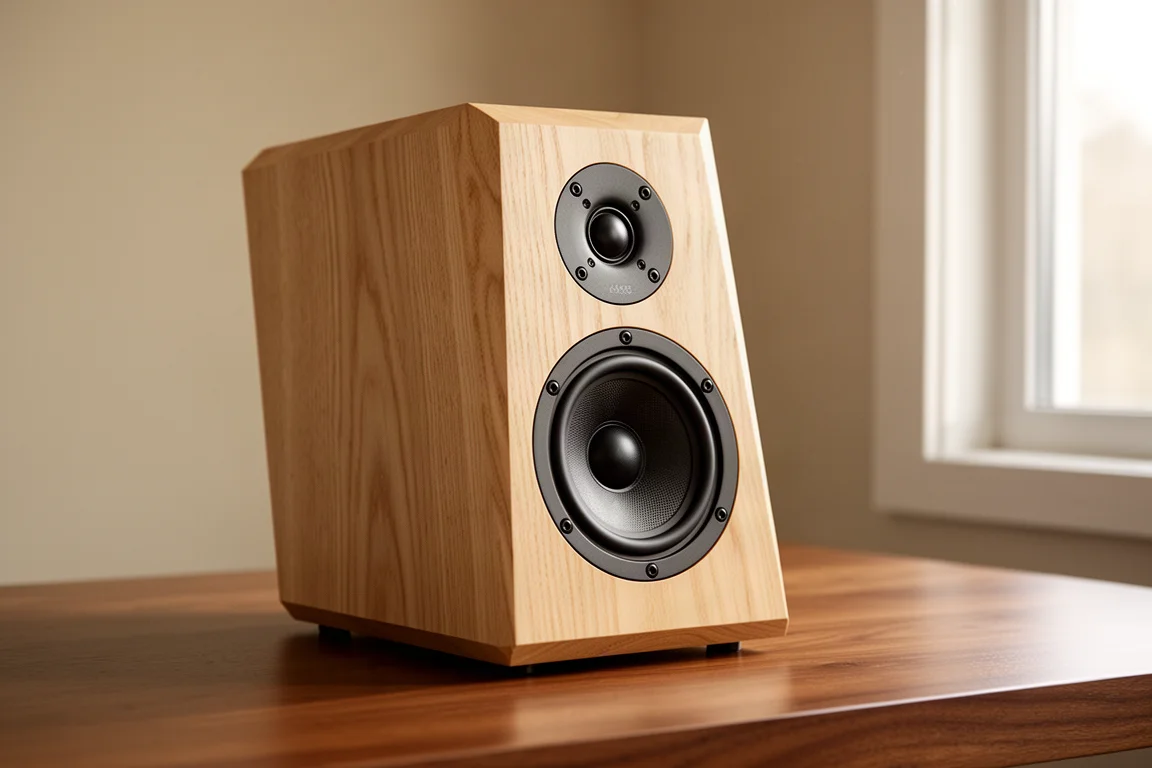
It is a two-way sealed cabinet, which matters practically: with no rear port, there is more freedom to place it close to a wall or actually inside a bookshelf. It uses a one-inch dome tweeter and a woofer of around six to six and a half inches. Over the past decade Spendor has moved away from very soft polypropylene drivers toward much stiffer materials, and the tweeters have changed too, so this is a modern-sounding Spendor rather than the softer, woollier presentation of older models.
That difference is audible. The 4/5 is tight and defined in the bass, though it will not play especially low, rolling off somewhere in the mid-50 hertz range, which makes it an excellent match for a good subwoofer. The midrange is clean, highly resolved, and genuinely pleasant. It is a balanced speaker that never becomes boring, and it flies under the radar because attention tends to fall on the A and D lines. The Classic series looks retro, but the drivers underneath are contemporary, and vintage-inspired design is very much in fashion again.
Two practical warnings. First, sensitivity is low, realistically in the 81 to 83 dB range, and impedance never drops much below 6 ohms, so 50 watts is a sensible minimum and the speaker benefits from an amplifier with real control. Second, the dedicated stands Spendor now offers for the Classic line cost close to 1,000 US dollars a pair in the US, which is hard to justify. Sand-filled metal stands from other makers do the job properly for far less, and the speaker genuinely sounds better on proper stands than on a shelf.
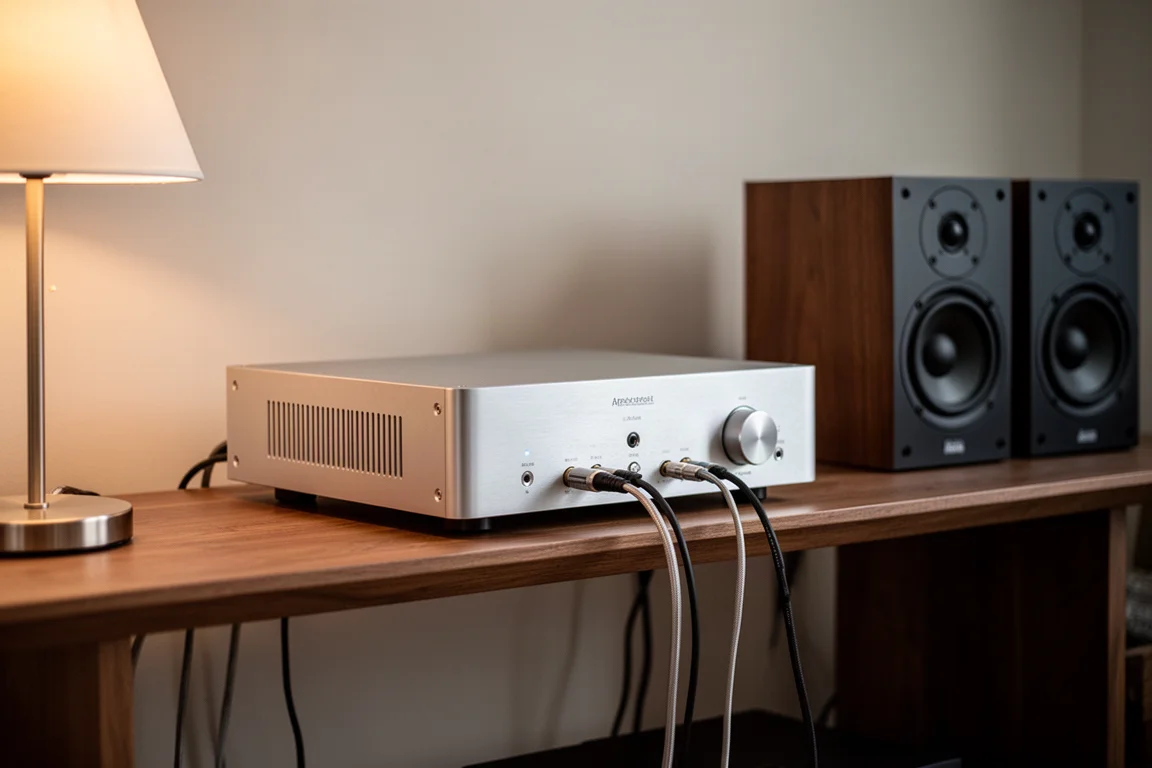
Amplifier control is the recurring theme with low-sensitivity sealed designs. A capable integrated with a solid power supply lets the midrange open up, while underpowered electronics leave the speaker sounding merely pleasant rather than involving.
Cabinet finish deserves a thought as well. Real wood veneer responds to sunlight over the years, and a speaker placed near a bright window can fade unevenly front to back, which complicates resale later. Walnut has long been the safer choice in this range.
Buying Advice: Matching Speaker to Room and Amplifier
The right pick depends less on absolute performance than on the room and the electronics you already own or plan to buy.
If you want the most bass and the greatest dynamic range from a standmount, and you have the space to pull speakers well out from the wall plus a powerful amplifier, the PSB Synchrony B600 delivers more than its price suggests. It is the most demanding of the three in terms of matching, and also the most rewarding when that matching is right.
If you want a compact speaker that stays clear and dynamic, works with a wide range of amplifiers, and grows with your system, the Amphion Argon1 is the easiest recommendation. It asks little and gives a lot.
If your priority is midrange resolution, a sealed cabinet that tolerates close-to-wall placement, and the traditional British presentation done properly, the Spendor Classic 4/5 is the one to hear. Budget for adequate amplification and for stands that are not the official ones.
Across all three, the sensible approach is to buy for the room you actually have. Bass output, porting, and sensitivity determine how a speaker behaves in a real living space far more than a specification sheet suggests.
Conclusion
Between roughly 1,000 and 3,000 pounds, these three standmounts cover the main paths through this market: maximum output and low-end weight, compact clarity with amplifier flexibility, and classic British midrange refinement in a sealed box. Prices will keep drifting with inflation, so it is worth confirming current figures locally, but the character of each speaker is what you are really choosing between.
Further reading
Related Reviews
Hi-Fi Speakers
1723 THX Tower vs 1528 Bookshelf: Which Speaker Fits Your Room?
Two speakers at roughly the same price, built very differently. How the 1723 THX tower and the 1528 bookshelf compare on construction, bass, power needs, and sound.
Hi-Fi Speakers
Acoustic Energy AE 300 Review: Deep Bass From a Compact Standmount
A two-way standmount with real wood veneer, surprising low-end weight, and a warm, easygoing character. Here is what to know before buying.
Hi-Fi Speakers
Acoustic Energy AE1 40th Anniversary Review: A Modern Take on a British Classic
A compact standmount that revives a 1980s favorite with all-new parts, a warm mid-centric balance, and a price of £1,499 per pair.