Backpacking Gear
Best Beginner Backpacking Gear 2026: Five Picks That Handled Cold, Rain, and Wind
Five field-tested backpacking picks for first-timers, covering a 60L pack, a compact stove, a titanium pot, a down jacket, and a full sleep system.
Introduction
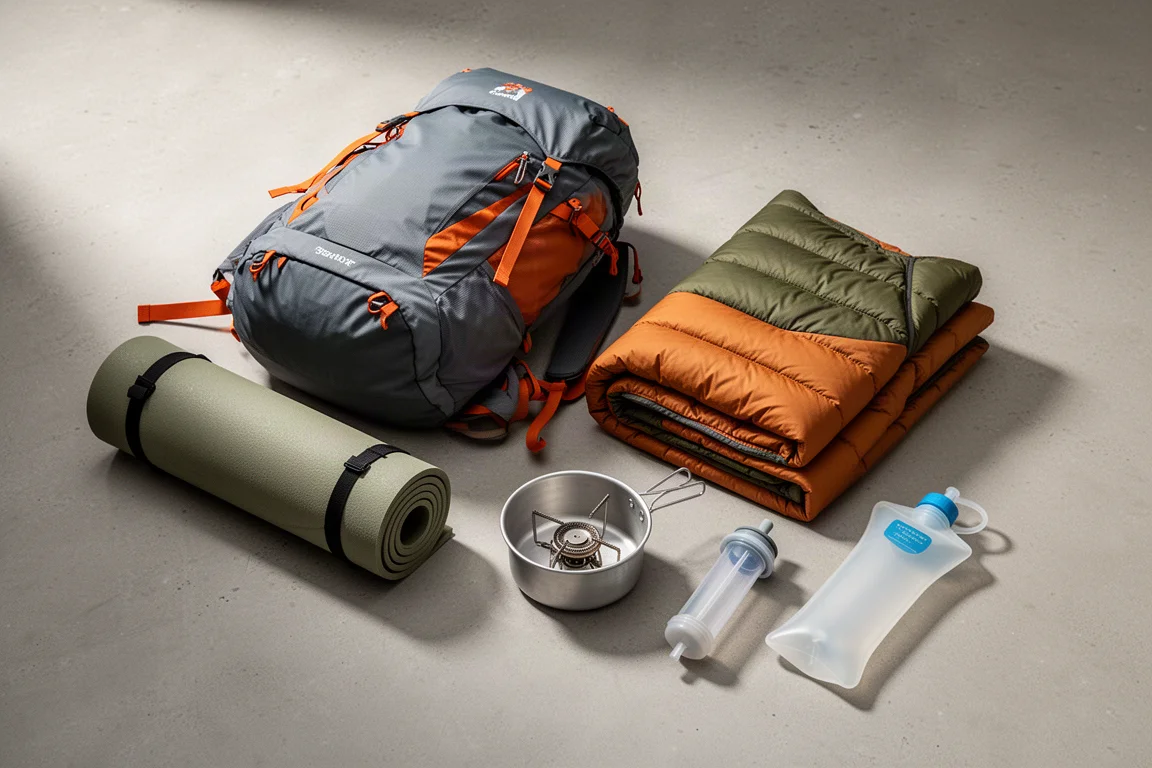
A two-day backpacking trip in cold, wet, and unusually windy conditions is a hard test for any gear list, and an even harder test when the person carrying it has never camped before. Every item in the pack was chosen in advance, and the total load came in at 17.8 pounds including food and water.
The five products below are the ones that stood out for how they performed: a 60-liter pack, a compact canister stove, a titanium pot, a warm down jacket, and a complete sleep system. Each one earned a place on a beginner-friendly list for a specific reason, and each has at least one trade-off worth knowing about before you buy.
How These Picks Were Chosen
The selection criteria were simple and practical. Weight mattered, but so did packability, warmth, durability, and how easy each item was to use with cold hands in bad weather. The trip included moderate hiking trails, rain, and strong wind, so anything that required fussing or fine motor skills in the cold counted against it. Value was part of the equation too. None of these items sits at the absolute budget end, and none sits at the top of the market either.
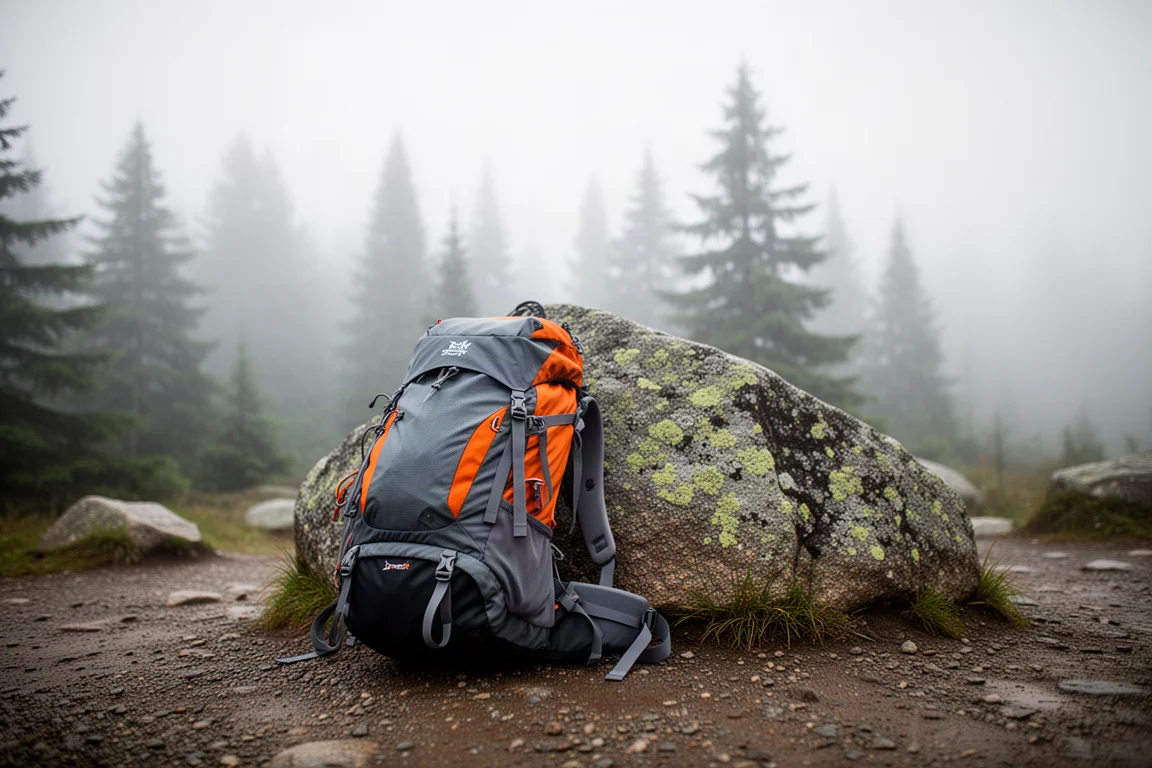
Another factor was how forgiving each item would be for someone still learning. A pack with too many compartments, a stove with a fiddly valve, or a sleep system that needs perfect technique all add friction on a first trip. The gear here leans toward straightforward use, with the assumption that the owner will keep it for several seasons rather than replace it after one outing.
Outdoor Vitals Shadowlight 60L: A Pack That Carries More Than It Weighs
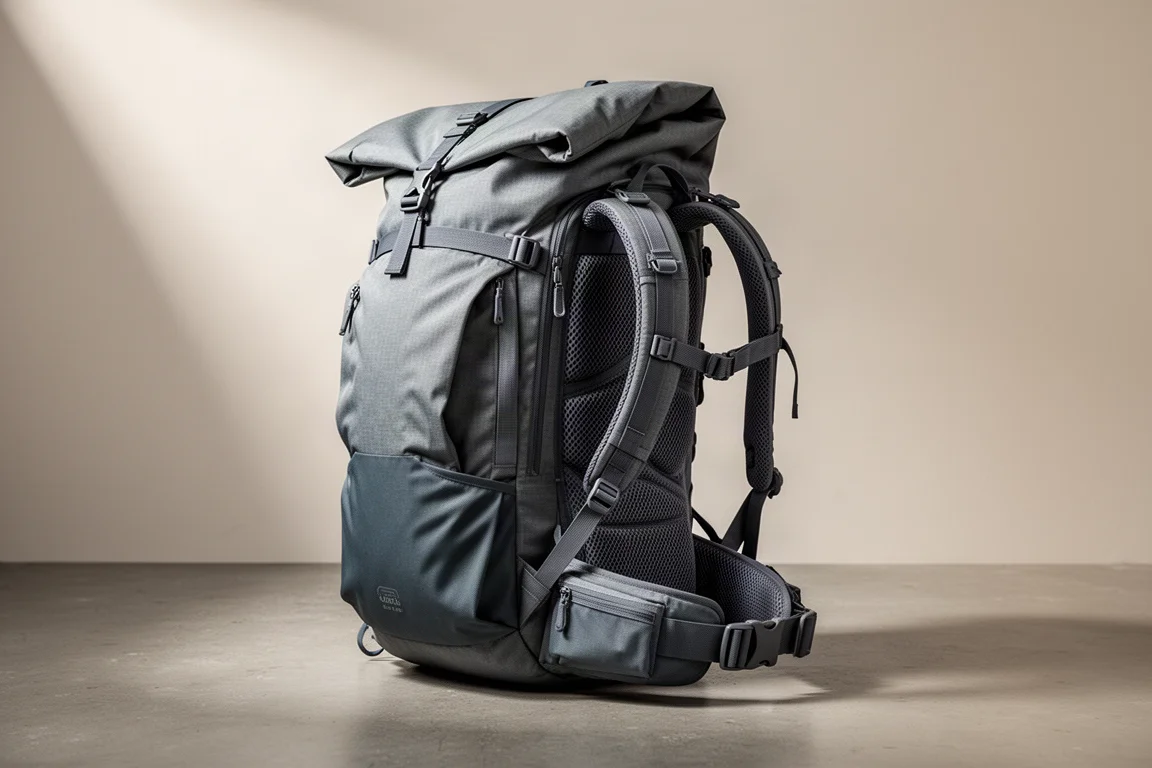
The Shadowlight 60L is a roll-top pack with a 60-liter capacity and a layout built around access. The most useful feature is the external entry point, which lets you reach the bottom of the main compartment without unpacking everything from the top. Deep double pockets on the sides and equally deep hip belt pockets hold the items you want within reach, and the mesh back panel keeps a layer of separation between the load and your back.
The suspension uses a frame that adds structure without feeling like a board against the spine, and the fabric and stitching held up to repeated tugging and stuffing without any sign of strain. There was spare room left over after a full two-day load, which gives a first-time packer some margin for error. One honest note: the exterior pockets are generous, so it is easy to keep adding items until the total weight creeps up.
Soto Amicus Stove: Reliable Ignition in Wind
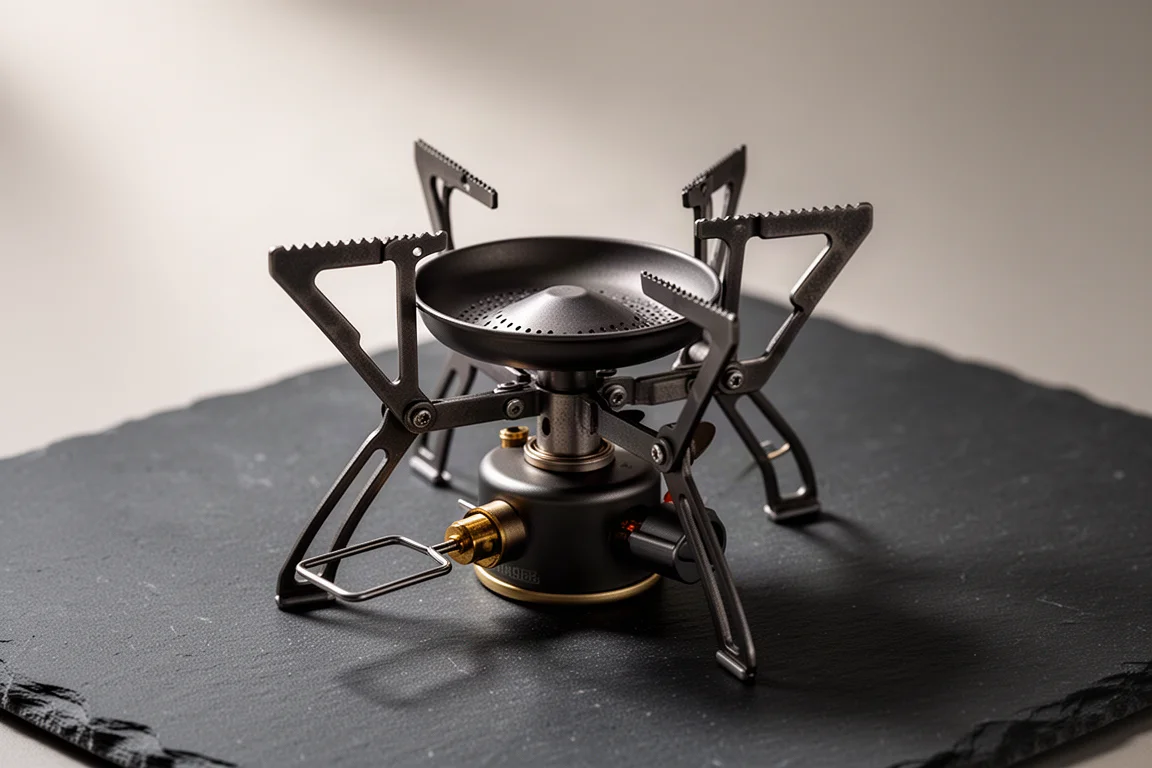
The Amicus is a small canister stove with a built-in igniter, and it is noticeably more compact than the classic pocket-rocket style stove it replaced in this kit. The igniter is the headline feature. On a windy evening, sparking a separate lighter inside a sheltered spot is awkward, and having ignition built into the burner removes that step entirely.
The stove threaded onto a standard canister and boiled water without drama. It folds down small enough to nest with cookware, and the pot supports are stable for a pot of this size. Wind remains the main enemy of any canister stove, so a sheltered spot or a simple windscreen is still worthwhile.
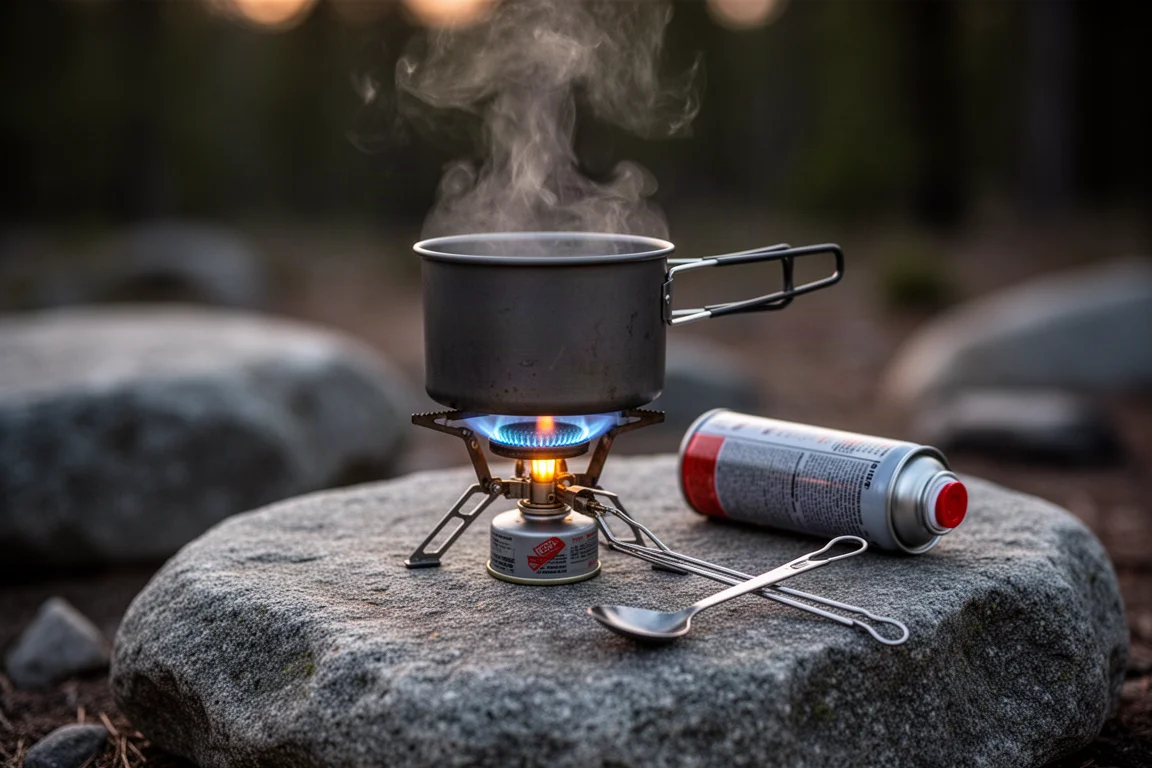
For a beginner, the appeal is the reduced number of steps. There is no separate lighter to lose, no priming, and no fuel line to manage. The stove is light enough that it barely registers in a pack, and it pairs naturally with a small titanium pot.
Toaks 750ml Titanium Pot: Light Cookware That Packs Small
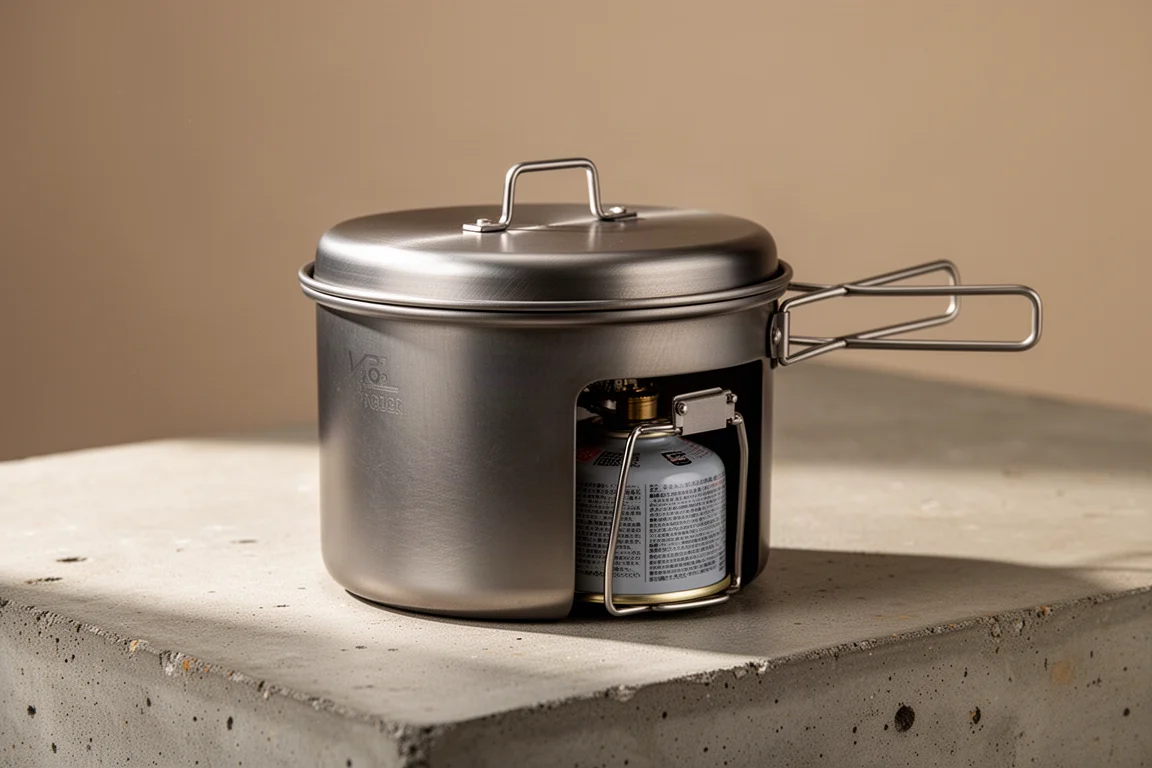
The Toaks 750ml titanium pot is the simplest item in the kit and one of the most satisfying. Titanium keeps the weight down to almost nothing, the folding handle swings out for cooking and folds flat for storage, and the lid can be slid into a position where it locks rather than folding down, which makes it easier to lift and drain. A canister stove and a small lighter fit inside the pot when it is packed.
Cleaning is a rinse and a wipe, which matters at the end of a long day. The one real frustration was the volume markings on the inside of the pot, which were difficult to read in dim light and made measuring water for dehydrated meals less precise than it should be. That is a minor issue for anyone who measures at home and repackages meals ahead of time.
Outdoor Vitals Nova Pro Jacket: Warmth That Works as a Blanket
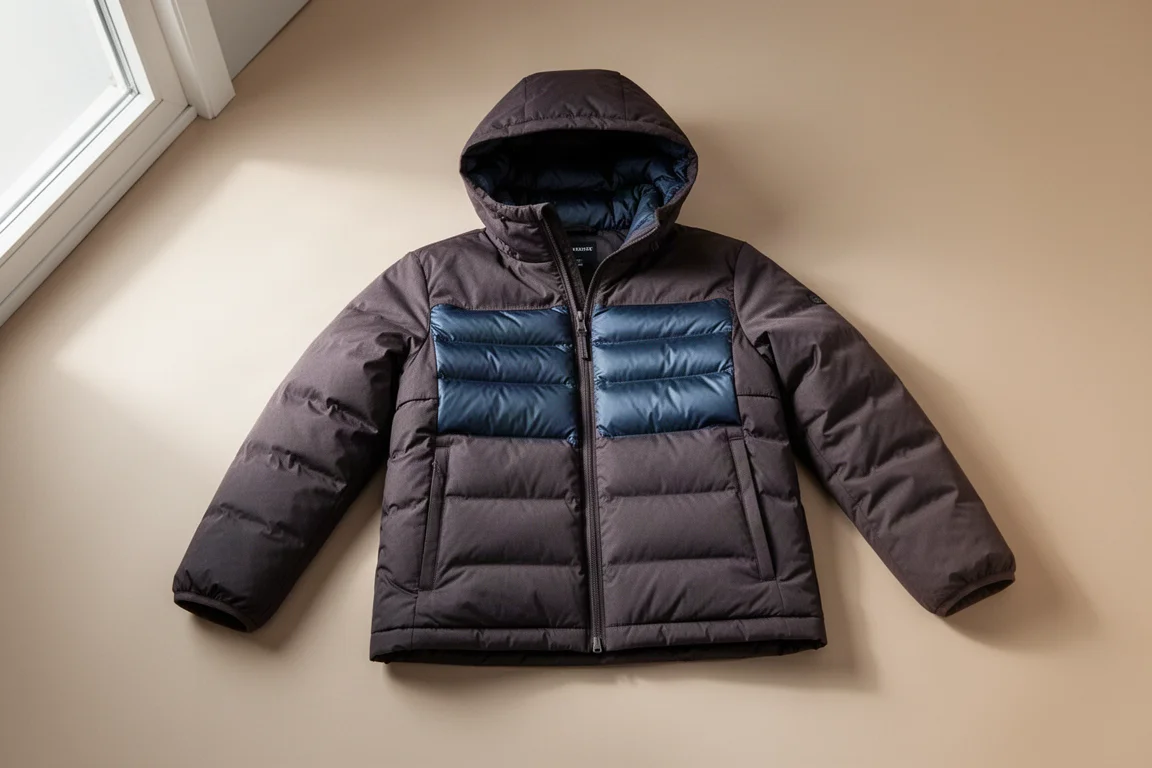
The Nova Pro is a down puffer jacket, and it was the single most appreciated piece of clothing on a cold, windy trip. It layers well over a long-sleeve base layer or a light sweatshirt, especially when you size up rather than choosing a snug fit. Sizing up also leaves room to cinch the hood and pull the jacket up around the face at camp.
Features that earned their keep include the hood, the deep hand pockets, and a main zipper that ran smoothly without snagging. Pit zips are present for ventilation on warmer days, though they went unused in these conditions. The jacket was also used as an extra blanket inside the tent, which is a good sign of how much loft it offers for its weight.
Two things to keep in mind. Down loses loft when it gets wet and does not dry quickly in the field, so it belongs in a dry bag near the top of the pack rather than at the bottom. And a bright color is a personal choice, but a neutral one will show less dirt over time.
Zenbivy Sleep System: Comfortable Nights on Cold Ground
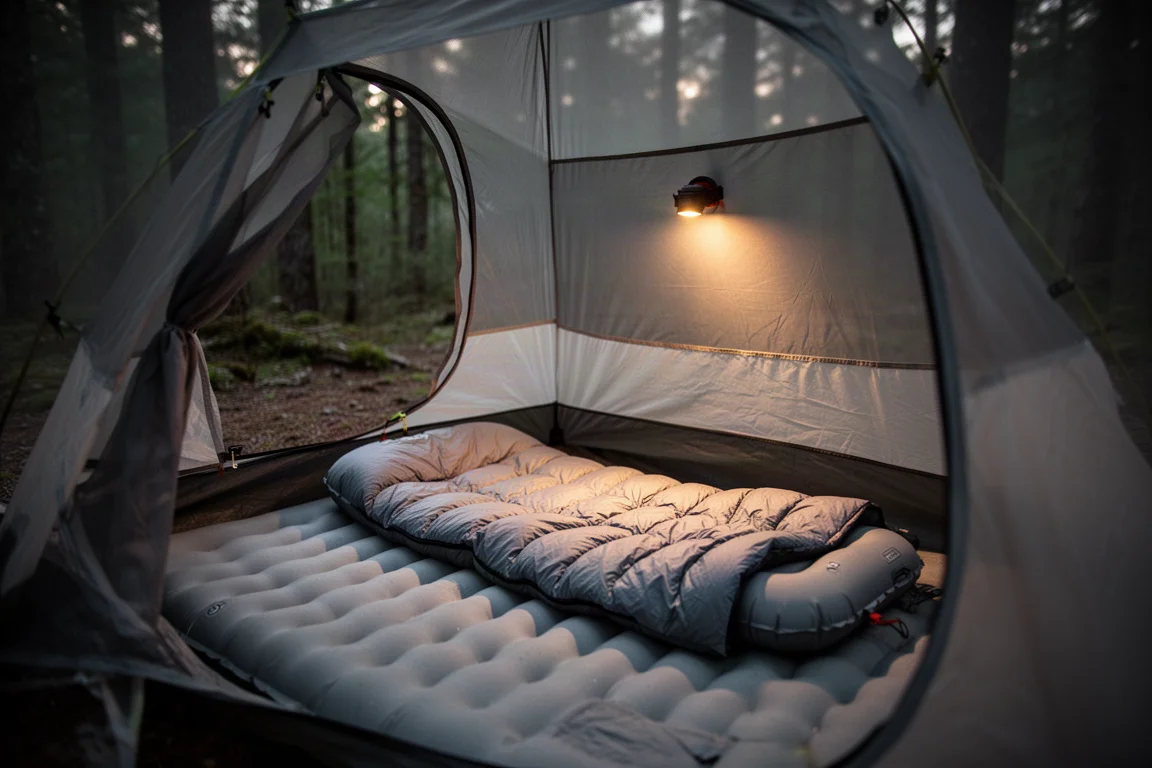
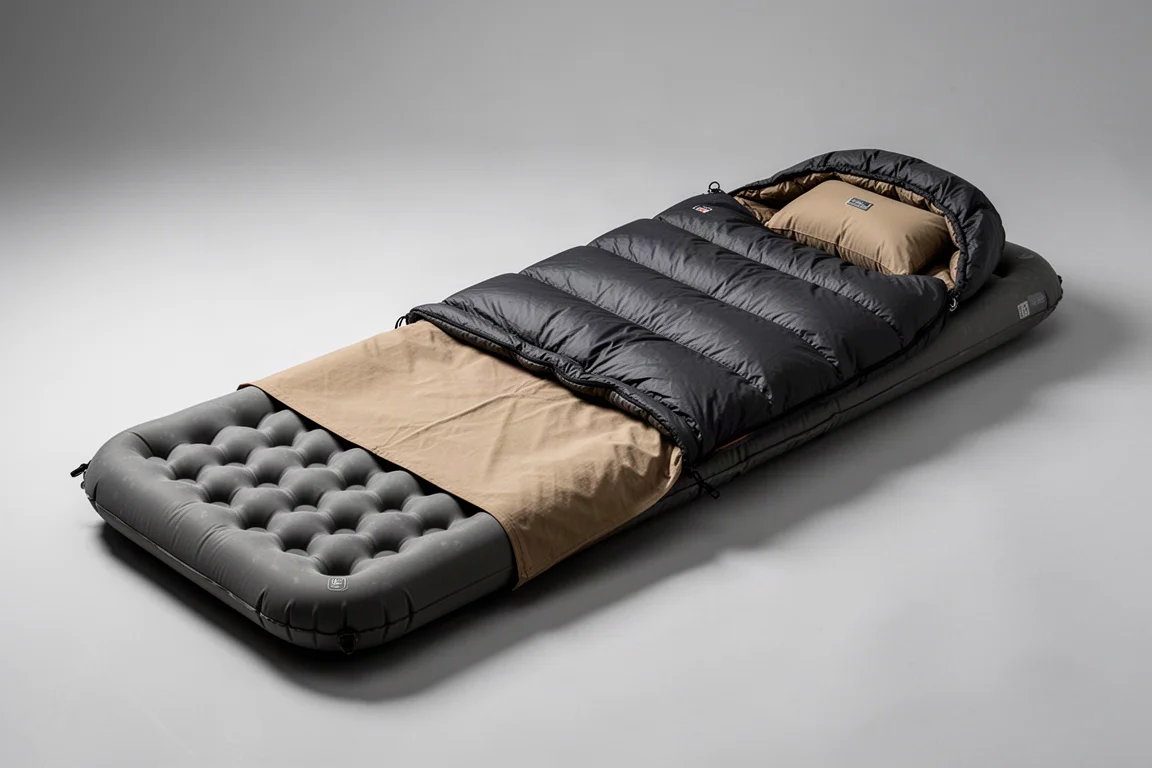
The Zenbivy system pairs an inflatable sleeping pad with a quilt, and it is sold in packages that make the whole setup easier to buy at once. The pad inflates with a pump sack, deflates quickly when it is time to pack up, and provides enough insulation that cold never came up through the ground. For someone who normally struggles to fall asleep, that is the difference between a good trip and a miserable one.
The quilt is the standout. The interior fabric has a soft, sheet-like feel, the hood cinches around the head, and small clasps hold the pillow in place so it does not slide away during the night. The foot box seals around the feet and keeps them warm. Two caveats: the included pillow is small and did not match the comfort of the rest of the system, and there can be a slight draft at the junction where the quilt meets the pad, which is easily fixed by tightening the connections and adding a layer.
Buying Advice for First-Time Backpackers
Start with the items you will touch most: the pack, the sleep system, and the insulation layer. These three determine whether a first trip feels manageable or miserable, and they are the hardest to improvise with borrowed gear. A 60-liter pack is a sensible size for two to three days, a puffy jacket can double as camp insulation and a blanket, and a sleep system that keeps you warm from the ground up is worth more than any gadget.
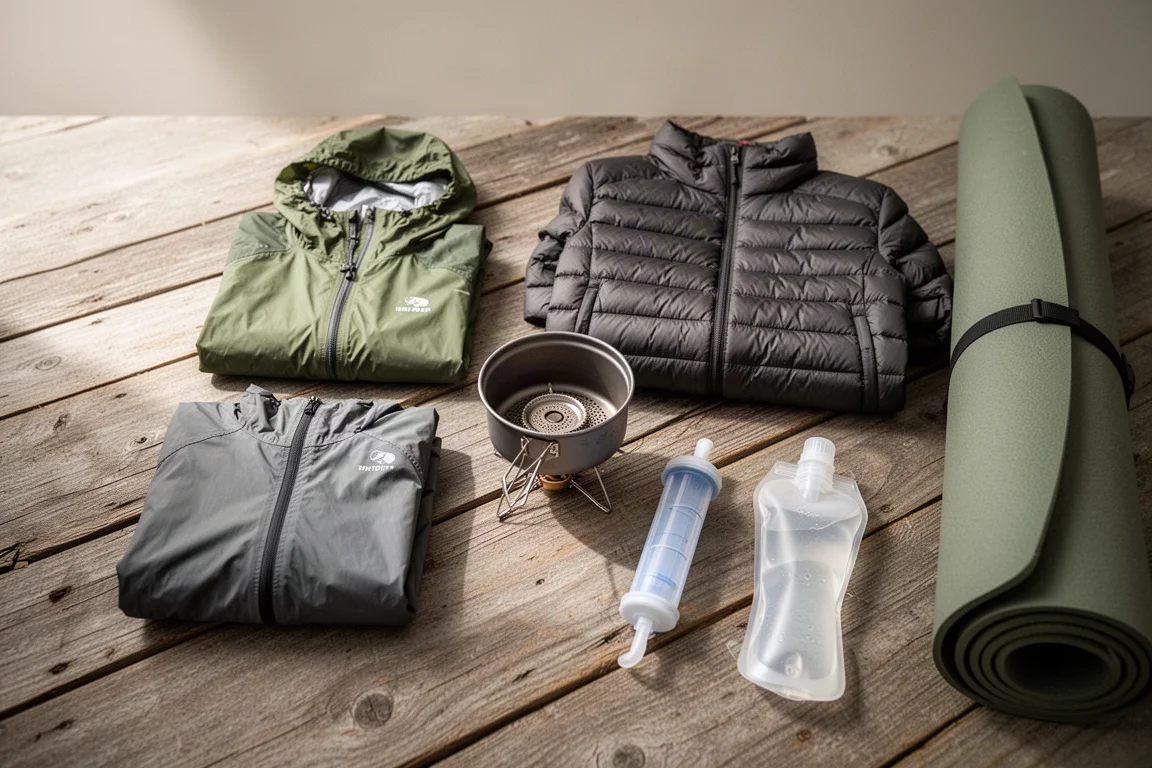
Practice at home before you go. Pitch the shelter in the yard, pack and repack the bag until you have a system, and cook one meal on the stove. On the trail, keep rain gear and insulation near the top of the pack, put the heaviest items close to your spine, and use the hip belt pockets for things you reach for often. Finally, resist the urge to buy everything at once. Middle-of-the-road gear that you will actually use beats a full kit of bargain items you replace after one season.
Conclusion
None of these five items is exotic, and that is the point. A pack with real access and a comfortable carry, a stove that lights without a separate lighter, a pot that weighs almost nothing, a jacket warm enough to sleep in, and a sleep system that makes cold ground feel like a bed. Together they carried a first-time backpacker through cold, rain, and wind at 17.8 pounds, and each one has a clear reason to be on the list.
Further reading
Related Reviews

Backpacking Gear
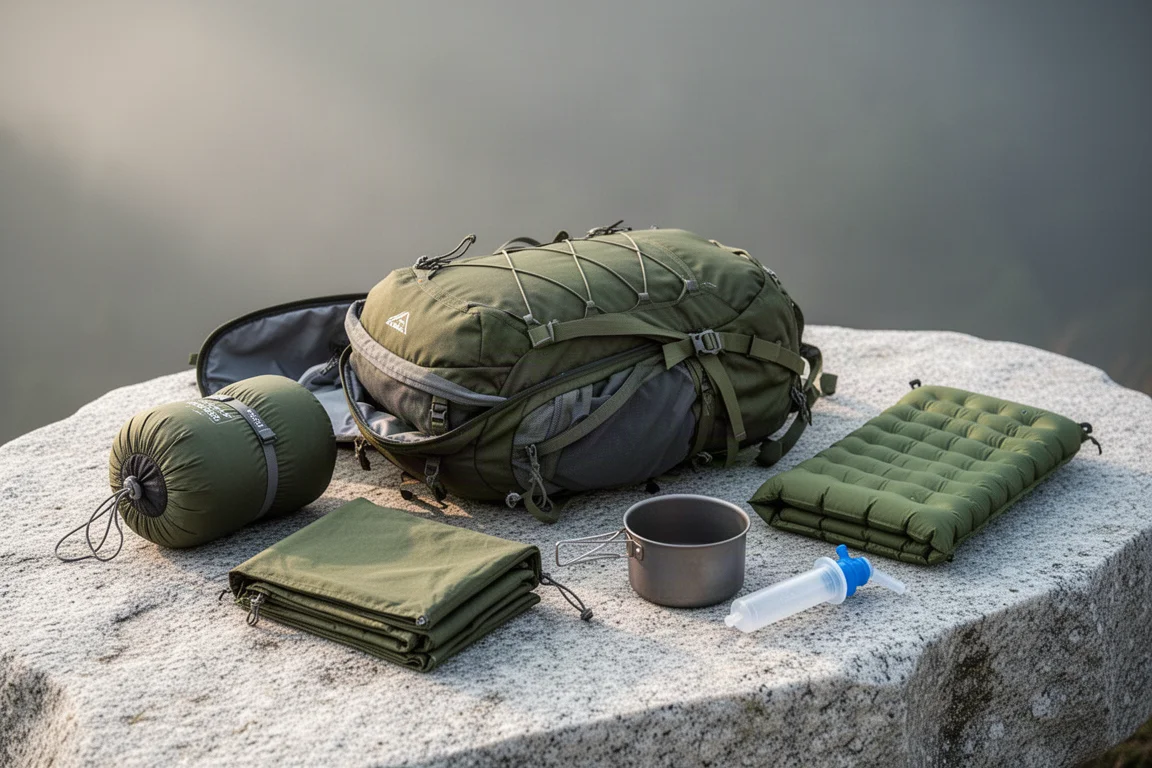
Building a 10 lb Base Weight: An Ultralight Backpacking Gear List
A practical walkthrough of the ultralight pieces behind a 10 lb base weight, from a 765 g pack and a roomy one-person tent to a full camp chair and a dependable water filter.
Backpacking Gear
A 15-Pound Lightweight Backpacking Gear List for Solo Trips
A beginner-friendly 15-pound backpacking setup built from easy-to-find gear, with notes on what each piece does, how it packs, and where to spend your attention.
Backpacking Gear
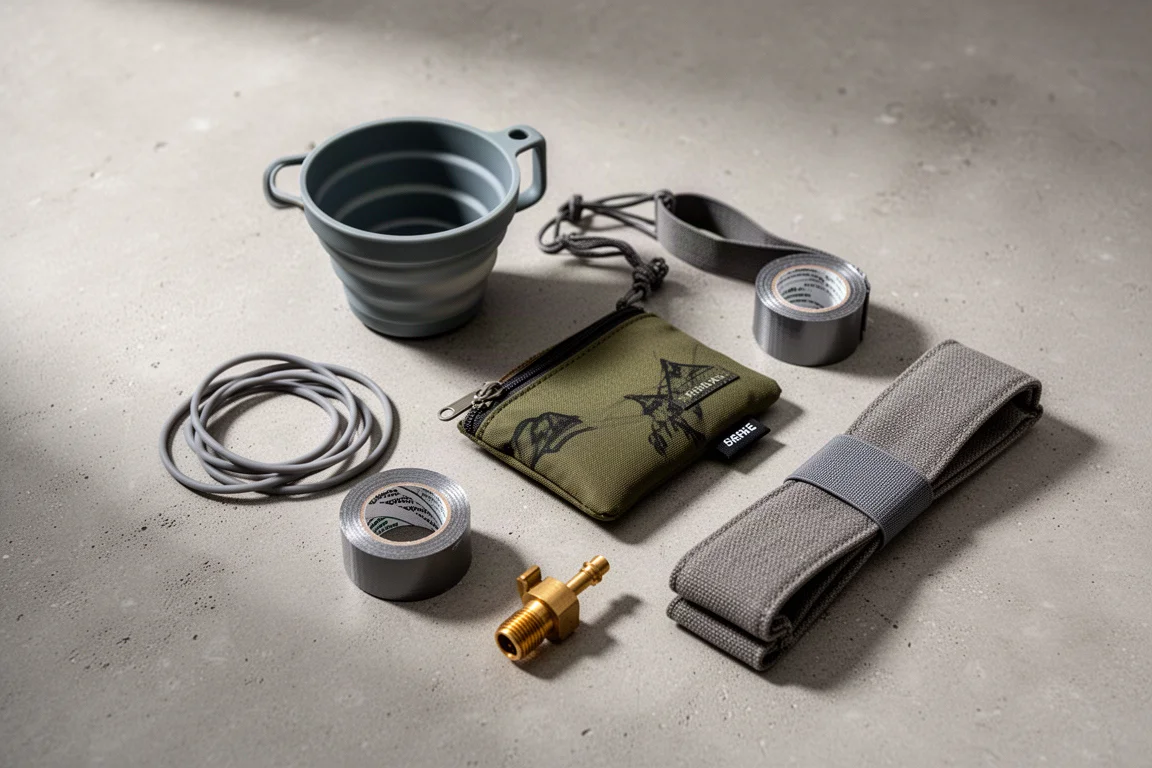
8 Ultralight Backpacking Gear Upgrades Worth Carrying
Eight small, affordable backpacking upgrades that solve real trail annoyances, from a pillow that stays put to a fuel valve that rescues leftover canister gas.