Chainsaw Accessories
Best Bar and Chain Oil Showdown: Six Oils Tested in a Real Chainsaw
Six bar and chain oils, one Stihl MS250, and a full battery of wear, temperature, flow, and lab tests. The cheapest oil came out on top.
Introduction
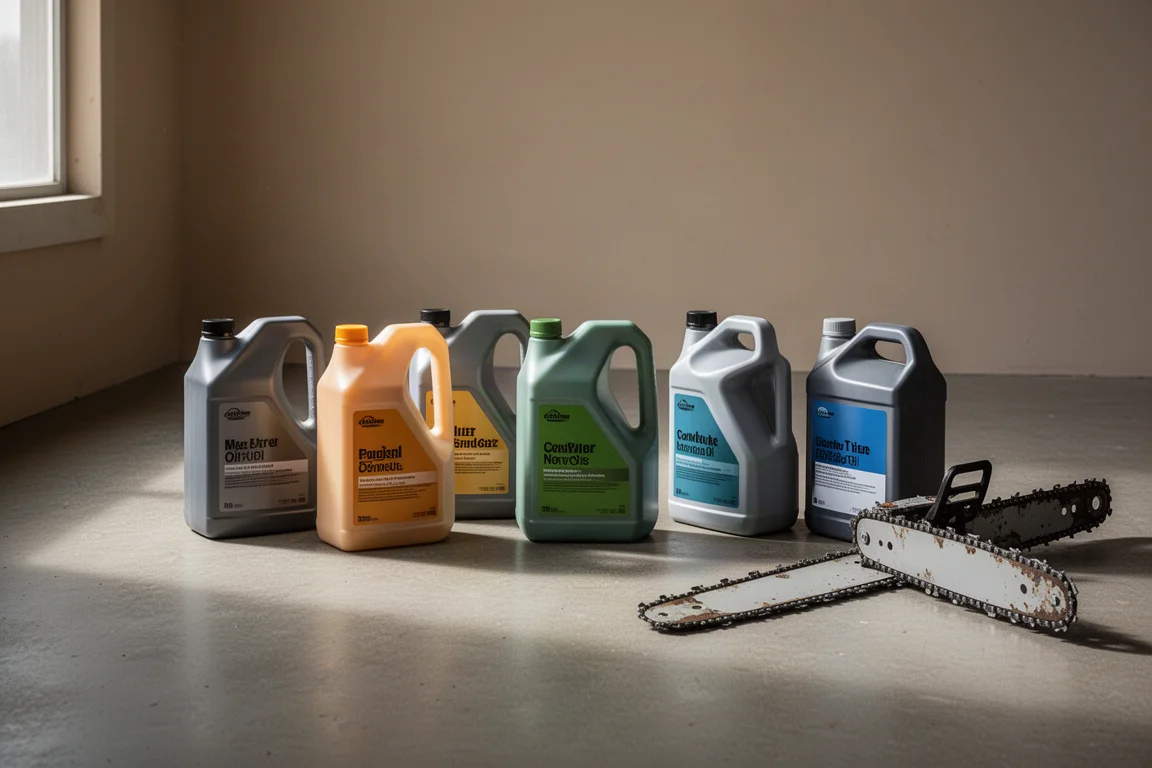
Bar and chain oil looks like one of the simplest purchases in chainsaw ownership, yet prices vary wildly. A gallon can cost around $10 or closer to $30, and manufacturers all claim high tack, extreme pressure protection, and all-season performance. To find out whether the premium bottles actually deliver, six bar and chain oils went head to head in a real saw, backed by lab analysis, cold-flow timing, lubricity testing, and an evaporative loss test at high temperature.
The short version: the least expensive oil in the lineup, Harvest King, won the overall showdown. But every oil here has a story worth knowing before you buy.
How the Oils Were Tested
Each oil ran through the same routine in an almost new Stihl MS250, using a dedicated new bar and new chain for every brand. Tests included a full tank of cutting to measure bar temperature and chain wear, timed oil-flow races at room temperature and at roughly 10 degrees F, a lubricity test measuring wear scars under a microscope, a two-hour evaporative loss test at around 330 degrees F, and an independent lab analysis of each oil’s additive package.
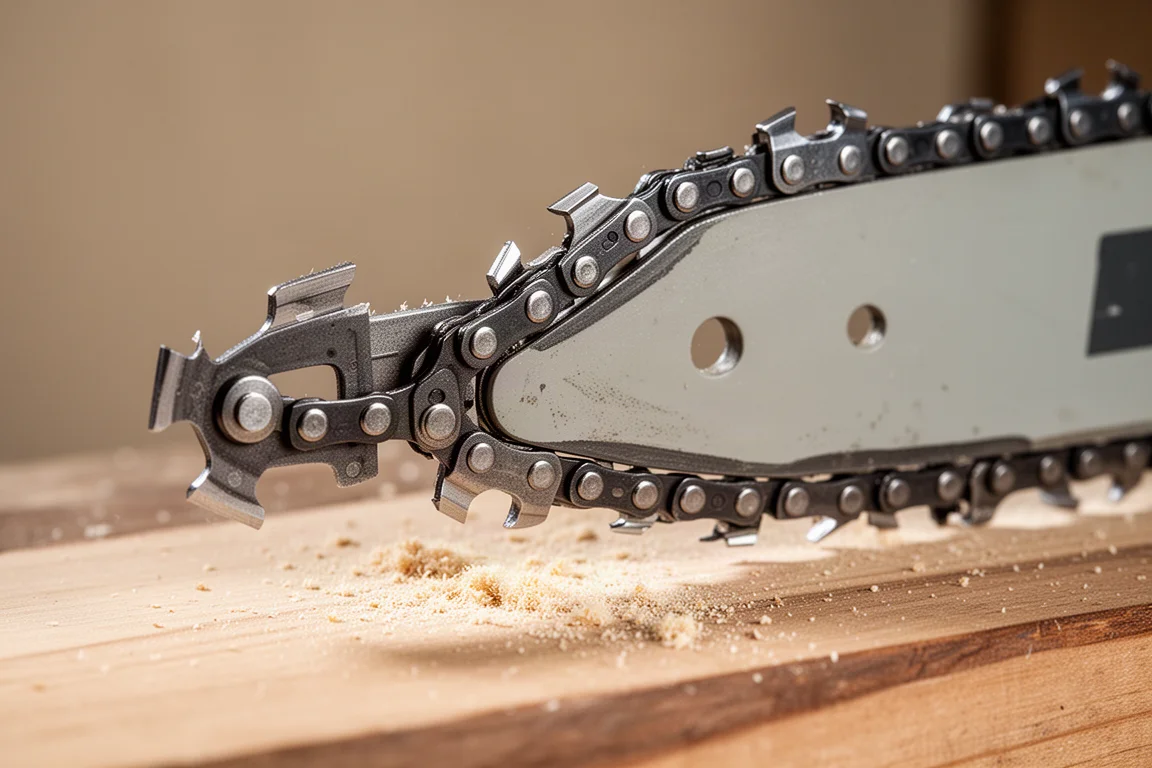
The contact point between the chain and the bar is where the oil has to do its job, since the chain rides directly on the bar with only the oil film separating them. That makes wear on the bottom side of the chain the most meaningful metric, and it was measured as the average of four different lengths per chain.
The Test Saw: Stihl MS250
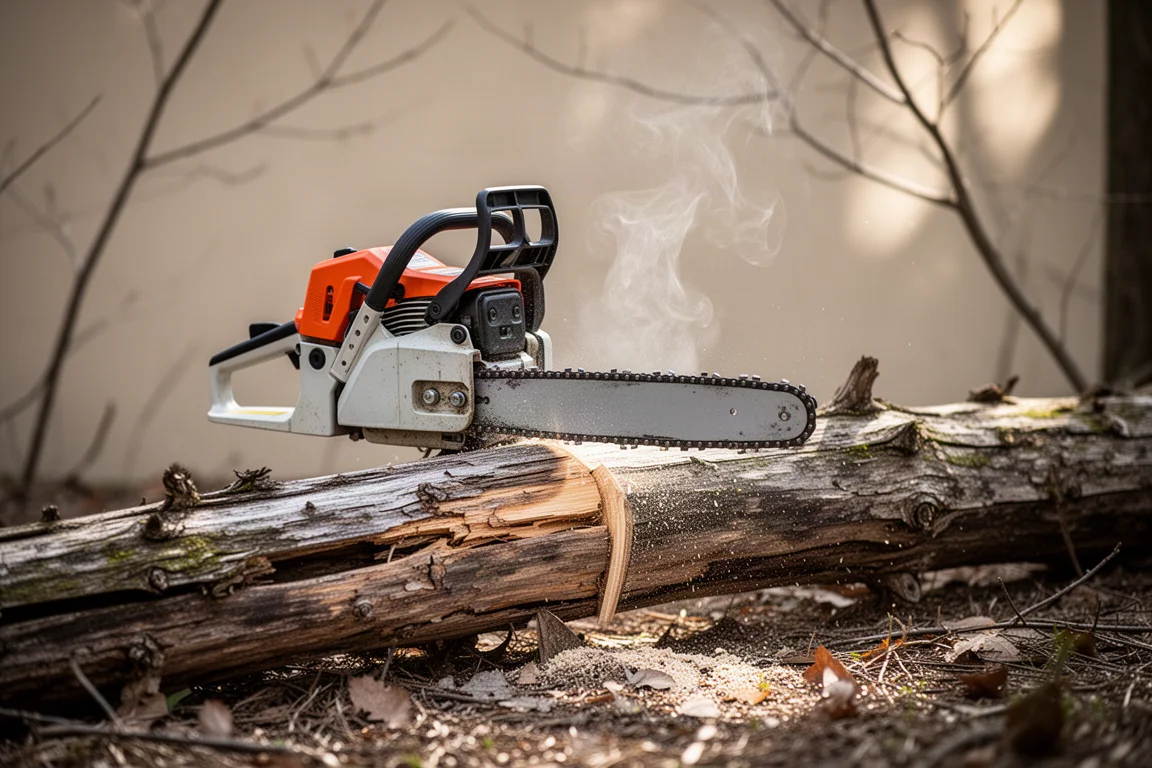
The Stihl MS250 served as the test platform, and it handled the workload without complaint across all six oils. Because chain speed in a Stihl saw is high, oil burn-off and smoke were easy to observe, which made differences between the oils obvious. Chain tension was equalized before every test, and fresh bars and chains from the same dealership kept the comparison fair.
The Winner: Harvest King Bar and Chain Oil
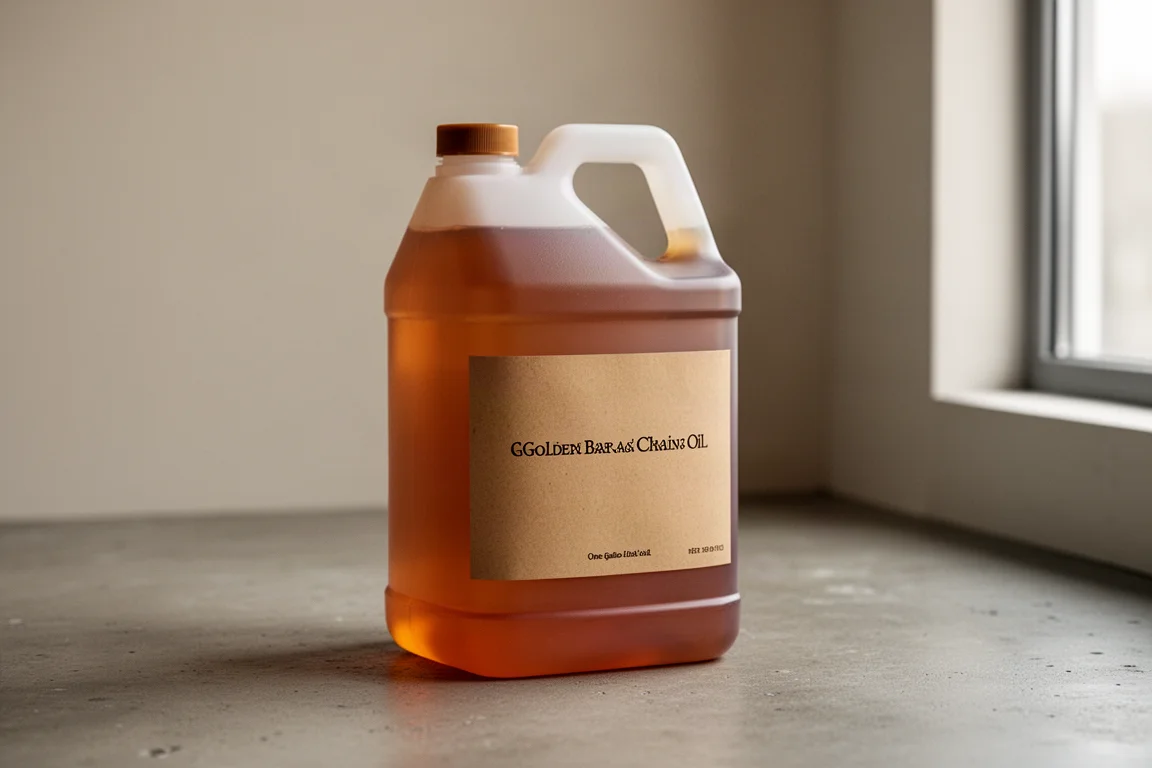
Harvest King, made in the USA at roughly $10 per gallon, claims high-tack additives and extreme pressure lubricants for heavy and shock load conditions. In practice, it lived up to the claims. It kept the bar the coolest of any oil tested at 250 degrees F, produced the least chain wear at 1.89 mm on average, and ran with only a small amount of smoke.
Its lab results backed this up with the second best anti-wear additive package, and it placed second in the lubricity test with a 6.98 mm wear scar. In the flow races it was the fastest oil at ambient temperature at 3.39 seconds and dominated the cold test at 10 degrees F, finishing in 18.5 seconds. Across all tests it posted an average finish of 1.7, comfortably the best in the lineup.
The Motor Oil Experiment: Mobil Delvac SAE 30
Can you just run motor oil in a chainsaw? Mobil Delvac SAE 30 was tested against the dedicated bar oils to find out. It is not API certified but is recommended for applications calling for CF or SF oils. In the lubricity test it was the outright winner with the smallest wear scar of 6.34 mm, and its lab analysis showed the highest detergent and dispersant content of the group at 3,930 ppm, which would help keep the oiler clean.
On the saw, though, the lack of tack showed. The chain needed tightening after only about two minutes of cutting, smoke poured off the bar as the oil burned off quickly, and the bar ran 30 degrees hotter than Harvest King at 280 degrees F with 2.2 mm of average wear. It still finished second overall with an average finish of 2.3, tied with Oregon if flow is removed from the equation, but it is not a like-for-like replacement for proper bar oil.
The Expensive Underperformer: Husqvarna X-Cut Premium
At $25 per gallon, the Husqvarna X-Cut Premium all-season oil carries the brand’s premium positioning and claims friction and wear reduction with high tack to reduce sling. On the saw it produced a tremendous amount of smoke after about five minutes, ran the hottest bar of the test at 310 degrees F, and showed the most chain wear at 2.22 mm on average.
It also struggled in the lubricity test with the largest wear scar there at 7.92 mm, and its cold-flow time of one minute and 20 seconds was the slowest of the group. Lab analysis showed only 325 ppm of detergent and dispersant. For the price, the performance numbers were the most disappointing in the lineup.
Stihl Platinum: Good, But Priced for the Badge
Stihl Platinum, at $26, uses highly refined oils with a concentrated tackifier to help the oil stay on the chain at high cutting speeds. On the saw it smoked heavily about five minutes into the run, but the chain did not stretch, and the bar peaked at 295 degrees F. Average chain wear came in at 2.11 mm, good for second place in that metric behind Harvest King.
The surprises came elsewhere. Its evaporative loss of 0.73 g over two hours at 330 degrees F was the second best, and it posted the third slowest wear scar in the lubricity test at 9.46 mm, which the lab analysis matched with a surprisingly thin anti-wear additive package. A capable oil, but not the standout its price suggests.
Echo: Middle of the Pack
The Echo bar and chain oil, at $27, is rated for use down to 5 degrees F and claims resistance to high temperatures and pressures plus rust prevention. On the saw it smoked noticeably more than the Stihl oil, with the bar reaching 286 degrees F, and its chain wear matched the motor oil at 2.2 mm on average.
In the lubricity test it produced an 8.51 mm wear scar with high energy use, and its cold-flow time of 94 seconds placed it mid-pack. It also suffered the most evaporative loss in the heat test. Nothing catastrophic, but no clear reason to pay a premium for it either.
Oregon: The Quiet Runner-Up
Oregon, at $28 per gallon, claims high load-carrying capacity and describes itself as a great storage lubricant. Made in the USA, it ran noticeably cleaner than most of the field with far less smoke, the chain did not stretch, and the bar topped out at 291 degrees F. Chain wear was among the best at roughly 1.9 mm.
In the lubricity test it posted a 7.43 mm wear scar, and in the two-hour heat test it lost only 0.41 g, the best evaporative performance of any oil, darkening slightly but holding together. Its cold-flow time of 46 seconds was third best. Oregon finished third overall with an average finish of 2.6, and tied for second if oil flow is excluded.
Cold Weather Flow Test
All of these oils are marketed as all-season, but the cold test at around 10 degrees F separated them sharply. Harvest King won in 18.5 seconds, Mobil Delvac finished at 32 seconds, and Husqvarna needed a full minute and 20 seconds. In the second heat, Oregon crossed at 46 seconds, Echo at 94 seconds, and Stihl at two minutes.
Fast ambient flow also explained the bar temperatures from the cutting test: the two fastest oils at room temperature, Harvest King and Mobil Delvac, kept the bar coolest. If you cut in genuinely cold weather, that result matters.
Which Bar and Chain Oil Should You Buy?
Combining every test, the results were clear. Harvest King dominated with an average finish of 1.7. Mobil Delvac took second at 2.3, Oregon third at 2.6. Even with the flow tests removed from the scoring, Harvest King still led, with Oregon and Mobil Delvac tied for second.
The lubricity and lab data explain why: the two best anti-wear additive packages belonged to Mobil Delvac and Harvest King, in that order, and those results mirrored the wear scars. Meanwhile some far more expensive oils, particularly Husqvarna and Stihl Platinum, underperformed on wear protection despite premium pricing.
Conclusion
The biggest lesson from this showdown is that price does not predict performance in bar and chain oil. The $10 Harvest King beat oils costing two to three times as much on bar temperature, chain wear, cold flow, and overall test finishes. Motor oil works in a pinch and has excellent anti-wear chemistry, but without tack it slides off the bar and lets the chain run loose and hot. For most saw owners, a quality high-tack bar and chain oil remains the right call, and the cheapest option in this comparison happens to be the best one tested.
Further reading
Related Reviews
Chainsaw Accessories
Best Chainsaw Sharpener: Seven Options Tested Side by Side
Seven chainsaw sharpeners, from a $10 file to a $125 precision tool, tested for sharpness, cutting speed, and sharpening time.

Backpacking Gear
Building a 10 lb Base Weight: An Ultralight Backpacking Gear List
A practical walkthrough of the ultralight pieces behind a 10 lb base weight, from a 765 g pack and a roomy one-person tent to a full camp chair and a dependable water filter.

Road Bikes
10 New Road Bikes Worth Watching: Aero, Titanium, Steel and Endurance Standouts
A practical roundup of 10 new road bikes, from aero flagships chasing single-watt gains to titanium, steel and endurance platforms built for real roads.