Backpacking Stoves
Best Backpacking Stoves for Fast Boils and Low Fuel Use: BRS 3000, MSR Pocket Rocket 2 and SOTO WindMaster
Four controlled experiments compare the BRS 3000, MSR Pocket Rocket 2 and SOTO WindMaster on lid use, canister fuel level, valve setting and pot diameter.
Introduction
A canister stove has one job on the trail: turn fuel into hot water without making you carry more than you need. How well it does that depends on more than the BTU figure on the box. Burner diameter, the distance between the burner and the top of the pot supports, and whether the stove has a regulator all shape real-world boil times and fuel consumption.
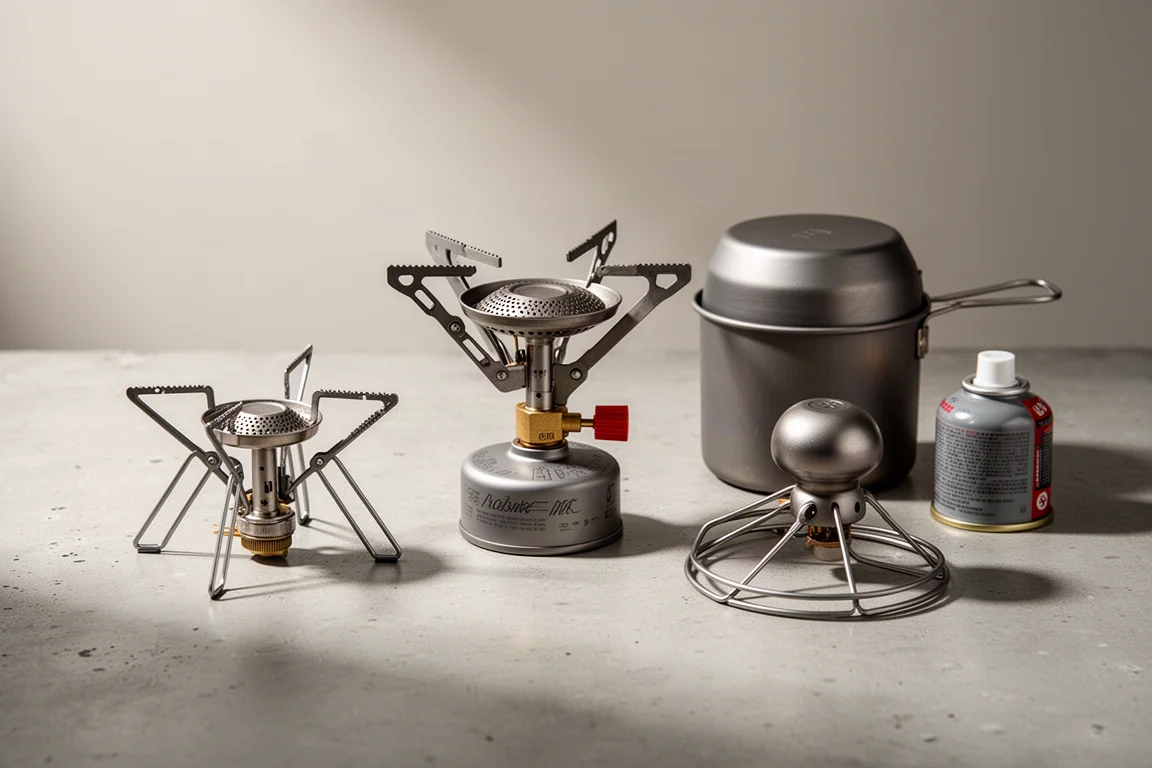
Three stoves cover that spread of designs: the BRS 3000, the MSR Pocket Rocket 2 and the SOTO WindMaster. The BRS 3000 is the ultralight option, the Pocket Rocket 2 is a long-standing favourite, and the WindMaster is the only one of the three with a regulator.
Four sets of experiments looked at lid use, the amount of fuel left in the canister, how far the valve is opened, and pot diameter. Here is what those experiments showed, and what each result means when you are packing for a trip.
How the Stoves Were Tested
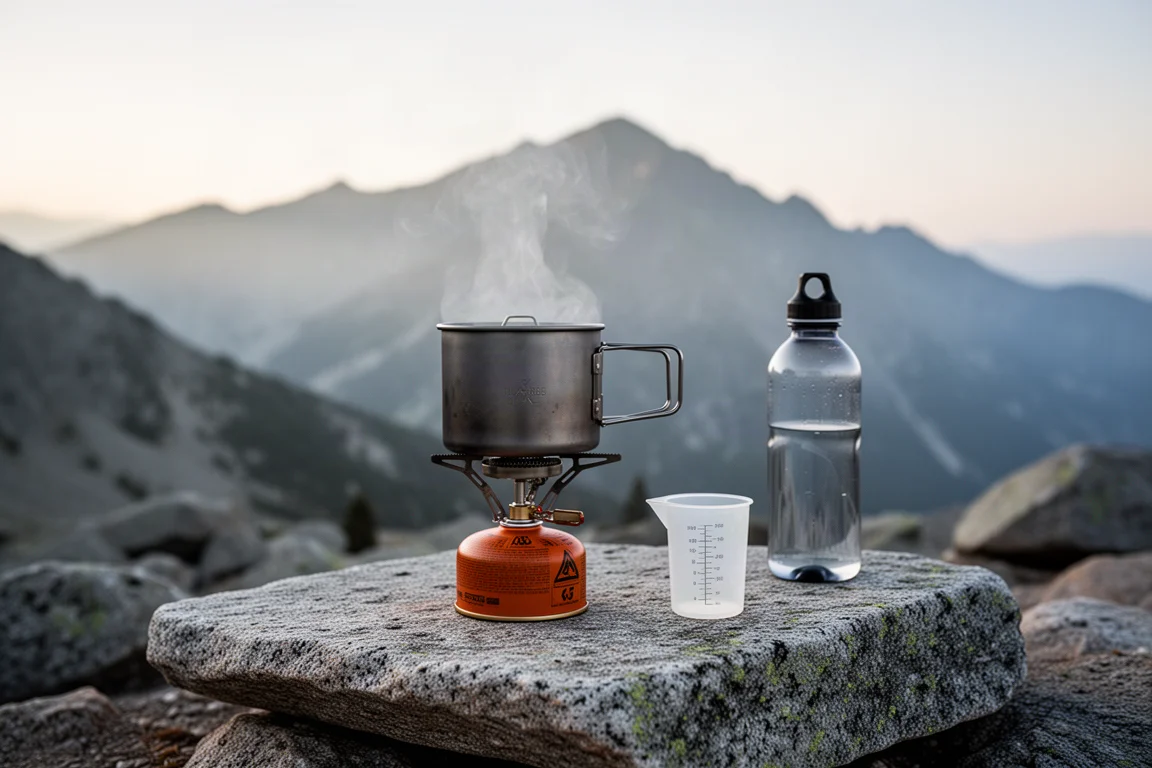
All four experiments used the same baseline conditions so the results could be compared directly. Room temperature was held at 23°C with no air movement, and the water was kept at 3°C. Each run brought 500 ml of water to 80°C.
The first experiment compared a pot with a lid against one without, and was completed with the BRS 3000 and the SOTO WindMaster. The second tracked stove behaviour as a 110 g canister emptied, using a 750 ml titanium pot. The third used a stove attachment to regulate fuel flow from a 450 g canister, with the valve set at 100%, 75%, 50% and 25% open, and was run with the BRS 3000 and the WindMaster. The fourth compared titanium pots with diameters of 95 mm, 115 mm and 145 mm.
Holding those variables steady is what makes the numbers useful. A stove that looks efficient in warm, still air can behave very differently once temperatures drop or canister pressure falls, and the experiments were built to expose exactly those differences.
BRS 3000: The Ultralight Leader
The BRS 3000 is the lightest approach of the three and the one that leans hardest into saving grams. It has no regulator, so it does not compensate as canister pressure drops.
That showed up clearly in the canister test. With a full canister, the BRS used more fuel and boiled faster. As the fuel ran down, boil times lengthened and fuel consumption fell, which is the expected behaviour of an unregulated stove: lower pressure means lower fuel flow. Despite that swing, the BRS was the most frugal of the three over a full canister, delivering 12 boils from a 110 g canister where the other two managed 11.
In the lid comparison it recorded longer boil times and higher fuel consumption than the regulated WindMaster. Pot diameter moved the numbers too: switching from a 95 mm pot to a 145 mm pot cut 54 seconds off the boil time and reduced fuel use.
MSR Pocket Rocket 2: The Dependable All-Rounder
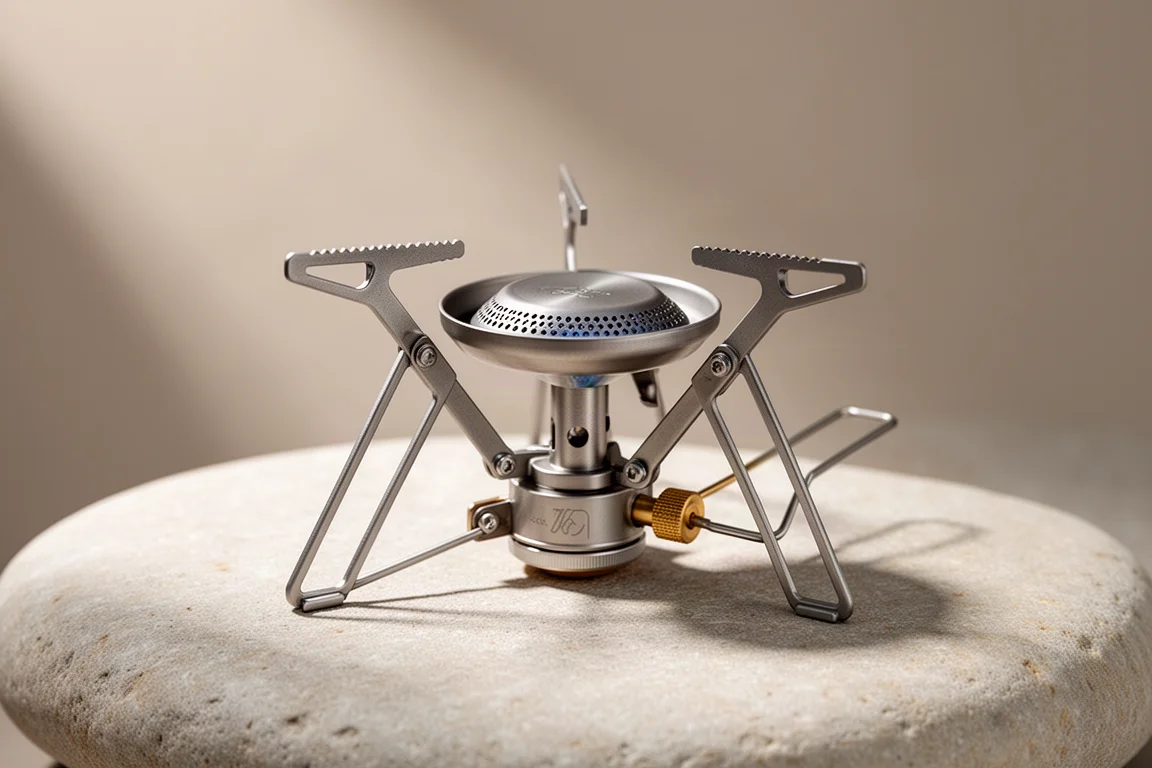
The Pocket Rocket 2 is the veteran of the group and remains a straightforward, unregulated canister stove. It behaves like the BRS in broad terms: more fuel burned and quicker boils on a full canister, then slower boils and lower fuel consumption as pressure falls.
Where it stood out was the size of that shift. The gap in fuel consumption between a full canister and a nearly empty one was larger on the Pocket Rocket 2 than on the other two stoves, which makes it the least predictable of the three if you are trying to plan exactly how many days a canister will last. Like the BRS, it produced 11 boils from a 110 g canister, and wider pots shortened its boil times.
For a weekend or an overnighter, that variability rarely matters, because you are almost always cooking on a canister with plenty of fuel left in it.
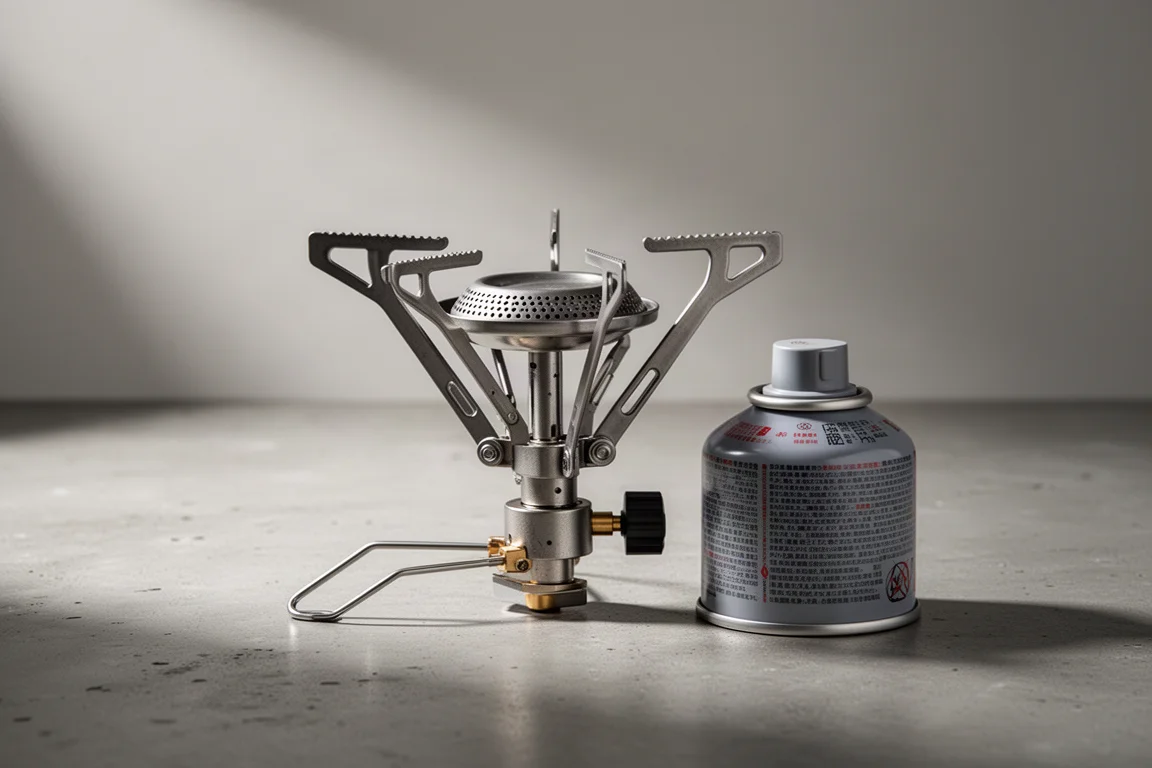
SOTO WindMaster: The Regulated Performer
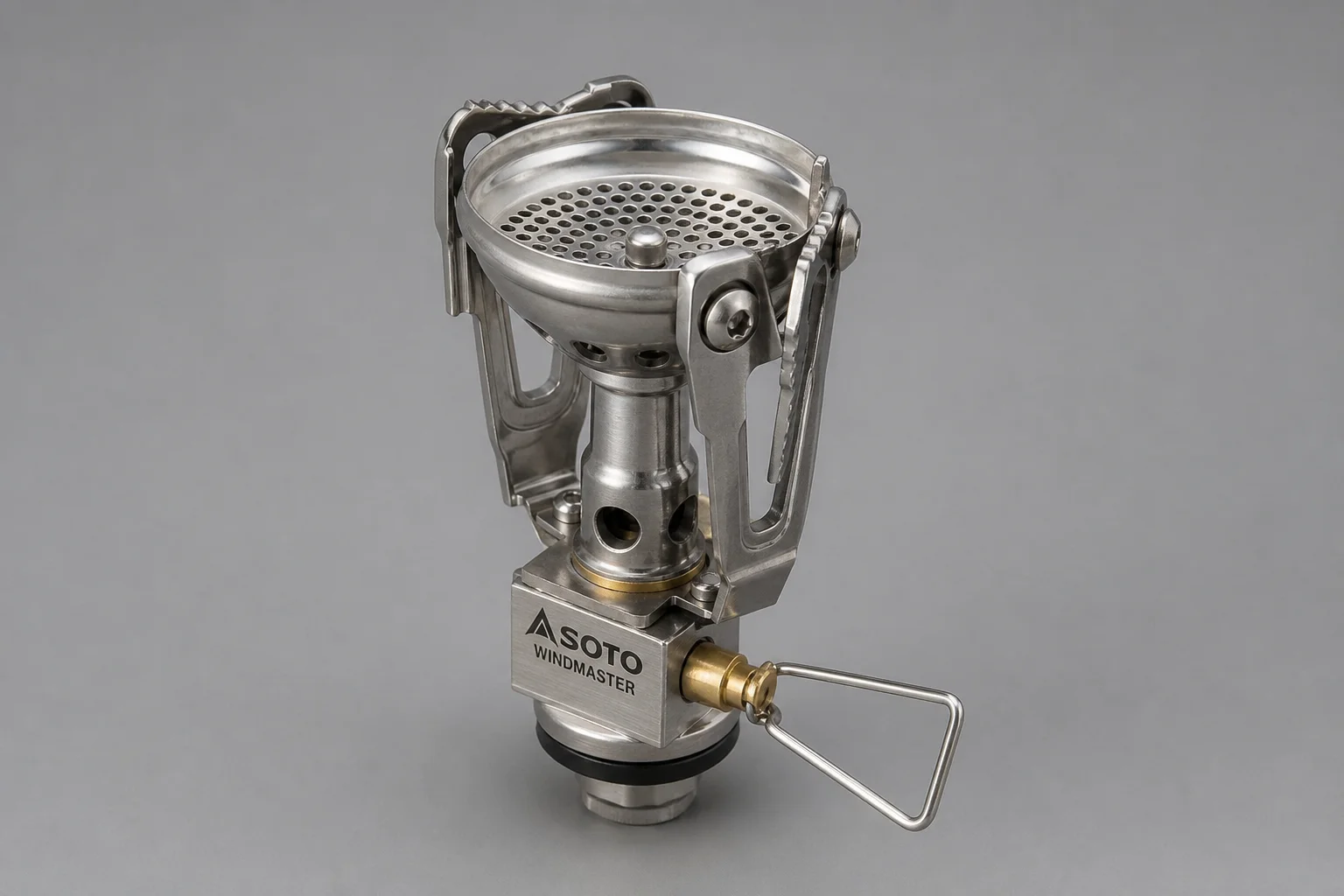
The WindMaster is the only stove here with a regulator, and that single design choice explains most of its results.
In the canister test it held fuel consumption and boil times steady as the canister emptied, instead of drifting the way the unregulated stoves did. It also recorded lower boil times and lower fuel consumption than the BRS in the lid comparison, and it was far less sensitive to valve position in the flow test, with little change in behaviour until the valve was reduced to 25% open.
The trade-off is efficiency at the top end. Because the regulator keeps pushing a high BTU output, the WindMaster was actually less fuel efficient than the BRS 3000, and it reached 11 boils from a 110 g canister rather than 12. Wider pots still helped: moving from 95 mm to 145 mm cut 50 seconds from the boil time and saved 2.4 g of fuel.
What the Four Experiments Revealed
Lid use turned out to matter far less than most people assume. Across the runs, boil times and fuel consumption changed only marginally whether a lid was on the pot or not. A lid earns its place when boil times get long: in cold conditions, with a canister that is running low, when boiling larger volumes, or with an alcohol stove. In those situations it can meaningfully cut both time and fuel. For a quick 500 ml boil in mild weather, it is close to a wash.
Fuel level in the canister produced the most interesting contrast. Regulated and unregulated stoves diverge as pressure falls. The WindMaster stayed consistent, while the BRS 3000 and Pocket Rocket 2 burned more fuel and boiled faster when the canister was full, then slowed down and sipped fuel as it emptied. The pattern points to a broader rule: stoves pushing higher BTU output tend to be less fuel efficient, which is why the regulated WindMaster ended up less efficient than the simpler BRS 3000.
Valve position followed the same logic. Reducing fuel flow improved fuel efficiency, and the best balance of boil time and fuel consumption came at the lower settings. The WindMaster barely reacted until the valve was cut to 25% open. Pot diameter was the most consistent lever of all, with wider pots lowering boil times and fuel consumption together on both the more powerful and the less powerful stove.
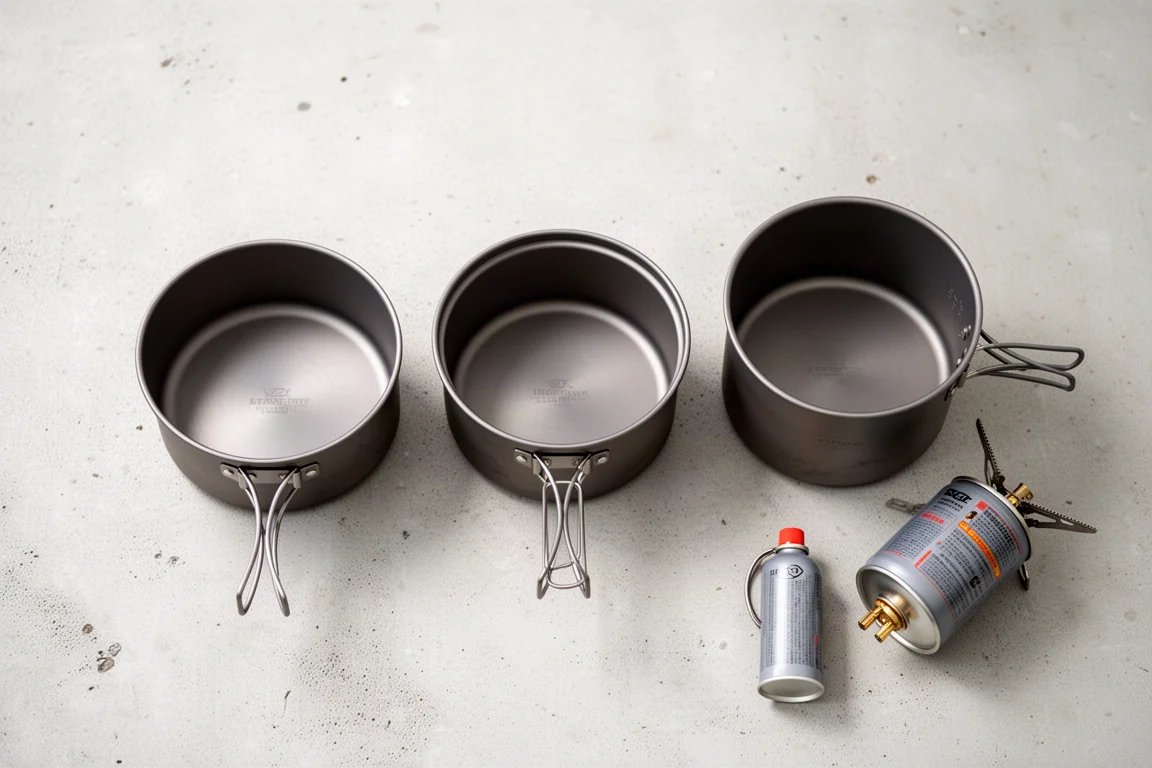
Read together, the four experiments point in one direction: the biggest gains come from matching the pot and the flame setting to the trip, not from chasing a higher BTU rating.
Pot Diameter, Fuel Weight, and Trip Length
Pot diameter is the one variable that pays you back in weight rather than costing you. Between the 95 mm and 145 mm pots, boil times dropped by 54 seconds on the BRS 3000 and 50 seconds on the WindMaster, while fuel consumption fell by 4.1 g and 2.4 g respectively.
The practical effect shows up over multiple days. With a 110 g canister and the narrowest pot tested, 500 ml boiled twice a day lasts about five days. The widest pot adds two more boils of the same volume, roughly an extra day in the backcountry on the same canister.
That matters most in the edge cases. On a six or seven day trip, a slightly heavier wide pot can be the difference between carrying one canister and carrying two, and the fuel you leave behind usually weighs more than the extra pot.
Buying Advice: Matching a Stove to Your Trip
Choose the BRS 3000 if saving weight is the priority and you are comfortable reading your canister and adjusting your flame. It delivered the most boils from a 110 g canister in testing, and it rewards lower valve settings with better fuel efficiency.
Choose the MSR Pocket Rocket 2 if you want a simple, familiar canister stove for shorter trips. It is quick on a full canister, and the variability that appears as fuel runs low is unlikely to affect a weekend.
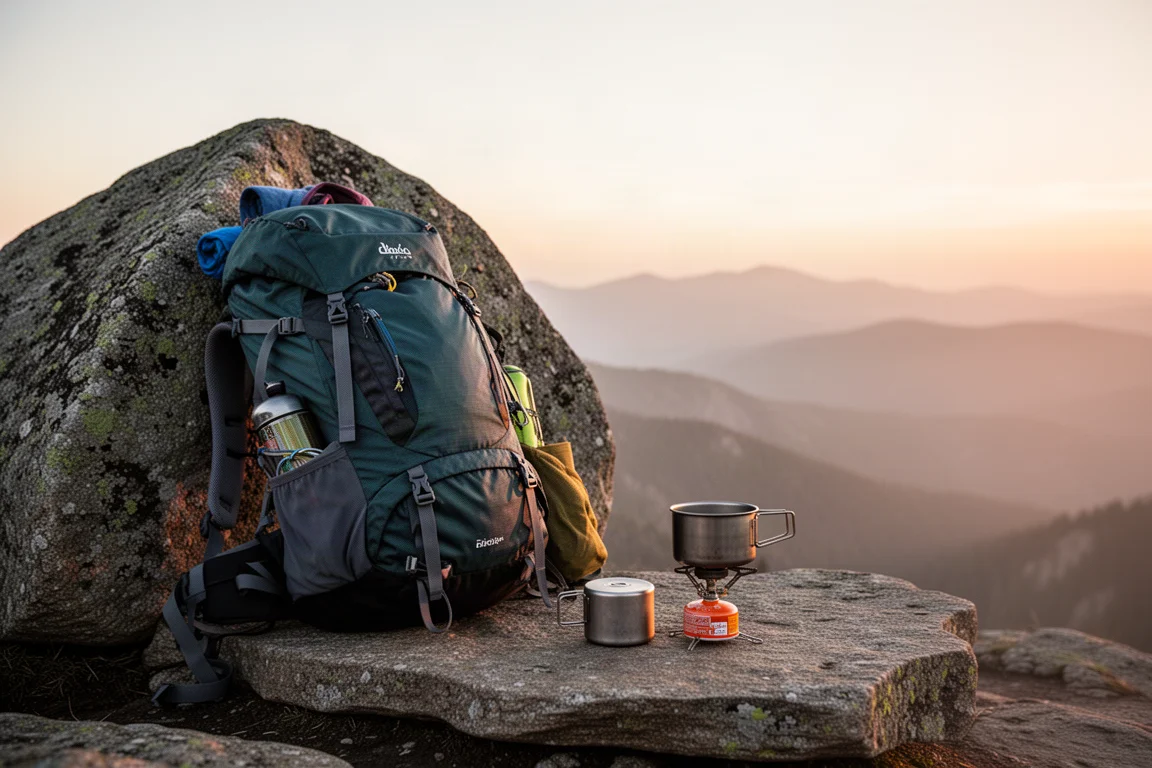
Choose the SOTO WindMaster if consistency matters more than peak efficiency. Its regulator keeps boil times and fuel consumption steady as the canister empties, which makes it easier to predict how far a canister will take you.
Whatever the stove, two habits help: use a lid when conditions or volumes stretch the boil time, and turn the valve down rather than running flat out.
Conclusion
All three stoves can bring 500 ml of water up to temperature, and the differences between them come down to how they behave when conditions change. The BRS 3000 is the lightest and the most fuel-frugal across a full canister. The Pocket Rocket 2 is the familiar middle ground. The SOTO WindMaster trades some outright efficiency for consistency as pressure falls. Match the stove to the trip, pair it with a pot that suits your volume, and the fuel you carry will go further.
Further reading
Related Reviews
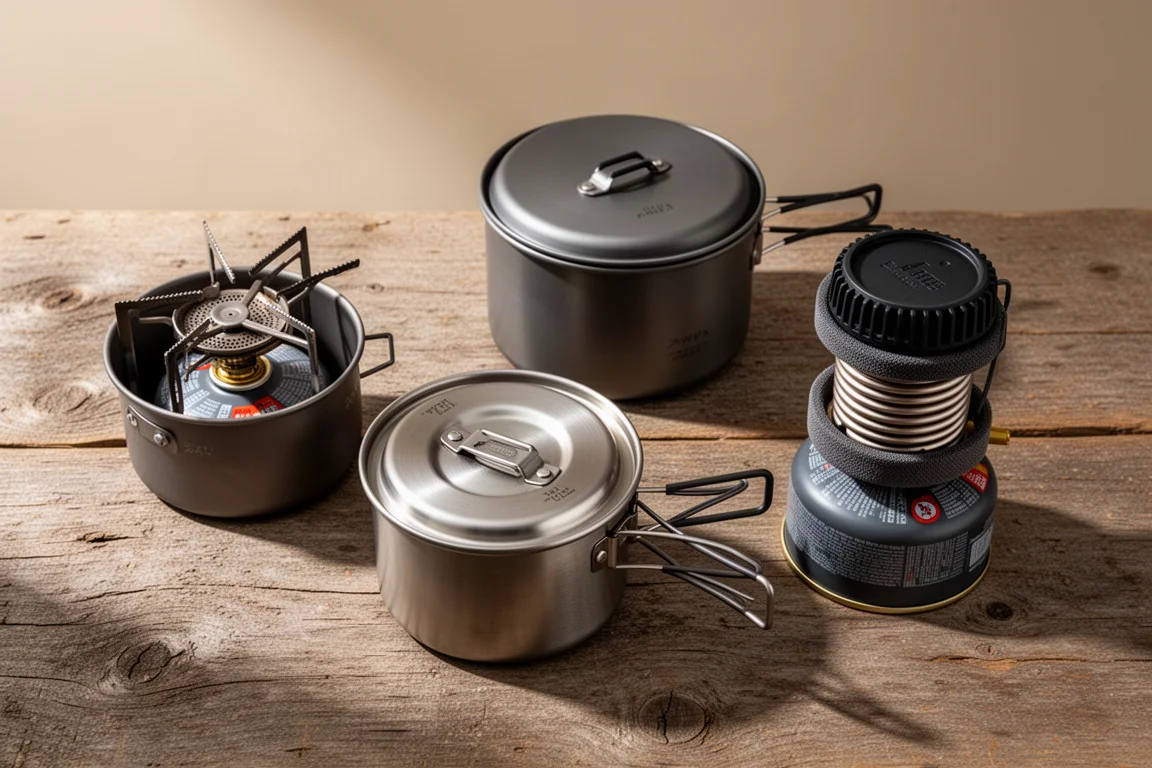
Backpacking Stoves
Best Backpacking Stove and Pot Combinations: Budget to Premium
A practical look at fourteen backpacking stoves and cook pots, from inexpensive starter pairings to windproof all-in-one systems that cost close to $200.
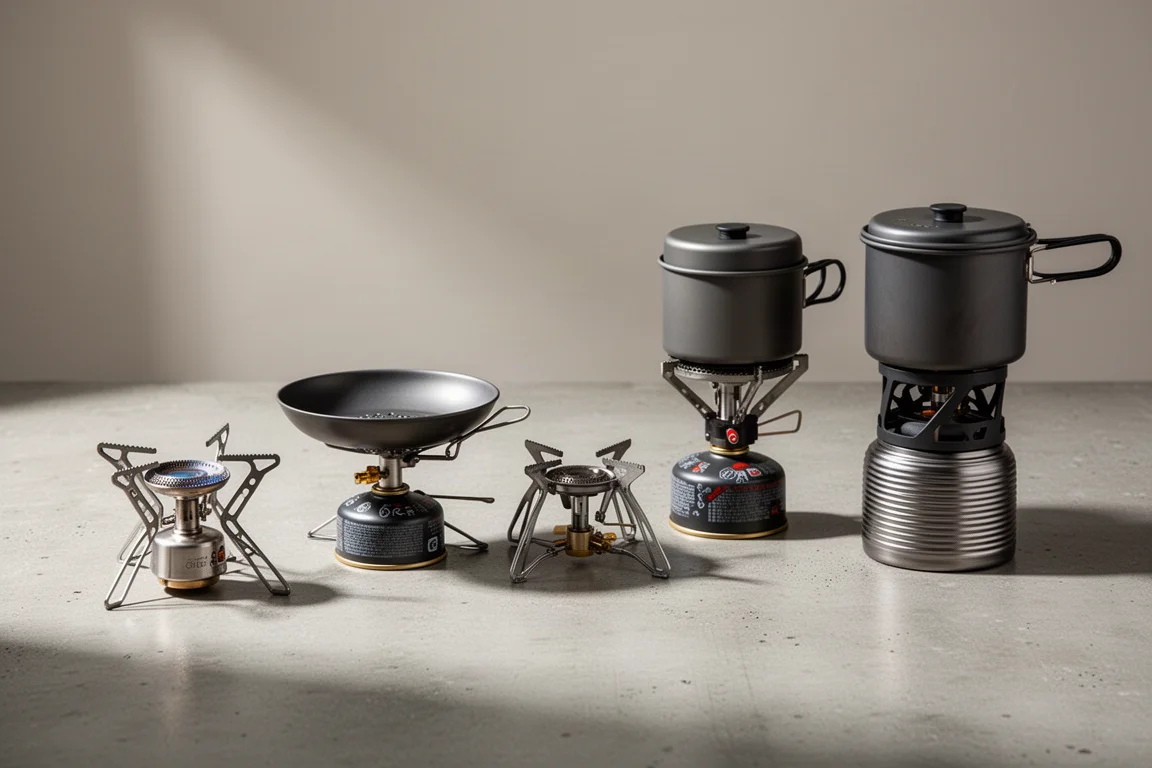
Backpacking Stoves
Best Backpacking Stove Systems: Five Canister Stoves Compared
Five canister stove and pot systems compared on wind resistance, boil speed, packed size, and cooking control, from a bare titanium burner to a fully integrated cook system.
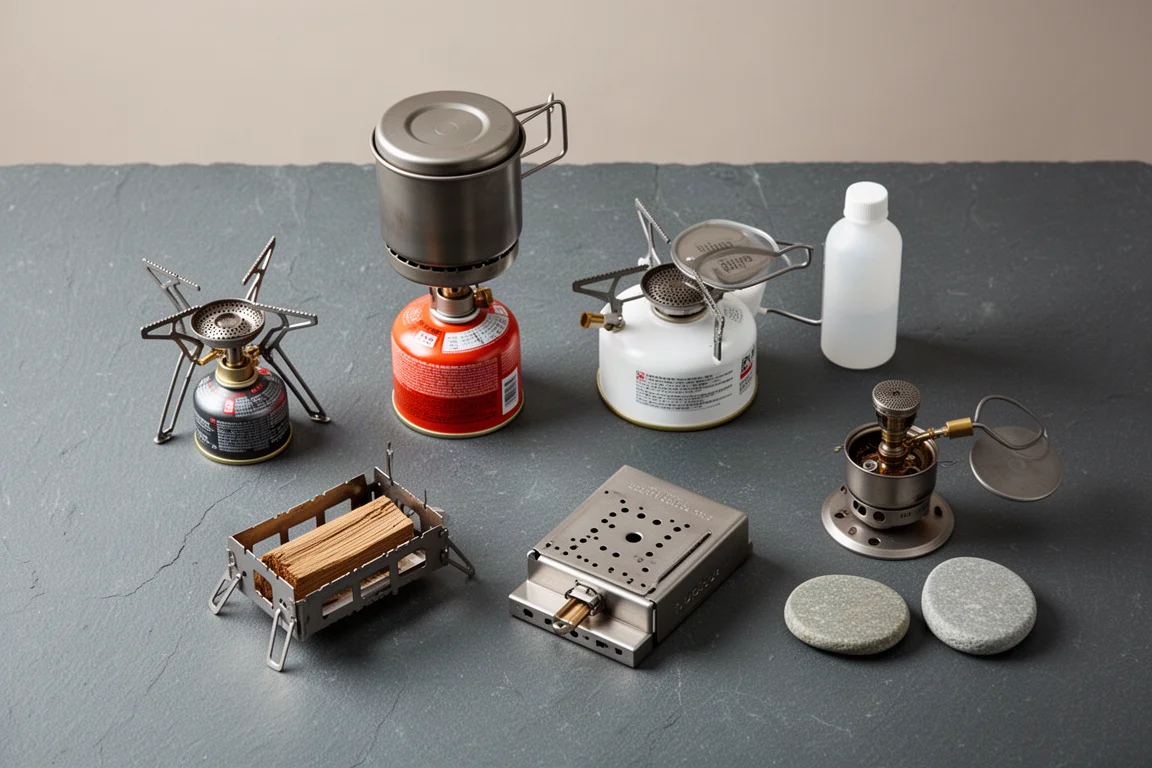
Backpacking Stoves
Best Backpacking Stoves 2026: Six Stove Types Compared and Ranked
A practical comparison of canister, white gas, wood burning, solid fuel, and alcohol backpacking stoves, ranked on speed, weight, fuel availability, and cost.