Backpacking Gear
Best Backpacking Pillows: Hybrid Systems, Inflatables, and Stuff Sacks Tested
A comprehensive guide to backpacking pillows covering four main types, five key features that matter, and three top-performing hybrid systems tested in the field.
Introduction
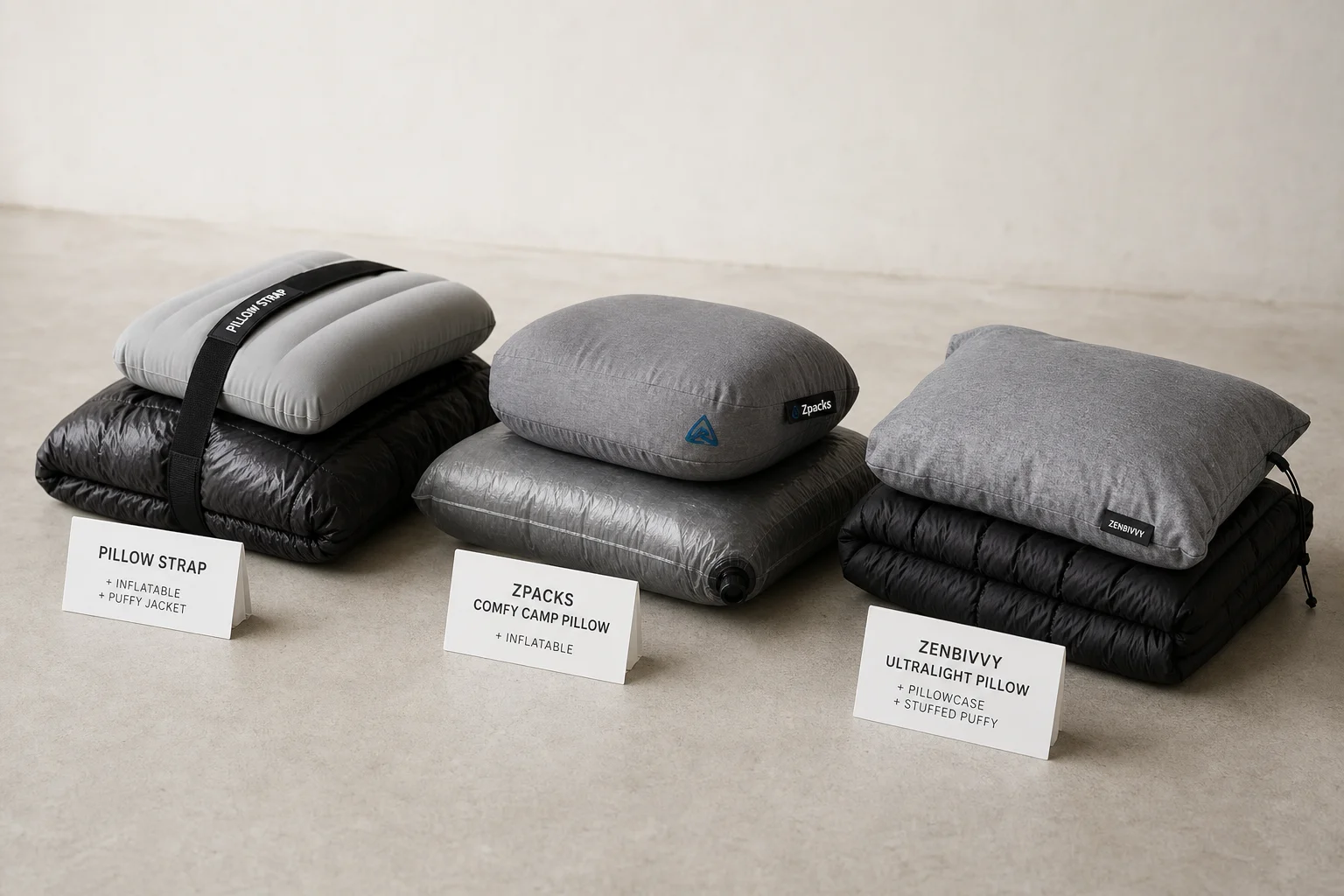
After testing approximately 30 backpacking pillows, the landscape is clearer than ever. Backpacking pillows fall into four main categories, each with distinct trade-offs. Understanding what makes a pillow truly great in the backcountry comes down to five core characteristics: weight, packability, adequate thickness, sufficient give, and a system that keeps the pillow stable on your sleeping pad throughout the night.
This guide covers the main pillow types, the five features that separate good pillows from poor ones, and three hybrid systems that excel across all criteria.
Four Main Types of Backpacking Pillows
The first and most common type is inflatables. These are simple, lightweight, and fully deflate for packing. The second type is stuff sacks, which double as dry bags and use your own insulation (typically a puffy jacket) as the loft. The third type is lofted pillows, usually constructed with foam or down batting. The fourth, and by far the most versatile, is hybrids, which combine an inflatable base with either stuffing or self-lofting material for the best of all worlds.

Each type has merit depending on your sleeping position, comfort priorities, and pack weight budget. Hybrids have emerged as the strongest all-around choice because they address the shortcomings of pure inflatables while maintaining excellent packability.
Five Features That Define a Great Backpacking Pillow
Lightweight is the first essential. A pillow in the 2 to 4 ounce range hits the sweet spot between comfort and weight penalty. Compact is the second: inflatables fully deflate, stuff sacks occupy neutral space since you carry them anyway, and hybrids fold down to almost nothing.
Adequate thickness is critical. Pure inflatables often fall short here, while stuff sacks can collapse under pressure and fail to provide enough support. Hybrids excel because you can customize thickness by adjusting how much material you stuff inside.
Adequate give is the fourth feature. Inflatables lack the softness to absorb pressure and can press uncomfortably against your ear. Stuff sacks shine because a puffy jacket inside provides genuine cushioning. Hybrids offer the same advantage: room to add your own insulation for a soft, forgiving surface.
Finally, a system that connects the pillow to your sleeping pad prevents it from sliding around during the night. Slippery fabrics are inherently mobile, so a retention system dramatically improves sleep quality and user experience.
The Pillow Strap: Hybrid Simplicity
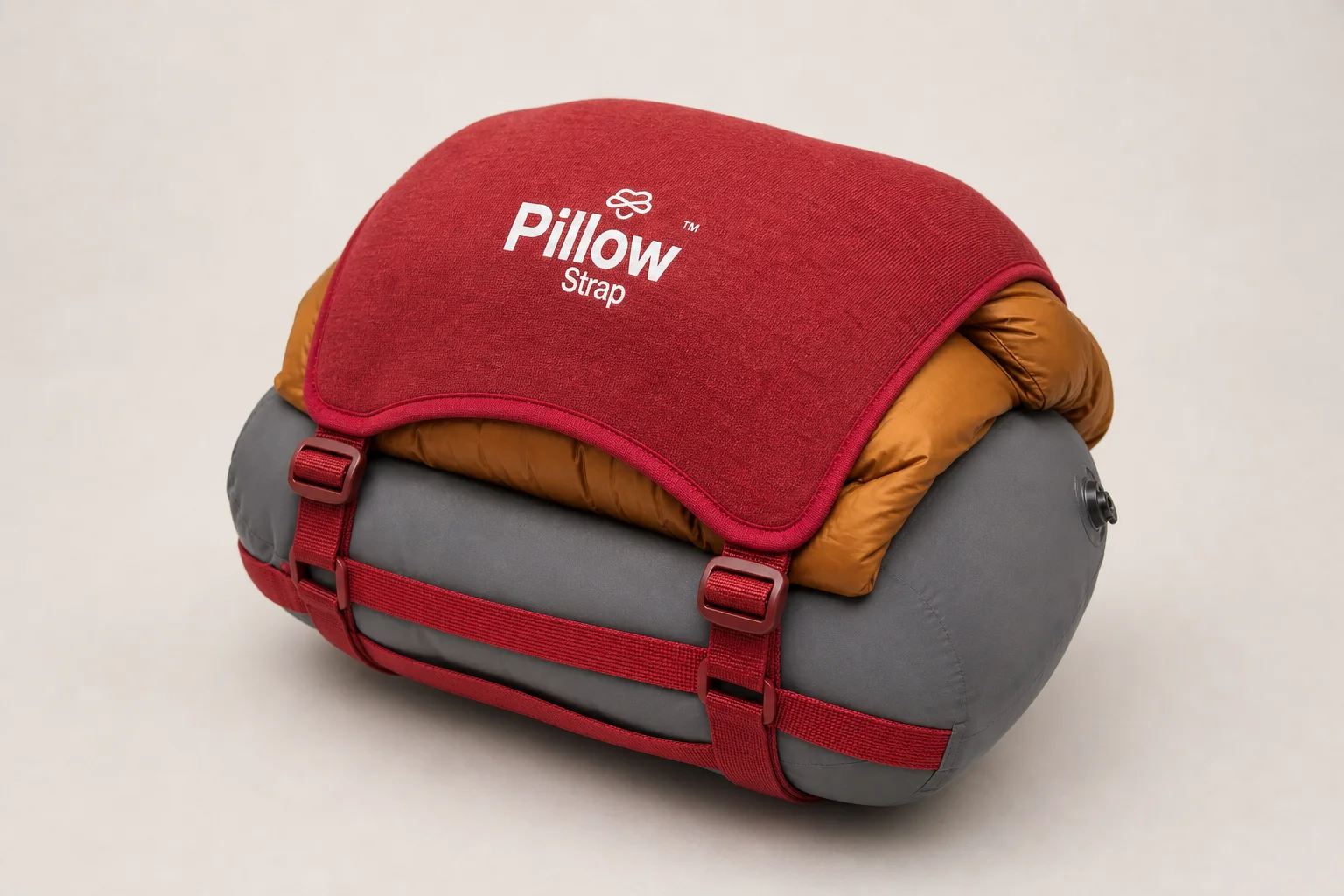
The Pillow Strap is a minimalist hybrid system consisting of a soft stretchy fabric pillowcase paired with an elastic band that anchors to your sleeping pad. The size small version shown here uses a red exterior with a buckle and tightener system on the back.
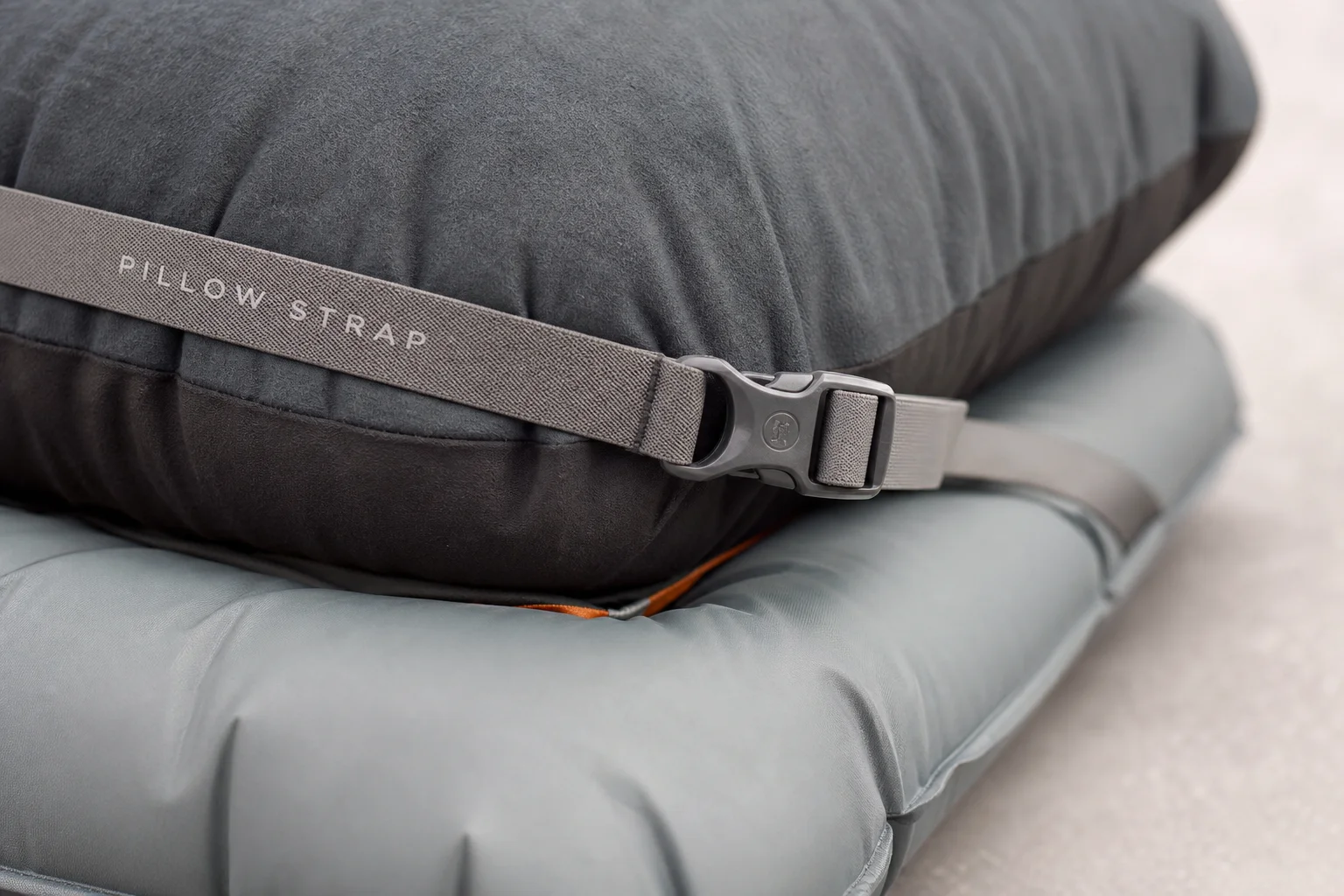
Inside, you place any lightweight inflatable under 2 ounces and stuff a puffy jacket for loft. The elastic band system is remarkably stable, preventing the pillow from shifting or squeaking off the pad as pure inflatables tend to do. This simplicity is its strength: you get a hybrid system with minimal additional weight and bulk.
The Zenbivvy Ultralight Pillow: Maximum Comfort with Trade-offs
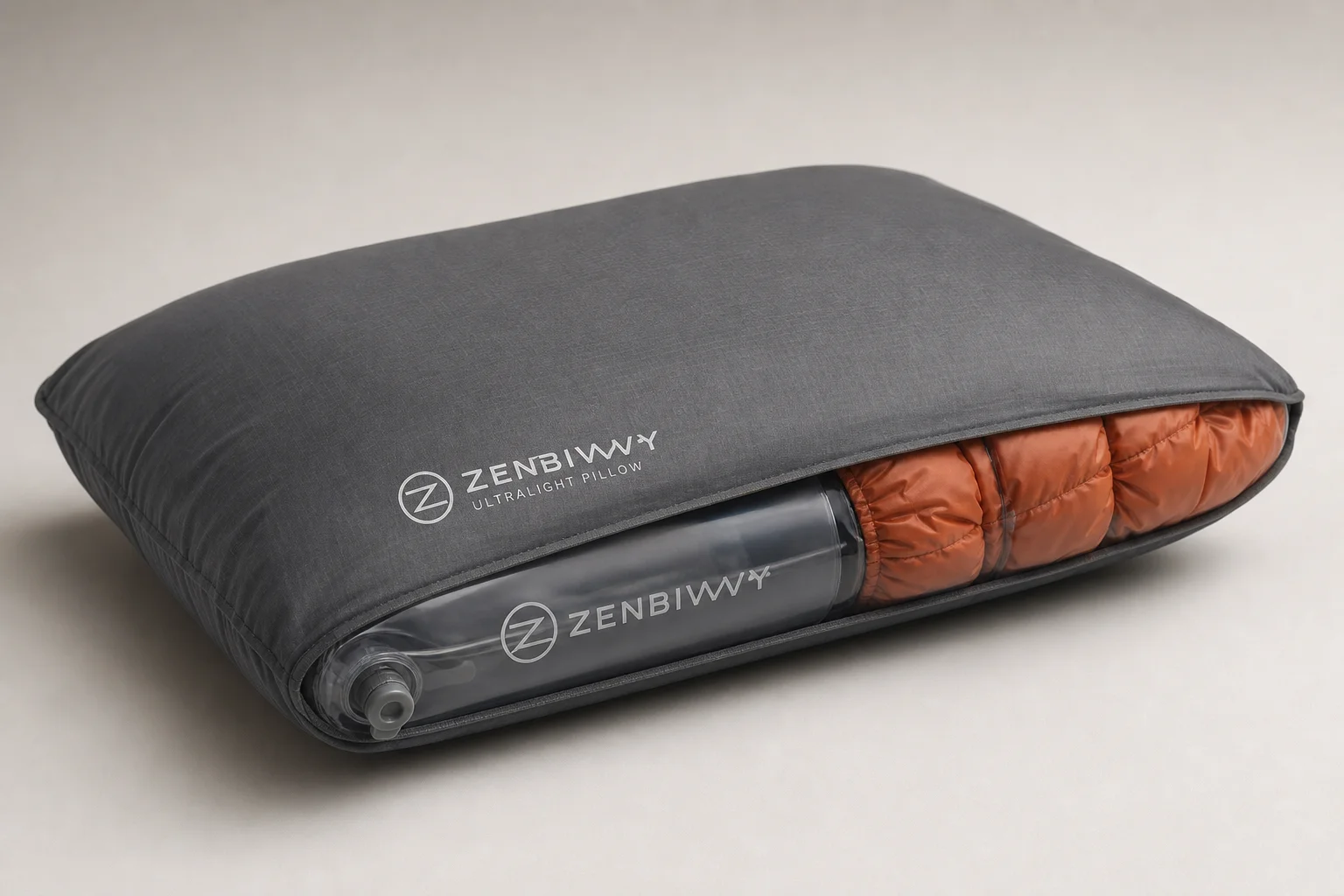
The Zenbivvy Ultralight Pillow combines an exterior pillowcase with a TPU air bladder and room for a puffy jacket inside. The TPU bladder has no protective shell, making it lightweight but vulnerable to puncture from sharp objects like fingernails.
One practical limitation is that the bladder does not fit inside the case when fully inflated, requiring you to deflate it, insert it, and then re-inflate. The system also lacks a native shock cord for pad attachment, though adding one is straightforward and highly recommended.
Despite these minor imperfections, this pillow delivers excellent height and neck support. It is notably tall and plush, making it one of the most comfortable hybrid options available. The trade-off between ease of use and comfort leans toward comfort here.
The Zpacks Comfy Camp Pillow: The Comfort Leader
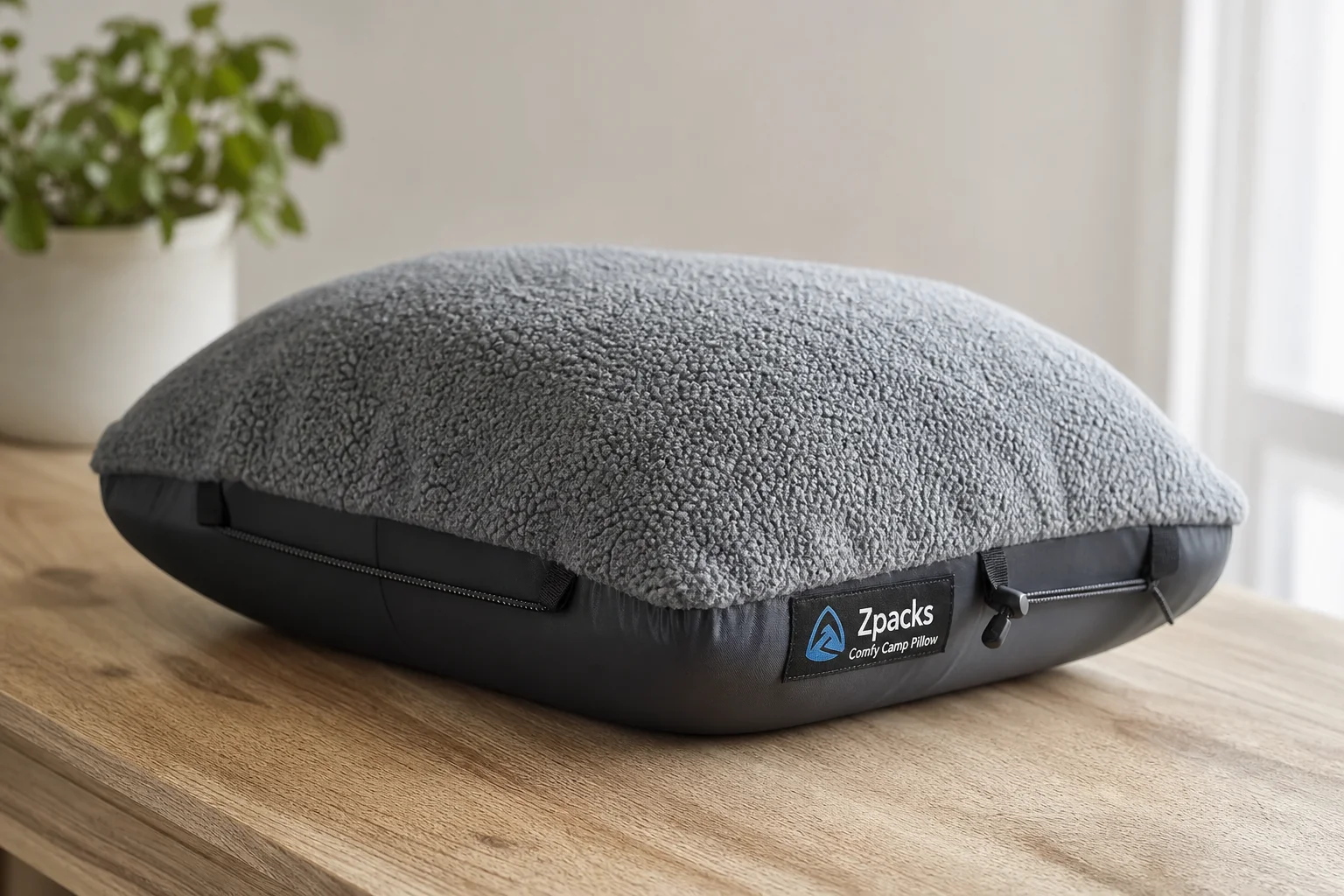
The Zpacks Comfy Camp Pillow is a hybrid system that weighs approximately 4 ounces total. It features an octafleece exterior face with six folded layers of synthetic batting, strapped to a lightweight inflatable pillow. Connector straps link the topper to the inflatable, and a shock cord wraps around the sleeping pad to prevent movement.
This system delivers the most comfort of the three top performers. The synthetic batting provides genuine plushness and give, noticeably softer than the Pillow Strap or Zenbivvy setups. The trade-off is bulk: the topper adds some volume to your pack, making it slightly less compact than pure inflatable-based hybrids.
For backpackers who prioritize comfort and can accept a modest packability trade-off, this pillow represents the best balance.
Choosing the Right Inflatable Base
If you are building a hybrid system, the inflatable you choose as your base matters significantly. Avoid oversized inflatables like the Big Agnes Campmeister, which offers unnecessary length and width without proportional thickness gains. Large inflatables also require larger pillowcases, which disperses your puffy jacket and reduces the plushness of your hybrid system.
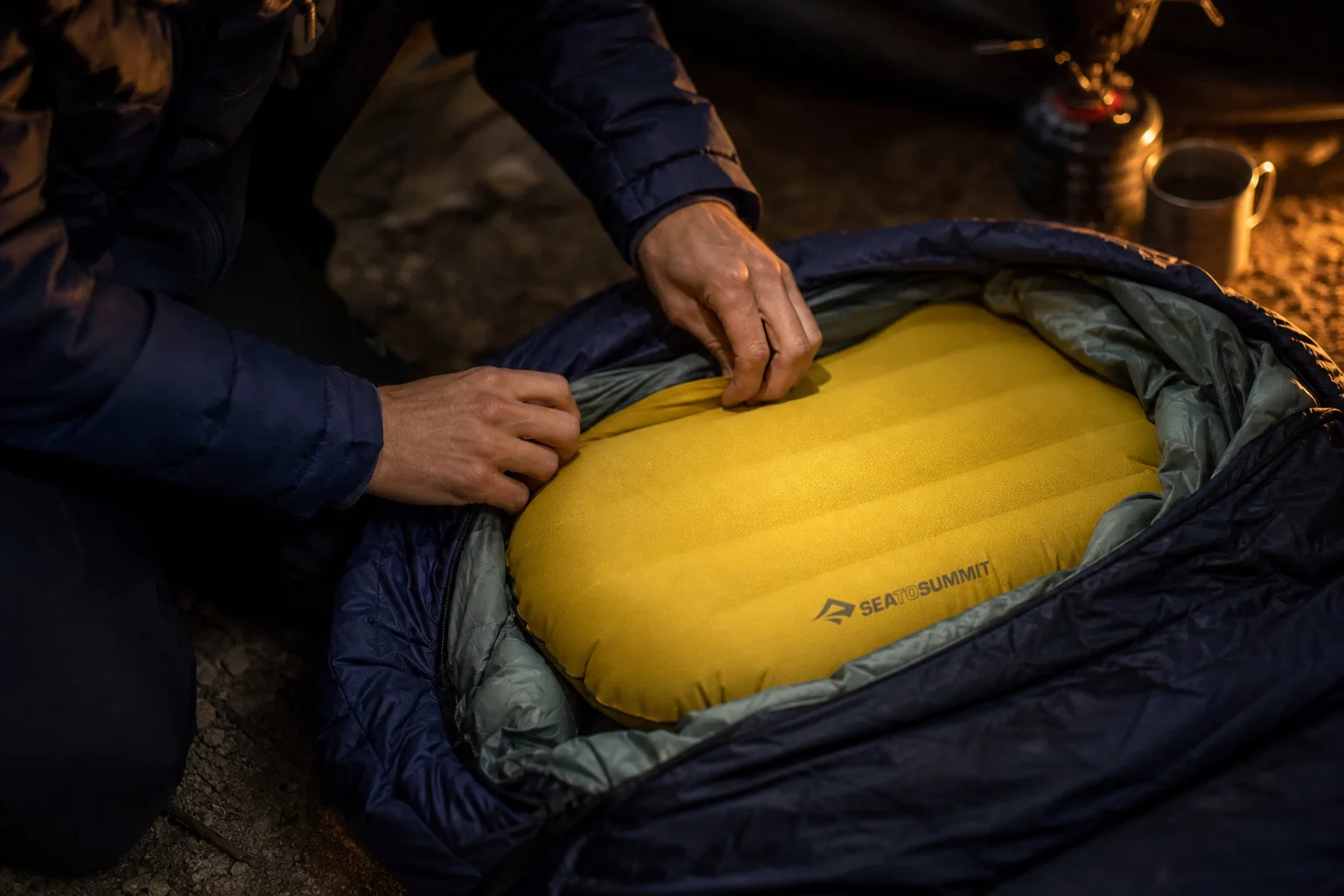
The best inflatables for hybrid systems are lightweight and compact. The Big Agnes Rapide SL weighs only 1.5 ounces and features a shoulder notch that benefits side sleepers. The Zpacks inflatable also weighs 1.5 ounces and offers the highest thickness-to-weight ratio of all tested models, making it ideal for maximizing neck support in a hybrid system.
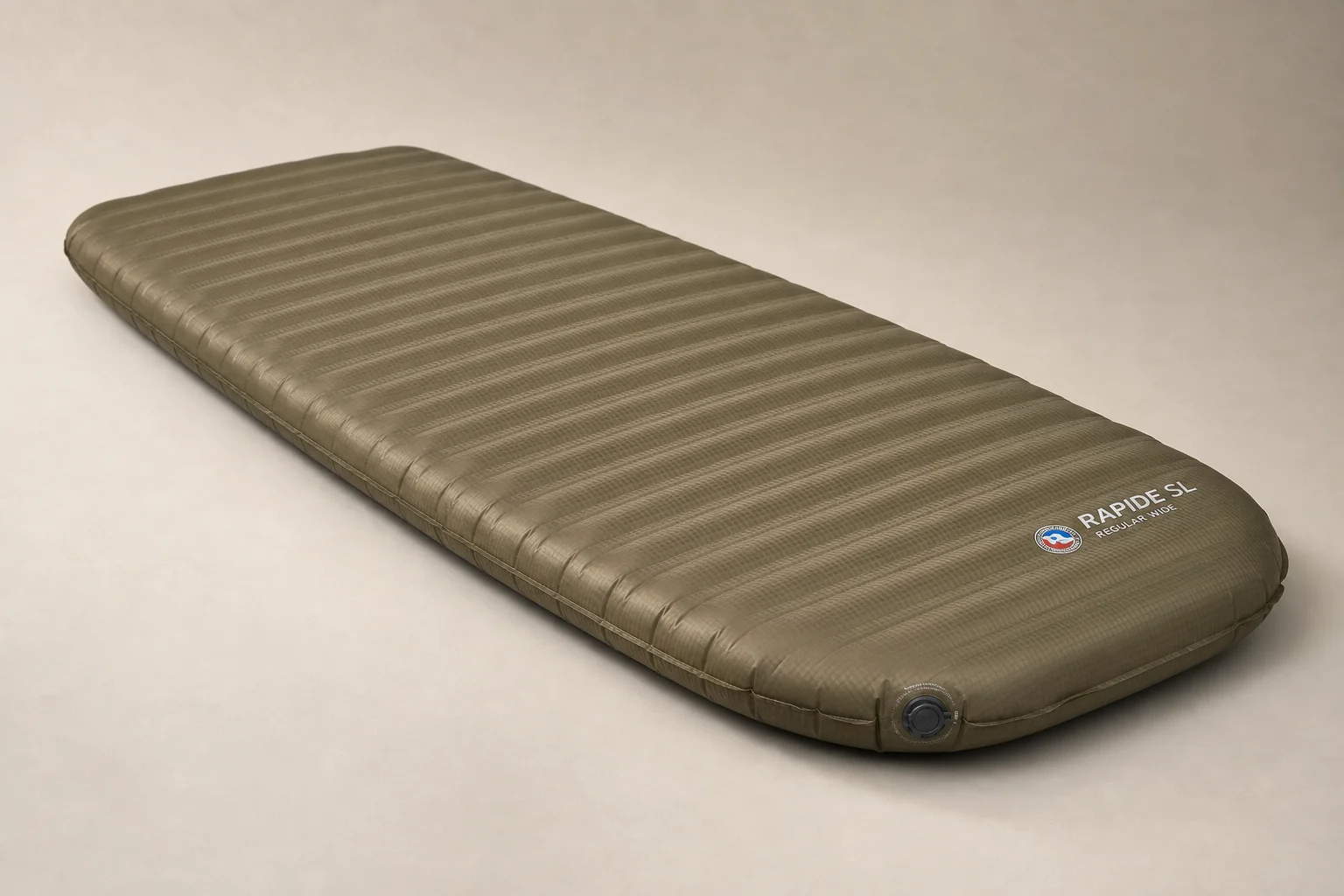
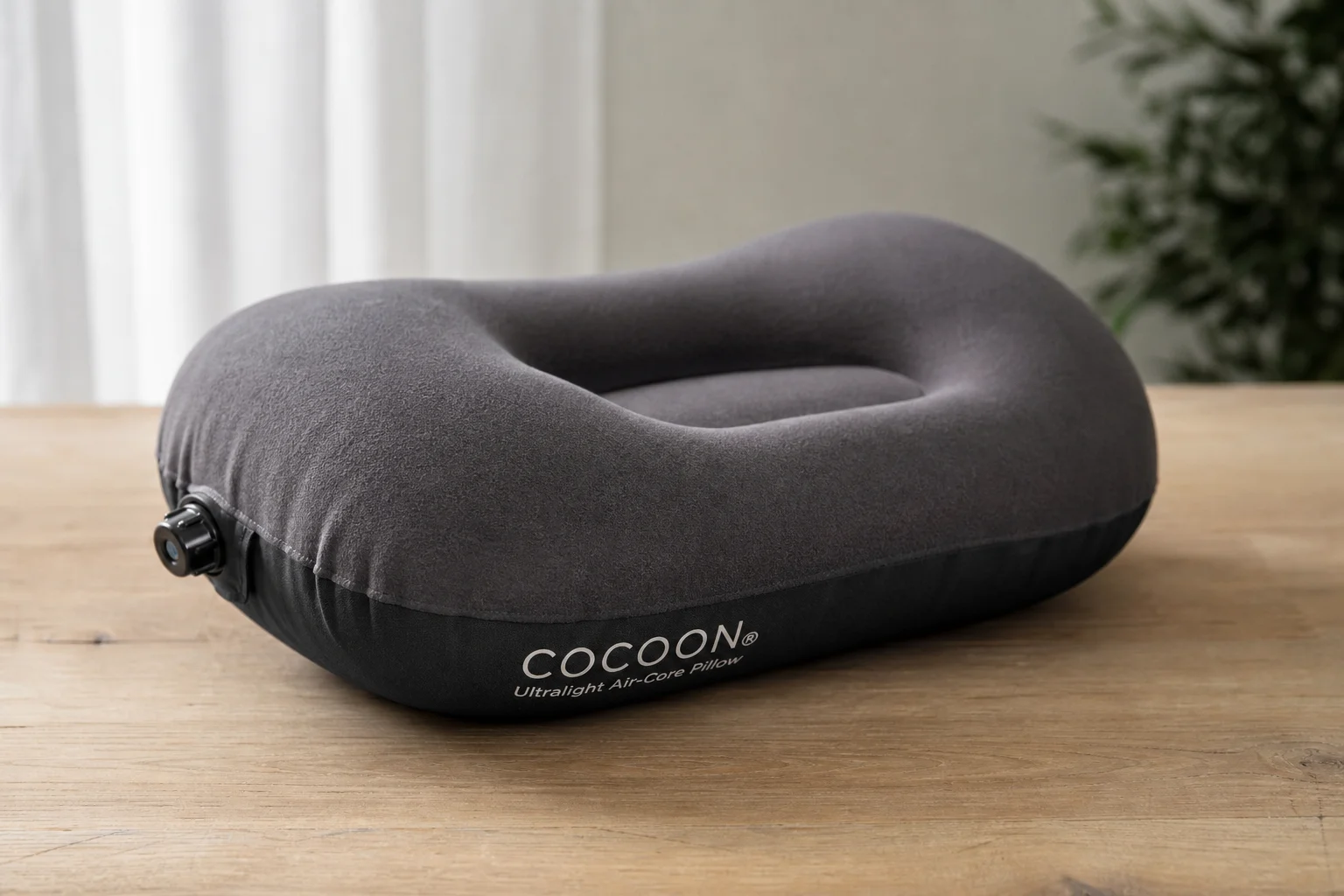
The Sea to Summit Aeros in regular size makes a solid hybrid base, though avoid the large or deluxe versions. The Cocoon Ultralight Air-Core fits well in hooded pack spaces but carries excess fleece material that adds unnecessary weight.
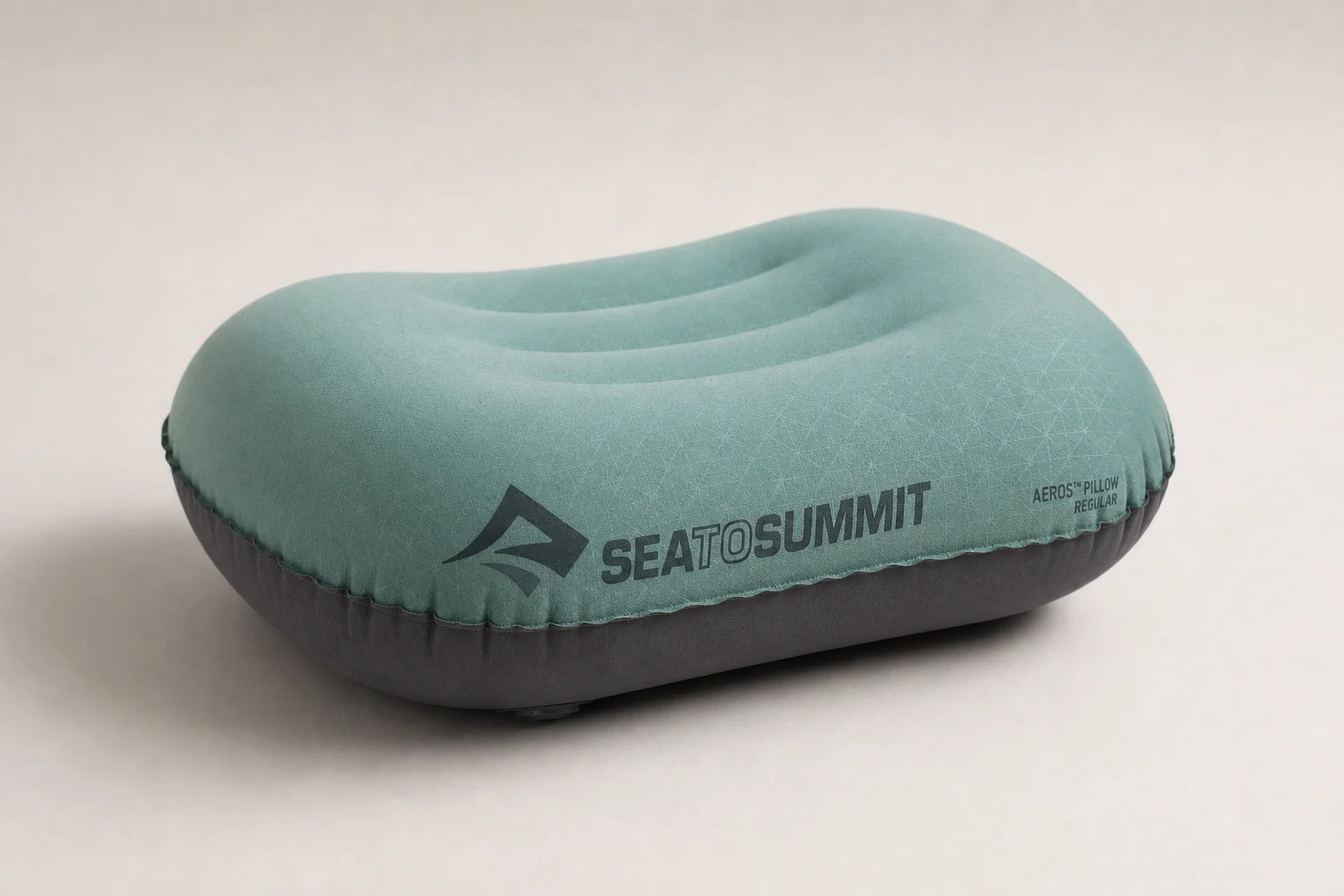
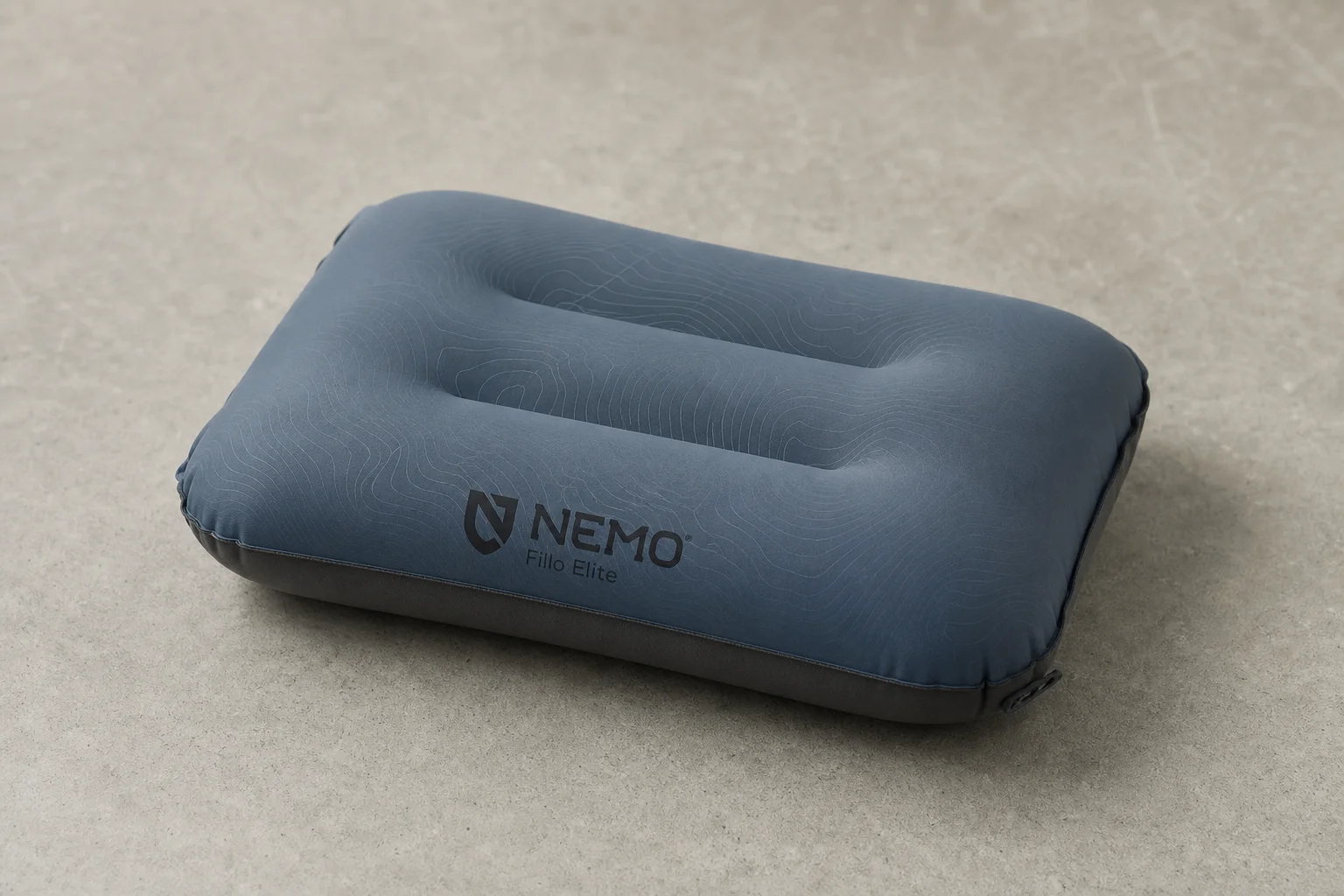
For back sleepers, the Nemo Fillo Elite is a good standalone option because it is thinner than side-sleeper pillows, offering 1 to 2 inches less support and height. Back sleepers should avoid shoulder notches, which are designed for shoulder support rather than neck support.
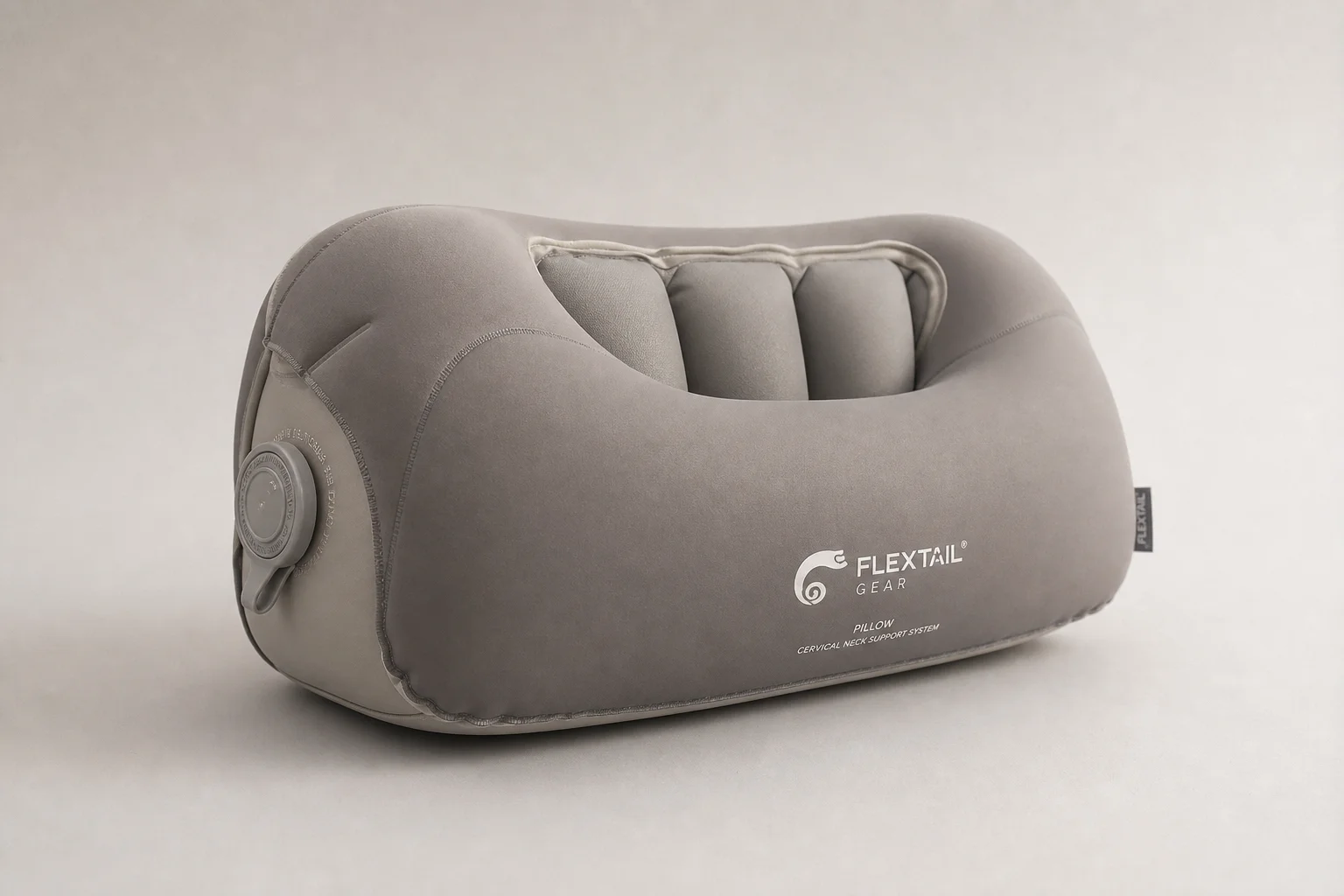
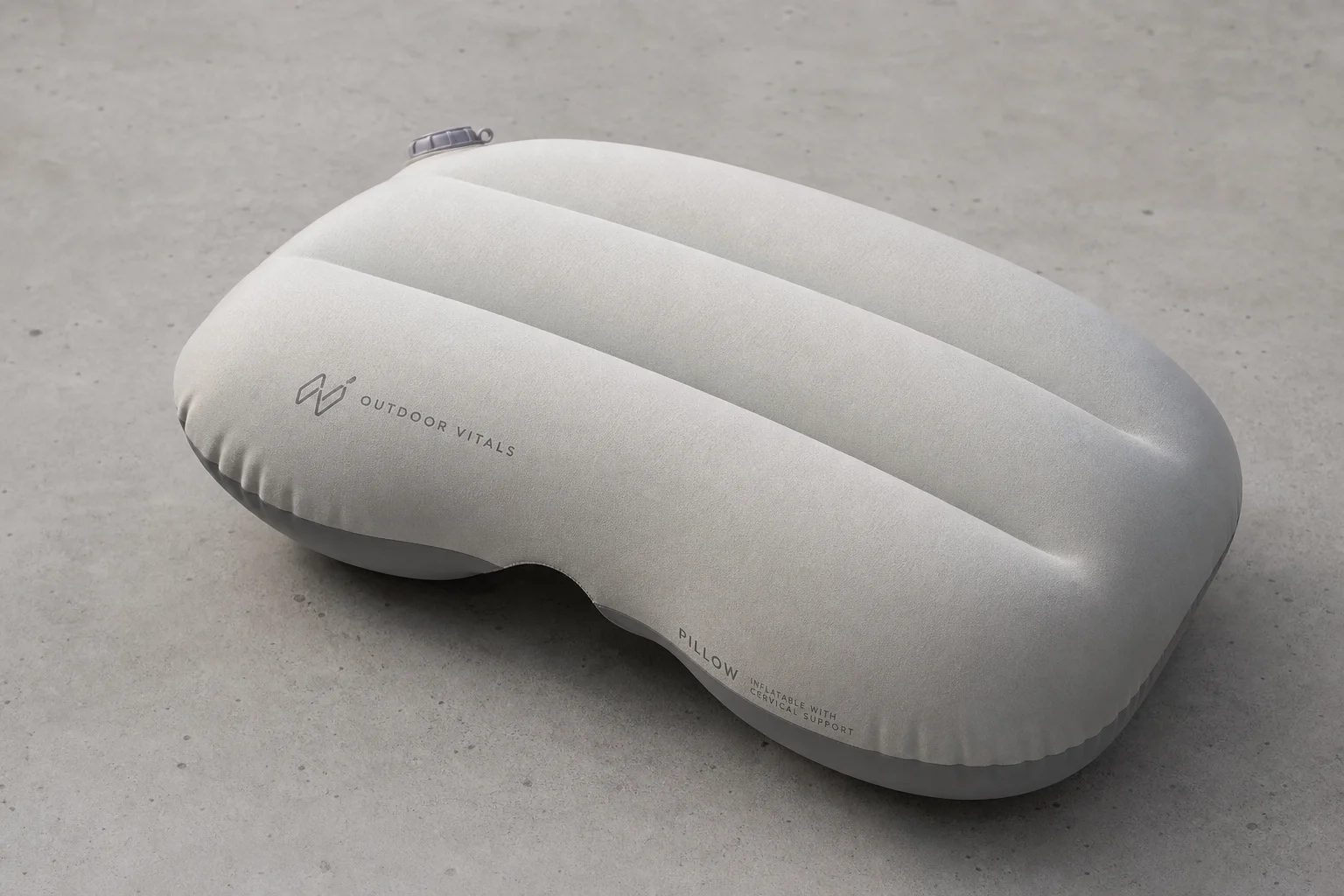
The Flex Tail Gear Pillow is worth considering for back sleepers because it includes a cervical neck support system designed to support your neck as you rest. However, it is heavier than ideal for hybrid systems due to its size. The Outdoor Vitals Pillow also features cervical neck support but includes a shoulder notch that back sleepers should avoid.
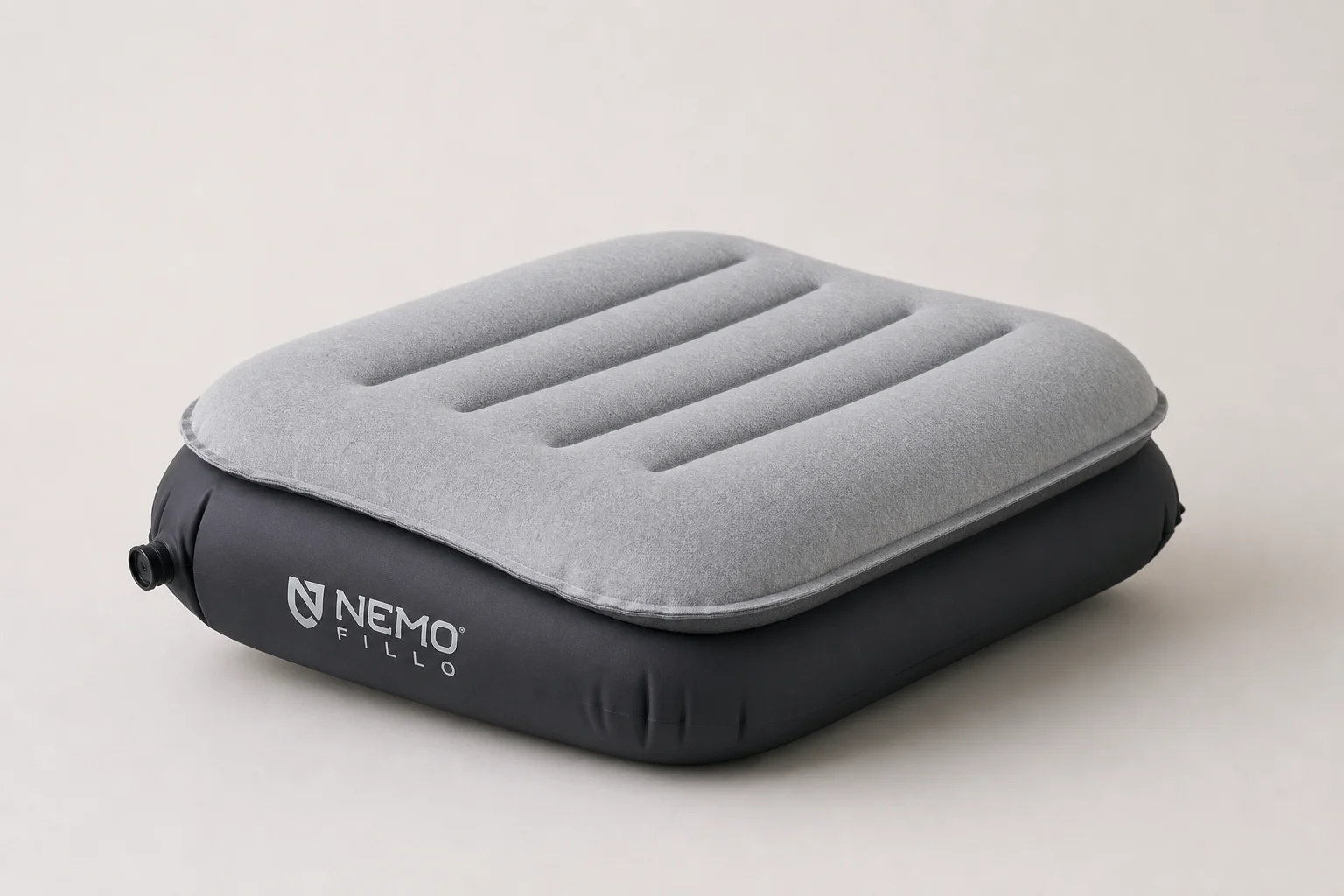
The Nemo Fillo is a foam-topped inflatable that is too heavy for most hybrid applications and lacks the versatility of lighter bases.
Stuff Sack Pillows: Lightweight and Minimal
If you are a stomach sleeper or back sleeper who prefers minimal loft and height, a stuff sack pillow offers a practical solution. These pillows double as dry bags, providing dual functionality in your kit.
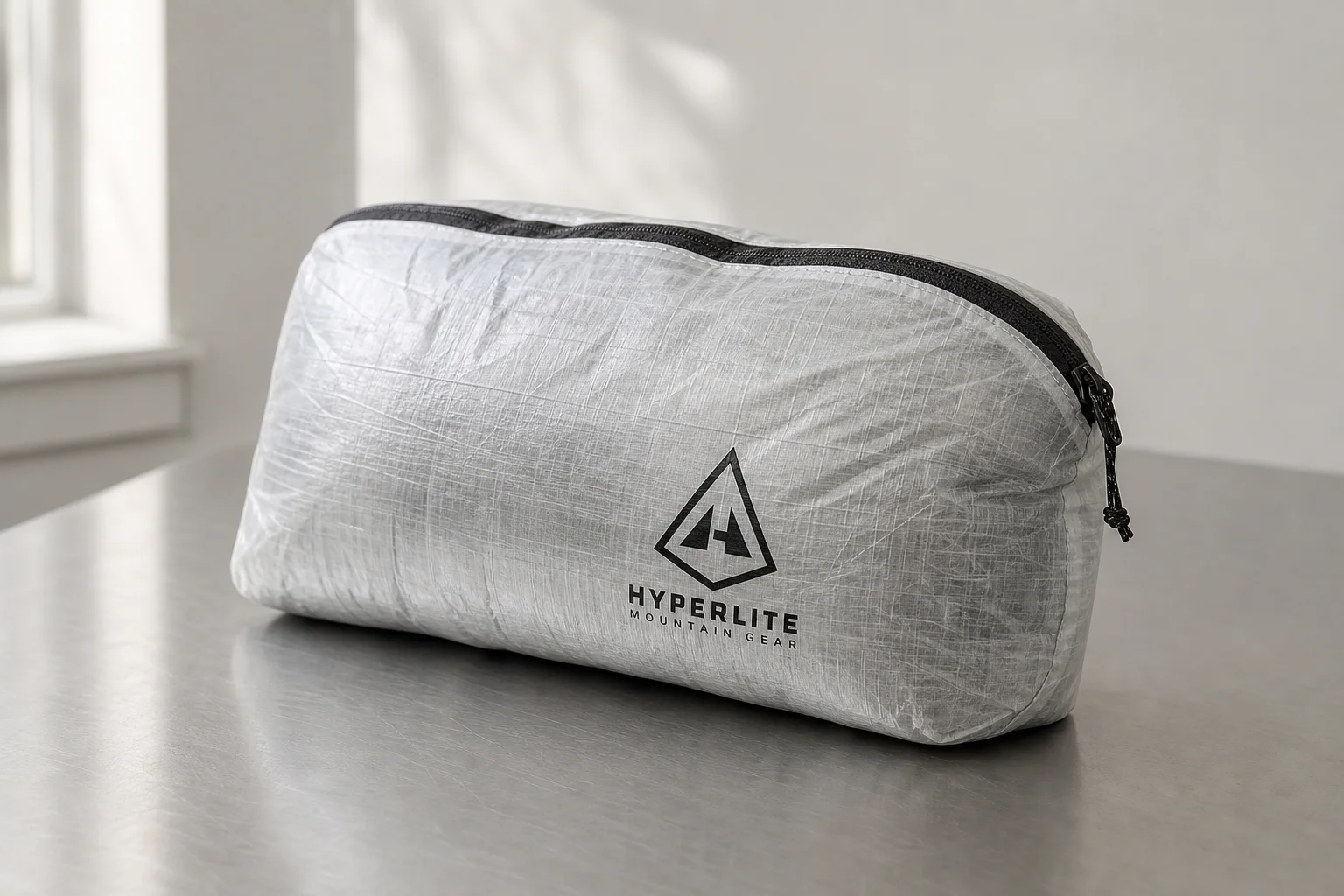
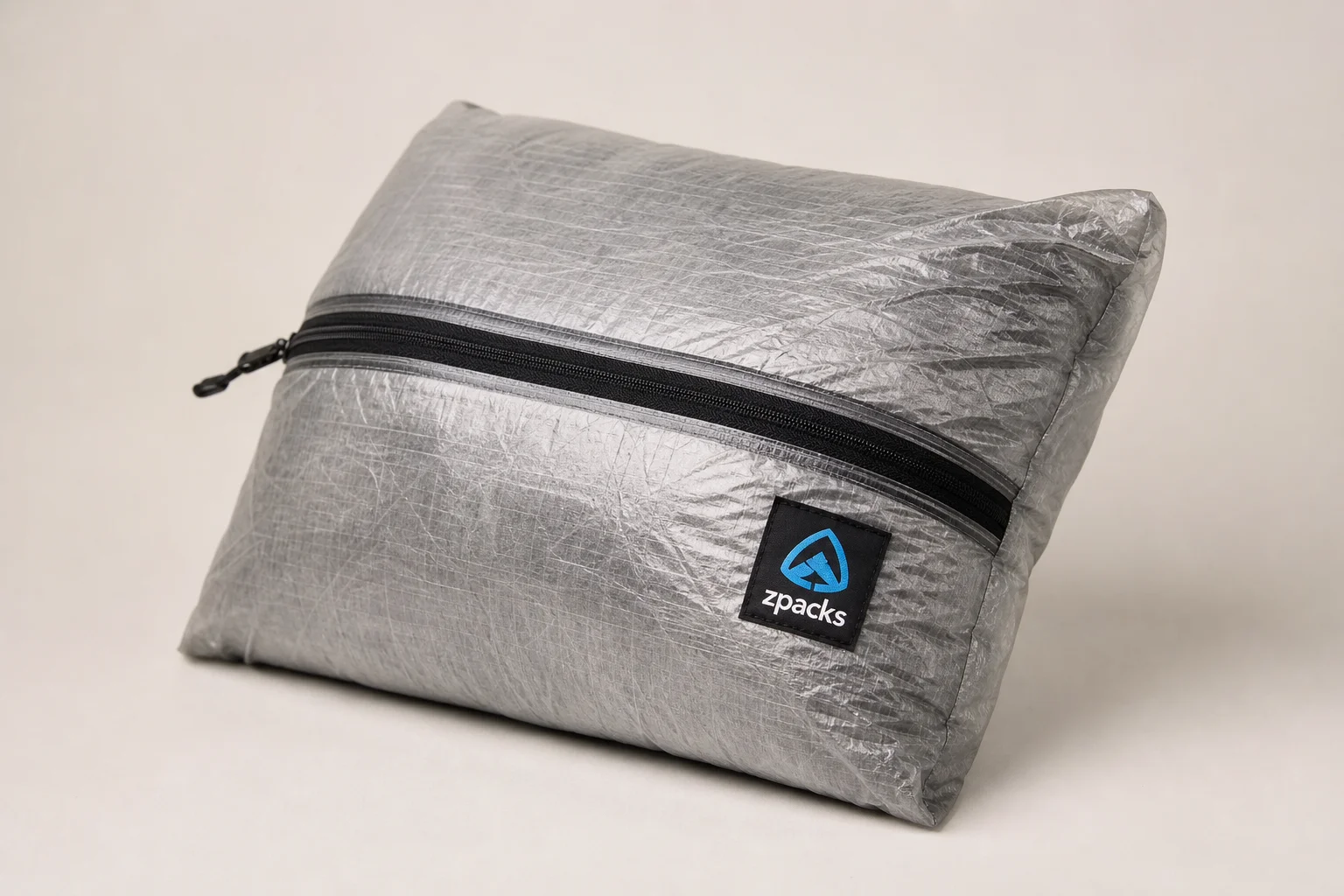
The Hyperlite Mountain Gear Stuff Sack Pillow and Zpacks Stuff Sack Pillow are the most popular options. Both use DCF fabric with zipper closures and a cozy fleece interior where your head rests. The HMG version has a slightly wider, shorter shape that compresses your puffy jacket more densely, while the Zpacks version spreads material more evenly.
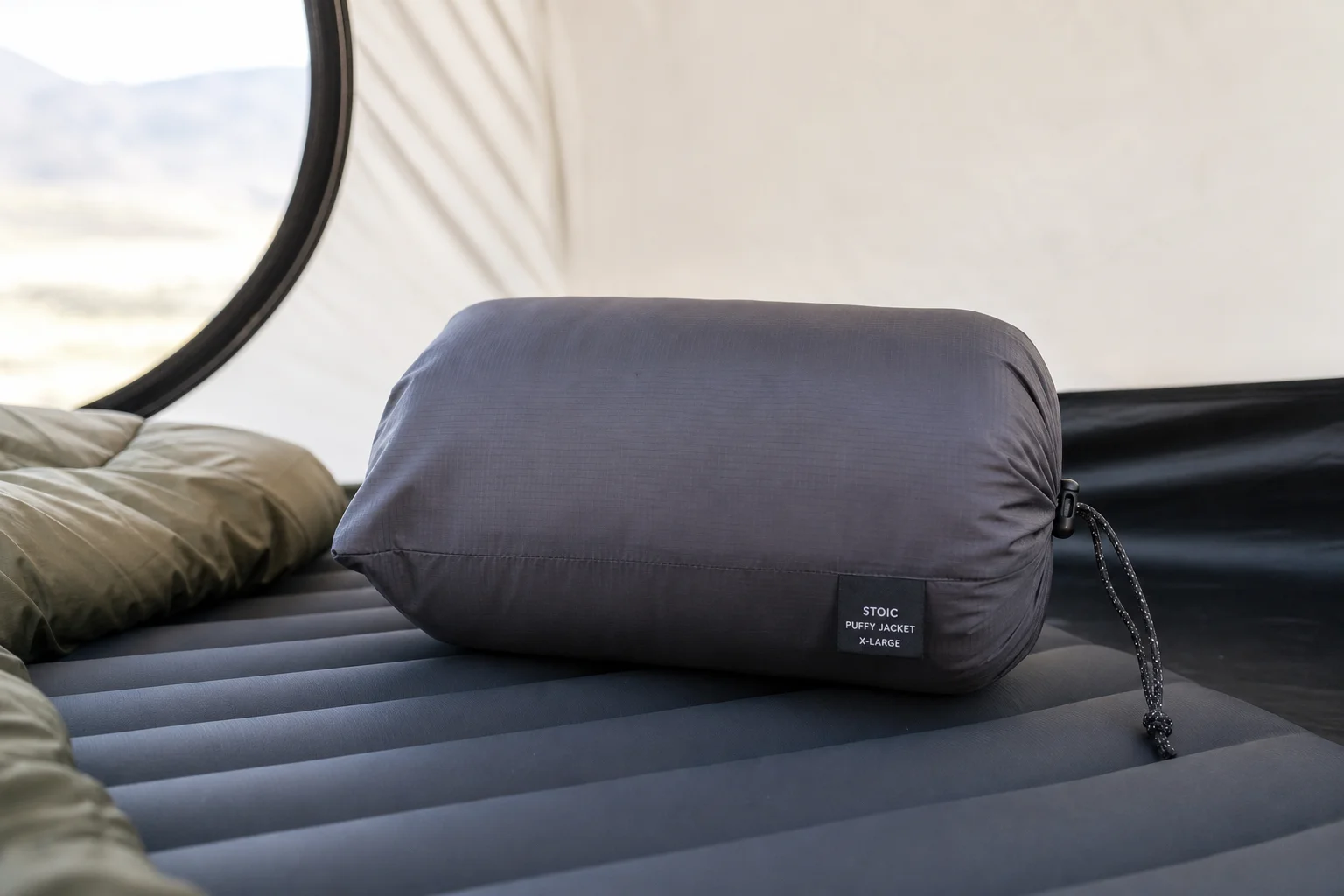
The Zpacks Stuff Sack Pillow is the better dry bag because material stuffs in from the top without obstruction, whereas the HMG has a mid-slot that reduces versatility. Since both cost the same and offer similar pillow comfort, choose based on which dry bag shape suits your kit better or which brand you prefer.
Lofted Pillows: Limited Appeal
Pure down pillows are not recommended because down compresses dramatically under head pressure, collapsing from full loft to minimal puff. Pure foam pillows are too bulky to pack efficiently and do not compress well. These lofted options lack the packability and versatility of hybrid or stuff sack systems.
The Zpacks Comfy Camp Pillow, with its synthetic batting, is the exception: it combines lofted comfort with genuine packability and remains the best lofted option available.
Conclusion
The three pillow test winners are the Zpacks Comfy Camp Pillow, the Zenbivvy Ultralight Pillow, and the Pillow Strap paired with any ultralight inflatable. These three systems deliver the full package: they are lightweight, packable, offer adequate thickness, provide adequate softness, and include systems to keep the pillow stable on your sleeping pad throughout the night. Choose based on your sleeping position, comfort priorities, and how much bulk you are willing to accept in exchange for plushness.
Further reading
Related Reviews
Backpacking Gear
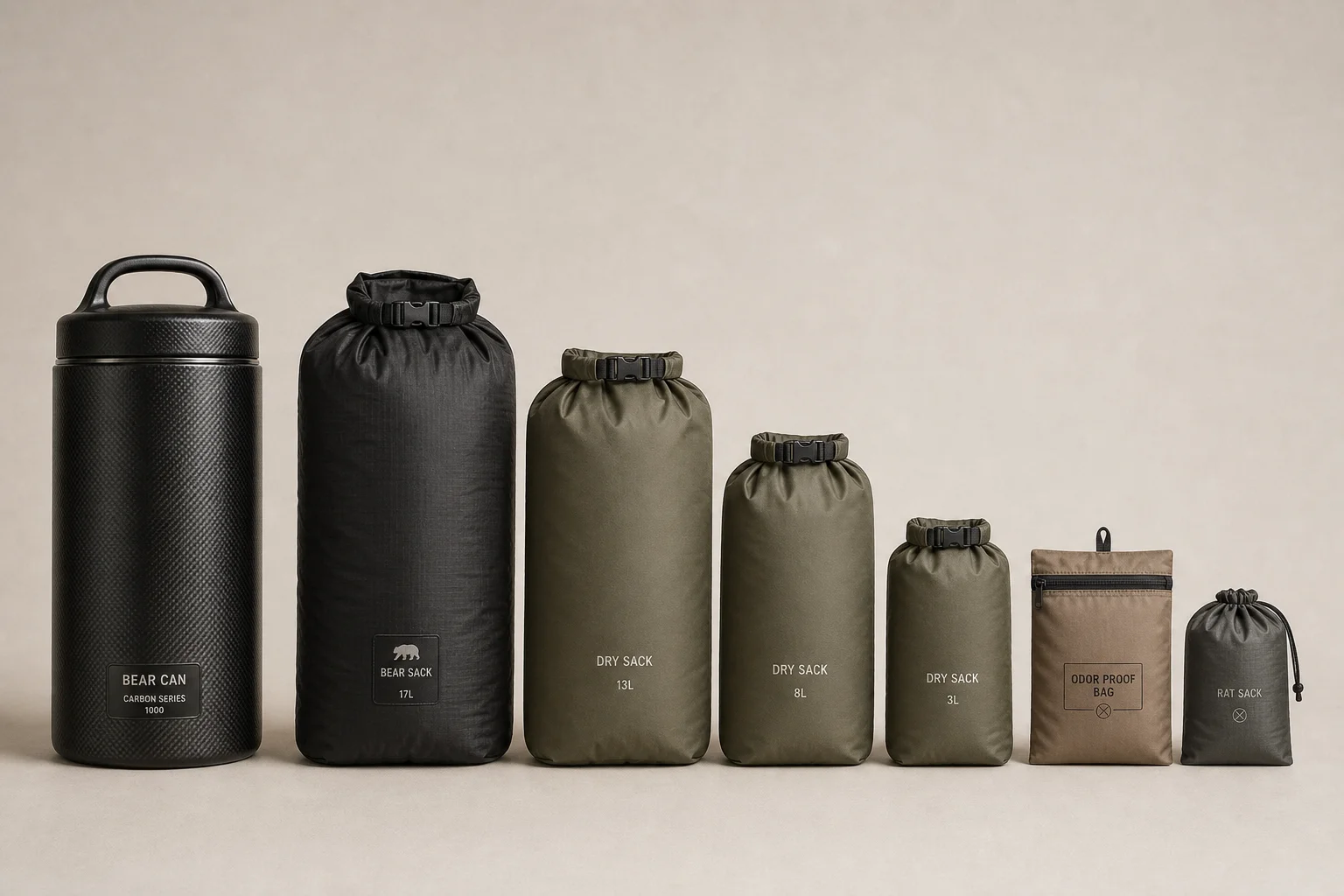
Bear-Proof Food Storage Methods: A Complete Guide to Backpacking Food Protection
Explore seven proven methods for protecting your food from bears and smaller wildlife while backpacking, from hard-sided bear cans to specialized desert rat sacks.
Backpacking Gear
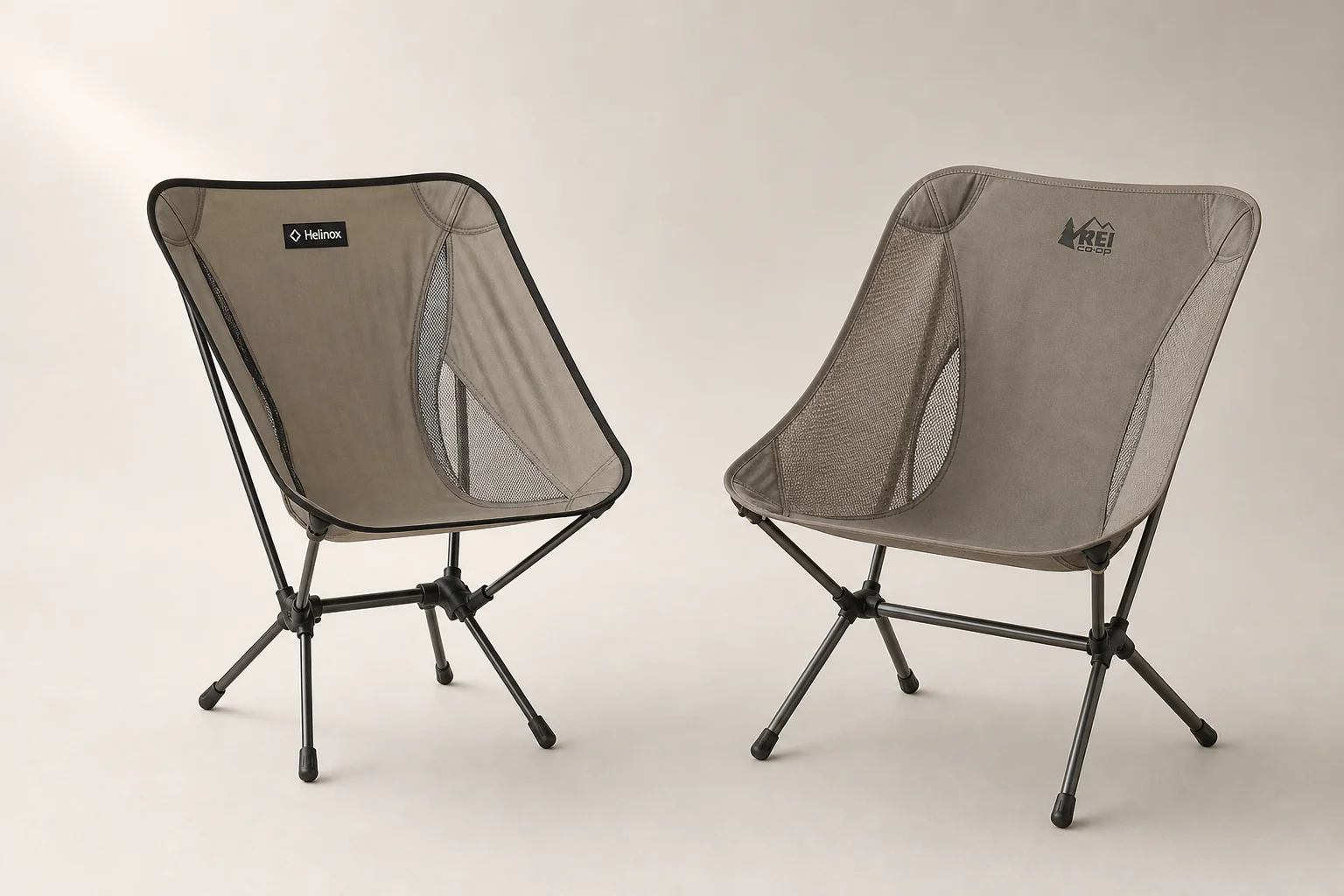
Best Backpacking Chairs: Helinox Chair Zero vs REI Co-op Flexlite Air
Two lightweight backpacking chairs compared side by side. One is a proven classic; the other offers surprising comfort at half the price.
Backpacking Gear
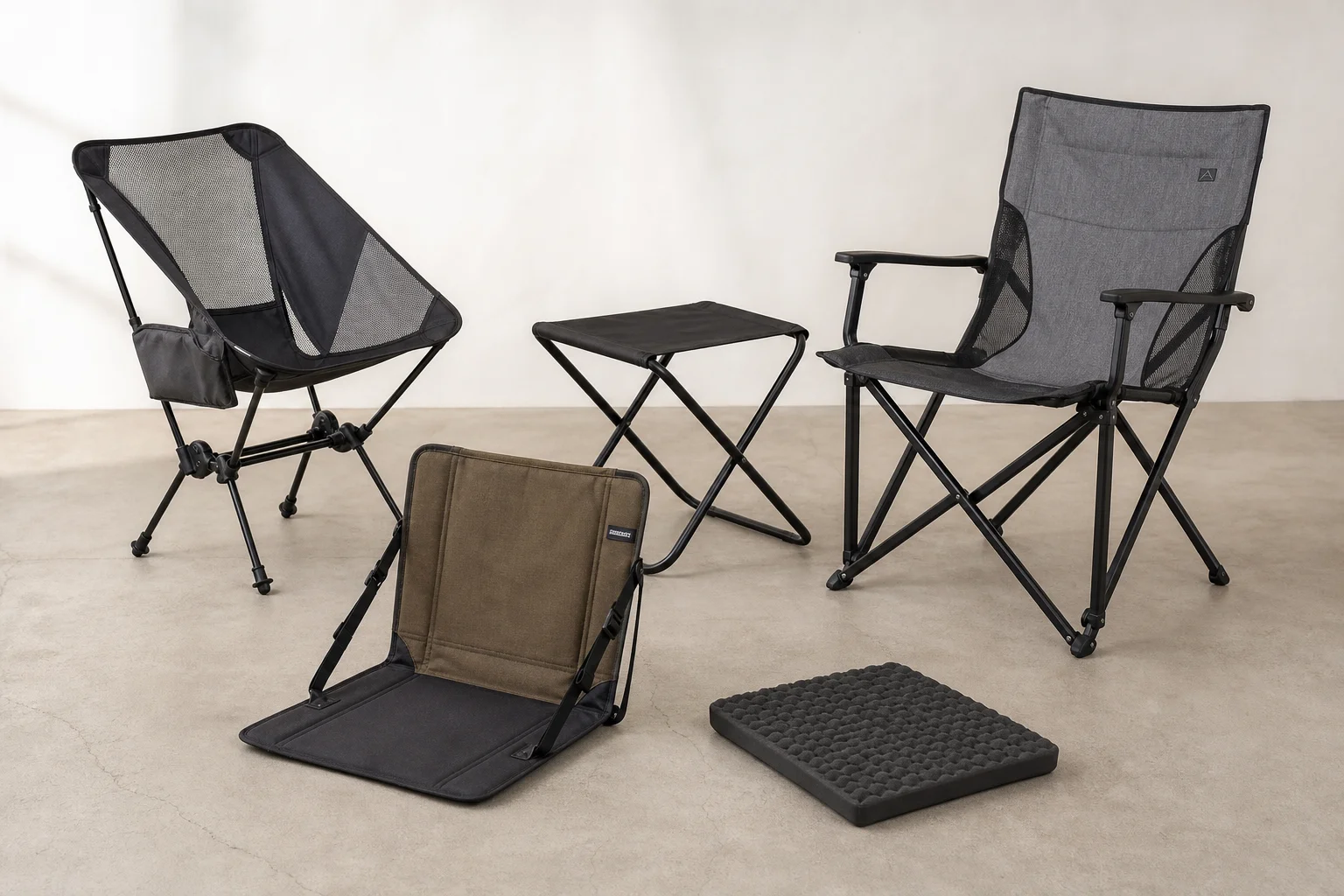
Best Backpacking Chairs Tested: Five Options From Luxury to Budget
Five backpacking chairs tested on real trips. One is a gold standard, one is an underdog bargain, one is a classic, one is essential minimalism, and one to avoid.