Backpacking Cookware
Best Backpacking Cook Kits: Stoves and Pots for Simple, Reliable Meals
Nine stoves and pots that pair into dependable backpacking cook kits, from a budget canister stove to a heat exchanger pot built for fast, fuel-efficient boils.
Introduction
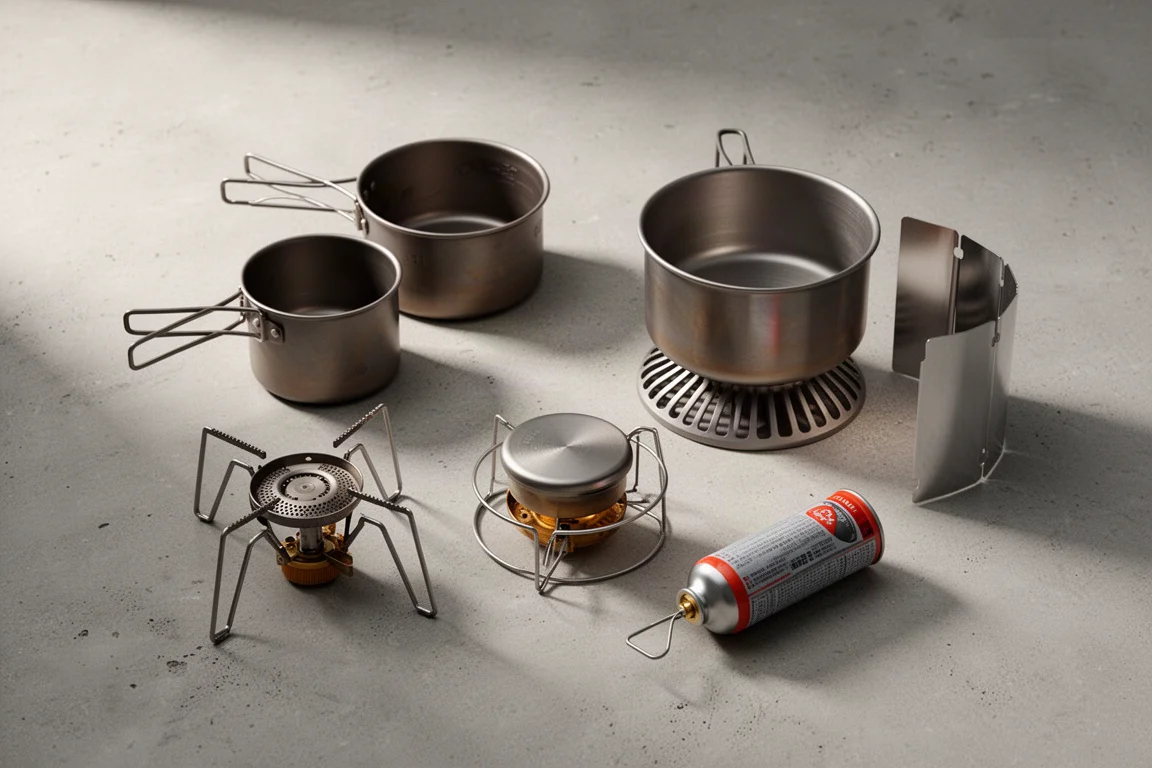
Most backpacking cooking is boiling water. Freeze-dried meals, coffee, tea, hot cocoa: the job is simple, and the list of gear that can do it is enormous. Canister stoves in particular are more alike than they are different, with only subtle variations between them, and pots follow the same pattern.
That is why the useful question is not which stove or pot is best in the abstract. It is which combination makes boiling water easy when you are tired, hungry, and standing in weather. The kits below were put together around three things: reliability, value, and simplicity. Each one does the same basic job, but each is better suited to a slightly different trip, season, or cooking style.
How These Cook Kits Were Chosen
Three qualities matter more than spec sheets: reliability, value, and ease of use. A stove that lights on the first or second click and keeps working trip after trip is worth more than one carrying an extra feature you never touch. A pot that nests a 100g canister and a folded stove keeps a pack quiet and compact. And a kit that costs less than a night in a hostel leaves more budget for fuel and food.
Wind performance and fuel use are the practical differentiators. A burner with no wind protection will use more fuel on an exposed pitch, while a heat exchanger pot pulls heat into the water faster and shields the burner at the same time. Capacity is the other variable: 550ml is enough for one freeze-dried meal plus a hot drink, while a wider, larger pot opens up real cooking and snow melting.
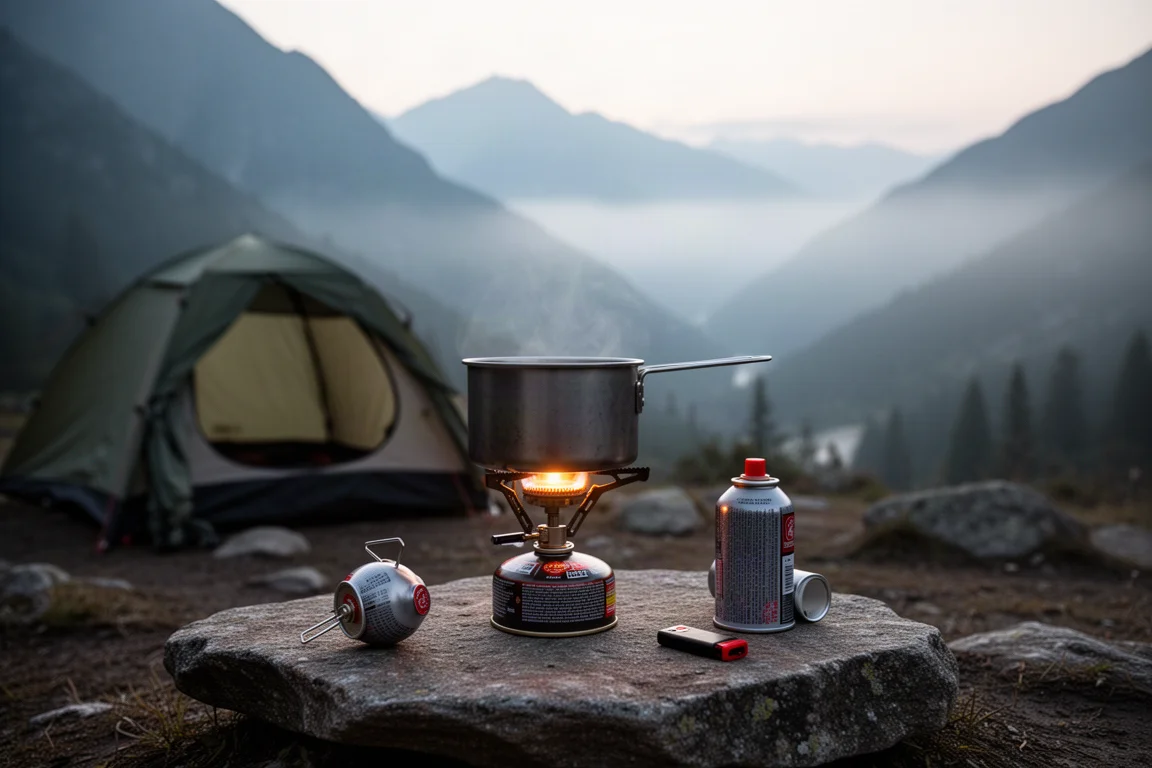
Everything here is built around canister stoves and one alcohol setup, because that is where the simplest and lightest cooking tends to happen. None of these kits needs a ritual to operate, and all of them pack into a single stack that fits inside a pack without rattling.
Toaks 550ml Titanium Pot: The Classic Lightweight Base
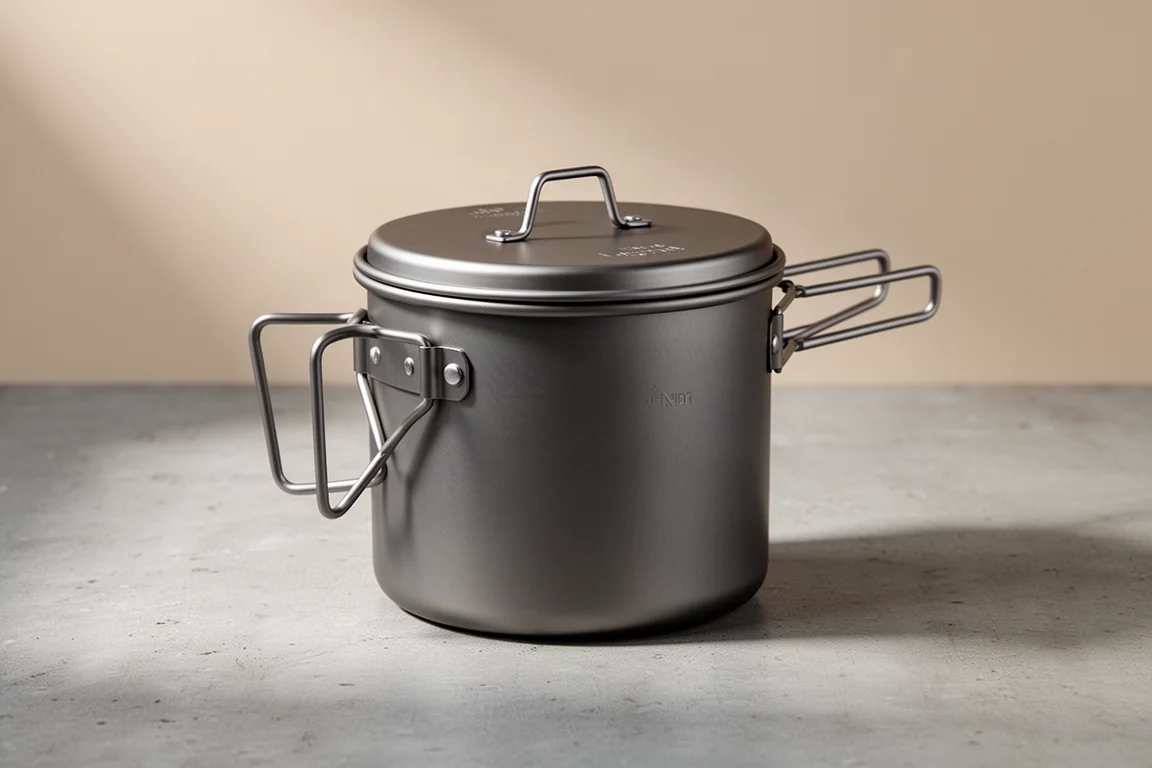
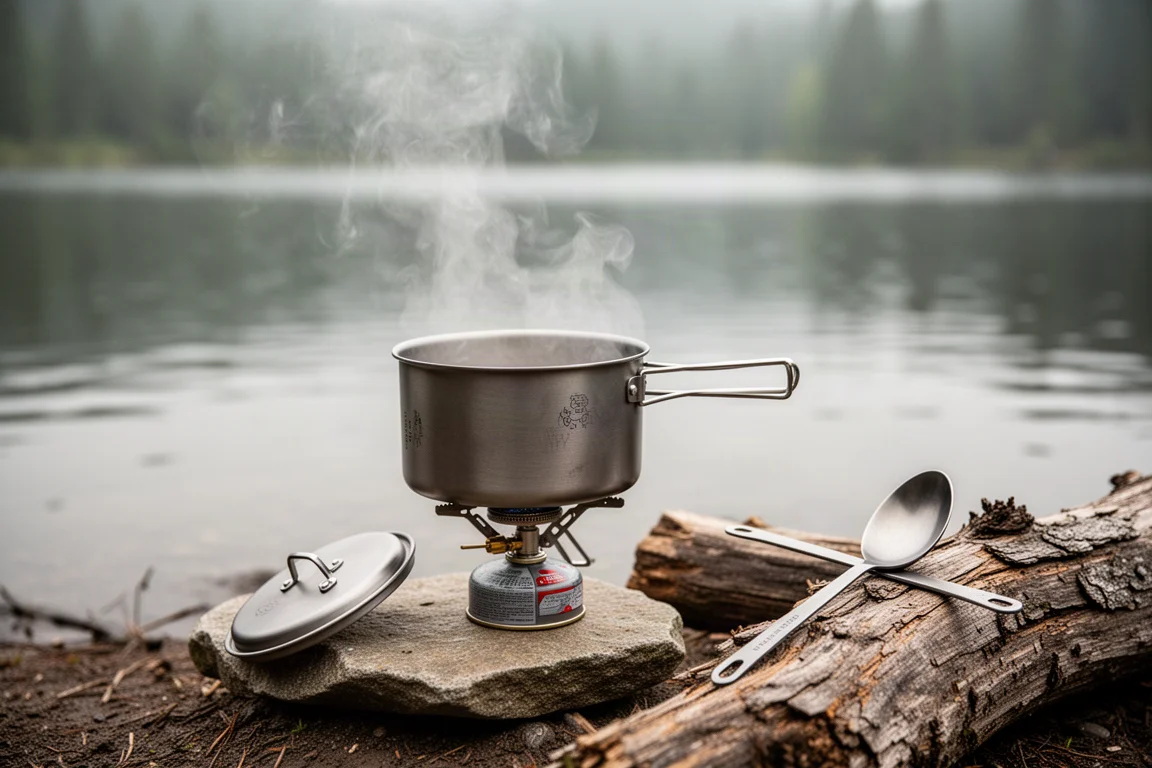
The 550ml titanium pot is the smallest in this group and the one that defines the classic ultralight setup. Titanium keeps the weight down, and 550ml is enough to boil water for essentially any freeze-dried meal plus a quick hot drink afterward.
It shares its diameter with the larger 750ml version, which matters at packing time: a 100g canister fits inside both. With the 550ml pot, the canister goes in upside down so its concave base becomes a shallow bowl that holds the folded stove. It takes a moment longer to arrange, but the result is a single compact cylinder in your pack.
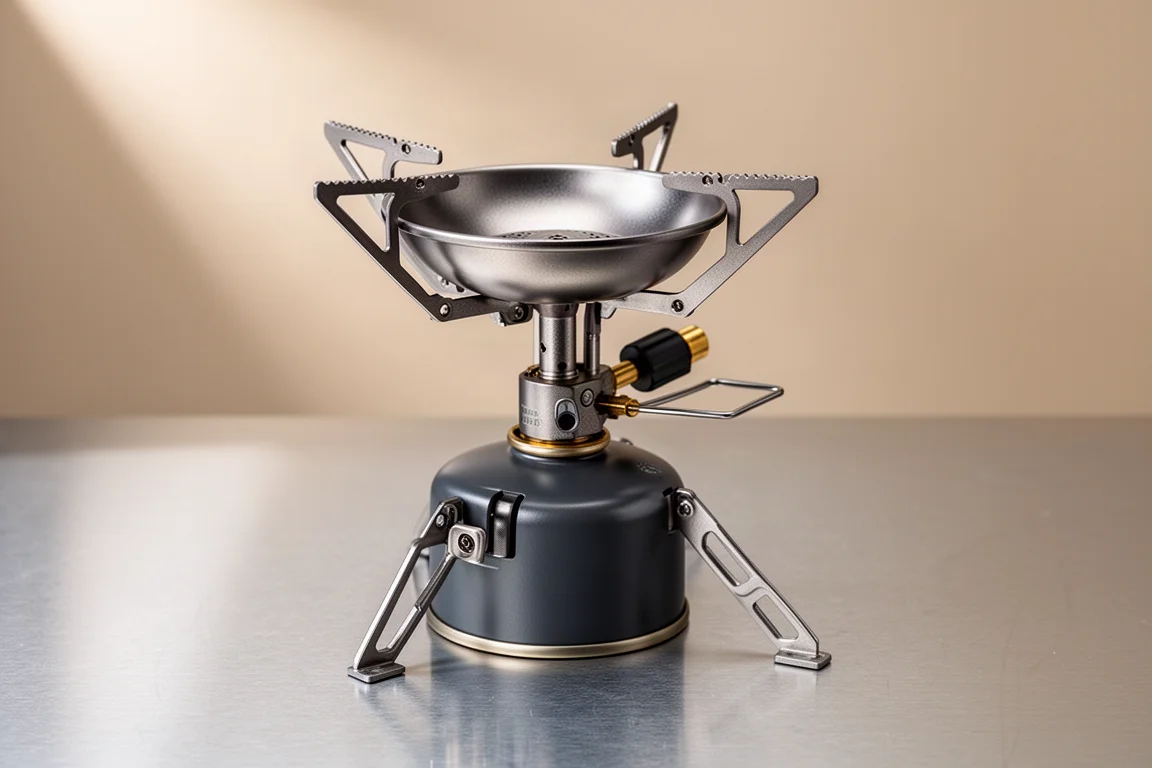
BRS 3000T Stove: Maximum Value at Minimum Weight
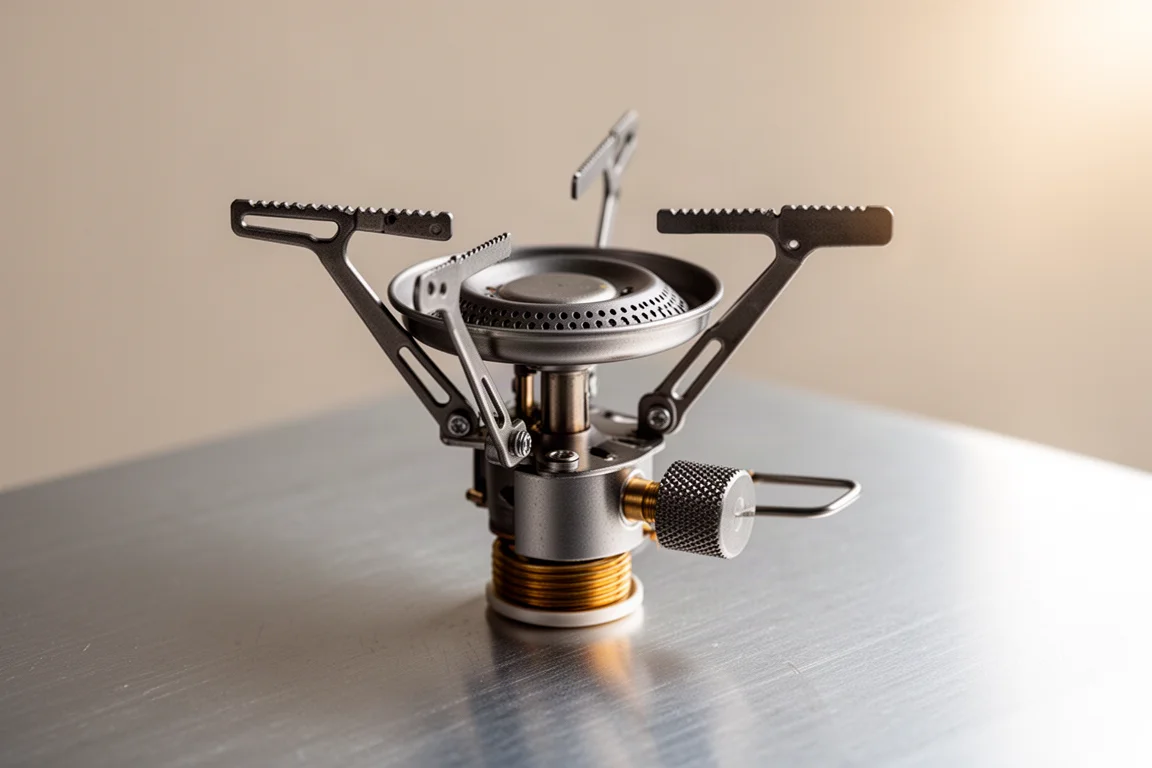
At around $16, the BRS 3000T is one of the lightest and least expensive canister stoves you can carry, and it has a long record of working on trail. It folds down small enough to nest inside a titanium pot, and it handles the one job that matters here: boiling water.
The trade-offs are straightforward. There is no wind break on the burner, so a breezy, exposed campsite will cost you extra fuel. There is also no piezo igniter, so a lighter or striker belongs in the kit. Paired with the 550ml titanium pot, the whole setup comes in under $50.
Toaks 750ml Titanium Pot: More Volume, Same Footprint
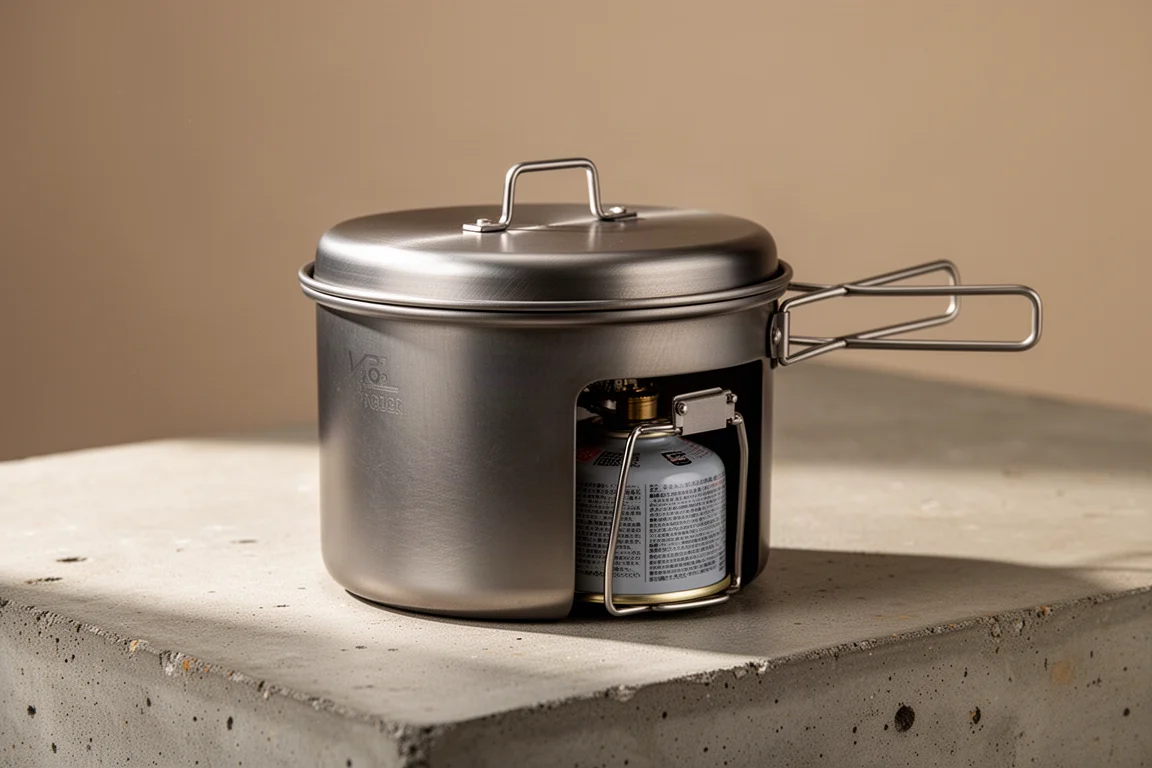
The 750ml version is the same pot with more room inside. Because the diameter is unchanged, it still accepts a 100g canister, and there is enough space to drop the folded stove in alongside it with room left over for a lighter.
That extra 200ml is not dramatic, but it covers the difference between one meal and one meal plus a hot drink, or between a rehydrated dinner and a slightly more generous one. If you want a titanium pot that stays compact without feeling tight, this is the version to consider.
For most solo backpackers the 750ml is the more forgiving choice: it packs almost as small as the 550ml and gives you a little slack when your appetite or your meal size runs larger than planned.
X-Boil Alcohol Stove Kit: Quiet Fuel Flexibility
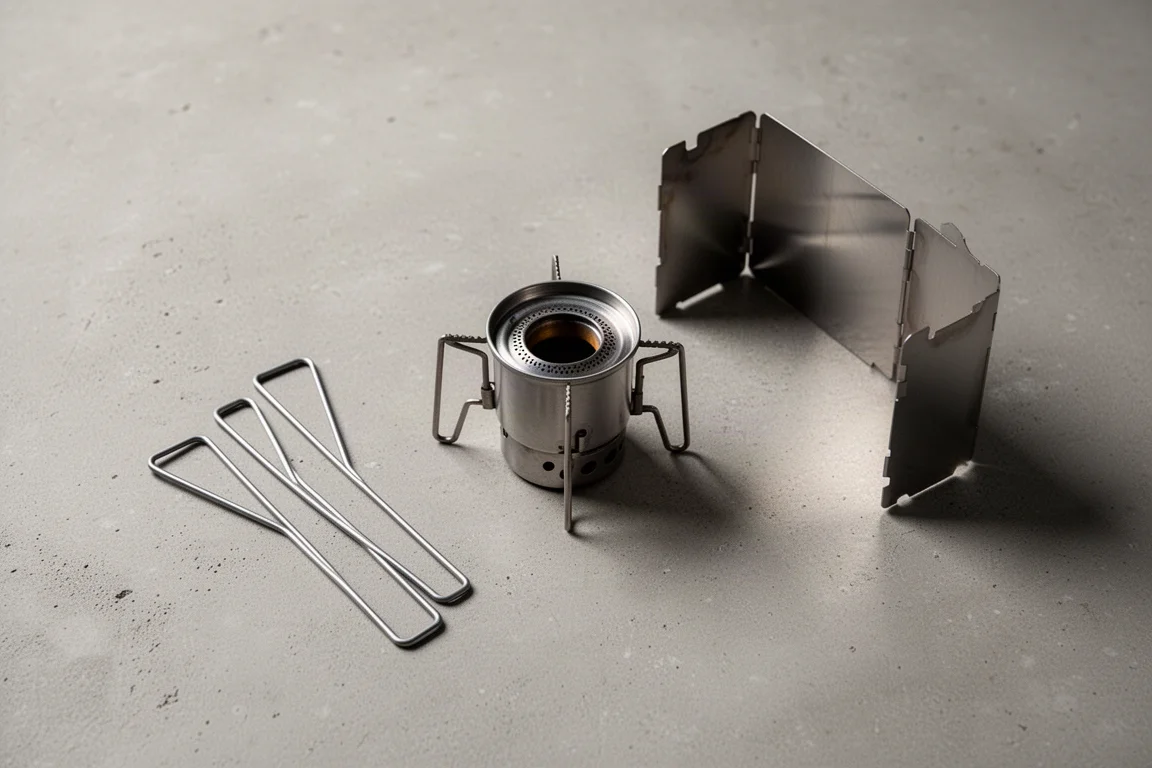
Alcohol stoves are a different proposition. They are quiet, extremely light, and they let you measure out exactly the fuel a trip requires. Alcohol is also easy to source in most places. The catch is that many alcohol setups are fiddly, with too many small parts standing between you and a boiled pot.
This kit keeps things simple. The burner holds an absorbent material inside and unscrews so it can store its own parts. Three small L-shaped arms clip onto a metal windscreen and become the pot platform, which also sets the correct height between the top of the burner and the base of the pot. Everything then nests inside a 550ml titanium pot, and it also fits the 750ml. In use it is stable and effective, and it breaks down into a single tidy stack with the lid on top.
Fire Maple Green Peak Stove: Wind-Ready and Quick to Light
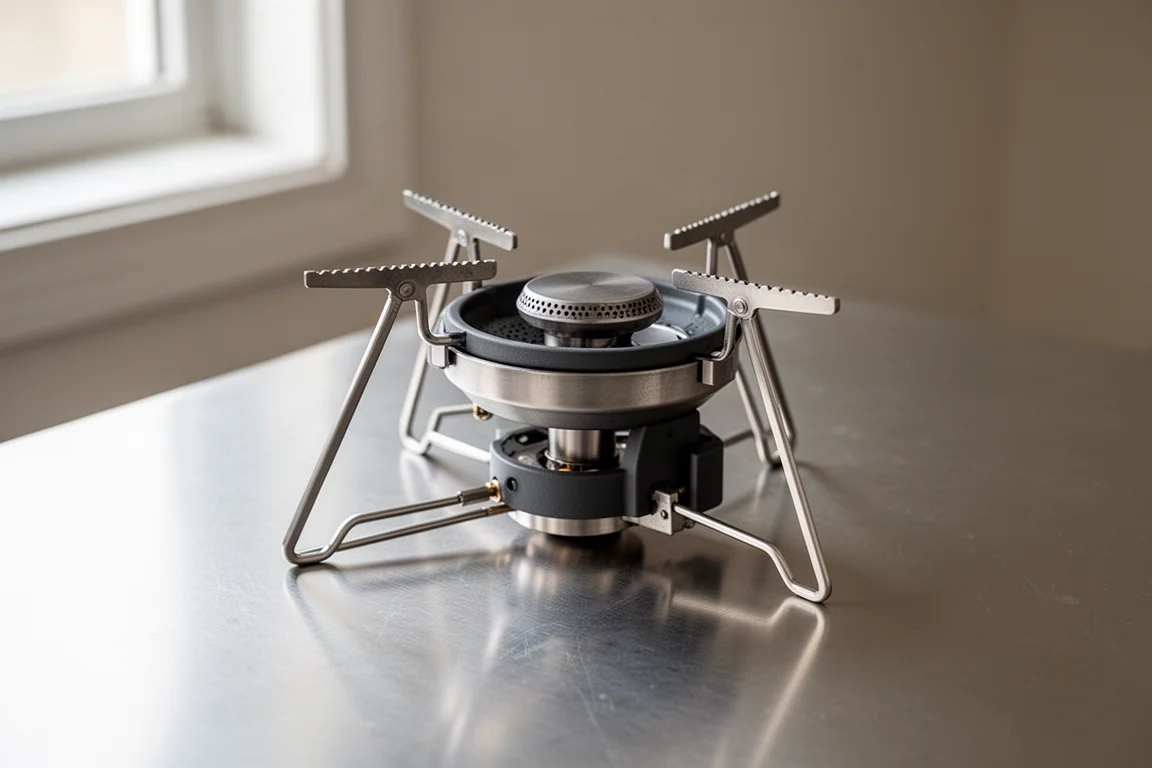
The Green Peak is a canister stove with a piezo igniter that fires on the first or second click and a good-sized burner head. It is the stove half of the heat exchanger pairing that follows, and it is the part of that kit that makes lighting and relighting effortless.
Its wind performance improves noticeably when it is matched with a pot designed to work with it, which is exactly what the next section covers.
Fire Maple Petrel G3 Heat Exchanger Pot: Efficient Solo Cooking
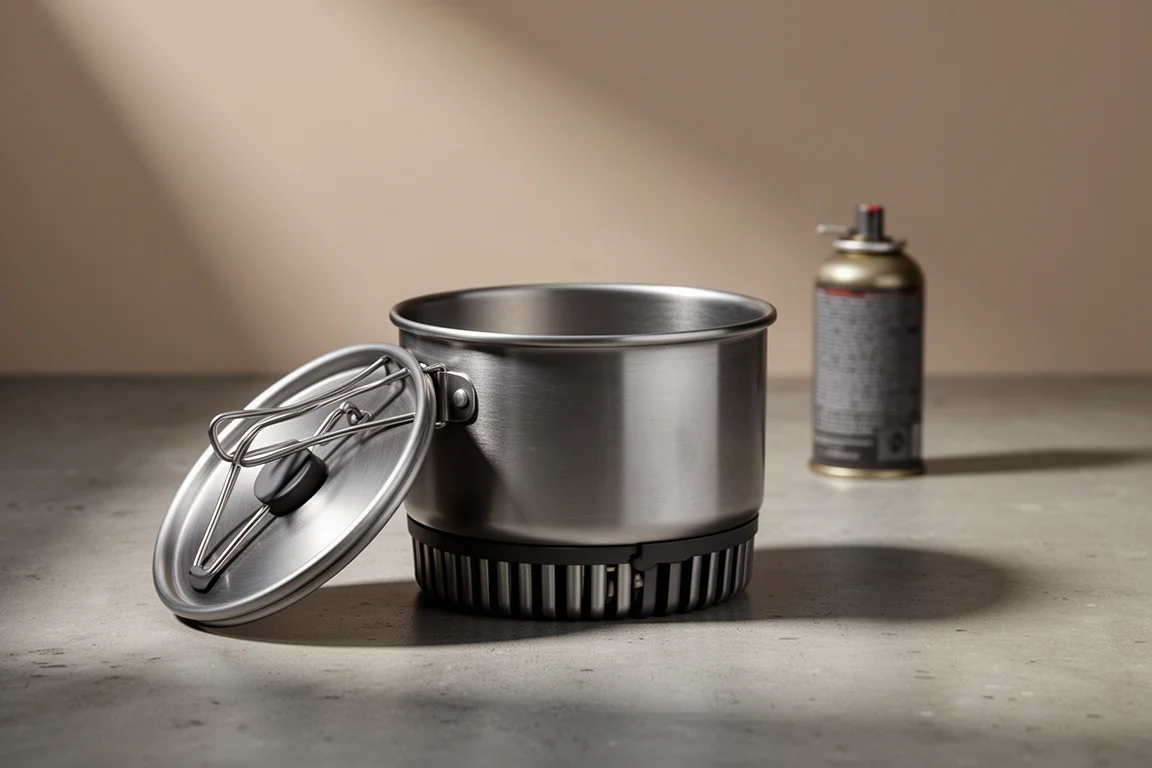
The Petrel G3 is a 600ml aluminum pot with a heat exchanger built into its base. It is the only aluminum pot in this group; everything else here is titanium. It is still light, and it is well built for its price point.
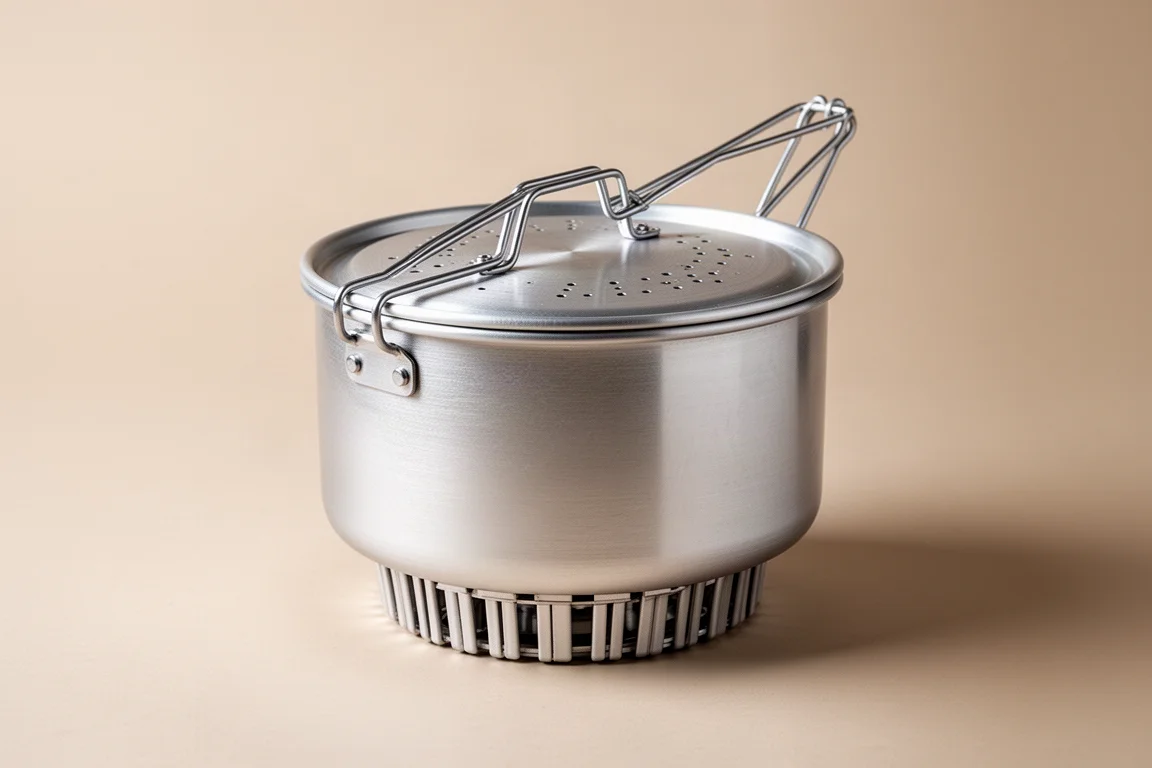
Capacity is the quiet advantage. Most heat exchanger pots start at 0.8 liters or more, which is a lot of empty space for one person. At 600ml, the G3 holds enough for a freeze-dried meal plus a little extra for cleanup water or a hot drink, and it stays compact. Everything nests inside, the lid has strainer holes, and the handle flips over the top to hold the stack together.
The heat exchanger is what makes it fast. Three cutouts in the skirt sit at 120 degrees and line up with the stove’s pot supports, which seats the burner closer to the base of the pot and lets heat spread into the fins. Aluminum moves heat better than titanium, and the skirt adds useful wind protection around the burner. The result is a quicker boil and less fuel burned for the same water.
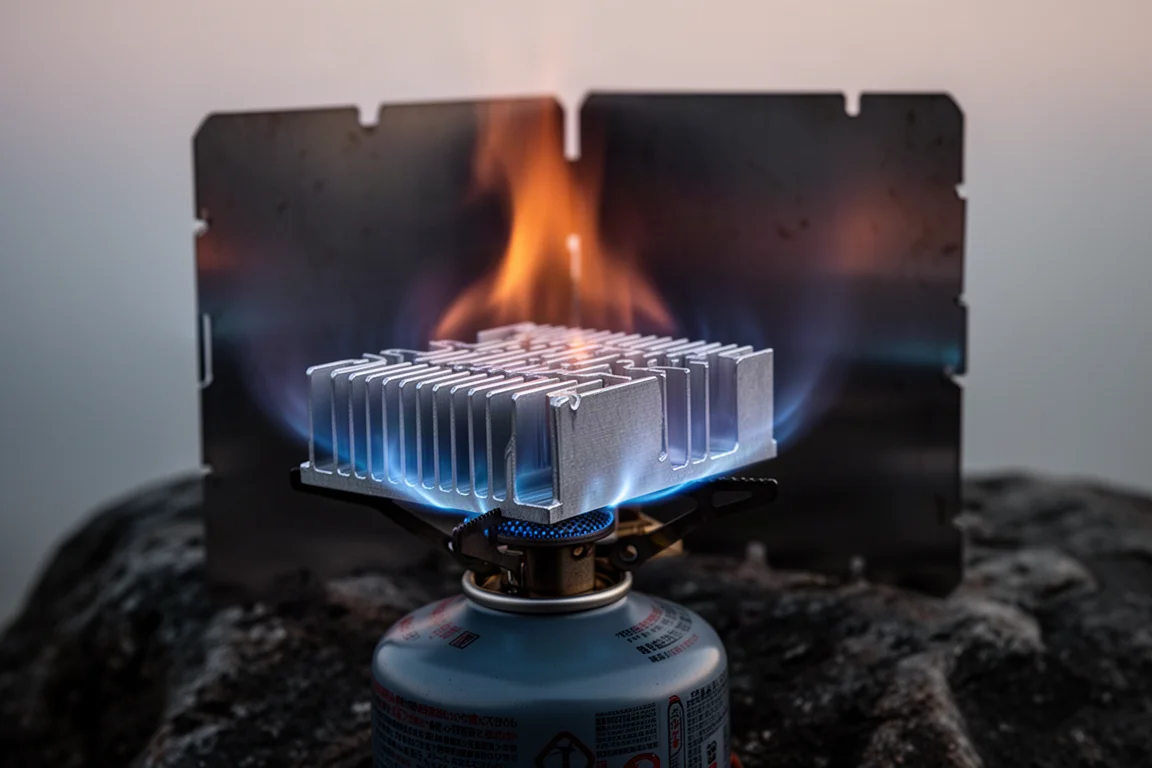
Wind is where this pairing separates itself from a bare canister stove. On an exposed pitch, the difference between a shielded burner and an open one shows up both in boil time and in how much fuel is left at the end of a trip.
Fire Maple Petrel G2 Heat Exchanger Pot: Wider Base, Larger Volume
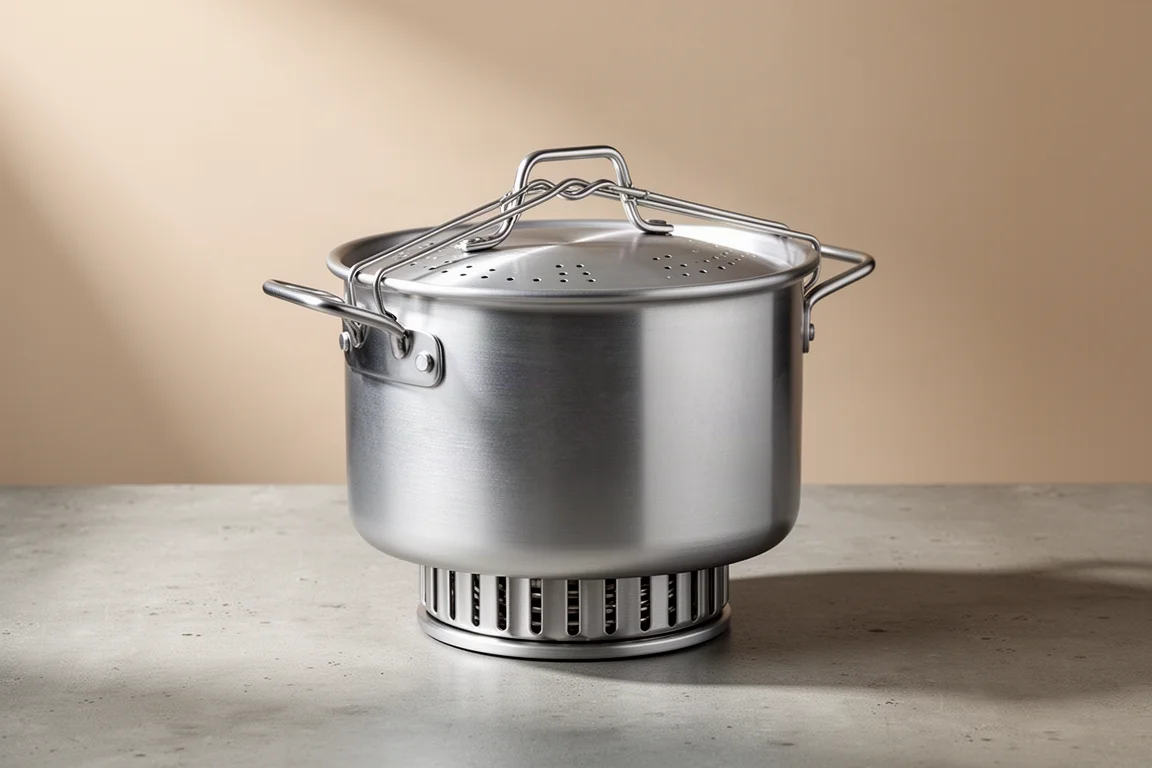
The G2 answers a simple request for a slightly larger heat exchanger pot than the G3. It has a wider diameter, which gives the burner more surface area to spread heat across, and it holds 750ml. That extra volume fits a larger canister than the 100g size, with the stove stowed alongside it.
Construction is the same, including the flip handle, and the opening and base are simply larger. For group use, or for anyone who wants faster boils with more water in the pot, the wider base is the point.
Keith Titanium 1000ml Lunchbox: Cold-Weather Versatility
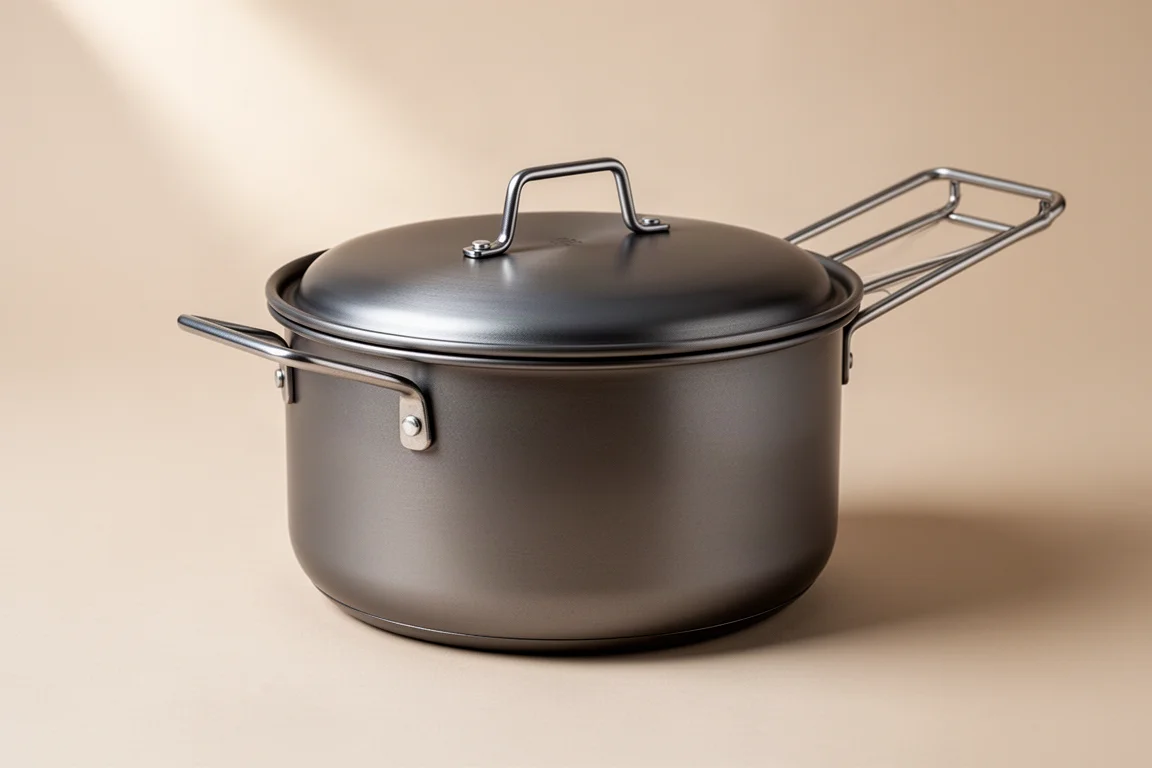
The Keith Titanium lunchbox holds 1000ml and suits trips where you are doing more than pouring boiling water into a bag. The wide base and generous capacity make it useful for melting snow, and there is room to actually cook: noodles, rice, or a rehydrated meal that is not a freeze-dried pouch.
The lid seats down snugly, though it is not watertight, which is enough to rehydrate something overnight with a weight on top for rodent protection. The double folding handle design is stable, and the pot is balanced so it does not tip when empty. The bowl shape makes it easy to clean, and the whole kit, stove, canister, and cook set, nests inside.
Soto WindMaster Stove: The Long-Term Reliable Pick
The WindMaster is the most expensive stove in this group, and it earns that over years rather than on a spec sheet. It has a pressure regulator, which keeps output steadier in cold conditions, and build quality that holds up to repeated use. The piezo igniter keeps working, and the concave burner handles wind well.
It is also versatile: the top accepts the Triflex or 4Flex attachment, which changes how the pot sits and what size pot you can use. Paired with the Keith Titanium 1000ml lunchbox, the regulated burner and the wide, high-capacity pot make a sensible cold-weather kit for melting snow and cooking real meals.
Buying Advice: Matching a Cook Kit to Your Trip
The right kit follows from how you cook, not from how much you spend. If your trips are mostly three-season and your meals are freeze-dried, a 550ml titanium pot with a budget canister stove covers it for very little money. If you want a bit more slack in the pot, the 750ml version costs you almost nothing in packed size.
Wind and fuel are the next thing to think about. A burner with no wind protection will drink fuel on an exposed campsite, so either plan for a windscreen or choose a heat exchanger pot that shields the burner and speeds up the boil. If you like the idea of a quiet stove and measuring out your own fuel, an alcohol kit is worth trying, provided the setup is simple enough that you will not dread using it.
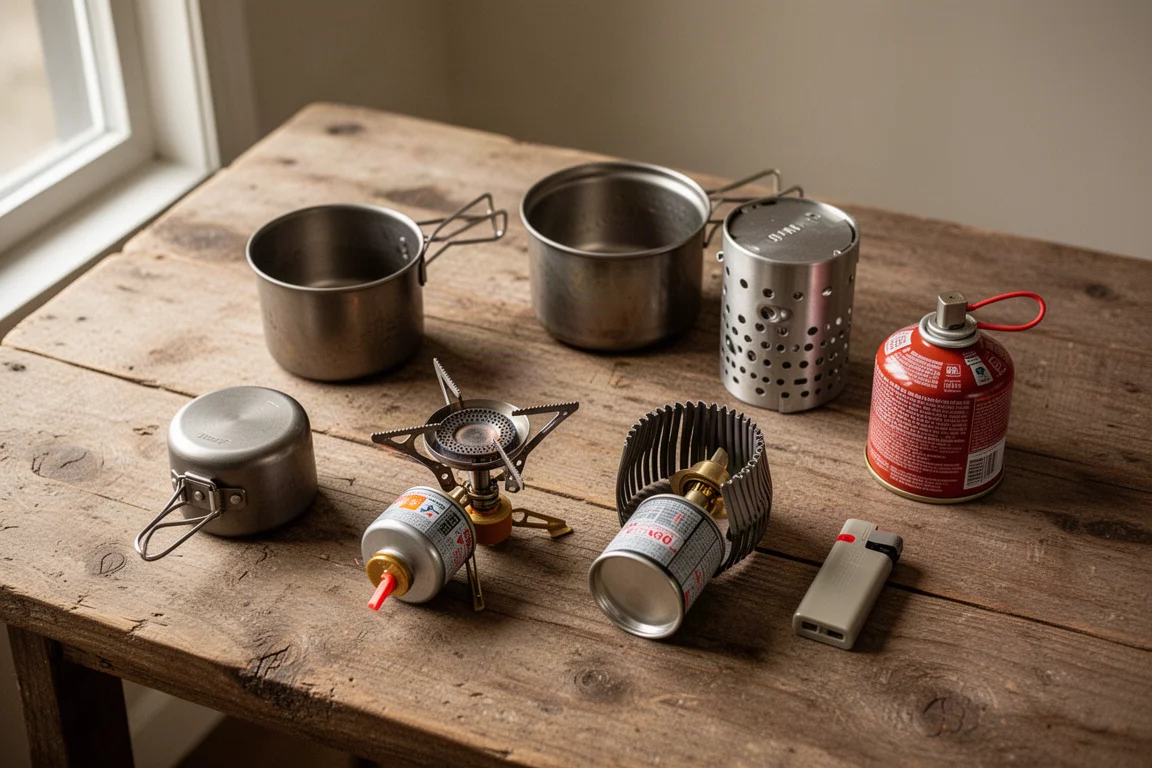
Cold weather is its own category. A regulated stove paired with a wide, higher-capacity pot is the combination that handles snow melting and real cooking, and that is where spending more makes a visible difference. Whatever you choose, check the nesting before you commit: a pot that swallows a 100g canister and a folded stove is easier to live with than one that rattles, and a kit that sets up in two minutes is a kit you will actually enjoy using.
Conclusion
Most backpacking cook kits are doing the same simple job, which is why reliability, value, and ease of use matter more than feature lists. The Toaks 550ml with the BRS 3000T remains the classic low-cost pairing. The 750ml version adds capacity for almost no penalty. The X-Boil kit makes alcohol cooking simple enough to use regularly. The Fire Maple heat exchanger pots, at 600ml and 750ml, are the fastest and most wind-resistant options here. And the Keith Titanium lunchbox with the Soto WindMaster is the kit for cold weather and real meals.
Pick the combination that matches your season and your cooking style, and the rest is just boiling water.
Further reading
Related Reviews
Backpacking Cookware
Best Backpacking Cook Kits and Stoves: Pots, Canister Stoves, and a Budget Setup That Works
A practical guide to backpacking pots and stoves, from ultralight titanium and solid fuel tablets to an all-in-one system and a budget kit that costs about as much as a takeout dinner.
Backpacking Cookware
Best Backpacking Cook Systems and Stoves: From Boiling Water to Backcountry Baking
Nine backcountry cook systems and stoves, from tiny alcohol burners and a budget canister stove to an all-in-one kit and cookware built for real backcountry baking.
Backpacking Cookware
Fire Maple G3 Petrol Review: A Compact Heat Exchanger Pot for Backpacking
A close look at the Fire Maple G3 Petrol, an aluminum heat exchanger pot with a 650 ml usable capacity, fast boil times, and room for a complete solo cook system inside.