Backpacking Cookware
Best Backpacking Cook Kits and Stoves: Pots, Canister Stoves, and a Budget Setup That Works
A practical guide to backpacking pots and stoves, from ultralight titanium and solid fuel tablets to an all-in-one system and a budget kit that costs about as much as a takeout dinner.
Introduction
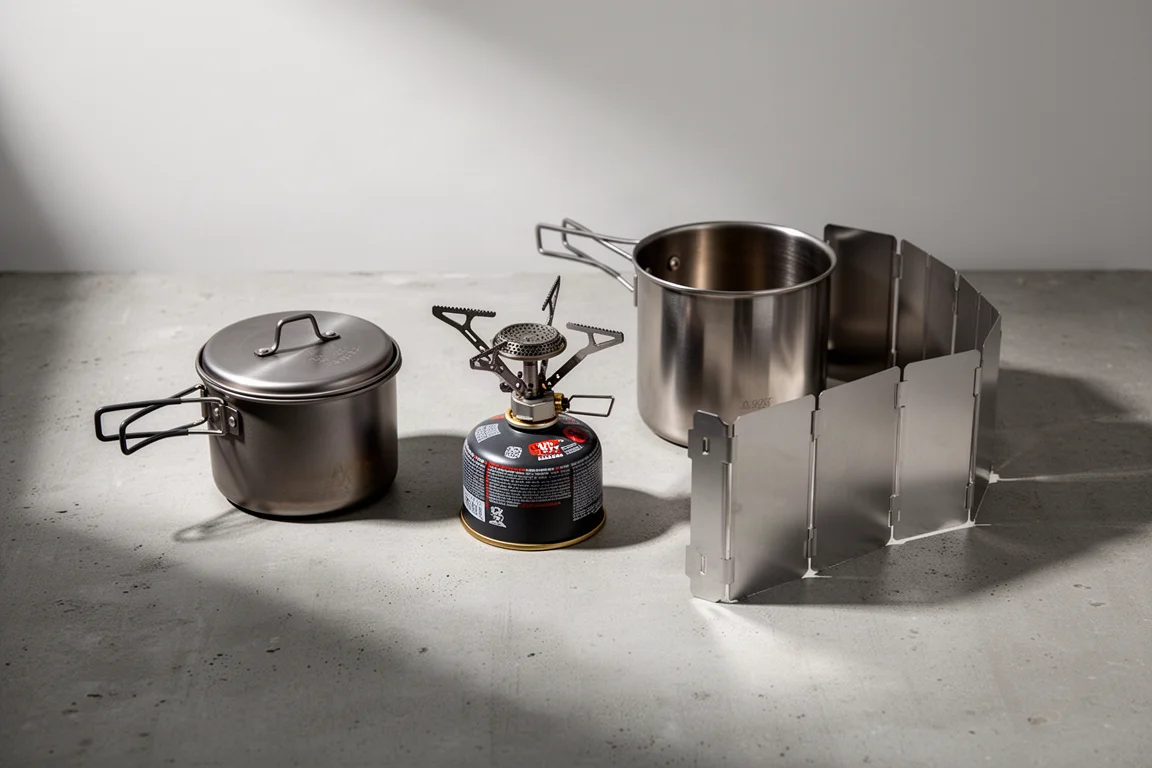
Backcountry cooking is not one problem, it is a handful of different ones. Some trips need nothing more than boiling water for a freeze-dried meal. Others need a wider flame, a bigger pot, and enough fuel to feed more than one person. The right kit depends on which of those trips you actually take, and on how much weight you are willing to carry to get there.
The pots and stoves below cover the range. There are titanium pots that weigh almost nothing, canister stoves with built-in igniters, a remote-canister design for below-freezing mornings, an all-in-one system for bigger meals, a solid fuel option for the absolute minimum, and a budget combination that costs roughly what a takeout dinner costs.
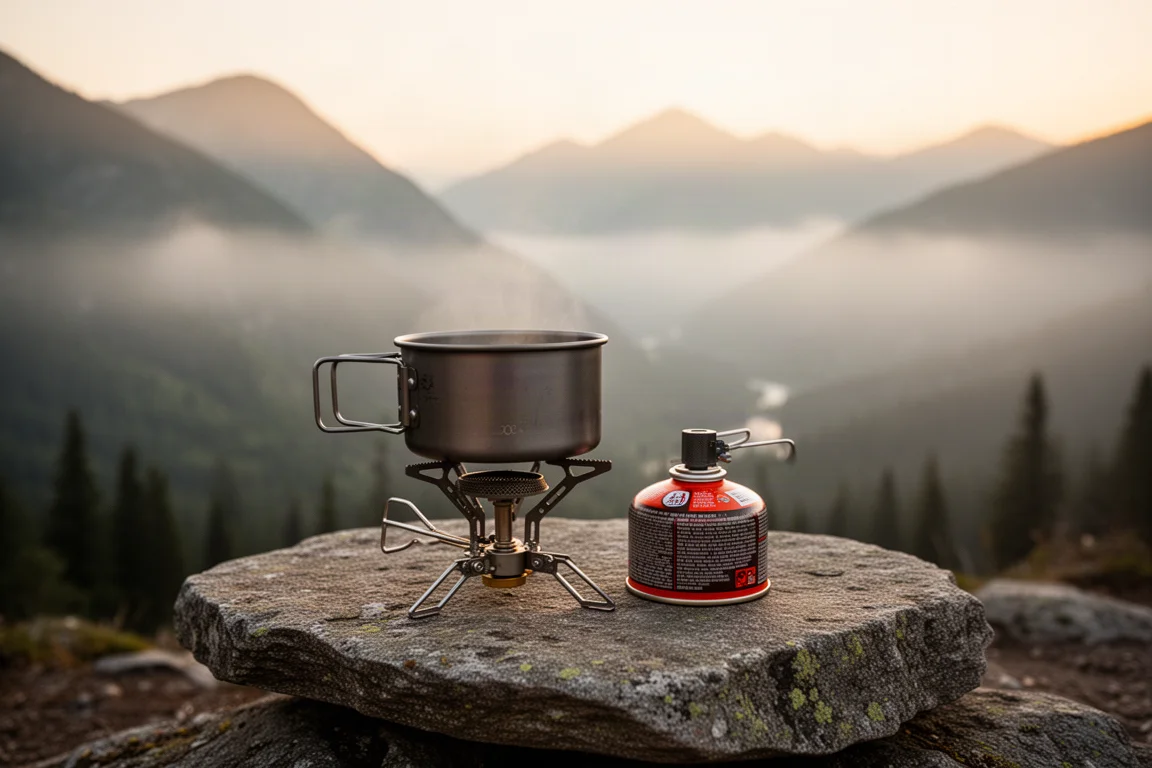
Each entry focuses on what the item is genuinely good at, along with the trade-offs worth knowing before you buy. Nothing here is a universal answer. A pot that is perfect for boiling water can be a poor choice for frying eggs, and the lightest stove is rarely the most reliable one.
How to Choose a Backpacking Cook Kit
Two decisions shape everything else: how you plan to cook, and what you plan to burn.
If you only boil water, a titanium pot and a small canister stove will do the job with very little weight. Titanium moves heat quickly, which makes it fast to boil and just as fast to cool, and it means food sticks and scorches easily if you try to cook in it. If you want to actually cook, a coated aluminium pan with a non-stick interior makes both the cooking and the cleaning far easier.
Canister stoves attach directly to a fuel canister. A built-in igniter removes the need to carry a separate lighter or spark, and self-igniting models now appear at several price points. Fuel efficiency matters if you want to carry as little fuel as possible, and wind performance matters more than most people expect on exposed campsites.
Alcohol stoves are the classic ultralight answer. They have no flame control, they produce a single output, and they can take 8 to 12 minutes to boil a cup or two of water, but they are extremely light and they keep working below freezing. The fuel is widely available, which makes resupply simple on long routes.
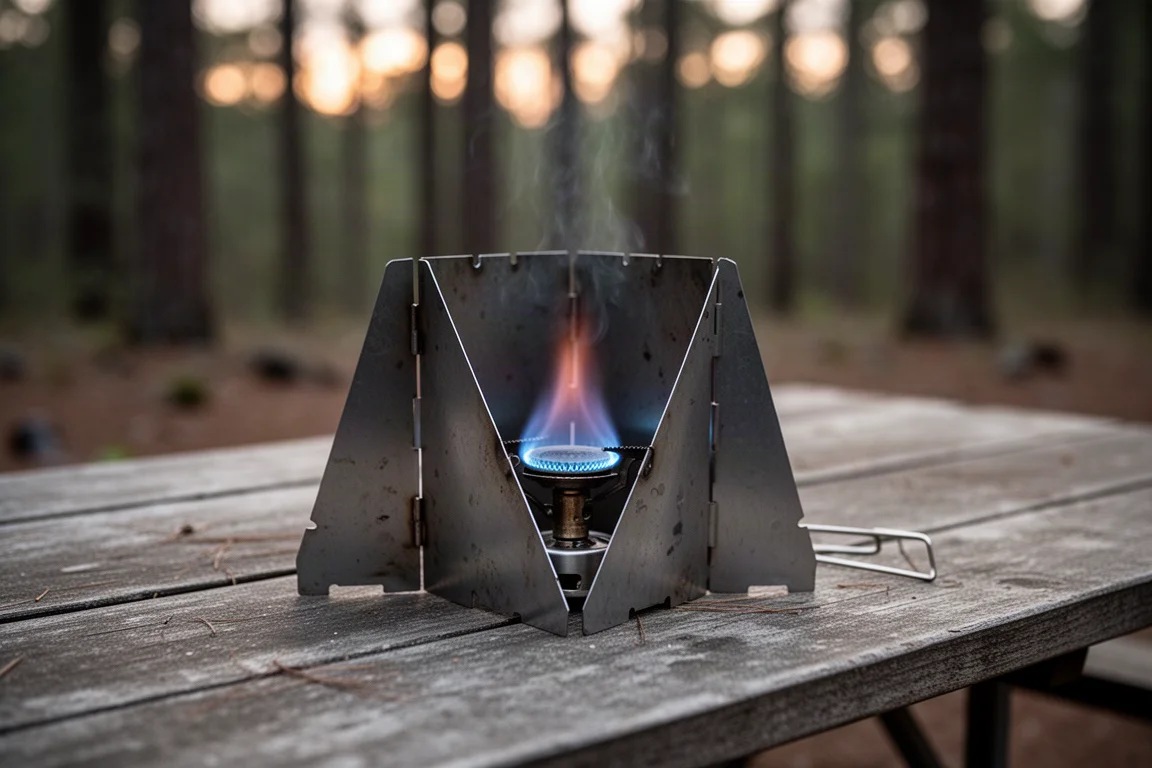
Windscreens are rarely necessary. If the wind is strong, it is usually easier to use what you are already carrying: position your pack, a boulder, or a tree between the stove and the wind.
Finally, think about nesting. A pot that can swallow your stove, a small fuel canister, and a lighter is a pot you will not have to repack three times every morning. A long-handled spoon is worth the few extra grams as well, because it reaches the bottom of a freeze-dried meal bag without covering your hand in food.
Toaks 550ml Titanium Pot: Best for Boiling Water
The Toaks 550ml is a small titanium pot that holds about two cups of water, and it is one of the least expensive titanium pots you can find. It is the kind of pot that disappears into a pack and is ready in seconds.
The trade-off is heat behaviour. Titanium transfers heat so effectively that the pot gets very hot very quickly and cools down just as fast, and if you heat it without water inside, the base can warp or scorch. Food also sticks and burns readily, which makes this a boiling pot rather than a cooking pot. It is small enough that a compact stove and the lid can be crammed in together for storage.
Toaks 750ml Titanium Pot: The Lightweight All-Rounder
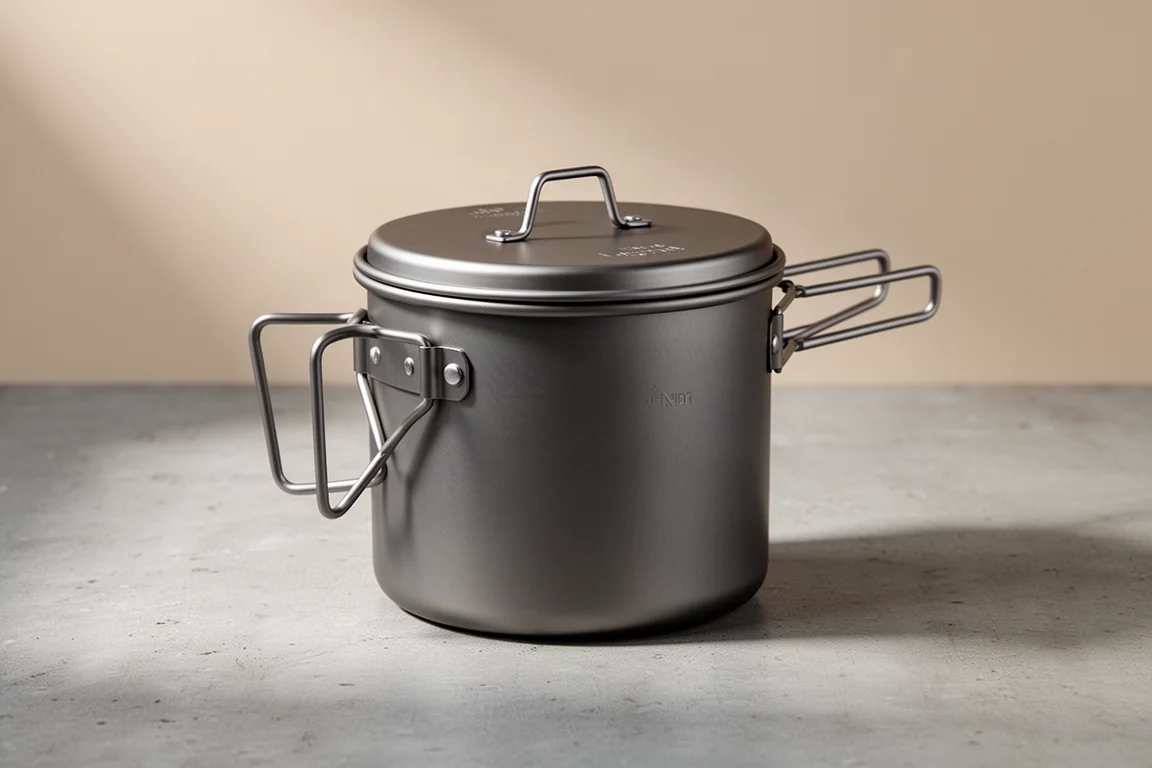
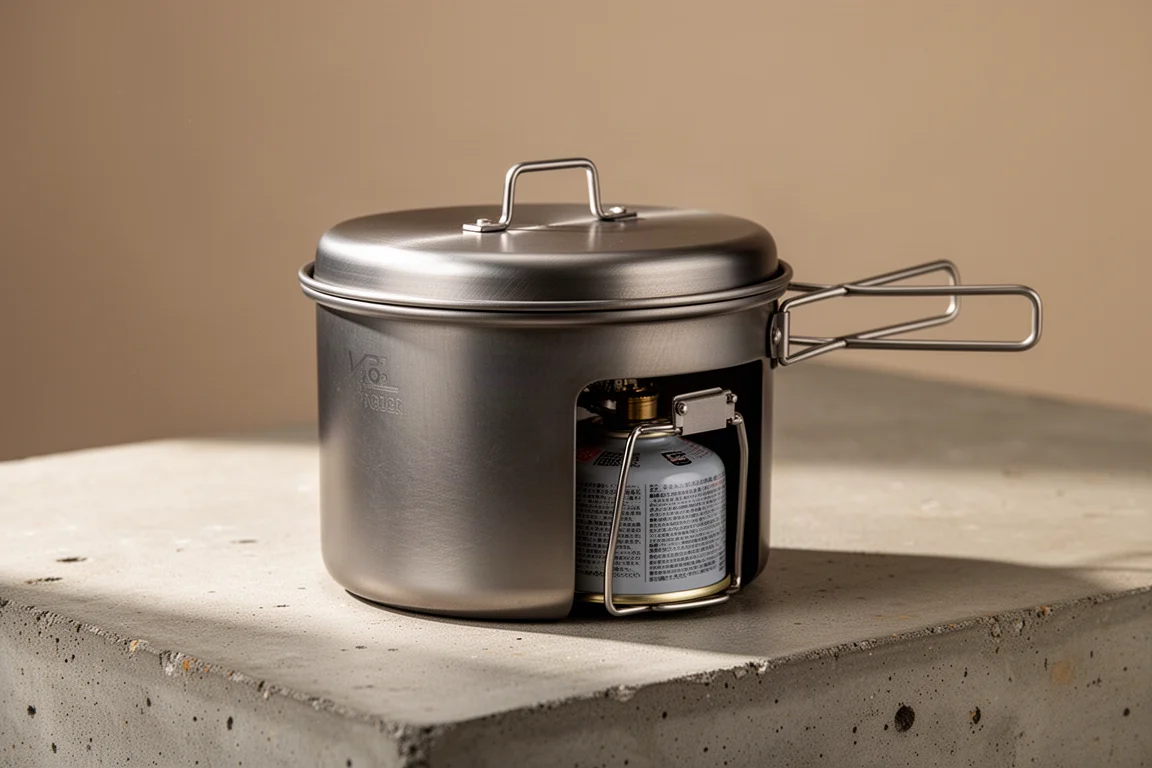
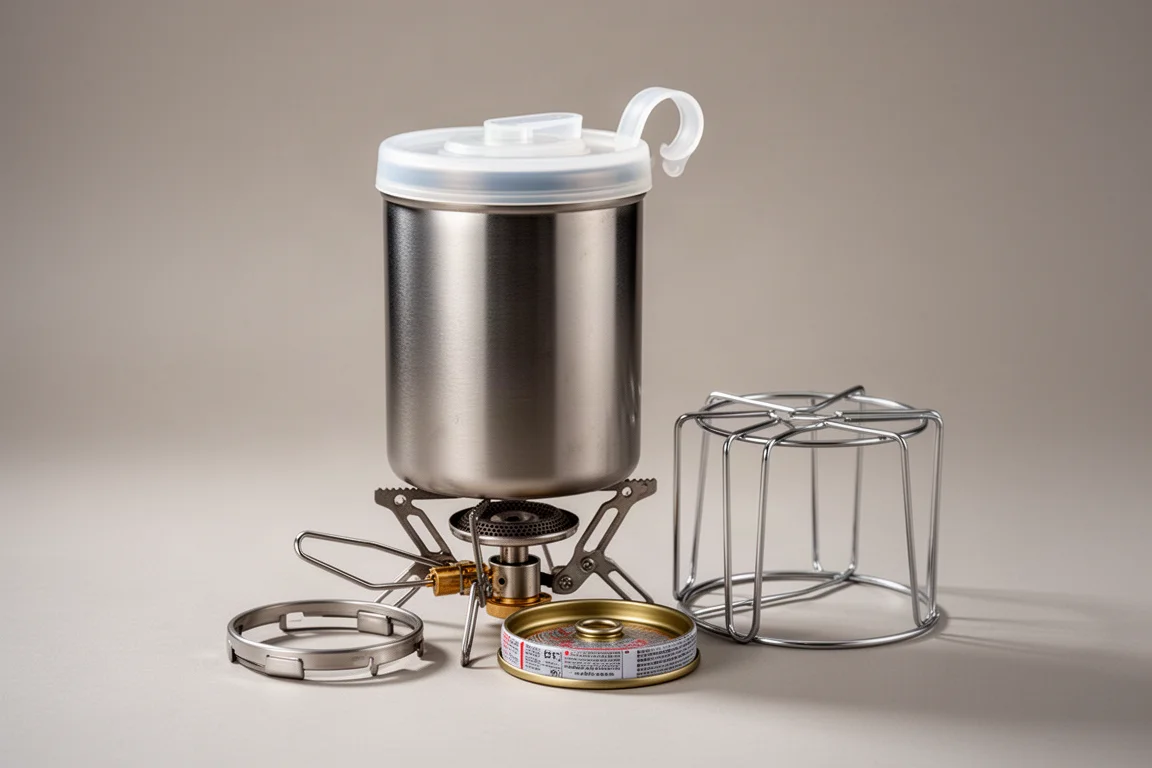
The 750ml version is the pot that turns a loose collection of gear into a system. It holds a fuel canister and still leaves room for a larger stove, so a Pocket Rocket Deluxe and the canister both drop inside and the lid closes over the top. For anyone chasing a light kit where every piece has a place, this is the practical size.
The extra capacity costs a little weight compared with the 550ml pot, and it still behaves like titanium when it comes to cooking: excellent for boiling, less forgiving for anything that needs a spatula.
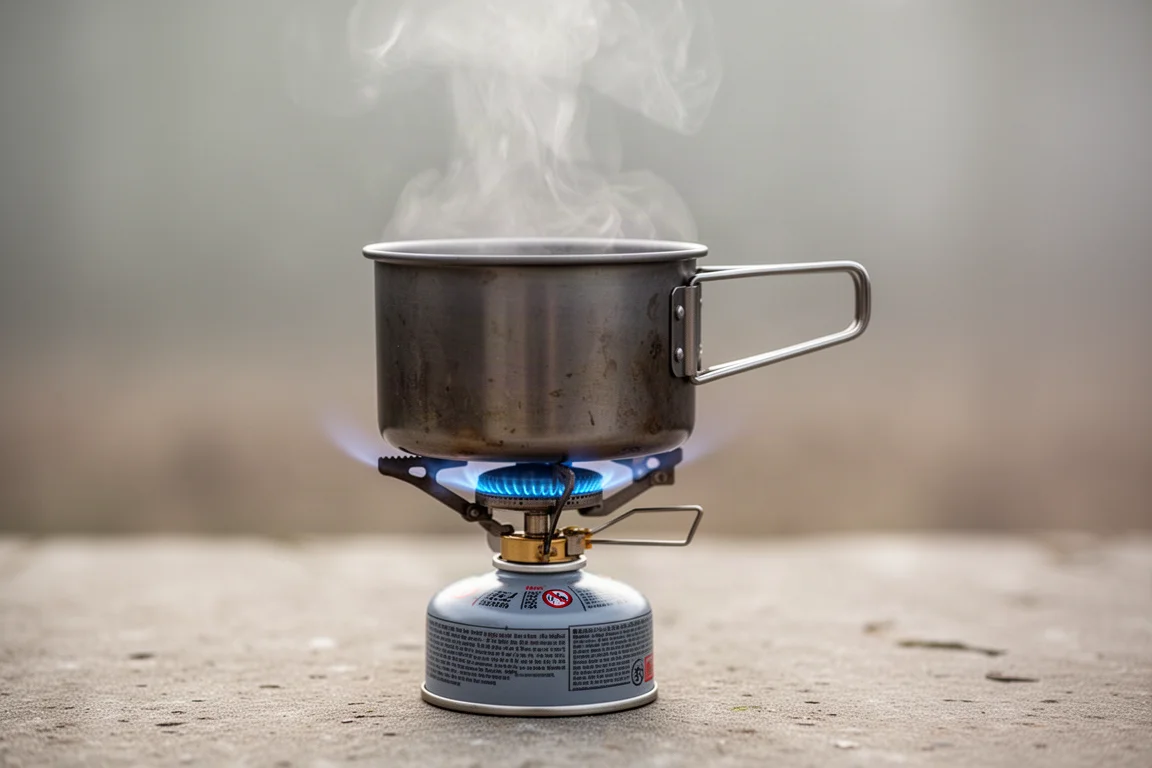
Choose the 750ml if you want one pot to carry the whole kit, and the 550ml if you want the smallest and lightest option and are happy to carry the stove separately.
Soto WindMaster: Quiet, Efficient, and Stable in Wind
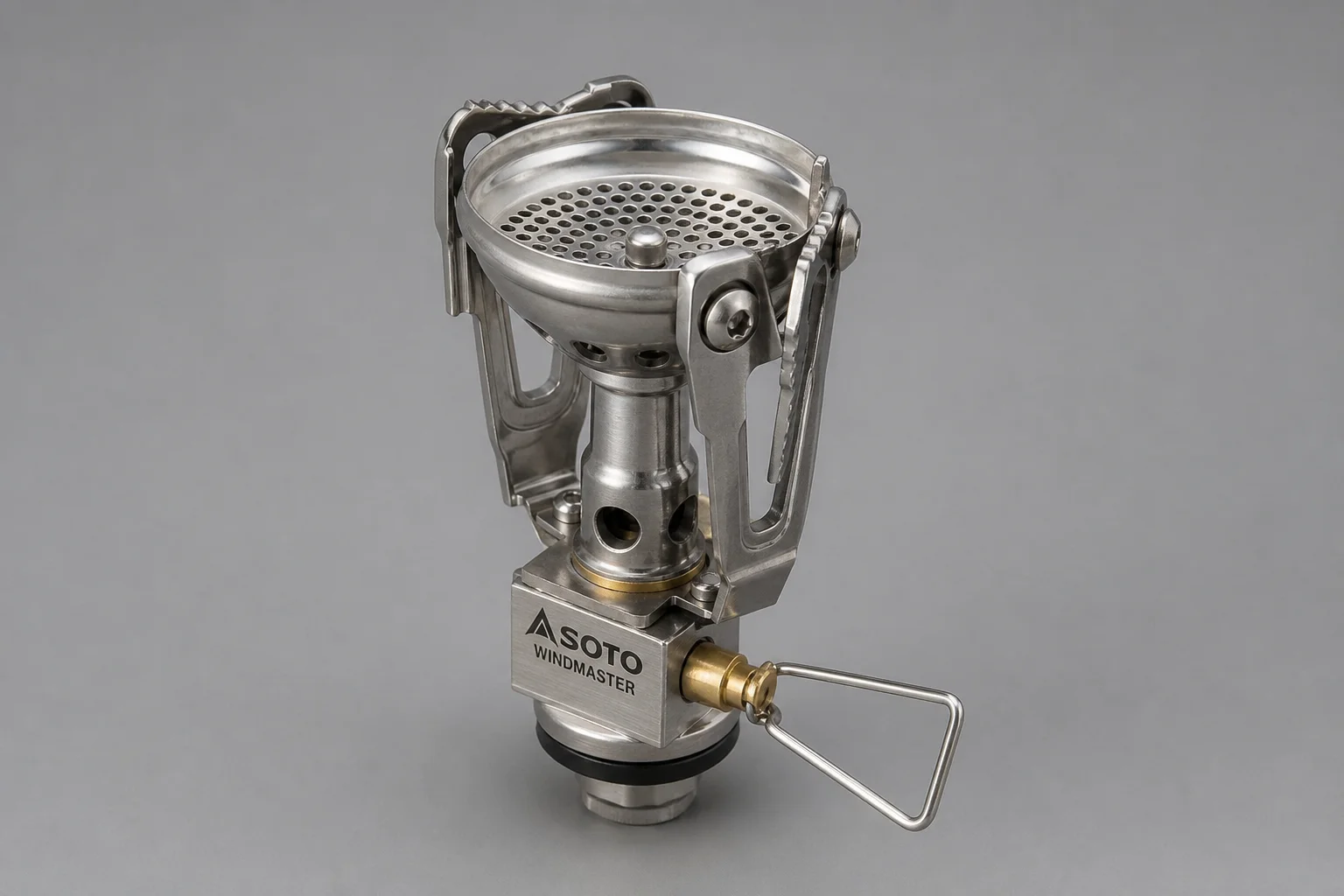
The WindMaster is a canister stove with a detachable pot support, and it is the one to look at if you cook in exposed places. It comes with two support options: a lighter one for standard pots, and a larger one that takes a skillet or a bigger pot. The support clips on and off, and the whole stove folds down.
That flexibility has a cost. The separate pieces make setup more fiddly than a stove with everything built in, and remembering how the support attaches after a long day is a genuine annoyance. Packed back into a pot, it also takes up more room than you would expect.
Where it earns its place is performance. It handles wind extremely well, it runs very quietly, and the pot sits closer to the flame than on comparable stoves, which should make it slightly more fuel efficient. It has a self-igniter, and it is priced around the same as the MSR Pocket Rocket Deluxe.
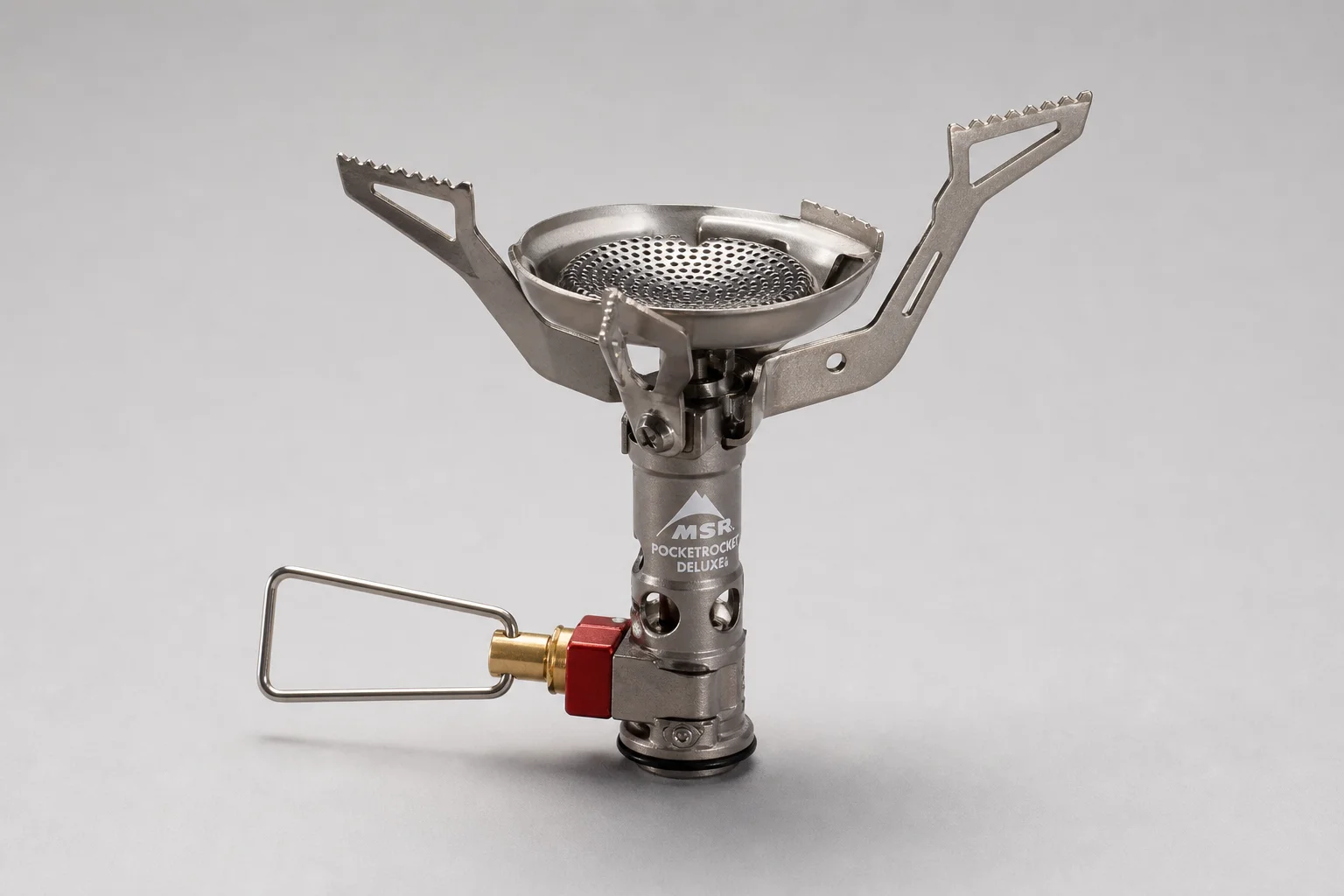
MSR Pocket Rocket Deluxe: Simple and Self-Contained
The Pocket Rocket Deluxe is the simpler answer to the same problem. Everything is built into one body, it folds up easily, and it lights with a built-in igniter rather than a separate spark. The pot support is angled, which helps cups and pots stay put instead of sliding around on the arms.
It is not quite as efficient as the WindMaster, because the pot sits a little further from the heat, but the practical difference is measured in seconds of boil time. It nests neatly in the 750ml titanium pot, which keeps the whole kit contained.
Soto Amicus: A Lighter, Cheaper Canister Stove
The Amicus is a smaller folding canister stove from the same maker as the WindMaster. It follows the Pocket Rocket layout more than the WindMaster one: the arms fold out, everything is built in, and there is a self-igniter on board. It is a little cheaper than the WindMaster.
It is the newest stove in this group and has had the least time in the field, so the long-term verdict is still open. On paper it looks like a sensible middle ground between a stripped-down budget stove and a full-featured one, and it is one to watch if you want simplicity without the higher price.
MSR WindPro II: Built for Cold Weather
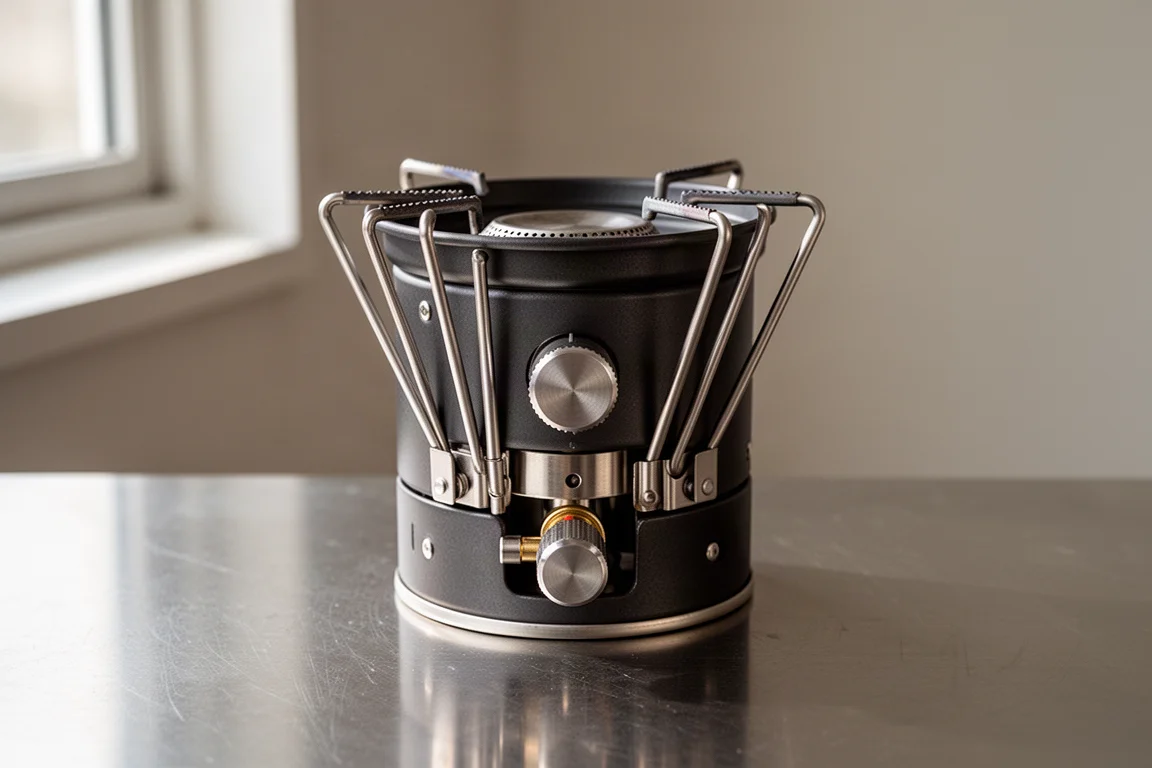
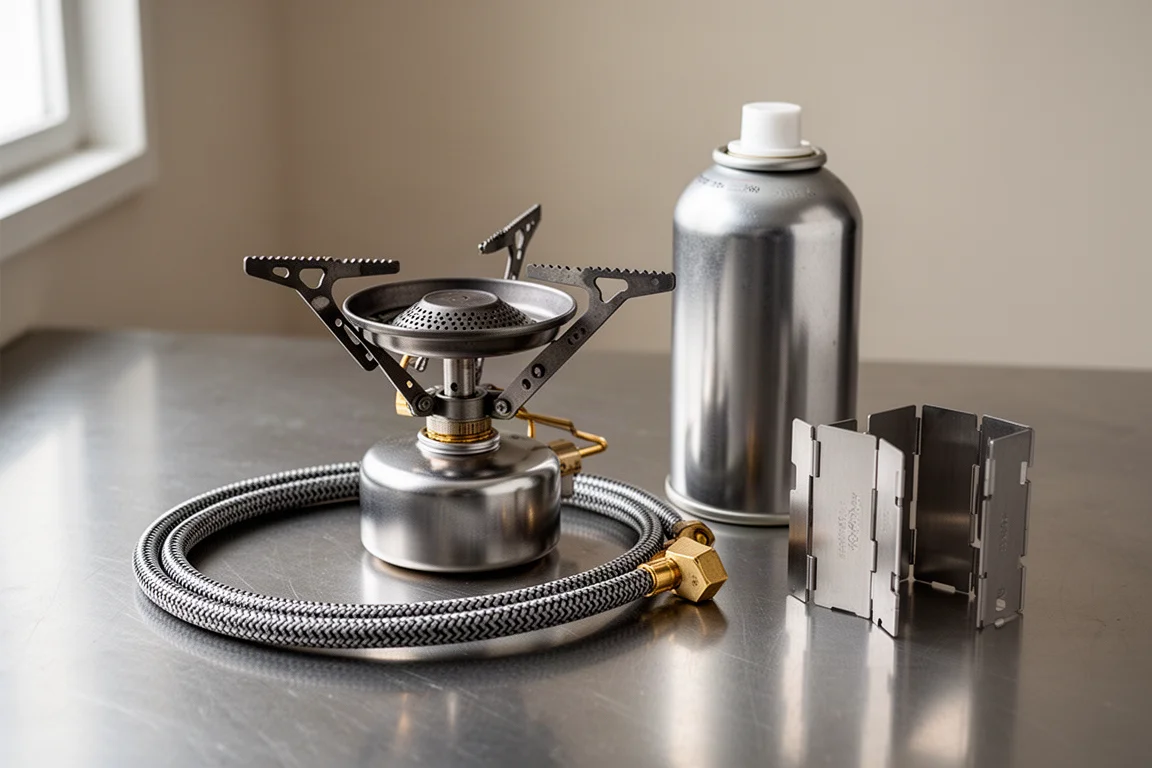
Standard fuel canisters lose pressure in the cold, which is why winter cooking often turns into a fight. The WindPro II is built for that problem. It holds the canister upside down so the fuel feeds properly, with the canister sitting in a mount and a hose running to a low burner.
You keep full flame control, and the setup is designed for extreme cold rather than three-season comfort. It is more to carry than a direct-mount canister stove, and for summer trips that bulk is unnecessary. For below-freezing mornings, it is the difference between a hot meal and no meal at all.
Jetboil: The All-in-One Cooking System
An integrated system is a different approach. The Jetboil combines a pot, a burner base, a measuring cup, and a pot stand into one unit, and it is the most fuel efficient option in this group. The insulated sleeve on the outside keeps the pot comfortable to hold, and the whole thing nests together, including a small fuel canister.
It is versatile enough for bigger meals than a titanium pot handles comfortably, and it can be set on a pot stand for other cookware. The trade-offs are weight and price: it is heavier than a minimal pot and stove, and it costs more.
If you want one piece of gear that covers boiling, simmering, and rehydrating without much thought, the Jetboil is the least fussy way to get there.
Evernew Titanium Pasta Pot: Made for Noodles
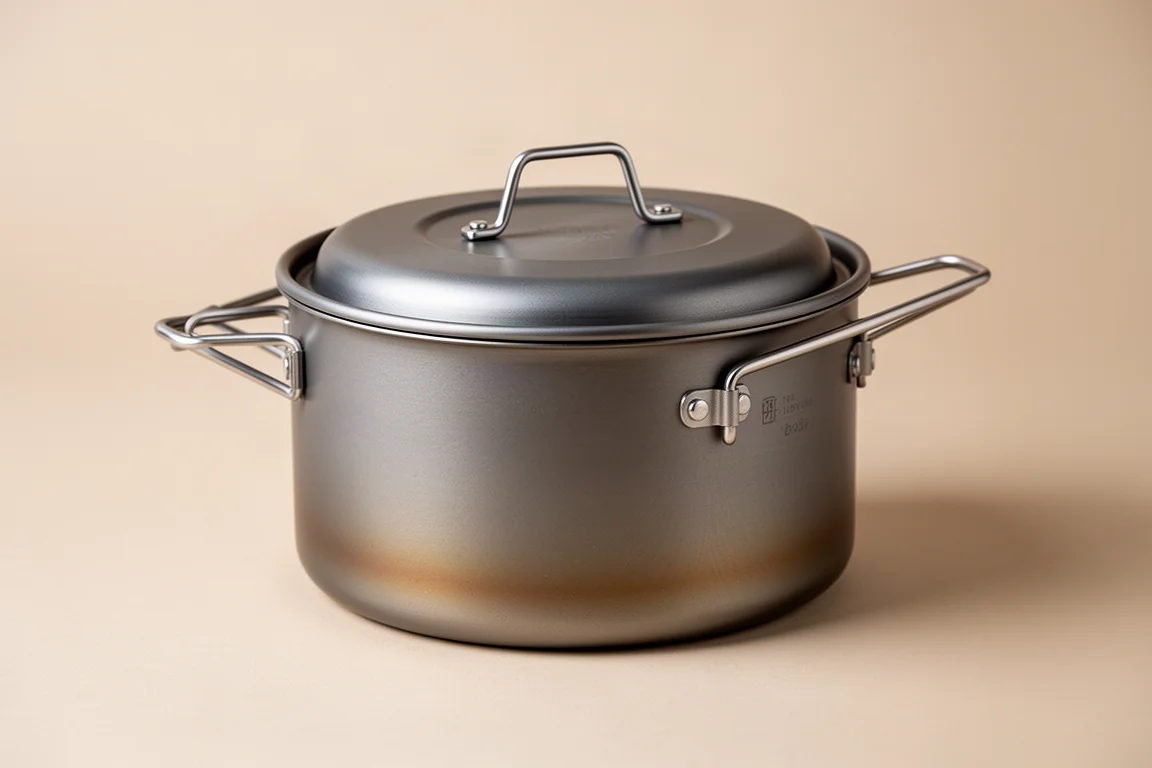
The Evernew pasta pot is a one-litre titanium pot with a straining lid, and it is one of the most enjoyable pieces of cookware to actually use. The lid has a strainer built in, so you can cook noodles, tip the pot, and drain the water without a colander. The lid snaps on, though it is worth steadying it with a spoon while you pour, particularly with a heavy load inside.
The base is wide, which spreads heat efficiently, and the silicone handles and lid grip make it manageable when everything is hot. It swallows a 230g fuel canister, which is useful if you are cooking for more than one person. It is also expensive, around $70 for a pot of this size, and that price is the main thing to weigh up.
Esbit Cube Stove: The Most Ultralight Fuel Option
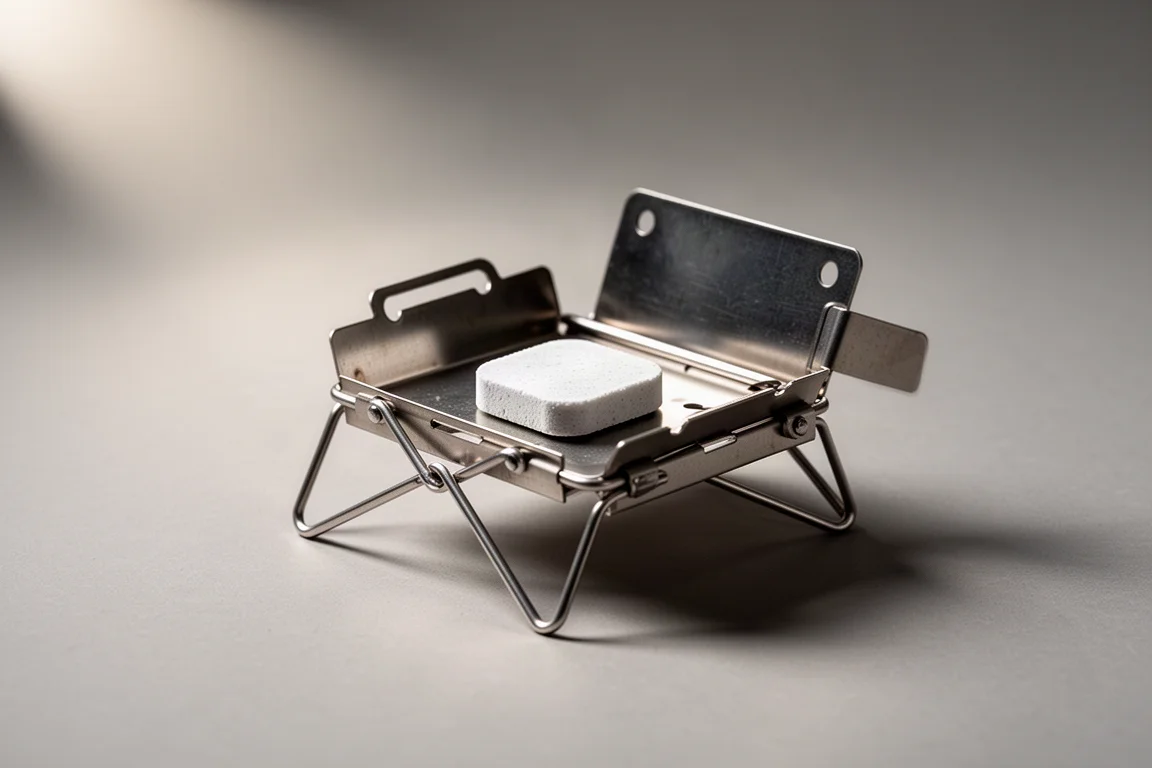
Solid fuel is the other end of the spectrum. The Esbit cube stove folds flat, takes a fuel tablet, and burns for roughly ten minutes, long enough to bring a pot of water up to temperature. It is lighter than an alcohol stove setup, and a windscreen can be added around it.
The drawbacks are real. There is no flame control, the tablet either burns or it does not, and the fuel has a strong smell that lingers on anything stored with it. Many people who carry the tablets use them as fire starters rather than as their main cooking fuel, which says a lot about how they perform in practice. It is a genuine ultralight option, but not a comfortable one.
BRS Ultralight Stove: A Budget Canister Stove
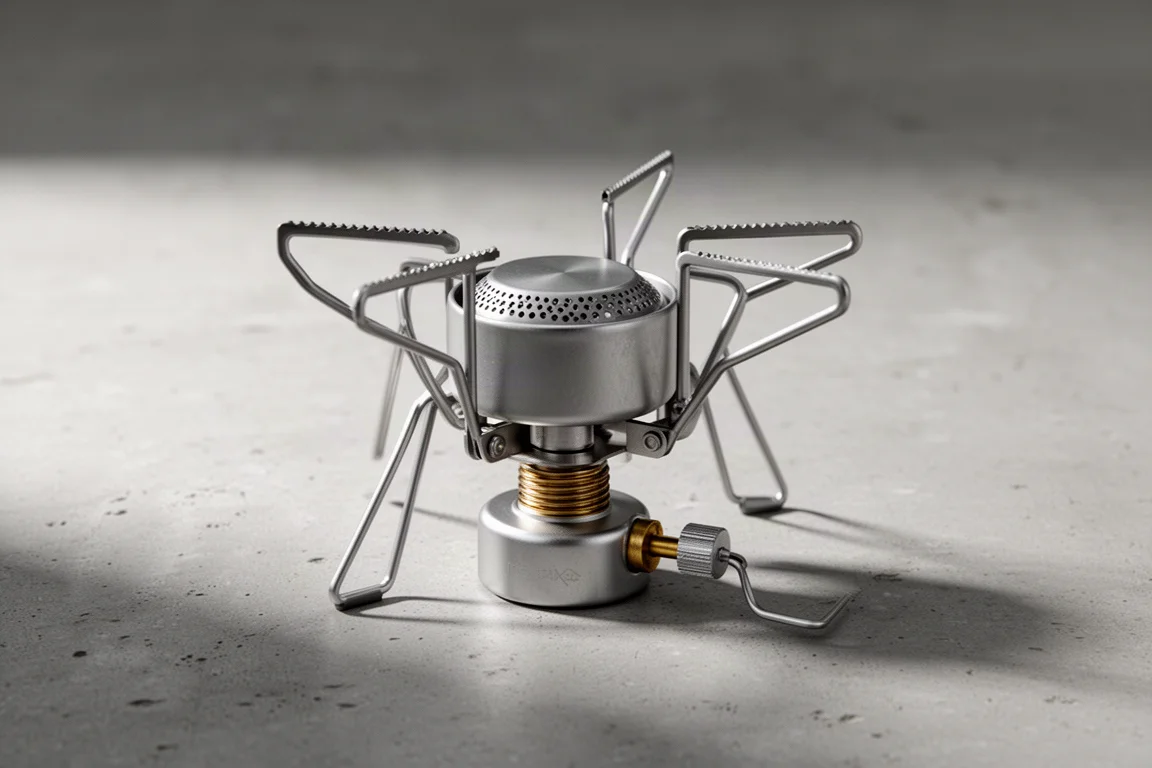
The BRS stove is the budget answer, and it is probably the lightest and smallest canister stove you can buy. It folds down small enough to fit inside a 550ml pot, and it costs somewhere around $15 to $20. The same design is sold under other names, so you may find an identical stove with a different logo on it.
Reliability is where it gives ground. Units have been known to leak, and efficiency is only average, so it is not the stove to choose if you want the most boiling per gram of fuel. Plenty of long-distance hikers have used this design for entire thru-hikes, which suggests that a good unit works well and a bad one fails early.
Stanley Stainless Steel Pot: Budget and Nearly Indestructible
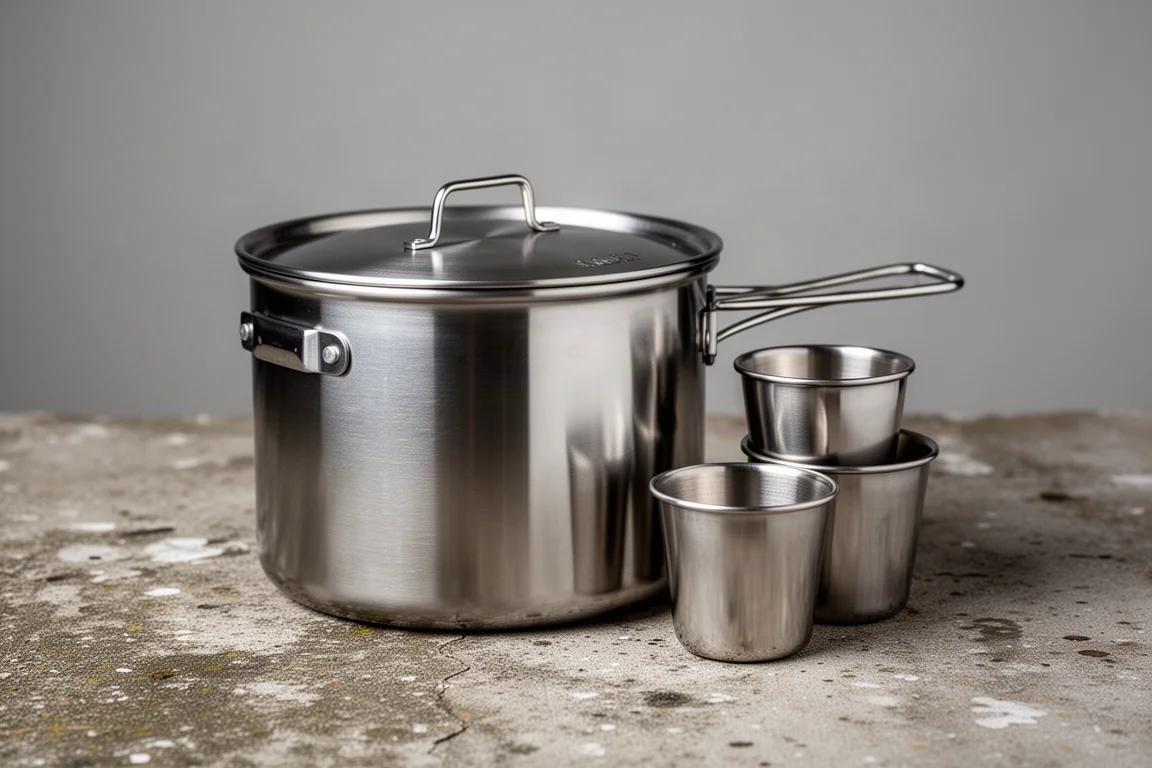
The Stanley stainless steel pot is the opposite philosophy: heavier, bulkier, and close to indestructible. It is stainless steel rather than titanium, so it takes more abuse without denting, and it handles being dropped in a way that thin titanium does not.
It fits the smaller fuel canisters, the lid sits solidly, and it usually comes with a couple of small cups that you can leave at home if you want to save weight. Priced around $15, and sometimes less, it is the cheapest way to get a pot you can trust.
Overall Buying Advice
If you only boil water, the simplest kit is a small titanium pot and a canister stove with a built-in igniter. The 550ml Toaks is the lightest version of that idea; the 750ml version costs a little more weight and gives you a pot that carries the stove and a canister inside it.
The budget kit worth knowing about is the BRS stove paired with the Stanley pot. Together they come to roughly $30, and that gets you a working cook set that will survive a lot of abuse.
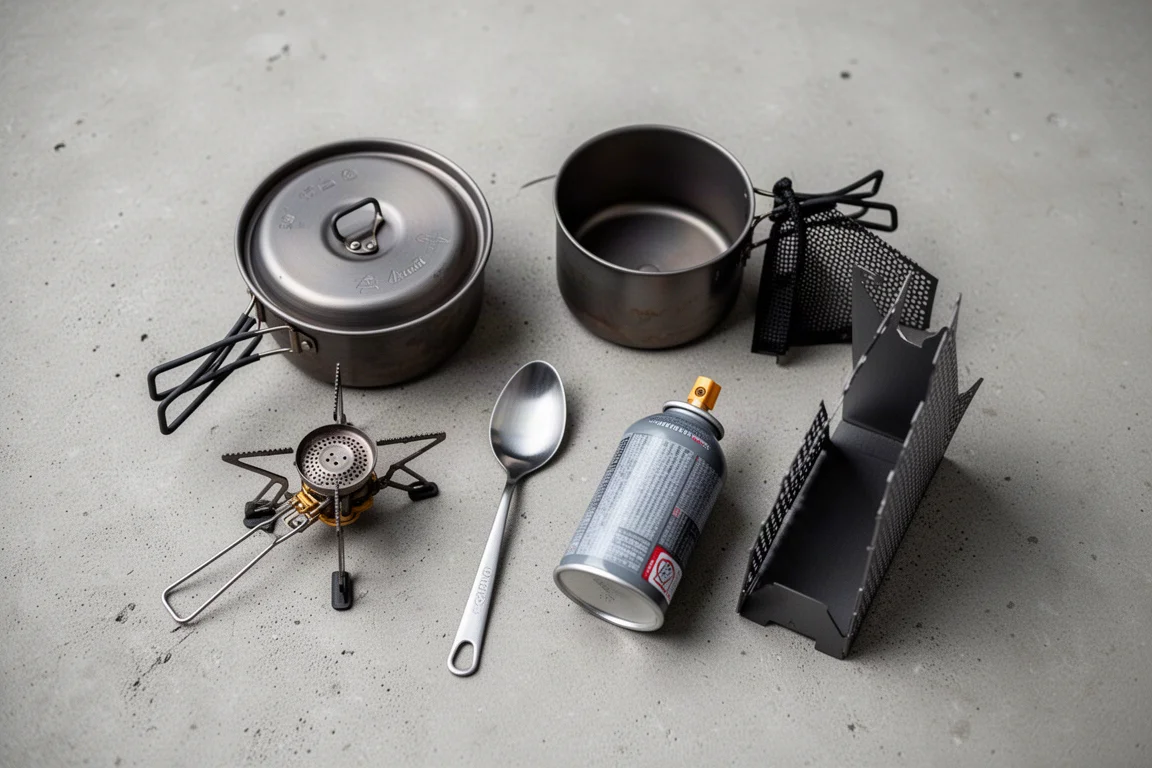
Choose the Jetboil if you want one integrated system and you are willing to carry the extra weight for the convenience and the fuel efficiency. Choose the WindPro II only if you genuinely cook in below-freezing conditions. Choose the Evernew pasta pot if noodles and one-pot meals are a regular part of your trips, and choose an alcohol stove or the Esbit cube stove if the absolute minimum weight matters more than convenience.
The most common mistake is buying for the trip you might take rather than the trips you actually take. A three-season weekend backpacker does not need a winter stove, and a weekend backpacker who only boils water does not need a large pot.
Conclusion
Backcountry cooking rewards matching the tool to the job. A small titanium pot and a reliable canister stove will cover most three-season trips, and the 750ml Toaks with the Pocket Rocket Deluxe is a particularly tidy version of that setup. If you want a single integrated system, the Jetboil is the easiest way to cook a real meal in camp. And if the budget matters more than anything else, the BRS stove and the Stanley pot together cost about $30 and will still be going long after you have forgotten what you paid for them.
Further reading
Related Reviews
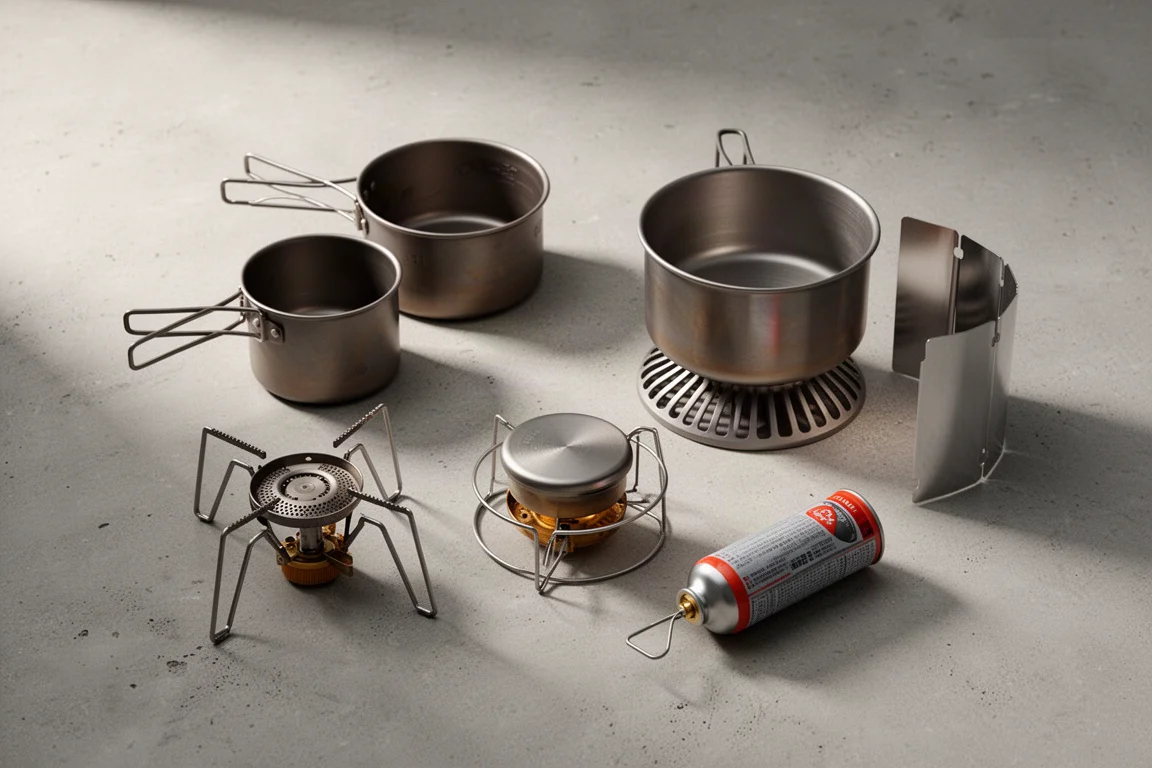
Backpacking Cookware
Best Backpacking Cook Kits: Stoves and Pots for Simple, Reliable Meals
Nine stoves and pots that pair into dependable backpacking cook kits, from a budget canister stove to a heat exchanger pot built for fast, fuel-efficient boils.
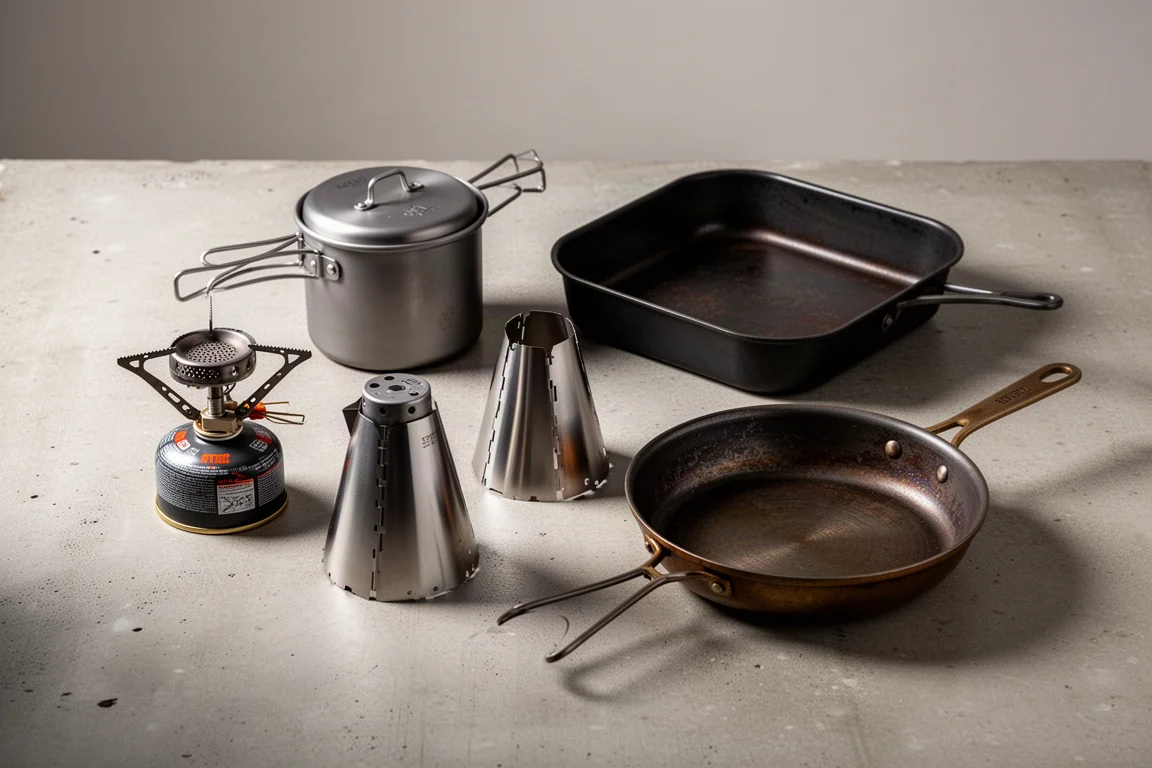
Backpacking Cookware
Best Backpacking Cook Systems and Stoves: From Boiling Water to Backcountry Baking
Nine backcountry cook systems and stoves, from tiny alcohol burners and a budget canister stove to an all-in-one kit and cookware built for real backcountry baking.
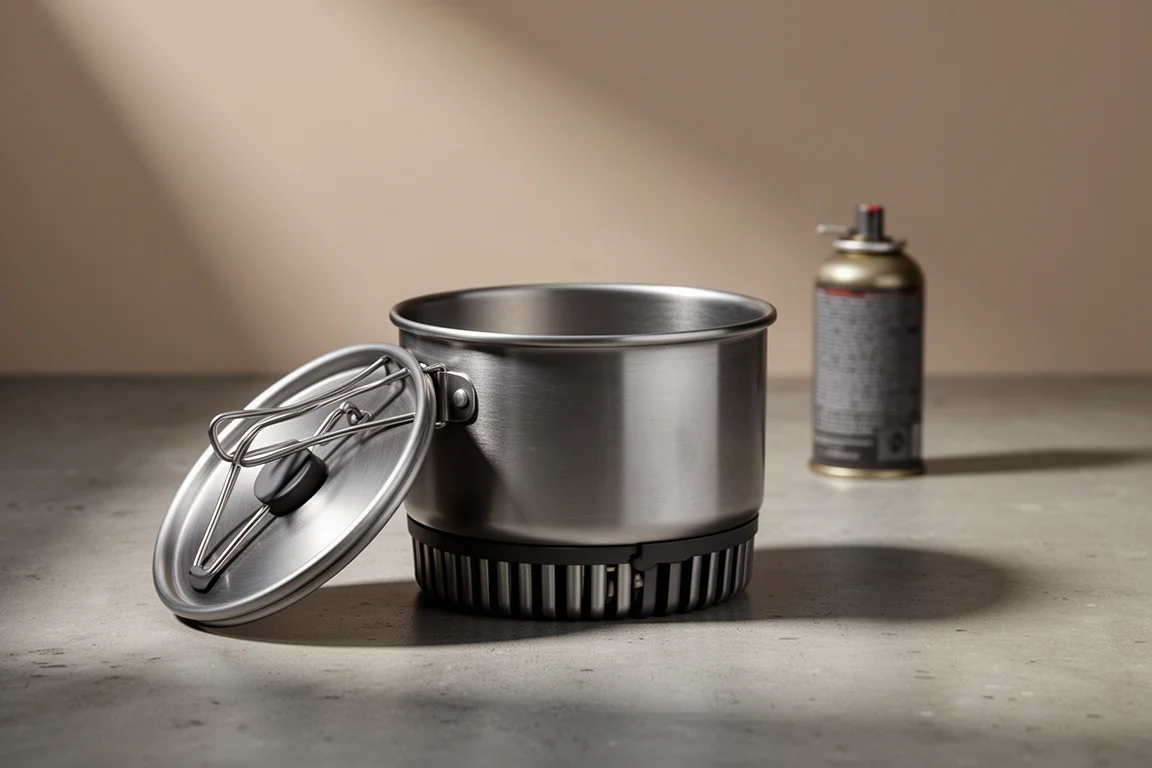
Backpacking Cookware
Fire Maple G3 Petrol Review: A Compact Heat Exchanger Pot for Backpacking
A close look at the Fire Maple G3 Petrol, an aluminum heat exchanger pot with a 650 ml usable capacity, fast boil times, and room for a complete solo cook system inside.