Backpacking Coffee
Best Backpacking Coffee: 6 Instant Coffees and Trail Brewing Gadgets Compared
A practical look at six trail coffee options: budget instant packets, specialty sachets, and two brewing devices, compared on flavor, cost per cup, and camp effort.
Introduction
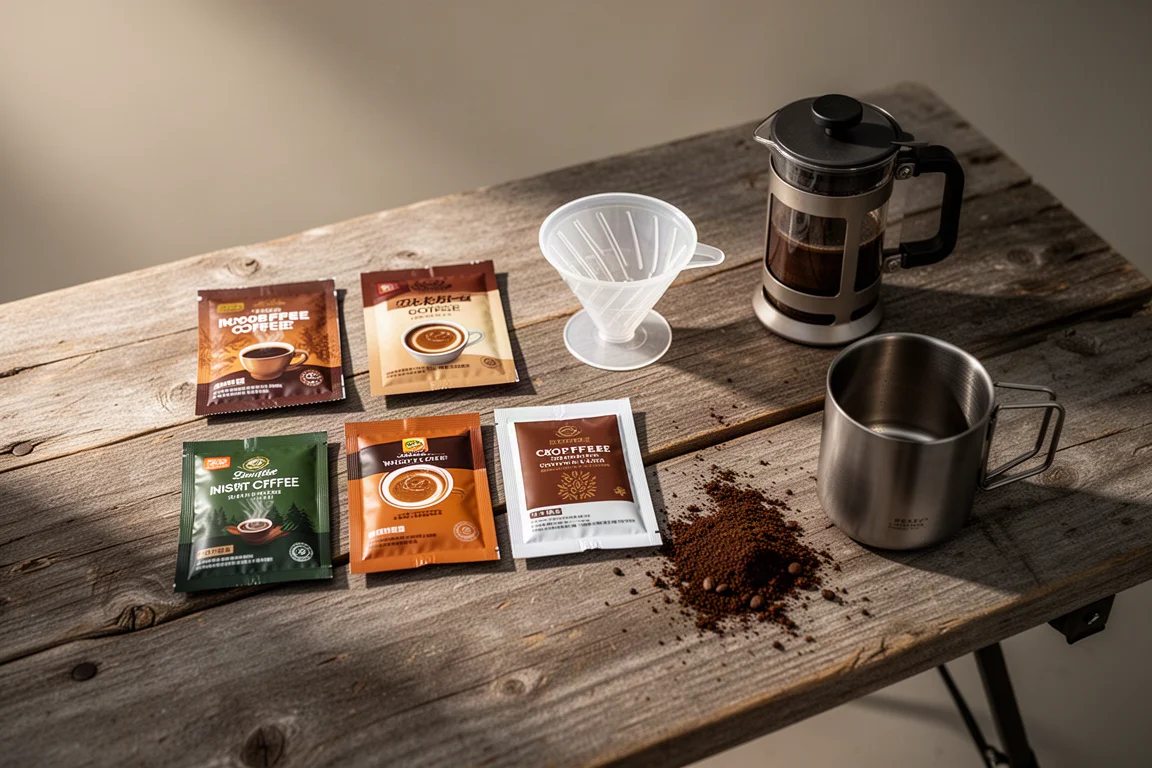
Good coffee on the trail comes down to three things: how it tastes, what it costs per cup, and how much effort stands between you and caffeine. Instant packets win on the last two almost every time, but the gap in flavor between a budget packet and a specialty one is wider than most hikers expect.
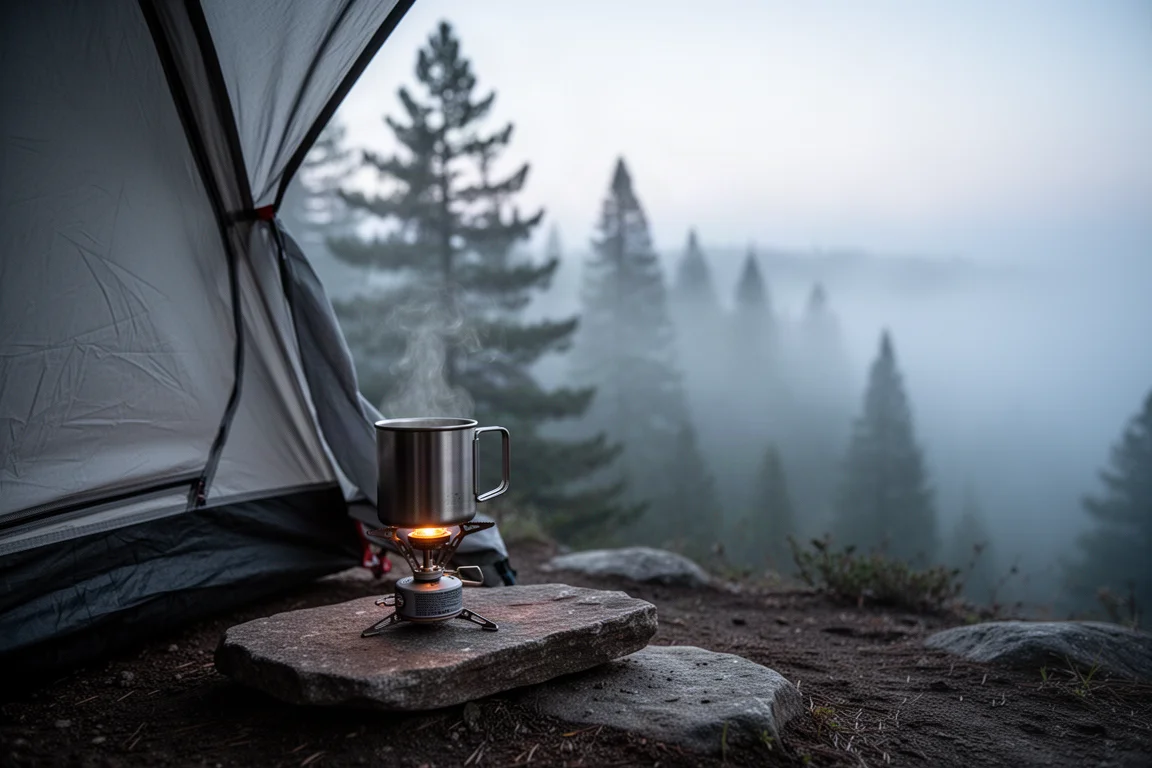
This guide covers six options. Four are instant coffees that run from roughly a dollar a cup to premium single-serve sachets, and two are brewing devices for hikers who would rather use real grounds. Flavor, preparation effort, and cleanup are all part of the comparison.
None of them need a fire, a grinder, or anything beyond hot water. That is the point.
What Matters in a Trail Coffee
Four things decide whether a coffee earns a place in your pack. Flavor is the obvious one, but it is worth judging against cost per cup rather than cost per packet, because portion sizes vary and a full mug often needs more than one packet.
Preparation time matters more than people expect on a cold morning, and cleanup matters on any trip where everything has to be packed out. Weight and pack volume decide whether brewing gear is worth carrying at all.
Café Bustelo Instant Coffee: The Budget Pick
Café Bustelo’s single-serve instant packets are the value option here, priced at roughly $3 for a six-pack. That works out to about a dollar per cup when you use two packets, which is common for an 8-ounce mug even though each packet is portioned for 6 ounces.
Flavor-wise it tastes much like the brand’s canned coffee: straightforward, familiar, and mild enough to drink every morning. It holds its own against the instant coffee sold in most grocery aisles and reads as a solid, unremarkable cup rather than a standout one. Nothing about it is off-putting, which is exactly what you want from the coffee you will drink for months on end.
On a five-point scale it lands around a three. Not the best cup in this group, but a dependable one at a price that makes daily use realistic.
VitaCup Hydration Coffee: Caffeine and Electrolytes Together
VitaCup’s hydration coffee is built around a different idea. Each stick combines instant coffee with electrolytes, including Himalayan salt, coconut water, and magnesium, and can be prepared hot or cold with about 8 ounces of liquid.
That combination sounds appealing for hot, sweaty days, and it is the reason this one is worth a try. The trade-off is flavor. The cup reads much more like tea than coffee, with a noticeable salt note and no real coconut character coming through. It is a medium roast, and the coffee flavor itself is faint.
Judged purely as coffee, it scores near the bottom of this group. Judged as a drink for someone who wants caffeine and hydration in a single step and does not need a strong cup, it makes more sense.
Verve Street Level Instant Coffee: Specialty Flavor in a Packet
Verve’s Street Level is the specialty option in this lineup, the kind of instant coffee that shows up in outdoor retail stores and carries a price to match. It comes in small recycled-style sachets, and the crystals inside are noticeably chunky, with less volume per envelope than the budget packets.
The packet lists tasting notes of clementine, red apple, and honeycomb, with beans from Guatemala, Colombia, and Honduras, a roast level of six out of ten, and a washed process. In the cup those notes arrive as a floral, citrusy profile with a clear acidic edge, closer to what you would get from a specialty café pour than from a typical instant packet.
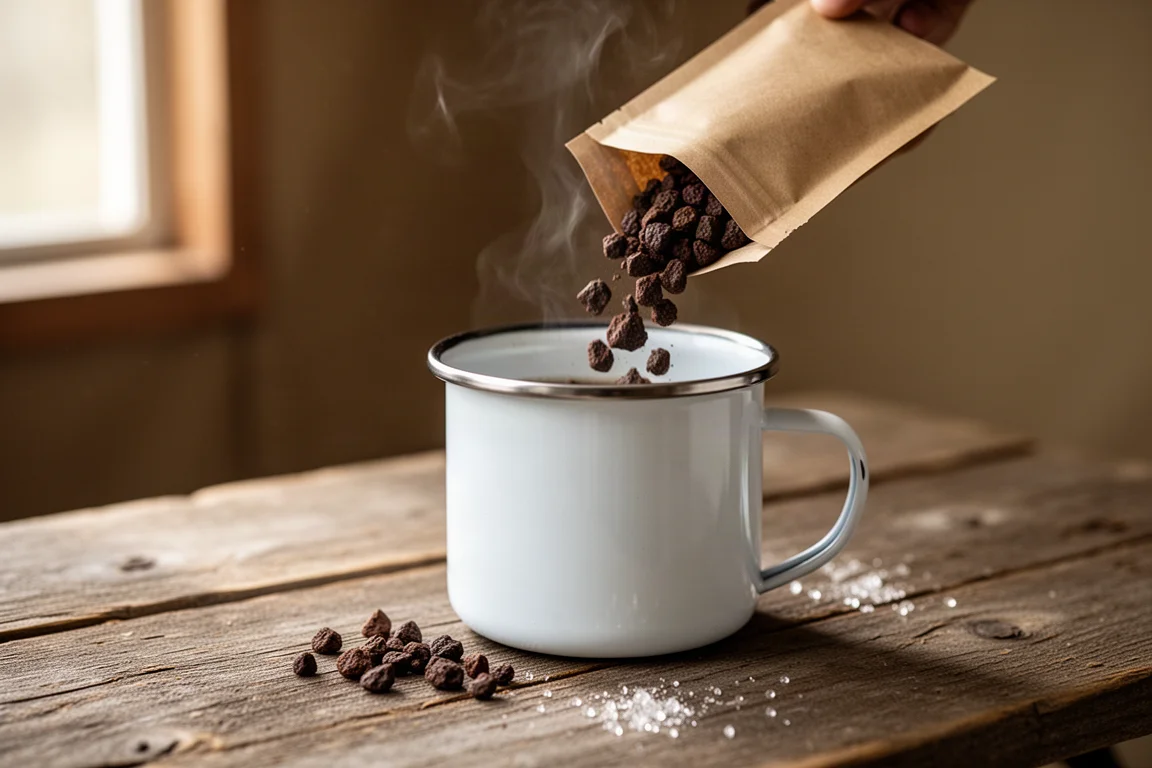
That acidity is the dividing line. It is genuinely good coffee, scoring around a four out of five, but it is sharp enough that finishing a full mug is not a given, and roughly $15 for six servings makes it hard to justify as an everyday trail coffee. It fits better as an occasional treat on a shorter trip or a slow morning at camp.
First Ascent Instant Coffee: The Best Cup in the Lineup
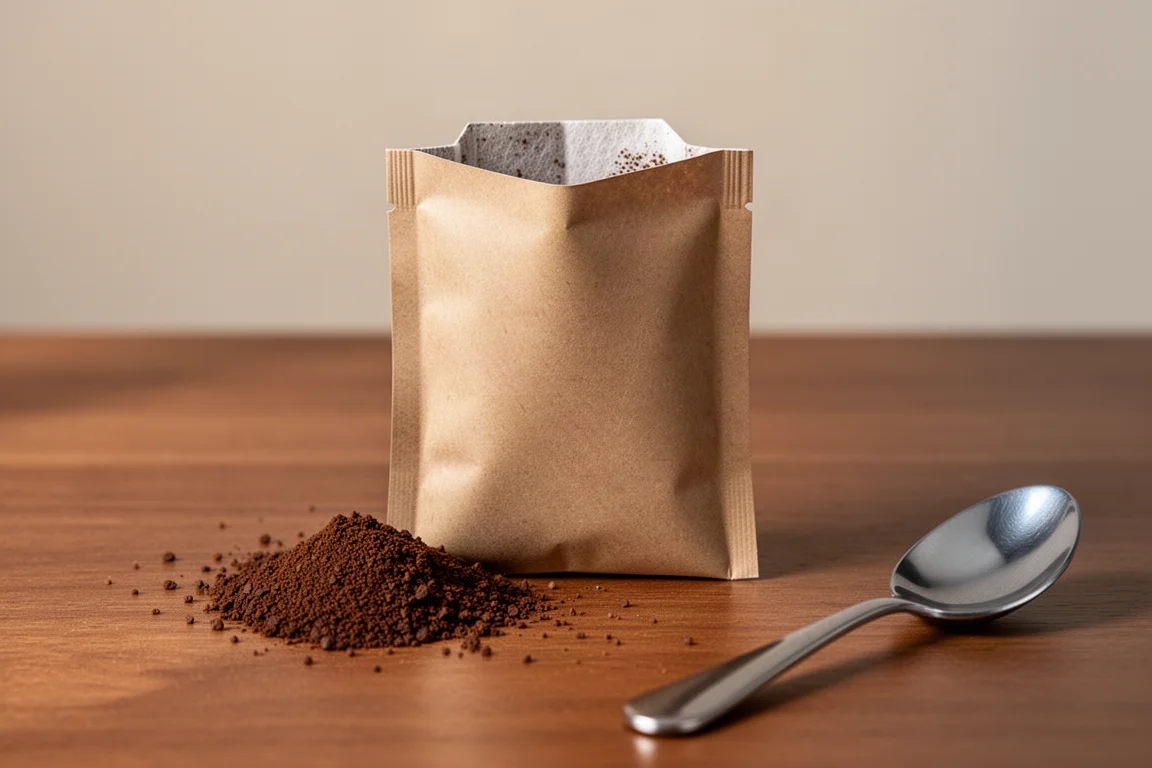
First Ascent is the standout of the instant group. It costs $19.99 for eight packets, which is more per serving than the budget options, but it also delivers more per packet. The aroma is the first clue: it smells like a coffee shop rather than a foil wrapper, and the brewed cup has the dark color and body of real brewed coffee.
The flavor is robust and clean, without the thin or faintly stale character that shows up in cheaper packets. It scores around a four out of five, and it is the packet worth carrying when the morning cup actually matters.
Cost is the obvious catch. At this price it does not make sense as the only coffee for a five-month thru-hike, but as the packet you break out every couple of days to lift a long stretch of budget coffee, it earns its place in the pack.
GSI Coffee Pourover: Minimal Gear, Real Grounds
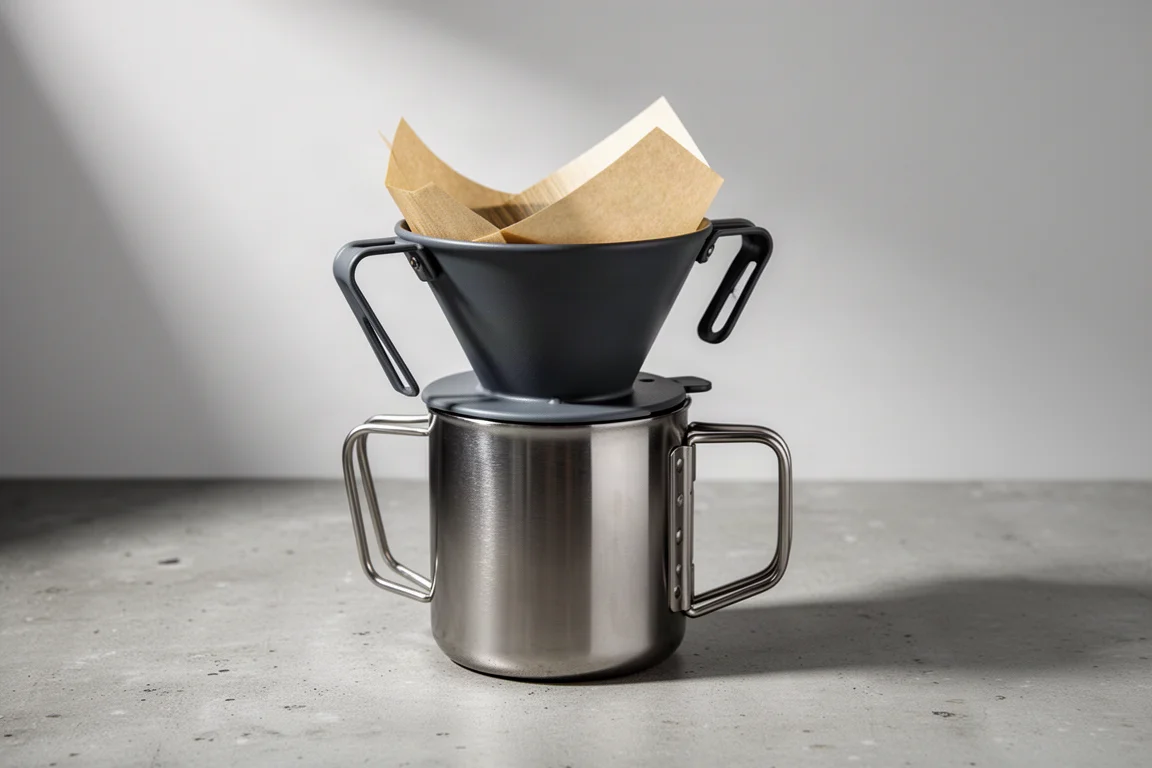
For hikers who want real grounds rather than instant, the GSI pourover is the lighter and simpler of the two brewing options here. It is a small cone that clips onto the rim of a mug, and it uses a paper filter, so the grounds stay contained and cleanup is mostly a matter of dealing with the filter.
The cup it produces is genuine brewed coffee, and the process is easy to follow: boil water, set the cone on a mug, add grounds, and pour. The catch is time. A pourover at camp takes longer than tearing open a packet, and you need a mug and a stove in the first place. The cup itself is not included.
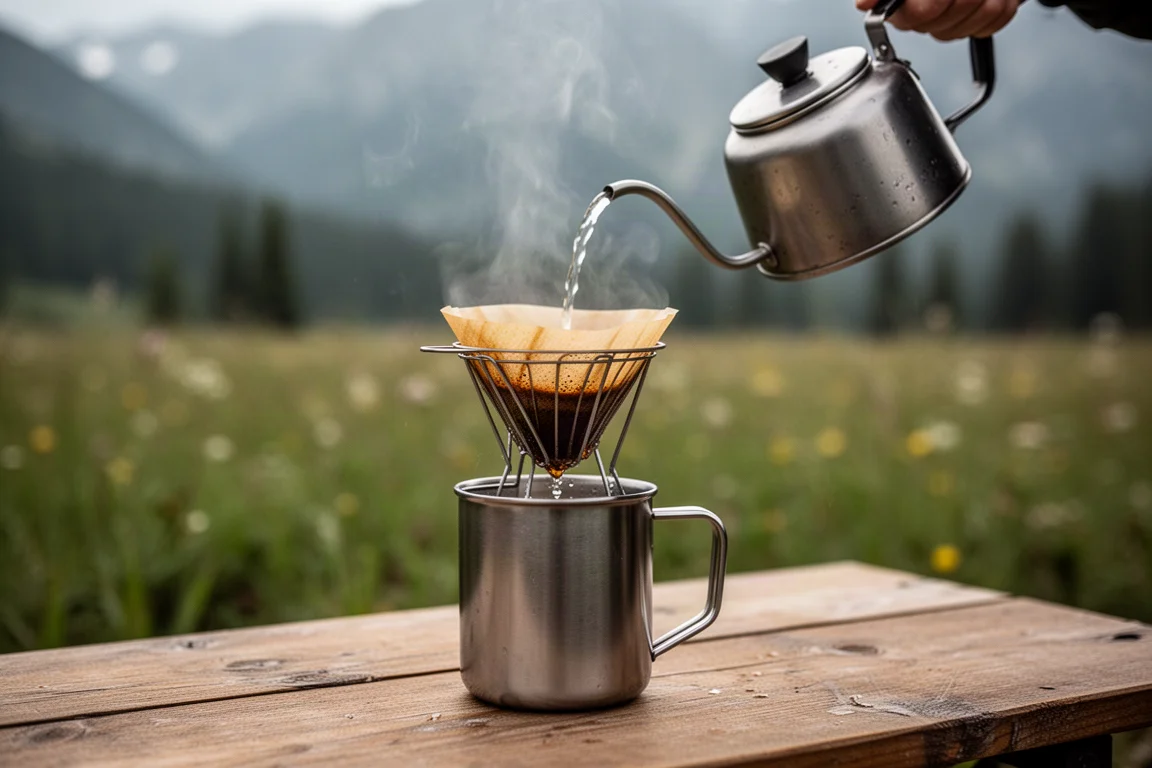
Where it earns its place is on trips where you are not rushing out of camp at first light. It packs down small, weighs little, and turns a handful of grounds into a proper cup without a press or a plunger.
AeroPress: Strong Coffee With More Steps
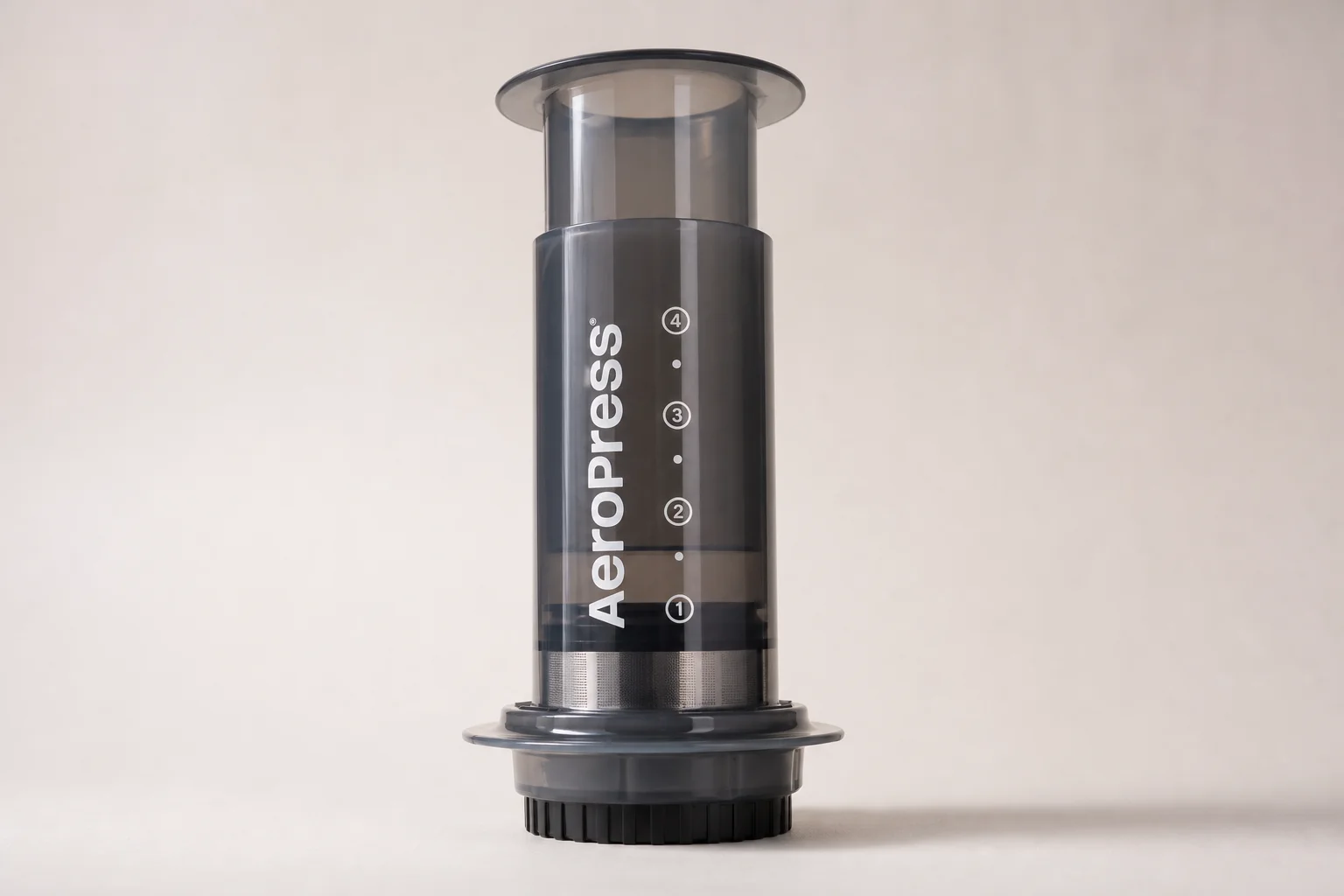
The AeroPress here is the portable camping version of the brewer, a compact press that has been available for a couple of years and packs down into itself. It is the more capable of the two gadgets and also the more involved.
The routine sits closer to a French press than a pourover: add grounds, stir, let them hydrate, then press. The result is a strong, almost espresso-strength concentrate that you dilute with hot water to taste, which gives you more control over strength than any instant packet. It takes real effort first thing in the morning, and the wet puck of spent grounds has to be dealt with rather than simply shaken out.
Compared with the pourover, the AeroPress wins on strength and control and loses on simplicity and packability. The pourover plus a mug is a smaller, lighter kit, and the pourover leaves less to clean up. Choose the AeroPress if you want a concentrated, adjustable cup and do not mind the extra steps.
Buying Advice: Instant Packets Versus Brewing Gear
The honest split is between convenience and quality. Instant packets are lighter, faster, and need nothing but hot water. Brewing gear makes a better cup and gives you control over strength, but it adds a mug, a filter or a plunger, and several minutes of standing around in the cold before coffee exists.
For long-distance hiking, instant is the practical choice. Budget packets such as Café Bustelo cover the daily habit at around a dollar a cup, and a premium packet like First Ascent every few days keeps the routine from wearing thin. Verve suits hikers who want specialty flavor and can live with the acidity and the price.
Brewing gear makes more sense on shorter trips, at basecamp, and on mornings where you are not racing the heat. Between the two devices, the pourover is the lighter, simpler kit with the easiest cleanup, while the AeroPress produces the stronger, more adjustable cup at the cost of extra parts and extra steps.
If you are unsure, start with instant. It is the option you will actually use at 5 a.m., and the better cups are still there when you want them.
Conclusion
Trail coffee does not have to be a compromise. Café Bustelo keeps the daily cup cheap, VitaCup adds electrolytes for hot days even if the flavor reads more like tea, Verve brings specialty character in a single sachet, and First Ascent delivers the closest thing to a real brewed cup in instant form. For hikers who want grounds, the GSI pourover keeps the kit minimal while the AeroPress trades simplicity for strength. Match the choice to the trip, and the morning ritual takes care of itself.
Further reading
Related Reviews

Backpacking Gear
Building a 10 lb Base Weight: An Ultralight Backpacking Gear List
A practical walkthrough of the ultralight pieces behind a 10 lb base weight, from a 765 g pack and a roomy one-person tent to a full camp chair and a dependable water filter.
Road Bikes
10 New Road Bikes Worth Watching: Aero, Titanium, Steel and Endurance Standouts
A practical roundup of 10 new road bikes, from aero flagships chasing single-watt gains to titanium, steel and endurance platforms built for real roads.
Bikepacking Gear
11 Bikepacking Essentials for Long-Distance Cycling
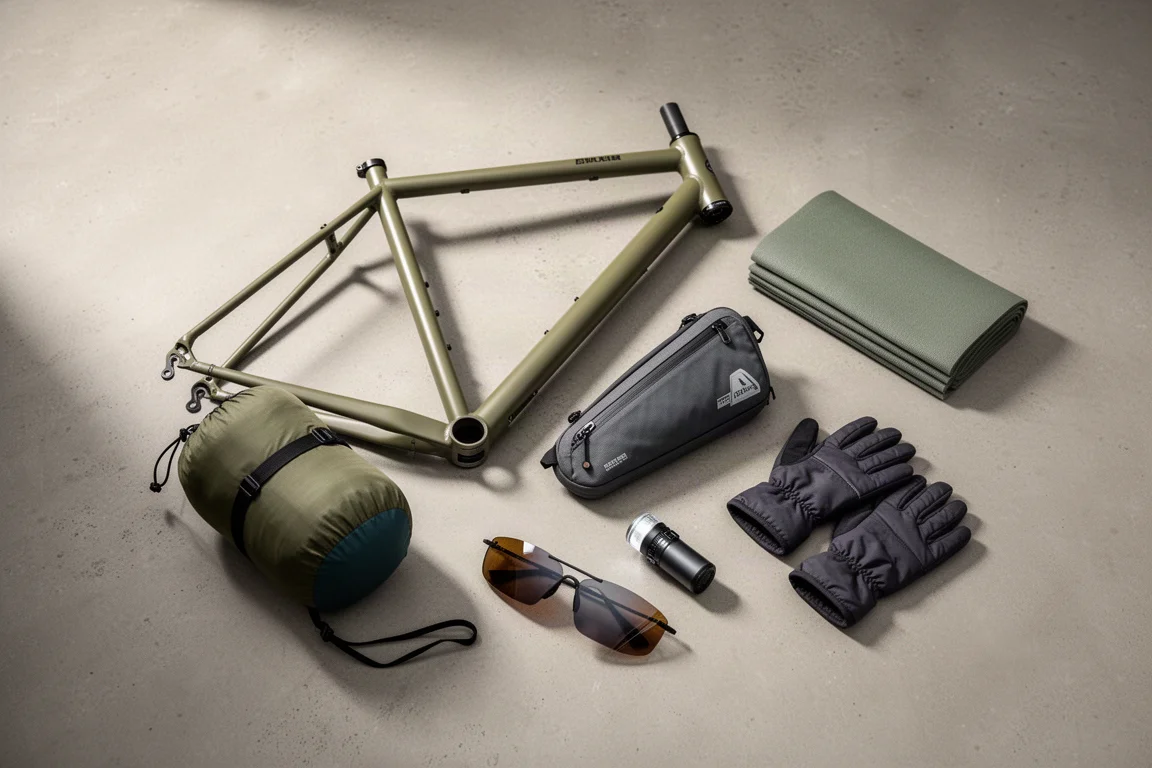
Eleven bikepacking essentials for long-distance cycling, from a steel gravel frame and a two-person tent to helmet lights, packable gloves, and a frame bag that puts weight in the right place.