Home Audio
Best Audiophile Deals Between $150 and $350: Nine Components Worth a Look
A practical roundup of speakers, amplifiers, and streaming components selling between $150 and $350, with the real strengths and trade-offs to weigh before buying.
Introduction
Sales season has arrived early this year, and the discounts are spreading across audio gear well before the usual peak. The $150 to $350 bracket is a difficult one to shop, because most components in it are either entry-level or a big step below the serious gear that starts above $500. Right now, though, there is an unusually good set of options sitting in that window, including two speakers that have been discontinued and are still available as new old stock.
This roundup covers nine components: three pairs of bookshelf speakers, three amplifiers or receivers, and three streaming devices. Each one has a clear reason to be here, and each has a trade-off worth knowing about before you commit.
Polk Signature Elite ES20
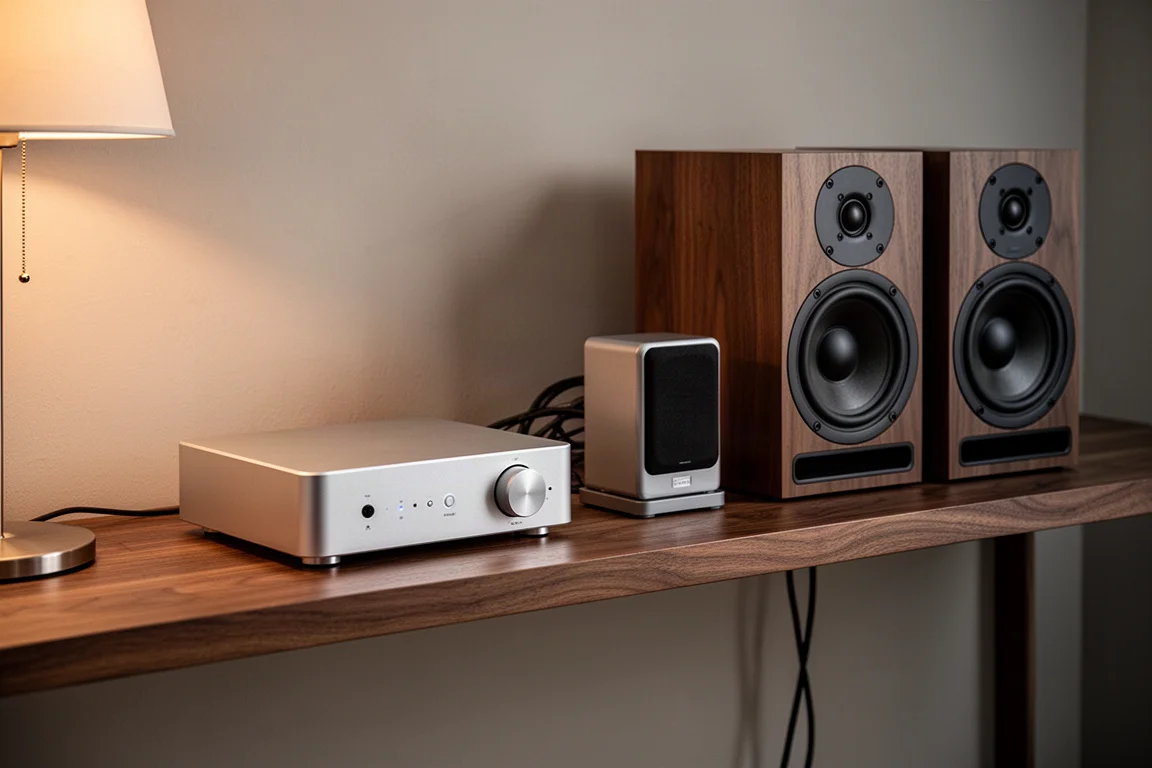
The Polk Signature Elite ES20 is a large bookshelf speaker built around a 6.5-inch woofer, with rated bass extension down to 44 Hz and a sensitivity figure of 88 dB. That combination matters: it means the speaker can be driven by modest amplifiers, including compact Class D designs that do not ship with a high-current 48-volt power supply.
Its character is relaxed rather than forward. There is real punch at the bottom end, some sparkle up top, and full mids, which makes it an easy speaker to sit with for long sessions. It is not a flat-response monitor, so listeners chasing absolute neutrality should look at other options. If you remember the big, energetic bookshelf speakers of the 1990s, this is a modern take on that presentation with better control.
At $279 a pair during the current sale, it is one of the stronger values in this bracket.
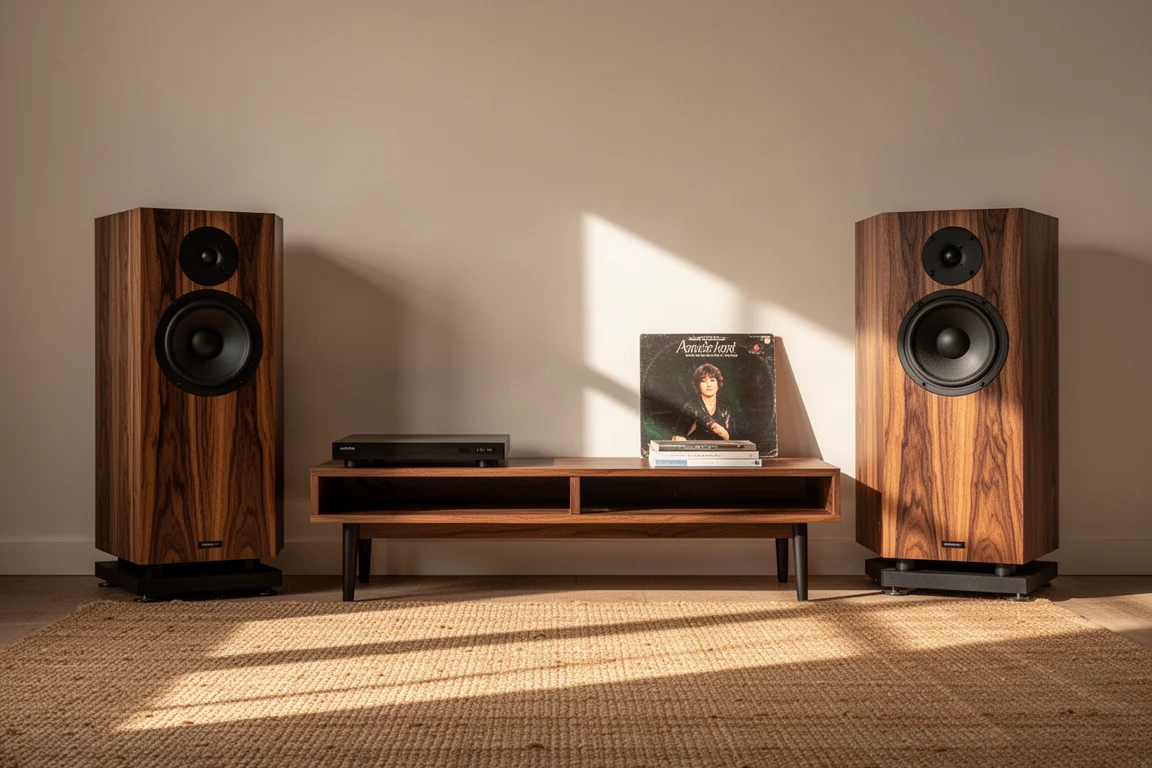
One practical note: the ES20 is a physically large bookshelf speaker, so it wants a sturdy stand or a deep shelf rather than a cramped corner. Pair it with a simple integrated amplifier or one of the streaming amplifiers below and you have a complete system without a lot of boxes.
Klipsch RP-500M
The Klipsch RP-500M has been on the market for around four years and has since been replaced by a second-generation model, which means it is now available as new old stock. At $259 a pair it sits well below its original $579 list price, and below the $350 to $400 it typically sold for in practice.
The appeal is character. The newer Klipsch models moved toward a more neutral tuning, while the RP-500M leans harder into the brand’s livelier house sound. That personality comes with a caveat: extended listening at high volume can bring on fatigue, so it rewards sensible listening levels. It also works well as a home theater speaker, where its efficiency and dynamics are useful.
Klipsch RP-600M
The RP-600M is the larger sibling, pairing a 6.5-inch woofer with a 1-inch titanium tweeter loaded by a Tractrix horn. Klipsch claims 96 dB sensitivity, which is optimistic; a figure in the low 90s is a more realistic expectation. Even so, it remains an easy load for modest amplifiers.
The smaller 5.25-inch model in the same family reaches down to 48 Hz with a claimed 93 dB sensitivity, likely closer to 89 dB in practice. The bigger cabinet trades a little nimbleness for more low-end weight and output.
At $349 a pair it sits at the top of this price window, and it is the pick for anyone who wants the extra bass and headroom.
Monoprice M2100 Power Amplifier
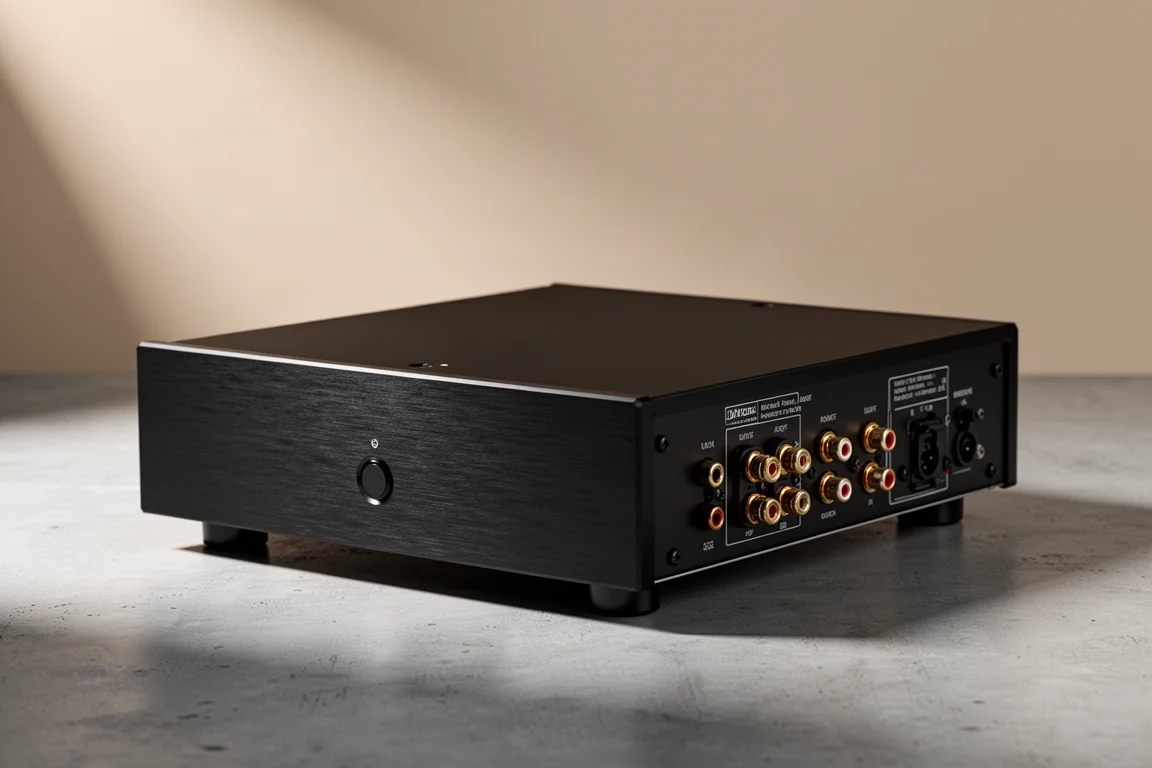
Amplifier options are thin in this bracket, which is what makes the Monoprice M2100 interesting. It is a straight power amplifier rated at 90 watts into 8 ohms and 135 watts into 4 ohms, built around a traditional toroidal transformer and a Class AB output stage rather than a switching design.
The internal layout is simple, which makes it straightforward to service, and it carries a three-year warranty from a company that is generally easy to deal with on returns. It was briefly discounted far more aggressively and the price has since settled at $299, which still puts it within reach of many Class D alternatives costing $200 to $300.
The one thing to plan for is that it is a power amplifier only. It needs a preamp or a streaming front end to control volume.
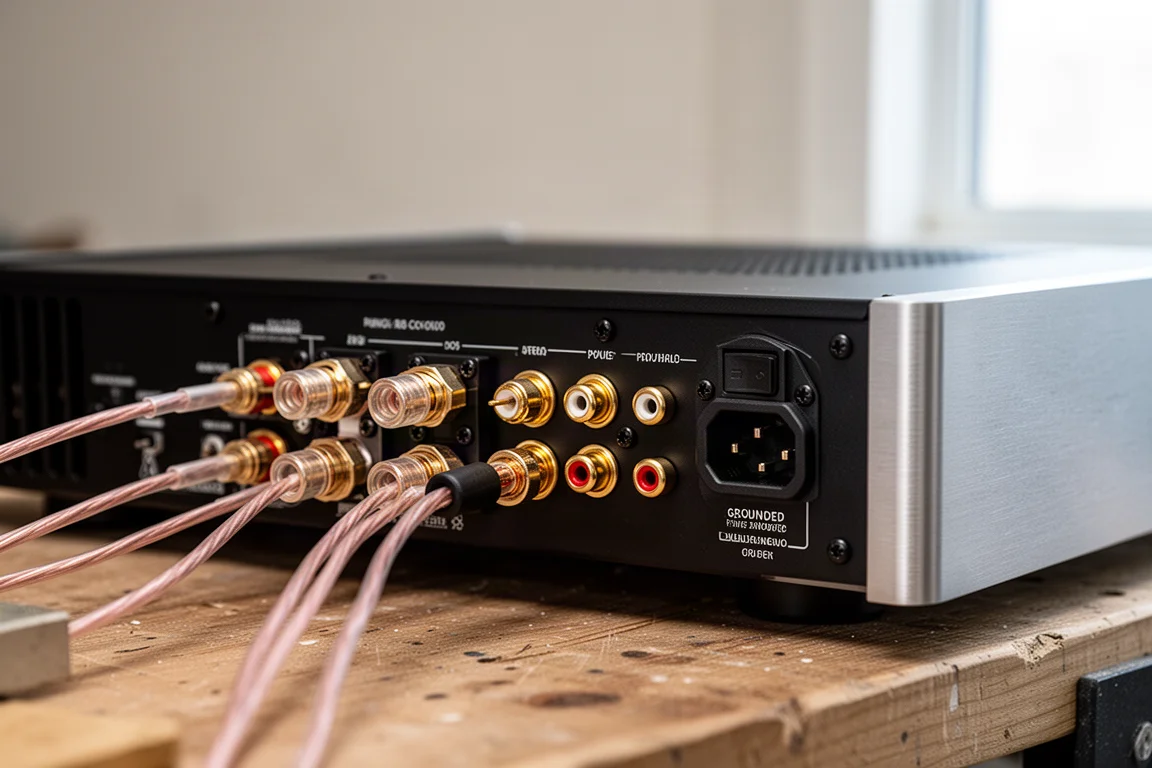
That requirement is not a drawback so much as a system decision. If you already own a streaming DAC with a volume control, the M2100 becomes a simple way to add genuine Class AB power to a desktop or small-room setup.
Yamaha R-S202 Stereo Receiver
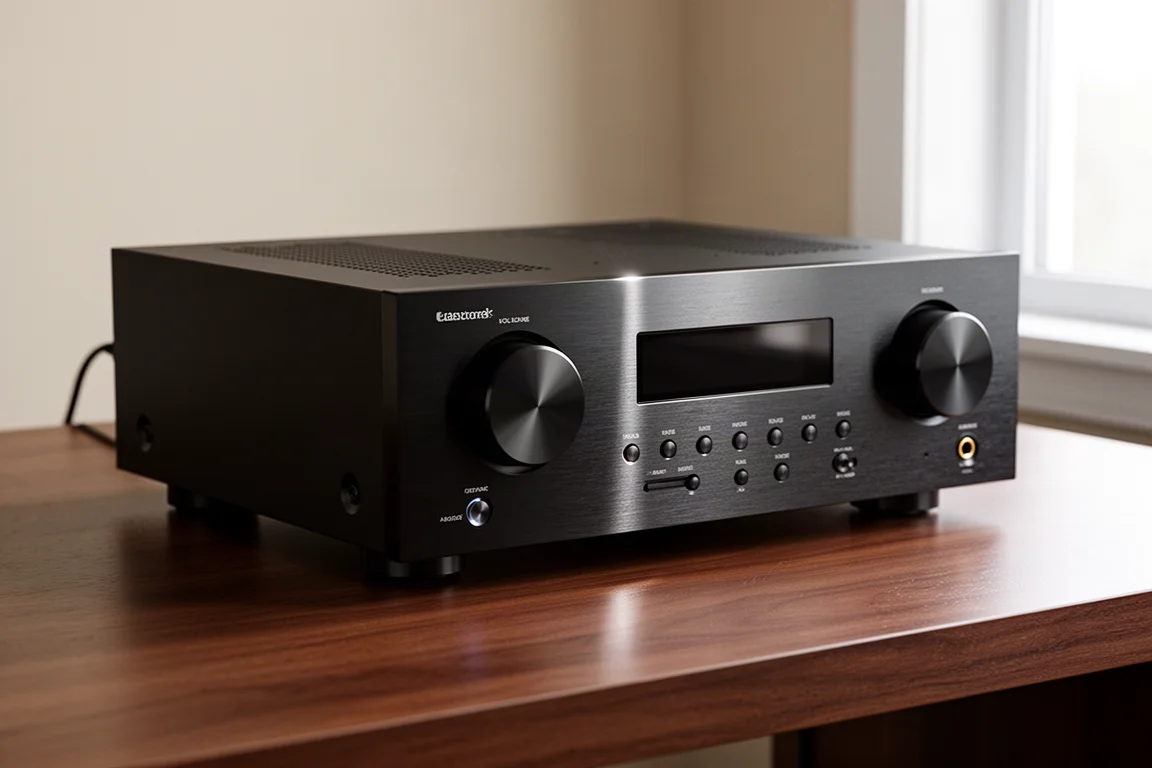
The Yamaha R-S202 is a two-channel stereo receiver with Bluetooth, a remote control, bass and treble controls, and a headphone output on the front panel. Yamaha rates it at 100 watts per channel into 8 ohms at 2% THD, and it includes an AM/FM tuner as part of the receiver design.
Connectivity is where the compromises live. There are three analog inputs on the back and no phono stage, so a turntable will need its own phono preamp or a built-in one, and digital sources will need a separate DAC. For a simple setup built around Bluetooth or a single analog source, though, it covers the essentials at $149 against a $229 list price, and $150 stereo receivers are becoming rare.
WiiM Pro Plus
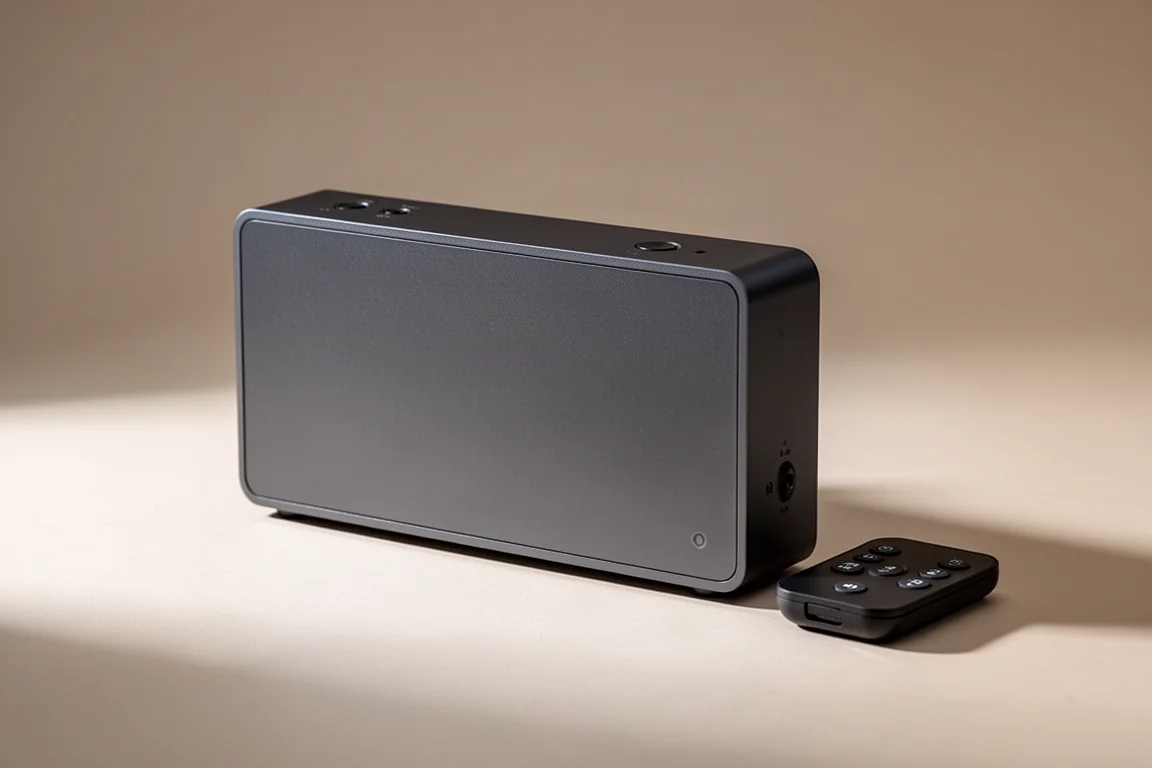
The WiiM Pro Plus is a streaming DAC built around an AKM 4493 DAC chip, an upgrade over the standard WiiM Pro. It supports a long feature list: 10-band EQ, parametric EQ, room correction, Tidal Connect, Spotify Connect, Amazon Music, and other streaming services, plus a remote control in the box.
At around $175, it undercuts the Bluesound Nano at $299 by a wide margin. The Nano is a capable product, but the price gap is difficult to ignore when the feature set overlaps this closely.
The compromises are on the back panel. There is no subwoofer output, so no true bass management, and no USB output. You do get an optical input, coax and SPDIF outputs, and a trigger output for switching on an external amplifier. If you already own an outboard DAC, it also works well purely as a transport.
WiiM Ultra
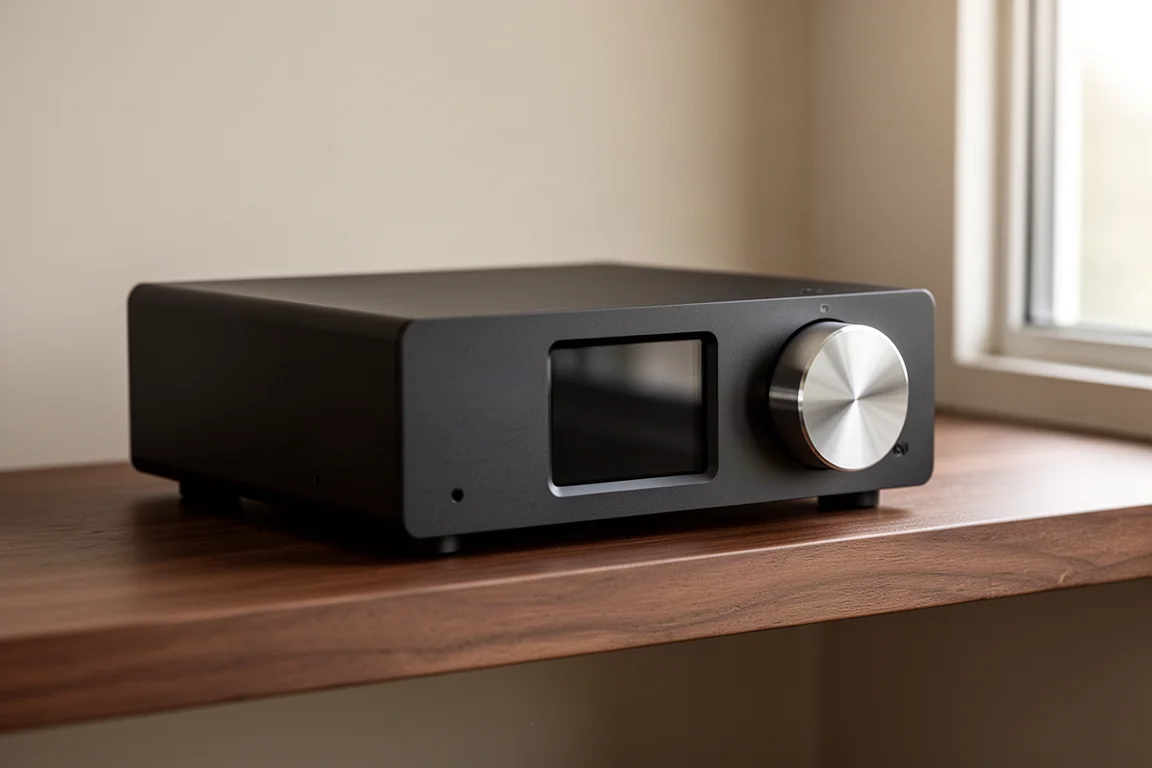
The WiiM Ultra adds the two things the Pro Plus leaves out: a subwoofer output with proper bass management, and a USB output, with the possibility of a future firmware update that lets the two work together. It also includes an HDMI input, which makes it a legitimate centerpiece component rather than a simple streamer.
At $263 it costs more than the Pro Plus and less than the Bluesound Nano at $299, which makes the step up easy to justify if you plan to run a subwoofer or want the extra connectivity in one box.
For a two-channel system with a subwoofer, the bass management alone is the reason to choose the Ultra over the Pro Plus. It removes the guesswork from integrating a sub and keeps the signal path simple.
WiiM Amp
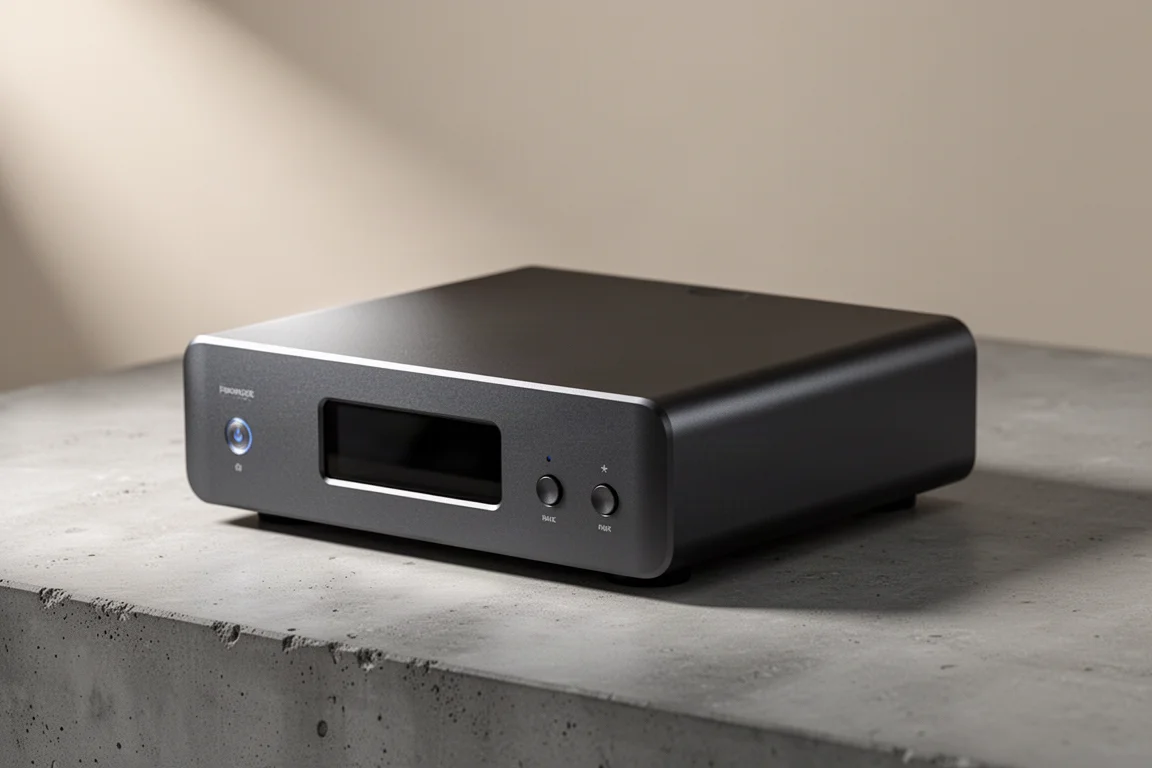
The WiiM Amp folds a streaming platform, an HDMI ARC input for a television, and a subwoofer output with bass management into a single box with its own amplification. That combination makes it an easy way to add decent sound to a second room, a child’s room, or any space where a separate stack of components does not make sense.
It was previously $300 and is now $240. A WiiM Amp Pro exists with a different amplifier chip that uses feedback technology, but the standard model remains capable of driving most speakers without trouble.
Triangle Borea BR03
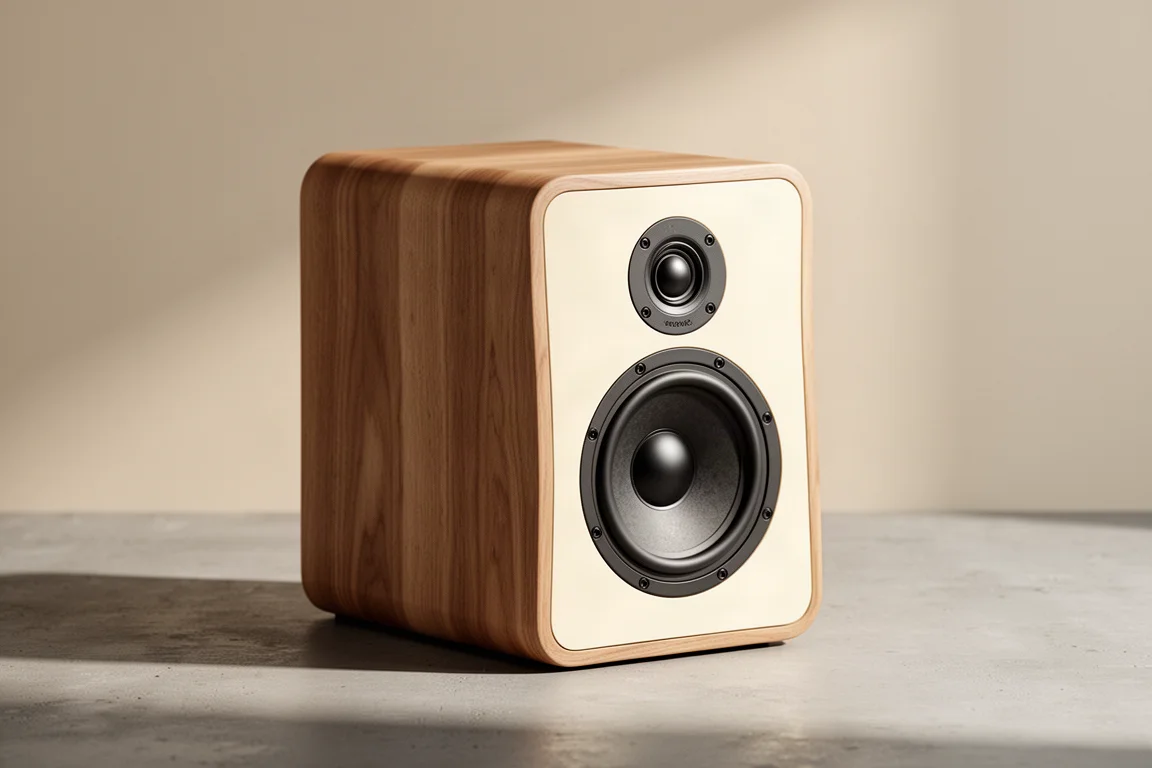
The Triangle Borea BR03 launched with a $650 list price and has been on the market long enough to be considered long in the tooth. At $350 it finally sits at the price it should have carried from the start.
It is front ported with dual front ports, which helps with placement close to a wall, and it comes in several finishes. The version linked here pairs a tan cabinet with a creamy white front baffle. The midrange has a slight veil compared with some rivals, but the overall presentation is balanced and the cabinet looks the part in a living space.
At $350 it is an outstanding value. Even at $500 it would be a solid speaker, which is the clearest sign that this price is worth acting on.
Overall Buying Advice
The right pick depends entirely on what you already own. If you need speakers and want a warm, easy-going sound that works with low-powered amplifiers, the Polk Signature Elite ES20 at $279 a pair is the most forgiving option here. If you prefer a livelier, more energetic presentation and can live with some listening fatigue at high volume, the Klipsch RP-500M at $259 is the better match, with the RP-600M at $349 for anyone who wants more bass and headroom. The Triangle Borea BR03 at $350 is the most balanced of the three and the easiest to live with in a shared room.
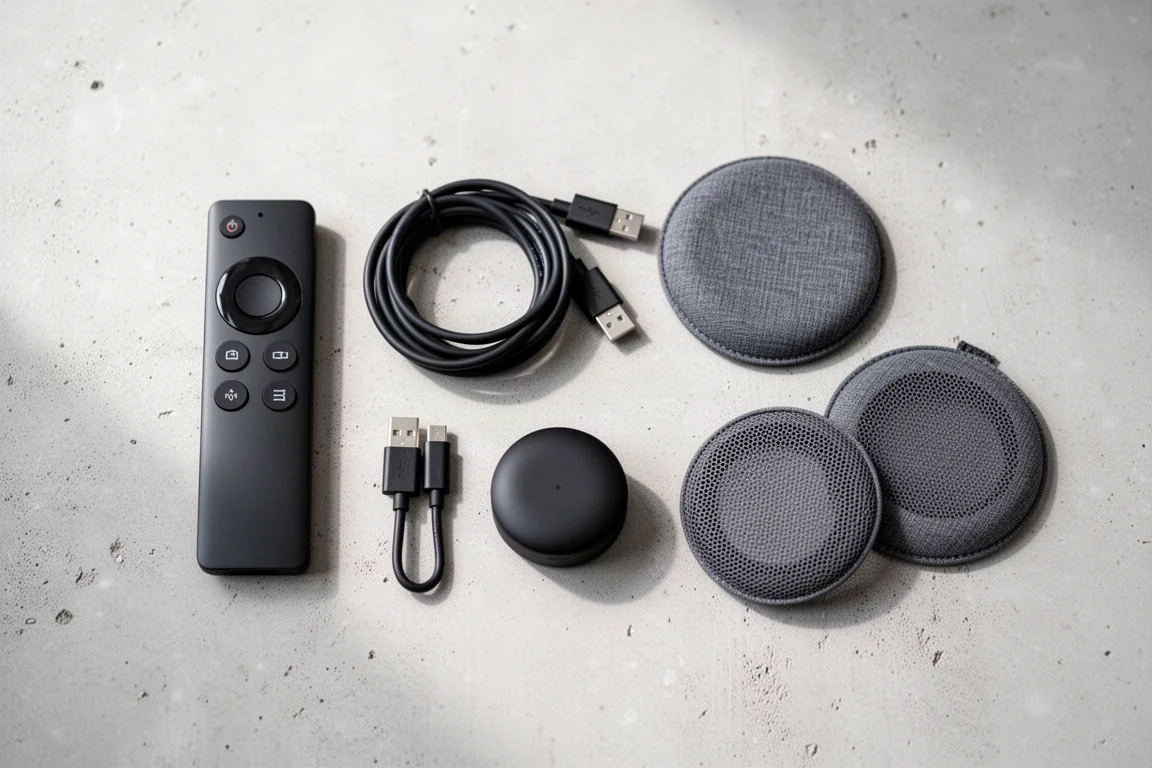
On the electronics side, the decision is about how many boxes you are willing to manage. The Monoprice M2100 is the choice if you want genuine Class AB power and already have a preamp or streaming front end. The Yamaha R-S202 is the simplest path for a Bluetooth or single-source setup at $149, provided you can live without a phono stage and digital inputs. The WiiM Pro Plus at around $175 is the best value if you own a DAC and do not need a subwoofer output, while the WiiM Ultra at $263 is worth the extra if you plan to run a sub or want HDMI. The WiiM Amp at $240 covers all of it in one box for a secondary room.
A sensible way to think about it: buy the speakers first, since they shape the sound more than anything else, then match the electronics to the features you actually need rather than the ones that look good on a spec sheet.
Conclusion
This price bracket rarely offers this much choice, and the current discounts are what make it work. Two discontinued Klipsch models available as new old stock, a Polk bookshelf speaker with genuine low-end punch, a Class AB power amplifier for under $300, and three streaming options that undercut their closest rival all add up to an unusually strong moment to build or upgrade a system.
Match the component to the room and the sources you actually use, and any of these nine will feel like money well spent rather than a compromise.
Further reading
Related Reviews
Home Audio
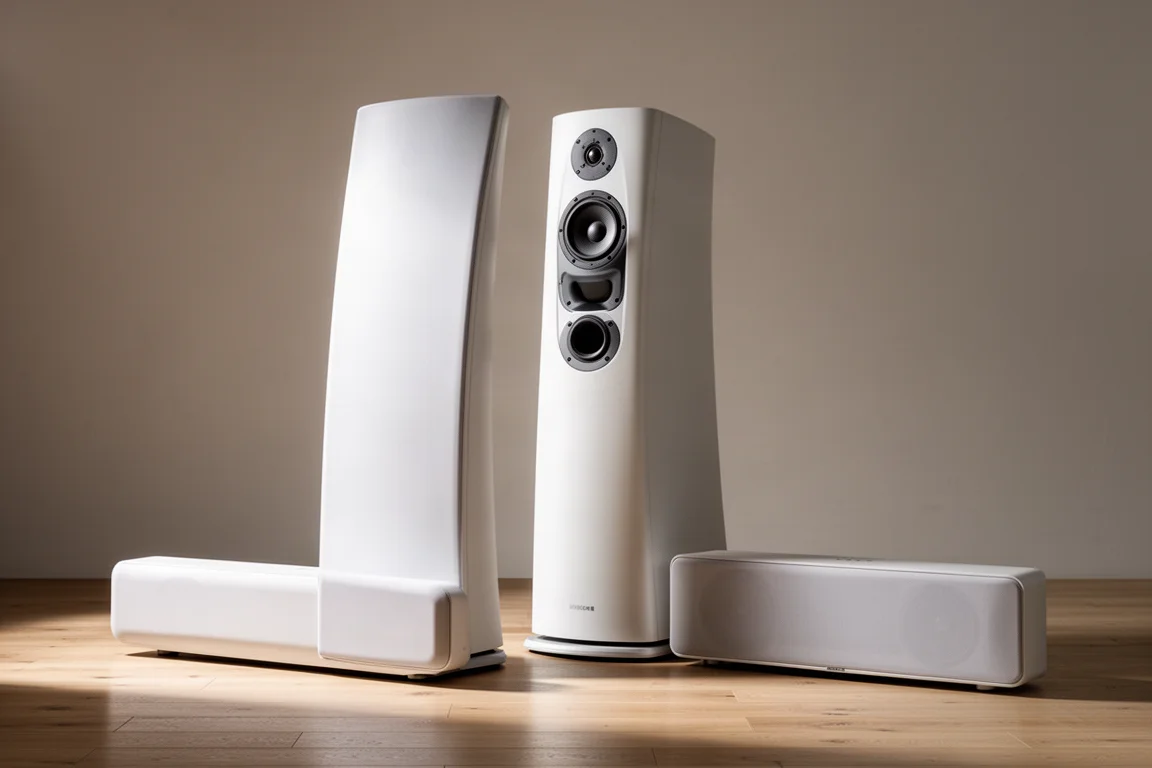
Aperion Novus Tower and Center Review: Punchy Home Theater Sound With Real Refinement
A close look at the Aperion Novus tower and center speakers, from their layered paint finish and punchy bass to the 4-ohm load and what the price actually buys.
Home Audio
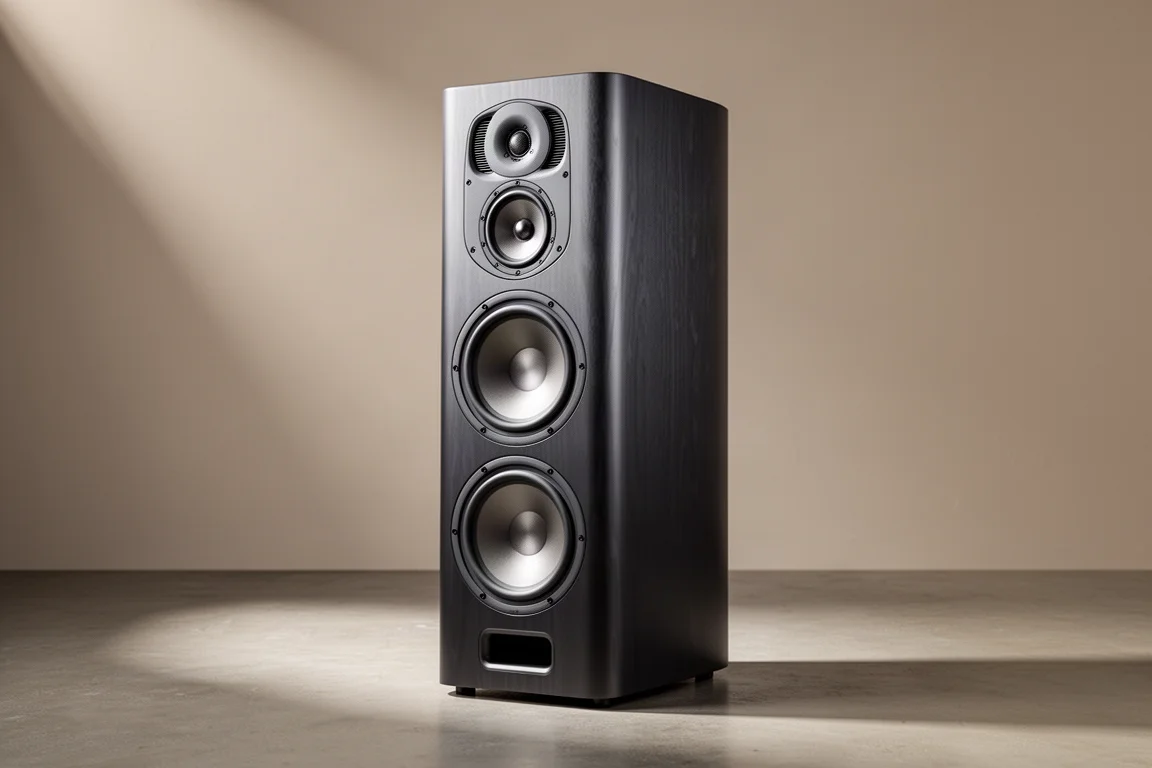
Arendal 1610 Tower Review: Flagship Dynamics in a Room-Friendly Tower
A compact floorstanding tower with three 8-inch aluminium woofers, a 5-inch carbon midrange, and the kind of bass heft usually reserved for much larger speakers.
Home Audio
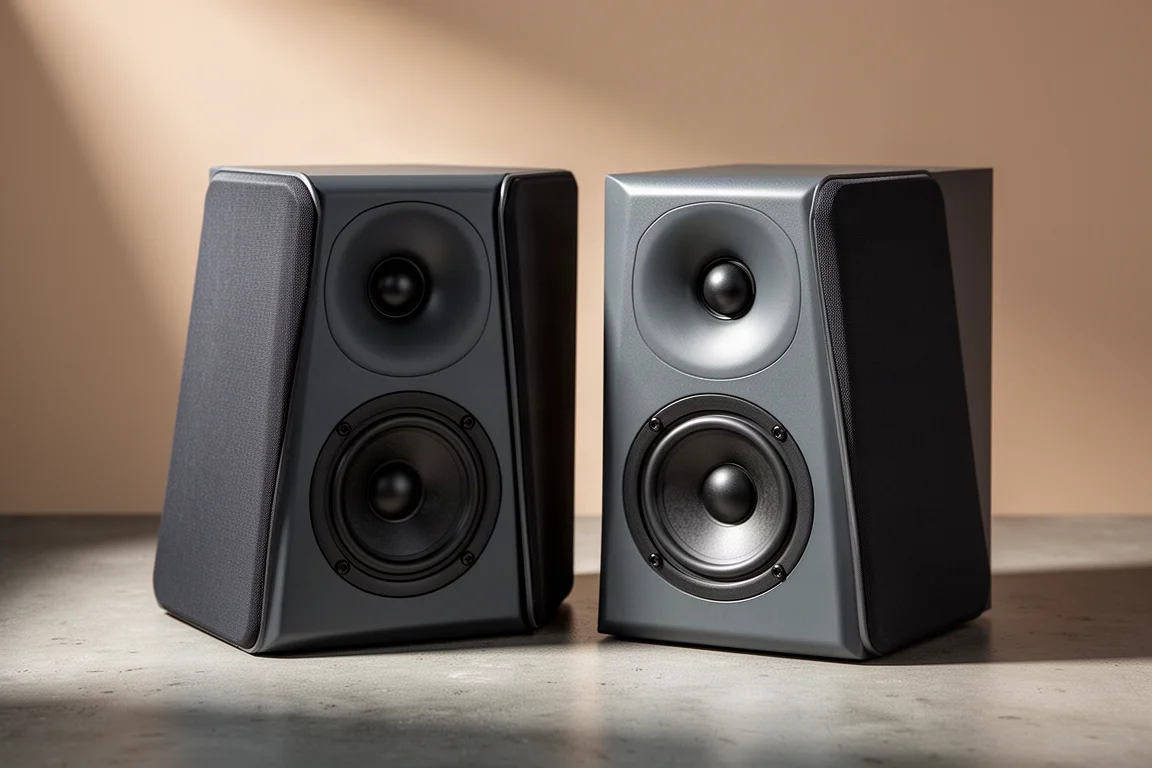
Arendal 1723 S THX Review: A Reference Speaker Built Like a Tank
A practical look at the Arendal 1723 S THX, a sealed, THX-certified speaker with exceptional build quality, a very flat top end, and a midrange that responds beautifully to EQ.