Home Audio
Best Audio Gear Roundup: Receivers, Amplifiers, Speakers and Headphones Worth Buying
A practical roundup of standout home audio gear, from AV receivers and stereo amplifiers to tower speakers, subwoofers, headphones and portable systems.
Introduction
The home audio market moves in two directions at once. On one side are receivers, amplifiers and speakers that push measured performance further than ever. On the other are compact, wireless and portable systems that make good sound easier to live with.
This roundup sits between those two worlds. It covers the components that stood out most during a year of hands-on testing, from a flagship AV receiver and a state-of-the-art Class D stereo amplifier to tower speakers that punch well above their price, a compact fully active bookshelf design, two subwoofers at opposite ends of the budget, noise-cancelling headphones with a genuinely useful USB DAC mode, and a portable speaker system that finally has a matching subwoofer.
Not every category here is represented by an expensive product. The list deliberately spans a wide price range, because the right answer depends on the room, the speakers you already own, and how much of the system you want to build at once.
What We Looked For
Four things decided whether a product made the list.
Measured performance came first. Bench testing separates components that sound impressive in a short demo from components that stay composed under real load, and it remains the only reliable way to judge distortion, noise and power delivery.
Second, usability. A room correction system that takes ten minutes and produces a good result is worth more to most owners than one that demands hours of manual work. The same logic applies to app control, input switching and setup documentation.
Third, value within the category. A product does not have to be cheap to be good value, but it does have to justify its position against what else is available at that price.
Finally, build quality and long-term ownership. Chassis construction, cooling, warranty terms and service support all matter once the novelty of a new component wears off.
The products below are not ranked against one another, because a $450 subwoofer and a $5,000 subwoofer are not competing for the same buyer. Each entry explains who the product suits and what to check before ordering.
Best AV Receiver: Anthem MRX 1140
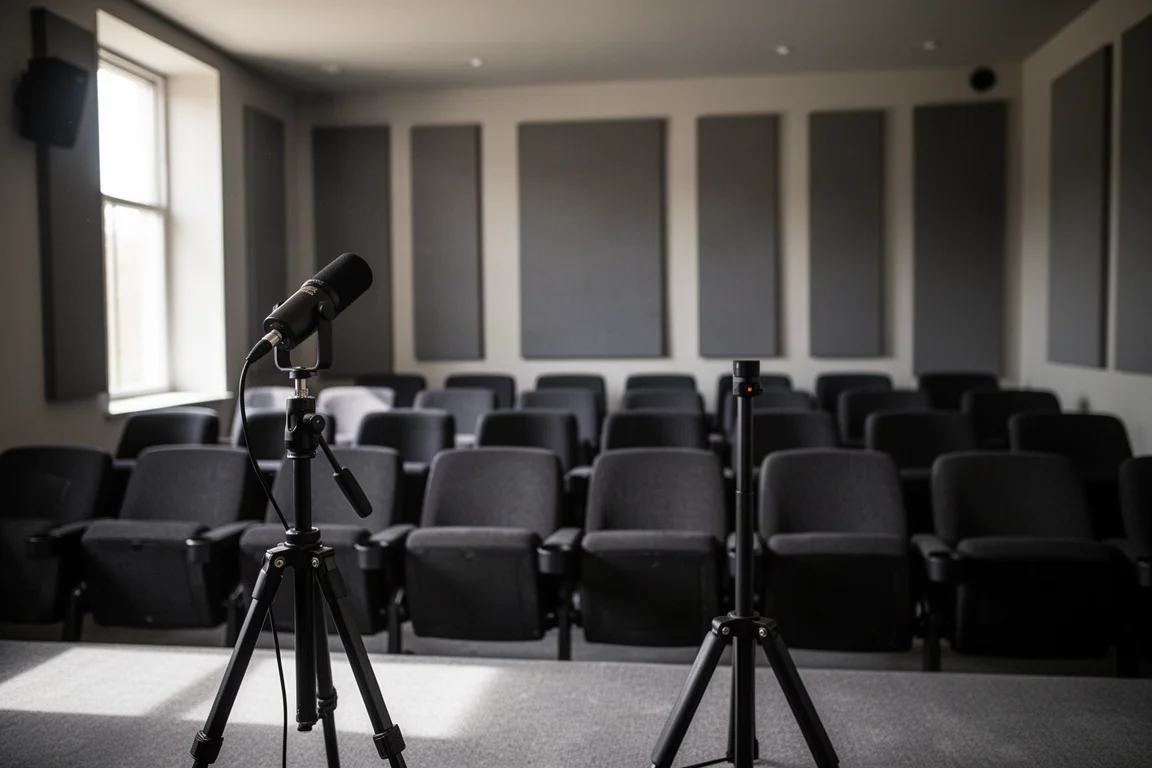
The Anthem MRX 1140 is not the most powerful receiver in its class, and it is not the cheapest. What sets it apart is the software experience. Anthem’s ARC Genesis room correction is among the easiest systems to run, and it delivers a result that sounds right without a long manual tuning session. Phase alignment and all-pass filter integration between the subwoofer and the front speakers do much of the heavy lifting.
Setup is unusually flexible. The calibration microphone connects to a laptop rather than to the receiver itself, and the laptop only needs to be on the same network as the processor. That means the receiver can stay in a rack or a closet while measurements are taken in the listening room, which is a real advantage for anyone with equipment installed away from the speakers and the display.
The hardware is well considered too. The MRX 1140 offers 11 channels of amplification with 15 channels of processing, so external amplifiers can be added as a system grows. Only the critical bed channels use Class A/B amplification, with Class D handling the remaining channels, and the practical benefit is a receiver that runs cool inside a rack. There are two independent subwoofer outputs, and the front panel uses a TFT display that looks like a high-end component rather than a generic box. Buyers who already own power amplifiers should look at the Anthem AVM 70, the preamp processor version of the same platform, which omits onboard amplification at roughly the same price of around $4,100 to $4,200.
In a 5.2.2 configuration, the integration between the front stage and the subwoofers was the standout. The blend sounded right within about ten minutes of setup, better than a careful manual calibration would typically achieve in the same time.
Honorable Mention: Yamaha RX-A6A AVENTAGE
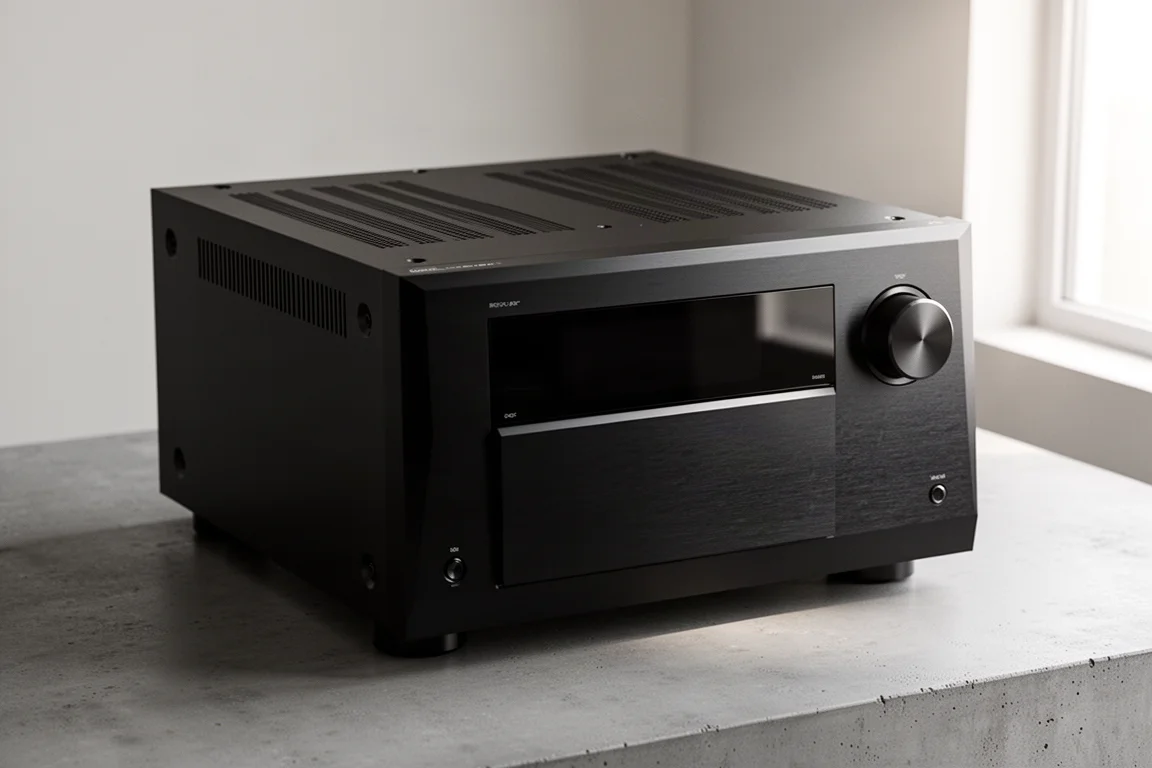
The Yamaha RX-A6A AVENTAGE is the receiver to consider when raw power and build mass matter more than interface polish. It delivers 150 watts across nine channels, all Class A/B, and weighs over 40 pounds. Substantial heatsinking keeps temperatures in check despite the Class A/B output stage.
Nine channels of amplification and 11 channels of processing give the receiver room to grow, and there are two independent subwoofer outputs. Manual parametric EQ is available with seven bands per channel and four bands for the subwoofer channel. Yamaha’s automatic calibration has improved and now does less harm to the signal than earlier versions, and filters can be imported for manual calibration if you prefer to tune by measurement. Surround AI processing is available for Dolby Atmos content, and there is an Auro-3D upgrade path.
Two features are genuinely uncommon at this price. The receiver provides balanced XLR preamp outputs for two channels, along with balanced XLR inputs for an analog source. At $2,500, it is hard to find another receiver built to this standard, and Yamaha reliability has a long-standing reputation behind it.
The caveats are cosmetic and practical. The design wraps a steel chassis in plastic and adds an unusually large volume control that protrudes far enough to complicate installation in a tight entertainment center. Sound quality is not the issue. Two-channel listening produced a full, weighty presentation that held up with a wide range of speakers.
Best Amplifier: NAD M23
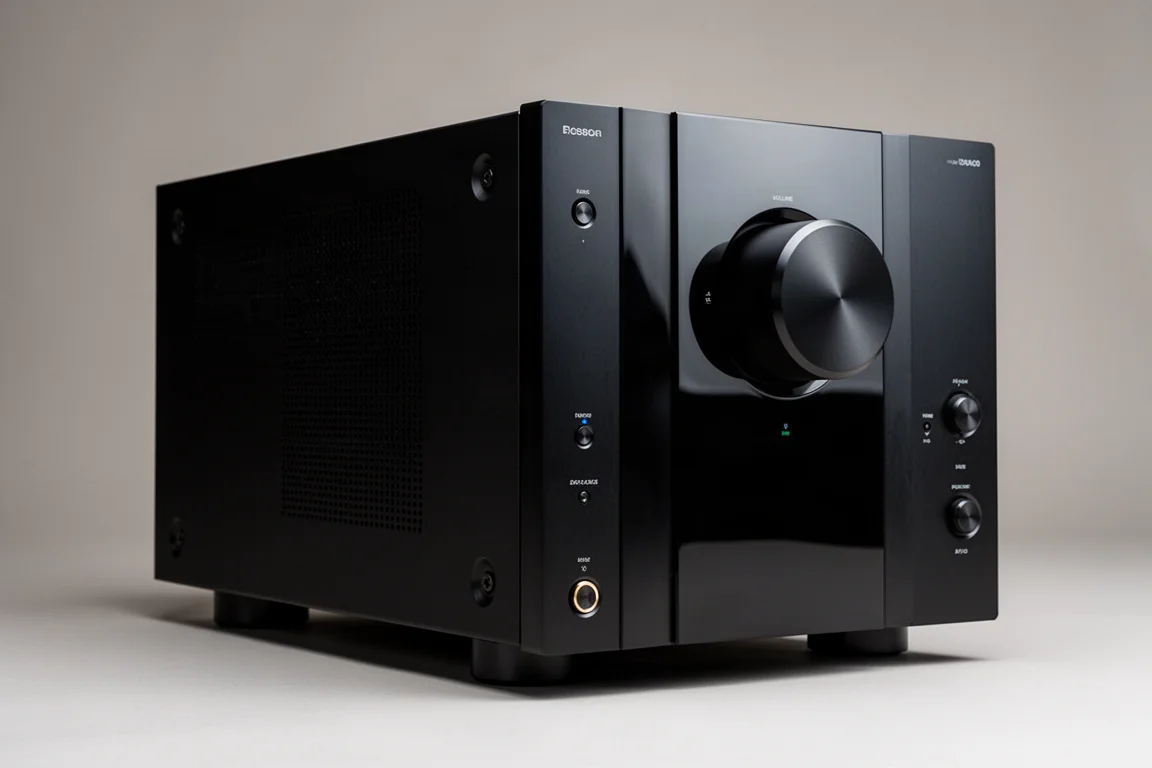
The NAD M23 is a Class D stereo amplifier built around a Purifi module, and it produced the lowest distortion and noise figures measured in more than two decades of amplifier testing. That is not a small claim, and it is the reason this amplifier leads its category.
Power output is 200 watts per channel into 8 ohms, doubling to 400 watts per channel into 4 ohms. It is bridgeable for roughly a kilowatt, though bridging compromises the standard two-channel performance, and at $3,700 it is an expensive route to monoblocks. Used as intended, as a two-channel stereo amplifier, it is exceptionally clean.
Load invariance is the technical highlight. Frequency response does not shift with speaker impedance, which was a persistent weakness in earlier Class D designs. Whatever speakers you connect will sound consistent, and the very low noise floor makes detail and dynamic contrast stand out in the way a good display makes deep blacks pop.
The build matches the performance. A brushed aluminium case and a capacitive touch power button on the top panel give it a premium feel, and a seven-channel version, the M28, is available for around $5,500 for anyone building a multichannel system.
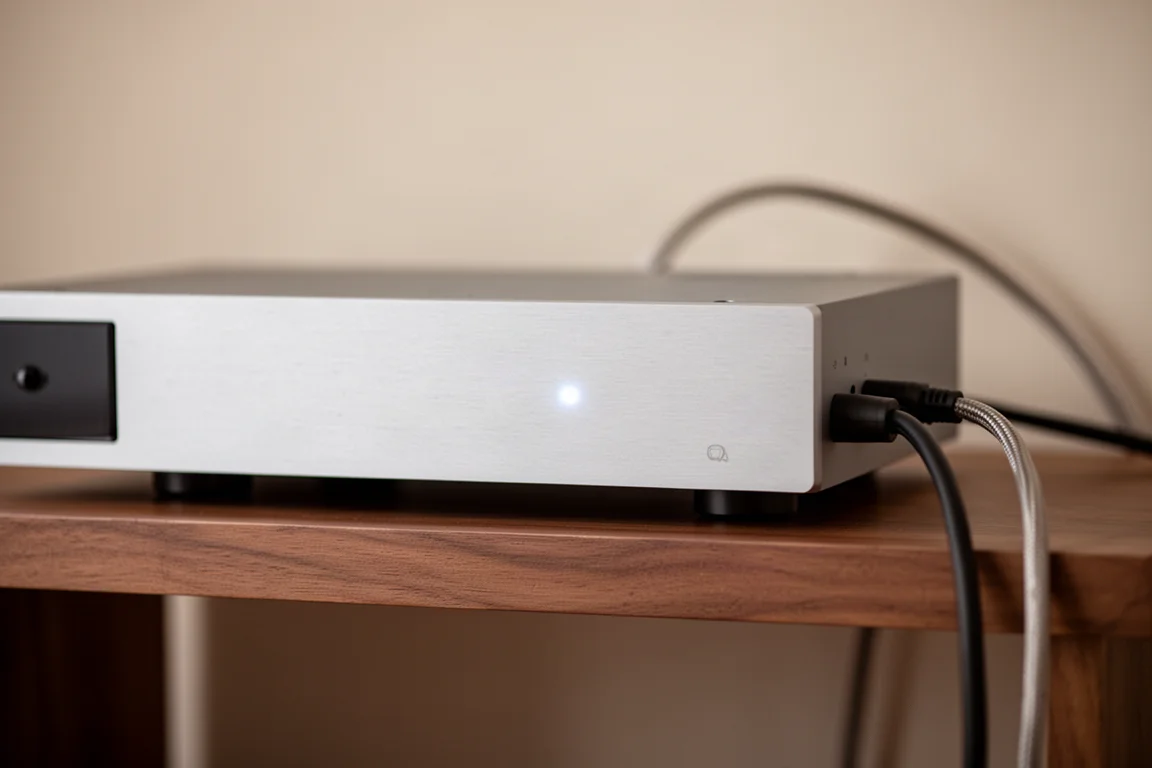
Two things are worth knowing before buying. First, an amplifier this transparent needs a preamp of comparable quality, because a noisy or distorted source will undo most of the benefit. Second, a small production batch experienced a short-circuit failure in which PCB trace thickness was insufficient to withstand a fault before protection engaged. The issue has been identified, and affected units are covered under warranty.
Best Tower Speakers: Polk Reserve R700
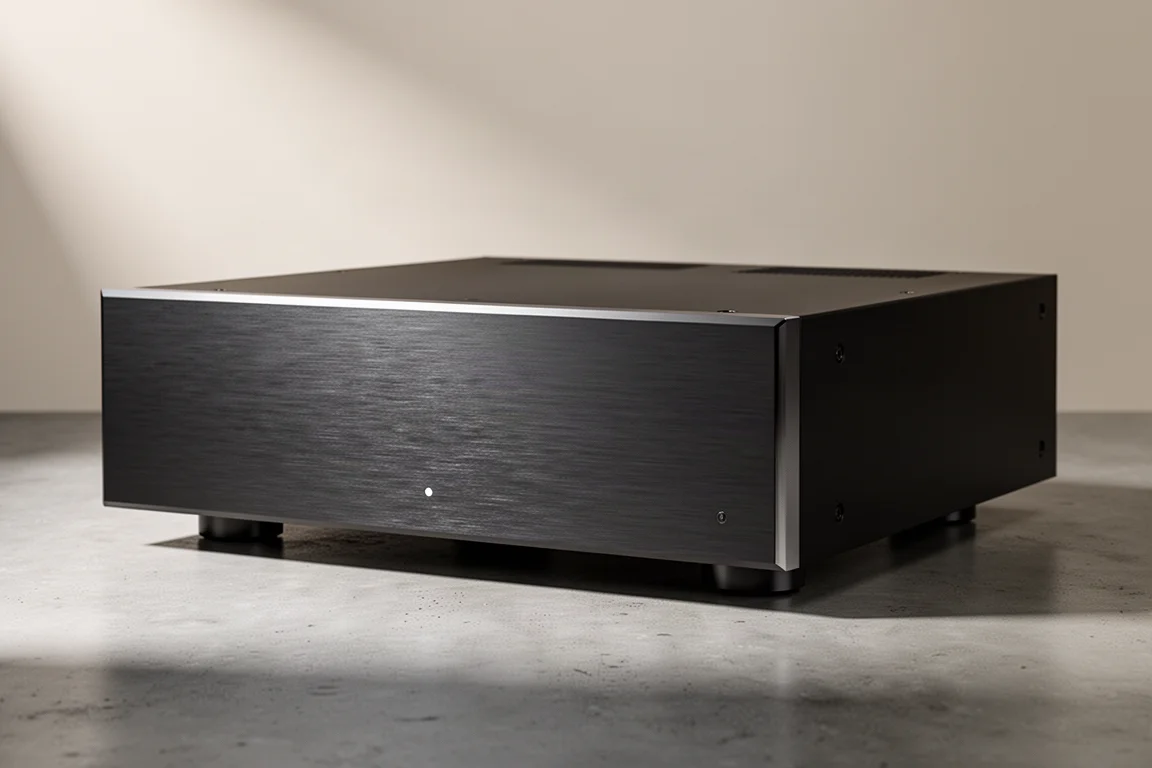
At $2,200 a pair, the Polk Reserve R700 is the value benchmark among tower speakers. It is a three-way, four-driver design with dual 8-inch bass drivers, a 6.5-inch turbine midrange and a 1-inch ring radiator tweeter.
The midrange choice matters. A 6.5-inch midrange driver gives more dynamic range than the smaller drivers common at this price, and the turbine cone geometry adds stiffness for a more rigid, controlled response. The 8-inch bass drivers use generous surrounds and long excursion, and the Power Port loading at the base of the cabinet keeps bass clean with no audible port chuffing.
Sensitivity is a reasonable 88 dB at 2.83 volts and one meter, but the R700 is a 4-ohm speaker, so plan on a stout amplifier. A high-current receiver can drive them, though a dedicated two-channel amplifier will get more out of them. At 80 pounds each, with included outriggers, they are built to a standard that undercuts the asking price.
Matching a center channel deserves attention. The Reserve series center is an MTM design that works well on axis or within roughly 10 to 15 degrees. If listeners sit more than 20 degrees off axis, the Polk Legend L400 is the better match, thanks to a WTMW layout with a vertically arranged tweeter and midrange that delivers consistent off-axis response for every seat in the room.
Best Active Speakers: Sigberg Audio SBS 0.1
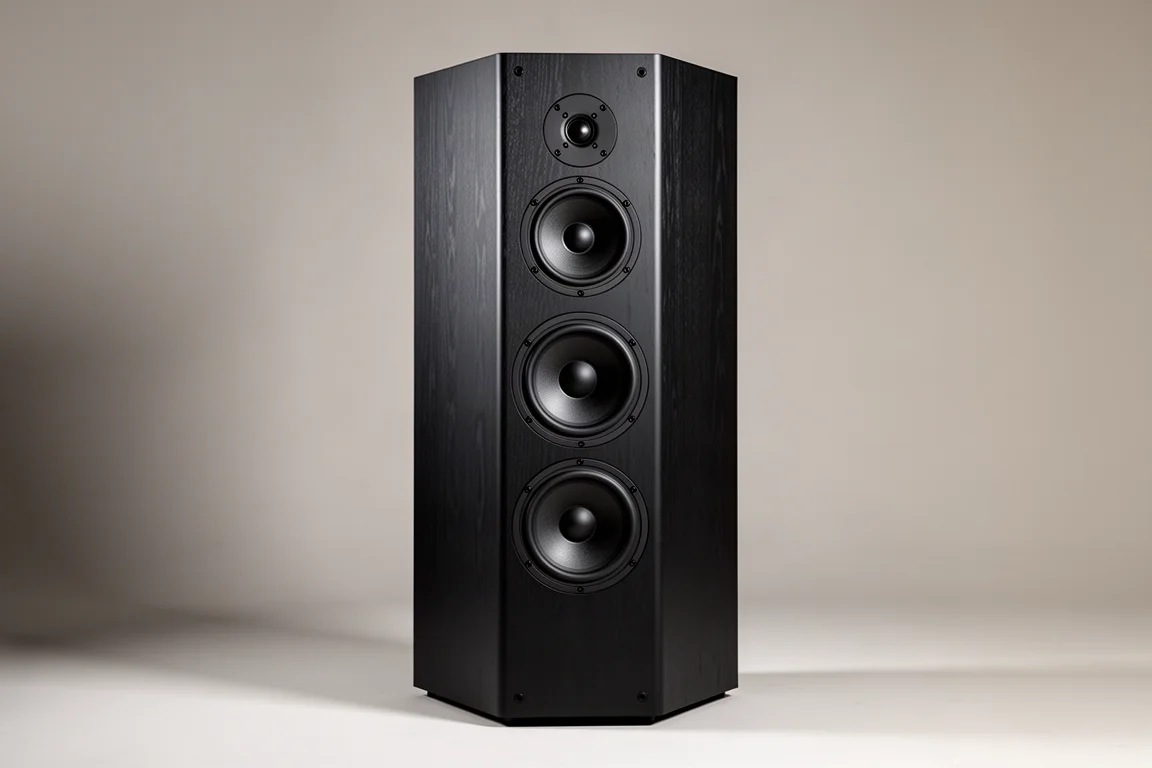
The Sigberg Audio SBS 0.1 is a compact active bookshelf speaker that takes a different approach from most designs in this roundup. There are no analog crossovers. Amplification is built in, and crossover work happens in the digital domain, which produces precise blending between the drivers. The midrange is a concentric driver with the tweeter mounted at its center, and the cabinet is built to a high standard for its size.
It is not a full-range design, so subwoofers are part of the plan rather than an optional extra. Sigberg’s own 10D subwoofer, at $2,900, is a musical match with very low group delay, which keeps bass tight and timing accurate.
What the combination delivers is a full-range system with accurate sound, strong imaging, wide dynamic range and a modest footprint. For a speaker this size, with dual 5.25-inch drivers, a clean 110 dB is impressive. A built-in nine-band parametric EQ gives owners room to adjust the response to their space without external processing.
Best Budget Subwoofer: RSL Speedwoofer 10S
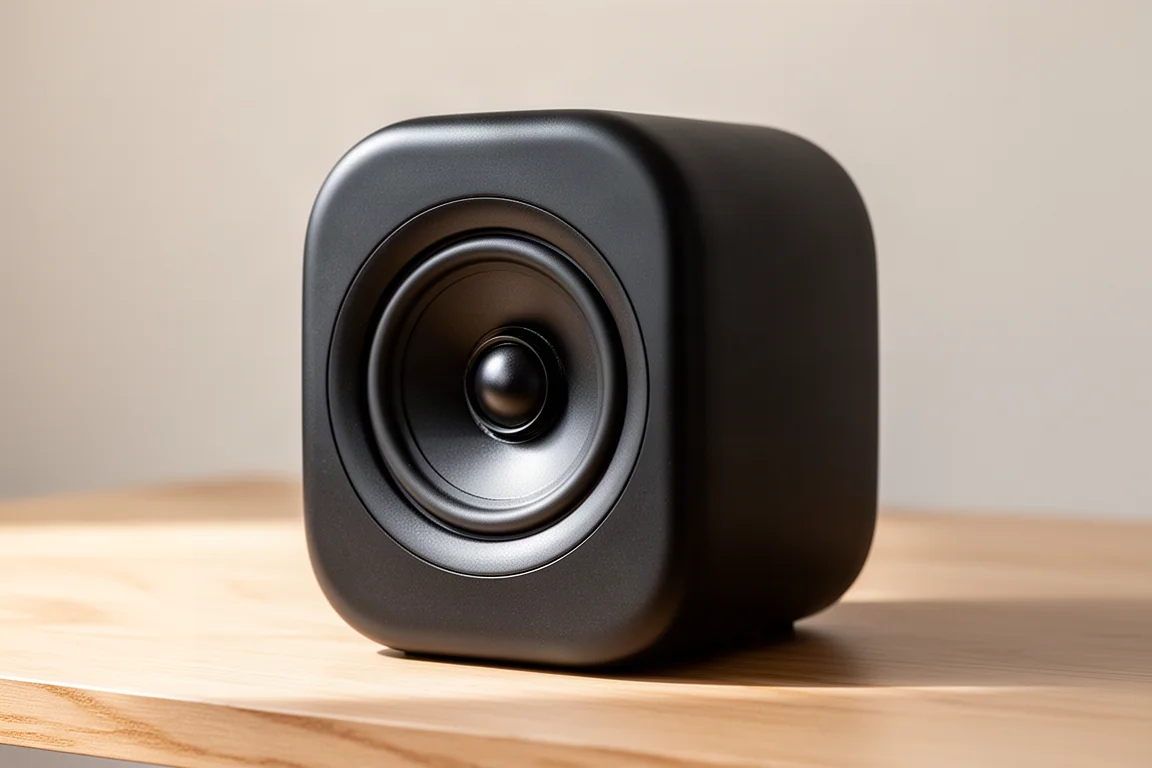
The RSL Speedwoofer 10S is the subwoofer to buy when the budget is real but the expectations are not low. It is an updated version of a design that already proved itself, now with DSP control on the driver and improved amplification.
Power is 400 watts RMS with 1,000 watts peak, feeding a cast-frame 10-inch woofer. Response extends genuinely below 30 Hz, and headroom is good for the size. The amplifier carries a two-year warranty and the subwoofer ships with a 30-day trial period. At $450 including shipping, it is a class leader at its price.
The room size rating is medium for a subwoofer of this type. Buyers with larger rooms should consider two units, which also brings the usual benefits of multiple subwoofers: smoother response across seats and more total output.
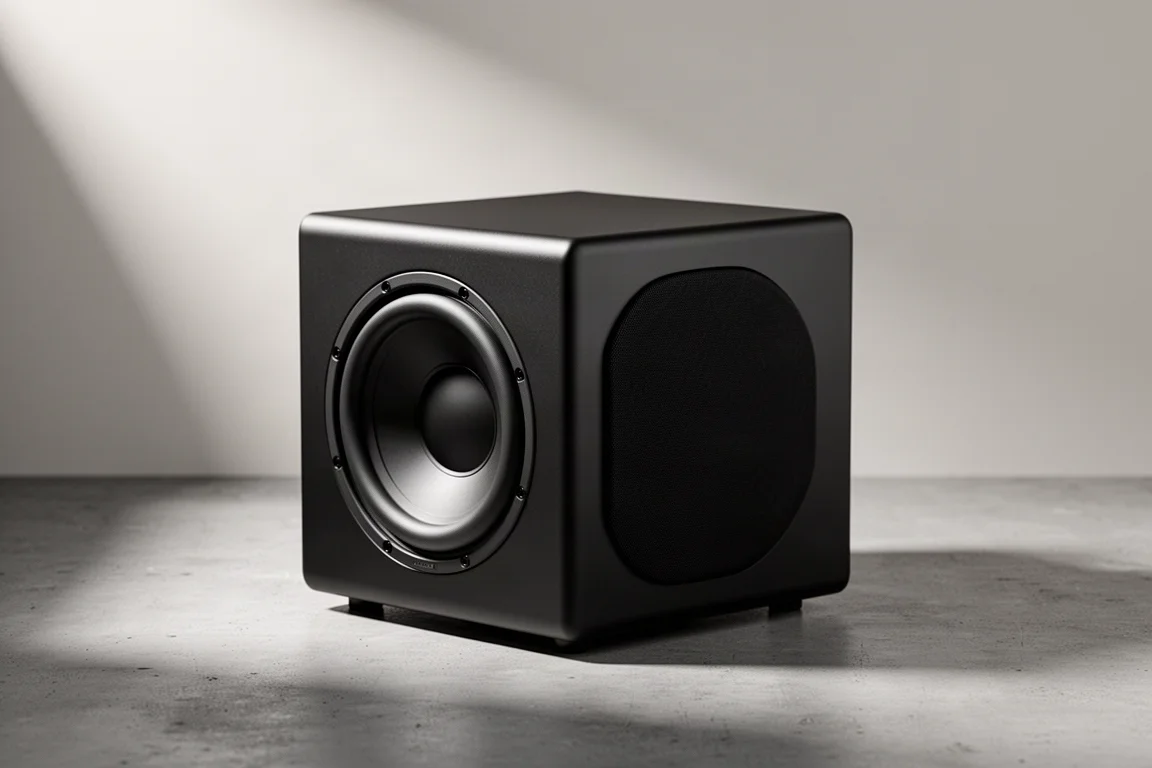
Best High-End Subwoofer: Perlisten R212s
The Perlisten R212s is a 12-inch push-pull subwoofer with a 1.3 kW amplifier, and it prioritizes accuracy over sheer output. Distortion is extremely low, frequency response is exceptionally flat, and time domain performance is where it separates itself from most of the competition. Group delay measurements are clean, which is what makes bass sound tight and fast rather than slow and bloated.
It is not an output king, and the room size rating is large rather than extreme. Buyers with very large rooms or a preference for maximum output may want two. A pair would likely reach extreme room ratings in a typical space while keeping the accuracy that defines the design.
At around $5,000 it is a serious purchase, and the build quality and measured performance justify the position for listeners who care most about musical bass in a dedicated system.
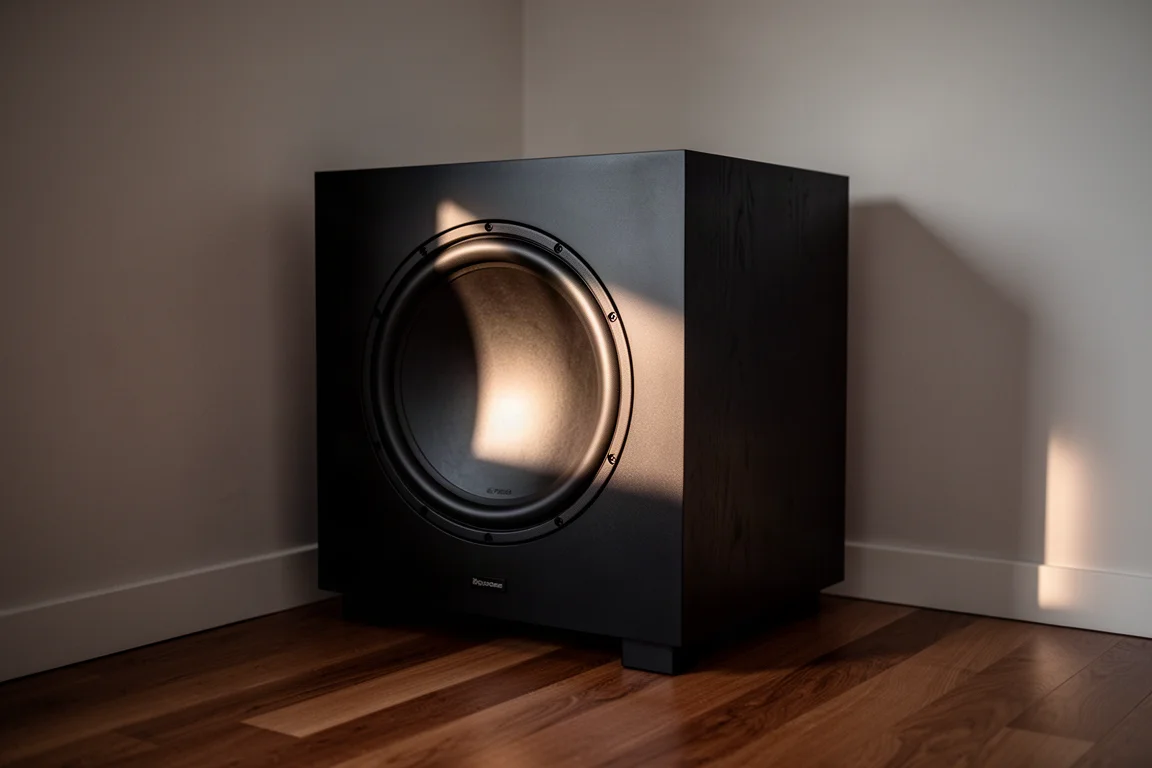
For anyone weighing this against a cheaper, higher-output alternative, the decision comes down to priorities. If accurate, well-timed bass in a music-first system matters more than maximum output, this is the subwoofer to audition.
Best Noise-Cancelling Wireless Headphones: Focal Bathys
The Focal Bathys is an active noise-cancelling wireless headphone with a driver built specifically for the job: an aluminium-magnesium M-dome design with a frameless voice coil that reduces weight and improves efficiency. Bluetooth uses aptX Adaptive for a stable, higher-quality wireless connection.
Sound quality leans dynamic and spacious. Bass is punchy, the presentation has good separation, and the noise cancelling provides effective acoustic isolation for travel and noisy rooms. Build quality and finish are what buyers expect at this level, and the design carries a sense of ownership that matches the price.
The feature that sets it apart is the USB DAC mode. Connecting directly to a USB source bypasses the wireless codec entirely, giving a step up in performance that most wireless headphones cannot offer. At $800, it is priced in line with other high-performance noise-cancelling models.

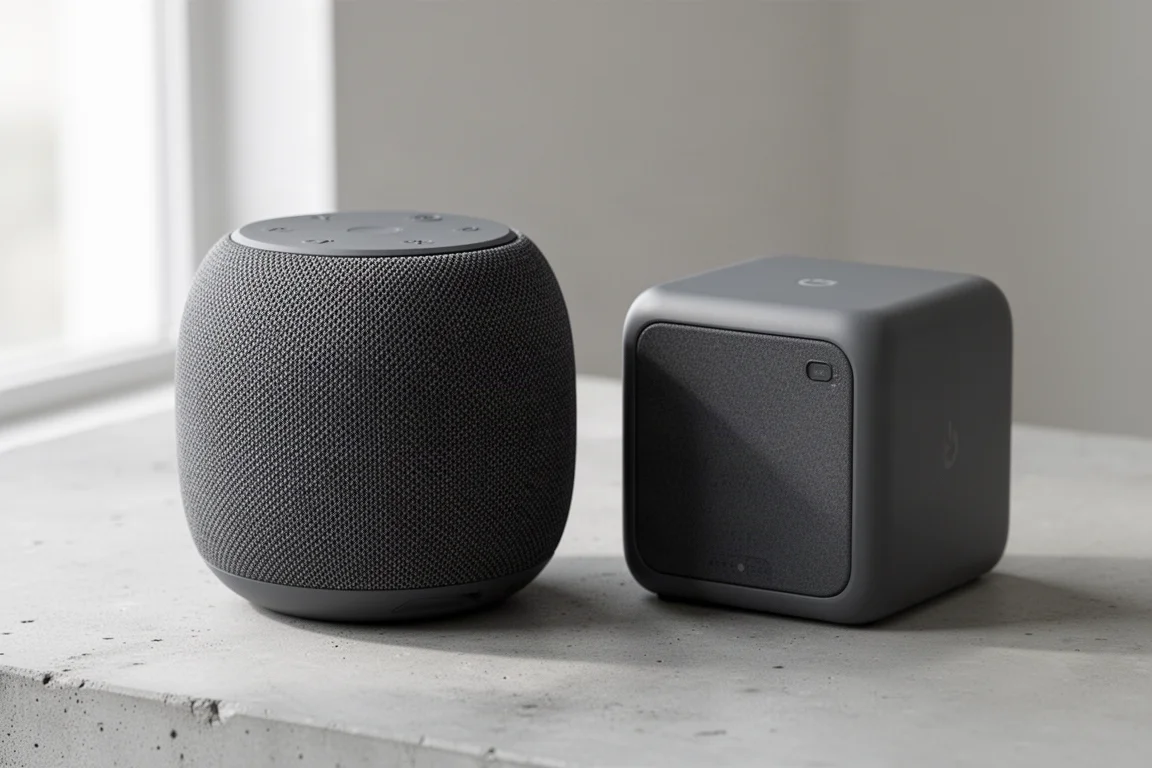
Best Portable Speaker System: Rocksteady Stadium
The Rocksteady Stadium system is built for flexibility. The portable wireless speakers deliver more than 16 hours of battery life and can be linked together wirelessly, so the system grows with the occasion rather than being limited to a single room.
The addition that matters most is a matching battery-powered wireless subwoofer. Portable subwoofers at this performance level are rare, and the manufacturer claims bass extension down to 30 Hz. That figure is a manufacturer claim rather than a lab-verified result, but the extension is clearly audible in use, and placing the subwoofer against a surface adds boundary gain for extra output.
At a retail price of $259, and often discounted to around $159, the subwoofer is an easy add-on to an existing set of speakers. Owners who want a portable system for a patio, a dorm room or a trip get a genuinely expandable ecosystem rather than a single-purpose speaker.
Buying Advice: Matching Gear to Your Room
The right order of decisions is usually room first, speakers second, electronics third.
Start with room size and seating layout. Subwoofer ratings are tied to room volume, which is why a medium-rated subwoofer can be ideal in one space and underwhelming in another. If you sit in more than one row or listen from the sides, prioritize speakers and center channels with consistent off-axis behavior.
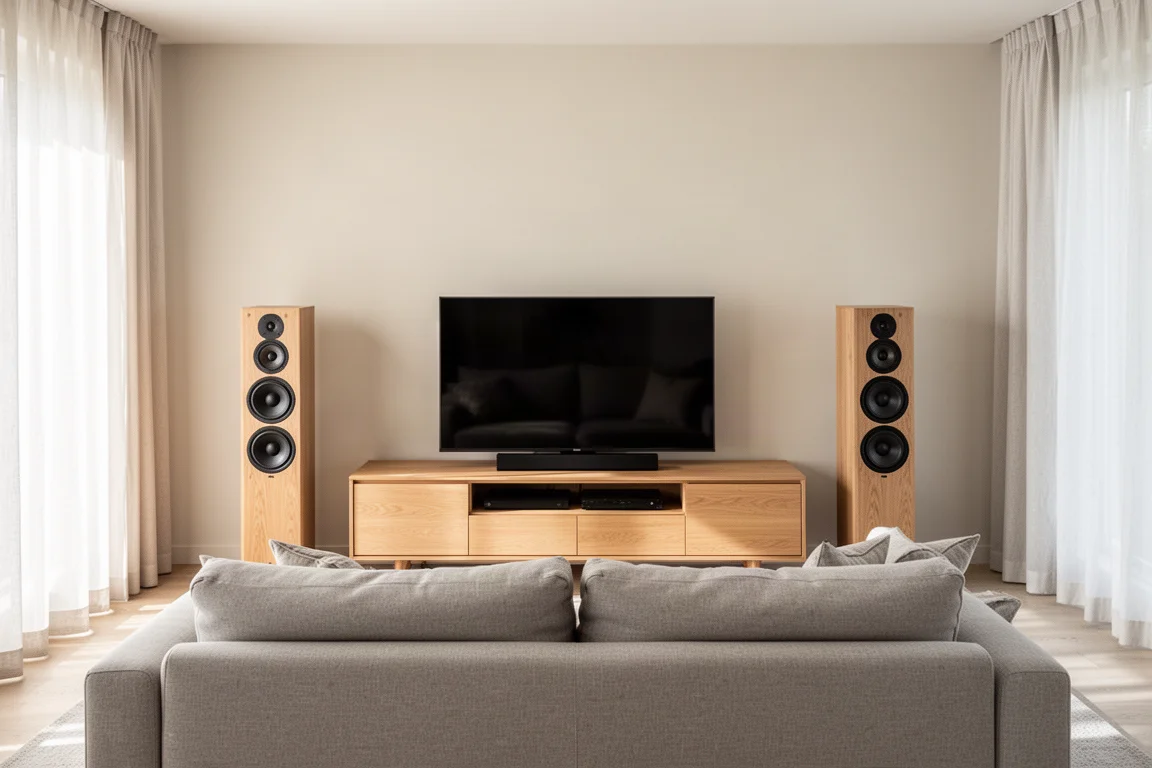
Then consider how much of the system you want to build now. An AV receiver with 11 channels of processing and preamp outputs lets you add amplification later. A fully active speaker system with digital crossovers removes amplifier matching from the equation entirely, but it requires subwoofers to reach full range.
Budget allocation matters as much as product choice. Spending less on tower speakers to free up money for two subwoofers often produces a better result than putting the entire budget into the front pair, and a stereo amplifier with very low noise only pays off if the preamp feeding it is equally quiet.
Finally, weigh ergonomics. Room correction that is quick and reliable, a rack-friendly receiver that runs cool, and a subwoofer with a trial period all reduce the risk of a purchase that looks good on paper but frustrates in daily use.
Conclusion
This roundup covers a wide spectrum on purpose. The Anthem MRX 1140 and the Yamaha RX-A6A AVENTAGE show two different philosophies for AV receivers, one centered on room correction software and the other on power and build. The NAD M23 sets a measured performance benchmark for Class D stereo amplification. The Polk Reserve R700 and the Sigberg Audio SBS 0.1 approach speakers from opposite directions, one a high-value passive tower and the other a compact fully active design.
At the lower end of the budget, the RSL Speedwoofer 10S and the Rocksteady Stadium subwoofer deliver far more than their prices suggest, while the Perlisten R212s represents what is possible when accuracy is the only priority. The Focal Bathys rounds out the list with wireless convenience and a wired DAC mode that genuinely improves sound quality.
Match the product to the room and to the system you actually plan to build, and any of these picks will serve well for years.
Further reading
Related Reviews
Home Audio
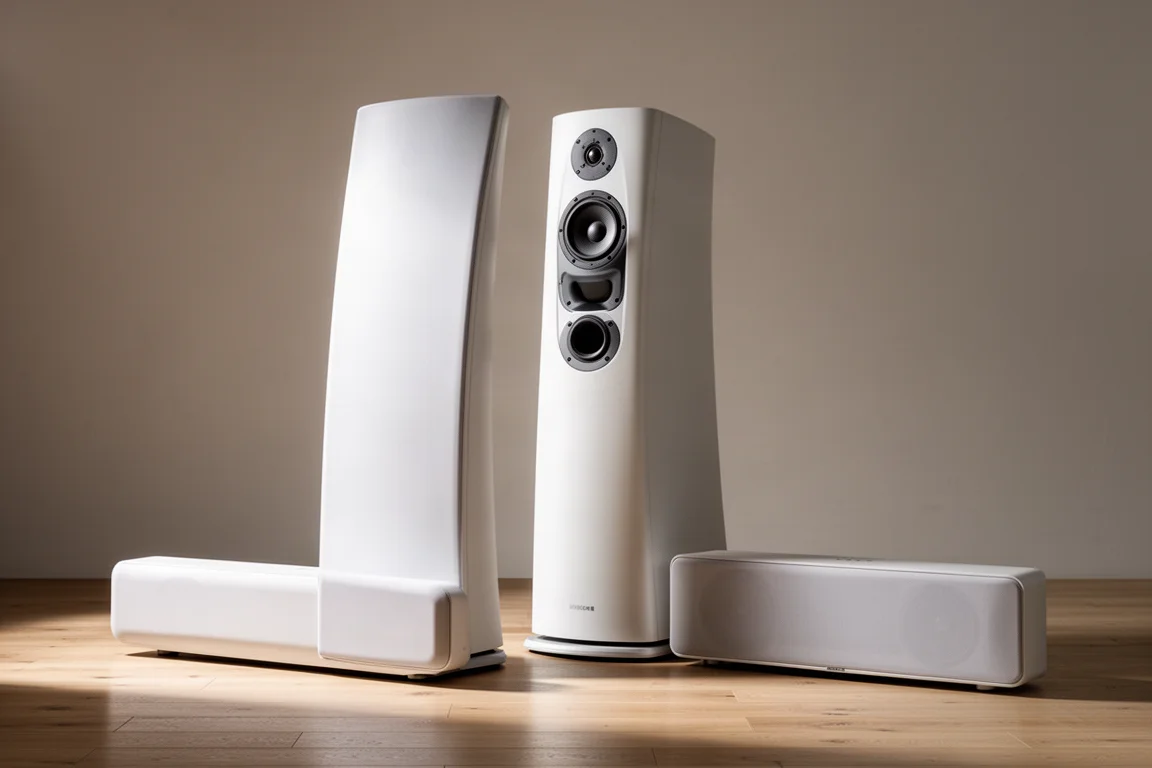
Aperion Novus Tower and Center Review: Punchy Home Theater Sound With Real Refinement
A close look at the Aperion Novus tower and center speakers, from their layered paint finish and punchy bass to the 4-ohm load and what the price actually buys.
Home Audio
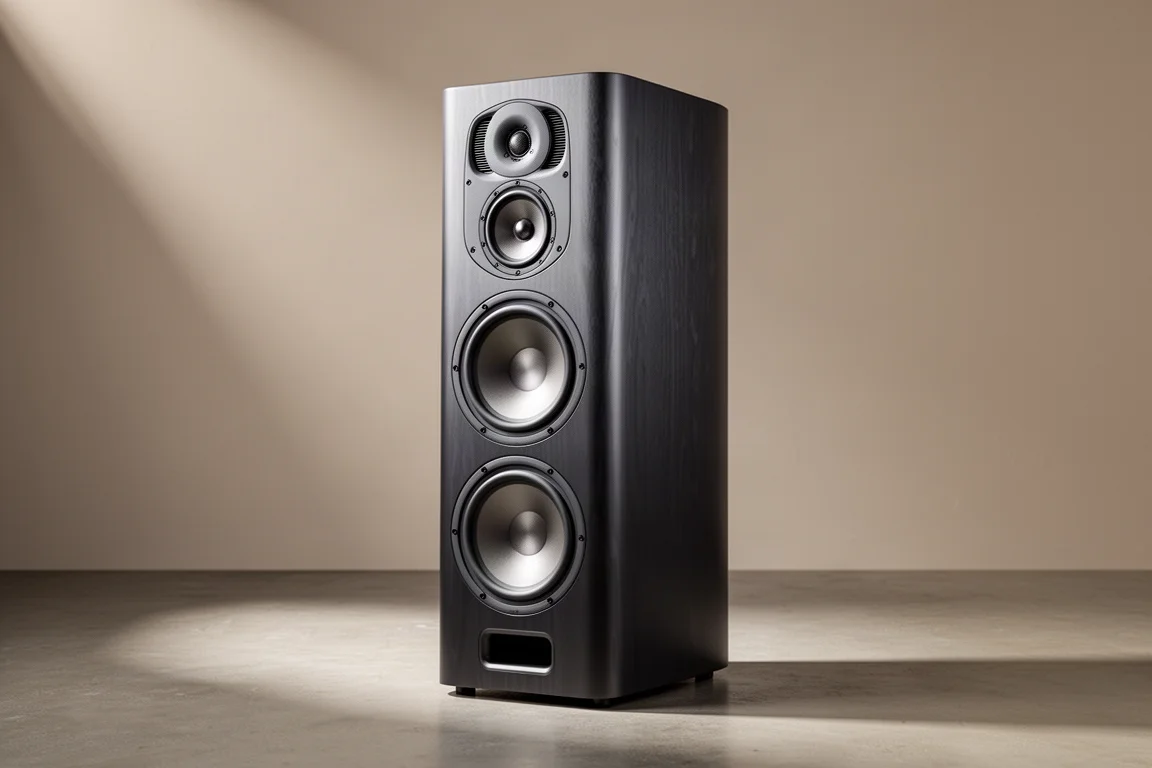
Arendal 1610 Tower Review: Flagship Dynamics in a Room-Friendly Tower
A compact floorstanding tower with three 8-inch aluminium woofers, a 5-inch carbon midrange, and the kind of bass heft usually reserved for much larger speakers.
Home Audio
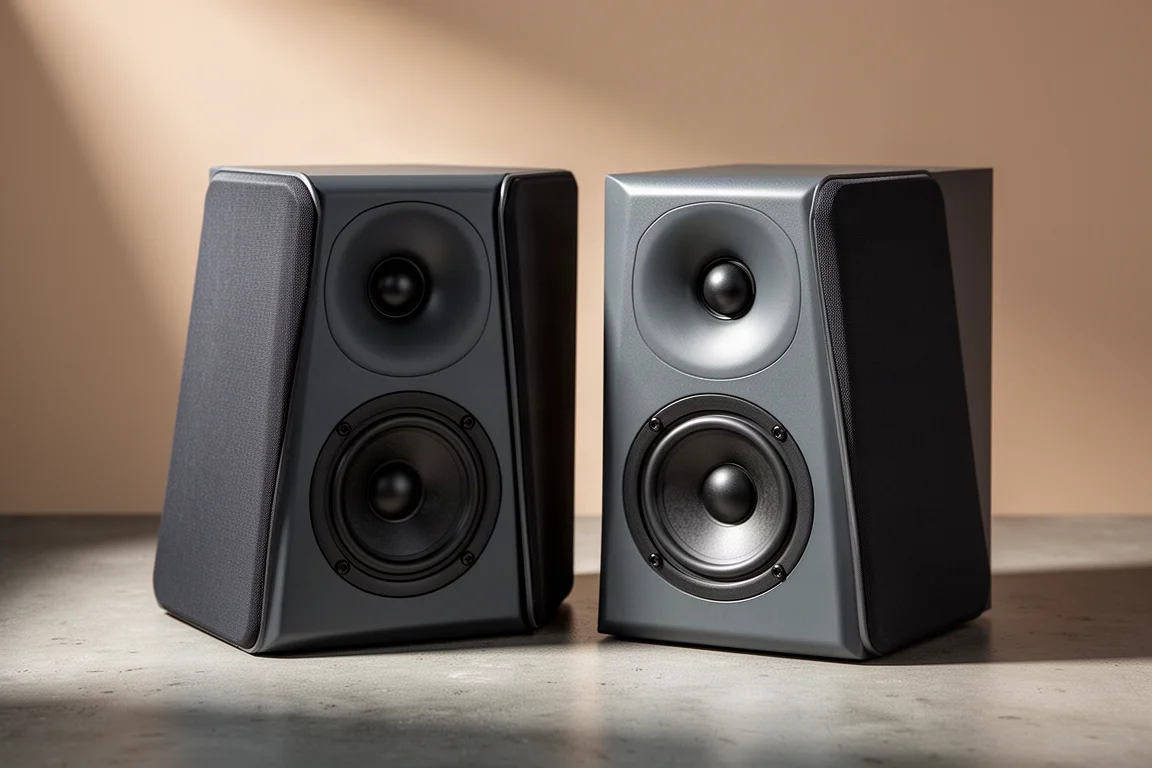
Arendal 1723 S THX Review: A Reference Speaker Built Like a Tank
A practical look at the Arendal 1723 S THX, a sealed, THX-certified speaker with exceptional build quality, a very flat top end, and a midrange that responds beautifully to EQ.