Home Audio
Best Audio Components of the Year: 11 Standouts Worth Considering
Eleven audio products worth a closer look, from a 13.4-channel AV processor and travel-ready noise-cancelling headphones to floorstanding speakers, on-wall models, subwoofers, and a high-performance turntable.
Introduction
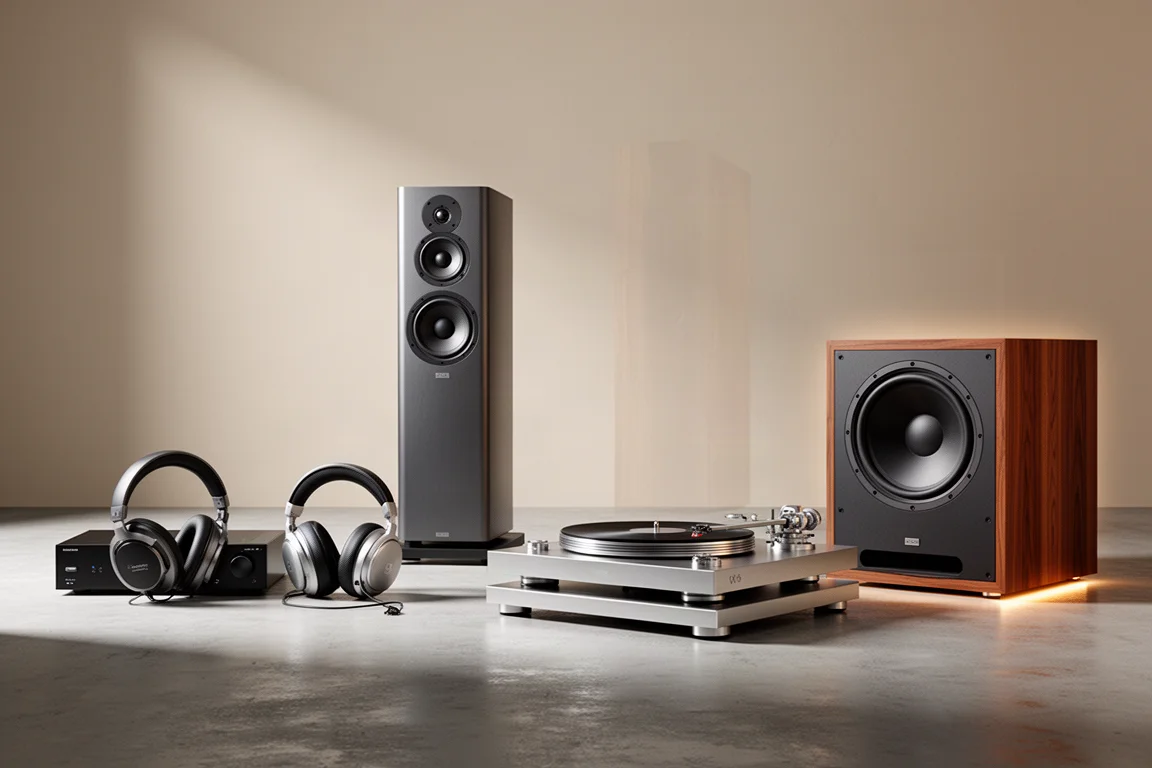
Some components earn their place in a system slowly. They are rarely the flashiest part of the chain, but after a few months they are the ones you stop thinking about, because everything simply works and sounds right. This roundup collects eleven products that fit that description across very different price points: a 13.4-channel AV processor, a pair of noise-cancelling headphones, several pairs of loudspeakers, an on-wall speaker family with a matching subwoofer, a large ported subwoofer, and a high-performance turntable.
The spread is deliberate. Someone building a dedicated theater room and someone upgrading a desk setup have almost nothing in common on paper, yet both benefit from the same discipline: buy the component that solves the specific problem in front of you, and avoid paying for capability you will never use.
Each section below covers what the product is, what it does particularly well, and where it makes the most sense. Prices appear where they were confirmed, and the final sections pull the picks together into a few practical buying paths.
Marantz AV20: A 13.4-Channel Processor With Room to Grow
The AV20 sits at the center of a modern multichannel system. It handles 13.4 channels at an MSRP of $6,000, and it borrows much of its design DNA from the AV10 above it in the range.
The most interesting part for anyone running multiple subwoofers is the set of four independent subwoofer outputs. Those let you pursue bass directionality across the room, or run a four-way mono split with independent delays and independent level control for each sub. Room correction is covered by Audyssey, which performs at its best when paired with the optional calibration microphone kit, and Dirac Art is available for an additional licensing fee.
Around that core, the AV20 is generously equipped: built-in HEOS streaming, high-grade digital-to-analog conversion, and assembly in the same Japanese factory that produces the brand’s flagship models. If you need more amplification, the Amp 20 and Amp 10 multichannel amplifiers complete the stack.
Bowers & Wilkins PX7 S3: Noise Cancelling Built for Travel
At $429, the PX7 S3 is the most affordable product in this roundup, and it is also one of the easiest to recommend. The noise cancelling is a clear step up from the previous generation, and sound quality improves alongside it thanks to upgraded drivers and revised DSP tuning.
The companion app provides a set of EQ options, so you can adjust the balance to taste rather than living with a single factory curve. Comfort matters just as much on a long flight, and the PX7 S3 gets the details right: clamping force that stays comfortable over hours and a weight that never becomes noticeable. It has held up through repeated air travel without causing ear fatigue.

Dali Epikore 9: A Four-Way Flagship Loudspeaker
The Epikore 9 is a $40,000-per-pair floorstander, and it is built like one. The driver complement is a four-way design: dual 8-inch bass drivers, a 6.5-inch midrange, a dome tweeter, and a planar ribbon tweeter that takes over at around 12 kHz.
That ribbon is the reason the Epikore 9 can be placed straight into the room rather than toed in toward the listening position. Dispersion is wide, the sweet spot is generous, and high-frequency coverage stays consistent as you move around. The payoff is a speaker that plays loud, reaches deep in the bass, and carries genuine high-fidelity character. Sensitivity is high enough that a modest amplifier will drive it competently, though the design rewards real power.
Dali Rubikore 8: The Accessible Dali Floorstander
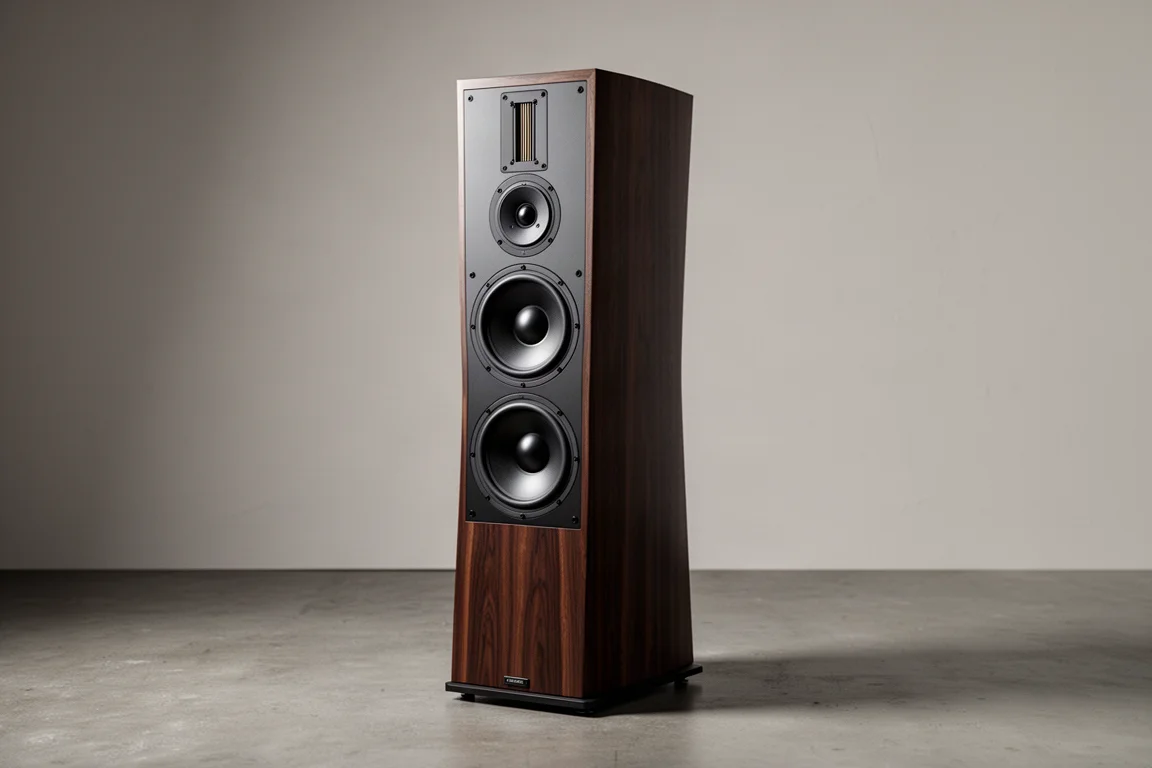
The Rubikore 8 carries much of the same character as the flagship Dali models for roughly $14,000 per pair, a figure that has drifted upward with tariffs. It keeps the wide-dispersion approach and the ribbon-tweeter high frequencies, so it also works well positioned straight ahead rather than angled inward.
What you get is a similar sound signature in a more affordable package, with a cabinet that looks as good as it sounds. For listeners who like what Dali does at the top of the range but cannot justify the flagship price, this is the natural landing point.
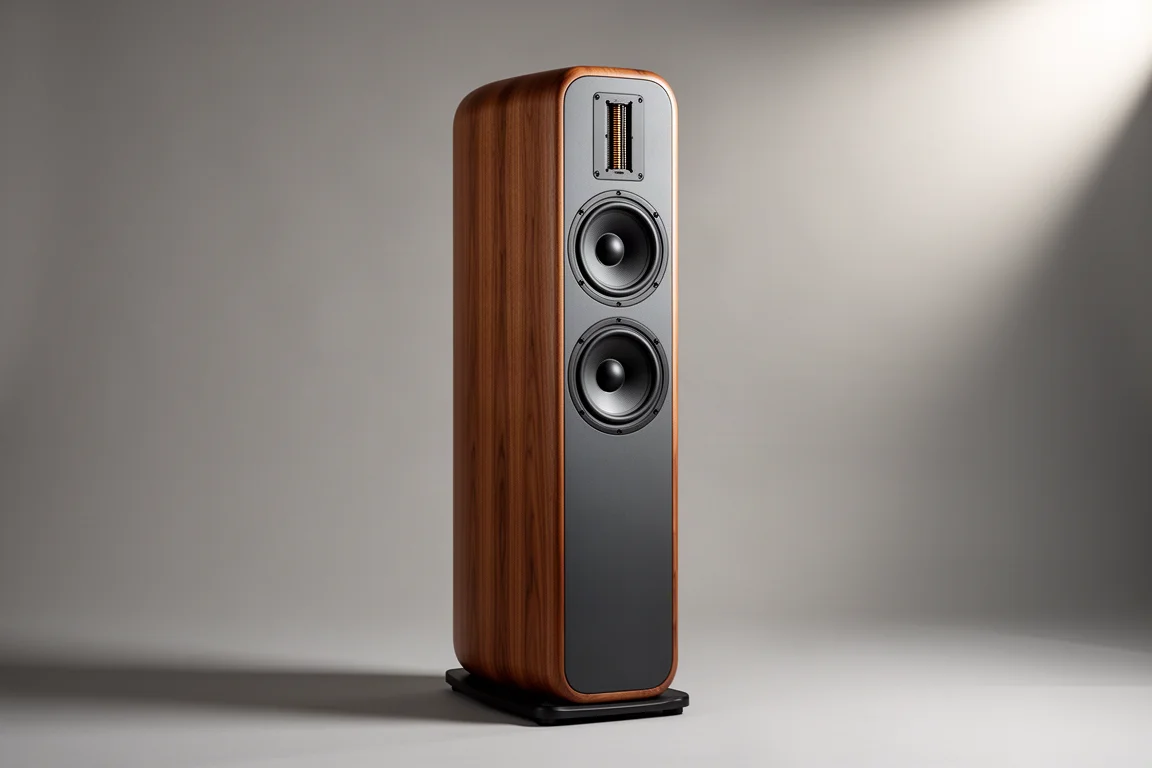
GoldenEar T44: A Powered Tower That Blends In
The T44 is a hybrid powered tower at $5,000 per pair, which means the bass section carries its own 250-watt amplifier rather than drawing that work from your receiver or integrated amp. The bass section pairs an oval bass driver with two force-cancelling passive radiators on the bottom, and above it sit a midrange and the company’s AMT tweeter.
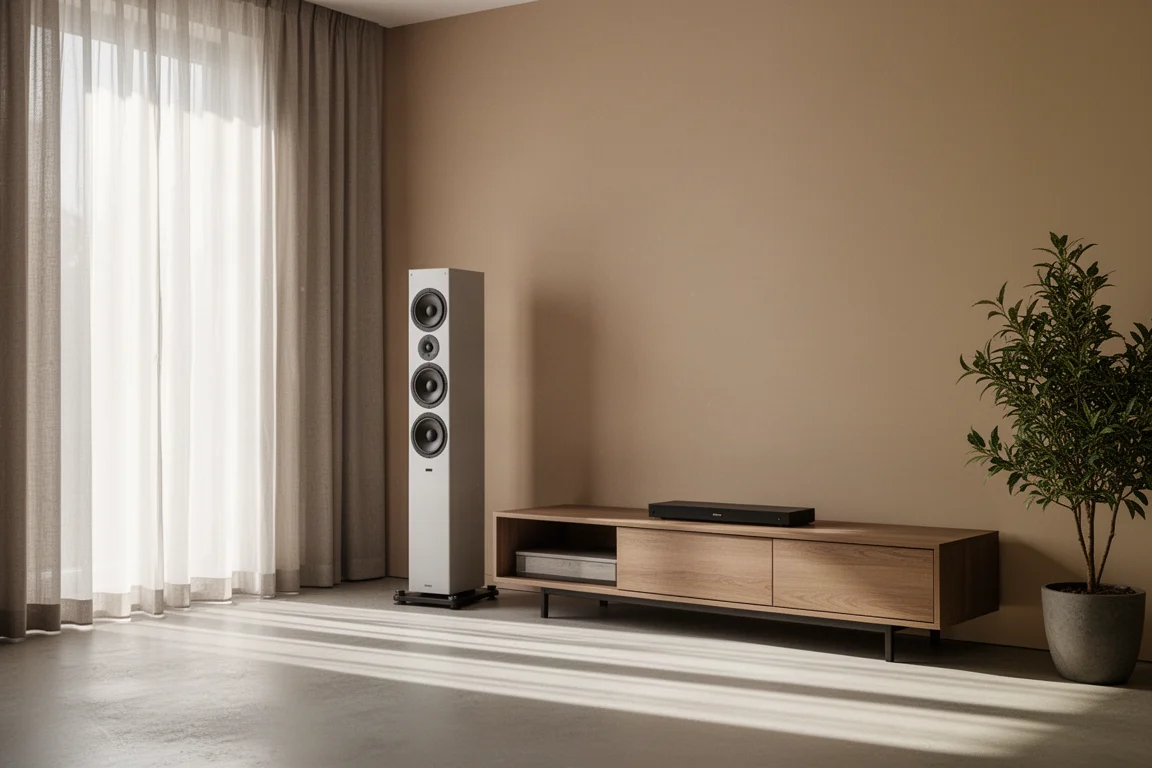
The result is a speaker that sounds considerably larger than its footprint suggests, with a cabinet that is genuinely easy to live with. The cherry finish and the slim, slightly aerodynamic profile help it settle into a room instead of dominating it. For listeners who need more output and headroom, the step-up T66 adds an MTM section on top, which doubles the midrange area and brings higher sensitivity, bigger bass drivers, and more low-frequency output. In a larger room, that is the version to consider.
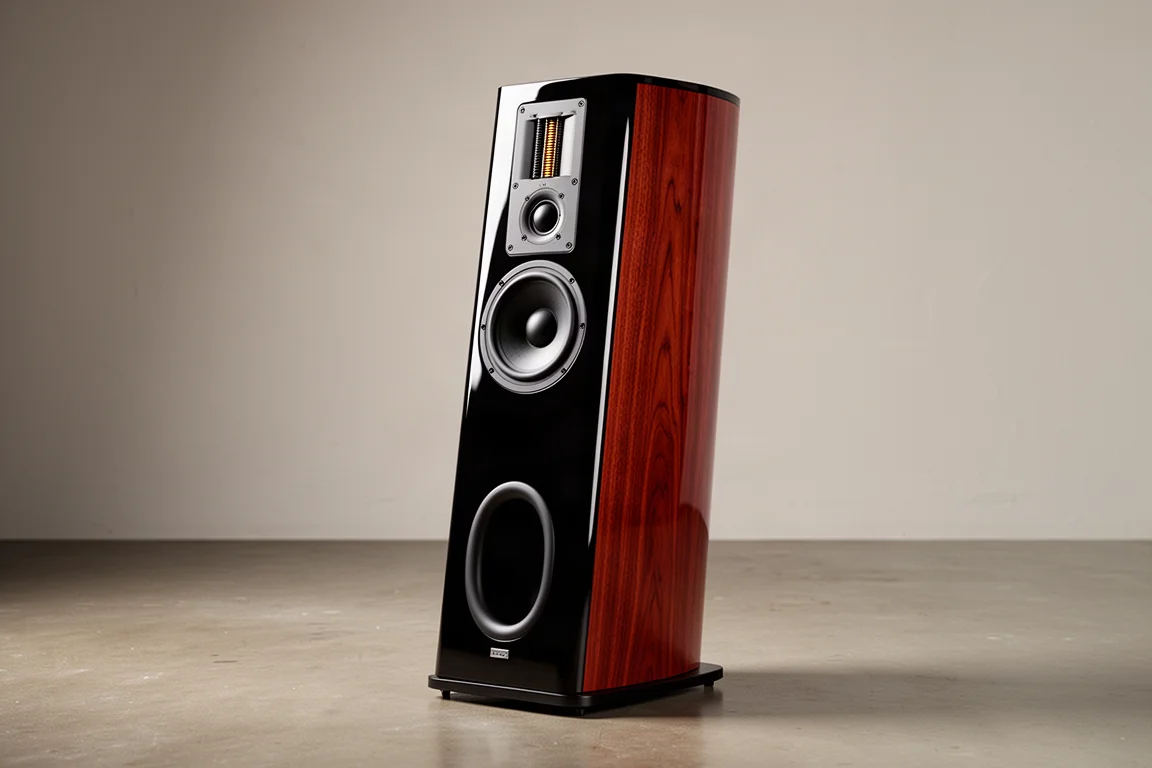
Yamaha NS-800A: A Bookshelf With Zylon Drivers
The NS-800A is priced at $2,500 each, and it is part of a newer generation of Yamaha loudspeakers built around Zylon driver material. Both the 6.5-inch bass driver and the 1-inch tweeter use it, in the same spirit as the NS-1000 models.
The cabinet work deserves as much attention as the drivers. The piano finish matches the quality the company brings to its instruments, and the internal bracing keeps the enclosure remarkably inert without making it excessively heavy. The result is a bookshelf speaker that behaves like a much larger design, and it stands as the strongest compact pick in this roundup.
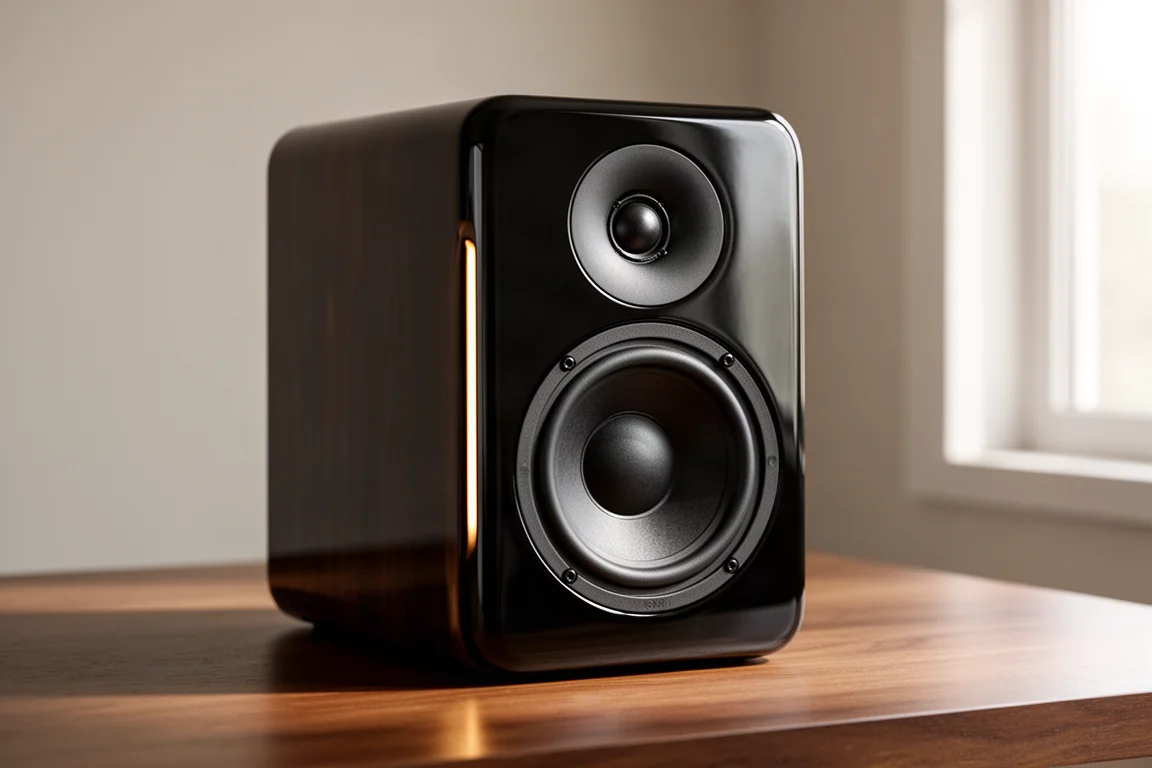
JTR Callisto 465: On-Wall Output Without the Bulk
The Callisto 465 is an on-wall speaker at $2,500 each, and it breaks the usual assumption that on-wall designs must look utilitarian. The cabinet is only 4.5 inches deep, with radiused edges and a birch finish over high-quality plywood construction that looks far better in person than the dimensions suggest.
Performance is the real story. Sensitivity is rated at 97 dB and maximum output at 123 dB, which means a modest Denon or Marantz receiver can drive these to theatrical levels. They also cross over cleanly to the matching 12-inch subwoofer, which is covered further down.
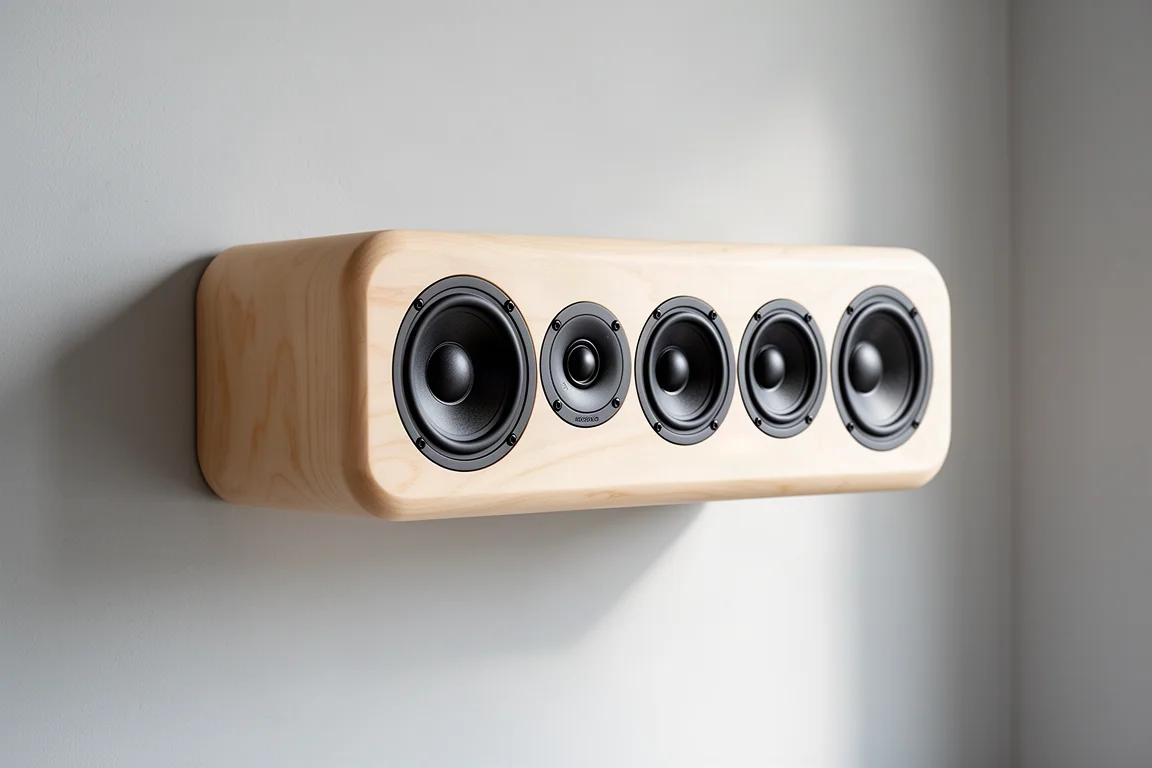
JTR Callisto 265: The Same On-Wall Approach
The Callisto 265 comes from the same on-wall family and shares its design language: a shallow radiused cabinet, plywood construction, and a birch finish that suits a living room rather than a dedicated theater. It also carries the family’s high sensitivity and high maximum output, so it can be driven to serious levels by ordinary amplification.
Used as a system with the matching subwoofer, it delivers the kind of dynamic range usually associated with much larger boxes while taking up almost no floor space. If the Callisto approach appeals but you want to weigh the options across the range, this model shares everything that makes the series distinctive.
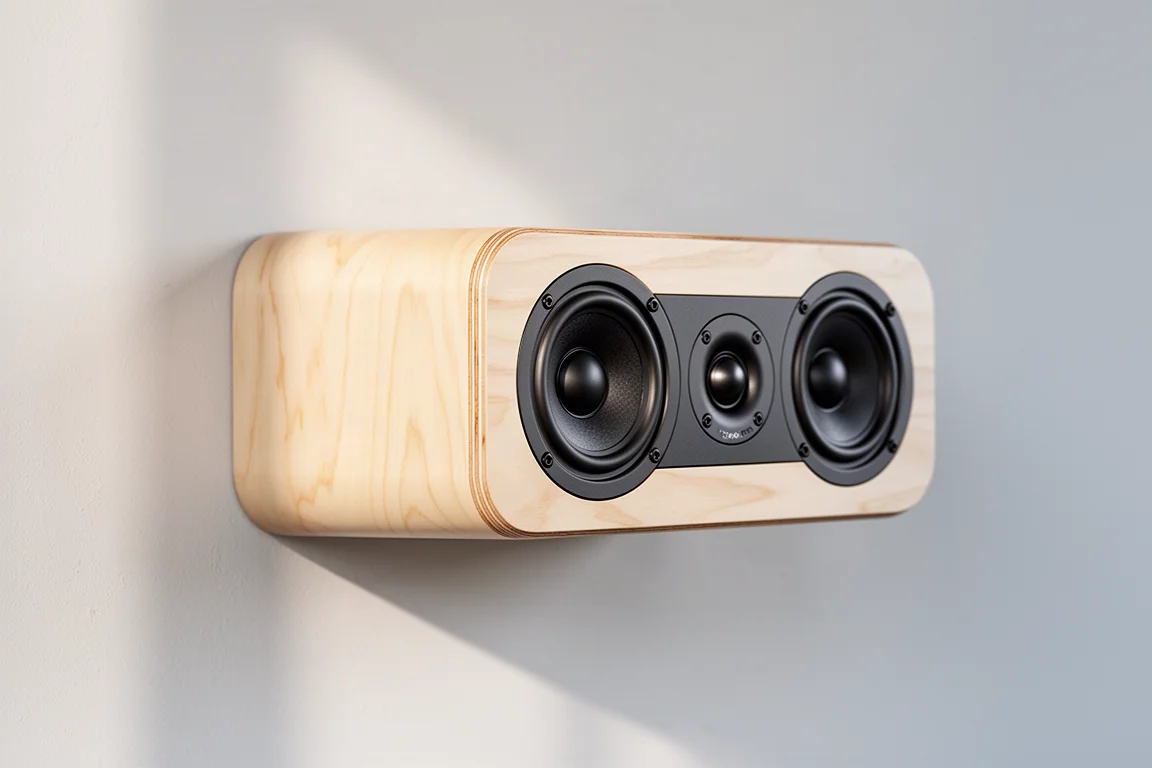
JTR Callisto 12: A Musical Subwoofer With a Serious Motor
At $3,700, the Callisto 12 is not the cheapest way to add bass, but the driver design explains the price. It descends from the same DNA as the company’s 18-inch driver, with 36 mm of excursion, a motor structure larger than the basket itself, and a motor depth of 9 inches. That is a serious piece of engineering in a compact cabinet.
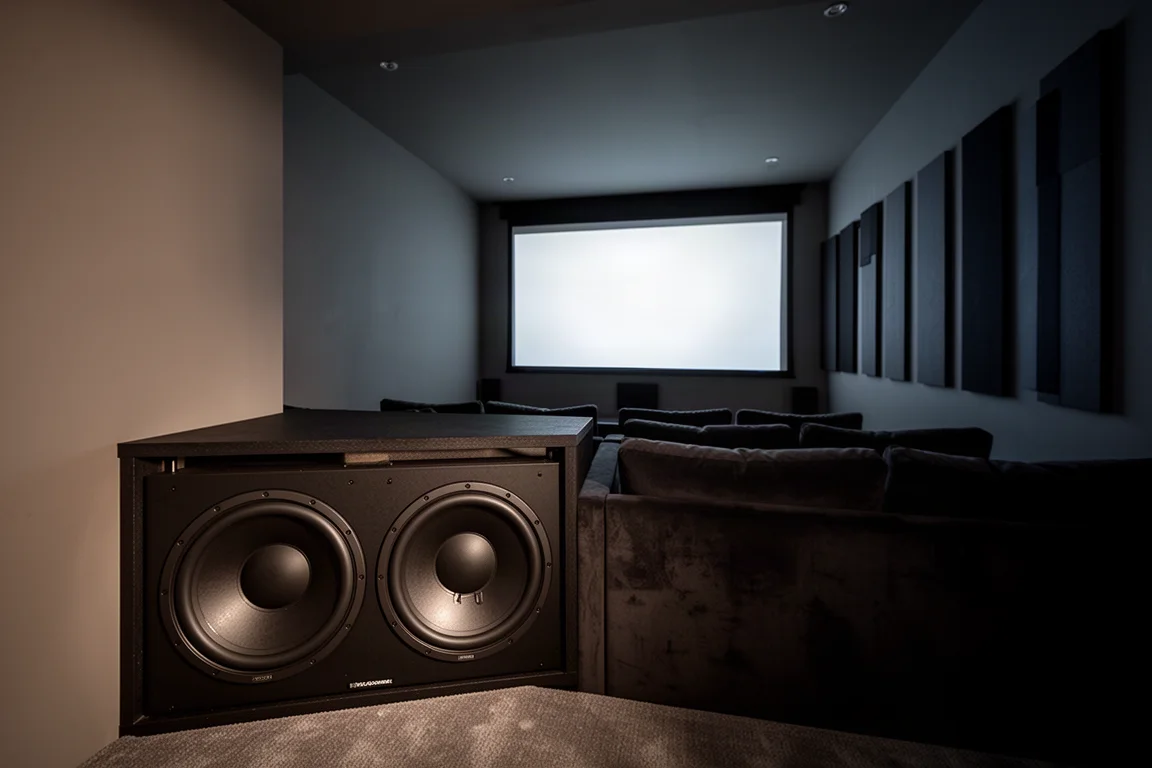
The payoff is a subwoofer that behaves musically rather than merely loudly. The driver has low inductance and a cone that is not heavy, so it stays usable up to 500 or 600 Hz if you want to cross it over high to the on-wall speakers. Because it is so linear, that higher crossover is practical, which increases the dynamic range of the whole system. A 2-kilowatt amplifier keeps the driver under control. Two of these paired with the on-wall speakers produce something that behaves like a full-range system, plays at reference levels and beyond, and still fits in a normal living room.
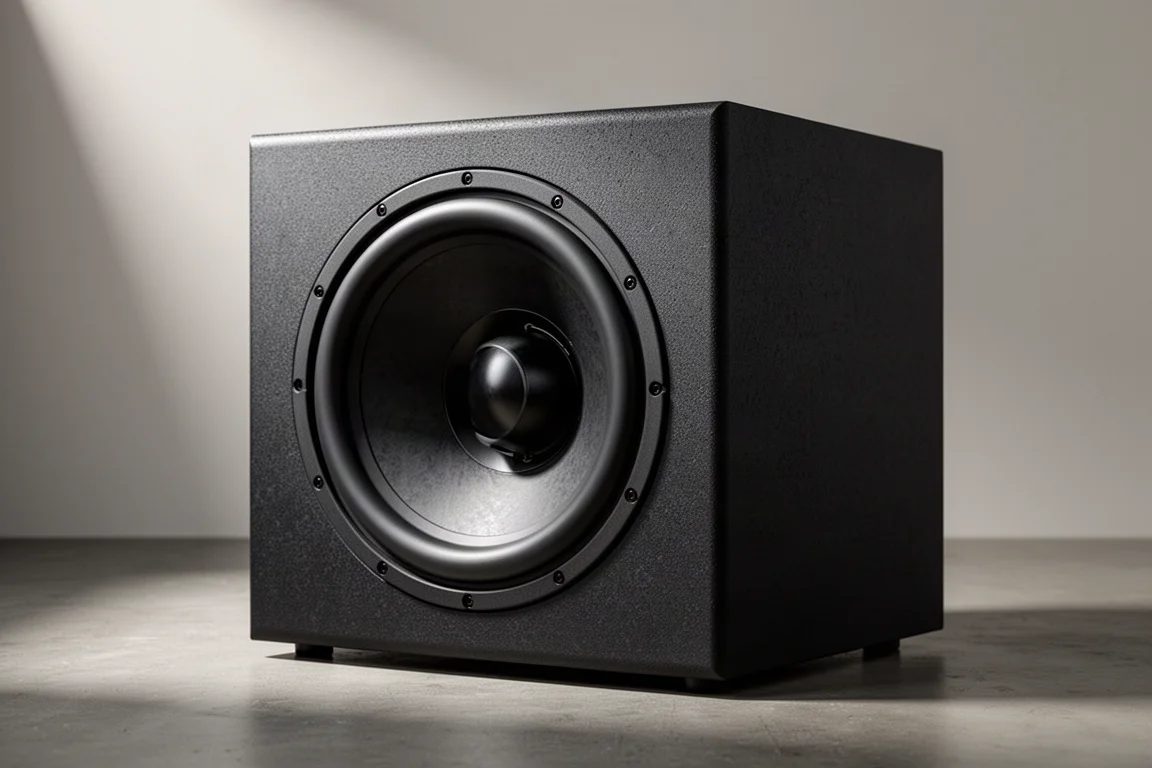
SVS PB17 Ultra: More Mid-Bass From a Big Ported Cabinet
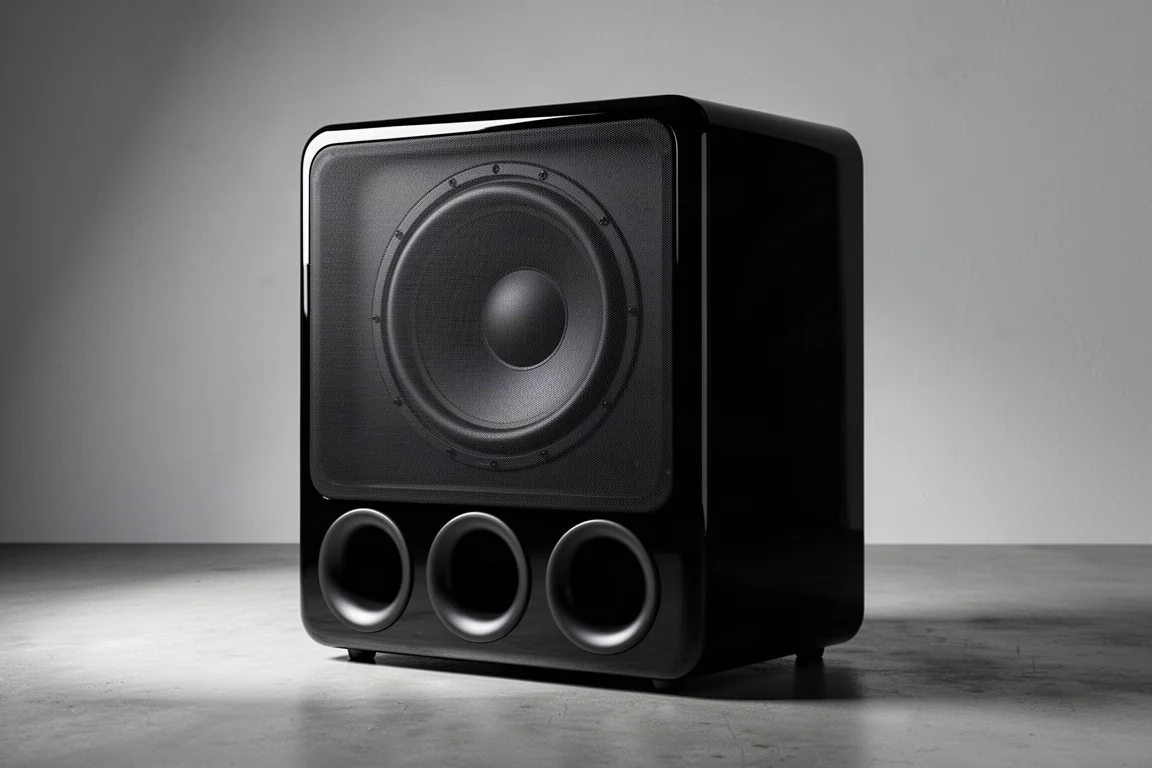
The PB17 Ultra takes the familiar SVS ported formula and pushes it further for around $3,000. Its redesigned 17-inch driver reaches roughly as deep as the 16-inch model it follows, but the significant change is in the mid-bass region, where the new design delivers substantially more output.
That matters in real rooms, where the 60 to 120 Hz range shapes how impactful a system feels. The cabinet is finished in piano gloss, and the built-in app includes parametric EQ so you can shape the response without external processing. A 60-day trial period makes it easier to test in your own room, which is the only place a subwoofer decision really counts.
Denon DP-3000NE: Isolation First
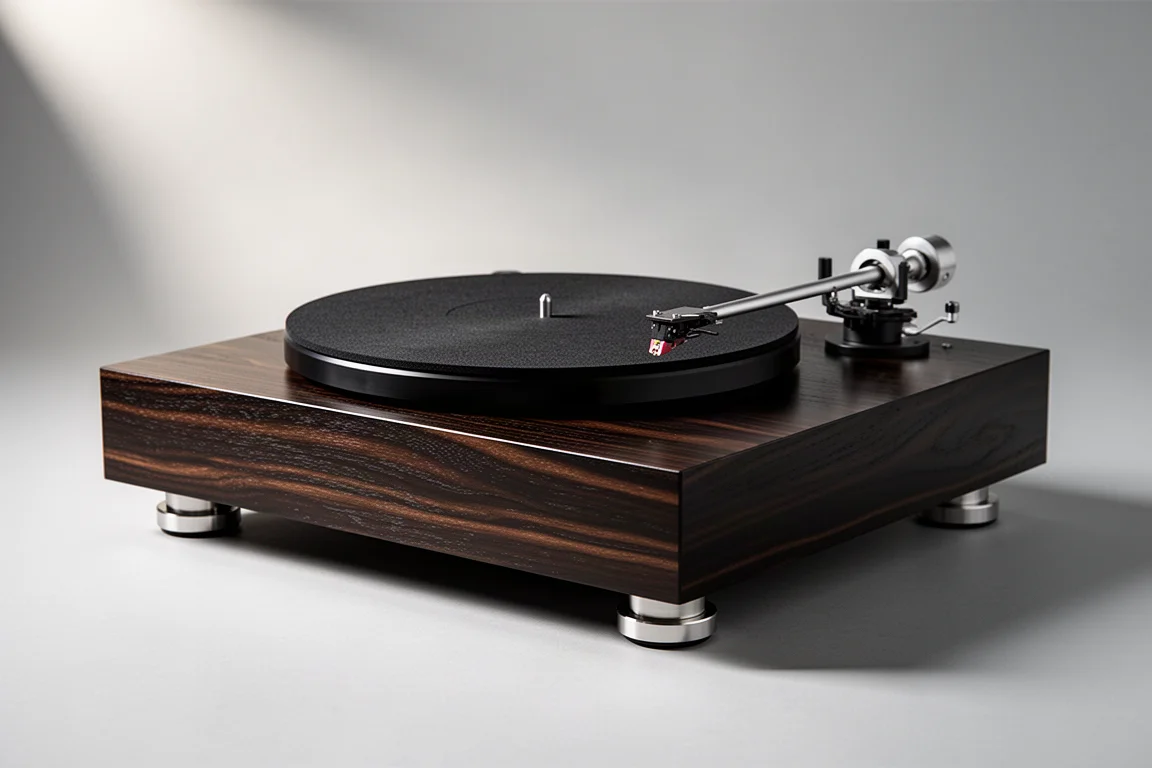
The DP-3000NE is a $2,800 turntable, and its strengths are the unglamorous ones that determine whether you actually enjoy records. Tracking is remarkably linear, speed is equally stable, and the platter isolation is excellent.
That last point deserves emphasis. In less isolated designs, vibration from the cabinet or a knock near the rack can translate into the sound or cause a record to skip, and the usual fix is an external isolation platform. The DP-3000NE handles that problem internally. It also ships with a capable cartridge, which keeps setup simple. For listeners who want high-performance analog without a shelf full of accessories, this is the best value in the category.
Buying Advice
Start with the room, then work backward. A processor decision is mostly about channel count and bass management: the AV20 covers 13.4 channels with four independent subwoofer outputs, which is the feature that separates it from simpler options at the price.
Loudspeaker choice depends on how much space you have and how much amplifier power you want to supply. The Dali models are highly sensitive and easy to drive, with wide dispersion that removes the need to angle them inward. The GoldenEar T44 takes the bass workload off your amplifier entirely, and the T66 is the version to look at if your room is large.
For rooms where floor space is the constraint, the JTR on-wall speakers and the Callisto 12 subwoofer offer a compact route to very high output, and the Callisto 12’s linearity lets it cross over high enough to take real pressure off the main speakers. If maximum low-frequency output from a single box is the priority, the SVS PB17 Ultra is the more conventional answer.
Two picks sit outside the speaker conversation. The Bowers & Wilkins PX7 S3 is the travel companion here, and the Denon DP-3000NE is the analog source, with isolation that makes it unusually easy to place on a normal rack.
Conclusion
These eleven products do not share a price bracket or a use case, but they share a quality that matters more than any single specification: each one solves a real problem cleanly. The AV20 gives a multichannel system room to grow, the PX7 S3 makes long trips more comfortable, the Dali and GoldenEar towers cover very different budgets with the same attention to dispersion and cabinet work, the Yamaha NS-800A proves a compact speaker can be built without compromise, the JTR on-wall system delivers theatrical output from almost no floor space, the SVS PB17 Ultra adds authority where it counts, and the Denon DP-3000NE handles the analog details that make vinyl enjoyable.
If you are buying one component, pick the one that addresses the weakest part of your current setup. If you are building a system from scratch, start with the speakers and the room, then choose the electronics that fit them.
Further reading
Related Reviews
Home Audio
Aperion Novus Tower and Center Review: Punchy Home Theater Sound With Real Refinement
A close look at the Aperion Novus tower and center speakers, from their layered paint finish and punchy bass to the 4-ohm load and what the price actually buys.
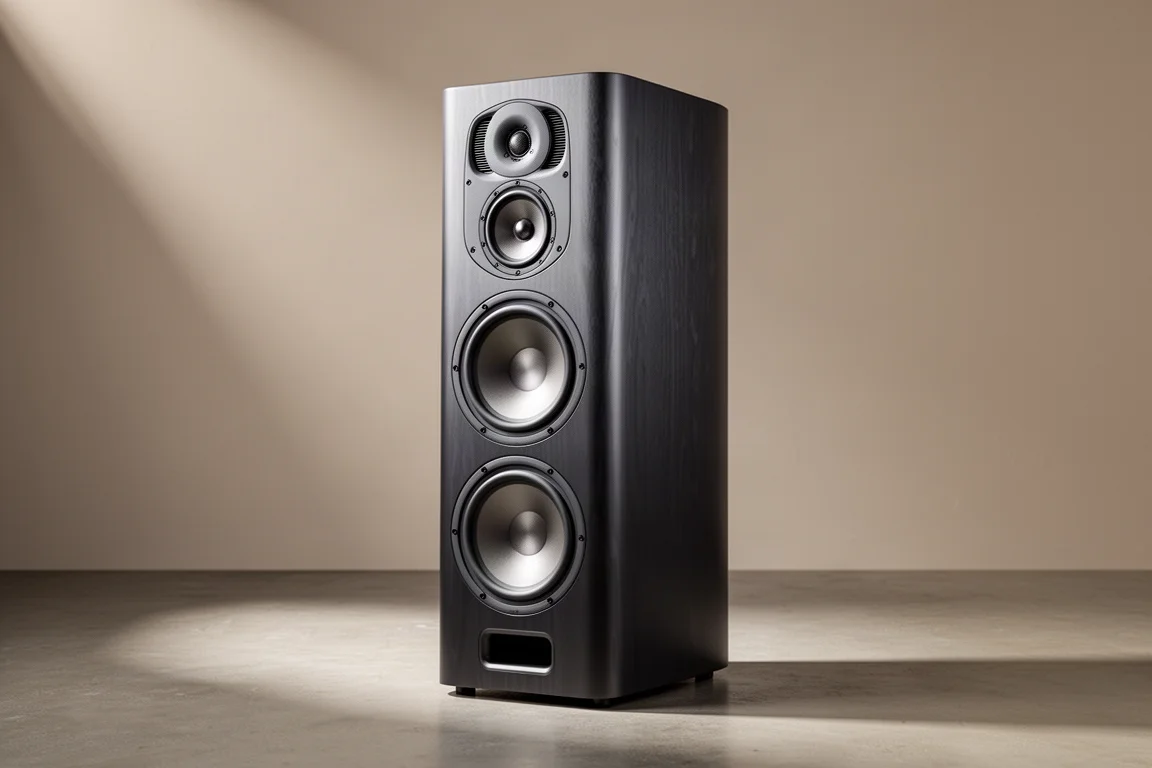
Home Audio
Arendal 1610 Tower Review: Flagship Dynamics in a Room-Friendly Tower
A compact floorstanding tower with three 8-inch aluminium woofers, a 5-inch carbon midrange, and the kind of bass heft usually reserved for much larger speakers.
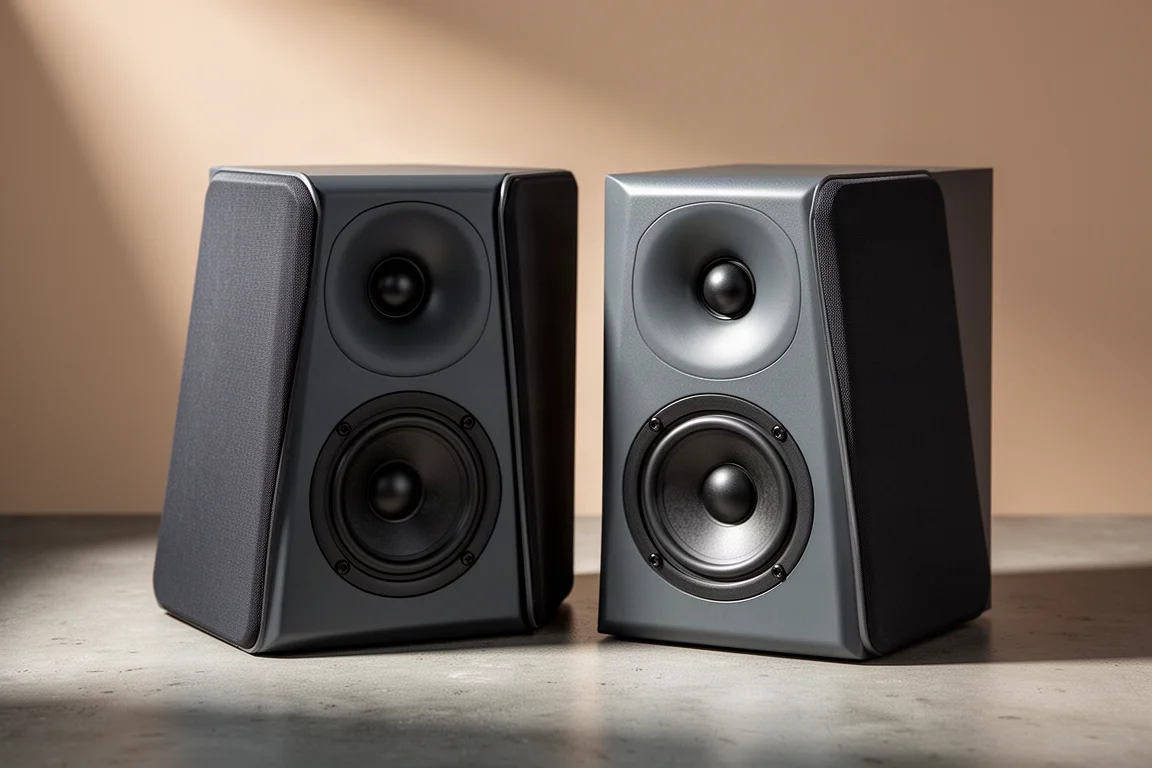
Home Audio
Arendal 1723 S THX Review: A Reference Speaker Built Like a Tank
A practical look at the Arendal 1723 S THX, a sealed, THX-certified speaker with exceptional build quality, a very flat top end, and a midrange that responds beautifully to EQ.