Hi-Fi Amplifiers
Best Amplifiers of 2023: Eight Standouts From Budget to High-End
Eight amplifiers that stood out for sound, build, and value, from a £99 Class D bargain to high-end Japanese and British separates, with guidance on matching each one to your speakers and room.
Introduction
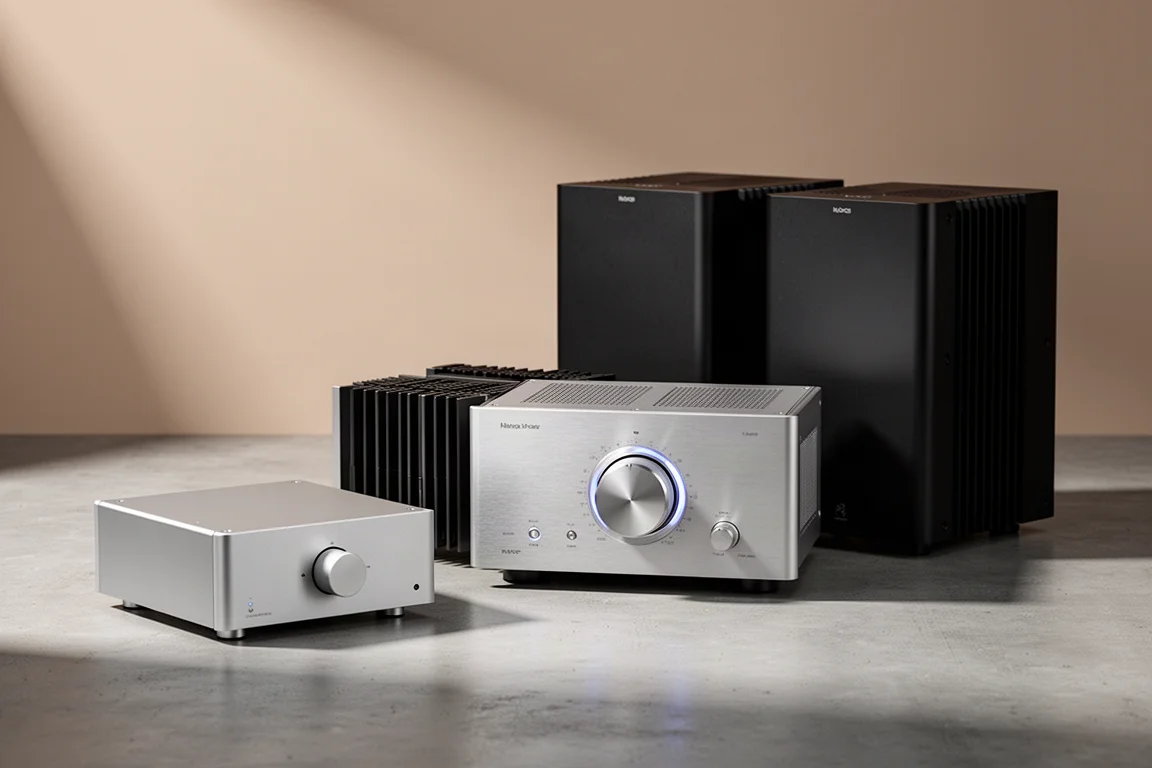
Amplifier design splits in more directions than almost any other part of a hi-fi system, and 2023 made that clear. The eight models in this roundup run from a £99 all-metal Class D amplifier with a single input to a Japanese integrated priced just under £5,000, plus a British passive preamplifier and monoblock pairing that gives far more expensive separates a serious challenge.
Other designs from the same period take different routes again. The retro-styled Yamaha A-S2200, the all-in-one Marantz Model 40n, and the More Amps Angel preamplifier and Angel 4 power amplifier each answer a slightly different question, and they are worth exploring if your priorities differ from the ones covered below.
What separates the models here is a clear sense of purpose. Each is honest about what it does well and where it asks for a compromise, whether that is power output, input count, heat, or bass weight. The sections that follow explain what each amplifier offers, who it suits, and what to check before buying.
How to Choose an Amplifier That Fits Your System
Power ratings are the least useful place to start. A 25W Class A design can be more satisfying than a 150W amplifier if your speakers are efficient and your room is small, while a high-current model with a substantial power supply will cope better with demanding speakers in a larger space.
Connectivity matters just as much. If you plan to run a turntable, check whether a phono stage is fitted or budget for an external one. If your sources are a phone, laptop, or streamer, an internal DAC or a single line-level input may be all you need. Digital inputs vary widely between models, so confirm the exact mix of optical, coaxial, USB, and Bluetooth before deciding.
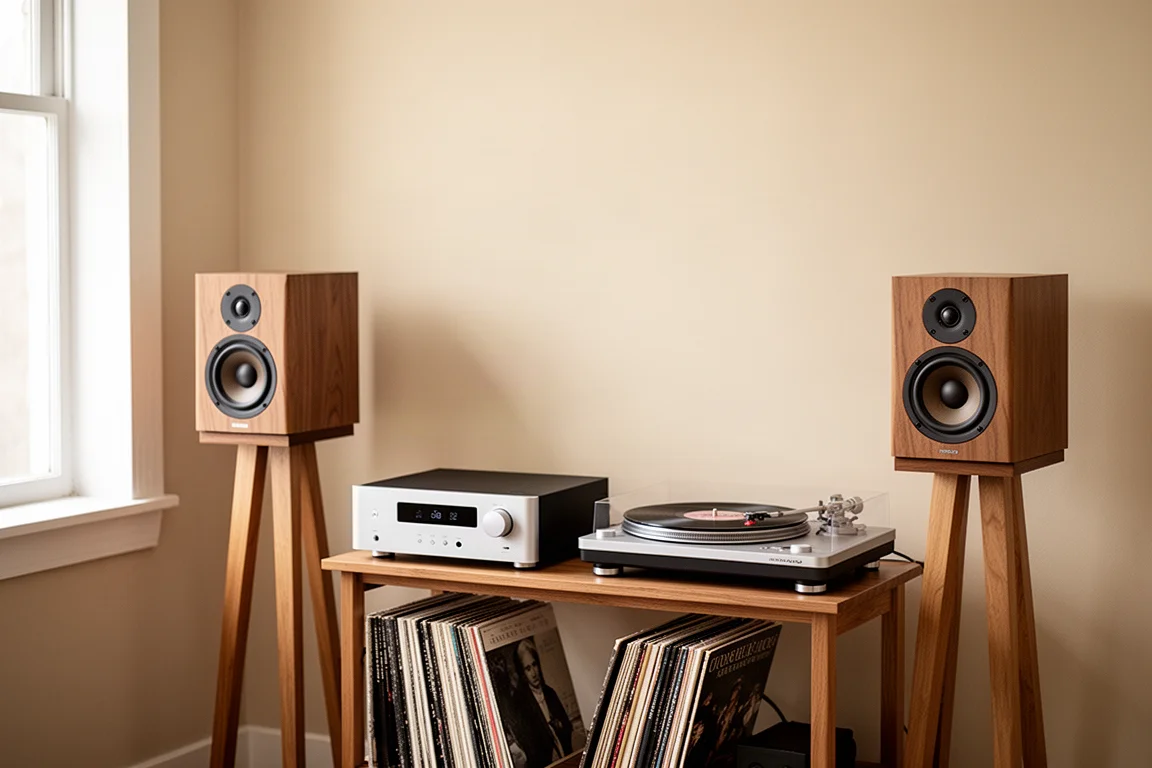
Then consider how you listen. Nearfield listening at a desk, long sessions at low volume, and loud playback in a large room each reward a different kind of amplifier. The safest approach is to hear a candidate with your own speakers where possible, and to buy from a seller with a straightforward return policy if it is not.
Best Budget Pick: Fosi Audio V3
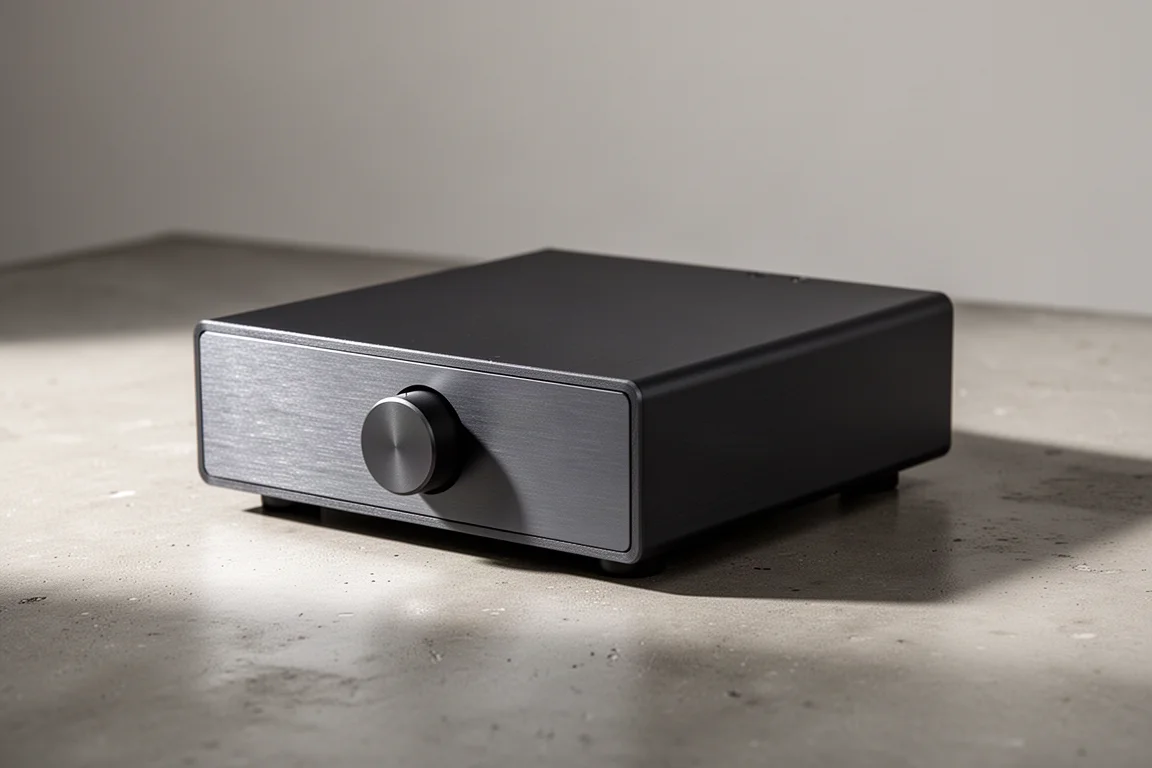
The Fosi Audio V3 costs £99 and makes a persuasive case that a very small outlay can still buy a genuinely musical amplifier. The enclosure is all metal, including the front fascia and the volume control, and the layout is as minimal as it gets: one RCA input on the back, a 3.5mm pre-out for bi-amping or a powered subwoofer, and a set of speaker binding posts.
Inside the case, two Texas Instruments TPA3255 Class D modules sit under a heatsink, supported by German WIMA and Japanese NCC and Elna capacitors. The published rating claims 300W per channel, but the realistic use case is a small room with easy-to-drive speakers. The optional 48V 5A power supply, which adds around £30, is worth taking.
Given a suitable partner, the V3 sounds surprisingly detailed and neutral with solid bass, and it avoids the harsh, thin character of inexpensive Class D amplifiers from years past. It was the pick for the best amplifier under £1,000 in this roundup.
Best Sub-£1,000 All-Rounder: Cambridge Audio CXA61
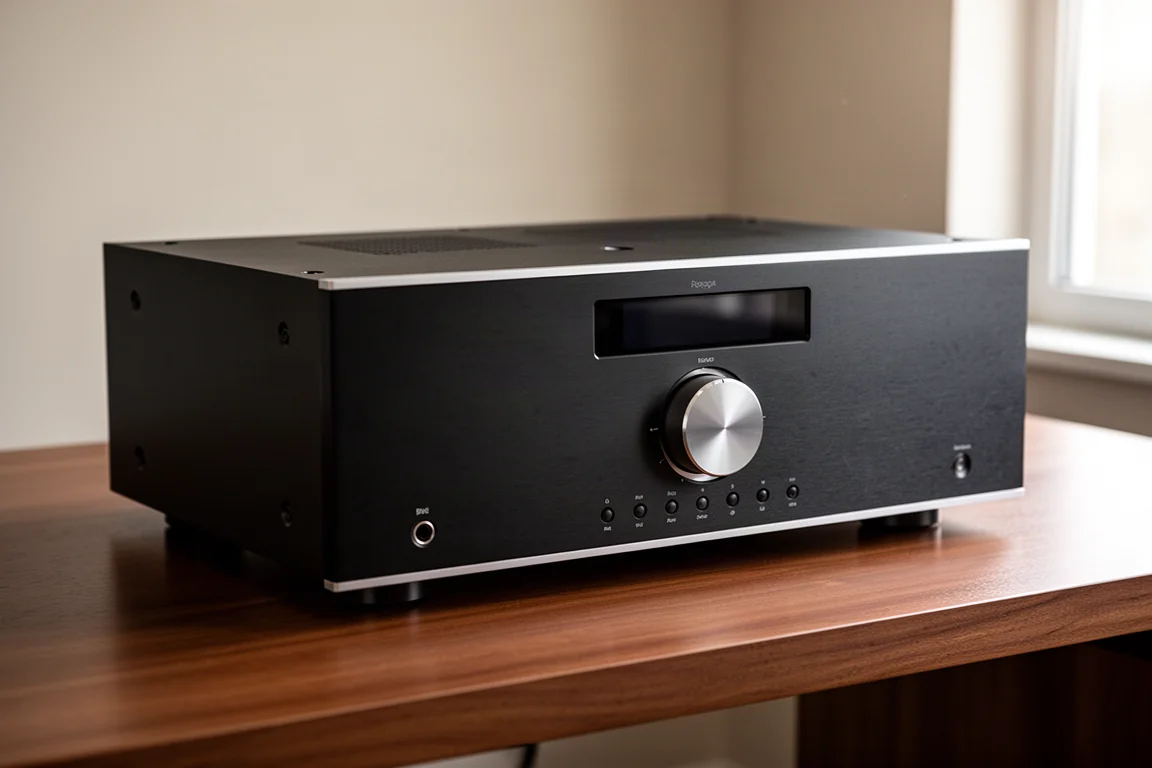
At £699 in the UK, and regularly discounted below that, the Cambridge Audio CXA61 is the more affordable route into the brand. It delivers 60W per channel into 8 ohms and 90W per channel into 4 ohms, roughly double the power of the superb AXA35.
Connectivity is generous for the money. An ESS Sabre 9010 K2M based DAC handles Bluetooth, USB, coaxial, and two optical inputs, while four analogue RCA inputs, pre-outs, a subwoofer output, and switchable A/B speaker terminals cover the rest.
The character is smooth and warm, with less coloration and greater resolution than the AXA35, and the internal DAC holds its own against decent external sources feeding the analogue inputs. Bass is respectable, though some alternatives at this price do better, and speakers that are hard to drive are best avoided. The midrange and treble are the real draw: crisp transients, a full-bodied sound, and a top end that stays extended and refined. It sits alongside the entry Audiolab models as one of the strongest amplifiers at its price, with the Audiolab 6000A trading some of the CXA61’s warmth for a little more detail and better bass control.
Best Around £1,000 With a Built-In DAC: Audiolab 7000A
The Audiolab 7000A costs £1,099, which is £450 more than the 6000A. Externally the two are close, and the internal architecture follows a similar path, but the 7000A benefits from a series of subtle refinements and an uprated power supply that lifts output from 50W to 70W per channel. The DAC moves from the ESS Sabre 9018 K2M to a newer ESS 9038 Q2M.
The result keeps the Audiolab house sound: class-leading clarity, firm control, and a tonality that sits on the dry and analytical side of neutral. This is a precise, articulate amplifier rather than a rich one, and the analogue section deserves as much credit as the digital side. If you want an amplifier around £1,000 to use with an internal DAC, it is hard to do much better, even though the cheaper model in the range offers slightly stronger value.
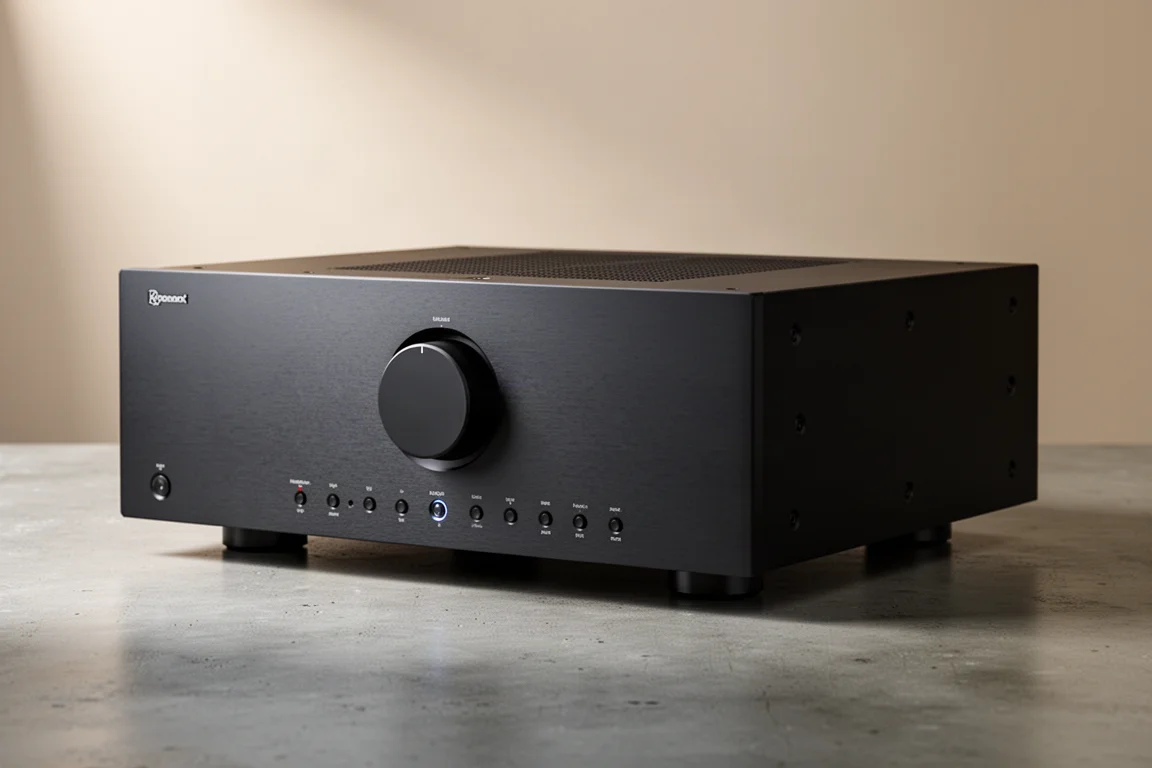
Best Class A Integrated: Musical Fidelity A1
The Musical Fidelity A1 returns at £1,400 as a close homage to the original Tim de Paravicini design. It runs in Class A and produces 25W per channel into 8 ohms. Components have been updated and upgraded, but the circuit architecture and industrial design stay essentially the same. A phono stage supporting both moving magnet and moving coil cartridges is now included, something the original lacked, alongside four RCA inputs, a tape loop, and pre-outs.
Done properly, Class A has a character of its own, and this amplifier is done properly. The midrange is smooth and harmonically saturated, the top end is sweet, and information retrieval is very good. It is easy to listen to for hours without fatigue.
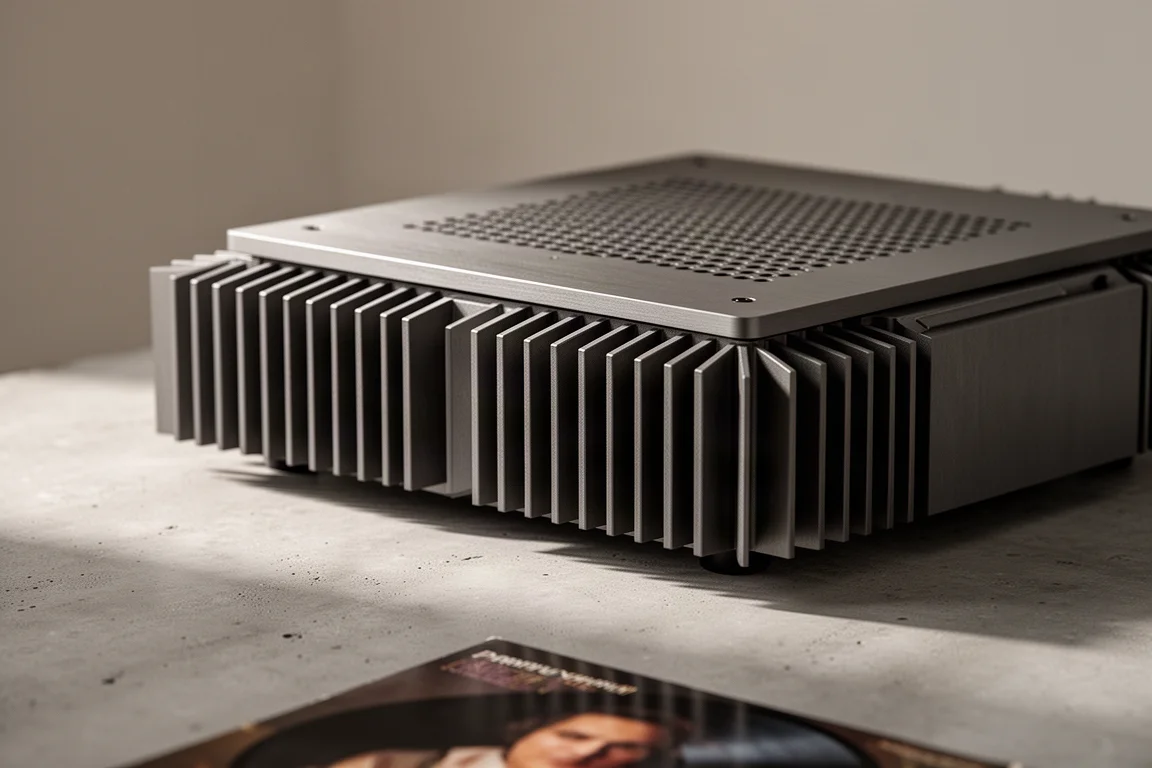
Two practical points come with the design. It runs hot, so it needs ventilation, and 25W per channel will not drive the most demanding speakers or reach volume levels that rattle the windows. For many listeners in many rooms, the quality of the power supply inside means that will not matter. It was the standout amplifier between £1,000 and £3,000 in this roundup.
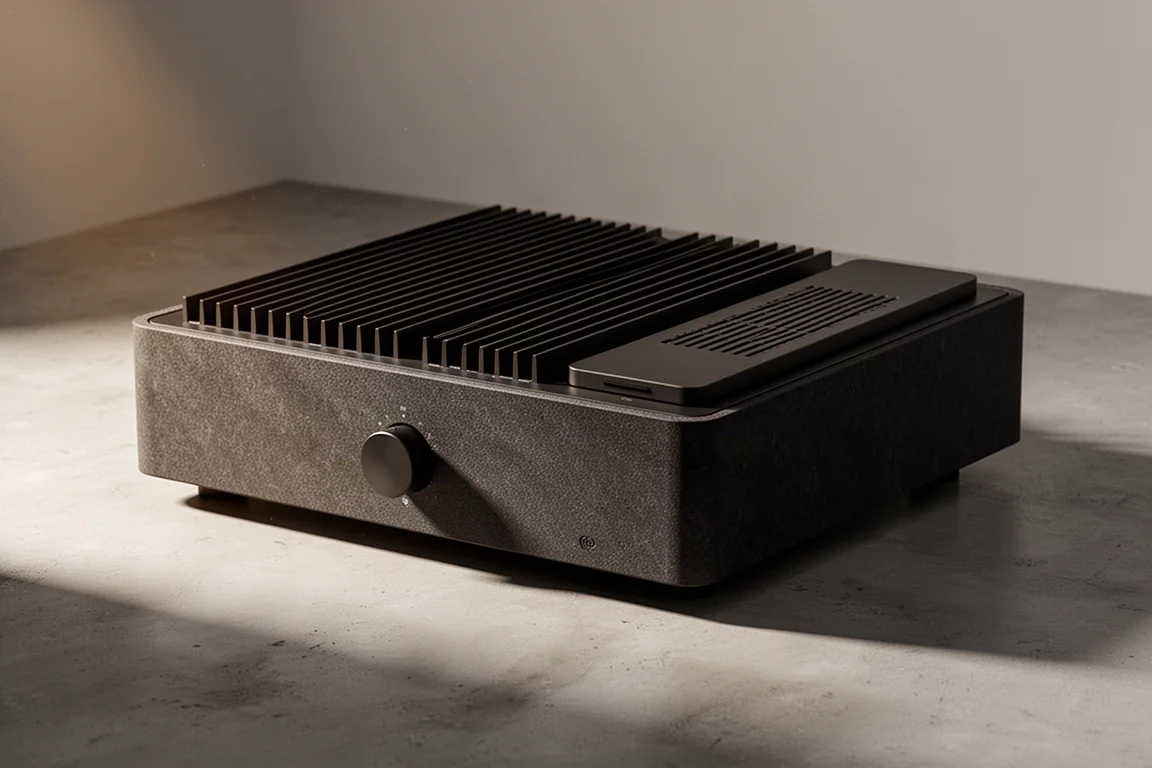
Best High-Power Integrated: Atoll IN300
The Atoll IN300 sells for just under £3,000 and takes a different approach: 150W per channel into 8 ohms, rising to 260W into 4 ohms from a dual mono design with two 440VA transformers and 81,000 microfarads of power supply filter capacitance.
Connectivity covers four RCA analogue inputs, a tape loop, a bypass input that feeds the power amplifier directly, two sets of pre-outs, and a balanced XLR input. Digital duties fall to an AKM AK4490 based DAC with two coaxial, two optical, and a USB input.
The architecture and the power supply explain the IN300’s greatest strength, which is scale and dynamics, backed by very good detail retrieval and wrapped in warm tonality. It is not as rich and full sounding as the Sugden A21 Signature, and it does not have the transient snap of the Hegel H190, but for listeners who want a fuller presentation it is a worthy alternative.
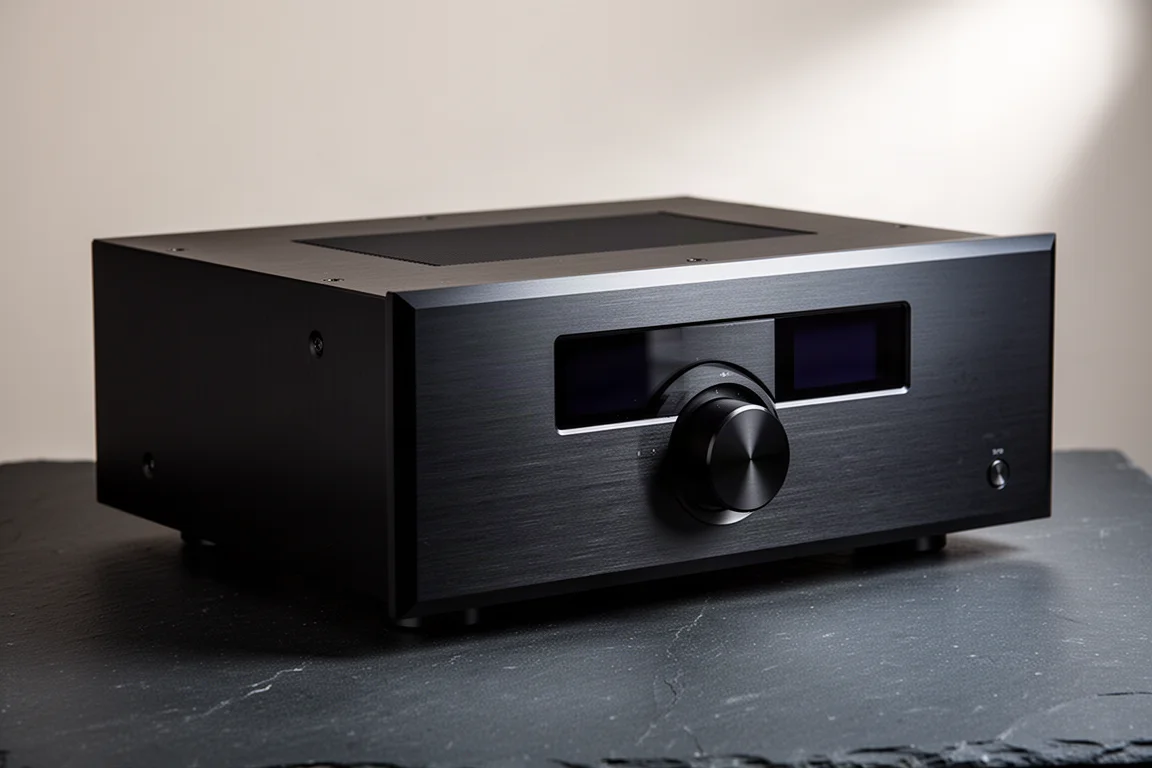
Best Traditional High-End Integrated: Accuphase E-280
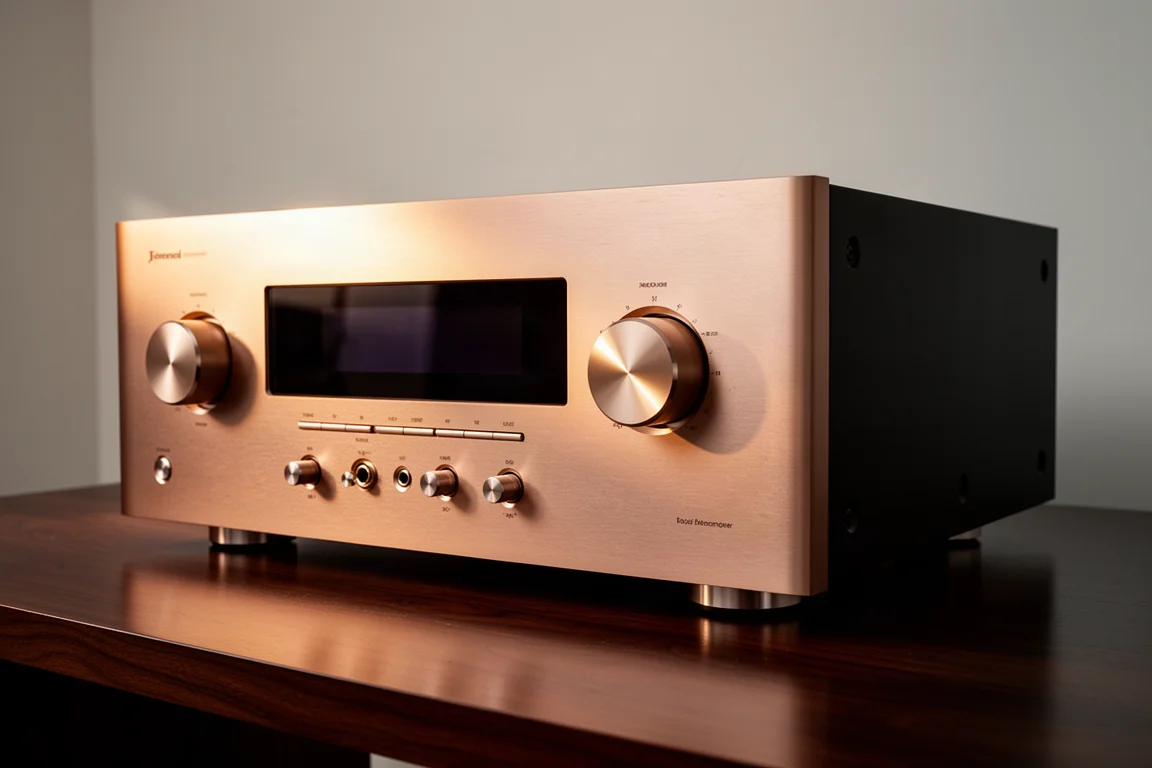
The Accuphase E-280 arrives at just under £5,000 and produces 90W per channel into 8 ohms. In use it is the finest traditional amplifier to handle of those covered here: the finish of the front fascia, the resistance of the input selector, and the smoothness of the volume dial all feel deliberate and precise.
The rear panel offers an array of RCA inputs, tape loops, and pre-outs, with a balanced XLR input, A and B sets of speaker binding posts, and slots on the left for optional DAC and phono boards. The name is short for accurate phase, and that philosophy shapes the low-feedback circuitry, the sophisticated volume control, and the overall design architecture.
The sound follows suit. Images are wide and deep, with the performance securely located, and there is excellent resolution and refinement through the midrange and treble. The bass is a little woolly for a 90W amplifier, and there is a touch of leanness in the midrange. Extra body and control are exactly what the brand is known for further up the range.
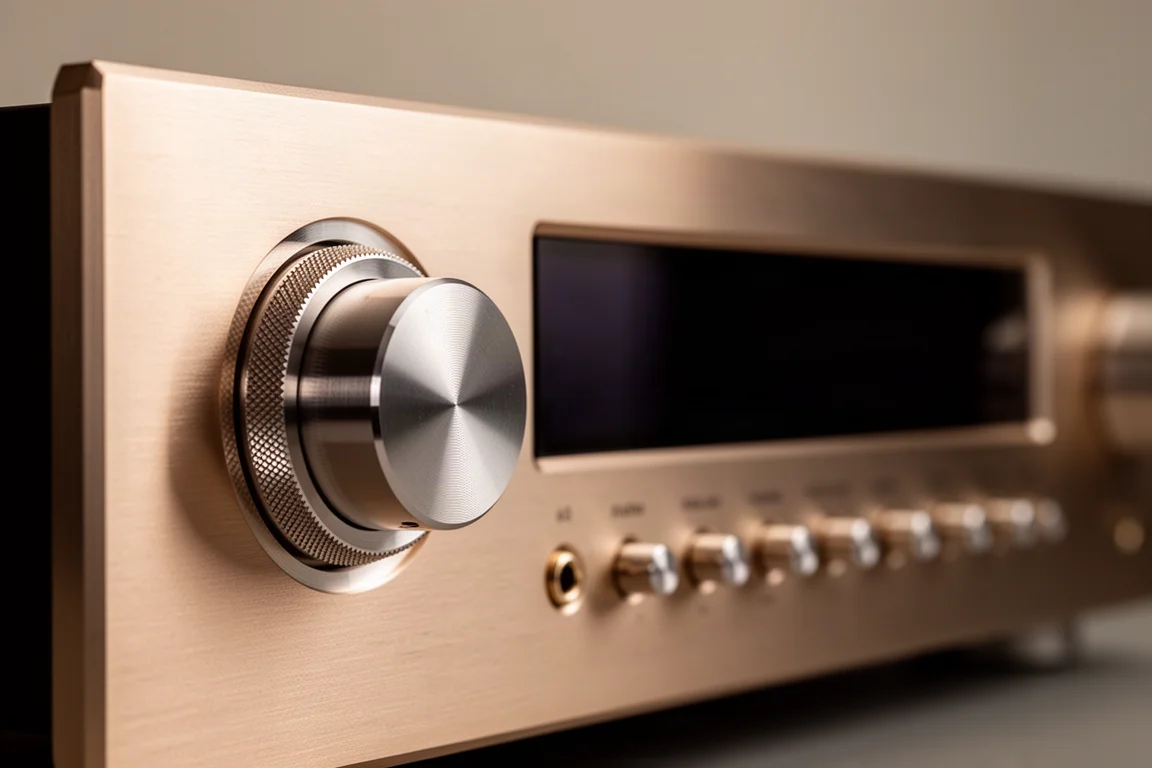
That said, the E-280’s build quality and control feel set it apart from almost everything else at the price, and the optional boards mean the amplifier can grow with a system rather than being replaced by it.
Best Passive Preamplifier: NVA P50 SA
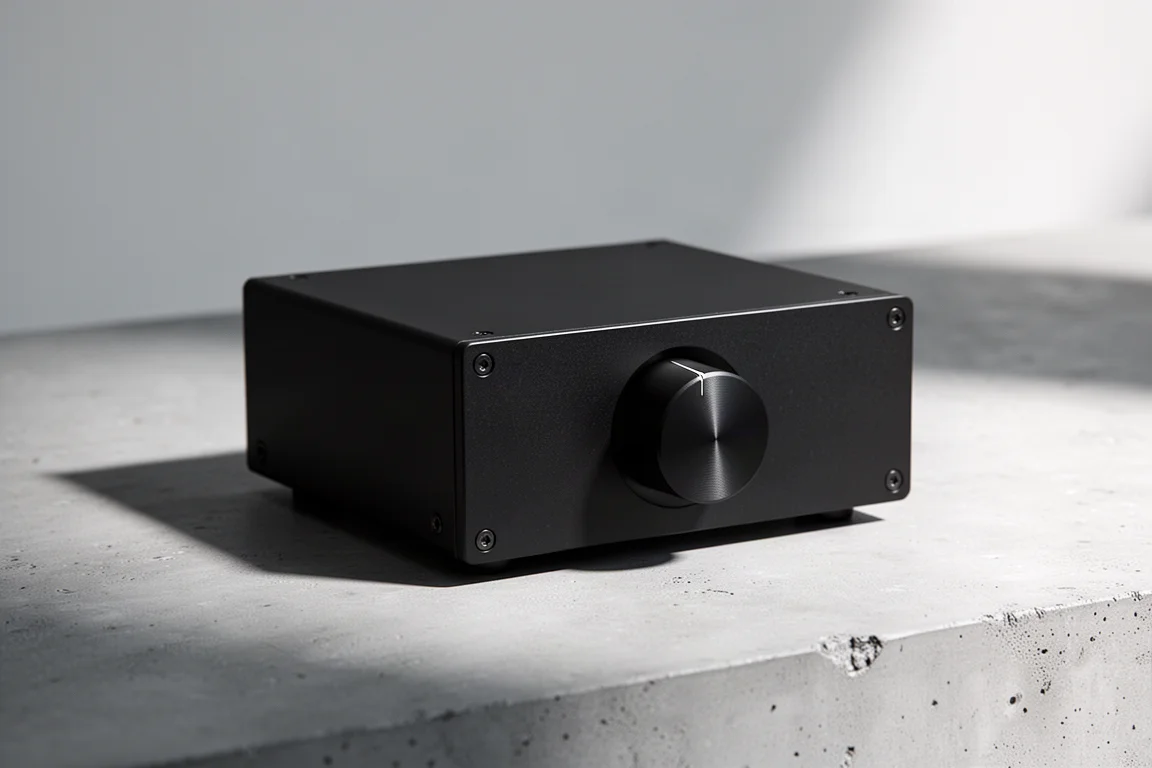
NVA is a small British manufacturer that takes its design philosophy to the extreme: pull out everything that is not needed, then make sure what remains is as good as it can possibly be. The P50 passive preamplifier costs £475, and the P50 SA version replaces the Alps volume pot with a stepped attenuator built from Audio Note precision resistors, raising the price to £925.
The P50 SA is a separates component rather than a single-box solution, which makes it a different proposition from the integrated amplifiers above. It can be switched between floating and fixed ground if ground loop problems appear, and it offers four RCA inputs, a tape loop, a home theatre bypass, single-ended RCA outputs, and balanced XLR outputs.
Paired with the matching power amplifiers, it produces a sound that is exquisitely detailed and natural in tone, with a beautifully layered and three-dimensional soundstage.
Best Monoblock Power Amplifiers: NVA M600
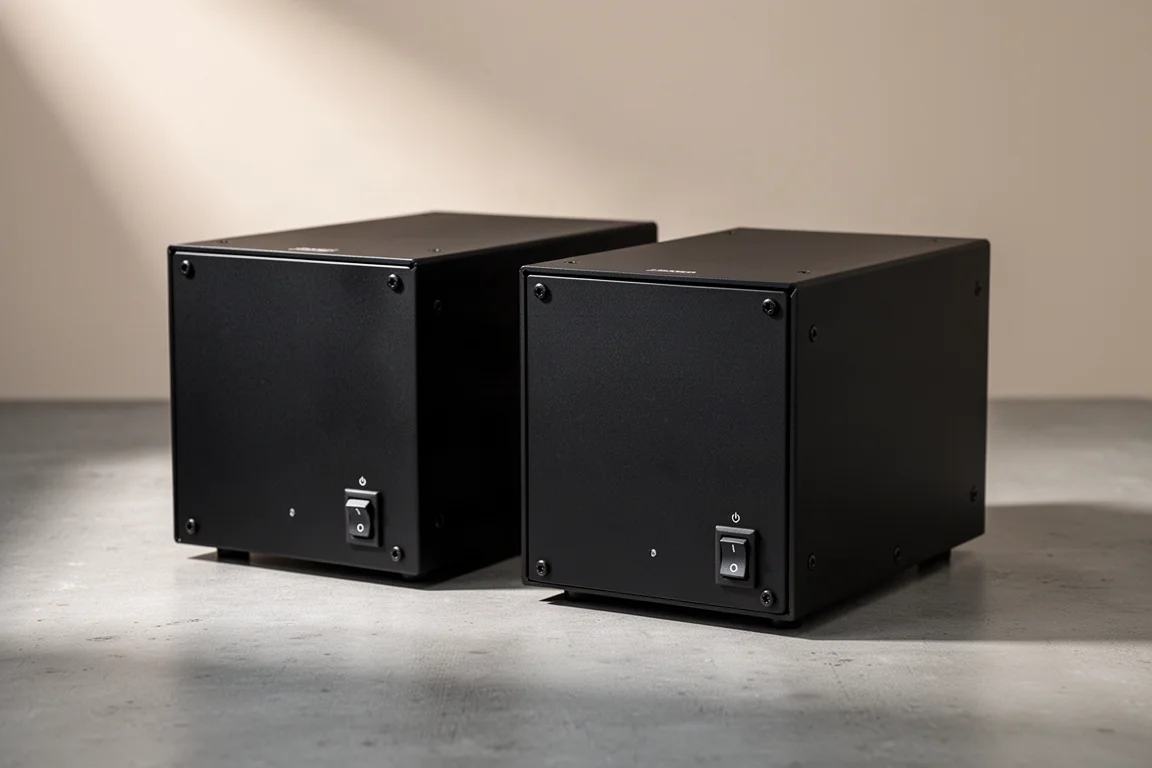
The NVA M600 monoblocks cost £3,000 for the pair and deliver 80W per channel into 8 ohms. They are not powerhouses, but each monoblock houses two 150VA transformers to stiffen the power supply. The rear panels are deliberately simple, with single-ended RCA connections only.
Paired with the P50 SA, the result is the same character described above: exquisite detail, natural tone, and a beautifully layered soundstage. Compared with the considerably more expensive More Amps Angel preamplifier and Angel 4 power amplifier, the More Amps will play louder and hold slightly better bass control, but beyond that there is not much between them. The NVA pairing offers around 90% of that performance for roughly half the price.
The trade-off is dynamics. The combination is a little polite, most likely a consequence of the passive preamplifier, so listeners who prize rhythmic drive and a touch of extra warmth may notice the difference. Even so, the value on offer is exceptional, and the P50 SA with the M600 monoblocks was the pick above £3,000 in this roundup.
Matching an Amplifier to Your Speakers and Room
The amplifier is only half of the equation, and the speaker is usually the harder half. Efficient, easy-to-drive speakers open the door to lower-powered designs, including the Class A Musical Fidelity A1 and the compact Fosi Audio V3. Difficult loads with low impedance and awkward phase angles reward an amplifier with a substantial power supply, which is where the Atoll IN300 and its dual mono layout make sense.
Room size shapes the decision as much as the speakers do. A nearfield desktop setup asks far less of an amplifier than a large living room played at realistic levels, and a small room with modest speakers will rarely benefit from a very powerful amplifier.
Source planning matters too. A turntable needs a phono stage, whether built in as on the Musical Fidelity A1 or added as an optional board on the Accuphase E-280. A single digital source can justify a minimalist amplifier with one input, while a mixed system of streamer, disc player, and television benefits from the broader input count of the Cambridge Audio CXA61 or the Audiolab 7000A.
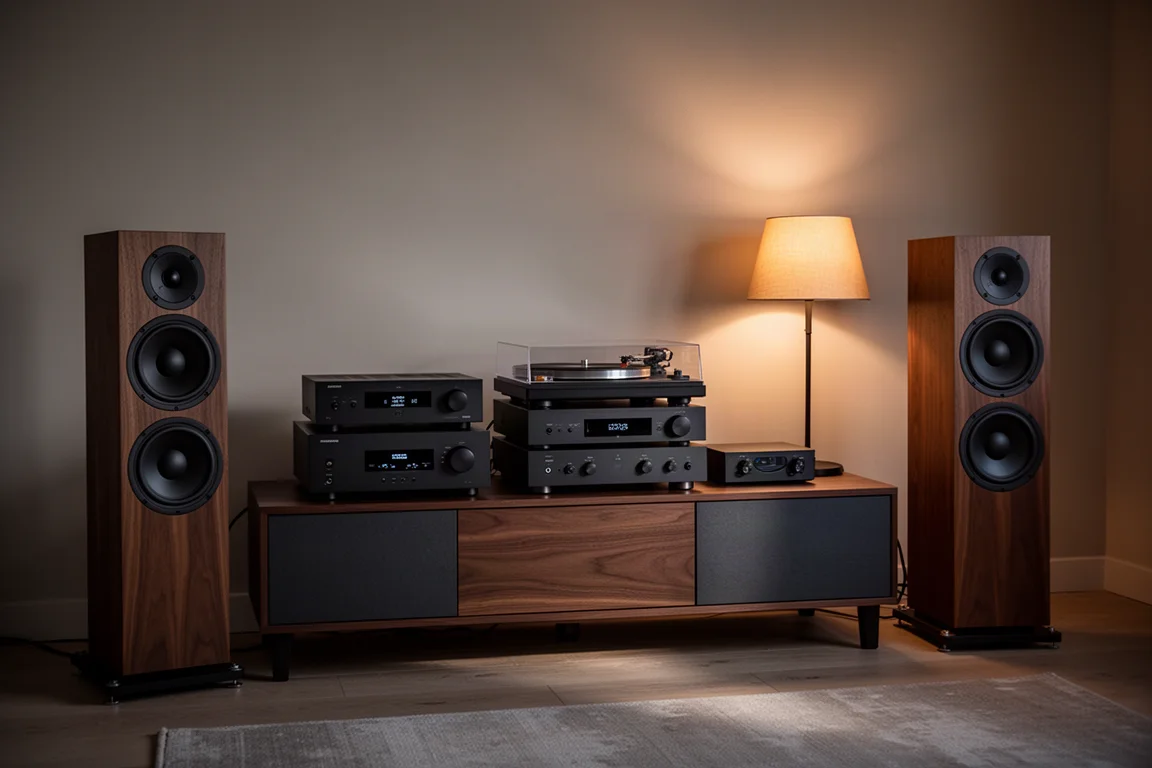
Budget allocation is worth thinking through as well. With a very affordable amplifier, spending a couple of hundred on speakers and a similar amount on a source component keeps the system balanced, and a turntable without a built-in phono stage will need one fitted or added externally. Passive and unity-gain designs tend to trade a little bass weight and drive for purity, so match them with speakers that already have good low-frequency control.
Conclusion
Eight amplifiers, eight different answers to the same question. The Fosi Audio V3 shows how little you can spend and still get a detailed, neutral sound. The Cambridge Audio CXA61 and the Audiolab 7000A cover the middle ground with very different tonal priorities, one warm and smooth, the other dry and precise. The Musical Fidelity A1 buys Class A character for £1,400, the Atoll IN300 buys current and scale for just under £3,000, and the Accuphase E-280 buys build quality and refinement for just under £5,000. At the top of the range, the NVA P50 SA and M600 monoblocks deliver detail and natural tone for roughly half the price of the alternatives they were measured against.
Whichever direction you choose, the deciding factor is fit: power and current for your speakers, inputs for your sources, and a tonal character you enjoy over long sessions.
Further reading
Related Reviews
Hi-Fi Amplifiers
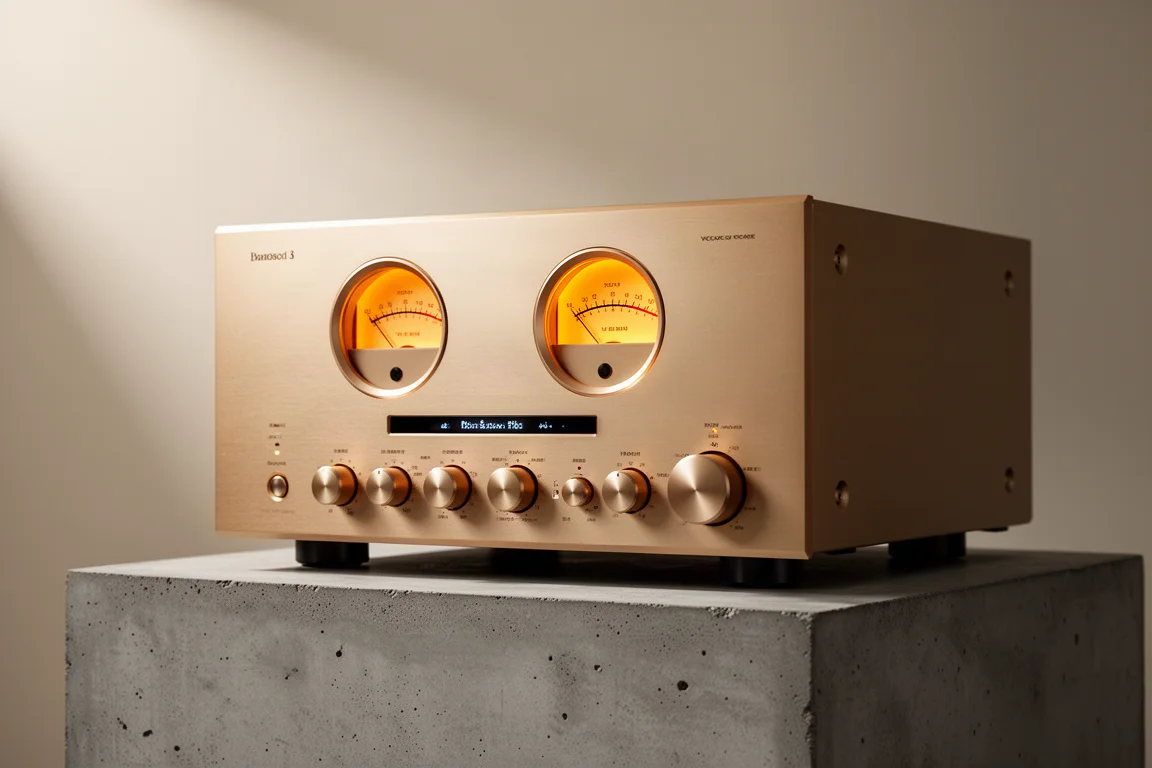
Accuphase E-280 Review: Entry-Level Accuphase With Flagship Attention to Detail
A close look at the Accuphase E-280 integrated amplifier, covering its champagne build, AAVA volume control, sound quality, and the speakers and sources that suit it best.
Hi-Fi Amplifiers
Advance Paris A10 Classic vs Yamaha A-S301: Two Integrated Amplifiers Compared
A practical comparison of a $350 integrated amplifier and a $2,500 reference model, covering the differences that matter and the ones that do not.
Hi-Fi Amplifiers
Affordable Chinese Amplifiers Worth Buying: Five Budget Hi-Fi Amps Compared
A practical look at five affordable amplifiers, what each one does well, and the trade-offs to weigh before you buy.