Hi-Fi Audio
Best Amplifier and Speaker Pairings: Matching Affordable Amps to the Right Speakers
A practical guide to amplifier and speaker synergy, covering three affordable amplifiers and the standmount speakers that suit each one.
Introduction
Not every amplifier and speaker combination works well together. Two products that look like natural partners on paper can end up sounding thin, harsh, or simply underwhelming once they are connected. The variables that matter most are sensitivity, impedance, available power, and whether the amplifier gives you tone controls to work with. This guide covers three amplifiers at different price points and the standmount speakers that suit each one, so you can build a system that plays to its strengths from the first listen.
How Amplifier and Speaker Synergy Works
Three numbers do most of the work. Sensitivity, measured in decibels, tells you how much volume a speaker produces for a given amount of power, so a speaker rated at 87 dB will play noticeably louder than one rated at 85 dB from the same amplifier. Nominal impedance tells you how hard the speaker is to drive, and a 4-ohm load draws more current and, in practice, more usable power from a modest amplifier than an 8-ohm load does.
The third factor is the amplifier’s character. Some designs have tone controls, variable loudness, or both, which let you soften a bright tweeter or add weight to a thin low end. Others are deliberately neutral with no adjustment at all, and those amplifiers reward careful speaker matching. A speaker with a full bottom end and a calm top end will flatter an amplifier that has neither.
Price matters less than the match. An inexpensive amplifier paired with the right speaker will often sound better than a more expensive amplifier driving a speaker that fights it.
Fosi Audio BT20A Pro: The Affordable Class D Starting Point
The Fosi Audio BT20A Pro is a compact Class D amplifier built around the TPA3255 chipset, with Bluetooth on board and a set of tone controls that make it unusually flexible for the money. List pricing sits around $100, though coupons appear regularly, and the user ratings are strong for a product that has only been on the market for a short time.
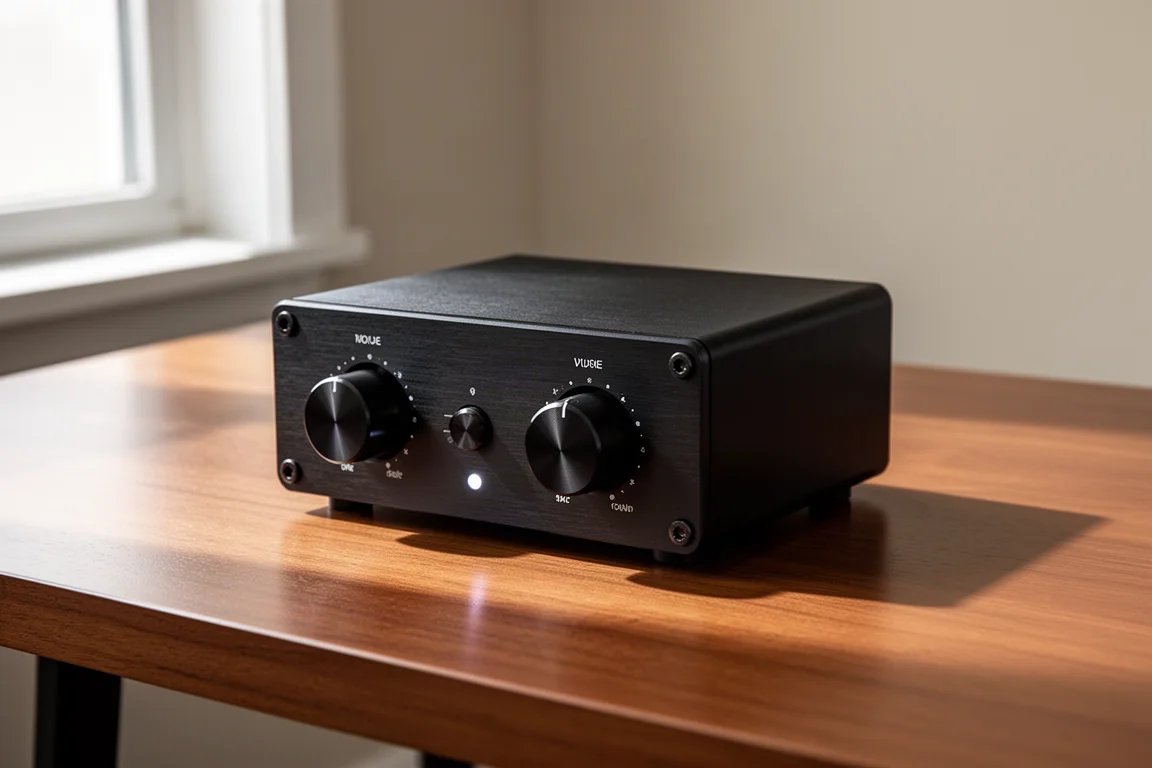
Sonically it leans neutral with a little extra weight at the bottom, which is welcome in a budget Class D design. The tone controls have a detent at the twelve o’clock position, so it is easy to return to a known starting point. That combination of a slightly fuller low end and adjustable treble makes it a forgiving partner for a wide range of affordable standmounts. With the stock power supply it drives efficient speakers comfortably.
Sony SS-CS5
The Sony SS-CS5 is a long-standing favorite in the affordable standmount category, and it pairs neatly with the BT20A Pro. The list price currently sits around $198, which is high for what it is, but it is discounted regularly and has sold for well under $125 during promotional periods.
It is not light on any part of the range. The upper midrange can become forward when the tweeters are aimed straight at the listening position, and raising or lowering the tweeter axis relative to your ears reduces that quality. Out of the box, most listeners will not find it harsh. The stock power supply of the BT20A Pro drives it without difficulty.
Yamaha NS-803
The Yamaha NS-803 uses a 5.25-inch woofer and a 1-inch soft dome tweeter, with a sensitivity of 87 dB. That figure is decent rather than exceptional, which makes it a good match for a modest amplifier like the BT20A Pro. It is available on its own for around $140, and buying it as part of a five-speaker home theatre pack at roughly $147 works out cheaper.
It has been described as running a little hot at the top, and this is exactly the kind of speaker that benefits from the BT20A Pro’s tone controls. The bass rolls off at 57 Hz and there is a gentle lift somewhere around 80 to 100 Hz, so a small cut on the bass control can clean things up. For most buyers the low end will be more than sufficient without a subwoofer.
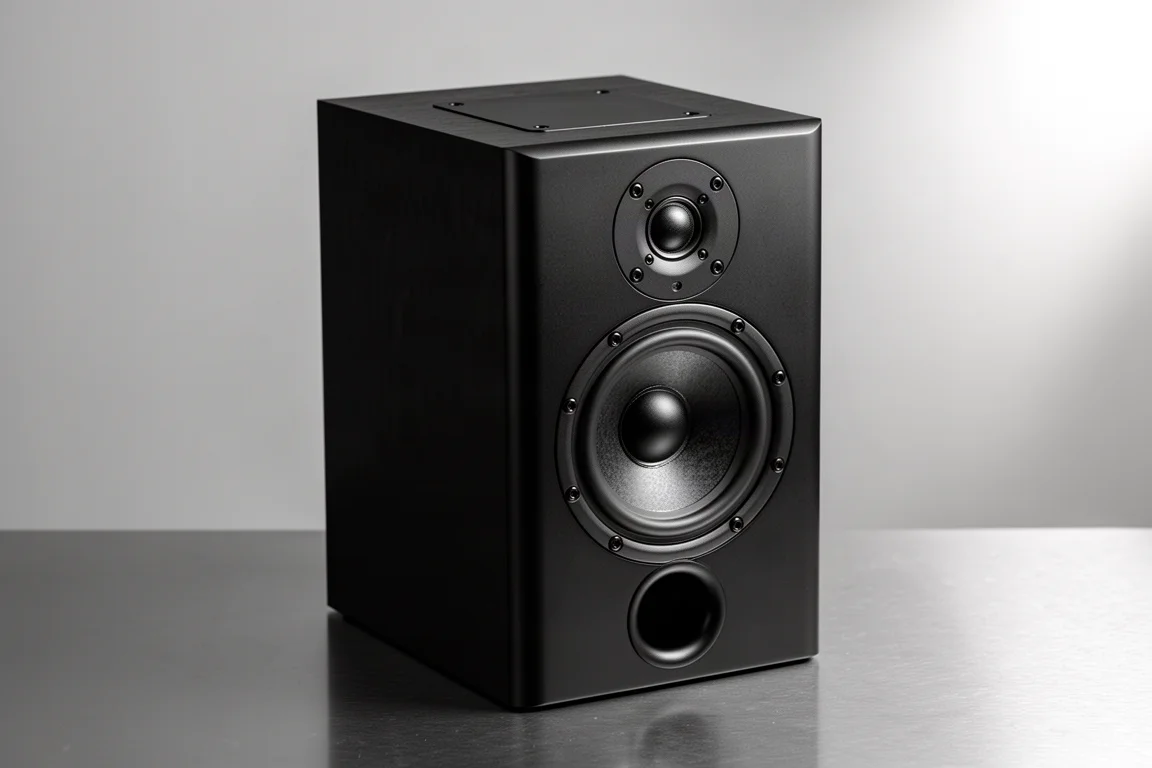
ELAC BS41
The ELAC BS41 costs around $130 and is harder to drive than its compact cabinet suggests. Sensitivity and nominal impedance are not published on the retail listing, so buyers are working without the usual reference points. It will run from the stock 32-volt supply, but stepping up to a 36-volt or 48-volt supply makes it noticeably easier to get the most out of it.
What stands out is how consistent it is. Across a wide range of amplifiers it keeps the same tonal signature, so you always know what you are getting. It simply sounds better with more power behind it, which makes the BT20A Pro a workable rather than an ideal partner.
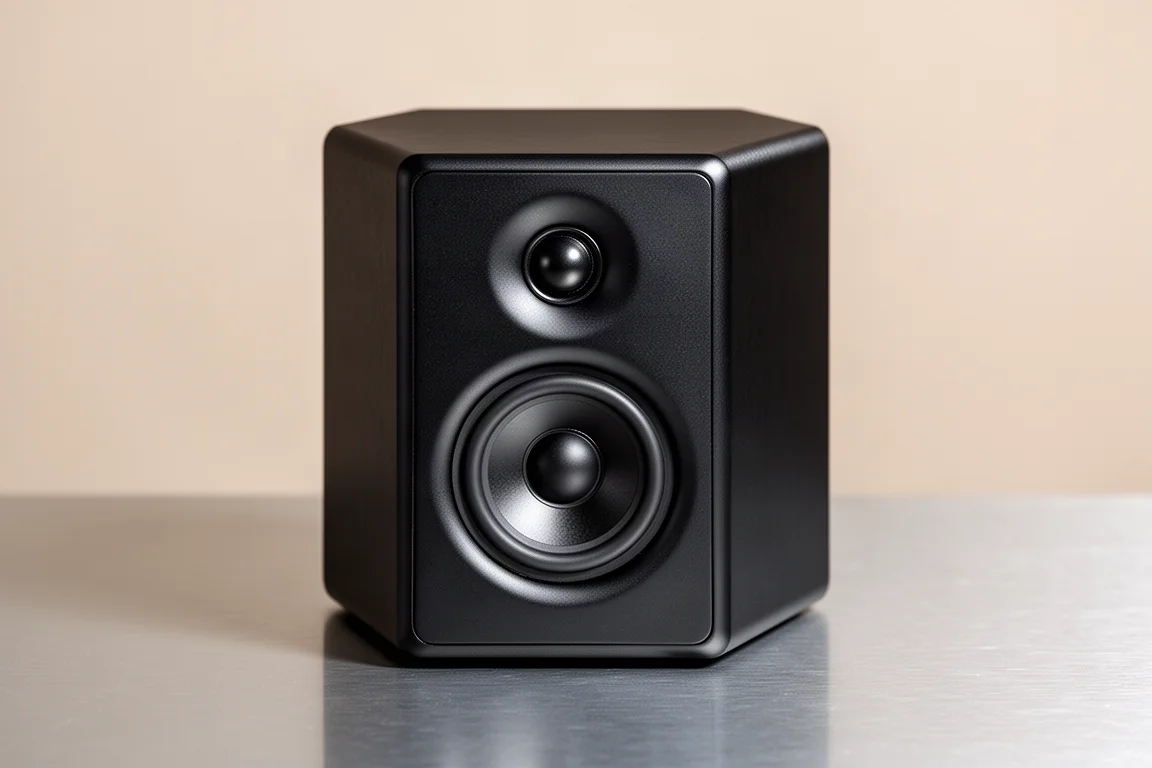
Emotiva B1+
The Emotiva B1+ is priced at $279, with an efficiency of 86 dB and an 8-ohm nominal impedance. The BT20A Pro drives it comfortably. Clarity is the headline here, and the treble can seem a touch hot when the speakers are toed in directly toward the listener. Toeing them out slightly calms that down. Compared with the Fosi Audio V3, the midrange sounds a little veiled, but the pairing with the BT20A Pro is a strong one.
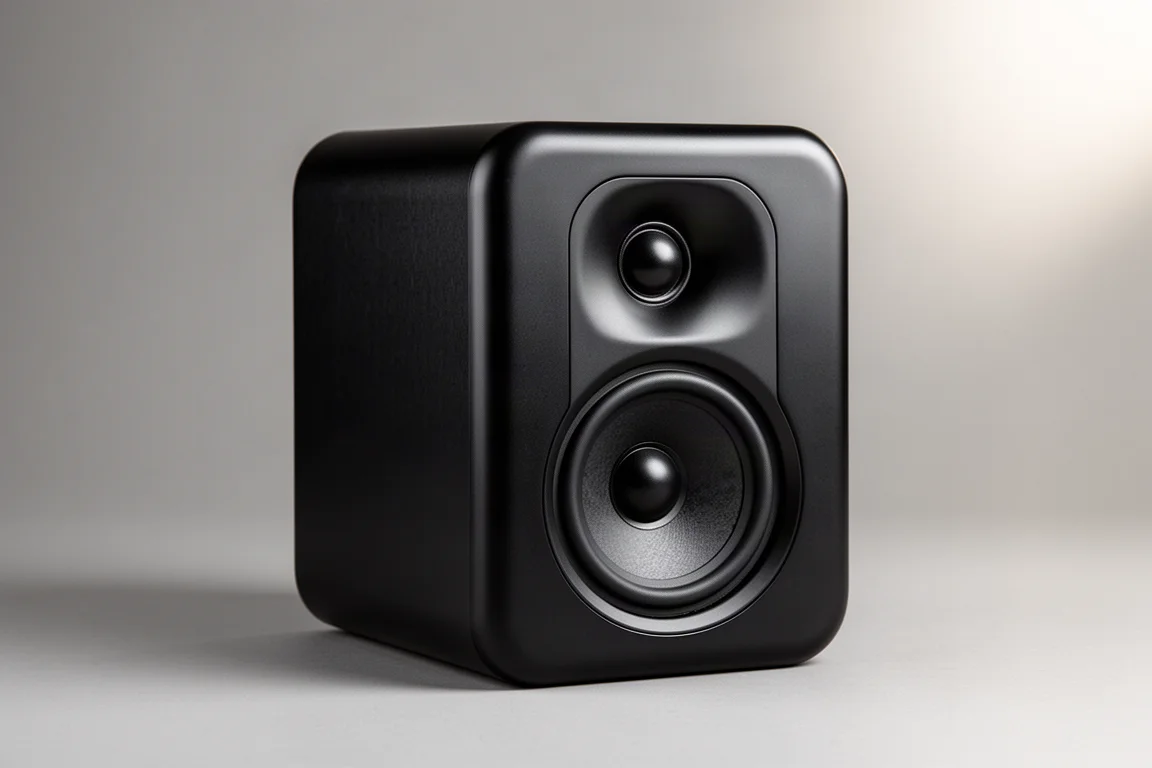
Yamaha A-S301: Traditional Value with Tone and Loudness Controls
The Yamaha A-S301 is a full-size Class AB integrated amplifier rated at 60 watts, priced at $350. It includes a built-in DAC and a phono stage, and it offers both tone controls and a variable loudness control. Set flat, it sounds very clean, though a touch thin. The loudness control addresses that directly, adding body at lower listening levels, and the tone controls let you fine-tune from there.
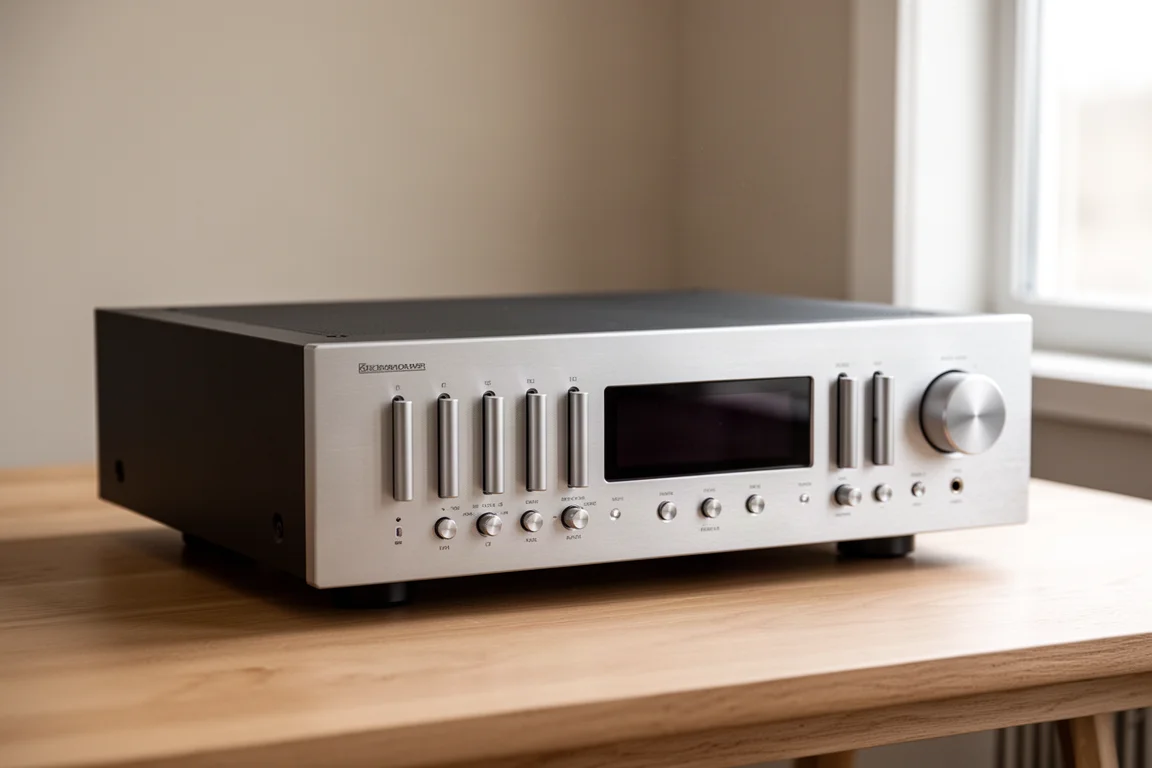
The combination of loudness compensation and tone adjustment makes this amplifier easy to match with speakers that need a little help, and it means the A-S301 can flatter a wider spread of designs than a bare-bones amplifier would.
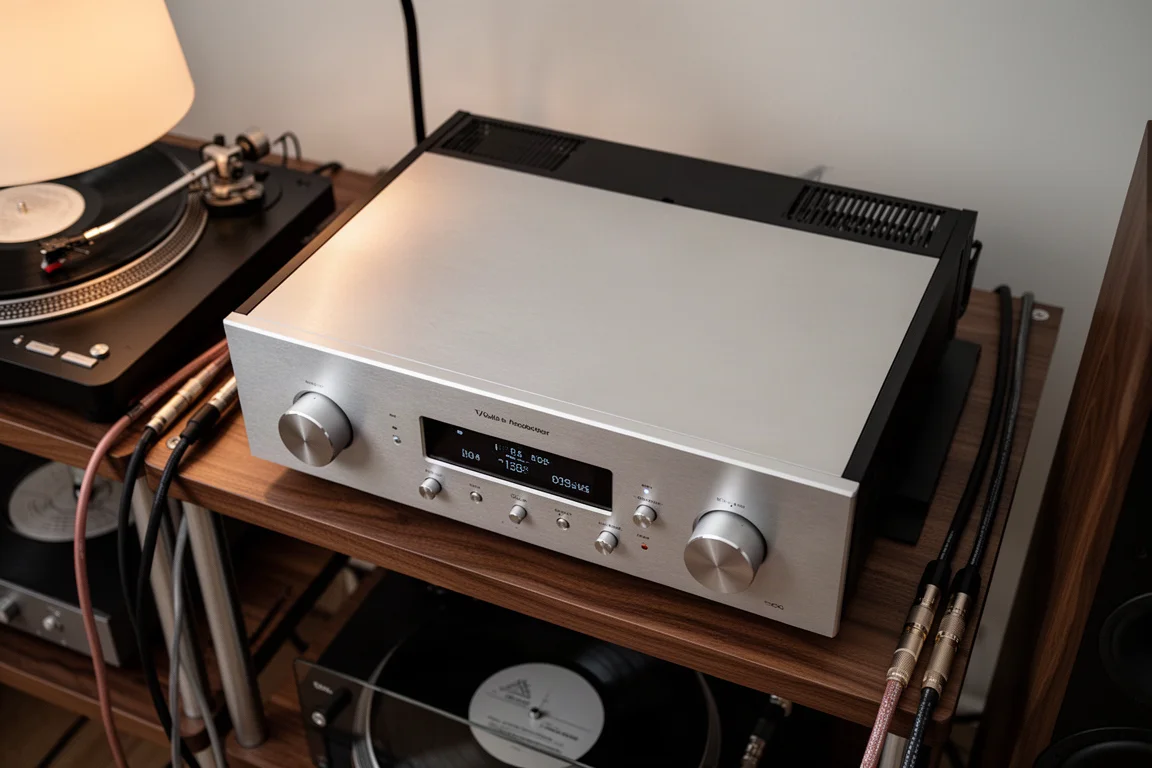
When everything is left flat, speakers with a fuller midrange tend to sound best with this amplifier.
Emotiva B2+
The Emotiva B2+ is the natural partner for the A-S301 in its flat setting. Its midrange is fuller than the B1+‘s, and it is the better of the two Emotiva standmounts with this amplifier. The trade-off is efficiency: 86 dB with a 4-ohm nominal impedance makes it harder to drive than the B1+, so it asks more of the amplifier. The A-S301 has enough on tap, and the tone and loudness controls remain available if you want to adjust the balance.
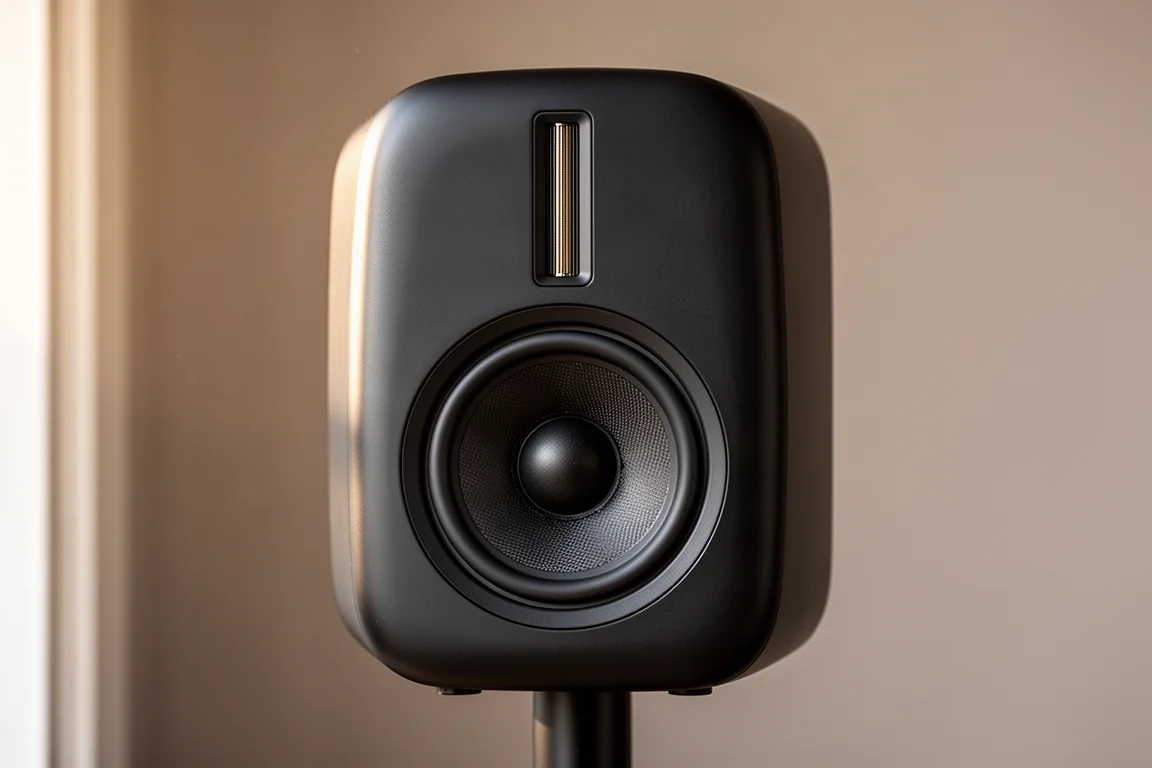
Polk ES15
The Polk ES15 sells for $300 a pair and does not drop in price often. Its sensitivity is a relatively low 85 dB, but the 8-ohm impedance makes it easier to drive than that number alone suggests. Frequency response runs from 44 Hz up to 40 kHz, so it reaches genuinely low for a standmount.
Its appeal is its warmth. It does not sound like most speakers at its price, and it can be listened to all day without touching the tone controls. The clarity and focus of the A-S301 complement that character well, and the result is a pairing that works at low volumes and at more spirited levels alike.
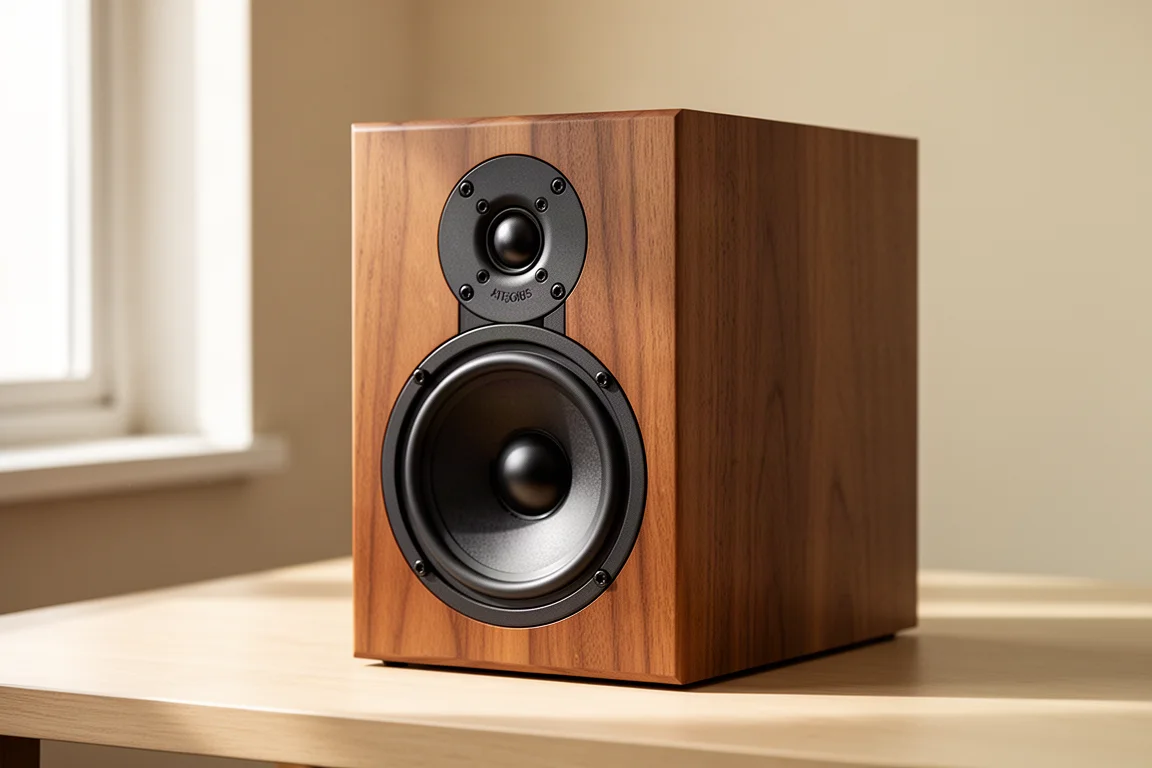
Polk R200
If the budget stretches further, the Polk R200 is the step-up option at $749 a pair. It has a sensitivity of 86 dB and covers 51 Hz to 38 kHz, and it punches hard for its size. Paired with the A-S301 it delivers considerably more low-end impact than the ES15 while keeping the same general tonal balance.
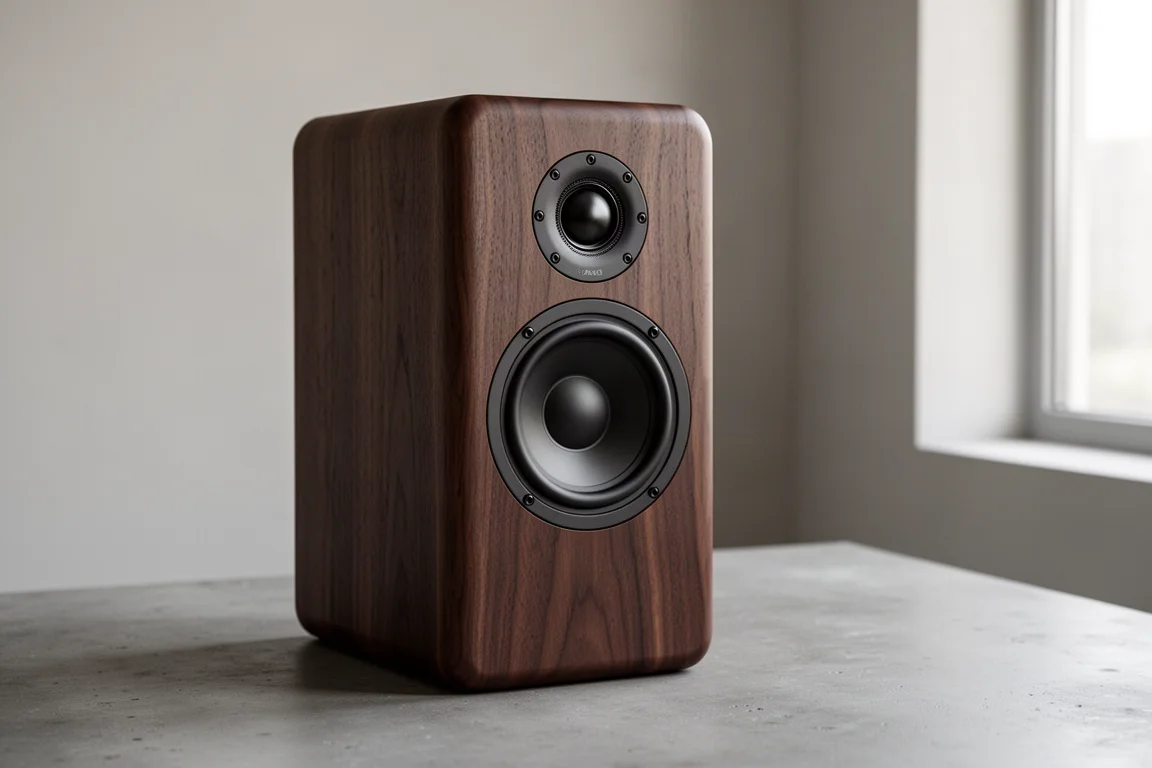
Fosi Audio V3: Clean Class D Sound on a Budget
The Fosi Audio V3 is one of the cleanest Class D amplifiers available at its price. It is genuinely neutral, and it stays composed across a wide range of material. The catch is low-end weight, because there is not much of it. If you are not planning to add a subwoofer, you will want speakers that already sound full in the bass. The other important detail is that the V3 has no tone controls, so you cannot adjust its balance to suit a speaker.
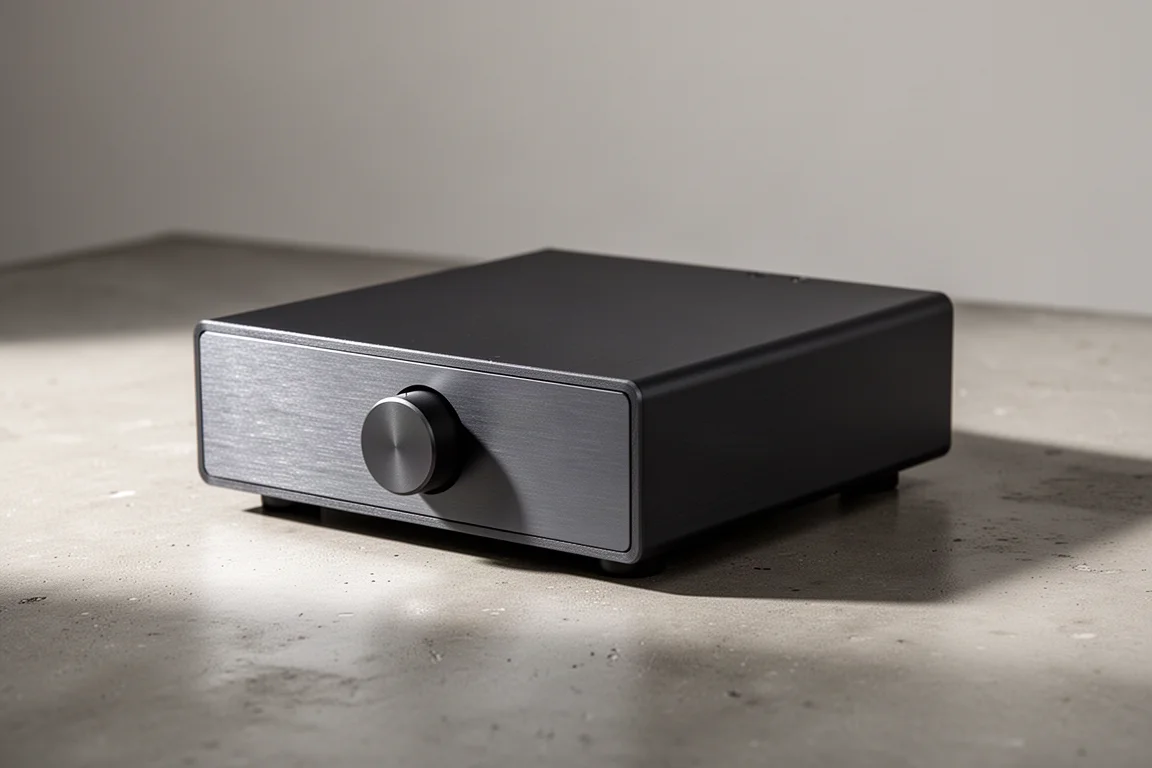
The power supply is upgradeable, and the 48-volt, 5-amp version is the one to choose if you want the amplifier to drive a wider range of speakers. Output is rated at 100 watts into 4 ohms, and realistic figures for 8-ohm speakers are lower, which is another reason to favor efficient designs here.
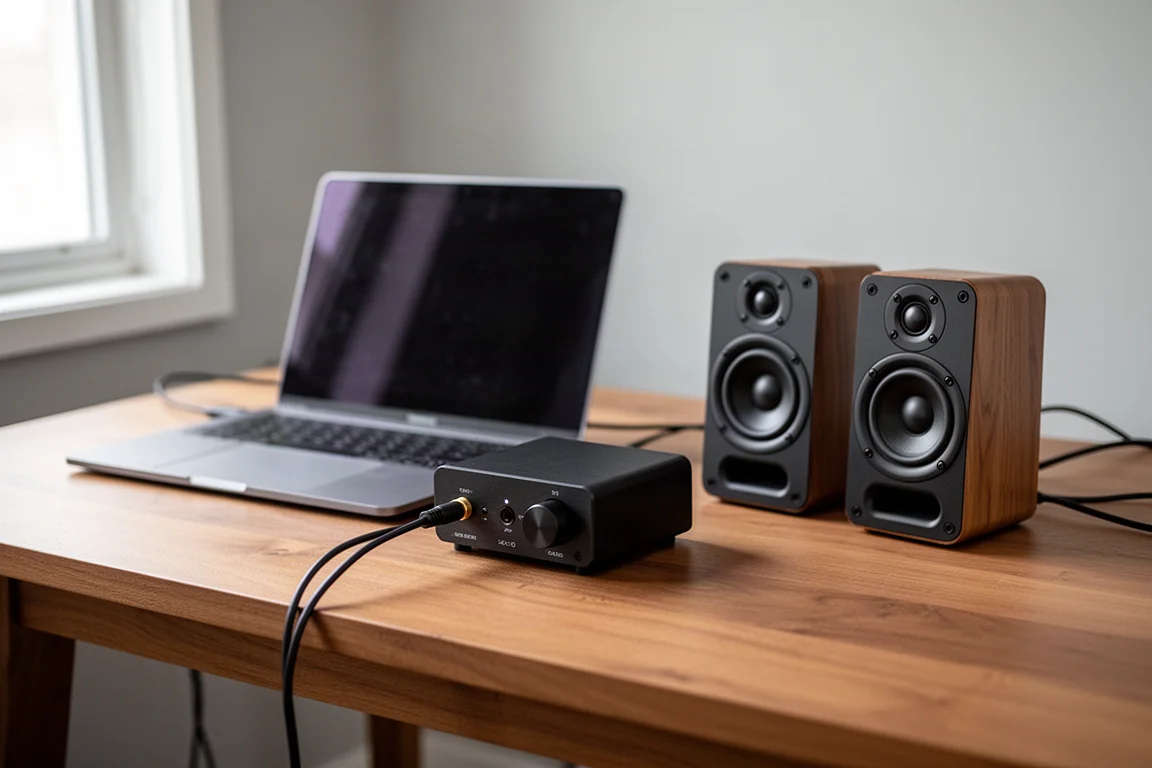
Because there is no tone adjustment to fall back on, the match between amplifier and speaker matters more with the V3 than with any other amplifier in this guide.
PSB Imagine XB
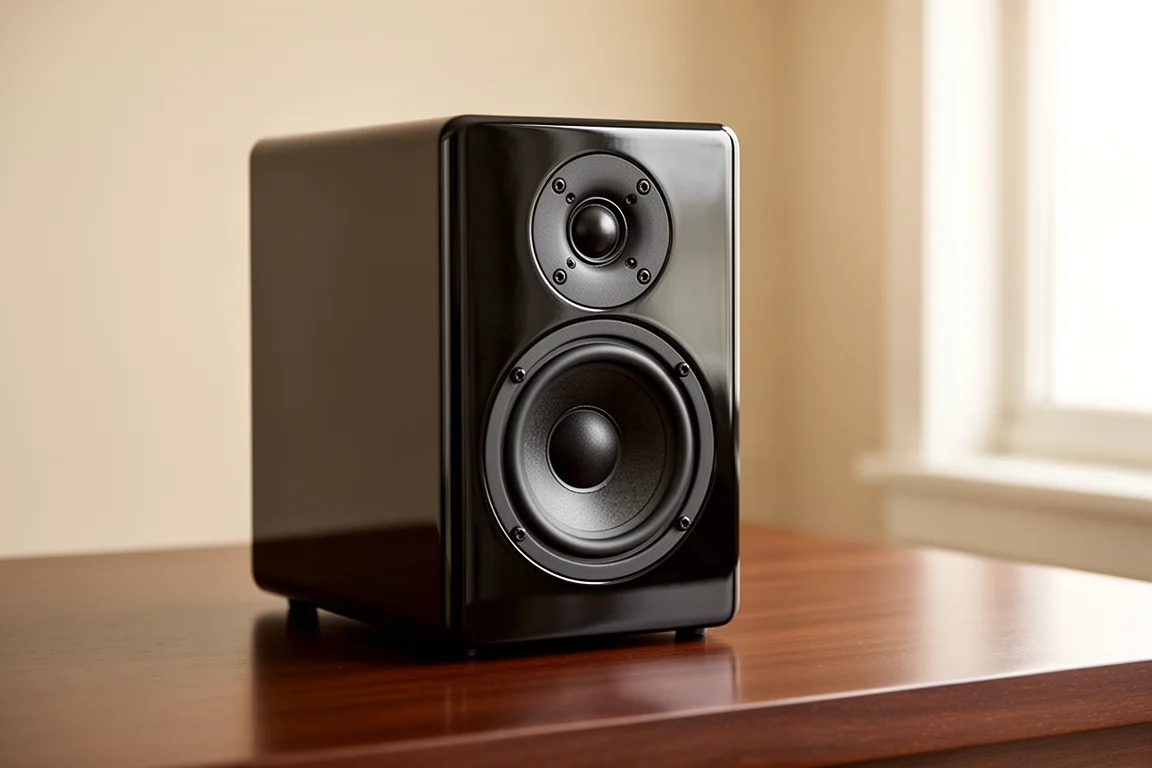
The PSB Imagine XB is the easiest recommendation for the V3. With a sensitivity of 90 dB and an 8-ohm nominal impedance, it is a straightforward load that lets the amplifier play to its strengths. It is currently on sale at around $400, which makes it cheaper than the PSB Alpha P5 despite sitting higher in the range.
ELAC Debut 2.0 B5.2
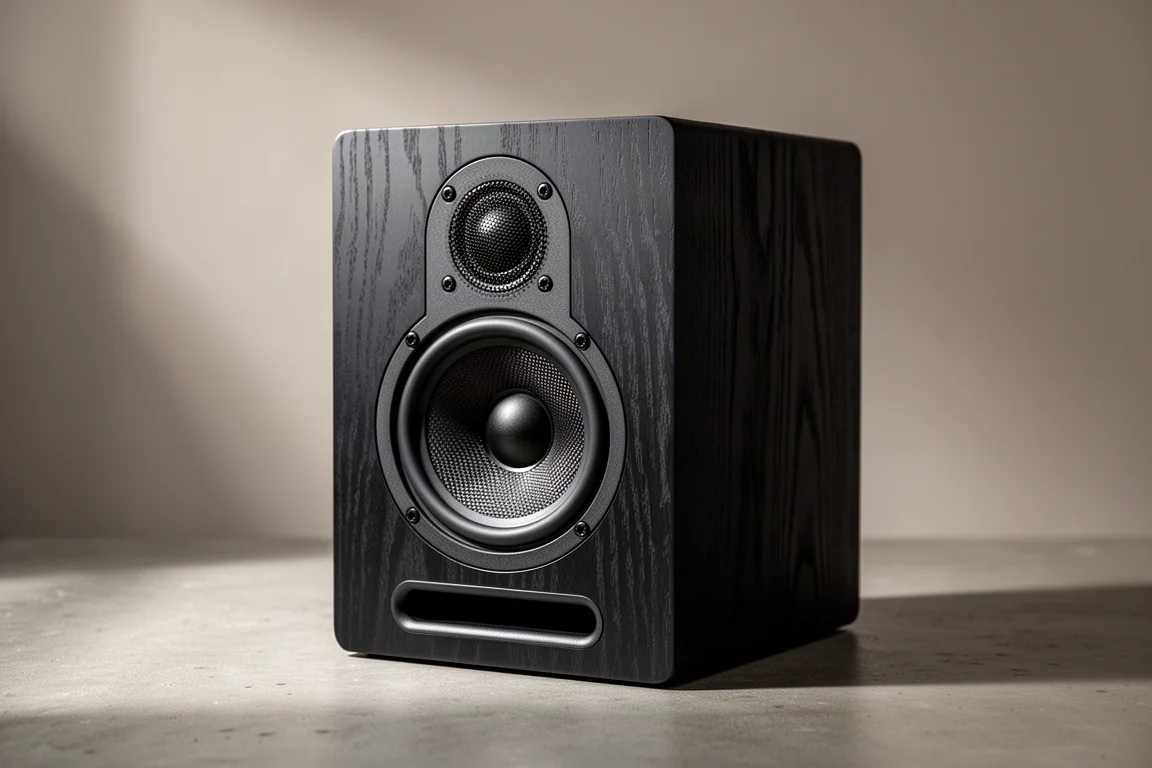
The ELAC Debut 2.0 B5.2 is priced at $199, with 86 dB sensitivity and a 6-ohm impedance. That combination pairs well with almost every amplifier in this guide, because the 6-ohm load draws useful power from modest designs. The exception is the Fosi Audio V3, since the lack of tone controls leaves you no way to adjust the balance if the result is not to your taste. As an all-round speaker at a keen price, it is hard to argue with.
Buying Advice: Matching Budget to Amplifier Character
Start with the amplifier’s personality rather than its price. If it has tone controls, variable loudness, or both, you have room to shape the result and you can pair it with a broader range of speakers. If it is a neutral design with no adjustment, choose a speaker whose balance you already like, and prioritize sensitivity and a friendly impedance.
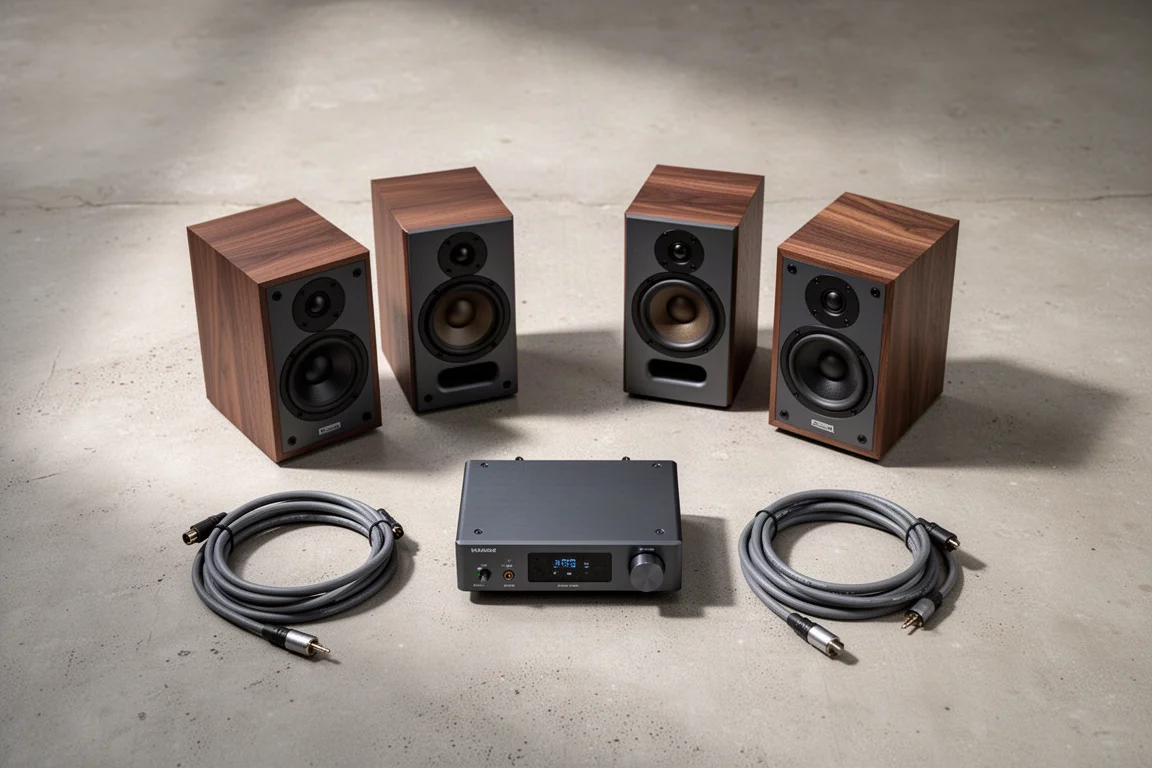
At the most affordable end, the Fosi Audio BT20A Pro with the Sony SS-CS5 or the Yamaha NS-803 covers the basics well and leaves the tone controls free for fine-tuning. Moving up, the Yamaha A-S301 with the Emotiva B2+ or the Polk ES15 adds a fuller midrange and a proper DAC and phono stage. The Polk R200 is the upgrade to consider when you want more low-end impact. For a compact, ultra-clean setup, the Fosi Audio V3 works best with efficient speakers such as the PSB Imagine XB.
Two practical checks before you buy: make sure the amplifier has enough power for the volume you actually listen at, and make sure the speaker’s character suits your room. A warm speaker in a bright room, or a lean speaker in a heavily damped one, will change the result as much as any specification.
Conclusion
Synergy is not a marketing word here. It is the difference between a system that sounds balanced and one that never quite settles. Match sensitivity and impedance carefully, use tone controls when they are available, and choose a speaker whose balance flatters your amplifier’s character. The Fosi Audio BT20A Pro, the Yamaha A-S301 and the Fosi Audio V3 each make sense in a different budget and a different room, and the speakers in this guide give you a clear starting point for each one.
Further reading
Related Reviews
Hi-Fi Audio
Accuphase C-57 vs Allnic H-7000V: Two High-End Phono Stages Compared
A fully balanced solid-state phono stage with a pitch-black noise floor meets a tube design built for well-loved records. Here is how to choose between them.
Hi-Fi Audio
Active vs Passive Hi-Fi: Five Components for a Modern System
Five components that define modern active and passive hi-fi systems, with the strengths, trade-offs and setup details worth weighing before you buy.
Hi-Fi Audio
Advance Paris A10 Apex Review: A Hybrid Integrated Amplifier That Covers a Lot of Ground
A French hybrid integrated amplifier with a class A tube preamp stage, analogue power meters, and an internal DAC and phono stage good enough to make extra boxes unnecessary.